
The story of lechon: a celebration platter with skin that crackles
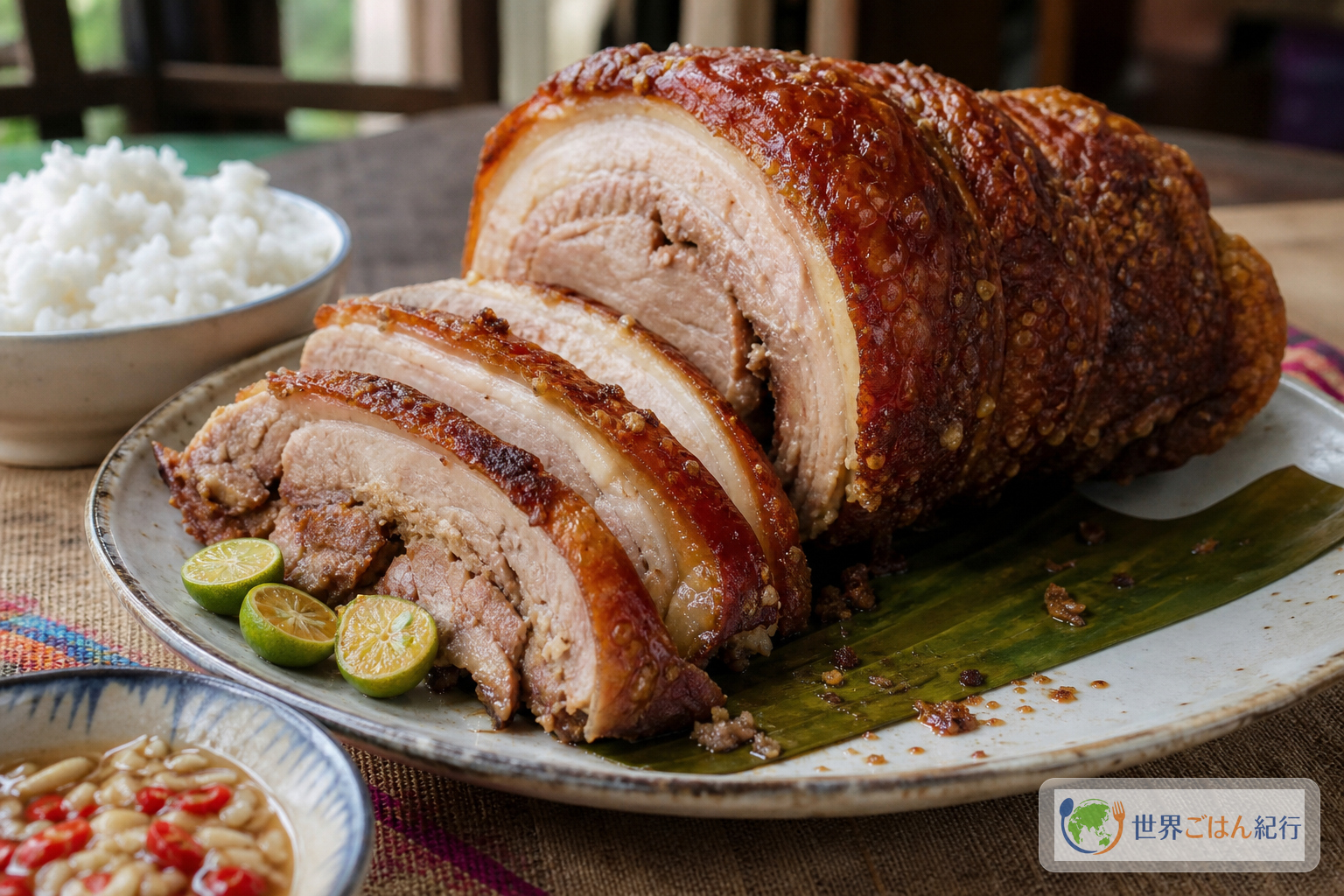
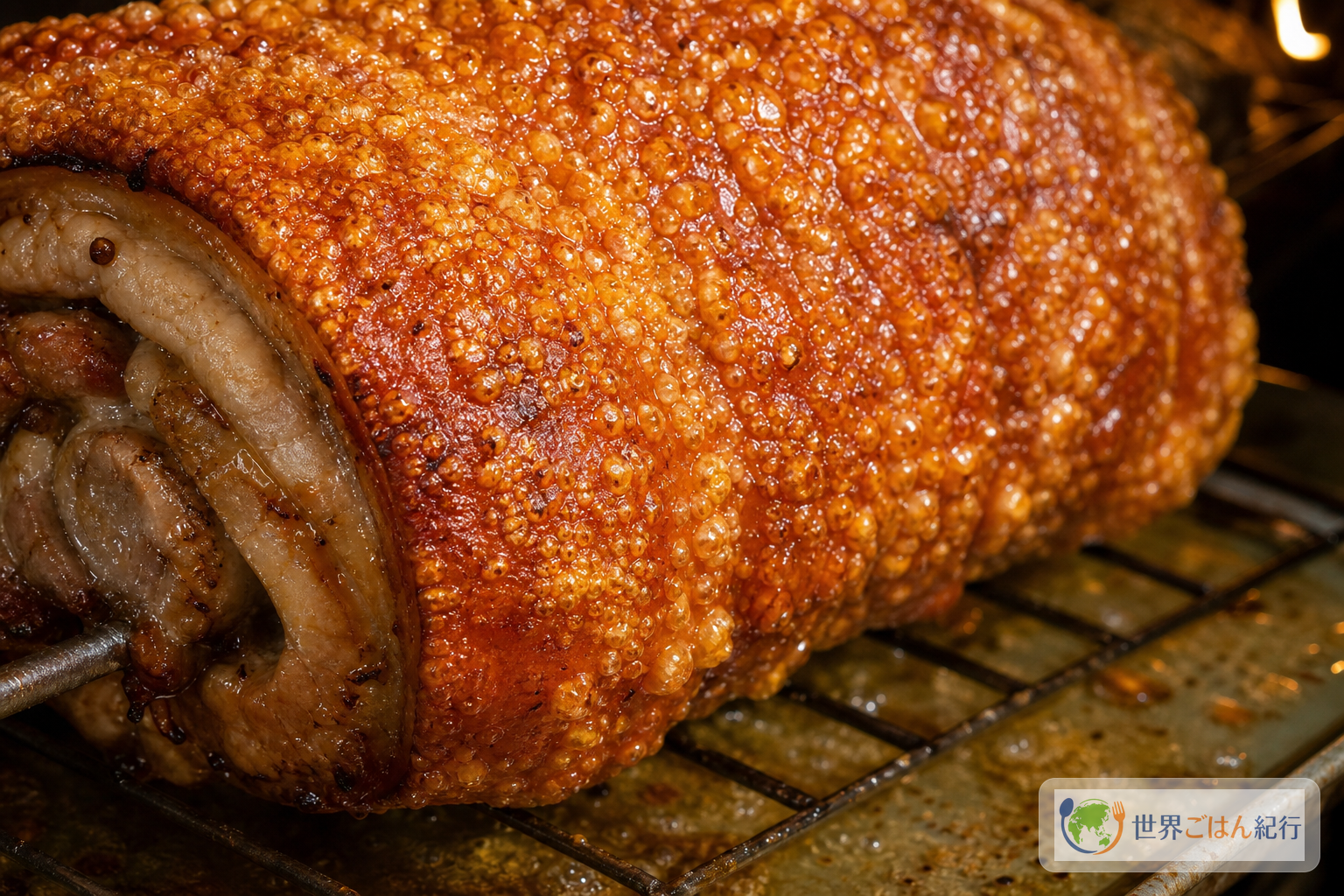
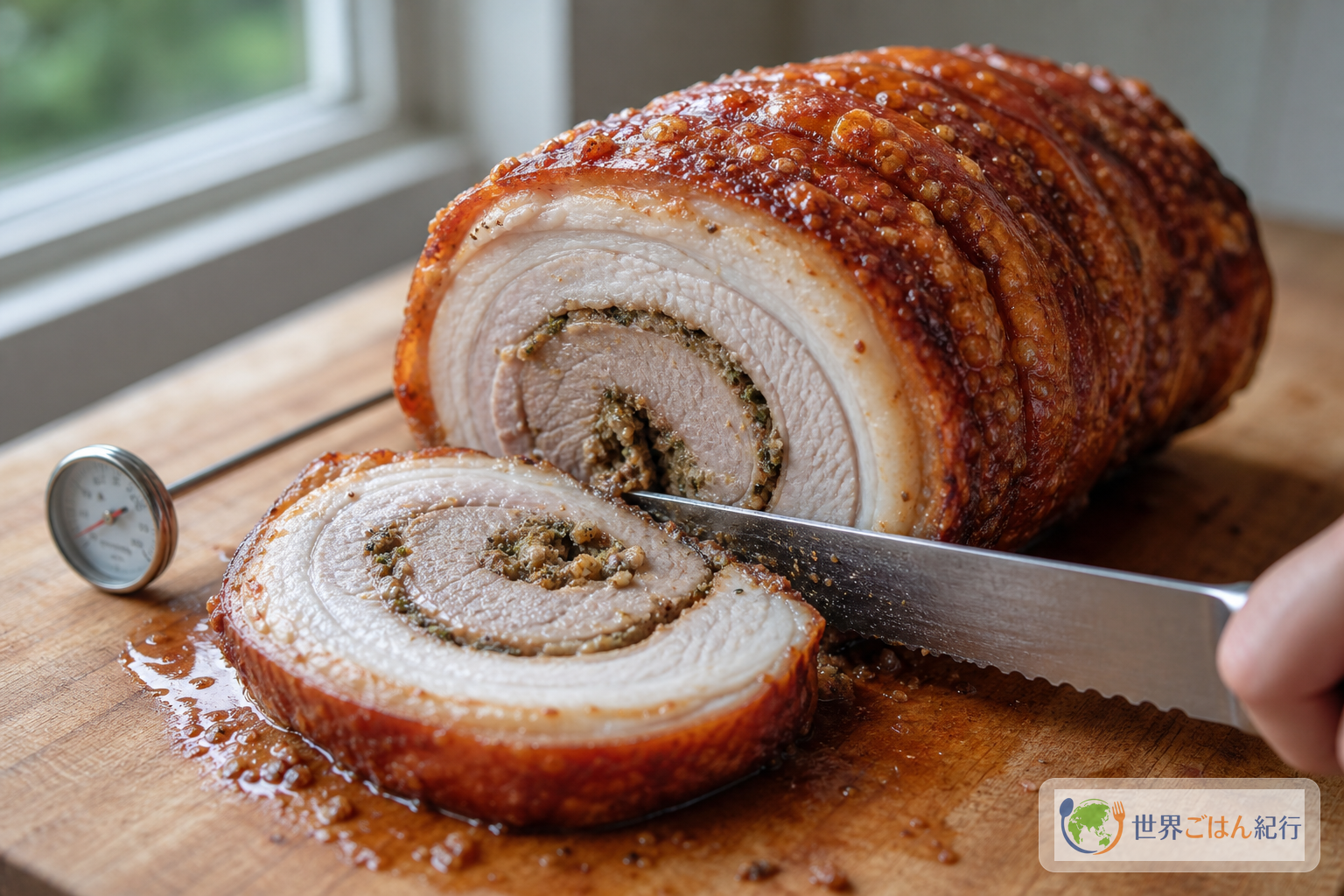
The moment you open the oven door, the sound of the skin reaches you before the sweet smell of the fat. Set a knife on it and it snaps like thin spun sugar. From inside rise lemongrass, garlic, scallion and bay leaf. Lechon is a dish that calls people into the kitchen before it ever reaches the table.
Lechon is a whole roast pig, a dish found in the Philippines and widely across the Spanish-speaking world. In the Philippines it appears at birthdays, baptisms, Christmas, town fiestas and any big day when the extended family gathers. The famous image is a whole pig on a spit, turned slowly over charcoal, but recreating that in a home kitchen isn't realistic.
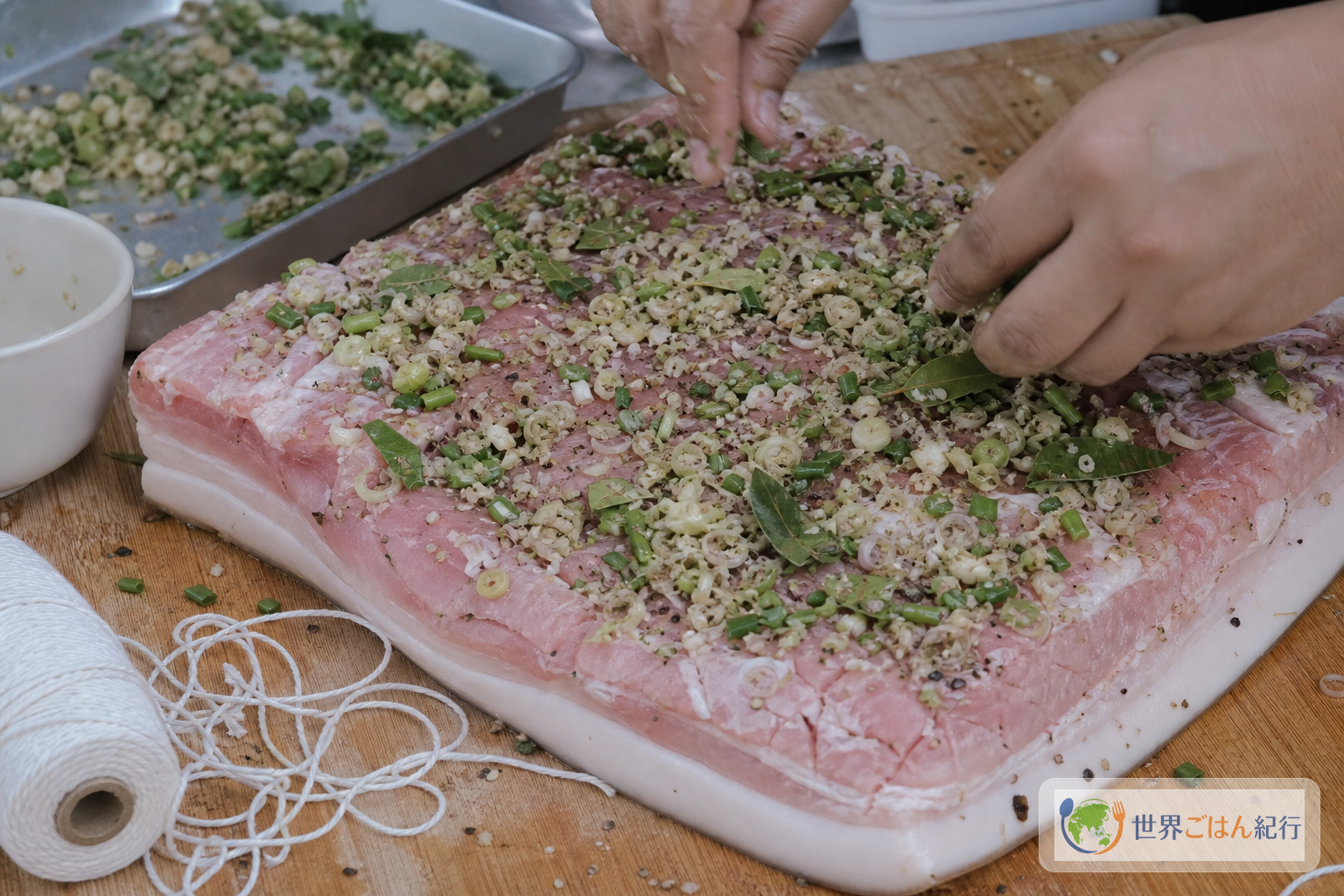
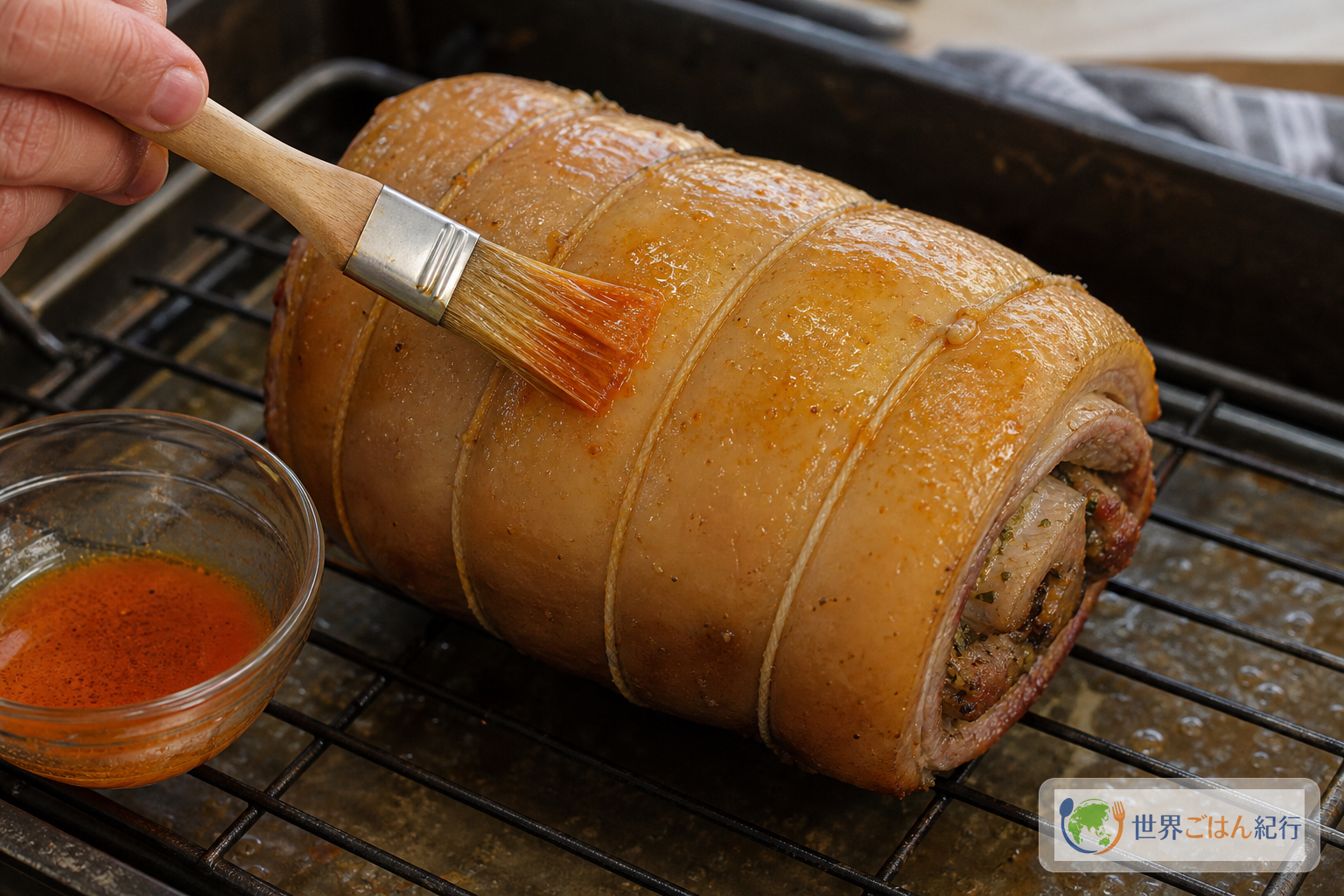
This recipe doesn't try to copy the spectacle of the whole pig; it moves the heart of lechon into a home oven. Skin-on pork belly or skin-on pork shoulder is rolled around lemongrass and garlic, cooked slowly at a low temperature, then finished at high heat until the skin crackles. Rather than shrinking a festival platter, the goal is to make the sequence of skin, aroma, vinegar dip and rice work in an ordinary kitchen.
On the same Filipino table, it pairs well with adobo (in Japanese), braised in soy sauce and vinegar; slim fried spring rolls, lumpiang shanghai (in Japanese); and grilled chicken inasal (in Japanese) for a true celebration spread. On days when you want relief from the richness, put sour sinigang or vegetable-packed pancit canton alongside so the meal never feels heavy.
Lechon comes from Spanish, and in the Philippines it usually means whole roast pig. Cebu-style lechon is often described as stuffed with lemongrass and aromatics, while around Manila it is also commonly eaten with a sweet liver sauce. This article uses "lechon," the most familiar spelling.
Not a whole pig: what the home version keeps
The traditional lechon baboy is a whole pig roasted on a turning spit for hours. The belly cavity is filled with lemongrass, garlic, scallions, bay leaves and other aromatics; the skin dries as the fat renders out, and at the end it turns thin and crisp. In a home version, what matters is keeping that order even though the cut of meat is much smaller.
The hardest part is often finding skin-on pork. Many supermarkets sell pork belly with the skin removed, so you may need a butcher, an Asian or Filipino grocery, or an online meat supplier. Skinless pork still makes a tasty roast, but you won't get lechon's crackling skin. For a first try, don't buy a huge piece; a 1.5–2 kg (3 1/4–4 1/2 lb) skin-on pork belly or skin-on shoulder is much easier to handle.
| What to look at | Traditional whole roast | Home oven version |
|---|---|---|
| Meat | A whole suckling pig or pig | Skin-on pork belly or skin-on shoulder |
| Aroma | Lemongrass and aromatics stuffed in the belly | Aromatics spread over the meat side, then rolled |
| Cooking | Turned over charcoal | Low roast at 150°C (300°F), high finish at 240°C (465°F) |
| Skin | Dried skin crisped in its own fat | Dried overnight in the fridge, puffed at high heat at the end |
| Serving | Big platter, white rice, sauces, a celebration | A smaller platter, vinegar dip, pancit, spring rolls |
To keep the skin crisp, don't brush on a sugary glaze. Sugar burns quickly and draws moisture back into the skin. Color the skin lightly with annatto oil and bring acidity with the vinegar dip. Dividing the jobs this way means fewer failures in a home oven.
Ingredients (serves 6)
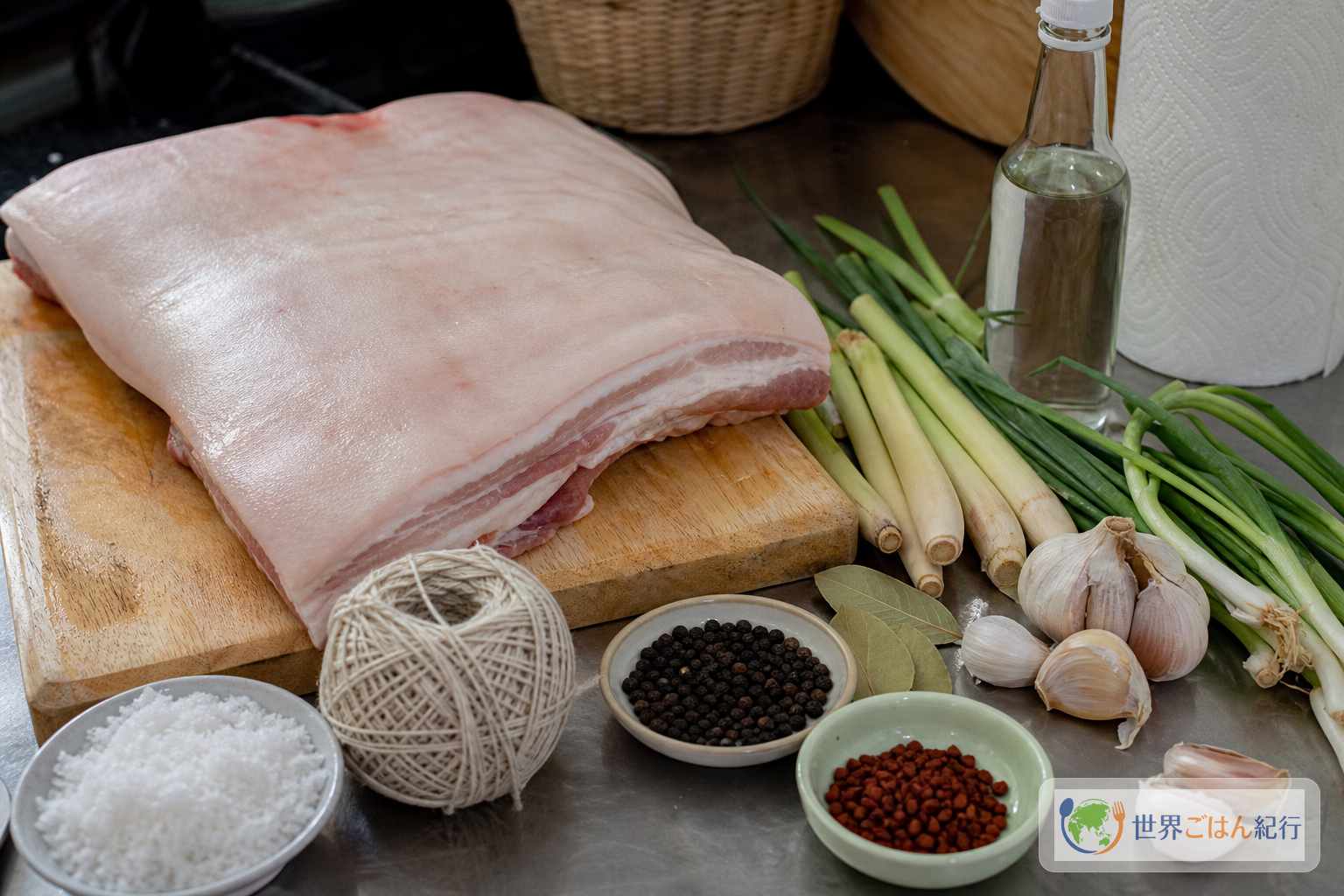
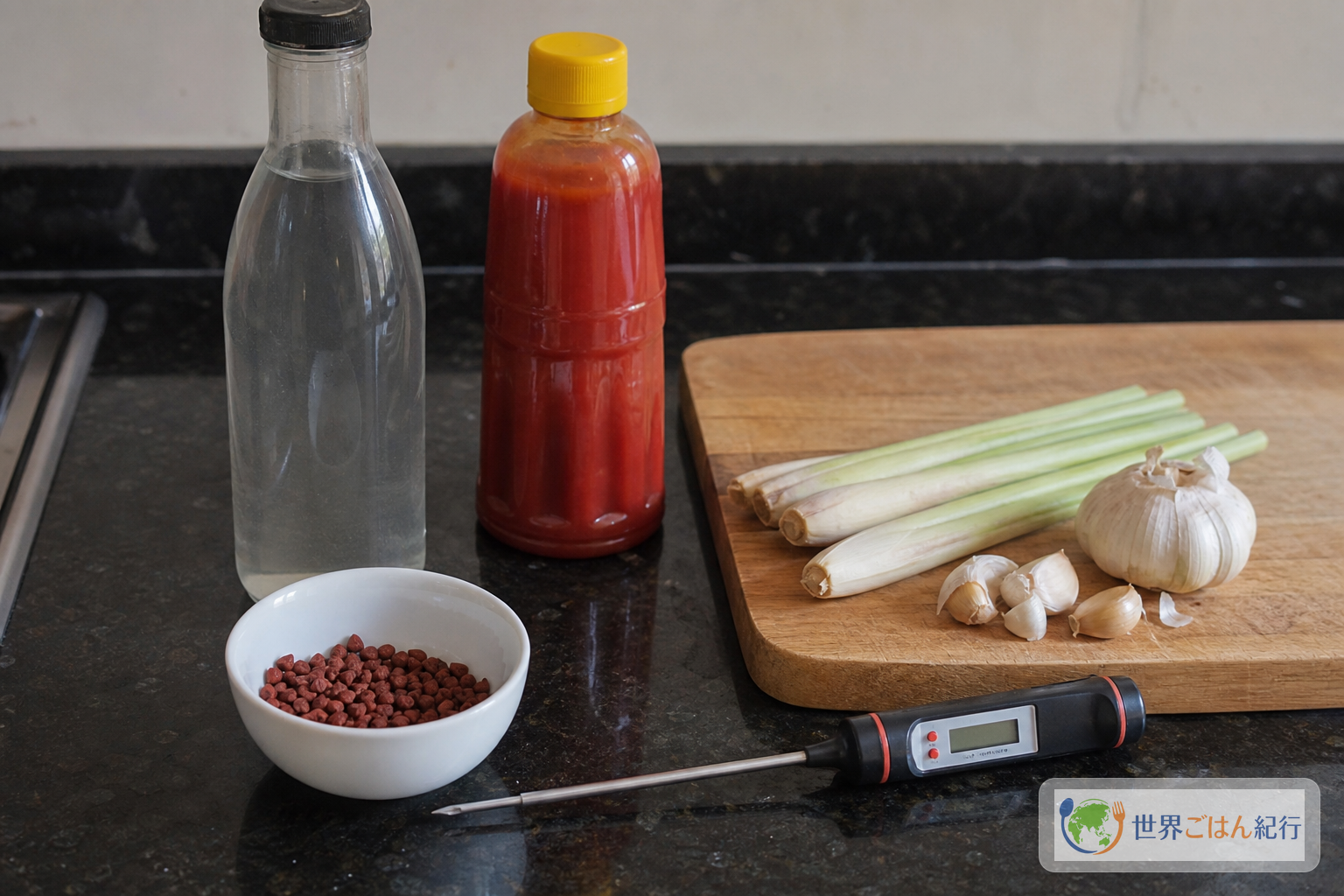
With lechon, how you handle the meat matters more than the number of ingredients. Settle the skin-drying time, the amount of salt, the target internal temperature and the final high-heat finish in advance, and the day itself won't feel rushed. If you can't find skin-on pork, check the substitutes column first.
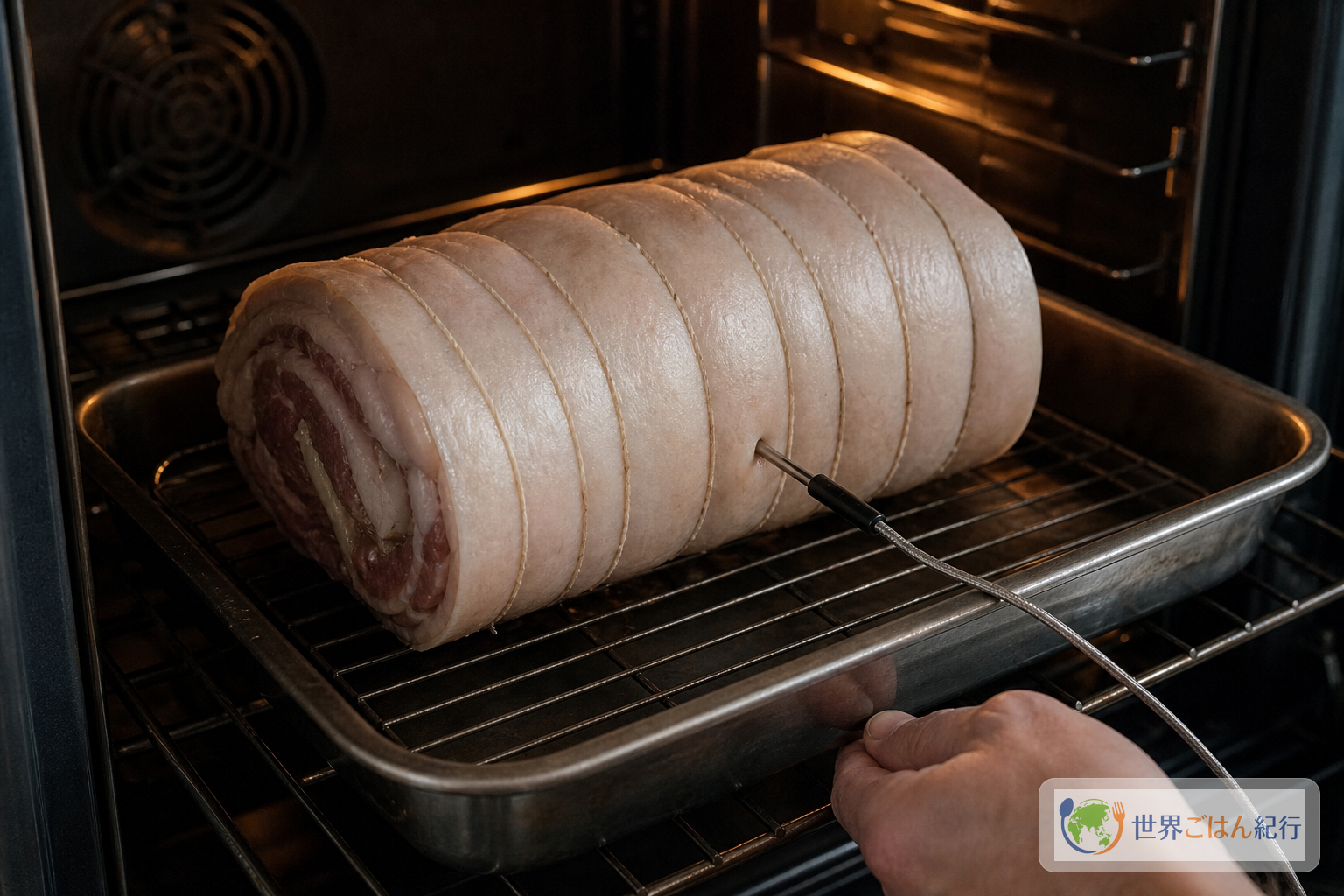
This dish contains pork, plus soy if you use soy sauce. Don't judge pork by looks alone; check the center with a thermometer. FoodSafety.gov gives 63°C (145°F) followed by a rest as the safe minimum for pork roasts, but this recipe aims for 85°C (185°F) in the center so the rolled pork belly turns tender.
Annatto seeds and coconut vinegar can be hard to find in a regular supermarket; look in Filipino, Latin American or Asian grocery stores. You'll use them again for chicken inasal (in Japanese) and Filipino-style vinegar dips, so they're worth stocking if you plan to cook this more than once.
Coconut vinegar rounds off the edges of the dipping sauce and blends well with lemongrass. Rice vinegar works as a substitute, but if you keep cooking Filipino food, having it on hand makes the flavors easier to get right.
Some regions serve lechon with a sweet liver sauce. At home, put banana ketchup in a small dish next to the vinegar dip; it makes the platter friendlier for kids and anyone who doesn't like spice.
Even when the skin has colored, the center may not be hot enough. This is a thick cut of meat, so think of the thermometer less as a flavor tool and more as safety equipment.
Instructions
If you get impatient during the low roast and turn up the heat, the outside toughens and fat stays trapped under the skin. Go slow at first, and hard only at the end. The home version of lechon is built on that contrast.
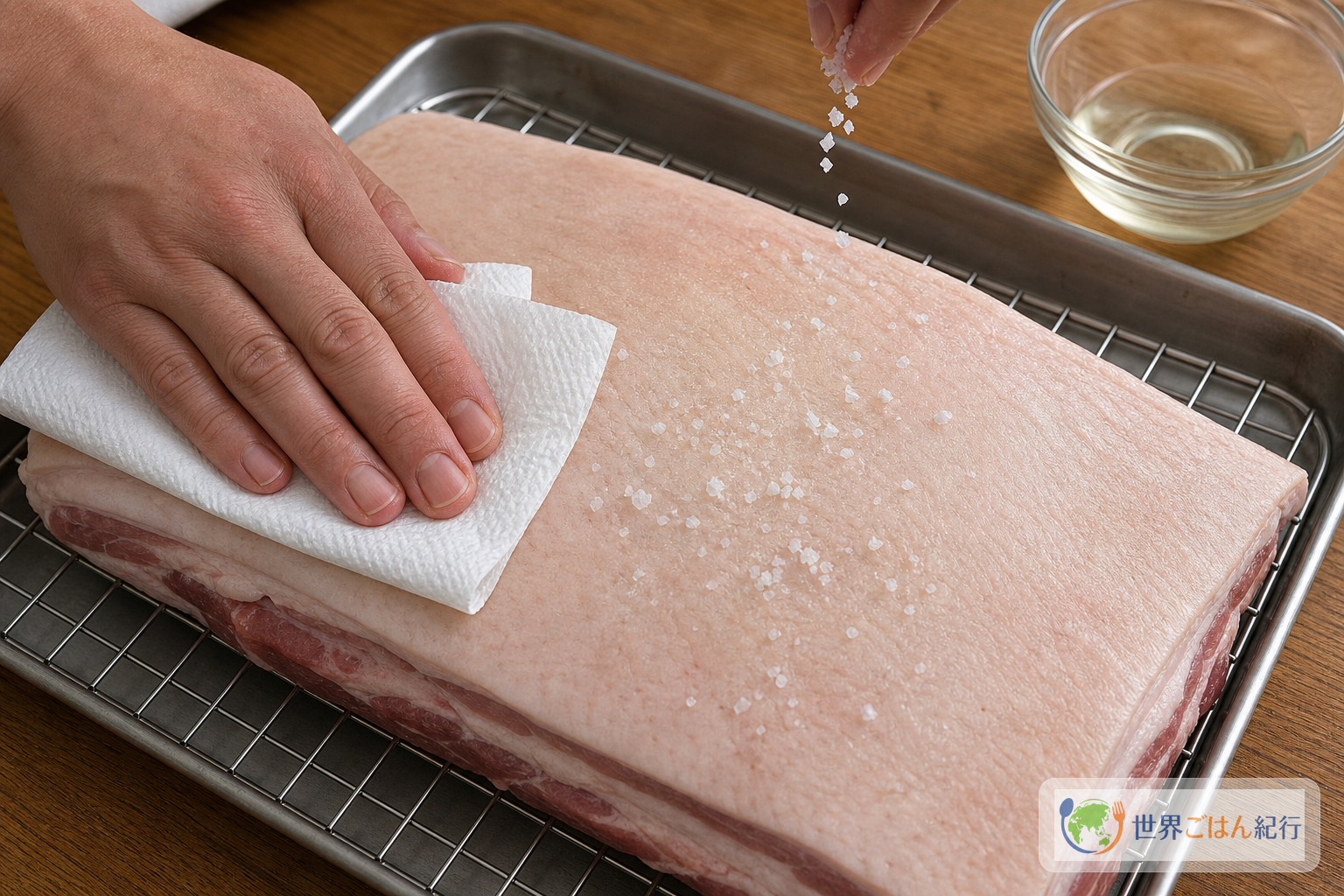
For crisp skin, pat the skin thoroughly dry before roasting, cook it slowly at a low temperature, then finish at high heat. Don't judge doneness by looks alone; confirm the internal temperature with a thermometer.
Crackling skin troubleshooting chart
Almost every lechon failure comes down to moisture in the skin and temperature. The meat may taste great while the skin turns into a hard board, or stays rubbery. When that happens, look at how the pork was prepared the day before rather than at the roasting time.
| What happened | Cause | Fix next time |
|---|---|---|
| Rubbery skin | Not dried enough; moisture left after the low roast | Dry it uncovered on a rack in the fridge overnight |
| Burnt skin | Brushed with sugar or a thick sauce; too long at high heat | Finish with only vinegar and annatto oil. Check every 2 minutes |
| Tough meat | Started roasting at high heat | Roast at 150°C to 75°C in the center, and use high heat only at the end |
| Center only lukewarm | Roll too thick; thermometer not deep enough | Check the center in two places and keep going to 85°C |
| Skin thick and hard to chew | Thick skin on pork shoulder | Crack just the skin into small pieces before slicing, and slice thin |
Drying the skin in the fridge changes almost nothing you can see. But touch the surface and it feels slightly dry, and paper towels barely pick up any moisture. That quiet overnight rest changes the last 10 minutes.
When something goes wrong, check in this order: drying the day before, the low roast, the high finish. Some methods prick the skin all over, but in a home oven that releases fat too early; it burns on the pan and causes smoke. Don't cut the skin; score only the meat side with shallow cuts 1 cm apart. Finish the center first with the low roast. Swing to high heat briefly at the very end. Sticking to that order makes it much easier to succeed the first time.
How to eat it, and a Filipino menu
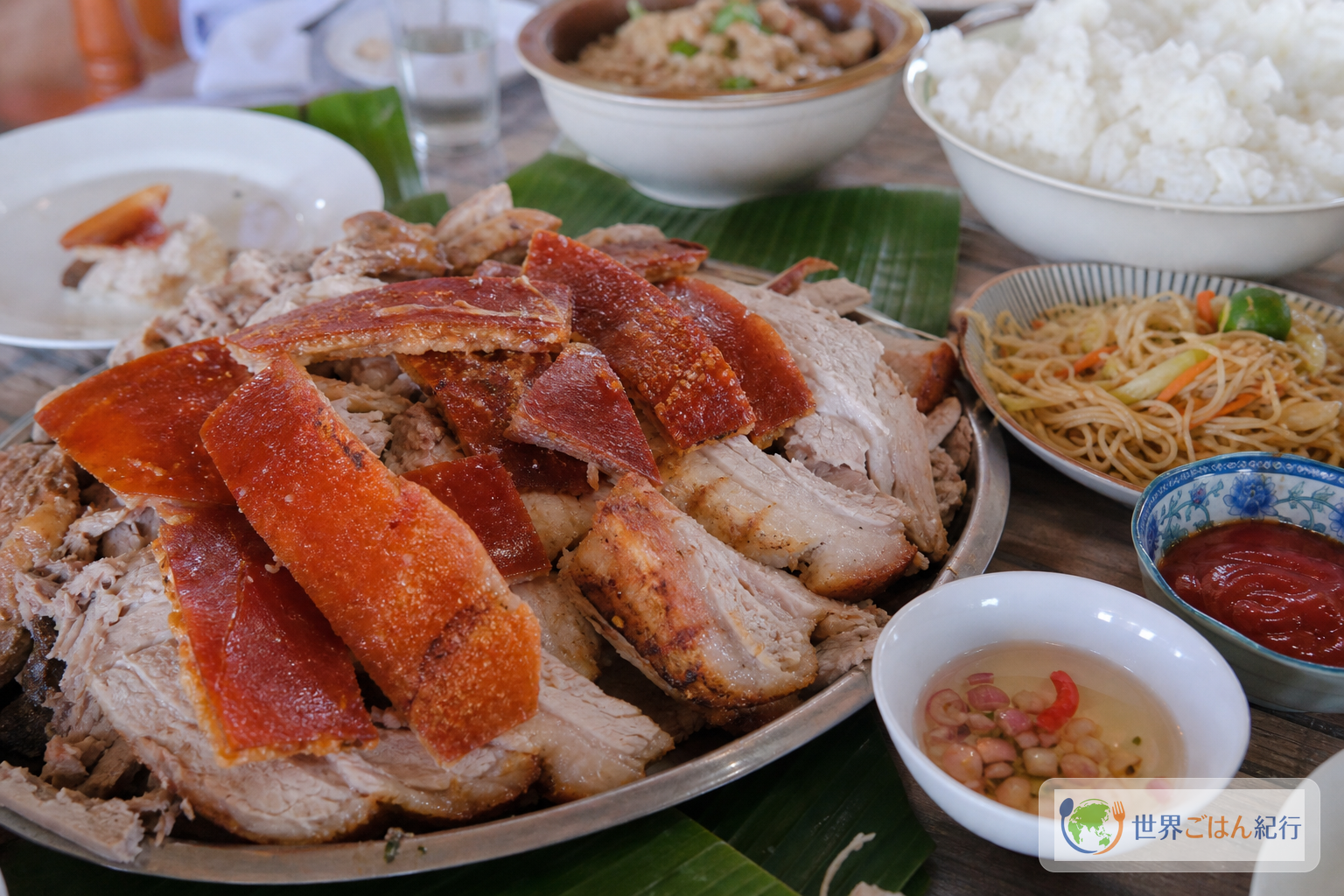
Eat sliced lechon with the vinegar dip first. Sawsawan, made with coconut vinegar, garlic, onion and chile, is a little dish meant to cut through the fat. A sweet sauce alone makes it heavy, so start with the vinegar dip, move on to banana ketchup, and finally let a little of the fat soak into your rice.
To echo a Filipino celebration table, add lumpiang shanghai (in Japanese) as a starter, pancit canton as the staple and a small bowl of sinigang as the soup, so sourness, noodles, fried food and pork each have their own role. On days when you serve rich kare-kare or Bicol express (in Japanese), make less lechon and make the vinegar dip sharper.
Leftovers are great chopped up sisig-style (in Japanese). Finely chop the skin and stir-fry it with onion, chile, calamansi and a little soy sauce, and the remains of a celebration become a snack to go with drinks. For breakfast, top garlic fried rice with small pieces of lechon and add an egg for a hearty morning plate that's quite different from arroz caldo (in Japanese).
For a sweet finish, sapin-sapin (in Japanese), made with glutinous rice and coconut, is a good match. After lechon's richness, a cool coconut sweet ends the meal cleanly.
Storage and reheating
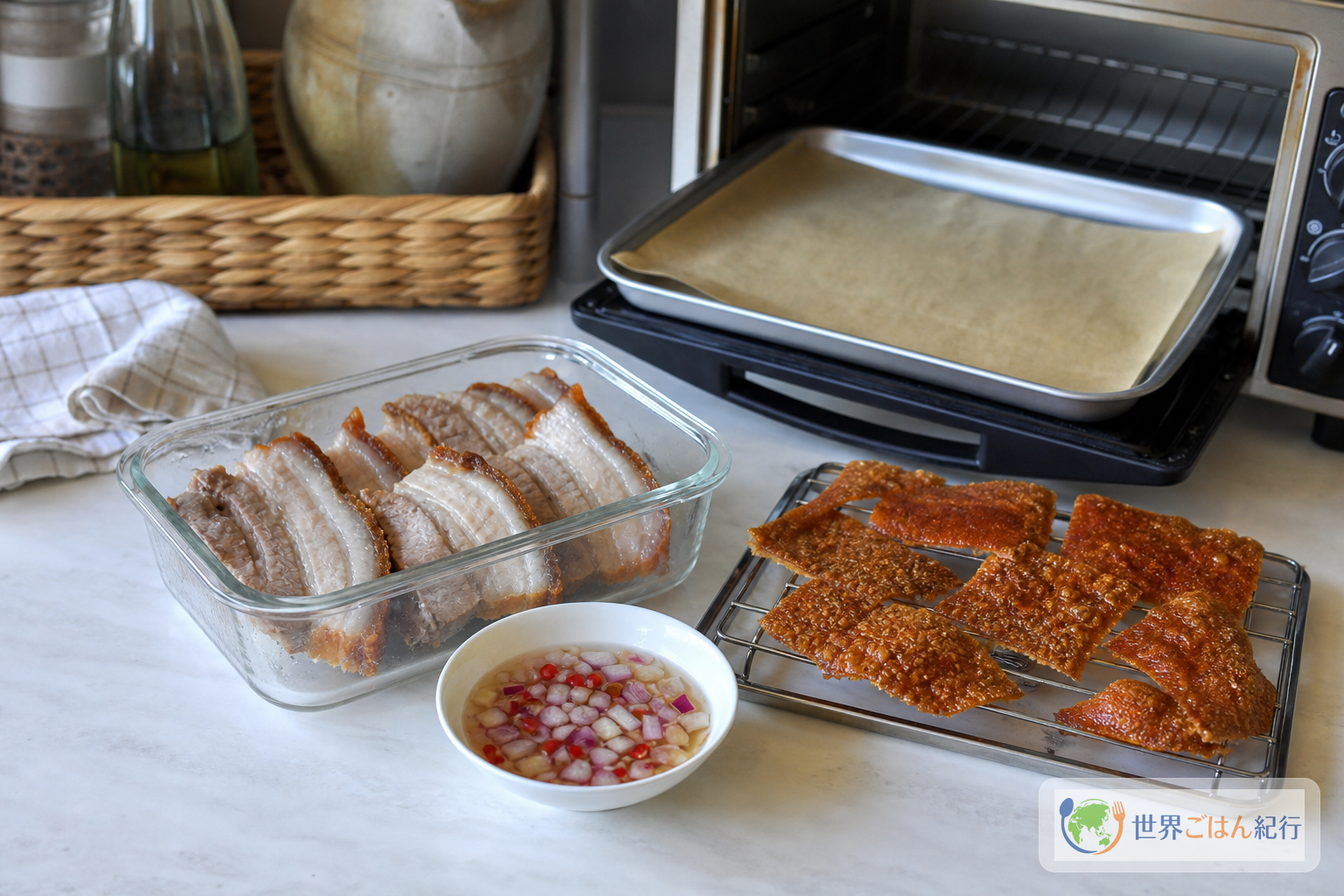
Let leftover lechon cool, then put it in a shallow container in the fridge and finish it within 2 days. If the skin sits pressed against the meat it absorbs moisture, so if you can, keep the skin separate on a small rack or paper towel. You can freeze it, but the skin's texture suffers a lot. If you freeze, freeze only the meat and use it within 1 month; eat the skin soon.
Reheating works better if you don't rely on the microwave alone. Warm the meat in a 600 W microwave for about 1 minute, and crisp the skin in a toaster oven or a 220°C (425°F) oven for 8–10 minutes. You're aiming for skin that's crisp again, with little beads of fat on the surface. Pull it out as soon as it starts to burn.
The vinegar dip keeps about 2 days in a clean container in the fridge. It contains garlic and onion, so don't leave it out at room temperature. The next day, put the fat to work: chop the lechon finely and add it to stir-fried noodles, mix it into white rice, or fold it into an omelet, and nothing goes to waste.
FAQ
I can't find skin-on pork. Can I make it without the skin?
Without the skin you can make a fragrant roast pork, but you won't get lechon's signature skin texture. If you use skinless pork, shorten the high-heat finish to about 8 minutes at 220°C (425°F) so the surface doesn't burn. The result is closer to a "lechon-style roast."
Which is better, pork belly or shoulder?
Skin-on pork belly is easy to roll and fatty, so it's more forgiving. Shoulder is meatier and sometimes has thick skin. Start with belly, and try shoulder if you find belly too rich. Either way, aim for 85°C in the center, and extend the low roast by 30 minutes if the roll is thick.
What's the difference between Cebu-style and Manila-style?
Broadly, Cebu-style lechon is talked about for the aroma of the pork itself, stuffed with lemongrass and aromatics, while around Manila it is often eaten with a sweet liver sauce. It varies a lot from shop to shop and family to family, so this article takes a home approach: lemongrass inside, with vinegar dip and banana ketchup on the side.
Smoke is coming from the oven. Is it okay to keep going?
If you see black smoke, lower the temperature. If the fat in the pan is burning, take the pan out, wipe away the burnt fat, add a little water and put it back. The high-heat finish is meant to be short at 240°C, but if your oven runs unevenly, 220°C for a bit longer is fine. Checking through the door every 2 minutes is what matters.
Is it not authentic without liver sauce?
Liver sauce is a great match, but it isn't essential at home. Making a good vinegar dip does more to make rich lechon easy to eat. On days you want something sweet, simply mixing a little vinegar into banana ketchup moves it in a Filipino direction.
What can I do with leftover meat?
Chop it finely and stir-fry it for a sisig-style snack. For noodles, add a little to pancit canton and the pork flavor carries into the noodles. If you mix it into white rice, a splash of vinegar dip keeps the fat from feeling heavy.
Sources
- Guide to the Philippines. "Philippines Lechon Guide: Cebu, Manila, Davao and More." https://guidetothephilippines.ph/articles/ultimate-guides/philippines-lechon-guide (accessed 2026)
- FoodSafety.gov. "Cook to a Safe Minimum Internal Temperature." https://www.foodsafety.gov/food-safety-charts/safe-minimum-internal-temperatures (accessed 2026)
- Kawaling Pinoy. "Lechon sa Hurno." https://www.kawalingpinoy.com/lechon-sa-hurno/ (accessed 2026)
- Panlasang Pinoy. "Lechon Belly Recipe." https://panlasangpinoy.com/oven-roasted-lechon-belly-recipe/ (accessed 2026)
- Wikipedia. "Lechon." https://en.wikipedia.org/wiki/Lechon (accessed 2026)



