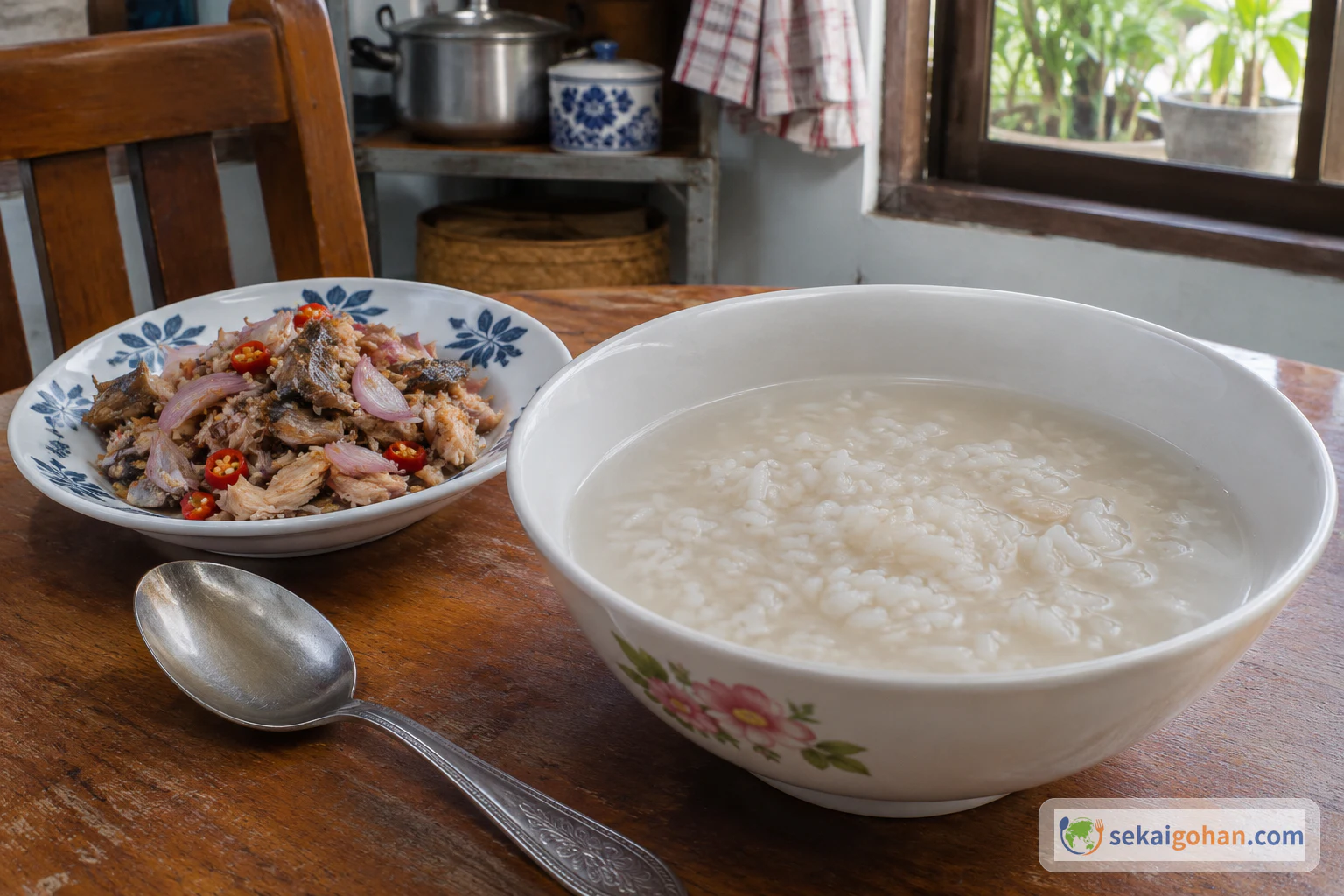
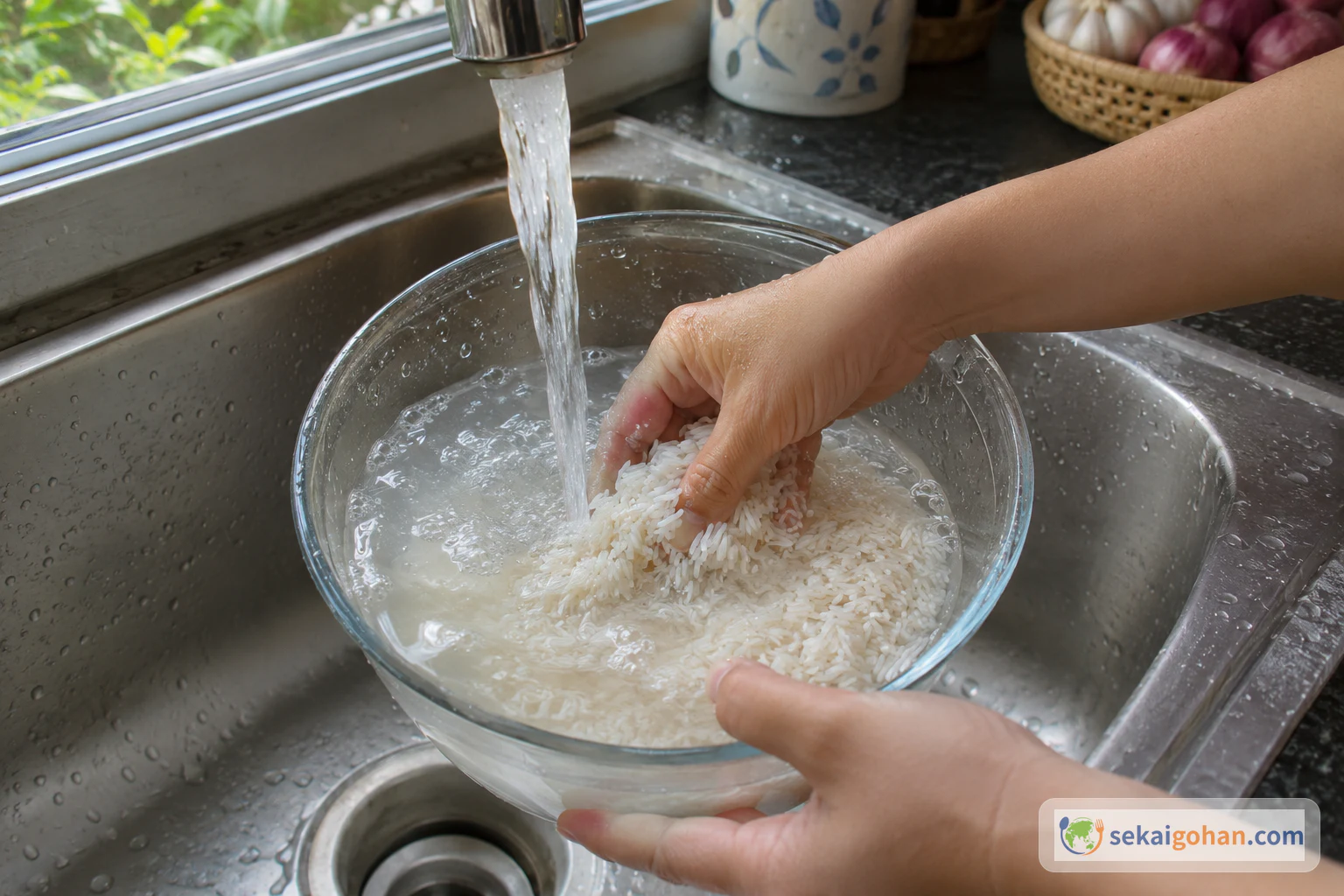
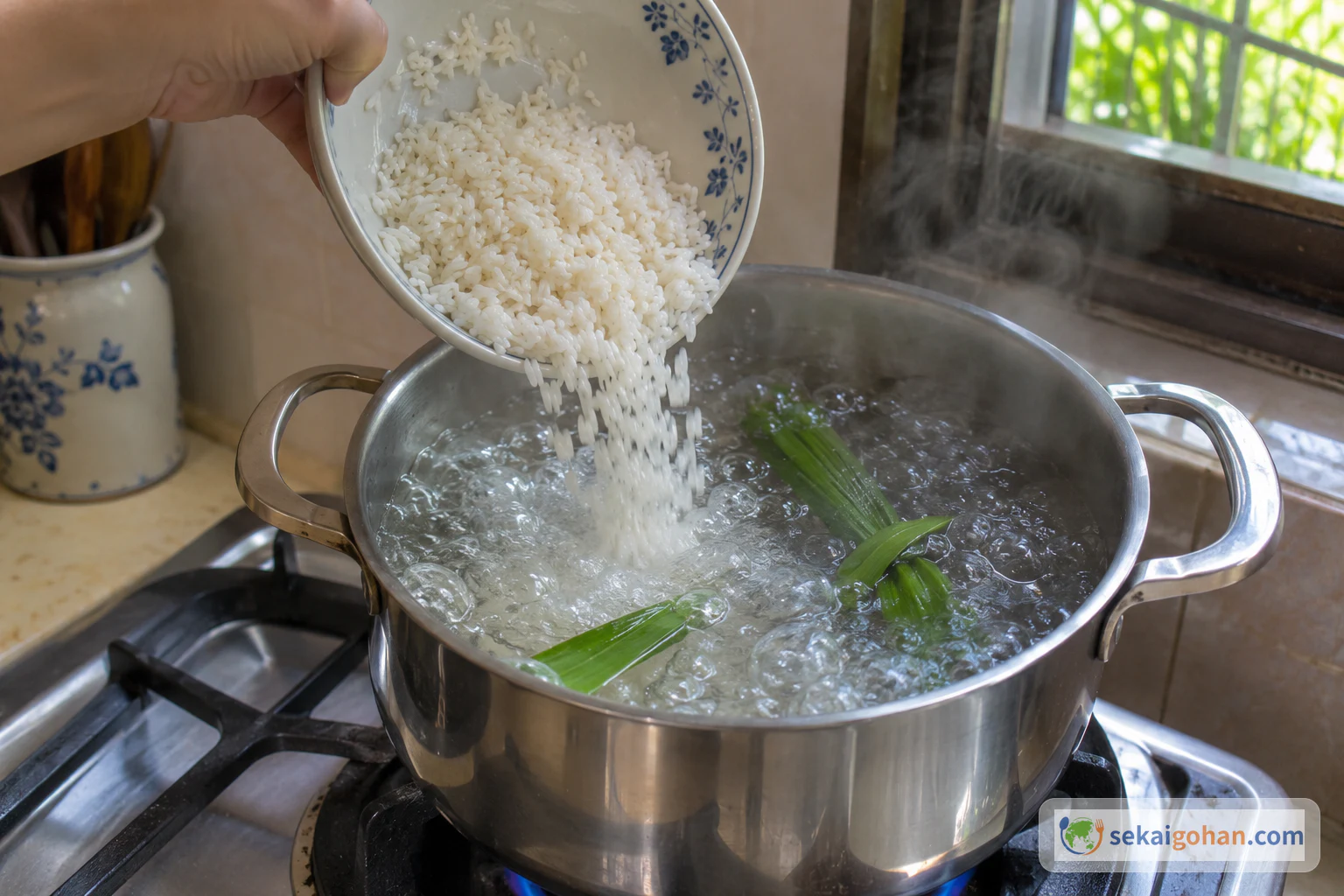
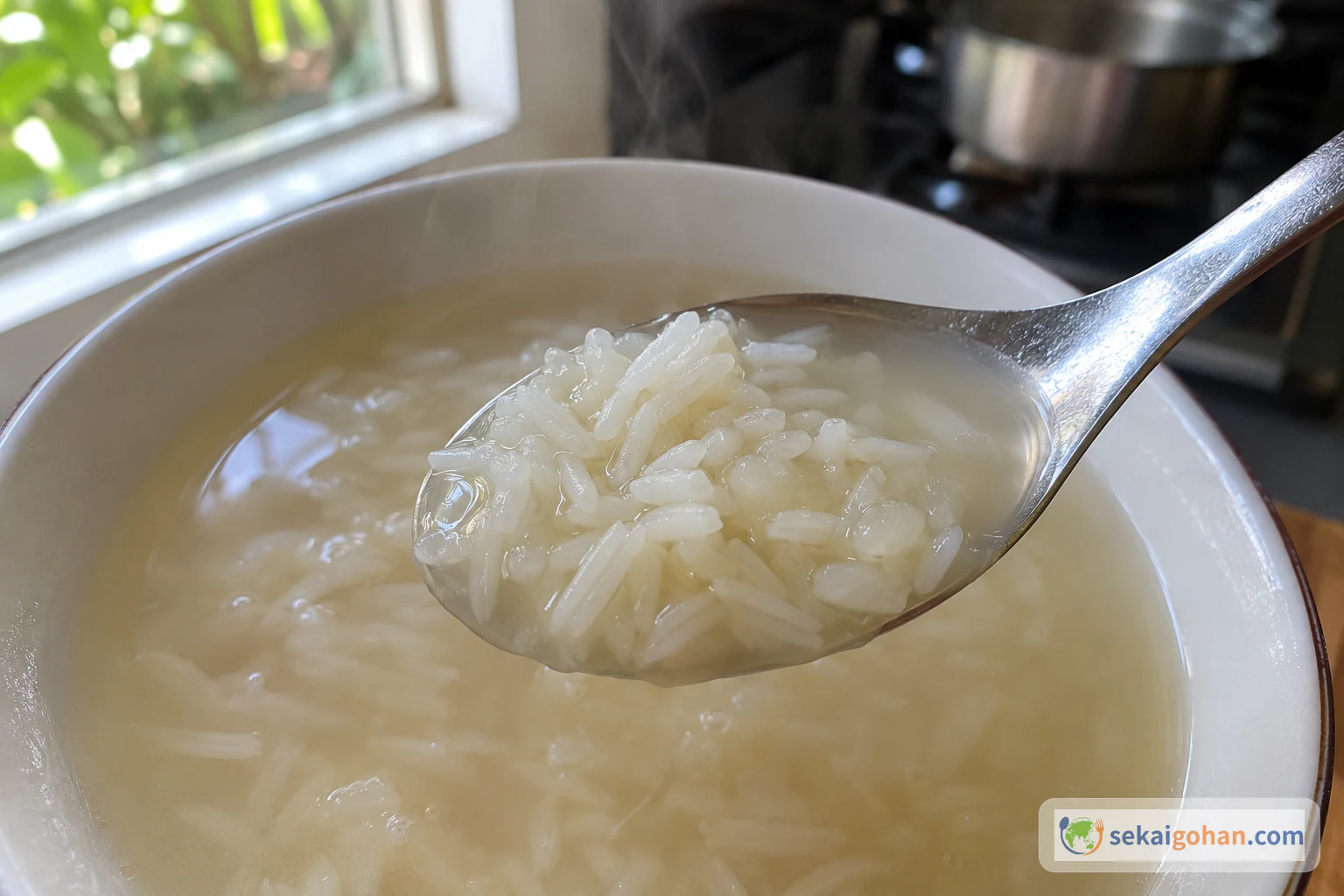
Steam rises off a pot of water with two pandan leaves in it, and the kitchen starts to smell faintly sweet and grassy before the rice even goes in. Twenty minutes later the jasmine grains have opened and gone soft, but you can still see each one, loose in a pale, thin broth. That bowl is khao tom kui. It goes on a Thai table with a few small plates around it, salty, sour, sharp or crisp. The porridge itself stays quiet. You take a spoonful of rice, then a little of a side dish, then rice again, and the meal is built out of that back and forth.
A White Bowl and the Small Plates Around It
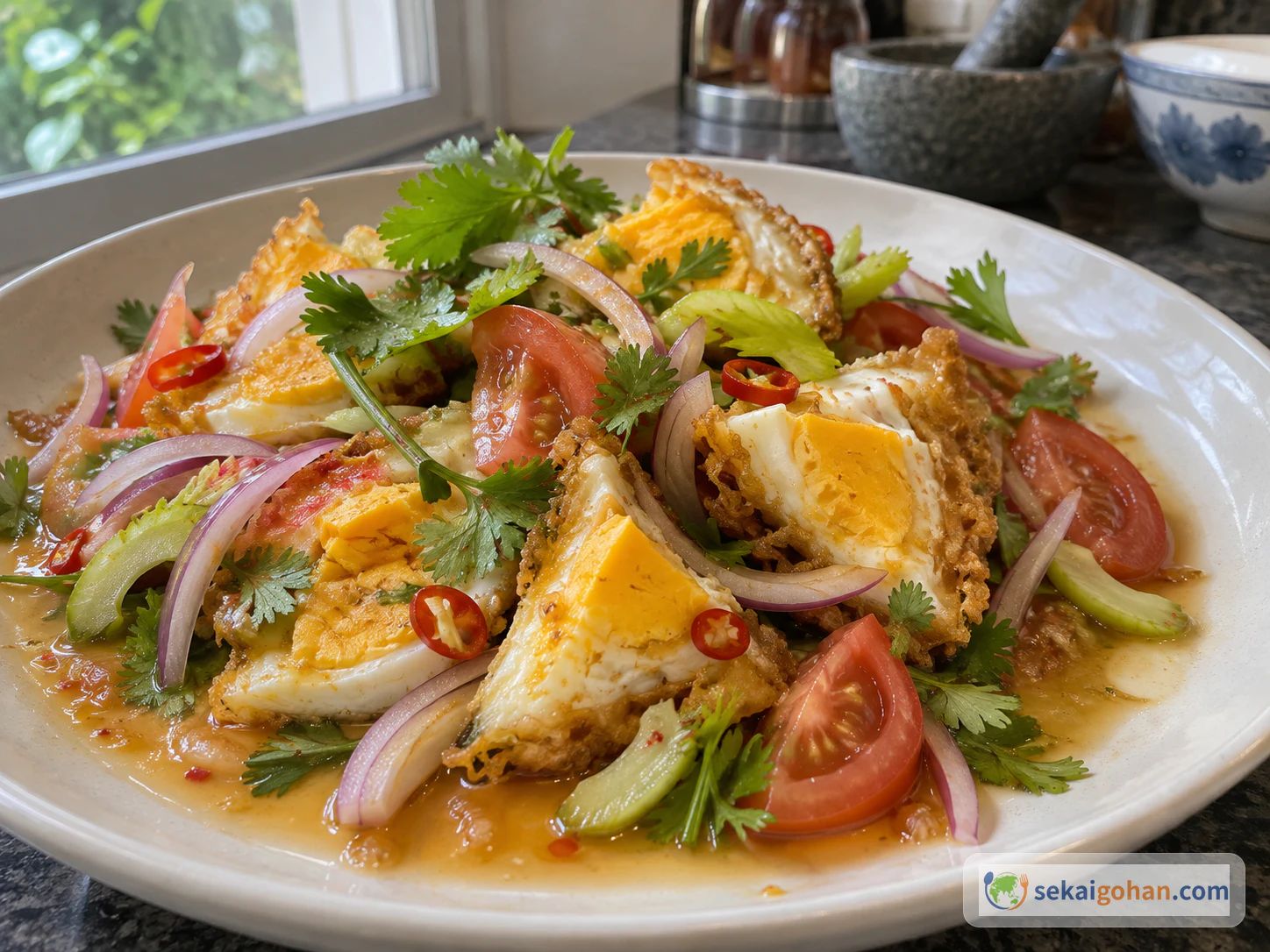
Khao tom kui is plain on purpose. Nothing salty goes into the pot. There is jasmine rice, a few spoonfuls of glutinous rice for body, pandan for scent, and clean water. All the strong flavor sits on the small plates, and each person picks from them bite by bite. A salted fish salad, yam pla khem (ยำปลาเค็ม), is the classic partner, with shallots and chili cutting through the salt. Salted eggs, pickled vegetables, stir-fried water spinach, fermented tofu and fried peanuts are other plates that turn up beside the bowl. You serve one, two or three of them. Nobody puts out the whole list.
It is a meal for ordinary people and working hours. Thai novels show working people eating rice porridge with side dishes bought at the market: stir-fried water spinach, century eggs, salted eggs and all kinds of yam salads. Anyone can fill a bowl and set out whatever the market has that day.
In Thai it is written ข้าวต้มกุ๊ย. Khao tom means boiled rice and is the everyday word for rice porridge in general. Where the kui part comes from is not settled, and several explanations go around.
Three bowls that are easy to confuse
The word khao tom covers more than one dish, so it helps to know what sits next to khao tom kui. The grain is the dividing line.
| Dish | What is in the bowl | How it differs |
|---|---|---|
| Khao tom kui (ข้าวต้มกุ๊ย) | Soft whole grains in a thin, plain broth | Unseasoned; side dishes are served on separate plates |
| Jok (โจ๊ก) | Rice cooked until the grains break down into a smooth porridge | Smooth throughout, with no separate grains |
| Khao tom kung (ข้าวต้มกุ้ง) | Cooked rice in a bowl with stir-fried shrimp on top | A separate dish built on cooked rice, with the shrimp as part of it |
Khao tom kui sits at the gentle end of a Thai meal. The rest of the table runs much hotter and louder, from tom yum goong to green curry. For more dishes from the same kitchen, see the Thailand page.
Ingredients (serves 3)
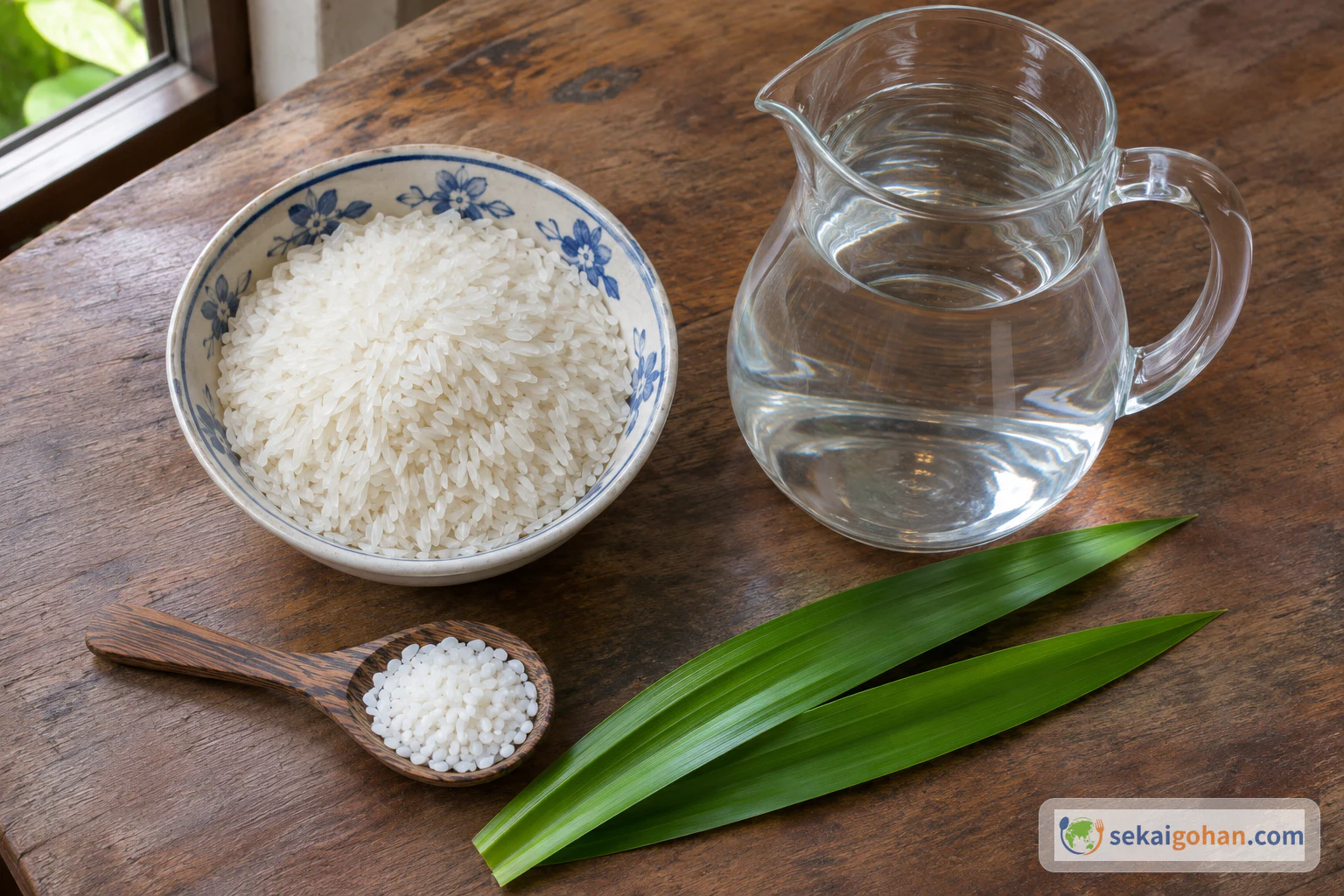
Use the same cup for the rice and the water, so the proportions hold whatever size your cup is.
The porridge contains only rice, pandan and water. The side dishes bring the allergens: fish and seafood in salted fish salad, soy in fermented tofu, egg in salted and century eggs, and peanuts in fried peanuts. Check the labels on any bought side dish before you serve it.
Equipment
- A heavy, deep pot
- A wooden spoon or spatula
- A cup measure, used for both rice and water
- A bowl and a sieve for rinsing the rice
- A ladle and serving bowls
Choosing the Rice and Pandan
Look for Thai jasmine rice, Thai glutinous rice and frozen pandan leaves. All three are sold at Asian grocers and online under those plain names. Jasmine rice gives the base fragrance. The glutinous rice gives stickiness. Pandan gives the scent that runs through the whole bowl.
| If you change | What happens |
|---|---|
| Leave out the pandan | The porridge is still good, but the sweet, grassy scent is gone. Do not swap in vanilla or a bottled flavoring, because they pull it toward a different dish |
| Leave out the glutinous rice | The broth is thinner and the bowl holds together less |
| Use Japanese short-grain rice | The grain, the fragrance and the texture all change, so stay with jasmine |
| Thicken with cornstarch | The broth turns gluey instead of soft and loose. The body should come from the glutinous rice |
If you can only get one specialty ingredient, make it the jasmine rice. Frozen pandan comes second. It is the easiest form to find.
Method
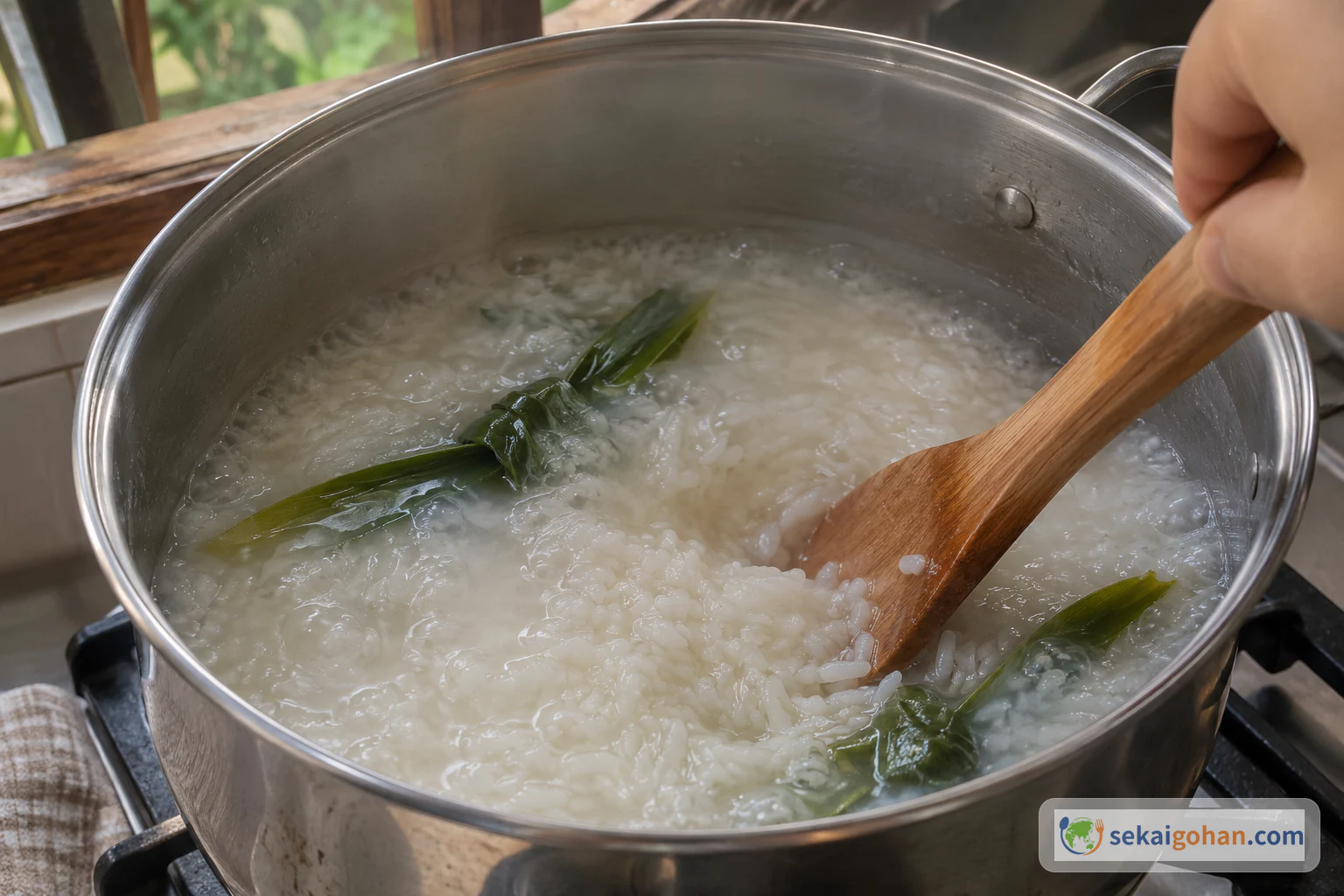
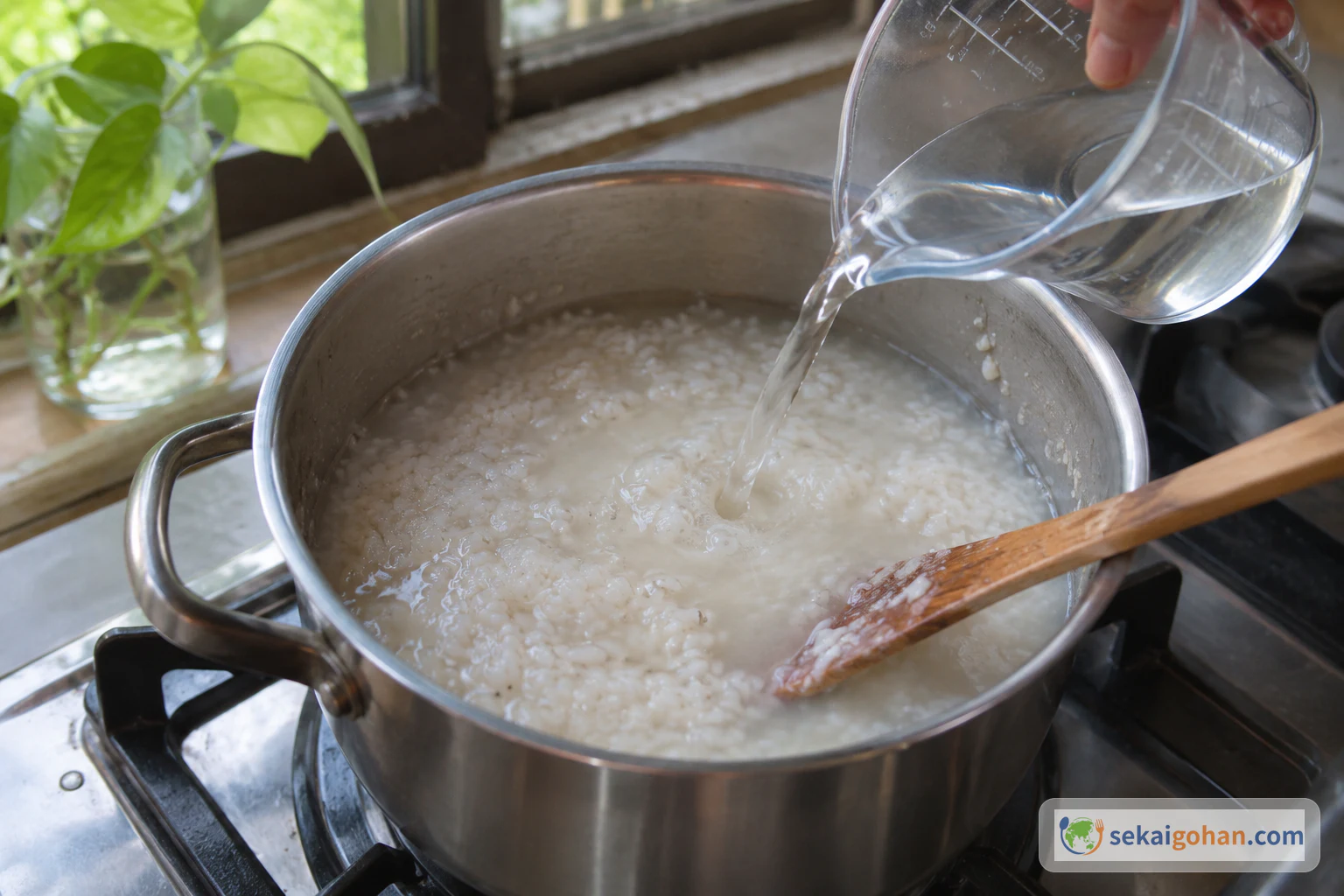
The work is short. You rinse the rice, bring the water and pandan to a boil, and add the rice. After that comes about twenty minutes at medium heat, with a stir now and then and an eye on the water level. Have the extra water and your cup measure next to the stove before you start, and set the side dishes out while the pot simmers. Serve it hot, straight from the pot.
Adding the rice once the water is already boiling is the move that keeps the grains distinct. Starting the rice in cold water gives you a different texture.
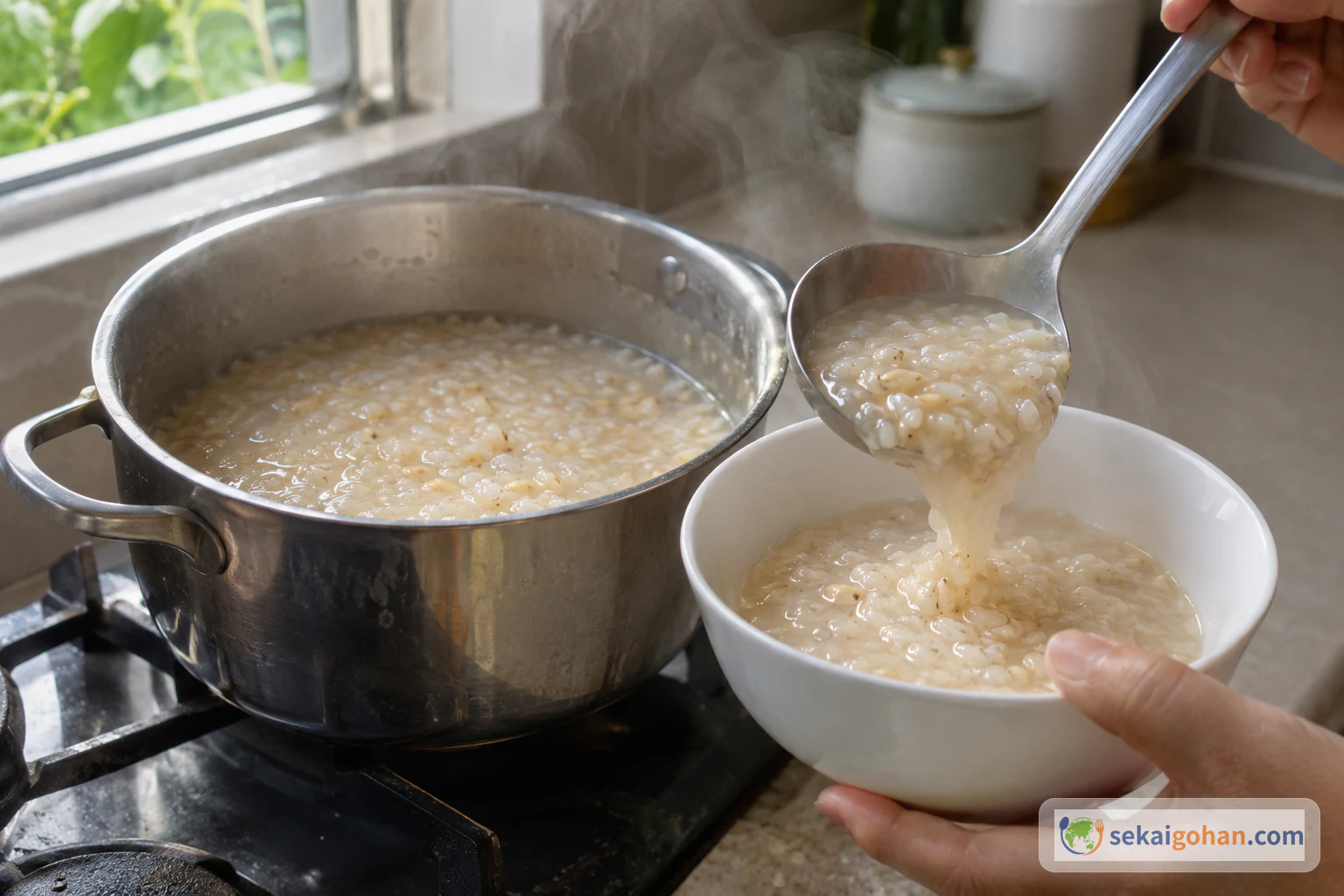
A gentle pass along the bottom now and then is all the pot needs. Hard stirring breaks the grains and pushes the bowl toward jok.
When It Goes Wrong
| What you see | Why | What to do |
|---|---|---|
| The pot boils over or rice sticks to the bottom | The heat is too high, or the rice has settled | Turn the heat to medium and run the spoon gently along the bottom |
| The porridge is dry and the grains are still hard | The rice has soaked up the water before it finished cooking | Add ½ cup of water at a time and check after each addition |
| The grains have collapsed into a smooth paste | The pot was stirred too hard | Stir less and more gently next time. You can still eat this pot as a softer porridge |
| The bowl tastes flat on its own | The porridge is unseasoned by design | Serve a salty side plate and take the two in alternating bites |
Serving and Variations
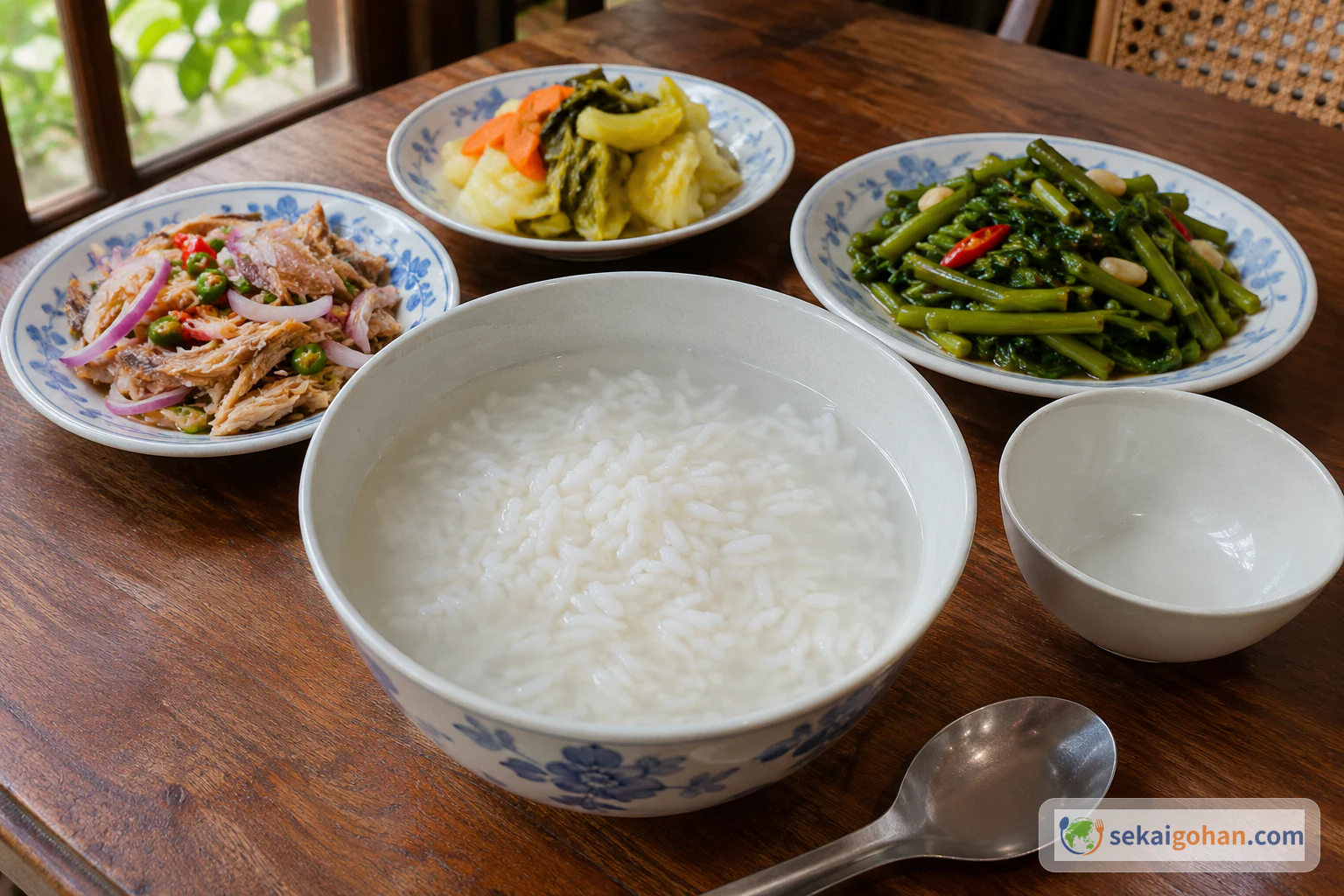
Put the hot bowls in the middle and the side plates around them. Keep each plate small and strongly flavored, since a little goes a long way against plain rice. Salted fish salad is the classic choice and an easy one to start with. Each side dish stays on its own plate. The porridge stays white, and people take one bite of a side dish, then one of rice.
Variations
- A salted-egg table. Put salted eggs at the center of the spread. Their rich, salty yolk breaks up into the warm porridge one spoonful at a time.
- Water spinach and pickles. Serve stir-fried water spinach next to a dish of pickled vegetables. One brings savory, stir-fried warmth and the other brings sourness, so the meal feels lighter than one built around salted fish.
- A market spread. Add a yam salad, century eggs or fried peanuts and build the table out of what you can buy ready-made. This is how the meal works in its home setting.
Frequently asked questions
How much water is that in milliliters?
Think of the water in cups, using the same cup you used for the rice. One cup of rice starts with four cups of water and can take up to six. The last cups go in half a cup at a time, depending on how dry the pot looks and how firm the grain feels, so the state of the rice decides the final amount.
Should I salt the porridge?
No. The porridge is cooked with only rice, pandan and water. The salt comes from the side dishes, and every bite finds its own balance between plain rice and a strong side dish.
Does freshly harvested jasmine rice cook the same way?
New-crop jasmine rice takes up water differently. Cook it the same way, but rely on the cues more than the cup count. Add water half a cup at a time only while the grains still bite firm, and stop when they are soft and loose in the broth.