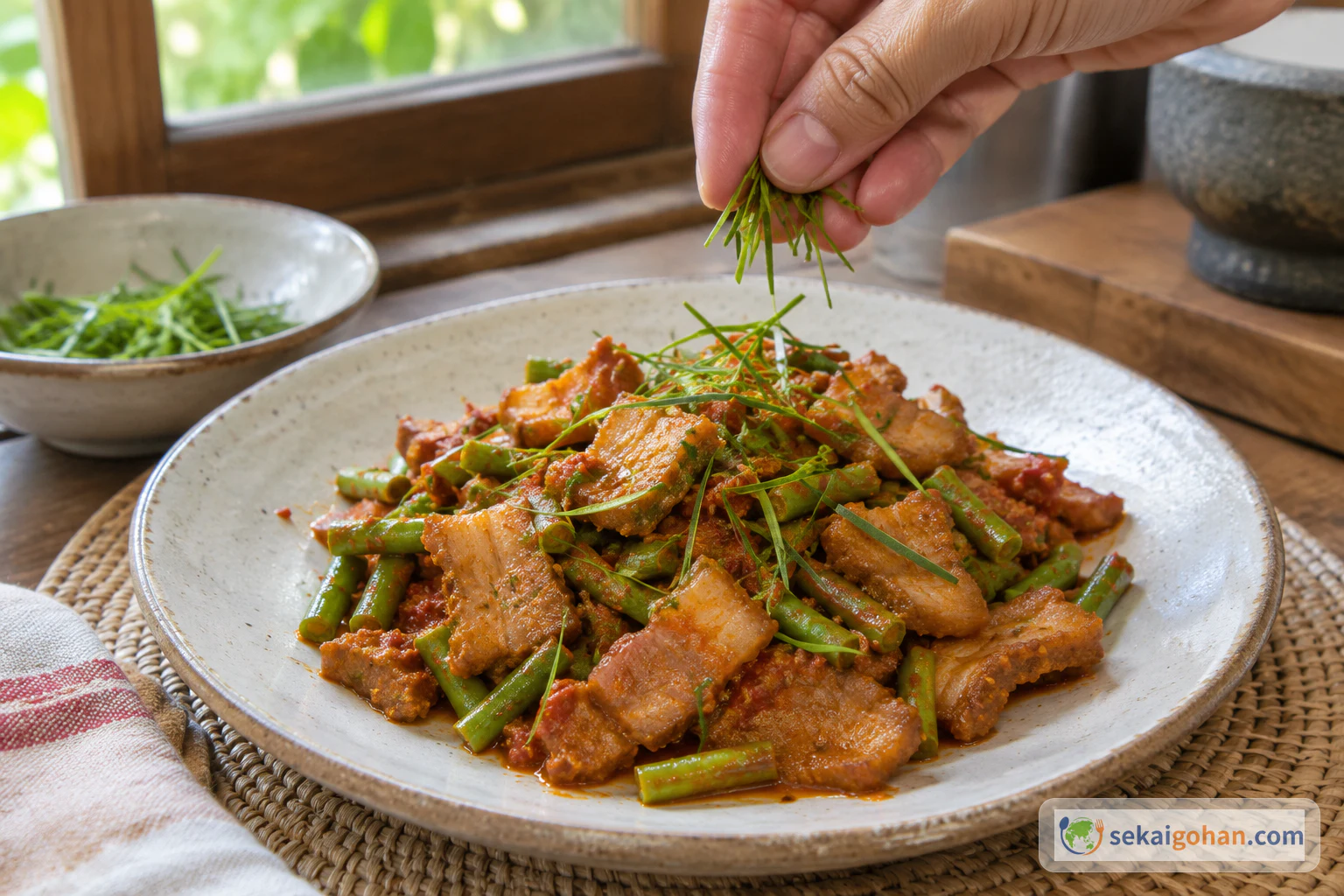
Phat Phrik Khing: Red Curry Paste That Clings to Pork and Beans
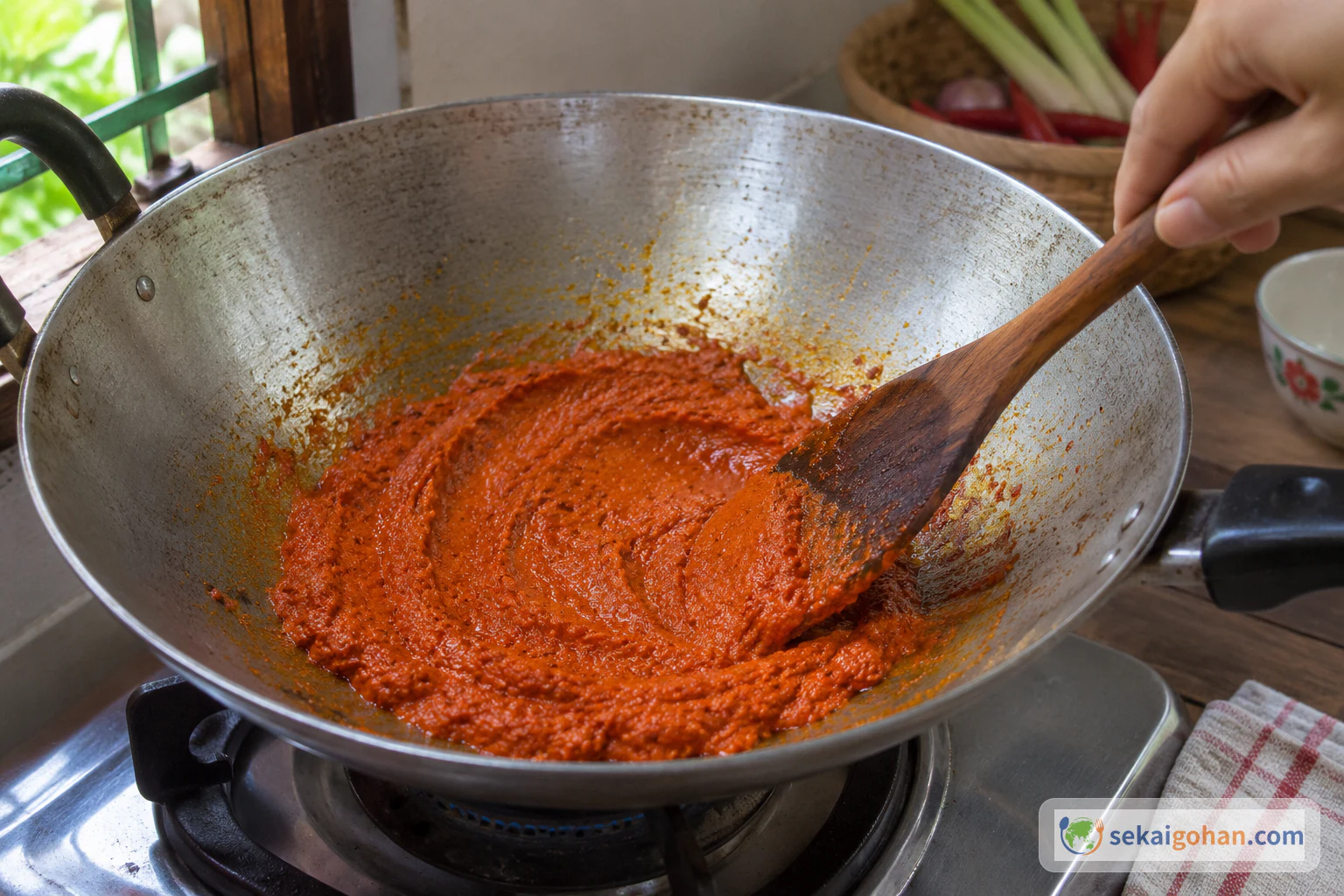
Fry the paste gently until smooth, then let a small amount of sauce bring the pork and beans together. The sauce coats the ingredients rather than taking center stage.
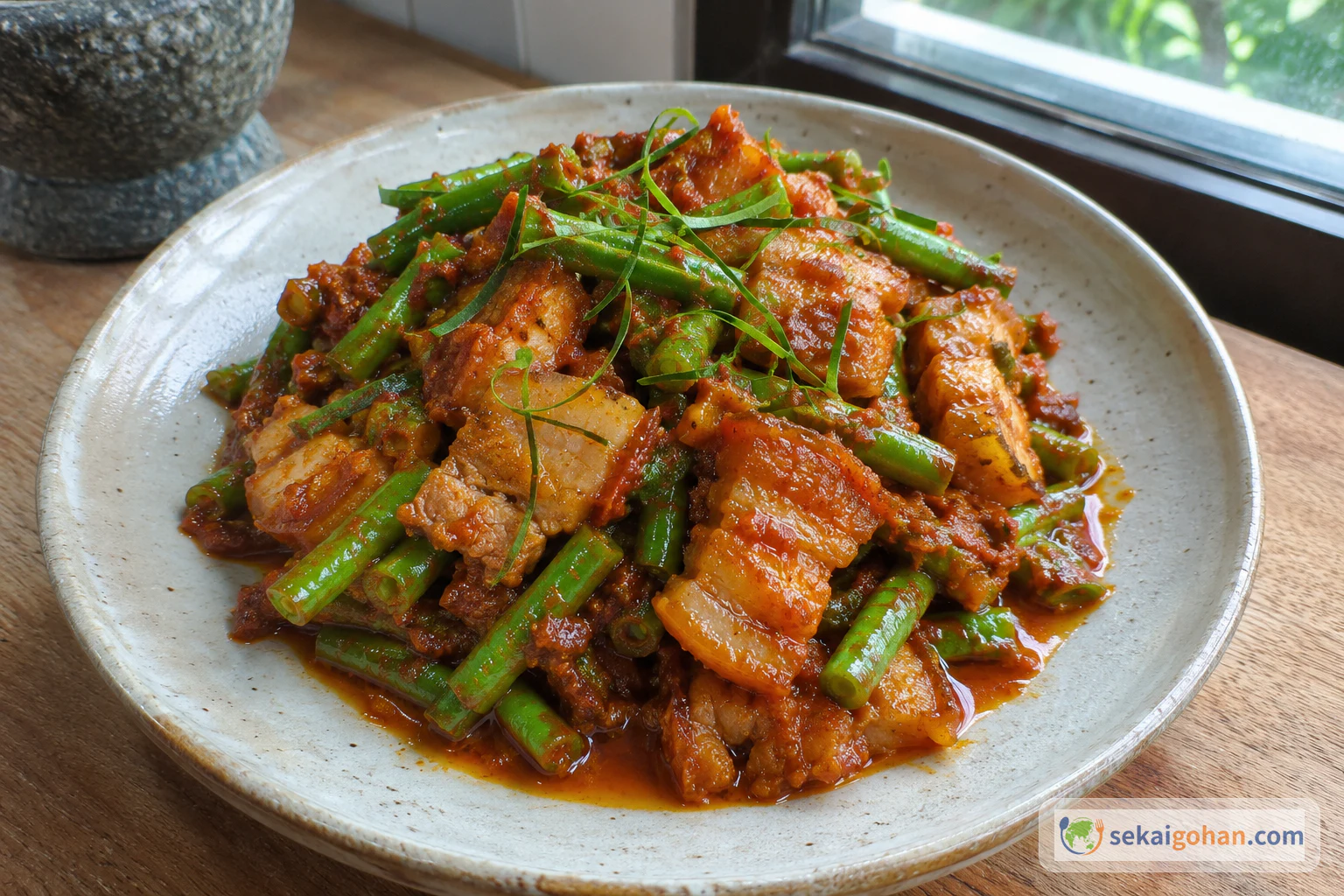
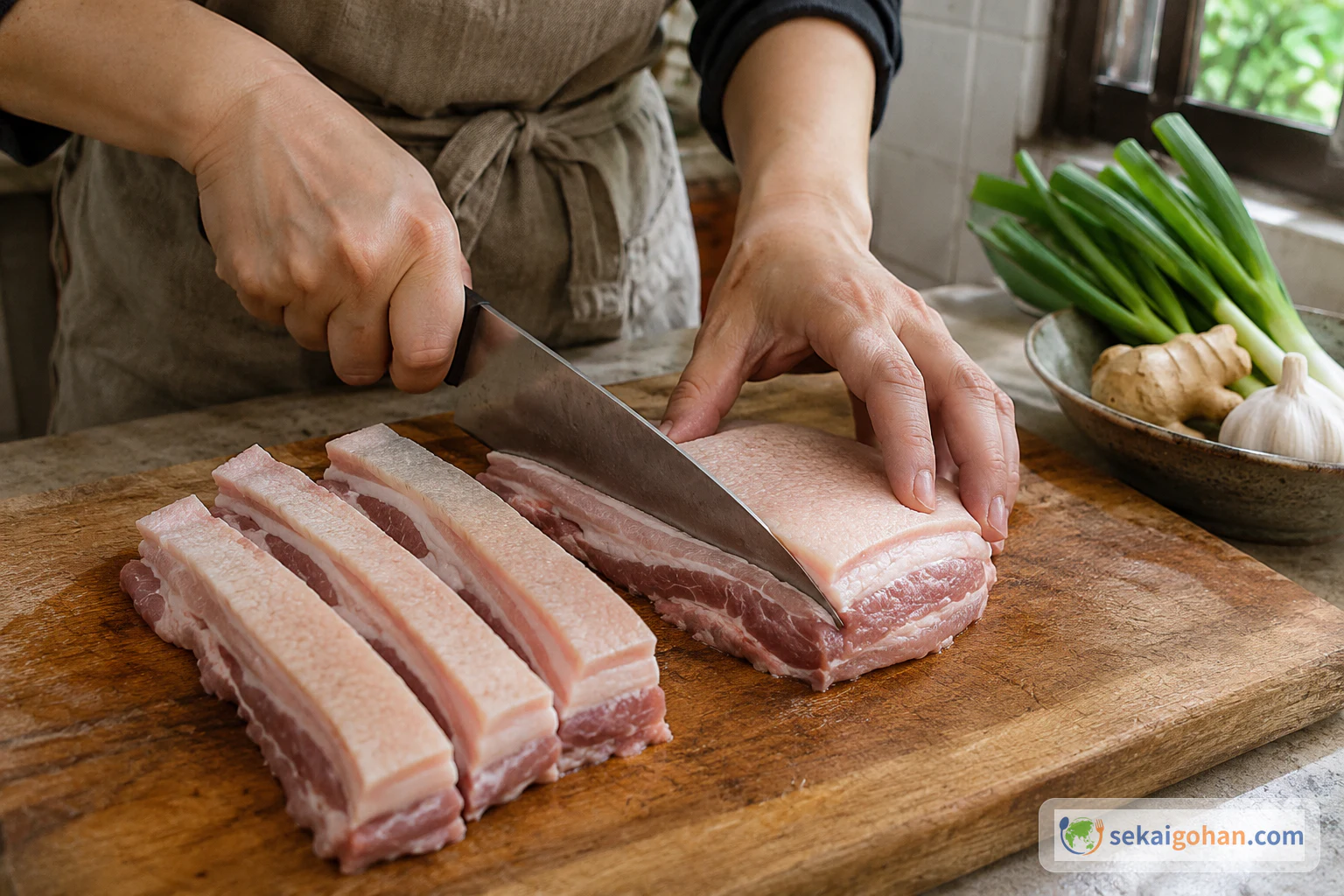
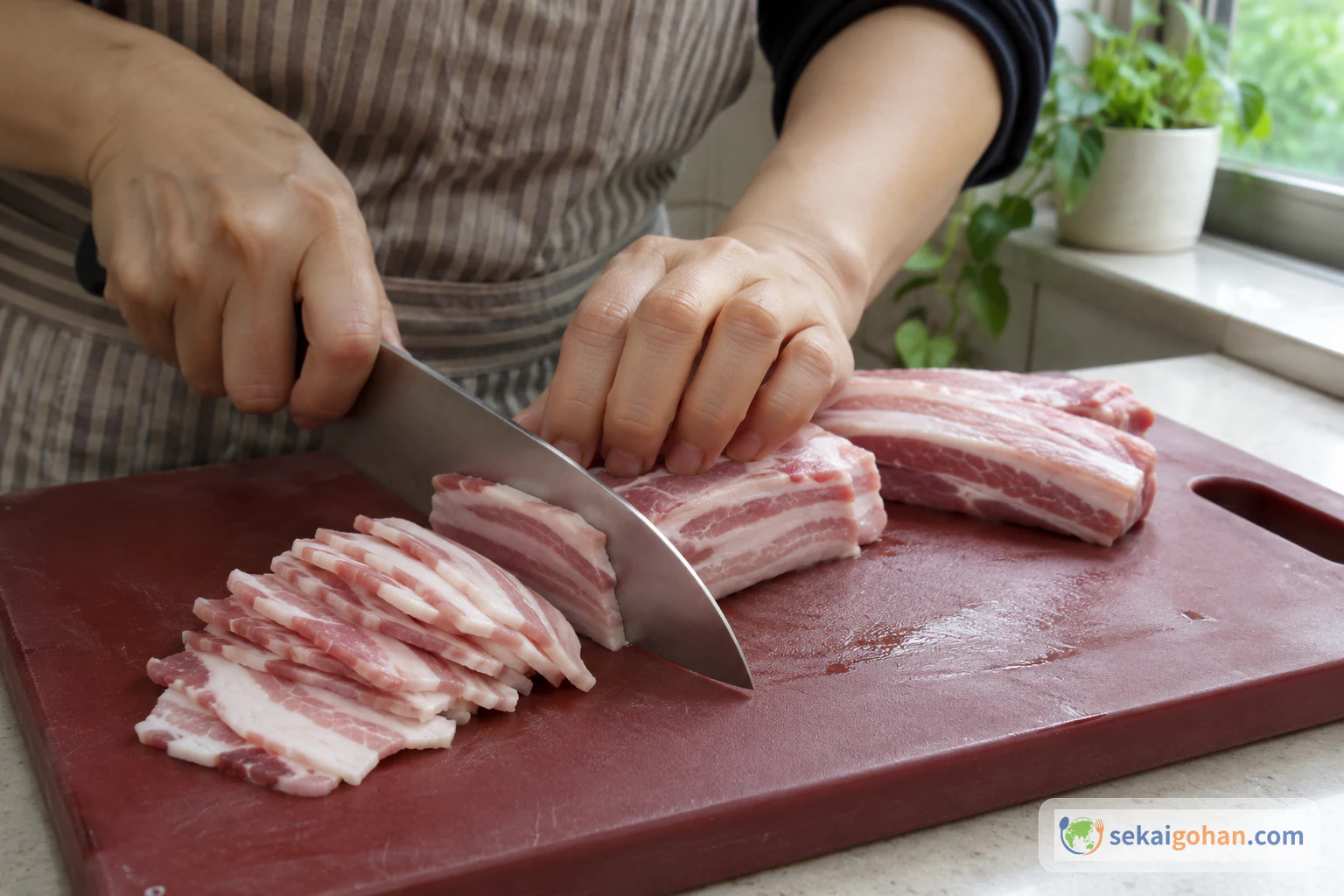
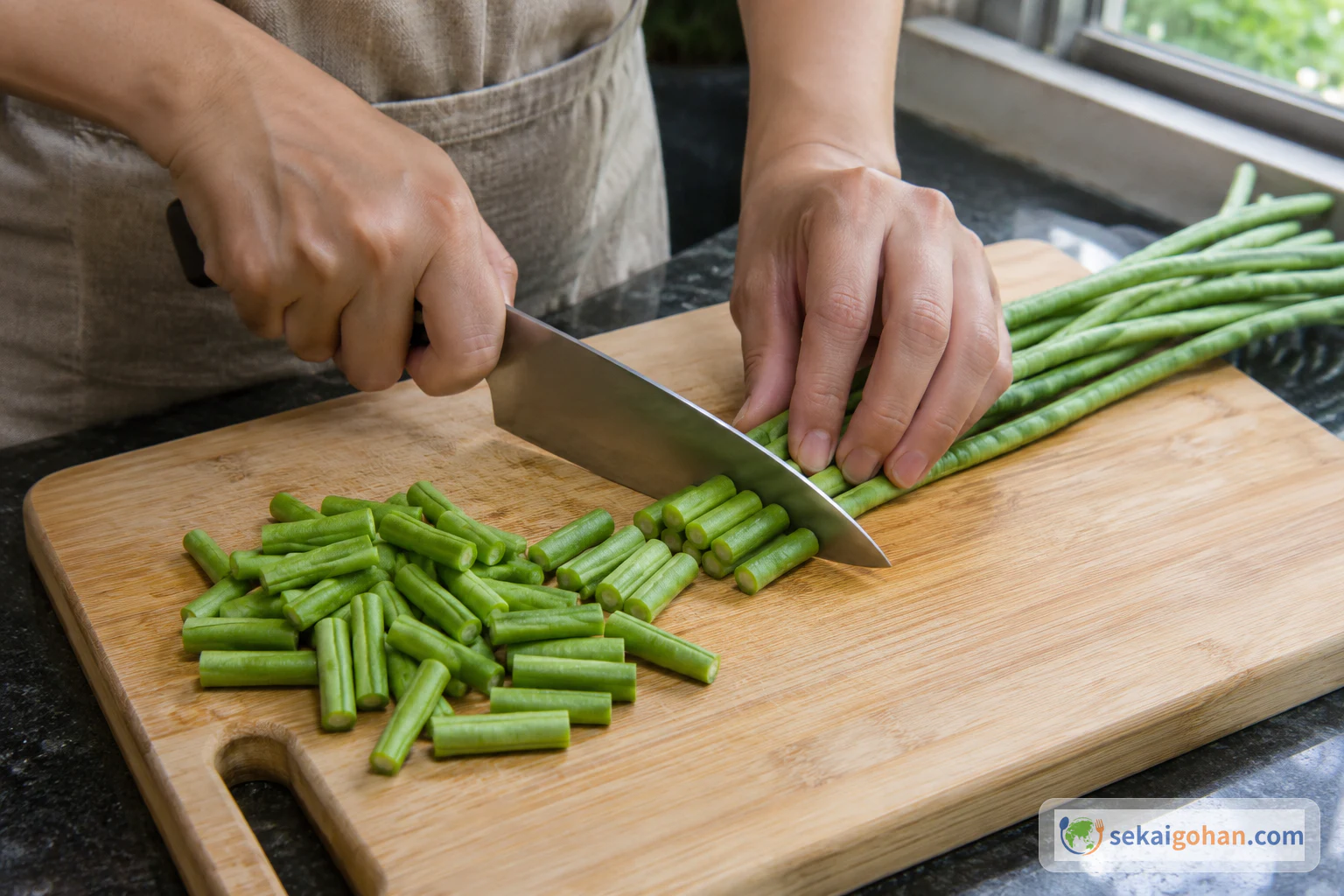
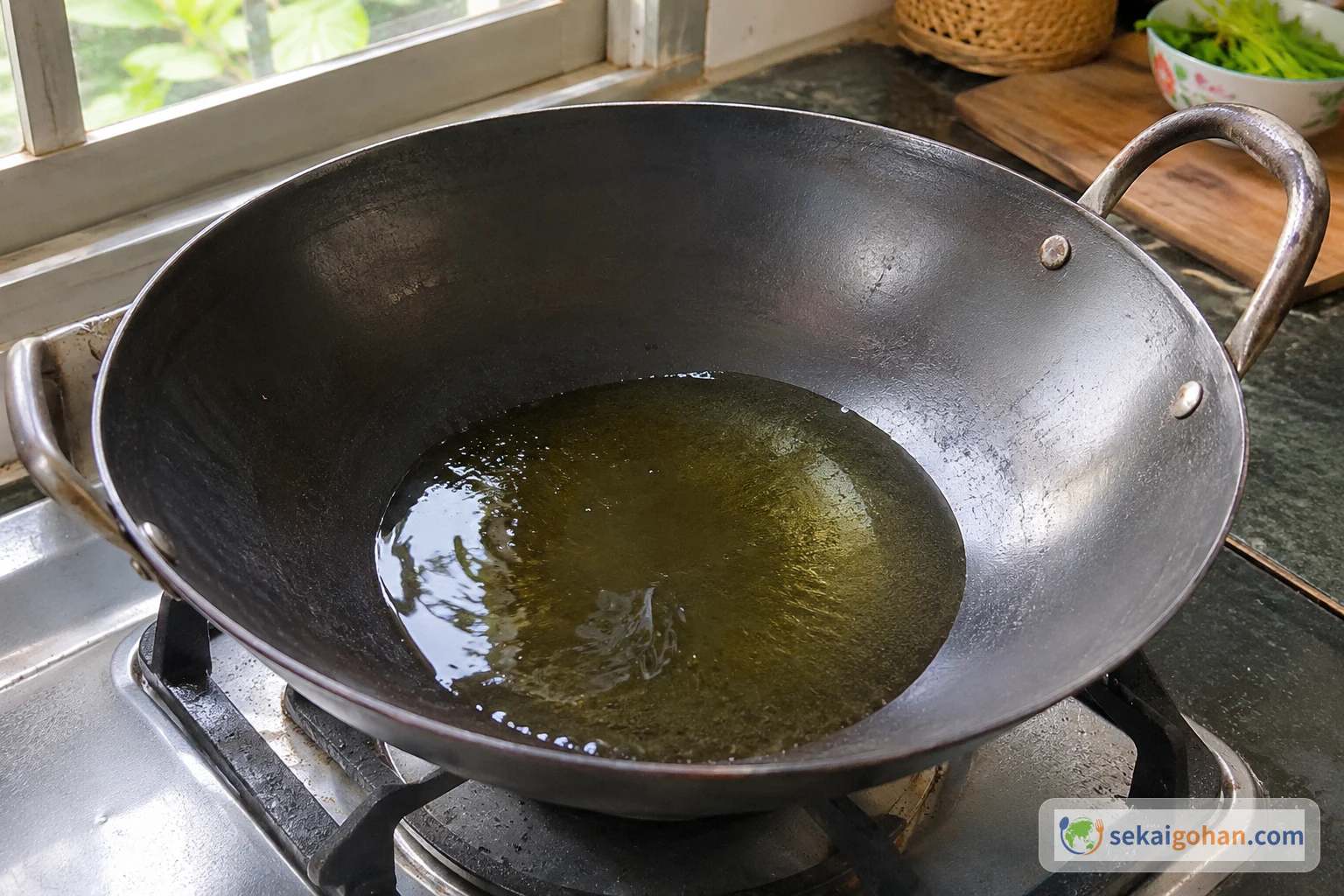
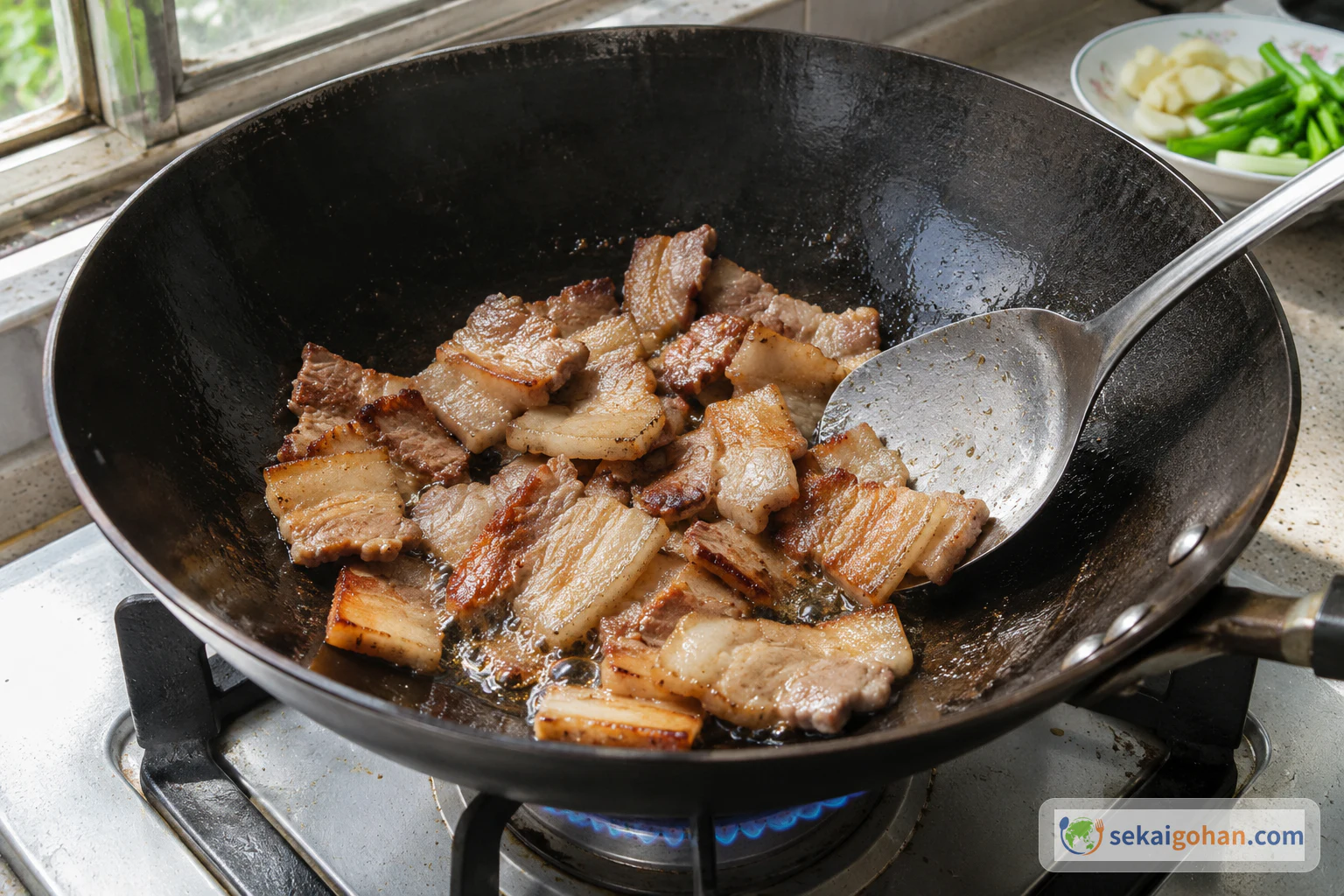
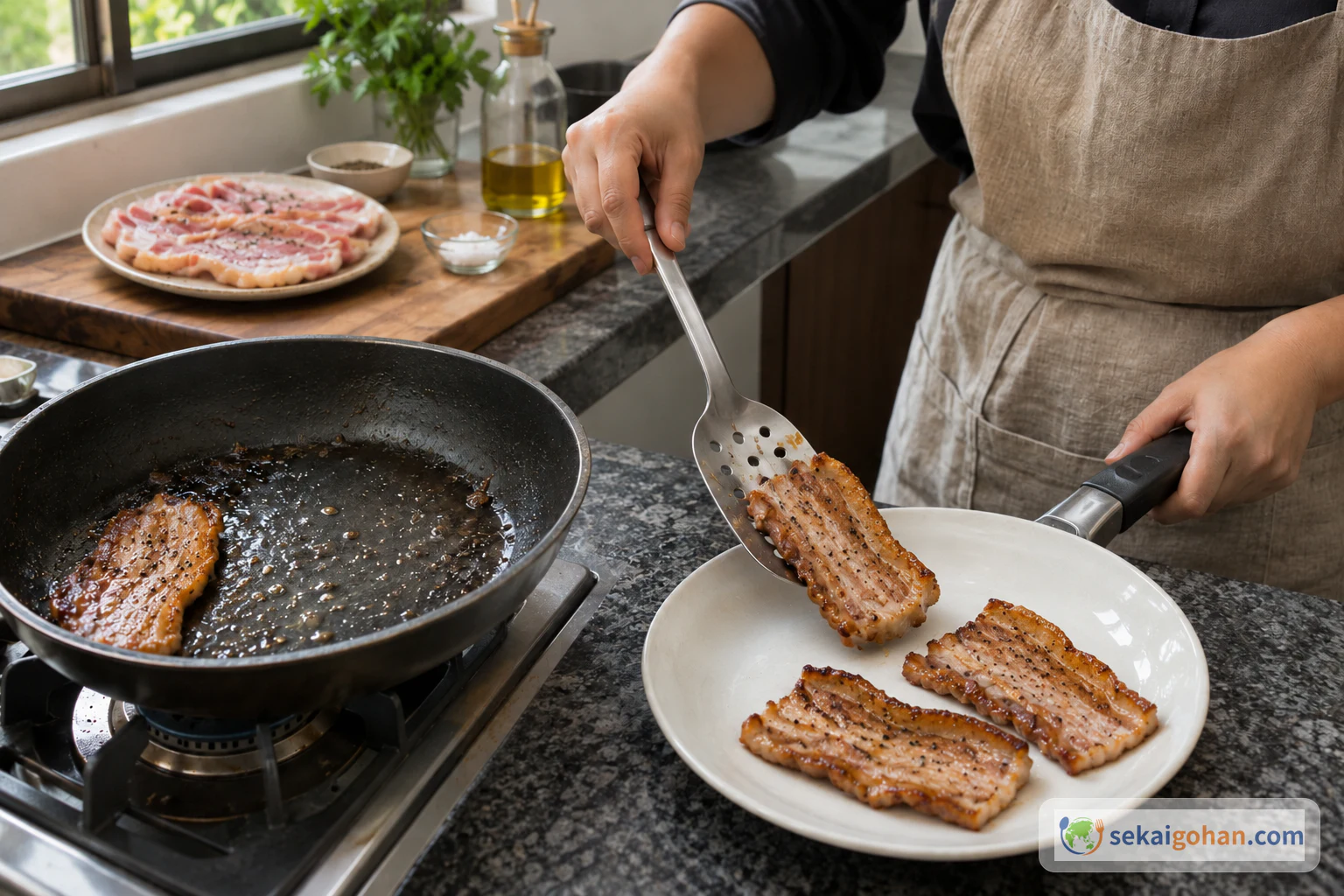
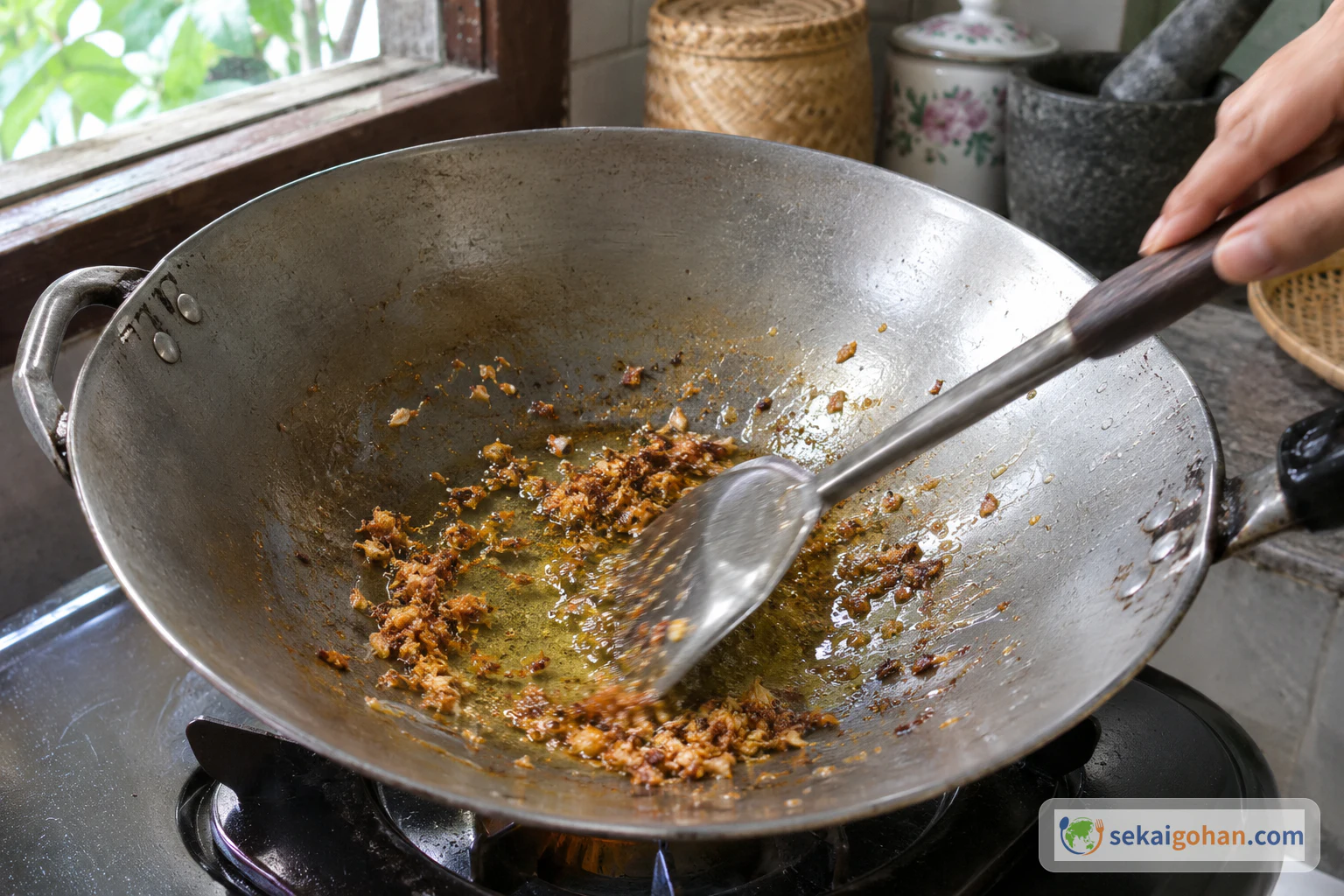
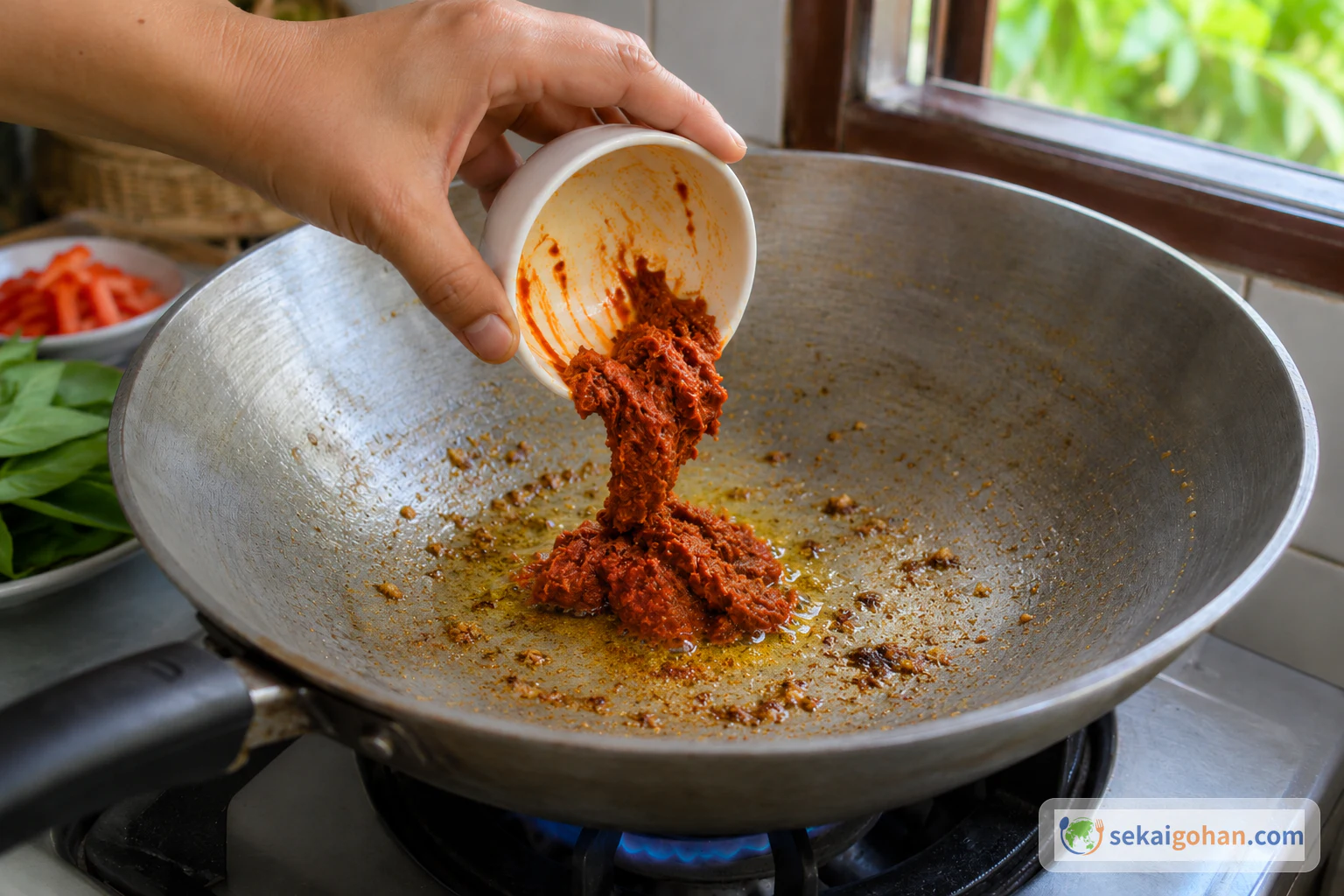
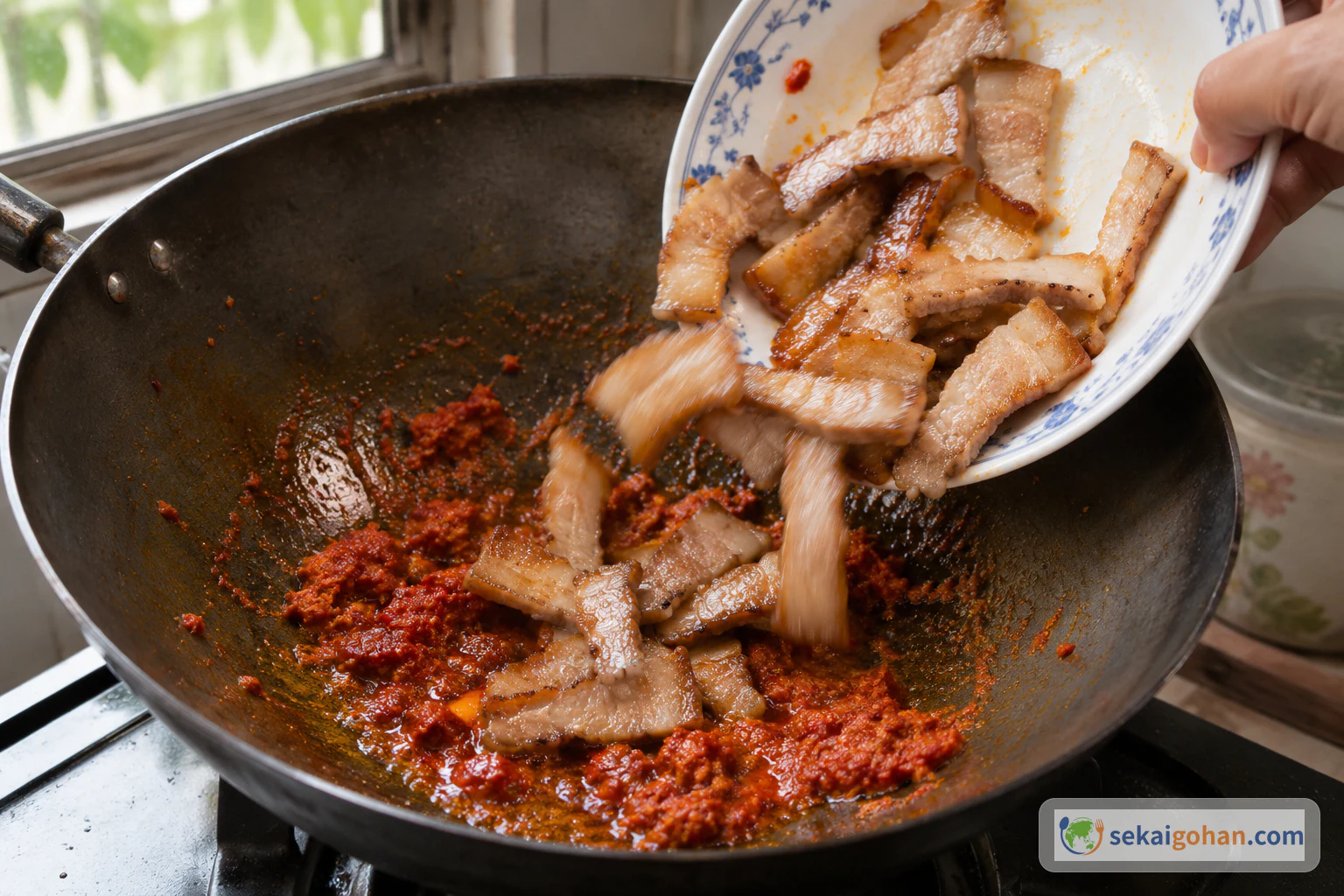
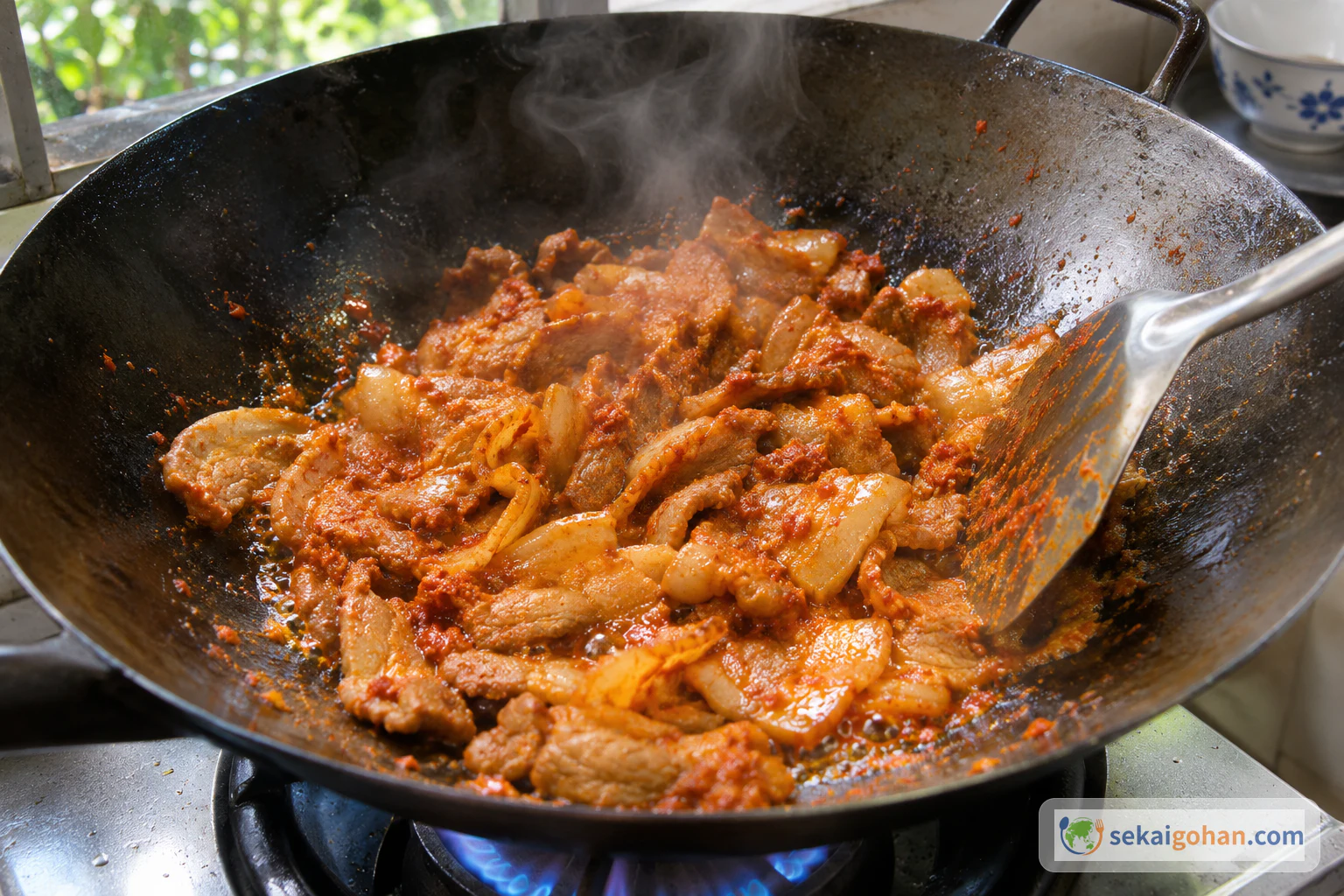
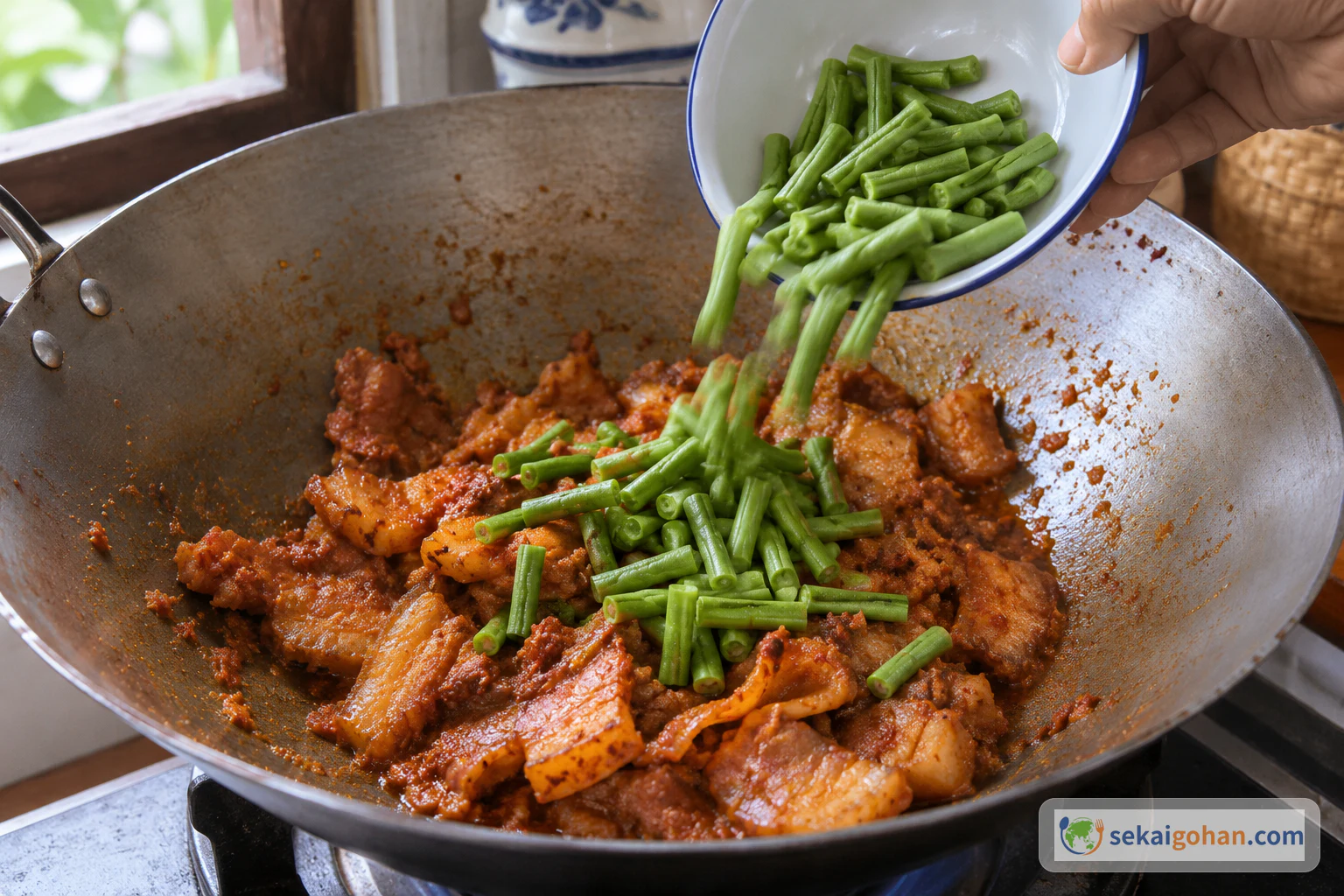
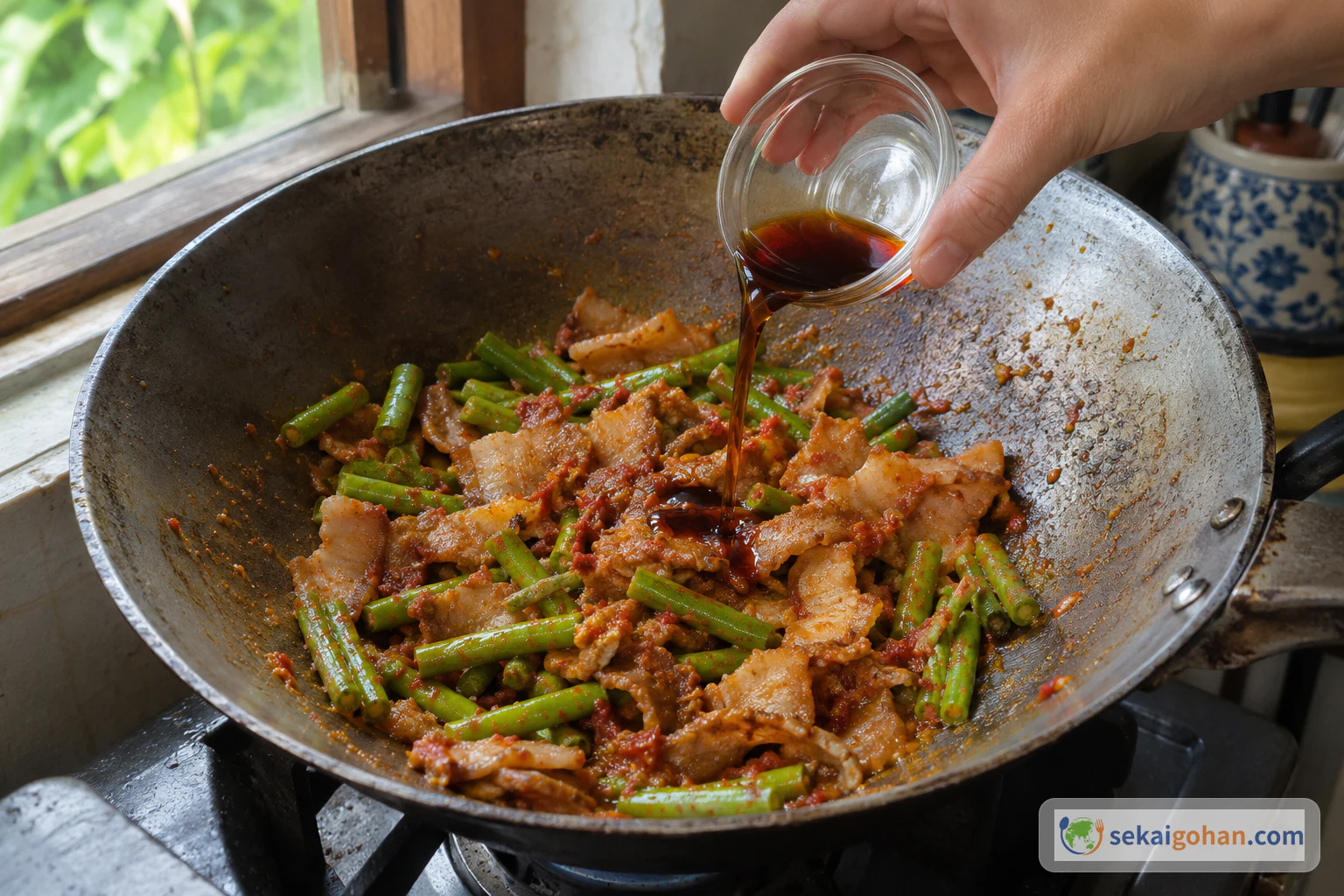
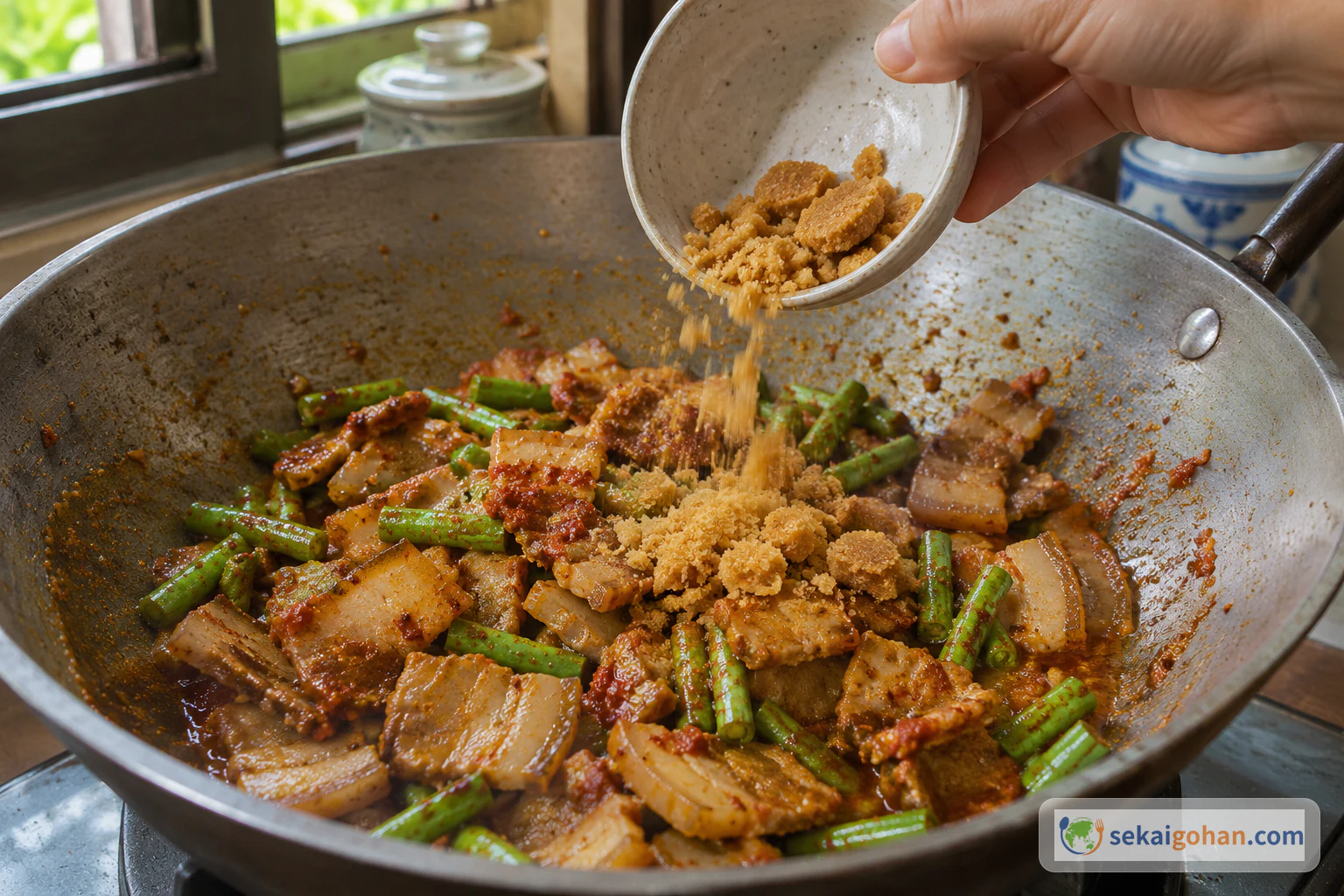
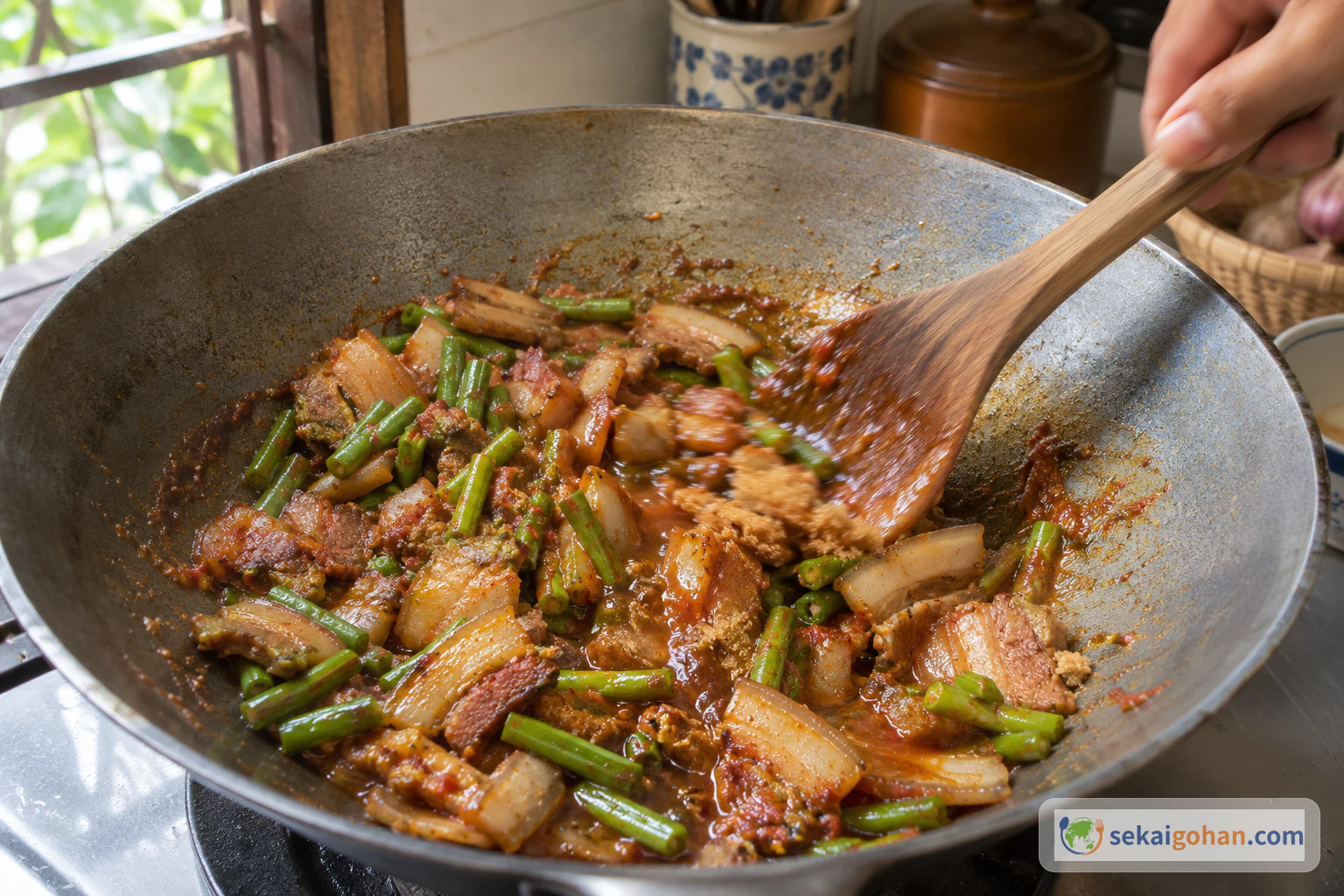
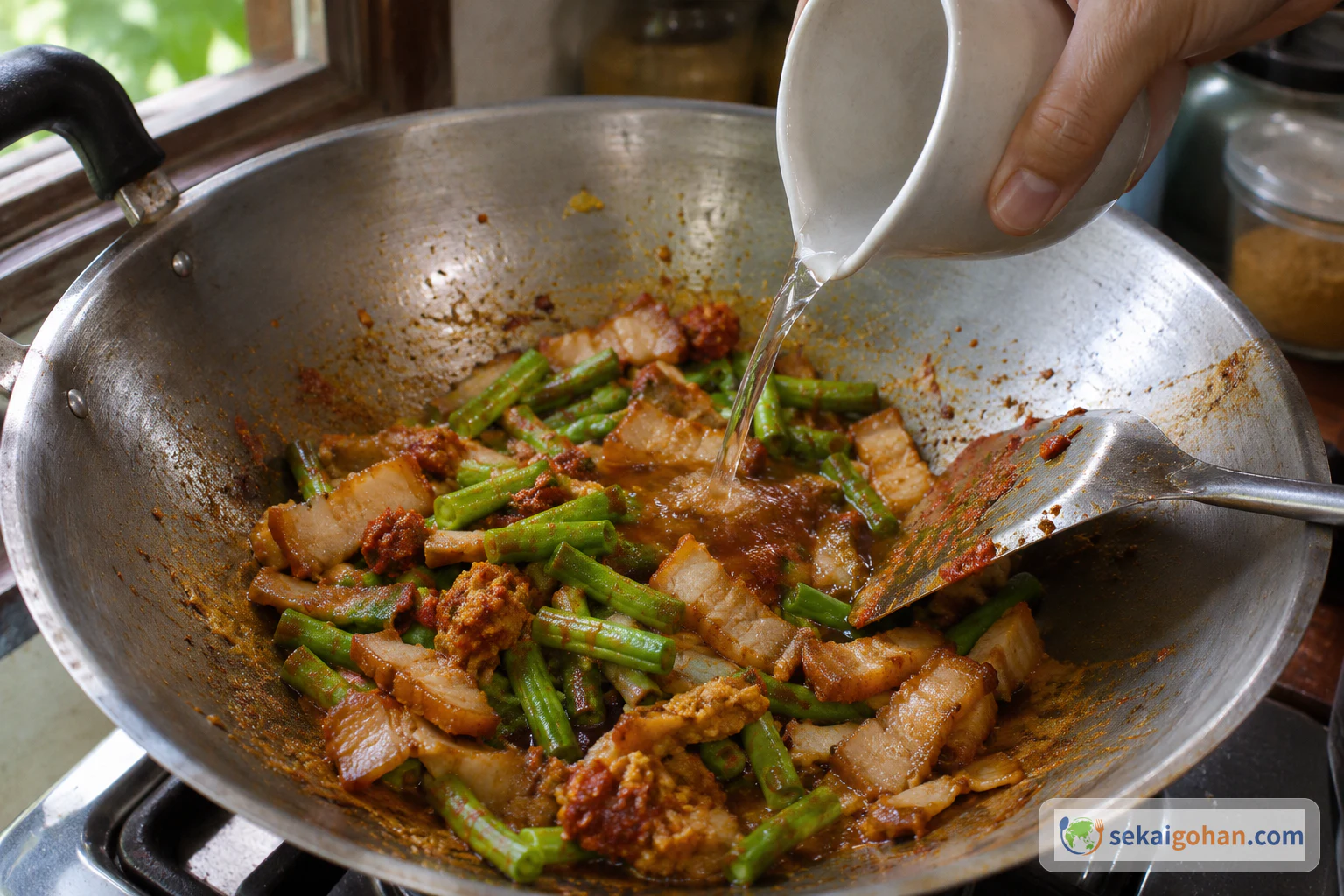
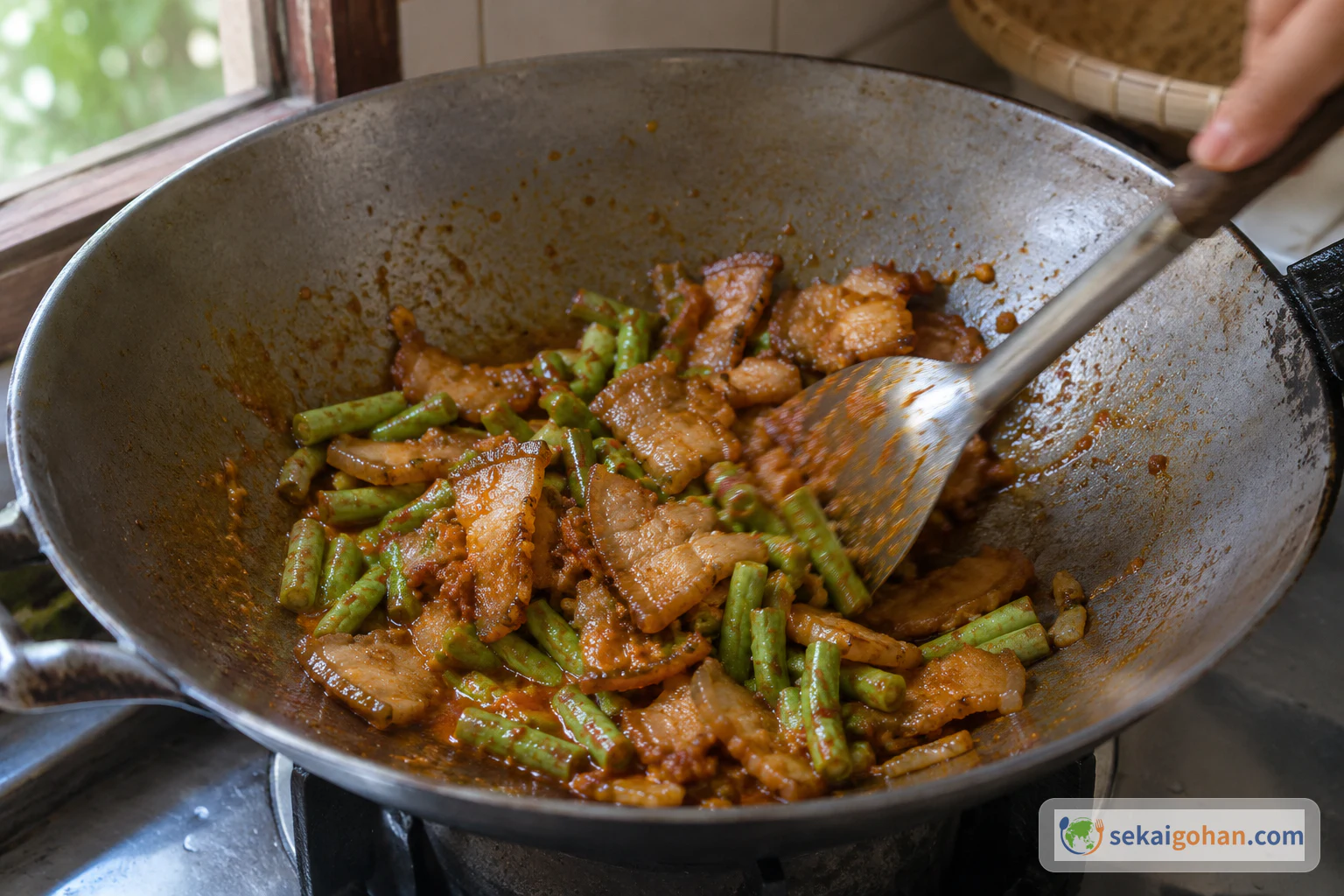
Thin slices of skin-on pork belly brown in a deep pan, and most of the fat comes out. Red curry paste then goes into the oil left behind and fries over low heat until it turns smooth and creamy. The pork returns over high heat, sizzling, followed by yardlong beans, light soy sauce and coconut sugar. A little water makes just enough sauce to bring the flavors together.
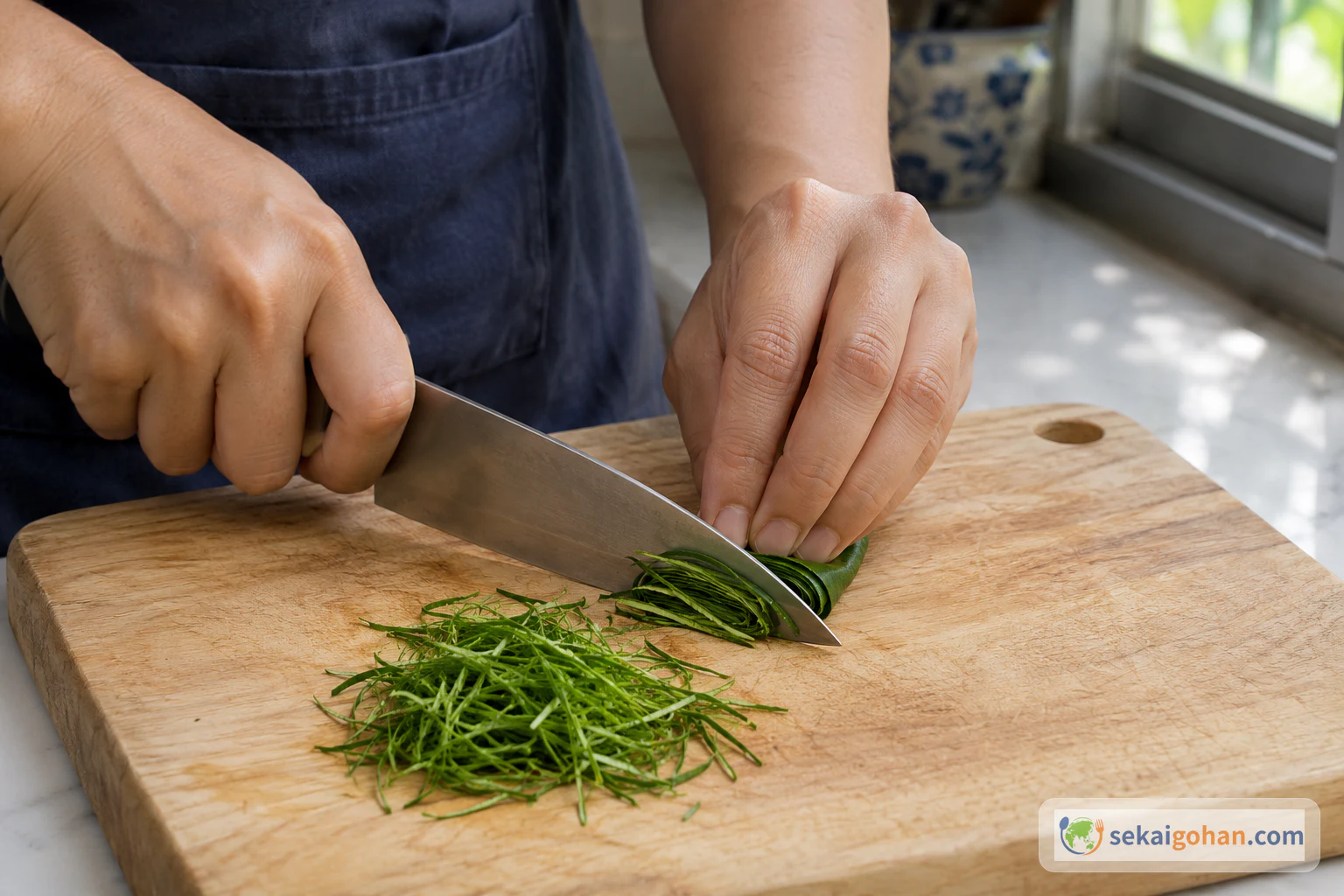
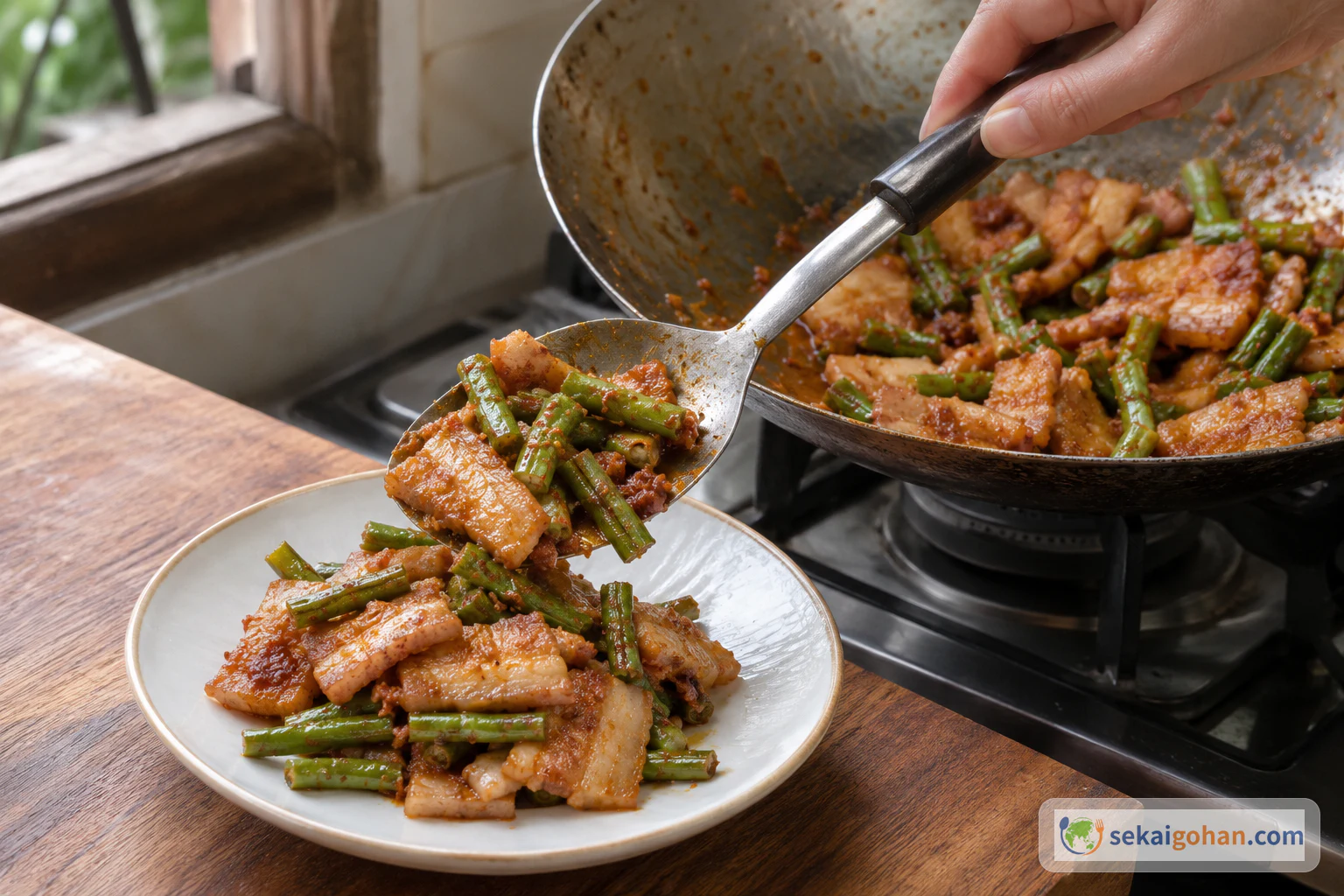
This is phat phrik khing (ผัดพริกขิง) as presented by W. Tipsuwan on Thai Cookbook, in a recipe first published in 2015 under the spelling Pad Prik Khing. It belongs to the stir-fry family rather than to dishes built around plenty of liquid. On the plate, it gets a scattering of finely cut makrut lime leaf and is served with steamed rice.
Sekai Gohan has not kitchen-tested this recipe or measured its temperatures. The amounts and cooking order follow Thai Cookbook. We added the temperature check and hygiene notes from general food-safety guidance.
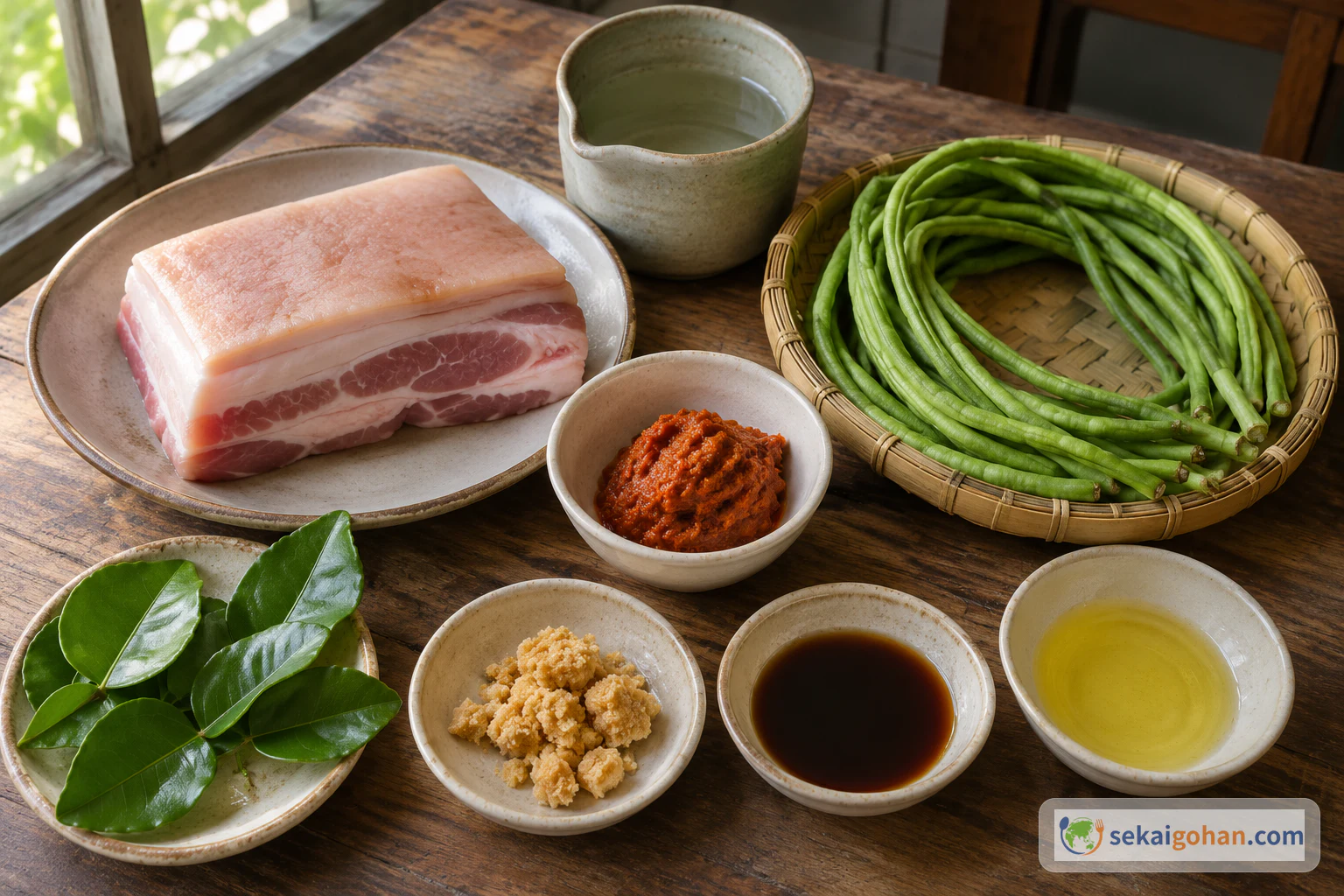
Ingredients for 2–4 Servings
Equipment
- Deep pan or wok
- Knife
- Cutting board reserved for raw pork
- Separate clean cutting board for the washed leaves and beans
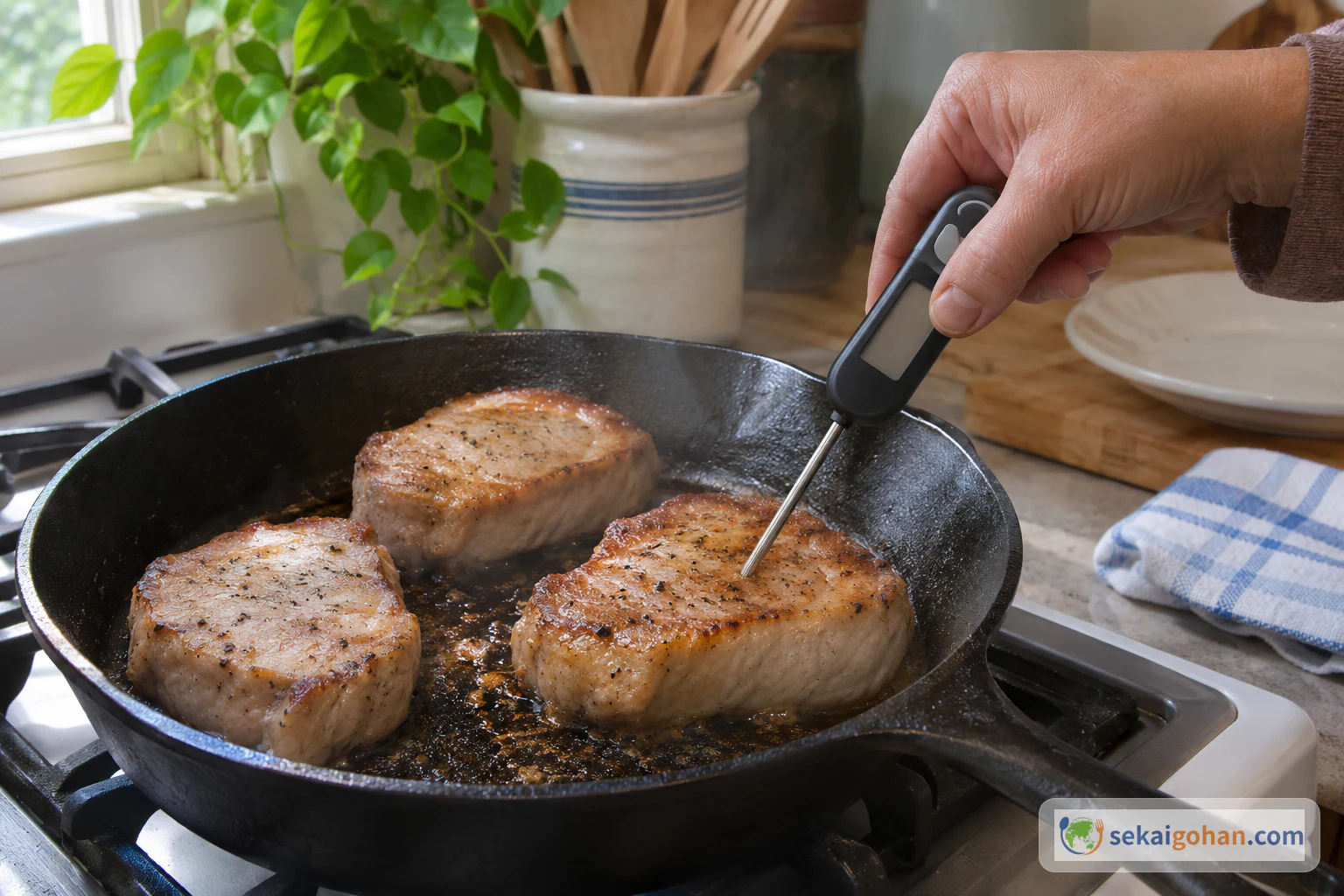
- Food thermometer suited to the thickness of the pork
- Stirring utensil and slotted utensil
- Clean plate that has not touched raw pork
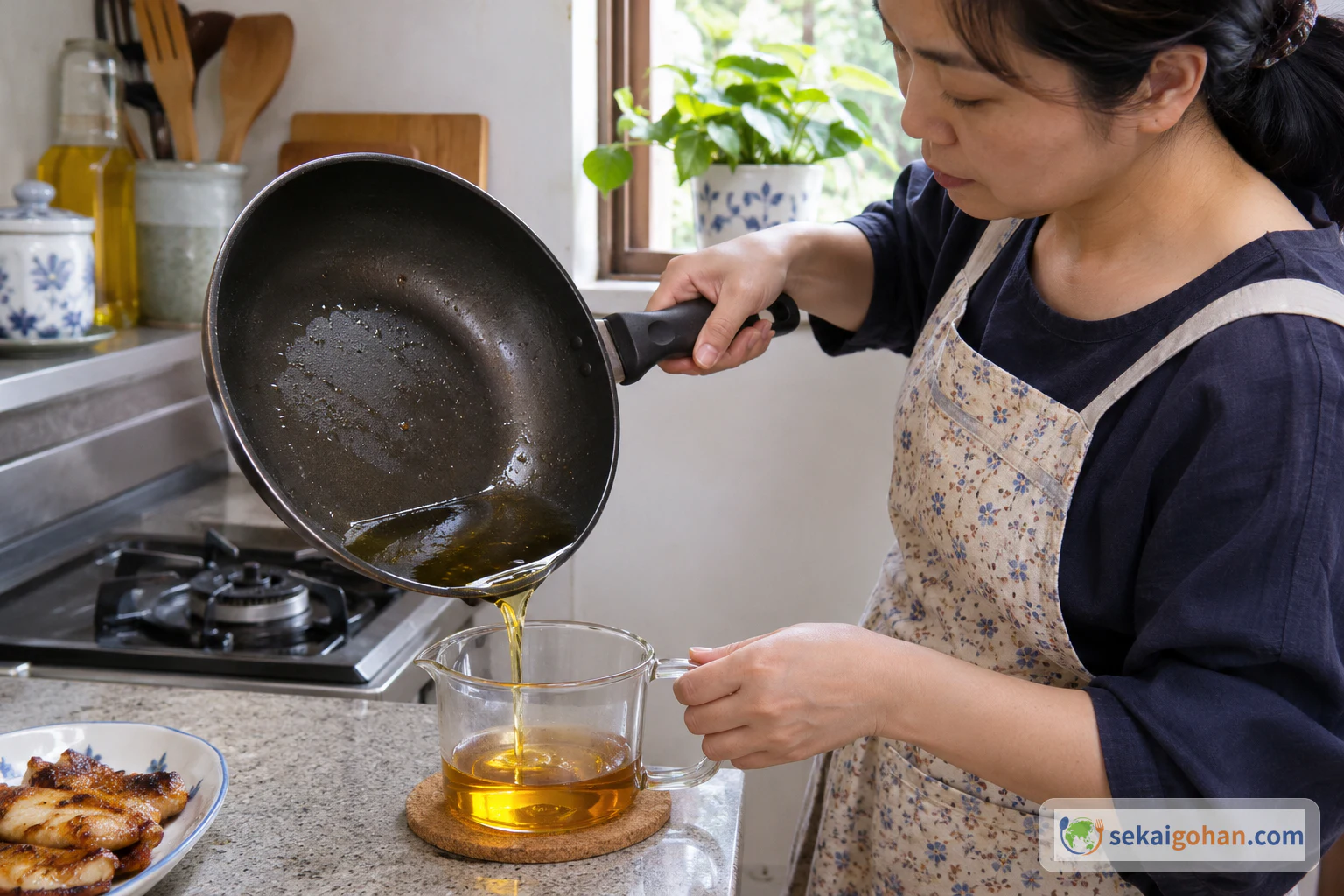
- Stable, heat-resistant container for excess hot oil
- Small shared serving plate
Choosing What Goes in the Pan
Pork belly: Look for a skin-on piece that is about half fat. The cutting directions and the amount of fat in the pan both assume this cut.
Red curry paste: Choose an ordinary Thai red curry paste. No particular brand is needed.
Light soy sauce: Use light soy sauce here. It shouldn't automatically be treated as the same thing as Japanese usukuchi soy sauce.
Substitutions: None of the substitutions in this article have been tested. The sections below explain the alternatives that do have some basis.
Method: Brown, Check, Fry the Paste, Bring It Together
Do not wash raw pork. Keep separate boards and plates for raw pork and for washed vegetables and leaves. After handling raw pork, wash your hands, then wash the tools and work surfaces with hot, soapy water.
Browned color, sizzling and cooking times do not show that the pork is cooked through, and neither do the images below. Use a food thermometer to check the pork in step 7.
Have everything cut and ready before you heat the pan. Steps 15 to 17 separate three additions so each is easy to follow; add them one after another, with no set wait between them.
Serving: A Small Shared Plate and Steamed Rice
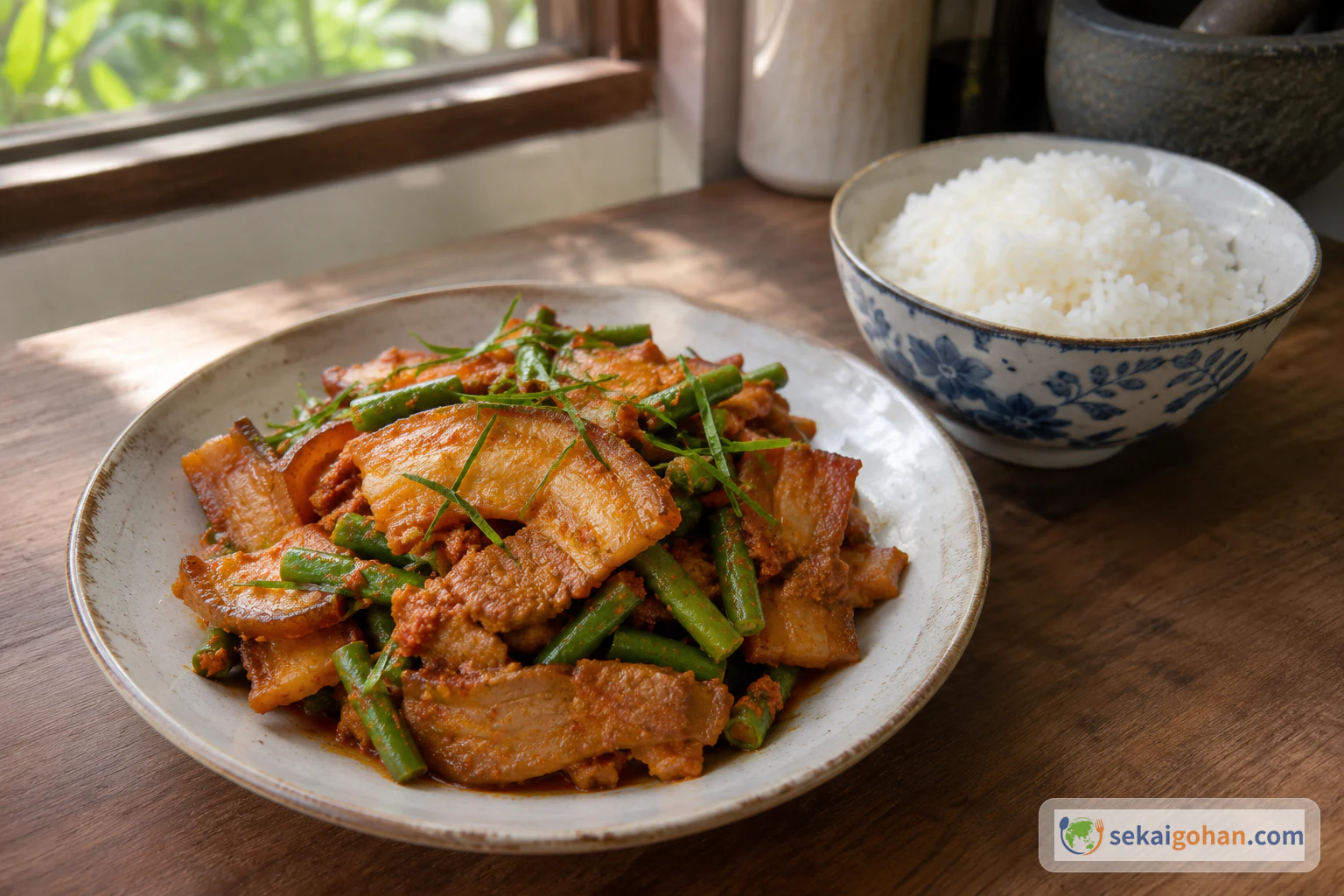
Bring the plate to the table with steamed rice alongside.
Fixing Problems in the Pan
| What you notice | What to do |
|---|---|
| The pork looks browned, but the center has not reached 75°C for at least 1 minute | Keep cooking before removing it from the pan. Don't rely on its color |
| There is a lot of fat in the pan after browning | Carefully pour the excess into a stable, heat-resistant container until about 2 tbsp remains |
| The paste looks close to burning | Make sure the heat is low and keep stirring. Keep the heat on low for the whole of this stage |
| The sugar is still visible | Keep stir-frying until it has melted, and add the water after that |
| The pan looks a little dry before plating | Check that you added the little water from step 19, then stir so the sauce comes together |
| You are tempted to add a lot of water | Add only a little. The dish needs a small amount of sauce, not a pool of liquid |
Variations
Two leaves or three: The range is 2–3 leaves, and this version defaults to 3. Using 2 is still within the recipe.
Homemade red curry paste: Homemade paste can replace store-bought, still at about 2 tbsp. Its flavor will depend on your own paste, and this article does not include a paste recipe.
Leaner pork: Lean pork is a possible alternative, but this version's cutting directions and oil handling are written for skin-on belly. Expect a different result, and check the center of the pork in the same way.
About This Version of the Dish
Thai Cookbook gives the dish's name as ผัดพริกขิง (Pad Prik Khing), credits the recipe to W. Tipsuwan, and shows it as first published in 2015. The page describes it as a "classic Thailand dish." We report that as the page's own description, not as evidence of the dish's origin or of a single correct form.
The article follows that one version. From the options on the page, we chose skin-on pork belly with about 50% fat, 3 makrut lime leaves by default, and store-bought paste. We have left out any history or regional story that this page can't support. For more of the country's food, see Thai dishes on Sekai Gohan.
Frequently Asked Questions
Are the makrut lime leaves eaten raw?
Thai Cookbook has you scatter the leaves on top after plating, so we treat them as an uncooked garnish. That is our reading of the order of steps, as the page doesn't explicitly say they are raw. The pork is cooked through, and the leaves are a finishing garnish, so we ask you to wash them well under running water and keep them away from raw pork tools. FoodSafety.gov's general guidance covers washing produce and keeping it separate from raw meat.
Why add a thermometer check when the recipe gives times?
Thai Cookbook's cues are browning and about 2 minutes at each later stage, and these don't confirm the temperature at the center of the pork. Japan's Ministry of Health, Labour and Welfare advises cooking pork through to the center and says freshness is no substitute for that. Its home food-poisoning guidance gives 75°C at the center for at least 1 minute as a general rule, so we added that as a check for you to carry out. We are not presenting it as a legal standard for home cooking, and we have not measured it for this recipe.
What if my thermometer can't read such a thin piece?
Check the thickest individual piece, following the instructions for your thermometer, and don't stack slices to make a thicker target. FoodSafety.gov's general advice is to measure the thickest part of the food. Browning or sizzling can't stand in for this reading, so use a thermometer that suits the thickness of the pork.
Why does the recipe mention both 1 lb and about 2 cups of pork?
Thai Cookbook lists 1 lb of pork belly among its ingredients and mentions about 2 cups of sliced pork in its method. We read them as a weight and a rough volume for the same meat, not as two amounts. The 454 g figure is simply the unit conversion of 1 lb.
How much water should I add?
Thai Cookbook says to add a little water without giving a measurement, so we don't give one either. It is still part of the method rather than an optional extra, and its purpose is to make a small amount of sauce and bring the flavors together.
Do I have to use store-bought curry paste?
No. Thai Cookbook calls for a quality red curry paste and links to a separate homemade paste recipe. It doesn't require a store-bought product. Choosing store-bought paste is our own decision for this version, since it is an ordinary ingredient to buy.
Do the beans, soy sauce and sugar need exact timing?
No exact timing is given. Thai Cookbook lists all three in the same direction, then has you stir-fry until the sugar melts. We separated them into steps 15 to 17 only so each addition is easy to see.
How long does it take?
Thai Cookbook lists 5 minutes of prep and 10 minutes of cooking for 2–4 servings. These are the figures shown on that page. They have not been tested here and don't account for the safety steps we added, so go by the temperature check and the cues in each step.
What should I serve with it?
Thai Cookbook suggests steamed rice and other foods without naming them. We have kept to steamed rice rather than guess at the rest.
Sources
- W. Tipsuwan, Thai Cookbook, "Authentic Thai Recipe for Spicy Pork Stir Fry." The dish name, 2015 first publication, ingredient amounts, 2–4 servings, preparation, cooking order, plating, leaf topping and steamed rice. https://www.thaicookbook.tv/thai-recipes/main-dishes/spicy-pork-stir-fry/
- Ministry of Health, Labour and Welfare, Japan, "豚のお肉や内臓を生食するのは、やめましょう" (Do not eat pork or pork offal raw). General guidance that pork should be cooked through to the center and that freshness is no substitute. It does not verify this recipe's cooking times. https://www.mhlw.go.jp/stf/seisakunitsuite/bunya/kenkou_iryou/shokuhin/syouhisya/121004/
- Ministry of Health, Labour and Welfare, Japan, "家庭でできる食中毒予防の6つのポイント" (Six points for preventing food poisoning at home). General home guidance on heating food to 75°C at the center for at least 1 minute, used here as the check for readers to carry out. It does not verify this recipe. https://www.mhlw.go.jp/stf/seisakunitsuite/bunya/kenkou_iryou/shokuhin/syokuchu/01_00006.html
- FoodSafety.gov, "4 Steps to Food Safety." General guidance on washing produce, not washing raw meat, using separate cutting boards, washing hands, tools and surfaces, and measuring the thickest part of food with a thermometer. https://www.foodsafety.gov/keep-food-safe/4-steps-to-food-safety