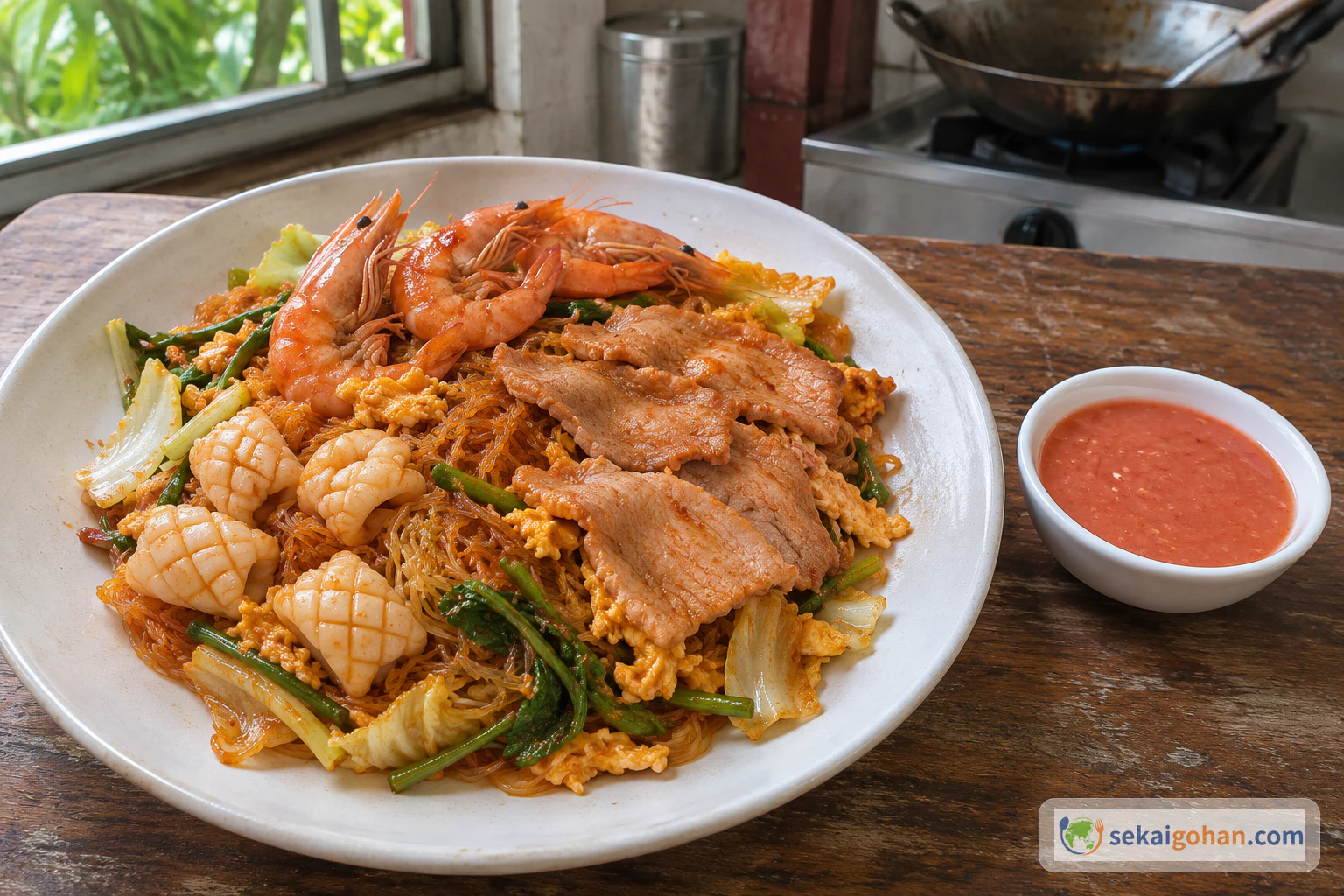
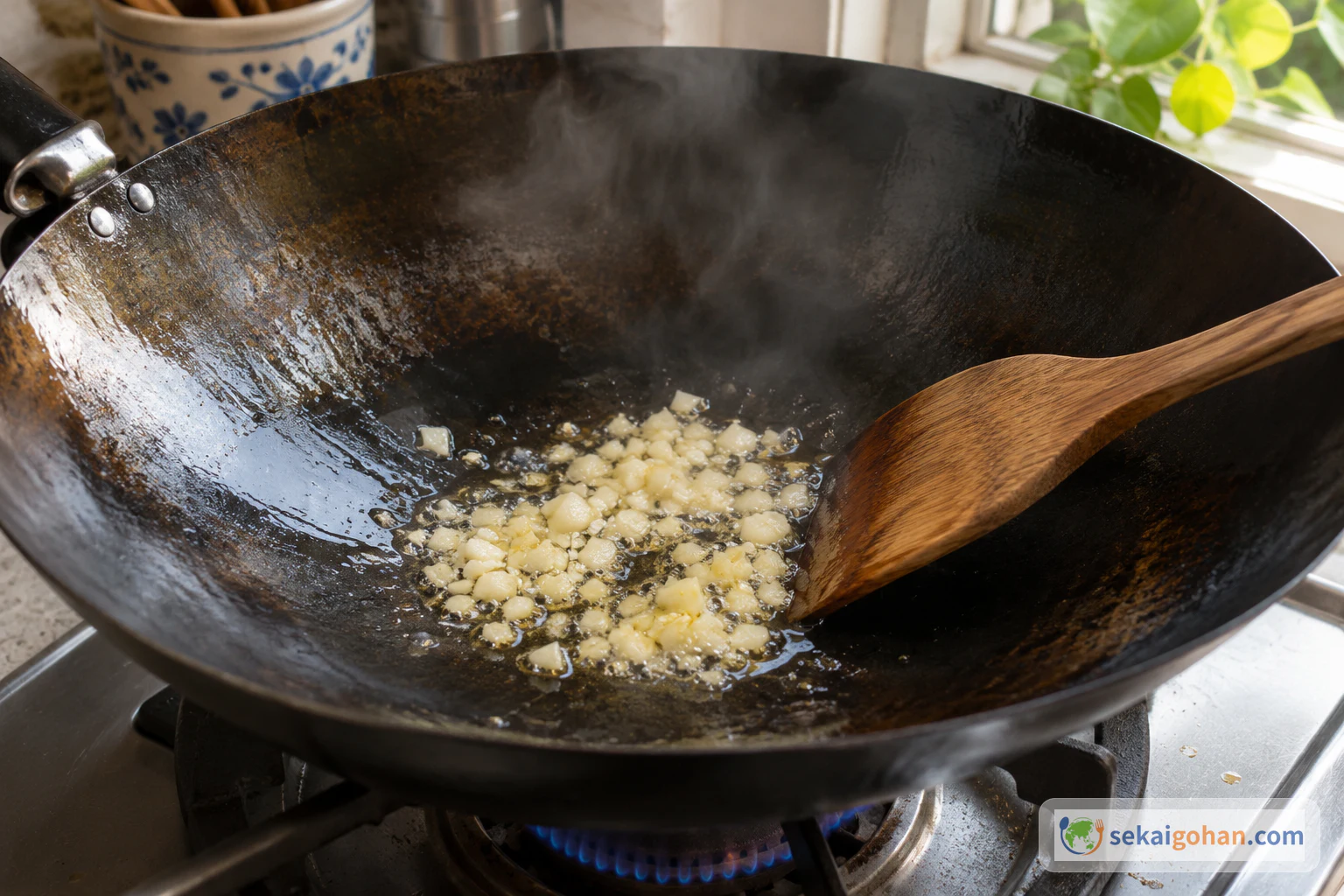
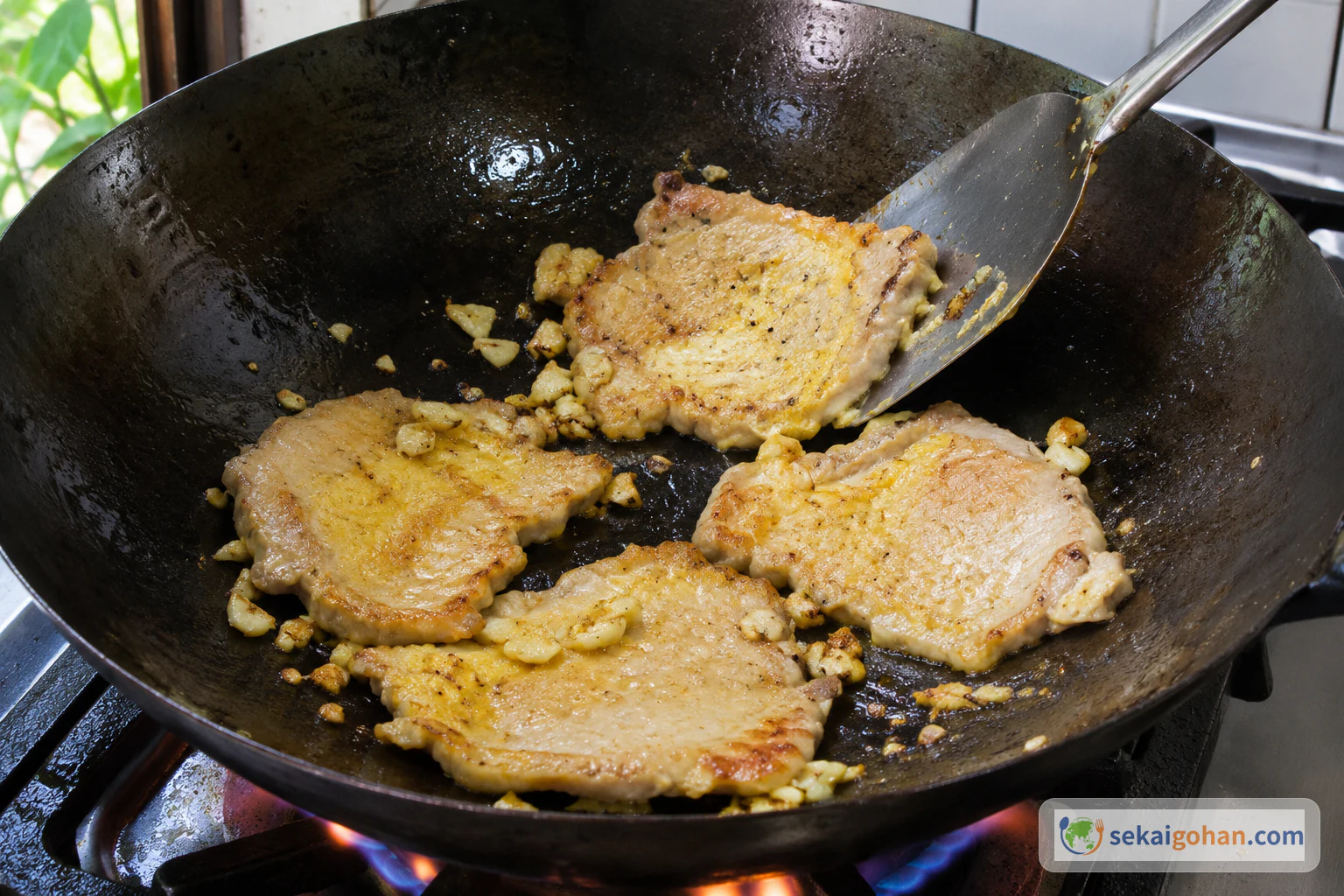
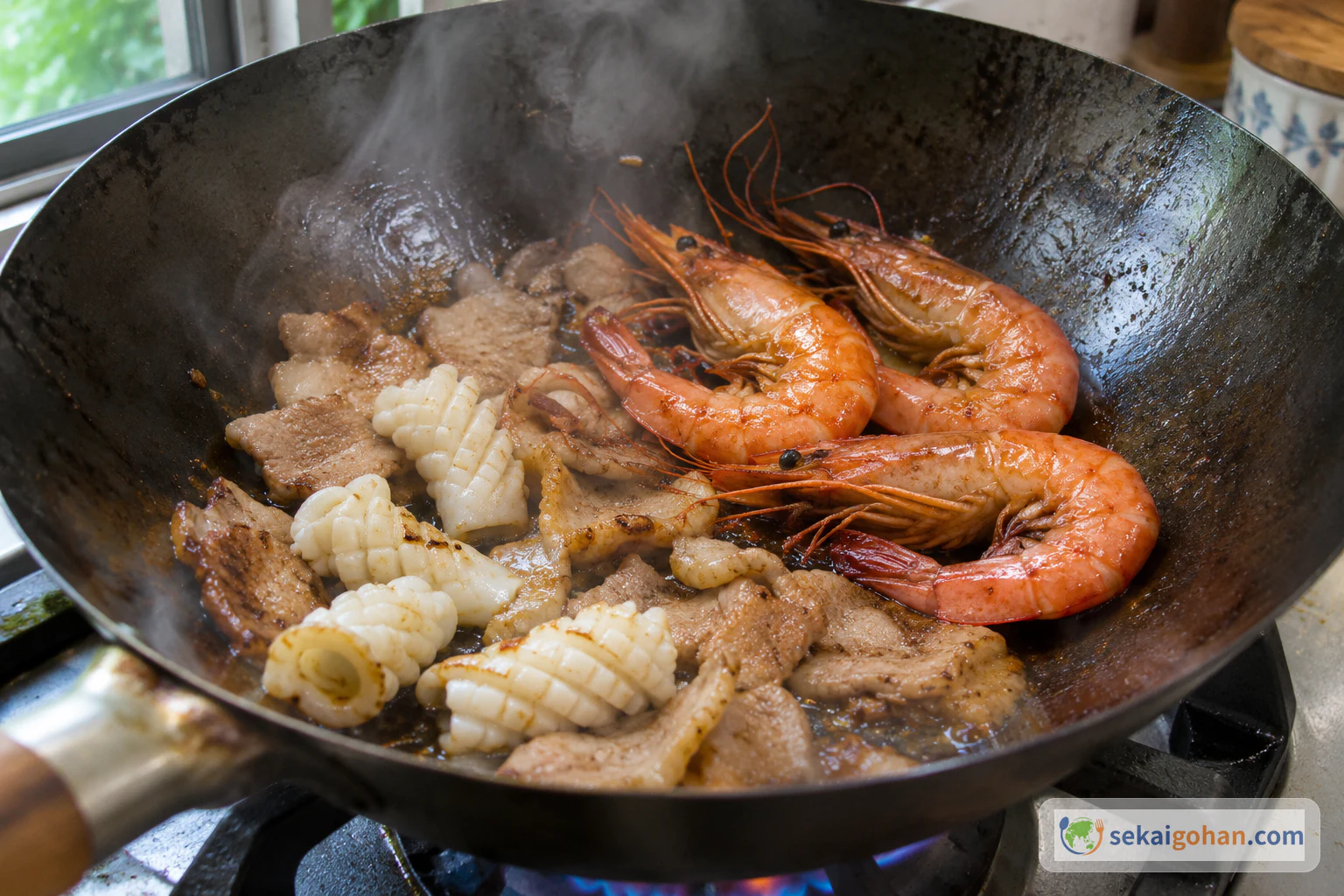
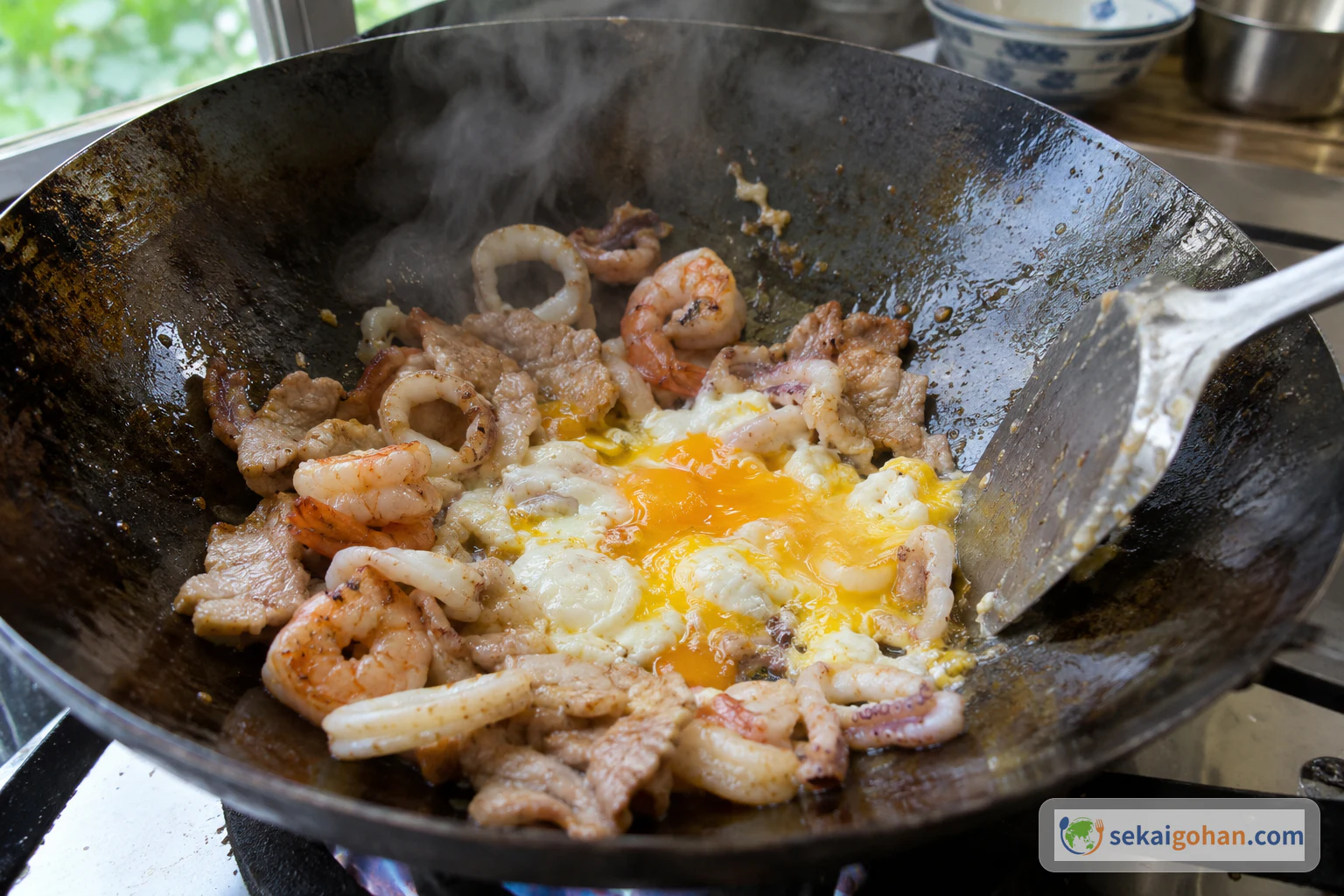
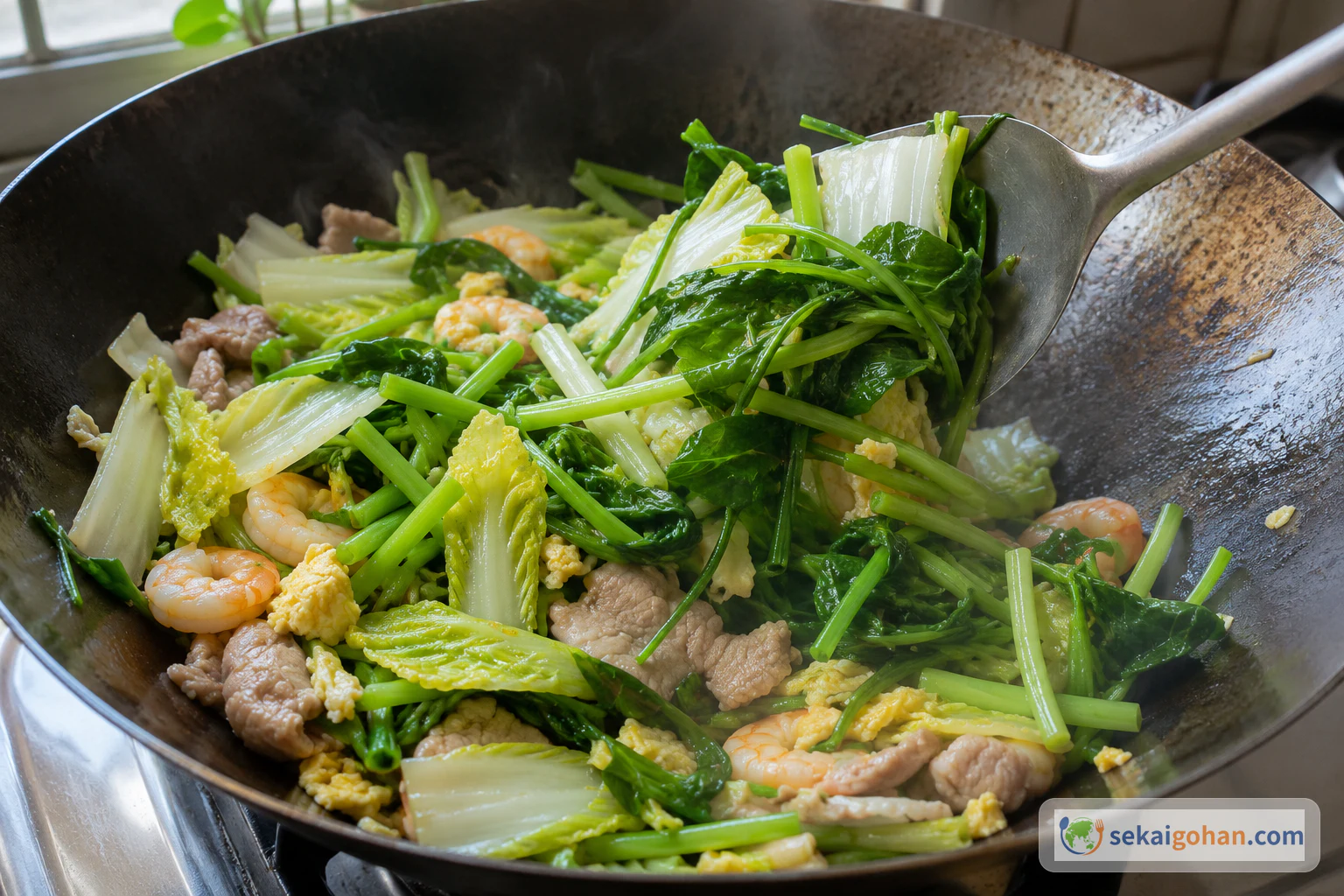
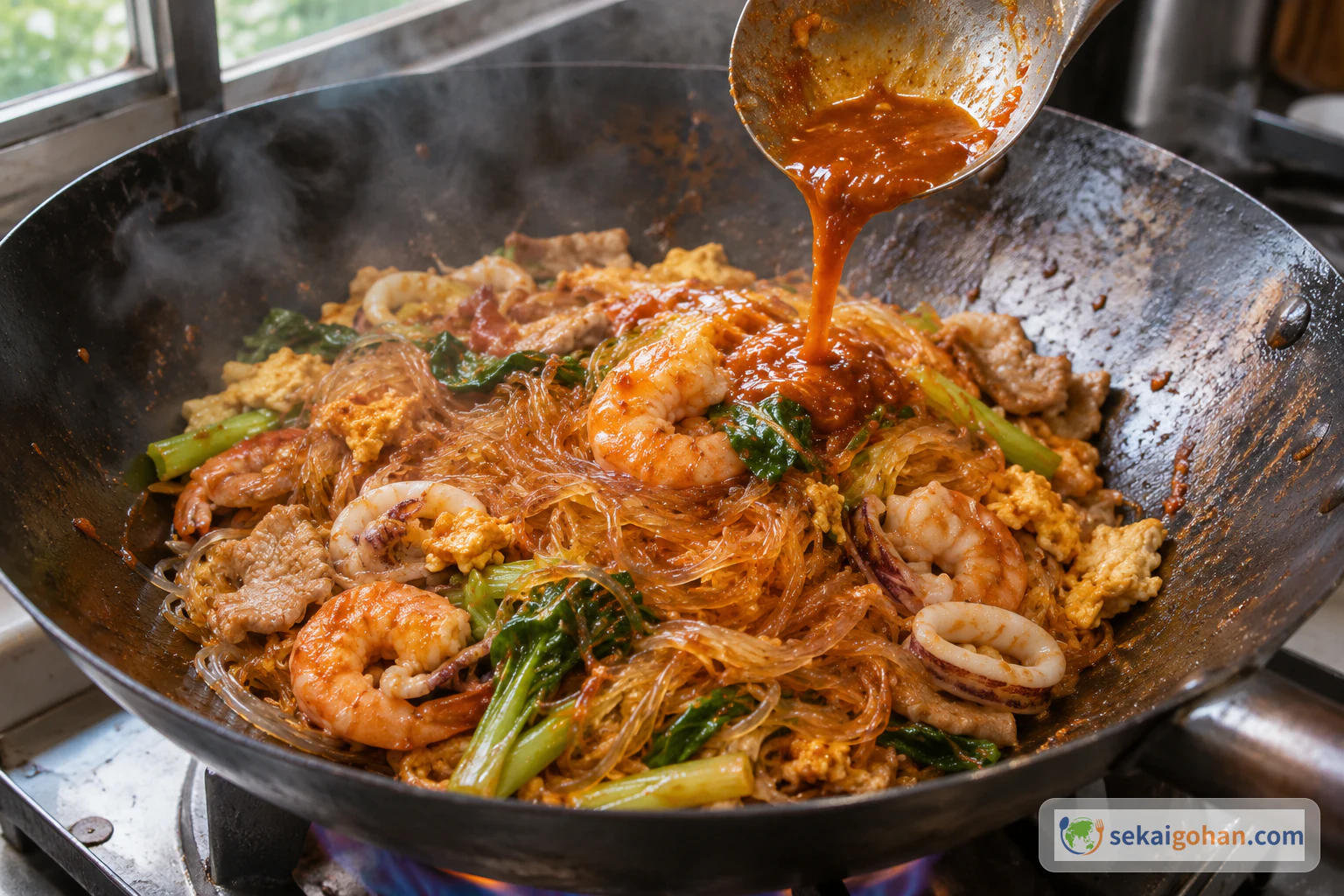
Garlic hisses in a smoking wok. Four slices of pork go in, then shrimp turning orange and squid curling white, then one egg cracked straight into the middle. Last come a handful of glass noodles and a ladle of thick, reddish sauce, and everything is tossed hard until the bottom of the pan is almost dry. This is suki haeng, the dry, wok-fried version of Thai suki, served all over Bangkok at street stalls, neighbourhood shops and food courts.
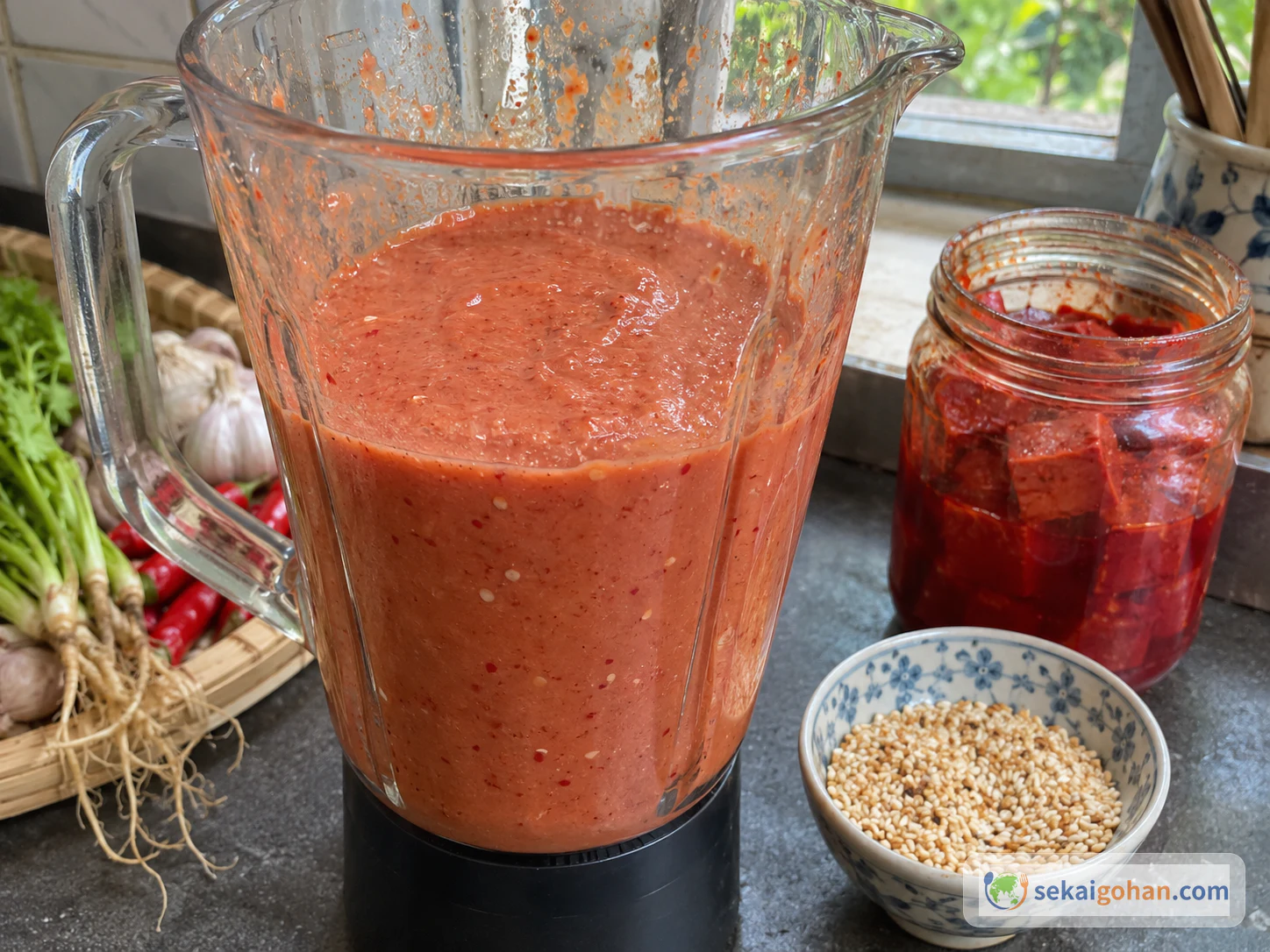
It tastes sweet, sour, salty and hot all at once. The deep, fermented savour underneath comes from red fermented bean curd, and a little saucer of the same salmon-pink sauce comes to the table so each person can add more.
A Japanese Name on a Bangkok Plate
Where the name comes from
สุกี้ (suki) is short for สุกี้ยากี้, the Thai spelling of sukiyaki, and the name really does come from Japan. Everything else changed on the way. Japanese sukiyaki cooks meat in a sweet soy broth and is dipped in beaten raw egg. Thai suki puts all the flavour into a separately made sauce, adds glass noodles, and cooks the egg right in with everything else. Even in the Japanese restaurants of old Bangkok, sukiyaki had already shifted toward what the city could supply: napa cabbage, carrot, onion, scallion, glass noodles and egg.
When and where the Thai version began is not settled. One account puts the first suki shop around Yaowarat, Bangkok's Chinatown, during the Second World War, when Japanese people were arriving and Hainanese and Cantonese hot pots were already part of the neighbourhood. Another credits a small shop called Coca Suki at Siam Square, which served it as a hot pot in 1957. Either way, it spread through 1950s Bangkok. Some people argue that Thai suki grew out of Hainanese restaurants, because its ingredients overlap with the Hainanese stir-fry jap chai, but this is still only a guess. One writer recalls that Kyu Sakamoto's 1963 song, which became a hit in America under the title "Sukiyaki" and played widely in Thailand, helped make the word familiar.
A 2019 column on suki names some early shops: Ruean Phet Suki, Tai Heng, Canton Suki and Coca Suki. At stalls and simple shops, the sauce was made by grinding red fermented bean curd with garlic, chili, sesame oil and sugar. That pink bean curd is the same ingredient that colours yen ta fo noodle soup.
Dry or with soup
Thai suki comes in two forms, and many shops cook both. Suki nam (สุกี้น้ำ) is the soup version. At Tai Heng, a Hainanese-style shop on Yaowarat soi 8 known for serving only khao man gai and suki, pork, liver and squid simmer with napa cabbage, water spinach and glass noodles, and an egg sets in the broth. Suki haeng (สุกี้แห้ง) is the same set of ingredients stir-fried in a wok, with the egg coating everything and a smoky edge from the pan. Suki haeng is really suki with the soup and the pot taken away, turned into a noodle dish, and it is the version cooked below.
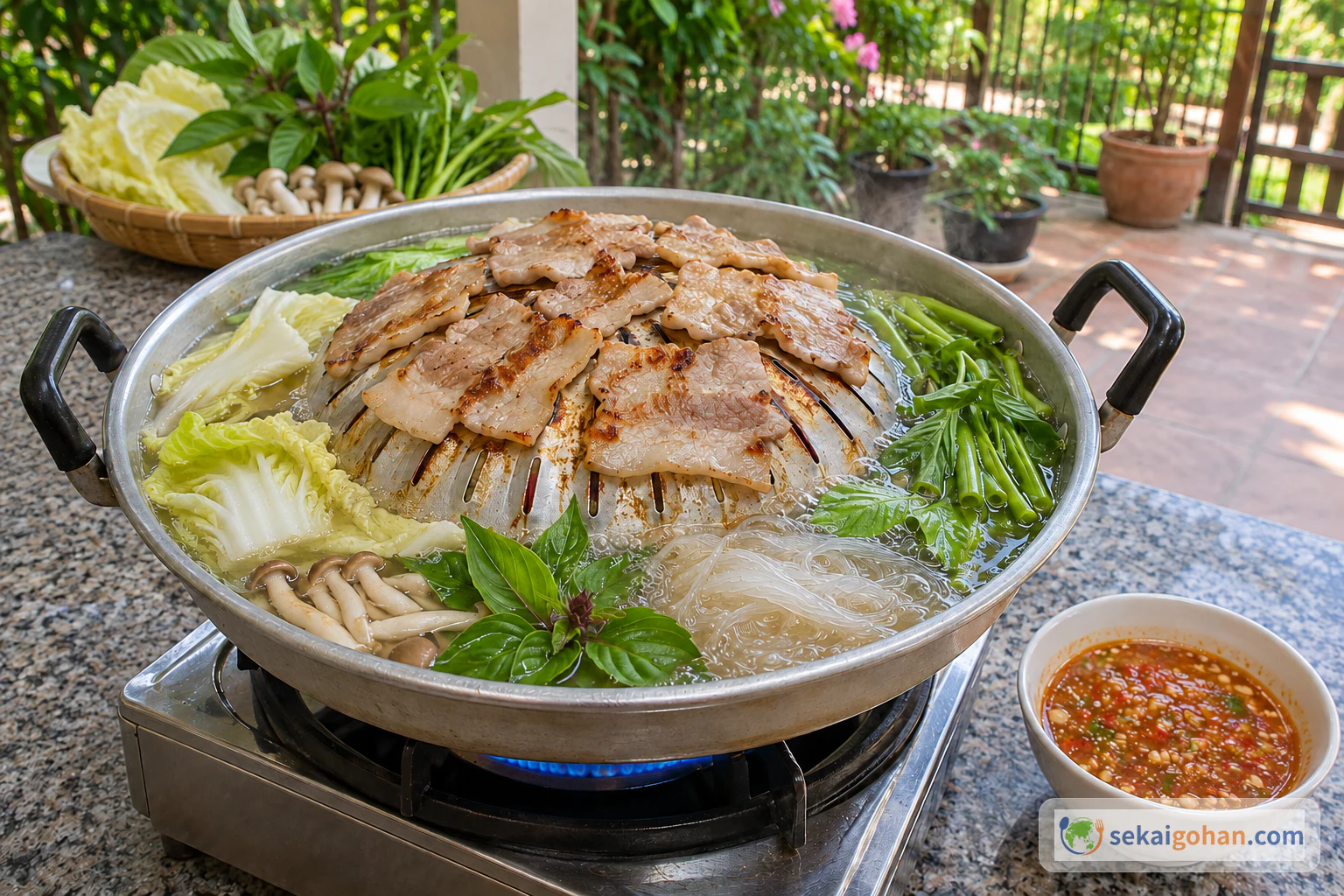
Chain restaurants such as MK serve suki as a Cantonese-style hot pot. A clear stock of daikon, pork bones, chicken on the bone, coriander root, garlic and pepper bubbles at the table. The dipping sauce is built on chili sauce, with no fermented bean curd. The street-stall stir-fry and the chain hot pot share a name and taste like two different dishes.
Around the country
Further from Bangkok the dish keeps changing. Around Nakhon Nayok, suki lao phuan is a noodle dish with a sauce enriched with coconut milk poured over it. In Saraburi, on the road back from the temple at Phra Phutthabat, some shops served suki alongside a lamb stew for returning pilgrims. In the northeast, jim jum looks similar, a pot of broth with things to dip. Its broth and sauce are Isan through and through, with lemongrass, makrut lime leaf, coriander, toasted rice powder and chili, and it is a separate dish. For more of the country's cooking, see Thai food on Sekai Gohan.
At the table, suki is shared. Each person takes some sauce in their own saucer and dips pieces as they eat. With suki nam you drink the broth too. Suki haeng arrives nearly dry.
Ingredients
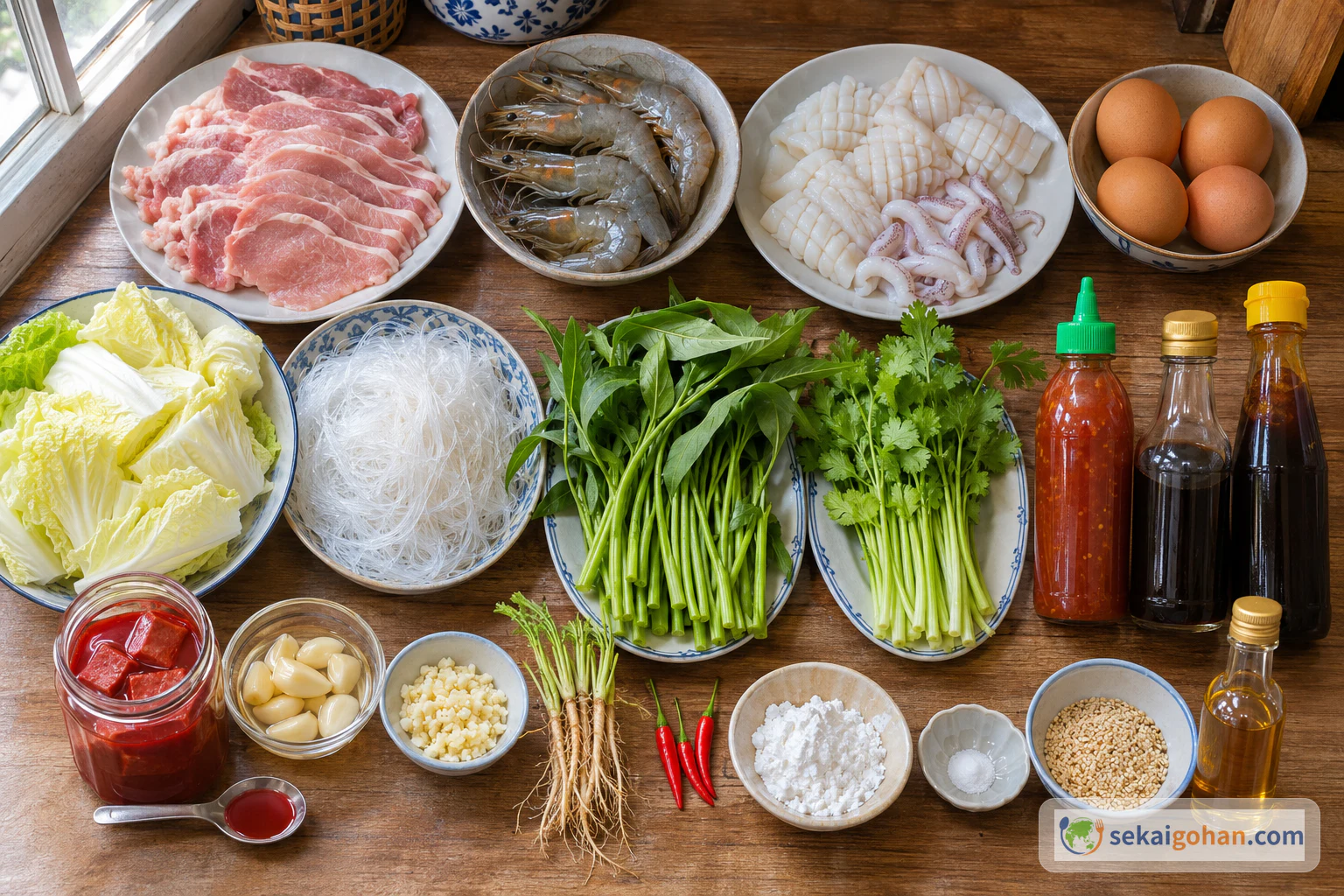
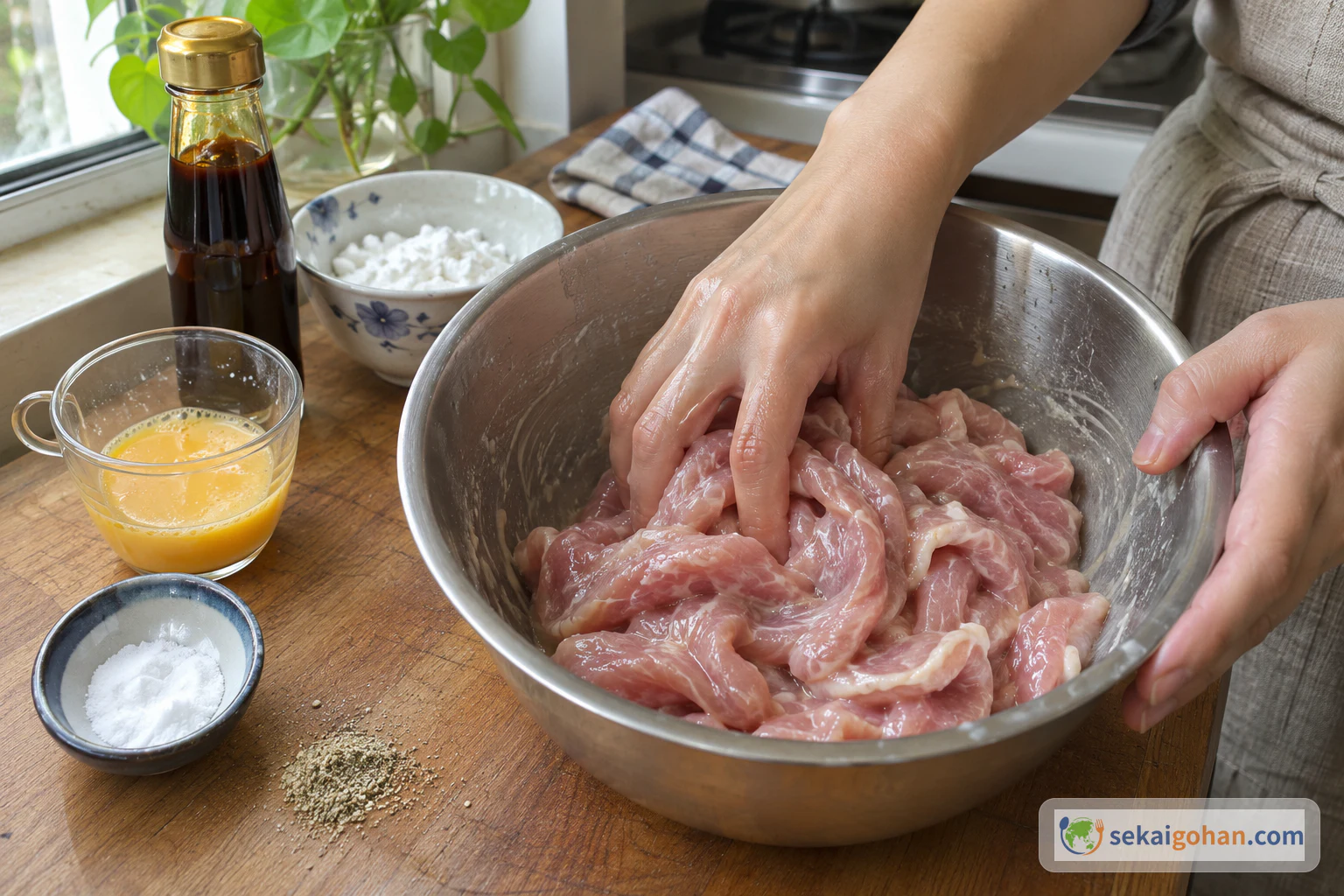
There are three units here, and they work separately. You make the sauce in one blended batch, the pork marinade in one bowl, and then you stir-fry one plate at a time. Both the sauce and the marinade make enough for more than one plate, and leftover sauce keeps for the next stir-fry.
This dish contains egg, soy (fermented bean curd, soy sauce), crustaceans (shrimp), molluscs (squid), sesame, and oyster extract in the oyster sauce. Soy sauces and oyster sauces often contain wheat. Read the label on every bottled sauce and jar.
Equipment
- Wok, 10–12 inch (26–30 cm), or a heavy skillet
- Blender, for the sauce
- Kitchen scale, since the sauce is measured by weight
- Mixing bowl for the marinade
- Wok spatula or long cooking chopsticks
- Clean airtight jar for the leftover sauce
Choosing and Substituting
Red fermented bean curd is the one ingredient you cannot replace. Look in Chinese grocers for jars labelled fermented bean curd or "red" bean curd. The cubes sit in a red brine, and you use the brine too. White fermented bean curd differs in colour, salt and flavour. Without the red kind, the sauce stops being Thai suki sauce. If you have to avoid it, cook the Cantonese-style sauce listed under the soup variation further down, which has none.
The sauce uses both the bean curd and its brine, and the pickled garlic and its brine. Buy whole Thai sweet pickled garlic in a jar, not loose cloves, so you get the brine as well. Japanese pickled rakkyo shallots are a last resort and change the flavour.
| Ingredient | Where to find it | If you swap it |
|---|---|---|
| Thai white soy sauce | Thai or Southeast Asian grocers | Japanese light soy and ordinary soy sauce differ in colour and salt. If you must use one, start with less and add to taste |
| Green-cap seasoning sauce | Import shops, as Maggi seasoning | Soy sauce or noodle broth changes the flavour. Leave it out and let the oyster sauce carry the savour |
| Sriracha | Asian grocers, international aisles | Brands vary a lot in sweetness and heat. With a sweeter brand, cut back the sugar |
| Tapioca starch | Asian grocers, baking suppliers | Potato starch and cornstarch come from different plants and coat differently. Look for tapioca |
| Coriander roots | Thai or Vietnamese grocers sell coriander with roots on | Leaves alone lose the core aroma. Scrub the roots well and use them |
| Chinese celery | Asian grocers, sometimes sold as soup celery | Western celery has thicker stalks and a weaker smell. Use the same handful |
| Jinda chilies | Frozen Thai bird's eye chilies at Thai grocers | Other small red chilies come close. Adjust by count |
| Distilled vinegar | Anywhere | Rice or grain vinegar works and tastes a little rounder |
| MSG | Anywhere | Leave it out if you like. The sauce tastes slightly less full |
Any vegetable sturdy enough to stir-fry works in place of the greens. The three used here, napa cabbage, water spinach and Chinese celery, are the everyday Thai choice.
Method
Make the sauce and marinate the pork first. The marinade needs at least 2 hours in the refrigerator, and the sauce can wait in a jar. Cut the vegetables while the pork rests. Once the wok is hot, a plate cooks fast and you cannot walk away from it, so have everything for one plate lined up beside the stove before you light the flame.
When It Goes Wrong
| What you see | Why | What to do |
|---|---|---|
| Tough pork | Marinated too briefly, or overcooked | Give it the full 2 hours or more in the refrigerator, and keep the baking soda at ½ tsp. Fry only until it is opaque and cooked through, then move on |
| Noodles stuck in a lump | Soaked too long, or too wet | Add the noodles last and loosen them with small splashes of stock while you toss |
| Watery plate | Wok not hot enough, or vegetables cooked too long | Cook one plate at a time over high heat, and toss the vegetables quickly |
| Sauce too hot | Too many chilies | Use fewer chilies in the next batch. Keep the bean curd and sugar the same |
| Plate too salty | Bean curd, soy and oyster sauce stack up | Start with 2½ tbsp sauce per plate and let people add more from the saucer. Never add salt to the wok |
| Soapy smell on the pork | Too much baking soda | Next time keep the baking soda at ½ tsp for 1 lb 2 oz (500 g) of pork |
| Dry, crumbly egg | Heat too high, or stirred too much | Fold it two or three times and move to the vegetables while the yolk is still soft |
Serving, Variations and Storage
At the table
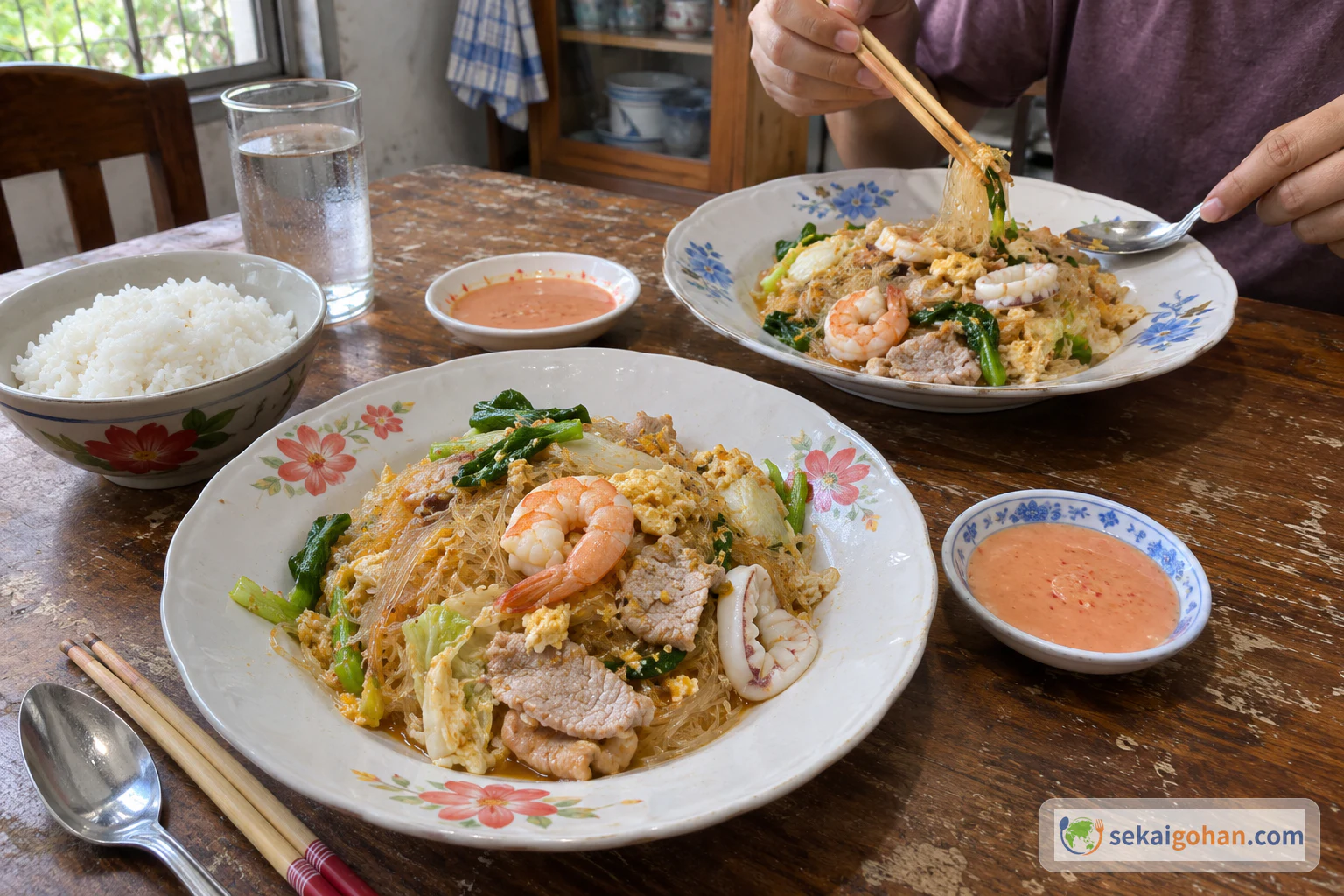
Bring suki haeng out the moment it leaves the wok, one plate after another, with a saucer of sauce for each person. Everyone dips pieces of pork, squid or cabbage into the sauce, so each bite can be as sharp as the eater likes.
Variations
- Pork only. Leave out the shrimp and squid and use 6 pieces of pork. Keep the sauce at 2½ tbsp. The plate turns richer and more savoury.
- Extra seafood. Use more shrimp and squid and only 2 pieces of pork. It cooks faster and tastes lighter and sweeter.
- Milder sauce. Use 3–4 chilies instead of 10. Leave the bean curd, sugar and vinegar unchanged so the balance stays.
- Suki nam, the soup version. Use a separate set of ingredients for the whole dish instead of mixing it with the recipe above. For the marinade, mix 11 oz (300 g) pork tenderloin or shoulder with 1 egg, 1 tbsp Thai white soy sauce, 1 tbsp oyster sauce, 1 tsp sesame oil and a pinch of pepper. For the stock, simmer 1 chicken carcass with 3 coriander roots, 5 crushed garlic cloves, 1 tsp peppercorns and half a daikon, then season with salt and white soy to taste. Bring the stock to a boil and cook the pork in it. Add egg tofu, then napa cabbage, water spinach, Chinese celery, scallion, enoki and baby corn. Finish with 1 small pack of soaked glass noodles and 2 eggs cracked in, and cook until the eggs set. Serve it with the Cantonese-style sauce: 1 cup chili sauce, ½ cup (120 ml) ketchup, 3 tbsp white soy sauce, 3 tbsp sugar, 2 tbsp vinegar and 2 tbsp sesame oil, with chopped chili, garlic and toasted sesame.
A cooked, ketchup-sweet sauce is also common, and it makes enough for ten. Toast 1½ oz (40 g) white sesame over low heat. Blend 1¾ oz (50 g) garlic with 1 oz (30 g) jinda chilies. Add 1 oz (30 g) pickled garlic with 3 tbsp of its brine, 1 oz (30 g) fermented bean curd with 1½ tbsp of its brine, 3 tbsp vinegar, 3 tbsp sesame oil and a scant ½ cup (100 ml) water, and blend again. Pour it into a pot and add 4 tbsp sugar, 4 tbsp white soy sauce, 1¾ oz (50 g) ketchup and 9 oz (250 g) sweet chili sauce. Simmer over medium heat until the sharp smell of vinegar is gone, then stir in the sesame. Cool it and refrigerate in a clean container. Keep it as a sauce of its own rather than blending it into the no-cook one.
Storage
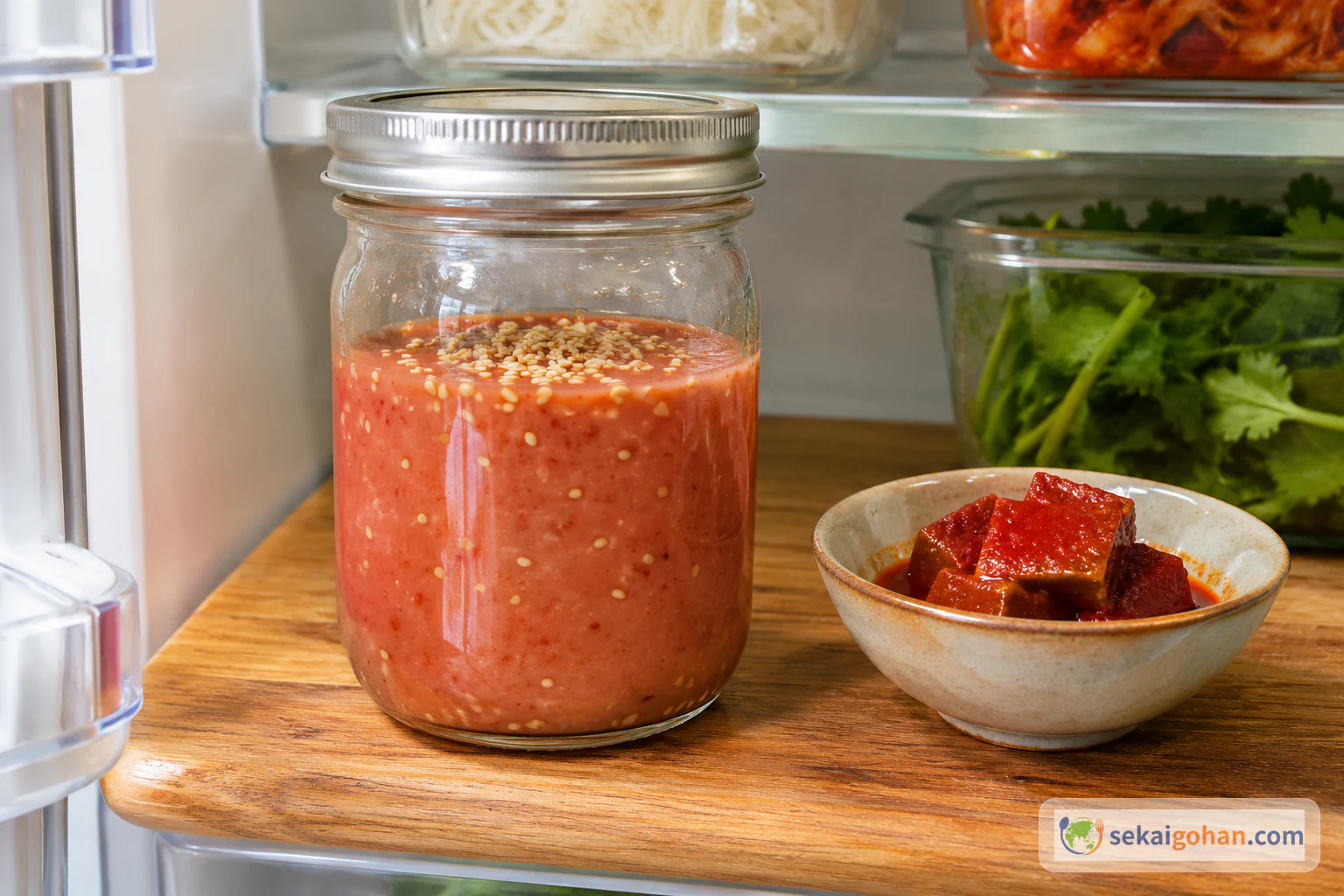
The no-cook sauce keeps for a long time and goes straight into the next stir-fry. Store it in a clean airtight jar in the refrigerator, and throw it out if its smell, colour or taste changes. Once the fermented bean curd jar is open, take cubes out with a clean spoon and keep the jar in the refrigerator.
Divide any leftover stir-fry into shallow containers so it cools quickly, then cover and refrigerate promptly. Keep the refrigerator at 50°F (10°C) or below. Reheat until it is hot all the way through, 167°F (75°C) or above.
Frequently asked questions
Can I cook all the plates at once in a big pan?
Cook one plate at a time. A full wok loses its heat, the meat and vegetables give off water, and the noodles end up stewing in it. One plate's worth fries quickly, so the next plate is ready almost as fast as people can eat.
Should I put out a raw egg for dipping, like sukiyaki?
No. In Thai suki the egg is cooked in the wok and coats the noodles, and the only dip is the suki sauce. Serve it the Thai way, with a saucer of sauce for each person.
Can I skip the 2-hour marinade?
Leave the pork for at least the full 2 hours. That is how long the baking soda needs to loosen the meat and the starch and egg coating needs to cling to it. Without that time, the slices turn tight and dry in a hot wok.
Can I use dried glass noodles?
Yes. Soak them in water for a few minutes until they bend easily, then drain them well. They take up more liquid in the wok than fresh noodles, so add small splashes of stock as you toss until they are soft and springy.