Mu Kratha: Grilling in the Middle, Simmering Around the Edge
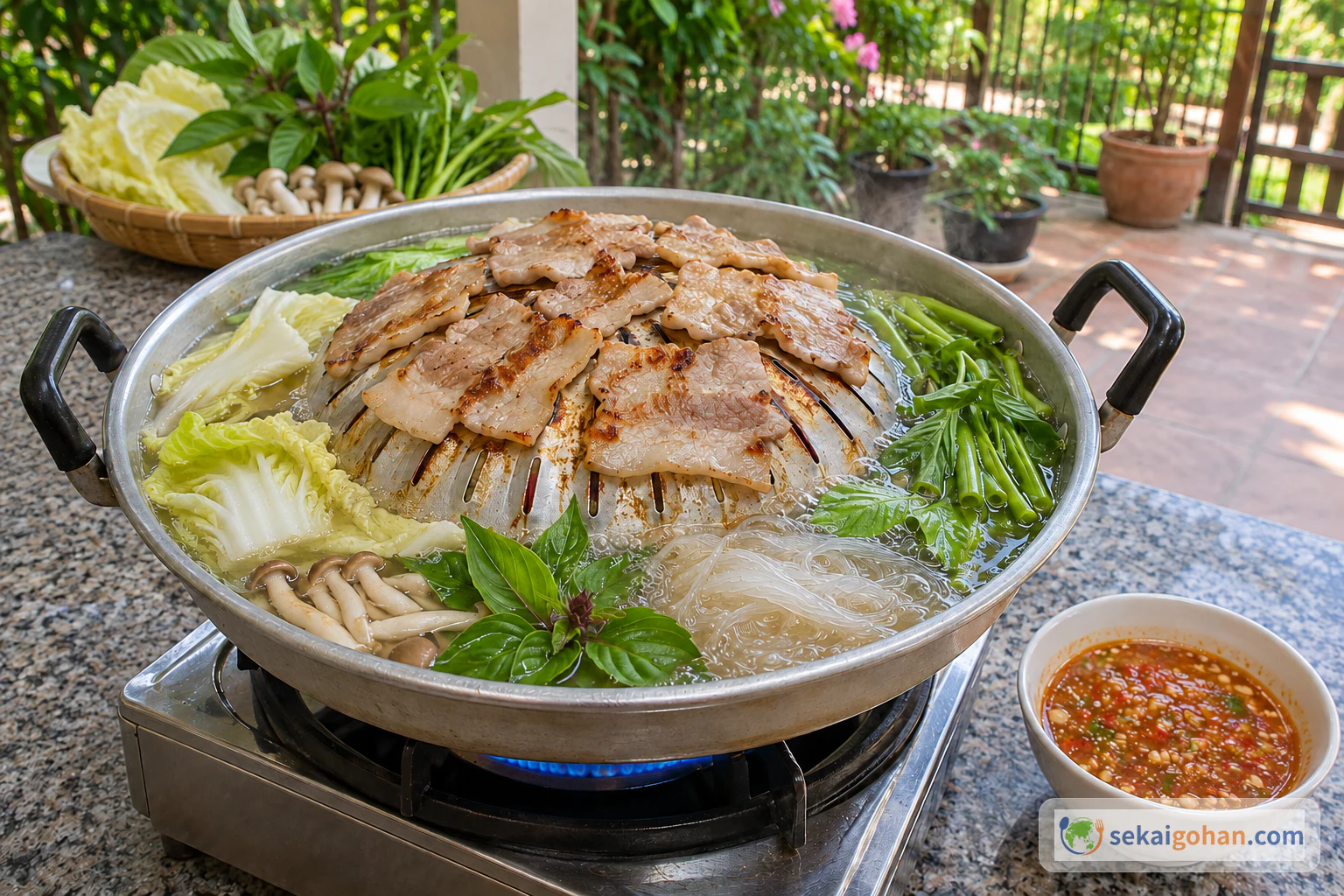
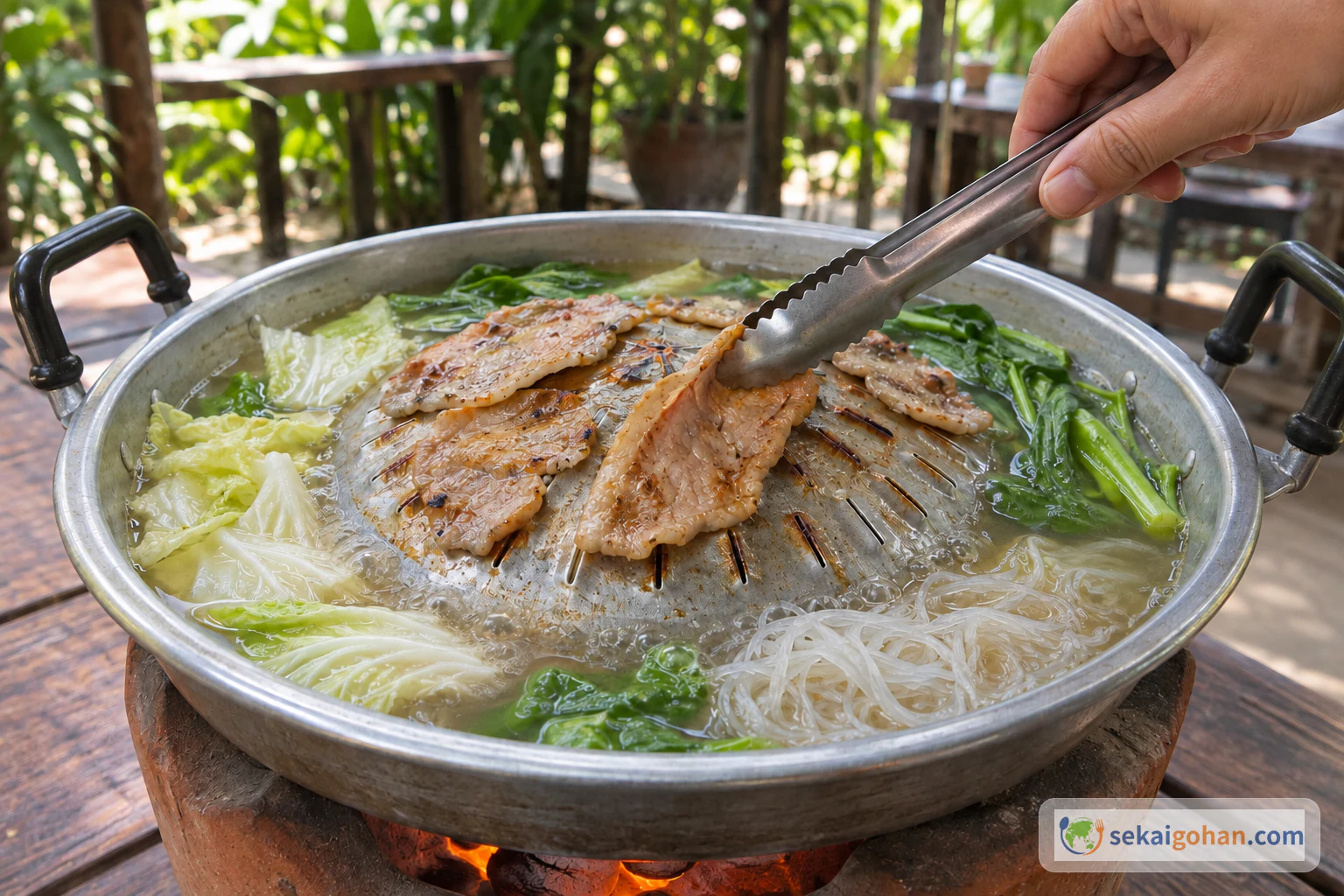
Two heat zones on one pan: thin marinated pork grills on the raised center, while vegetables and glass noodles cook in broth in the moat around it. Keep the raw pork and its egg marinade cold and separate, and cook everything through before it reaches anyone's plate.
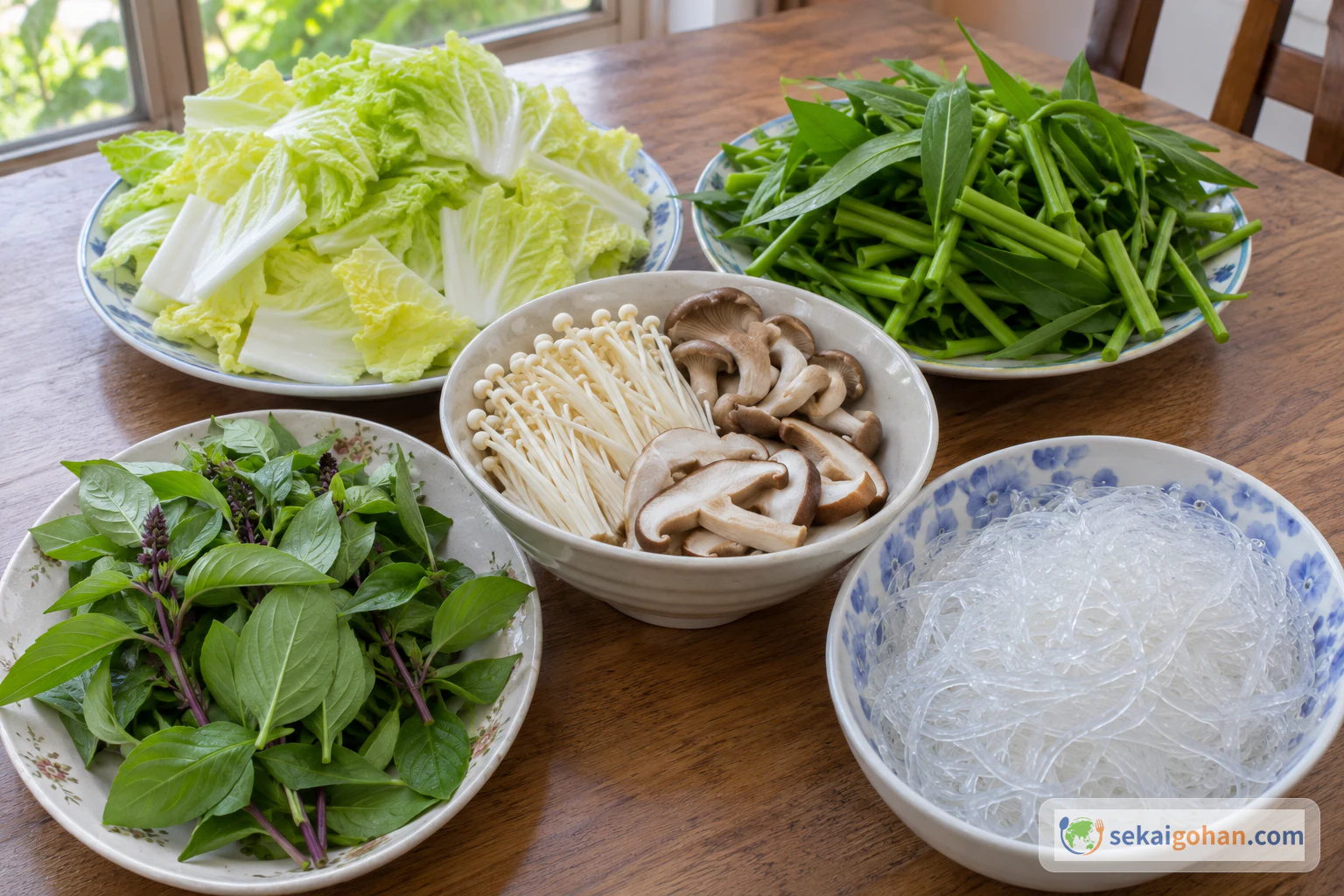
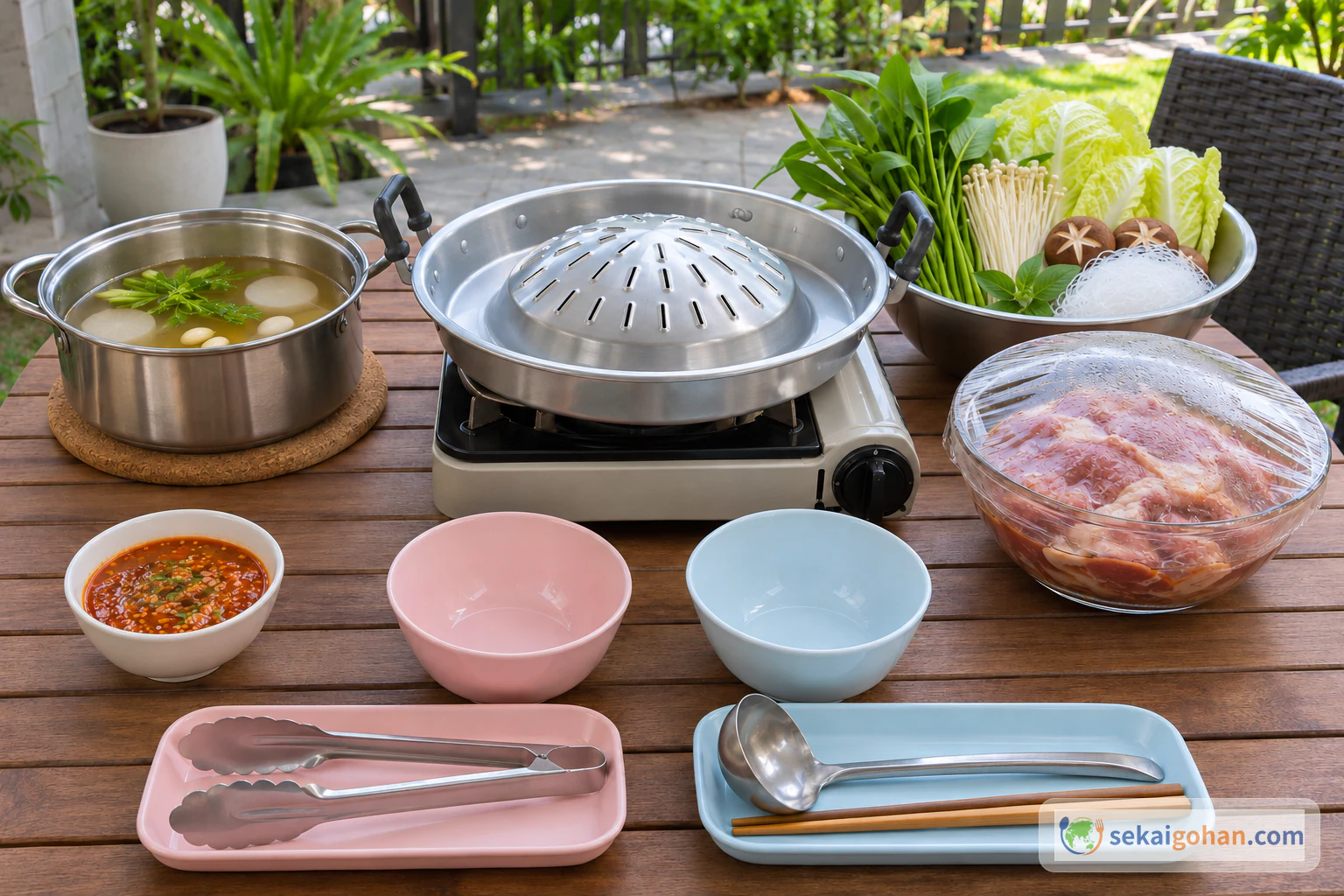
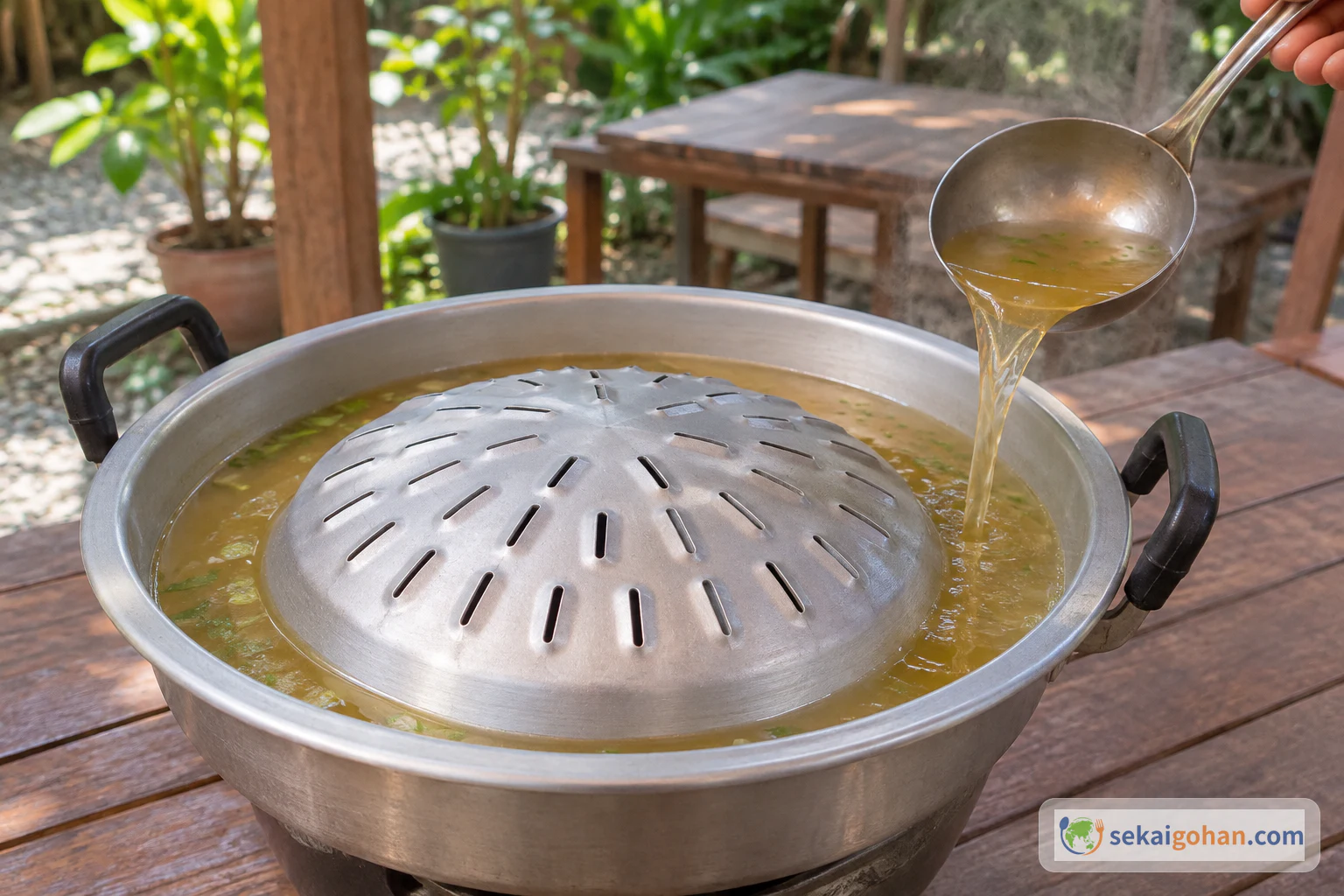
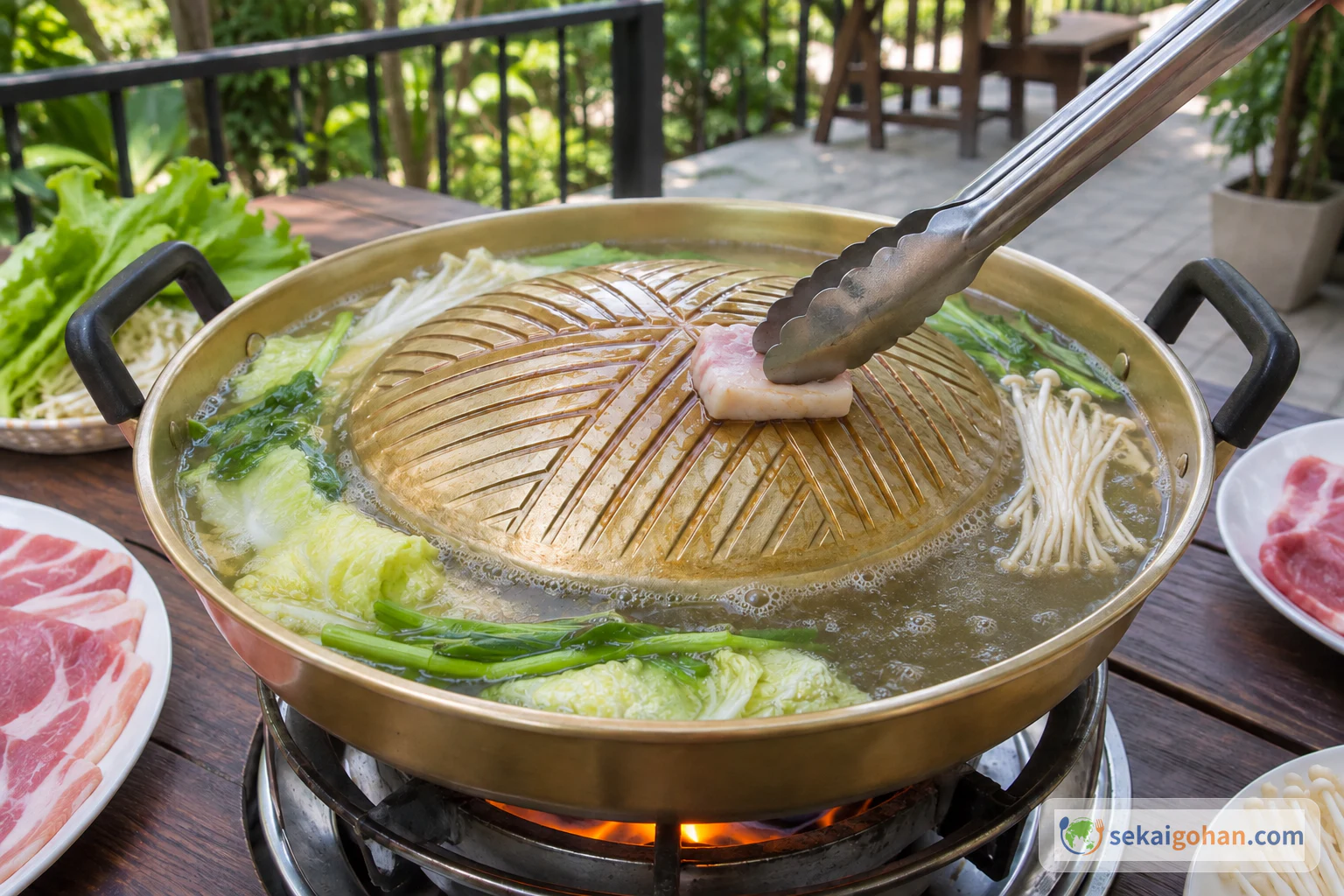
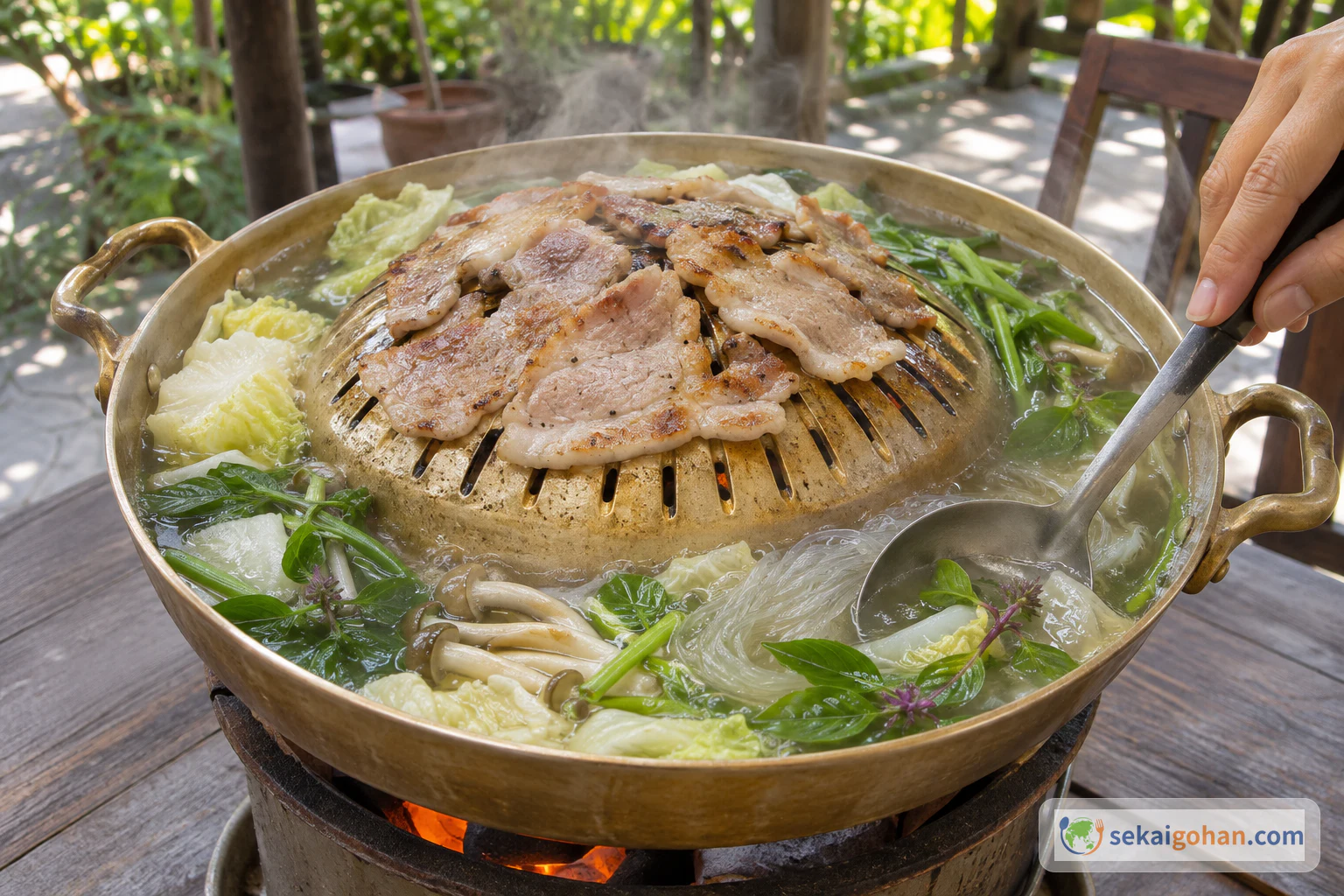
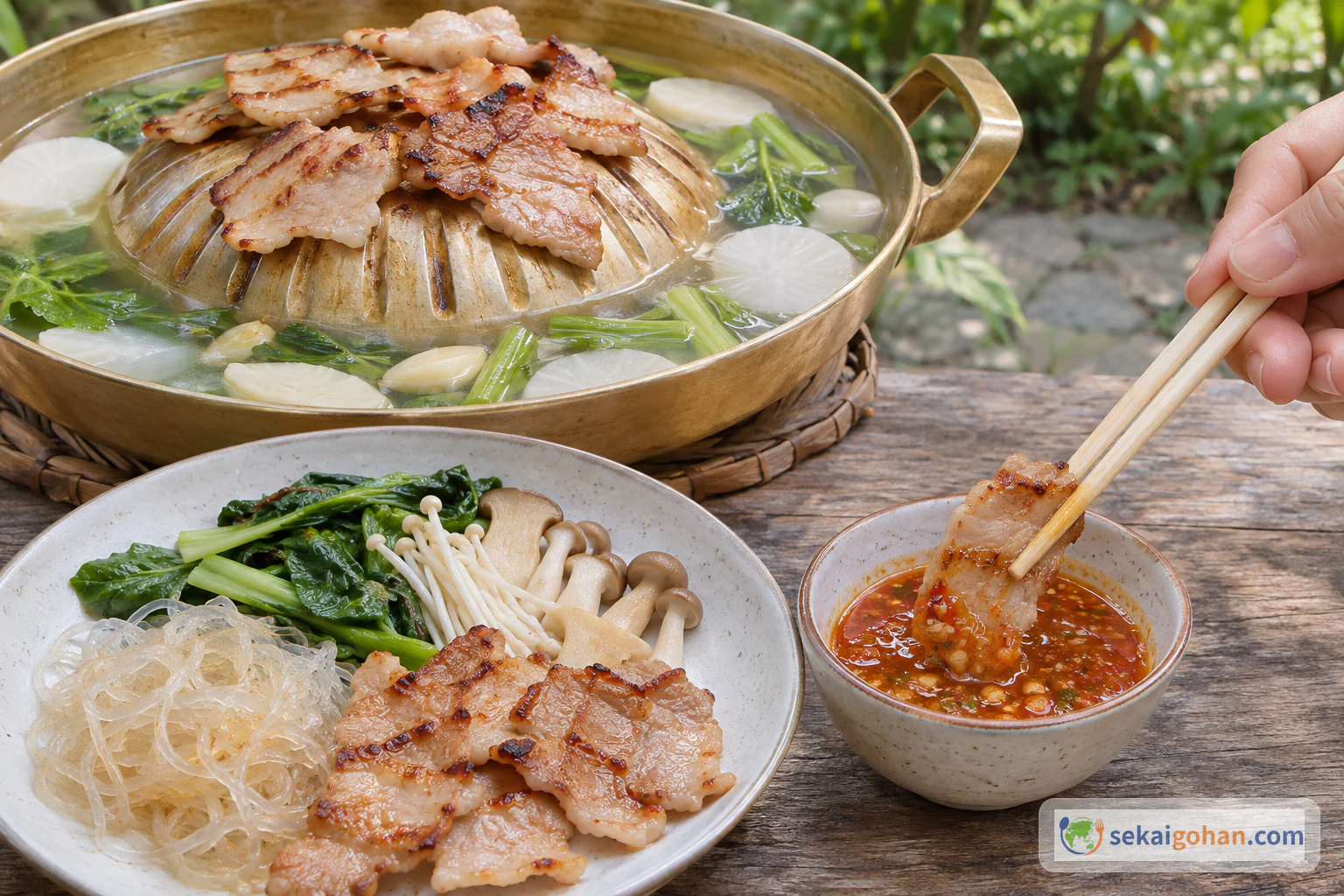
A domed pan sits in the middle of the table. Slices of marinated pork go onto the hot raised center, and as they cook, their juices run down into the ring of broth below, where cabbage, morning glory, mushrooms and glass noodles are softening. Everyone grills and fishes out food at the same time. This is mu kratha, often written mookata in English (หมูกระทะ in Thai), a meal built around a tabletop grill and a hotpot in a single pan.
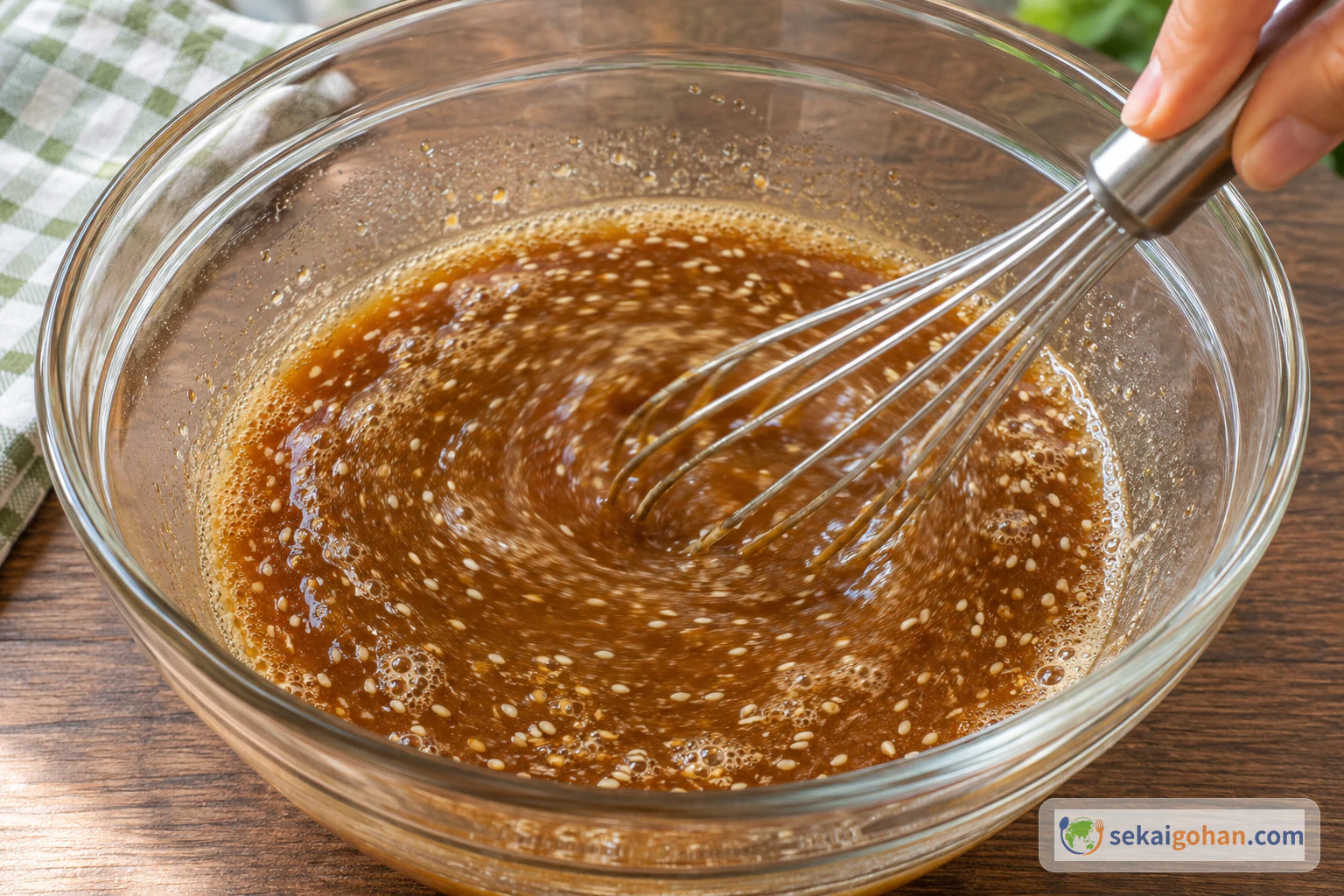
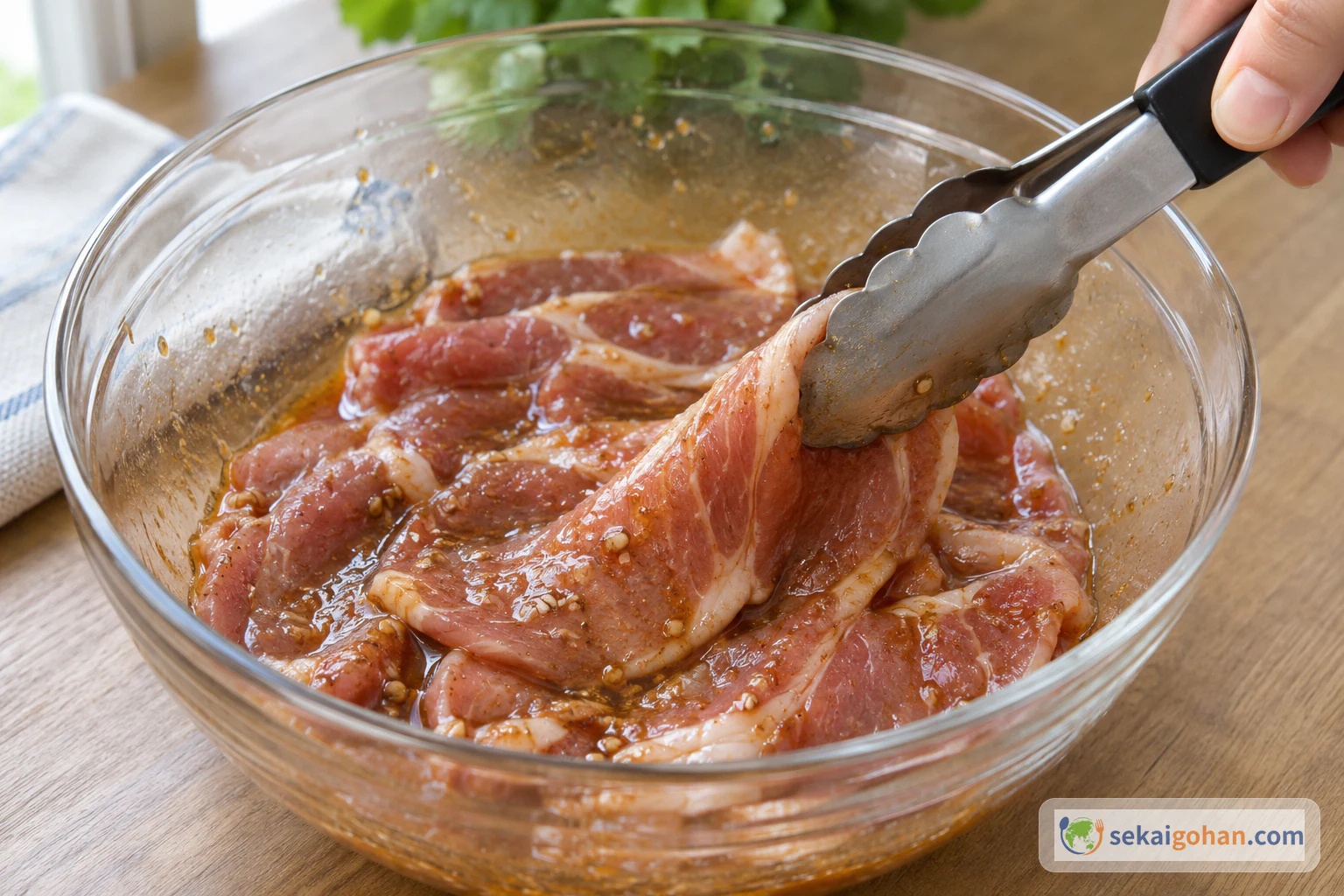
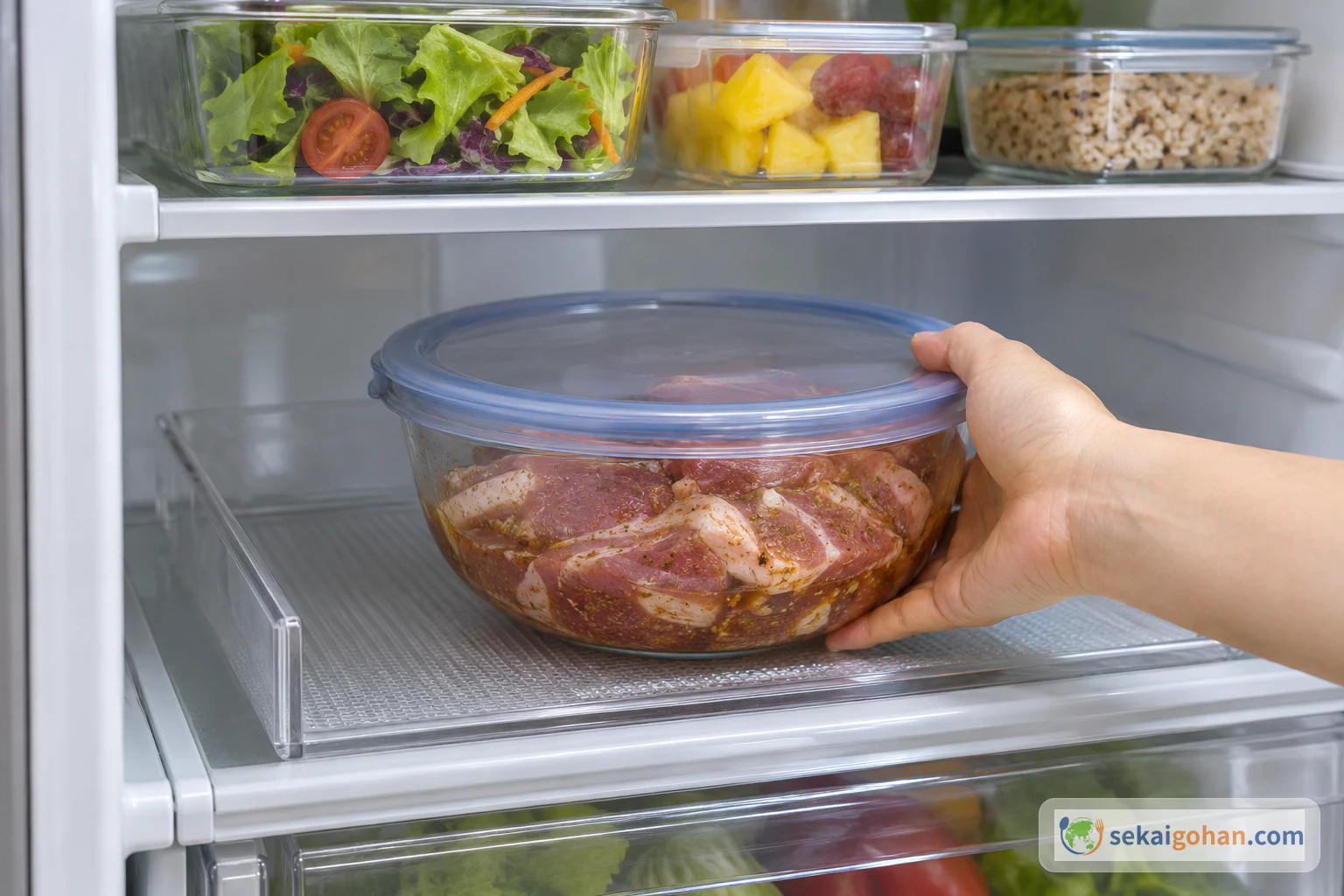
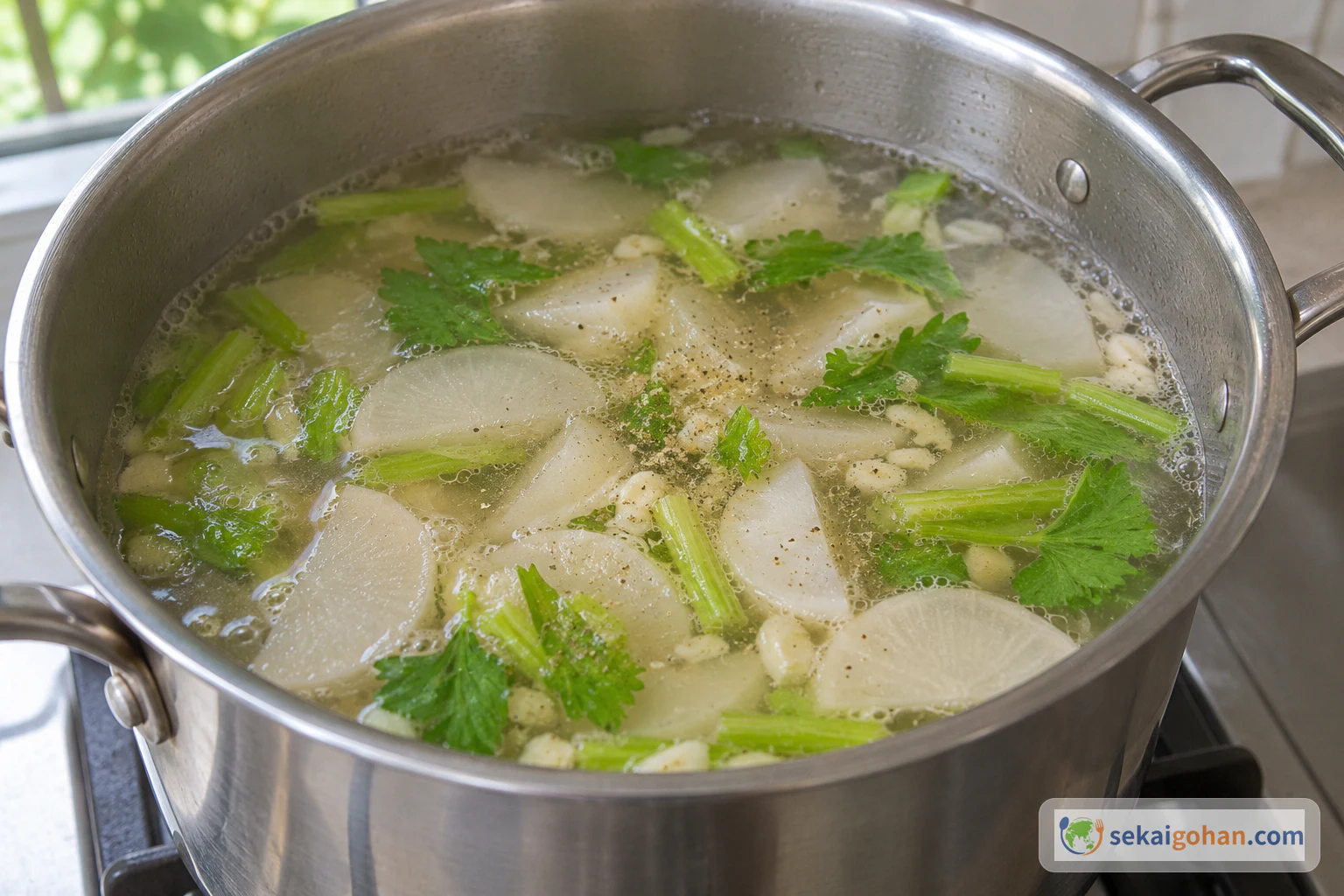
This version follows the five-serving pork recipe from Praew of Hungry in Thailand: 1.3kg of thinly sliced pork in a marinade of oyster sauce, Golden Mountain sauce, sesame, palm sugar, egg and sparkling water, plus a light broth of white radish, Chinese celery and garlic. It is pork only, with no seafood, chicken or beef, and it is served with a store-bought mookata dipping sauce. The marinade needs at least 6 hours in the refrigerator, so start the day before or in the morning.
For more dishes from the same country, see the Thailand page.
What Mu Kratha Is: One Pan, Two Ways of Cooking
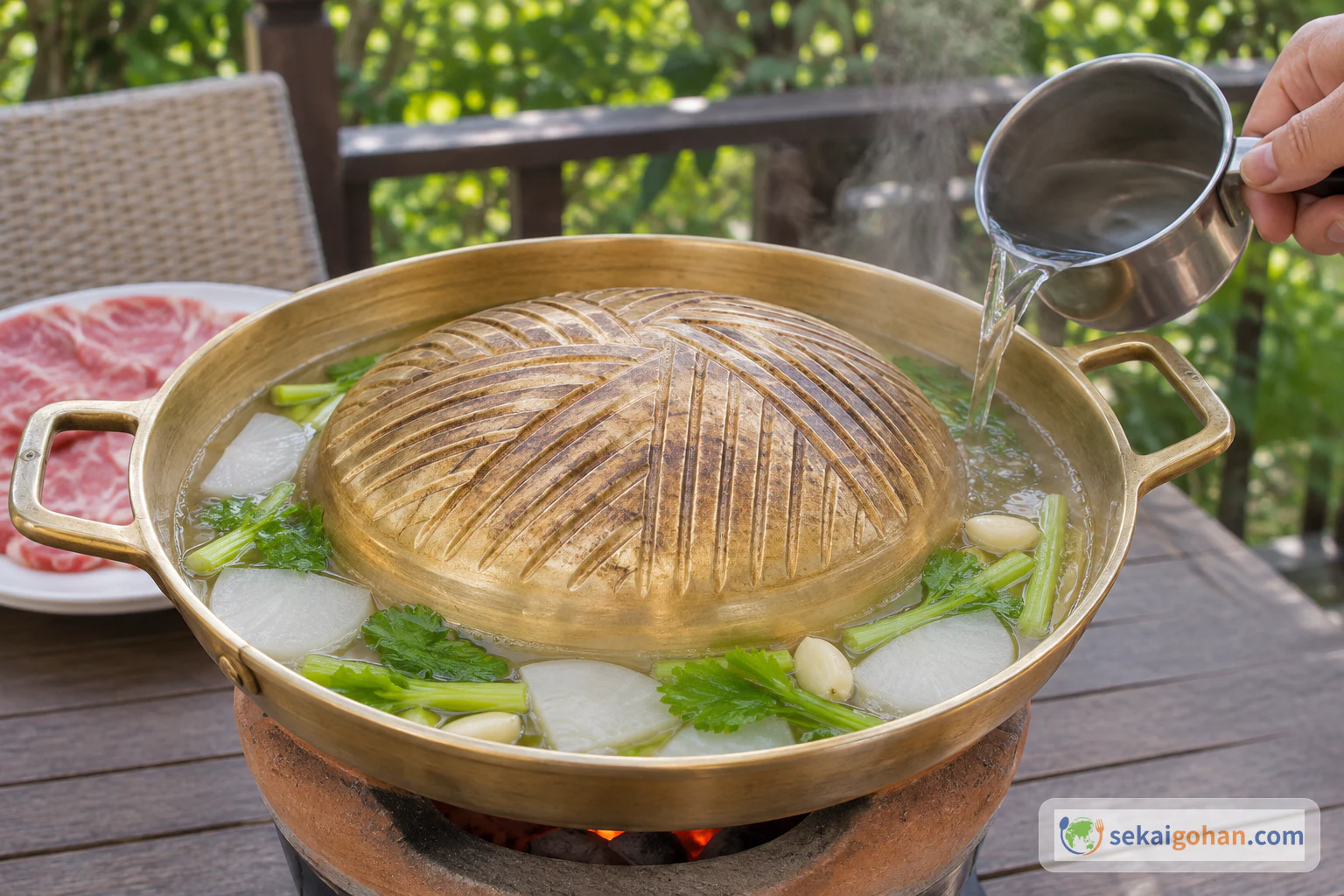
Praew's recipe describes mookata as a Thai barbecue built around a domed grill with a moat of broth: the center is for grilling, the outer channel is for simmering. Pork is given as the classic choice, and the recipe is written for five people sharing one table. Most of the work happens before anyone sits down. The pork is marinated ahead, the broth is simmered in advance, and the vegetables and noodles are prepped. At the table, the job is simply to keep the dome greased, the pork turning, and the moat topped up.
Praew introduces themself as being from Isan, in northeastern Thailand, and writes that what goes into the pan varies from household to household. That is one cook's account of their own family's way, not a fixed national standard, and this article treats it that way. Other Thai sources show how wide the range is. A Wongnai Cooking article gives a separate recipe built on 500g of pork neck with egg, palm sugar, oyster sauce, soy sauce, pepper, tapioca starch, baking powder and sesame, marinated for 30 minutes, with its own cooked chili, vinegar and fish sauce dip, and it notes that pork fat can be used to grease the pan. A Thai government career information sheet treats mu kratha as a small business, with commercial equipment, categories of meat and vegetables, a marinade for 1kg of meat and large-batch sauces. Those are different recipes for different settings, and none of their amounts are mixed into the recipe below.
The dipping sauce
Praew recommends a homemade mookata sauce and publishes it as a separate recipe, noting that sauces vary by region and by restaurant. For seafood, the recipe suggests nam jim talay, and the recipe card also lists sweet chili sauce. This article uses a store-bought mookata dipping sauce instead. That is our own choice for a pork-only table, not something Praew's recipe specifies. Nam jim talay belongs with seafood and sweet chili is a separate option, so neither stands in for the mookata dip here.
Ingredients (5 servings)
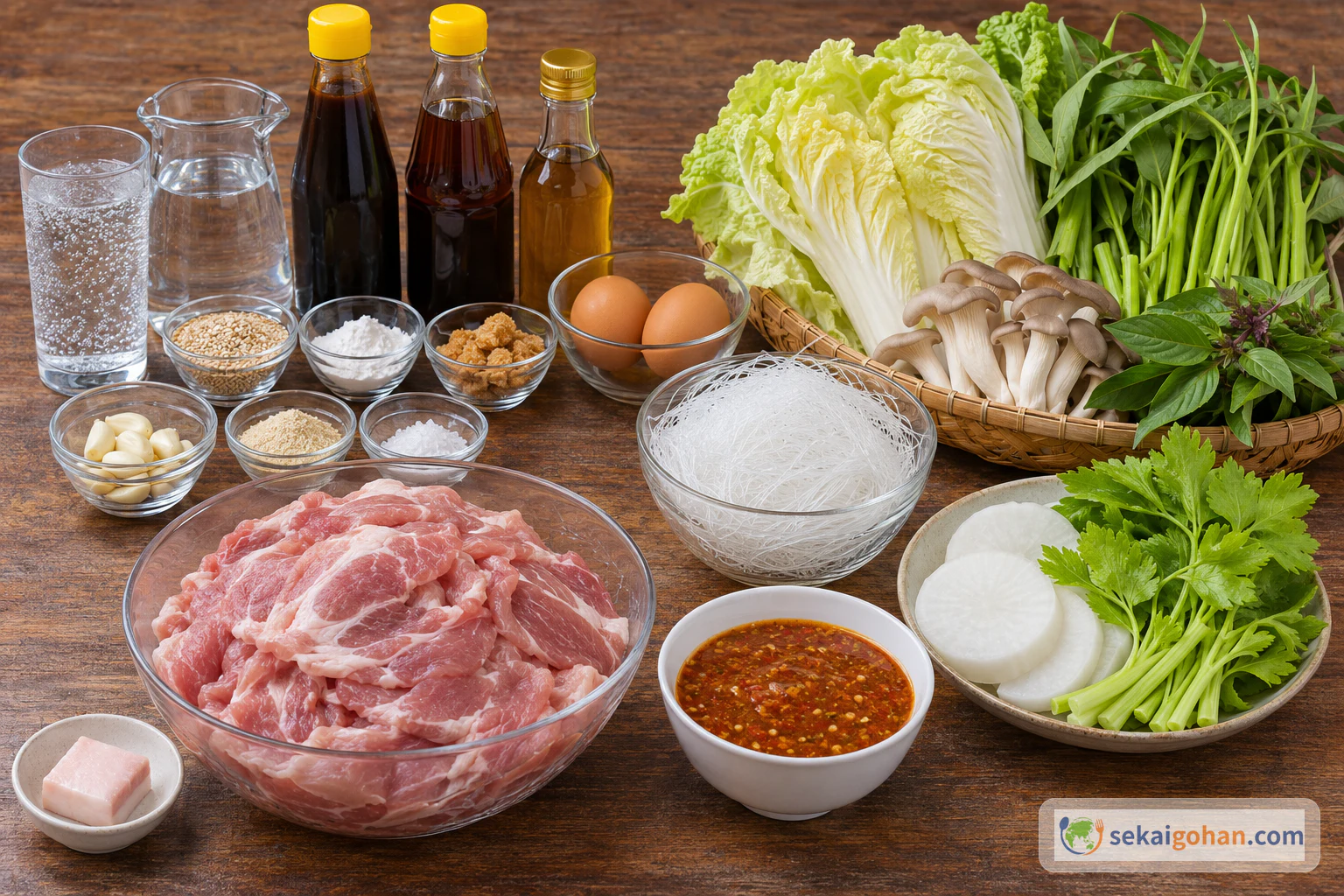
Split the 500g of vegetables however you like among cabbage, morning glory, mushrooms, Thai basil and similar greens.
This recipe contains egg, sesame and oyster sauce (made from shellfish). Seasoning sauces and seasoning powders may contain wheat or soy; check the labels of the products you buy, including the dipping sauce. The marinade contains raw egg and has held raw pork. Keep it refrigerated, and never use it as a dipping sauce.
Equipment
- Thai domed mookata grill with a broth moat, and a heat source suitable for it
- Mixing bowl with a cover, and a whisk
- Stockpot for the broth
- Ladle
- Small heat-safe vessel or kettle for hot water
- Food thermometer
- Tongs used only for raw pork
- Separate clean tongs, chopsticks and plates for cooked food
- Small bowls for the dipping sauce
Choosing and Substituting
No mookata grill? Use a tabletop grill that has a channel around its edge, or a tabletop grill plus a separate pot of broth beside it. Either way, keep the two roles apart: grill in one zone, simmer in the other.
Golden Mountain sauce → soy sauce. This swap works, but the flavor will be different. Golden Mountain is a Thai seasoning sauce with its own character.
Rosdee → Knorr bouillon powder. This also works. Products differ in flavor and saltiness, so taste the broth before adding all the salt.
Baking powder stays baking powder. Do not replace it with baking soda.
Thai basil and Chinese celery. Other basil or ordinary celery are not the same herbs. If you leave out Thai basil, the broth will smell different. If you cannot find it, leaving it out is more honest than calling a substitute the same thing.
Specialty items. Golden Mountain sauce, Rosdee seasoning powder, Thai basil, Chinese celery and morning glory may need a trip to an Asian grocery.
Method: Prep Ahead, Then Cook Together at the Table
Steps 1 to 5 happen in the kitchen ahead of time. Steps 6 to 12 happen at the table. If you use charcoal, the table must be outdoors in the open air.
When Things Go Off Course at the Table
| Problem | Likely reason | What to do |
|---|---|---|
| Pork sticks to the dome | The dome was not greased, or the fat has burned off | Rub the fatty piece of pork over the hot dome again with the raw-meat tongs |
| Pork looks done but you are not sure | Slices overlapped, or the heat is uneven | Keep cooking. Check that the center holds 75°C for at least 1 minute. Do not judge by color |
| The moat is running low | The broth reduces as it cooks | Add hot water, a little at a time, and stay below the rim |
| The moat is close to overflowing | Too much broth, or too much food added at once | Ladle some broth out and add food in smaller batches |
| Someone used the raw-meat tongs to serve cooked food | Utensils got mixed up | Swap in clean utensils, and keep the raw-meat tongs at the pork platter only |
| The broth tastes too salty | Seasoning powders differ in saltiness | Next time, taste after adding the seasoning powder and before adding all the salt |
Variations
- Pork only, as written. This is the base version: marinated pork, broth, vegetables and glass noodles.
- Your own vegetable mix. Keep the total at 500g and choose among cabbage, morning glory, mushrooms, Thai basil and similar greens.
- Without Thai basil. This works, but the broth will smell noticeably different.
- Soy sauce instead of Golden Mountain sauce. The marinade still works, with a different flavor.
- Knorr bouillon powder instead of Rosdee. The broth still works, but taste for salt because the products differ.
Praew's recipe also lists 500g of seafood as optional. This article does not add seafood to the base version. If you do add it, treat it as a separate plate with its own sauce (nam jim talay) rather than part of this recipe.
Frequently Asked Questions
Can I make mu kratha without a mookata grill?
Yes. Praew's recipe suggests a tabletop grill with a channel around its edge, or a tabletop grill with a separate pot of broth. What matters is keeping the grilling zone and the simmering zone separate.
Can I use a charcoal grill indoors?
No. The Tokyo Metropolitan Government's consumer safety tests of charcoal and briquettes burned indoors show the danger of carbon monoxide poisoning. This recipe uses charcoal only outdoors in the open air. That is our own setup choice. The Tokyo material does not say charcoal is legally restricted to outdoor use, and it does not show that any particular grill is safe. For any heat source, follow the appliance's instructions.
How do I know the pork is safe to eat?
Japan's Ministry of Health, Labour and Welfare says pork should be cooked thoroughly and never eaten raw. Its general home food-safety guidance gives a center temperature of 75°C for at least 1 minute as a guide for thorough cooking. The same guidance says to keep raw-meat utensils separate from those used for ready-to-eat food, or to wash them before reuse. This is general household guidance, not a test of this recipe. Use a thermometer, because browning and steam do not prove the pork is done.
Can I use the leftover marinade as a dip?
No. It contains raw egg and has held raw pork. Keep it refrigerated and never serve it as a sauce. Use the separate store-bought mookata dipping sauce instead.
Do I have to use store-bought dipping sauce?
No. Praew recommends making mookata sauce at home and publishes a separate recipe for it. This article uses store-bought mookata dipping sauce to keep the table simple. That is our choice, not part of Praew's recipe. Sweet chili sauce and nam jim talay are other options in Praew's recipe, but they are not substitutes for mookata sauce here.
Can I marinate for less than 6 hours?
This recipe calls for at least 6 hours in the refrigerator, or overnight. The 30-minute marinade in the Wongnai Cooking article belongs to a different recipe with different ingredients, so its timing should not be applied to this one.
Why sparkling water and baking powder?
They are part of Praew's marinade, and the amounts are kept exactly as given. We do not make claims about how they act on the meat. Do not replace the baking powder with baking soda.
Should the glass noodles be weighed dry or soaked?
Praew's recipe gives 140g of glass noodles without saying whether that is dry or soaked weight. We weigh them dry and prepare them according to the package. That is our own choice, not something the recipe settles.
Should the broth go in before or after heating the grill?
Praew's write-up describes the order both ways. This article follows the recipe card: fill the moat first, then start the heat. Always defer to your grill's instructions.
Can I use less salt in the broth?
Rosdee and similar seasoning powders already contain salt, and products vary. We have not kitchen-tested a reduced-salt version, so we cannot give a reliable lower amount. Taste the broth after adding the seasoning powder and adjust from there.
Sekai Gohan has not kitchen-tested this recipe as a whole.
Sources
- Praew / Hungry in Thailand, "Mookata Recipe (Thai BBQ)." The main recipe: the domed grill and broth moat, five servings, pork as the classic choice, the marinade, broth, vegetables and glass noodles, refrigerating for 6 hours or more, simmering the broth for 20 minutes, and the order of the meal, including the dipping sauce options and substitutions. https://hungryinthailand.com/mookata-recipe/
- Praew / Hungry in Thailand, "Mookata Sauce Recipe (Thai BBQ Sauce)." A separate homemade dipping sauce recipe, and the author's note that sauces vary by region and restaurant. Referenced only; not used in this recipe. https://hungryinthailand.com/mookata-chili-sauce/
- Wongnai Cooking / pimtp__, "เทคนิคการทำ "หมูกระทะ" พร้อมน้ำจิ้ม โดยนายฮ้อย ซาลาห์ ทำง่ายไม่ง้อร้าน." A different recipe with a pork-neck marinade and a cooked chili, vinegar and fish sauce dip, and the use of pork fat to grease the pan. Used for comparison only. https://www.wongnai.com/food-tips/how-to-make-thai-barbecue
- ศูนย์ข้อมูลอาชีพ กองส่งเสริมการมีงานทำ (Thai career information center), "หมูกระทะ." A commercial information sheet covering equipment, categories of meat and vegetables, a 1kg marinade and large-batch sauces. Used as background only. https://www.doe.go.th/prd/assets/upload/files/vgnew_th/92a126afa987bed00597dd83e3a2053f.pdf
- Ministry of Health, Labour and Welfare (Japan), "お肉はよく焼いて食べよう" (Cook meat thoroughly before eating). Pork should be cooked thoroughly and not eaten raw. https://www.mhlw.go.jp/stf/seisakunitsuite/bunya/0000049964.html
- Ministry of Health, Labour and Welfare (Japan), "家庭でできる食中毒予防の6つのポイント" (Six points for preventing food poisoning at home). General household guidance on thorough heating (a center temperature of 75°C for at least 1 minute), keeping raw-meat utensils separate from those for ready-to-eat food or washing them, avoiding cross-contamination, and cold storage. https://www.mhlw.go.jp/www1/houdou/0903/h0331-1.html
- Tokyo Metropolitan Government, Bureau of Citizens and Cultural Affairs, "発電機・木炭等による一酸化炭素中毒の危険性" (Danger of carbon monoxide poisoning from generators, charcoal and similar). Test results on carbon monoxide from charcoal and briquettes burned indoors, and the importance of ventilation. https://www.shouhiseikatu.metro.tokyo.lg.jp/anzen/test/hatsudenki_press.html