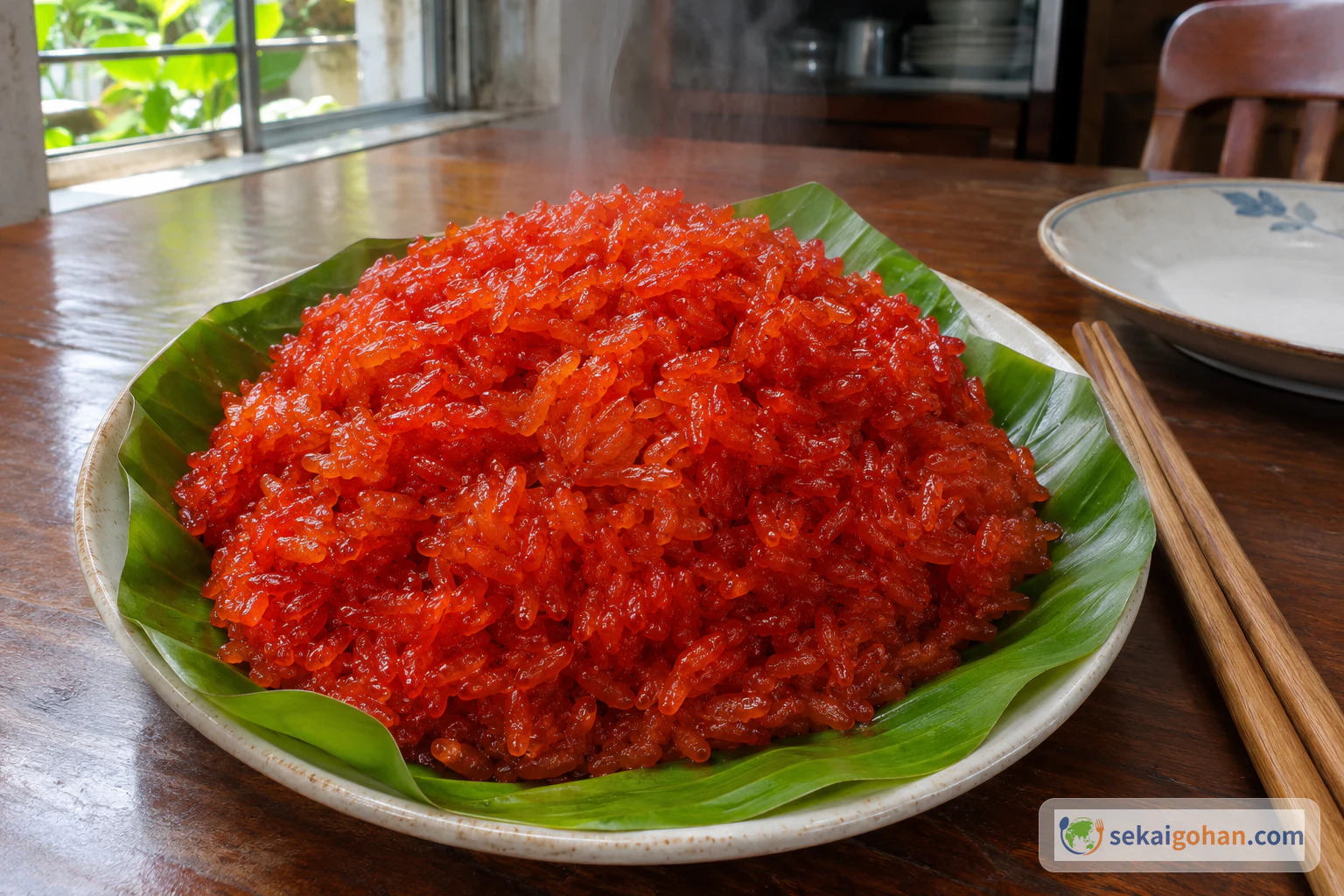
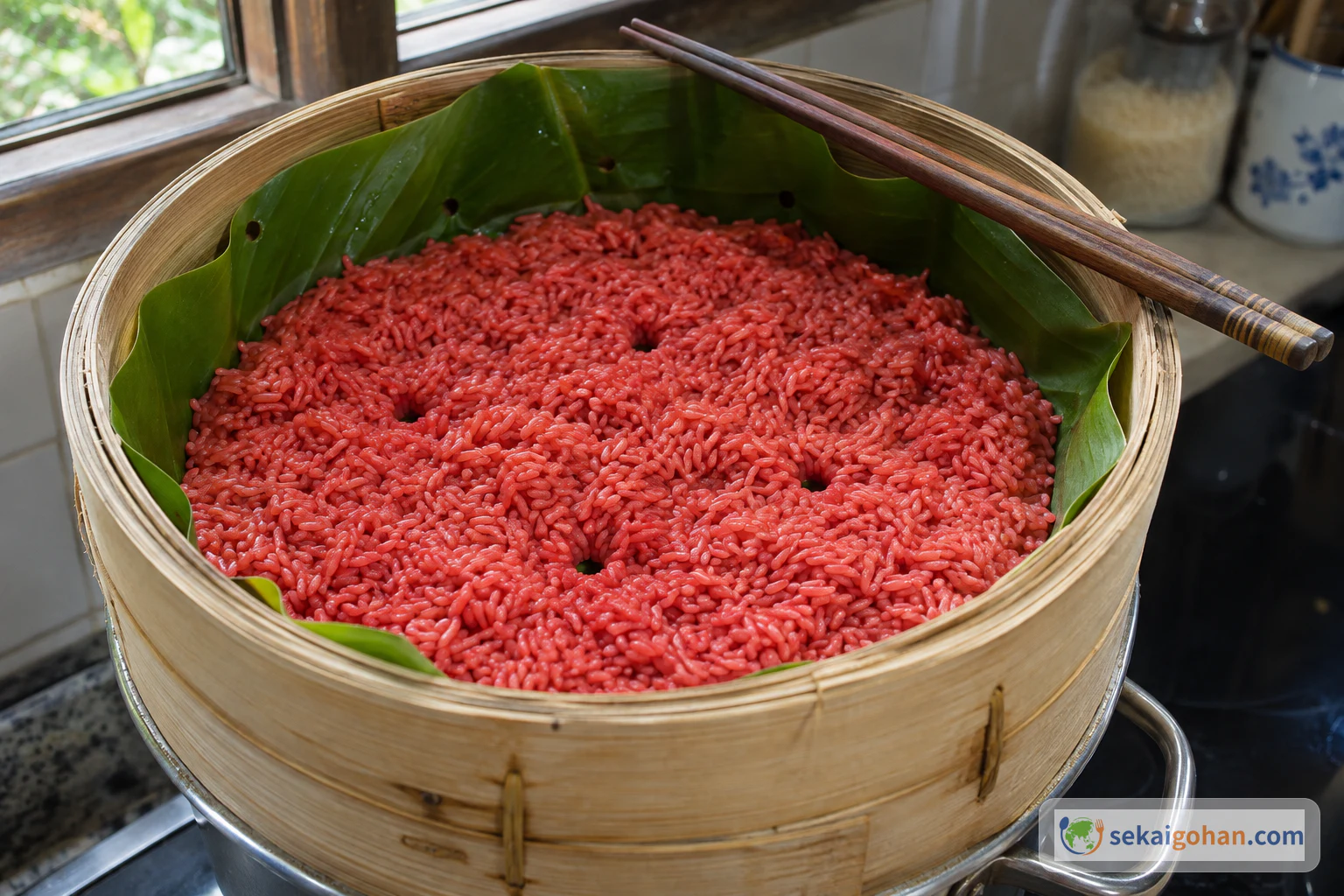
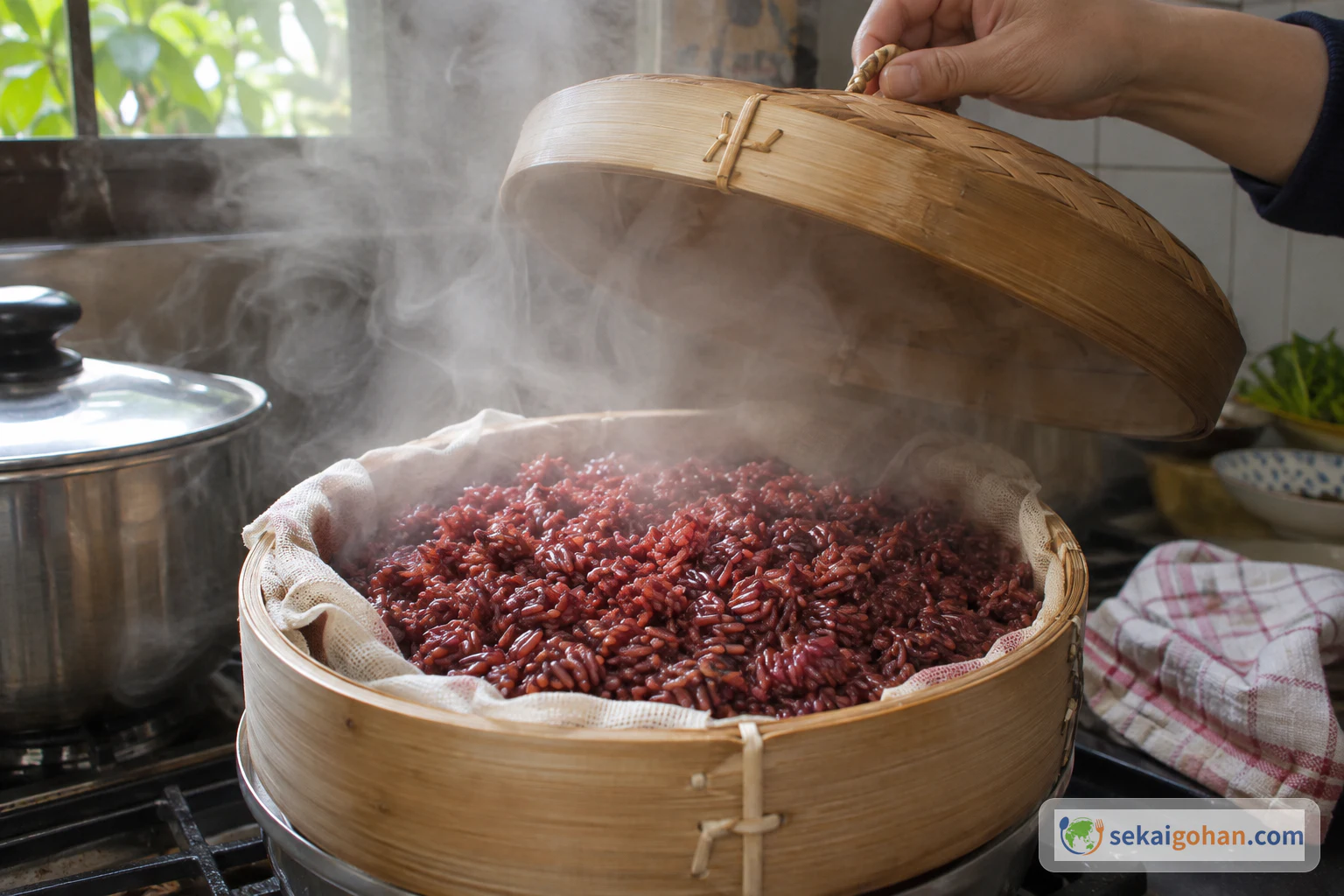
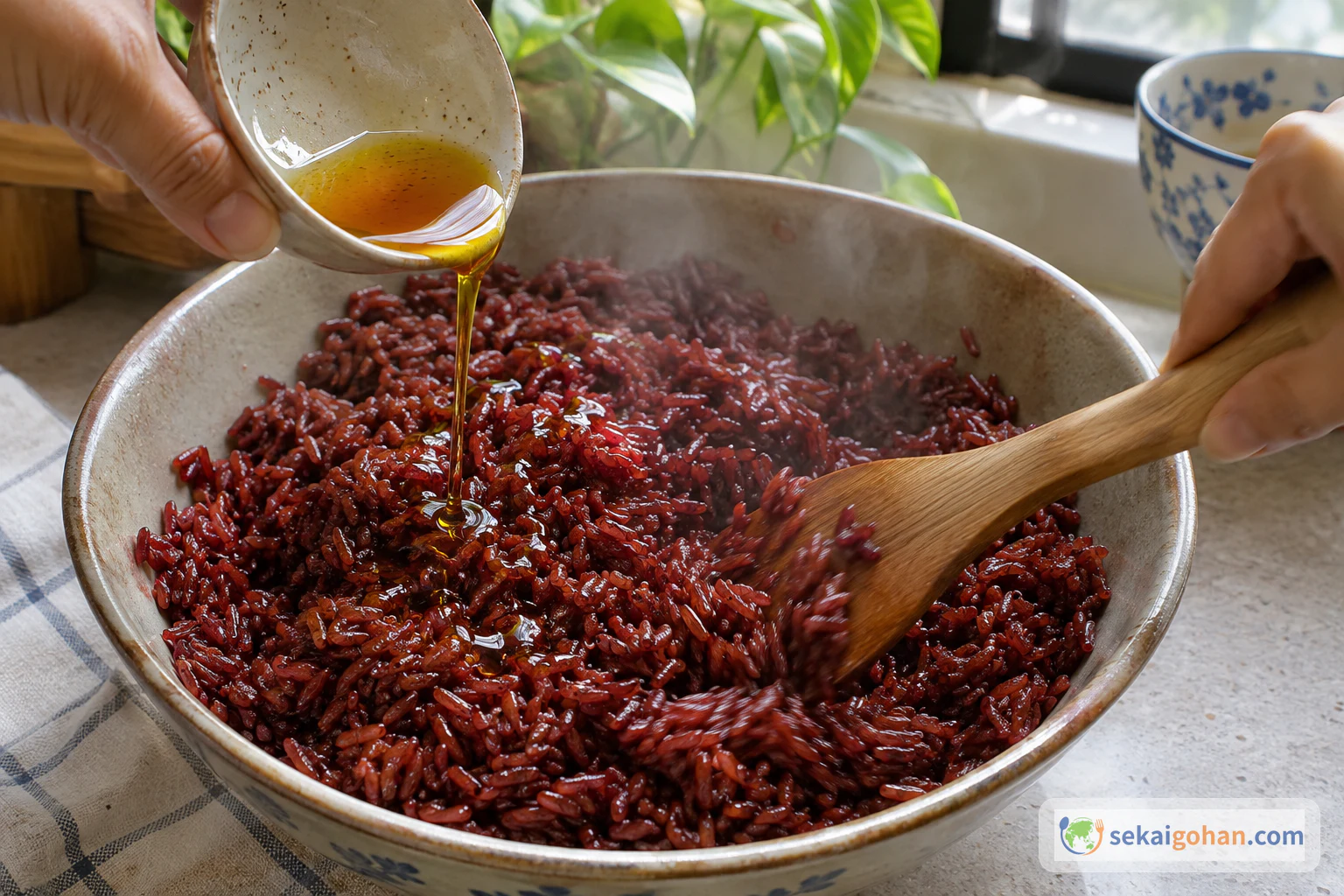
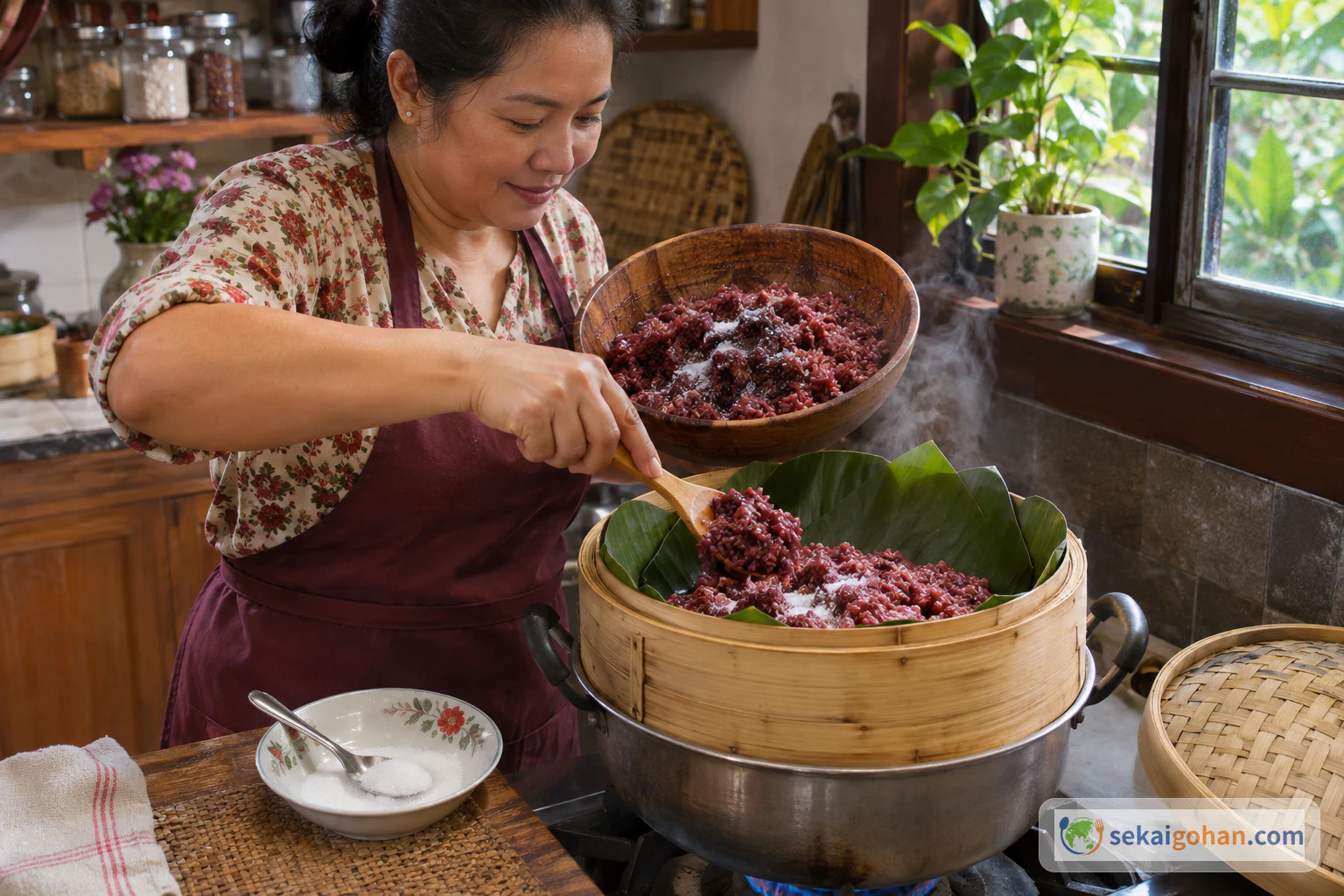
Lift the steamer lid and a thick cloud rolls out. Underneath, the rice that went in streaky orange has turned a deep, even red, and every grain stands apart with a soft shine. That colour comes from gac, a spiny fruit whose seeds sit wrapped in a red pulp, and it is the reason xôi gấc sits on Vietnamese tables at Tết and at weddings. The rice is chewy and springy, glossed with sesame oil, lightly sweet, and carries the gentle scent of the fruit.
A Red Dish for Tết and Weddings
Red is the colour of luck in Vietnam. At Tết, the Lunar New Year and the biggest holiday of the year, families reunite and the house fills with it: the tall cây nêu pole is wrapped in red cloth, and a plate of xôi gấc brings the same colour to the table. Tết dishes are described by their colours. On a Hanoi Tết tray, the green of bánh chưng sits beside the deep red of xôi gấc, the gold of bamboo-shoot soup and the pale pink of giò lụa pork roll. The tray is first an offering to the ancestors, then the meal the gathered family eats together. Xôi gấc also turns up at weddings, carrying the same wish for good fortune.
Vietnamese sticky rice comes in two broad families: sweet xôi such as xôi lá dứa (pandan), xôi lạc (peanut) and xôi gấc, and savoury xôi mặn topped with meats. Xôi gấc belongs firmly to the sweet side, though "sweet" here means lightly sweet, with salt and sesame oil keeping it balanced enough to eat beside savoury dishes. When and where the dish began is not settled, and nobody needs that answer to enjoy a plate of it. For more of the country's cooking, see our Vietnam page.
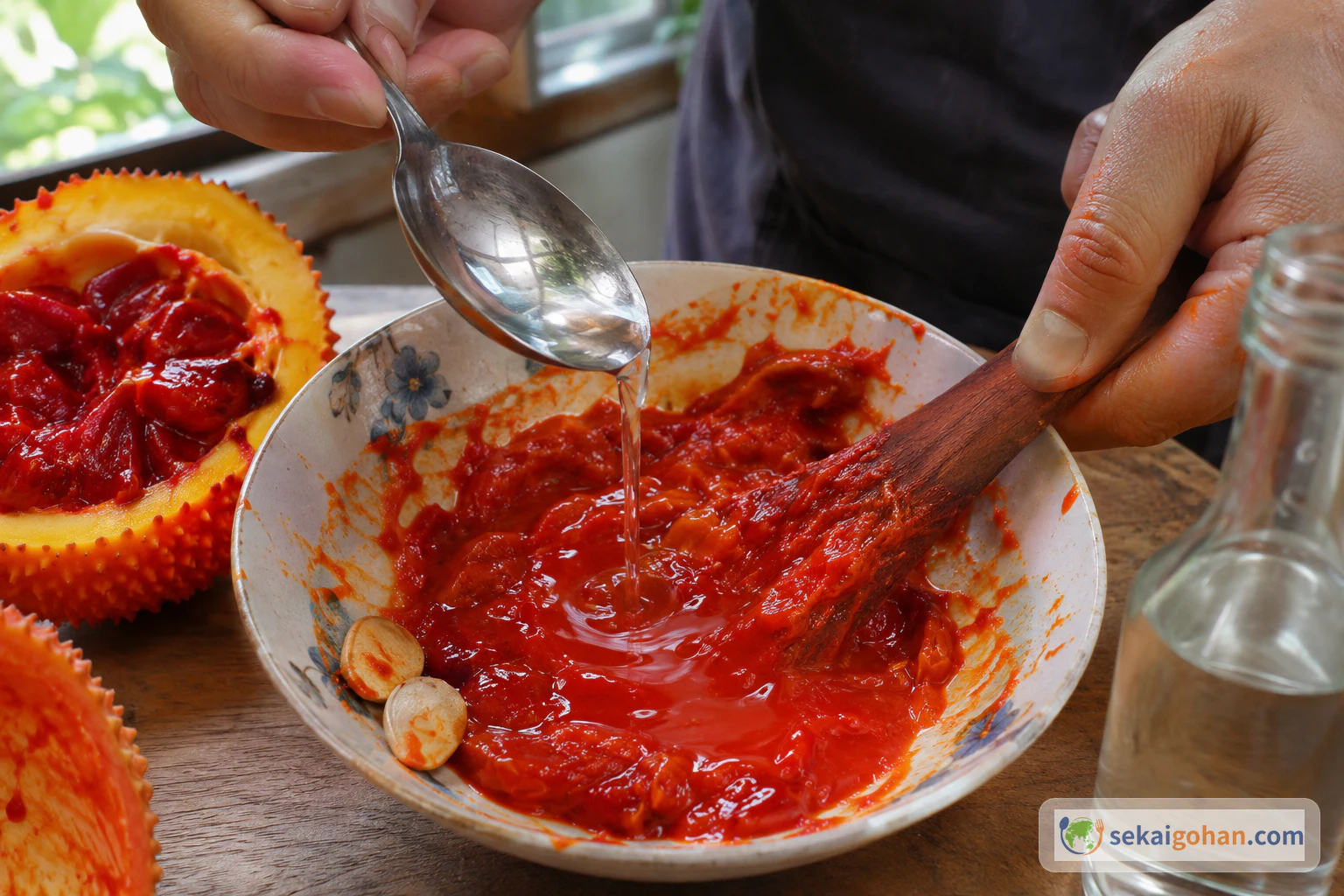
Gac is Momordica cochinchinensis, a fruit eaten across East and Southeast Asia. The part used is the red aril, the soft pulp wrapped around each seed. It is rich in lycopene and beta-carotene, and that natural pigment is what stains the rice. The seeds themselves are not eaten.
North, centre and south
Each part of the country makes it a little differently. In the north, xôi gấc is seasoned with only sugar and salt, and cooks there favour a fragrant glutinous rice called nếp cái hoa vàng. In the centre, fried shallot oil (dầu hành phi) is folded through. In the south, coconut milk adds richness. Some households add peanuts, mung beans or fruit.
The recipe here sits closest to the northern style: lightly sweet, finished with sesame oil, with no shallot or coconut in the pot. It is a home recipe from a Vietnamese family kitchen, and it uses frozen gac paste, which is how most cooks outside Vietnam will meet the fruit.
Ingredients
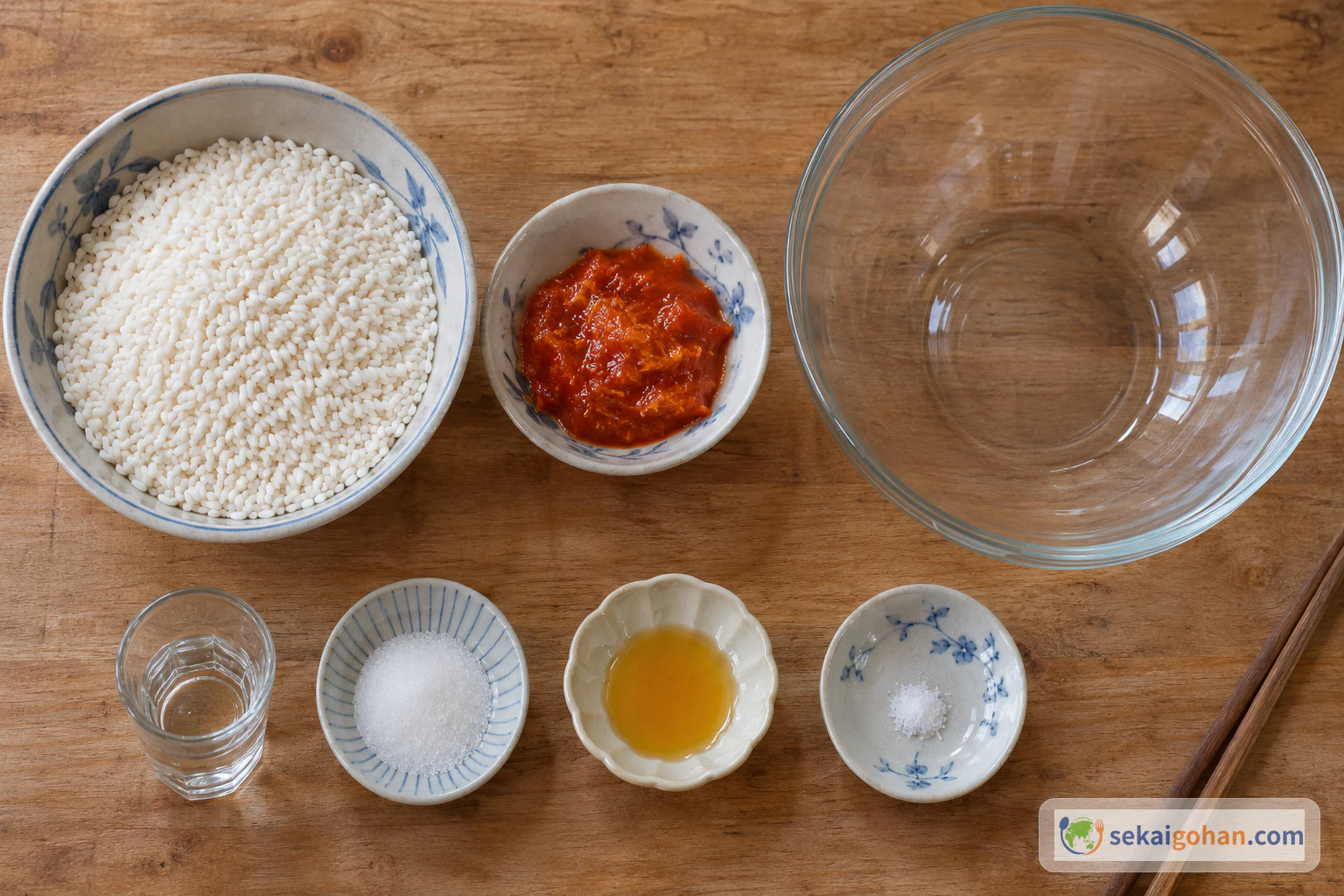
This dish contains sesame (sesame oil) and rice. The variations below can add coconut (coconut milk), shallot (fried shallot oil) or more sesame (black sesame topping). Sticky rice is very chewy and clings in the mouth; serve older people and small children small bites and keep an eye on them while they eat.
Equipment
- A steamer basket (bamboo or metal) and a pot it sits over snugly, with a lid
- Banana leaf, or a clean cotton cloth or parchment paper, to line the basket
- A clean kitchen cloth to wrap the lid
- A bowl for washing and soaking the rice, plus plastic wrap
- A strainer
- A small bowl for the gac
- A wide mixing bowl and a wooden spoon
- Long chopsticks
- A small mould, if you want to shape the rice
Buying Gac and Choosing Substitutes
Gac decides this dish. Fresh gac fruit rarely reaches shops outside Asia, so look for frozen gac paste in the freezer of Vietnamese or Asian grocers, or online, under names such as gấc xay or gấc đông lạnh. Thaw it slowly in the refrigerator. Some frozen paste carries a lot of water; pour off any liquid that separates before you weigh it, because that water ends up in the rice and makes it soggy.
If you do find a whole fruit, choose one that is bright red with thin skin, fine and sparse spines, and a thick stem. Scoop out the red pulp, remove the seeds, and use the pulp in place of the paste. It still steams with the rice; nothing from the fruit is eaten raw.
Food colouring can turn rice red, but it gives colour only. The aroma and the soft fruit taste disappear, and the result is a different dish. There is no stand-in for gac; on days without it, make another sticky rice instead.
The rest is easy to find, and each swap changes something small:
| Item | What works | What it changes |
|---|---|---|
| Glutinous rice | Any glutinous (sweet) rice, Thai or Japanese | Absorption differs between rices; judge the soak by the grains, as in step 2 |
| White spirit | Dry white wine or sake | Sake and wine differ in alcohol strength; both loosen the gac and help the colour |
| Sesame oil | Toasted sesame oil | Toasted oil smells much stronger; the same spoonful pushes sesame to the front. Use a little less if you want the gac to lead |
| Banana leaf | Clean cotton cloth or parchment paper | The leaf is there to keep grains from dropping through and to stop the red from staining the steamer; cloth or parchment does the same job |
Working the gac with a spoonful of spirit before it meets the rice releases its scent and gives a deeper, more even red. Mixed in plain, the paste leaves the rice noticeably paler.
Method
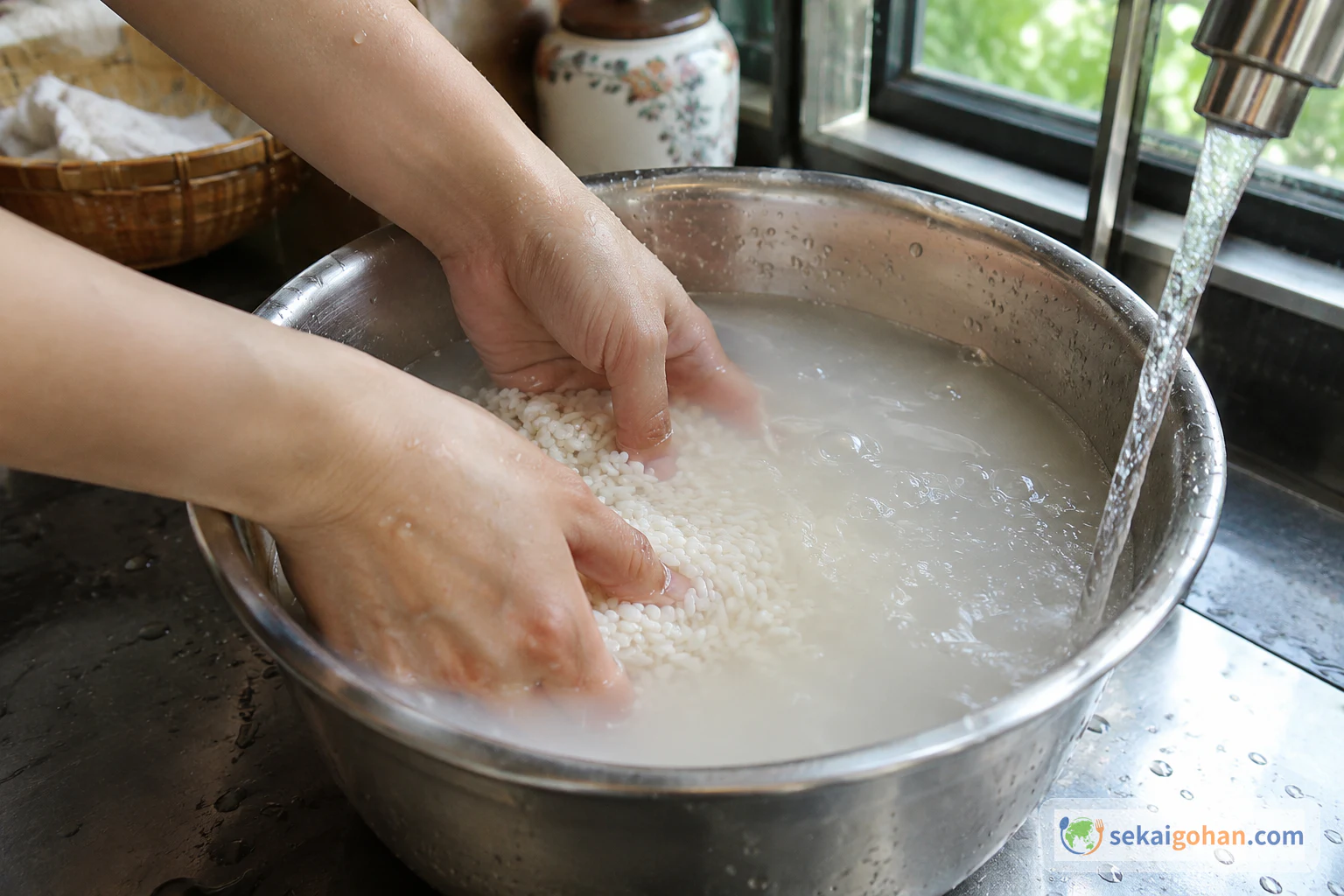
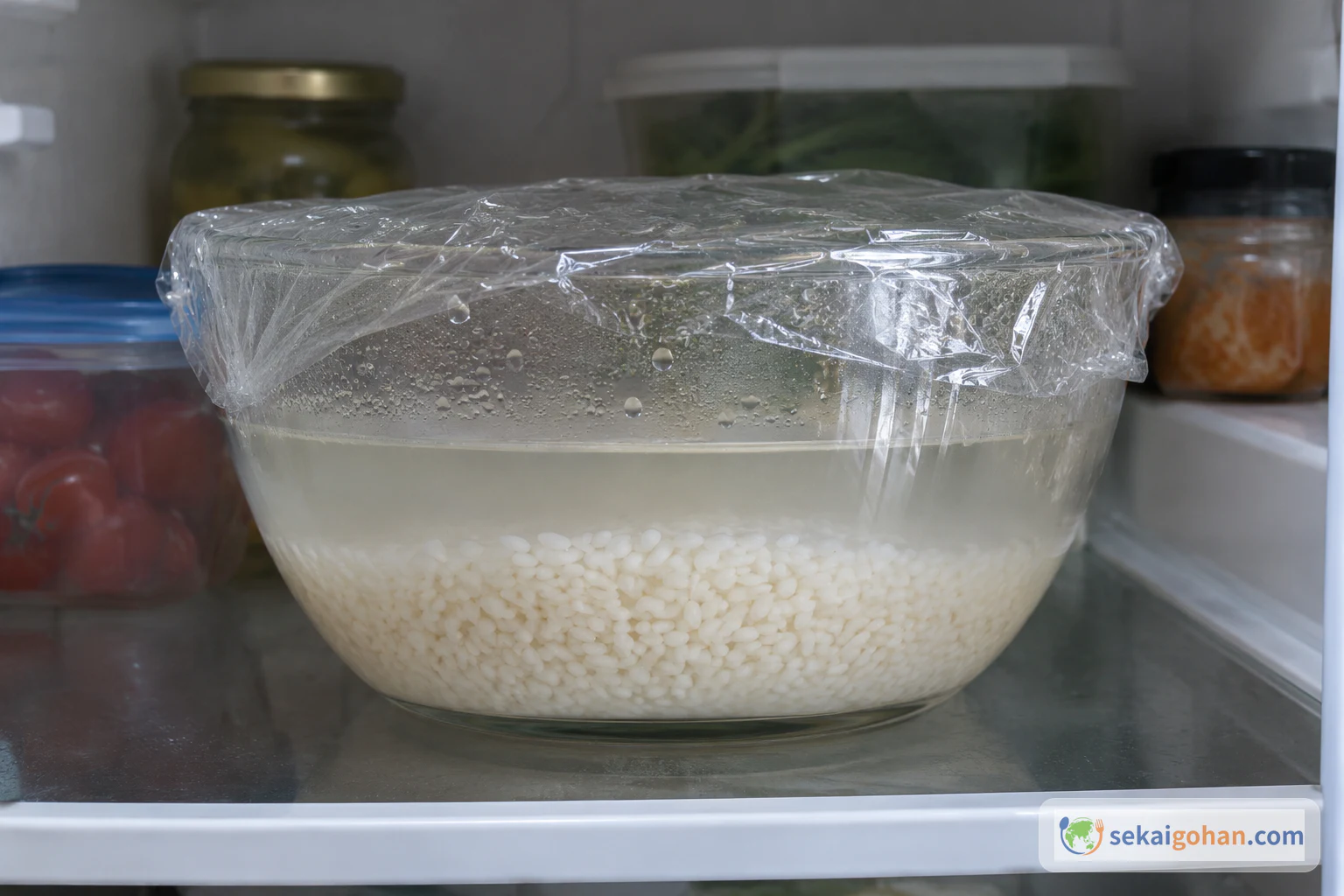
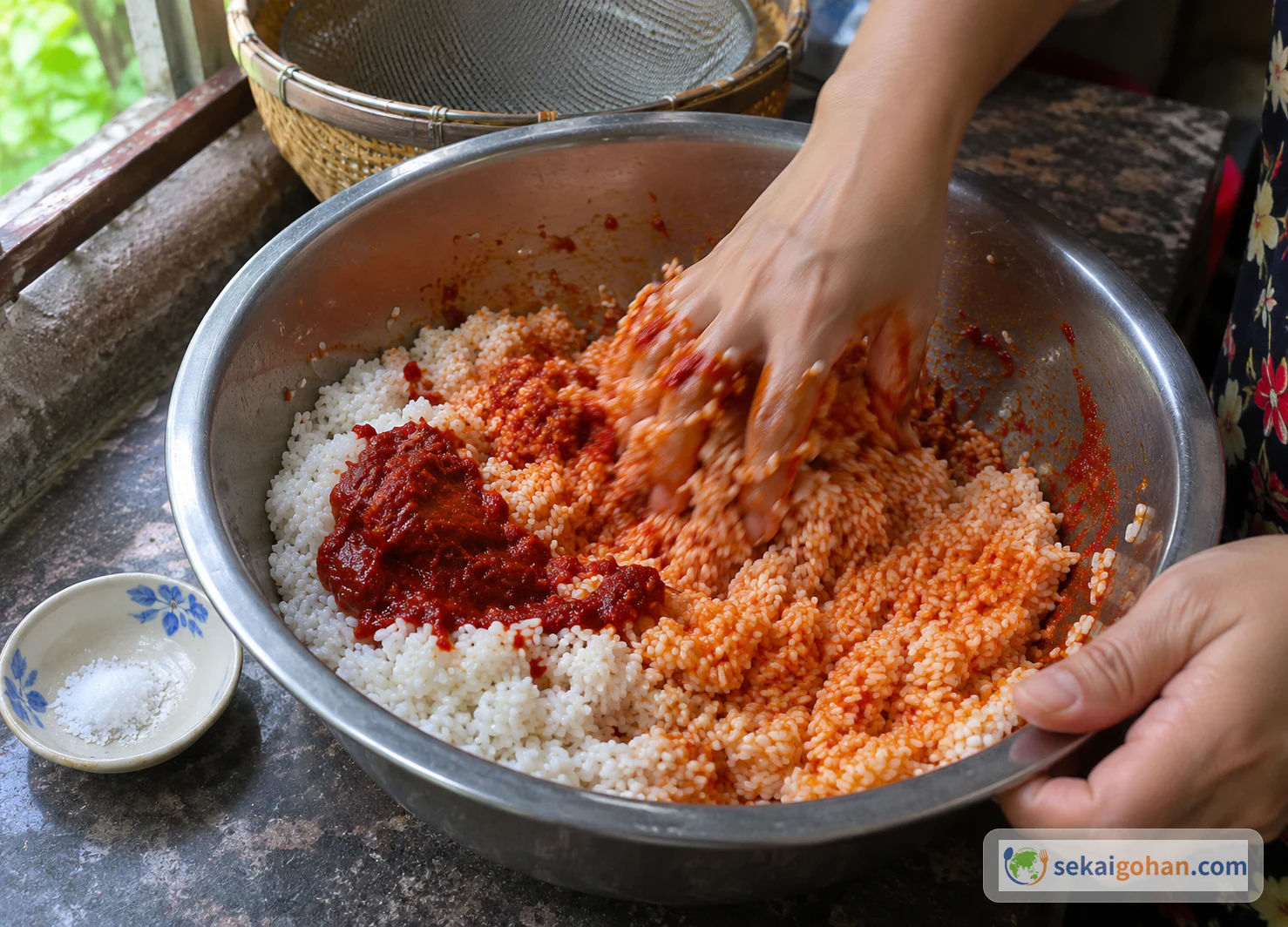
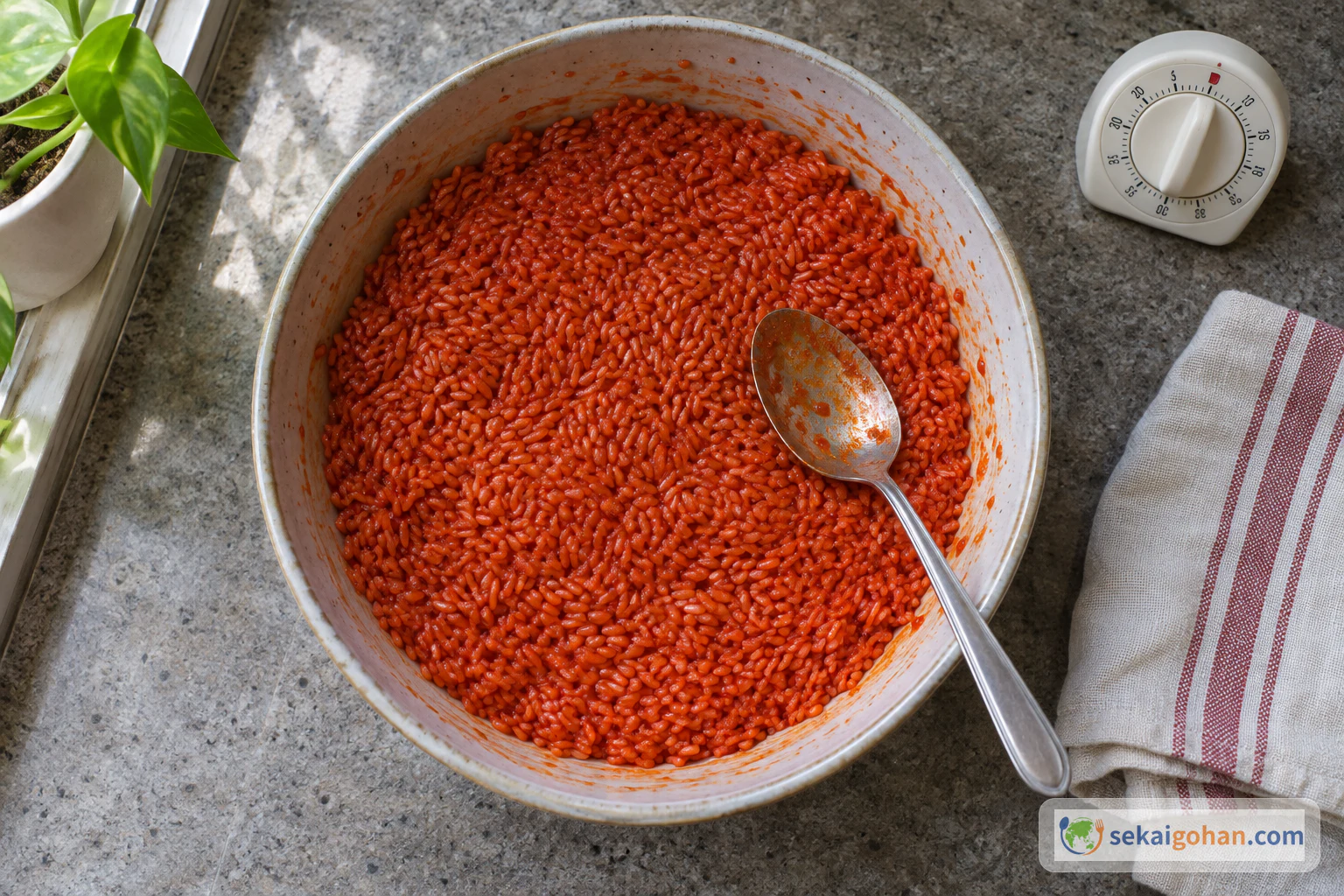
The work splits across two days. The evening before, wash and soak the rice and move the gac from freezer to refrigerator. On the day, the hands-on part is short: loosen the gac, colour the rice, let it rest, then two rounds of steaming with a quick fold of oil and sugar between them. The steaming is mostly waiting, so prepare whatever you plan to serve alongside while the pot works.
When It Goes Wrong
| What you see | Why | What to do |
|---|---|---|
| Pale, orange rather than red | Gac mixed in without spirit, the colour rest was skipped, or watery paste diluted it | Loosen the gac with spirit first, drain the paste and the rice well, and give the rice its full rest before steaming |
| Soggy, mushy rice | Rice not drained enough, too much water in the paste, no holes for the steam, or lid drips | Drain thoroughly, poke holes through lining and rice, and wrap the lid in a cloth. For very wet paste, check the rice earlier |
| Porridge-like patches on top | Condensation dripping off the lid | Wrap the lid in a dry cloth and keep it there through both steamings |
| Hard centres in the grains | Soak too short, or steam too weak | Steam on high 10 minutes at a time until the core is gone. Do not pour water over the rice to fix it |
| Too sweet | More sugar than needed | Next time stay with 1 tbsp, and serve this batch with savoury dishes |
| Sesame smell drowns out the gac | Toasted sesame oil is strong | Use less oil next time, just enough to gloss the grains |
Serving, Variations and Storage
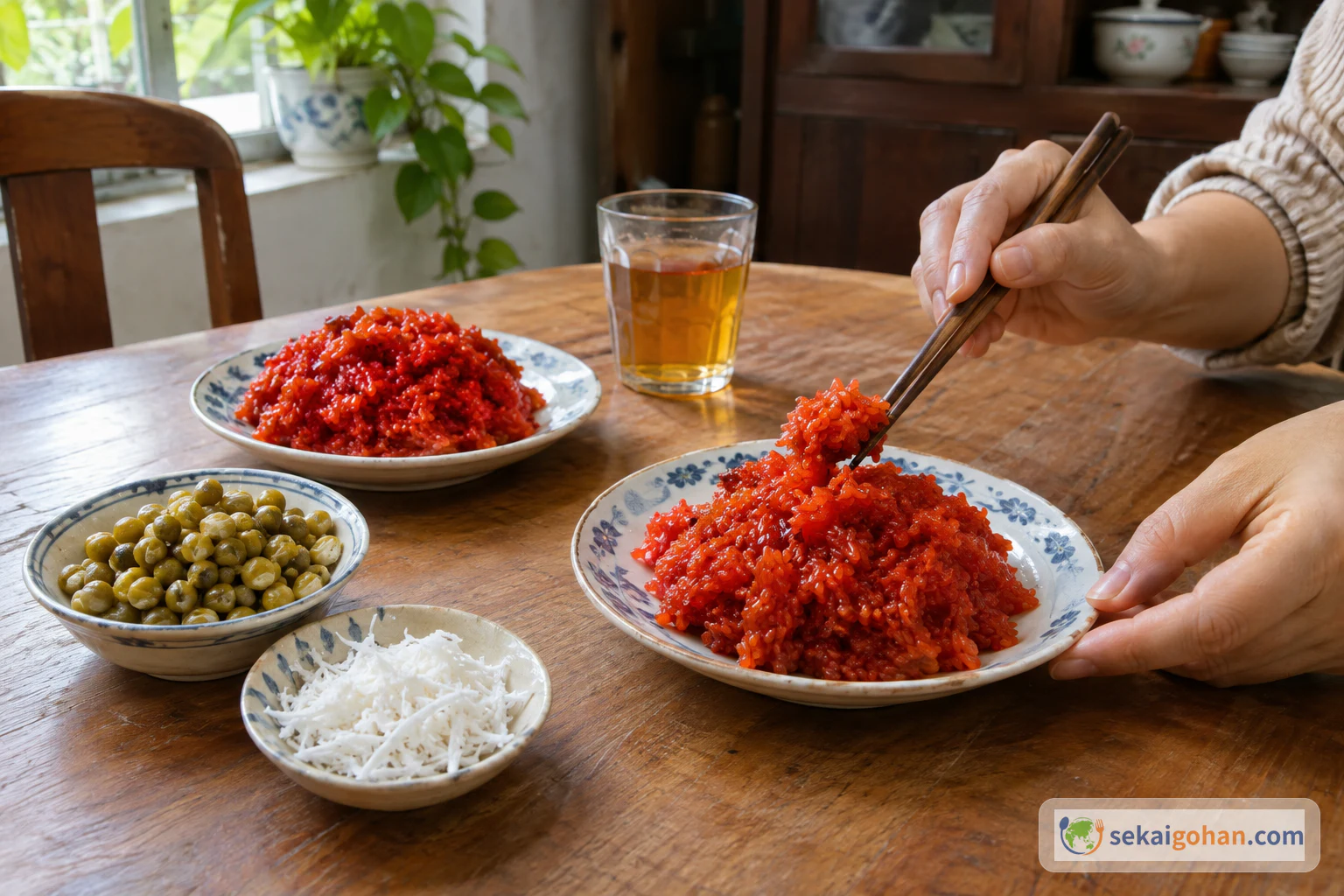
What goes with it
Xôi gấc stands on its own, but it is just as often part of a spread. Steamed mung beans and grated coconut on the side add a nutty, fresh note without piling on more sugar. Savoury dishes turn it into a meal: Vietnamese pork rolls such as giò or chả lụa, or chicken, including chicken cooked with lemongrass. At Tết it belongs on the tray with other holiday dishes, where its colour does as much work as its taste.
Variations
- Southern style with coconut milk. Fold 1–2 tsp coconut milk into the rice for a richer, rounder result. Contains coconut.
- Black sesame topping. Mix a little toasted black sesame with sugar and a pinch of salt and scatter it over before serving. It adds crunch and a toasty edge. Contains sesame.
- Central style with shallot oil. Fold fried shallot oil (dầu hành phi) through; the rice turns savoury and fragrant. Contains shallot.
- Without alcohol. Mix the gac with the rice directly. The flavour stays the same at heart, but the colour is paler.
Storage and reheating
Cool leftovers quickly, pack them into a clean container with a lid, and refrigerate promptly. Sticky rice hardens in the cold. Reheat only what you will eat, sprinkling it with a little water and heating it through thoroughly in a steamer or microwave until it is hot and soft again.
Frequently Asked Questions
Can I use ordinary rice instead of glutinous rice?
No. Glutinous rice gives xôi gấc its chew and the way the grains cling yet stay separate. Ordinary long- or short-grain rice steams to a completely different texture and does not hold together on the plate.
Can I make it in a rice cooker?
This method is built around a steamer, where the rice sits above the water and cooks in steam with no liquid added. A rice cooker needs a different water balance and a different recipe. For the texture described here, use a steamer.
Does it matter if my steamer is metal rather than bamboo?
Any steamer that holds the rice above boiling water and takes a lid works. Line a metal basket the same way, with banana leaf, cloth or parchment, so grains do not fall through and the red does not stain it. Wrap the lid in a cloth so drips stay off the rice.
Can I make it with less sugar?
Yes. The single tablespoon is already a light hand, and you can reduce it further. A little sweetness belongs to the dish, though, and it balances the salt and sesame oil, so cutting it out completely flattens the taste.