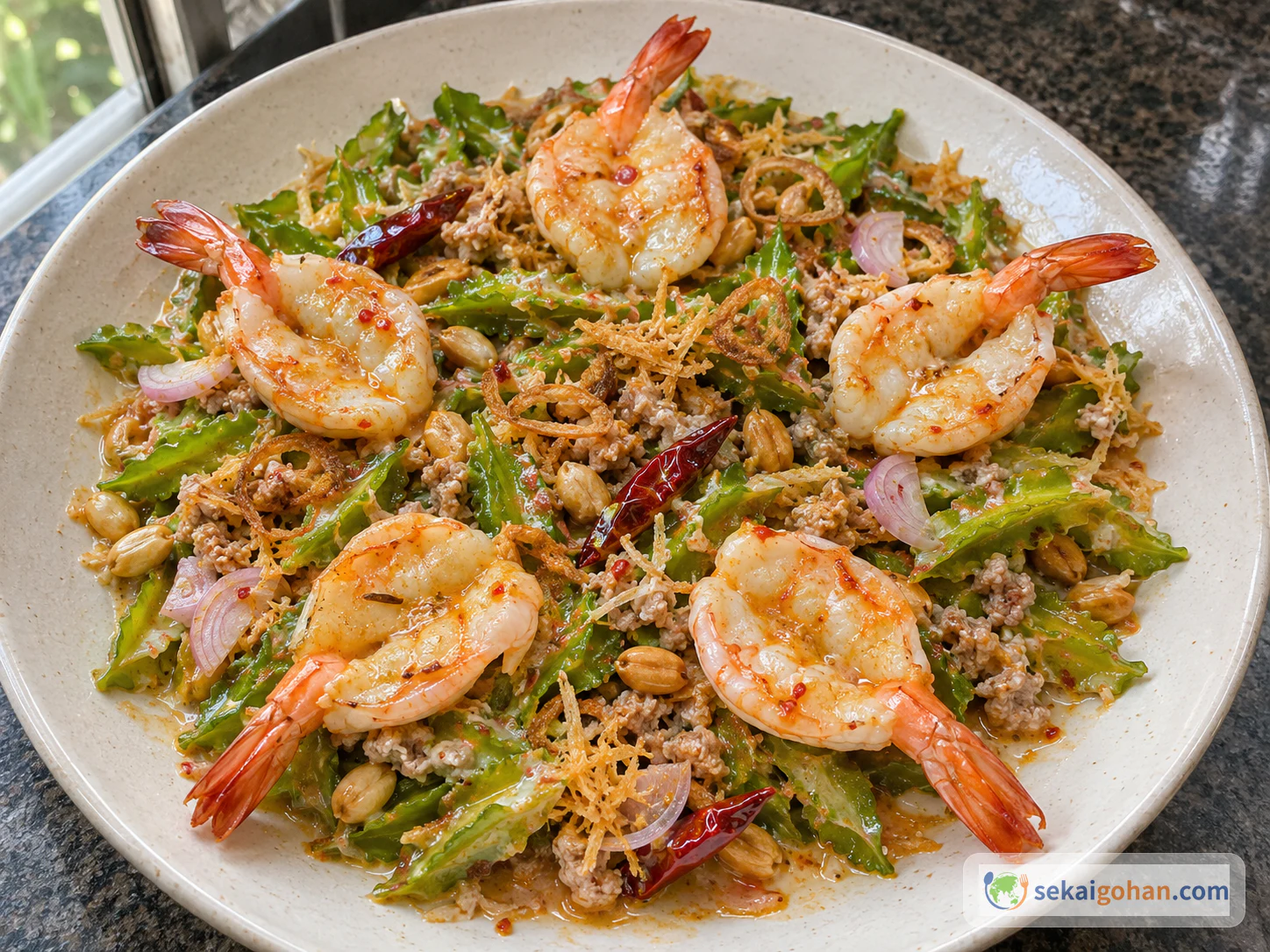
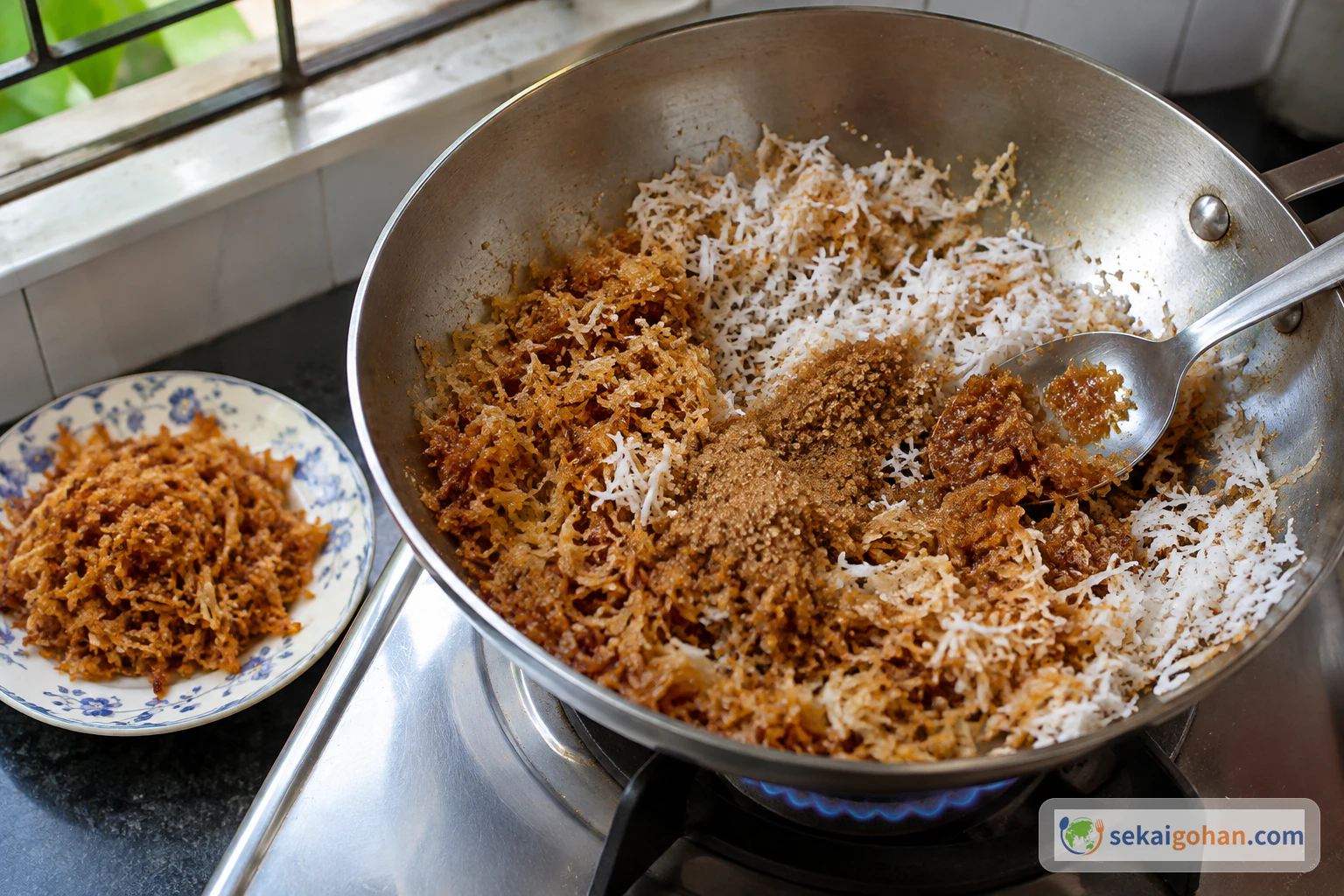
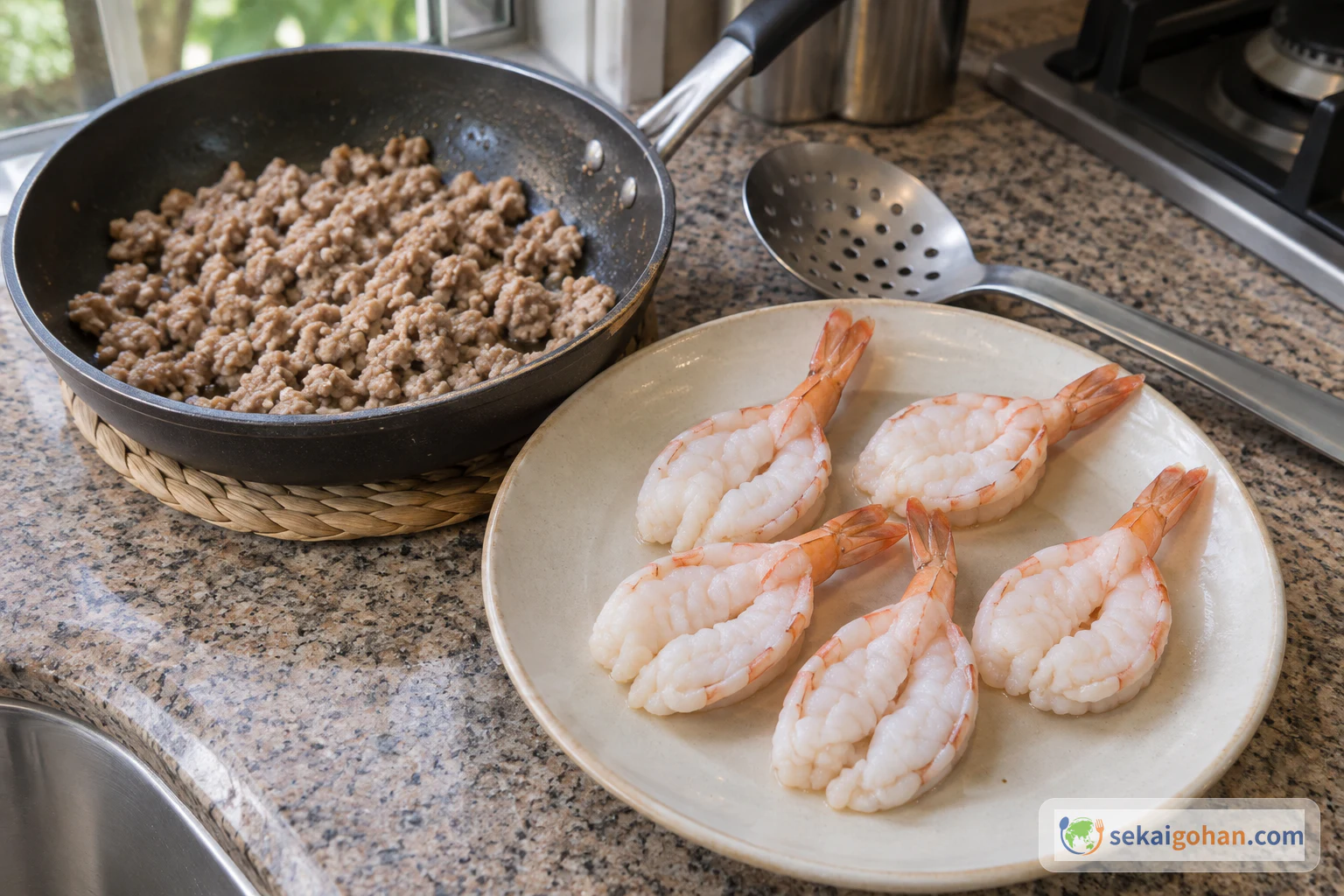
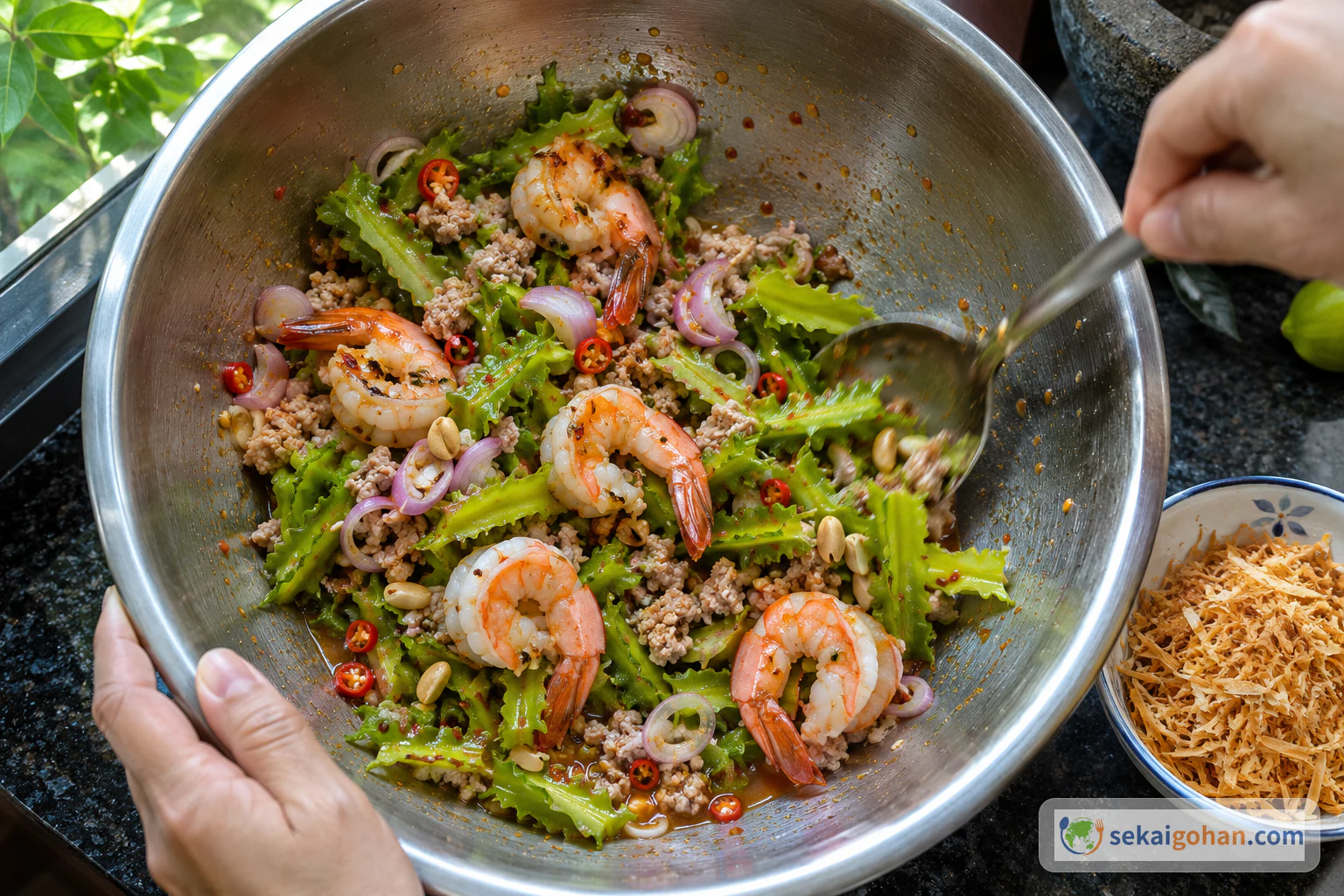
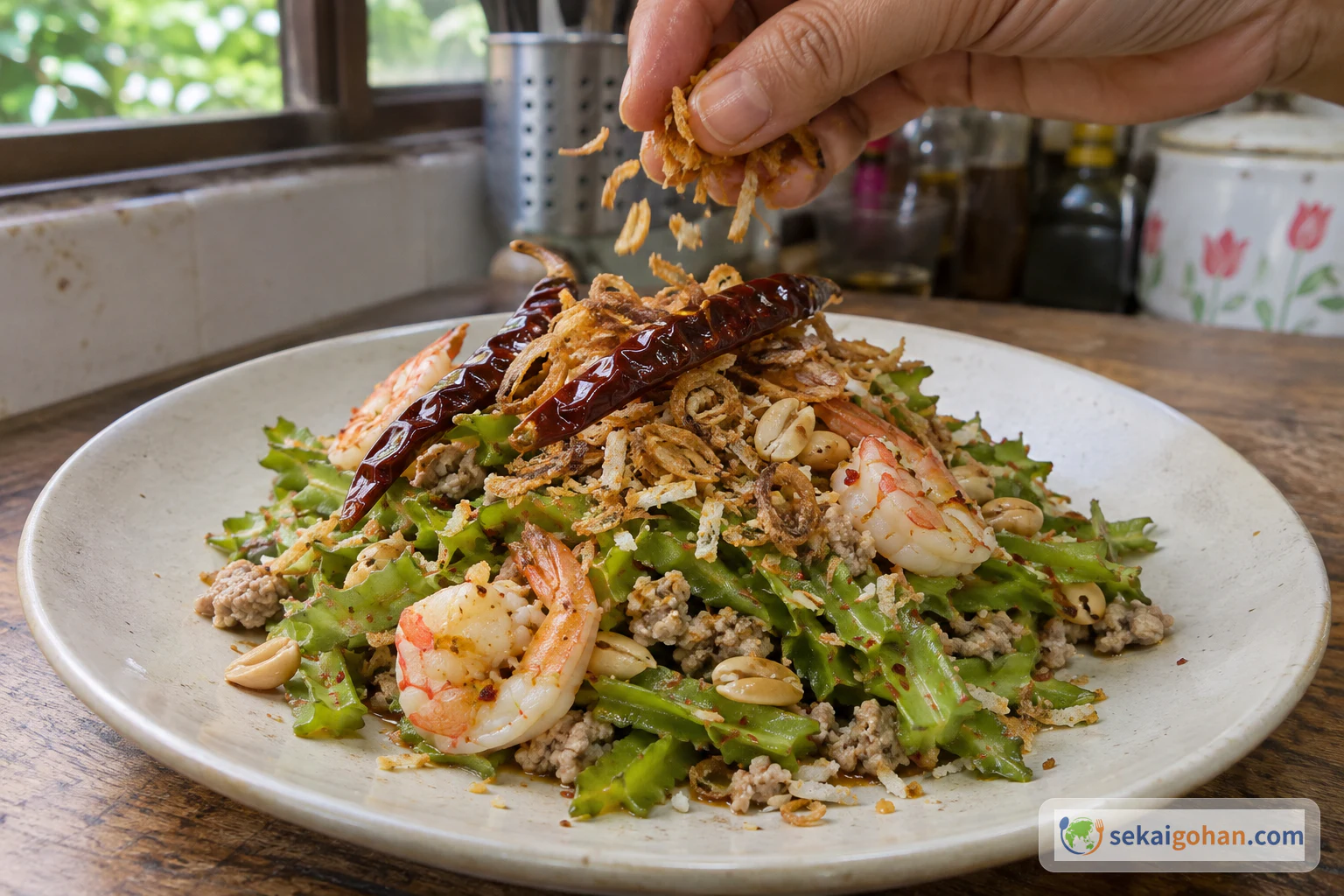
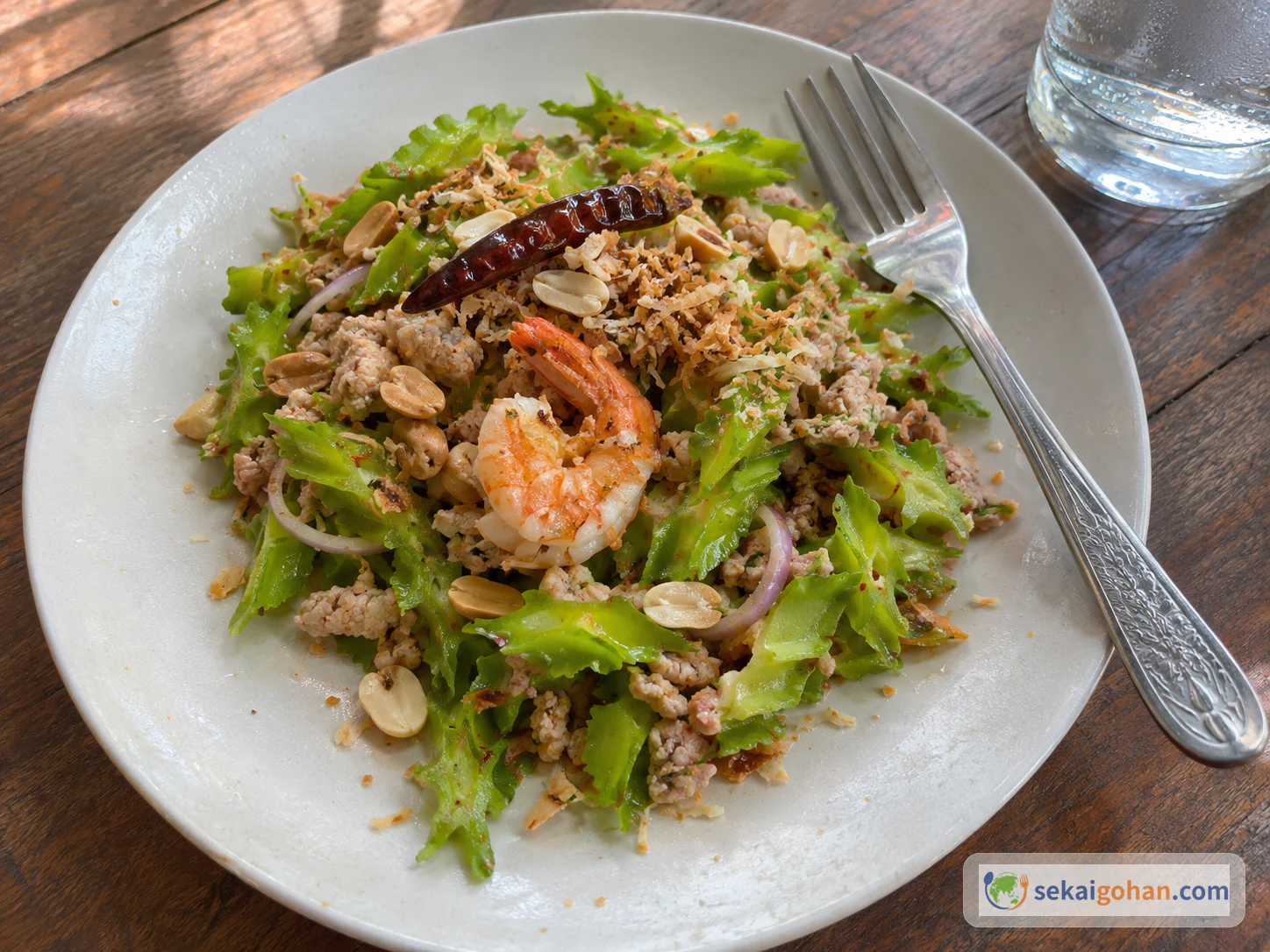
Grated coconut sits in a dry pan over low heat. As it turns from white to gold, a sweet, nutty smell rises, and then the brown sugar goes in and melts into every shred. That toasted coconut, crisp and lightly sweet, is what sets yam thua phu (ยำถั่วพู) apart from the other salads on a Thai table. Around it go young winged bean pods cut on the diagonal, minced pork, butterflied shrimp, and a dressing of lime, fish sauce, sugar and nam prik pao, all folded together with thick coconut cream. Each bite starts sour and salty, turns sweet and hot, and the ridged pods snap between your teeth.
Four Ridges and Two Kinds of Coconut
A bean named for its edges
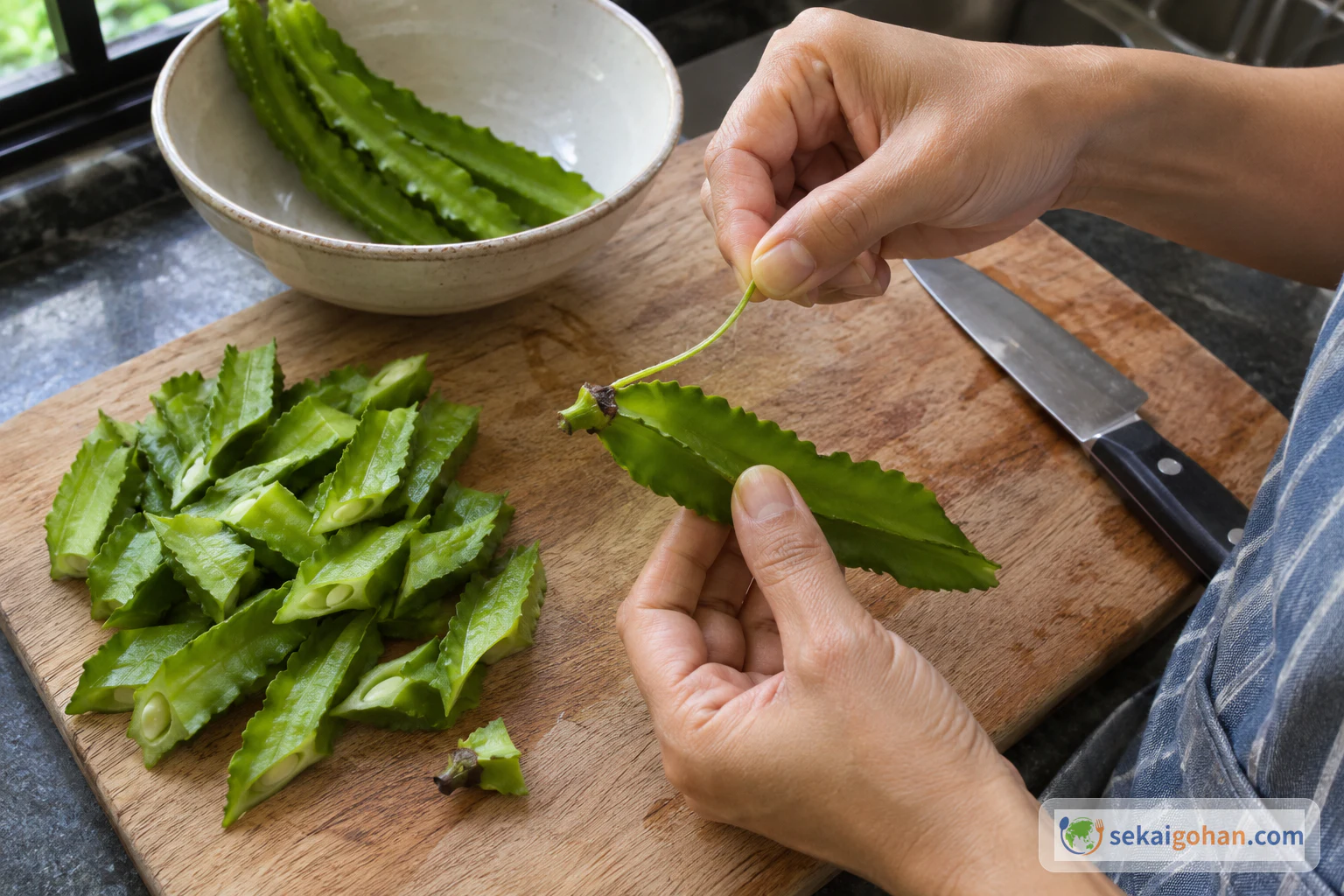
Look at a winged bean pod end-on and it is square. Four wavy ridges run the length of the pod, enclosing the seeds, and those ridges give the Thai name: พู (phu) means the ridges, and ถั่วพู (thua phu) is the ridged bean. On market signs and menus you often see it spelled ถั่วพลู, with an extra letter, but ถั่วพู is the correct form. The plant is tropical, native to South and Southeast Asia, from India and Myanmar through Thailand and Laos to the Philippines and Papua New Guinea.
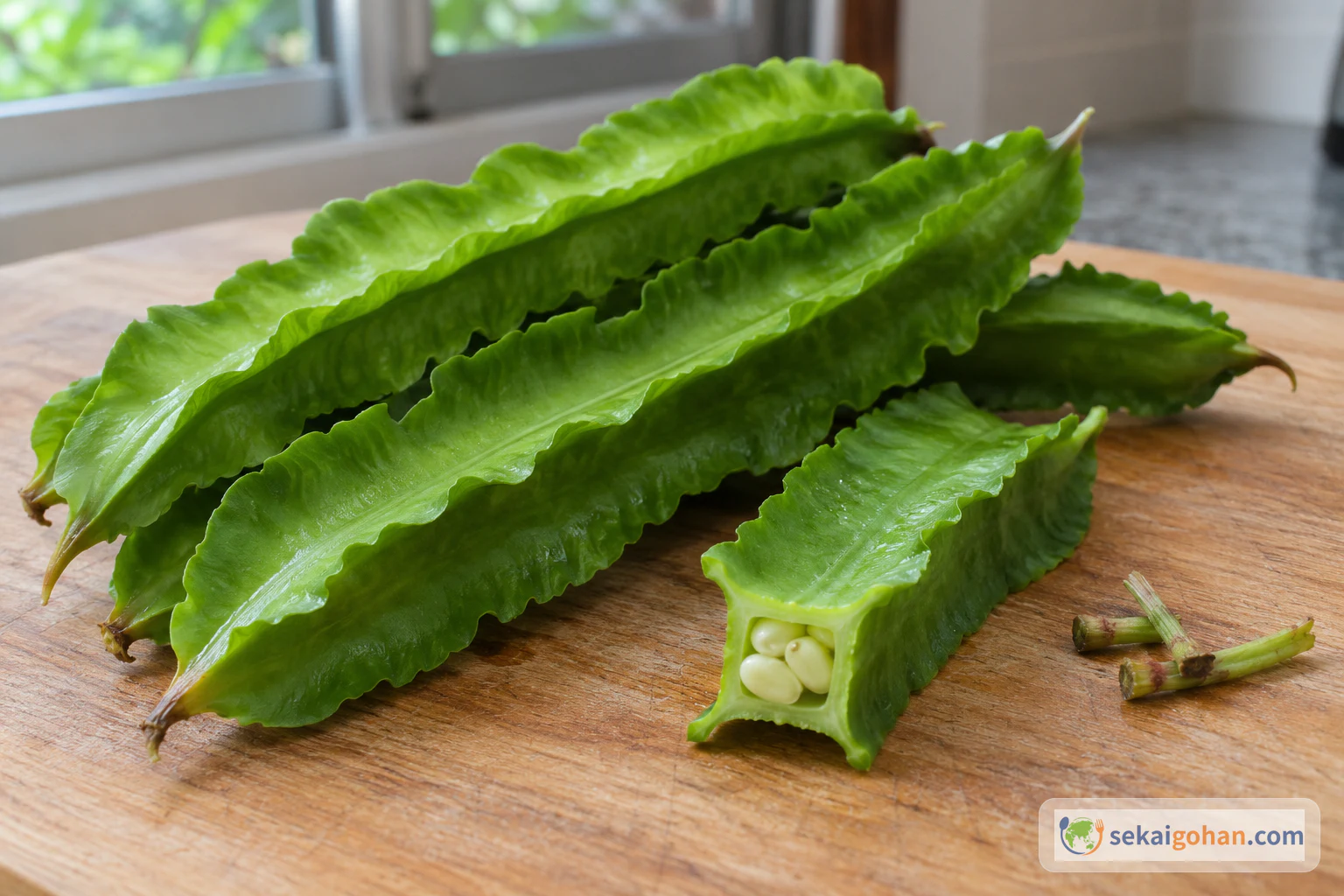
Almost the whole plant goes to the kitchen: young shoots, flowers, leaves, the underground tuber and, above all, the young pods. In Thailand cooks in every region eat those pods as a vegetable. They go onto the plate raw, or blanched and spooned over with coconut cream, or beside a bowl of nam prik, especially the fermented-fish nam prik pla ra. They turn up in larb, stir-fries, tod man fish cakes and phat phet. In the South, shoots, flowers and pods are eaten raw or boiled, stir-fried, or dropped into gaeng som and gaeng tai pla.
Where this salad sits
Yam thua phu is filed under central Thai cooking. It belongs to the yam family, the dressed salads that come up again and again on the Thai table, and stands apart from som tam, which is pounded from green papaya. What marks this one is coconut used twice: grated coconut toasted with brown sugar until it crunches, and coconut cream cooked down until thick. The first brings a caramel crunch, the second a soft richness that rounds off the lime and chili.
Households make it many ways. Some top it with a soft-boiled egg and add fried dried squid, cashews and fried garlic; some use tuna; some pour coconut milk over at the end; some push the dressing sweeter and hotter with more nam prik pao and palm sugar. The version here keeps to pork, shrimp and the two coconuts, with the dressing balanced around lime.
In English the plant also goes by asparagus pea, goa bean and four-angled bean, and it has been called "poor man's food" because leaves, flowers, roots and pods are all eaten raw or cooked. In Japan, where it grows mainly in Okinawa and the Ogasawara Islands, it is shikakumame, the "square bean", or urizun bean after the Okinawan word for the season of new green; how that name stuck has more than one explanation. Japanese cooks fry the young pods as tempura, and in India and Sri Lanka the pods are pickled.
Ingredients (serves 4)
The dressing is a starting point: lime and fish sauce vary from bottle to bottle and fruit to fruit, and you will taste and adjust once the salad is tossed.
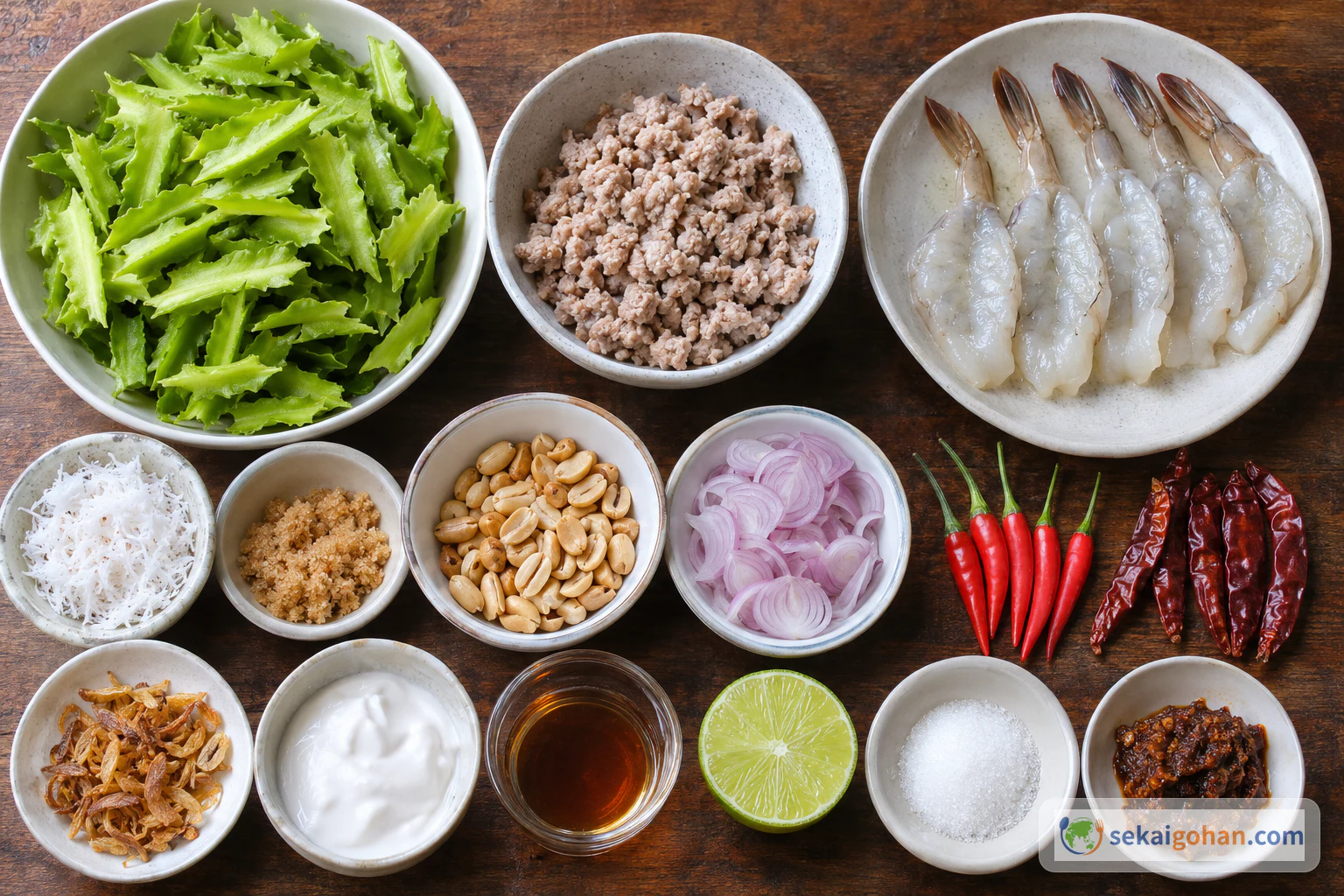
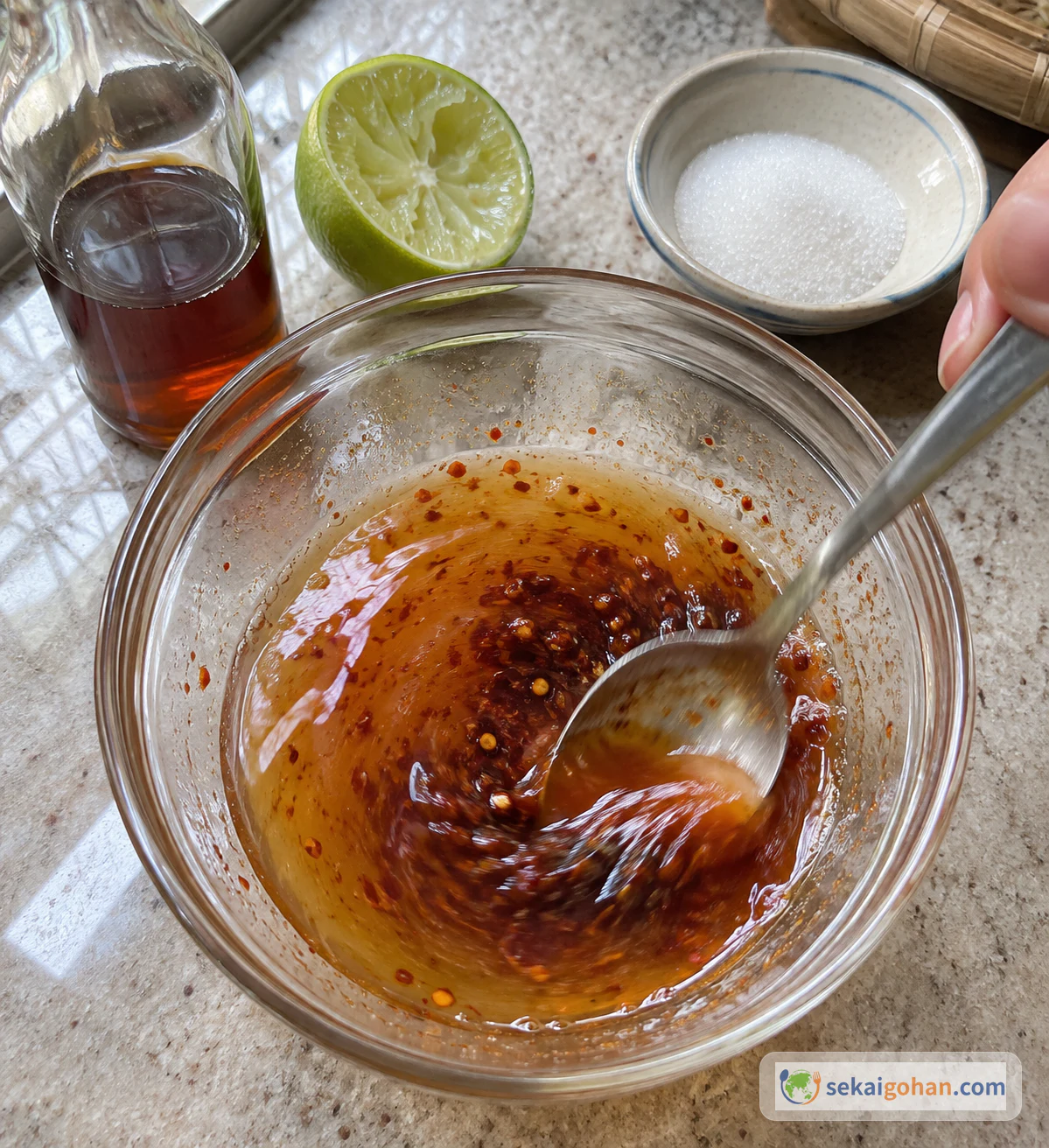
The dressing runs sugar 1 : fish sauce 2 : lime 3 : nam prik pao 2. Mix it at that ratio first. When you correct it, add fish sauce and lime in small amounts before you reach for sugar, because the toasted coconut and the coconut cream both bring sweetness later.
This salad contains shrimp (shellfish), fish (fish sauce), peanuts, coconut and chili. Many jars of nam prik pao contain shrimp or dried shrimp, and some contain soy; read the label of the jar you buy. Buy nam prik pao ready-made; this recipe does not ferment anything at home.
Equipment
- Cutting board and knife
- A bowl of lightly salted water for the sliced pods
- A pot for blanching the pods and a bowl of ice water beside it
- Colander and paper towels
- Slotted spoon
- A small, shallow pan for toasting the coconut
- A pan for the pork and a small pot for the shrimp
- A small bowl for the dressing and a wide mixing bowl for tossing
- Measuring cups and spoons
Choosing and Substituting
Winged beans show up at Asian and Southeast Asian grocers and some farmers' markets in warm months. Pick pods that snap cleanly when bent: those are young and tender. A pod that flexes instead of breaking is older and carries tough strings along its edges, which you will need to pull. If you cannot find them, green beans give a salad with the same dressing and toppings, but you lose the ridged, crackling bite and the grassy smell, and it tastes like a different dish.
Two things decide whether this tastes Thai. Nam prik pao has no substitute: it is the sweet, roasted, gently hot base of the dressing, and a chili sauce or chili oil will not carry it. Buy a jar at a Thai or Asian grocer, and know that jars run from sweet to hot, which changes how much fresh chili the salad needs. The toasted coconut is the second; leave it out and the salad loses its crunch and its caramel note.
| Ingredient | What to buy | What a swap changes |
|---|---|---|
| Coconut cream | Canned coconut cream, or the thick layer at the top of a can of coconut milk | Light coconut milk stays thin even after reducing and makes the salad watery |
| Grated coconut | Frozen grated coconut | Dried coconut, rehydrated, toasts with a different, drier texture |
| Brown sugar | Any light or dark brown sugar | Darker sugar brings a stronger molasses smell |
| Fresh bird's-eye chilies | Fresh or frozen from a Thai grocer | Dried bird's-eye chilies work but smell different; other chilies differ in both heat and aroma |
| Shallots | Asian shallots | A small red onion is milder and wetter |
| Peanuts | Unsalted roasted, whole or roughly crushed | Salted peanuts push the salt up; taste before adding fish sauce |
| Fried shallots | Store-bought fried shallots or fried onions | Fried onions are sweeter and larger |
| Lime | Fresh limes | Lemon gives a different, less floral sourness |
| Fish sauce | Any Thai fish sauce | Brands vary in saltiness, so add the last of it after tasting |
For the fried dried chilies, buy them already fried or fry dried bird's-eye chilies yourself in a little oil over low heat.
Dried chilies scorch fast in hot oil. Keep the heat low, stay at the pan, and lift them out onto paper towels as soon as they turn a shade deeper.
Method
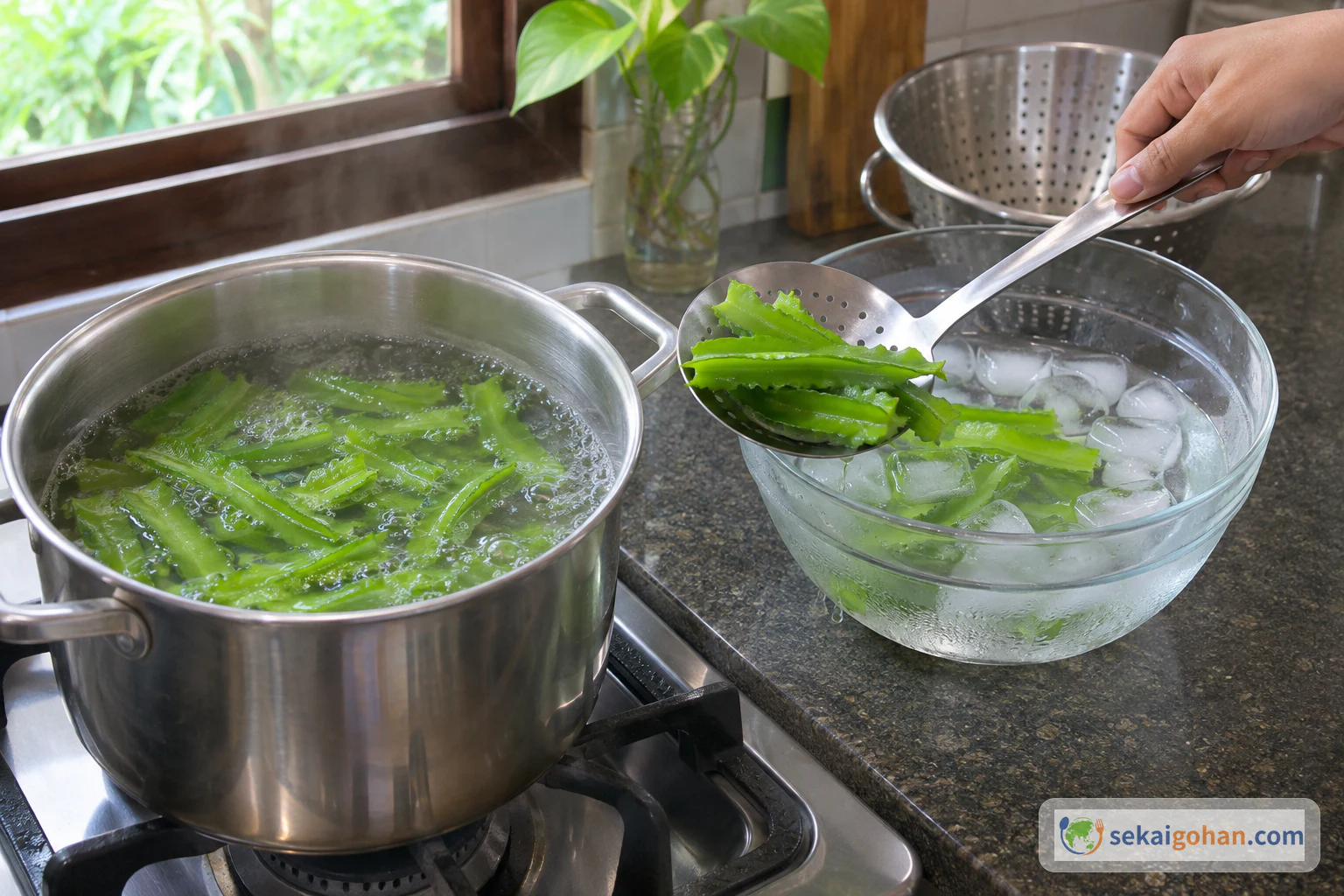
Cut and chill the pods first, because they need time in the colander to drain. While they drain, toast the coconut and let it cool on a plate, then mix the dressing and cook the pork and shrimp. The toss happens at the very end, right before you sit down, so the pods and the coconut both keep their crunch.
Winged beans contain natural compounds including trypsin inhibitors, hemagglutinins and hydrogen cyanide; the trypsin inhibitors sit mainly in the seeds. In Thailand and India young pods are often eaten raw. This method gives the sliced pods a brief blanch before they meet the dressing, and that is the way to make it.
The toasted coconut drinks up dressing within minutes and turns soft. Fold it in as the final ingredient with a few turns of the spoon; over-tossing also bruises the pods and dulls their snap.
When It Goes Wrong
| What you see | Why | What to do |
|---|---|---|
| The toasted coconut tastes bitter or has black flecks | Heat too high, or sugar added before the coconut dried | Start a fresh batch on low heat, add the sugar only once the shreds color, and pull the pan off as soon as it is golden |
| The pods have darkened | Cut pods sat in the air too long | Drop each slice into salted water as you cut, and chill them in ice water right after blanching |
| The pods are soft and limp | Blanched too long, or left warm after the pot | Keep to about 30 seconds for thin pods and about 1 minute for thick, and stop the cooking in ice water at once |
| The shrimp are tough and rubbery | Left in the water after they turned color | Lift them the moment they curl and turn opaque |
| A pool of liquid sits in the bowl | Water left on the pods from the ice bath | Drain the pods thoroughly and press them dry with paper towels before tossing |
| The coconut cream looks oily and split | Reduced too hard | Warm it gently and stir it smooth; next time cook it only until it thickens |
| Too hot | Fresh chili count and seeds, plus heat from the nam prik pao | Next time use fewer chilies or scrape out the seeds; the fried chilies on top can be left on the side |
| Flavor tastes flat | Not enough salt or sour | Add fish sauce and lime a little at a time; hold off on sugar |
Serving, Variations and Leftovers
At the table
Yam thua phu is a starter or a shared side, set on the table with other dishes and eaten in small helpings. It belongs with rice and a curry or a stir-fry, where its crunch and sour heat cut through richer food. Bring it to the table the moment it is tossed.
Variations
- Raw pods. Across Thailand the sliced pods often go into the salad raw, simply crisped in ice water. The result is crunchier and greener in flavor; the method above blanches them.
- Lighter, without toasted coconut. Leaving out the toasted coconut makes a sharper, leaner salad where the lime and chili lead. The caramel crunch that defines this dish goes with it.
- Pork forward or shrimp forward. More pork turns it into a more filling plate; keeping the shrimp as the star makes it brighter and sweeter. Keep the dressing as written either way.
- Other household styles. Some cooks pour coconut milk over the top at the end instead of folding in reduced cream, which gives a looser, milkier salad; others build a sweeter, hotter dressing heavy on nam prik pao and palm sugar.
Leftovers
This salad is at its best eaten soon after it is tossed. Do not leave it out at room temperature. Refrigerate any leftovers promptly, and the next day check the smell and look before eating: coconut that smells stale or shrimp that smells off means it goes in the bin. Eat leftovers cold; heating softens the pods and the coconut.
Frequently Asked Questions
What does "yam" mean on a Thai menu?
Yam is the family of Thai salads dressed with lime juice, fish sauce and sugar, usually with chili heat. The main ingredient changes from dish to dish, from vegetables to seafood to meat. Yam thua phu is the version built on winged beans.
I have seen this salad topped with egg or squid. Is that wrong?
Those are other household versions. One well-known style adds a soft-boiled egg, fried dried squid, cashews and fried garlic. They are good salads in their own right; this recipe keeps to pork, shrimp and coconut, so leave the egg off if you want this one.
How do I make it gentler for children?
Before adding the fresh chilies, lift out portions for anyone who wants less heat, then add the chilies to the rest. Leave the fried dried chilies off their plates too. The nam prik pao still brings a mild warmth, so taste the dressing with them in mind and choose a sweeter jar.