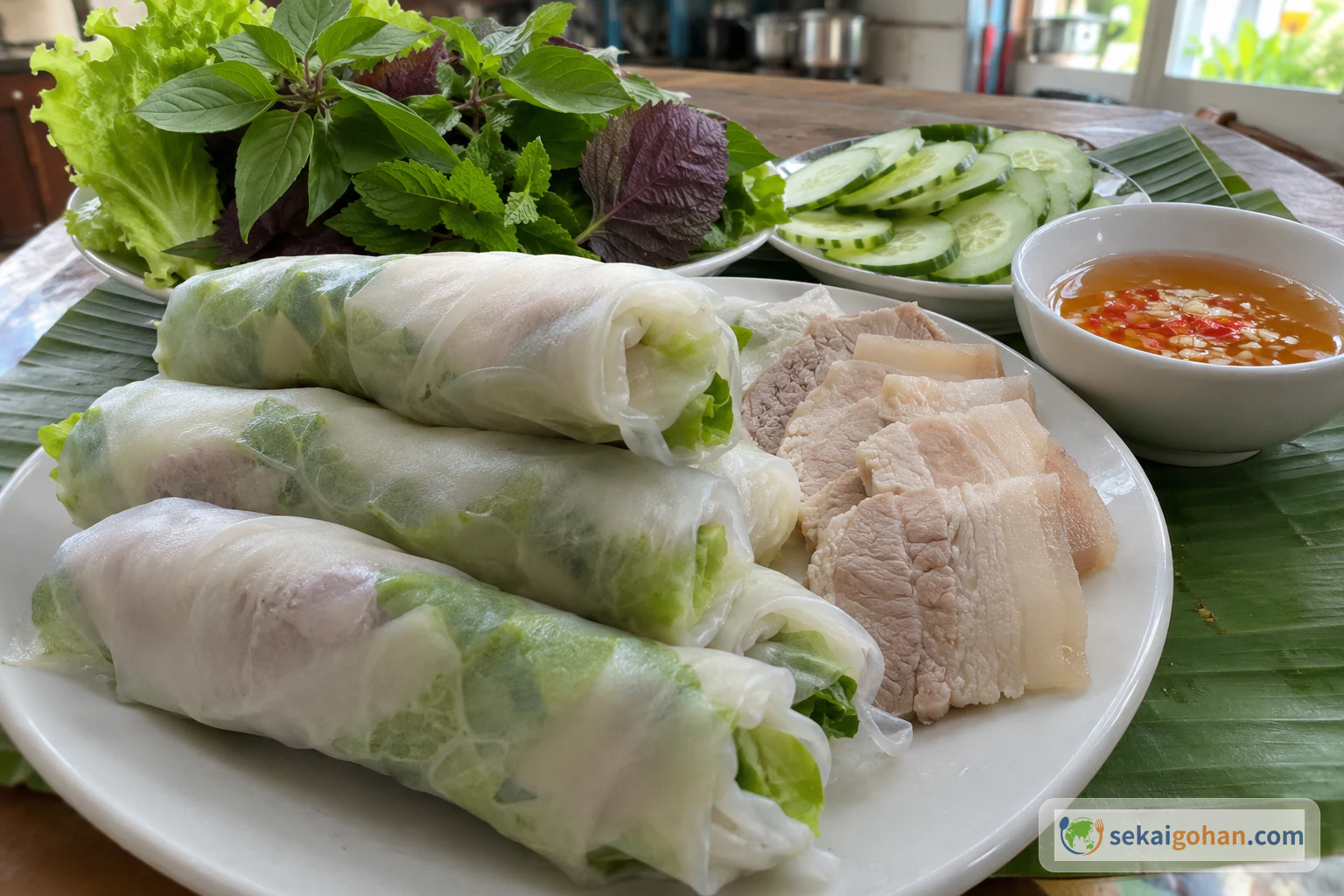
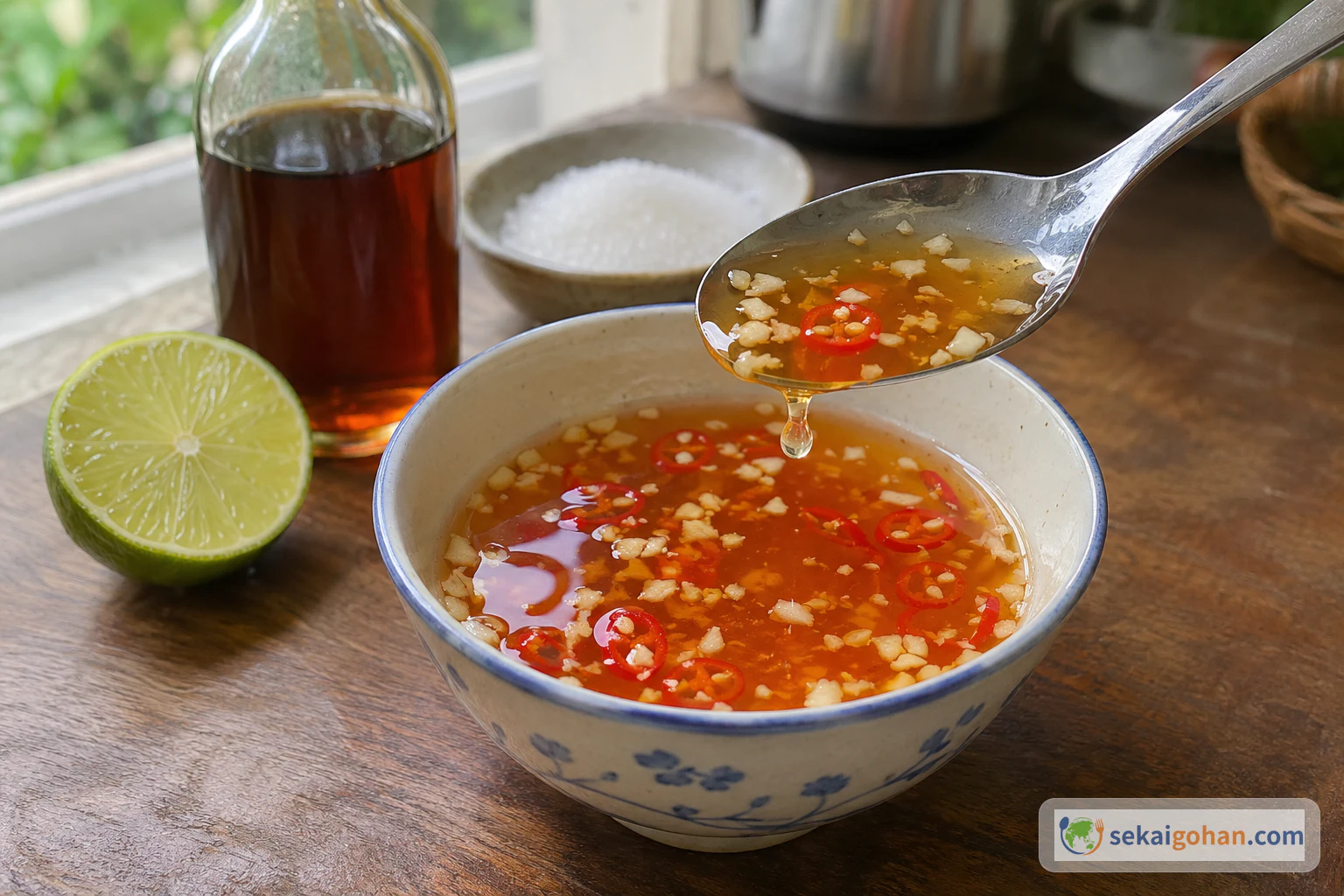
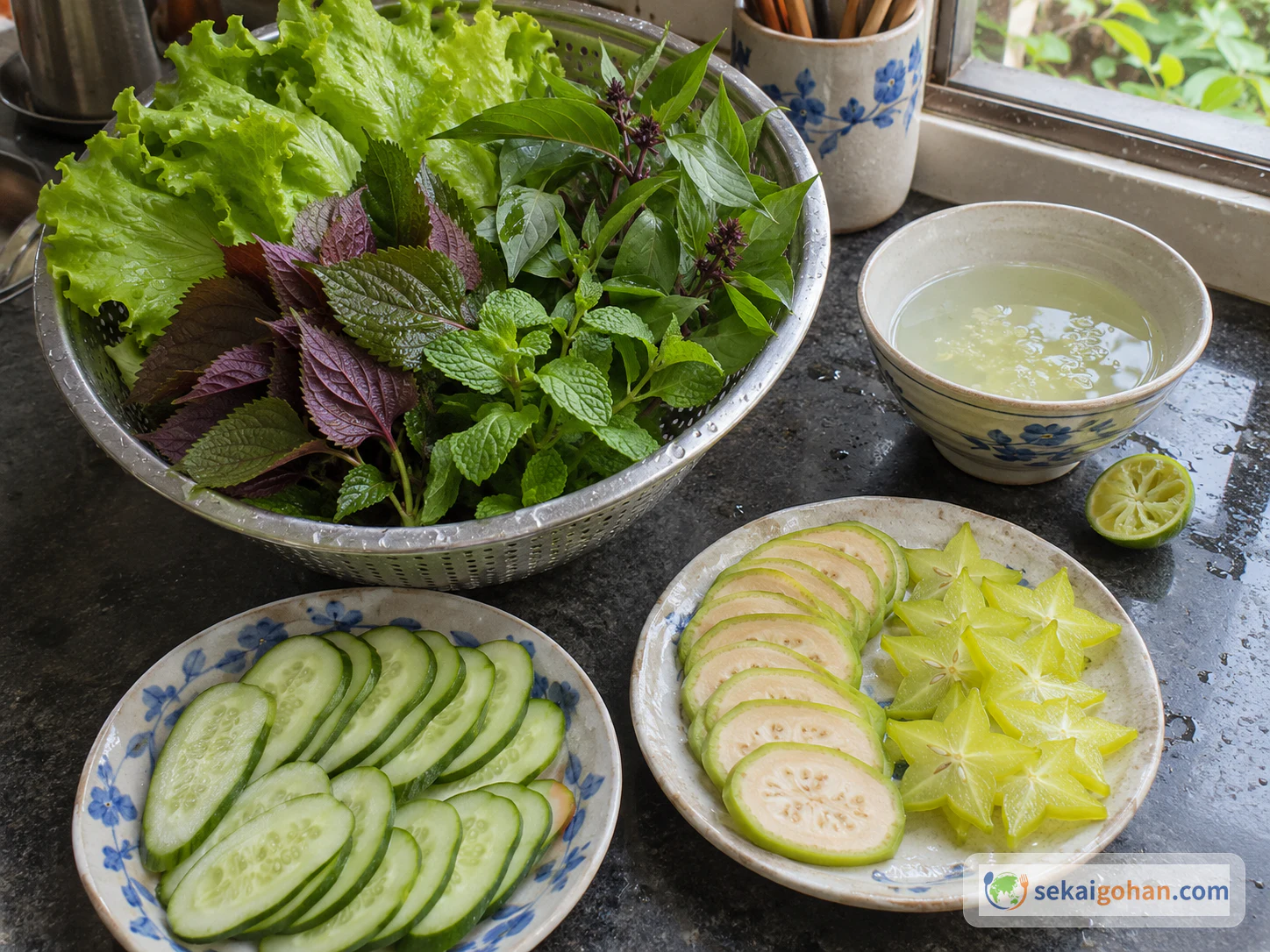
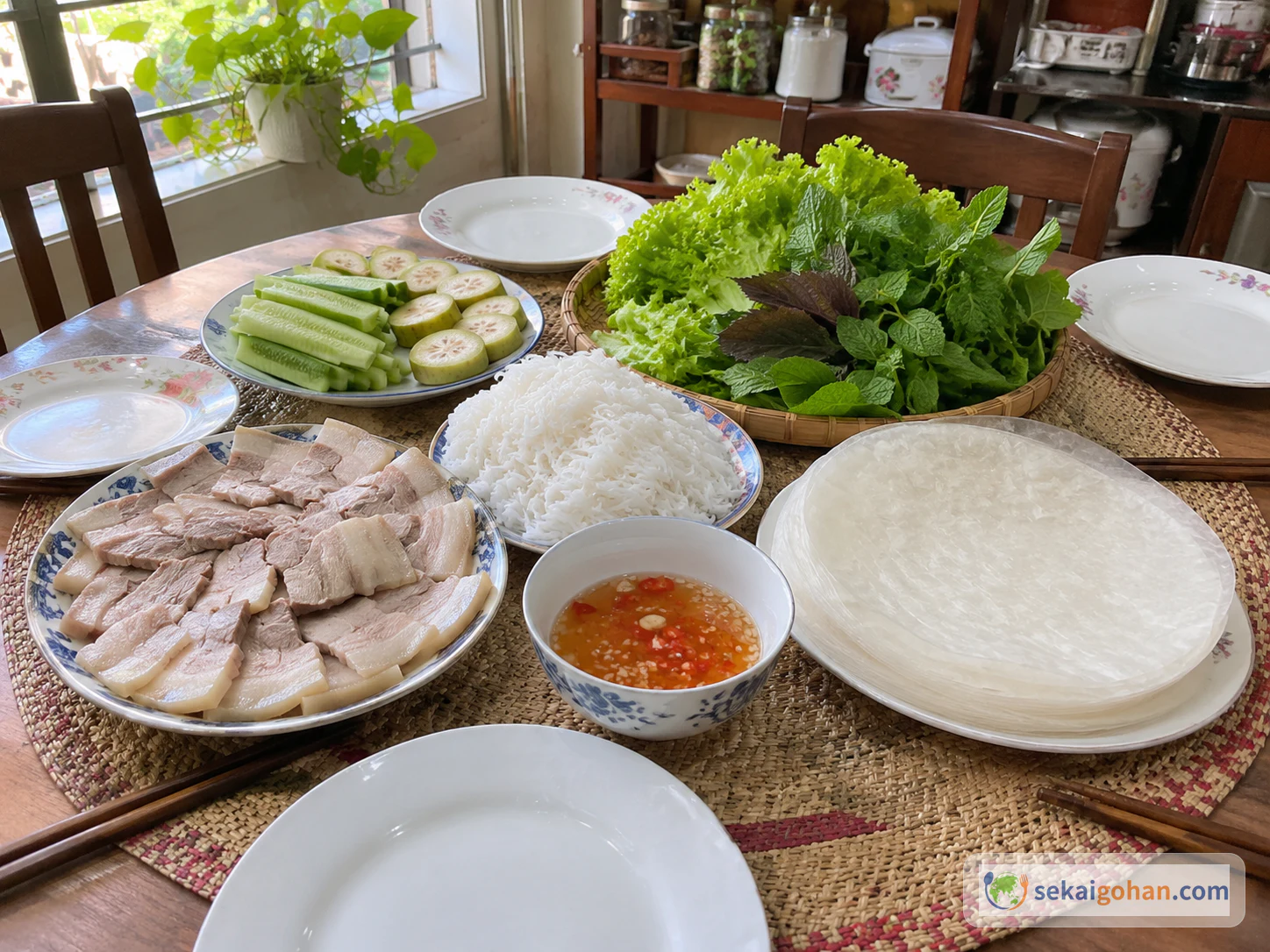
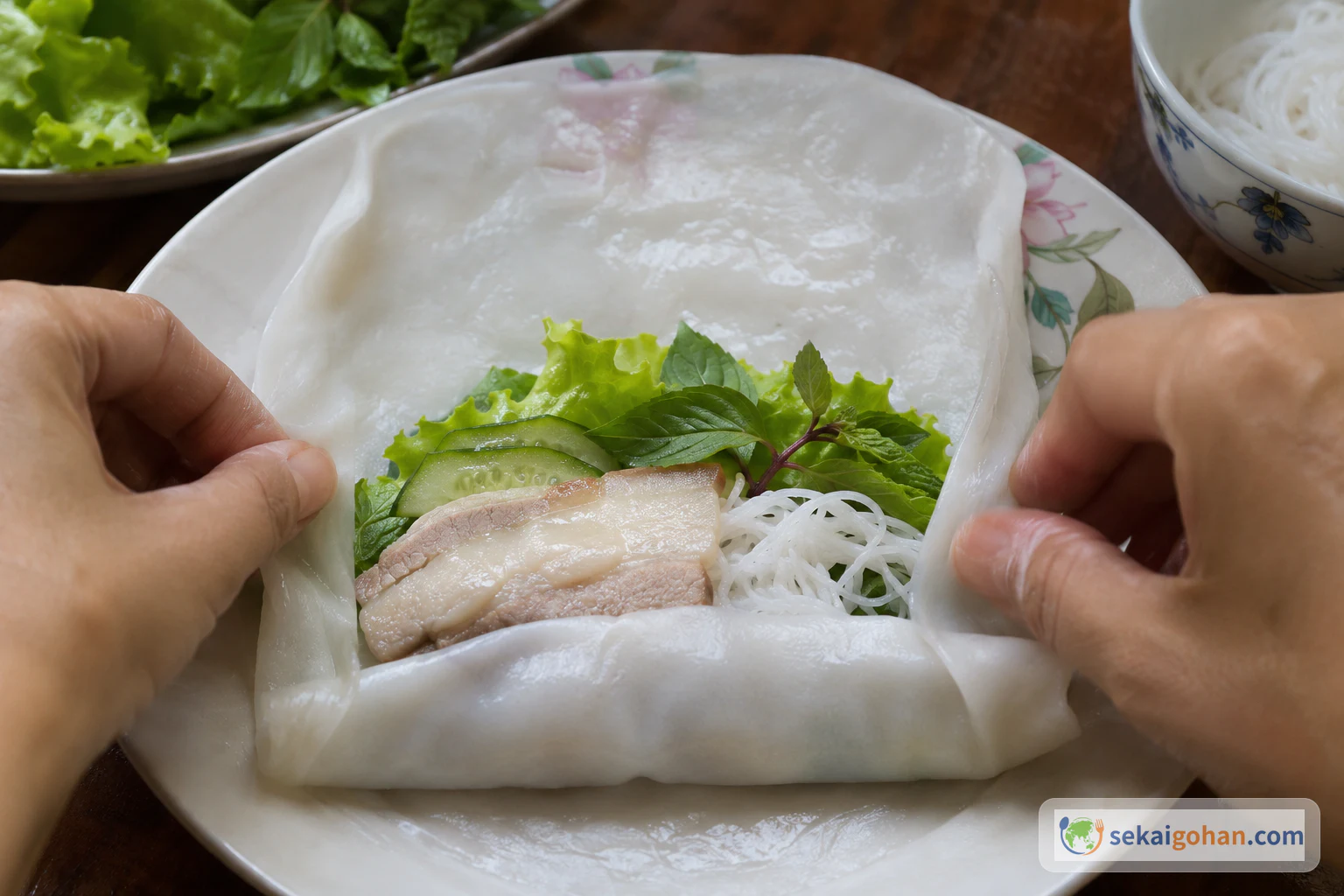
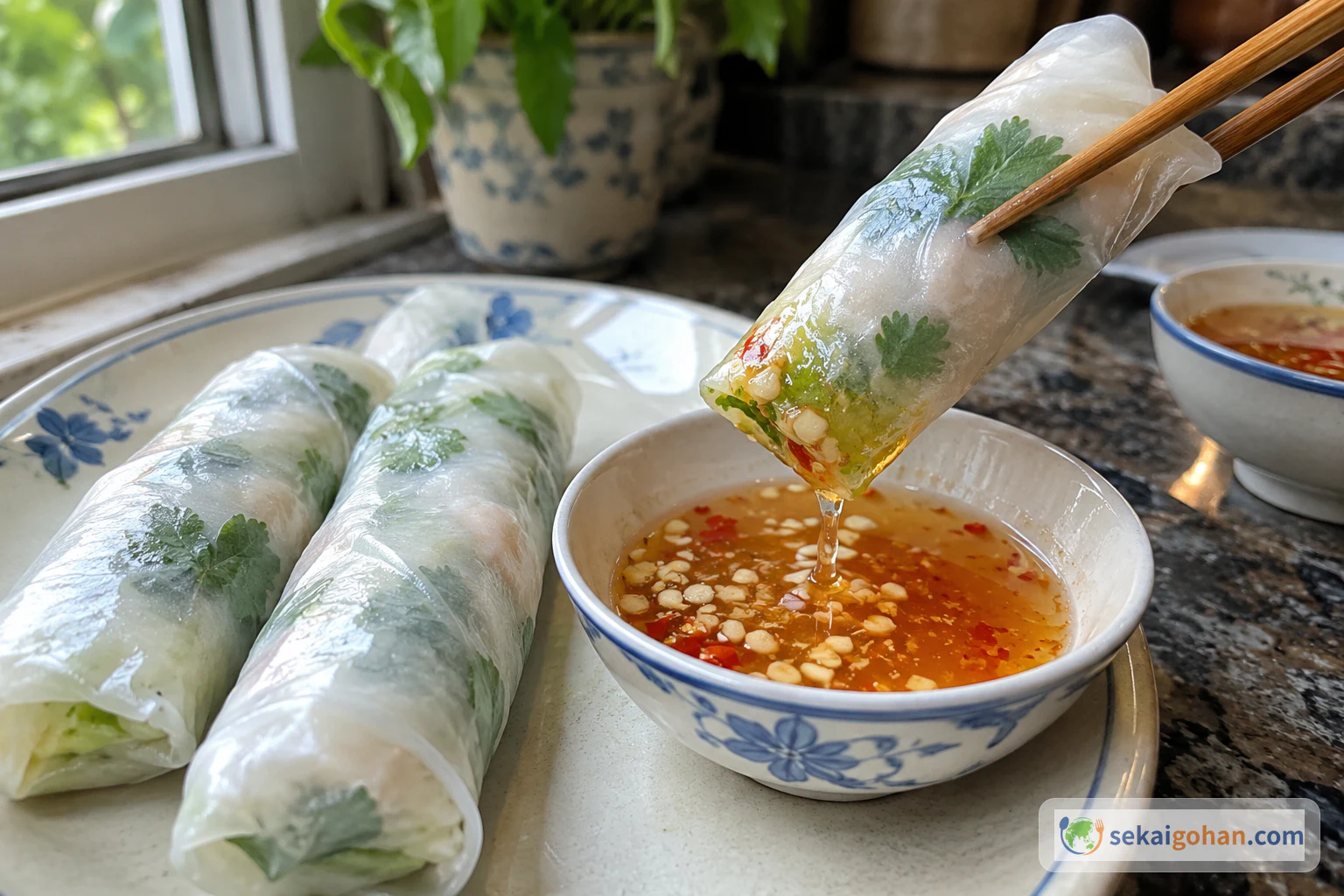
There is no bowl of water on this table. You lift a sheet of rice paper straight off the bundle. It is milky white with tiny bubbles on its surface, and it lies soft across your palm. Lettuce goes on first, then herbs, cucumber, a little bundle of rice noodles and a few slices of cold boiled pork. You roll it up, push one end down into a bowl of amber nước chấm and bite.
Bánh tráng phơi sương comes from Trảng Bàng in Tây Ninh province, in southeastern Vietnam, and this is how it is eaten there. The paper tastes slightly salty and has a little chew, and the rice gets sweeter the longer you chew it. Around it you get pork fat, bitter and fragrant herbs, and a dip that is sweet, salty, sour and hot all at once.
A Town That Gets Up in the Dark for Rice Paper
From steamer to dew
The work starts in the middle of the night. In Trảng Bàng, mostly around the Lộc Du quarter, fires are lit at 2 or 3 in the morning. The batter is rice flour, sometimes with some cassava flour, plus salt. There is no sugar and no preservative. It is spread thin over a cloth and steamed, and the sheets are laid in two layers. While they are still damp, they go out in the sun for 30 minutes to an hour, depending on the weather. Each half-dried sheet is then passed over a fire fuelled by peanut shells. It is toasted just enough to set, without scorching and without puffing too much.
The last stage gives the paper its name. After dark the sheets are laid on bamboo racks to take the dew, between about 10 p.m. and midnight or between 3 and 5 in the morning. One producer talks of 15 to 20 minutes under the dew. Late in the year, when it turns cooler, the wait can run until 3 or 4 a.m. If the sheets stay out too long, they go too soft. If they come in too early, they stay hard, which locals call sượng. When the timing is right, the sheets go into bags or onto banana leaves and are sealed so air cannot stiffen them again. The dew gives the paper its texture: it rolls without being dipped in water. Part of the work is now done by machine, but the dew still does this job.
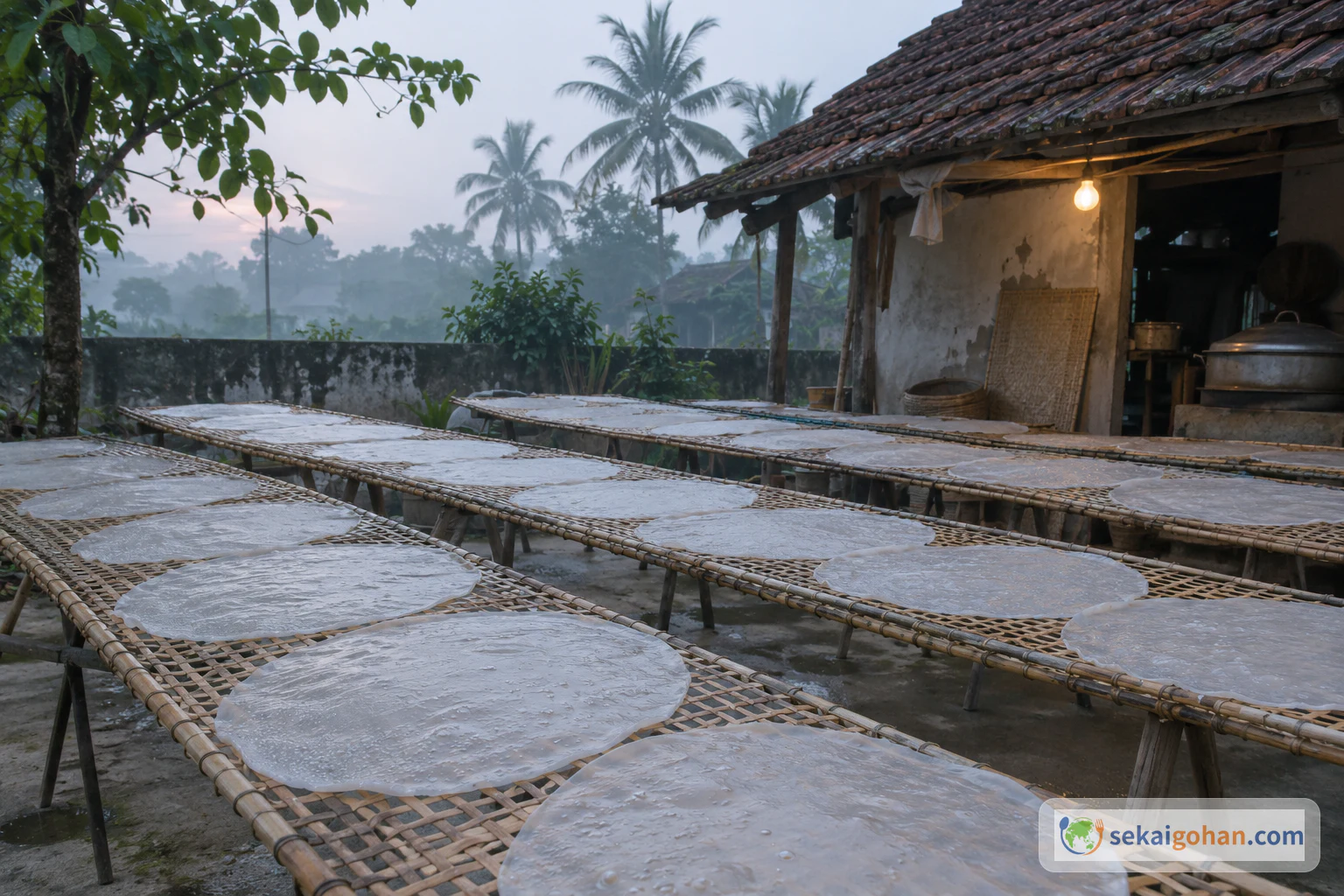
Phơi sương means "exposed to the dew." In central and southern Vietnam, rice paper is called bánh tráng. In the north the same kind of wrapper is called bánh đa nem, and it differs in thickness and use.
Where it came from, and where it is now
The craft is usually dated to the 18th century. One story says settlers from central Vietnam brought it, but there is no record of this. On 13 October 2015, Vietnam's Ministry of Culture, Sports and Tourism added Trảng Bàng dew-softened rice paper making to the national list of intangible cultural heritage as a traditional craft. Some places give the year as 2016, but the decision itself is dated 2015. Today Trảng Bàng's rice paper carries three to five stars in Vietnam's OCOP local-product rating, and a five-star ultra-thin sheet is exported to Japan, Korea and Taiwan. In December the town holds a five-to-seven-day rice paper festival where visitors can try making sheets by hand. Visits to workshops and hands-on experiences are also part of local tourism.
At the table, and next door
Nobody brings finished rolls out from the kitchen. A family or a group of guests sits around plates of pork, noodles, greens and paper. Each person takes a sheet, picks their leaves, lays meat on top, rolls and dips. The same paper is also wrapped around grilled fish, veal and wild greens (rau rừng), which some producers grow for exactly this purpose.
Across Vietnam, rice paper turns up in many forms, and Tây Ninh alone has more than one. Locals compare Trảng Bàng's sheets with those from nearby Gò Dầu. Gò Dầu's are thin, translucent and oval, with a slightly stronger taste. Trảng Bàng's are a little thicker, round and milky, with fine grains on the surface. The province's other famous rice paper dish is bánh tráng trộn. It is a separate dish: the paper is cut up and tossed with dried shrimp, quail eggs, green mango, seasoned salt and fried shallots. The sweet or spicy dẻo products (dẻo me, dẻo ớt, dẻo tôm, dẻo tắc) and grilled bánh tráng nướng are also separate things.
Ingredients (serves 4)
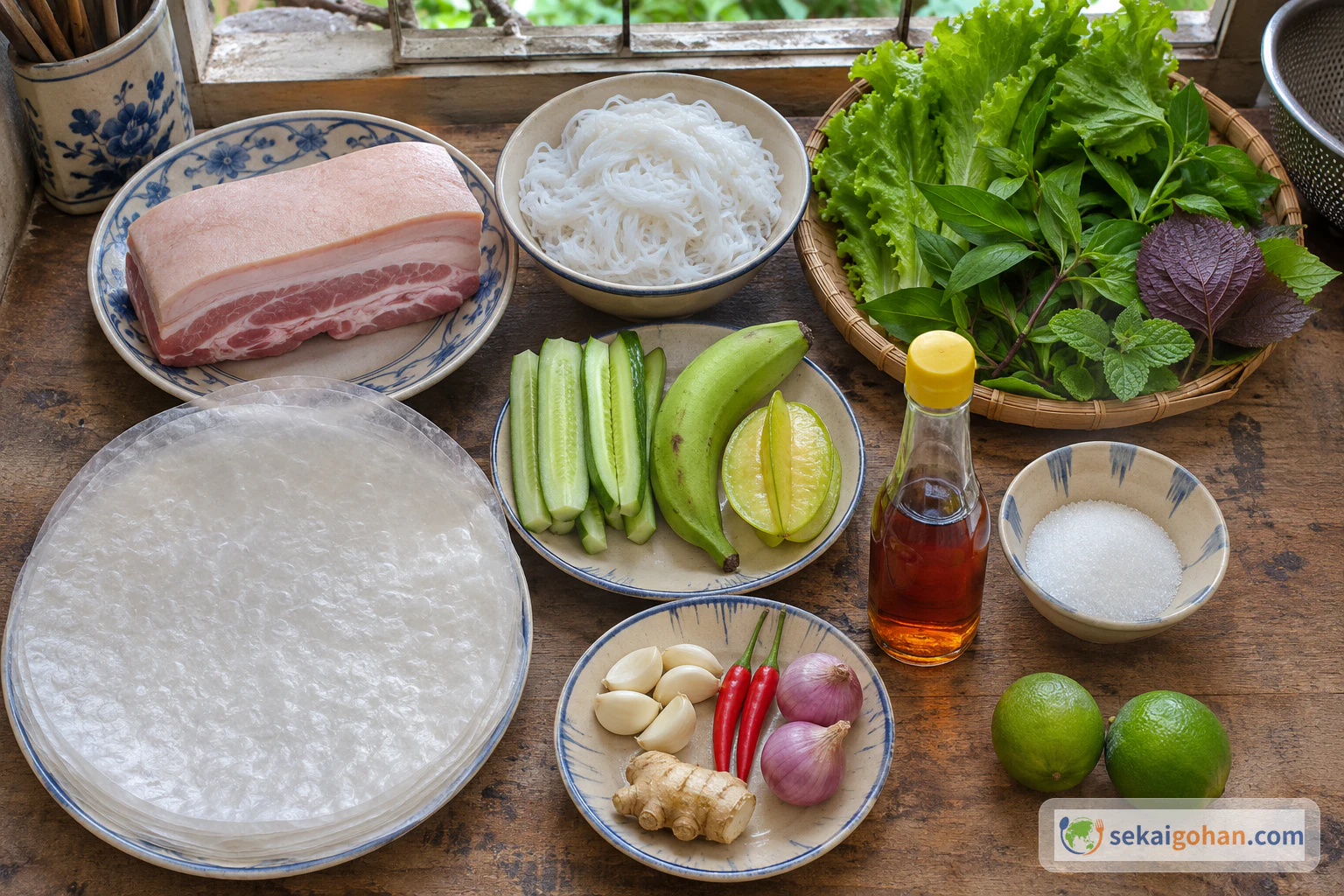
These amounts make a generous table for four, with a full kilo each of pork and noodles. Everyone rolls as they eat, so there is no fixed number of rolls.
Fish sauce is made from fish. Peanuts are not an ingredient: in Trảng Bàng the shells are only burned as fuel to toast the sheets. Lettuce, herbs, cucumber, banana and star fruit are eaten raw, so check each one if anyone at the table reacts to them.
Equipment
- A large pot that holds the pork fully submerged
- An instant-read thermometer
- A large bowl for ice water
- A sharp knife and a large cutting board, plus a separate board for raw meat
- Paper towels
- A colander for draining greens
- Small bowls for the dip and for soaking the fruit
- Serving plates for the table
- A zip-top bag for the leftover rice paper
Choosing the Rice Paper and Everything Around It
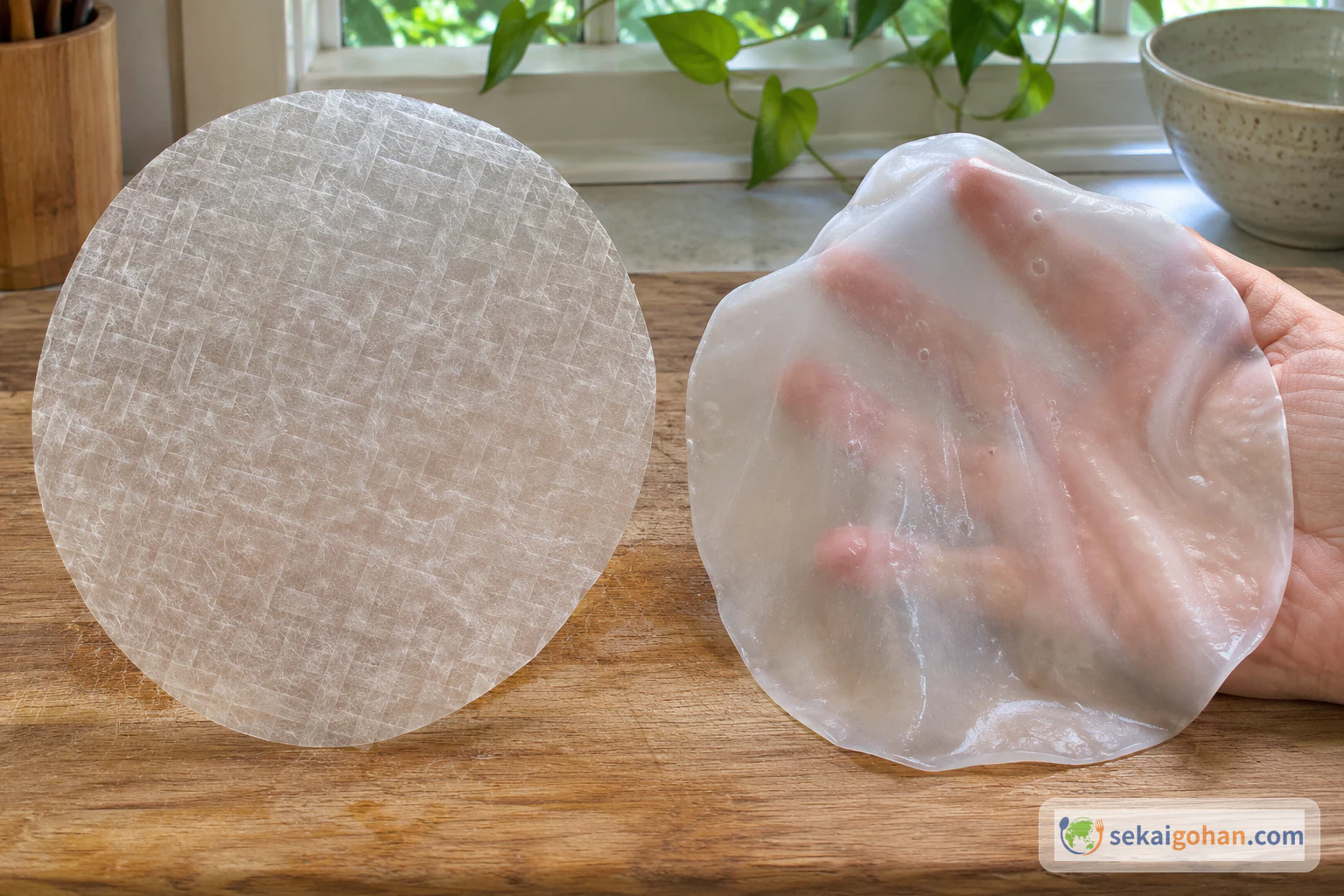
Most rice paper sold abroad as spring roll wrappers is the hard, dry kind you dip in water. Bánh tráng phơi sương is different: it rolls just as it comes. Look for it at Vietnamese and other Asian grocers. Ordinary supermarkets mostly stock the dry type. On the shelf, phơi sương comes in stacked bundles ½–¾ inch (1–2 cm) thick. The sheets are about A4 size, milky white, and lightly grainy on the surface.
If the pack says không nhúng nước ("do not dip in water"), roll the sheets straight from the bag. If you can only find dry rice paper, dip one sheet at a time in lukewarm water. Lift it out while it still feels a little stiff in your hand. The roll will have less fragrance and spring, but it works.
For the dish to taste like Trảng Bàng, keep three things: paper that rolls soft, real fish sauce and a good pile of herbs. Without the herbs you are left with paper, pork and sauce. The green banana and star fruit can go if you cannot find them.
| Swap | What it changes |
|---|---|
| Dried bún, cooked as the pack directs, or thin rice vermicelli | Vermicelli is finer and milder than bún. Wheat noodles such as somen make a different dish |
| Thai fish sauce for nước mắm | Works, with a stronger fishy note. Soy sauce throws the aroma off |
| Lemon for lime or calamansi | Lemon is sharper. Calamansi gives a rounder sourness |
| Basil, shiso, mint and garlic chives for the Vietnamese herbs | They steer the aroma in the right direction. Fish mint is hard to replace |
| Pineapple for sour star fruit | Sweeter, with a rounder sourness |
| Ripe banana for green banana | Not a stand-in; leave the banana out. The sweet-sour side of the roll gets thinner |
| Small red onion for shallots | Works; regular onion pushes the water sweeter |
| Light brown sugar for white sugar | Darker dip with more depth |
| Red-leaf lettuce | Softer and easier to roll, less crunch |
Method
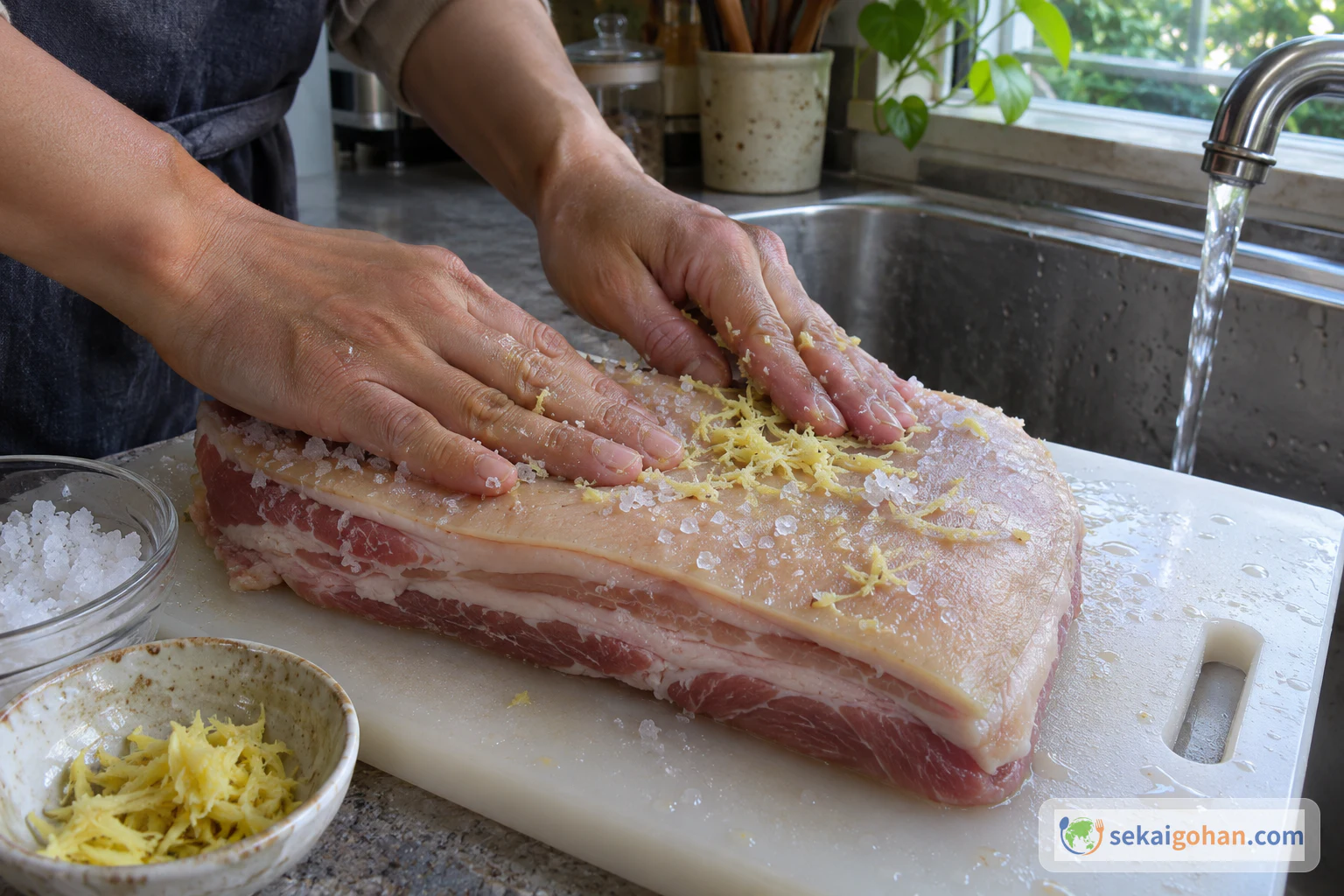
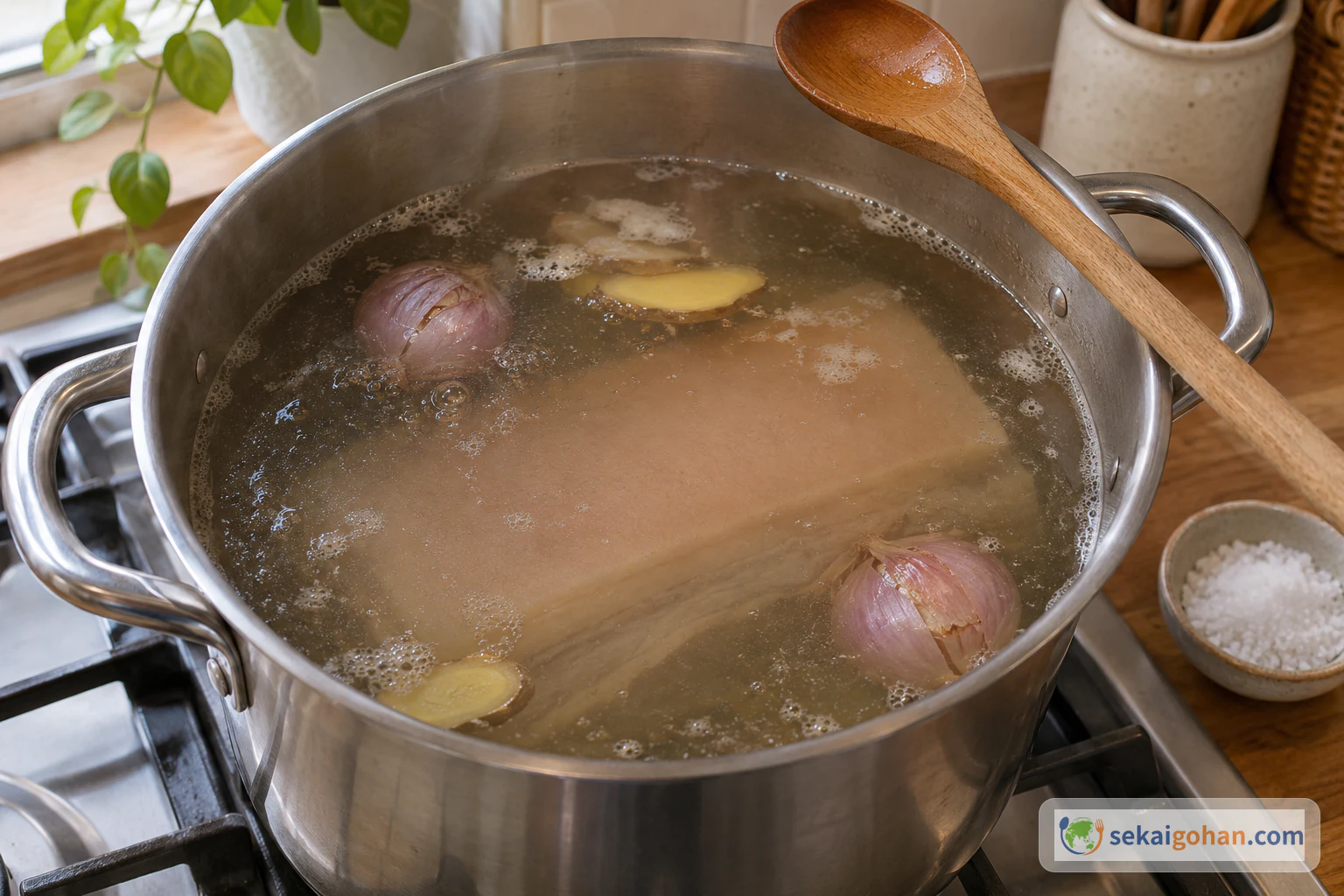
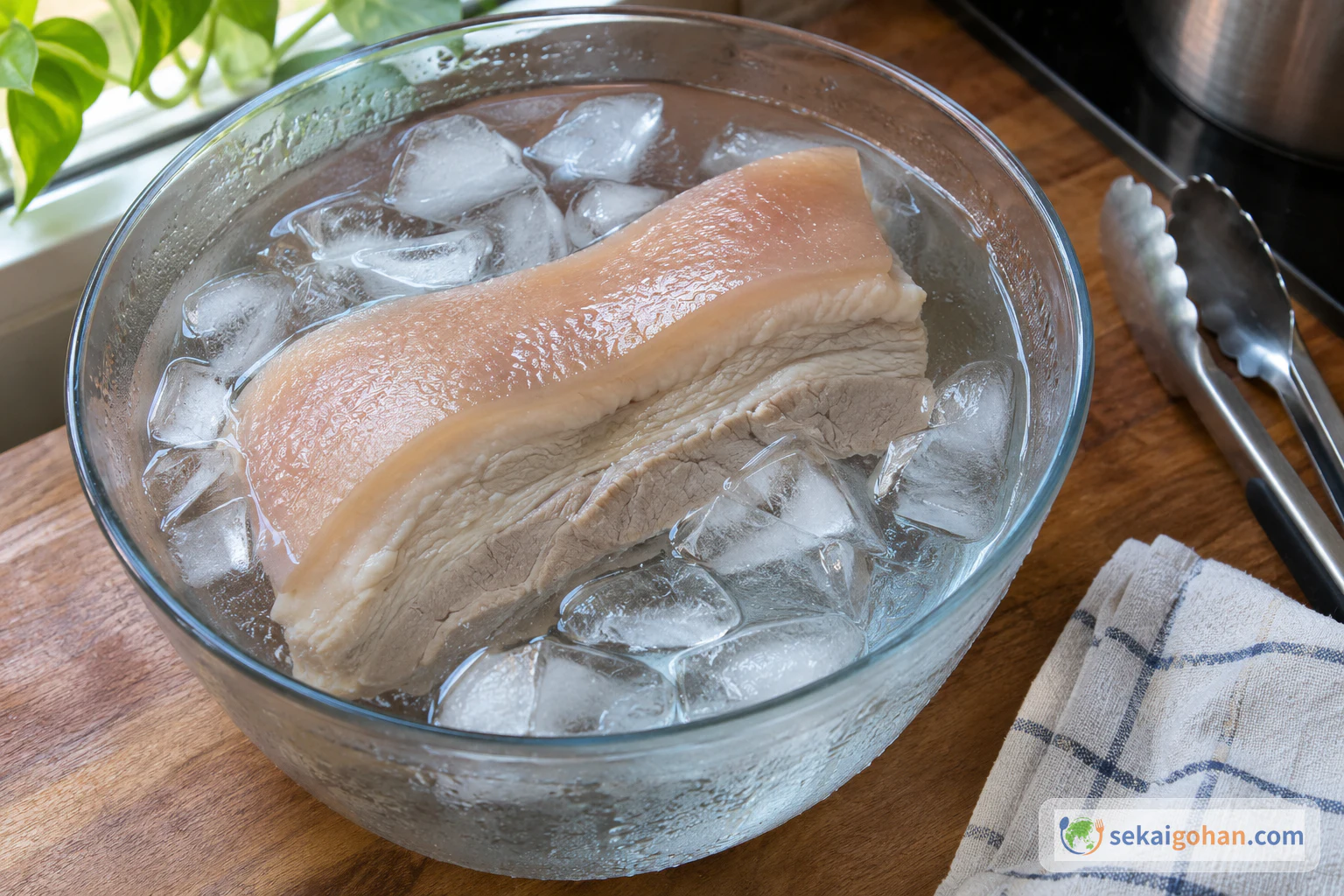
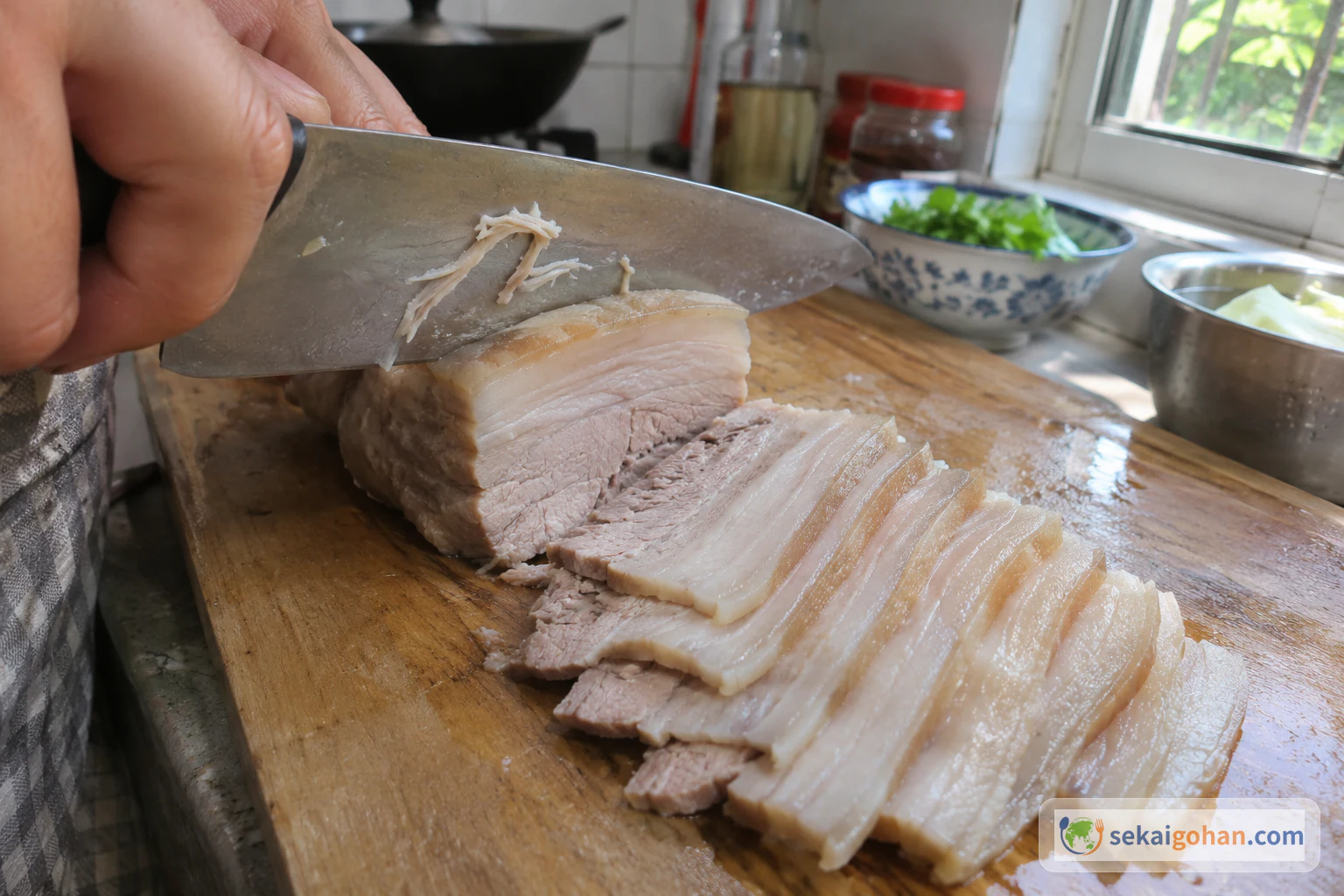
Start with the pork. Rub it, simmer it and chill it. The simmer is your hands-off time: make the nước chấm and wash the greens while the pot bubbles. Slice the pork once it is cold. The rolling happens at the table, after everyone sits down.
Pork is always cooked through to the center and never served pink. Keep raw pork, its juices, and the knife and board that touched it away from anything eaten raw. Wash them well before reuse, or use separate ones. Wash the lettuce and herbs under running water. A 15-minute soak in lightly salted water can be an extra rinse, but it does not replace washing or kill germs. For anyone with a weakened immune system, anyone pregnant, and young children, swap the raw greens for cooked vegetables such as boiled cabbage, bean sprouts or garlic chives.
The ice bath stops the cooking and firms the meat and fat. Cold pork slices thin and clean. Warm pork tears, and thick slices push through the paper.
When It Goes Wrong
| What you see | Why | What to do |
|---|---|---|
| The paper tears or dry sheets stick together | Dry paper soaked too long or stacked in the water, wet fillings, or too much filling | Dip dry sheets one at a time and lift them early. Drain the fillings well. Put less on each sheet |
| The paper is too stiff to roll | A dry-type sheet used without water, or phơi sương left open to the air | Check the bag. Give a dry type a quick lukewarm dip. Keep the phơi sương bag sealed between sheets |
| The dip tastes bitter | Peel oil got in, or the citrus went in too early | Use juice only, and mix sugar, then fish sauce, then citrus |
| The pork is dry | Simmered too long, or left in the ice too long | Stop cooking as soon as both doneness checks pass. Keep the ice bath to 10–15 minutes |
| The pork smells gamey | The rub was skipped or the scum was not skimmed | Rub with salt or ginger and rinse, then skim when the water first boils |
| Everything tastes flat | Weak dip or too few herbs | Sharpen the dip with fish sauce and citrus. Add basil, shiso and mint to the plate |
Serving, Variations and Storage
At the table
This is a meal where the table is the kitchen. Put out more plates than seems necessary, so nobody has to reach across. When children are eating, leave the chili out of the dip and serve it on the side. The sweet, salty and sour balance of the nước chấm stays the same. Refill the herbs before the pork runs out.
Variations
- Pork shank instead of belly. With less fat, the herbs and the dip come forward. Shank dries out faster, so start checking for doneness early.
- A little grated pineapple in the nước chấm. This adds another sweet-sour layer, and it fits well when you are already using pineapple in place of star fruit.
- Vegetables first. Halve the pork and add more cucumber, lettuce, herbs and green banana. You get more rolls and less fat per person, and the dip stays the same.
Storage
Store unopened rice paper at room temperature in a dry, airy place, away from direct sun and strong smells. Bags carry no fridge instructions, and a printed best-before date can run six to nine months. After opening, squeeze the air out and seal the bag tightly. Eat the boiled pork the day you cook it. If you keep some for the next day, cool it, refrigerate it promptly in a covered container, and reheat it until it is hot all the way to the center before eating. Do not keep finished rolls: roll each one just before you eat it.
Frequently Asked Questions
Can I make dew-softened rice paper myself?
The softness comes from steaming, sun-drying, a peanut-shell fire and night dew on bamboo racks, all timed to the weather in Trảng Bàng. Buy the paper. Put your effort into the pork, the dip and the greens, which decide how the meal tastes at home.
Two pounds of pork and two pounds of noodles seem like a lot. Can I scale down?
Yes. For two or three people, halve every ingredient in the table, including the dip. This halving is our suggestion rather than part of the published recipe. Cooking time depends on the thickness of the piece, so rely on the chopstick and thermometer checks rather than the clock.
What else can I roll in it?
In Trảng Bàng the same paper wraps grilled fish and veal as well as boiled pork, always with plenty of fresh and wild greens. The method stays the same: build the roll on the sheet, roll it and dip it in nước chấm.
Is the rice paper gluten-free?
Rice paper is made mainly from rice, sometimes with tapioca or cassava flour, and is gluten-free when no wheat is used. It may be made in the same factory as wheat products, so check the label if gluten matters at your table.