Bột Chiên: Steamed Rice Cake, Fried Golden and Bound with Egg
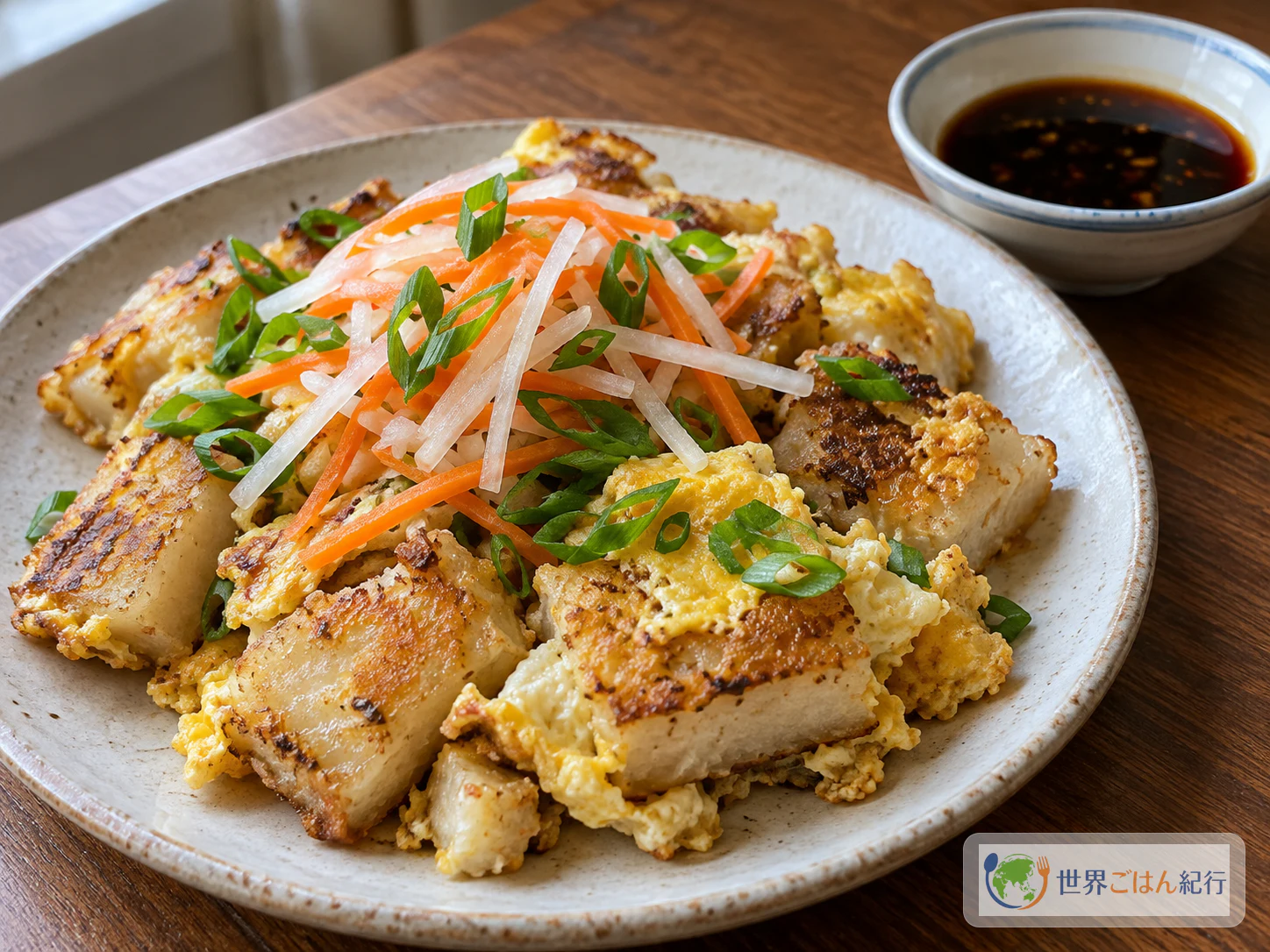
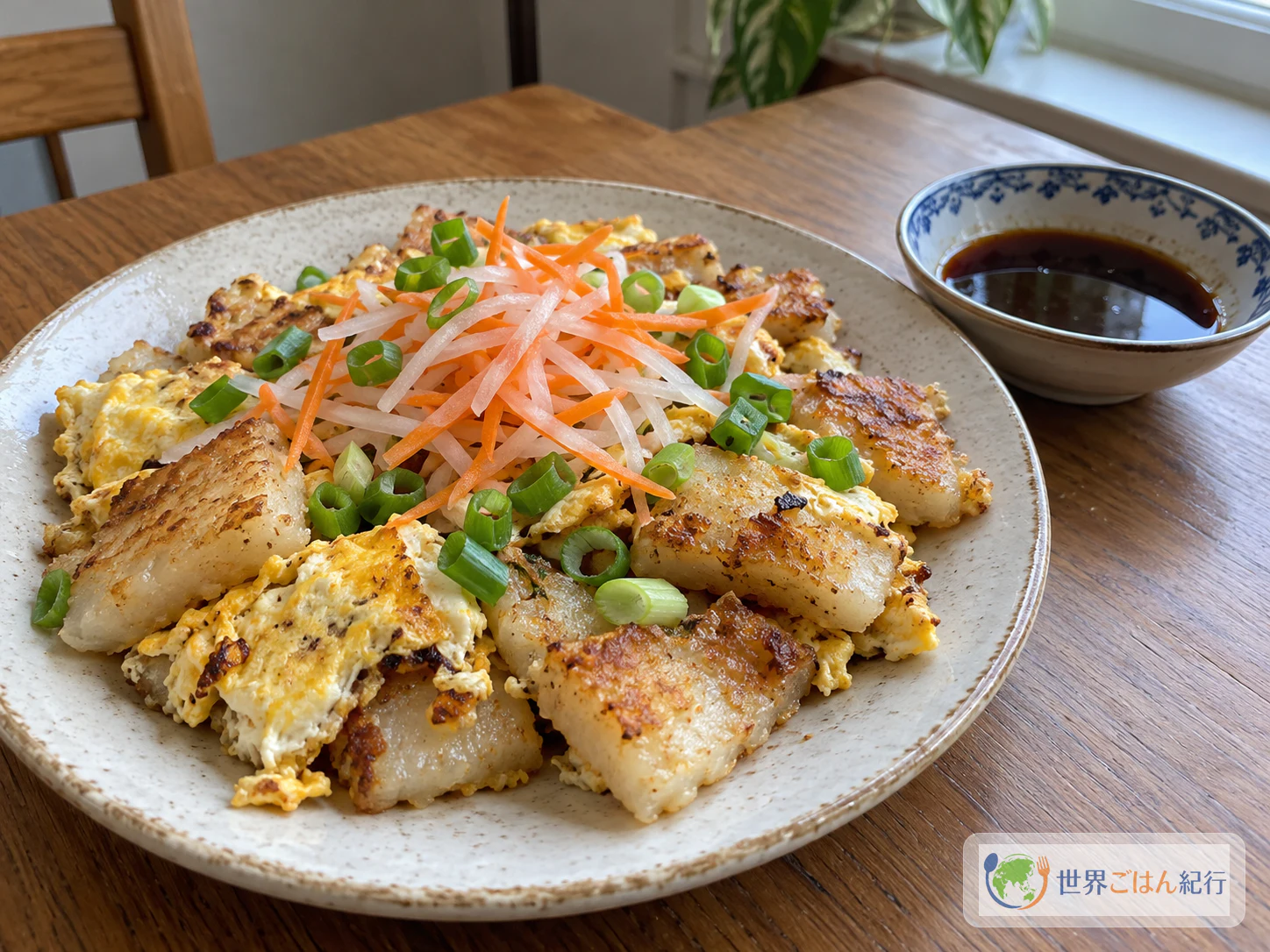
A crisp, golden outside on each piece of rice cake, a soft and springy inside, egg cooked until no raw egg remains, and a sweet-sour soy dipping sauce served on the side.
In a Saigon alley in the afternoon, small pieces of rice cake sizzle on a hot griddle, beaten egg is poured over them, and customers wait on low stools for their plate. A VnExpress report on one such stall describes a vendor, Kim Ngọc, who has sold bột chiên in the same alley since 1974, with customers gathering in the afternoon snack hours.
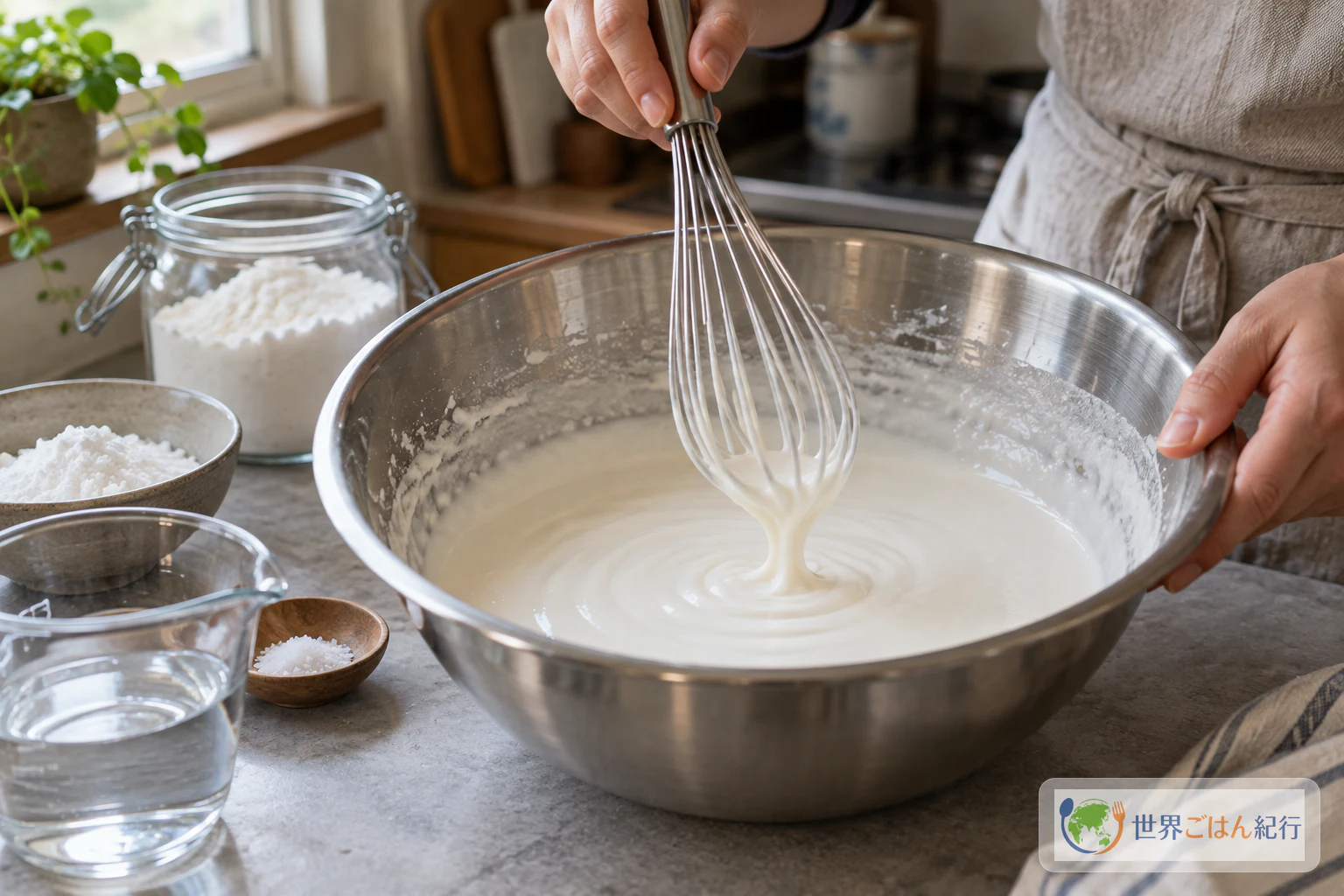
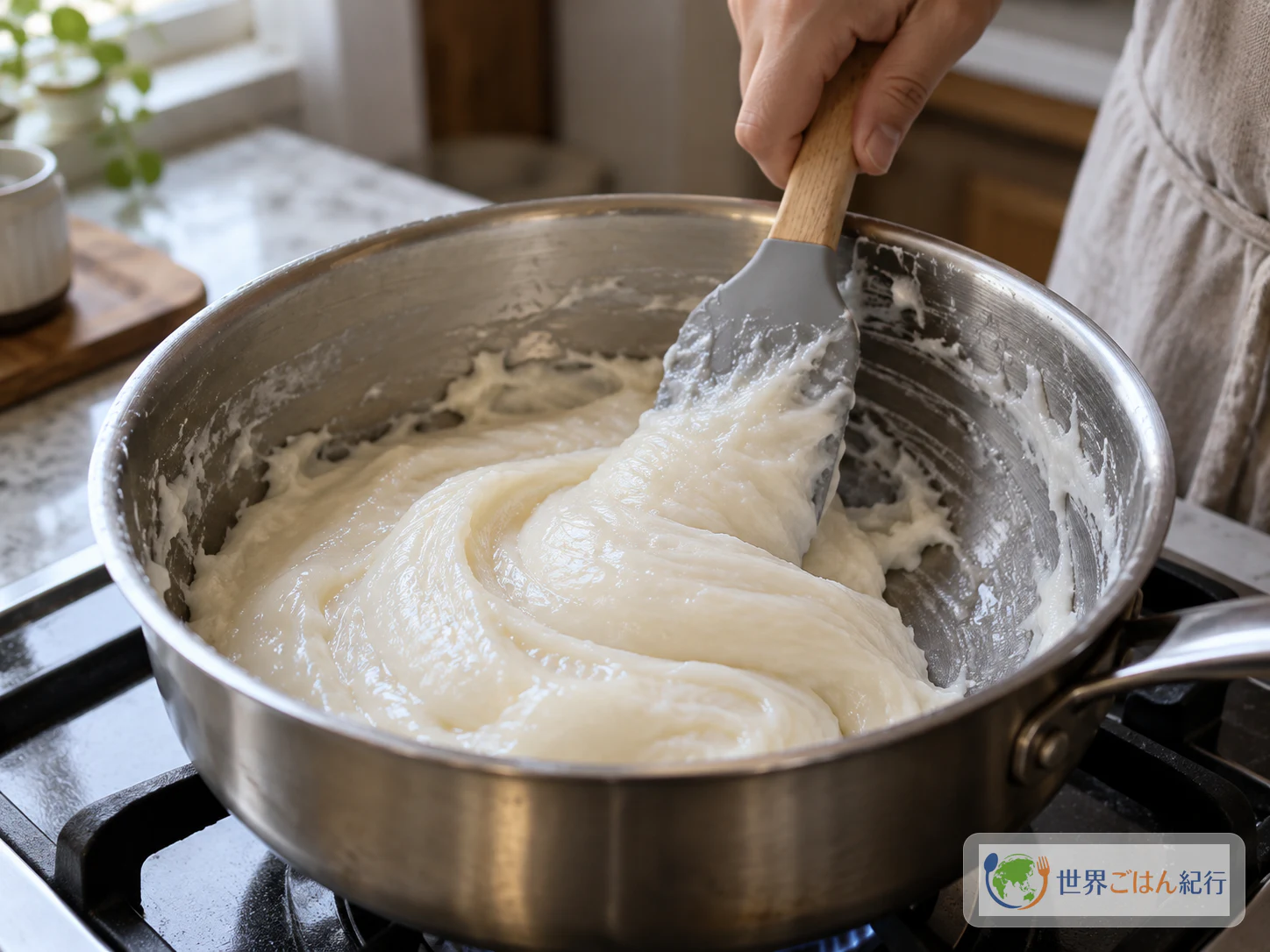
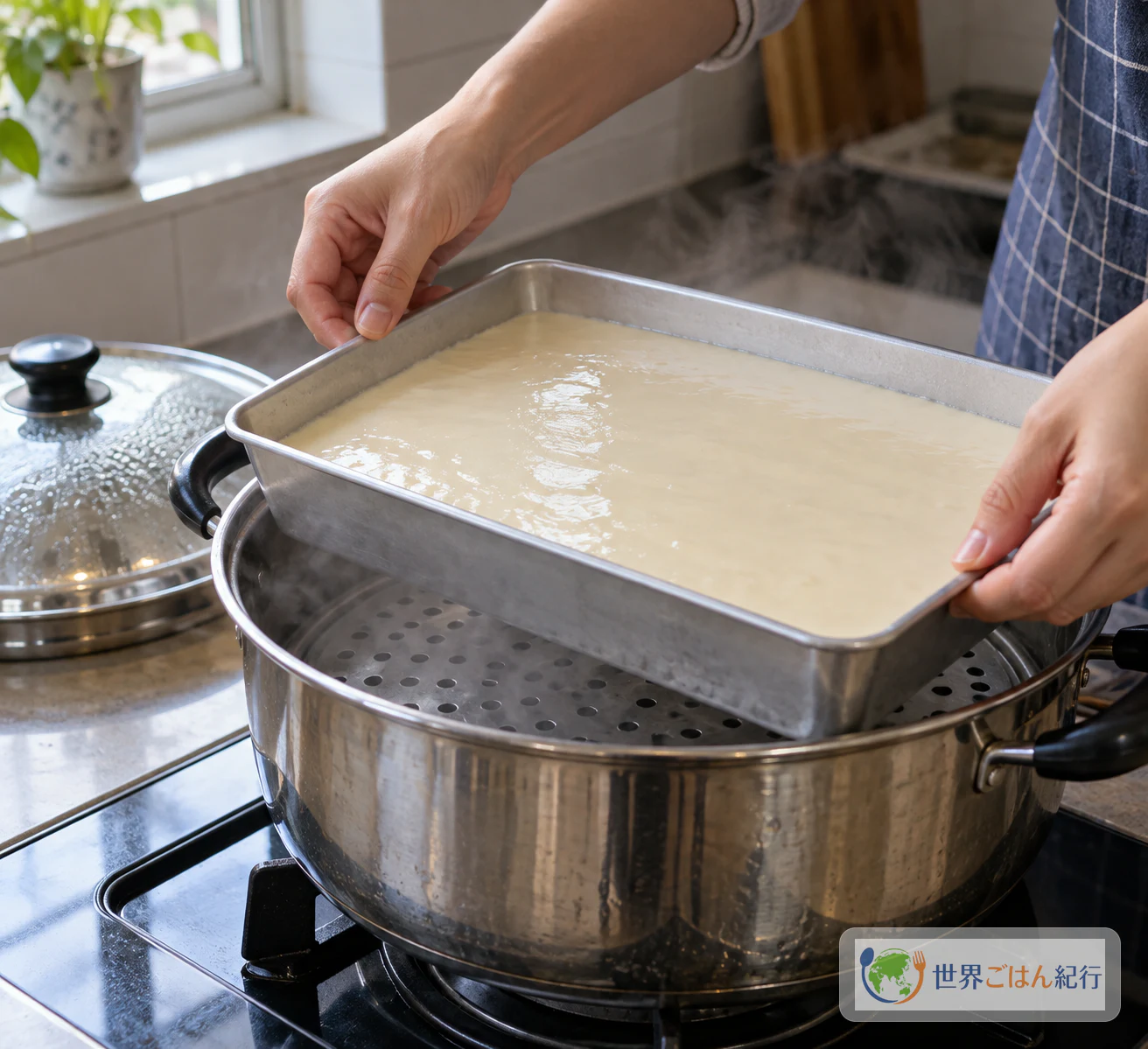
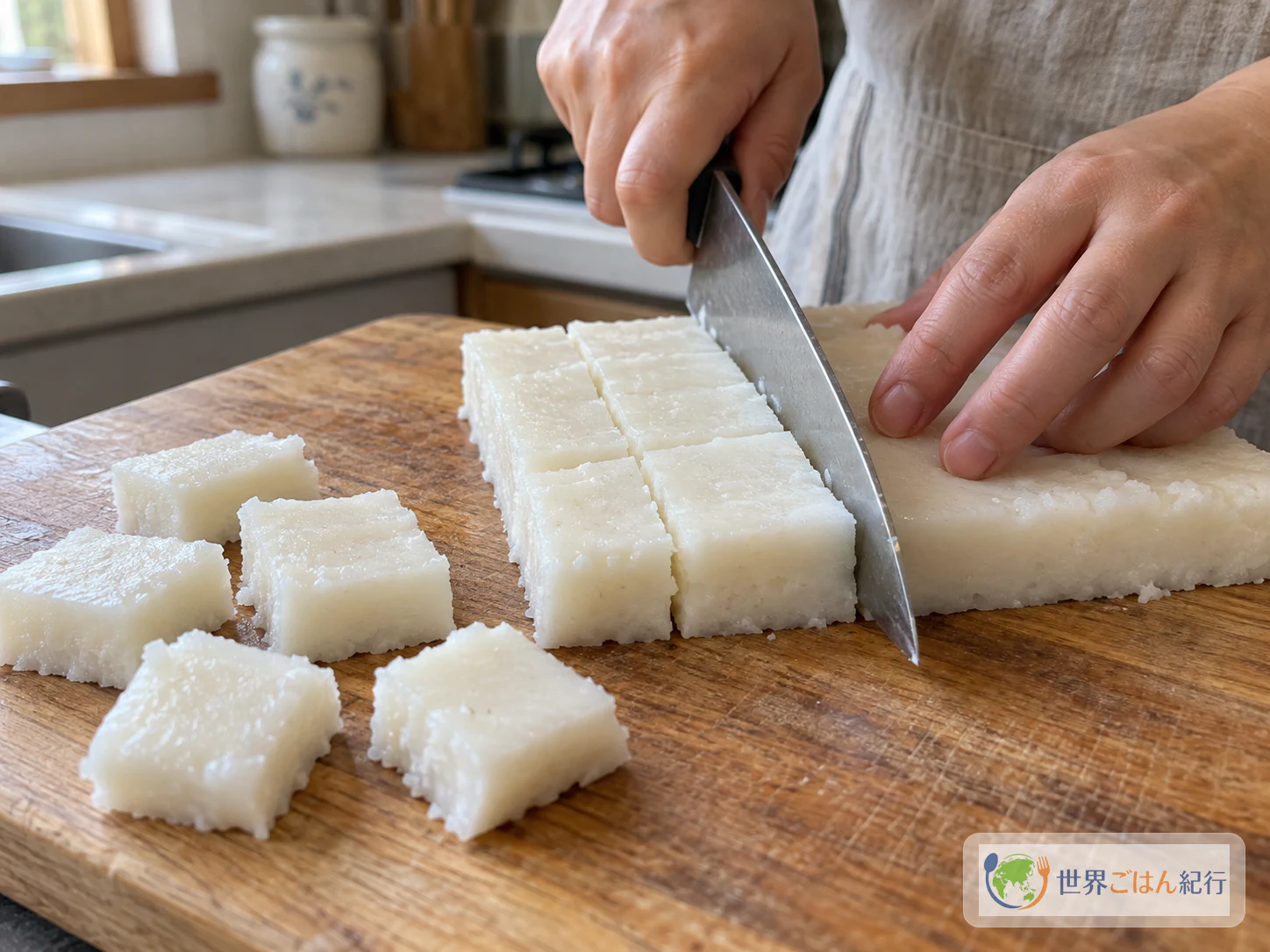
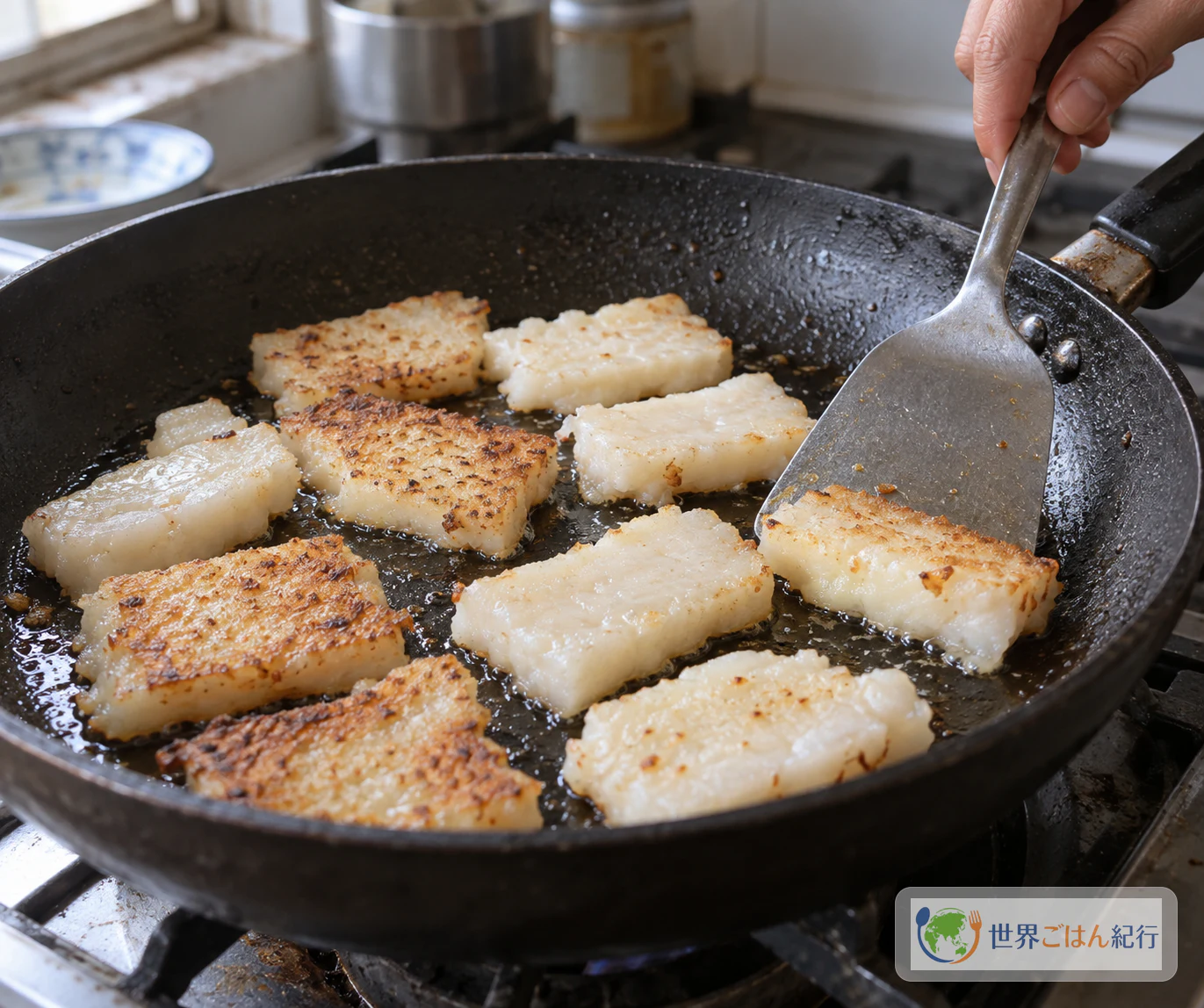
Bánh bột chiên, often shortened to bột chiên, looks like fried flour, but the cake is cooked twice. First a batter of rice flour is cooked and steamed into a firm block; only after it has cooled is it cut and fried. Báo Thanh Niên describes the result as crisp and fragrant on the outside and soft and chewy inside, served with egg and vinegared soy sauce. It is a street food of Ho Chi Minh City (formerly Saigon), and it is a different dish from bánh bột lọc, despite the similar name.
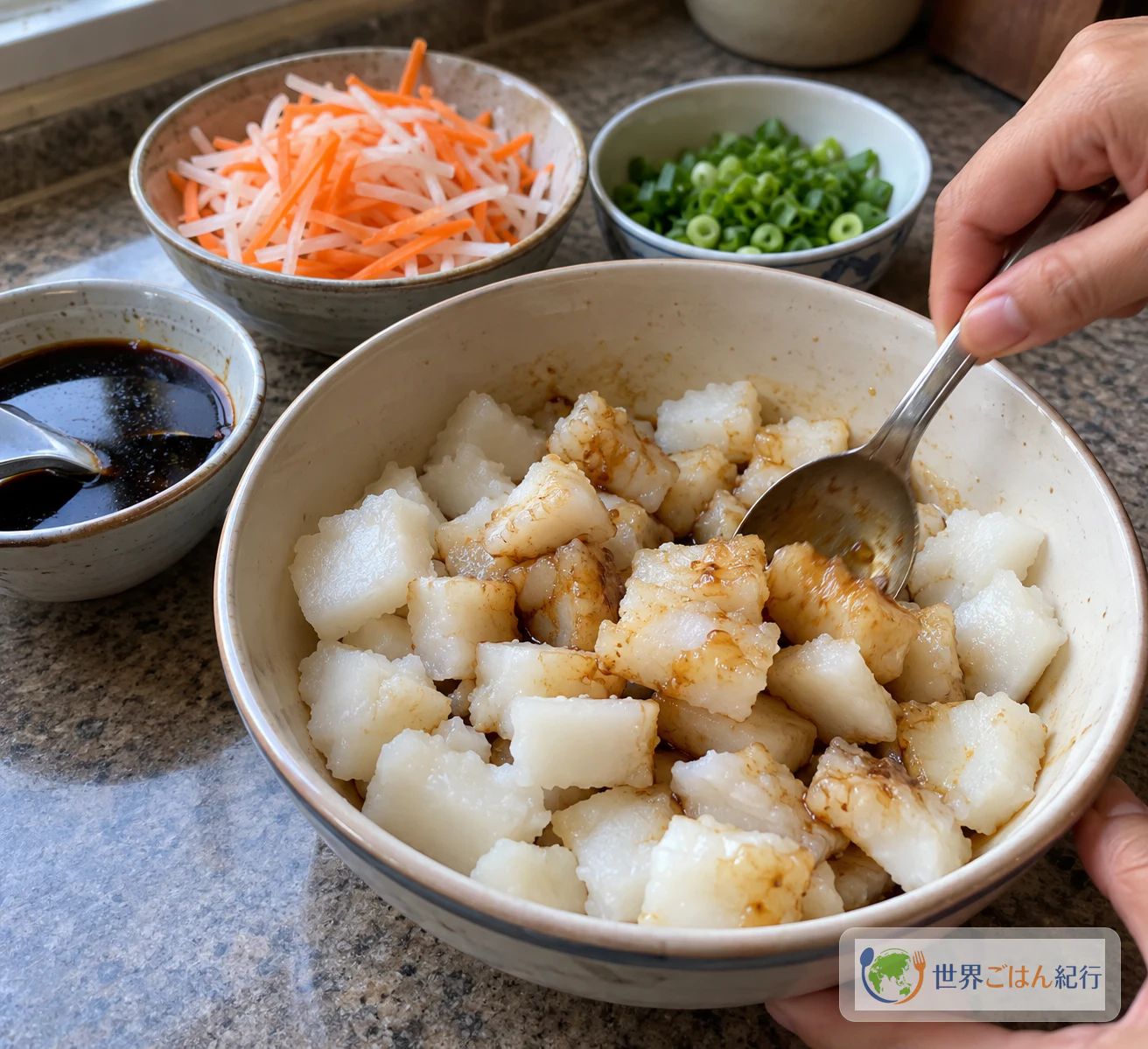
The recipe here follows the home version published by Mai of MM Bon Appétit, who remembers bánh bột chiên as an after-school street snack from growing up in Ho Chi Minh City. Her version uses rice flour with a little tapioca starch, a soy marinade for the cut cake, eggs, raw daikon (or green papaya) and carrot, green onion and a black vinegar sauce.
This recipe reproduces the published source recipe for 2 servings as written. It has not been kitchen-tested for this article. The source does not state how many pieces the steamed cake makes, so no piece count is given here.
Ingredients (2 servings)
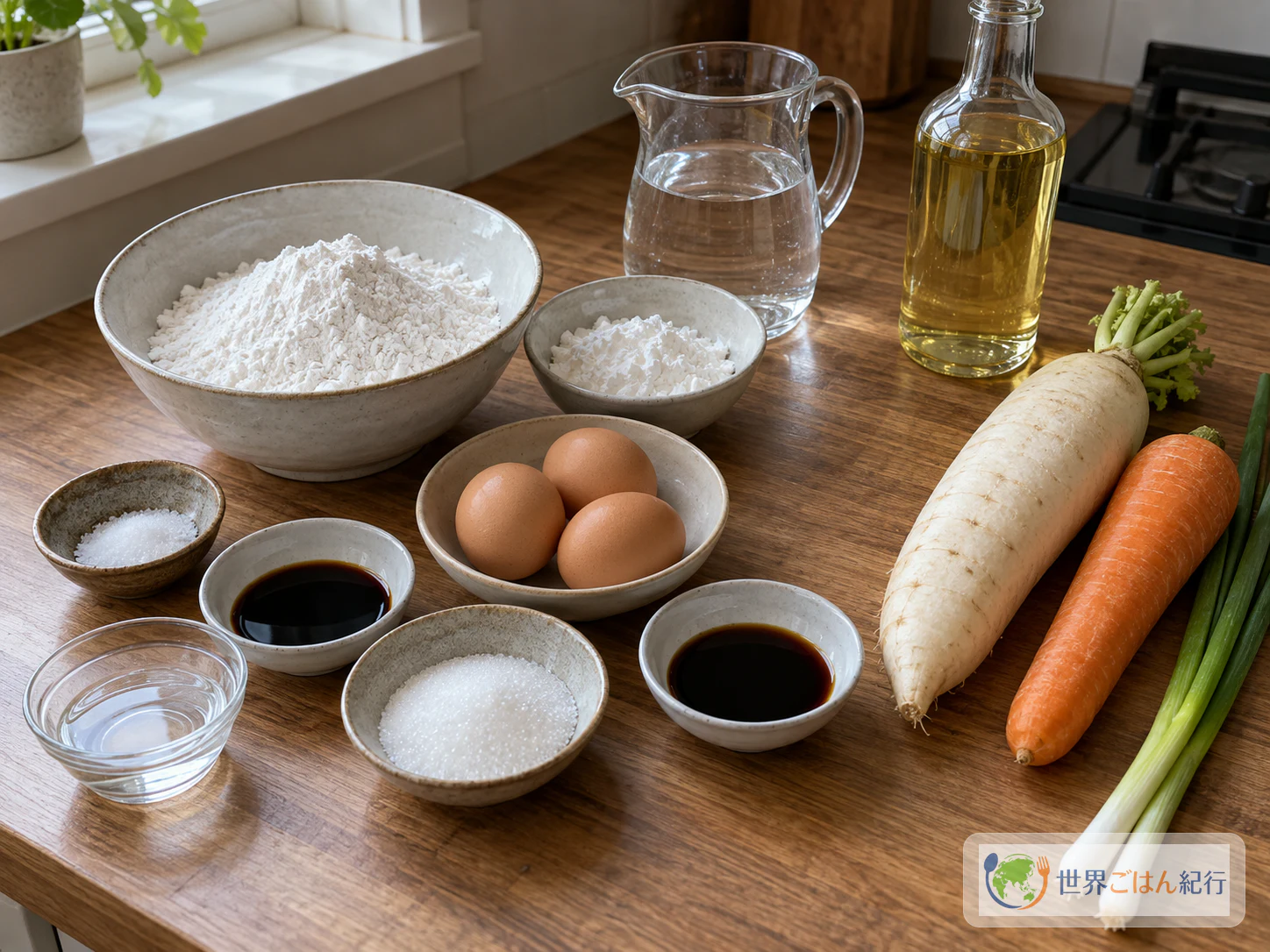
Oil and soy sauce are measured separately for different uses: oil (in the batter, brushed on top before steaming, and for frying) and soy sauce (to season the cut cake, and in the dipping sauce). Measure each use separately. One bottle of oil and one bottle of soy sauce cover all of them.
Choosing and Substituting
- Rice flour: use plain, non-glutinous rice flour. Glutinous (sweet) rice flour is a different product and is not what this cake uses.
- Tapioca starch: use tapioca starch (bột năng). Other starches are not treated as the same thing here.
- Black vinegar: black vinegar suits the sauce. If you cannot find it, rice vinegar can stand in, but the flavor will be different.
- Daikon or green papaya: either works. Daikon is often easier to find outside Vietnam; it is not the same in taste or texture as green papaya. Use one or the other, not both.
- Soy sauce: saltiness varies by product, so taste the sauce before serving.
- Allergens: this dish contains egg and soy (soy sauce). Some soy sauces contain wheat, so the dish should not be assumed gluten-free; check the labels of your soy sauce, rice flour and tapioca starch, including any shared-facility statements.
Equipment
- Mixing bowl and whisk
- Saucepan
- Sturdy spatula for scraping the bottom and sides of the pan
- Shallow heatproof pan or dish that fits in your steamer
- Pastry brush
- Steamer with a lid
- Cutting board and knife
- Skillet or flat griddle, and a spatula for turning
- Small bowls for the sauce and toppings
Method: Cook, Steam, Cut, Then Fry with Egg
The cake is made first (steps 1–4) and fried later (steps 6–7). Fry one serving at a time, then repeat with the rest.
When Things Go Wrong
| Problem | Likely cause | What to do |
|---|---|---|
| Batter sticks or scorches in the saucepan | Heat too high, or not stirring constantly | Keep to medium-low and scrape the bottom and sides continuously. Don't mix any scorched layer back in |
| Steamed cake crumbles when cut | Cut while still hot | Let it cool, covered so it doesn't dry out, until just warm to the touch before cutting |
| Pieces turn hard outside | Fried too long or too much at once | Fry one serving at a time and stop once both sides are golden, around the 4–5 minute guide |
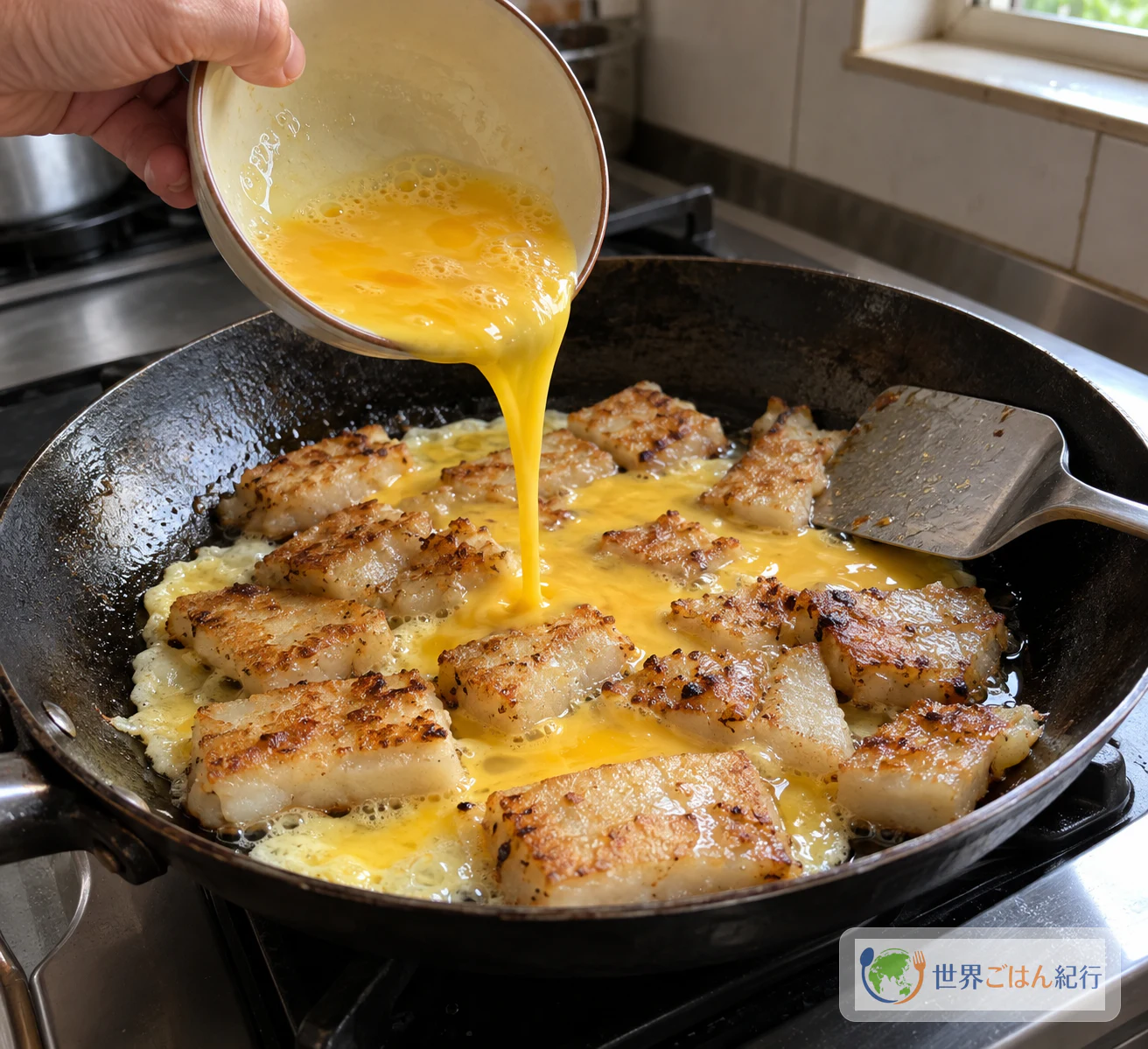
| Egg still runny | Not cooked long enough | Keep cooking over medium-low until no raw egg remains before plating |
| Sauce too salty or sour | Differences between soy sauce and vinegar products | Adjust to taste. Rice vinegar in place of black vinegar changes the flavor |
The source recipe does not give a substitute method if you don't have a steamer, so none is offered here.
Variations
- Green papaya instead of daikon: both are listed in the source recipe; papaya gives a different taste and texture.
- Rice vinegar instead of black vinegar: a substitute the source allows when black vinegar is hard to find, with a different flavor.
- Chili: add chili sauce or chili oil at the table.
- Ready-made rice cake: the source notes that if you find a ready-made block for bột chiên at an Asian grocery, you can skip making the cake. The source does not make the equivalence between that block and this homemade batch clear, so no egg or seasoning conversion is given here. The measured recipe above remains the homemade-block version.
- Street-stall touches: Saigon stalls described by VnExpress and Thanh Niên may add fried pork fat or pickled vegetables. These are not part of this home recipe, and no amounts are given.
A Teochew-Linked Snack, Shaped by Saigon
VnExpress introduces bột chiên as a dish of Teochew (Chaozhou) Chinese origin, but notes that it is not clear when it reached Saigon. Báo Thanh Niên describes it as a Chinese-Vietnamese (Hoa) street food that has become part of Ho Chi Minh City's everyday eating. For more dishes from the country, see Vietnam.
The way it is dressed differs from stall to stall. In the VnExpress report, the Teochew-style way of eating it is described as soy sauce with a little vinegar and without the shredded green papaya or carrot pickles, while the Saigon stall serves it with egg, green onion, fried pork fat, a sweetened dark soy sauce, chili and pickles. Thanh Niên reports egg and vinegared soy sauce, with some shops adding pickled daikon, other pickles or fried pork fat. These are examples from particular stalls, not rules for the whole city. The home version here sits within that range: black vinegar soy sauce, raw daikon and carrot, and green onion.
Frequently Asked Questions
What is bột chiên?
A Saigon street snack of rice-flour batter that is cooked, steamed into a firm cake, cut into small pieces, fried until golden and finished with egg. It is usually served with a soy-based sauce and vegetables.
Is it the same as bánh bột lọc?
No. The names are similar, but they are different dishes. Bột chiên is a steamed rice-flour cake that is cut and fried with egg.
Can I use glutinous rice flour?
The recipe calls for non-glutinous rice flour. Glutinous rice flour is a different product and is not a substitute for it here.
Is it gluten-free?
It should not be assumed so. Rice flour and tapioca starch are the base, but some soy sauces contain wheat. Check the labels of every product you use.
Can I make it ahead?
The source recipe gives no storage or reheating guidance, so none is given here. It is written to be fried and eaten one serving at a time.
Sources
- MM Bon Appétit (Mai), "Bánh bột chiên • Vietnamese fried rice cake with egg." The recipe used here: all ingredients and amounts, steps, the 2-serving yield, cooking times, the black vinegar and daikon/green papaya options, and the author's memory of the dish as a street snack in Ho Chi Minh City. https://mmbonappetit.com/banh-bot-chien/
- VnExpress Du lịch, "Người phụ nữ gốc Hoa bán bột chiên 43 năm trong hẻm Sài Gòn." The dish's introduction as Teochew in origin, the unclear date of its arrival in Saigon, one alley stall operating since 1974, and the comparison of Teochew-style and Saigon-style serving. https://vnexpress.net/nguoi-phu-nu-goc-hoa-ban-bot-chien-43-nam-trong-hem-sai-gon-3663837.html
- Báo Thanh Niên, "Bột chiên chợ Thiếc, nét ẩm thực Hoa giữa Sài Gòn." The structure of the dish (steamed rice-flour cake cut and griddled), egg and vinegared soy sauce, toppings that vary by shop, and the crisp-outside, chewy-inside texture. https://thanhnien.vn/bot-chien-cho-thiec-net-am-thuc-hoa-giua-sai-gon-1851244831.htm