When the Waffle Maker Opens, Pandan Fills the Kitchen
The sweet, green aroma of pandan and the flavor of coconut. A golden-brown surface outside and a tender center inside. Eat them warm, right after cooking.
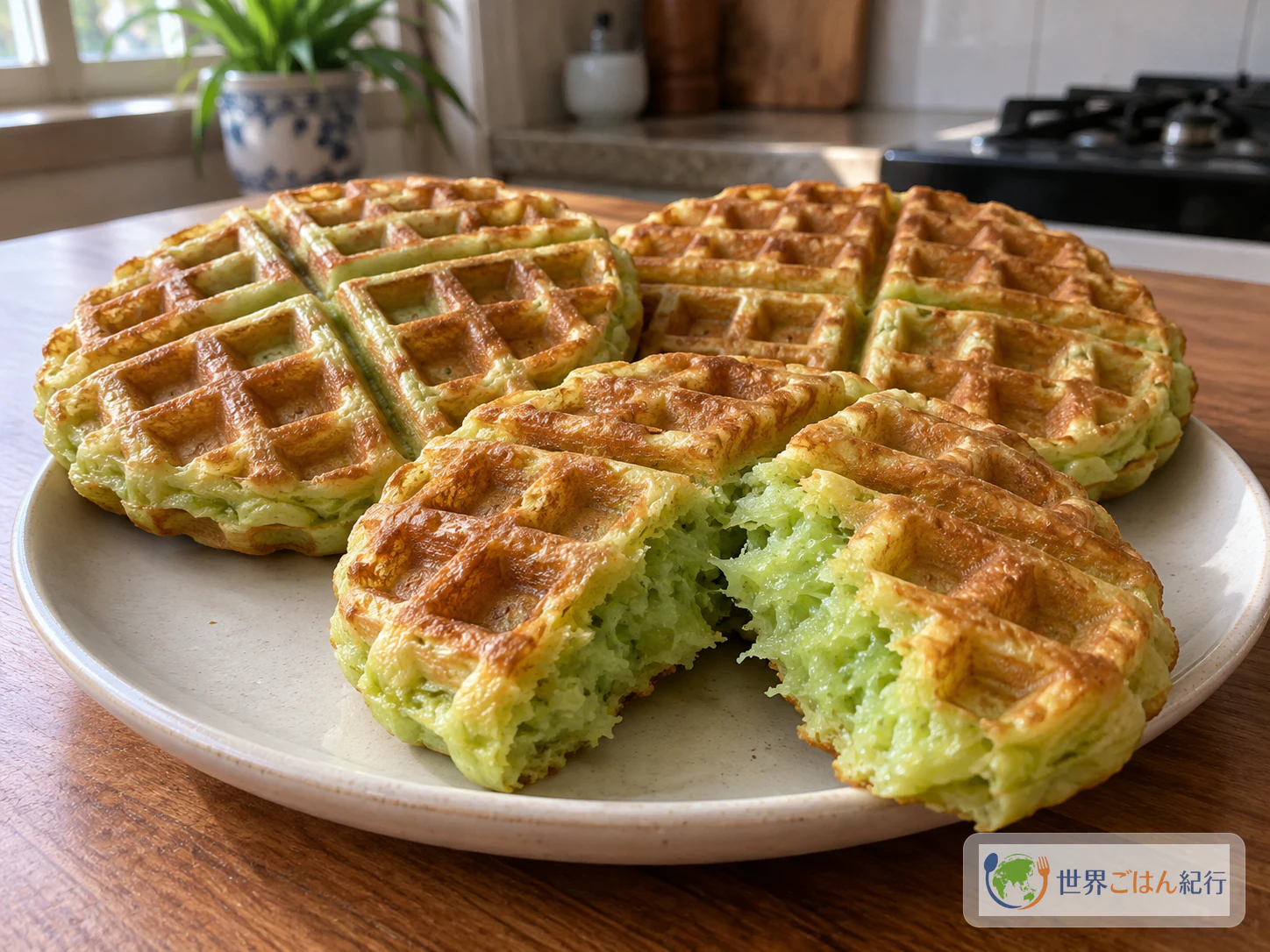
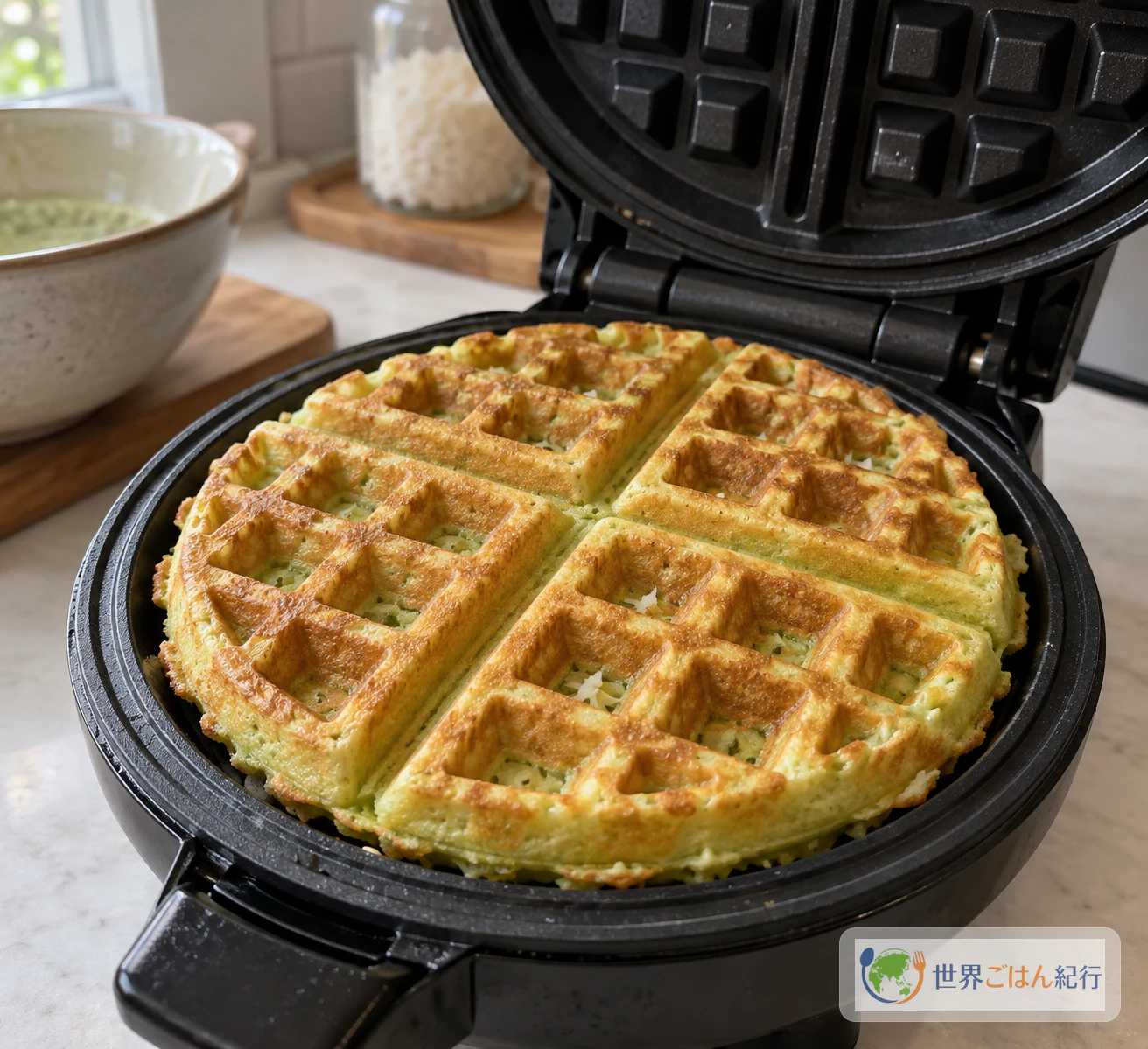
You lift the lid of the waffle maker, and the scent of pandan rises with the steam. The grid on the surface has turned golden brown, and coconut flakes show as fine flecks in the pale green batter. Bánh kẹp lá dứa, as made here, is a pandan and coconut waffle cooked in a waffle maker. Helen Le's recipe, which this article follows, classifies it as a snack in the Southern Vietnamese style.
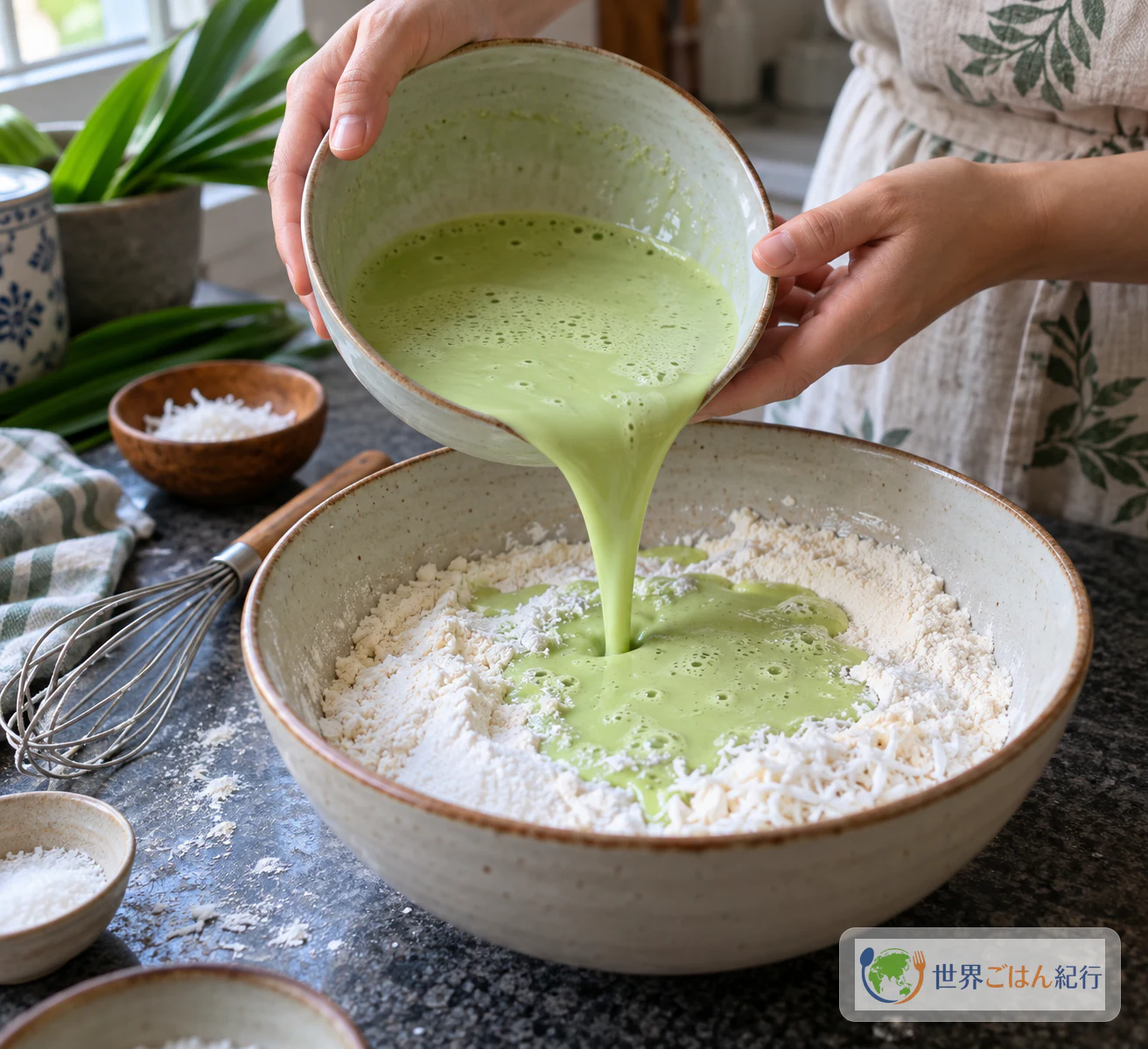
The goal is a contrast in texture. The writer behind Vietnamese Cuisines describes reworking a family recipe until the waffle was crisp on the outside and chewy inside, and that pairing is the one to aim for when you break a waffle open. The batter is simple: an egg, coconut milk, pandan extract, flour, cornstarch, sugar, baking powder, coconut flakes and salt. Butter is used only to grease the waffle maker.
The amounts and method come from Helen Le's recipe for three waffles about 20 cm (8 inches) across. Sekai Gohan has not kitchen-tested this recipe.
For more dishes from the same country, see our Vietnam page.
Same Name, a Different Snack from Thin Pandan Wafers
The name bánh kẹp lá dứa is not used for only one thing. The author at Vietnamese Cuisines separates their chewy-centered waffle from a lighter, crisp pandan pizzelle that goes by the same name. This article covers only the thicker waffle cooked in a waffle maker, not the thin, crisp wafer.
What the people writing about it share are personal memories, not a national history. The Vietnamese Cuisines author recalls seeing pandan waffles on a trip to Vietnam and says their version grew out of their mother's favorite recipe. Tam To of Tam's Recipes remembers eating the snack at night markets alongside sugarcane juice. These are individual accounts. They don't show that every market or household serves it this way, and the sources used here do not establish where or when the dish began.
A note on the numbers
Helen Le's recipe card has a few inconsistencies, and this article handles them as follows:
- Coconut milk: the card lists "240 ml (1 1/4 cup)", but those two measures do not match. This article uses 240 ml and does not convert it to cups.
- Times: the card gives 15 minutes prep, 15 minutes cook and 15 minutes rest, but a total of 30 minutes. Because these don't add up, this article gives no total time. The only fixed time is the 15-minute rest. Cooking time depends on your waffle maker and on cooking the waffles one after another.
- Salt: the card's "salf" is read as salt.
- Butter: the card lists melted butter among the ingredients, but the method uses it to grease the waffle iron. It is not mixed into the batter.
No batter temperature, iron temperature, per-waffle batter volume or per-waffle cooking time is given, so none appear here. No nutrition figures are given either.
Ingredients for 3 Waffles (about 20 cm / 8 in across)
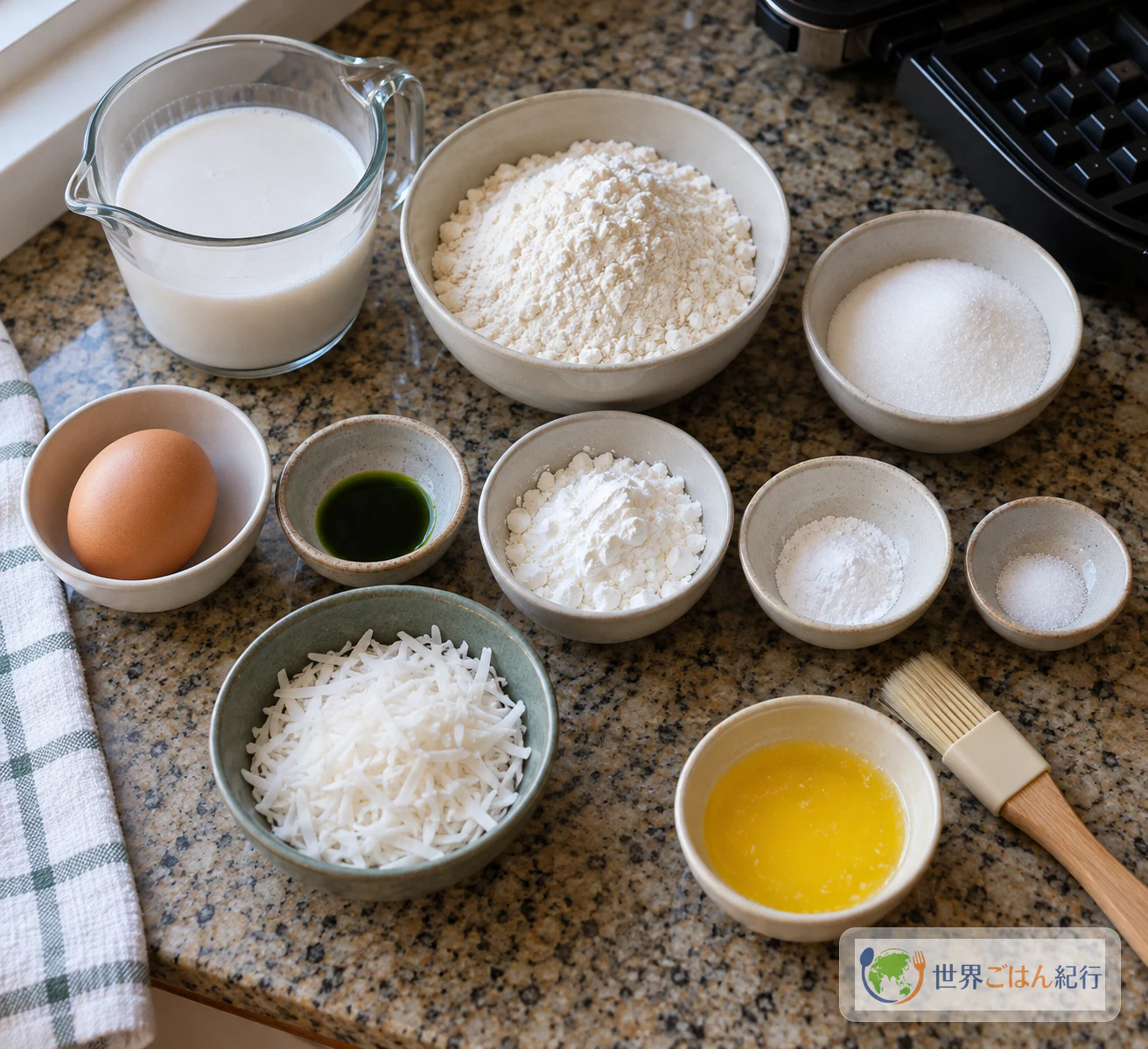
Equipment
- Waffle maker (a round one about 20 cm / 8 in across matches the three-waffle yield)
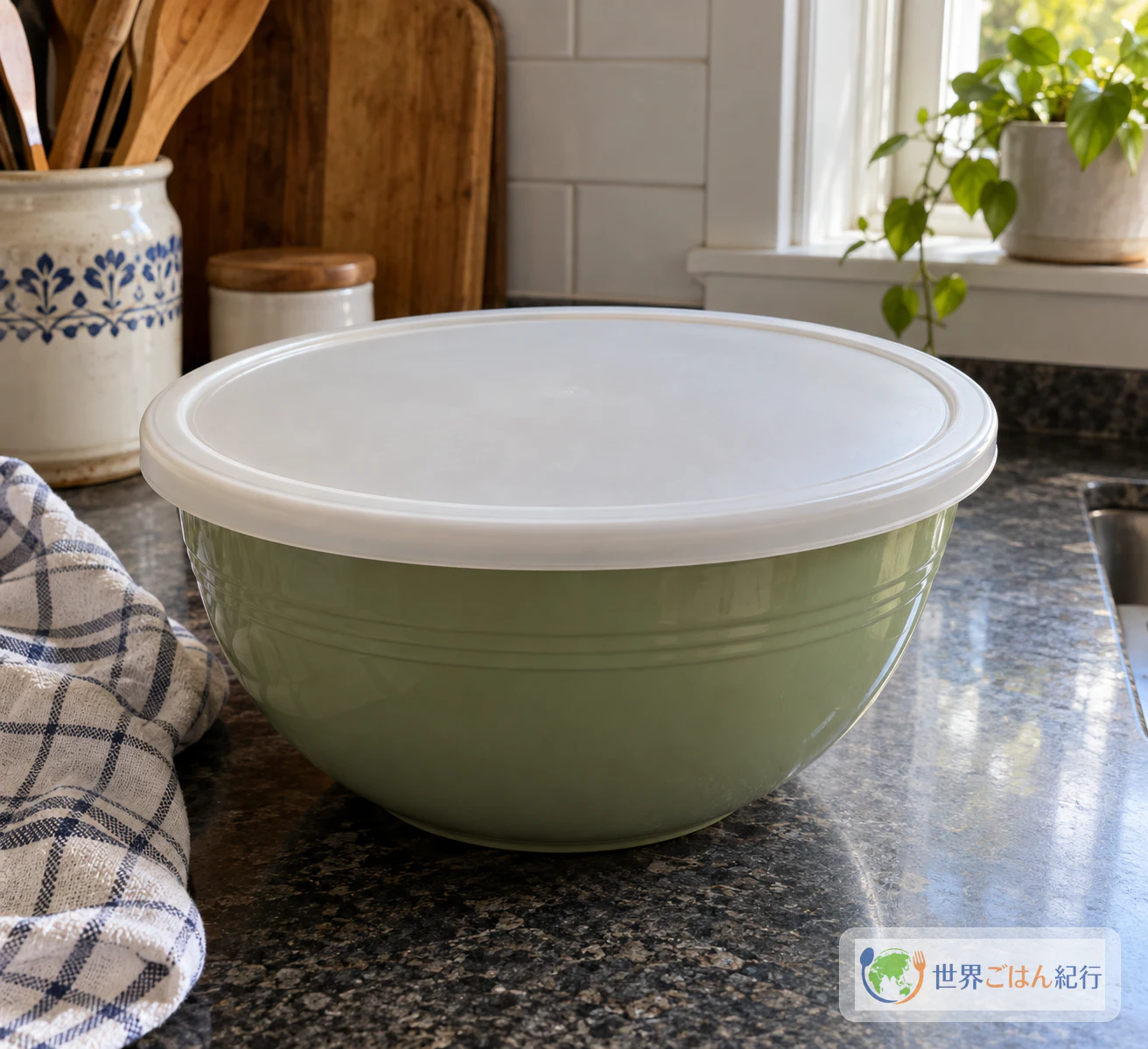
- Two mixing bowls
- Whisk
- Measuring cups and spoons, and a kitchen scale
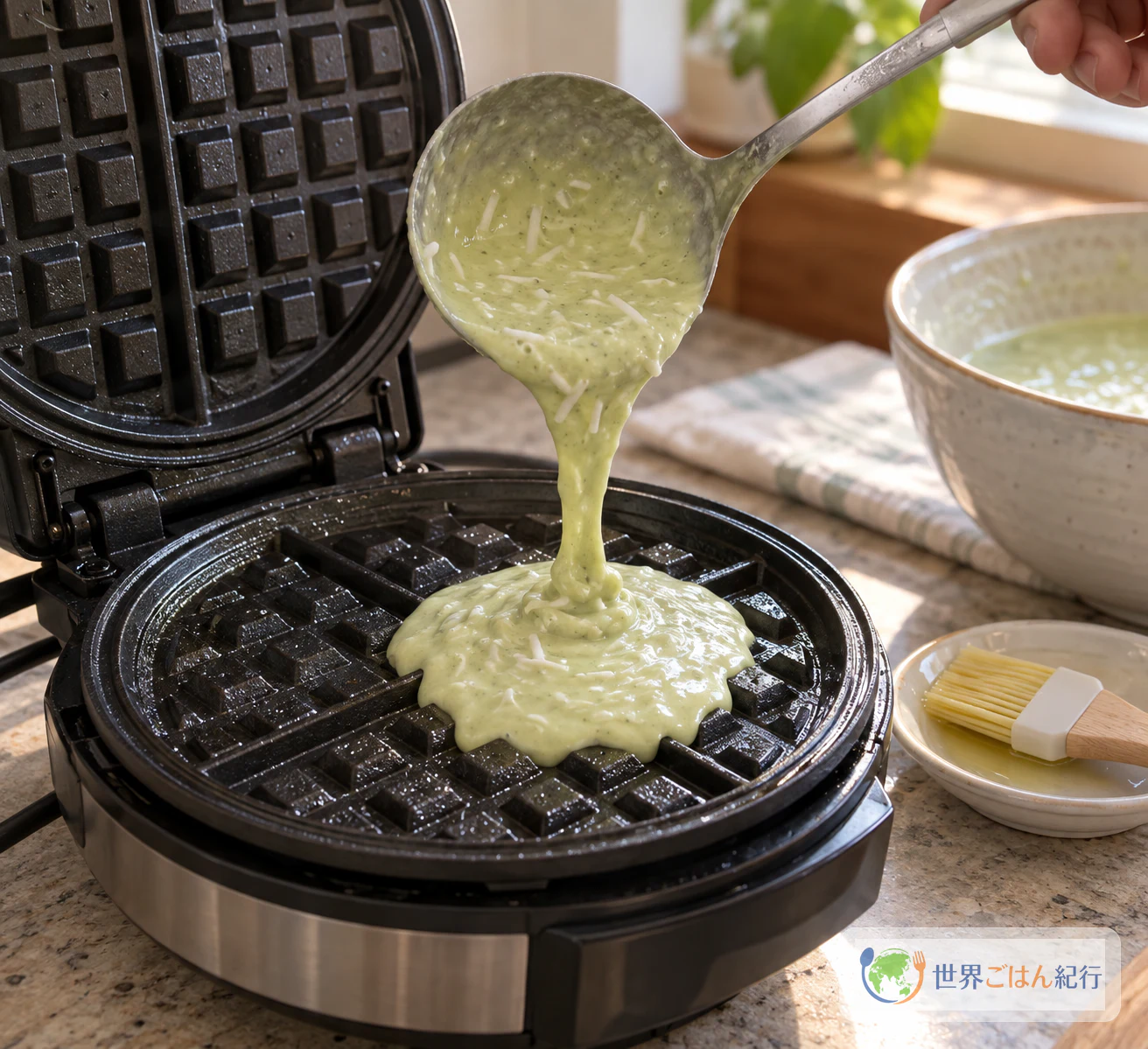
- Ladle
- Pastry brush, for the butter
Choosing and Substituting Ingredients
Pandan extract. Use food-grade pandan extract. Blending fresh pandan leaves with water and straining out the fibers is a different formula with different amounts, so it isn't swapped in here. Fresh and frozen pandan leaves and extracts may be sold at Asian supermarkets, but availability varies by place. Vanilla or matcha is not an equivalent substitute. Extracts differ in color from product to product, so judge by aroma rather than by how green the batter turns, and don't add other colorings to match a look.
Cornstarch. Use corn starch. Do not treat it as the same ingredient as potato starch; swapping it changes the texture.
Coconut flakes. Either sweetened or unsweetened flakes may be sold, so check the label when you buy. If you leave the flakes out, use 1 cup of coconut milk instead.
Flour. Use all-purpose flour. A different flour will change the texture.
This recipe contains wheat, egg and milk (butter), and it uses coconut. Check the ingredient lists and any shared-facility or production-line statements on coconut milk, coconut flakes, pandan extract and other packaged ingredients.
Eat It Warm, Straight from the Iron
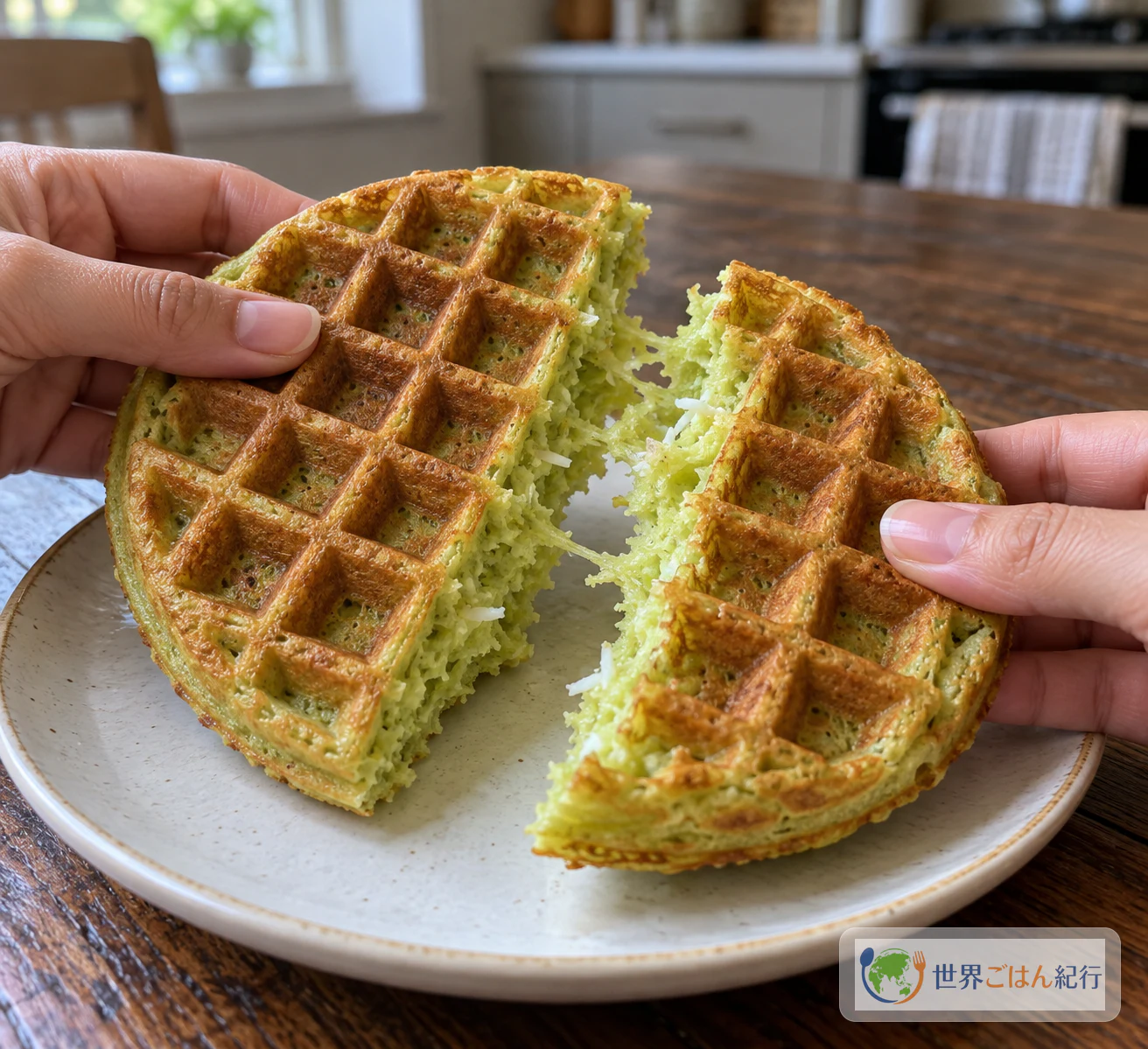
Tam To recommends eating these waffles freshly cooked and warm, noting that they can turn soggy as they sit. Serve each one as it comes out of the waffle maker, and tear it open by hand.
There is no tested guidance here on storing leftover waffles or leftover batter, and no reheating instructions. Make only what you plan to eat right away.
Troubleshooting
| What you see | What to check | What to do |
|---|---|---|
| The surface is still pale | The waffle isn't done yet | Keep cooking until the surface is golden brown, following your waffle maker's instructions on opening the lid |
| The waffle has gone soft and soggy | Time since cooking | Eat waffles freshly cooked and warm; cook and serve one at a time |
| Batter doesn't fill the plate, or spills over | Plate size and shape | The three-waffle yield is based on round waffles about 20 cm across. Adjust the ladleful to your iron rather than expecting the same amount to fit every maker |
| The green looks lighter or darker than photos | The pandan extract product | Extracts vary in color. Go by aroma, keep the 1/2 tsp amount, and don't add coloring |
| Fine flecks throughout the waffle | Coconut flakes | This is expected; the flakes are part of the batter |
Variations Within the Recipe
- Plain: the version shown here, with no sauce or sugar on top.
- Honey, syrup or powdered sugar: Helen Le lists these, along with other toppings, as serving options. Add them at the table; they are not part of the base recipe.
- Without coconut flakes: Helen Le suggests 1 cup of coconut milk in place of the flakes.
- Keep the pandan amount steady: if the color seems faint, don't increase the extract to chase a brighter green. The aroma is the point.
Frequently Asked Questions
What kind of snack is bánh kẹp lá dứa?
In this article, it is a thick pandan and coconut waffle cooked in a waffle maker, which Helen Le classifies as a Southern Vietnamese snack. The same name is also used for a thin, crisp pandan wafer similar to a pizzelle, which the Vietnamese Cuisines author treats as a separate thing.
I can't find pandan extract. Can I use fresh pandan leaves?
Some recipes, such as Tam To's, blend fresh leaves with water and strain them, but that is a different formula with its own amounts. This recipe is based on food-grade pandan extract, so look for that first. Vanilla or matcha won't give the same flavor.
Can I use potato starch instead of cornstarch?
They aren't treated as the same ingredient here. Swapping changes the texture, so use cornstarch for this recipe.
How do I know when a waffle is done?
Cook until the surface is golden brown. The recipe gives no fixed temperature or cooking time, so follow your waffle maker's instructions and judge by color.
How long does the whole recipe take?
The batter rests for 15 minutes. Helen Le's card lists prep, cook and rest times that don't add up to its stated total, so no total time is given here. Cooking time depends on your waffle maker, since the three waffles are cooked one after another.
Why 240 ml of coconut milk and not 1 1/4 cups?
The recipe card shows both, but they aren't equal. This article uses the 240 ml figure as written and doesn't convert it.
Why eat them right away?
Tam To recommends eating them fresh and warm to avoid sogginess. Storage and reheating guidance isn't provided here.
Sources
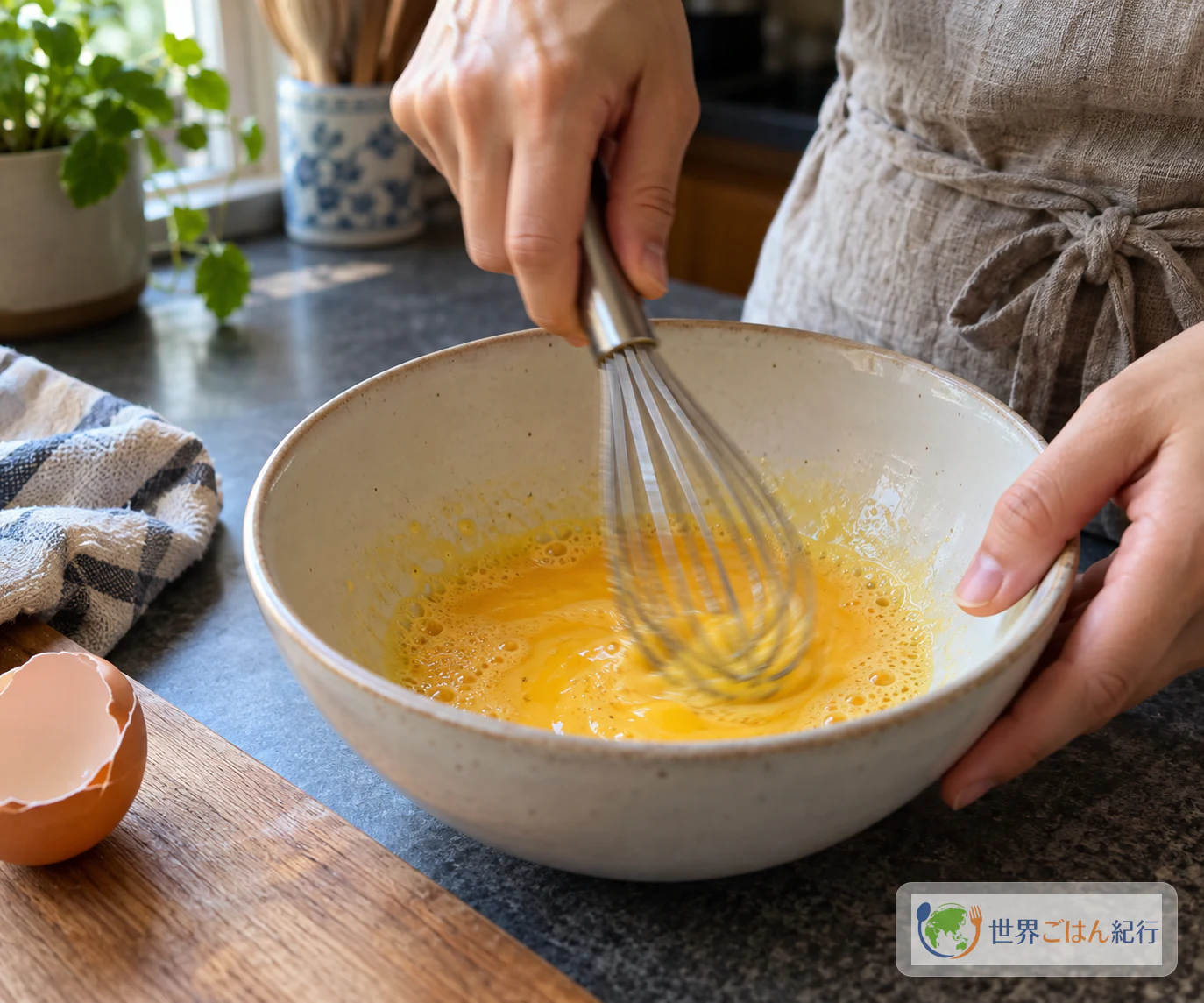
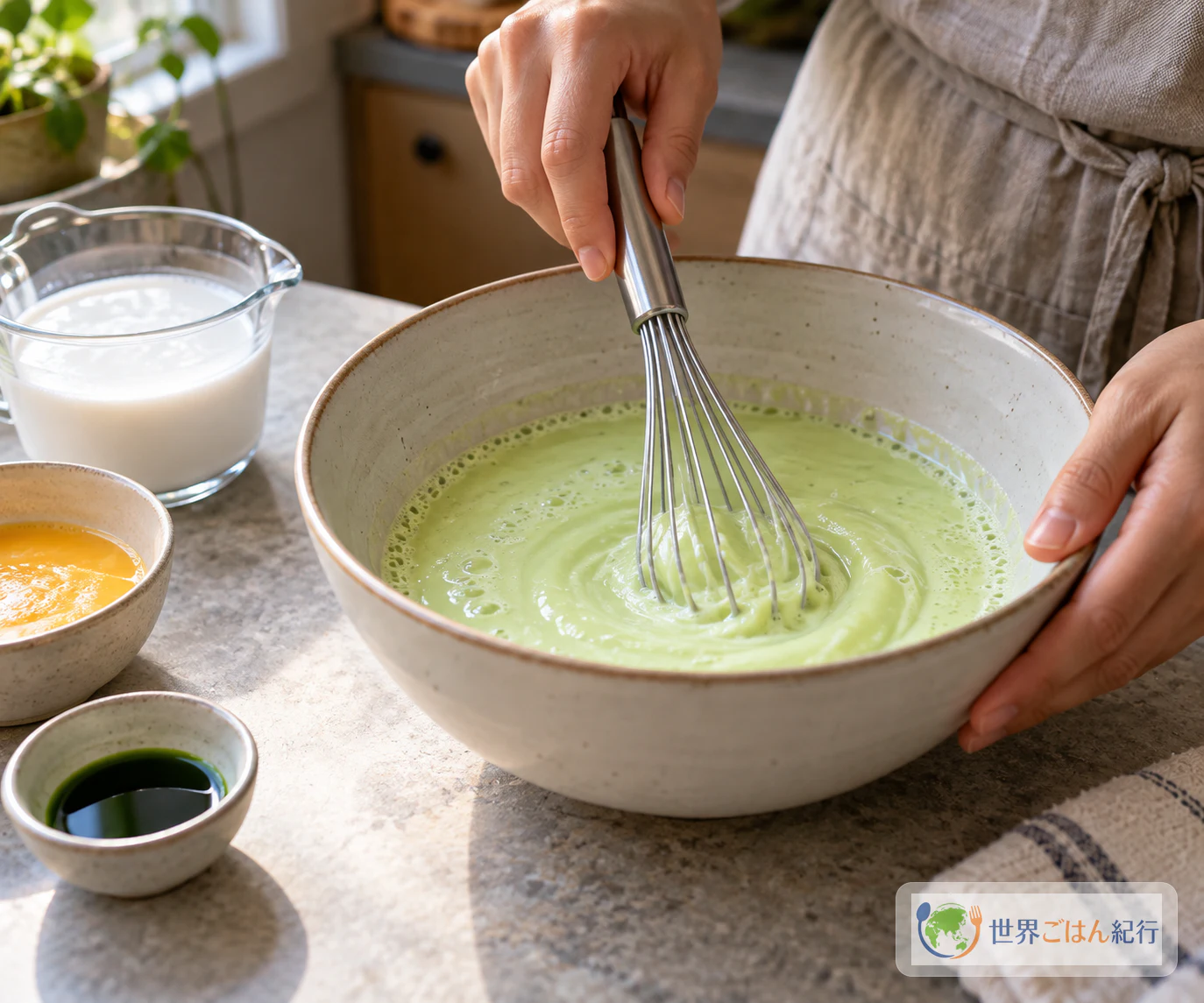
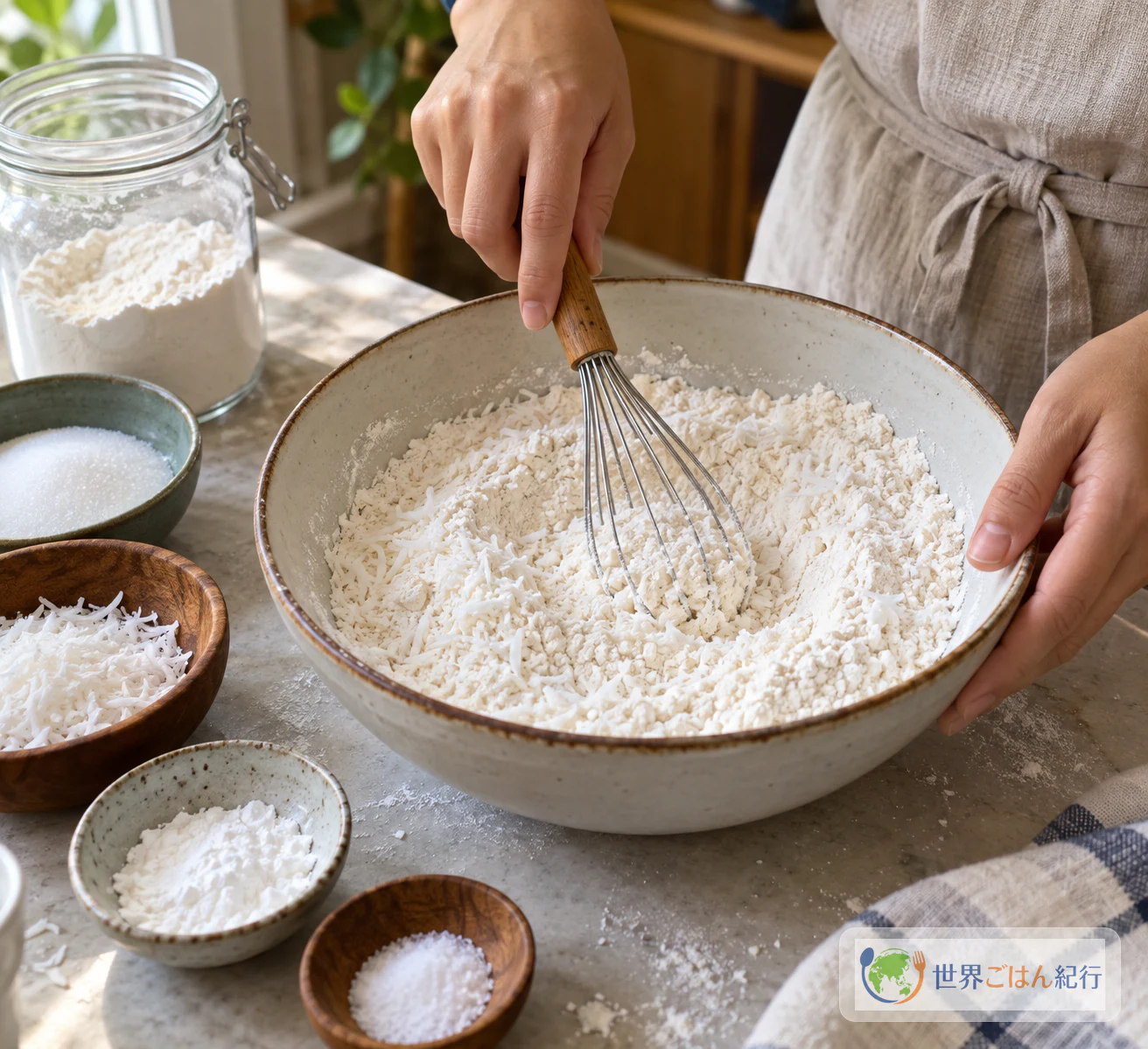
- Helen Le, "Bánh kẹp lá dứa – Coconut Pandan Waffles," Helen's Recipes. The recipe this article follows: the Southern Vietnamese snack classification; the yield of three waffles about 20 cm / 8 inches across; the ingredient amounts; the method of beating the egg, adding coconut milk and pandan extract, mixing the dry ingredients separately, combining, resting 15 minutes and cooking in a preheated, buttered waffle iron until golden brown; and the serving options. https://helenrecipes.com/recipe-72-banh-kep-la-dua-coconut-pandan-waffles/
- Vietnamese Cuisines, "Bánh Kẹp Lá Dứa – Vietnamese Pandan Waffle Recipe." The author's distinction between a chewy-centered pandan waffle and a lighter, crisp pandan pizzelle of the same name, and the author's personal account of developing a crisp-outside, chewy-inside version from their mother's favorite recipe. This recipe's amounts are not used. https://vietnamesecuisines.com/vietnamese-pandan-waffle-recipe/
- Tam To, "Vietnamese Pandan Waffle (Bánh Kẹp Lá Dứa)," Tam's Recipes. The author's memory of eating the snack at night markets with sugarcane juice, the recommendation to eat it freshly cooked and warm to avoid sogginess, and a separate fresh-leaf pandan method. This recipe's amounts are not used. https://tamonde.com/2026/02/05/vietnamese-pandan-waffle-banh-kep-la-dua/