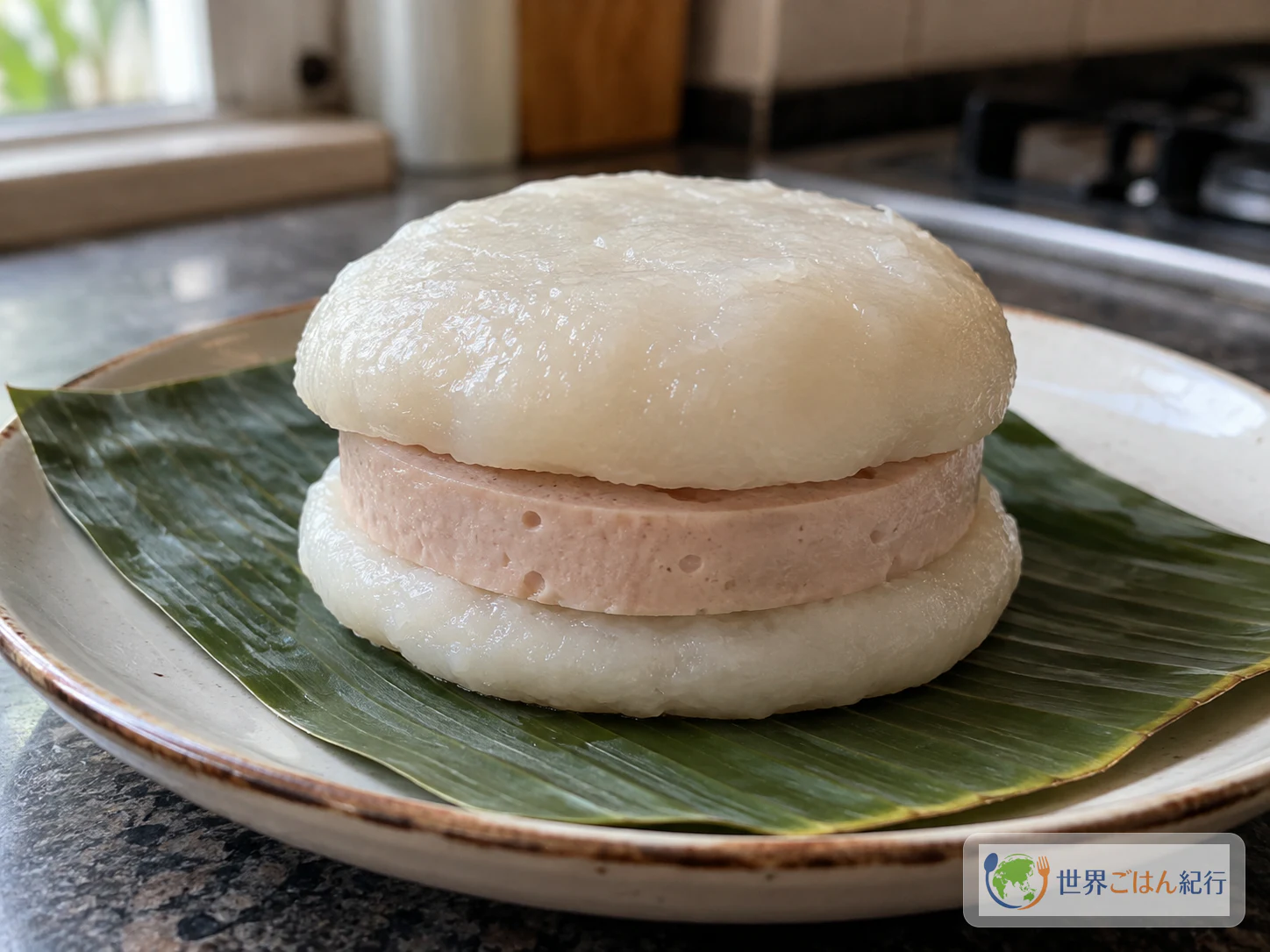
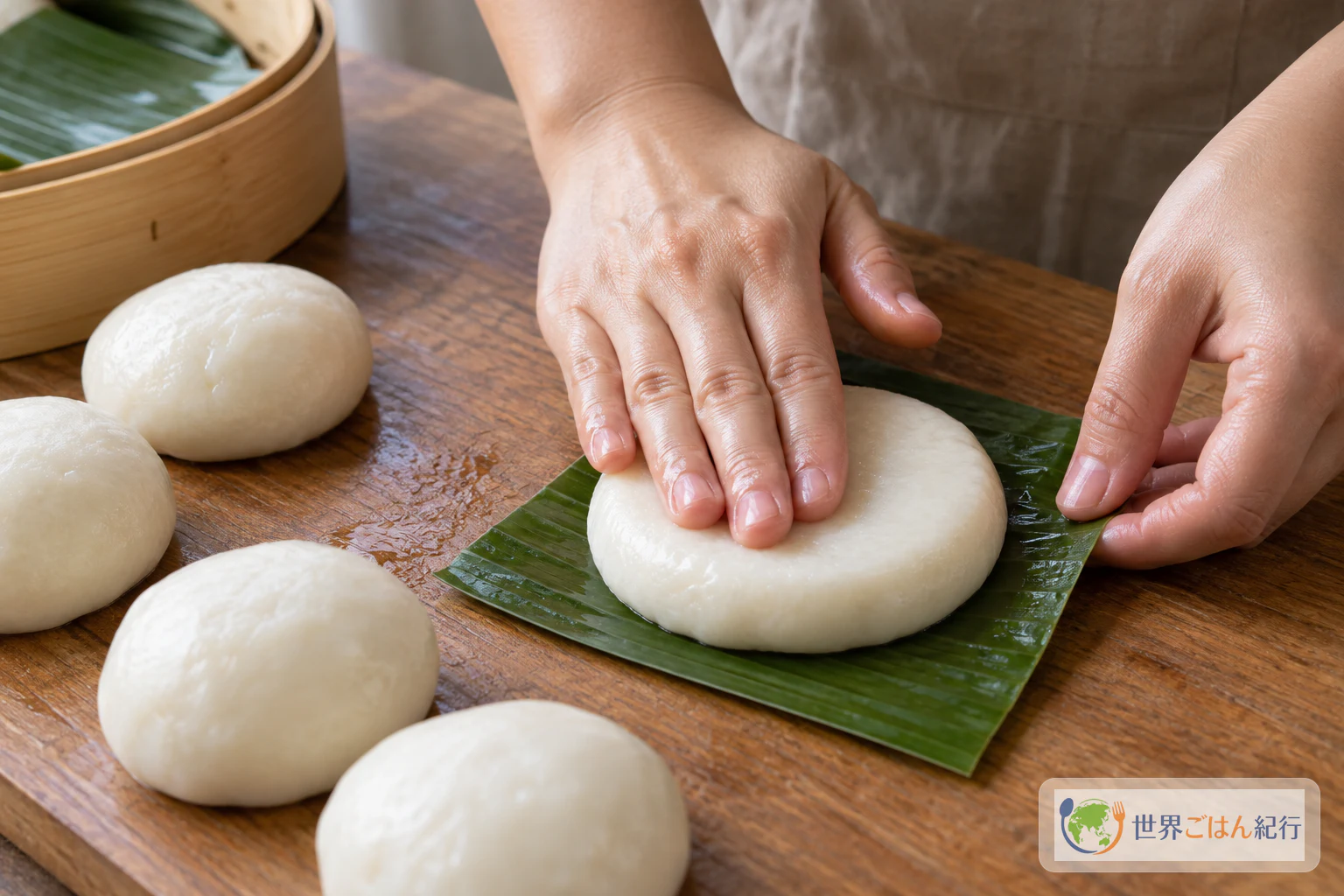
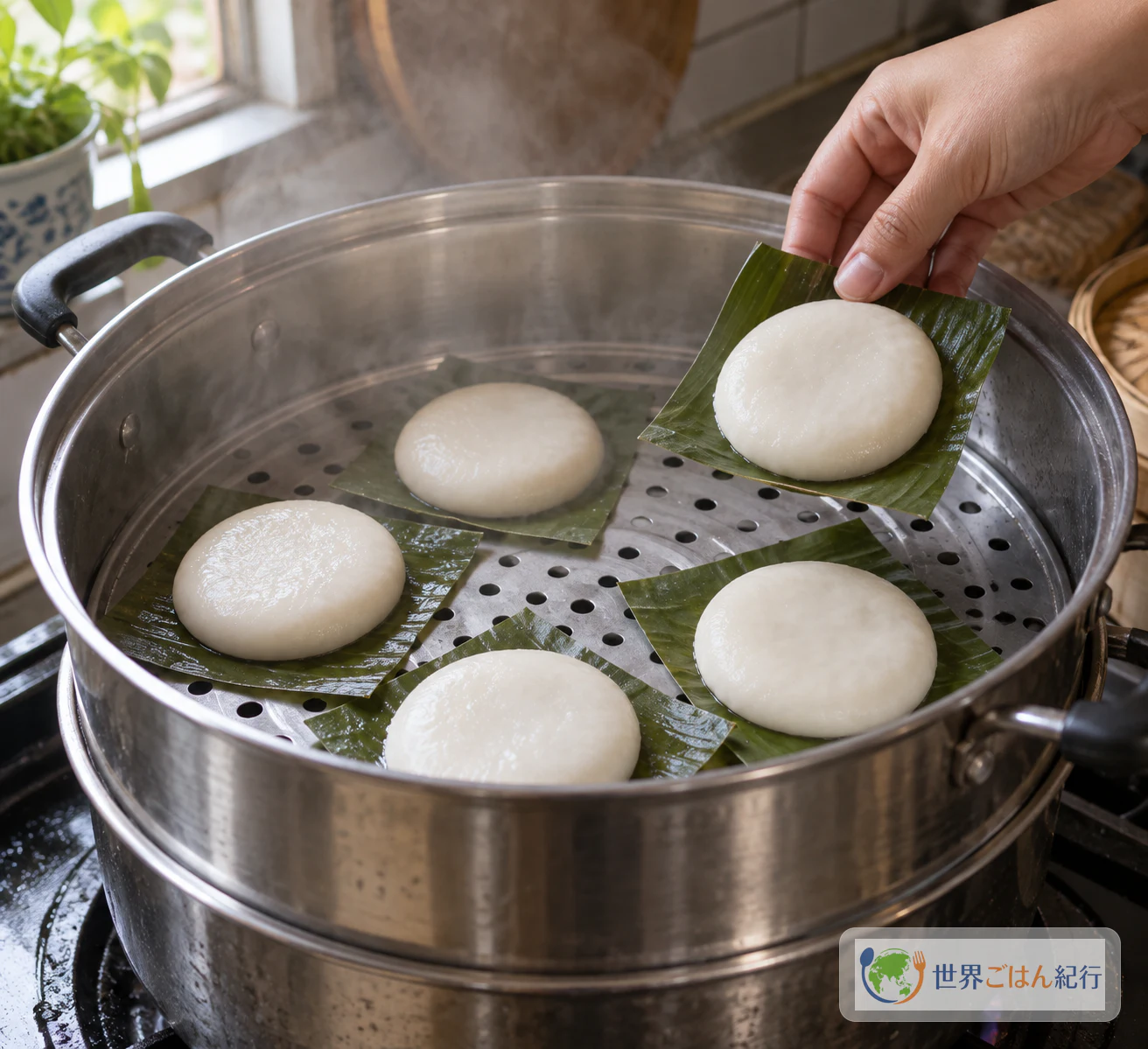
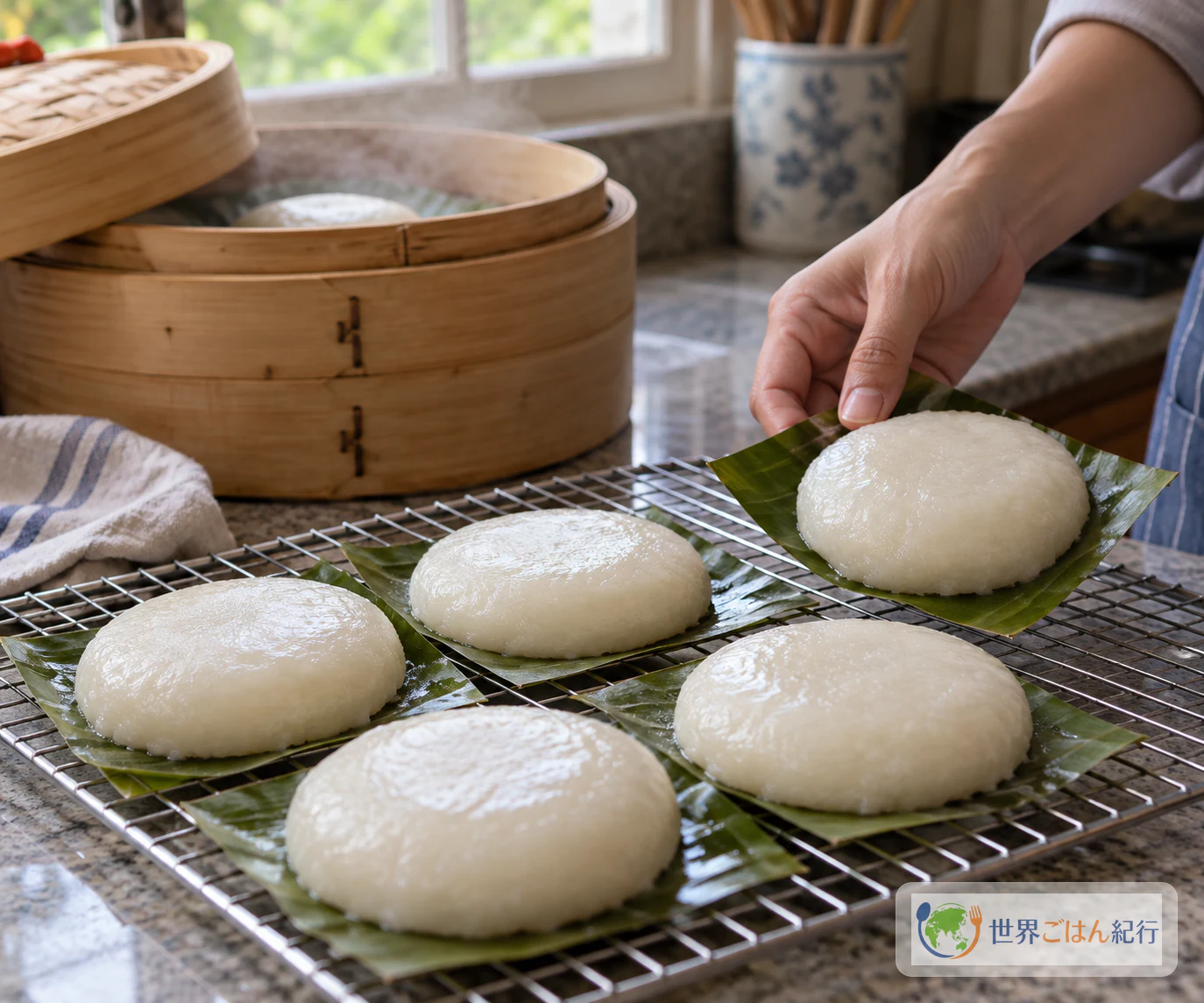
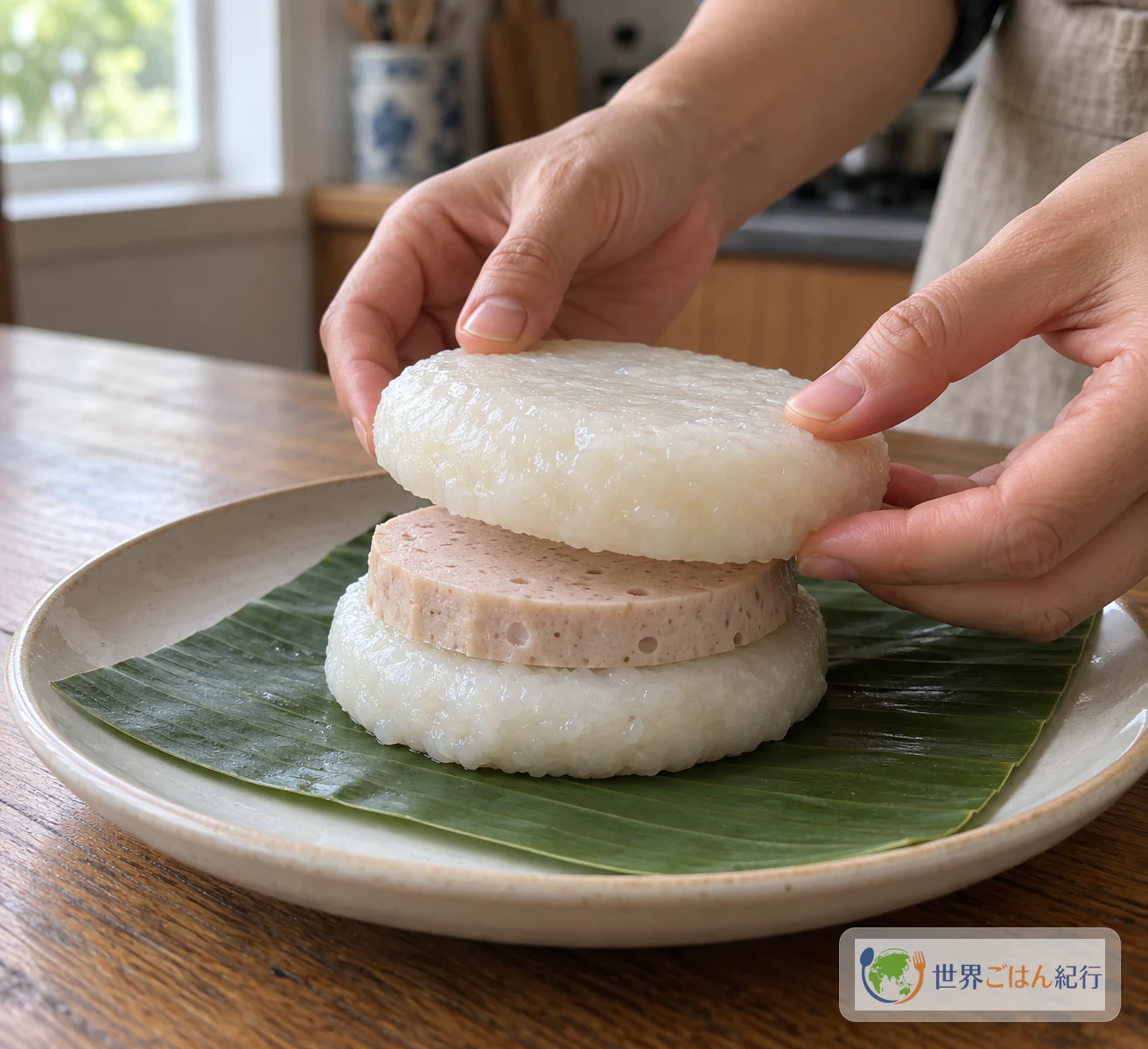
Steam rises from the pot, and on small squares of banana leaf, flat white discs of rice dough swell and turn glossy. Once they've cooled, two of them close around a slice of giò lụa, the Vietnamese steamed pork sausage, and you have a snack you can hold in your hand. This is bánh giầy, a round steamed glutinous rice cake from Vietnam. Its dough is plain and mild, and that's exactly why it works so well with savory fillings. When it's paired with sausage, it goes by the name bánh giầy giò. For more dishes from the same country, see our Vietnam page.
The name is written bánh giầy, bánh giày or bánh dày. All three spellings point to the same round rice cake.
About Bánh Giầy
Festival Offering and Everyday Snack
Most of the time, bánh giầy is eaten as a pairing food. It's commonly served in pairs around a piece of giò lụa, with chả quế (cinnamon pork), or with pork floss.
The cake also has a ceremonial role. The Hung Kings' Commemoration Day falls on the tenth day of the third lunar month, and its festival procession offers bánh chưng and bánh giầy. Festival tellings link the two cakes with Prince Lang Liêu and the symbolism of sky and earth. In 2012, the worship of the Hung Kings was recognized as intangible cultural heritage of humanity.
The two cakes are named together, but they are different dishes. Bánh chưng is a square, leaf-wrapped glutinous rice cake, while bánh giầy is the small round cake you'll make here. So the dish has two lives, one in the procession and one as an everyday snack with sausage, and this recipe is the everyday one.
Pounded Rice and Rice Flour
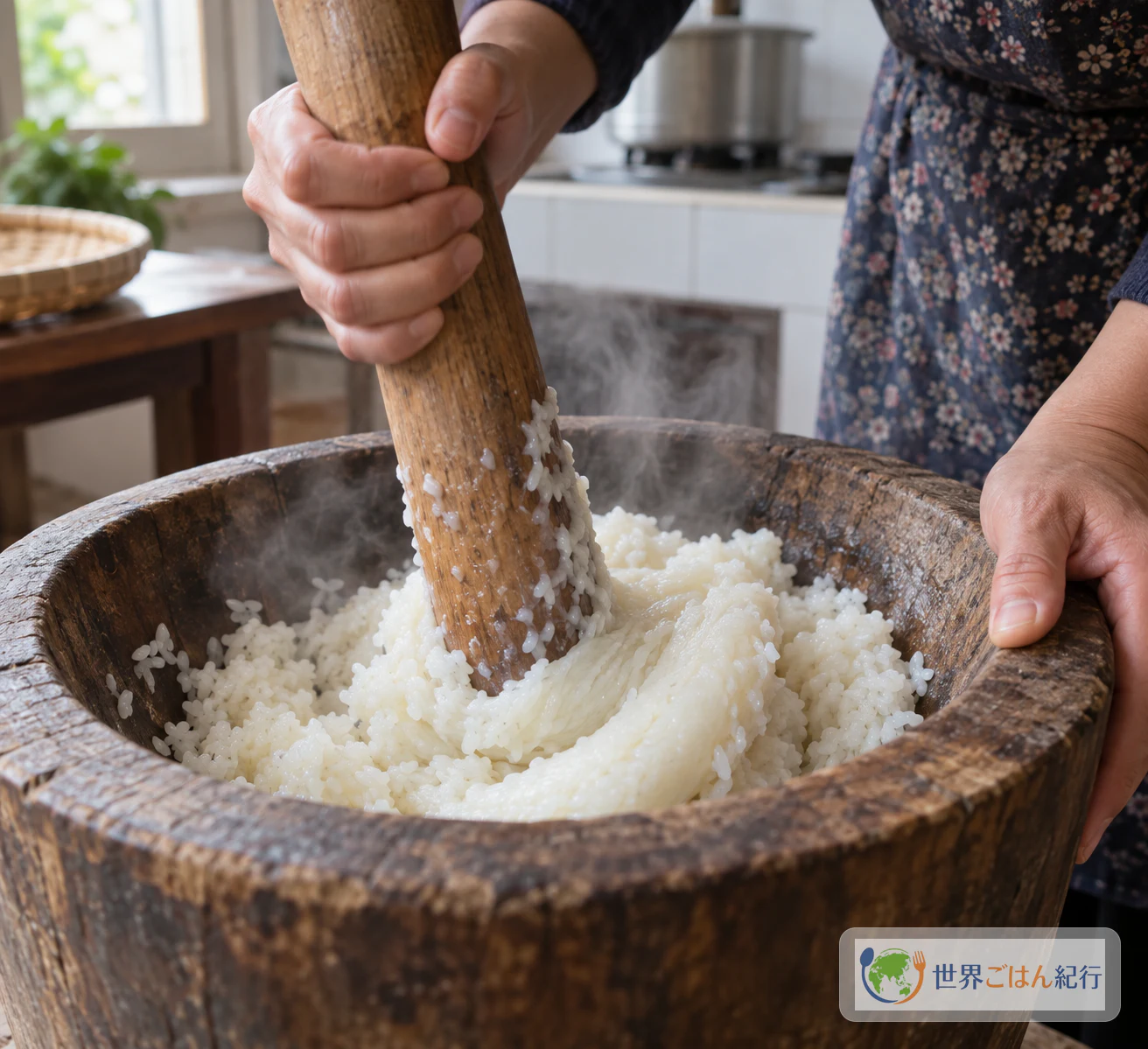
The traditional method starts with cooked glutinous rice. It's pounded while still hot until it turns into a cohesive, sticky mass, and then shaped into cakes. It's labor-intensive work.
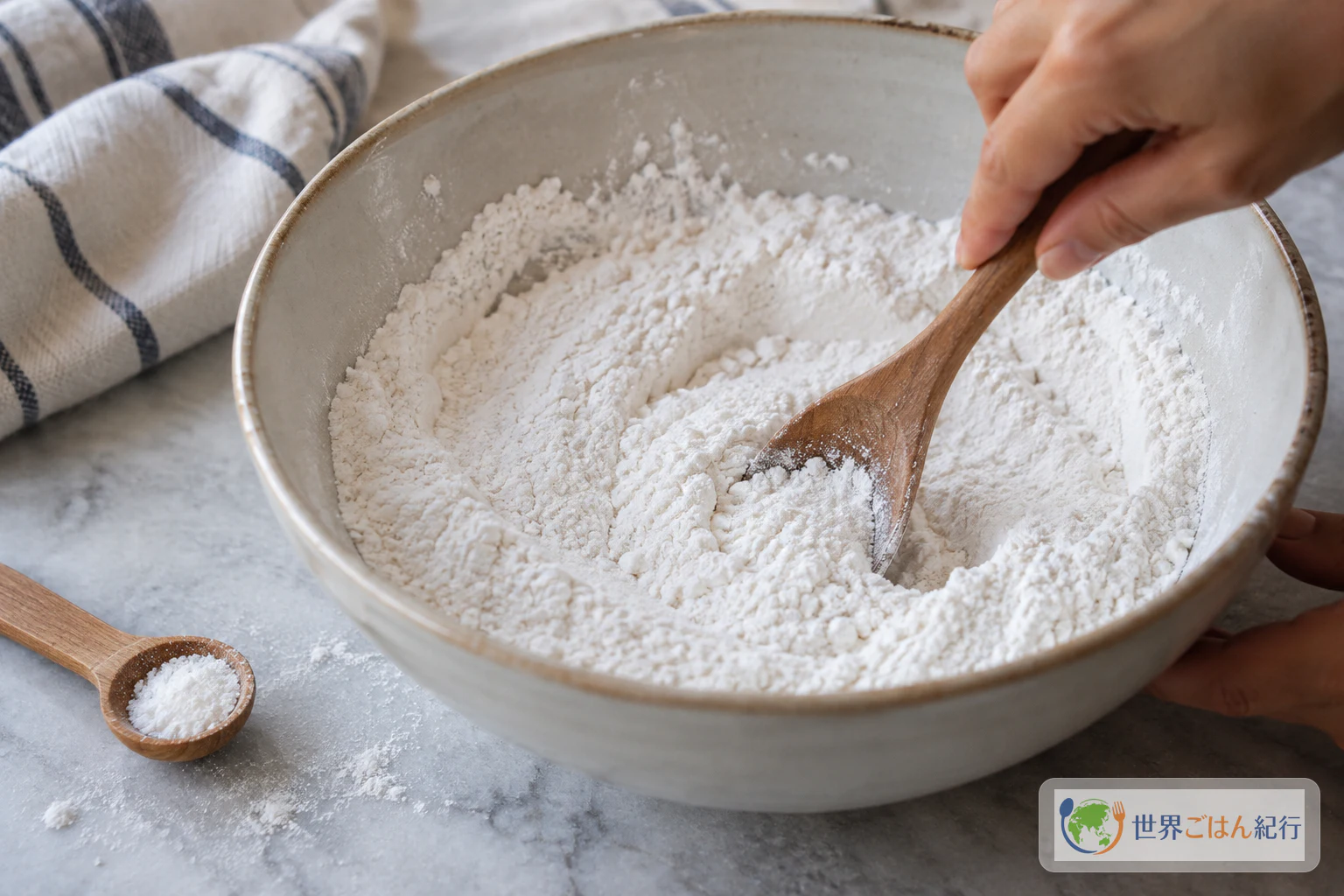
This recipe is a home shortcut. Glutinous rice flour and a little non-glutinous rice flour are mixed with salt and warm water, then shaped and steamed, which makes the cake easy to manage in an ordinary kitchen.
Ingredients: Glutinous Rice Flour with a Little Rice Flour (about 10 cakes)
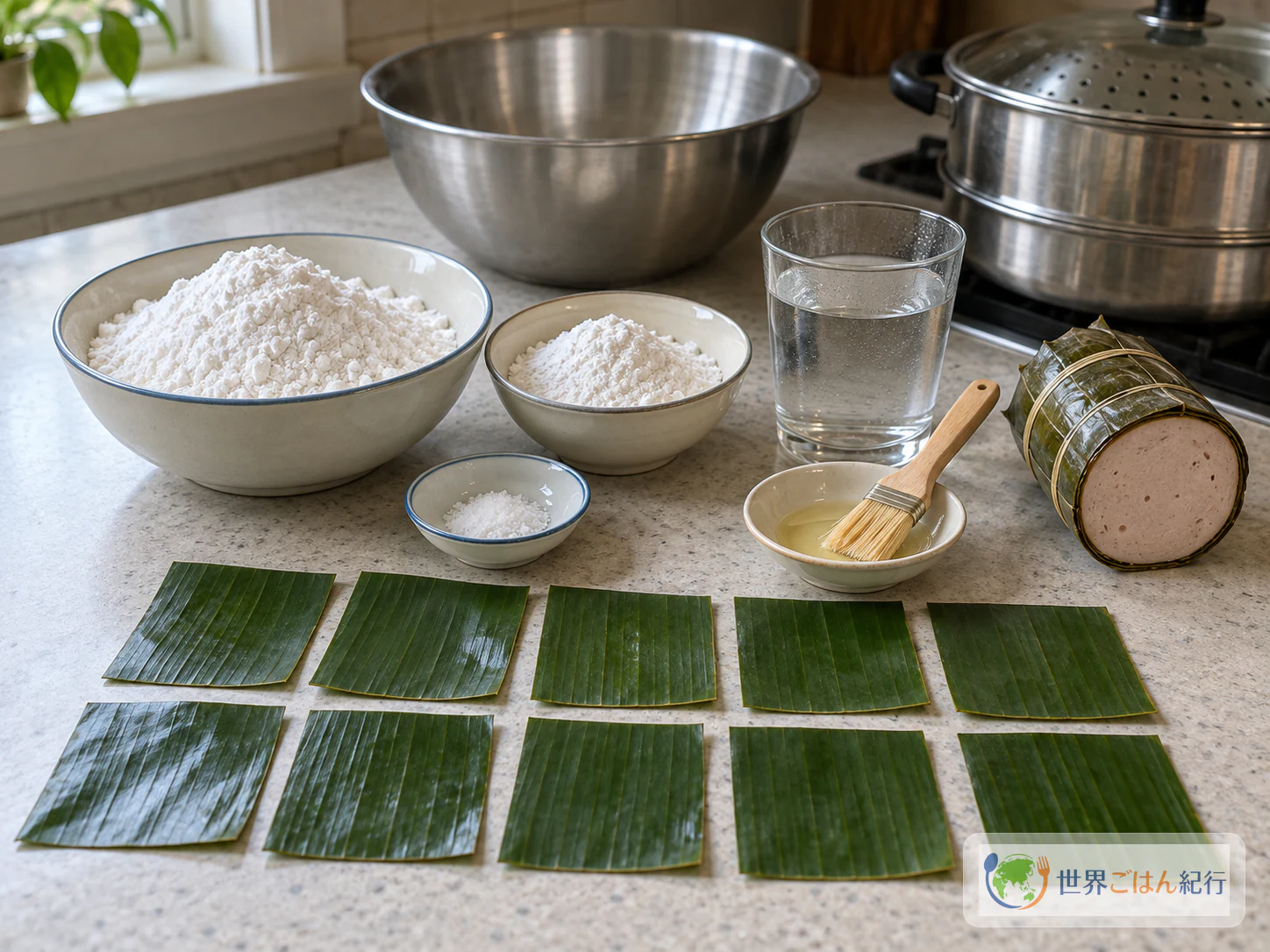
Equipment
- Mixing bowl
- Steamer with a lid (or a pot with a steaming rack and lid)
Choosing Flour, Leaves and Fillings for Bánh Giầy
Flour. Look for packages labeled glutinous rice flour (sweet rice flour) and, separately, rice flour made from ordinary non-glutinous rice. The labels look alike, so read them carefully before you buy. Japanese shiratamako is also a glutinous rice product, but it's made differently and won't stand in directly for glutinous rice flour.
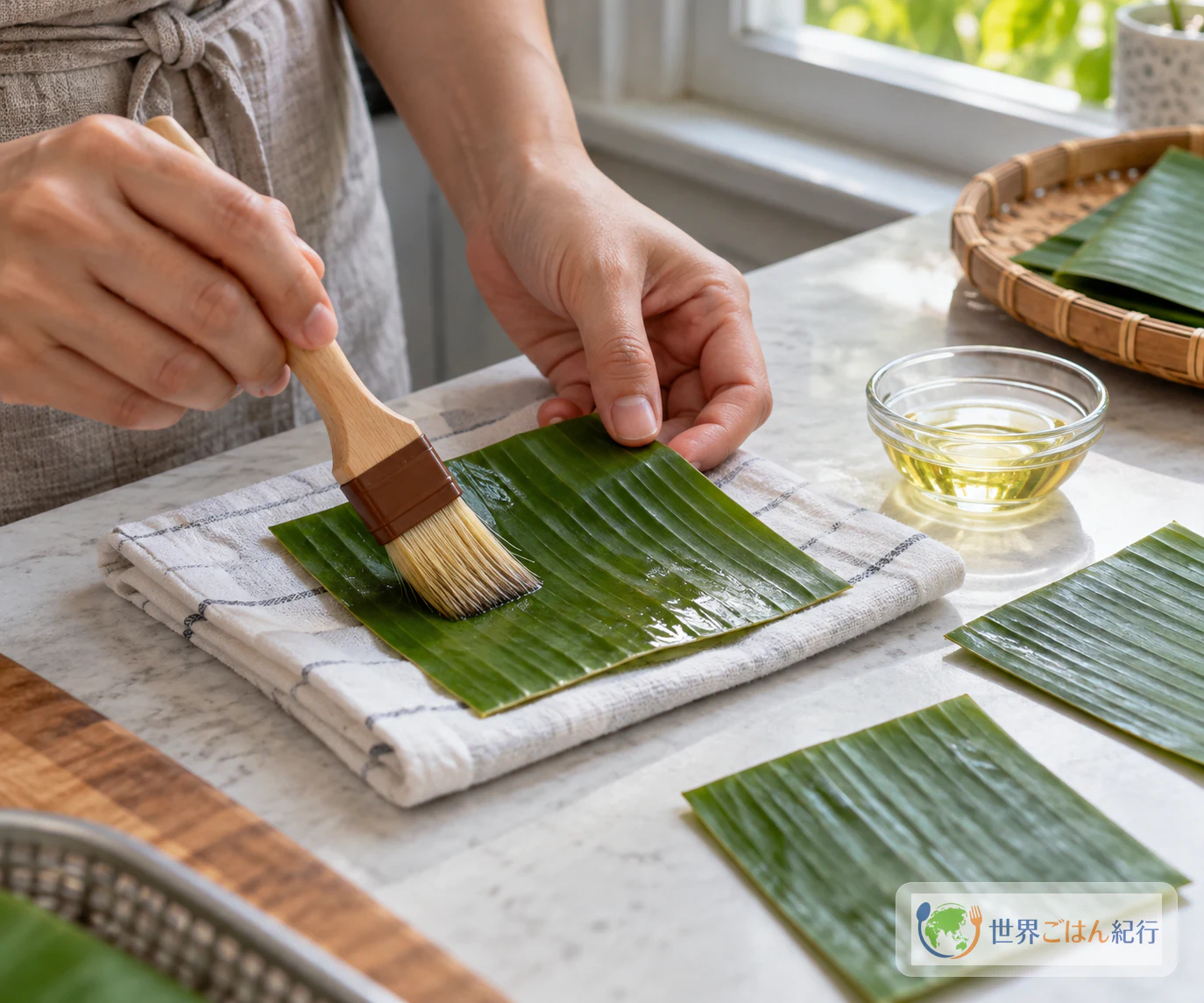
Banana leaves. If you can't find them, use parchment paper. It holds the cakes in the steamer just as well, though you'll miss the leaf's aroma. Oil it thinly, the same way you would a leaf.
Fillings. Giò lụa is the classic pairing. The dough itself contains only rice flour, salt and water, so it's plant-based, and a meat-free version is easy: fill it with vegan sausage, seitan or seasoned tofu.
Allergens. Allergens vary from one giò lụa product to another, so check the label. The dough is rice-based, but flour can still pick up cross-contact during milling or production. If that matters to you, check the flour packaging too.
Method: Steaming Ten Soft White Discs
Get the steamer ready to boil and the leaves cut before you shape the dough. If all 10 cakes do not fit with space between them, steam in batches.
Fixing Bánh Giầy Problems
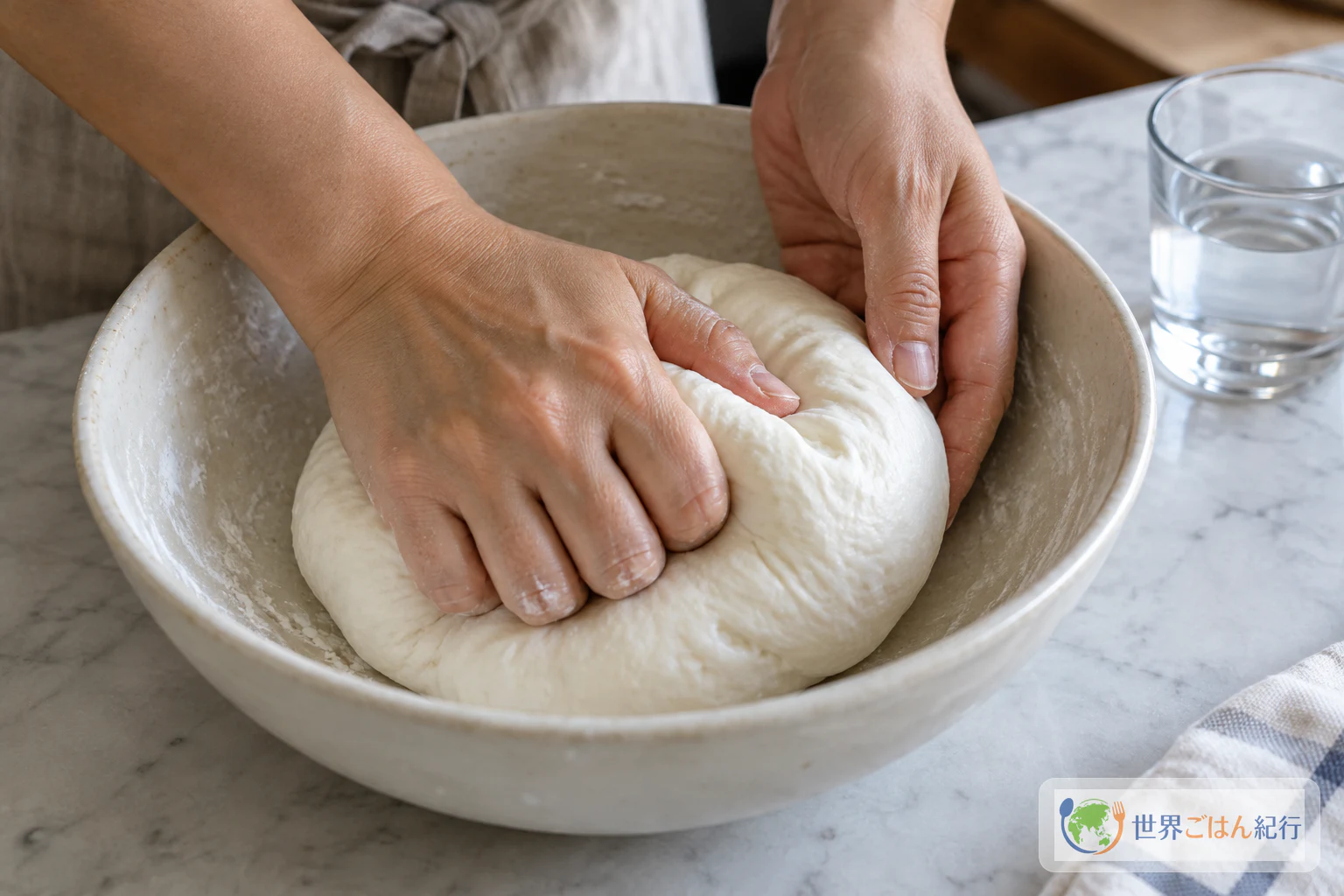
You have to judge the dough by touch. It's ready when it forms a single mass with no dry flour and doesn't cling to your hands. Rice flours absorb water differently from one brand to the next, so make small, slow adjustments rather than changing the recipe.
| Problem | Likely cause | What to do |
|---|---|---|
| Dough is dry and cracks | Water not yet absorbed evenly | Press and gather the dough by hand first so the flour takes up the water evenly. If it still cracks, add water only in very small amounts |
| Dough sticks to your hands | Water added too quickly | Add flour only a little at a time, knead lightly and check whether it comes together |
| Cakes stuck to each other in the steamer | Placed too close; they puff while steaming | Leave space between the leaves and steam in batches |
| Cakes tear when peeled from the leaf | Leaf not oiled, or peeled while hot | Oil each leaf thinly, and let the cakes cool before peeling |
| Shapes slump or spread | Discs pressed too thin | Keep each disc about 0.5 inches (1.5 cm) thick |
Serving, Storing and Varying Bánh Giầy
Bánh giầy is eaten by hand, as a pair of cakes around a filling. Giò lụa is the classic choice. Chả quế brings a cinnamon-scented pork, and a little pork floss (ruốc / chà bông) tucked between the cakes is another common match. Season the filling with salt and pepper if you like. There's also a sweet version, bánh giầy đỗ, filled with mung bean paste, but it uses a different formula and method.
The cakes taste best freshly made. Steamed rice-flour cakes shouldn't sit at room temperature for long, so refrigerate them promptly once they've cooled. To reheat, steam them until they're hot all the way to the center. How long that takes depends on how many cakes you're reheating, how thick they are and your equipment.
Frequently Asked Questions
Can I make it with glutinous rice flour only?
The recipe uses glutinous rice flour blended with a small amount of non-glutinous rice flour. Leaving out the rice flour changes the formula, so use the blend as given.
Why do other recipes use milk?
Some Vietnamese home recipes make the flour dough with unsweetened milk instead of water, and they have their own piece counts and steaming times. They're separate recipes, so follow each one on its own terms rather than mixing formulas.