Chẳm Chéo: A Pounded Dipping Salt from Vietnam's Northwestern Highlands
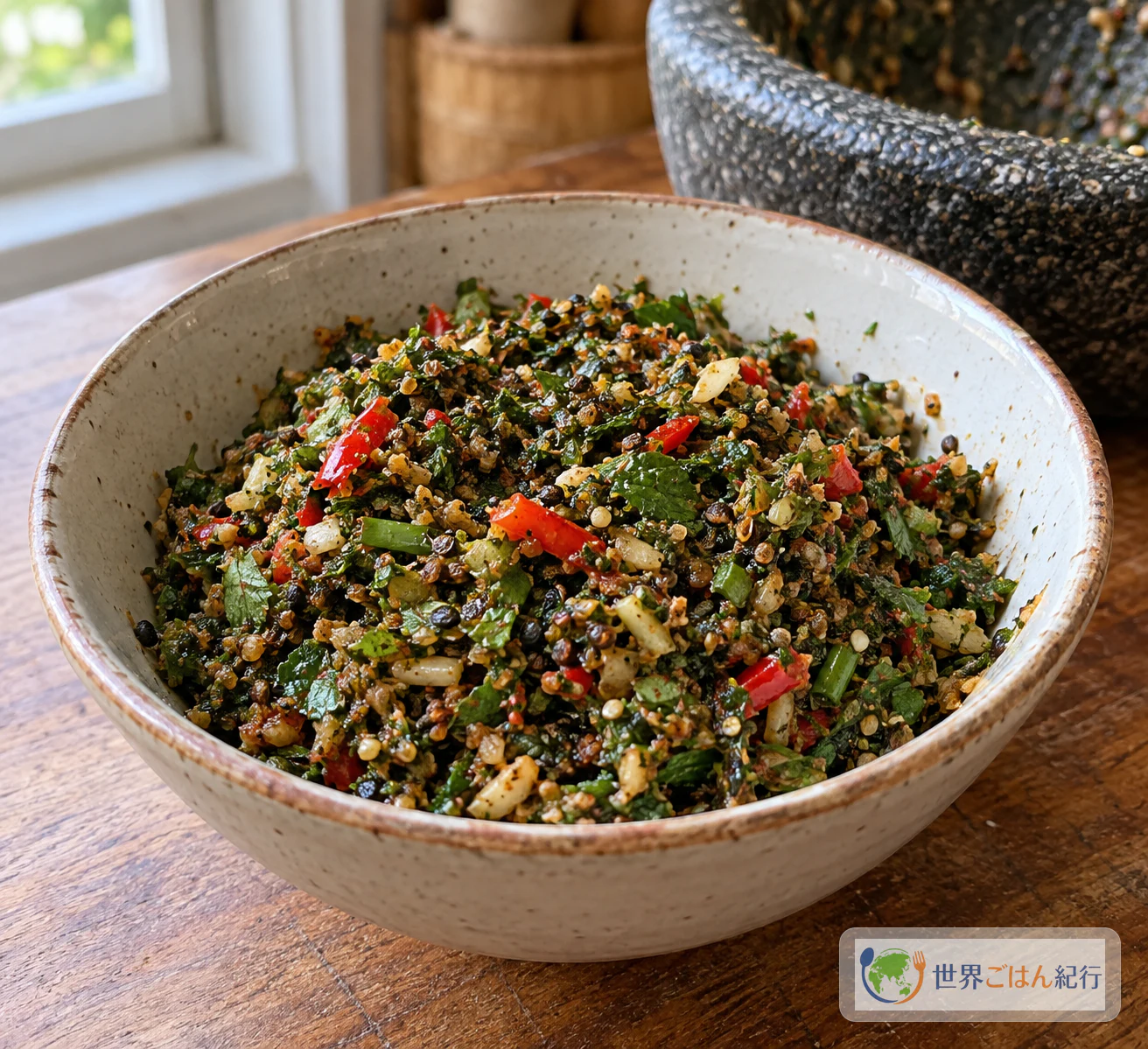
Chẳm chéo is a moist, finely pounded mix of spices, chilies, aromatics, salt and herbs, not a liquid sauce. Keep the three herbs distinct, keep mắc khén and hạt dổi as themselves, and add no water, fish sauce or oil.
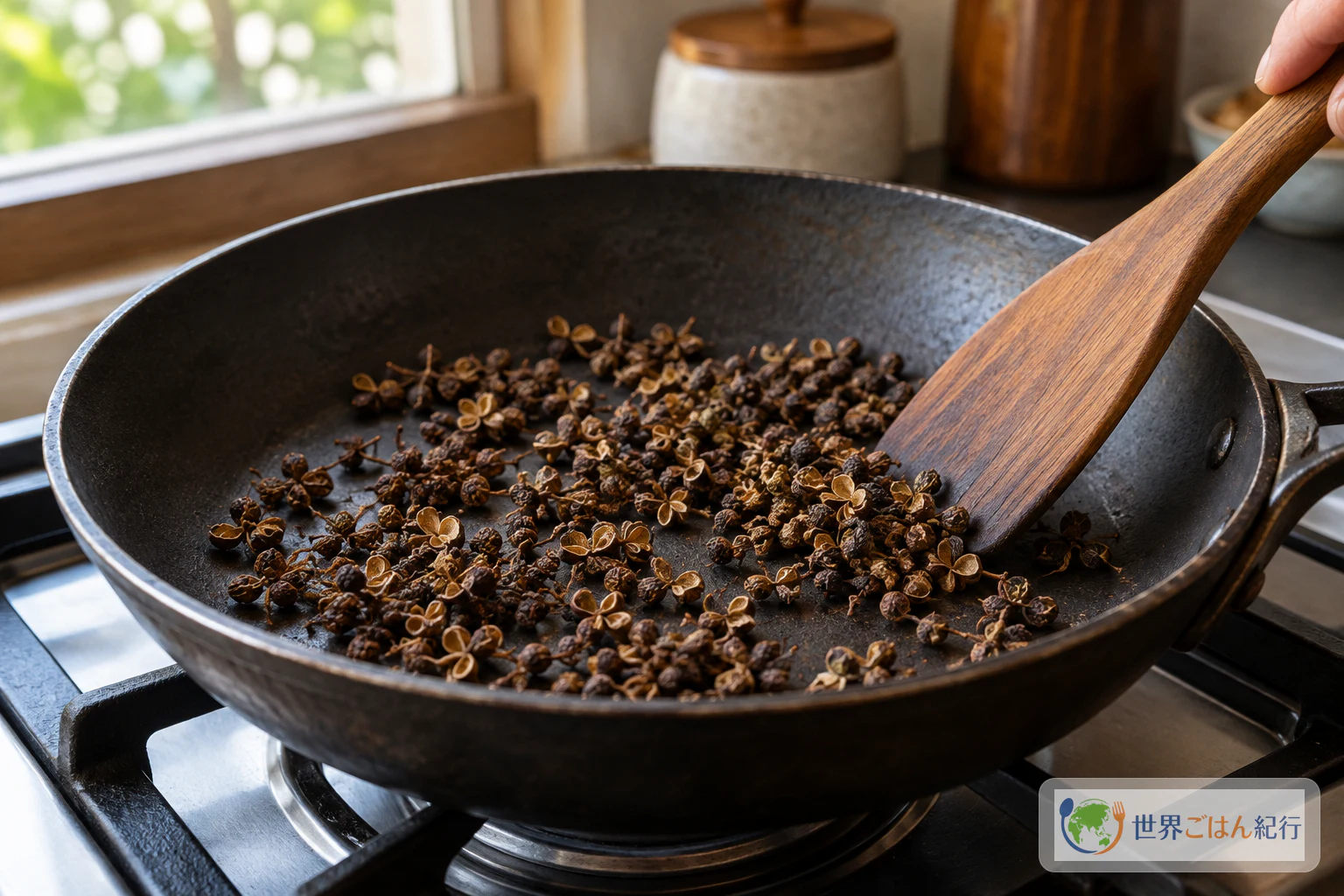
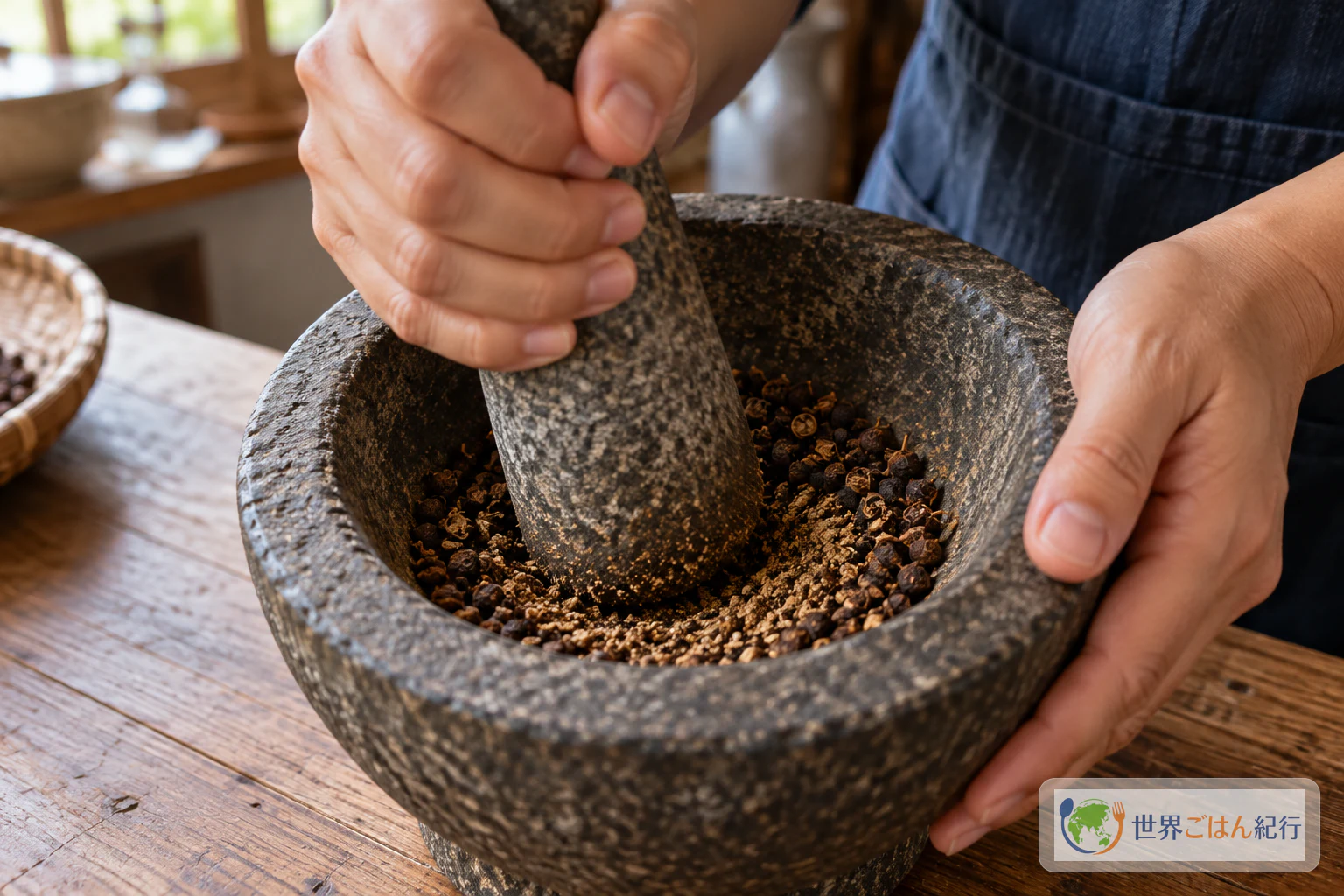
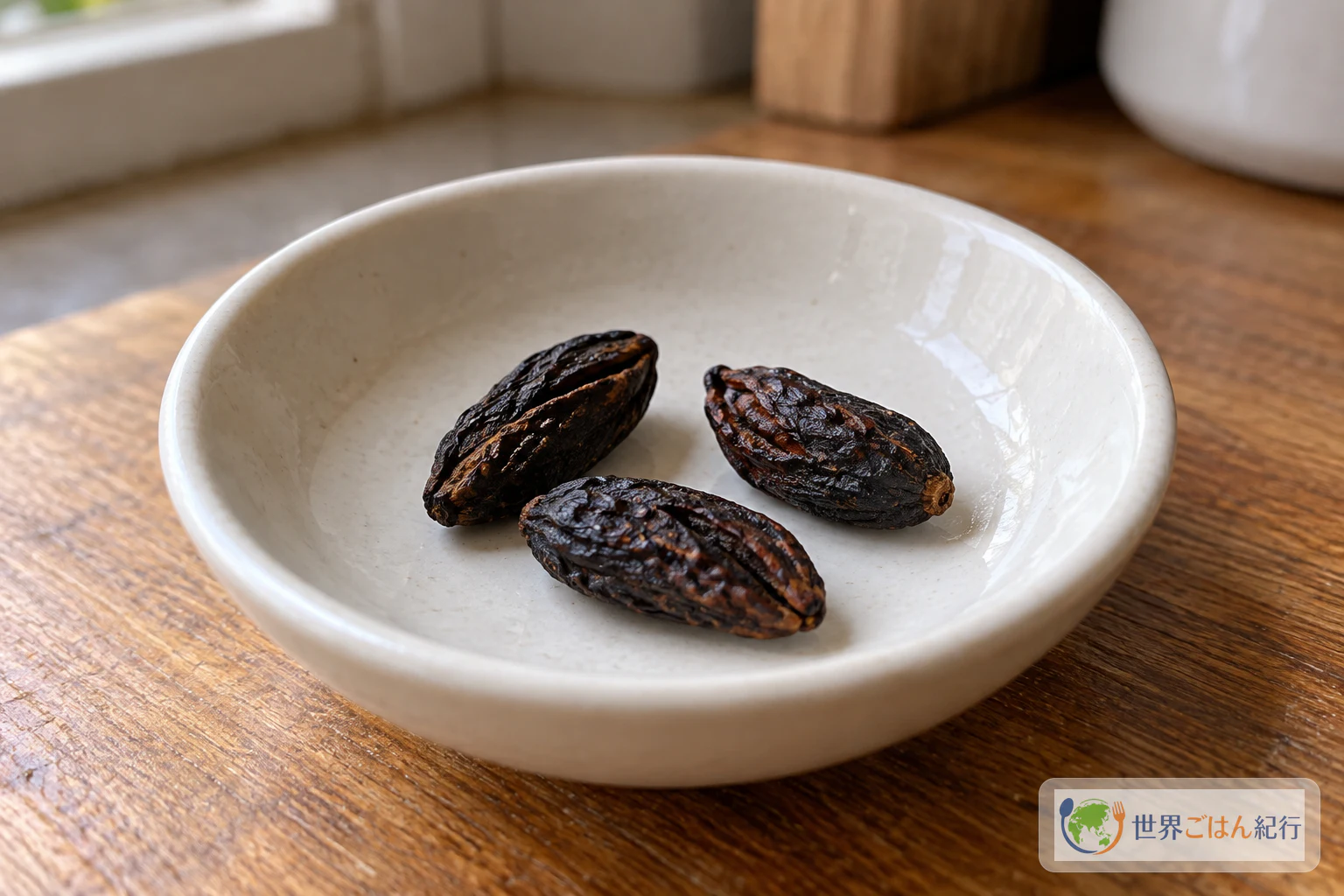
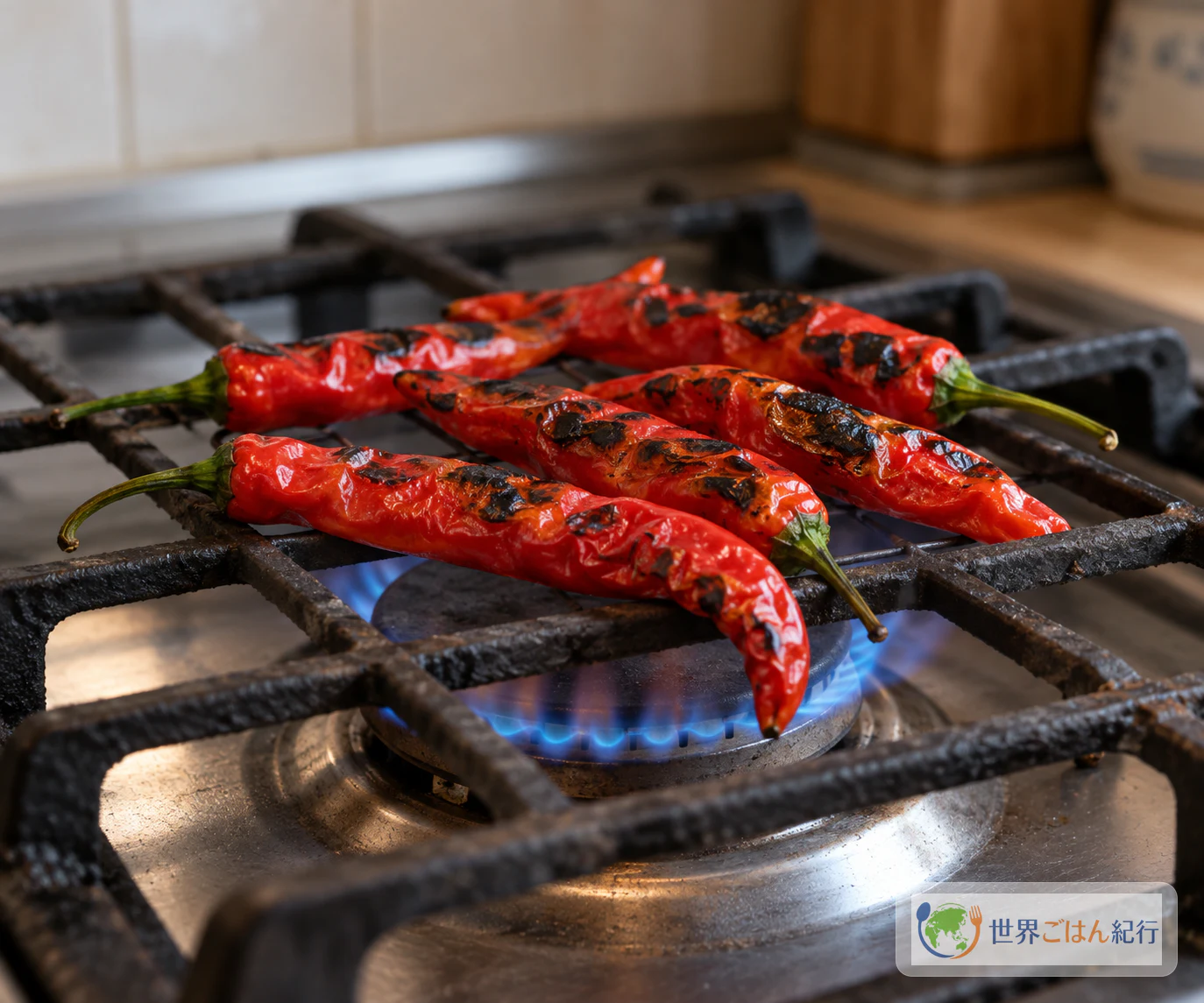
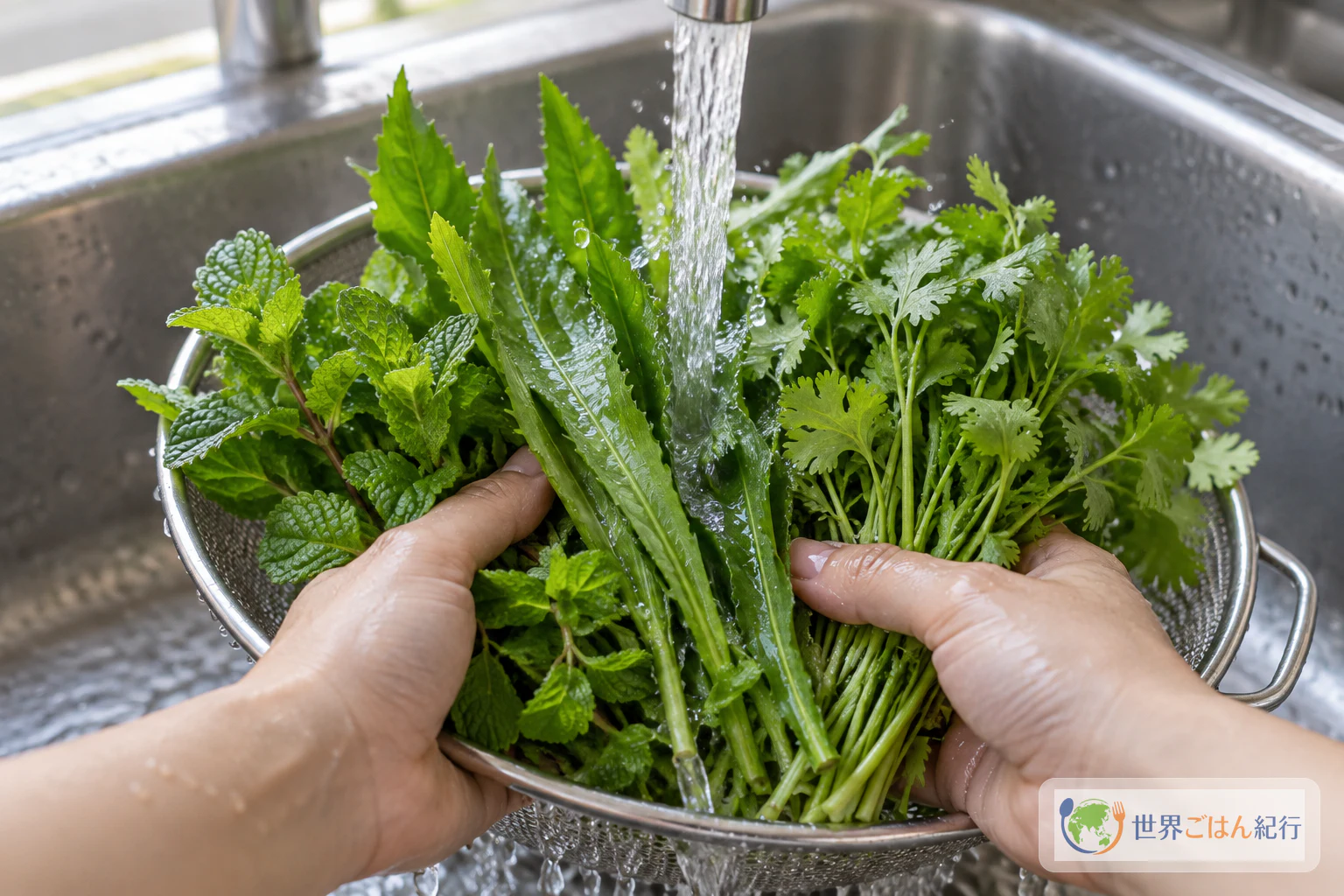
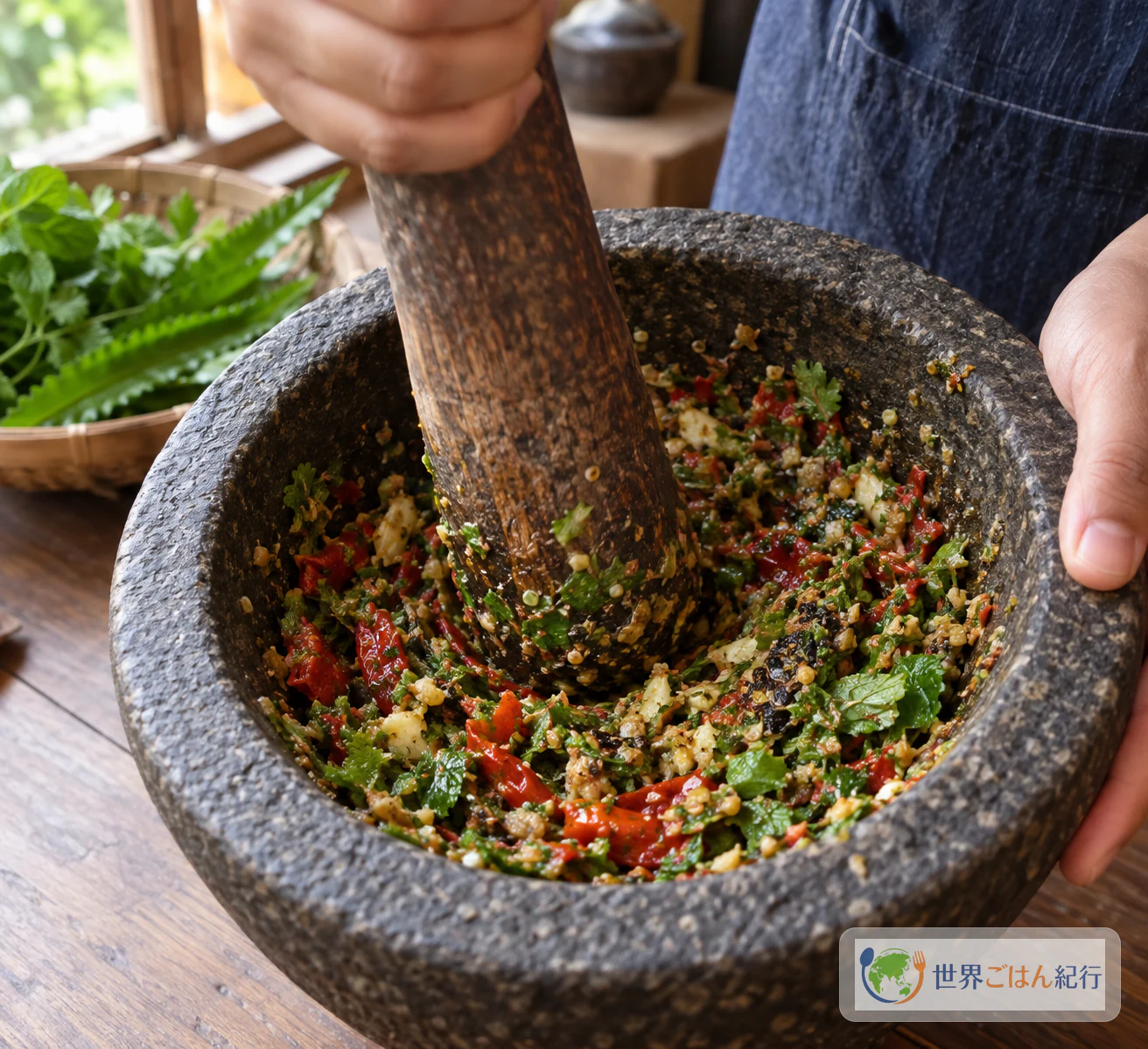
Whole mắc khén is stirred in a dry pan until it smells fragrant, then crushed to a powder. Two or three hạt dổi seeds are roasted until their aroma comes out, and fresh chilies are roasted until they just begin to wilt. Everything goes into a mortar with peeled garlic, a small piece of ginger, salt and a handful of washed herbs, and is pounded until it holds together as a fine, damp paste. That is chẳm chéo, a dipping condiment (thức chấm) from the mountains of northwestern Vietnam.
This article follows one written recipe: the version by Phạm Tân, published on HOA BAN FOOD. It keeps that recipe's qualitative method and does not add a standardized ratio. Several ingredients have no amount in the source, and those amounts stay unstated here. The one spoon measure in the source, a "thìa nhỏ" (small spoon), has no stated capacity, so it is not converted to teaspoons or milliliters.
The dish appears as both Chẳm chéo and Chẩm chéo. Neither spelling points to a single "correct" regional formula.
One Condiment, Many Versions in the Northwest
Chẳm chéo belongs to the tables of the Thái (Tai) ethnic communities of northwestern Vietnam, where it is used as a dipping condiment. It is one of several ways of making a dip in the region. It should not be folded into the familiar Vietnamese nước chấm or into Thailand's nam jim jaew. Its center is a pounded mix of spice and herbs rather than a poured liquid.
The recipe followed here comes from a named author who describes making it himself. The author is not presented as a professional chef. HOA BAN FOOD is also a site that sells ingredients, so the author's personal impressions of flavor and culture are his own account. They are not facts about every community in the region.
Regional reporting in VnExpress describes chẳm chéo varying with what it is served alongside, with different ingredients used for different pairings. That variety is a reason not to treat any one recipe, this one included, as the only authentic version. A Da Nang restaurant, Si Dining, describes its own reinterpretation finished with olive oil, which is a distinct variant. A Mộc Châu restaurant page gives a recipe whose wording overlaps with Phạm Tân's text, so it is not counted here as separate confirmation of that recipe.
Ingredients: What the Source Measures and What It Leaves Open
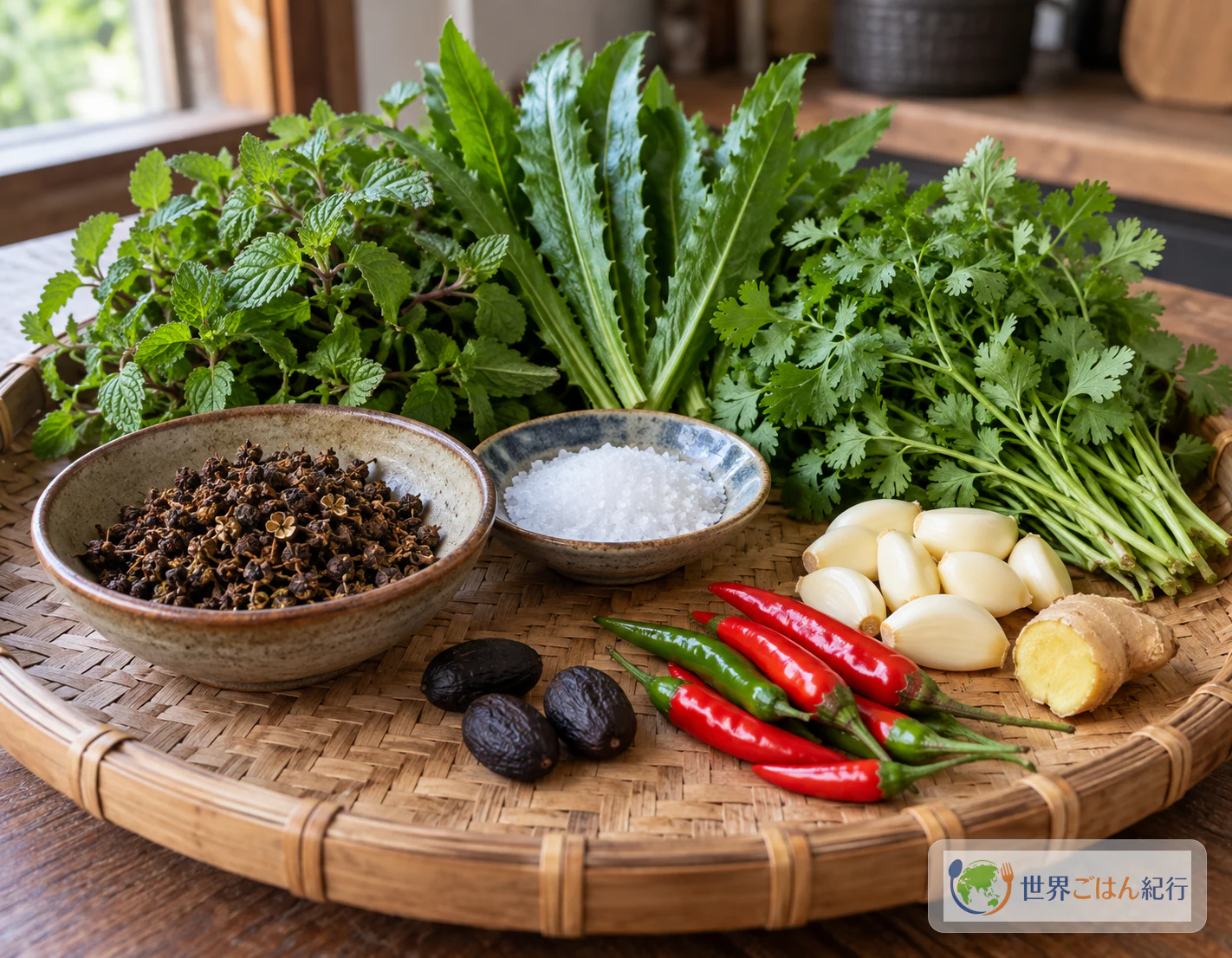
The source gives a serving size for none of these ingredients and an amount for only a few. Where the table says "not specified," the source gives no amount, and none is added here. The photographs show an illustrative portion, not a measurement.
No water, fish sauce, lime, lime leaves, olive oil, sugar, meat, fish or liver goes into this recipe. The source gives salt or a seasoning powder (bột canh) as alternatives. This version uses plain salt and no seasoning powder.
Equipment
- A dry pan for toasting the mắc khén
- A heat source for roasting the hạt dổi and the chilies (the source does not specify which)
- A mortar and pestle
- A small serving bowl
Choosing the Spices and Herbs: Why None Are Swapped
The two spices are the hardest ingredients to replace, and the source offers no substitutes for them. Mắc khén is not ordinary black pepper, and hạt dổi is not nutmeg. Using either of those in their place would make a different condiment, so this article does not suggest them.
The herbs are three separate ingredients:
| Name in the source | What it is | Note |
|---|---|---|
| Húng dũi | A mint-type herb | The exact variety is not specified |
| Mùi tàu | Sawtooth coriander (culantro), with long leaves | Not the same as ordinary cilantro |
| Rau mùi | Cilantro (coriander leaves) | Used alongside the other two, not instead of them |
If your mắc khén is already ground, you can skip the toasting and grinding in step 1 and start from the powder. The method below and its photographs follow the whole-spice route.
Method: Toast, Roast, Wash, Pound
Step 1 makes the mắc khén powder. In step 2, the source does not fix an order among the hạt dổi, chilies, garlic and ginger, so prepare them in whatever order suits your kitchen. Everything meets in the mortar in step 4.
When It Doesn't Come Out Right
| What you notice | Likely reason | What to do |
|---|---|---|
| It is runny like a sauce | Water, fish sauce or oil went in | This version uses none of them. Make the next batch with pounding alone |
| Ginger overpowers the herbs | Too much ginger | The author cautions against using much. Use only one small piece |
| It tastes like black pepper or nutmeg | One of the spices was swapped | Look for mắc khén and hạt dổi themselves. The source gives no substitute |
| Only two kinds of herb went in | One of the three herbs was replaced by another, such as cilantro standing in for mùi tàu | Keep húng dũi, mùi tàu and rau mùi as three separate herbs |
| You're unsure how much salt, chili or garlic to use | The source gives no amount | This recipe does not set one either. The amount is left to the cook rather than taken from another recipe |
Other Ways of Making Chẳm Chéo
The sources describe several directions. None of them is mixed into the version above.
- Optional water (from the same source). Phạm Tân mentions water only as an optional adjustment to help the condiment suit certain foods. This version leaves it out.
- Seasoning powder instead of salt (from the same source). The source allows bột canh as an alternative to salt. This version uses salt.
- Pre-ground mắc khén. If you start from powder, skip the toasting and grinding in step 1.
- An olive-oil finish (Si Dining). The chef describes chẳm chéo as varying in preparation and finishes his own version with olive oil. That is a restaurant reinterpretation, and its quantities and method are not carried over here.
- Versions matched to what they accompany (VnExpress). Reporting from the northwest describes chẳm chéo changing with the food it is served with. Those variants, including ones with fish or offal, are separate preparations.
What to Serve It With
Phạm Tân pairs chẳm chéo with steamed sticky rice and boiled foods. Those dishes are not covered here. Make the condiment in a small bowl and dip as you eat.
Frequently Asked Questions
Can I use black pepper instead of mắc khén?
The source does not offer that substitution, and mắc khén is a different spice from ordinary black pepper. Using pepper would give a different condiment, so it isn't recommended here.
Is hạt dổi the same as nutmeg?
No. Hạt dổi is its own seed and should not be replaced with nutmeg or any other seed.
How big is the "small spoon"?
The source does not say. It uses the Vietnamese "thìa nhỏ" without giving a capacity, so this recipe does not convert it to a teaspoon or a milliliter amount.
How much salt, chili and garlic should I use?
The source gives no amounts for them, and this article does not invent any. The photographs are not a guide to quantity either.
Is it the same as nước chấm or nam jim jaew?
No. Chẳm chéo, as made here, is a pounded mix of spices, herbs and salt with no fish sauce or added liquid. It is a different condiment from either of those dips.
How long does it keep?
The recipe this article follows gives no storage guidance, so no storage period is given here.
Sources
- Phạm Tân / HOA BAN FOOD, "CHẲM CHÉO – THỨC CHẤM CỦA NÚI RỪNG." The recipe followed in this article. The author describes making it himself. Source of the ingredient selection, the qualitative amounts (including the unspecified small spoon) and the method. https://hoabanfood.com/cham-cheo-huong-dan-cach-lam.html
- Alessio Rasom (Chef & Co-founder), Si Dining, "Chẩm Chéo: A Taste of Northwest Vietnam Reimagined at Si Dining." A restaurant chef's account of how preparations vary, and his own olive-oil finish. Used only for comparison. https://sidiningdanang.com/cham-cheo/
- Từ Ngọc Anh, VnExpress, "Đa dạng vị chẳm chéo trong bữa ăn của người Tây Bắc." Reporting on chẳm chéo in the meals of the northwest, and how versions differ with what they accompany. Not proof of one universal recipe. https://vnexpress.net/thoi-su/da-dang-vi-cham-cheo-trong-bua-an-cua-nguoi-tay-bac-3559357.html
- Nhà hàng Đông Hải, "Hướng dẫn cách làm món chẳm chéo ngon đúng vị đặc sản Mộc Châu." A Mộc Châu restaurant's recipe. Its wording overlaps with the HOA BAN FOOD text, so it is used only as a comparison, not as independent confirmation. https://nhahangmocchau.com/mon-ngon-dong-hai-moc-chau/huong-dan-cach-lam-mon-cham-cheo-ngon-dung-vi-dac-san-moc-chau.html/