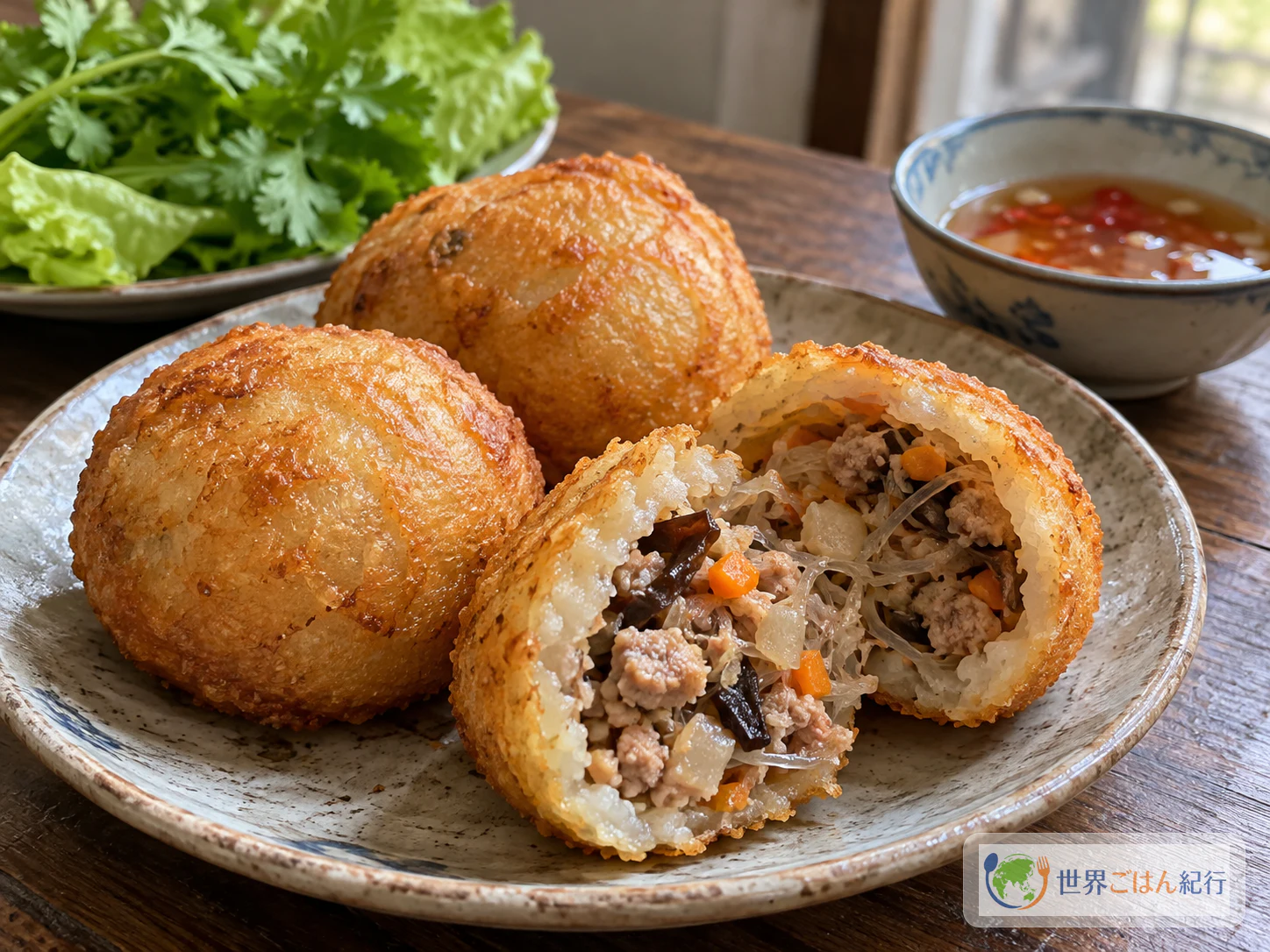
Hanoi-style savory fried rice cakes, bánh rán mặn, served on a plate
Serves12 cakes
CuisineVietnamese

Bánh Rán Mặn: Hanoi's Savory Fried Rice Cakes with Pork and Glass Noodles

How to make bánh rán mặn, the savory Hanoi fried rice cake filled with pork, glass noodles and wood-ear mushroom, served with a sweet-sour fish sauce dip. Covers mixing and resting the rice-flour dough, sealing the cakes, frying gently from about 150°C, cooking the pork through, and how this savory cake differs from sweet bánh rán and bánh cam.

Cooking flow

Cooking steps

STEP 11 / 7

Make the dough and let it rest

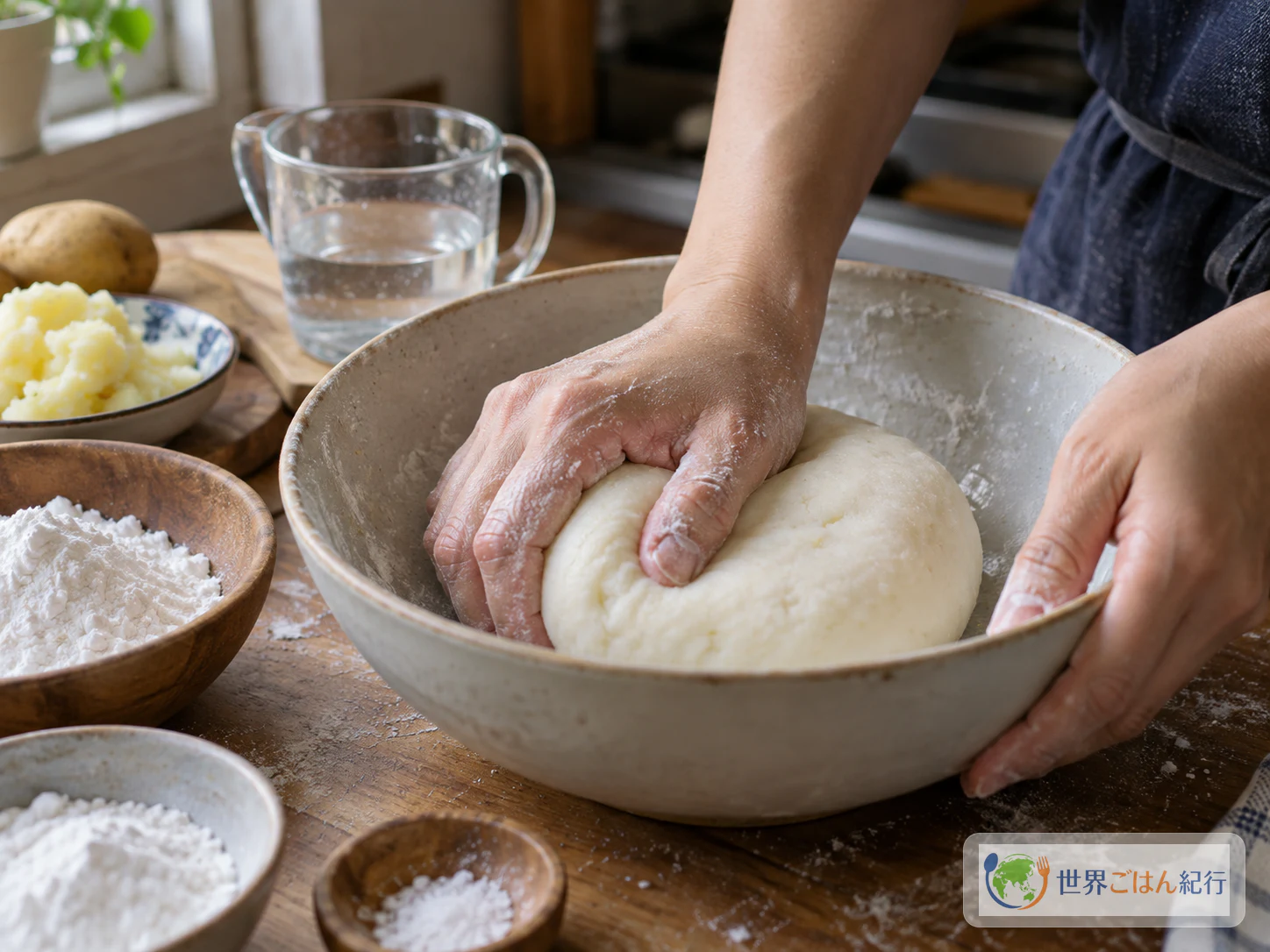
Rice-flour dough for bánh rán mặn brought together by adding warm water little by little
Add warm water gradually and stop once the dough is smooth and no longer sticky

Cook the potato until soft, mash it smoothly and let it cool. In a bowl, combine 9 oz (250 g) glutinous rice flour, 1.25 oz (35 g) rice flour, 5g salt and 1.75 oz (50 g) mashed potato. Add warm water at 40–50°C a little at a time, starting with ¾ cup (200 ml), and knead. Add more water, up to 1 cup (240 ml) in all, only if the dough still needs it. Stop when the dough is even and smooth, does not stick to your hands, and its edges do not crack when you press it. Cover and rest for 45–60 minutes.

STEP 22 / 7

Soak and cut the filling ingredients

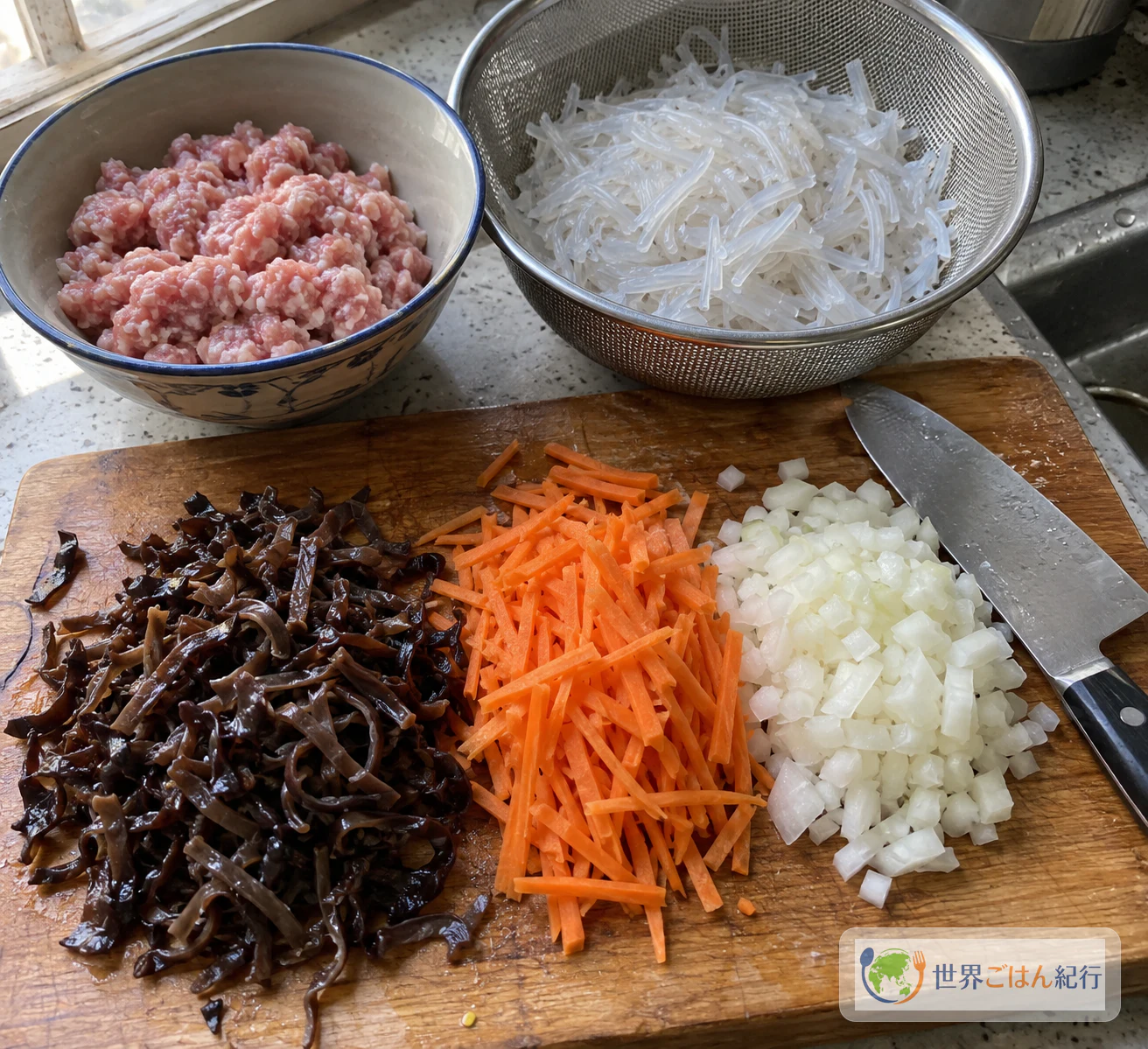
Soaked glass noodles and wood-ear mushrooms, carrot strips, diced onion and ground pork ready for the filling
Drain the noodles and mushrooms well and cut the noodles short so they wrap easily

Soak the dried glass noodles and wood-ear mushrooms in water in separate bowls until soft. Discard the soaking water and drain both well. Cut the noodles into 2–3cm lengths. Remove the hard stem from the wood-ear and slice it finely. Cut the carrot into thin strips and dice the onion small.

STEP 33 / 7

Mix the raw filling and divide it

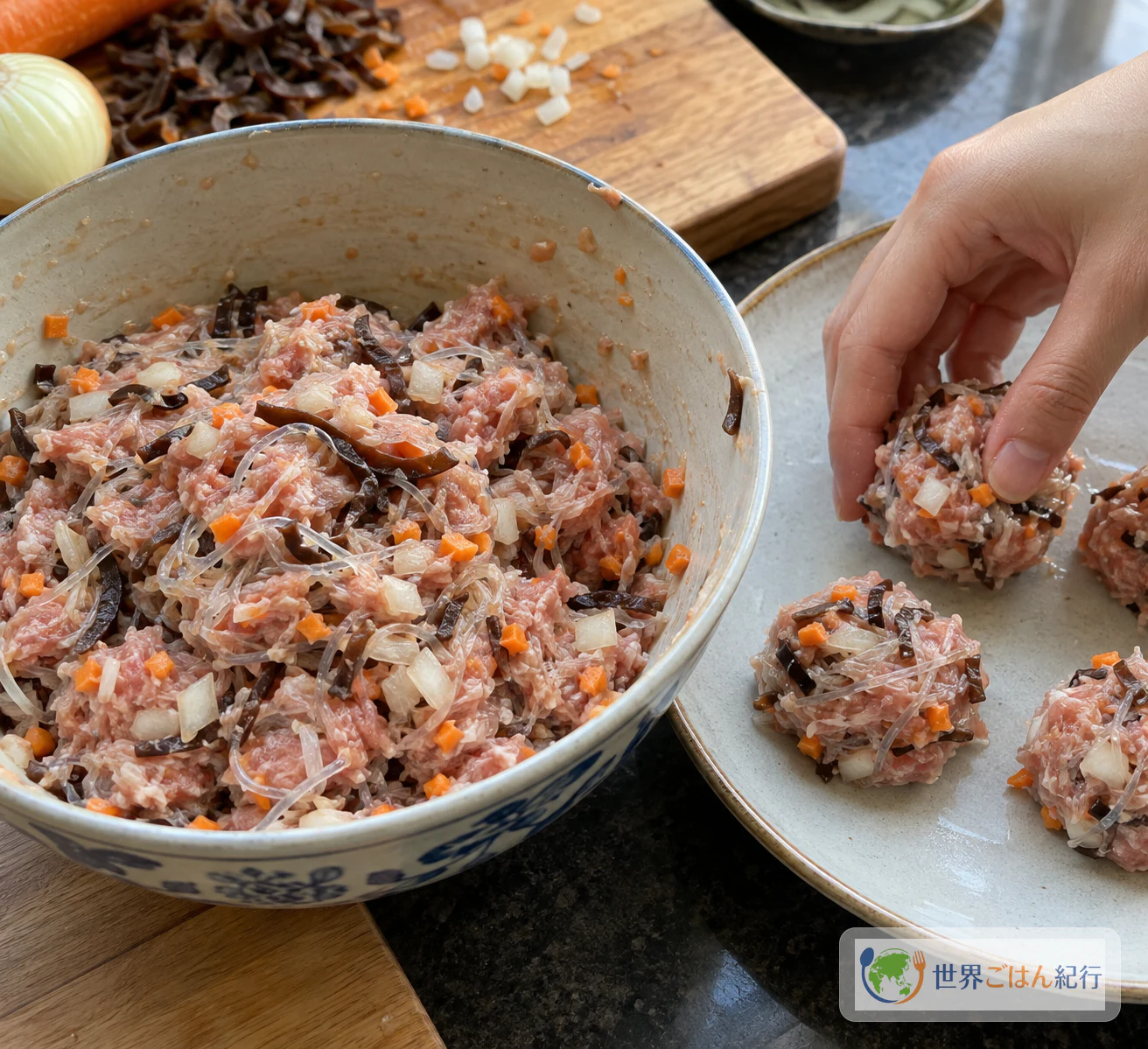
Savory filling of ground pork, glass noodles, wood-ear mushroom, carrot and onion mixed together
The filling stays raw; divide it into 12 even portions

Combine the ground pork, carrot, onion, noodles, wood-ear, 1 tsp (5 ml) oil and 1/2 tsp seasoning powder, and mix evenly. Do not cook the filling. Divide all of it into 12 equal portions. Wash your hands and any tools that touched the raw pork.

STEP 44 / 7

Wrap tightly and rest the cakes

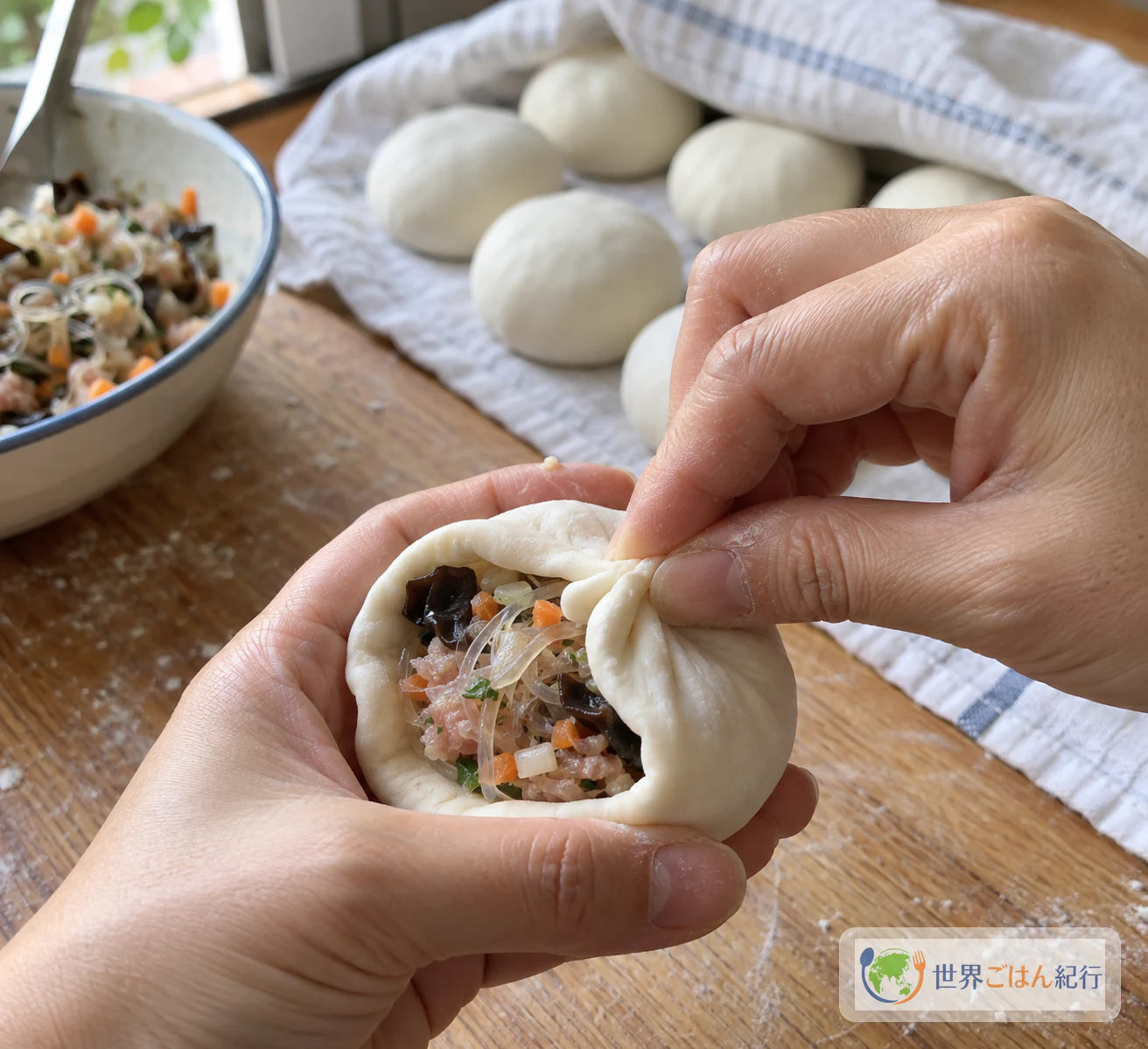
Sealing pork and glass noodle filling inside rice-flour dough and pressing out the air
Keep the center of the dough thicker, close the seam completely and leave no air inside

Divide the dough into 12 equal pieces. Flatten each one so the center is a little thicker and the edges thinner. Set a portion of filling in the middle, bring the dough up around it and seal the seam firmly, pressing out any air. Roll the cake smooth with no cracks or gaps, since any opening can let the filling escape in the oil. Cover the wrapped cakes so they do not dry out and rest for at least 1 hour.

STEP 55 / 7

Fry gently until puffed, floating and golden

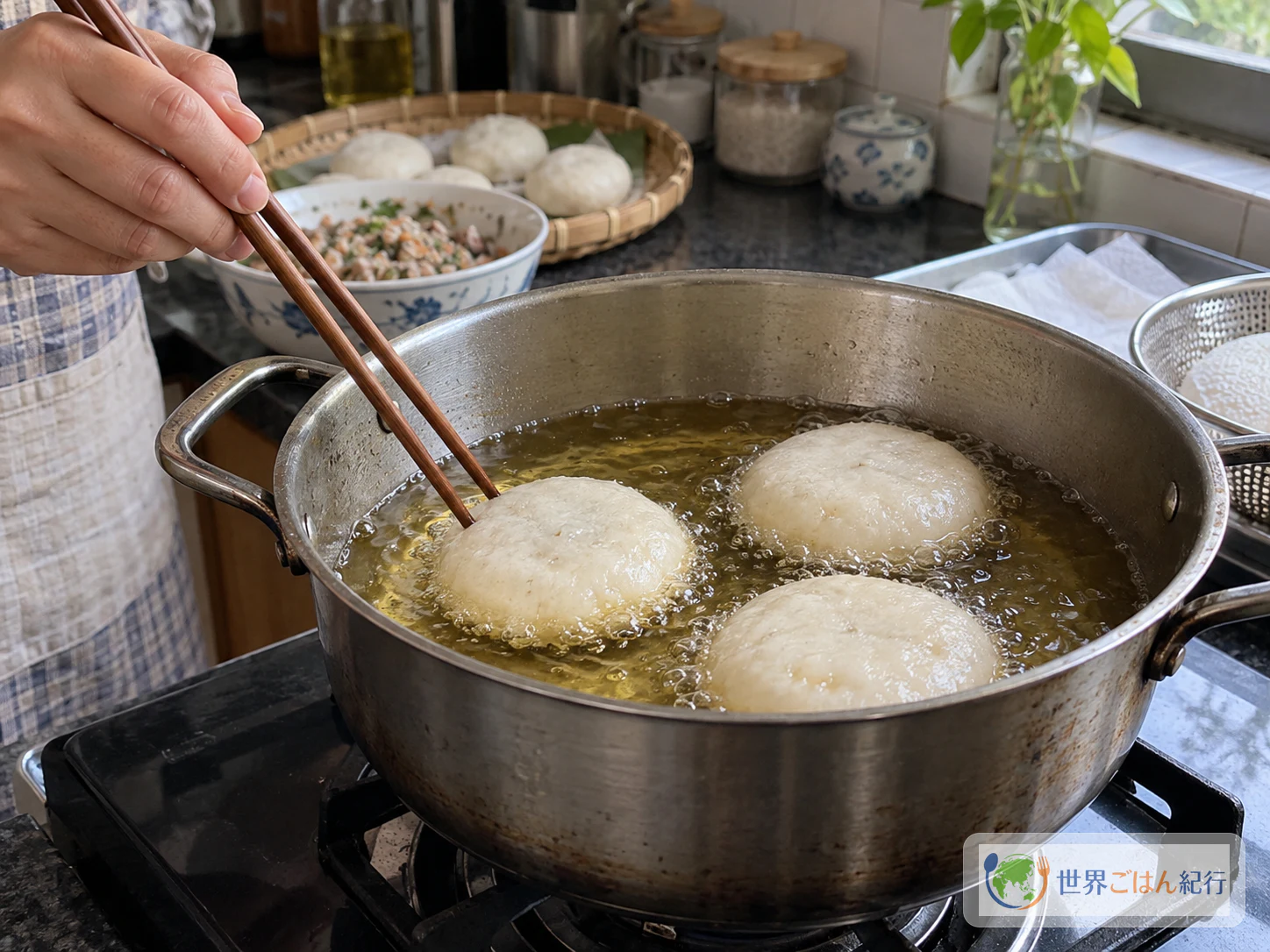
Bánh rán mặn slipped into oil at about 150°C, starting to fry until the skin sets
Lower the cakes in gently and leave them until the skin sets before turning

Heat the frying oil to about 300°F (150°C) and keep it over medium heat. Slide in a few cakes at a time without crowding. Leave them alone for 1–3 minutes until the skin sets, then turn them gently so they do not stick.

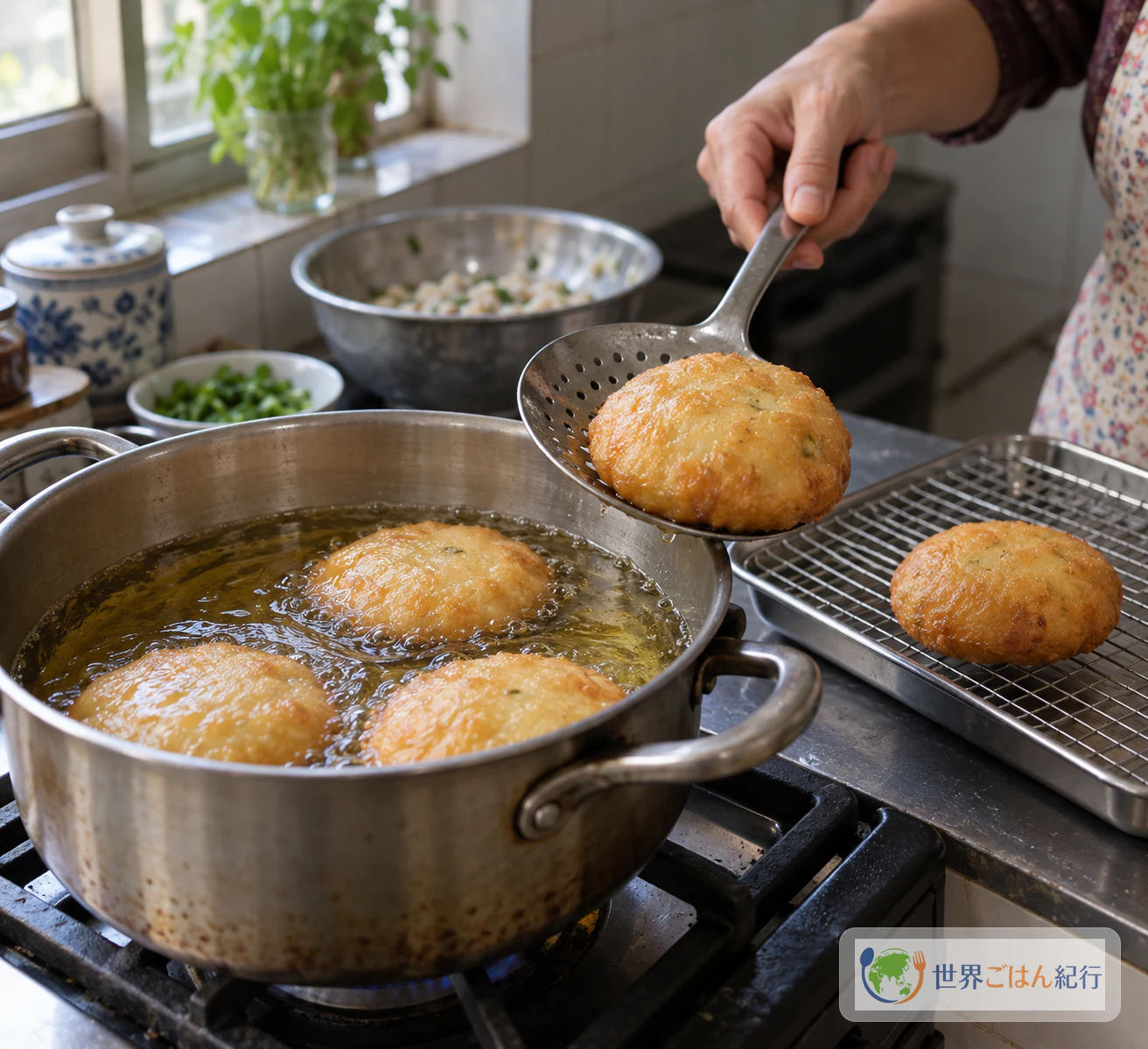
Keep frying, turning occasionally, until the cakes puff slightly, float and are evenly golden all over. Do not turn the heat up suddenly. Lift them out with a slotted spoon and drain on a wire rack or paper towels.

Golden, floating bánh rán mặn lifted onto a rack to drain
Lift the cakes out once they float and are golden all over, then drain the oil
STEP 66 / 7

Make the dipping sauce and serve hot

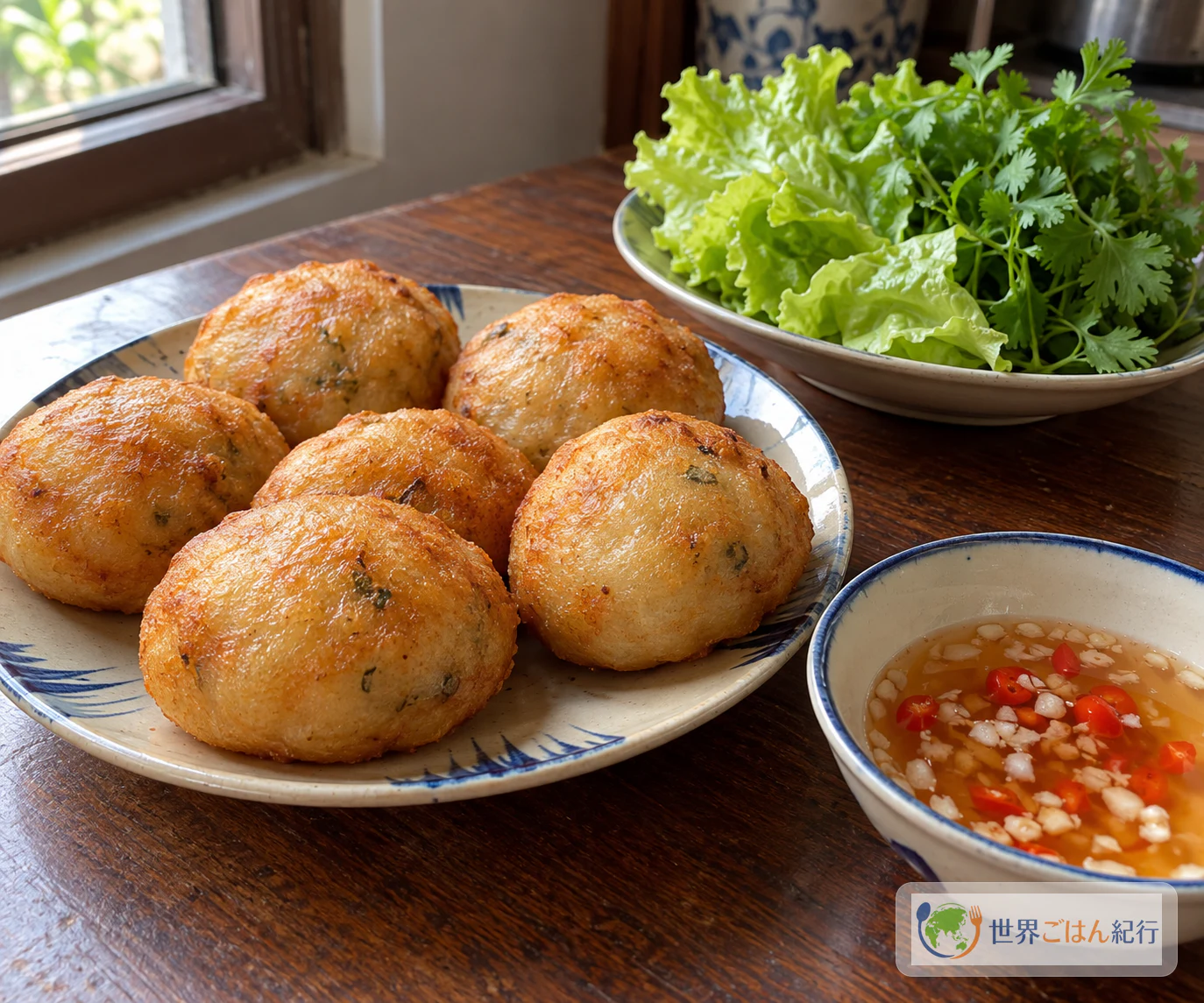
Bánh rán mặn served with a sweet-sour lime and fish sauce dip and fresh greens
Serve hot with the dipping sauce and greens kept separate

Stir together 25g sugar, 15–18ml lime juice and water to taste until the sugar dissolves. Add 15–20ml fish sauce and adjust until sweet, sour and salty sit in balance. Add garlic, black pepper and chili if you like. Serve the cakes while hot with the sauce and, if you like, lettuce and coriander on the side.

STEP 77 / 7

Break one open and check the center

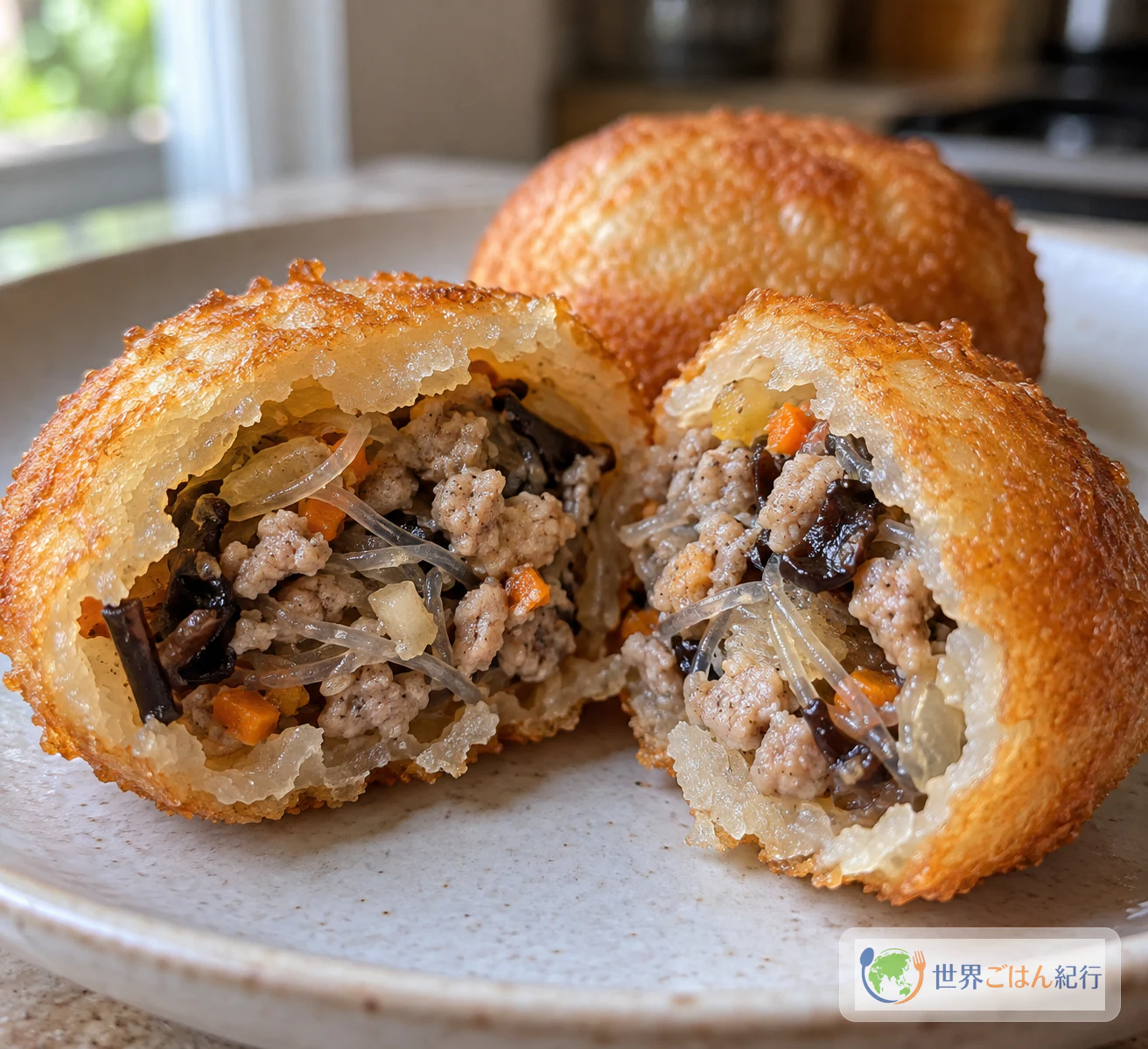
A broken-open bánh rán mặn showing pork, glass noodles, wood-ear mushroom and carrot inside
Check the filling at the very center, not just the color of the shell

Break one cake in half. The pork filling should be cooked all the way through, with no raw pink meat in the middle, and the noodles and wood-ear should look set in the filling. If the center is not cooked, return the cakes to the oil and keep frying gently, and lower the heat for the next batch.

0 / 0
Ingredients

Ingredients

1 / 1

Ingredients

Ingredient Amount Role
Glutinous rice flour (bột nếp) 9 oz (250 g) Dough: the chewy body of the shell
Rice flour (bột gạo tẻ) 1.25 oz (35 g) Dough: adds a cleaner bite to the shell
Salt (muối) 5g Dough: seasoning
Potato (khoai tây), cooked and mashed 1.75 oz (50 g) Dough: helps the dough hold together
Warm water (nước ấm), 40–50°C ¾–1 cup (200–240 ml) Dough: start with ¾ cup (200 ml) and add the rest only as needed
Ground pork (thịt lợn xay) 6 oz (175 g) Filling: the main savory element
Carrot (cà rốt) 1.75 oz (50 g) Filling: sweetness and crunch, cut into thin strips
Dried glass noodles (miến khô) 18–20g Filling: binds the filling once soaked and cut short
Dried wood-ear mushrooms (mộc nhĩ) 3 (about 8–10g) Filling: a crisp, springy bite, sliced finely
Onion (hành tây) 20g Filling: savory sweetness, diced small
Cooking oil (dầu ăn) 1 tsp (5 ml) Filling: mixed into the raw filling
Seasoning powder (hạt nêm or bột canh) 1/2 tsp Filling: seasoning
Sugar (đường) 25g Dipping sauce: sweetness
Lime juice (nước cốt chanh) 15–18ml Dipping sauce: acidity
Fish sauce (nước mắm) 15–20ml Dipping sauce: saltiness and depth
Water to taste Dipping sauce: to balance the strength
Garlic (tỏi) to taste (optional) Dipping sauce: aroma
Black pepper (tiêu) to taste (optional) Dipping sauce: aroma
Chili (ớt) to taste (optional) Dipping sauce: heat
Frying oil 300–400ml Frying: enough for the cakes to fry with room to float in your pan
Lettuce and coriander as needed (optional) Serving: fresh leaves on the side
0 / 0

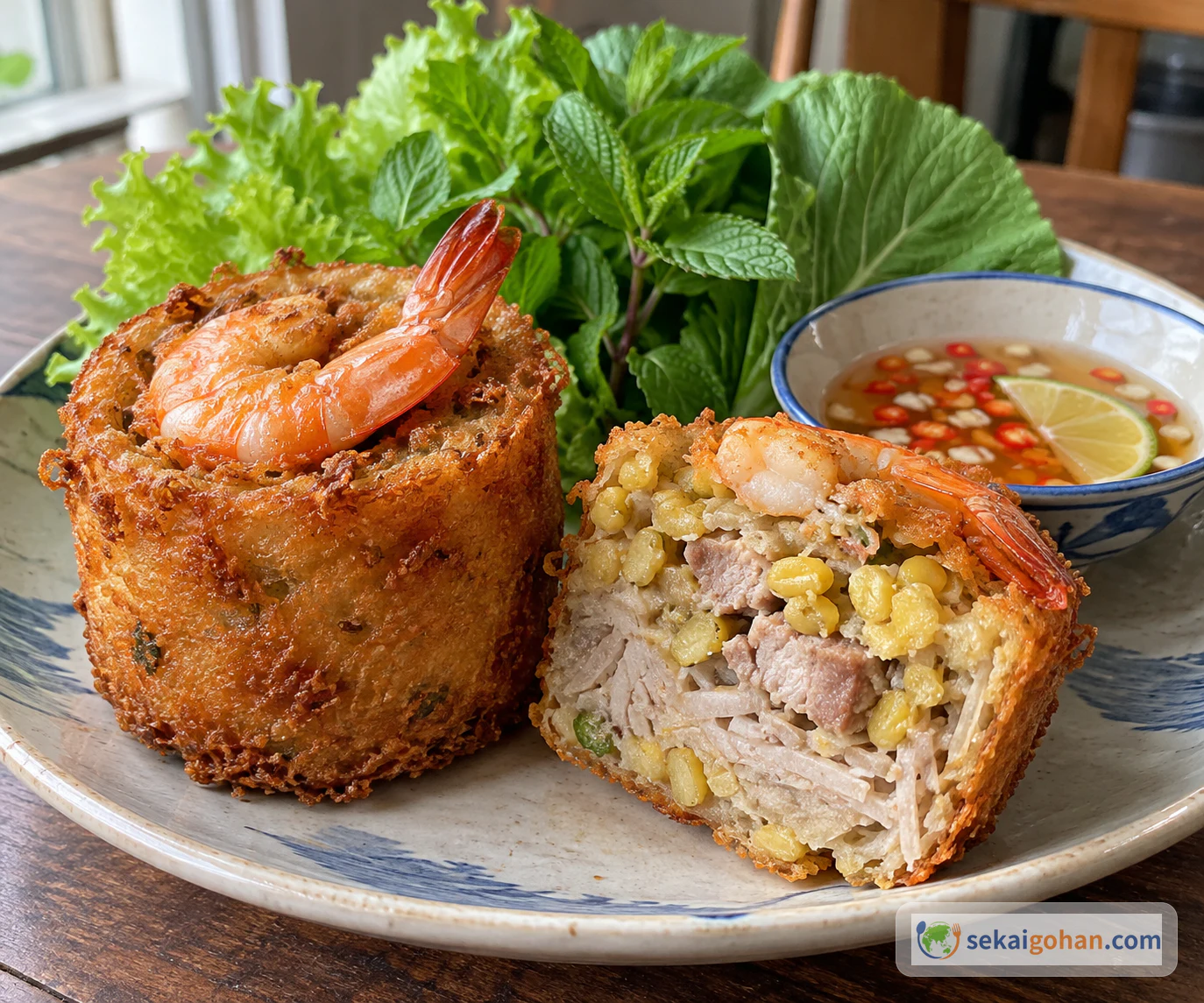
Watch the oil as the cakes go in. They puff, rise to the surface and slowly turn golden, and in Hanoi they're eaten while still hot, dipped in a sweet-sour sauce, with fresh greens on the side. Bánh rán mặn is a light afternoon snack. A smooth shell of glutinous rice flour, crisp outside and chewy within, wraps a pork filling dotted with glass noodles and wood-ear mushroom. That is the whole appeal of the plate: a hot, fragrant fried shell against a bright fish sauce dip.

Bánh Rán Mặn in Hanoi

The name takes a little explaining. On its own, "bánh rán" can mean more than one food. In northern Vietnam it usually means a sweet ball coated in sesame and filled with mung bean paste, the same sweet the south calls bánh cam. Hanoi also makes bánh rán with savory fillings. Bánh rán mặn ("mặn" means salty or savory) is the savory one, filled with pork. For more dishes from the same country, see Vietnamese recipes.

Apart from the name, the savory cake has little in common with the sweet sesame ball. The rice shell is smooth and has no sesame. The filling is raw pork with glass noodles and wood-ear, and the sweet-sour dip takes the place of a sweet center. The dough is glutinous rice flour with a little ordinary rice flour, mashed cooked potato, salt and warm water. It's wrapped around ground pork, carrot, onion, rehydrated glass noodles (miến) and wood-ear mushroom (mộc nhĩ), then fried and served with a dip of sugar, lime juice, water and fish sauce.

Bánh rán has no single fixed formula. Some savory versions add potato starch and sugar to the dough for a larger yield. One Hanoi shop sells sweet bánh rán finished with syrup or sugar next to its own savory-filled version, for afternoon and takeaway customers. The savory versions all share a chewy glutinous rice shell, a pork filling with texture from the noodles and mushroom, a fragrant fried crust, and a fish sauce dip sharp enough to cut through it.

Ingredients for 12 Cakes
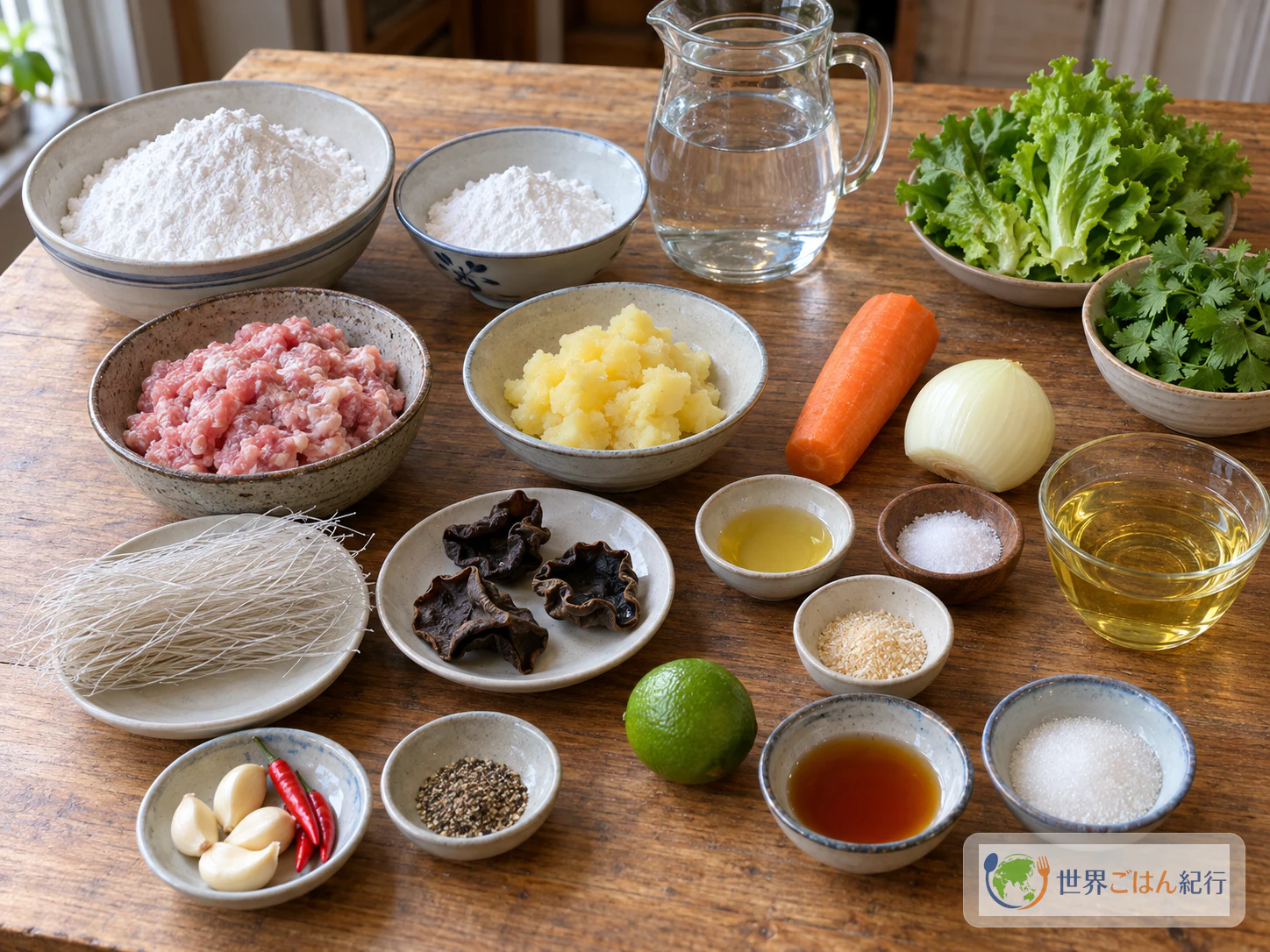
Ingredients for bánh rán mặn: glutinous rice flour, rice flour, ground pork, dried glass noodles, wood-ear mushrooms, carrot, onion, potato, and dipping sauce ingredients
Dough, filling, dipping sauce and serving leaves, kept separate before you start

Weigh the glass noodles and wood-ear mushrooms dry. The 1 tsp (5 ml) of oil goes into the filling; the frying oil is separate.

Use potato or sweet potato in the dough, not both. The frying oil amount depends on the width of your pan; what matters is enough depth for the cakes to float.

Equipment

  • Mixing bowl and a cover or clean cloth
  • Two small bowls for soaking the noodles and mushrooms, and a sieve
  • Cutting board and knife
  • Deep, sturdy saucepan for frying
  • Oil thermometer
  • Long chopsticks and a slotted spoon
  • Wire rack or paper towels for draining

Choosing Flours, Dried Goods and Seasoning

Keep the two rice flours separate. Glutinous rice flour gives the chew, and ordinary rice flour gives a cleaner bite. Check the package to make sure the glutinous flour is made from glutinous (sticky) rice. Japanese shiratamako or mochiko can stand in for it, and Japanese joshinko works in place of ordinary rice flour. These flours are ground differently and absorb water differently, so the same weights won't give the same texture. Go by how the dough looks, not by the measuring jug.

Glass noodles and wood-ear mushrooms are weighed dry. Miến is often sold as mung bean or cellophane noodles. Noodles of different thickness absorb water differently, so judge them by feel after soaking. You'll find dried wood-ear at Asian grocers.

Seasoning powder and fish sauce vary by brand. Hạt nêm and bột canh are Vietnamese seasoning powders, and their saltiness and ingredients differ from product to product. Read the label, and don't simply swap in plain salt one-for-one.

Allergy and food safety

Fish sauce contains fish. Seasoning powders, glass noodles and rice flours can differ in ingredients, and some are made on shared lines, so check each label for allergens. The filling is raw pork wrapped while uncooked: wash your hands, board and tools after handling it, keep the wrapped cakes covered while they rest, and fry until the filling is cooked all the way to the center. Color alone does not prove the pork is cooked.

Method: From Rested Dough to Golden, Floating Cakes

Before you start

The dough rests for 45–60 minutes and the wrapped cakes rest for at least an hour, so plan ahead. Fry in small batches and keep the heat moderate.

Fixing Common Bánh Rán Mặn Problems

Most problems come down to three things: how much water the dough gets, how well the seam is sealed, and how hot the oil is.

Problem Likely cause What to do
The dough cracks when shaped Not enough water, or the flour absorbs more than expected Work in a little more warm water at a time, within the ¾–1 cup (200–240 ml) range, until the edges stay smooth when pressed
Filling escapes or the oil spits A gap in the seam, trapped air, or wet filling or hands Keep the center of the dough thicker, seal completely and press out air. Drain the filling well, dry your hands, and lower the cakes in gently
Dark outside, raw inside Oil too hot Keep to about 300°F (150°C) at the start and medium heat, fry in small batches, and always check the center
Filling is hard to wrap Noodles or mushroom pieces too long Cut soaked noodles to 2–3cm and slice the wood-ear finely

If the oil starts out too hot, the shell browns and firms up while the filling is still raw. Start it moderate and raise the heat gradually. Being patient early on is what gives the center time to cook.

Serving and Variations

Serve the cakes freshly fried and hot, with the dip and greens alongside. A few changes still keep the cake savory:

  • Sweet potato instead of potato. Use 1.75 oz (50 g) cooked, mashed sweet potato (khoai lang mật) in place of the potato, never both. It adds sweetness, and it holds a different amount of moisture, so watch the dough as you add water.
  • Pickles on the side. Serve dưa góp, a pickle of carrot and kohlrabi, alongside the cakes rather than in the filling.
  • Milder sauce. Leave the chili out of the dip, or put it on the side so each person can add their own.

Frequently Asked Questions

Why doesn't the recipe give a weight for each cake?

The dough and filling are each divided into 12 pieces. Per cake, the figures work out to about 25g of filling and about 1.75 oz (50 g) of dough, but those per-piece weights don't match the listed ingredient amounts. Don't add or remove ingredients to hit a number. Just divide whatever you make into 12 equal portions.

How much do the glass noodles weigh after soaking?

No soaked weight is given. Weigh 18–20g dry, then soak them, drain well and cut to 2–3cm.

How long do the cakes take to fry?

No total frying time is given. Start the oil at about 300°F (150°C) and wait 1–3 minutes for the skin to set before turning. Then fry until the cakes puff, float and turn evenly golden, and break one open to check that the pork is cooked through at the center.

Can I make them ahead and store them?

There's no storage time for these, so eat them freshly fried and hot.
Sources

  • VOH Online, "Cách làm bánh rán Hà Nội với hai loại nhân mặn - ngọt." Hanoi bánh rán with sweet and savory fillings; the savory formula, amounts, method, 12-piece division, dough and wrapped-cake resting times, frying from about 150°C, and the dipping sauce used in this article. Also the source of the per-piece weights that do not match the listed amounts. https://voh.com.vn/nau-nuong/cach-lam-banh-ran-ha-noi-voi-hai-loai-nhan-man-ngot-334192.html
  • College of Economics & Tourism (CET), Hoàng Thị Diệu Xuân, "Cách Làm Bánh Rán Mặn Hà Nội Ngon Chuẩn Vị Đơn Giản." Bánh rán mặn as a Hanoi afternoon snack, a separate savory formula, serving with nước chấm, greens and carrot–kohlrabi pickles, adjusting water to the flour, and the caution against oil that is too hot. https://www.cet.edu.vn/cach-lam-banh-ran-man
  • VnExpress Du lịch, Quỳnh Mai, "Quán bánh rán Hà Nội bán hơn 5.000 chiếc mỗi ngày." A single Hanoi shop selling syrup- and sugar-coated bánh rán alongside its own savory-filled variation, its gradual frying approach, and afternoon and takeaway customers. https://vnexpress.net/quan-banh-ran-ha-noi-ban-hon-5-000-chiec-moi-ngay-4679508.html
  • Helen's Recipes, Helen Le, "Sesame Balls – Bánh rán / Bánh cam." The sweet mung-bean sesame ball known as bánh rán in the north and bánh cam in the south; used only to distinguish it from the savory cake. https://helenrecipes.com/recipe-sesame-balls-banh-ran-banh-cam/