Cháo Lòng: A Birthday Request and a Pot of Dark Rice Porridge
This recipe has not been kitchen-tested by Sekai Gohan. It follows one published home recipe and adds separate heating conditions based on official Japanese figures. Read the heat and handling section first, and have a food thermometer ready.
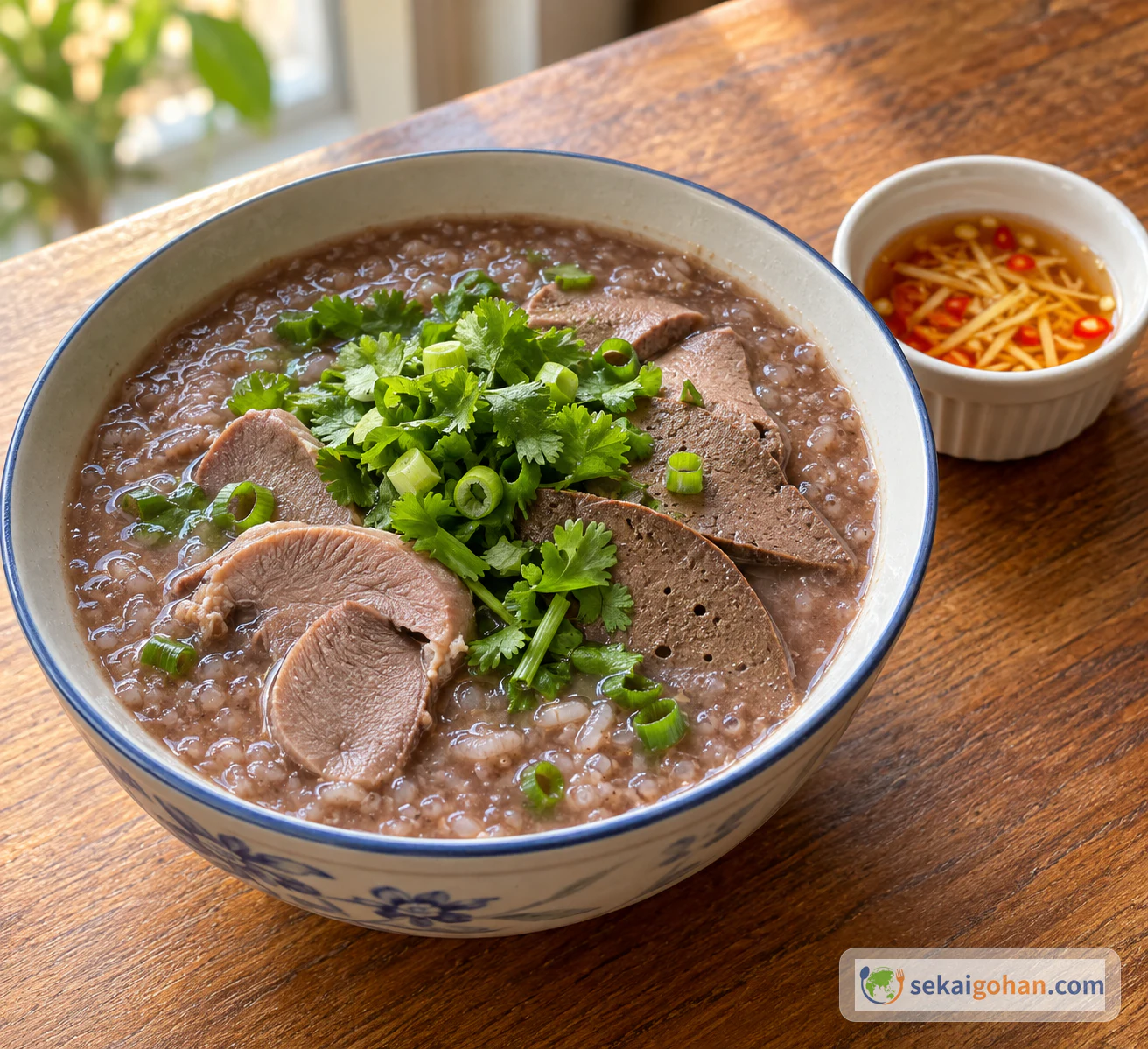
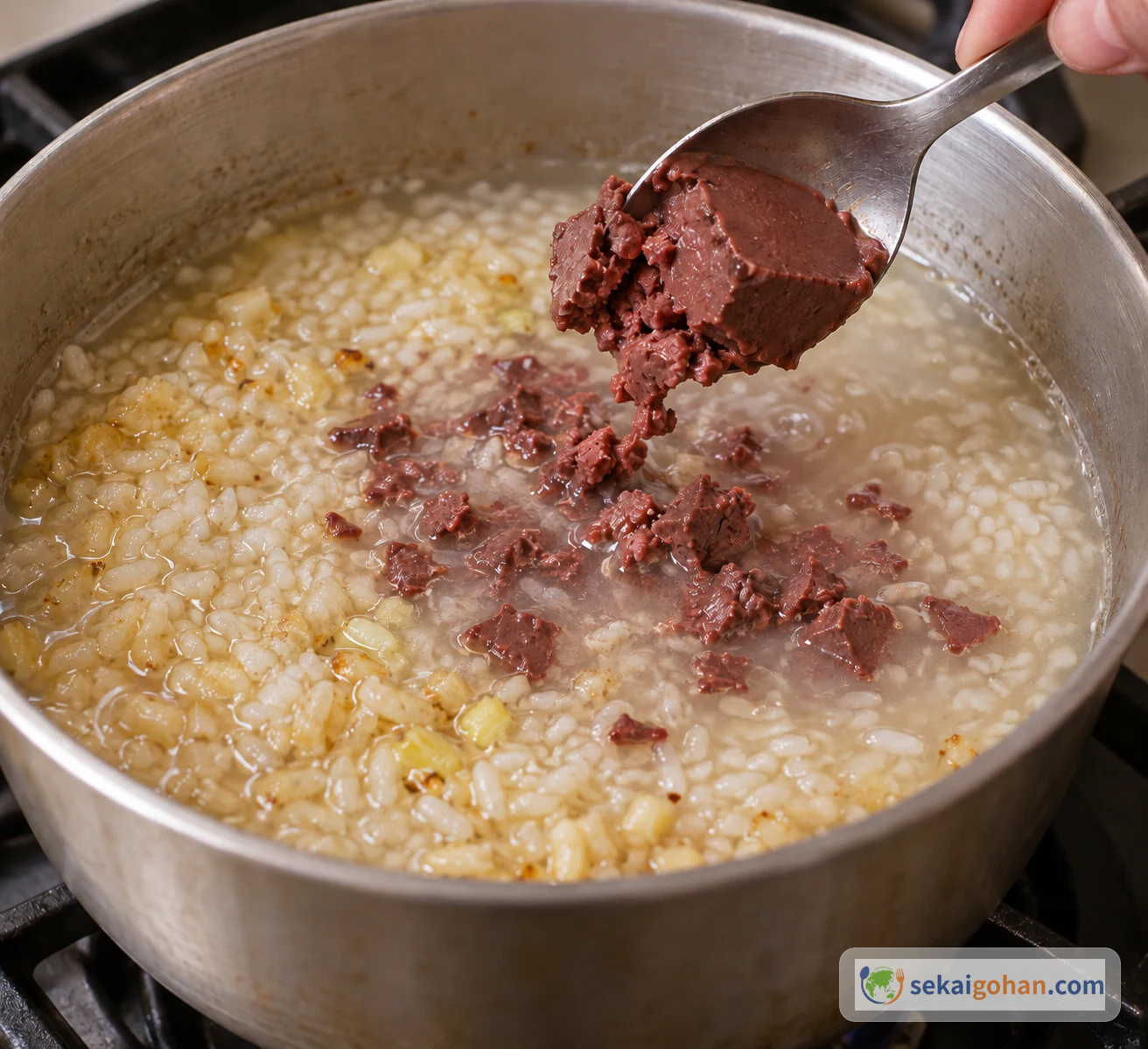
Vicky Pham's recipe for cháo lòng opens on a family birthday. Pham's mother-in-law asks what to make for the occasion, Pham's husband asks for cháo lòng, and a special meal is cooked from scratch. Pham published the recipe on April 16, 2025, and describes the dish as Vietnamese rice porridge with pork organ toppings. Raw pork blood goes into the porridge as it cooks, which gives it a darker color.
This is one household's version, not a national formula. In a separate account of starting the blog, Pham says the cooking was learned from a mother-in-law and that the blog began as a way to keep notes from those lessons.
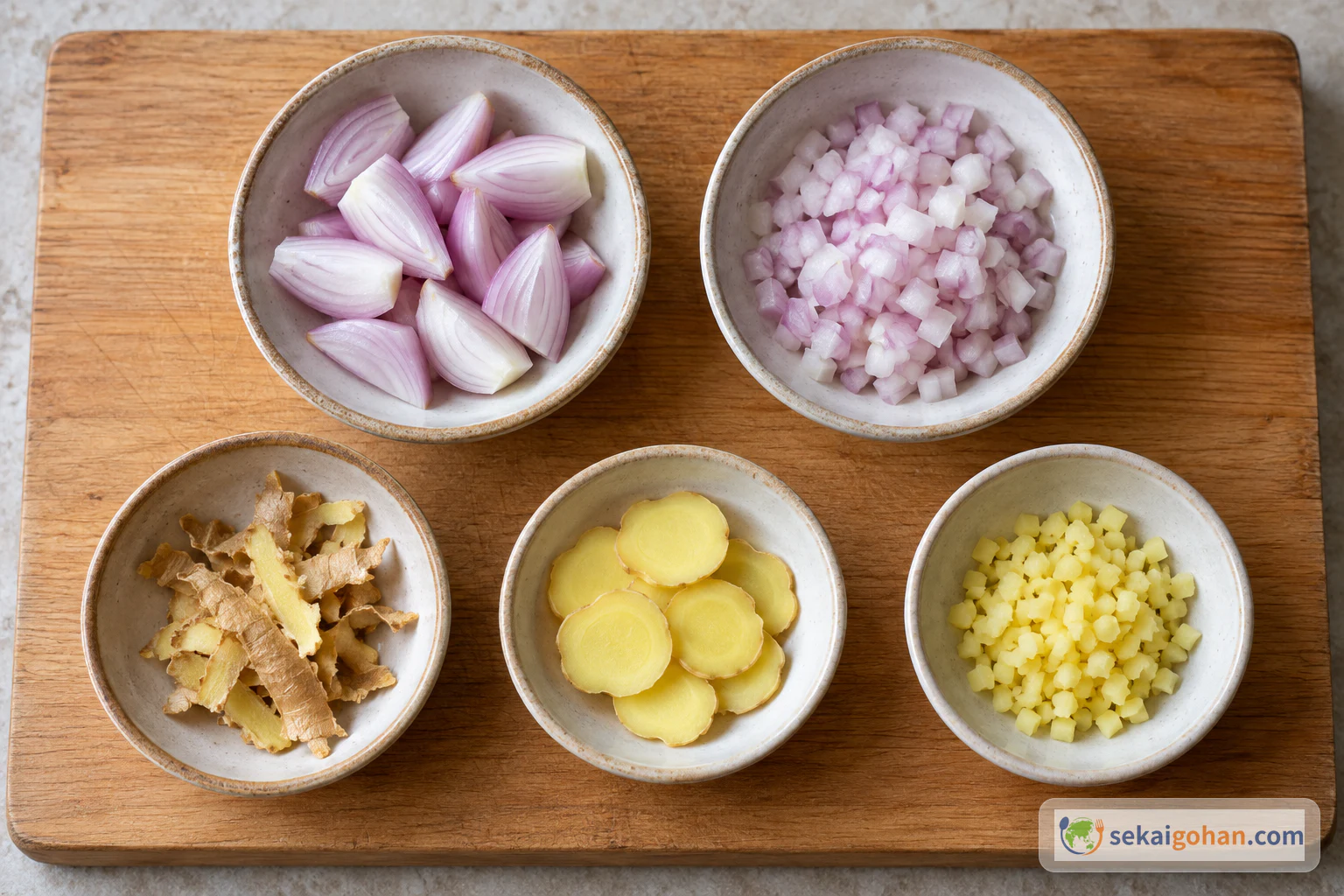
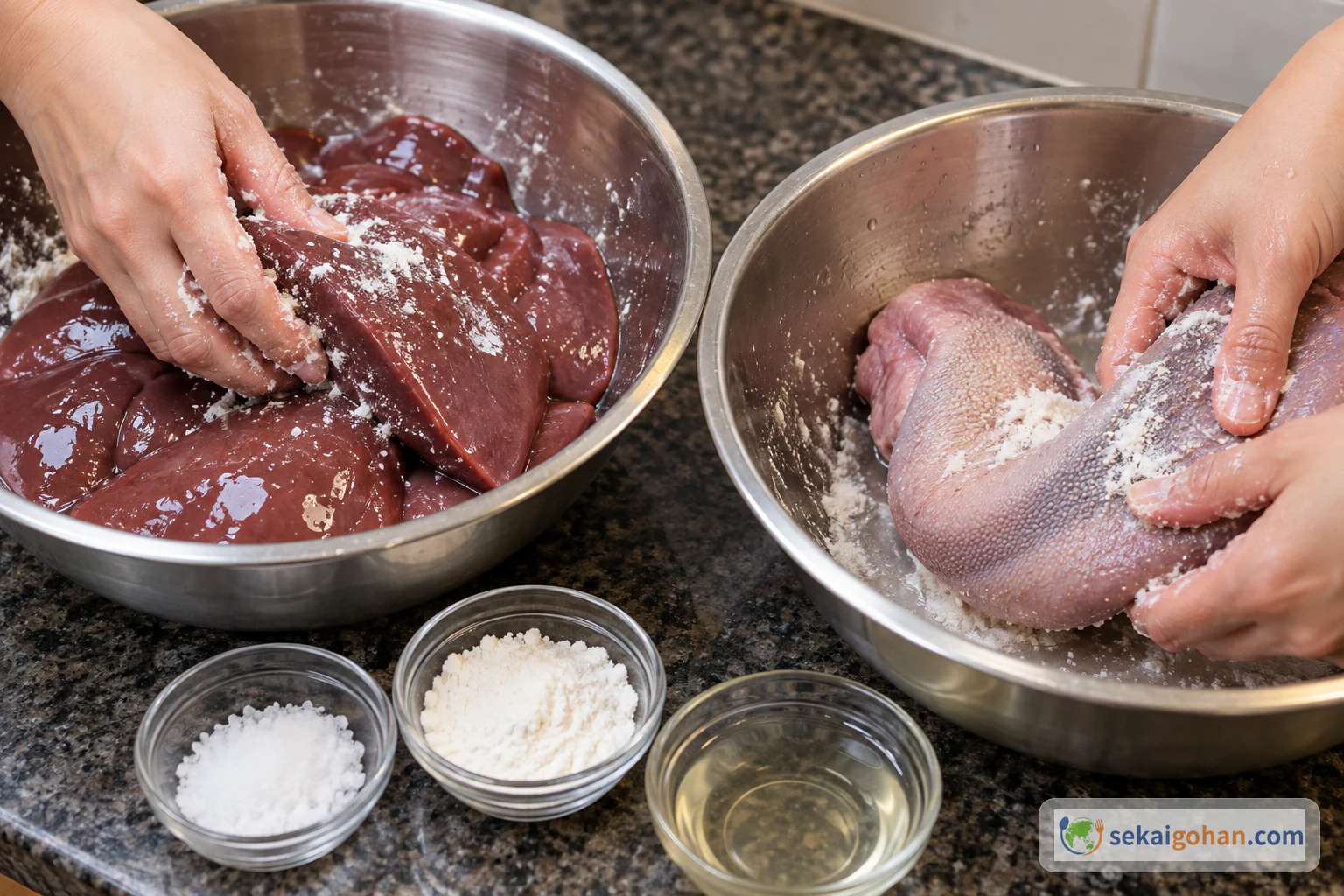
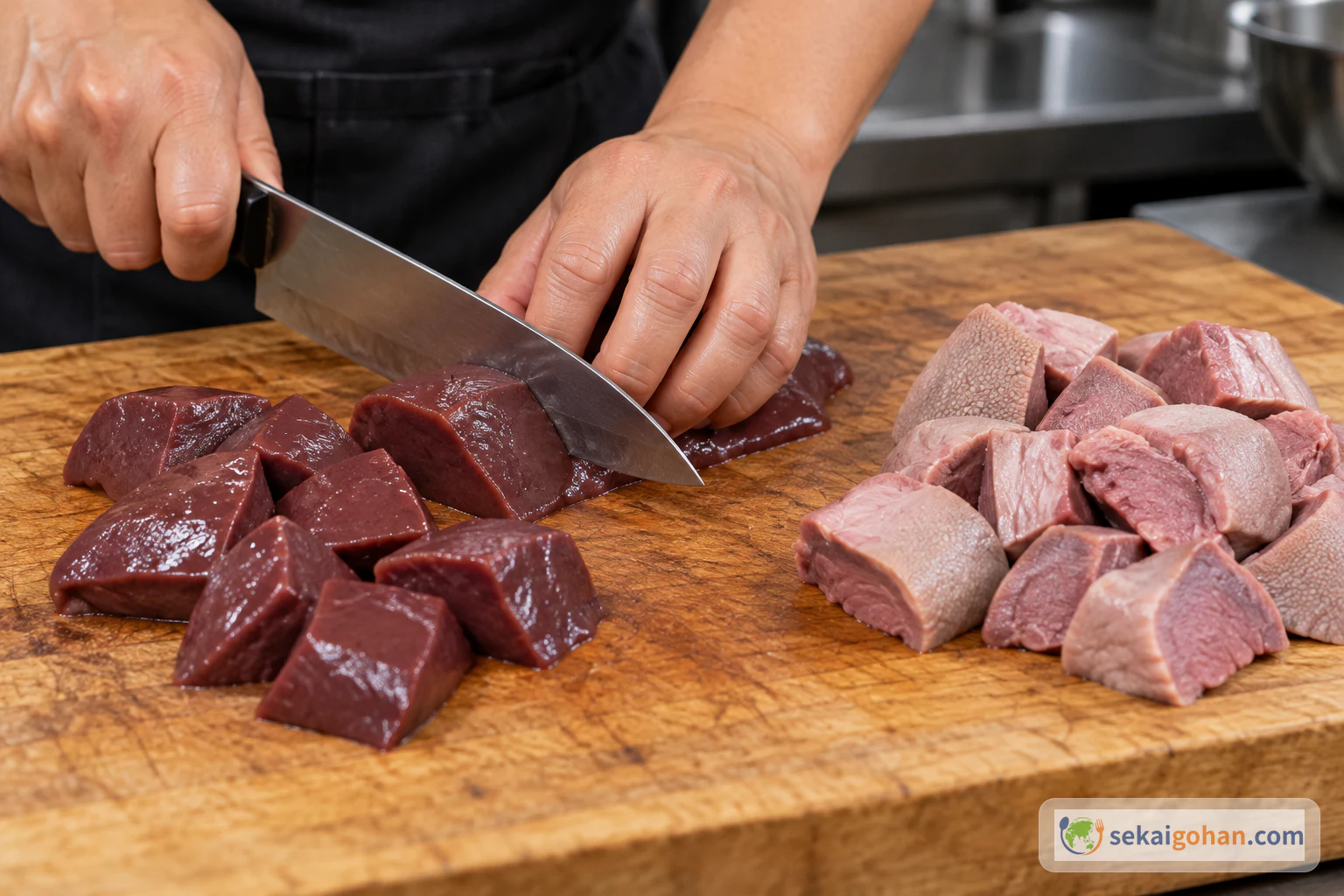
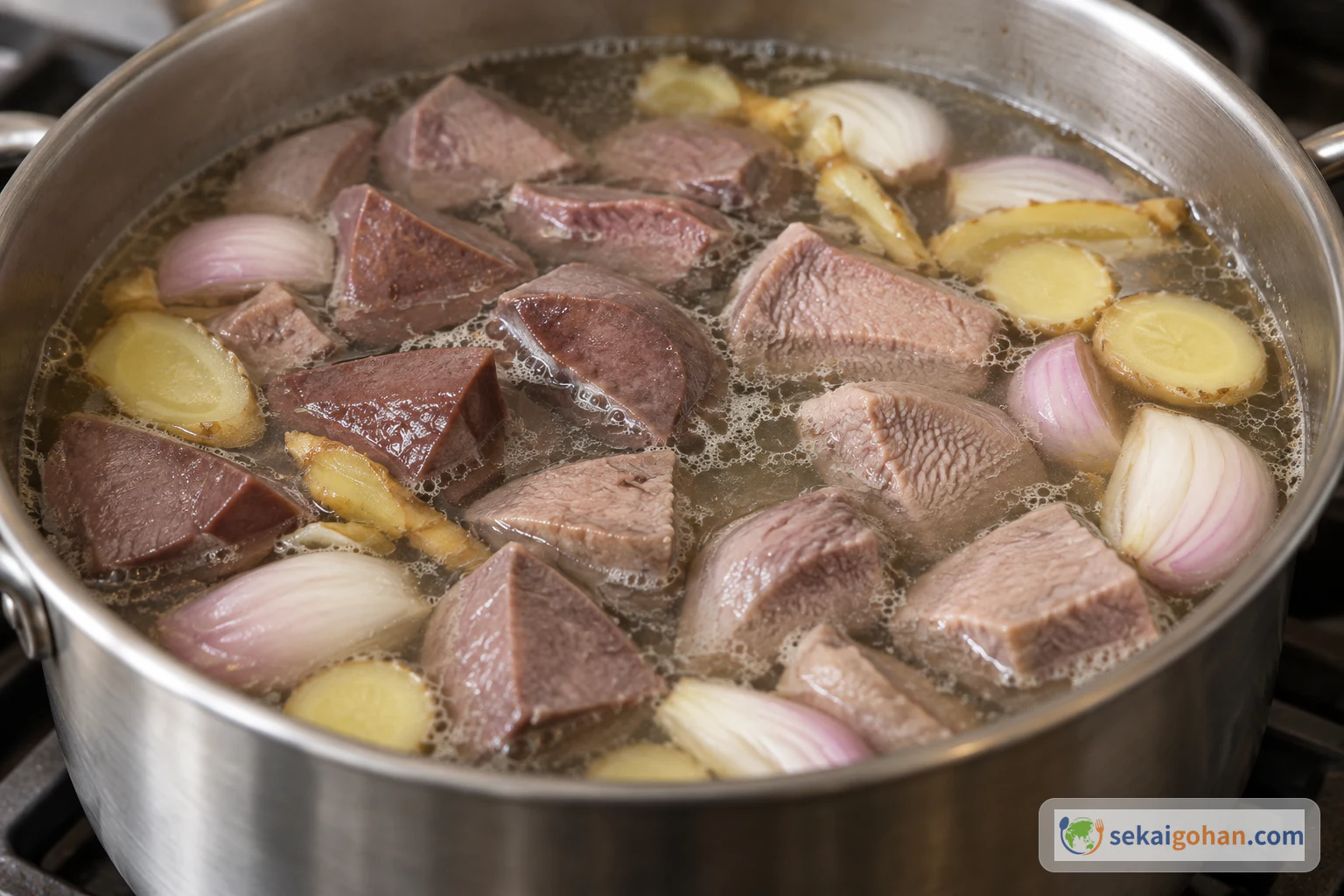
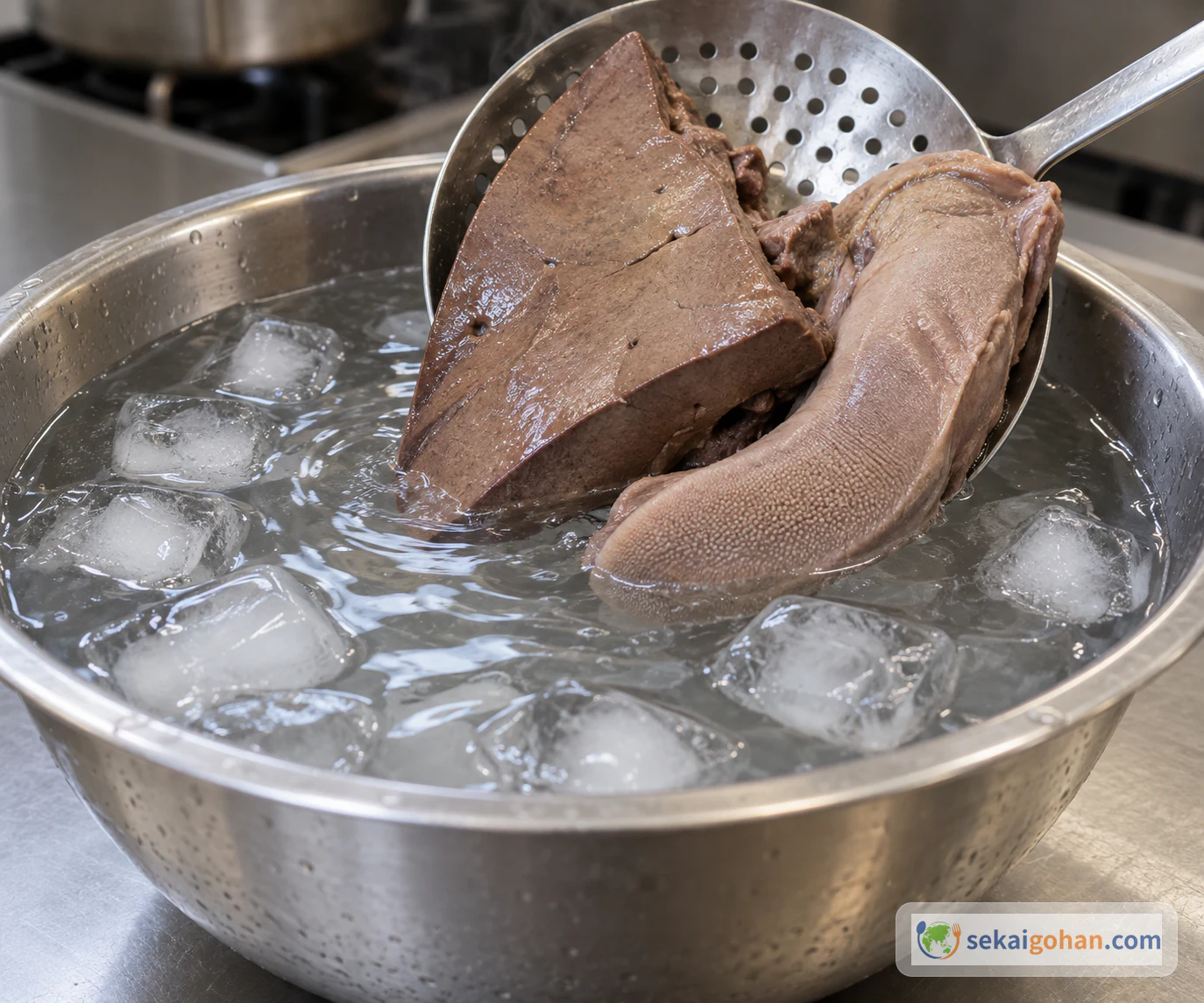
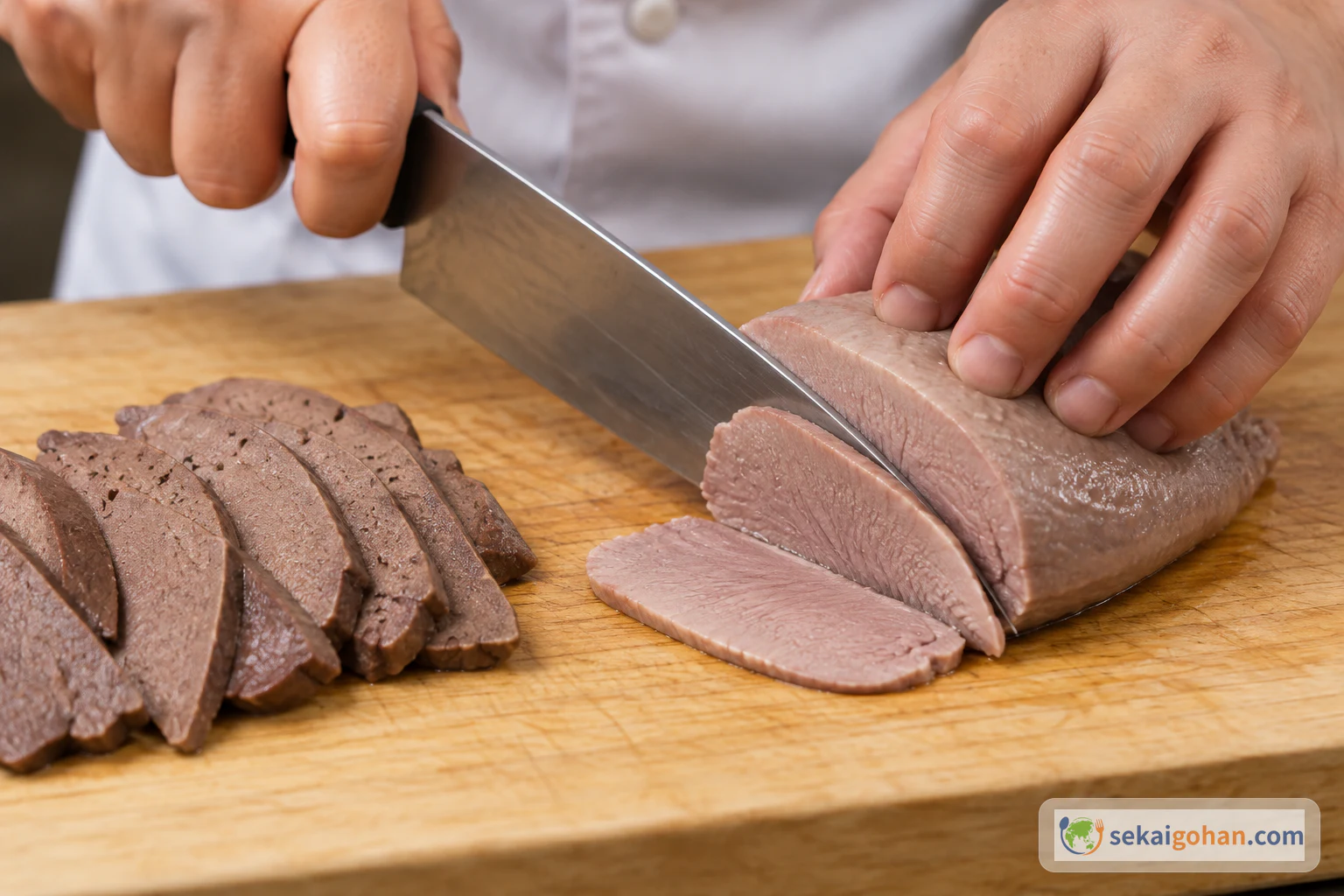
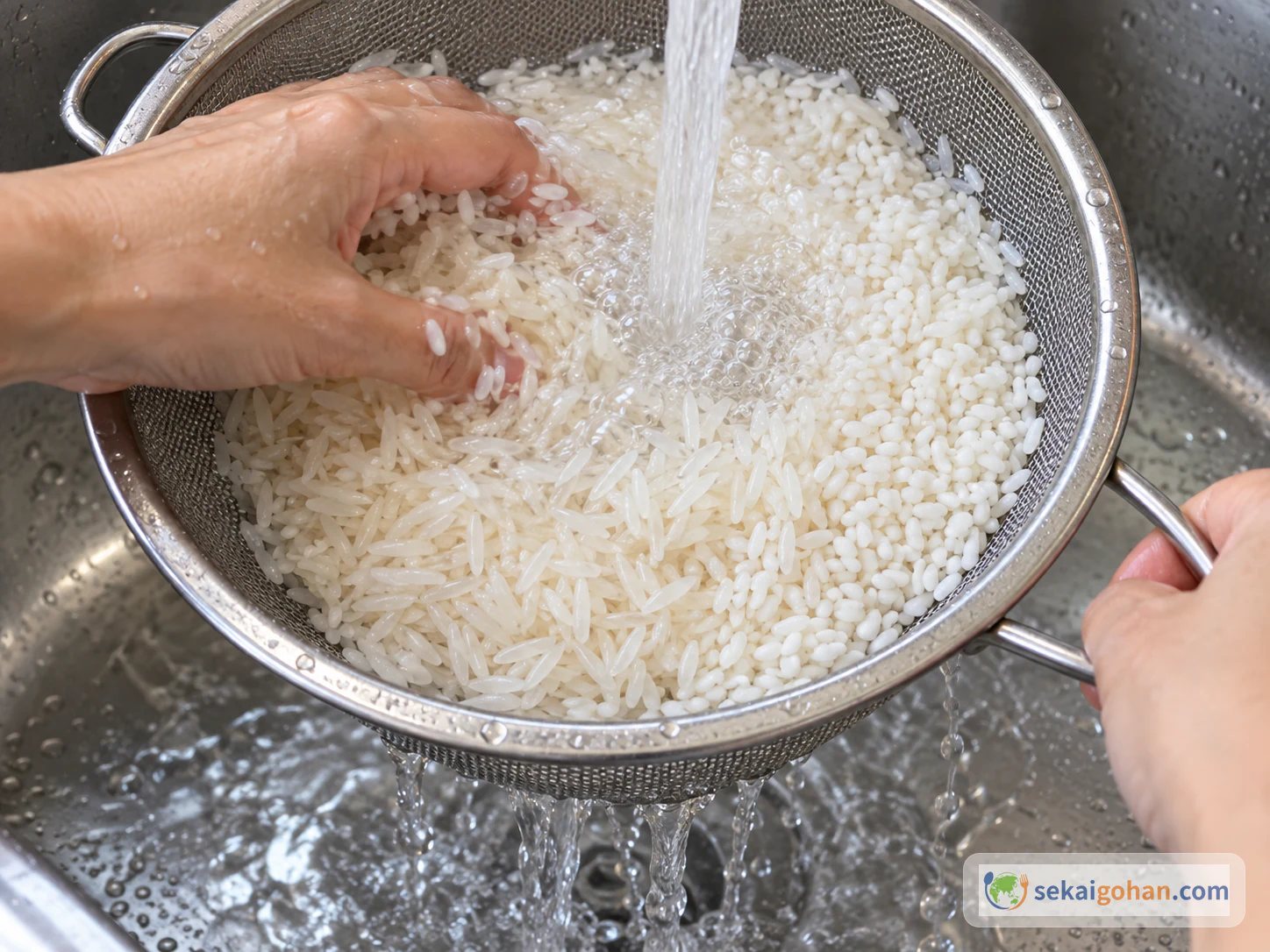
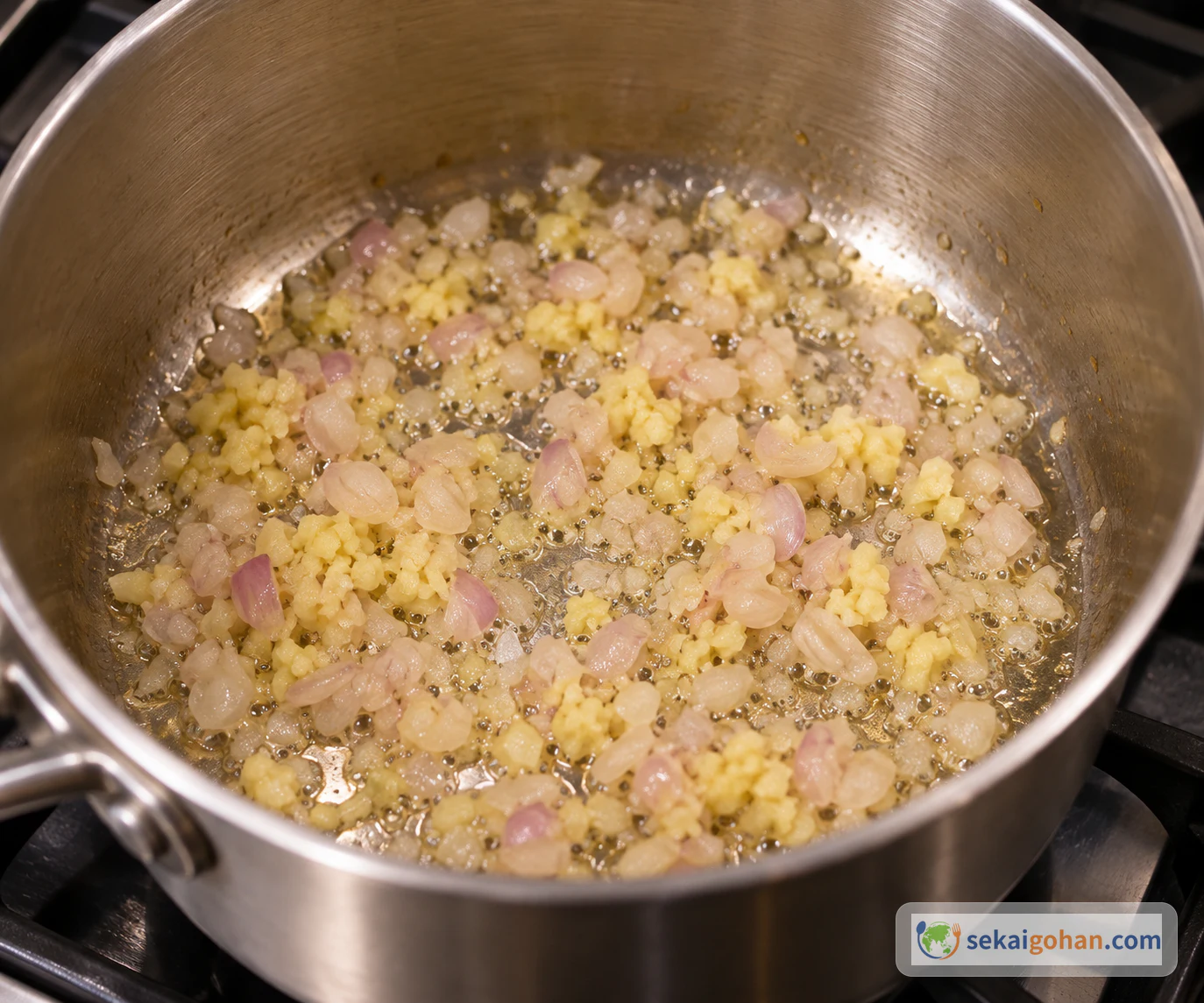
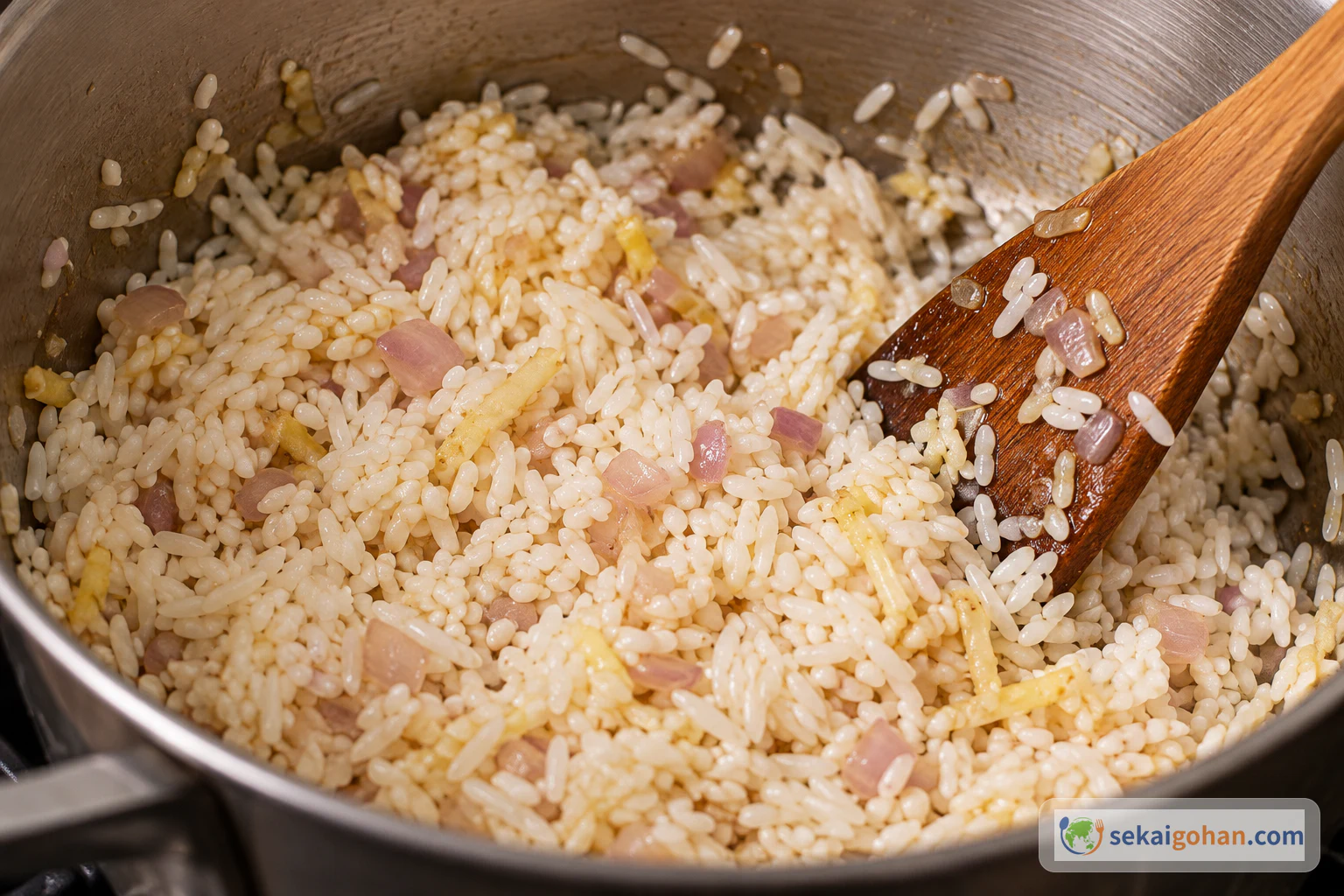
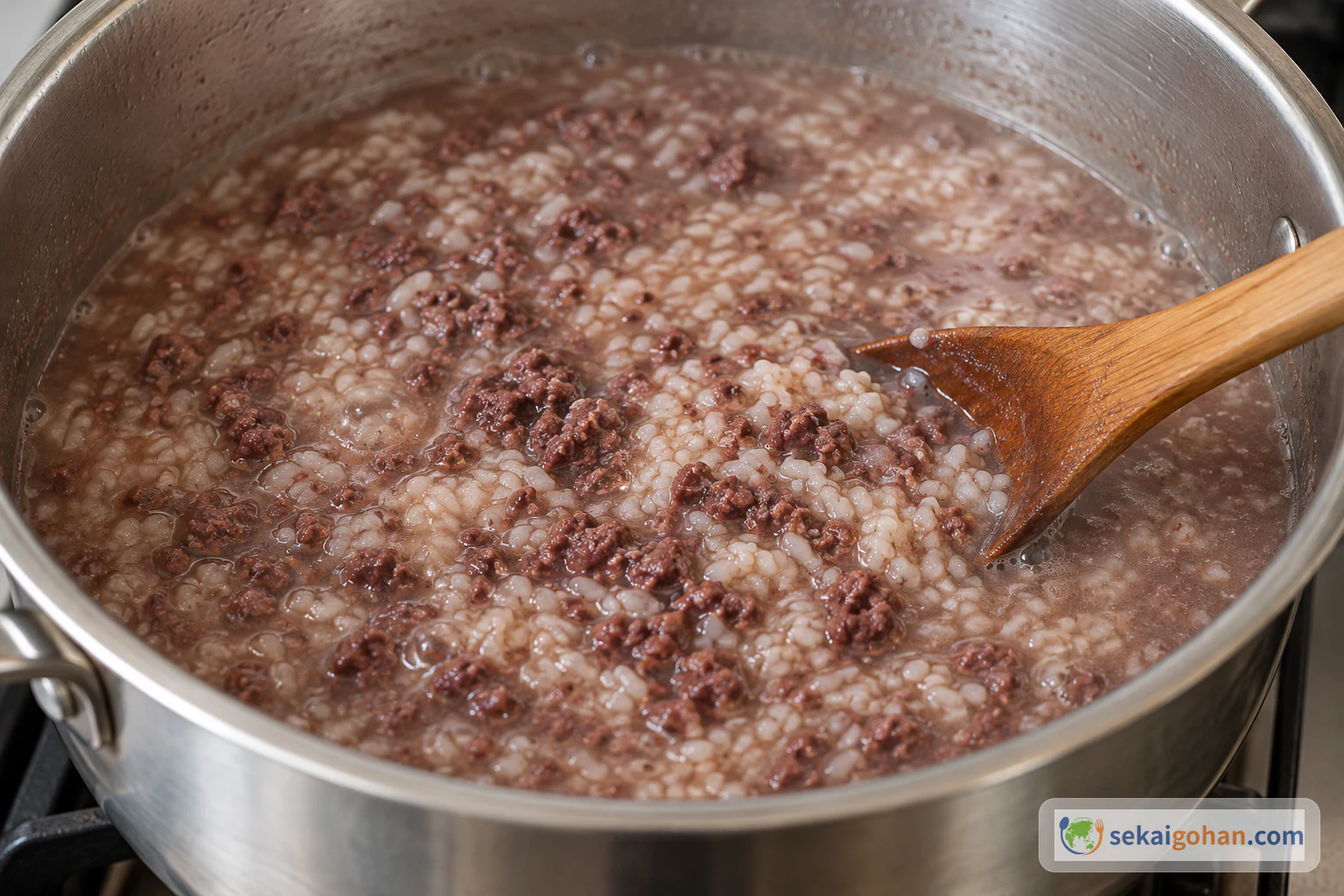
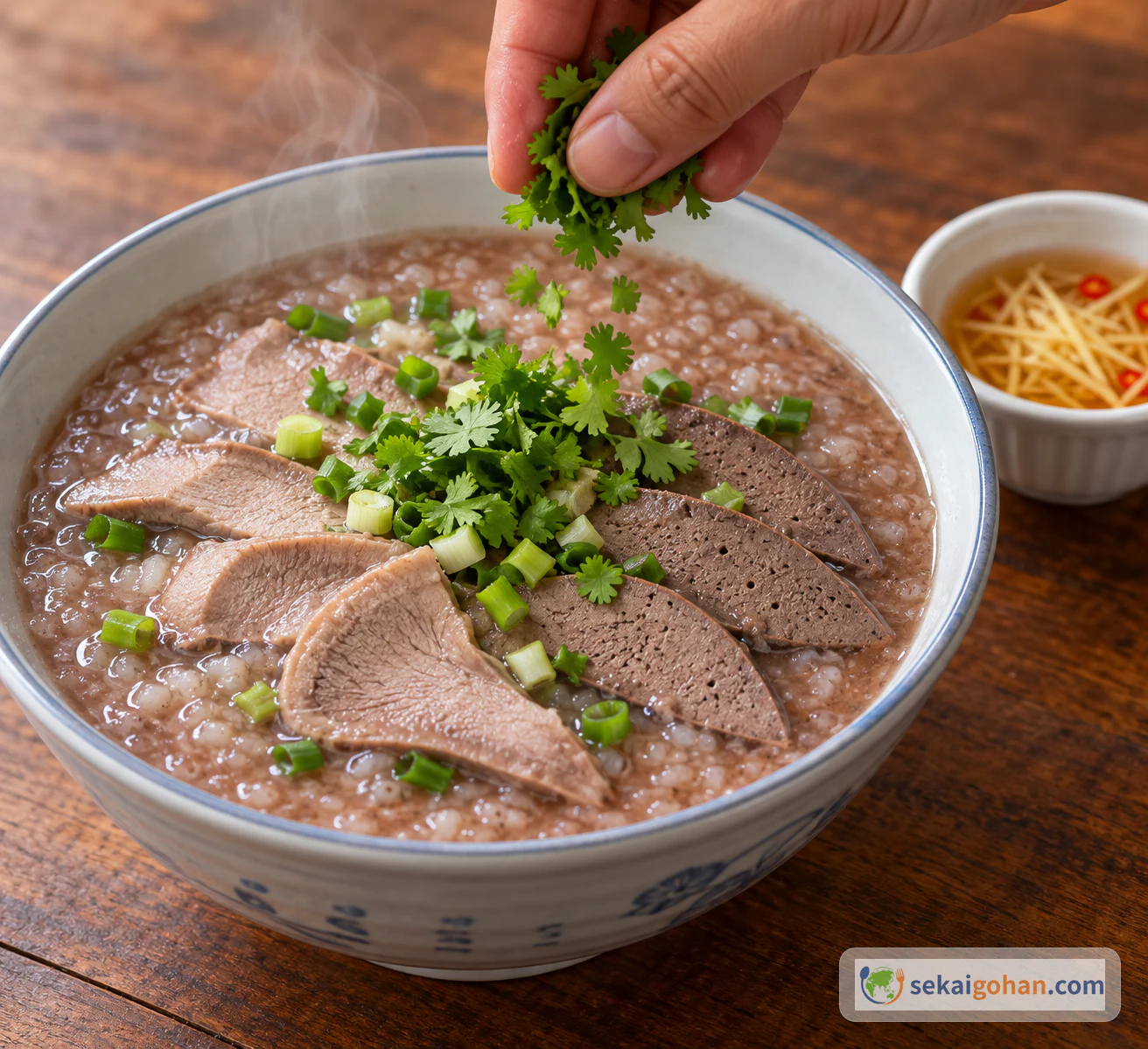
The dish has two parts. Pork organs are scrubbed, simmered in their own pot with shallot and ginger, cooled and sliced. In a second pot, Jasmine and glutinous rice cook with crumbled raw congealed pork blood until they become porridge. The two meet in the bowl, with green onion, cilantro and a side of ginger fish sauce.
Pham's card asks for 2 lb of organs of your choice and names no fixed combination. This article uses liver and tongue because Pham names them as favorites. The 2 lb is a combined amount, and no weight or ratio for each cut is given.
Heat and Handling: The Figures This Article Uses
Liver and tongue: measure the center of the largest piece with a food thermometer. Once it reaches 75°C, keep it there for at least 1 minute.
Raw congealed pork blood: once it is crumbled in and the whole pot is simmering, confirm that the porridge, including the center of the blood pieces, is at 75°C or above. Keep it there for at least 30 minutes.
If you cannot measure the temperature, or it falls short, keep heating. Do not rely on the clock, color, smell or steam.
Pham's recipe gives two simmer times of about 45 minutes each, but no measured temperatures. This article does not claim that those simmers meet the conditions above, and neither the times nor the combined method have been checked here. Treat the temperature checks as a separate requirement on top of the cooking times.
| Material | What Japan's Ministry of Health, Labour and Welfare (MHLW) says | Condition used in this article |
|---|---|---|
| Pork meat and offal | The pork standard includes internal organs and sets a center temperature of 63°C for at least 30 minutes or an equivalent method. Its Q&A gives 75°C for at least 1 minute as an equivalent example, with the minute starting after the center reaches 75°C | Center of the largest piece reaches 75°C, then at least 1 more minute |
| Livestock blood, including pig blood | Blood used to manufacture, process or cook food is heated at 63°C for 30 minutes or by a method with an equivalent or greater sterilizing effect | 75°C or above, including the center of the blood pieces, for at least 30 minutes |
A few limits apply to these figures:
- The formal pork standard is written for sellers preparing pork for direct sale to consumers, and MHLW's consumer guidance on cooking meat separately gives 75°C for at least 1 minute.
- The official texts cover internal organs broadly and do not name tongue individually.
- The blood standard does not list 75°C for 1 minute as an alternative, so that shorter time should not be applied to the blood. The 75°C for 30 minutes used here is a conservative condition set above the 63°C for 30 minutes in the standard.
MHLW also warns that raw or undercooked meat and liver can carry a risk of food poisoning, and advises preventing cross-contamination. The method therefore keeps raw organs and blood apart from foods that will not be cooked further. The images in this article show cooking stages only. They do not show temperatures or prove that any condition has been met.
Ingredients for 4–5 Servings
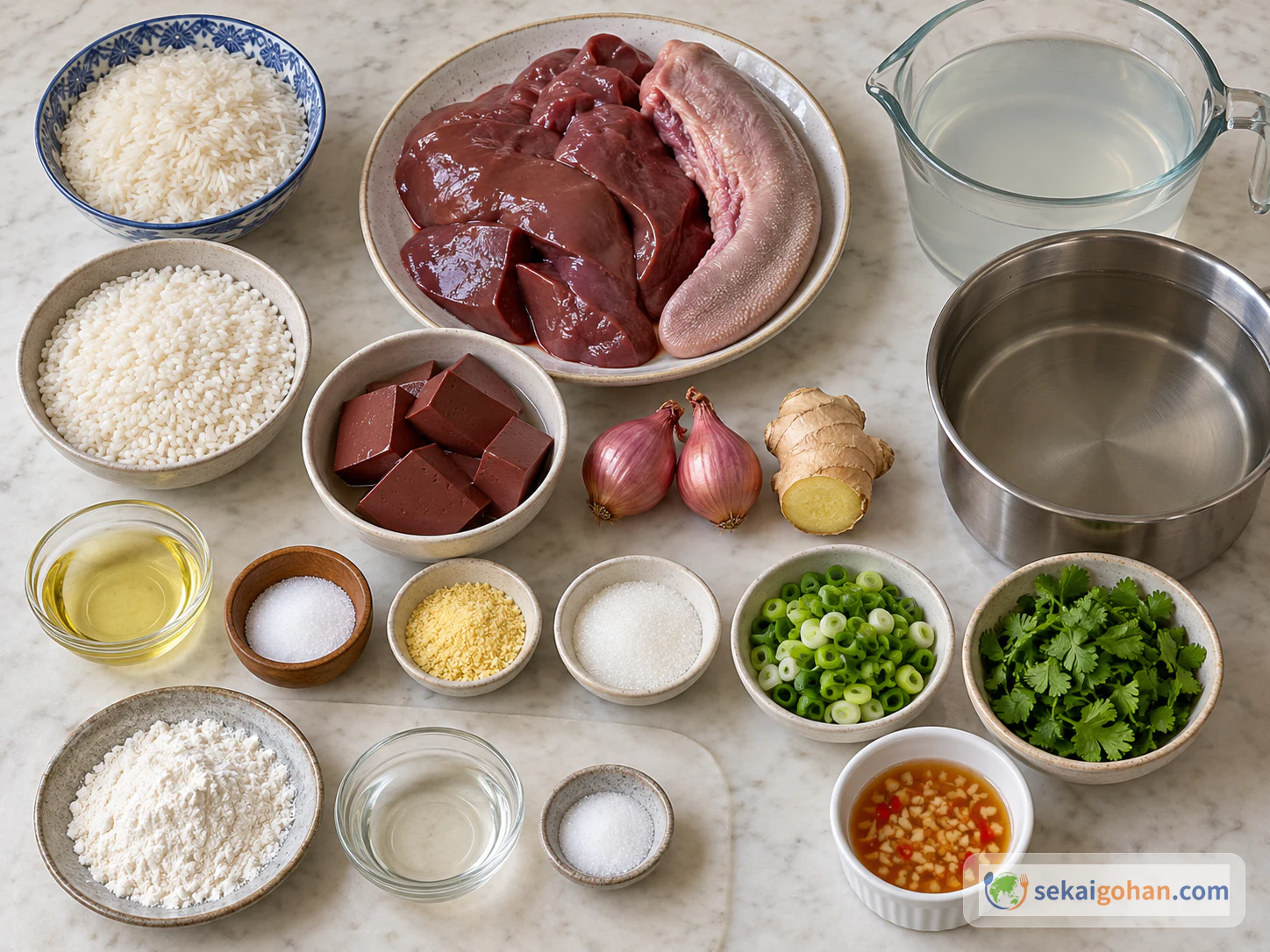
Choosing and Buying
- Rice: use white Jasmine or other long-grain rice with glutinous rice. The porridge turns brown from the blood, not from brown rice.
- Pork blood: buy blood sold for eating, and check with the seller that it is raw and congealed. Do not replace it with liquid blood or cooked blood cake. We have not confirmed specific places to buy it.
- Liver and tongue: tell the seller which cuts you want and that you need them raw. We have not confirmed specific shops for these either.
- Fish sauce: have the ginger fish sauce ready before serving. It goes on the table and never into the pot.
Equipment
- Medium pot for the organs
- Large pot that comfortably holds the rice and 12 US cups of water
- Food thermometer
- Separate cutting boards and knives for raw organs and for cooked organs and garnishes
- Bowl for scrubbing the organs
- Bowl for the ice-water bath
- Skimmer or slotted spoon
- Colander
- Spoon for stirring, plus a clean spoon for tasting
Fixing Problems in the Pot
| What you notice | What to do |
|---|---|
| The thermometer reading falls short, or you cannot get one | Keep heating. Do not go by time, color, smell or steam |
| Large lumps of blood remain | Crumble them smaller, or measure their centers directly |
| The porridge is too thick | Add a little more water and return it to a simmer |
| The porridge sticks to the bottom | Keep the heat gentle and stir from the bottom more often |
| The organs still smell strong during cleaning | Repeat the scrub and rinse until the water runs clear and the odor is gone |
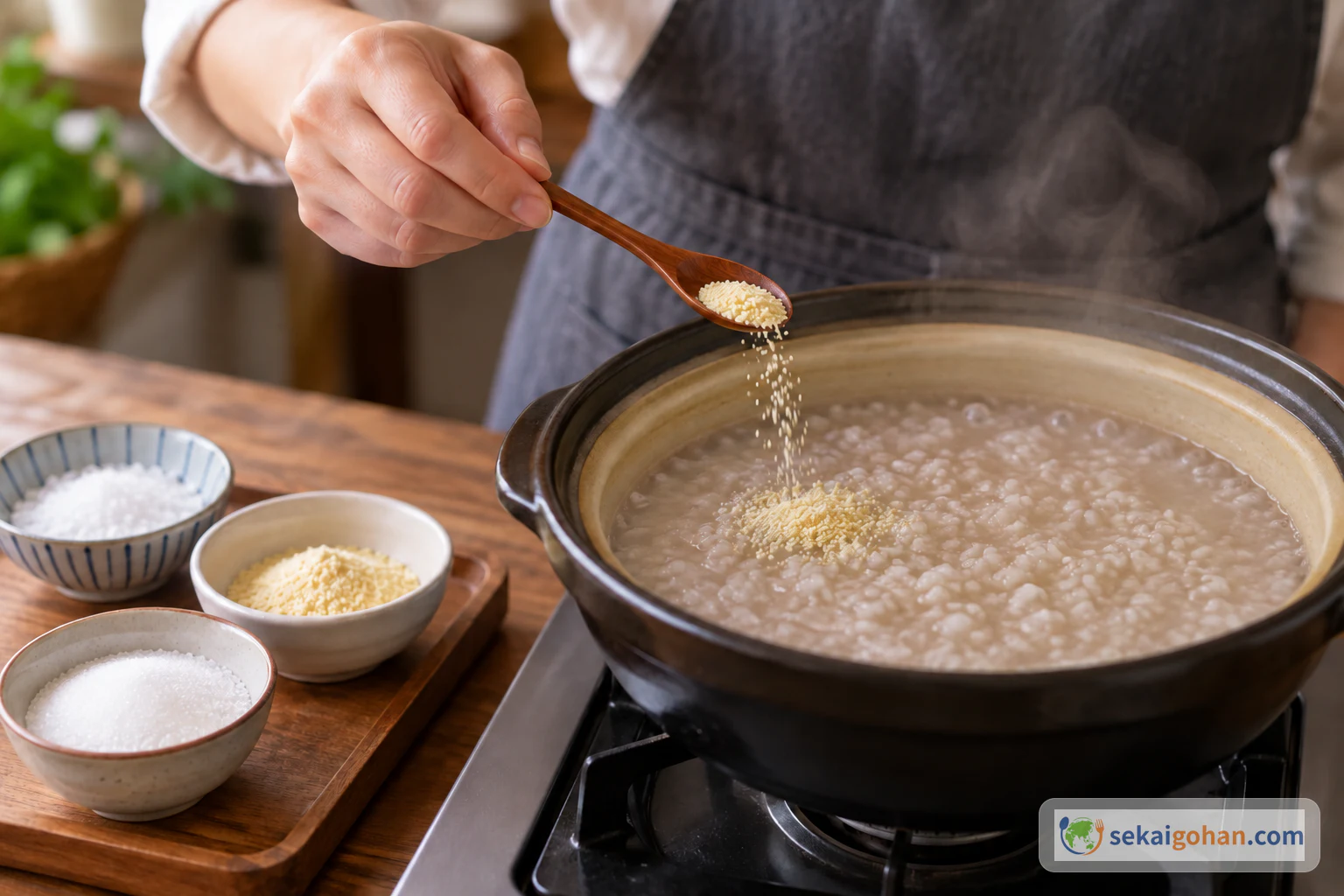
| The porridge tastes flat | Add salt, bouillon powder or sugar a little at a time, tasting after each addition |
| The porridge looks brown | This comes from the pork blood. Color does not show that it is done |
Other Versions and How They Differ
This article follows one recipe from start to finish. The other versions below are for comparison, and their ingredients and amounts are not mixed in.
| Point of difference | What others do | This article |
|---|---|---|
| Glutinous rice | Pham's text calls it optional, and the card allows more long-grain rice in its place | Uses 1/2 US cup glutinous rice |
| Organs | Pham's card leaves the choice of organs open | Liver and tongue, 2 lb combined |
| Blood in the porridge | Pham says the raw piece can be left whole or smashed | Crumbled, so the pieces are smaller and easier to check |
| Blood on top | Pham lists pork blood sausage and blood cake as options; VnExpress describes a restaurant bowl with cooked blood | Omitted |
| Porridge base | Wok & Kin starts its porridge with pork bones and water; VnExpress reports a broth of bones, head and innards | Water only, with no bones or stock |
| Garnish | Pham lists several optional garnishes; VnExpress mentions bean sprouts with a southern bowl | Green onion and cilantro only |
Where the Dish Sits: Restaurant Bowls and Home Pots
We could not find a source that identifies an inventor, a date or a single origin for cháo lòng, and this article does not offer one. A 2017 VnExpress International report by Vi Vu says the dish's origin is unclear.
The same report describes how much a bowl can vary. Its restaurant version includes pork organs and cooked blood pudding, in a broth of pork bones, head and innards. It reports a thicker porridge in Hanoi in the north and a looser one further south, where a bowl may come with ginger fish sauce and bean sprouts.
Home cooks vary it too. Jeannette of Wok & Kin shares a version tied to a Vietnamese-born grandmother, which uses pork bones and different rice, offal and blood-jelly preparations. Pham's version is built differently again: organs in one pot, and rice and raw blood in another. None of these is the single correct bowl. For more of the country's food, see our Vietnam page.
Frequently Asked Questions
Has this recipe been tested?
No. Sekai Gohan has not test-cooked this recipe. It is based on Vicky Pham's published recipe, with heating conditions added from Japanese official figures.
Does a 45-minute simmer make the organs and blood safe?
This article does not make that claim. Pham's page gives the simmer times but no measured temperatures, and we have not verified them. Use the thermometer conditions in steps 4 and 11.
Why do the organs get 1 minute and the blood 30 minutes?
They fall under different official criteria. MHLW's pork Q&A gives 75°C for at least 1 minute as an example equivalent to the pork center standard. The blood standard sets 63°C for 30 minutes or an equivalent method, and does not name 75°C for 1 minute as an alternative. This article therefore holds the blood at 75°C or above for at least 30 minutes.
How long does it take?
Pham's card lists 15 minutes of prep, 45 minutes of cooking and 1 hour in total. The method, however, describes one simmer of about 45 minutes for the organs and another for the porridge, without saying whether they overlap. If you cook them one after the other, or the temperature checks take longer, expect it to go beyond the hour on the card.
Can I use liquid blood or cooked blood cake instead?
This article has no basis for recommending either. The 5 oz is a raw congealed piece measured by weight, so liquid blood or cooked blood cake would be a different ingredient and would not follow this method.
Can I replace the glutinous rice?
Pham's card allows additional long-grain rice instead. This article keeps the glutinous rice, so the method and images reflect that choice.
How much liver and how much tongue should I use?
The recipe gives only the 2 lb combined total, so the split is up to you.
Can I cook the porridge in the water from the organ pot?
This recipe does not do that. The porridge uses its own 12 US cups of water, and Pham's recipe does not mention reusing the organ-cooking water.
Where does the ginger fish sauce recipe come from?
Pham's cháo lòng page links to a separate recipe, "Vietnamese Ginger Fish Sauce (Nuoc Mam Gung)." Its formula is not reproduced here, and the cháo lòng recipe gives no amount for the sauce.
Can I keep leftovers?
This article does not give a storage period or reheating method, because it does not adopt the storage statements on the recipe page.
Sources
- Vicky Pham, "Vietnamese Pork Organ Porridge (Cháo Lòng)," April 16, 2025. The main recipe: the family birthday story, quantities, servings, listed times, method and garnish options. https://vickypham.com/blog/vietnamese-pork-organ-porridge-chao-long/
- Vicky Pham, "How I Started as a Food Blogger," May 19, 2019. The author's own account of learning Vietnamese home cooking from a mother-in-law and starting the blog from lesson notes. https://vickypham.com/blog/how-i-started-as-a-food-blogger/
- Vicky Pham, "Vietnamese Ginger Fish Sauce (Nuoc Mam Gung)." Identifies the side condiment linked from the main recipe; its formula is not used here. https://vickypham.com/blog/vietnamese-ginger-fish-sauce-nuoc-mam-gung/
- Jeannette, Wok & Kin, "Cháo Lòng (Pork Offal Congee)," October 26, 2021. A separate family recipe that starts with pork bones, used for comparison only. https://www.wokandkin.com/chao-long/
- Vi Vu, VnExpress International, "The Vietnamese porridge that eats up everything," April 5, 2017. A restaurant-style bowl, reported regional differences and the unclear origin. https://e.vnexpress.net/news/travel/food-recipes/the-vietnamese-porridge-that-eats-up-everything-3566145.html
- Japan's Ministry of Health, Labour and Welfare (MHLW), "Standards for Food, Additives, etc." (食品、添加物等の規格基準), section B-3. Heating of livestock blood used to manufacture, process or cook food: 63°C for 30 minutes or an equivalent method. https://www.mhlw.go.jp/web/t_doc?dataId=78334000&dataType=0&pageNo=58
- MHLW, notification on the revised standards (食品、添加物等の規格基準の一部を改正する件について), June 2, 2015. The pork category includes offal; center standard of 63°C for at least 30 minutes or an equivalent method, for pork prepared by sellers for direct sale to consumers. https://www.mhlw.go.jp/web/t_doc?dataId=00tc1154&dataType=1&pageNo=1
- MHLW, "Food poisoning prevention: cook meat well" (食中毒予防:お肉はよく加熱して食べよう). Risks of raw or undercooked meat and liver, a center temperature of 75°C for at least 1 minute for meat, and preventing cross-contamination. https://www.mhlw.go.jp/stf/web_magazine/closeup/08.html
- MHLW, Slaughterhouse Act (と畜場法), Article 3. Defines livestock to include pigs, which brings pig blood within the blood standard's livestock category. https://www.mhlw.go.jp/web/t_doc?dataId=79151000&dataType=0
- MHLW, Q&A on the pork standard (豚の食肉の基準に関するQ&Aについて), June 2, 2015. Coverage of edible pork including internal organs, 75°C for at least 1 minute as an equivalent example, the hold starting after the center reaches 75°C, and color change as a guide only. https://www.mhlw.go.jp/file/06-Seisakujouhou-11130500-Shokuhinanzenbu/0000087849.pdf