Bánh Tai Heo: A Two-Color Spiral, Sliced Thin and Fried Pale
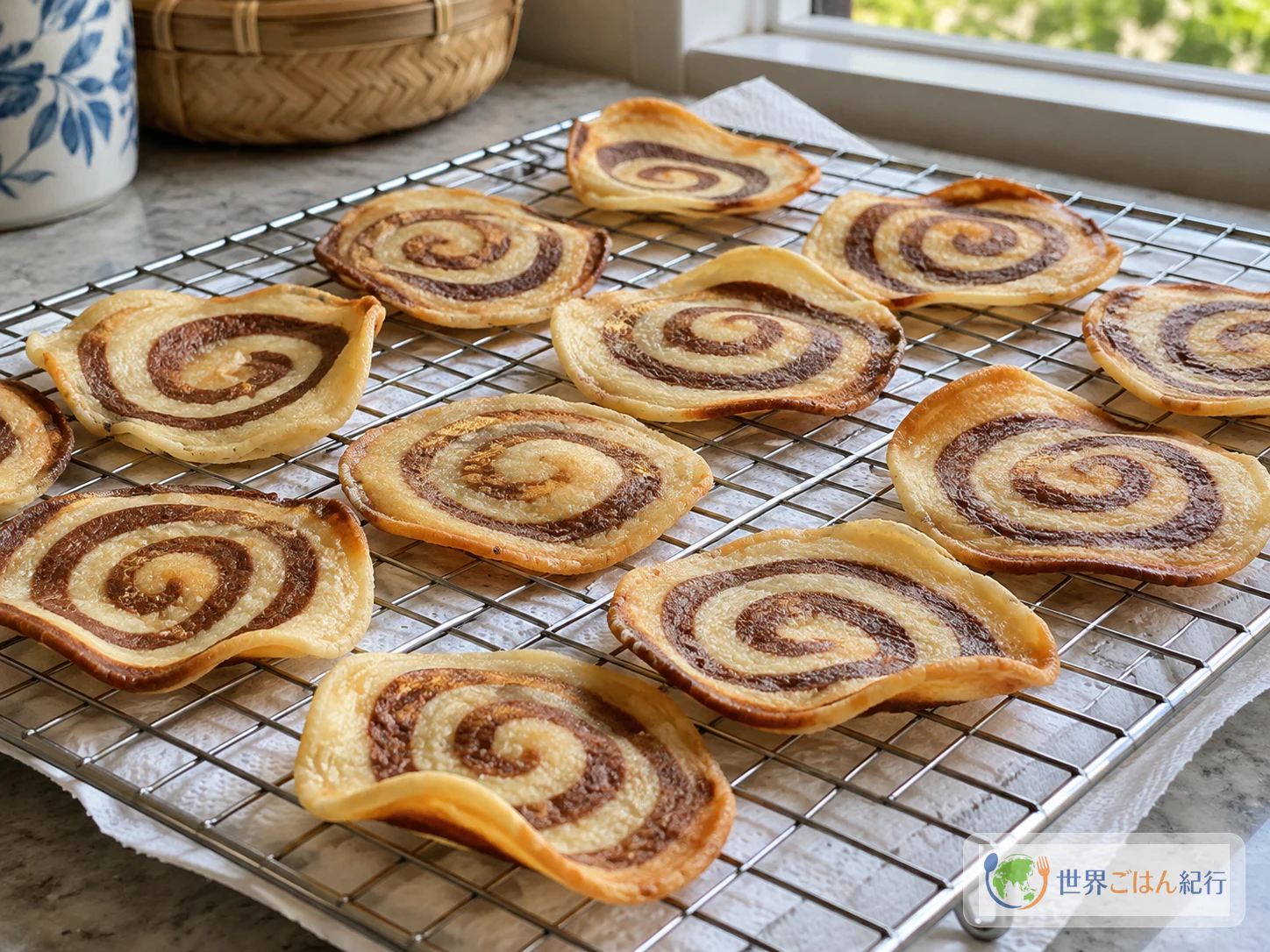
Two separate doughs, one pale and one cocoa, rolled together into a tight spiral. Slices cut as thin as you can, pressed thinner by hand, and fried only briefly over very low heat so the pale dough stays pale yellow rather than turning golden brown.
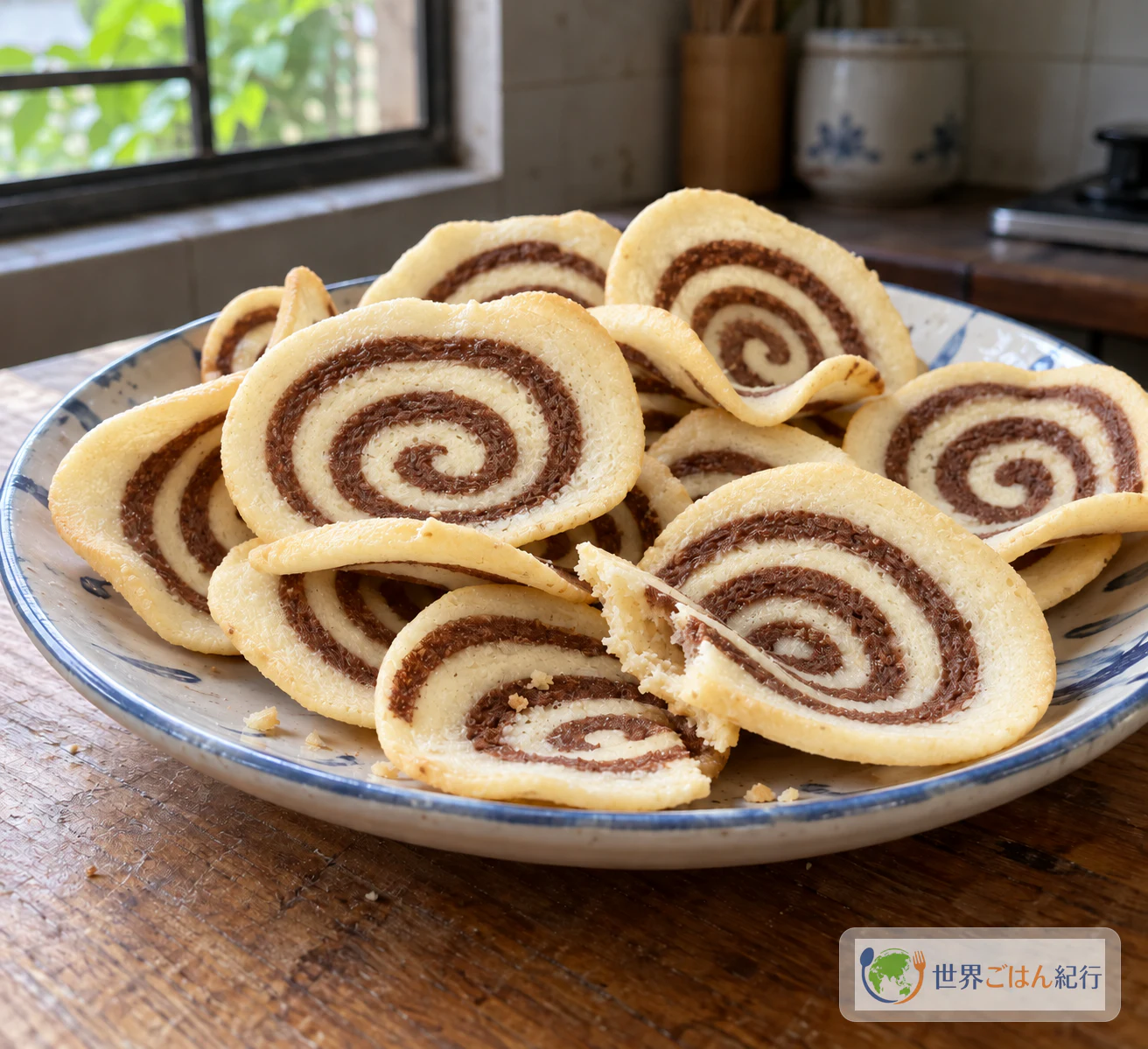
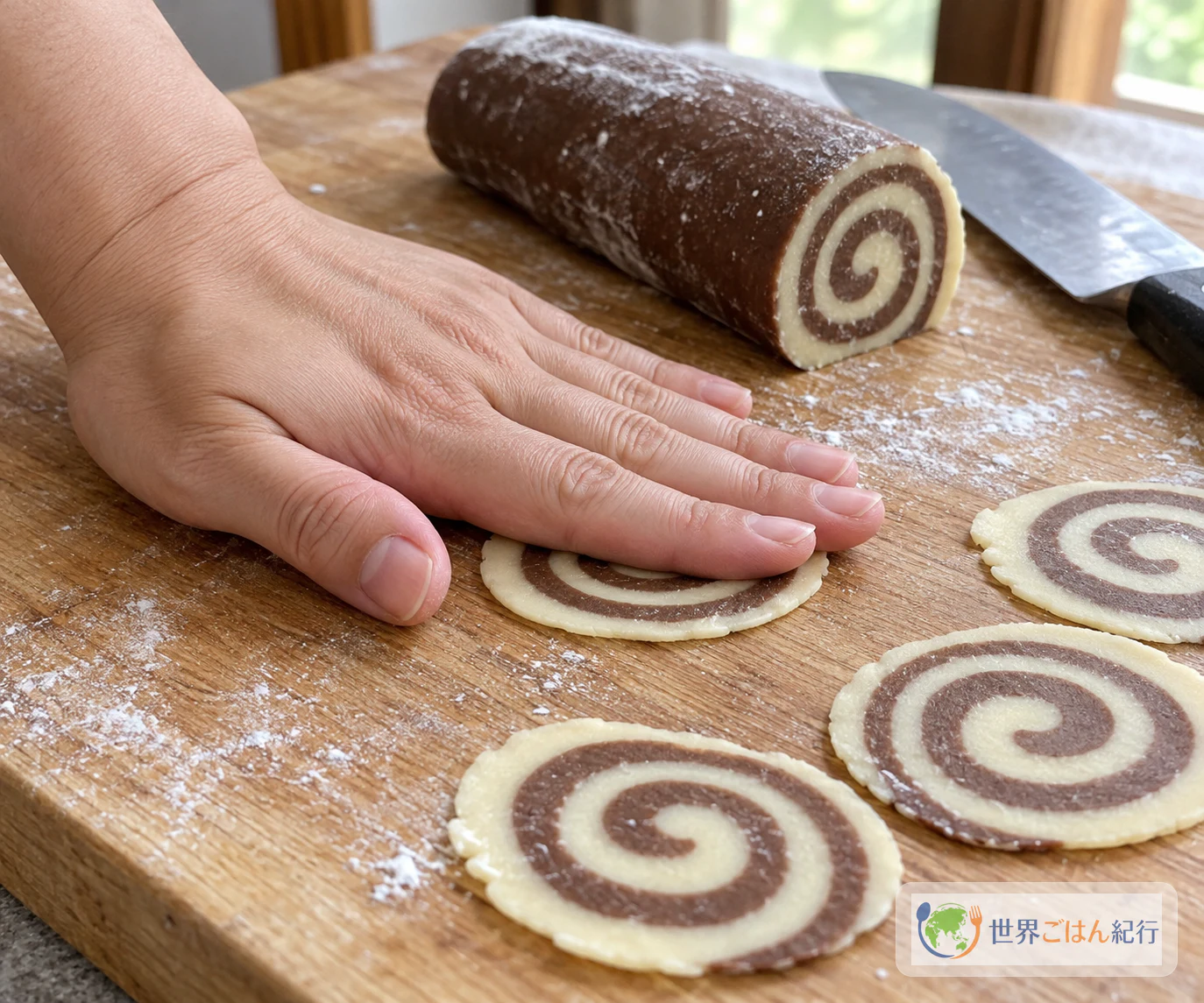
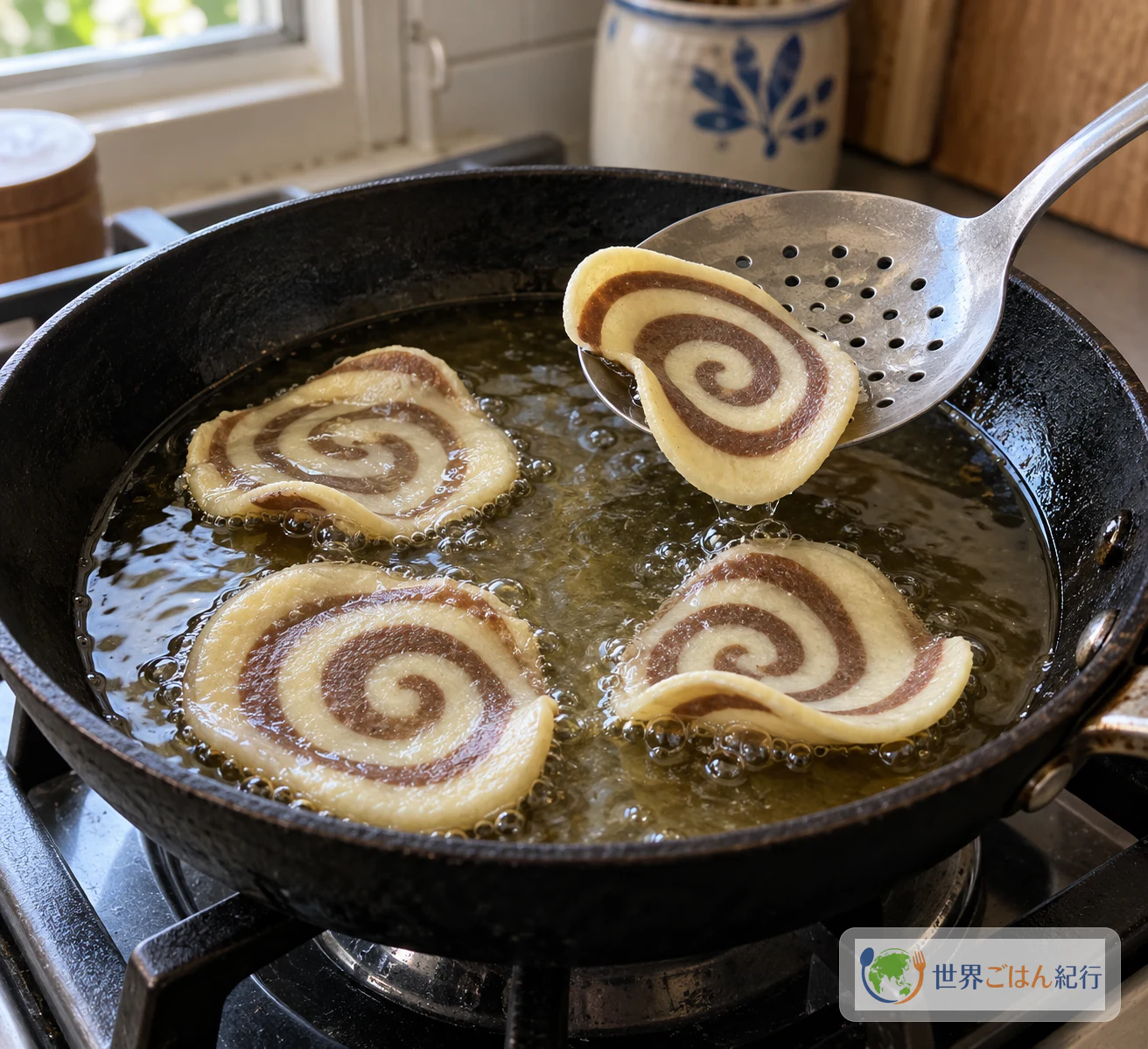
Slice through a chilled log of layered dough and a spiral appears on the cut face: cream-colored dough wound around cocoa-brown dough. Press each thin slice flat, slip it into oil, and it curls gently as it fries. That wavy, swirled shape is where the name comes from. Tai heo (also lỗ tai heo) means "pig's ear," but this is a sweet cookie, and there is no pork in it at all. The name describes the shape of the sliced, fried pieces, nothing more.
This recipe follows a single published home recipe by Helen Le, with a coconut-milk base, a little lime juice, and a pinch of salt. It is a small batch; the source does not state how many cookies it makes, so no yield is given here.
This recipe has not been kitchen-tested by Sekai Gohan. The amounts, times and visual cues below come from the source recipe. Oil depth, heat and slice thickness vary from kitchen to kitchen. Timing and pale color are source cues, not proof that the flour-and-egg dough is cooked through; do not serve cookies with an undercooked interior.
Why a Cookie Is Called "Pig's Ear"
Bánh tai heo is a fried cookie made from two doughs, one plain and one flavored with cocoa, rolled into a spiral and cut into thin coins. A short Vietnamese-language explainer from VnExpress notes that bánh lỗ tai heo gets its name from its pig-ear-like shape after slicing, and that it is generally made from wheat flour, sugar and flavoring ingredients, not pork. SAVEUR describes it as a Vietnamese street snack whose thin slices become wavy in the oil, which is what gives them their ear-like look.
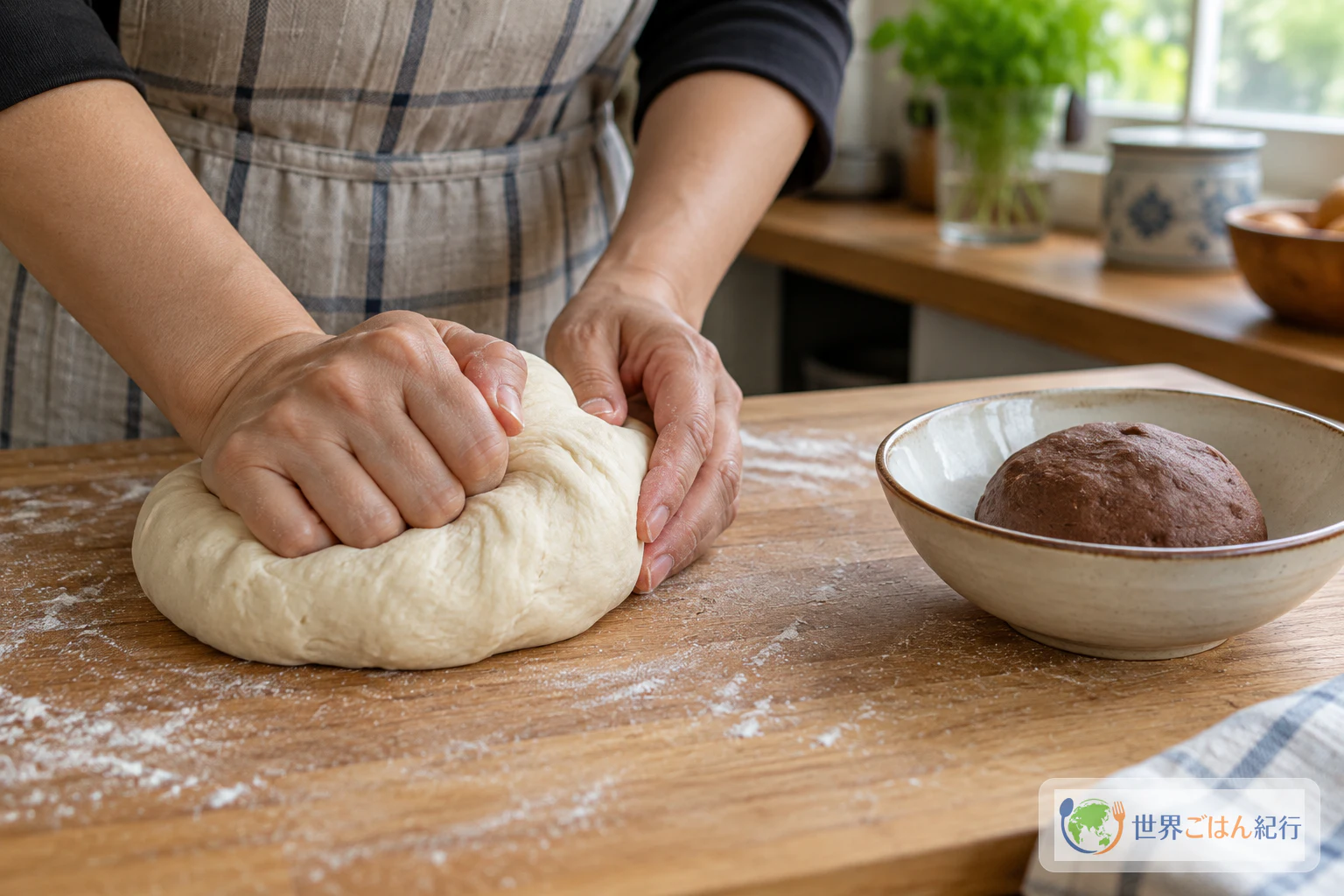
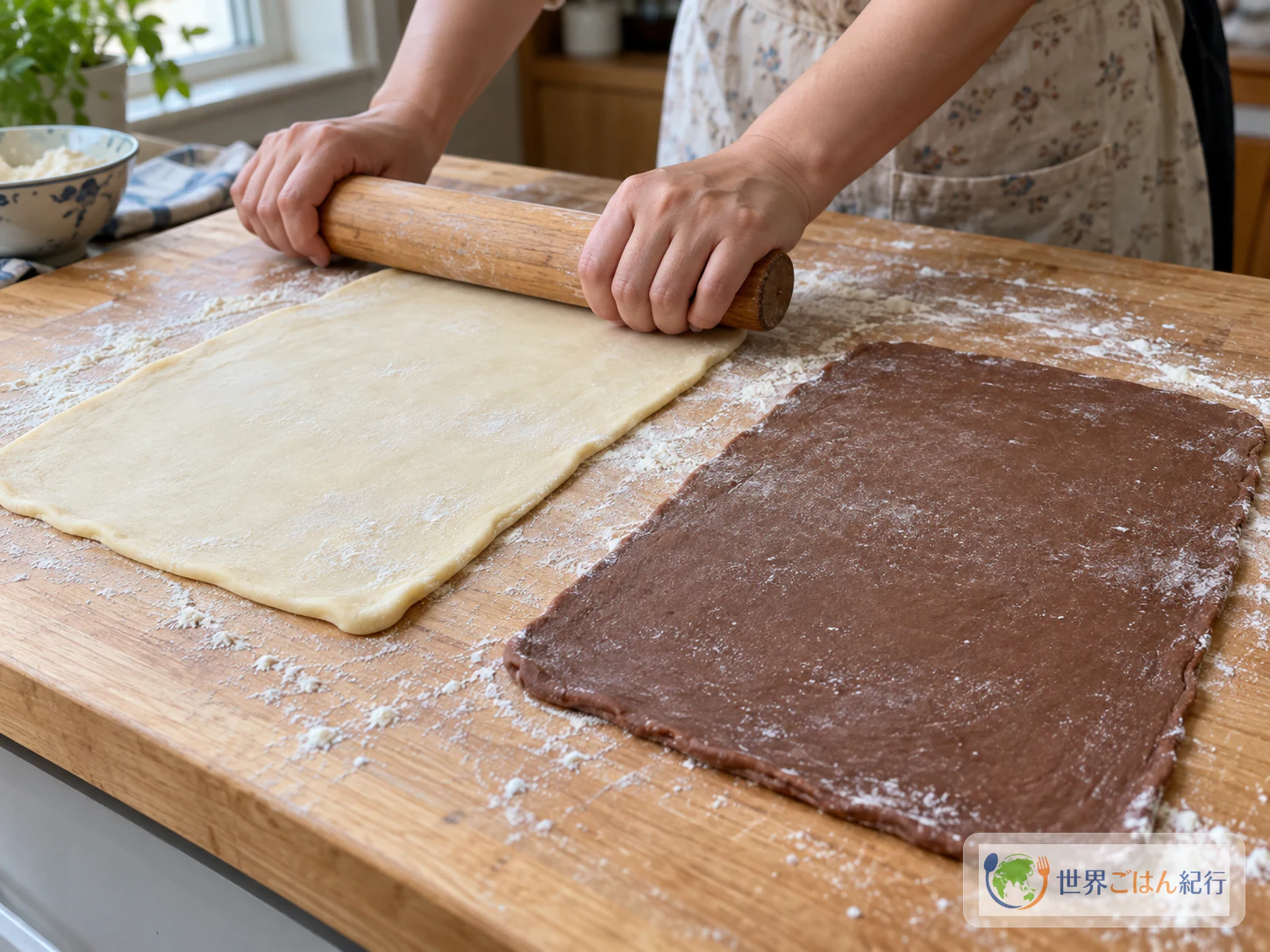
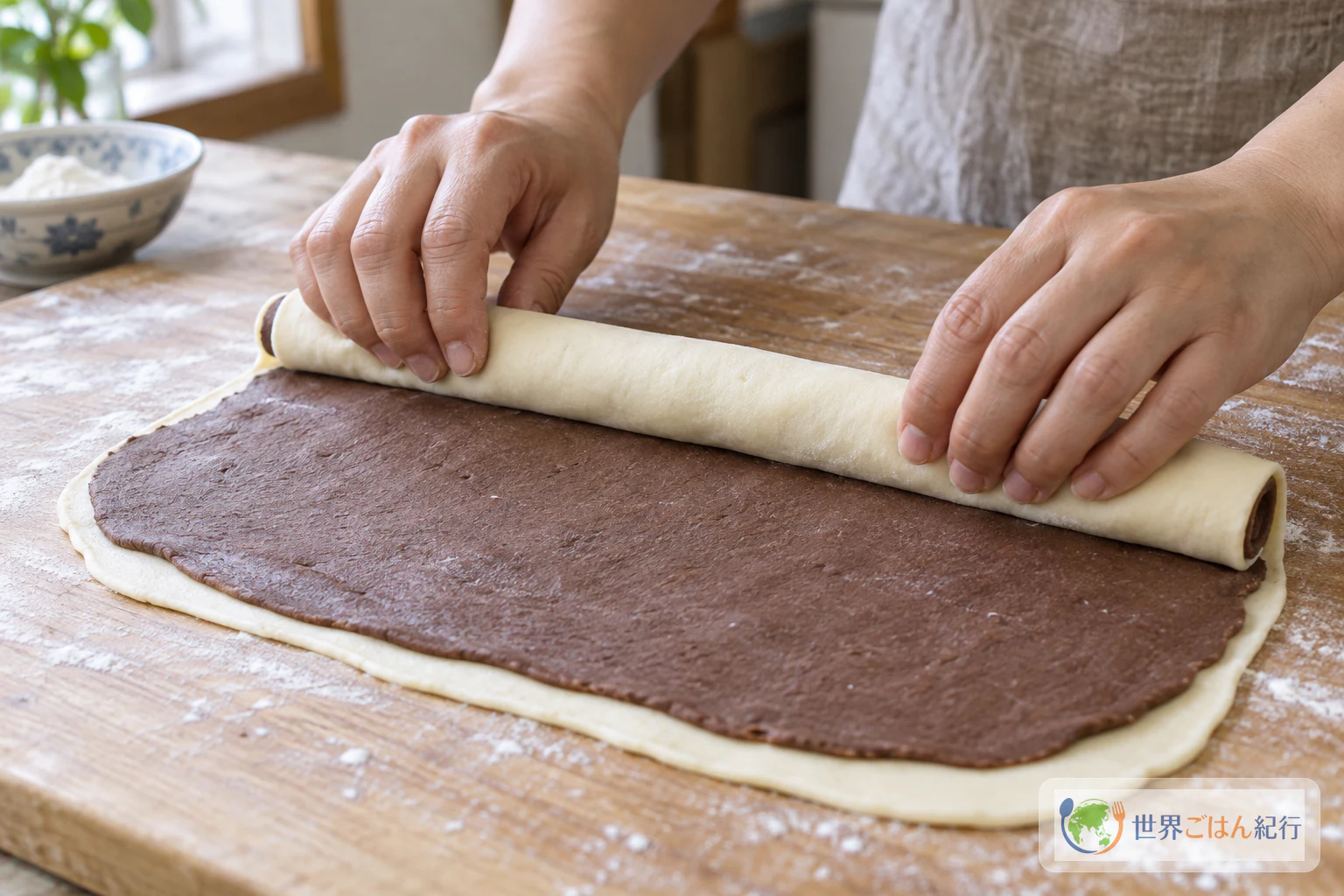
The spiral is not made by marbling one dough. Each color is mixed and kneaded on its own, rolled into its own sheet, and only then stacked and rolled up. Thin slicing is what turns the log into cookies, and pressing each slice thinner by hand is what lets it curl as it fries. If you want to explore more of the country's food, see the Vietnam country page.
Ingredients: Two Doughs from One Base
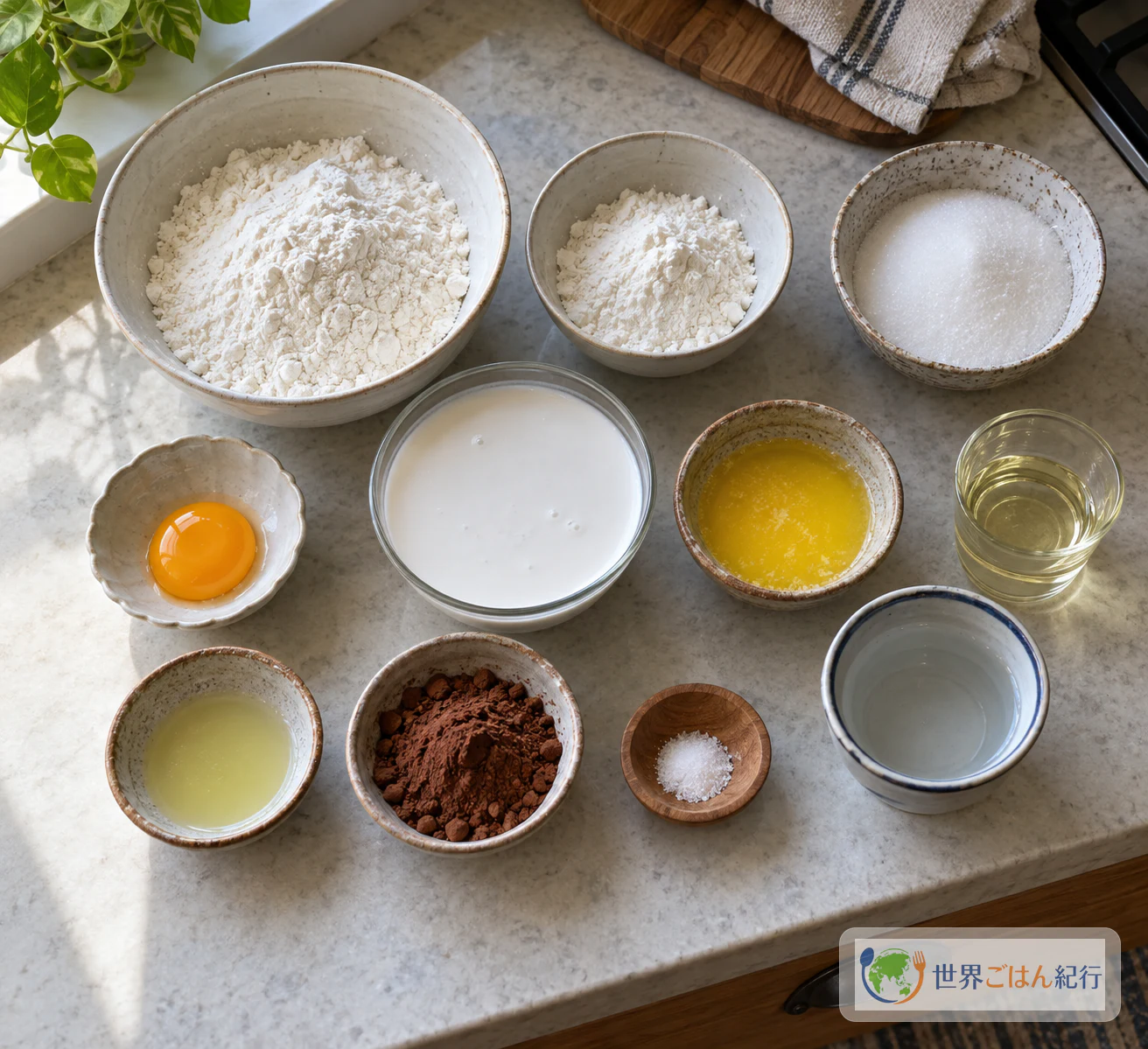
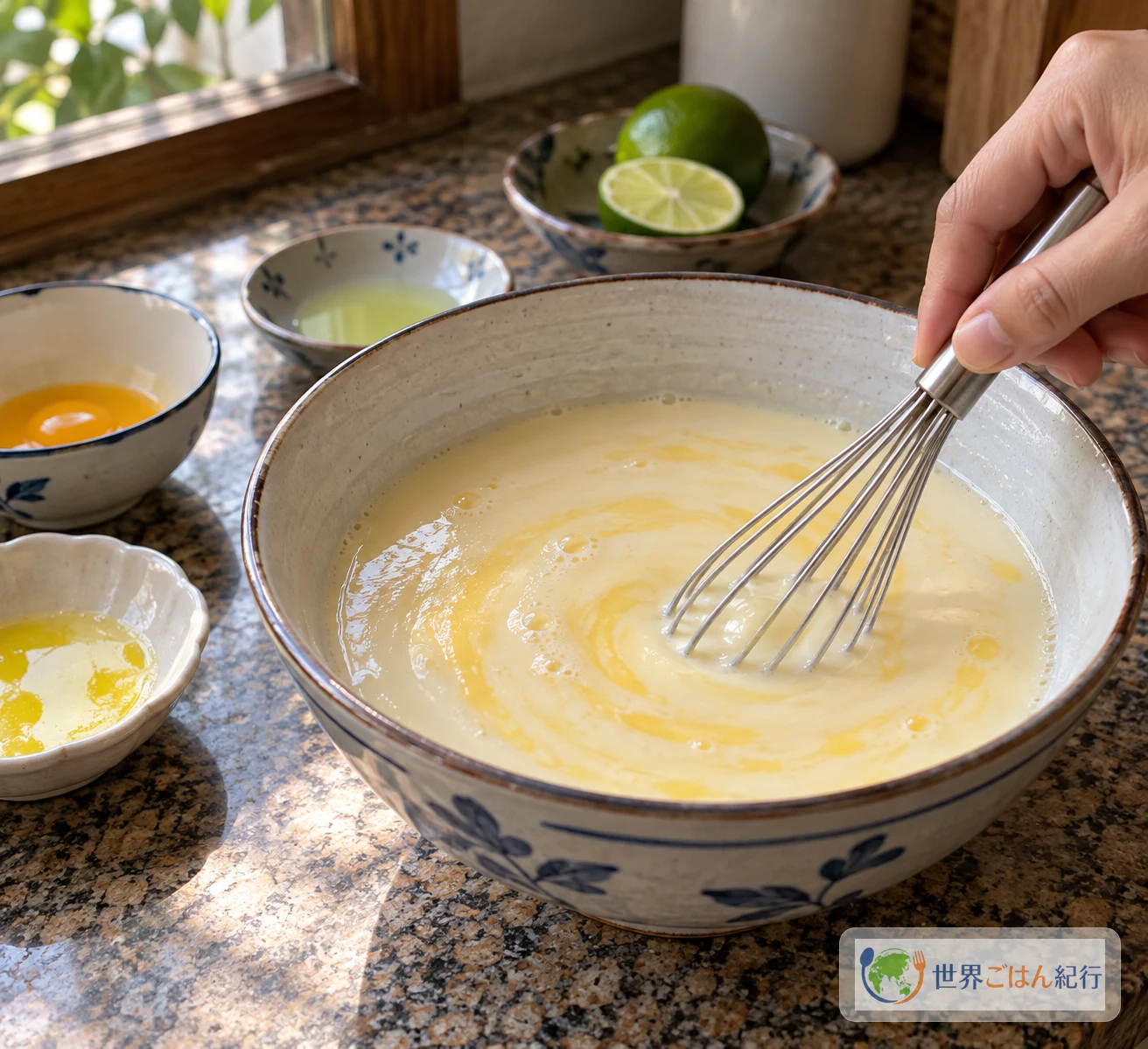
The flour is divided between the two doughs, and the liquid base is divided too: about 2/5 goes to the cocoa dough and about 3/5 to the pale dough. Every ingredient is used once; nothing is added twice.
Equipment
- Two bowls for the doughs, plus one for the liquid base
- Whisk or fork
- Rolling pin and a work board
- Pastry brush (for the water)
- Food wrap
- A very sharp knife
- A skillet or pan that holds about 1 inch of oil
- Chopsticks (for checking the oil)
- Slotted spoon
- Wire rack and absorbent paper
- An airtight container
Choosing and Swapping Ingredients
Coconut milk or milk. Ordinary fresh milk can replace coconut milk. It works as the liquid, but the cookies lose the coconut flavor; coconut milk is the standard here.
Butter. Use the 20 g weight and melt it before adding.
Cacao. Only 1 tsp goes into the 70 g of cocoa-dough flour, which is enough to give the spiral its brown contrast.
Flour. Use ordinary all-purpose flour. Flours absorb liquid differently, but this recipe doesn't add extra liquid.
Troubleshooting
| What you see | Likely reason | What to try |
|---|---|---|
| The pale parts turn golden brown | The oil is too hot, or the slices stayed in too long | Keep the source’s very low heat after the chopstick test and watch the thin slices closely; do not solve browning by serving an undercooked interior. Pale color is not a cooking-completion test |
| Slices stay flat and thick instead of curling | The slices weren't thin enough | Cut thinner and press each slice flatter with your palm before frying |
| Gaps in the spiral, or layers separating | The sheets weren't stuck together or the log was rolled loosely | Brush a little water on the pale sheet, press the layers together, and roll tightly from the long side |
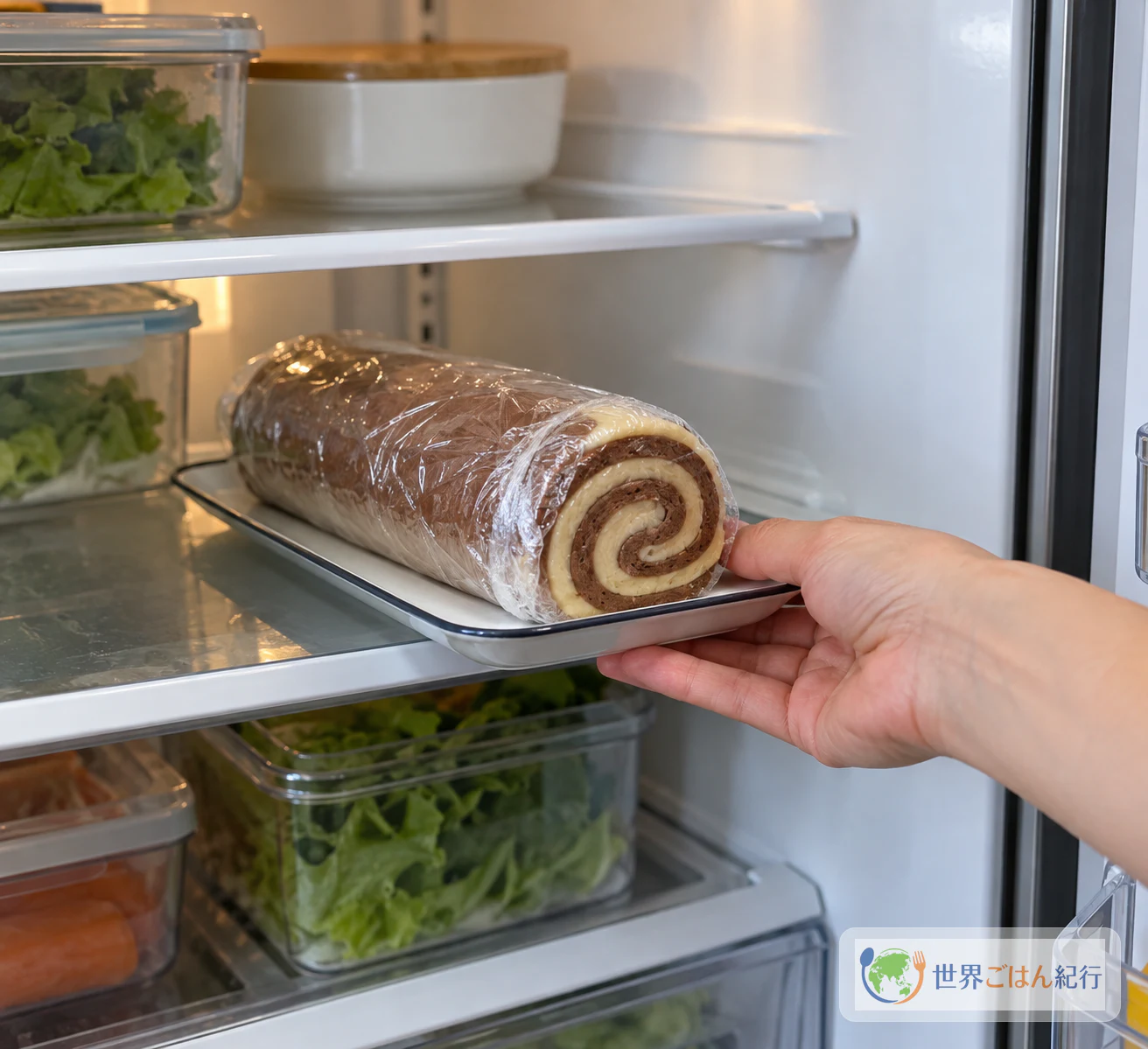
| The log squashes or tears when slicing | The dough isn't firm enough | Make sure it has chilled in the refrigerator for about 2 hours, and use a very sharp knife |
| Sugar won't dissolve in the base | Cold coconut milk | Warm the base briefly (the source suggests 30 seconds in the microwave) before adding the yolk |
| Spirals look slightly bent or uneven | Normal hand-rolling variation | A few irregular pieces are fine |
Variations
Lighter, crisper texture with rice flour. The source offers an optional swap: use 100 g all-purpose flour plus 70 g rice flour instead of all-purpose flour alone. This is a separate variation, not the standard recipe above.
Sesame. The source lists sesame seeds as optional. If you use them, add them after slicing, before pressing and frying. The standard version here is made without sesame.
Milk instead of coconut milk. As noted above, fresh milk can replace the coconut milk, at the cost of the coconut flavor.
Serving
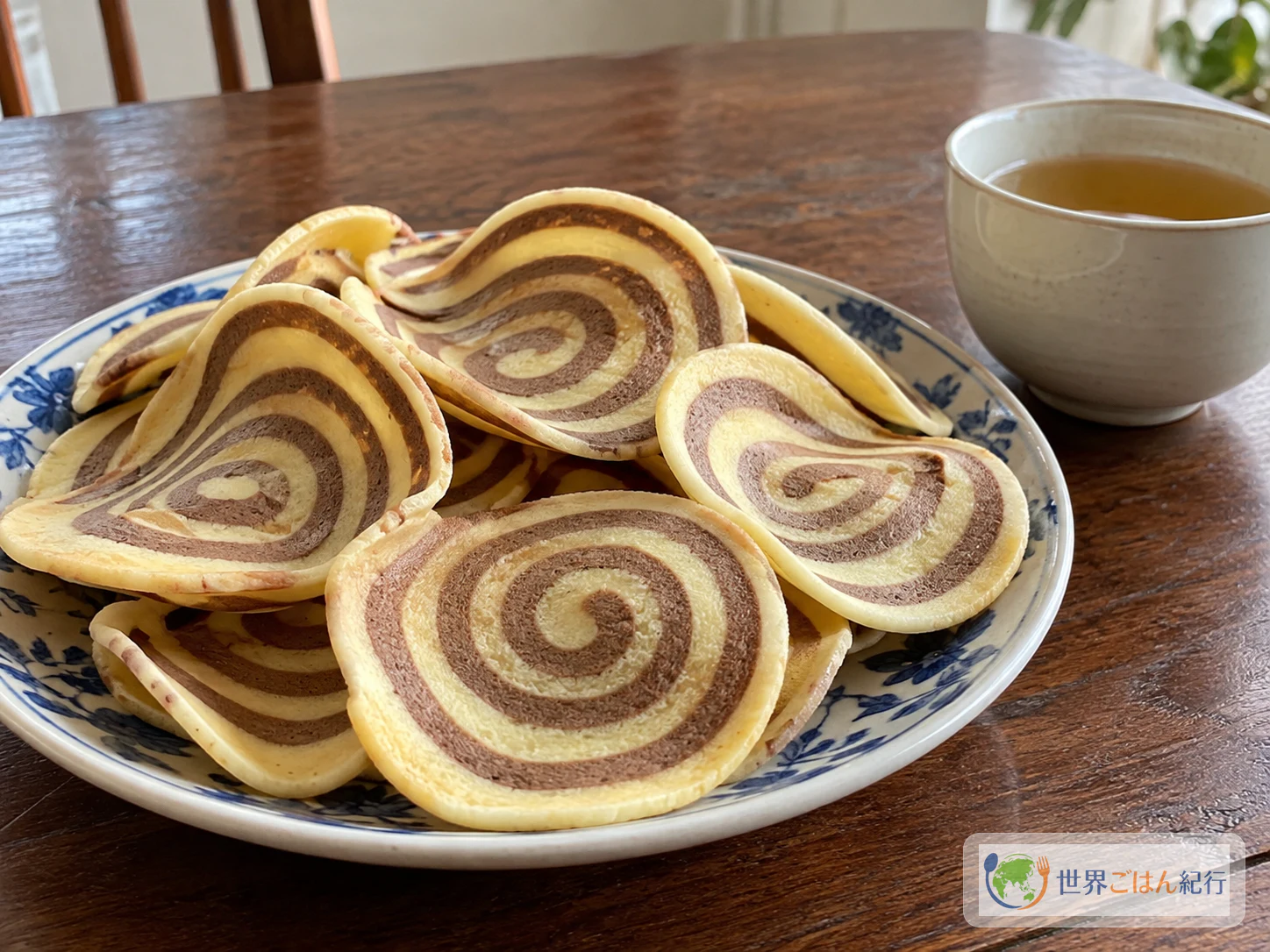
Eat the cookies once they have cooled completely. A cup of tea is one easy pairing for a snack, but it's simply a suggestion, not a fixed custom.
Storage
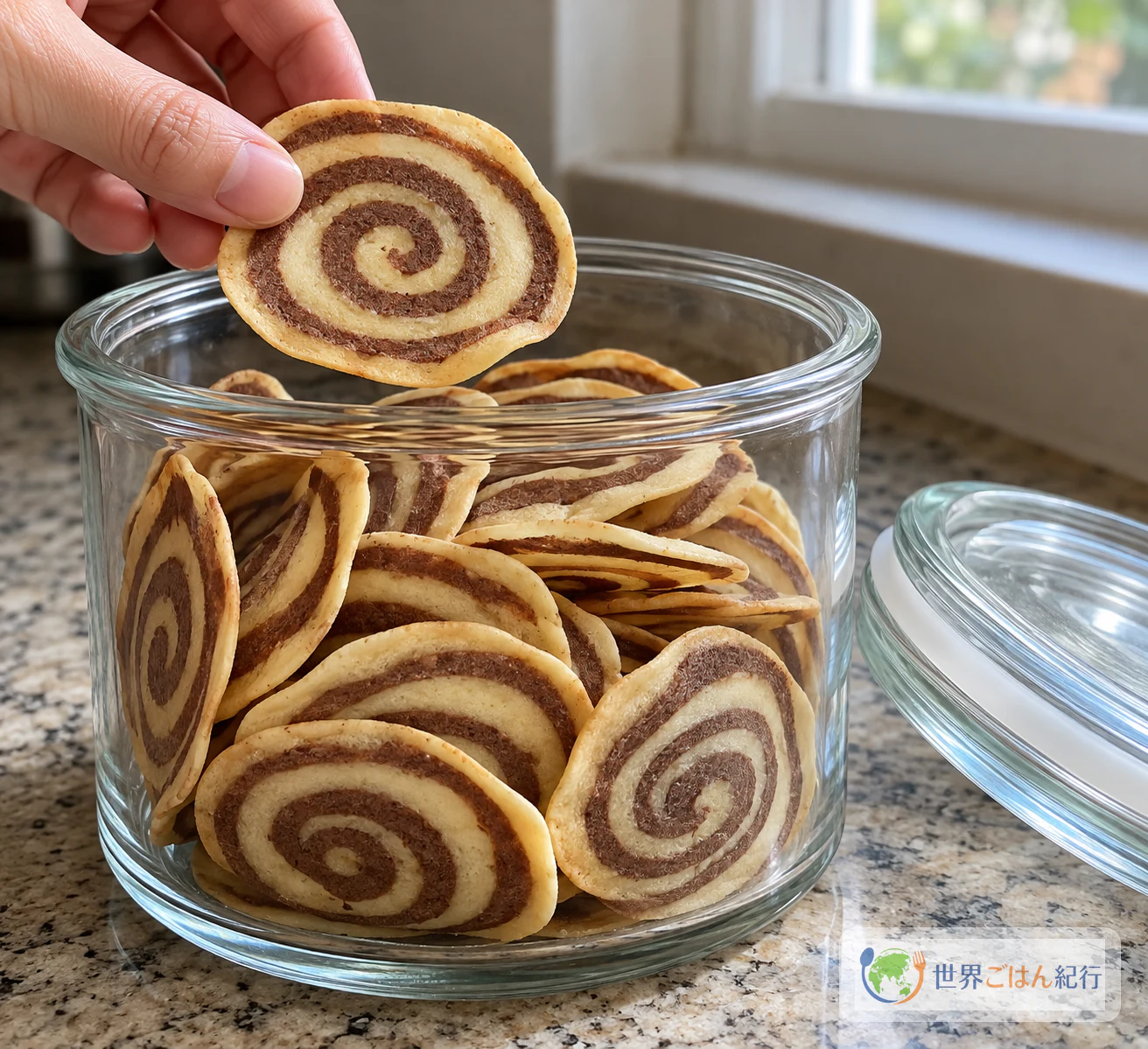
Let the cookies cool completely, then keep them in an airtight container to protect them from humidity. Adding a food-safe desiccant to the container can help keep them dry. No shelf life is guaranteed here, since humidity and storage conditions vary, so it's best to eat them soon.
Frequently Asked Questions
Does bánh tai heo contain pork?
No. "Tai heo" means pig's ear, and the name refers only to the shape of the sliced, fried cookies. The ingredients are flour, sugar, coconut milk, egg yolk, butter, lime juice, cacao and salt.
How hot should the oil be?
The source gives no temperature. The source heats the oil until bubbles form around a chopstick, then lowers the heat to very low. That cue is not a numerical oil-temperature measurement, and neither color nor the brief quoted time proves the dough is cooked through.
Can I chill the log in the freezer to save time?
This recipe uses the refrigerator for about 2 hours, not the freezer. Other recipes use different chilling methods, but they aren't part of this one.
Why divide the egg mixture unevenly?
The cocoa dough uses less flour (70 g) than the pale dough (100 g), so it gets about 2/5 of the liquid base and the pale dough gets about 3/5.
How many cookies does this make?
The source recipe doesn't state a yield, and it depends on how thin you slice. It's a small batch.
Sources
- Helen Le, "Pig's ear cookies - Bánh tai heo," Helen's Recipes. The recipe followed here: ingredients and amounts, splitting the flour and egg mixture between the two doughs, rolling, layering, refrigerating, slicing, pressing and frying, plus the optional rice-flour and sesame variations. https://helenrecipes.com/recipe-pigs-ear-cookies-banh-tai-heo/
- SAVEUR, "Banh Tai Heo Recipe (Vietnamese 'Pig's Ears' Cookies)." A separate recipe used only for the dish's identity: a cocoa-and-plain spiral cookie described as a Vietnamese street snack whose thin slices turn wavy in oil and resemble pig's ears. Its formula and method are not used here. https://www.saveur.com/recipes/banh-tai-heo-vietnamese-pigs-ears-cookies/
- VnExpress, "Bánh gì tên lợn nhưng tuyệt nhiên không có thịt heo?" A Vietnamese-language explainer stating that bánh lỗ tai heo is named for its pig-ear-like shape after slicing and is generally made from wheat flour, sugar and flavorings, not pork. https://vnexpress.net/banh-gi-ten-lon-nhung-tuyet-nhien-khong-co-thit-heo-5107432-p2.html