Bún Thang: Many Fine Toppings, One Clear Broth
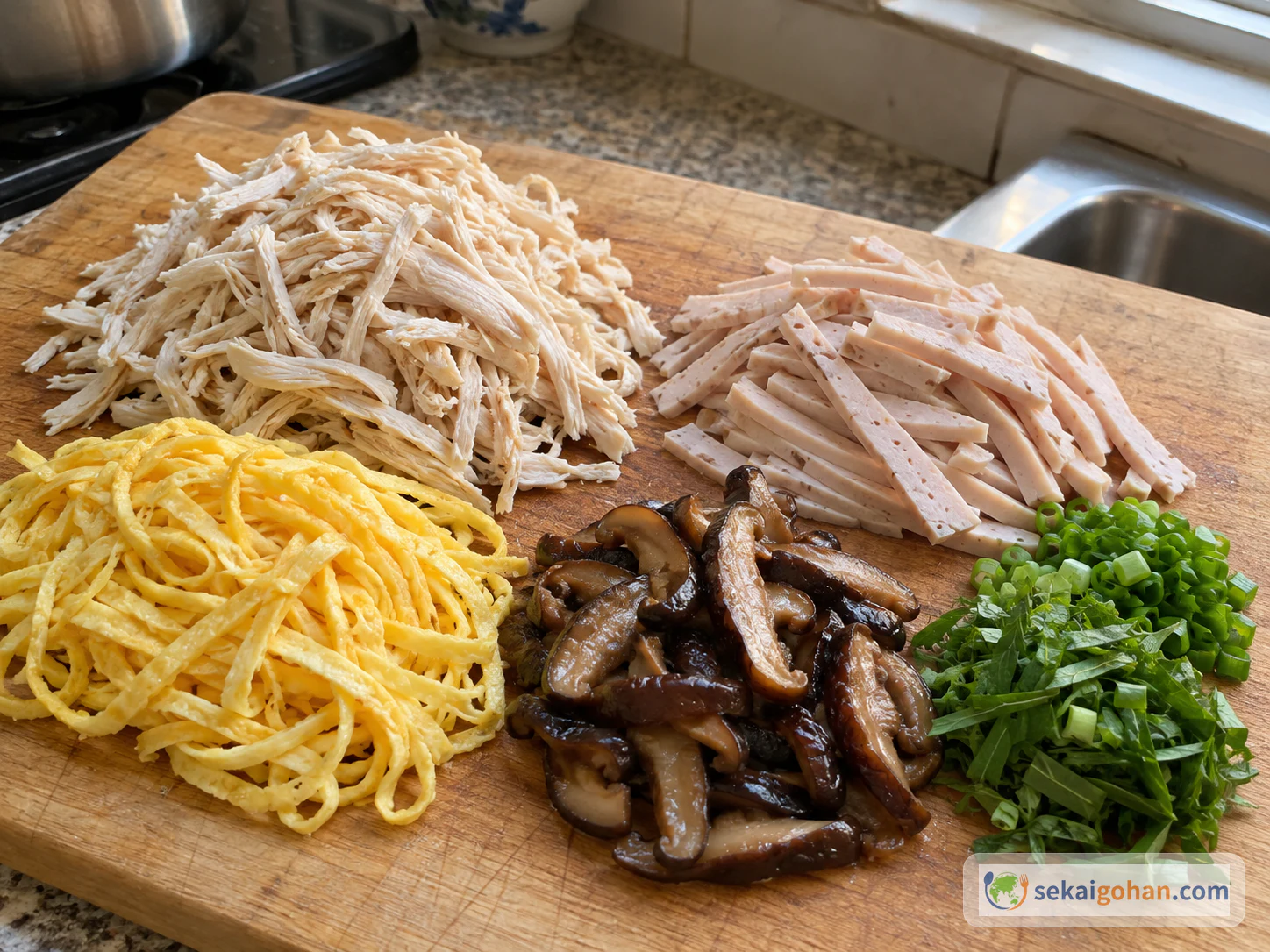
Every topping is prepared on its own and cut fine, then laid side by side over the noodles instead of being mixed. The broth stays clear, and the chicken is judged done by its center temperature, not by the clock.
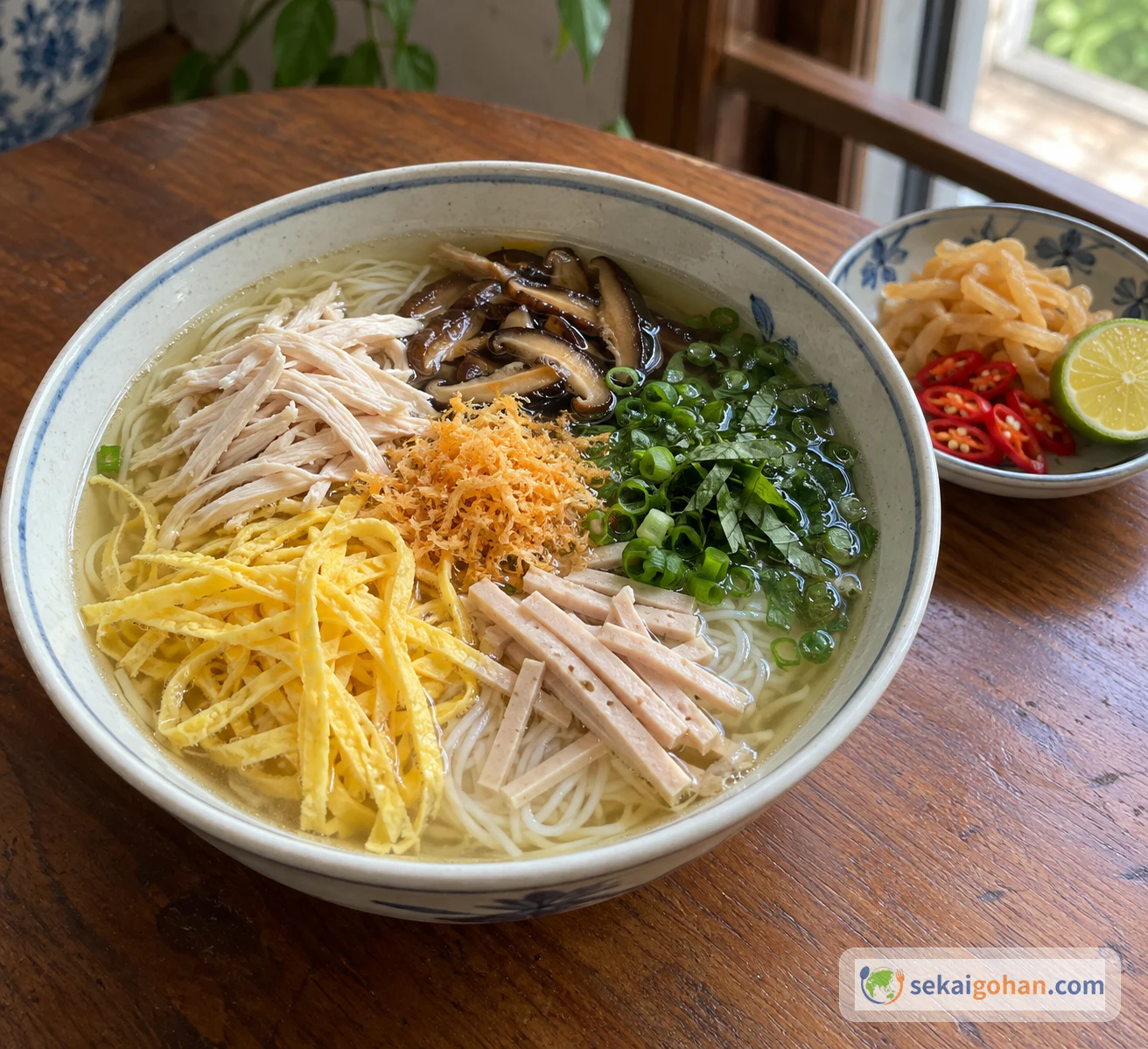
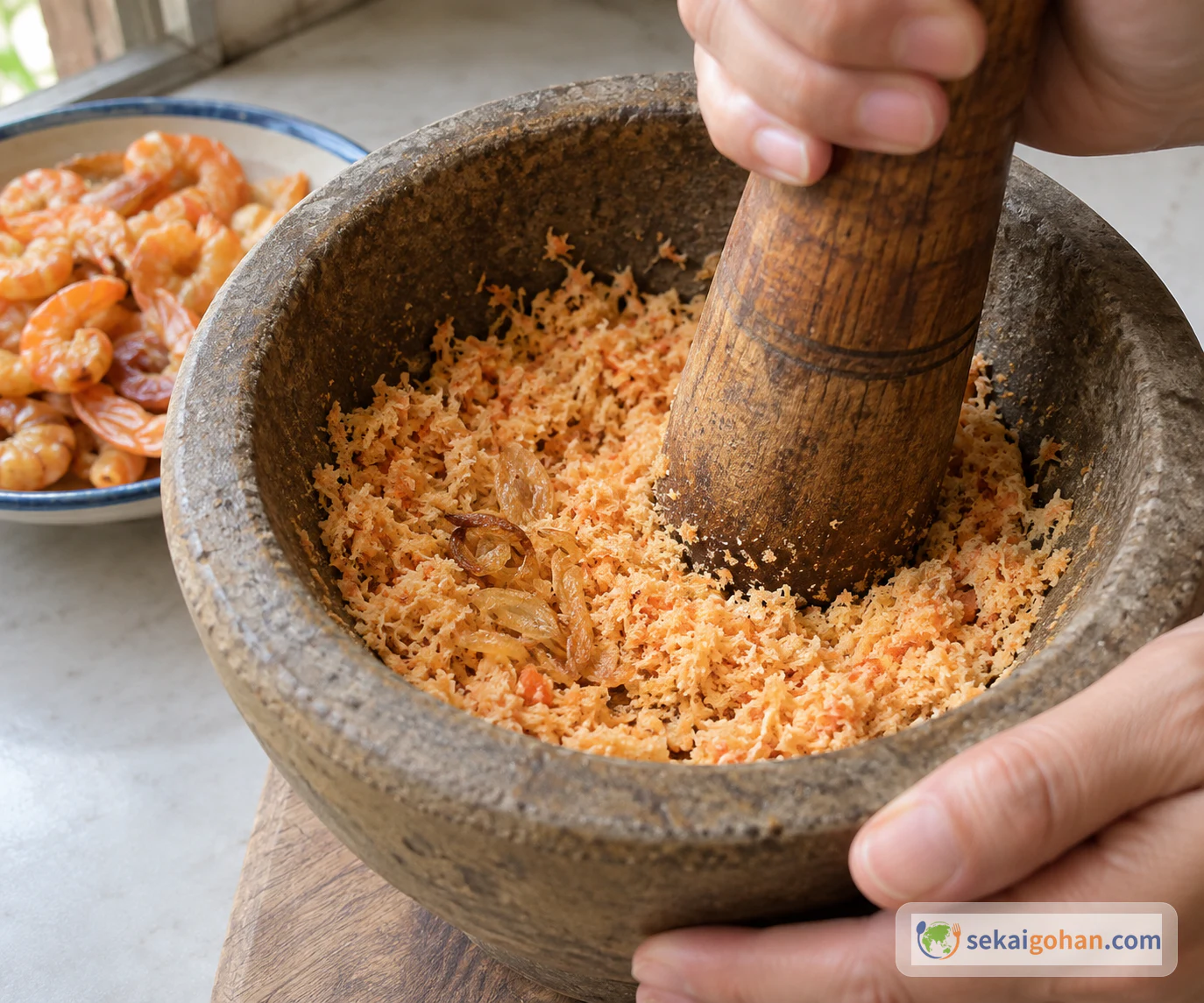
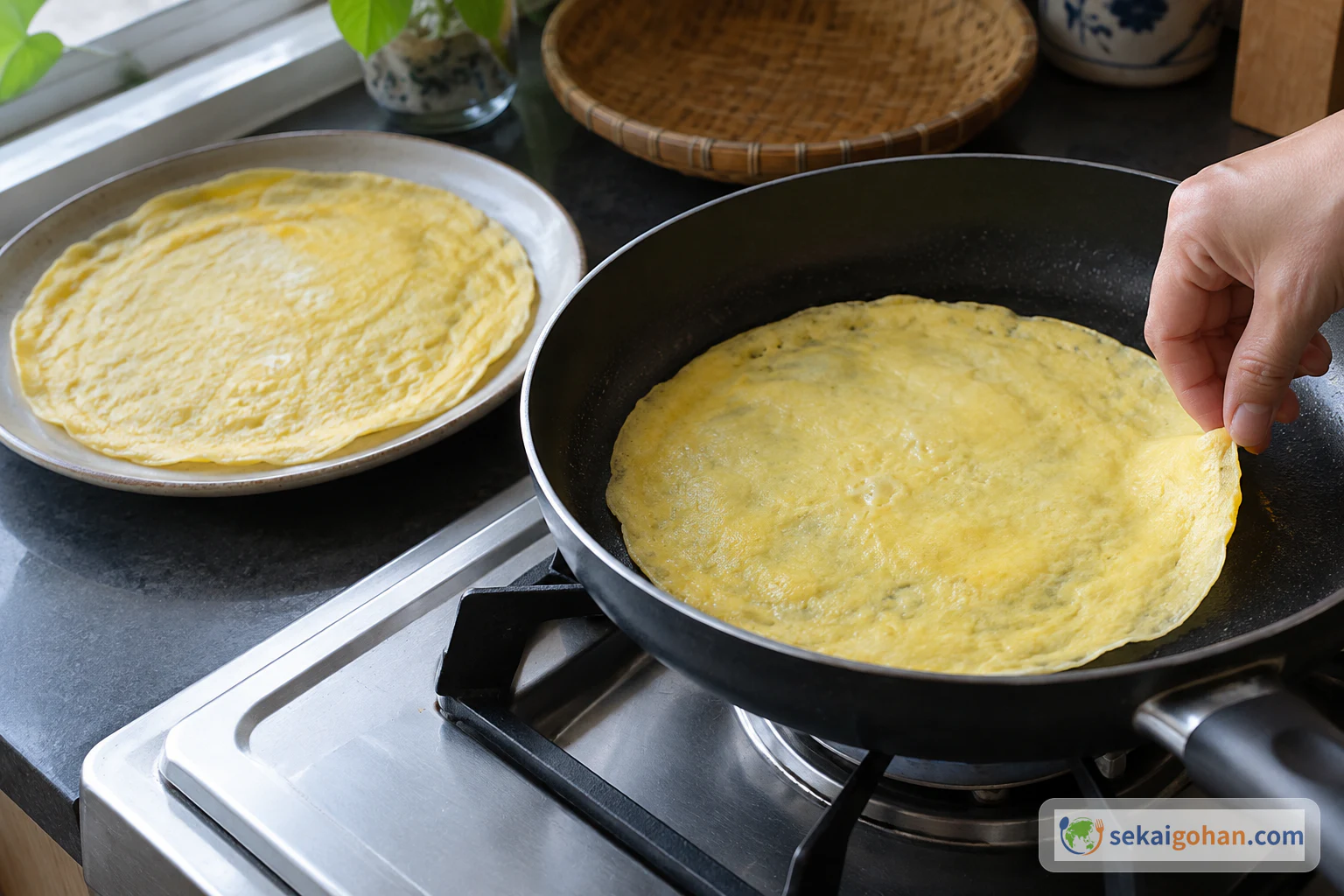
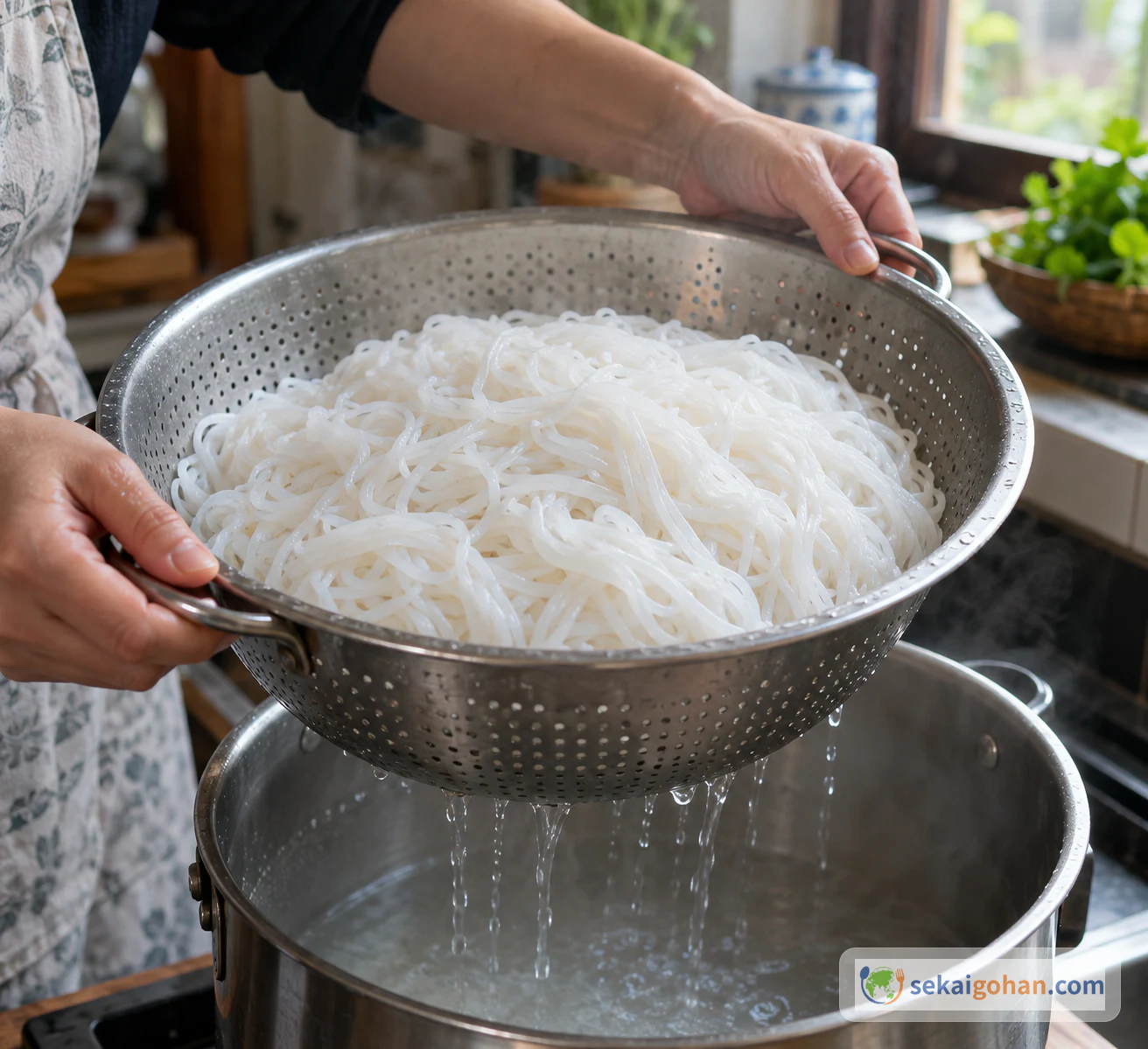
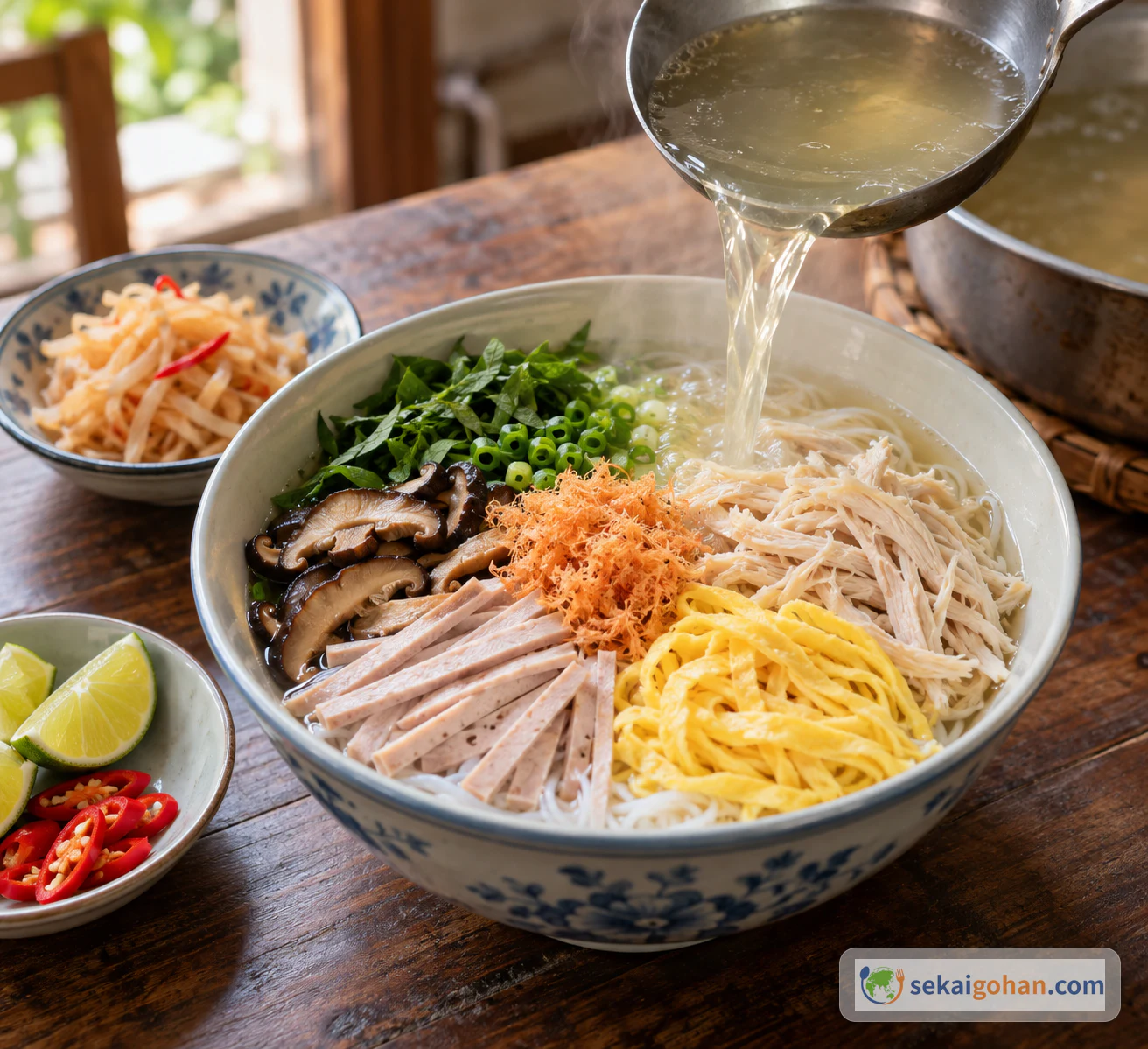
White rice noodles sit under a clear broth made from chicken and dried shrimp. On top, in separate small groups, go thin strands of poached chicken, ribbons of yellow egg crepe, strips of giò lụa (Vietnamese pork sausage), a little mound of shrimp floss, shiitake, and chopped scallion with rau răm. Pickled dried radish, fresh chili and citrus wait on the side. That is bún thang, a Hanoi noodle soup in which much of the work happens before the bowl is filled.
The recipe here follows a single published text: "Bún thang chuẩn vị Hà Nội" ("Bún thang, true Hanoi flavor"), a reader-contributed recipe by Phùng Thơm published by VnExpress in August 2021, written for 4–5 people. It is a reader's recipe rather than a test-kitchen recipe, and it has not been kitchen-tested by Sekai Gohan. Two points are deliberately changed for safety: the raw chicken is not rubbed with salt and rinsed, following the Food Safety Commission of Japan's advice not to wash raw chicken, and the chicken's roughly 15-minute poach is treated only as a starting point, with a center temperature of at least 75°C for at least 1 minute as the actual endpoint, following Japan's Ministry of Health, Labour and Welfare.
The published text does not give the amount of water for poaching the chicken or for the broth, the amounts of most broth seasonings, the amount of ginger, herbs or oil for the shrimp floss, or whether its 20 g of shiitake is a dry or soaked weight. Several dressing amounts are given in thìa (spoon) without saying which size of spoon. These gaps are kept as they are in this article rather than filled with guesses, so expect to season by taste.
If you know other Vietnamese noodle soups, bún thang sits close to phở gà in its chicken broth, but it is a different bowl from the crab-and-tomato bún riêu or Hanoi's grilled-pork bún chả. For more dishes from the country, see Vietnam.
Ingredients for 4–5 People: Chicken, Bones, Dried Seafood and Fine Toppings
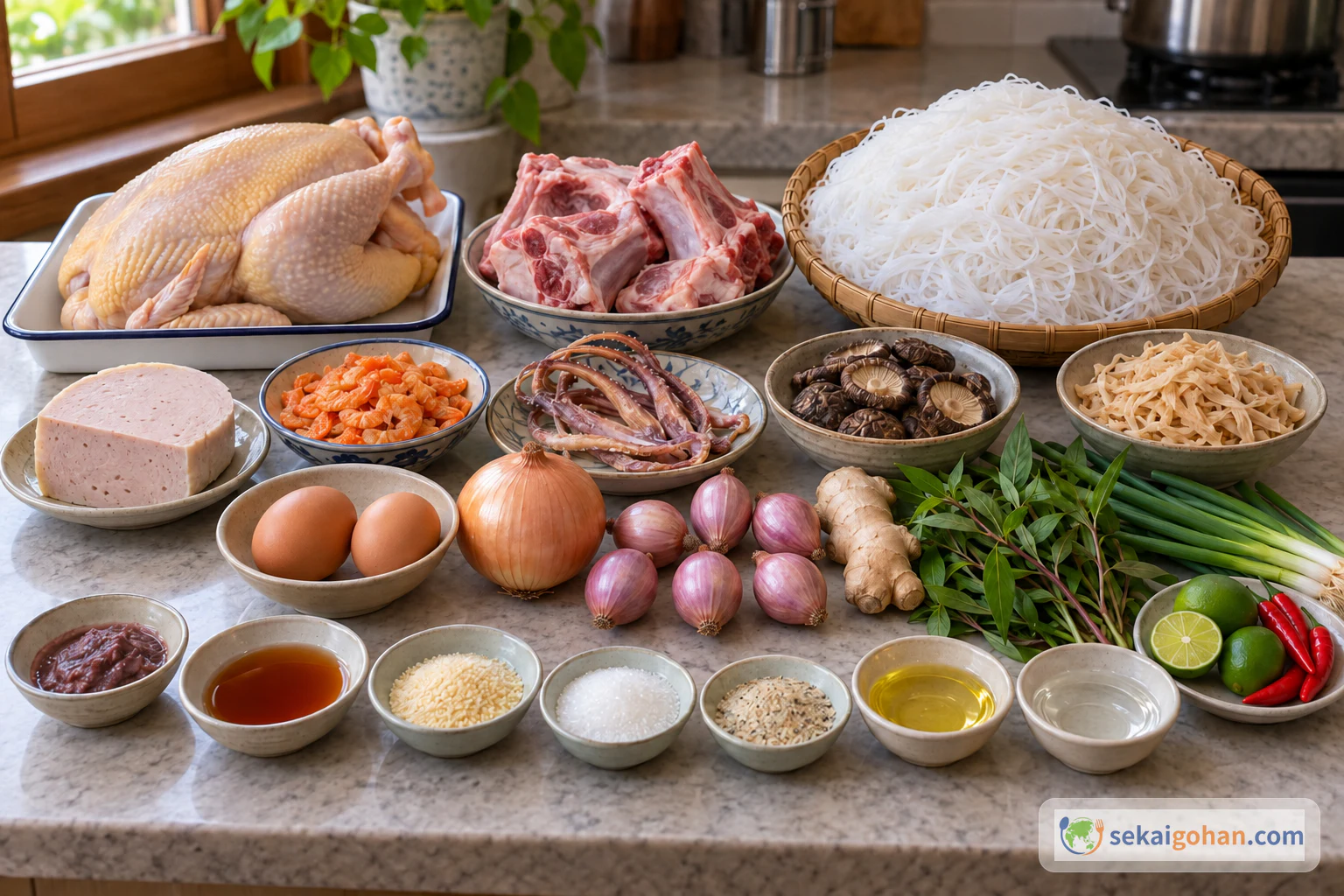
Vietnamese names are given in parentheses so you can search for them at an Asian grocer.
Choosing Ingredients and What Not to Swap
Dried squid tentacles or sá sùng, never both. Use either 2–3 dried squid tentacles or 2–3 sá sùng, not both. This article uses the squid tentacles. If you choose sá sùng instead, use it in place of the squid, not alongside it.
Giò lụa is its own thing. It is a cooked Vietnamese pork sausage. Look for it by name at Vietnamese or Asian grocers rather than quietly replacing it with an ordinary ham.
Fresh bún, not dried noodles. The 1.5 kg is fresh rice vermicelli (bún tươi). Do not substitute dried noodles.
Cà cuống oil is optional. Tinh dầu cà cuống is used only if you can get it. If you don't have it, leave it out; don't add something else in its place.
Seasonings stay distinct. Hạt nêm, bột nêm and gia vị are all Vietnamese seasoning products, but they are separate products and should not be assumed to be the same thing, nor read as plain salt. Fish sauce (nước mắm) in the radish dressing and shrimp paste (mắm tôm) at the table are different products too.
This dish contains egg, shrimp (dried shrimp and mắm tôm), squid, fish sauce, pork and chicken. Check the labels on fish sauce, seasoning products, giò lụa, mắm tôm and any cà cuống oil for allergens and for shared-facility statements, and keep allergen-containing foods from touching others when serving people with allergies.
Equipment
- A large pot for poaching the chicken and simmering the broth
- A nonstick frying pan
- A colander
- A knife and separate cutting boards for raw meat and for ready-to-eat foods
- Several bowls
- A mortar and pestle
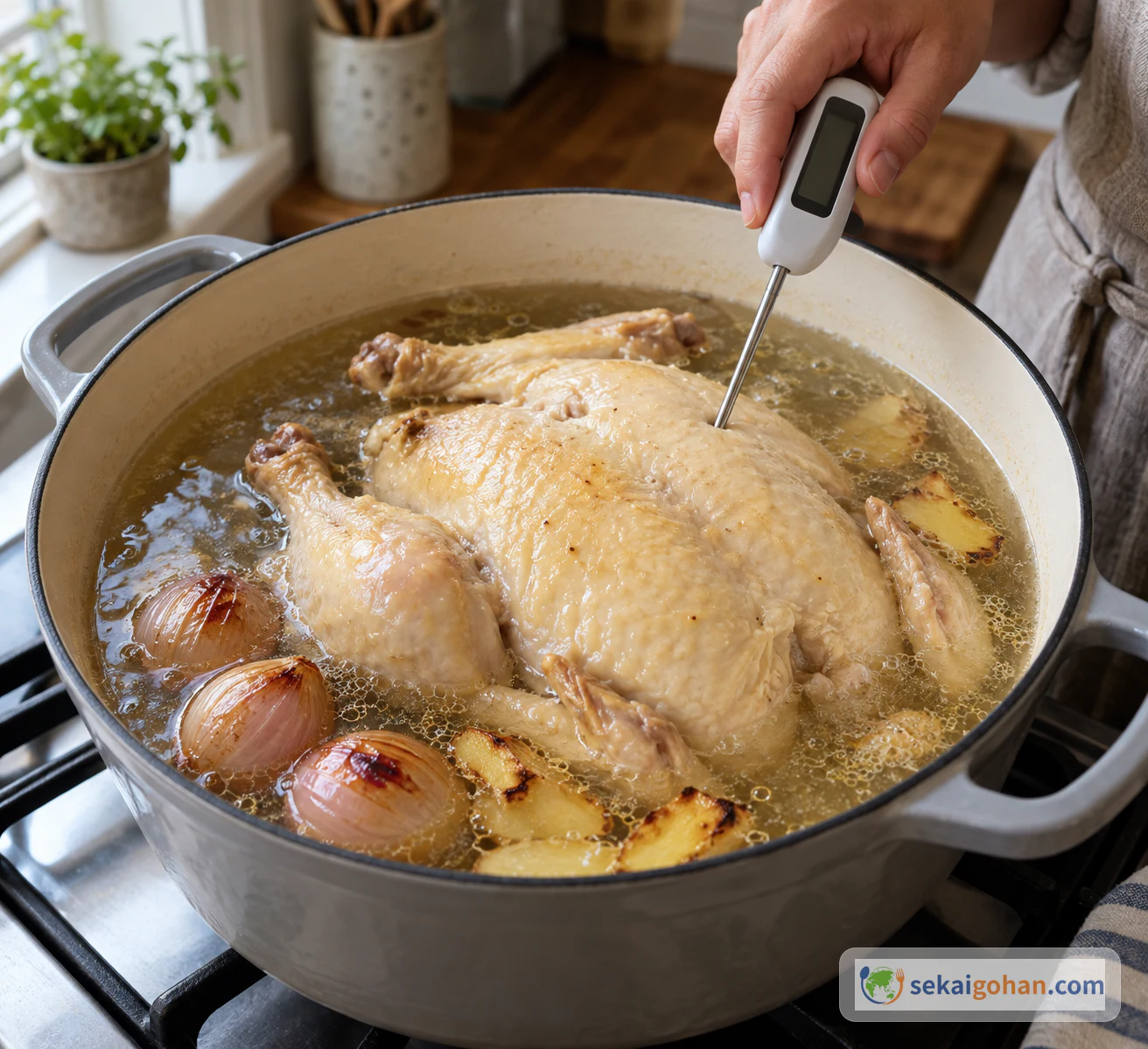
- A food thermometer for checking the chicken's center temperature
Before You Start: Raw Chicken and Clean Hands
Do not rinse raw chicken; washing can spread bacteria around the sink and counter. Keep raw chicken and pork, and their juices, away from herbs, noodles and cooked toppings. Wash your hands before and after handling raw meat, and wash knives, cutting boards and utensils after use. Cook the chicken until its center reaches at least 75°C and stays there for at least 1 minute.
Method: Building the Broth, Then Each Fine Topping
The broth simmers for a long stretch. Use that time to make the shrimp floss and egg crepe and to cut the toppings, so everything is ready when the noodles are blanched.
When Something Goes Wrong
| What you see | What to do |
|---|---|
| The chicken is under 75°C at its center after about 15 minutes | Return it to the pot and keep poaching over low heat, checking again until it reaches at least 75°C for at least 1 minute |
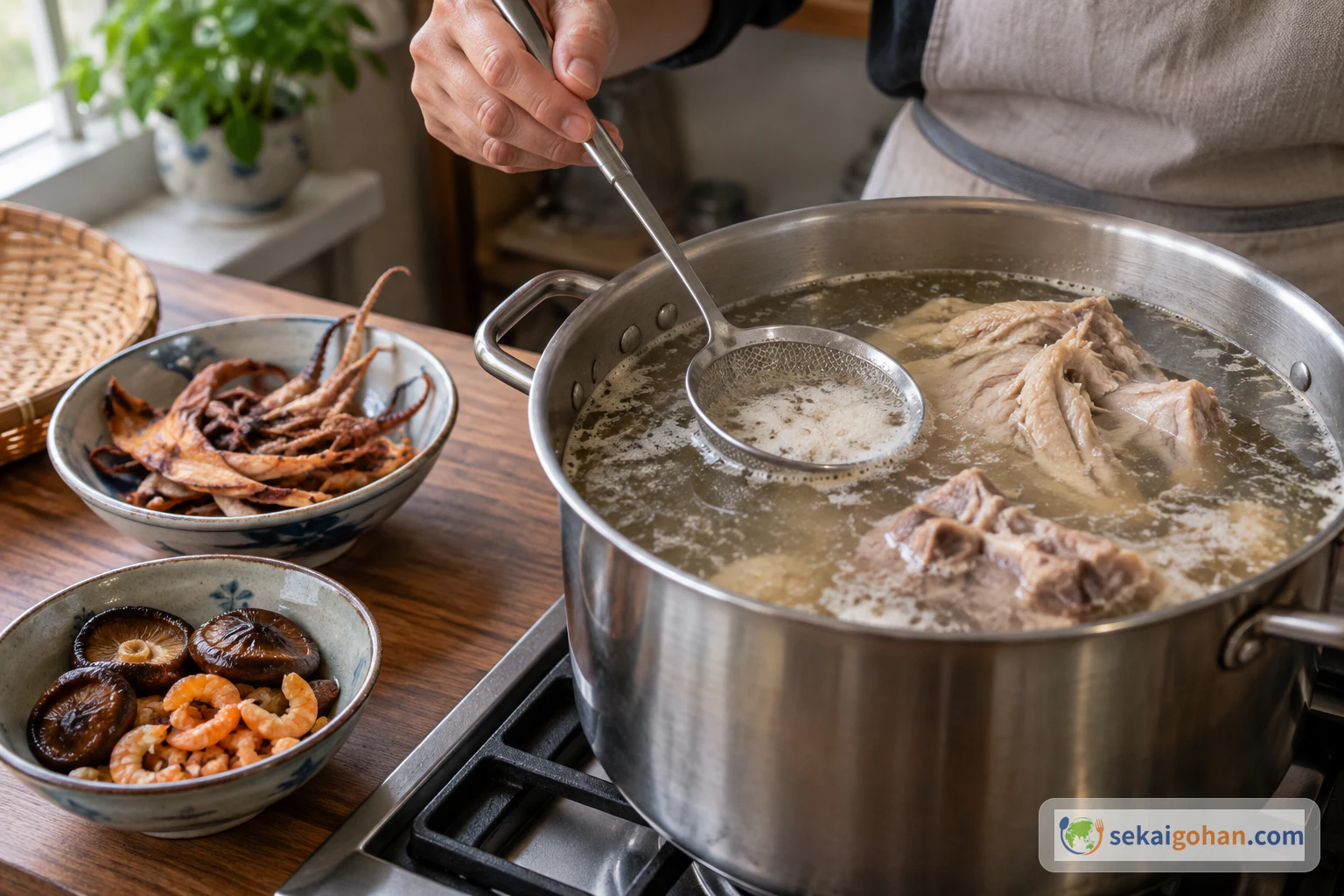
| Foam keeps gathering on the broth | Keep skimming throughout the simmer, as in step 4 |
| The broth tastes flat | Add the broth seasonings a little at a time and taste between additions; no fixed amounts are given |
| The pickled radish is watery | Squeeze the soaked radish harder before dressing it |
| The shrimp floss is clumpy | Make sure it has cooled fully, then keep pounding |
| Toppings blur together in the bowl | Arrange them in separate groups and pour the broth around, not over, them |
Variations Within the Recipe
The recipe offers only one real choice of ingredients: dried squid tentacles or sá sùng in the broth, with this article using the squid. The cà cuống oil is the other optional element, added only if you have it. Because the published text gives no evidence for other swaps, such as different meats, dried noodles or replacement seasonings, none are suggested here. What you can adjust freely is what the recipe already leaves open: the seasoning of the broth, and how much chili, citrus, herbs and mắm tôm each person adds at the table.
Bún Thang in Hanoi: A Bowl Linked with the Days After Tết
Bún thang is presented as a Hanoi dish. Vietnam Tourism, the official site of the Viet Nam National Authority of Tourism, lists it among dishes to try in Hanoi and describes it with Vietnamese ham, shredded chicken, omelette strips and a clear, savory broth. The same page connects it with the days after the Lunar New Year (Tết), when leftover holiday ingredients are turned into a breakfast bowl.
Writer Vĩnh Quyên, in a piece for VOV5 (Voice of Vietnam), recalls her own family's bún thang after Tết, made from ingredients saved across the holiday, such as chicken, dried shrimp, giò lụa and dried radish, with the separate toppings carefully cut, arranged and served hot. This is one family's memory, not proof of a single origin or of a custom shared by every Hanoi household. It does help explain why the dish looks the way it does: festive leftovers become an orderly bowl through careful cutting and a clear broth.
The meaning of the word thang and the dish's historical origins are not covered by the sources used here, so this article does not explain them. Regional and household variations are also not compared; the recipe here is the one Hanoi-style version described above.
Leftovers
Cool leftovers quickly in shallow, clean containers and refrigerate them promptly, at 10°C or below. Keep hot food hot until serving, and reheat leftover broth until it boils before eating. No storage period is given here.
Frequently Asked Questions
Why isn't the raw chicken rinsed?
The VnExpress recipe rubs the raw chicken with salt and rinses it. That step is left out here, following the Food Safety Commission of Japan, which advises not washing raw chicken because it can spread contamination. The salt used for that rub is not moved into the broth, so it does not appear in the ingredients.
Is 15 minutes enough to cook a whole chicken?
The recipe gives about 15 minutes over low heat as its timing, but that is not treated as a safety check for a 1.2–1.3 kg bird. Use a food thermometer at the thickest part and continue cooking until the center has been at least 75°C for at least 1 minute, as Japan's Ministry of Health, Labour and Welfare recommends.
Where do all six shallots go?
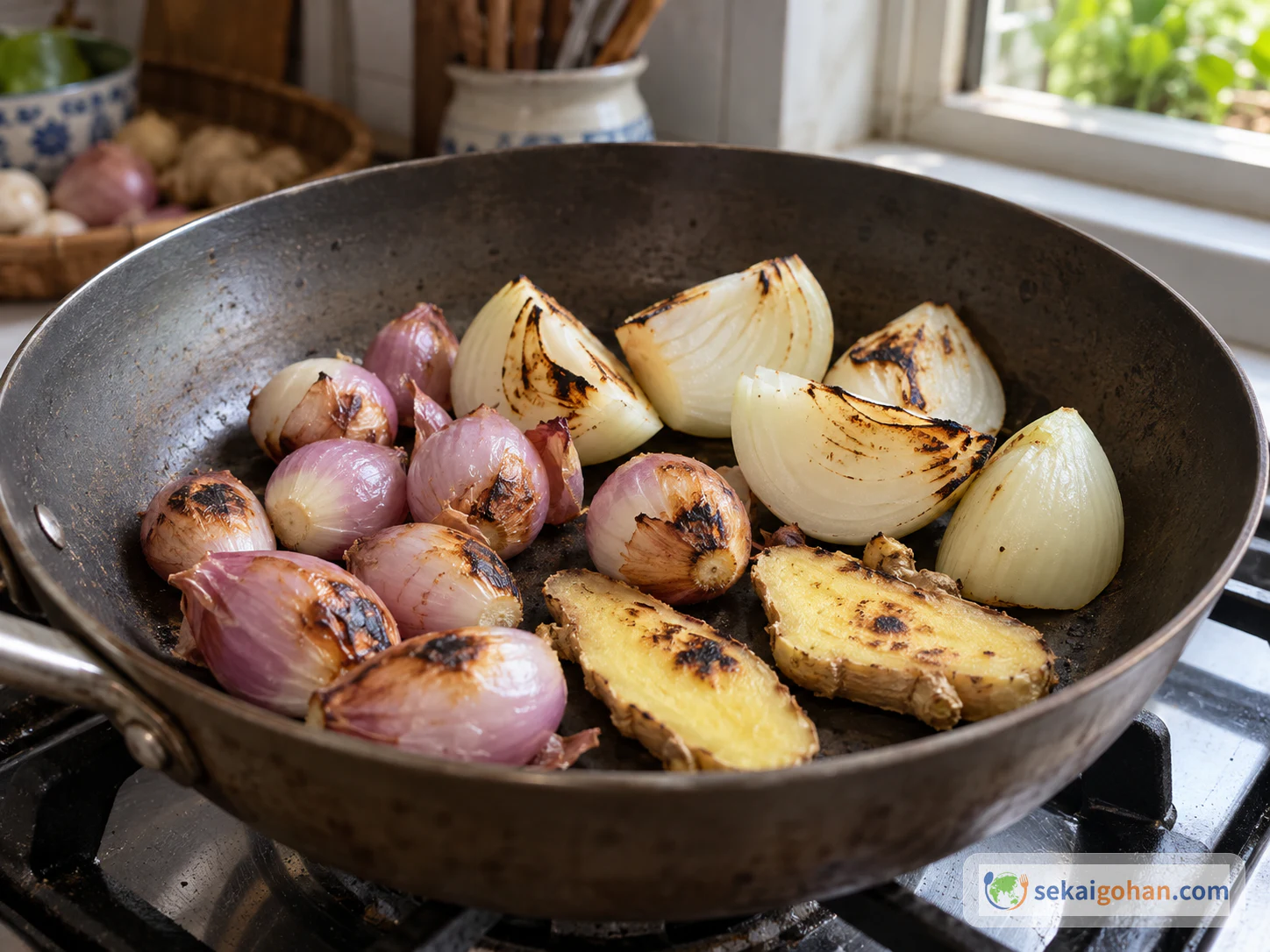
The recipe lists 6 shallots. Five are roasted with the onion and ginger, 3 are added to the chicken pot, and 1 is sliced raw and fried with the shrimp floss. The text does not say outright that the 3 in the chicken pot come from the roasted 5, and if they do, the remaining 2 roasted shallots are given no stated use. This article doesn't invent a destination for them or add extra shallots.
How big is a thìa?
Thìa simply means spoon. In the radish dressing, only the vinegar is clearly a teaspoon (thìa cà phê); the sugar, gia vị, fish sauce and MSG are given as thìa without saying which size. That is why those amounts are kept as written rather than converted.
What kind of mắm goes into the broth and the shrimp?
The recipe says only mắm, which can refer to fish sauce or to fermented shrimp products, and does not specify which. It is separate from the nước mắm in the radish dressing and from the mắm tôm added to each bowl. Season with a little and taste.
Is the shiitake dried or fresh?
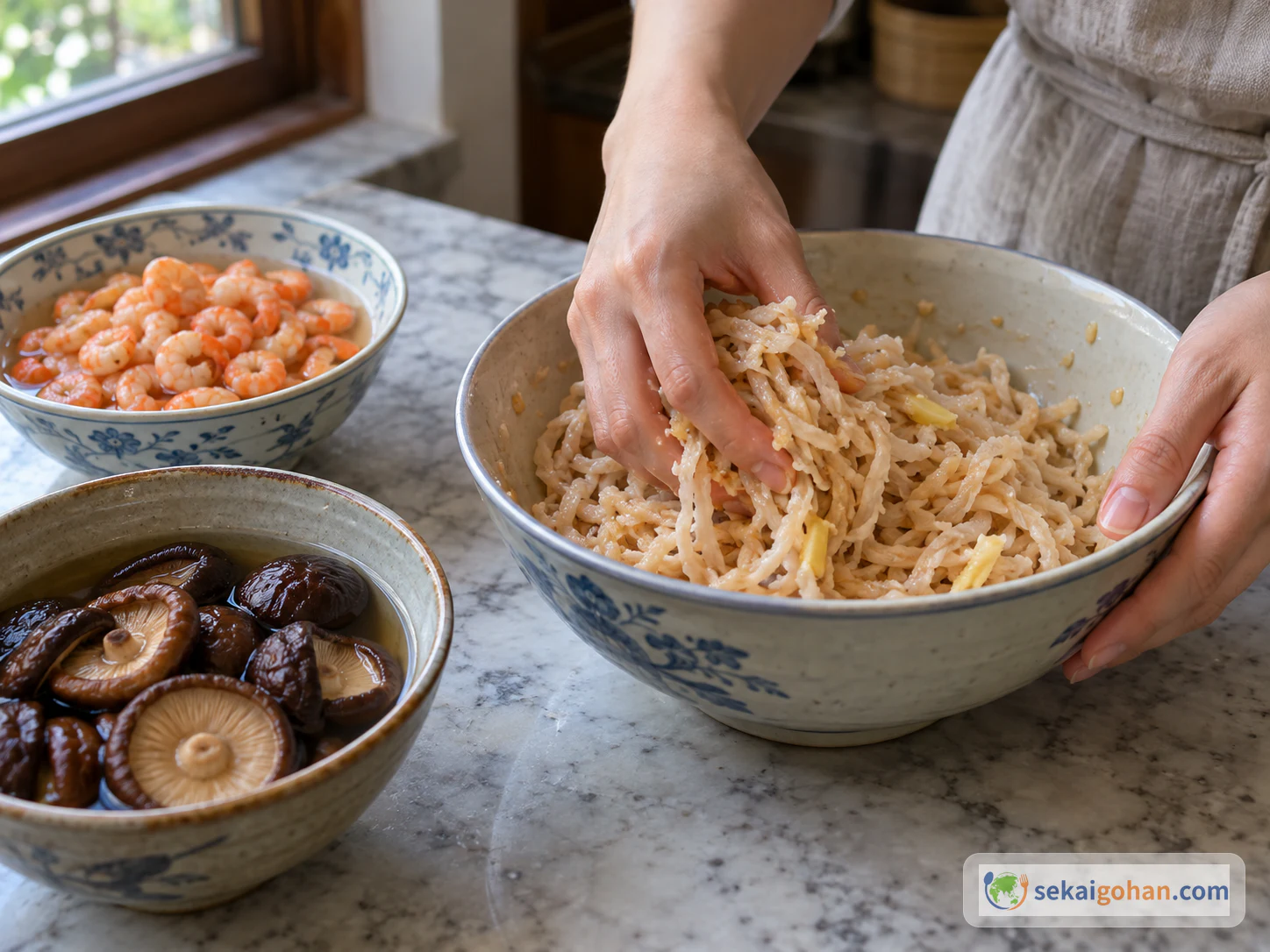
The recipe lists 20 g shiitake and says to soak it, trim the stems and rinse, which suggests dried mushrooms, but it does not say whether 20 g is the dry or soaked weight. Use the shiitake that has simmered in the broth as the topping, not mushrooms that have only been soaked.
How long does the broth simmer in total?
The recipe says to simmer the bones for 1–2 hours and, after about 1 hour, to add the squid, shiitake, shrimp and onion and keep simmering. It does not say how long the second stage lasts, so a total time is not given here.
Sources
- Phùng Thơm (reader contribution), "Bún thang chuẩn vị Hà Nội," VnExpress Đời sống / Cooking, 27 August 2021. The recipe followed in this article: yield of 4–5 people, the ingredient list and amounts, the soaking times, the radish dressing, roasting the aromatics and dried squid, poaching the chicken, simmering the broth, the shrimp floss, the egg crepes, and serving with mắm tôm and optional cà cuống oil. A reader-contributed recipe, not a test-kitchen recipe. https://vnexpress.net/bun-thang-chuan-vi-ha-noi-4346677.html
- Vietnam Tourism (Viet Nam National Authority of Tourism), "10 must-try Hanoian dishes." Bún thang as a Hanoi dish with Vietnamese ham, shredded chicken, omelette strips and clear broth, and its association with post-Tết leftovers and breakfast. Not used for quantities or method. https://vietnam.travel/things-to-do/10-must-try-hanoi-dishes/
- Vĩnh Quyên, "Bún thang - Món tổng kết tuyệt vời ngày Tết cổ truyền của người Hà Nội," VOV5 / Voice of Vietnam, 14 February 2021. One writer's family memory of bún thang after Tết, with carefully cut separate toppings served hot. Its own recipe is not used here. https://vov.gov.vn/bun-thang-mon-tong-ket-tuyet-voi-ngay-tet-co-truyen-cua-nguoi-ha-noi-dtnew-240418?keyDevice=true
- Ministry of Health, Labour and Welfare (Japan), "家庭でできる食中毒予防の6つのポイント" (Six points for preventing food poisoning at home). Heating to a center temperature of at least 75°C for at least 1 minute, separating raw meat, hand and utensil washing, quick refrigeration at 10°C or below, cooling leftovers in shallow containers, and reheating soups until boiling. https://www.mhlw.go.jp/stf/seisakunitsuite/bunya/kenkou_iryou/shokuhin/syokuchu/01_00006.html
- Food Safety Commission of Japan, "鶏肉の食中毒対策" (Measures against food poisoning from chicken), 2019 presentation. Not rinsing raw chicken, preventing cross-contamination, and thorough heating to at least 75°C for at least 1 minute. https://www.fsc.go.jp/fsciis/attachedFile/download?fileId=210&retrievalId=kai20190806ik1