

A Little Bánh Xèo Crackling Away in Your Kitchen
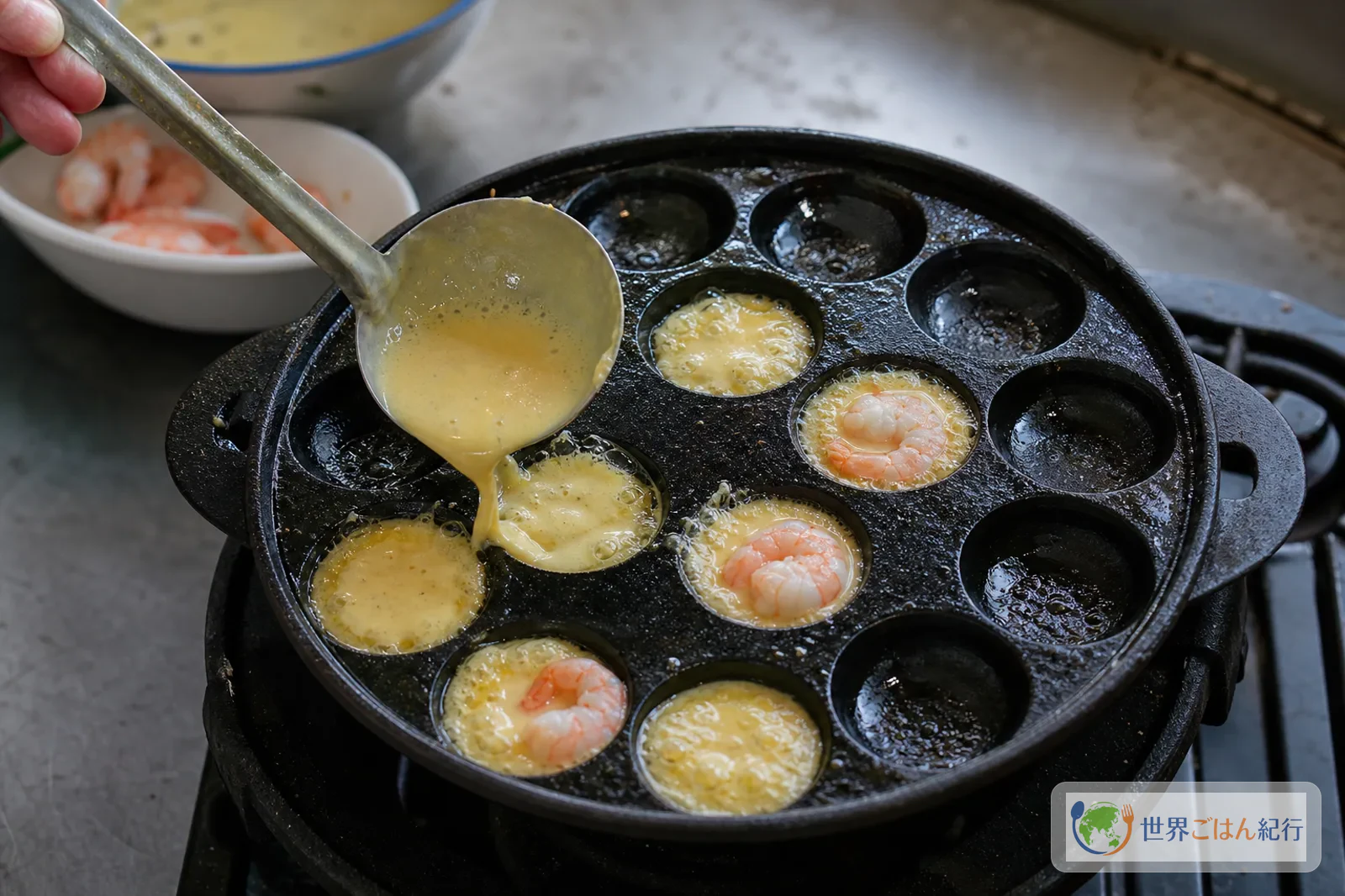
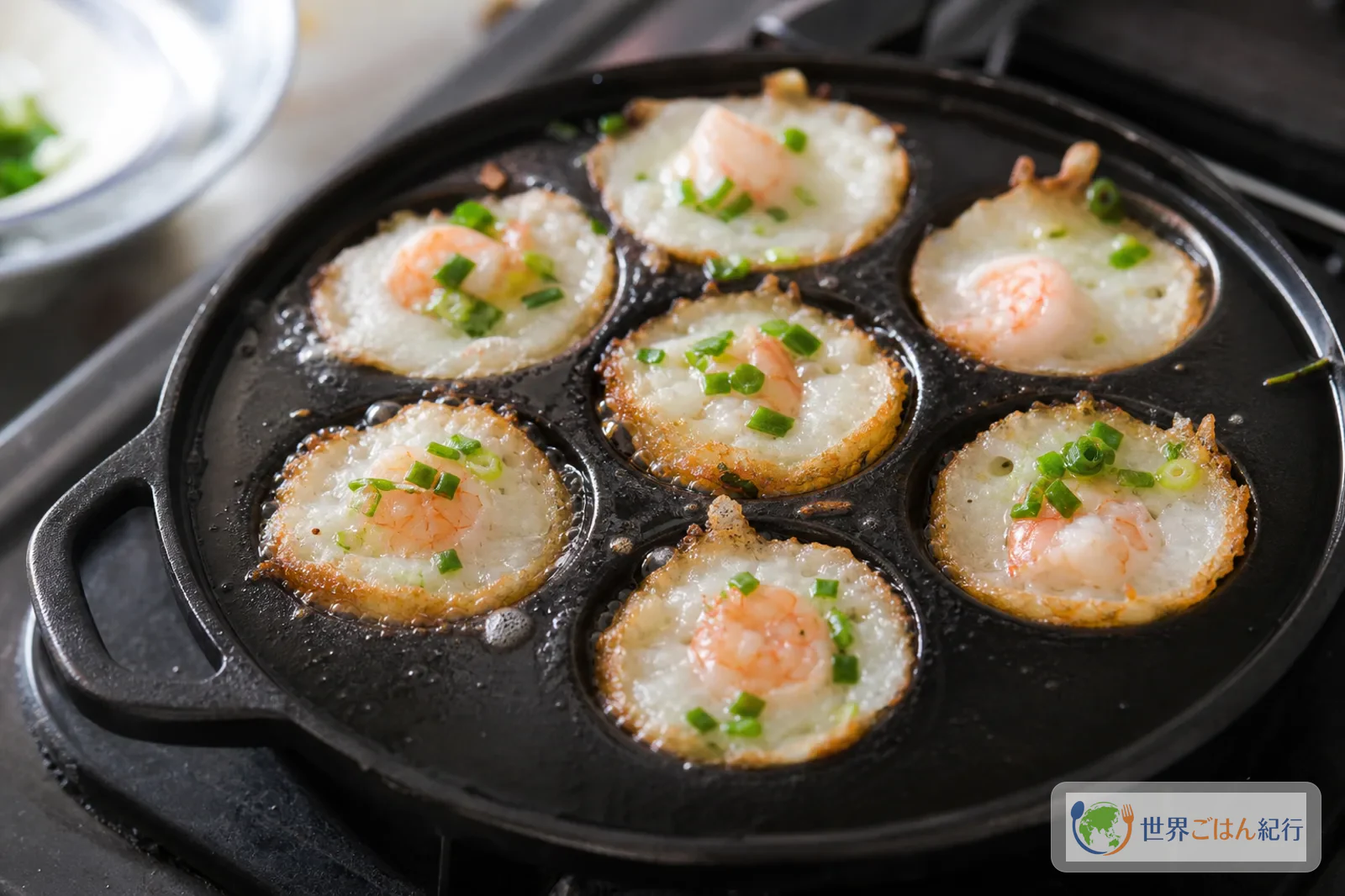
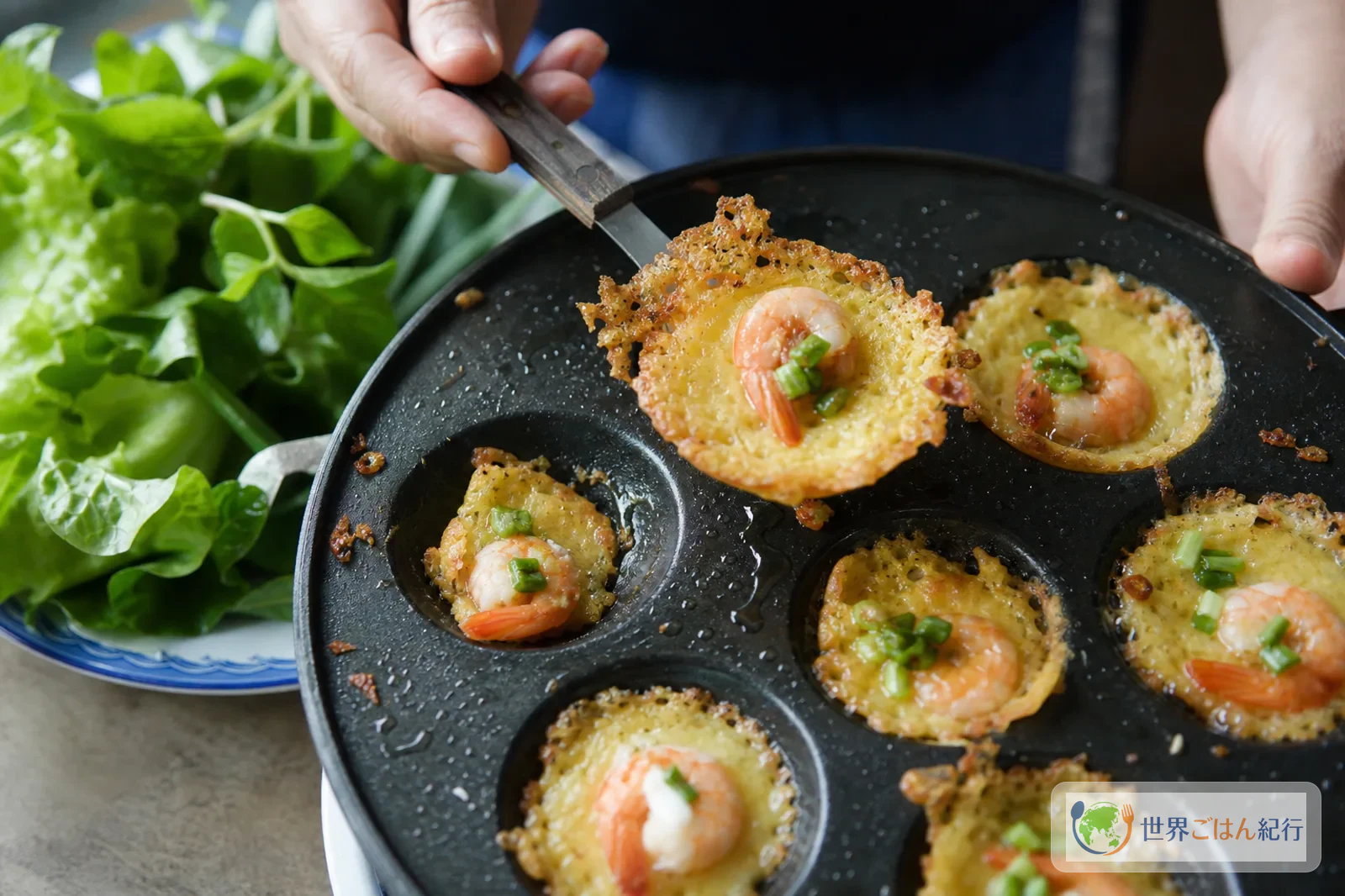
Drop oil into the hollows of a round-hole pan and, before any batter goes in, you already feel a little closer to a tropical street stall. Pour in the yellow batter of rice flour and coconut milk and small bubbles rise from the edges, with a shrimp sitting in each one. Unlike the big, bold sizzle of a large bánh xèo (in Japanese), bánh khọt is a dish that makes you lean in and listen, close to the stove.
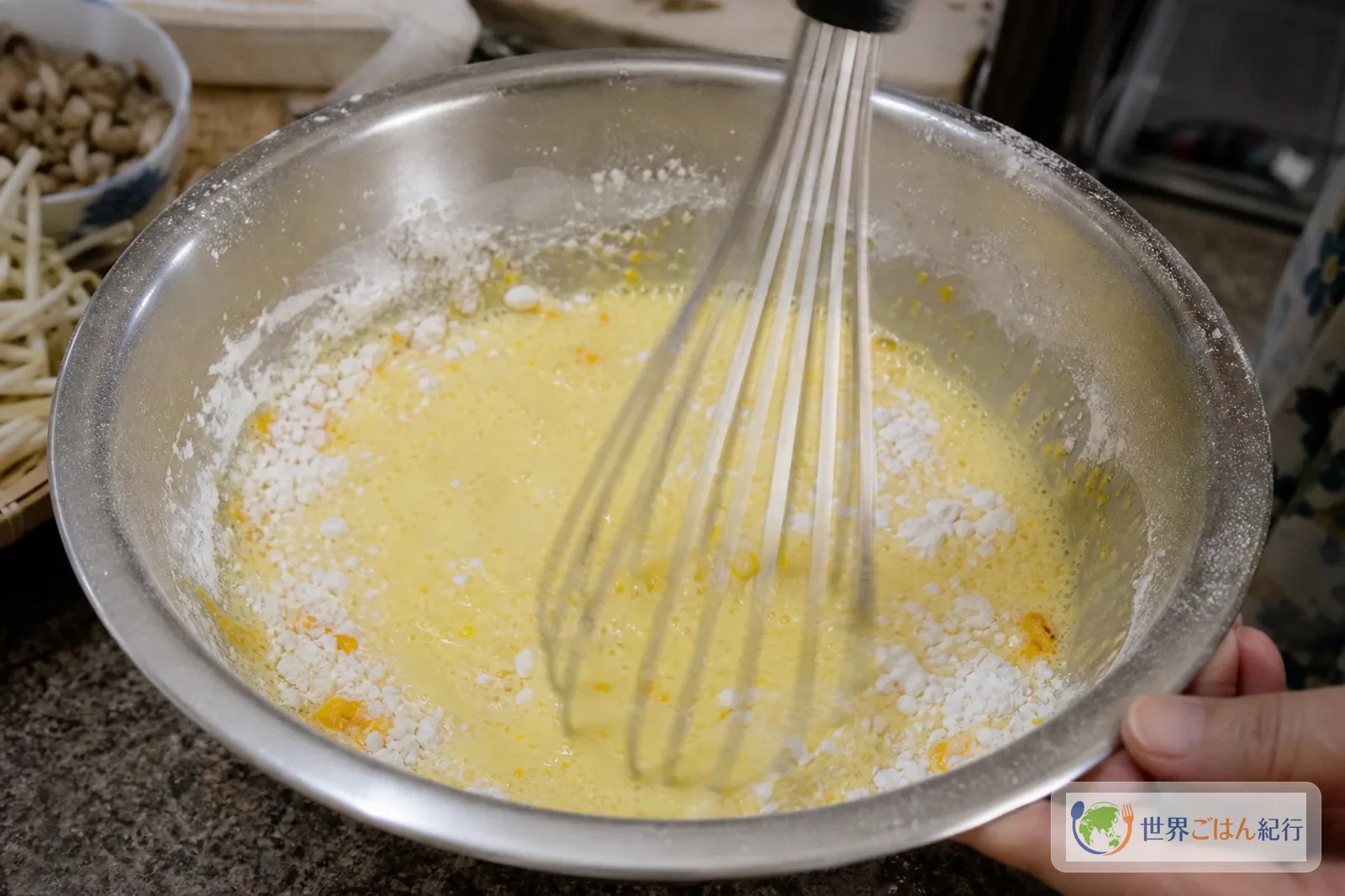
Bánh khọt is a small rice-flour pancake known as a specialty of southern Vietnam, especially around Vung Tau. Batter of rice flour, coconut milk and turmeric is poured into a griddle with round hollows, topped with shrimp and scallion oil, and cooked until the edge is crisp. You wrap each one in lettuce and herbs and dip it lightly in nuoc cham.
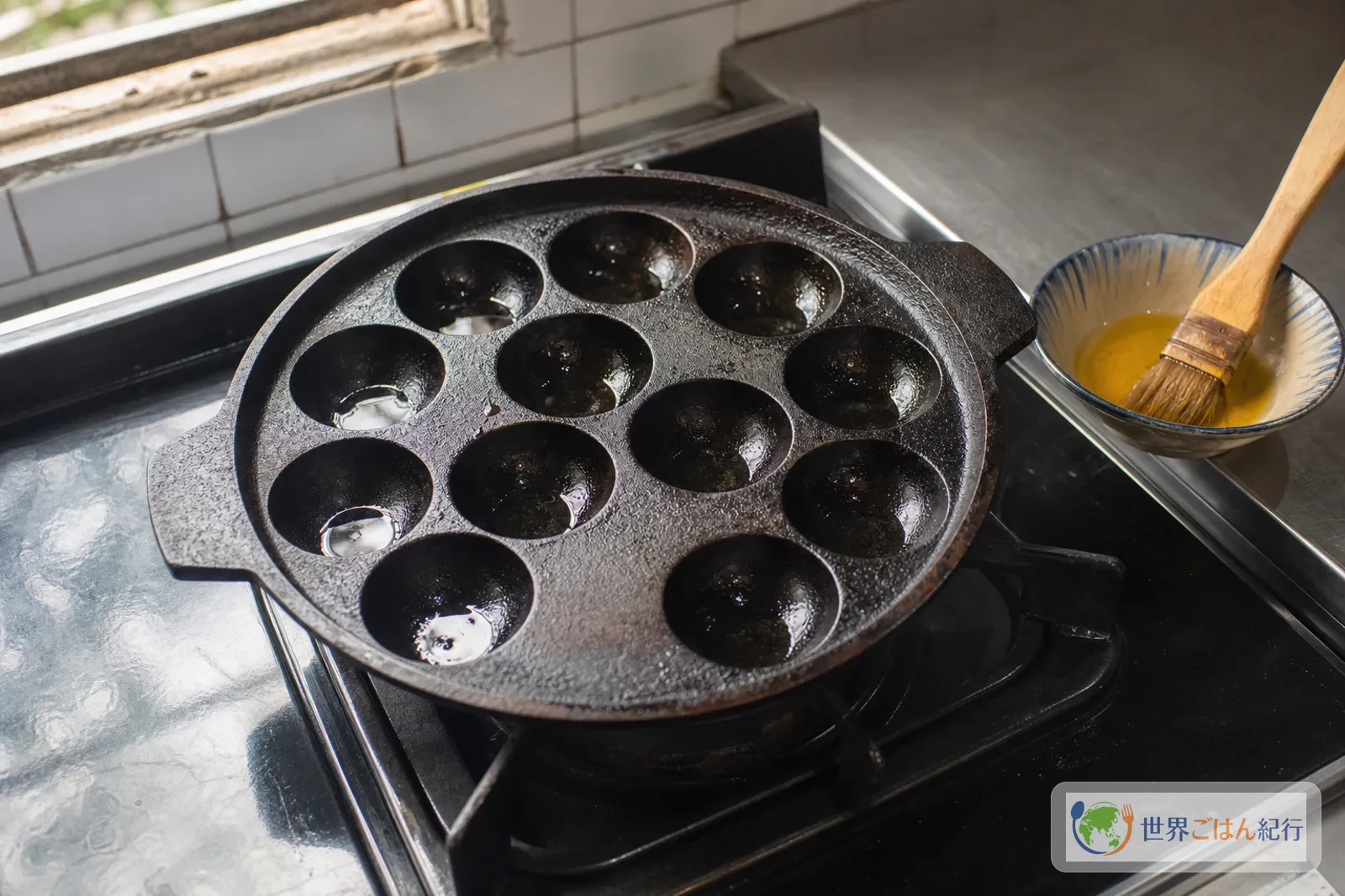
The difficulty abroad is less the ingredients than the tool and the heat. A dedicated bánh khọt mold is hard to find, so at home a cast-iron round-hole pan such as a takoyaki pan, a cast-iron plate with holes or a small egg-fry mold stands in. It is not a dish you roll into a ball the way you do takoyaki, though. You cook the bottom round and leave the top like a shallow cup. Get this right and the rice-flour edge approaches a lightly shattering crispness.
If you were building a Vietnamese meal for a day, line up rice noodles with bun thit nuong, something fried with cha gio and a light flour dish with bánh bèo (in Japanese), and the link between rice flour, herbs and fish sauce shows. Among them, bánh khọt is the one that offers a browned edge and the lightness of herbs together.
In Vietnamese it is written Bánh khọt. It appears as "banh khot" without diacritics in English. This article uses "bánh khọt" and "banh khot" interchangeably.
What Bánh Khọt Is: Vung Tau's Little Rice-Flour Pancakes
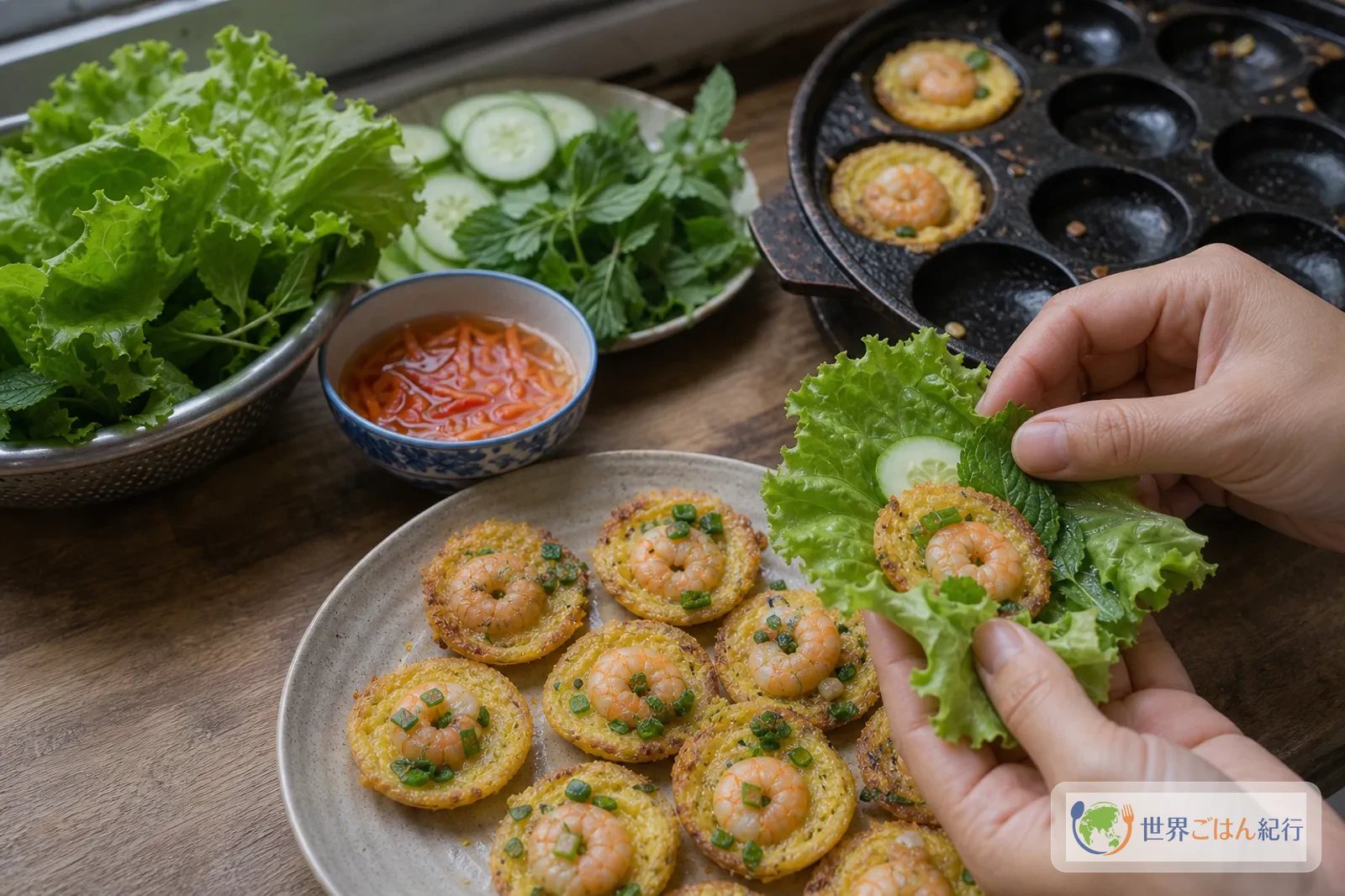
By look alone, bánh khọt resembles a small bánh xèo. The way you eat it is quite different. Bánh xèo is a large thin pancake that you break and wrap, filling and all, in leaves. Bánh khọt is cooked in hollows to a one-bite size, and each one is placed on a leaf and eaten with herbs, cucumber and sweet-sour nuoc cham.
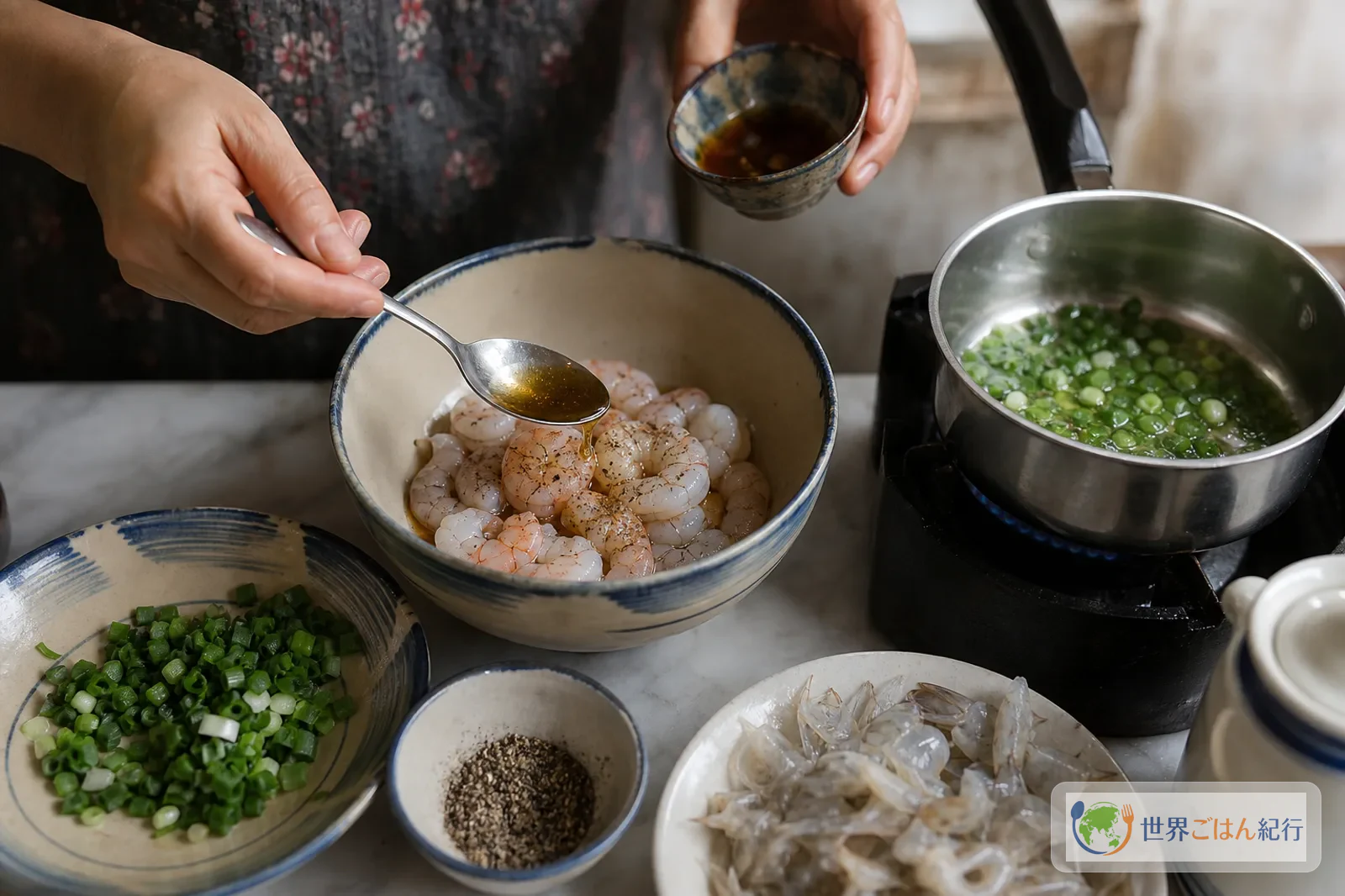
What you often see locally is a yellow batter topped with shrimp and layered with scallion oil, dried shrimp or the aroma of coconut. It is often introduced as a seaside dish of Vung Tau perhaps because the aroma of shrimp and fish sauce leads. In a home kitchen, shell-on small shrimp give a stronger flavor, but for ease peeled shrimp is enough.
| What to look at | Local outline | Realistic approach elsewhere |
|---|---|---|
| Batter | Lightly scented with rice flour, coconut milk and turmeric | Baking-grade rice flour with a little potato starch, rested before cooking |
| Mold | A dedicated round-hollow mold | Cast-iron takoyaki pan, thick pan with holes |
| Topping | Small shrimp, scallion oil; some regions add dried shrimp or mung beans | Peeled shrimp and scallion oil as the base |
| How to eat | Wrapped in lettuce or herbs and dipped in nuoc cham | Assemble with leaf lettuce, mint, shiso, cilantro and cucumber |
| Common problem | With too little oil the edge doesn't crisp | Preheat the mold over medium heat and add oil to each hollow |
Part of the value of making bánh khọt in a kitchen abroad is that it gives a takoyaki pan another use. Don't make a ball, don't mix things in, set the edge. It is the same tool, but just a different angle on it shows the toasty flavor of rice flour.
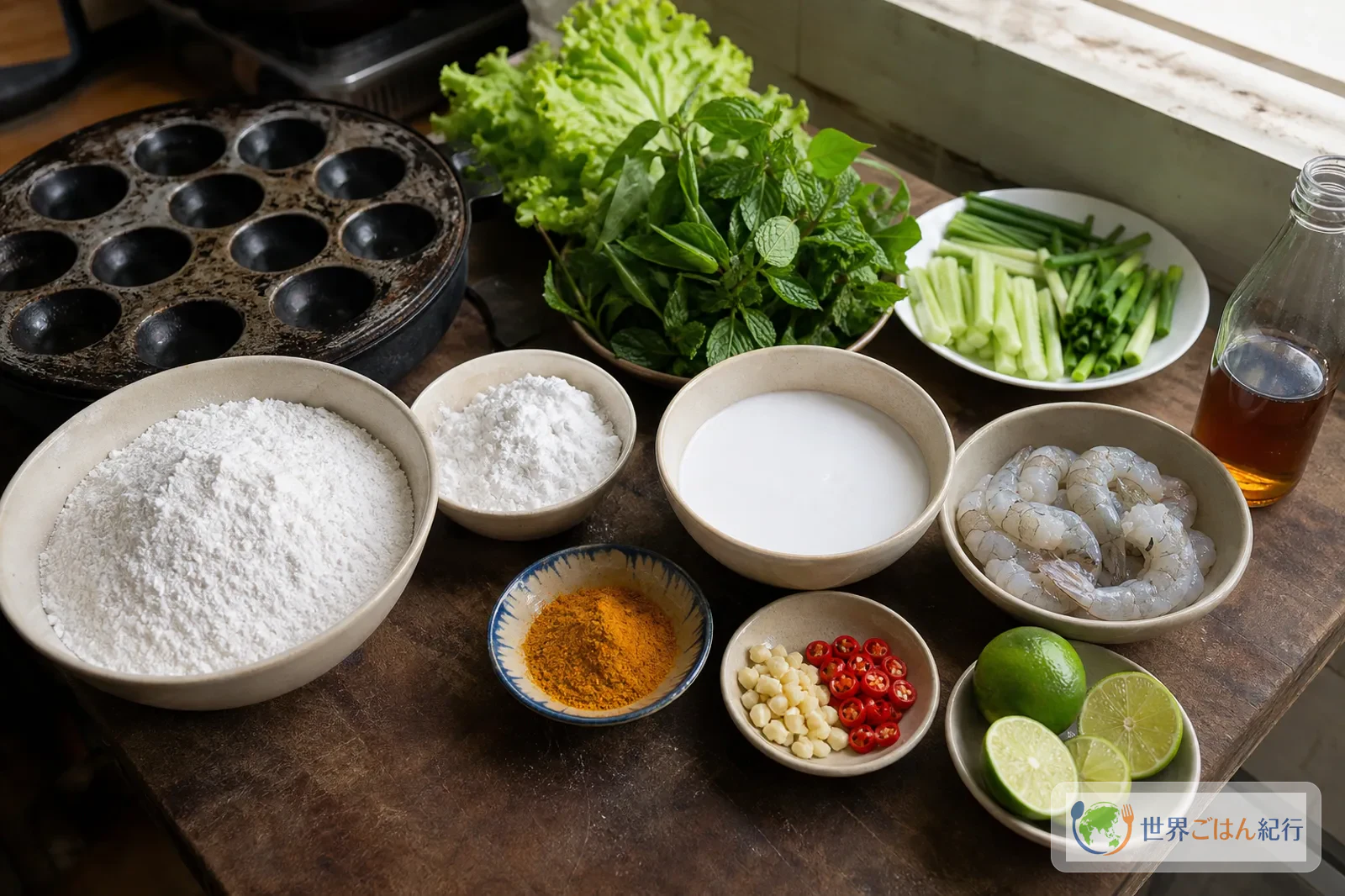
Ingredients: About 20 Small Ones
A small-hollow pan makes about 20. That serves 4 as a light lunch, or 5 to 6 as an appetizer or snack. Because the batter rests, cutting the shrimp, herbs and nuoc cham first keeps you calm once cooking starts.
Allergens and substitutes
It uses shrimp, egg, fish sauce and coconut. If you avoid shrimp, you can use shredded steamed chicken breast or small cubes of fried tofu, though the dish's outline changes. If you can't use fish sauce, make a soy-leaning dipping sauce with 2 tbsp light soy sauce, 1 tbsp rice vinegar, 1 tbsp sugar and 3 tbsp water. It lacks the aroma of fish sauce, but it still works as a dish of rice batter wrapped in leaves.
Shopping: Ingredients Worth Seeking Out
The things worth seeking out specially for bánh khọt are rice flour, coconut milk, turmeric and fish sauce. You can get shrimp and lettuce nearby, but if the flour and fish sauce are weak it easily turns into a plain yellow flour cake.
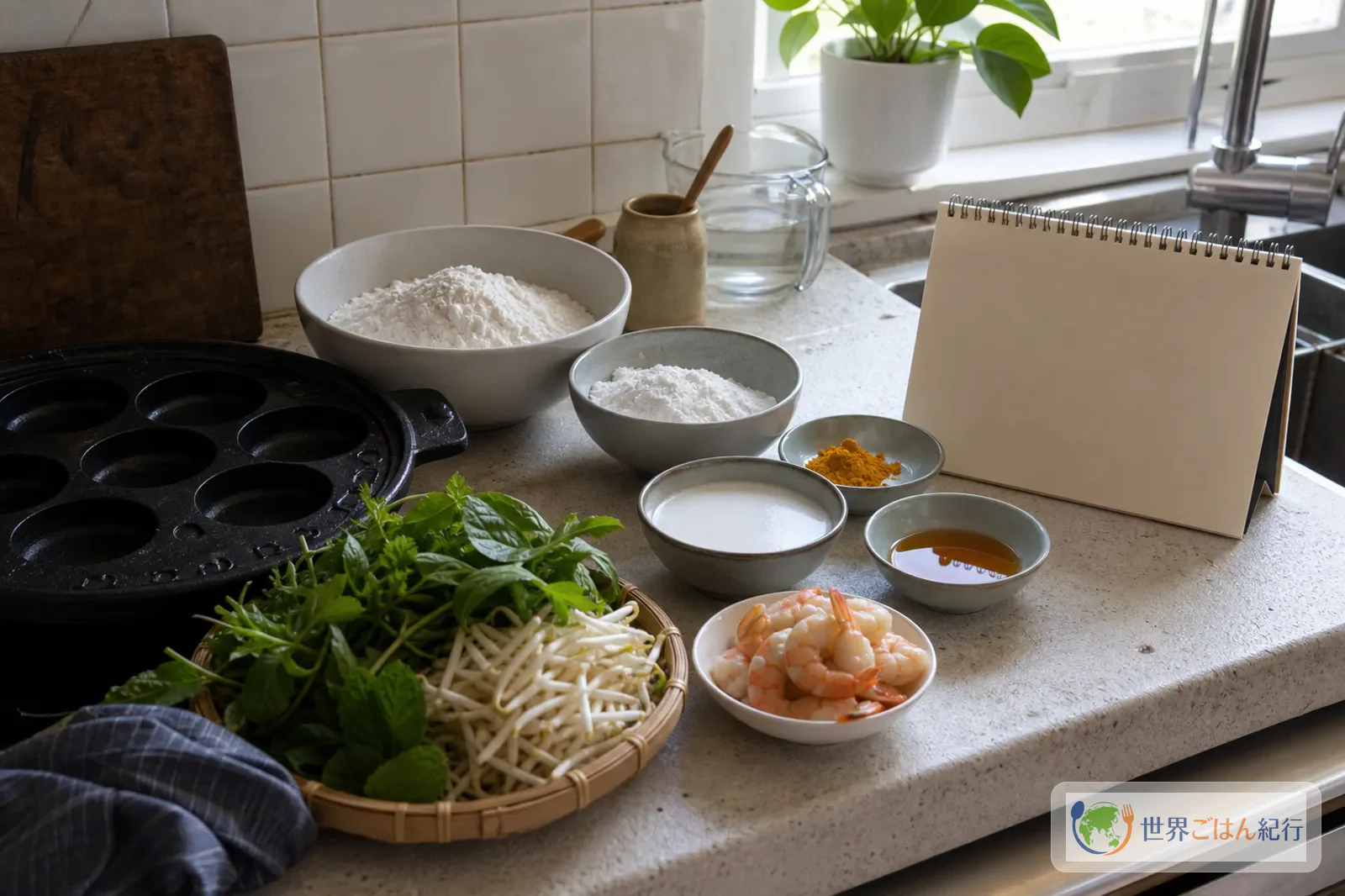
For rice flour, choose a fine flour of non-glutinous rice, not glutinous rice flour. Baking-grade rice flour has fine particles and is less likely to give a gritty batter.
Coconut milk is used not to make the batter heavy but to add roundness to the dry aroma of rice flour. Shake before opening, and if it has separated, stir it in a bowl before measuring.
Turmeric colors strongly even in small amounts. Substituting curry powder brings the aroma of a different dish, so use plain turmeric if you can.
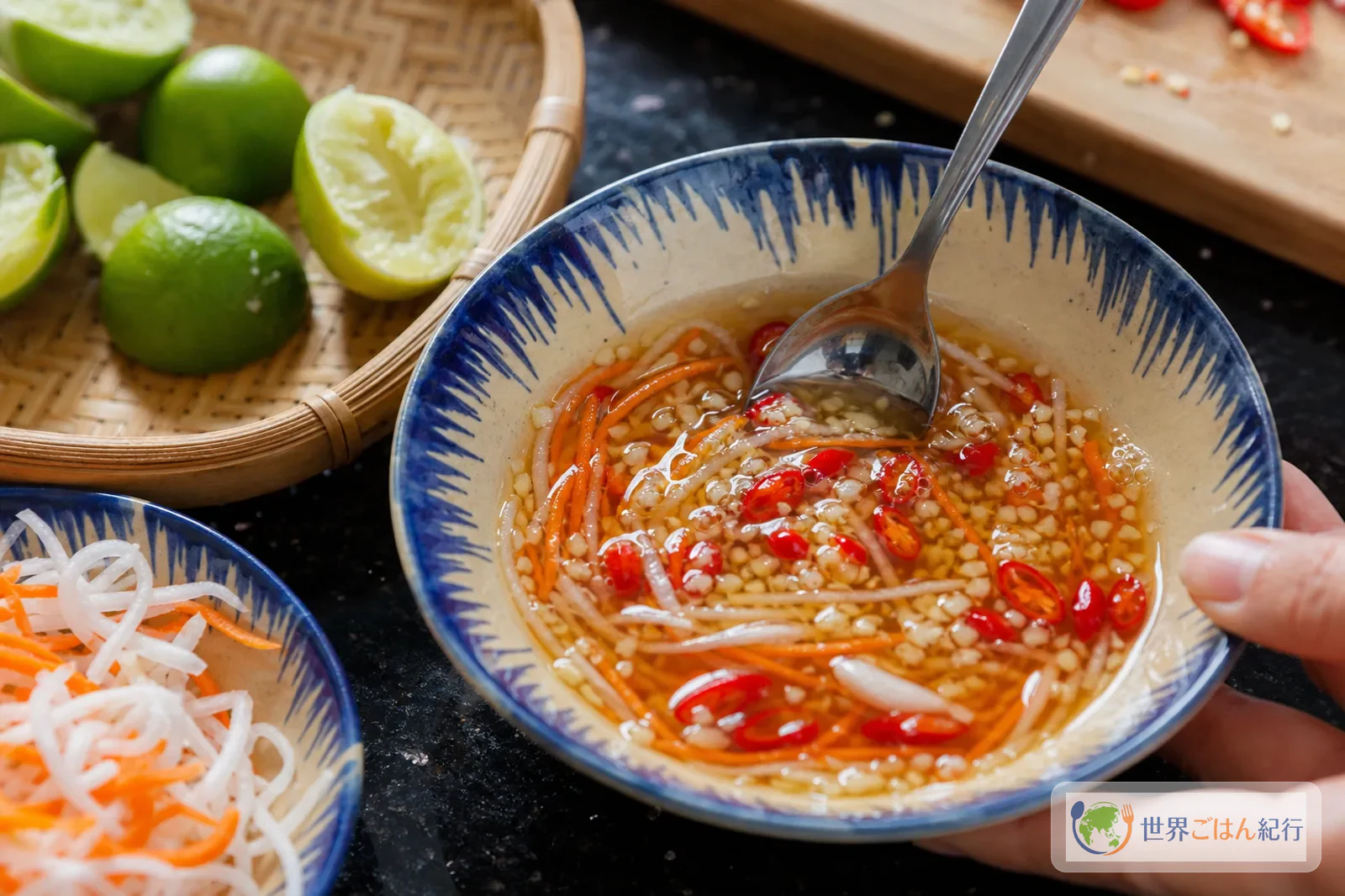
Nuoc cham is what cuts the oil in bánh khọt. Because fish sauce is diluted for use, choose one that has the aroma of a real fish sauce and not just saltiness, so the impression of the rice batter doesn't blur.
Method: Set the Edge First to Make a Shallow Cup
Once you start cooking, the decisions come one hollow at a time. Stir the batter back up, heat the mold, don't skimp on oil, and don't touch until the edge sets. Keep to these four. You can lower the heat if it starts to burn, but a batter started in an under-heated mold won't get lighter later.
What Goes Wrong: Pale, Burnt, Stuck
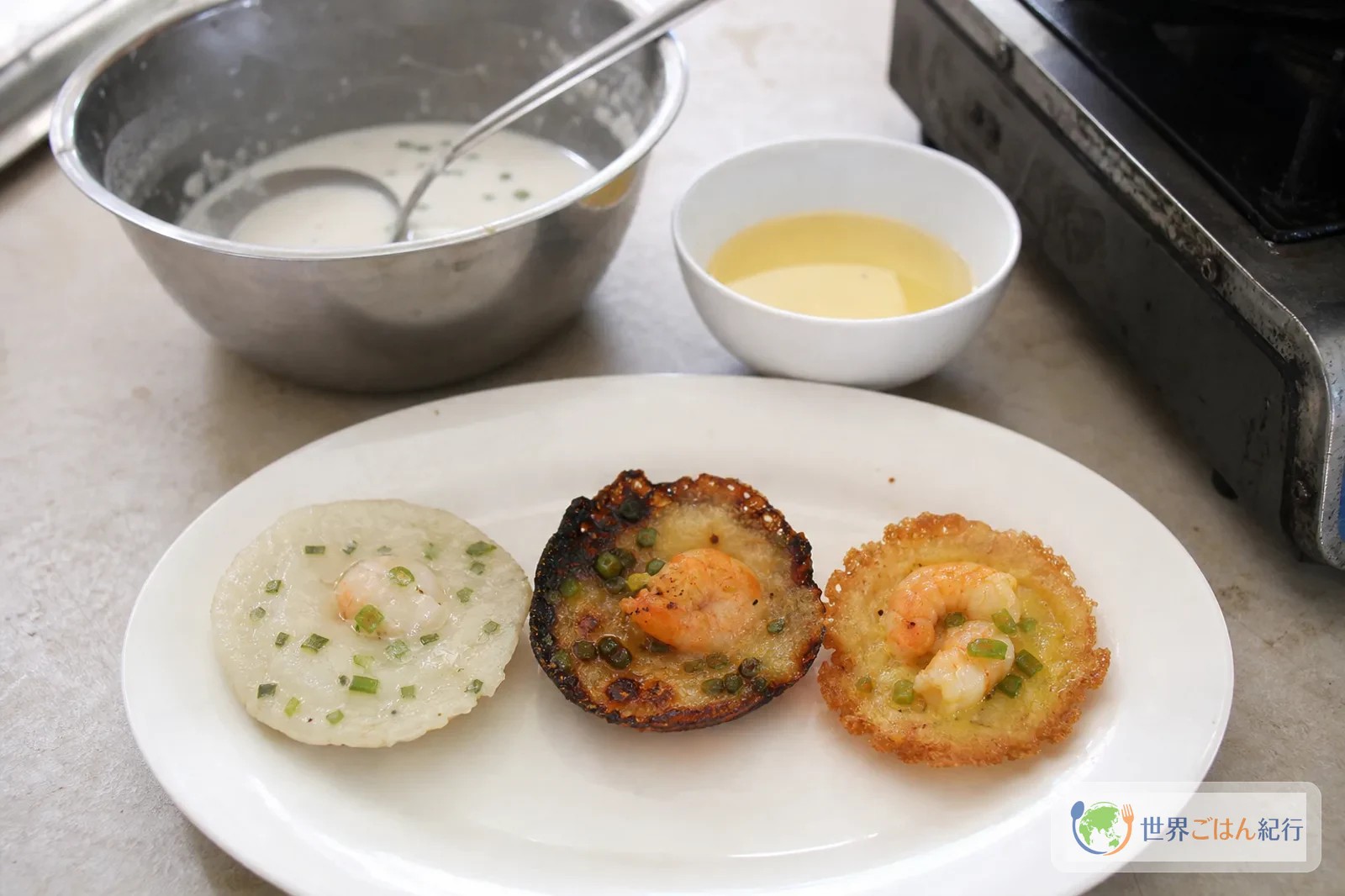
With bánh khọt, the result depends on the state at the start of cooking more than on the amounts. A cold mold, too little oil and too thick a batter, all three together, give a rice cake with no crisp edge and a heavy bottom.
| State | Cause | What to fix on the next batch |
|---|---|---|
| Pale, chewy and heavy | Mold under-heated, too little oil | Preheat 1 minute longer over medium, add 1/4 tsp oil to each hollow |
| Only the edge burns | Heat too high, too much sugar | Lower to medium-low after removing the lid |
| Bottom won't release | Touched too early, batter too thick | Leave for 4 minutes and loosen the batter with 1 tbsp water |
| Center is raw | Shrimp too big, lid time too short | Halve the shrimp and extend the lid time 1 minute |
| Oily | Too much oil, heat too low | Dry over low heat for 1 minute before removing, and set on a rack |
The easiest thing to redo is the thickness of the batter. After resting, the flour settles, so scooping only the top gives a thin batter, and stirring to the bottom suddenly makes it heavy. Stir from the bottom before each batch and cook a test first. If the first is white and thick, add 1 tbsp water; if the edge is hard without cracking, add a little oil.
How It Is Eaten Locally, and Bringing It to Your Own Table
Bánh khọt is a dish you assemble at the table rather than finish on the plate. Pick up a lettuce leaf, lay mint and shiso on it, set one bánh khọt there, and dip it only a little in nuoc cham. Though it is rice flour cooked in oil, wrapped in herbs it becomes oddly light.
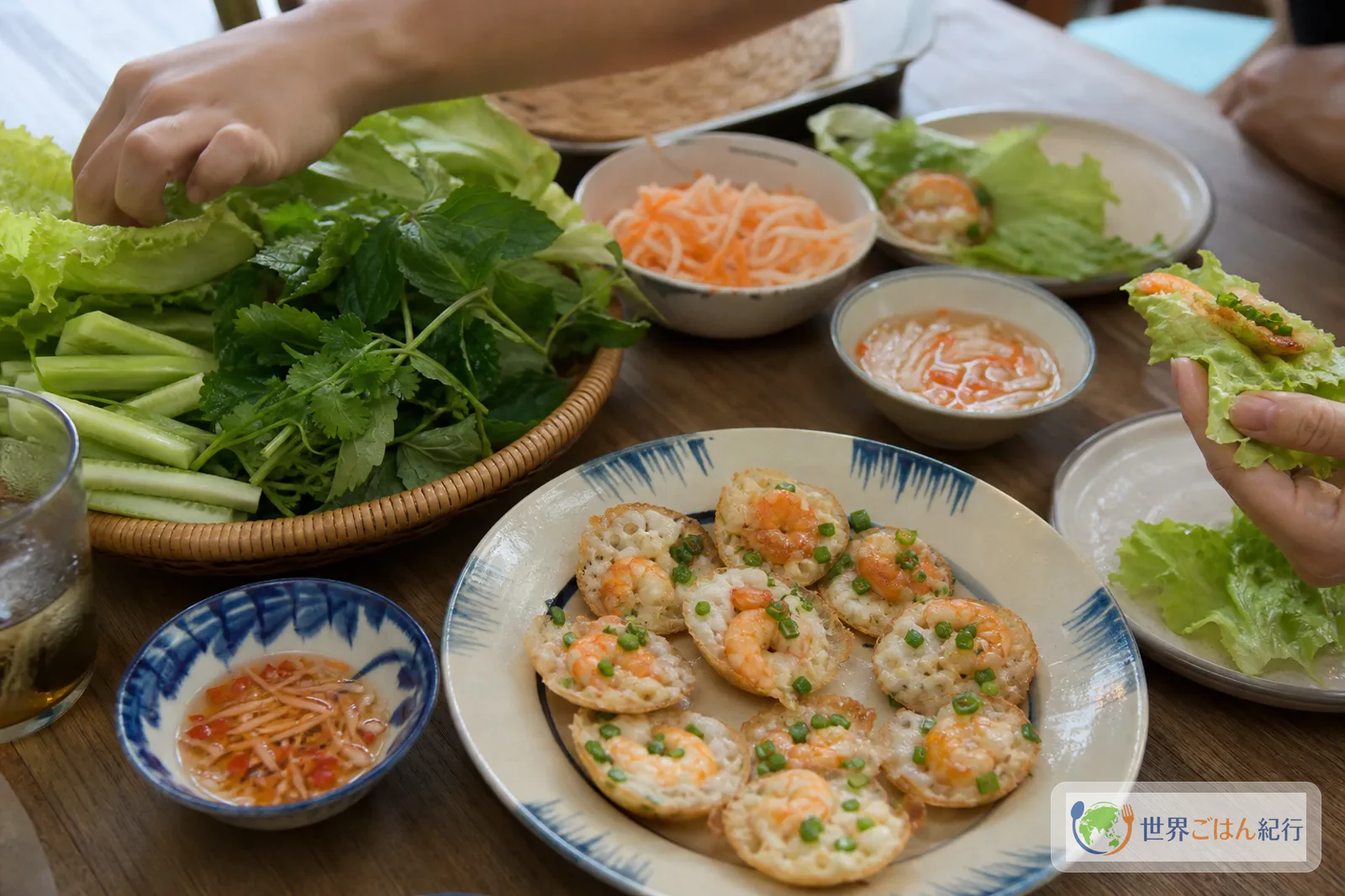
In a menu, it is easier to think of it not as a main dish but as a warm appetizer in the middle of the table. If you add a soup, chicken-broth pho ga or a sour greens soup goes well. If you serve it the same day as fried spring rolls such as cha gio, the fried foods overlap, so reduce the number of bánh khọt and add more herbs and cucumber.
Even with the same rice flour, the texture is the opposite of the steamed bánh bèo (in Japanese), eaten from small dishes. Bánh bèo is soft and soaks up nuoc cham; bánh khọt sets its edge and cuts the aroma of oil with herbs. If you cook rice-flour dishes back to back, comparing these two shows the range of Vietnamese bánh.
Storage and Reheating
Freshly cooked is best. If you must keep leftovers, always separate the bánh khọt, nuoc cham and herbs. Let the cooked bánh khọt cool, put them in a container without stacking, and refrigerate until the next day. Wrap the herbs in damp paper towels, and use up the nuoc cham within 2 days refrigerated in a clean jar.
A toaster oven or a skillet suits reheating. In a toaster oven, bake at 180°C for 4 to 5 minutes until the edge is warm again. In a skillet, add no oil, warm the bottoms over medium-low for 2 minutes and cover for 1 minute. Microwave alone warms the center but leaves the edge damp and heavy. If you must use a microwave, heat at 600 W for only 20 seconds and then bake 2 minutes in a toaster oven.
If you prepare the batter a day ahead, mix it through the flour, coconut milk, water and egg and refrigerate it, then stir it up from the bottom the next day. The turmeric color settles, so always check its state before cooking. Adding 1 to 2 tbsp water just before cooking, to return it to a flowing thickness, helps avoid failure.
Frequently Asked Questions
Can I really make it in a takoyaki pan?
Yes. But don't turn it into a ball as you do for takoyaki. Spread the batter thinly in the bottom of the hollow, set the shrimp and set the edge so it cooks like a shallow cup. Some electric takoyaki makers have weak heat, so for the first batch preheat longer and extend the cooking time by 2 to 3 minutes.
Can I make it with wheat flour instead of rice flour?
I don't recommend it. It will cook with wheat flour, but the lightly shattering edge of bánh khọt is hard to get and it leans toward a pancake. If you really run short, limit it to 120 g rice flour and 40 g wheat flour. If you use all wheat flour, think of it as a different flour dish.
Can I make it without coconut milk?
Yes, but the aroma and roundness are weaker. Replacing it with 100 ml unsweetened soy milk and 100 ml water gives a similar thickness without dairy. Milk will also cook, but it moves a little away from the aroma of southern Vietnamese rice-flour cooking.
Can I use a topping other than shrimp?
Small pieces of steamed chicken, boiled thin-sliced pork, fried tofu or mushrooms work. Wet toppings tend to leave the center damp, so always pat them dry before placing them. Even with fried tofu or mushrooms, keeping the nuoc cham and herbs preserves the direction of the dish.
Does the nuoc cham have to be spicy?
It doesn't have to be. Leave out the chili and increase the garlic slightly for a family version. Acidity, sweetness and the saltiness of fish sauce are what cut the oil of the rice flour, so prioritize the balance of water, sugar, lime and fish sauce over heat.
Summary
Bánh khọt is not a dish that needs a large number of special ingredients. What matters is to choose rice flour made from non-glutinous rice, to let coconut milk and turmeric come through in small amounts, and to preheat the mold well and not fear the oil. If you manage that, even a home takoyaki pan approaches a small rice-flour pancake with a lightly shattering edge.
If a big plate of bánh xèo is a dish that brightens a table all at once, bánh khọt makes the occasion with the pleasure of wrapping one bite at a time. Lay out lettuce, mint, shiso and nuoc cham, and bring them out a few at a time as they cook. The closer the kitchen is to the table, the better this dish tastes.



