
Sticky rice with the scent of bamboo and leaves, from Vietnam's mountains
When you have glutinous rice soaking in water, though it is only white grains, time in the kitchen slows a little. Wrap the drained rice in leaves, lift the lid of the steamer, and a green aroma rises through the steam. Add a char at the end, and though it is white rice, it smells like opening a bundle bought at a mountain stall.
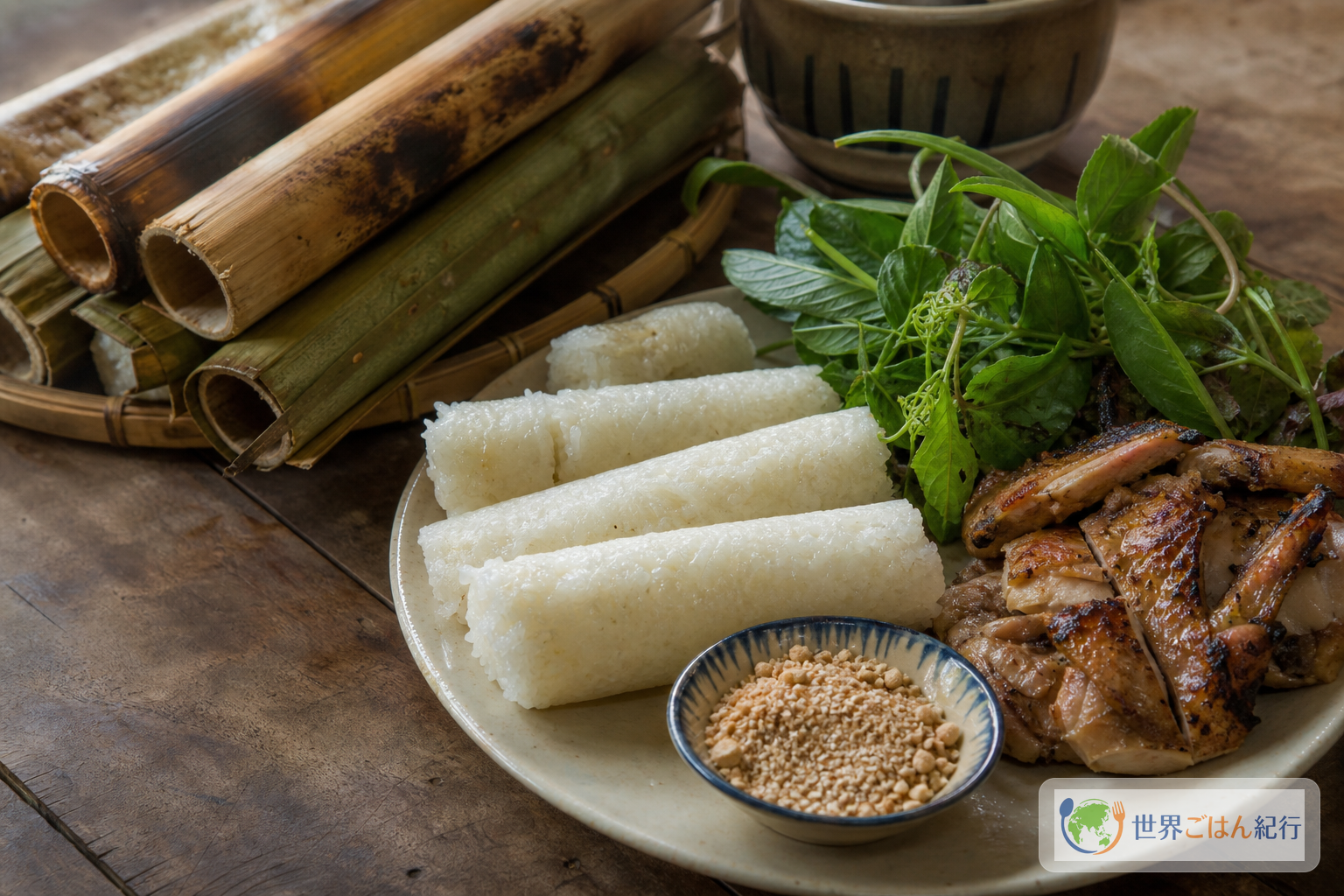
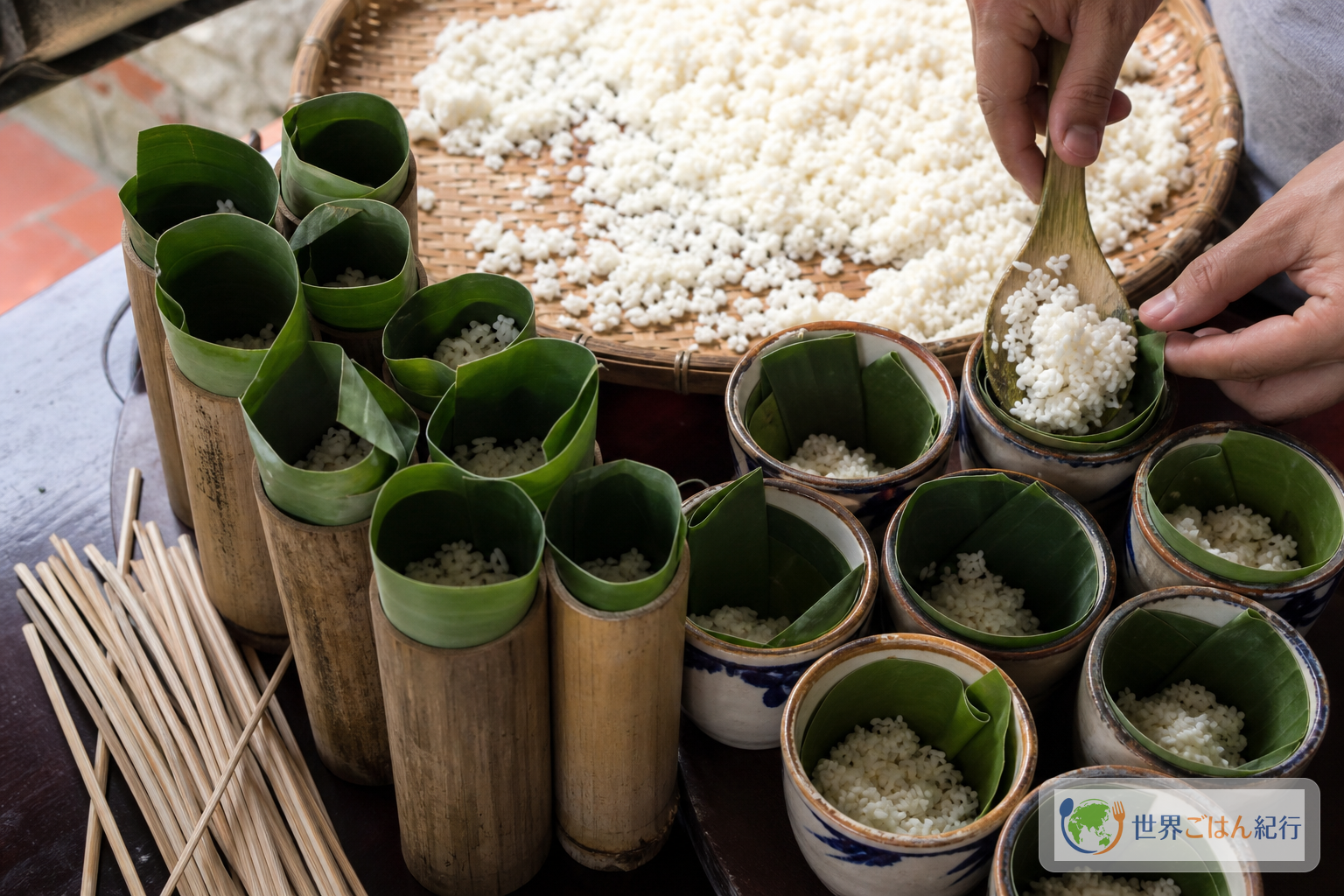
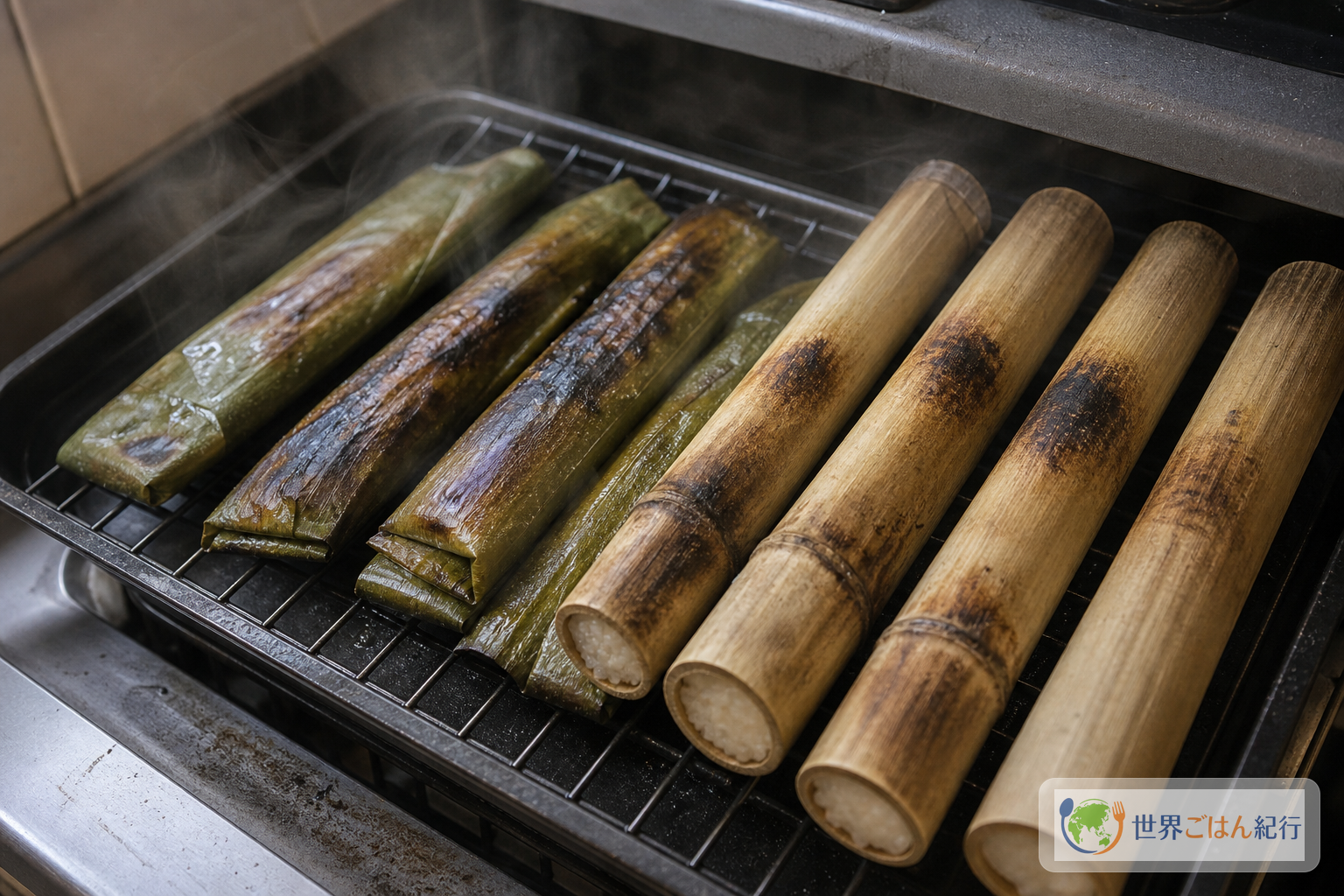
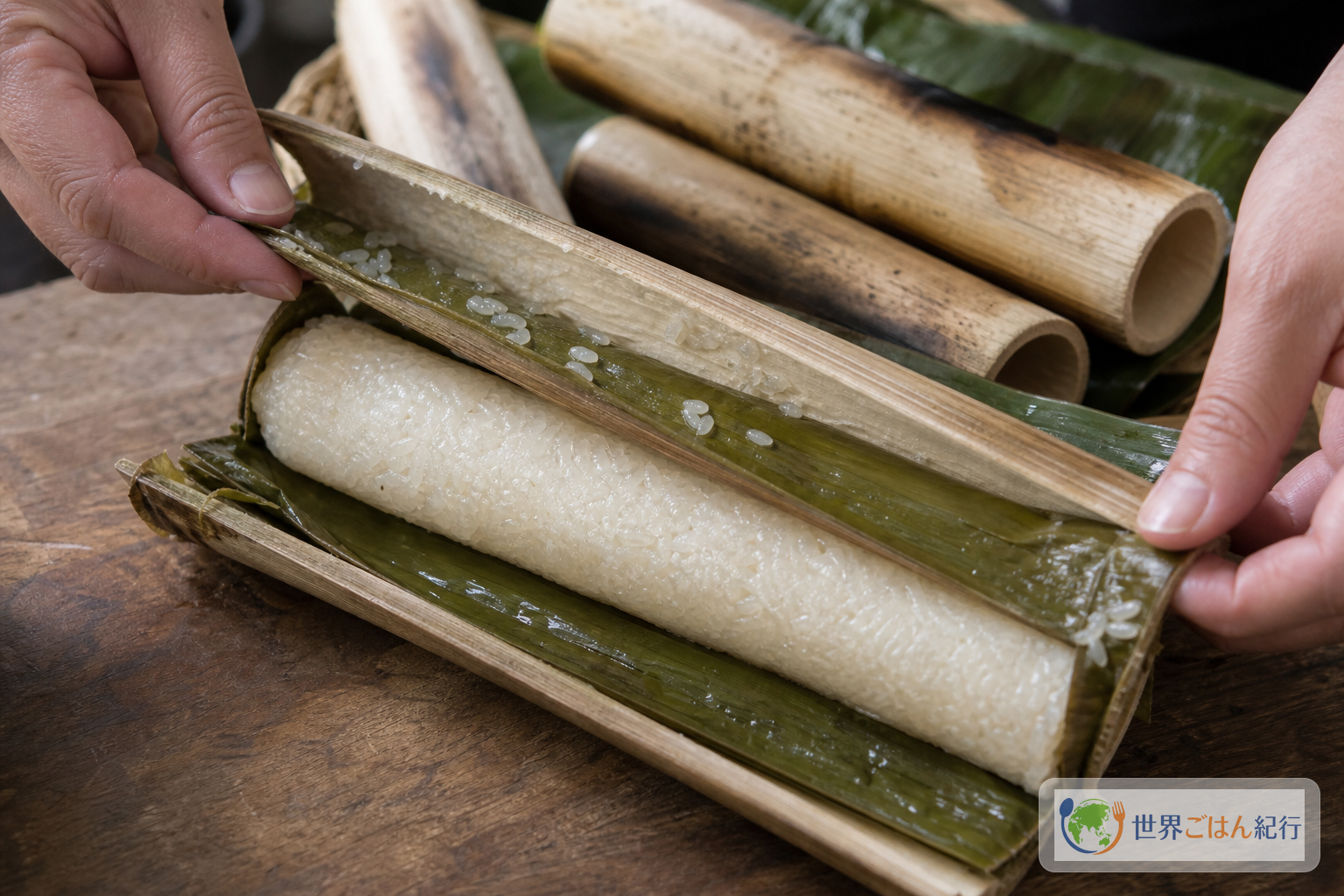
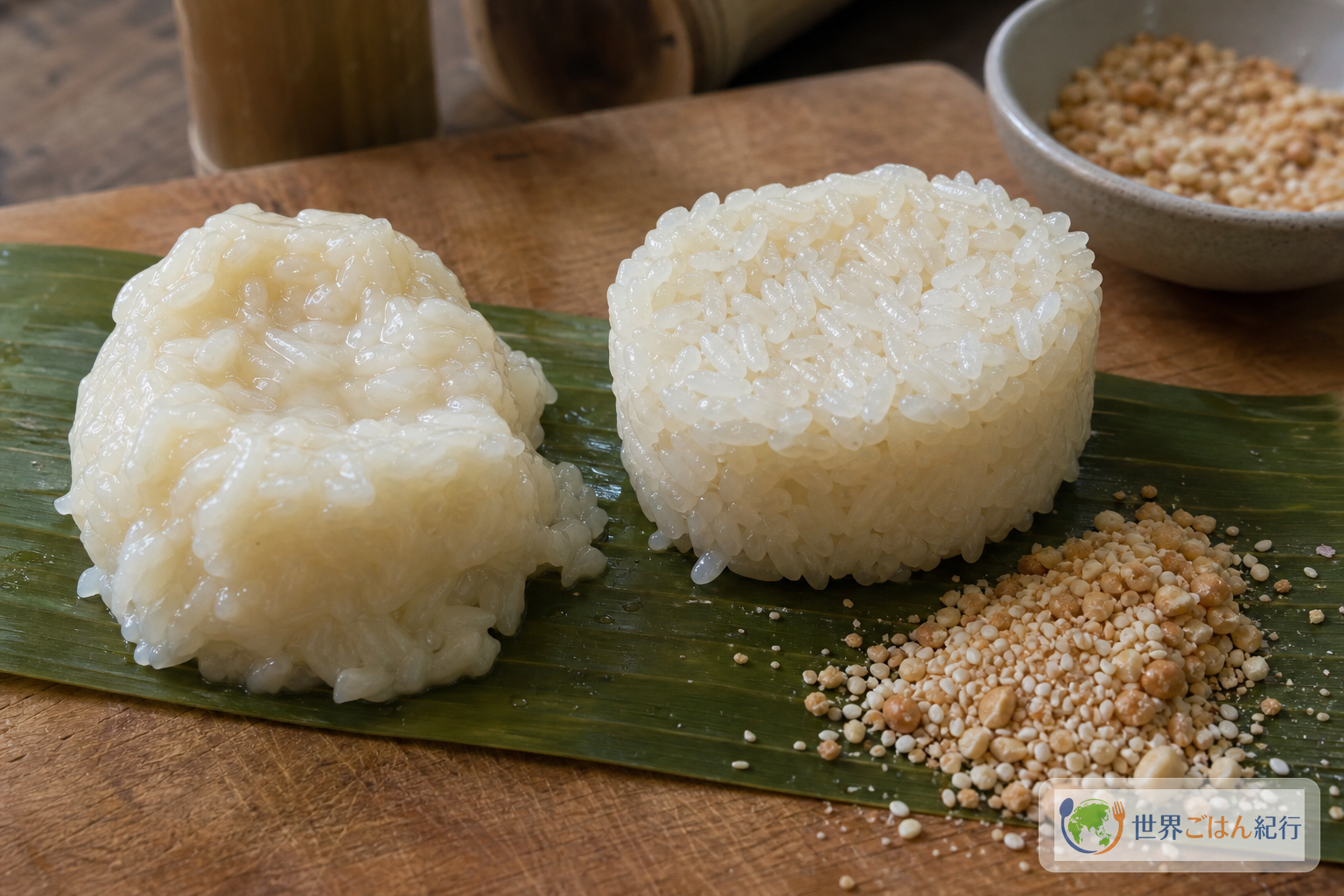
Cơm lam is a sticky rice dish in bamboo tubes, loved in Vietnam's northwest, the Central Highlands, and other mountain regions. Glutinous rice is washed and soaked, packed with water into young bamboo or tubes of the kind called nứa, the opening is closed with banana leaves or the like, and the tube is set over a fire. When the charred bamboo is split, the thin membrane and leaves inside stay on the white tube of rice, and the green scent of bamboo and a light smokiness have passed into it.
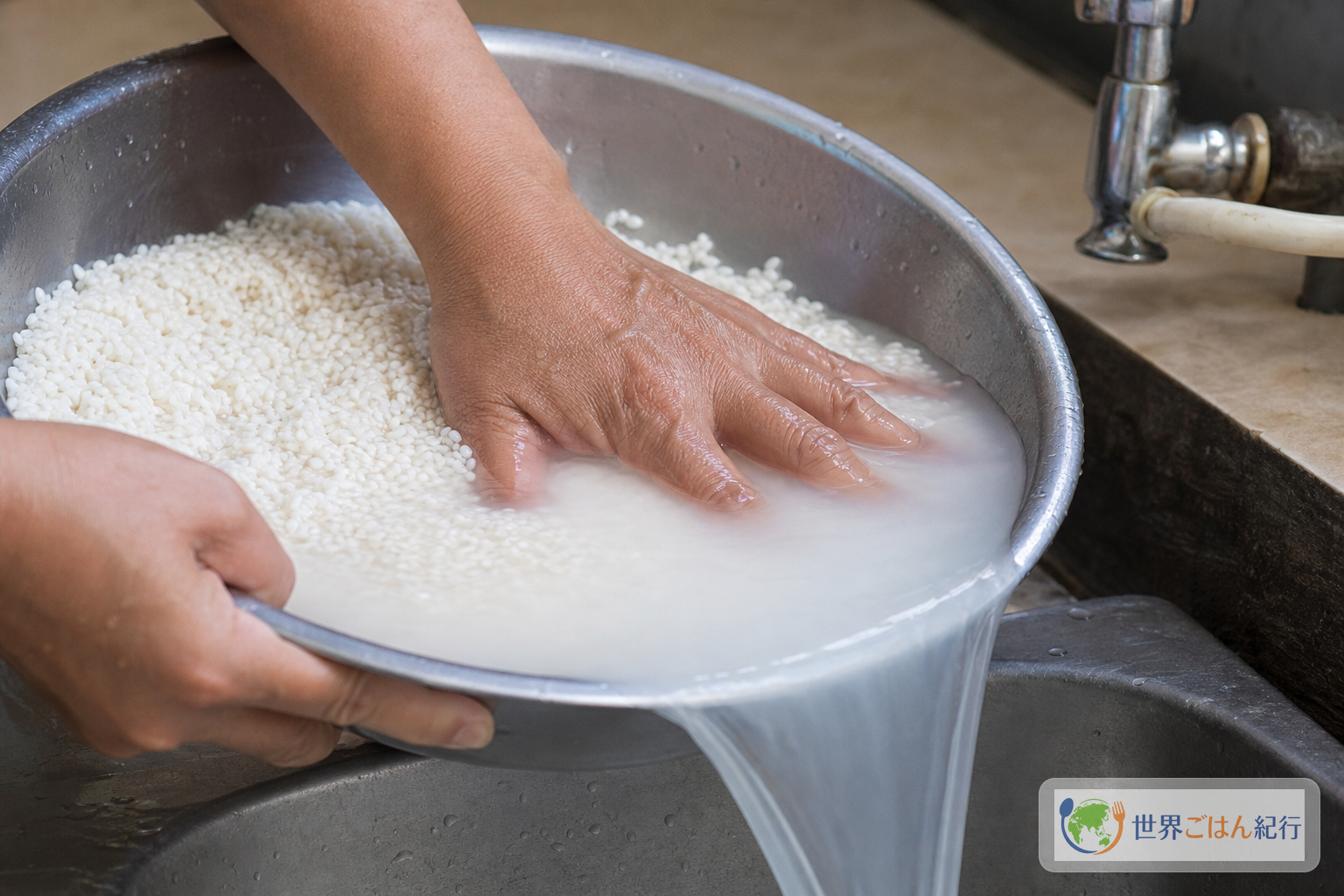
VietnamPlus, a Vietnam News Agency outlet, introduces the northwest's cơm lam as a dish of the Tai ethnic minority and explains that the glutinous rice is soaked for 2 hours and the bamboo tubes wrapped in banana leaves are set over a fire. Vietnam tourism information also describes cơm lam served with grilled chicken and meat dishes on tables in the Central Highlands, such as Mang Den and Dak Nong. The rice, water, leaves, and the aroma of the accompanying salt vary by region, but the skeleton, "steam-roasting glutinous rice in the scent of bamboo or leaves," is shared.
This article adapts it into a form that can be made safely in a home kitchen. If you can get food-grade bamboo tubes you can use them, but avoid putting decorative bamboo or bamboo of unknown treatment over a flame. For the first time, I recommend steaming rice wrapped in banana leaves all the way through in a steamer, then adding aroma with a short sear under a broiler or in a grill pan. Unlike the clear chicken soup of pho ga or the toasty meat of bun cha (in Japanese), in cơm lam the rice itself is the star.
Cơm is rice in Vietnamese, and lam is a word usually explained as tied to bamboo tubes or a cooking method using fire. This article writes the name as Cơm lam.
Ingredients (serves 4)
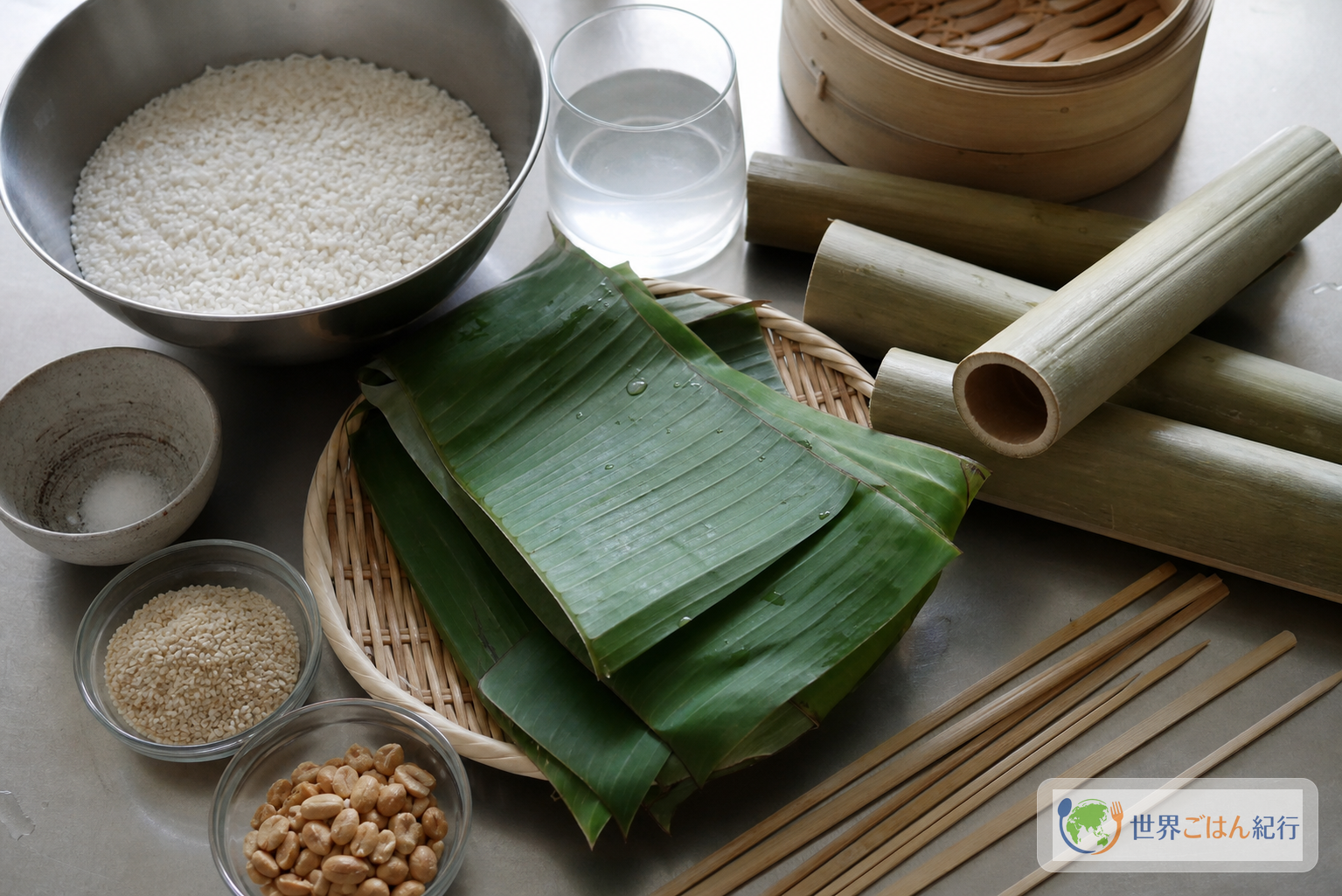
This is a dish you want to bring closer to the local way with bamboo tubes, but in a home kitchen it is less likely to fail if you think of it as "steam the glutinous rice into tube shapes and add aroma with leaves and a char." Thai glutinous rice or any sweet rice works. Old glutinous rice with cracked grains tends to keep a hard core even after soaking, so choose new rice if you can.
This recipe uses sesame and peanuts. If anyone is sensitive to nuts or sesame, separate the sesame salt from the ingredient stage rather than just putting it in a separate dish. If you use bamboo tubes, choose only new ones that can be used for cooking food, and do not put painted, chemically treated, decorative, or gardening bamboo over a flame. At home, cook the rice through in a steamer first and do the searing as a short step for aroma.
What is worth looking for when shopping
Cơm lam is not a dish where you buy the meat or vegetables online. What is worth looking for is the glutinous rice, which decides how the grains finish, a steamer that steams leaf bundles steadily, and bamboo skewers to fasten the openings. Look for banana leaves at import grocery stores or shops that carry frozen foods, and on days you cannot get them, do not force it; go to the methods in the options table.
First, glutinous rice. Made with ordinary rice alone, it does not hold in a tube and ends up closer to a mixed rice cooked in bamboo or leaves. Because of the stickiness of glutinous rice, it does not fall apart when cut and can be eaten with sesame salt.
A home version wrapped in banana leaves becomes suddenly more stable with a steamer. Cooked in a rice cooker alone, the rice is tasty, but the leaf-wrapped tube texture and aroma are hard to get.
Bamboo skewers are a small tool, but they help in three situations: fastening the leaves, checking the core of the rice, and moving the bundles when searing. About 20 cm is easier to handle than the too-short kind used for yakitori.
How to make it: steam, then sear briefly
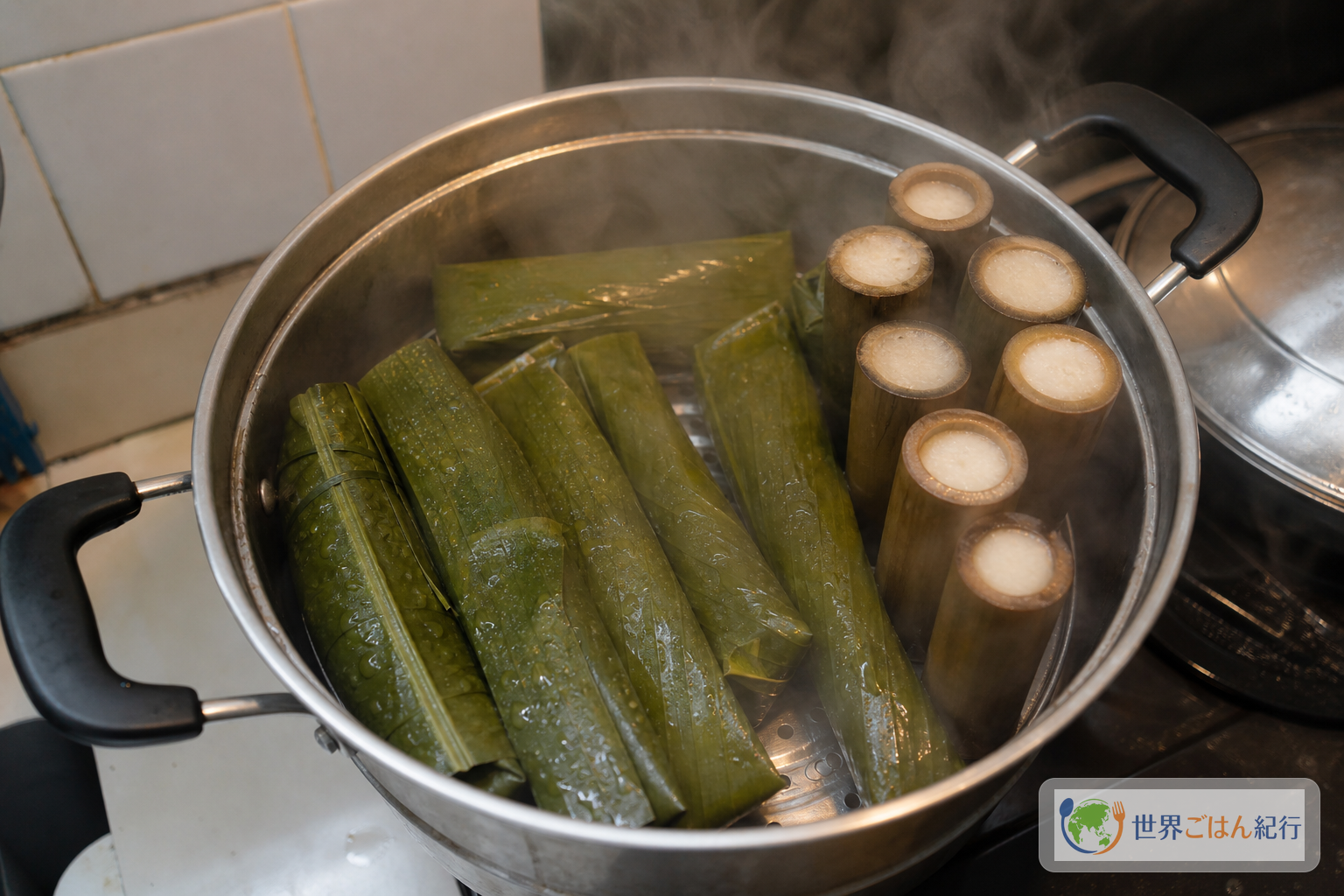
Locally, the rice is cooked by turning the bamboo tubes beside a fire. At home, trying to cook through only by searing from the start tends to scorch the outside and leave the core. So cook it with certainty in a steamer, and add the scent of bamboo and leaves in a final searing step.
Why not cook in the bamboo tube alone In the local way, with an outdoor charcoal fire and young bamboo, the rice cooks from the moisture inside the bamboo and the control of the fire. Doing the same under a home broiler or in a toaster oven can scorch the outer leaves or bamboo first and leave the center of the rice hard. For the first time, steaming and then searing lets you think of the doneness of the rice and the aroma separately, which is safer.
Options table for days without a bamboo tube
What makes cơm lam is not decided by the bamboo tube alone. What you want to keep in a home kitchen is the glutinous rice, the scent of leaves, the texture that holds in a tube, and the light char at the end. On the other hand, there is no need to force-burn bamboo of unknown origin.
| Method | Result | Good for | Caution |
|---|---|---|---|
| Food-grade bamboo tube + steamer + sear | Closest to the local form | Days you can get cooking bamboo tubes at a grocery store | Do not use painted or chemically treated bamboo |
| Banana leaf bundle + steamer + sear | Good balance of aroma and shape | The first time, or when you want it steady at home | Wrap in two layers if a leaf tears |
| Heatproof cup + banana leaf | Weaker as a tube but hard to fail | Days without a bamboo tube | Do not press the rice in too hard |
| Parchment + a little perilla (or basil) | Aroma differs but easy to eat | Days without banana leaves | As a dish name, it leans toward a home variation |
| Rice cooker only | Close to ordinary sticky rice | Days with no time | The cơm lam texture and aroma are weak |
If you cannot get banana leaves, the aroma changes, but wrapping in parchment into tubes, steaming, and finishing with a short sear in a grill pan can still give the experience of "cutting a tube of sticky rice and eating it with sesame salt." The scent of bamboo and leaves is an important part of the dish, though, so it is worth looking for frozen banana leaves next time.
What goes wrong: fixing hard cores, stickiness, and over-charring
| Condition | Cause | Fix |
|---|---|---|
| Hard core left in the center | Not soaked enough, not steamed long enough, rice packed too full | Soak 2 hours, fill to 80 percent, steam 5 more minutes over medium heat |
| Sticky and collapsing | Too much water, cut right after steaming | Keep water to 160 ml total. Rest 5 minutes before searing and before cutting |
| Only the leaf is scorched and bitter | Searing heat too strong | Cook it through by steaming and keep the sear short, at about medium, for aroma |
| Weak scent of bamboo or leaf | Finished by steaming only, too little leaf | Double the leaf and finish with a char |
| Flavor blurry | Rice seasoning too weak, too little sesame salt | Put 1/2 tsp salt in the rice and prepare more sesame salt in a separate dish |
If a core remains, you can return it to the steamer. Close the leaves again, steam 8 minutes over medium heat, and rest 5 minutes. Heating again in a microwave alone tends to harden only the outside, so restoring it with steam makes the grains softer.
If it is sticky, do not force-cut it while hot; leave it 5 to 8 minutes with the leaves open. Once the steam leaves the surface, it firms up a little. If it still collapses, rescue it by tearing it into small pieces without cutting, dipping them in sesame salt, and drying only the surface in a skillet like grilled rice balls.
How to eat it and what to serve
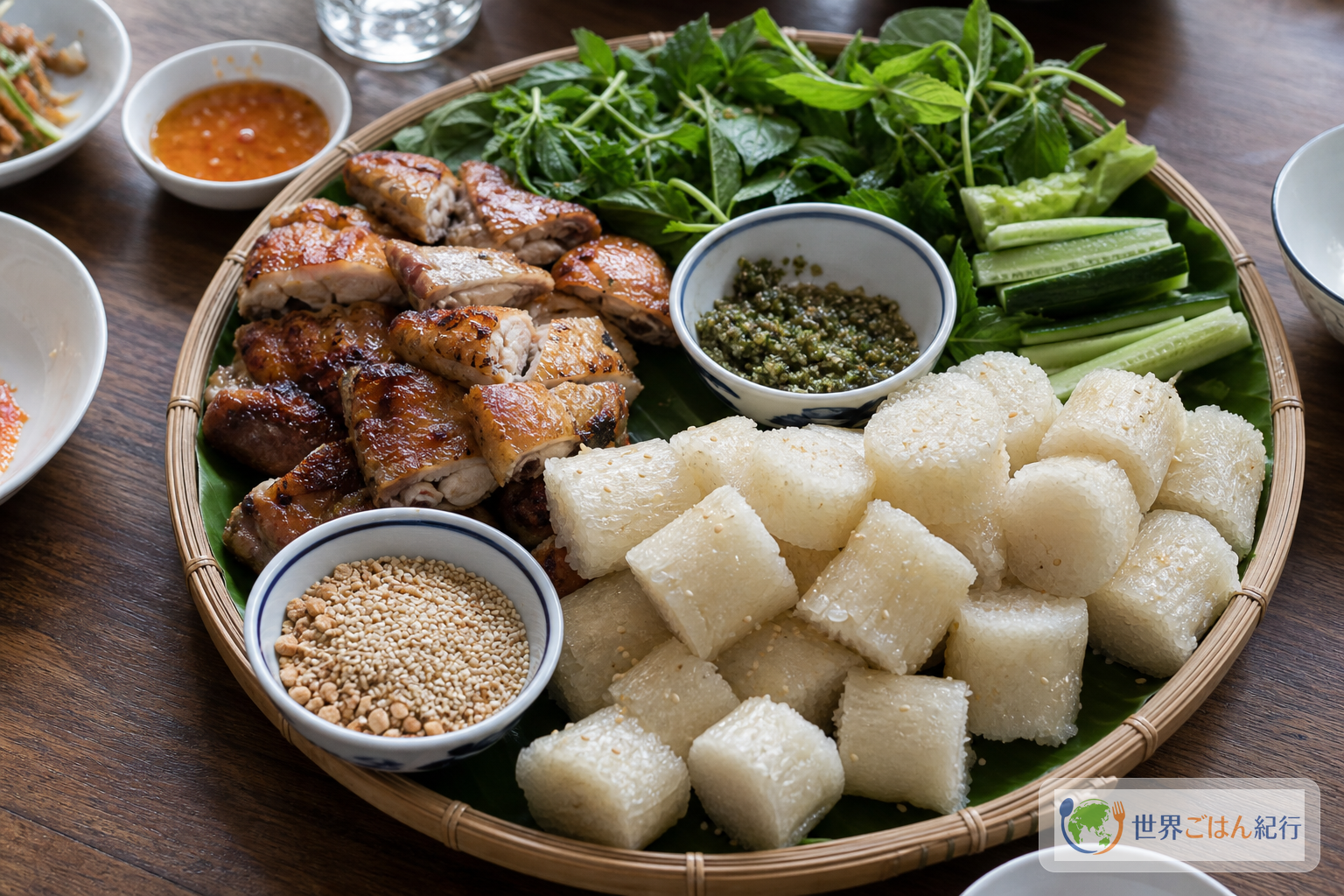
Cơm lam shows its aroma more clearly when eaten at a settled warmth rather than piping hot. On tables in Vietnam's northwest and highlands, it is paired with sesame salt, peanut salt, grilled chicken, grilled pork, herbs, and, depending on the region, a spicy salt dip such as chẩm chéo. In a home kitchen, not over-seasoning the grilled chicken and eating it with salt, lime, and herbs keeps the aroma of the rice from disappearing.
To build a menu from the same Vietnamese cuisine, a soup could be pho ga, toasty meat could be bun cha (in Japanese), and to add vegetables and texture, banh xeo (in Japanese) is a candidate. For a light lunch, just cơm lam, sesame salt, cucumber, and grilled chicken are enough. As a Southeast Asian sticky rice dish for comparison, setting it beside the coconut rice of nasi lemak or the rice noodles of khao piak sen (in Japanese) shows the differences in how rice is used.
Storage and reheating
Cơm lam is best cut and eaten fresh from the sear. To store it, cool it with the leaves on, wrap each tube in plastic wrap, and refrigerate. Allow up to 2 days refrigerated and 2 weeks frozen. Glutinous rice hardens when cold, so do not leave it long at room temperature trying to soften it; warm it with steam.
To reheat from the refrigerator, put it in a steamer with the leaves on and steam 8 to 10 minutes over medium heat. In a hurry, warm 40 seconds in a 600 W microwave and then roll it in a skillet over medium-low heat for just 1 minute, which brings back the aroma on the surface. Thaw frozen ones half a day in the refrigerator and warm in the steamer about 12 minutes.
For a lunch box, put the sesame salt in a separate container. Over-salting the rice makes it monotonous when cold, so dipping in sesame salt just before eating keeps it from getting boring. If you take grilled chicken and herbs along, wipe the herbs' water off thoroughly.
FAQ
Can I make it with ordinary rice?
You can, but the tube-like stickiness that makes cơm lam is weaker. If using ordinary rice, mixing in some glutinous rice, such as 200 g ordinary rice and 100 g glutinous rice, makes it less likely to fall apart. If it is entirely ordinary rice, reduce the water a little and think of it as a leaf-wrapped mixed rice.
Is coconut water required?
Not required. You can make it with water alone. The coconut water is used in a small amount to supplement the rice's sweetness a little and bring it toward a Southeast Asian aroma. Putting in a lot of coconut milk drifts toward another sweet sticky rice dish rather than the simple bamboo-tube rice of the Vietnamese mountains, so keep it modest.
My banana leaves tear.
Thawed leaves that are still cold crack easily. Pour boiling water briefly over them or warm 20 seconds in a 600 W microwave before using. Thick parts of the midrib break easily, so avoid them, and wrap in two layers if one tears. The aroma gets a little stronger, but the double layer keeps too much steam from getting in and holds the shape of the rice better.
Can I grill over charcoal?
If you can handle fire safely outdoors, you can sear briefly over it as aroma after steaming. Cooking over an open fire from the start takes experience with bamboo tubes, water, and heat. For home cooks, I recommend steaming through to the core first and then putting on a char with charcoal or a grill.
What if I do not use sesame or peanuts?
Mixing a little ground perilla seeds, dried green laver, chopped herbs, or lime zest into the salt creates aroma without adding fat. If you have a nut allergy, beyond leaving out the peanuts, take care about shared cooking tools and storage containers. If sesame must also be avoided, coarse salt and lime alone still let you enjoy the aroma of the rice.
Sources
- VietnamPlus, Unique rice in bamboo tube in Vietnam's northwest region (accessed 2026-05-21)
- Vietnam.vn, The culinary essence from glutinous rice (accessed 2026-05-21)
- Vietnam.travel, Discover Mang Den: Vietnam's Awakening Paradise (accessed 2026-05-21)
- Vietnam.vn, Sticky rice cooked in bamboo tubes - the flavor of the mountains and forests (accessed 2026-05-21)



