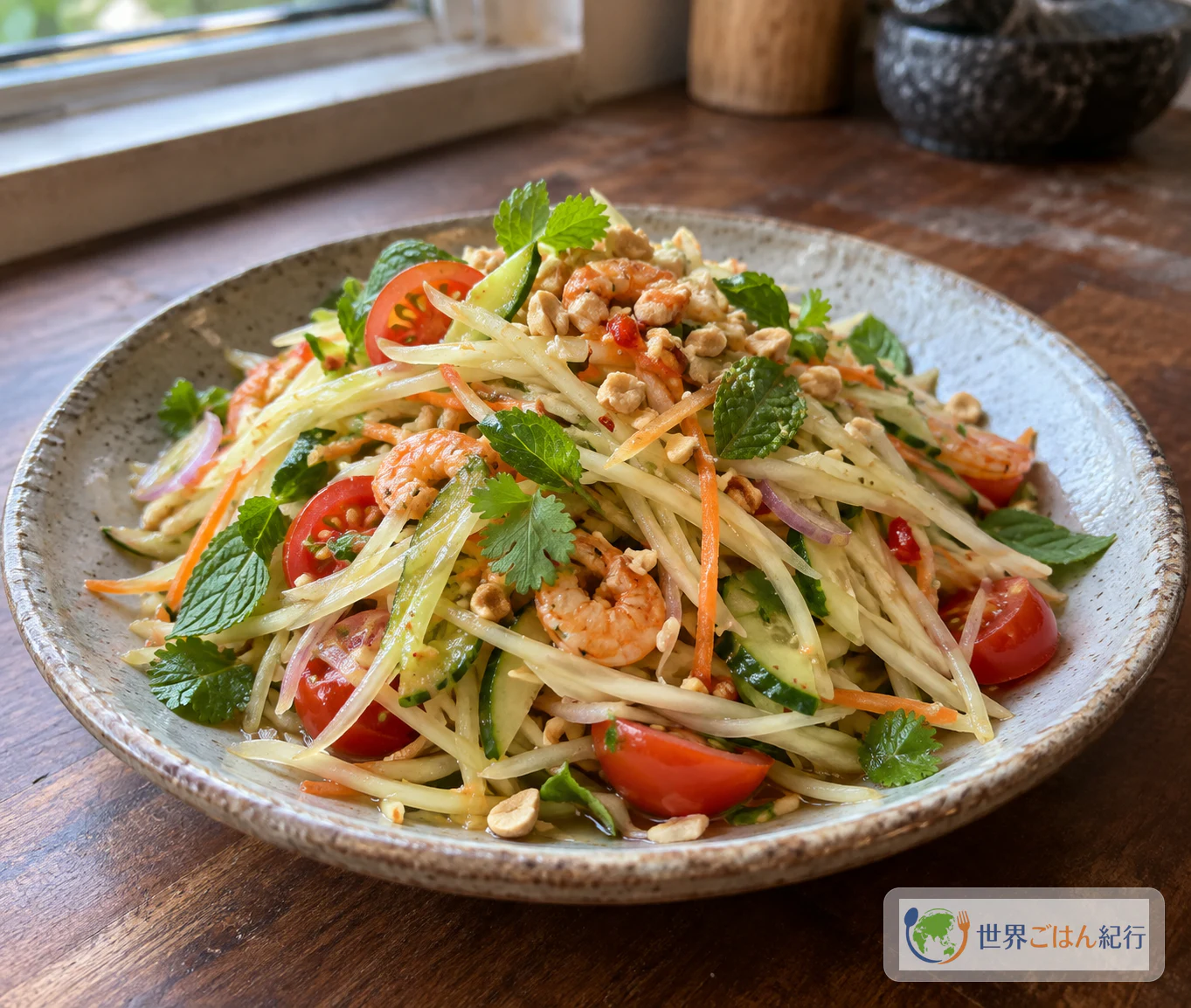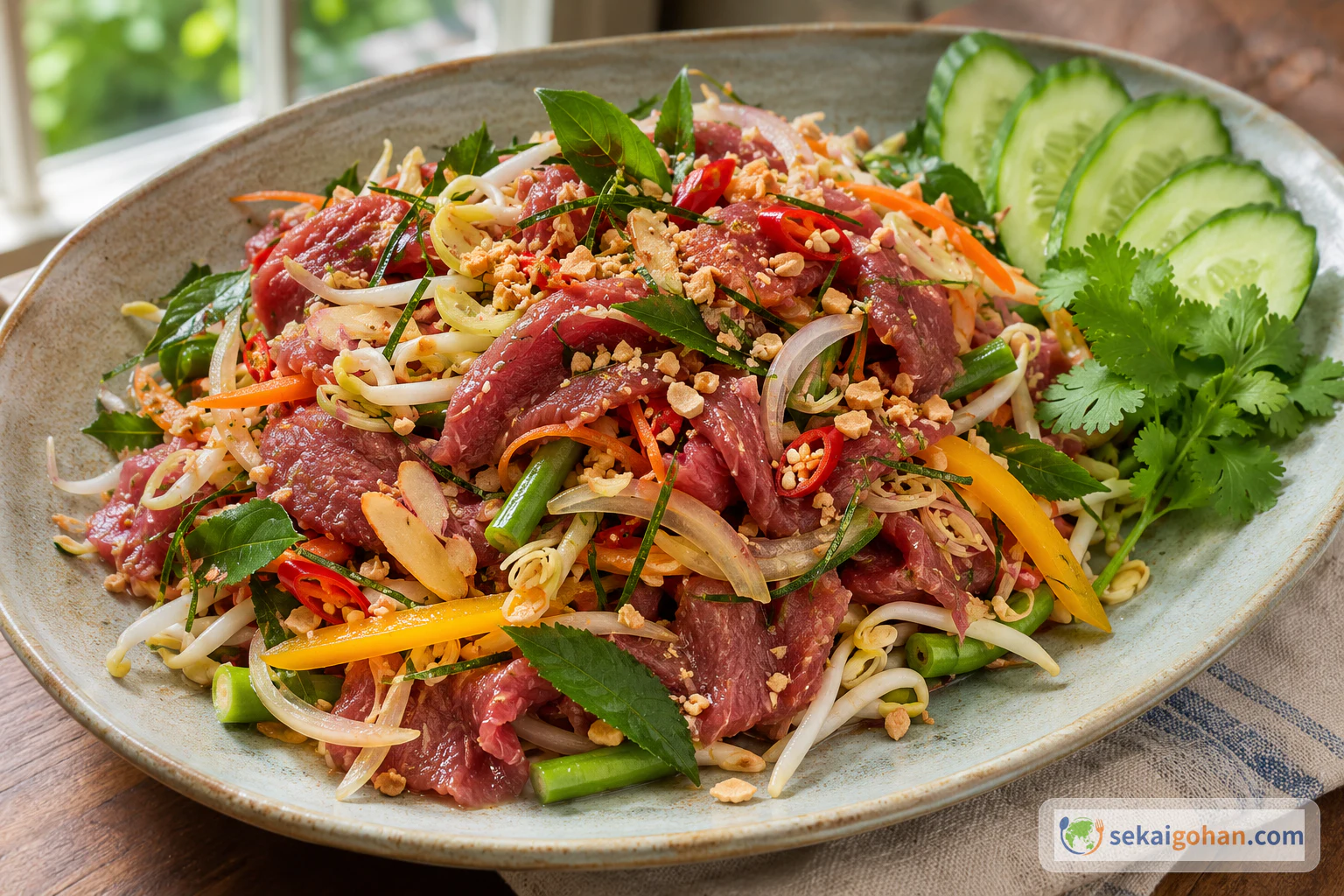
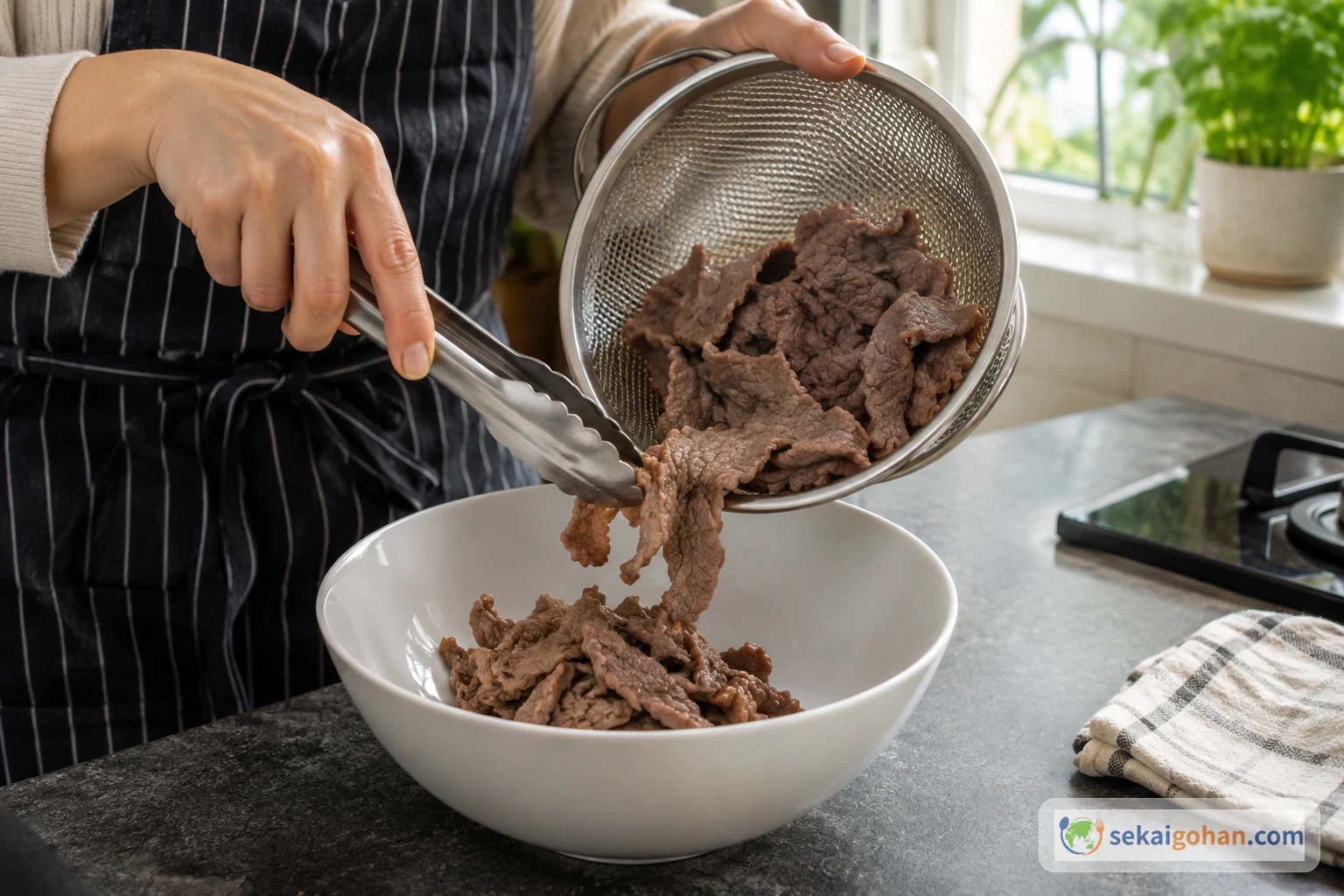
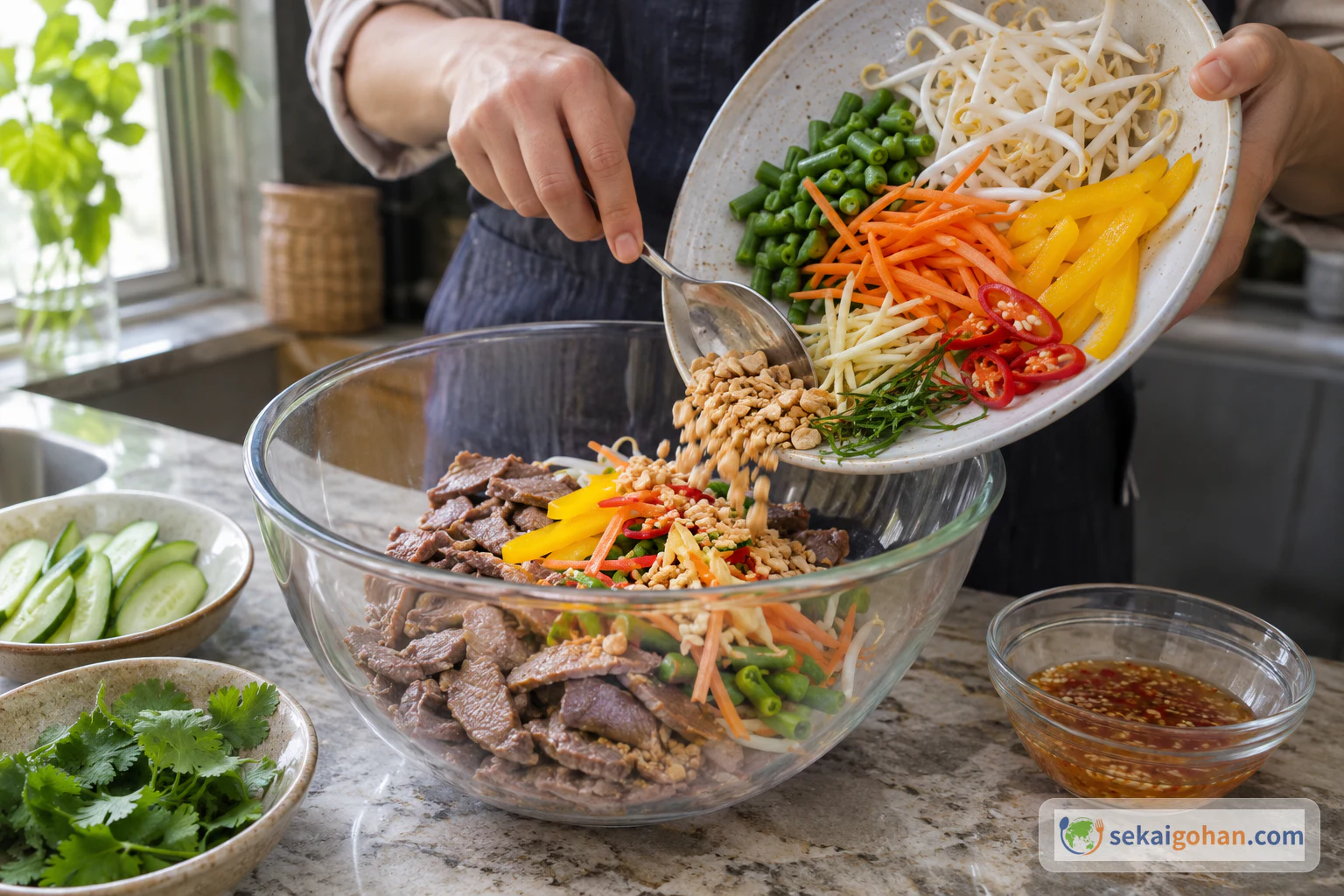
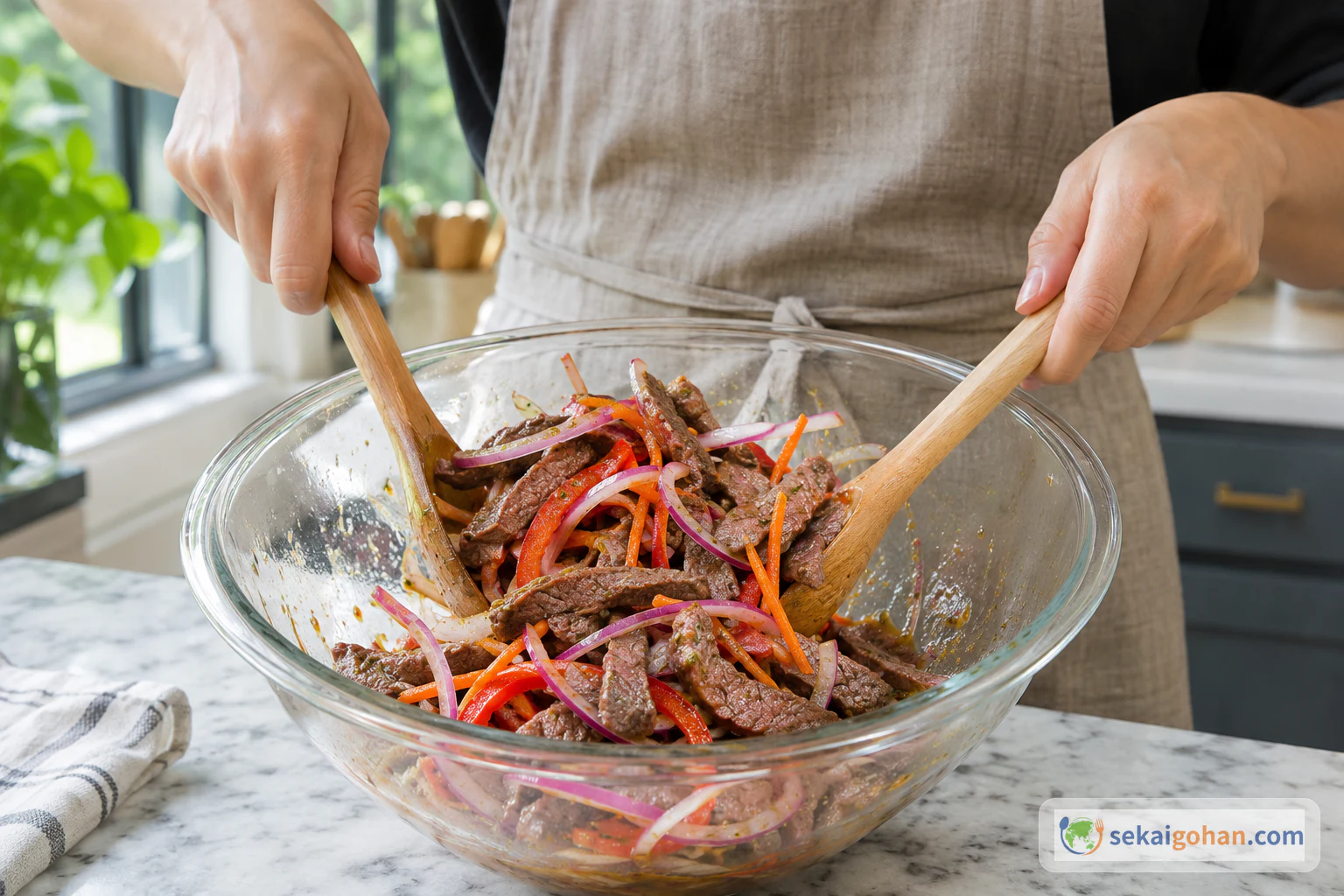
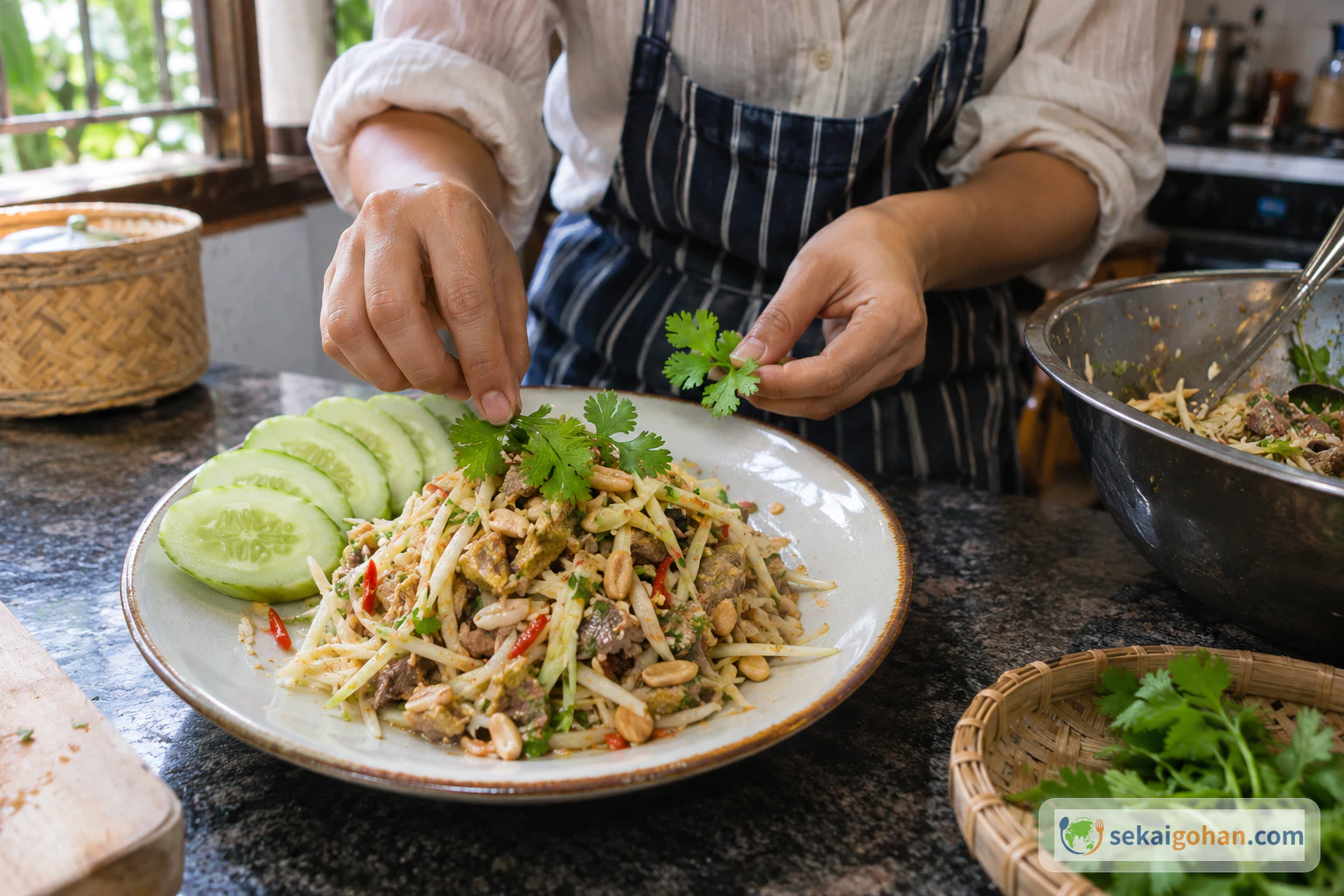
The last things to touch the plate are cool slices of peeled cucumber and a scatter of cilantro. Underneath lies beef that has sat in lime, palm sugar and lemongrass in the fridge, then been drained and tossed with galangal, makrut lime leaf, long beans, bean sprouts, chili and roasted peanuts in a dressing made fresh in its own bowl. The plate goes to the table straight away.
Pleah sach ko is a Cambodian raw beef salad. It hits sour and salty first, from the lime and from fish sauce pounded with anchovy. Palm sugar rounds that out, and lemongrass and galangal run through every bite. The peanuts and long beans give it crunch, and the cucumber gives it cool.
Plea and Nhoam: Raw Beef in Lime and Herbs
The dish turns up under several spellings in English, including pleah, plea, plear and p'lear sach ko, and in Khmer it is written ភ្លាសាច់គោ. The first word names the style. One cook-writer's account uses plea for the raw kind, where beef is dressed with lime and herbs, and nhoam, also written gnoam, for salads whose main ingredient has been cooked in a wok or on a grill. Both kinds share the herbs, sourness and crunch. They differ in whether fire ever touches the beef.
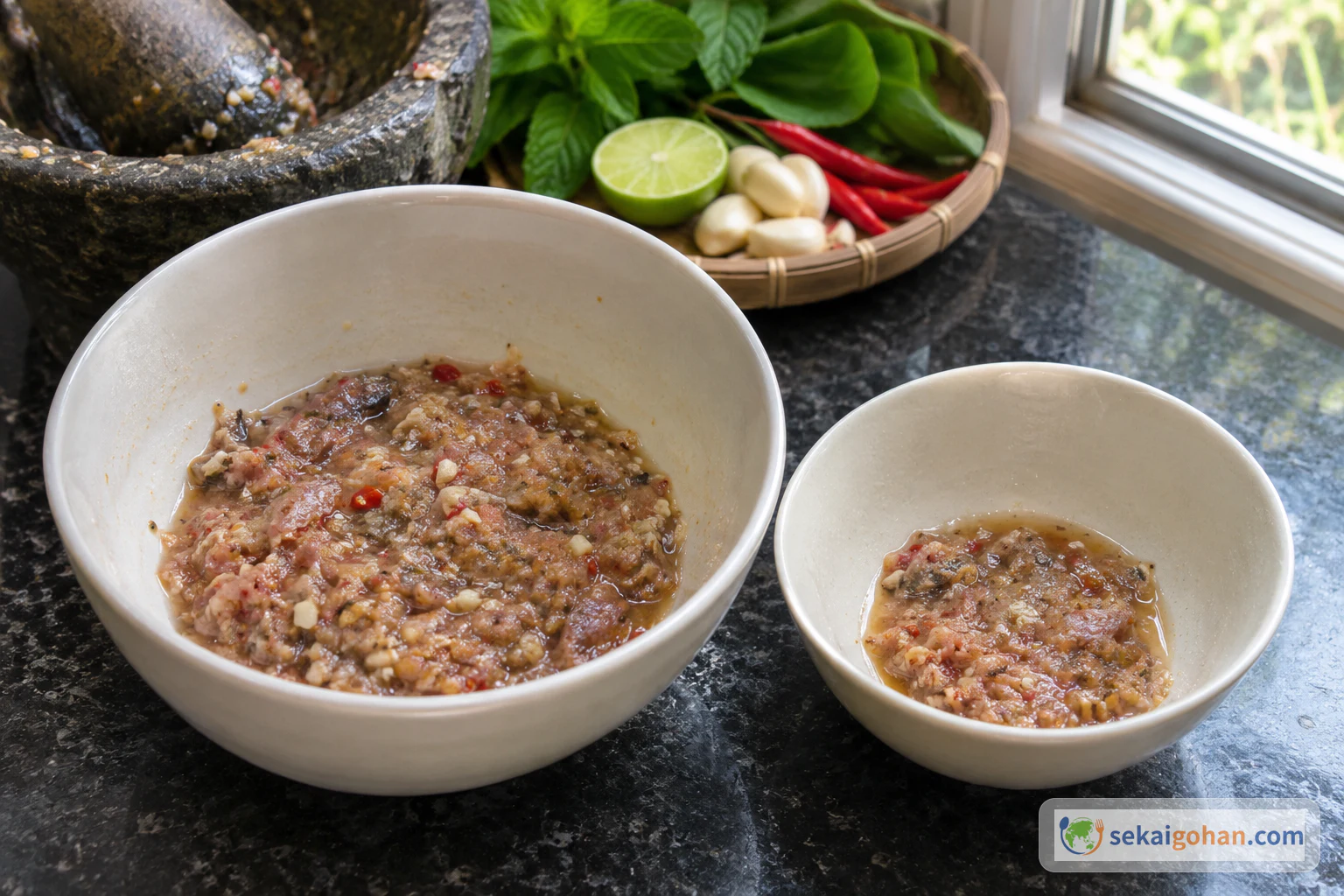
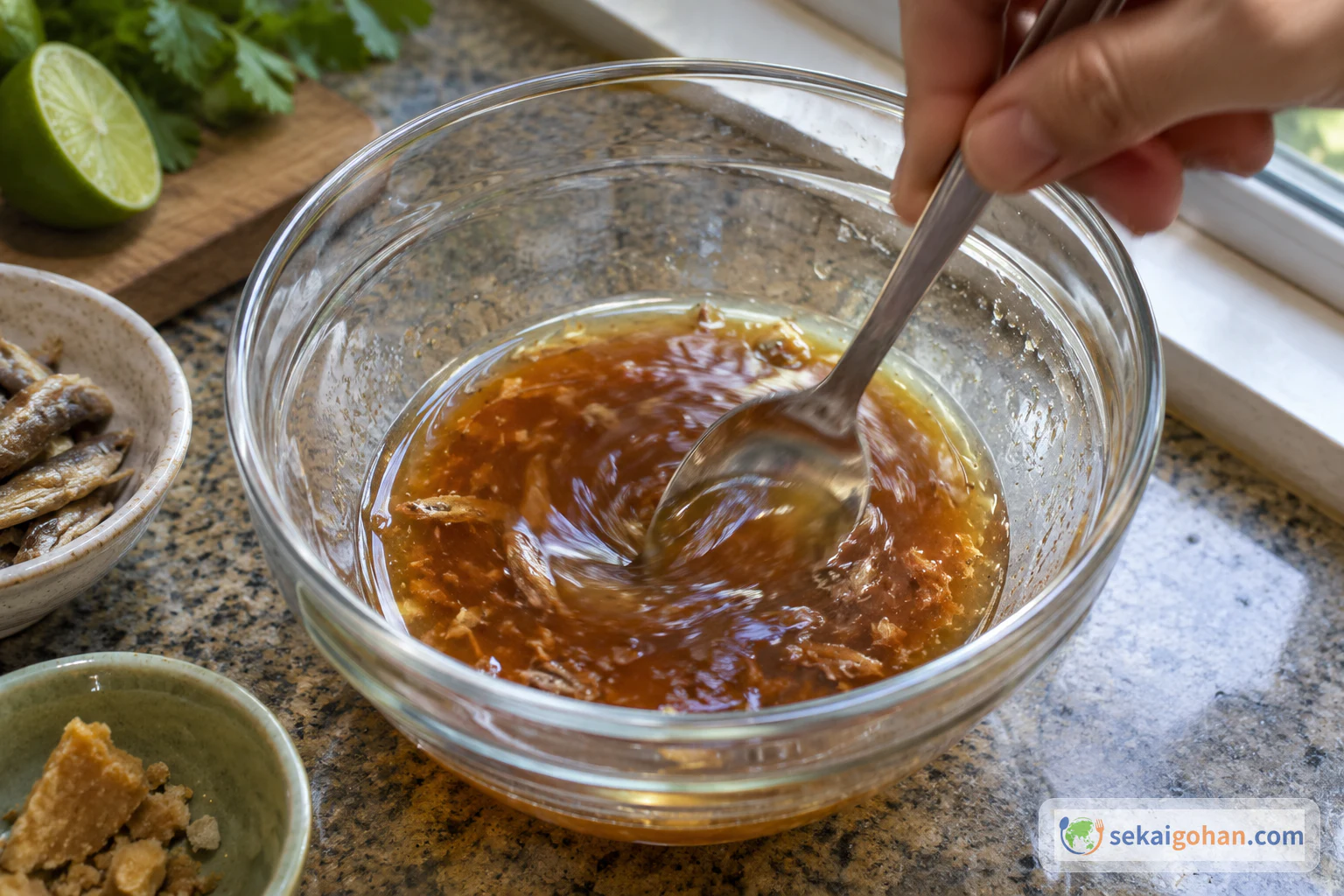
Where the dish was first made is not settled, and households put it together in their own ways. Some build the salty base on tuk prahoc. The version here pounds fish sauce with a single anchovy fillet to give a salty, deep note in its place. The method keeps two liquids apart. One marinade takes the beef in the fridge and is then thrown away. A second, smaller dressing never meets raw meat and is the one that coats the finished salad.
One writer describes the salad as part of a shared meal, set on the table with rice and other dishes for everyone to take from. It is a world away from lok lak, the cooked beef dish of Cambodian cooking. It is also unrelated to prahok ktis, which is built on fermented fish paste. Pleah sach ko is cold, bright and raw, and it is made to be eaten the moment it is dressed.
The pounded fish sauce and anchovy is split before anything else happens: two parts go to the beef marinade, one part to the dressing. That one small move is what lets the finished salad taste fresh and clean instead of carrying the liquid the raw beef sat in.
Ingredients
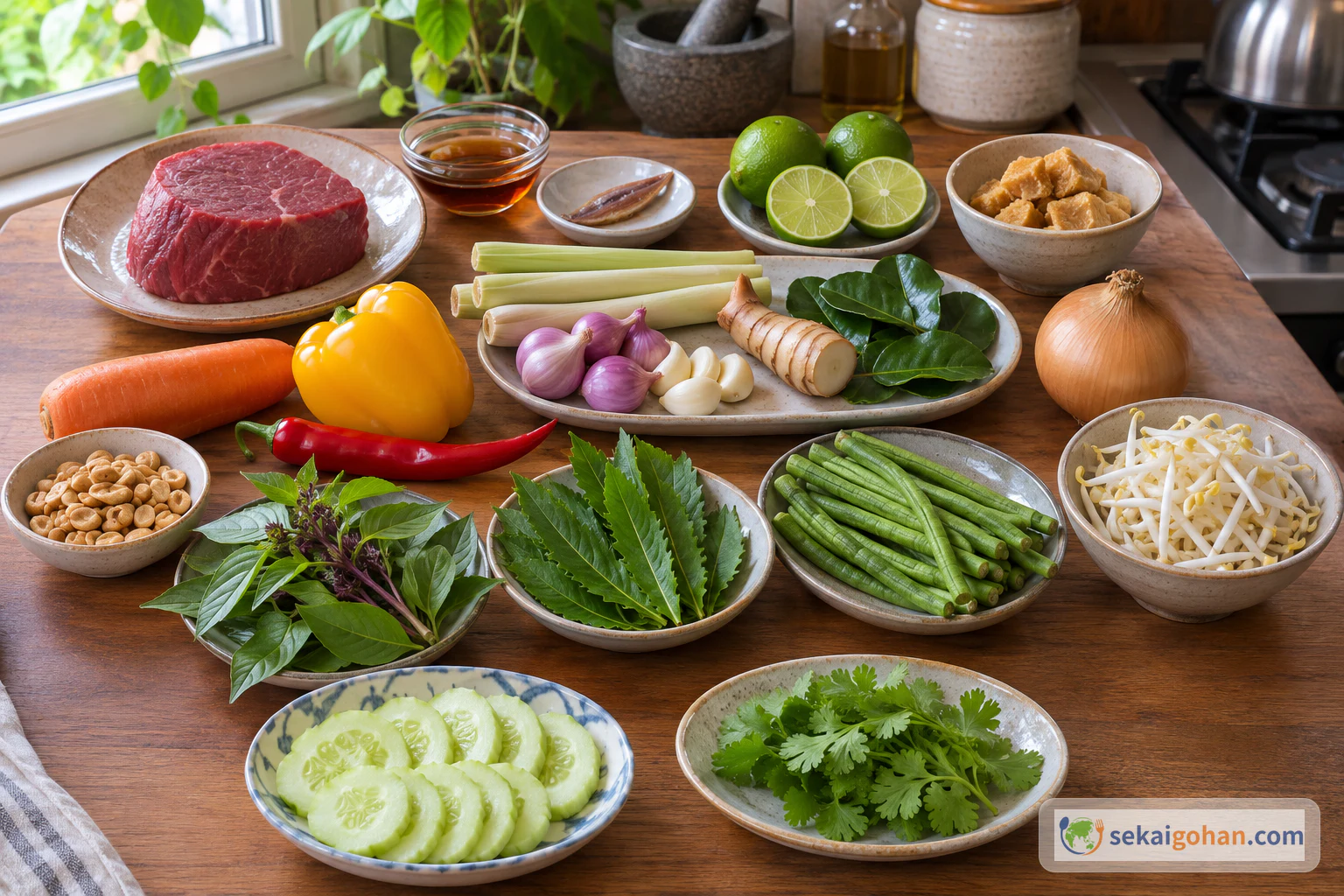
This salad contains fish (fish sauce and anchovy) and peanuts. Peanuts are mixed all the way through, so there is no picking them off one portion.
Cucumber and cilantro never go into the tossing bowl. Laid on top at the end, the cucumber stays crisp and cold and the cilantro stays bright. Tossed in, they go limp in the dressing within minutes.
Equipment
- Sharp knife
- A cutting board kept only for the raw beef, and a second board for everything else
- Mortar and pestle
- One mixing bowl for the marinade, with a lid or wrap
- One small bowl for the dressing
- Whisk and spoon
- Strainer
- One clean bowl for tossing
- Serving platter
Choosing and Substituting
Buy the beef where it is sold for eating raw, or ask a butcher you trust for filet to eat raw on the day. That one purchase matters more than anything else on the list. Everything else is about flavour, and most of it waits on the shelves of an Asian grocer. Look there for palm sugar, galangal, makrut lime leaves, saw leaves, long beans and fish sauce. Buy herbs and leaves sold as food, never wild-picked or garden-ornamental plants.
Each swap below works, and each one shifts the plate a little:
| If you can't find | Use | What changes |
|---|---|---|
| Galangal | Ginger | Warmer and sharper, without galangal's piney, citrusy bite |
| Makrut lime leaves | Finely grated zest of 1 lime | Lime scent stays, but you lose the thread-thin leafy chew |
| Saw leaves | Regular basil | Sweeter and softer than the sharper, cilantro-like saw leaf |
| Long beans | Green beans | Juicier and a touch less dense, with the same snap |
Palm sugar is worth finding. It has a caramel roundness that white sugar lacks, and it is what keeps the lime from tasting harsh. The Fresno chili gives a clean, fruity heat. The roasted, unsalted peanuts let the fish sauce do all the salting.
Method
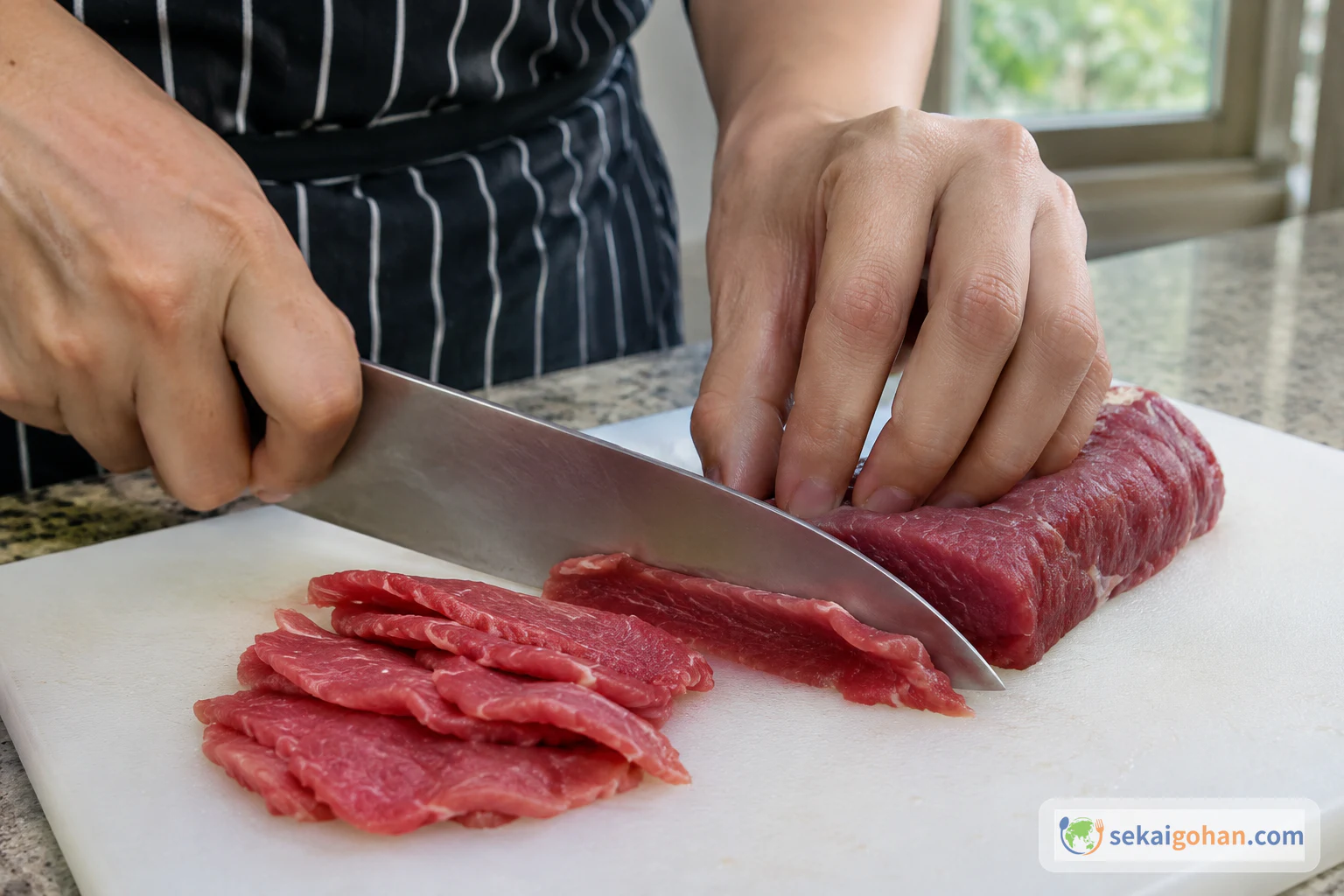
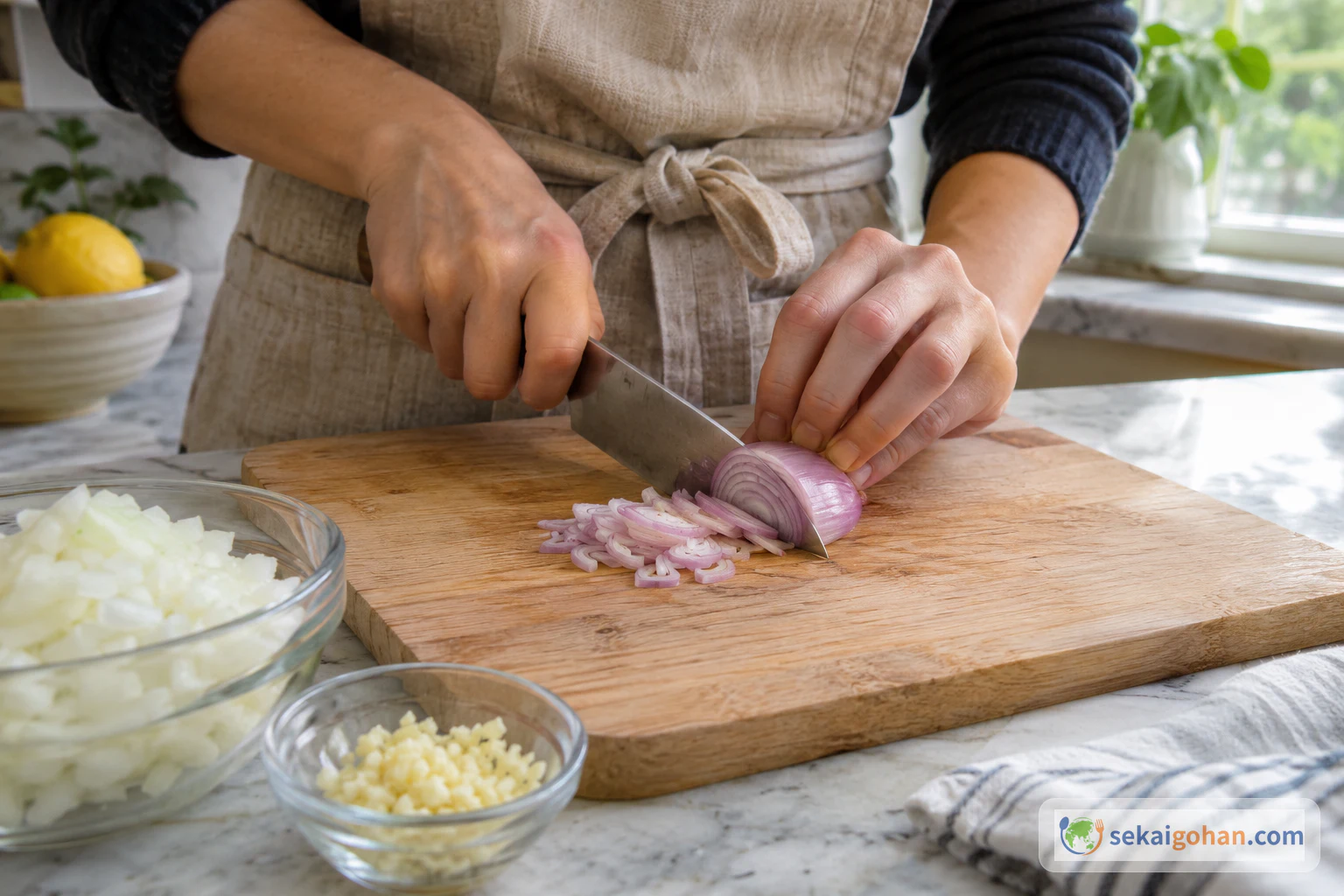
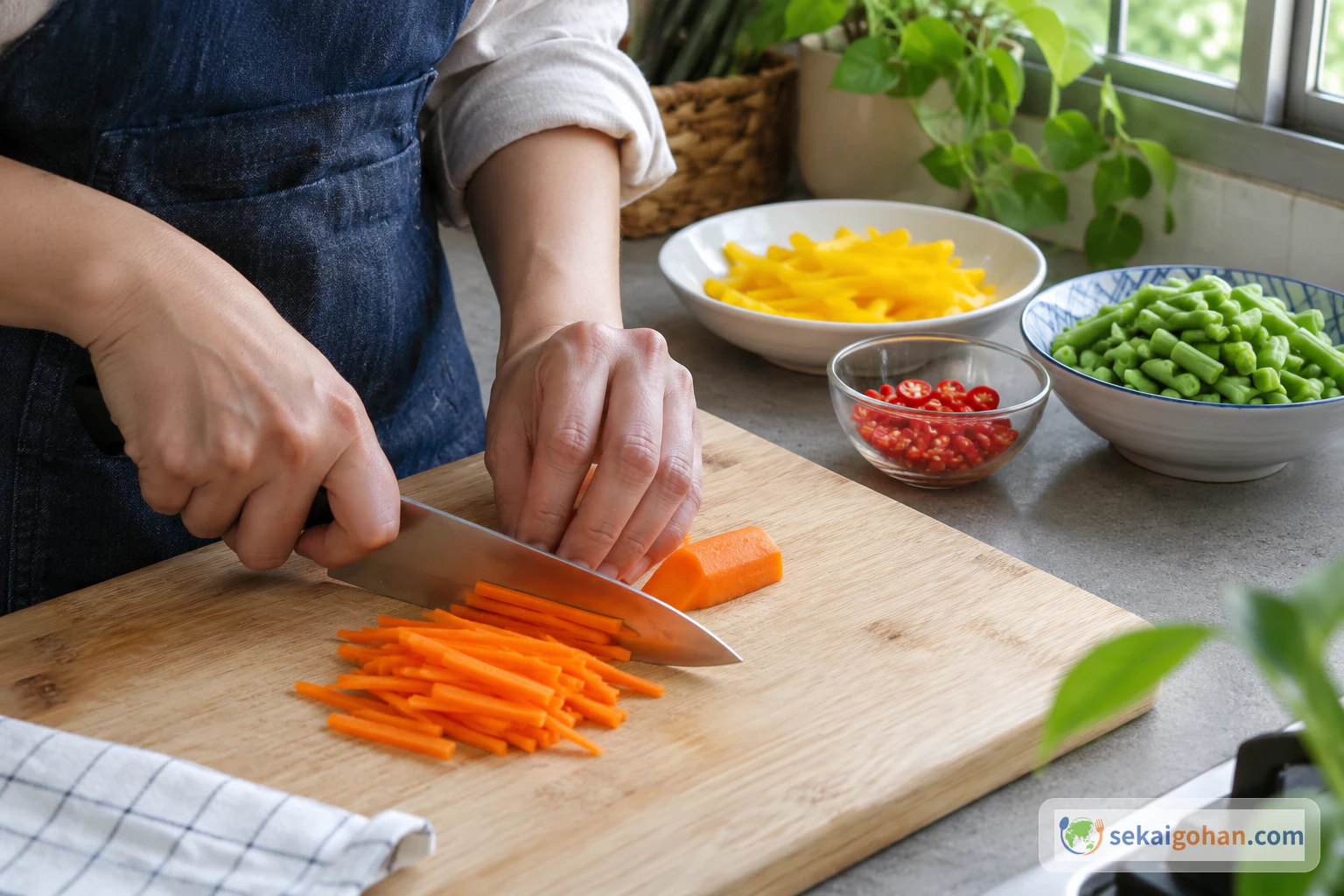
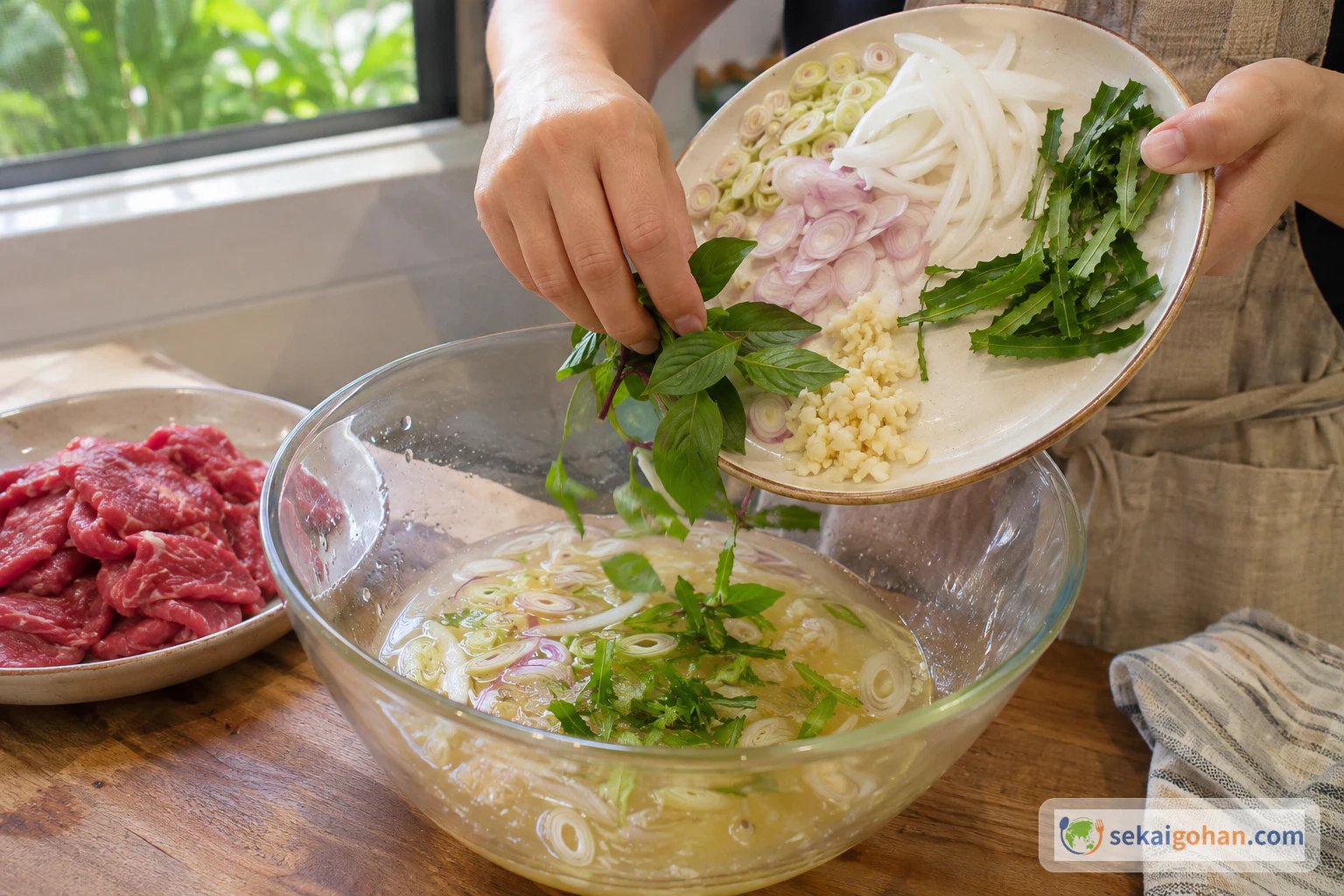
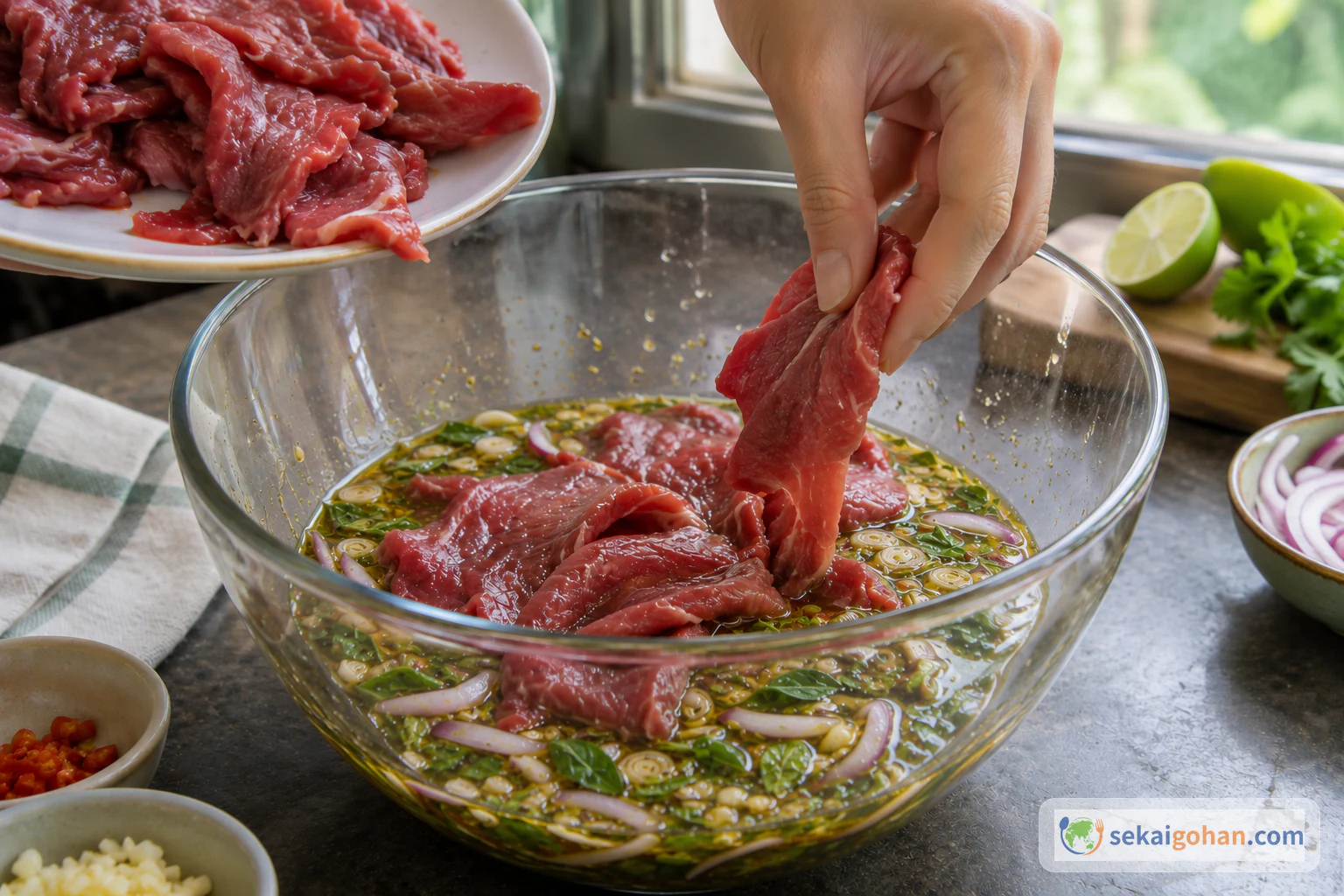
The knife work comes first: beef, then the marinade aromatics, then the vegetables that finish the salad. Next you pound the fish sauce and anchovy, split it, and build the marinade. The beef goes in last and chills for 1–2 hours, which is the hands-off stretch. Make the small dressing and set the table while it rests. After that, the salad comes together in minutes and goes straight out.
- Buy beef sold for eating raw, or from a butcher you trust, and eat the salad the same day.
- Keep the beef cold from the shop to the plate, and marinate it in the fridge.
- Use a board, knife and bowl for the raw beef that you keep apart from the vegetables, herbs and dressing, and wash your hands after handling it.
- Lime cannot be relied on to kill bacteria. A grey colour or a firmer texture tells you nothing about safety.
- Throw the marinade away once the beef comes out.
- If you are pregnant, elderly or have a weakened immune system, or you are cooking for a young child, skip the raw version and choose a fully cooked beef dish.
Dissolve the palm sugar in the lime and fish sauce before anything else goes in, then add the aromatics, then the beef. Sugar dissolves cleanly in bare liquid. Once the bowl is full of shallots and herbs, grains hide in the corners and the marinade tastes sharp in one bite and sweet in the next.
When It Goes Wrong
| What you see | Why | What to do |
|---|---|---|
| Gritty bites and pockets of sharp lime | The palm sugar did not fully dissolve before the aromatics went in | Next time, whisk the bare base until it runs smooth. For the dressing, keep stirring until no grains settle on the bottom before it meets the salad |
| A watery, diluted plate | The beef went into the tossing bowl wet with marinade | Let it drain properly in the strainer, and shake it until no liquid pools in the clean bowl |
| Little salty, fishy lumps | The anchovy was not pounded down | Pound until the fillet disappears into the fish sauce before you divide it |
| Limp cucumber, dark cilantro | The garnish went in with the toss, or the plate waited too long | Add cucumber and cilantro on the platter only, and serve as soon as it is garnished |
| Soft peanuts and flat sprouts | The dressed salad sat before serving | Toss right before eating. The crunch fades fast once the dressing is on |
| Chewy, thick beef | Slices were cut too thick | Cut thin, even slices so the lime and dressing reach right through |
Serving Pleah Sach Ko
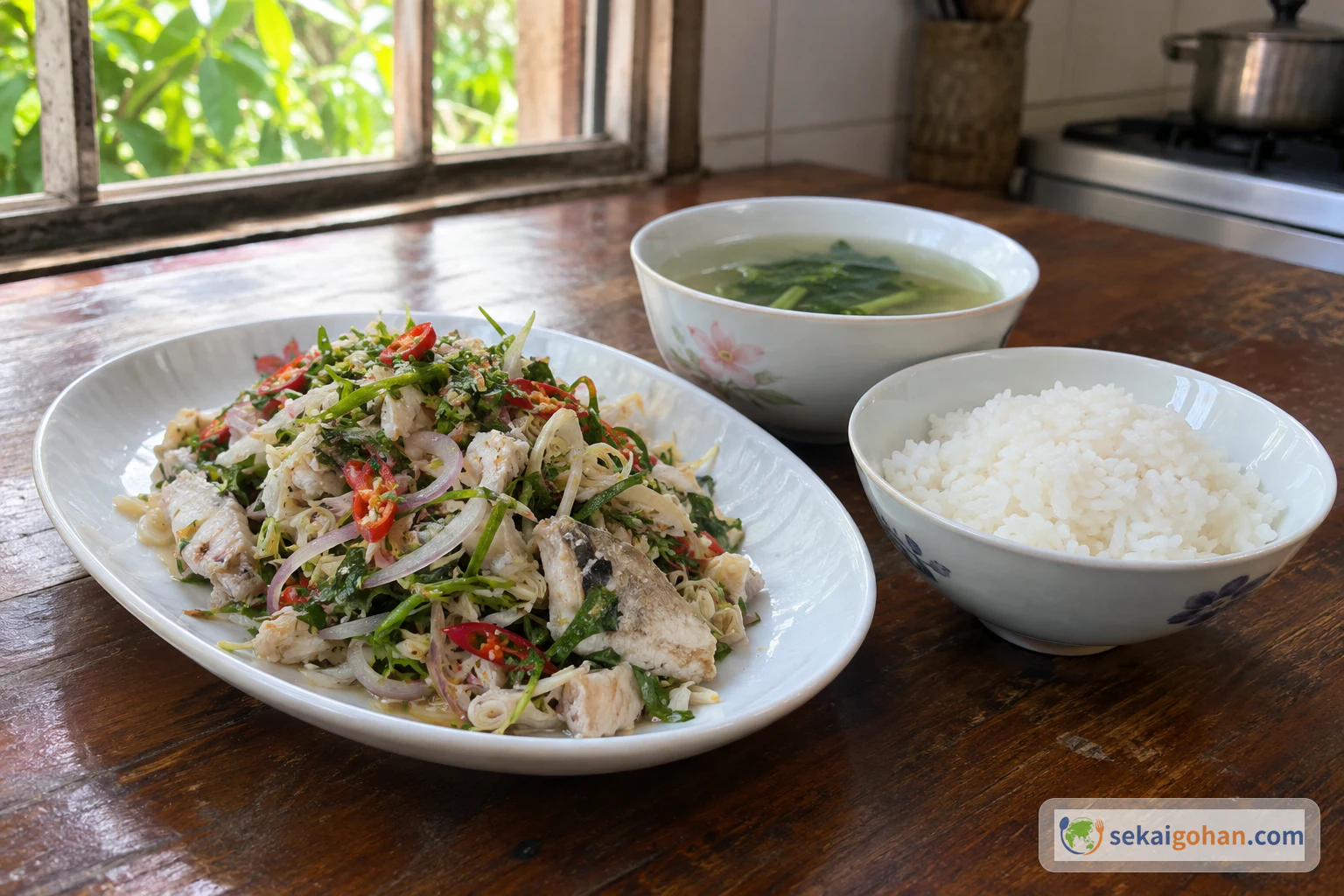
At the table
Put the platter in the middle and let everyone take from it, with plain steamed rice and other dishes alongside. A mild soup is a good partner, because the salad brings all the sourness and heat the meal needs. Rice soaks up the lime and fish sauce that gather at the bottom of the plate. This is a dish for the day it is made, so dress only what will be eaten at that meal and eat it the same day.
Changing it
If you have tuk prahoc, use 3 tbsp in place of the fish sauce and anchovy, with 2 tbsp in the marinade and 1 tbsp in the dressing. The salty base becomes deeper and more pungent. Without saw leaves, Thai basil carries the herb note alone, and the marinade turns sweeter and more anise-scented, losing some of its sharp green edge.
Frequently asked questions
Can I get it ready ahead for guests?
Do all the knife work and make the dressing up to the point where the beef goes into the fridge. Keep everything covered and cold. Drain, toss and garnish only when people are sitting down, because the salad loses its crunch quickly once dressed.
Should the peanuts be whole or crushed?
Either works. What matters is that they are roasted and unsalted. Coarsely crushing them spreads the crunch through every forkful, while whole peanuts give bigger, separate bites.
Can I sear the beef instead of eating it raw?
Searing turns it toward nhoam, the cooked kind of beef salad, which is built with its own method. This salad's balance of lime, sugar and herbs is made for raw beef that has been marinated cold. If you want cooked beef, choose a fully cooked dish rather than simply putting this one in a pan.