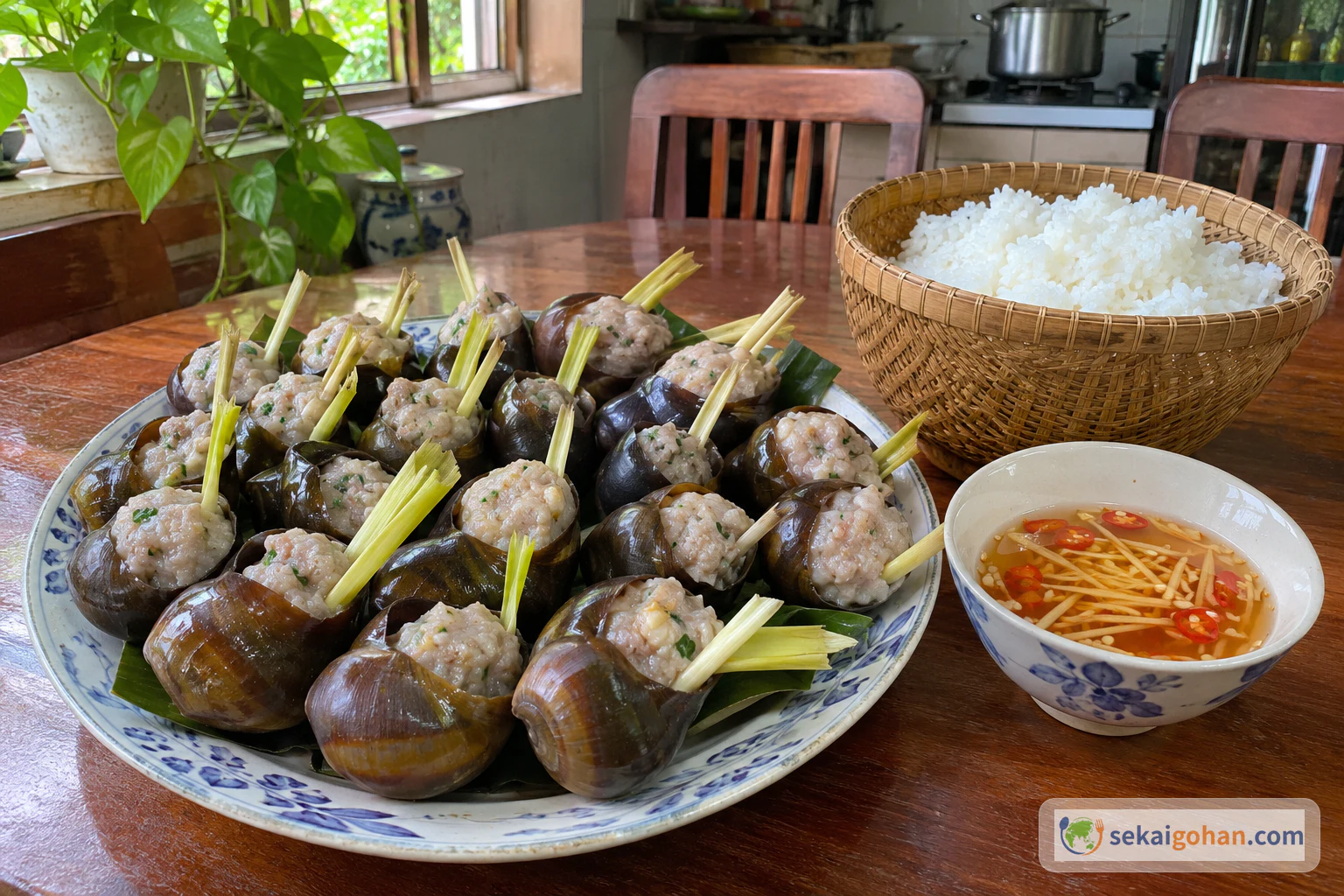
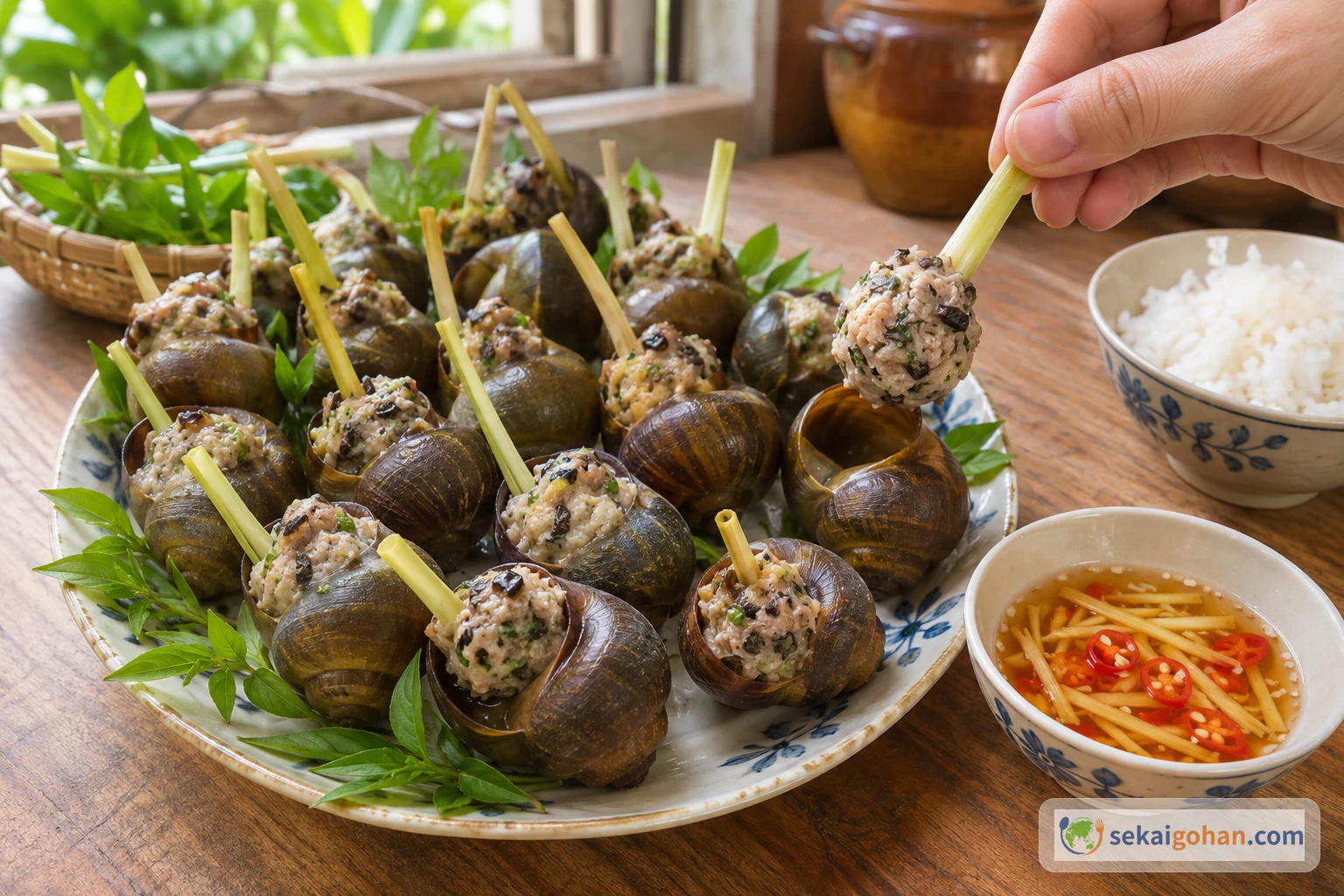
The steamer lid comes off and a cloud of lemongrass steam rolls across the table. Every shell on the plate has a thin green blade standing up out of its mouth. You pinch that blade, pull, and a little dome of pork and snail filling slides out whole, flecked dark with wood-ear mushroom and smelling of ginger and citrus leaf. It goes straight into a bowl of sharp, sweet, fiery ginger fish sauce, then onto a spoonful of steamed rice.
Ốc bươu nhồi thịt is a Vietnamese home dish of large apple snails cooked once, picked from their shells, chopped with pork and aromatics, packed back into the same shells and steamed again. The meat is springy against the soft pork, the lemongrass and lemon leaf keep it fresh, and the dip does the shouting.
Snails from the Rice Fields, Steamed at Home
The dish is tied most closely to the Dalat area, where snails are collected from the rice fields and vegetable patches, and it is a dish much loved by the Dalat people. It is a farm-to-table plate in the plainest sense: the snails come from the fields where the rice grows, and the rice ends up beside them in the bowl. Vietnamese recipe writers also frame it as a Dalat specialty, though the same snails and the same idea turn up in kitchens across Vietnam.
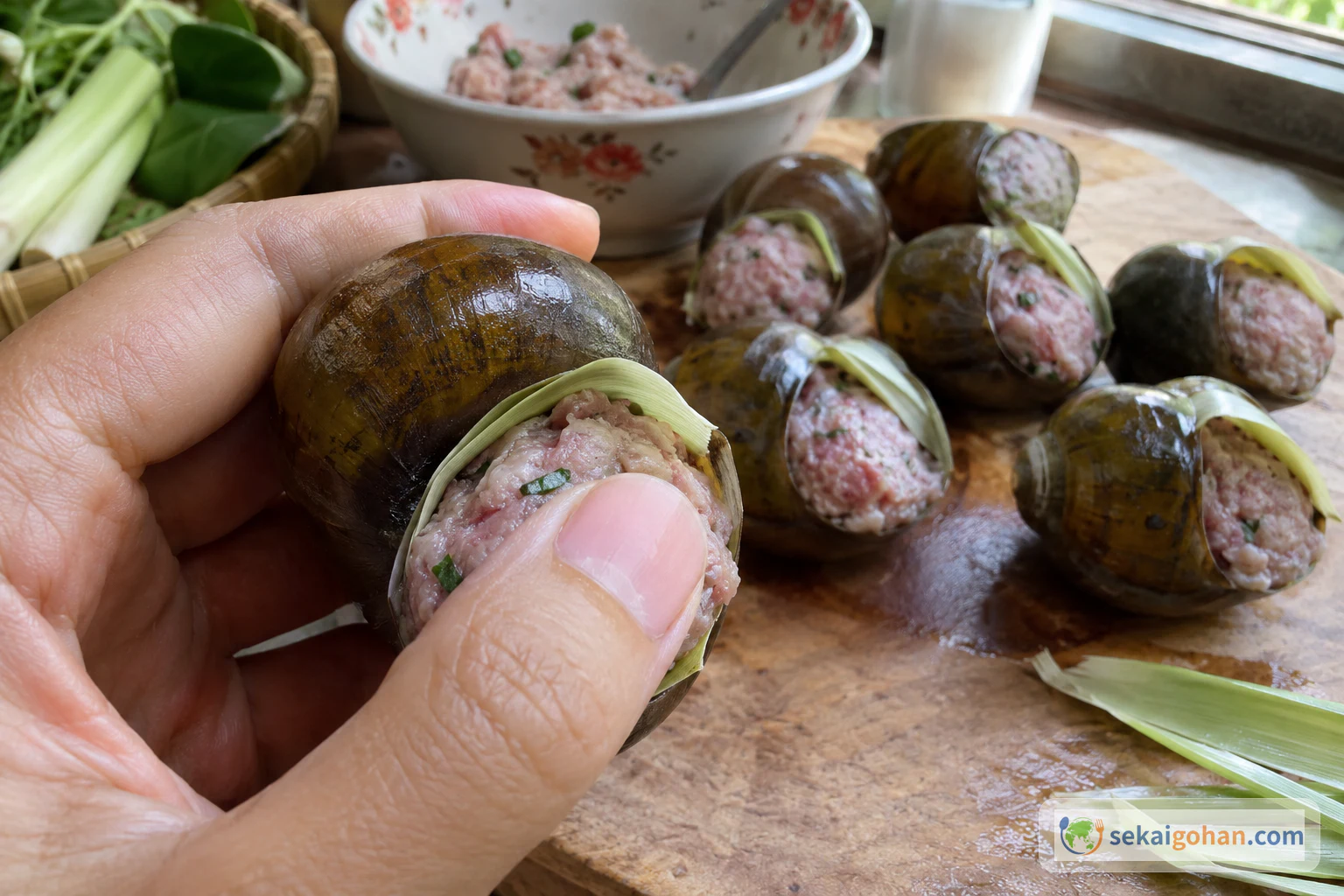
Ốc bươu is the large apple snail, and its size is the point. One of the most classic things to do with snails this big is exactly this: take the meat out, stretch it with pork, and send it back to its own shell. The shell becomes the cooking vessel and the serving dish at once, and the folded lemongrass layer inside it becomes the handle you eat with.
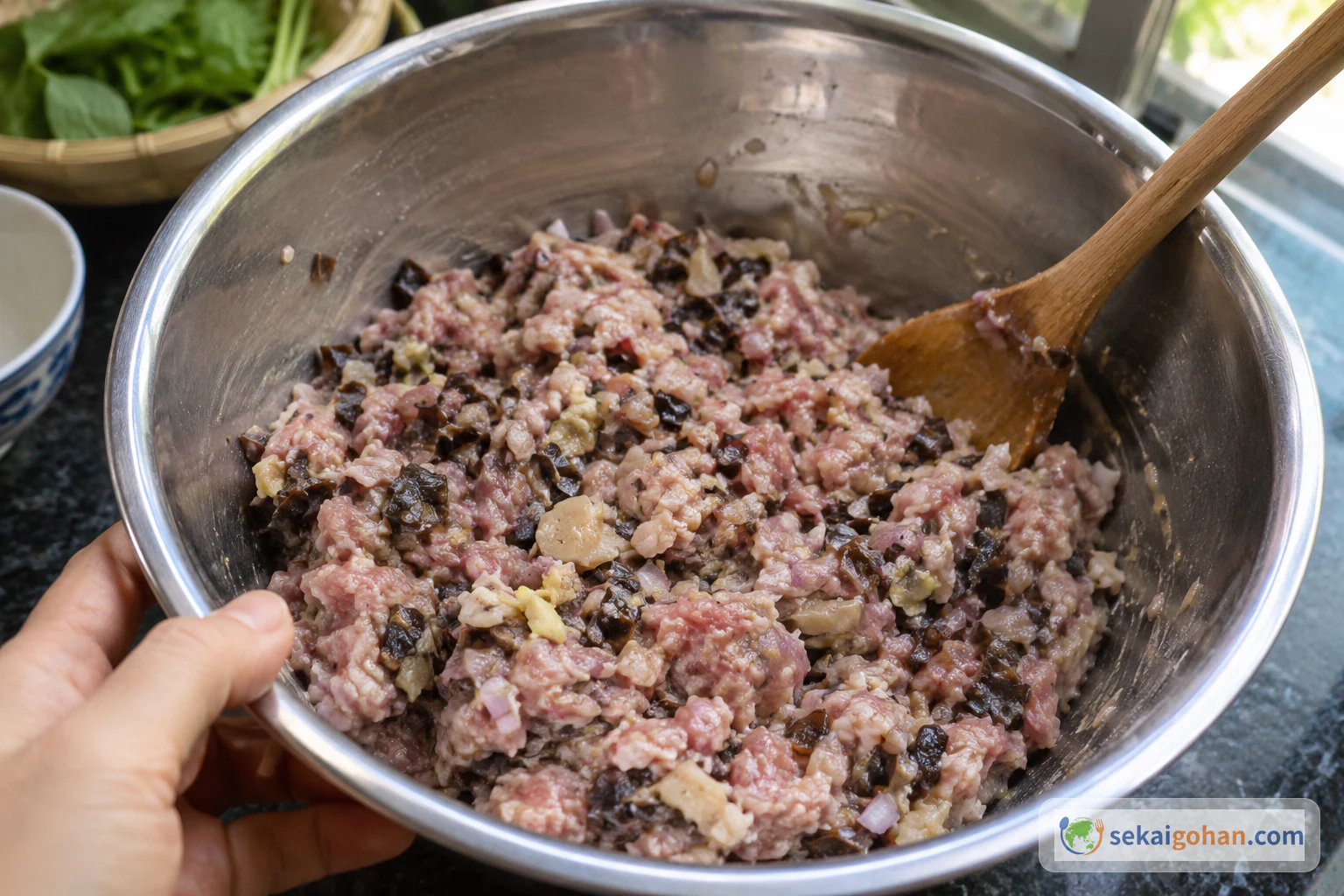
Households push the filling in different directions. A lean home version keeps it to snail, pork mince, wood-ear, shallot and herbs, seasoned lightly with fish sauce, sugar and white pepper. Richer versions bind the filling with raw pork paste (giò sống) and pork fat, pack it tight over a bed of lemongrass, brush the tops with oil and pass a plate of Vietnamese coriander (rau răm) and perilla (tía tô) on the side.
Ốc means snail and ốc bươu the large apple snail; nhồi thịt is "stuffed with meat". You will also see ốc nhồi thịt for short, and ốc bươu nhồi thịt hấp sả, "steamed with lemongrass", when a cook wants to name the herb that perfumes the shells.
Ingredients (serves 4)
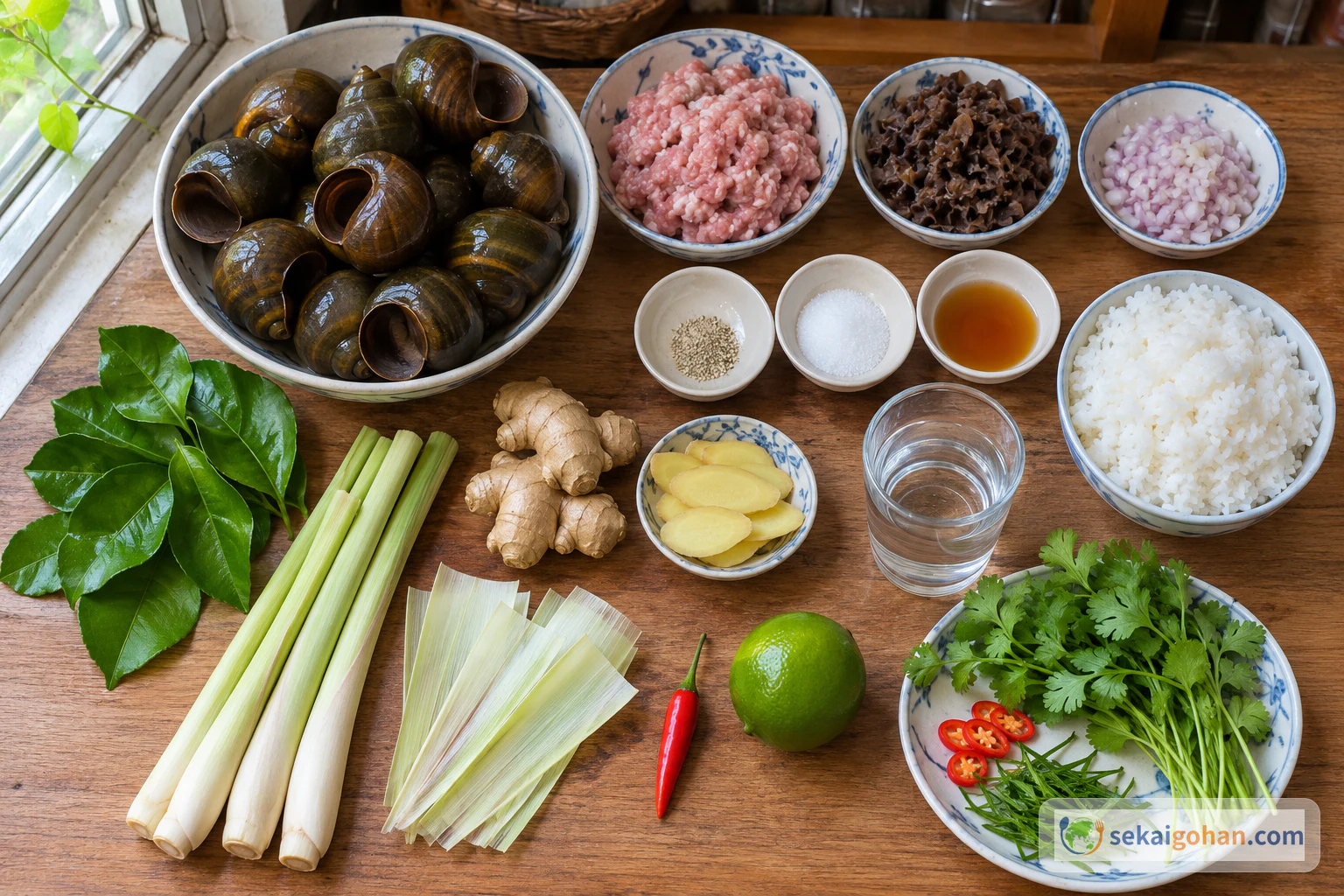
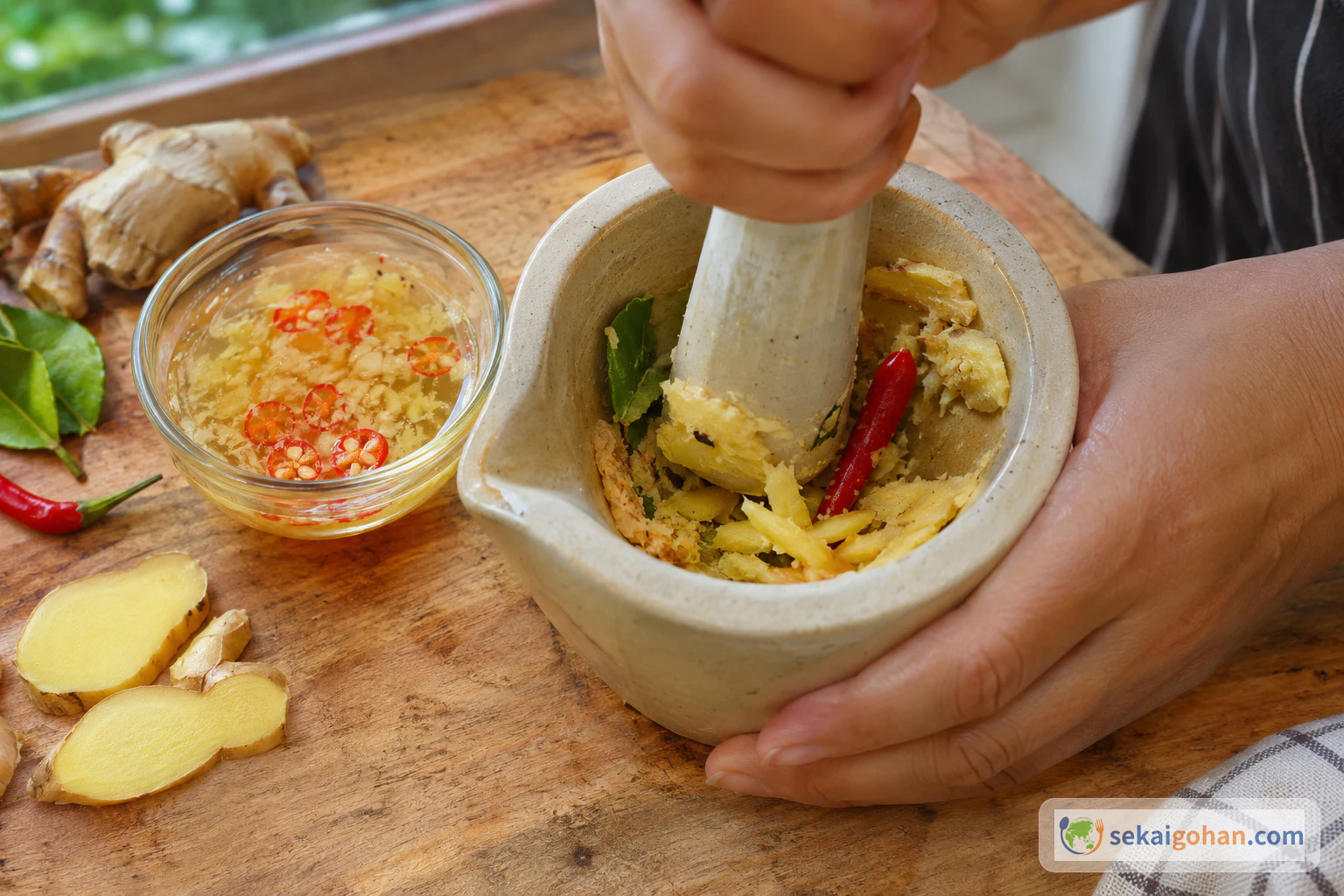
Ginger and lemon leaf each appear in several places with different jobs. Keep each portion apart so nothing is used up before the sauce.
Fish sauce contains fish. Apple snails are molluscs, so anyone with a mollusc or shellfish allergy should treat this dish with care. The filling contains pork.
Equipment
- A pot with a tight lid
- A fine strainer
- Toothpicks or a thin bamboo skewer
- A cutting board and a sharp knife
- A mixing bowl
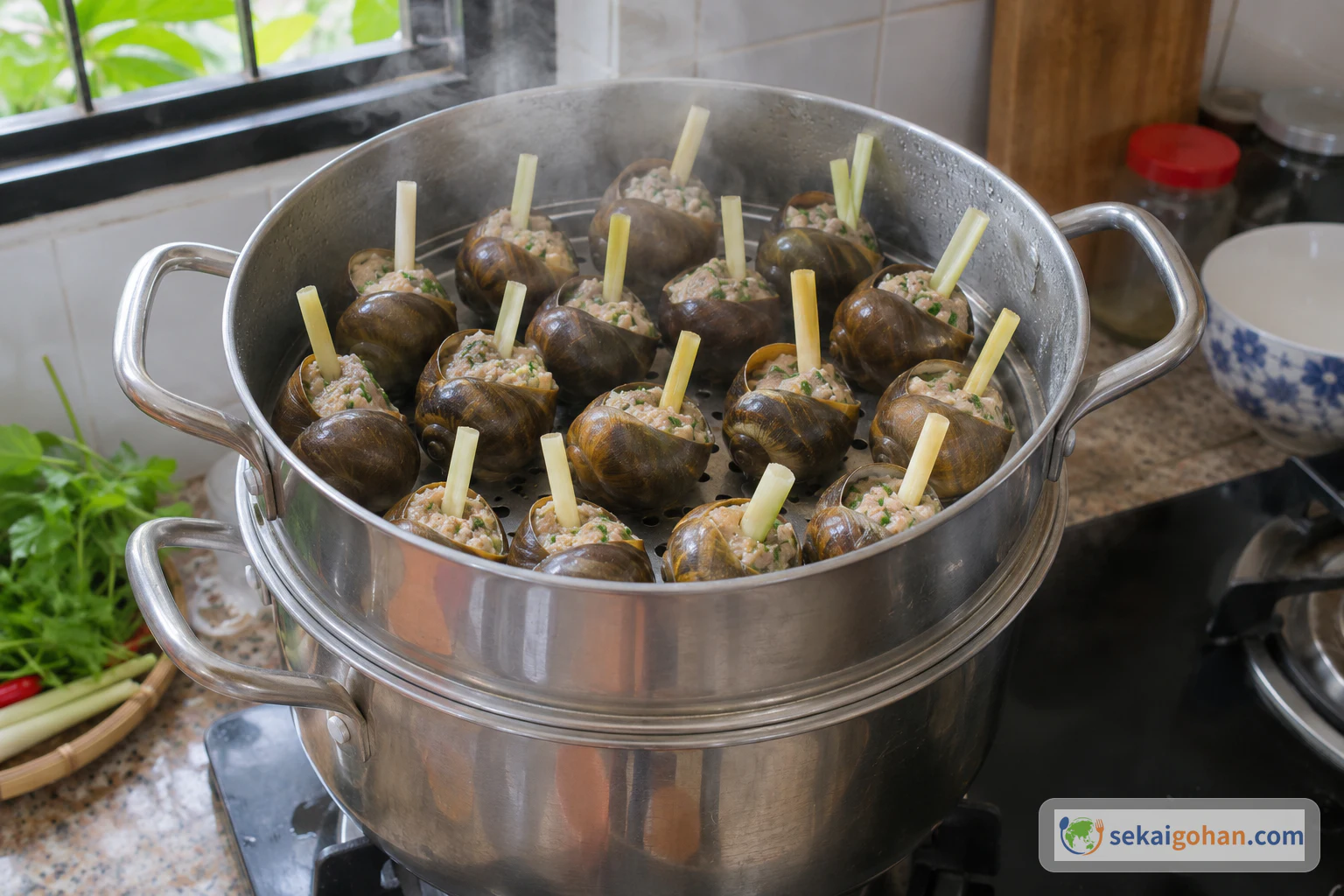
- A wide steamer, large enough to hold the stuffed shells in one layer
- A mortar and pestle
- Kitchen gloves for handling the raw snails
Choosing and Substituting
The snails have no stand-in. You need large apple snails in their shells, because the shells are where the filling cooks and how it reaches the table. Everything else is flexible within limits; the substitutes below are suggestions.
The citrus leaf goes by several names: lemon leaf, lime leaf, lá chanh. It is the leaf of the kaffir lime tree, and it is sold fresh, dried or packaged. Buy lemongrass as whole stalks, since you need the outer layers intact to fold into the shells; trimmed or chopped lemongrass gives you flavor but no handles. Dried wood-ear mushroom is soaked in hot water before use.
| If you can't find | Use | What changes |
|---|---|---|
| Red Asian shallot | ¼ small onion | A little sharper and less sweet |
| Dried wood-ear mushroom | Dried shiitake, soaked and diced | More savory, less crunch |
| Bird's eye chilli | Another hot chilli | Heat level shifts with the chilli |
| Lime | Lemon | Sourer and less fragrant, fine in a pinch |
| Lean pork mince | Fattier pork mince | A juicier, softer filling |
Grind the white pepper fresh if you can; it is the only dry spice in the filling, so it shows.
Method
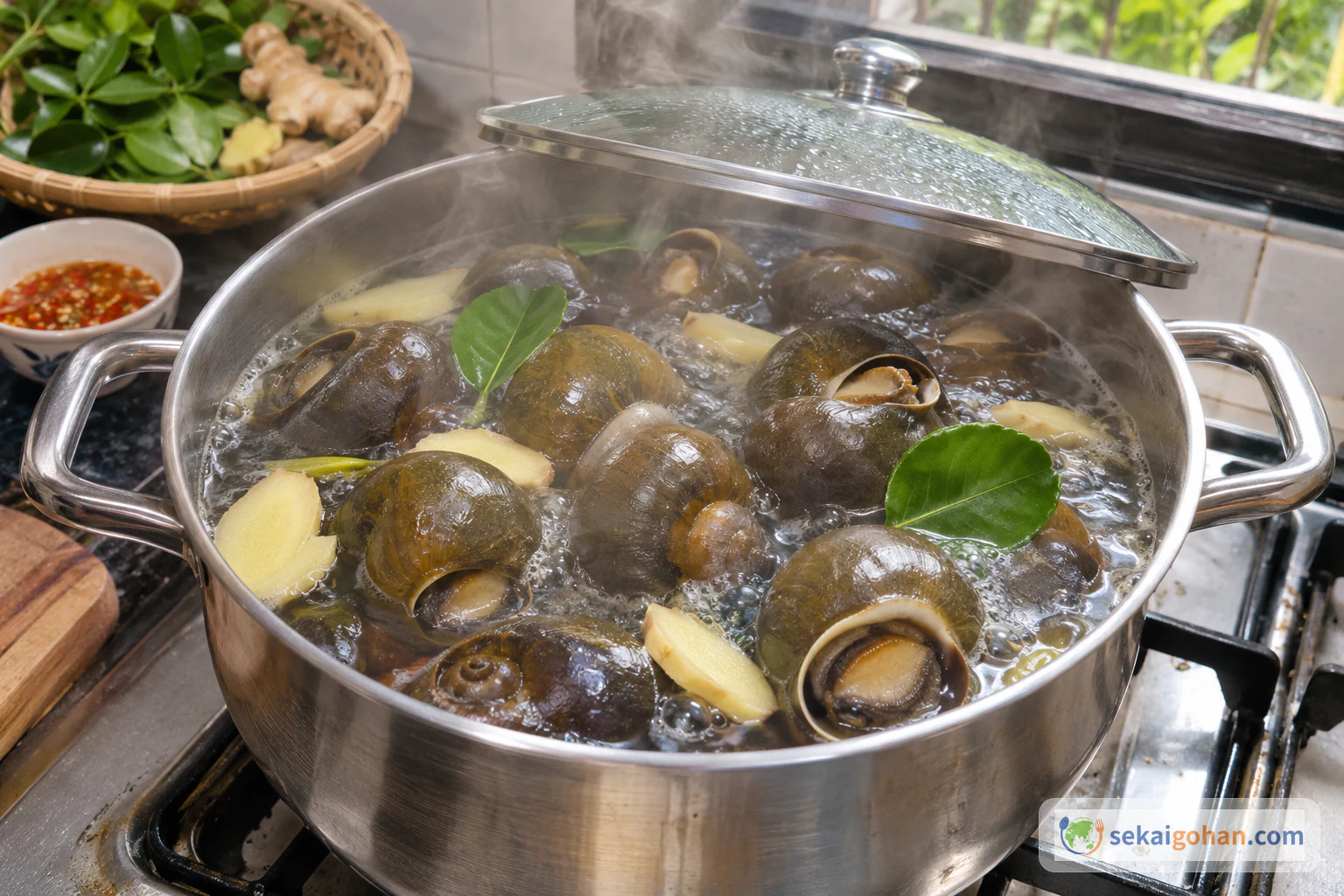
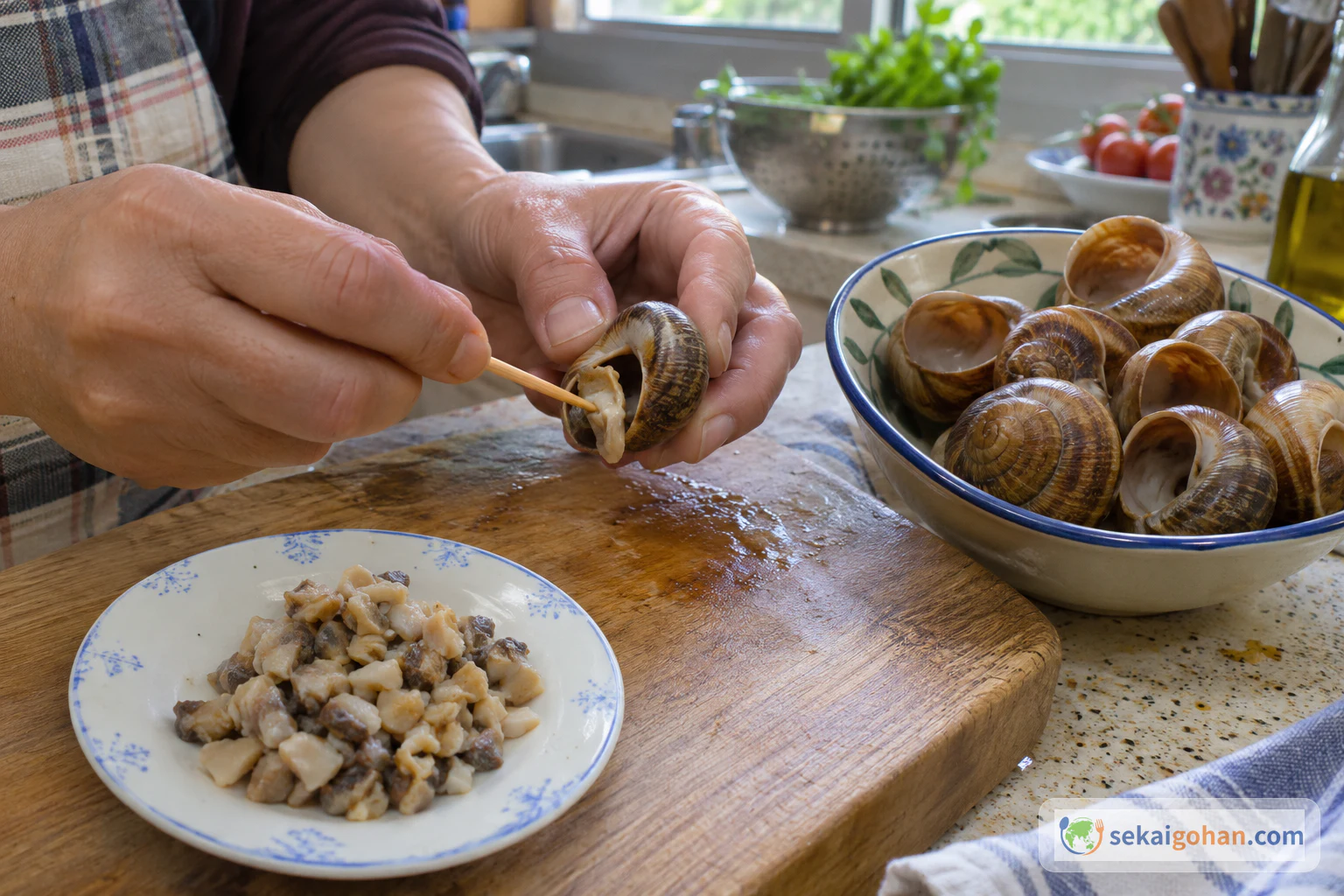
The work runs in two cookings with the handiwork in between. Soak the snails first, and use that hour to rehydrate the wood-ear and peel the lemongrass. The first boil loosens the meat; picking, chopping and stuffing are the slow hand part; then the steamer takes over, and you make the dip while it runs.
Apple snails can carry the parasitic roundworm Angiostrongylus cantonensis. People are infected by eating snails raw or undercooked, or by putting a hand that touched them into their mouth. Apple snails as a group cannot be declared plainly safe or dangerous, so handle every snail the same way. Wear gloves when handling raw snails and wash your hands afterwards. Never eat or taste the snails raw or undercooked. The infection shows itself one to three weeks later with headache, nausea, a stiff neck and sensitivity to light, and severe cases can leave paralysis or blindness.
When It Goes Wrong
| What you see | Why | What to do |
|---|---|---|
| Some snails float in the soak | They are not fit to cook | Discard them and cook only the ones that rest on the bottom |
| The meat tears inside the shell | Pulling straight instead of along the spiral | Turn the shell as you pull with the toothpick so the meat follows the curve |
| The filling crumbles when pulled | The paste was not kneaded enough | Knead longer next time until the mix is sticky; for this batch, eat it with a spoon over rice |
| The lemongrass slips out empty | The paste sat on top of the blade instead of around it | Fold the blade in half and press the paste in around it, as in step 5 |
| Hard bits in the filling | The wood-ear was not fully rehydrated | Give it the full 20 minutes in hot water before dicing |
Serving and Variations
Put the plate in the middle of the table with the dip and a bowl of rice for each person. Everyone pulls their own shells, dips, and eats, so it is a dish for a shared meal rather than a plated one.
Richer filling with pork fat
Add giò sống (raw pork paste) and pork fat to the filling, season with fish sauce, sugar, seasoning powder and MSG, line the shells with lemongrass, pack the filling tight and brush oil on top before a 15-minute steam. The result is juicier, softer and glossier, and heavier on the lemongrass. Serve it with the ginger fish sauce and plates of rau răm and tía tô.
A bigger fill with chilli on top
Use about 1 tablespoon of filling per shell, tuck a lime leaf inside each shell with the folded lemongrass, and lay a slice of fresh chilli on every opening. The shells come out fuller and each carries its own heat, so the dip can be gentler. One such dip is fish sauce with lime juice, sugar, minced garlic, chilli and ginger.
A cooling side plate
Slices of green star fruit and cucumber with a handful of Vietnamese mint cut through the pork and fish sauce. Their sourness and crunch make the meal feel lighter, and they let you eat more shells.
Frequently asked questions
What kind of snail is ốc bươu?
It is the large apple snail, a freshwater snail. Its size is what makes stuffing possible: the shell is big enough to hold a teaspoon of filling and a folded lemongrass handle, and the meat is substantial enough to chop into the pork.
Is this the same as chả ốc or stir-fried snails with betel leaf?
No. Chả ốc is a snail paste steamed in banana leaves, with no shells involved. Ốc bươu xào lá lốt is a stir-fry of snails with betel leaf. Ốc bươu nhồi thịt is the one where the meat goes back into its own shell and is steamed.
Do I have to use rice-washing water for the soak?
Use it when you are cooking rice anyway, since the cloudy water from rinsing the grains is free. On a day without rice, plain water does the same job. Either way, discard any snail that floats.
Why are my tablespoons converted for the dip?
The sauce is built on a larger tablespoon of 20 ml. The amounts in the table are already given in US measures that match it, so the balance of salt, sugar and lime comes out as intended. The teaspoon measures in the filling are the same size in both systems.