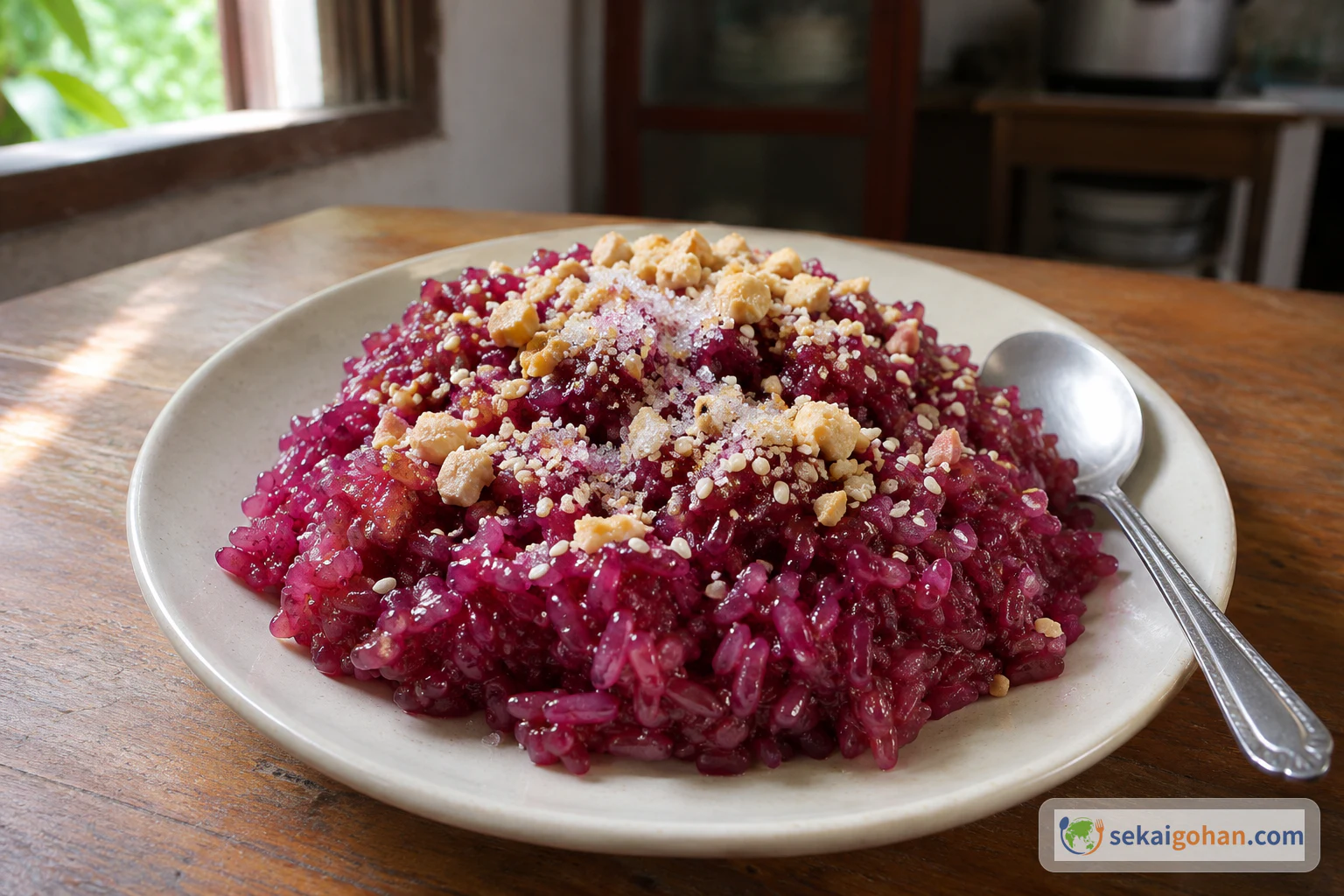
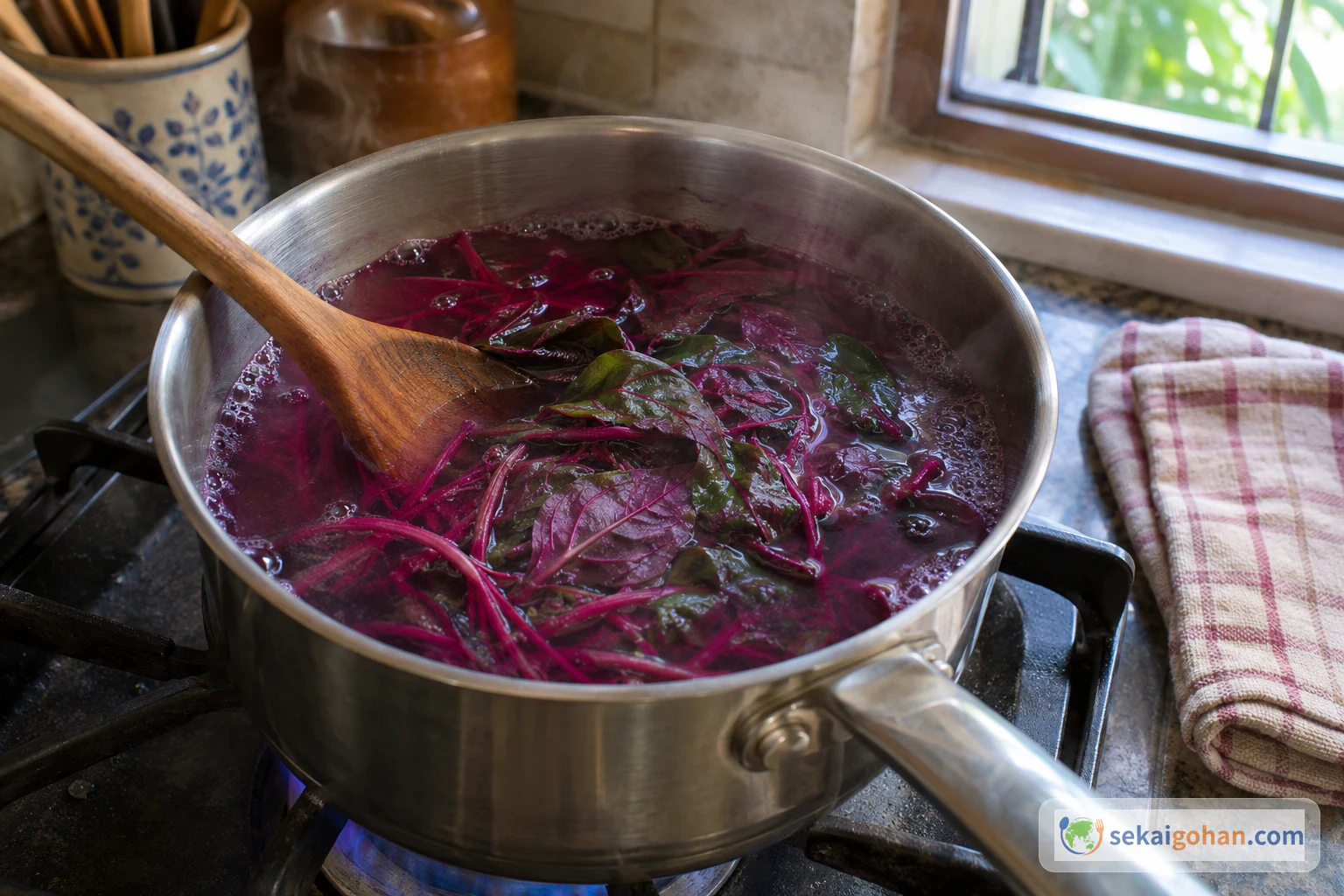
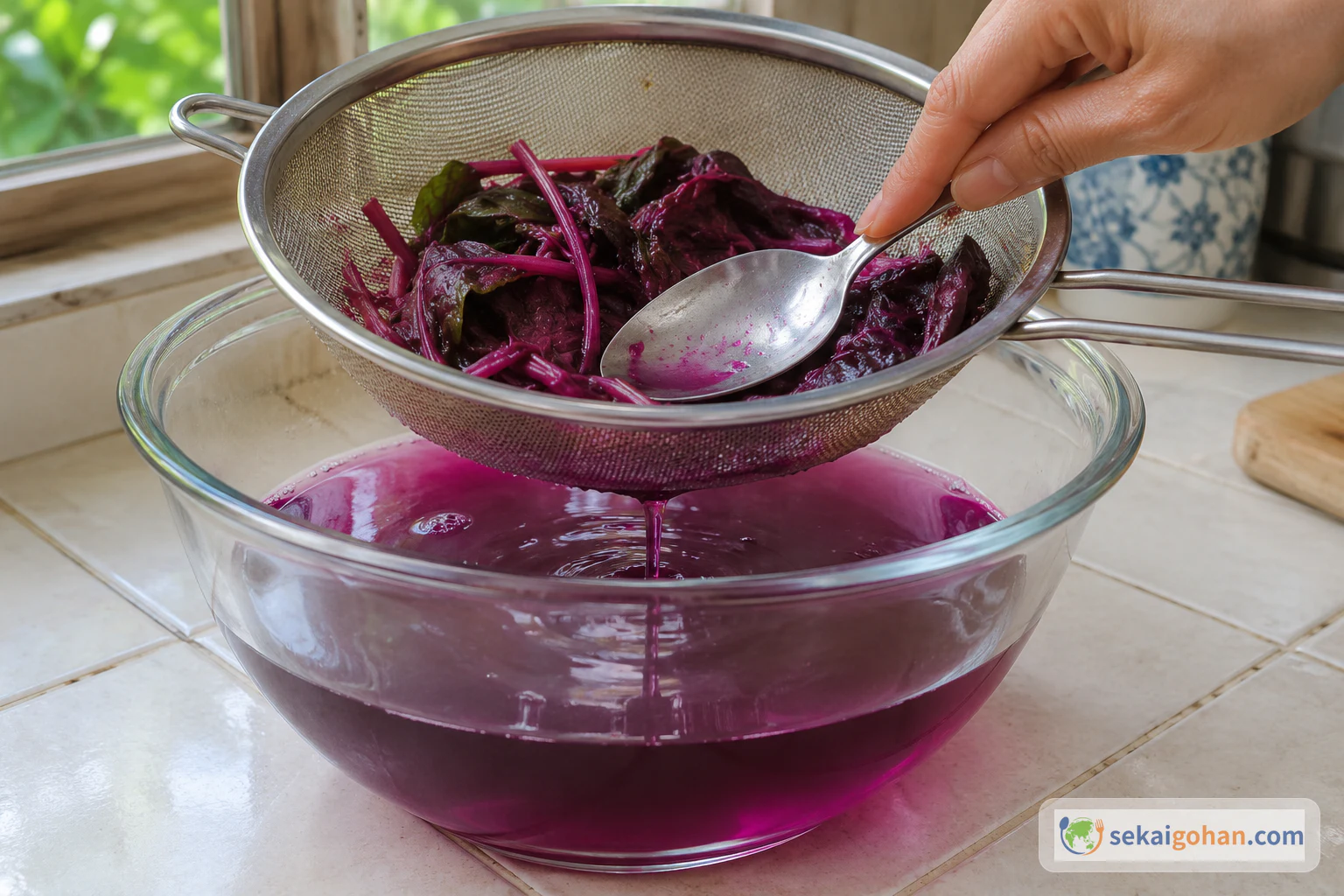
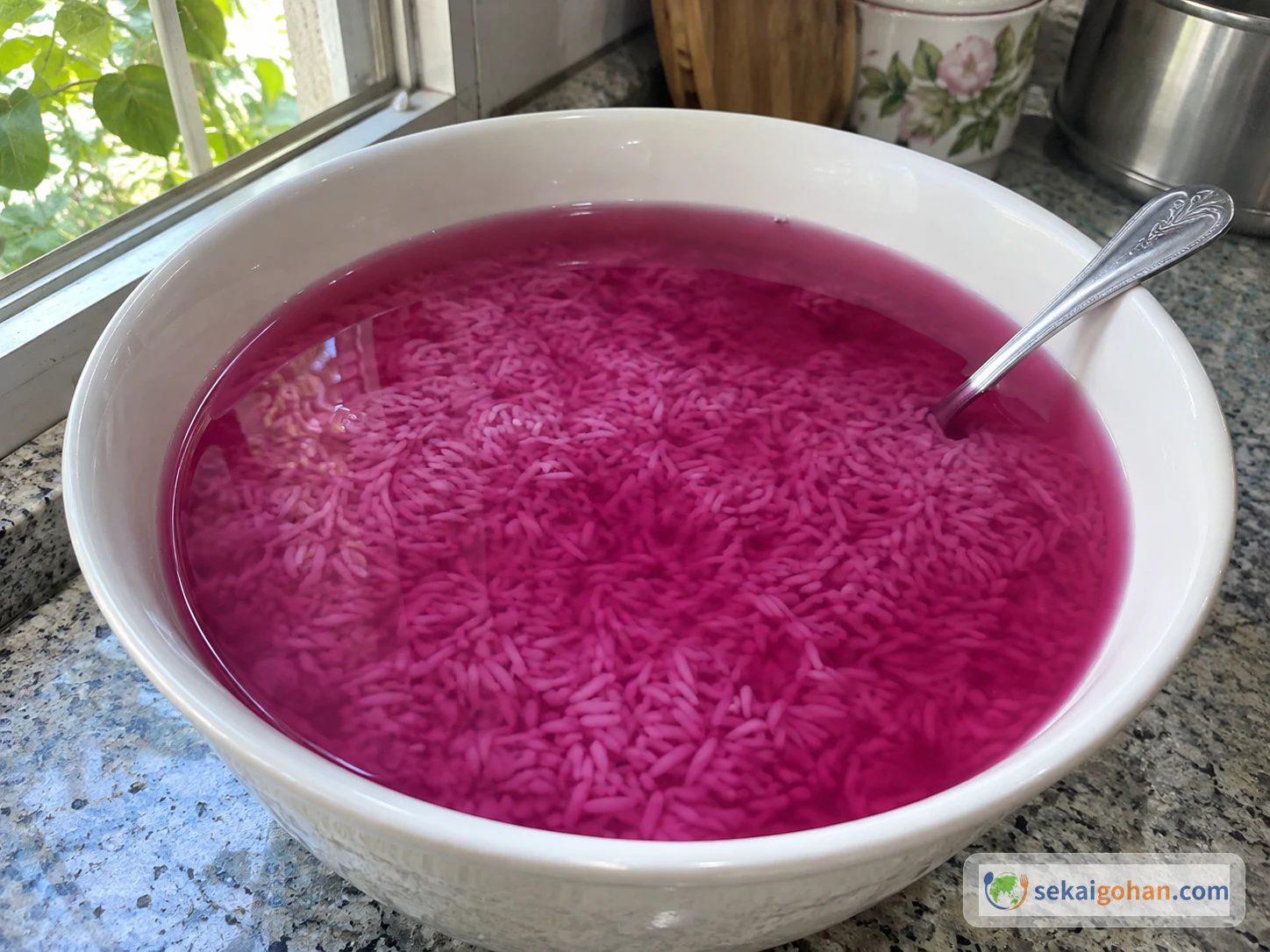
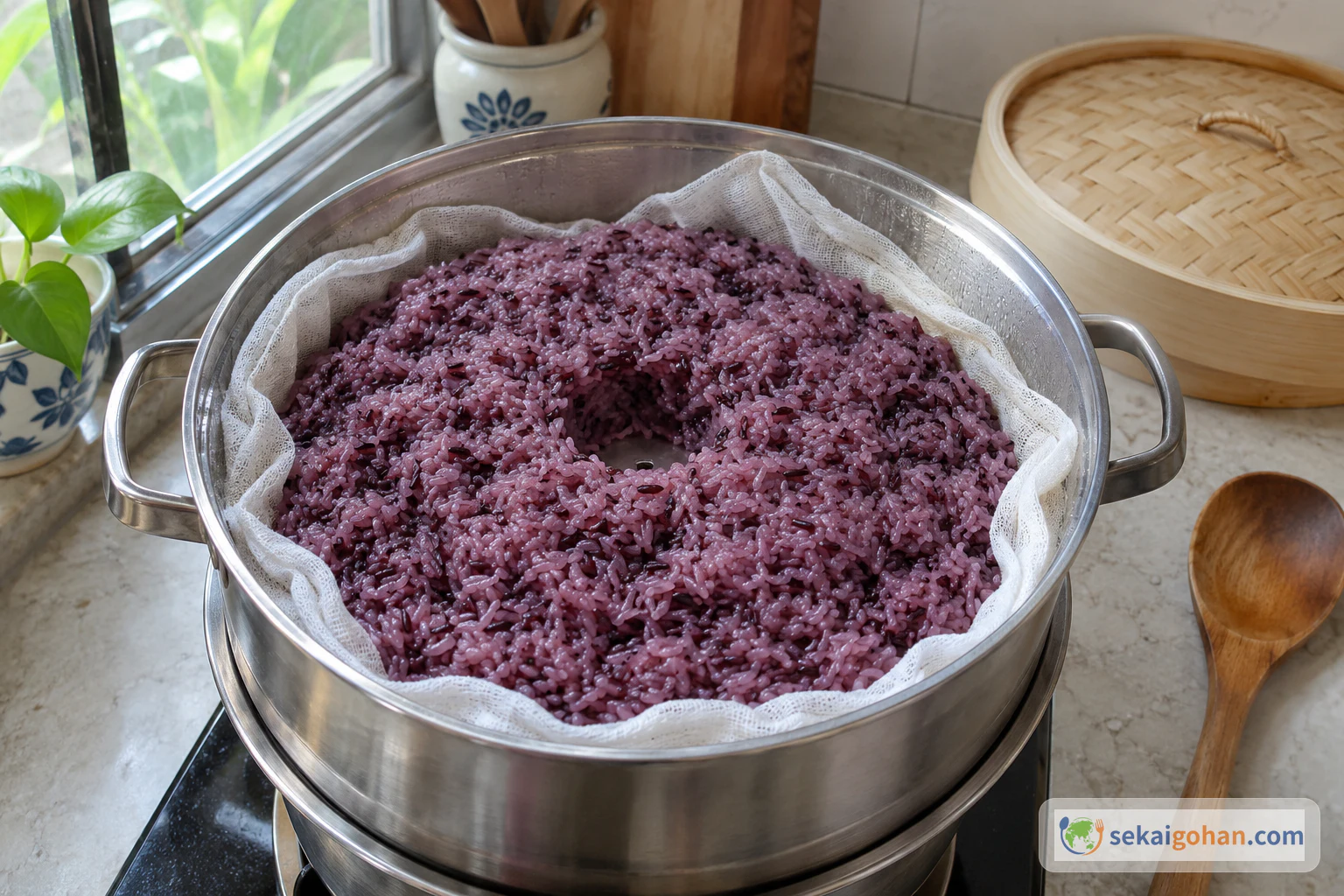
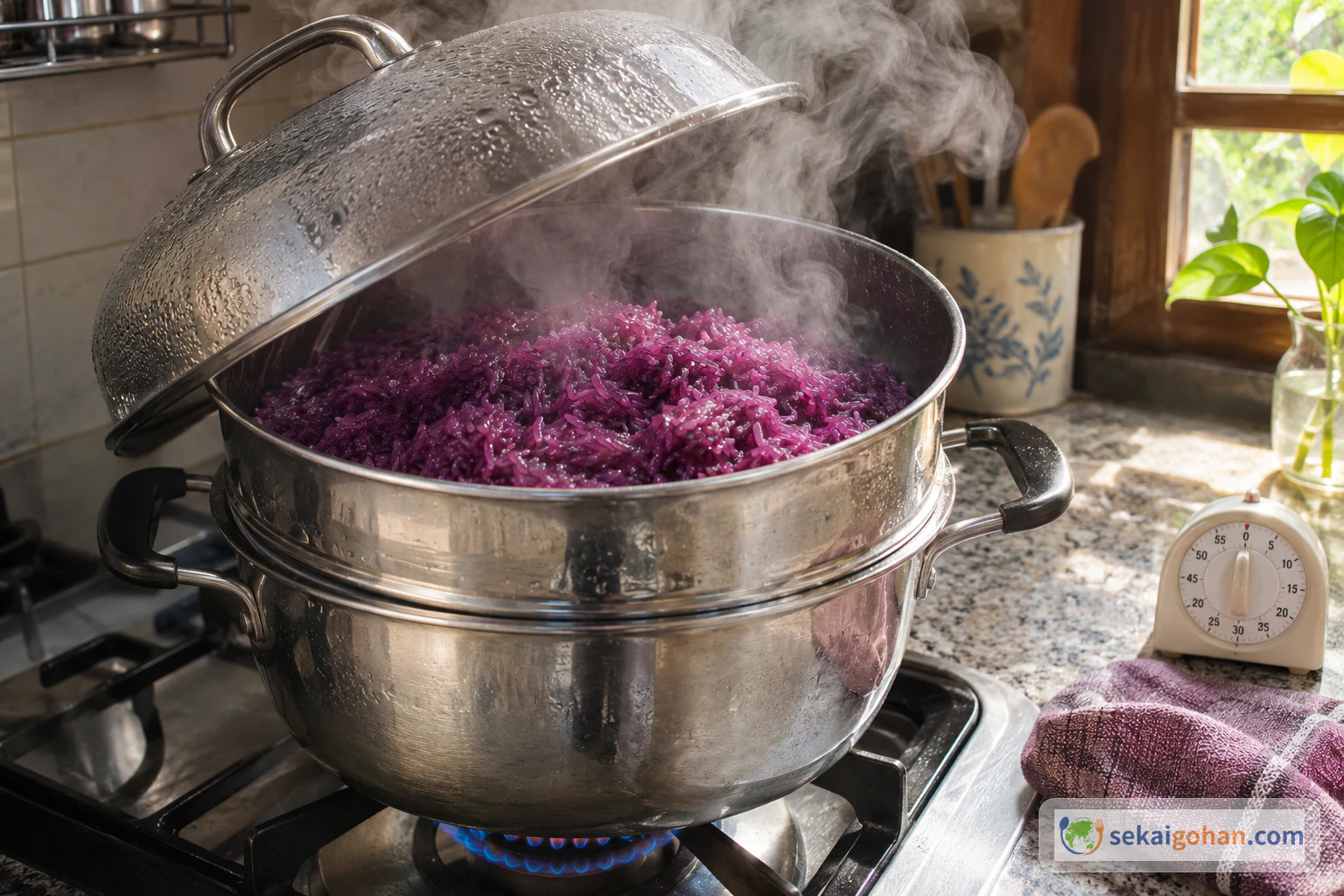
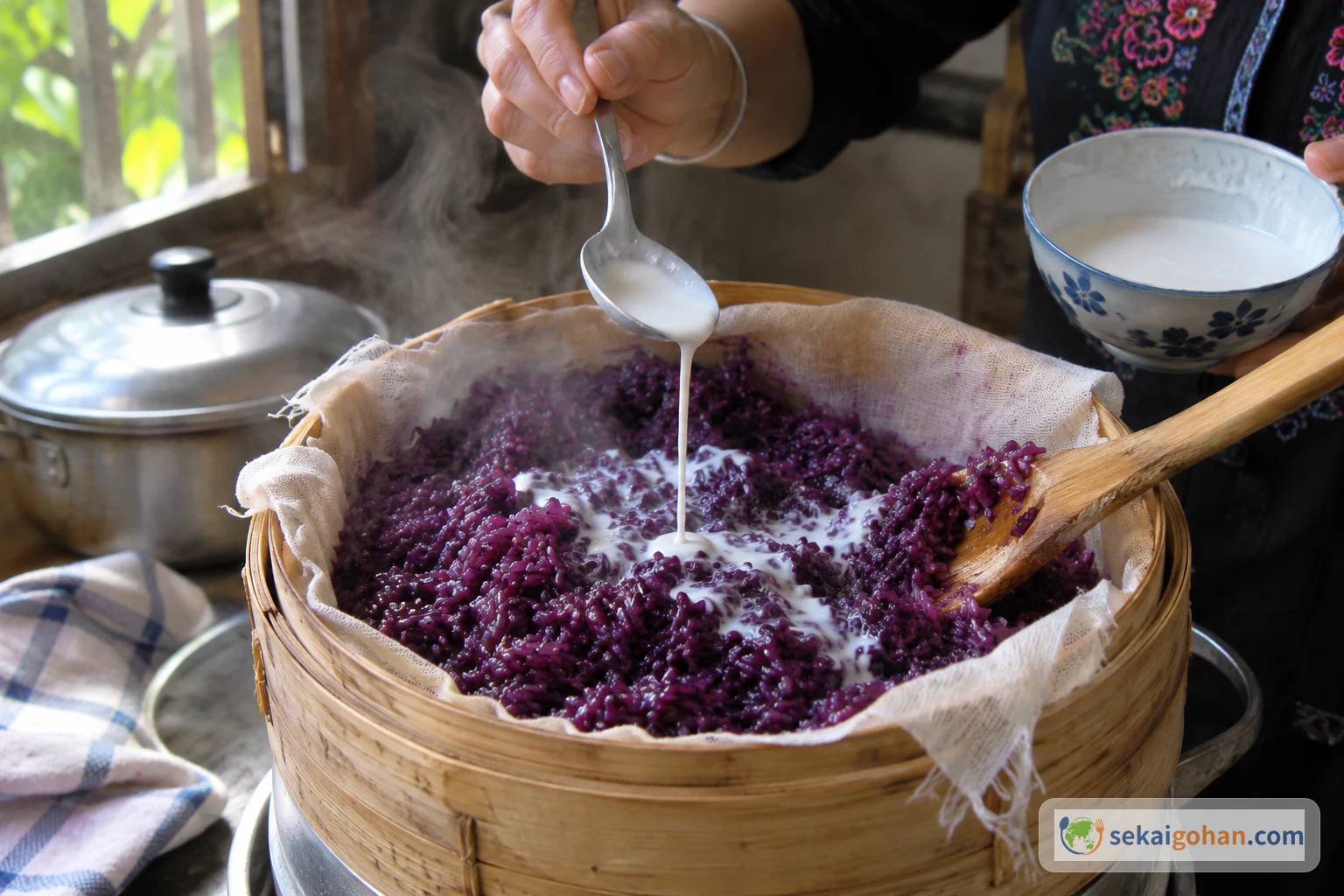
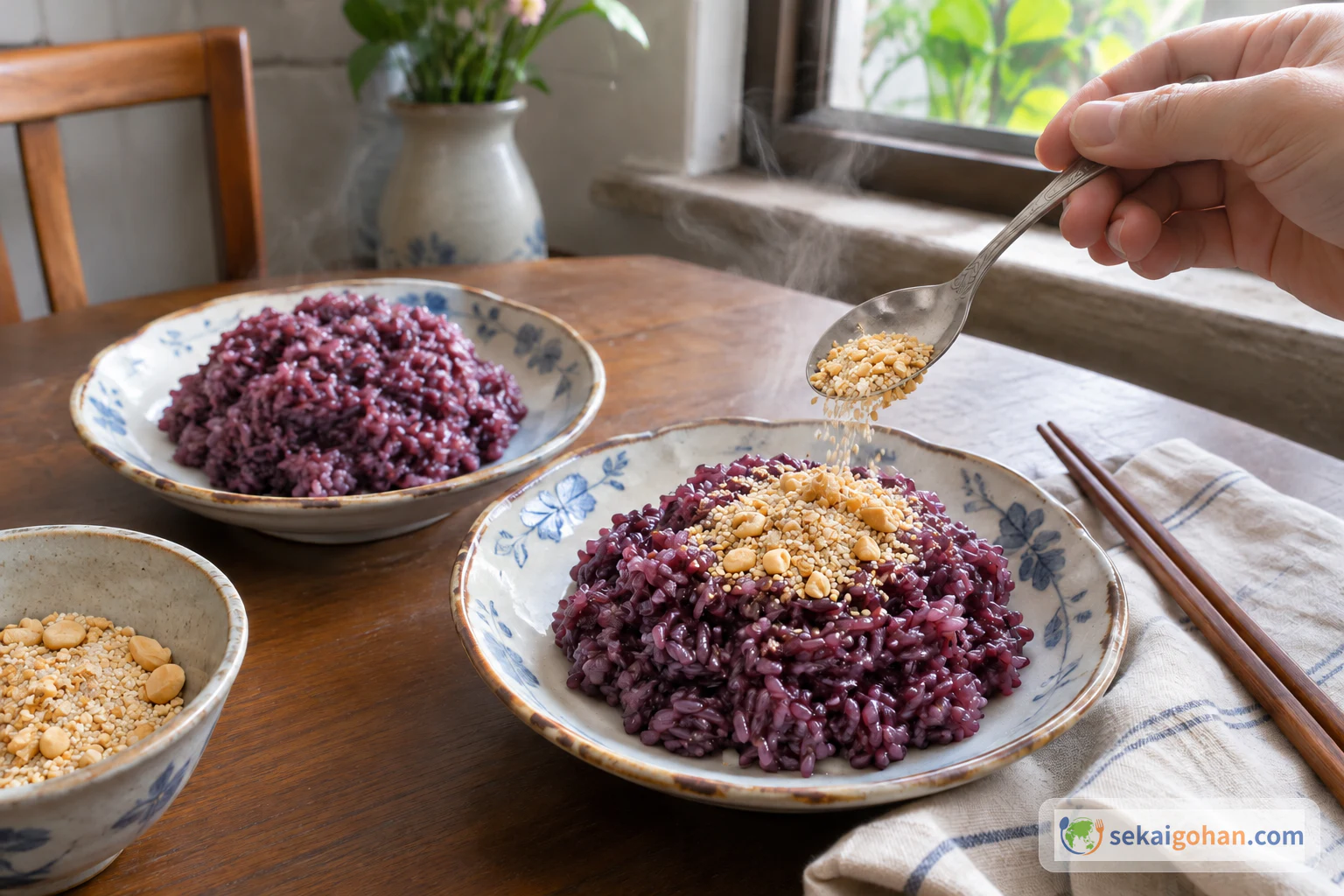
A handful of green leaves goes into a pot of simmering water, and within minutes the water turns a clear violet-magenta, with no powder or bottle involved. Strained and left to cool, that liquid darkens to a deeper purple, and white glutinous rice soaked in it overnight comes out of the steamer glossy and reddish purple. This is xôi lá cẩm, Vietnam's leaf-dyed sweet sticky rice. It tastes gently sweet and chewy, rounded with a little coconut milk, and every spoonful picks up a salty, crunchy scatter of sesame and roasted peanut on top.
Purple from a Leaf
The colour comes from lá cẩm, the magenta plant, a perennial herb of the acanthus family (Acanthaceae), named Dicliptera tinctoria and also known as Peristrophe bivalvis. It grows wild and in gardens across Vietnam's mountain provinces, Lạng Sơn, Hà Giang, Cao Bằng, Tuyên Quang, Yên Bái and Hòa Bình among them, as a knee- to waist-high plant with leaves about the length of a finger. Boil the leaves and young stems, and the water carries the purple; the rice drinks it in during the soak.
Xôi, steamed glutinous rice, runs through the whole of Vietnamese food. It is bought for breakfast, from street stalls and as a late-night snack, sold everywhere from restaurants to baskets on the pavement. A bag of purple sticky rice is what people grab when there is no time to sit down to a bowl of noodles. Xôi also sits on the tray for full-moon days, Tết, weddings and death anniversaries. Lá cẩm gives the purple in five-colour xôi, beside red from gấc, yellow from turmeric, black from the ash of burnt ginger leaves and green from pandan. The rice soaks in each coloured liquid and then steams in a pot called a chõ in the north and a xửng in the south.
Xôi is steamed sticky rice, lá is leaf, cẩm is the plant. Nếp cẩm names a different grain, black glutinous rice; xôi lá cẩm starts from white glutinous rice. In Lạng Sơn the purple rice goes by xôi tím. Lá cẩm tét from Thới Lai in Cần Thơ is another food altogether, a rolled, sliced sweet of sticky rice, soybeans, coconut, pork fat and banana that borrows the same magenta juice.
The Lạng Sơn colour
For the Tày and Nùng people of Lạng Sơn province, xôi tím belongs on festival and Tết trays, and on ordinary days it is a gift to send home with visitors. Cooks there prize nếp cái hoa vàng, a highland glutinous rice whose grain from Bắc Sơn district counts as the finest: large grains that steam translucent and tender without falling apart. They grind lá cẩm leaves together with an ash, tro rơm nếp, into a dark purple liquid, soak the rice in it for about four hours and steam it in a chõ. It comes to the table with boiled chicken or with muối lạc rang, a roasted-peanut salt. The ash method stays with the cooks who learned it at home; the recipe below colours the rice with leaves alone, the way households and street stalls in the lowlands and cities do.
Sweet with coconut, or dessert with mango
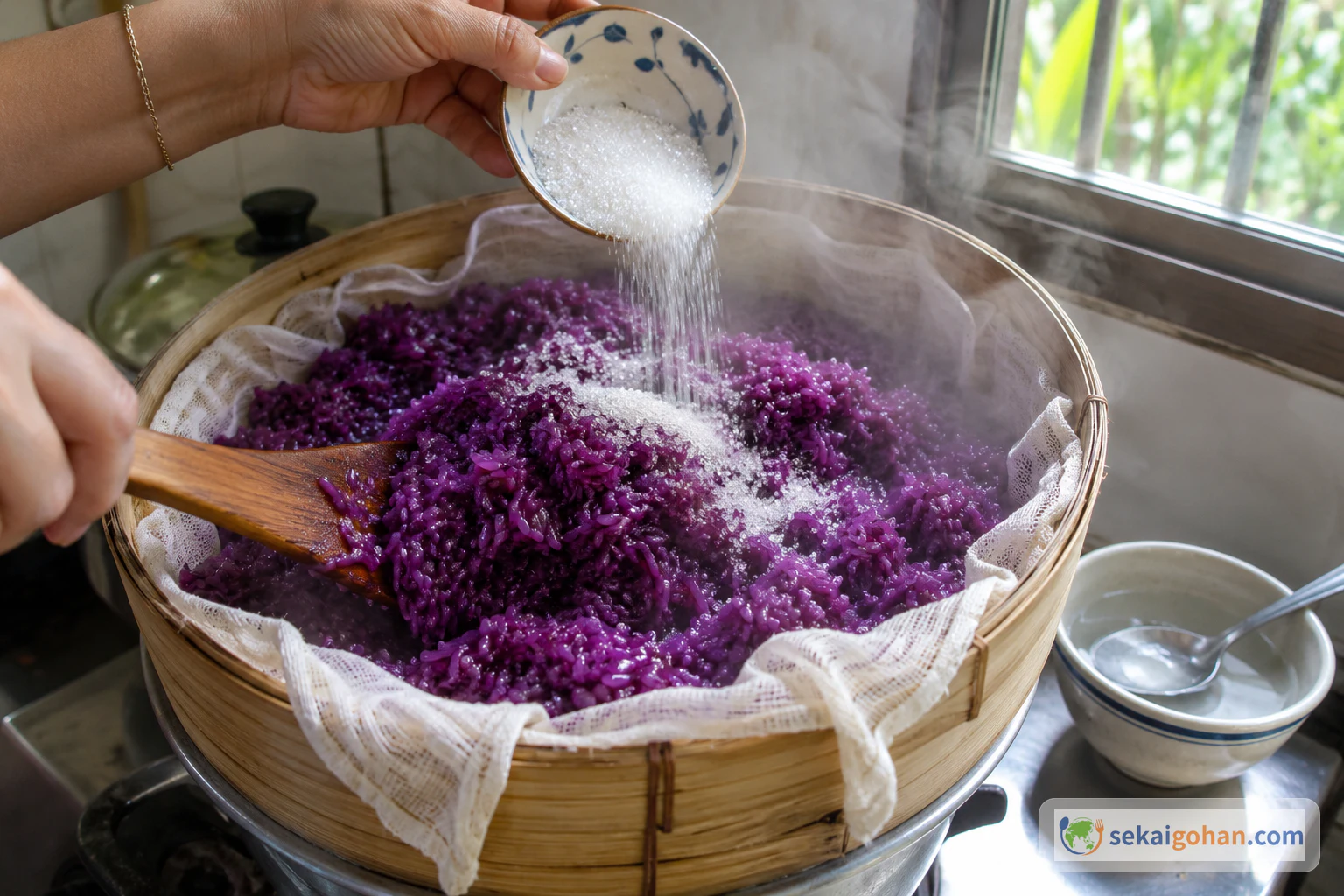
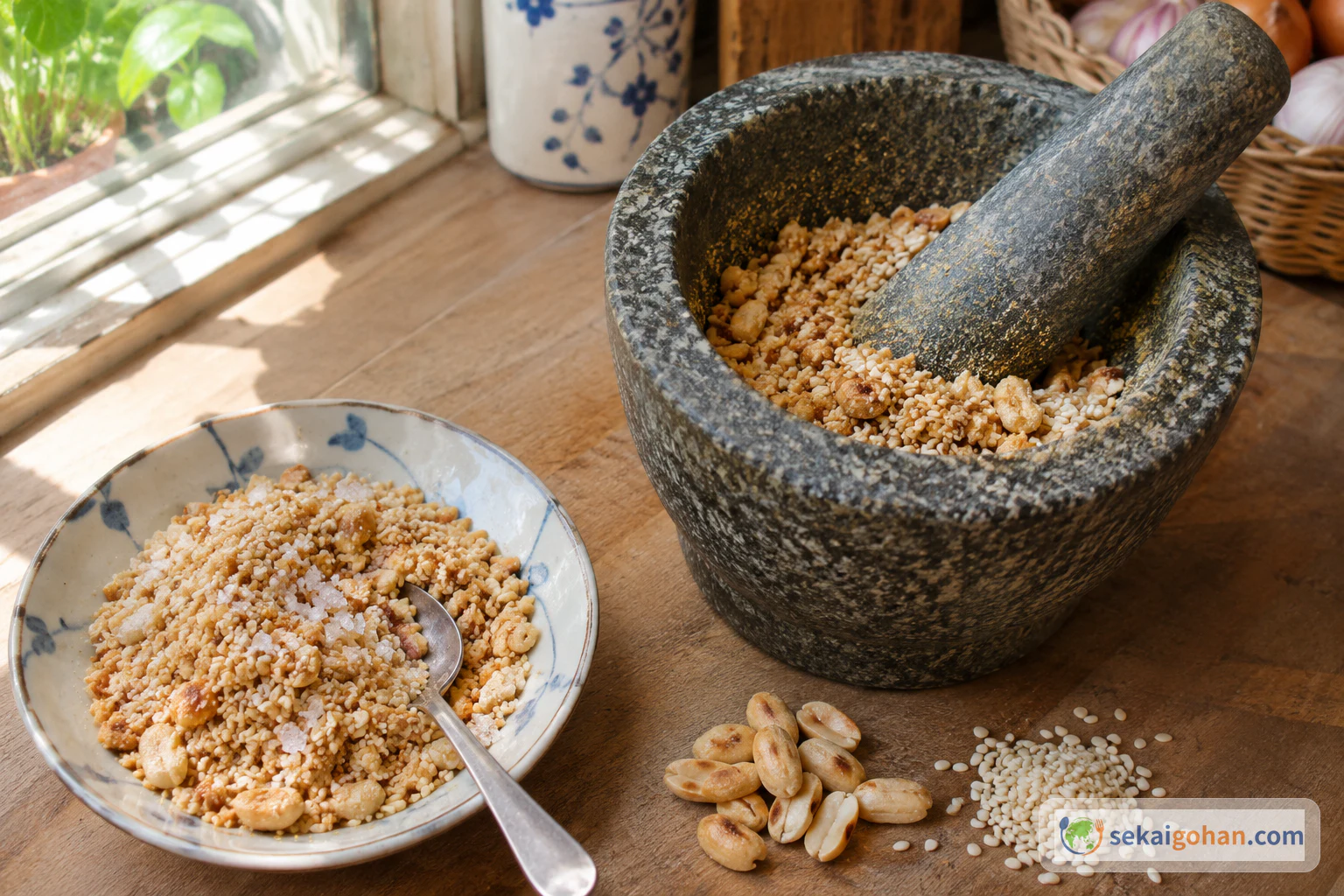
The lowland home version finishes the rice with coconut milk and sugar and scatters it with muối mè, a sesame-peanut salt that keeps the sweetness in check. Some Vietnamese cooks abroad turn it into a dessert with ripe mango and a sweet coconut sauce, and in Thailand the same leaf-dyed rice is eaten with mango and coconut milk.
Ingredients
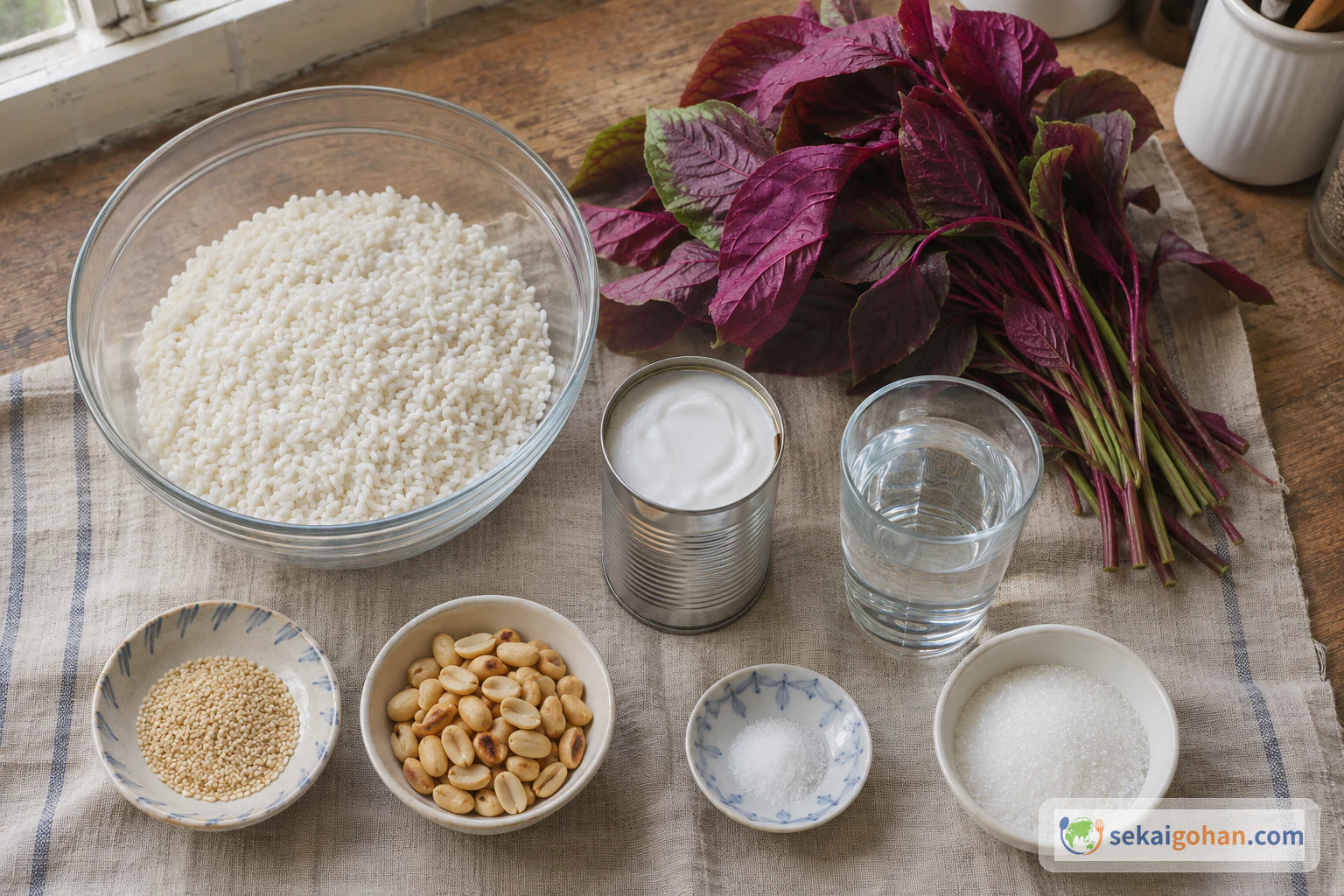
This dish contains peanuts and sesame in the muối mè, and coconut in the coconut milk. For a peanut allergy, leave the muối mè off or make it with toasted sesame, sugar and salt only.
Equipment
- Steamer, 8 to 9½ inches (20–24 cm) across; a bamboo steamer or a stainless steel steamer both work
- Clean muslin or cheesecloth (or parchment) to line the steamer if its holes let rice through
- Saucepan for steeping the leaves
- Fine-mesh sieve
- Large bowl for soaking
- Colander
- Mortar and pestle
Buying Lá Cẩm and What Can Stand In
Everything except the leaves is on a supermarket shelf. Lá cẩm is the one ingredient worth a trip: look in the frozen and dried sections of Vietnamese grocers, or search for "lá cẩm" or "magenta plant" online. Use leaves you can identify as lá cẩm.
A family in Lạng Sơn province was hospitalised after eating home-made purple sticky rice coloured with an unidentified herb pressed for its juice, and doctors there urged cooks to colour food only with long-established plants such as lá cẩm and to avoid plants of unknown origin and artificial dyes. What caused the illness is not settled. In your kitchen, use only leaves sold or grown as lá cẩm, and never colour rice with a wild plant you have identified by eye.
| Ingredient | What to buy | What a swap changes |
|---|---|---|
| Lá cẩm | Frozen or dried leaves from a Vietnamese grocer | Ube (purple yam) extract stands in: 2 cups rice, 2½ cups water and ¼ tsp ube extract. The rice turns purple, but the lá cẩm aroma is gone |
| Glutinous rice | Long-grain Thai glutinous rice or short-grain glutinous rice | Both steam well; the long Thai grain stays more separate |
| Coconut milk | Thick, full-fat coconut milk | Thin coconut milk leaves the rice soggy. Canned milk separates, so stir it well before measuring |
| Peanuts | Roasted, unsalted | Salted peanuts work if you cut the muối mè salt |
| Sesame | Toasted white sesame | Black sesame gives a stronger aroma and a sharp contrast against the purple |
A deeper purple is a matter of more leaves, not a different ingredient. Use the leaves and only the tender stems; a heavy share of stem brings a grassy note.
Method
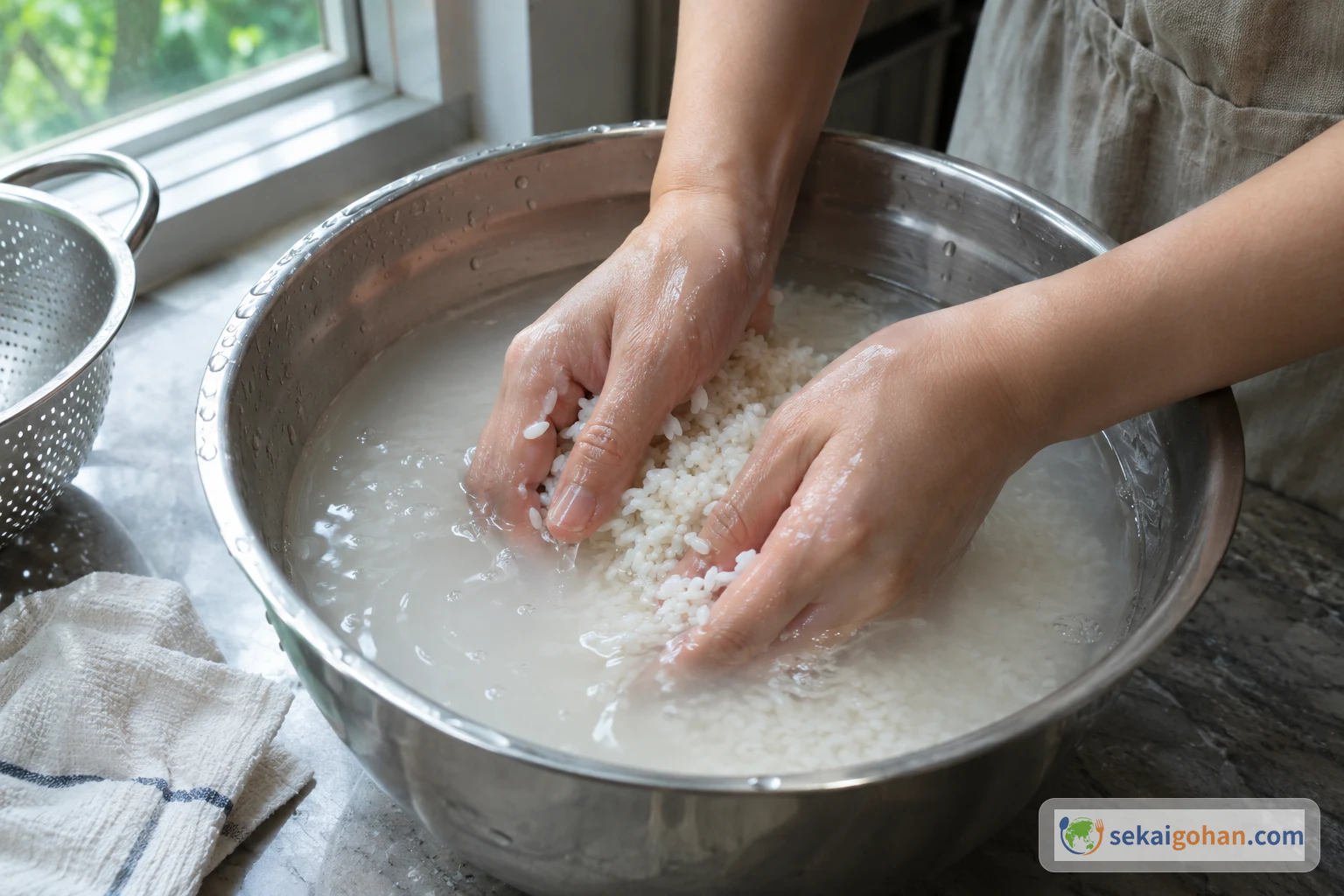
The work splits over two days. On the first, rinse the rice, steep and strain the leaves, and leave the rice soaking; the 8 to 10 hours of soaking are hands-off. On the second, the steaming runs about 45 minutes in three stages, depending on the steamer, and the muối mè can be pounded while the rice sits through its first 35 minutes.
The lá cẩm colour holds through boiling and steaming but is less stable once acid is added. Keep lemon, lime and vinegar out of the dye and off the finished rice.
When It Goes Wrong
| What you see | Why | What to do |
|---|---|---|
| Pale colour | Too few leaves, a short soak, or not enough liquid | Next time use more leaves and soak the full 8–10 hours or overnight, with the rice fully covered |
| Patchy colour | Grains above the liquid during the soak | Make sure the dye covers all the rice; press it down before leaving it |
| Dull or fading purple | Acid in the dye or on the rice | Leave out lemon, lime and vinegar entirely |
| Hard core in the grain | Too short a soak or too short a steam | Keep steaming in 10-minute stretches; do not pour in water and boil it |
| Sticky, mushy rice | Poor draining, coconut milk added all at once, thin coconut milk, or lid drips | Drain well, drizzle thick coconut milk in small amounts, and wrap the lid in a cloth |
| Grassy or bitter taste | Leaves boiled too long or too much stem | Hold the steep to 20 minutes and use mostly leaves |
| Too sweet | Extra sugar added in one go | Add any extra sugar a little at a time and taste between additions |
Serving, Variations and Leftovers
At the table
Warm, with muối mè, is the everyday way, a breakfast or snack that needs nothing else. For a Lạng Sơn spread, serve it with boiled chicken or a simple roasted-peanut salt. Vegetarian tables pair xôi with sesame-peanut salt or plain sugar.
Variations
- Richer coconut: raise the coconut milk to 4½ tbsp (70 ml) and keep the sugar the same. The rice turns richer and softer; steam the coconut stage 2 to 3 minutes longer for the extra liquid.
- Less sweet: cut the sugar for the rice to 1 oz (30 g). The colour stays the same, and the salt of the muối mè comes forward.
- Black sesame: swap the white sesame in the muối mè for black. The topping smells nuttier and stands out sharply against the purple.
- Mango dessert: serve the rice with ripe mango and a sweet coconut sauce made from coconut cream, a little sugar and a little starch to thicken it. Halve the muối mè, since its salt is strong next to fruit.
Storing and reheating
Cool leftovers, then refrigerate them promptly in a covered container and eat them soon; for longer keeping, freeze in small portions. Sticky rice hardens as it cools, so bring it back with steam: microwave it under a damp paper towel, or sprinkle on a little water and steam it for a few minutes until soft and hot through.
Frequently Asked Questions
Can I make it in a rice cooker?
Yes. For 2 cups rice soaked in the dye, drain it and add ¾ cup of the dye liquid to the cooker, then cook for 35 minutes. Stir once halfway through to keep the bottom from catching. Fold in the coconut milk, salt and sugar a little at a time once it is done.
Can I shorten the soak?
A short soak gives a paler purple and leaves the grains more likely to keep a hard core in the steamer. Start the soak the evening before and steam the next morning; the overnight soak costs no effort.
How do I get the deep Lạng Sơn colour without the ash?
Use more lá cẩm leaves and give the rice the full overnight soak with plenty of liquid covering it. The ash version belongs to Lạng Sơn kitchens, where the ash and leaves are ground together by hand.
Can I mix the coconut milk in before steaming?
Some cooks mix coconut cream into the drained rice and give it a short steam. Adding thick coconut milk after the grains have steamed keeps them firm and separate, and the small drizzles let you stop as soon as the rice is glossy.