

When the scent of dried fish rises from the pot, a white-fish dinner changes
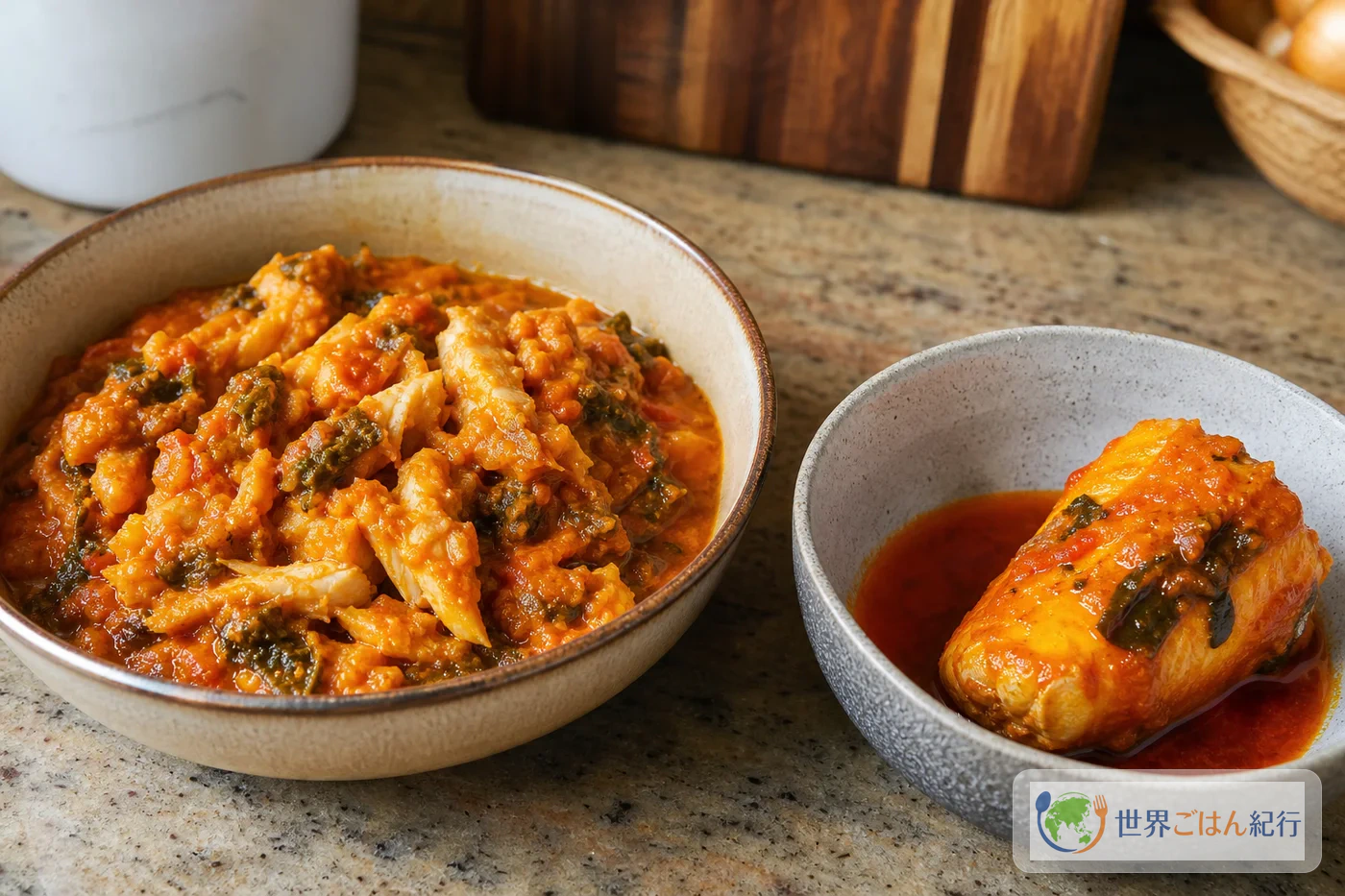
At the fish counter in the evening you pick up a fillet of cod, and yet salt-grilled or in a hot pot it somehow feels a little lacking. Add dried fish, okra, greens and red palm oil, and that ordinary white fish moves at once toward an Angolan stew. The sourness of tomato and the red aroma of palm oil shine at the edge of the pot, and the moment the savor of the dried fish starts to come out in a gentle simmer is the delight of this dish.
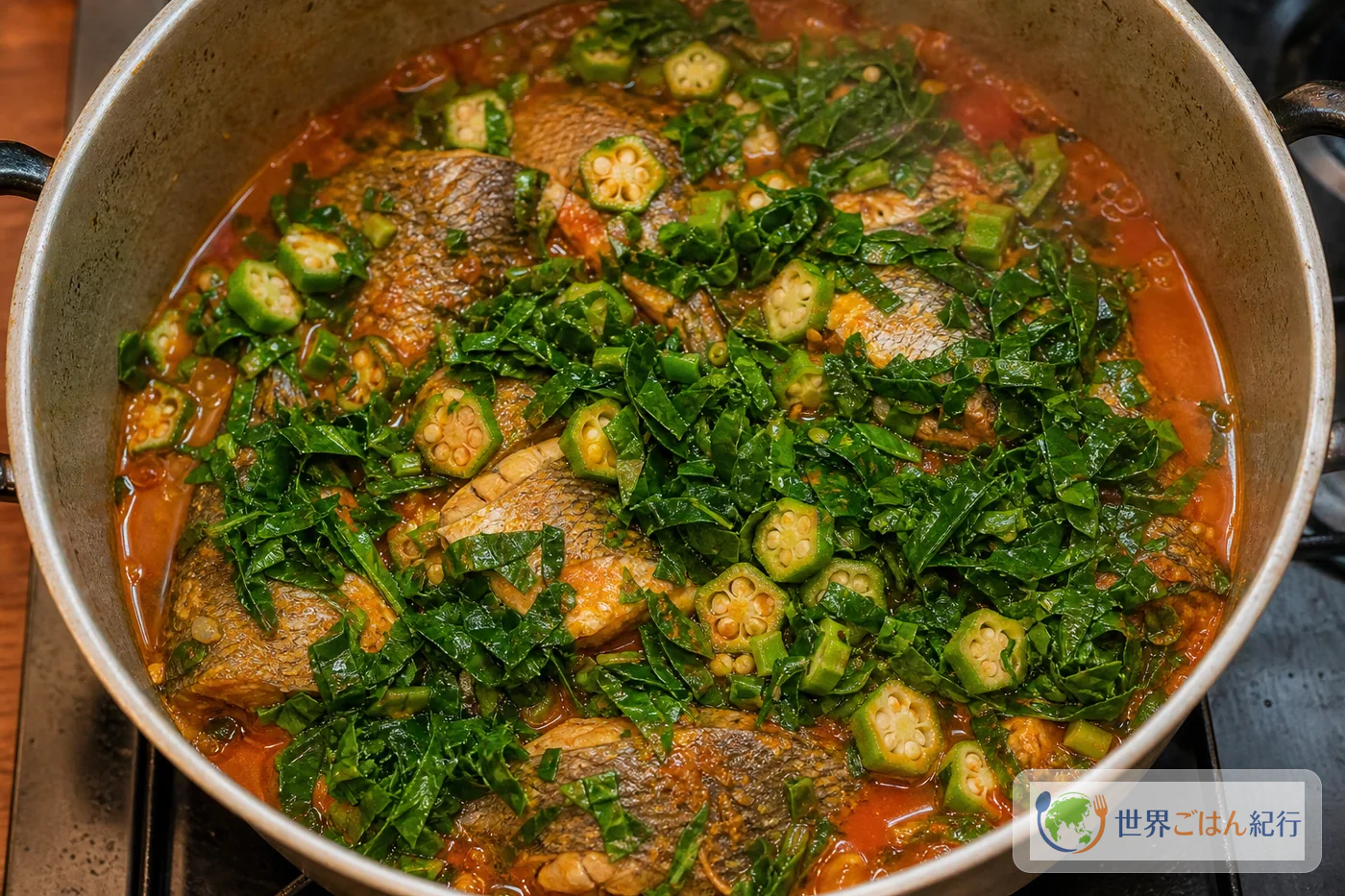
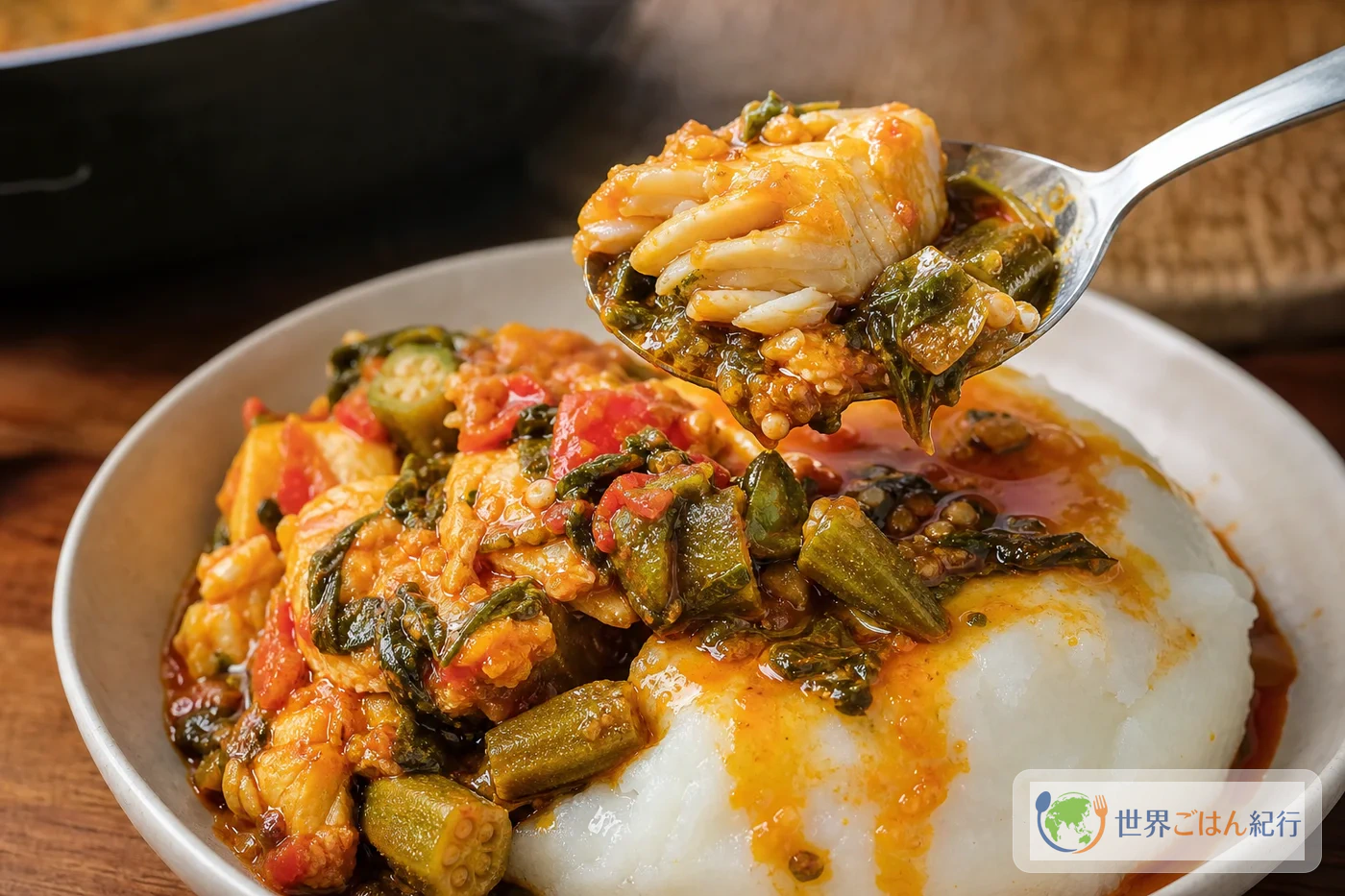
Calulu de peixe is a stew of fish and vegetables eaten in Angola. Peixe is Portuguese for fish. Some households make it with dried fish alone, others layer dried fish with fresh white fish. Okra, greens, tomato, onion, garlic and red palm oil are combined, and it is traditionally received by funge (funje) or white rice.
Among stews of the same red palm oil, when chicken is the star there is muamba de galinha, and across in Congo there is poulet moambé, where the combination of oil, nut, leaves and staple shifts slightly. In calulu the saltiness of the fish and the viscosity of okra come forward, so in a home kitchen the priorities are not to break up the fish, not to over-salt, and not to scorch the palm oil.
Background and table: an Angolan pot eaten with dried fish, greens and funge
Calulu de peixe is a dish whose origin is hard to pin to a single year. In Angolan food-culture sources it is described as an old stew layering dried fish or meat, leafy greens, okra and red palm oil, while Portuguese-language recipes also touch on its link to Brazil's caruru. What matters is not to lean too far toward either origin. At today's Angolan table, the keeping quality of dried fish, fish from the coast, greens from the field and the cassava staple go into the same pot as an everyday dinner.
In coastal places like Luanda and Benguela, explanations often combine fresh fish and dried fish, and looking to the north and the interior, there are river fish, dried meat, cassava leaves, and accompaniments of fermented cassava such as chikwangue. Regional differences are not about lavishness but about which fish and greens are at hand. Some households get a deep saltiness from dried fish alone, while others cut fresh white fish large and sink it in at the end. So when cooking it elsewhere too, rather than fixing on a single fish, building savor from a small amount of dried fish and then cooking the white fish later without breaking it comes closer to the local way of thinking.
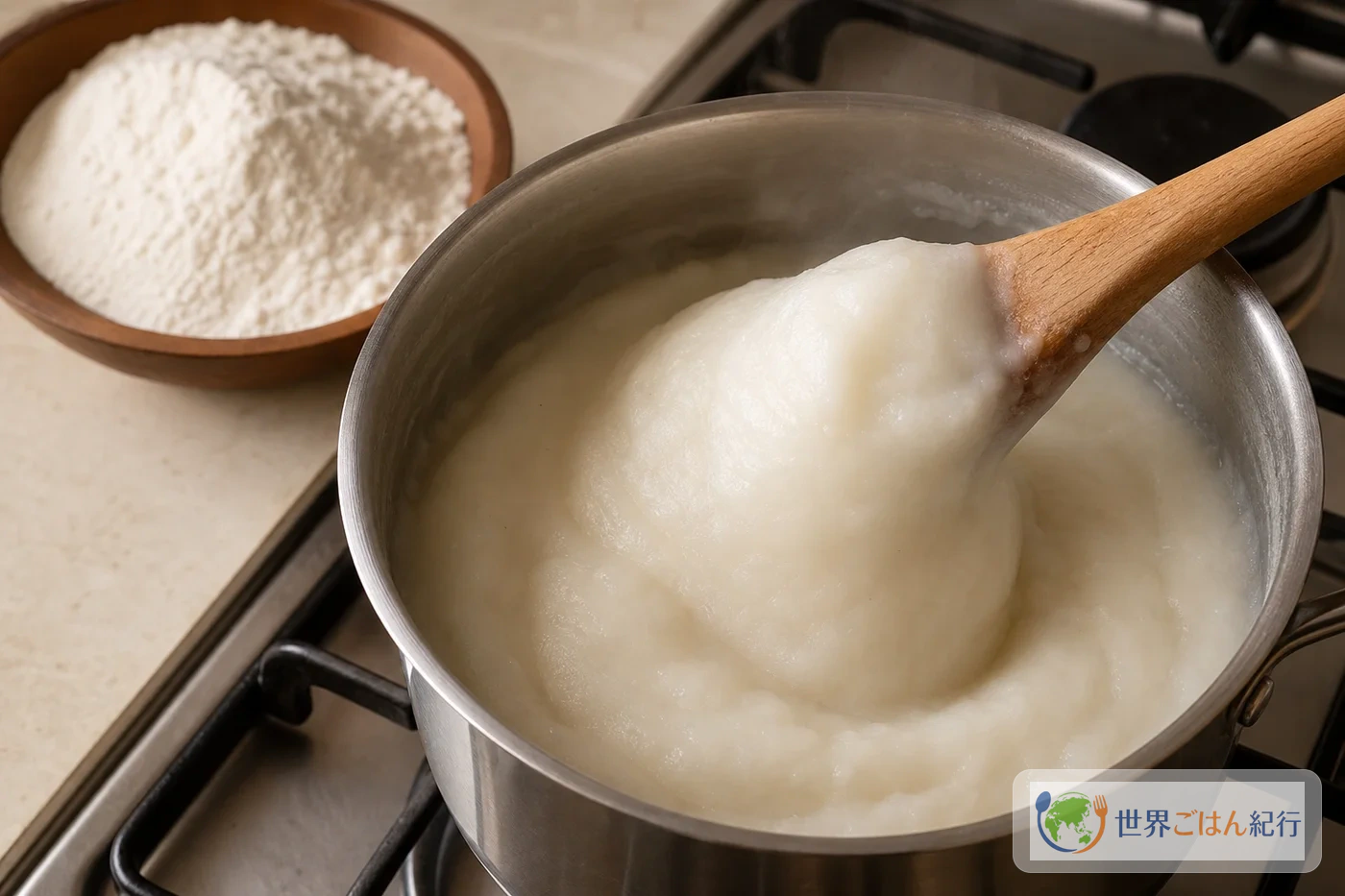
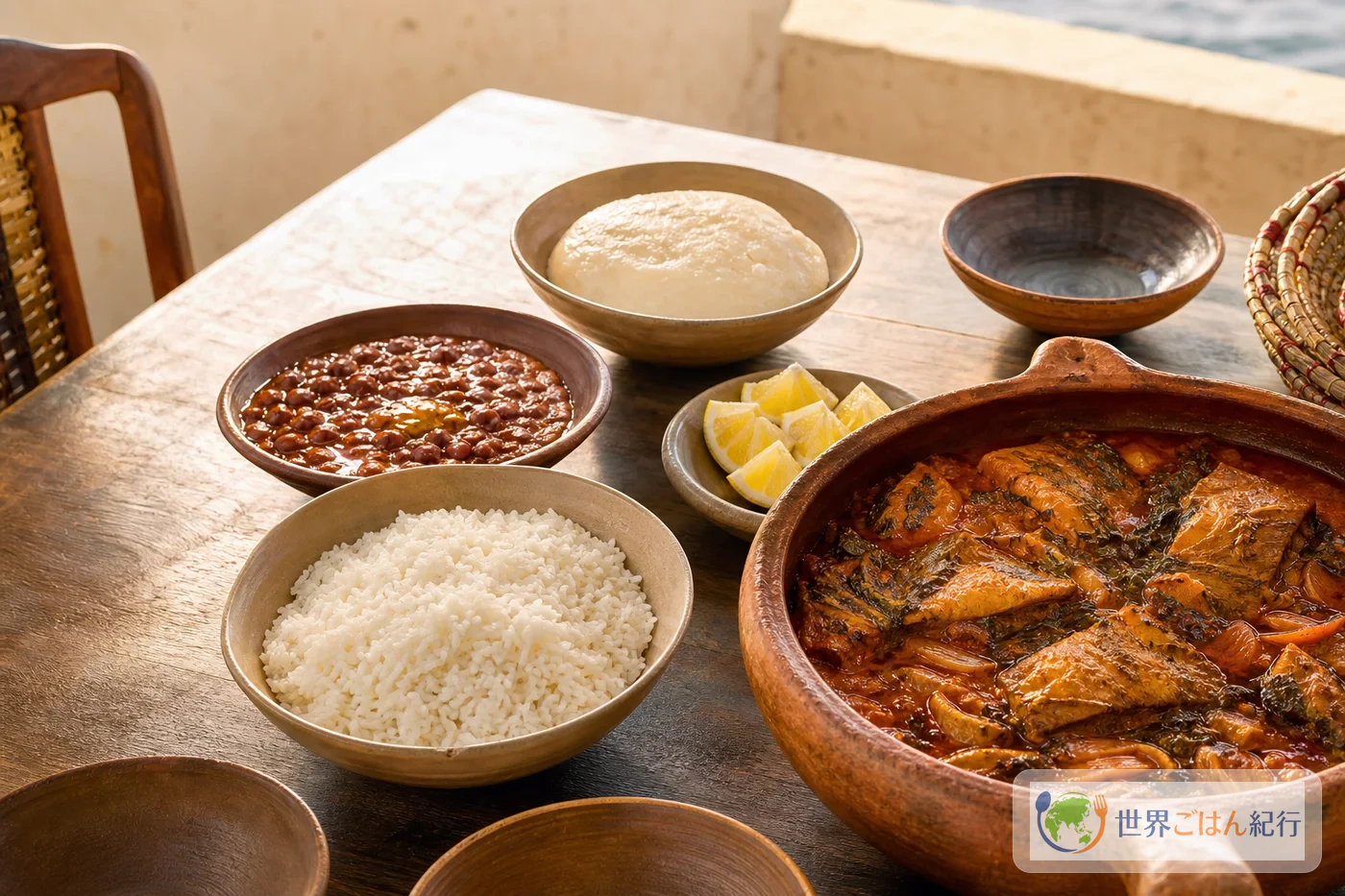
At the local table, calulu is more naturally eaten together with funge, rice or beans than sipped like a soup. Funge is a mild staple to receive a strongly flavored sauce, and you eat it by coating it a little at a time with the rich broth. The viscosity of okra, the bitterness of greens and the saltiness of dried fish are strong, so a white staple on the plate settles the taste. When serving it at home for the first time, rather than forcing the eat-by-hand style, it is easiest to add white rice or a cassava-flour funge and put lemon in a small dish.
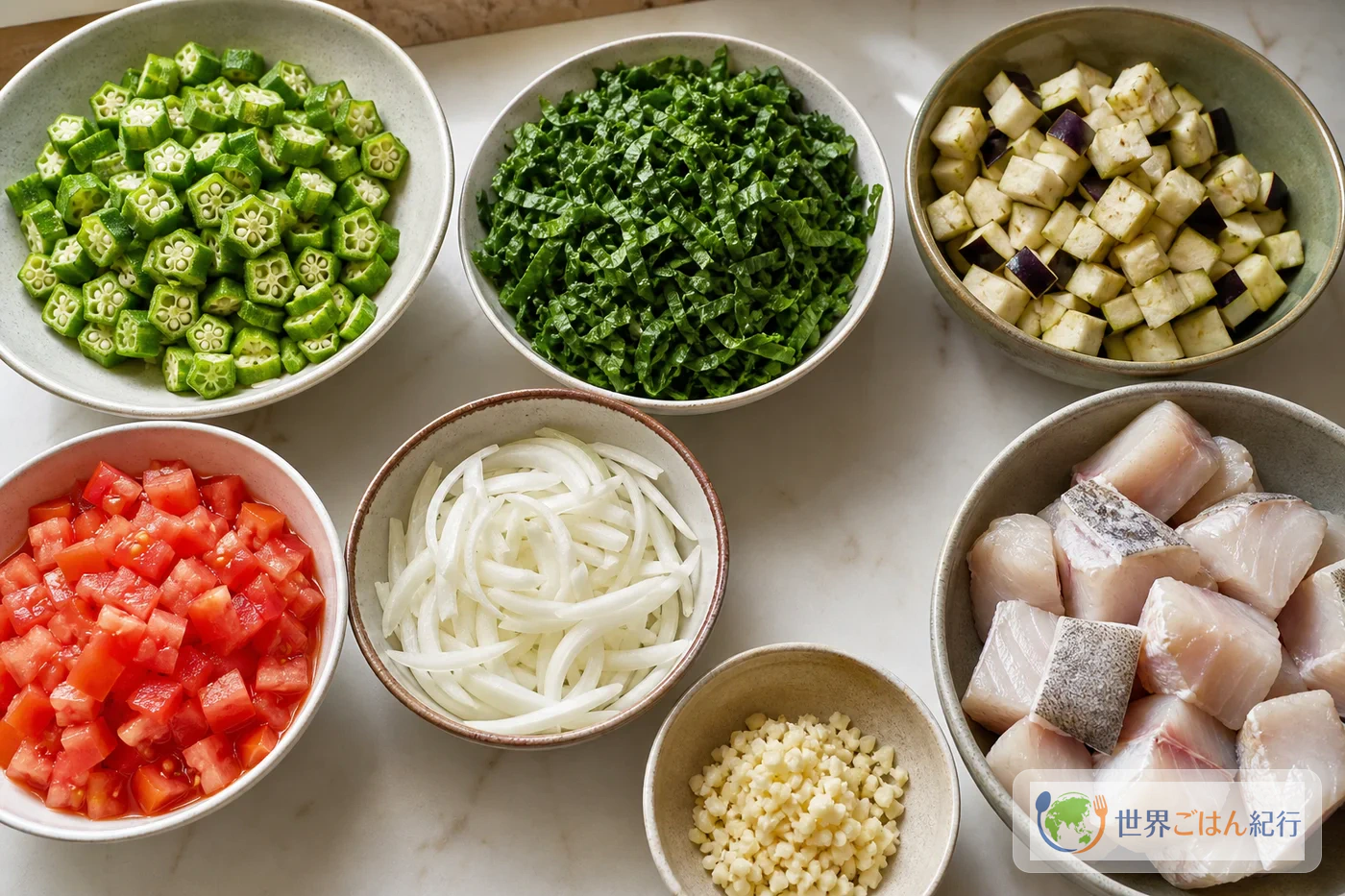
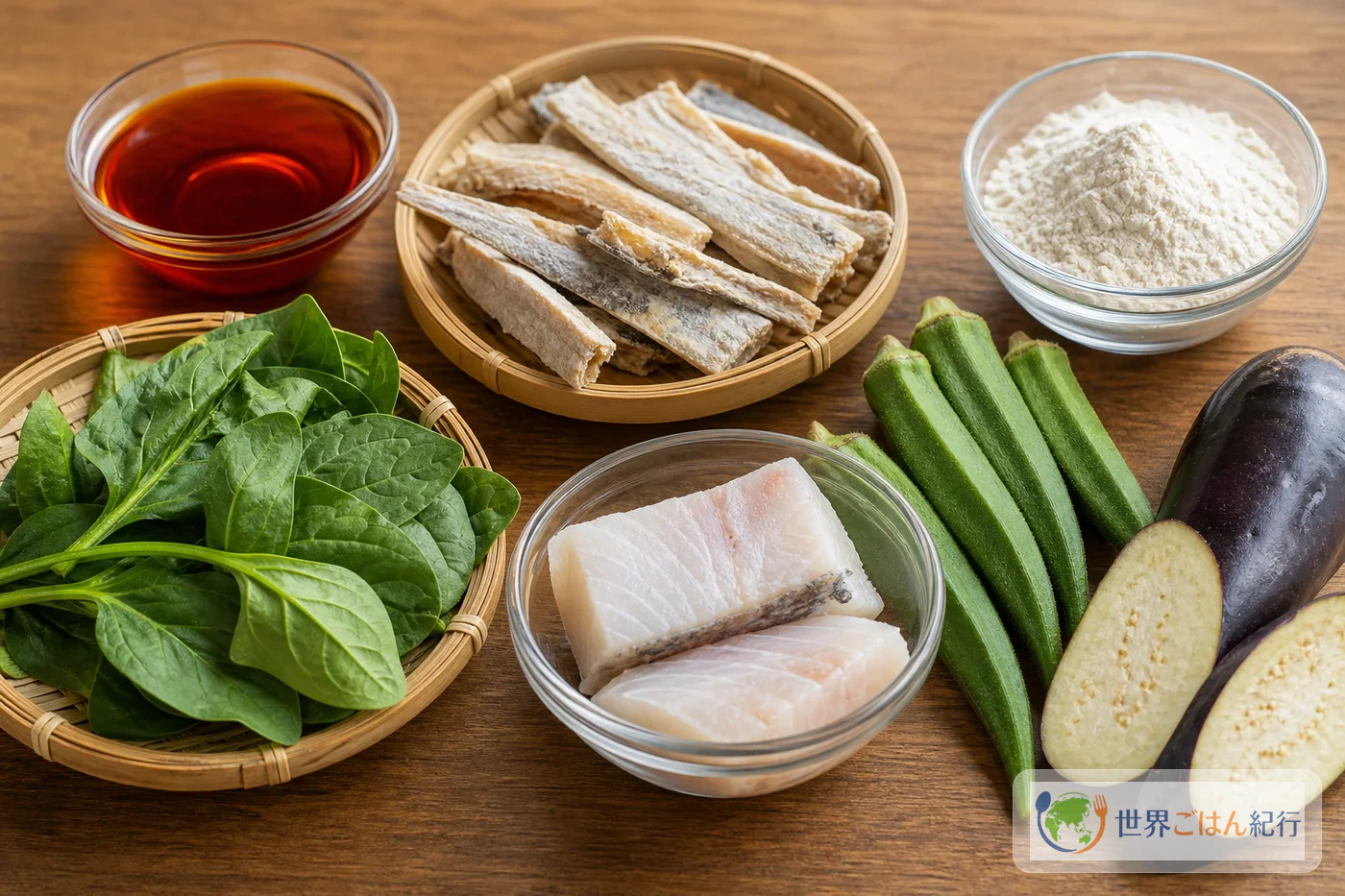
The ingredients to protect in a home kitchen are four: red palm oil, dried fish, okra and greens. Lightly salted cod or dried cod is not the local fish itself, but with the salt drawn out and used in small amounts it brings the savor of dried goods to the bottom of the pot. Komatsuna is not the same as sweet potato leaves, but added at the end it keeps the green color and the presence of leaves. On the other hand, cutting the fish small, boiling hard or stirring with a spatula many times loses the layers that make calulu what it is. Shake the pot to move the broth around. This modest motion is the most important reproduction judgment.
Ingredients and shopping
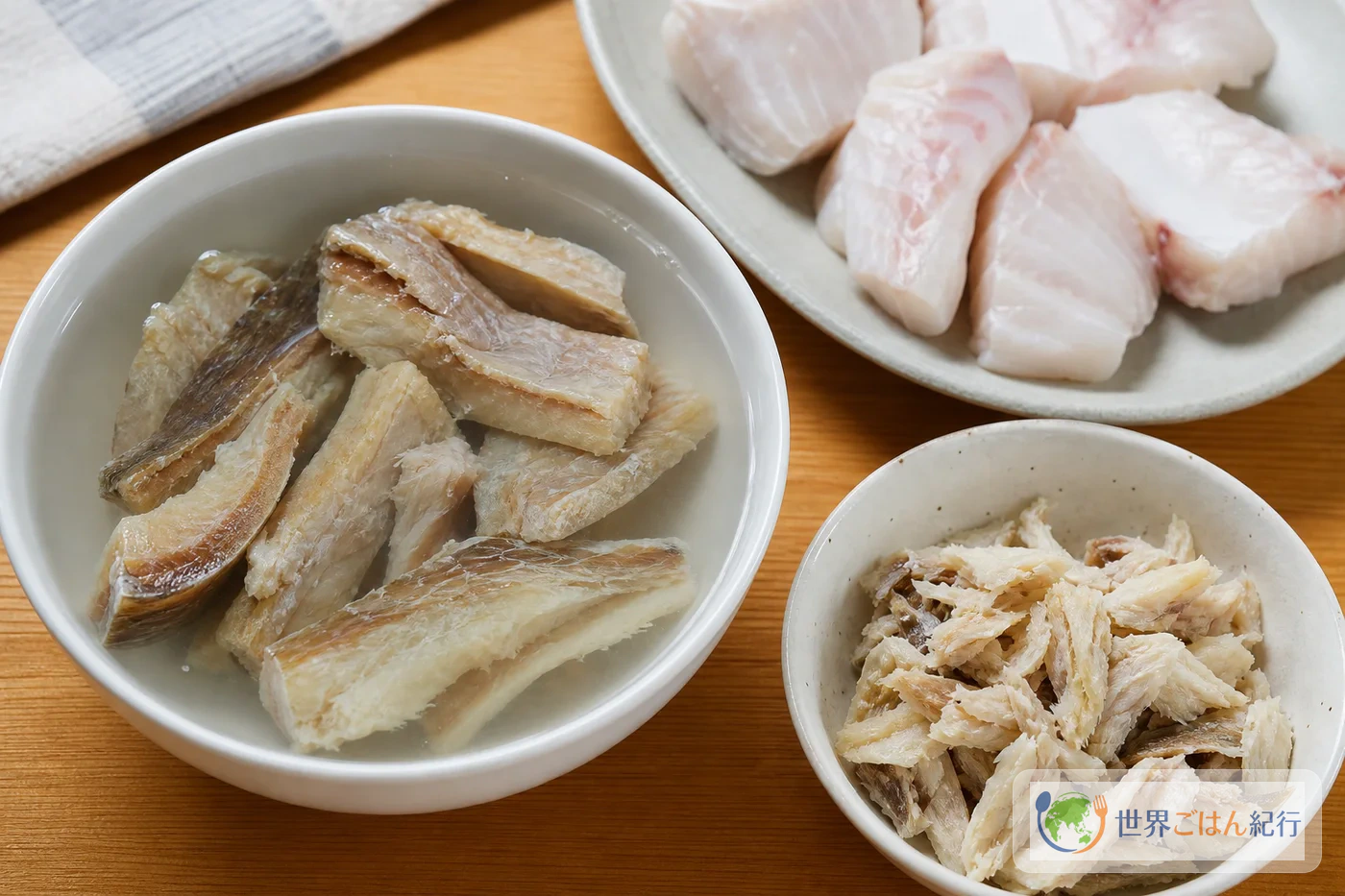
Cooked elsewhere, a small amount of dried fish is enough. Trying to reproduce the local dried fish as is would take half a day just to draw out the salt, so this recipe uses lightly salted cod, dried cod or lightly dried salted fish and is designed to go into the pot after a 30-minute soak. If you use heavily salted bacalhau, change the water and draw out the salt from the night before.
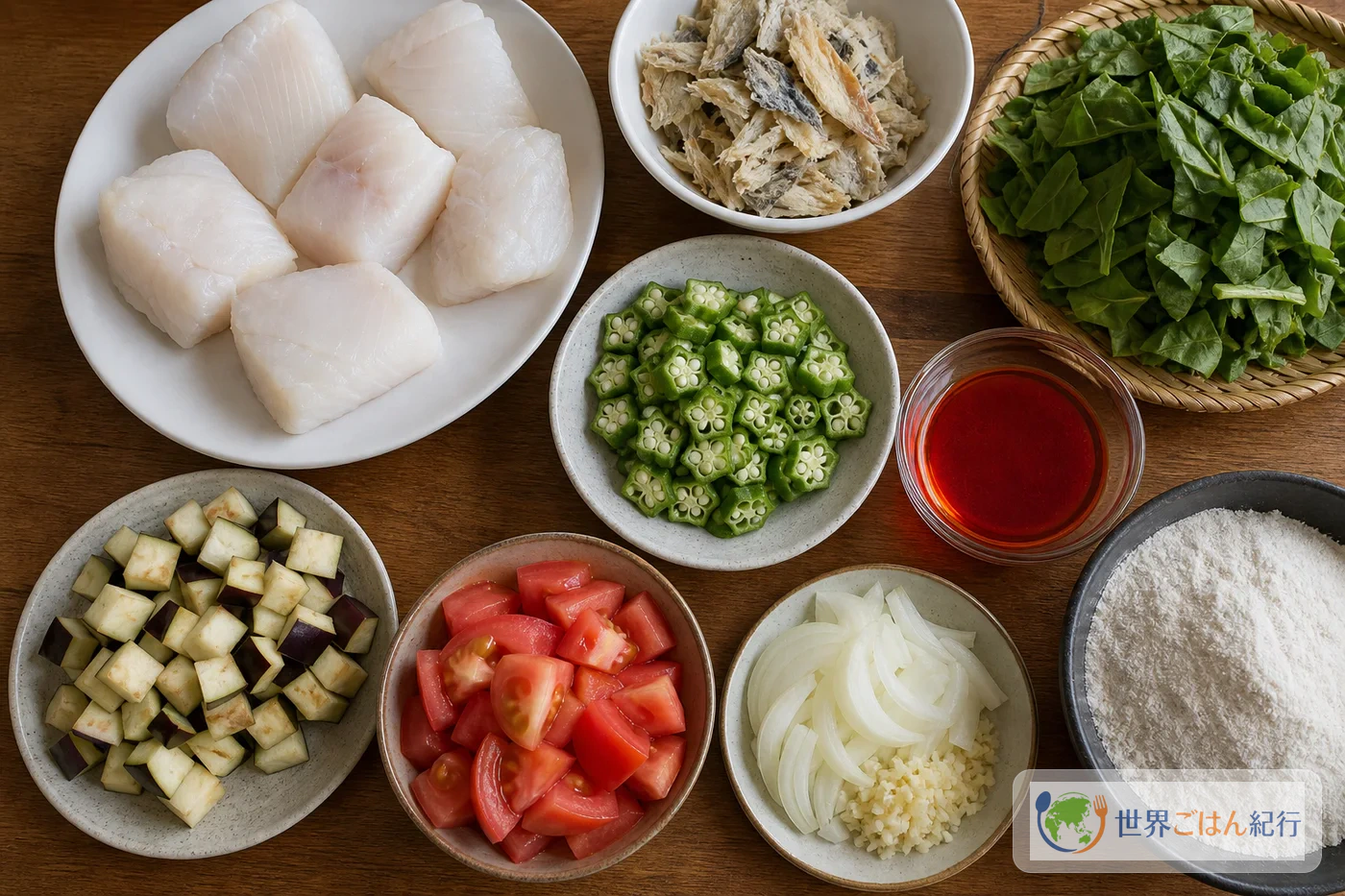
This recipe uses fish. The saltiness of dried fish differs greatly by product, so do not put the soaking liquid into the pot. Cook the white fish through to the center, until the middle is white and flakes rather than translucent.
Ingredients used in this dish
Red palm oil is the star of the aroma. With neutral oil it still works as a stew of fish and vegetables, but the red aroma that makes it calulu is weaker. A small bottle is fine for the first time, but if you prepare just this, the outline of the taste appears.
Adding funge as well makes it easier to receive the saltiness and thickness of the sauce. It can be eaten with white rice, but once adding a staple made by stirring cassava flour shows how Angolan food is eaten.
For dried fish, lightly salted cod is enough the first time, but on days when you want the saltiness and savor of calulu, a small amount of dried cod or bacalhau gives the outline. Desalting takes time, so buying on the assumption of soaking from the day before makes failure less likely.
Method: soak the dried fish, and finish without breaking the fish
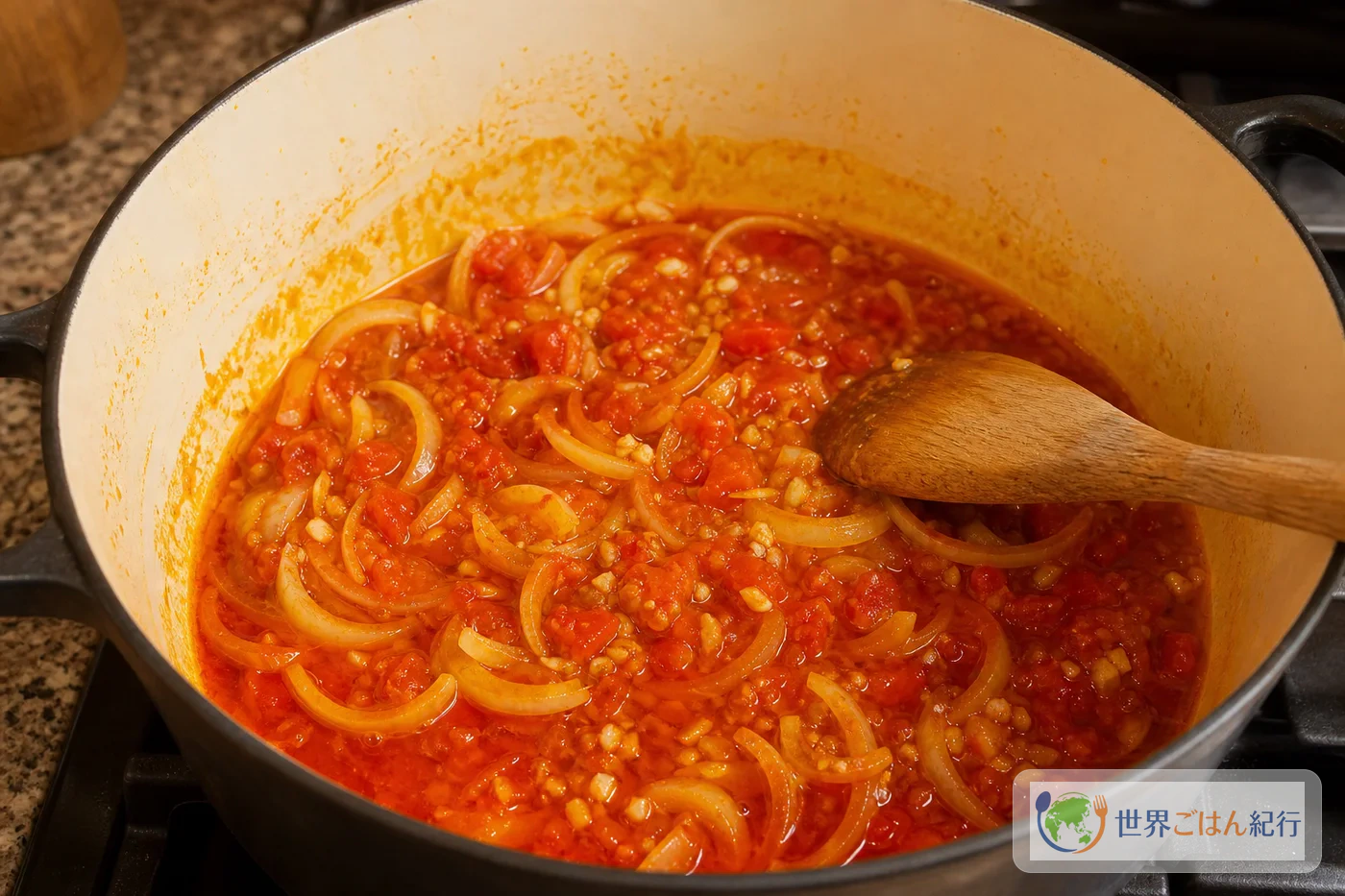
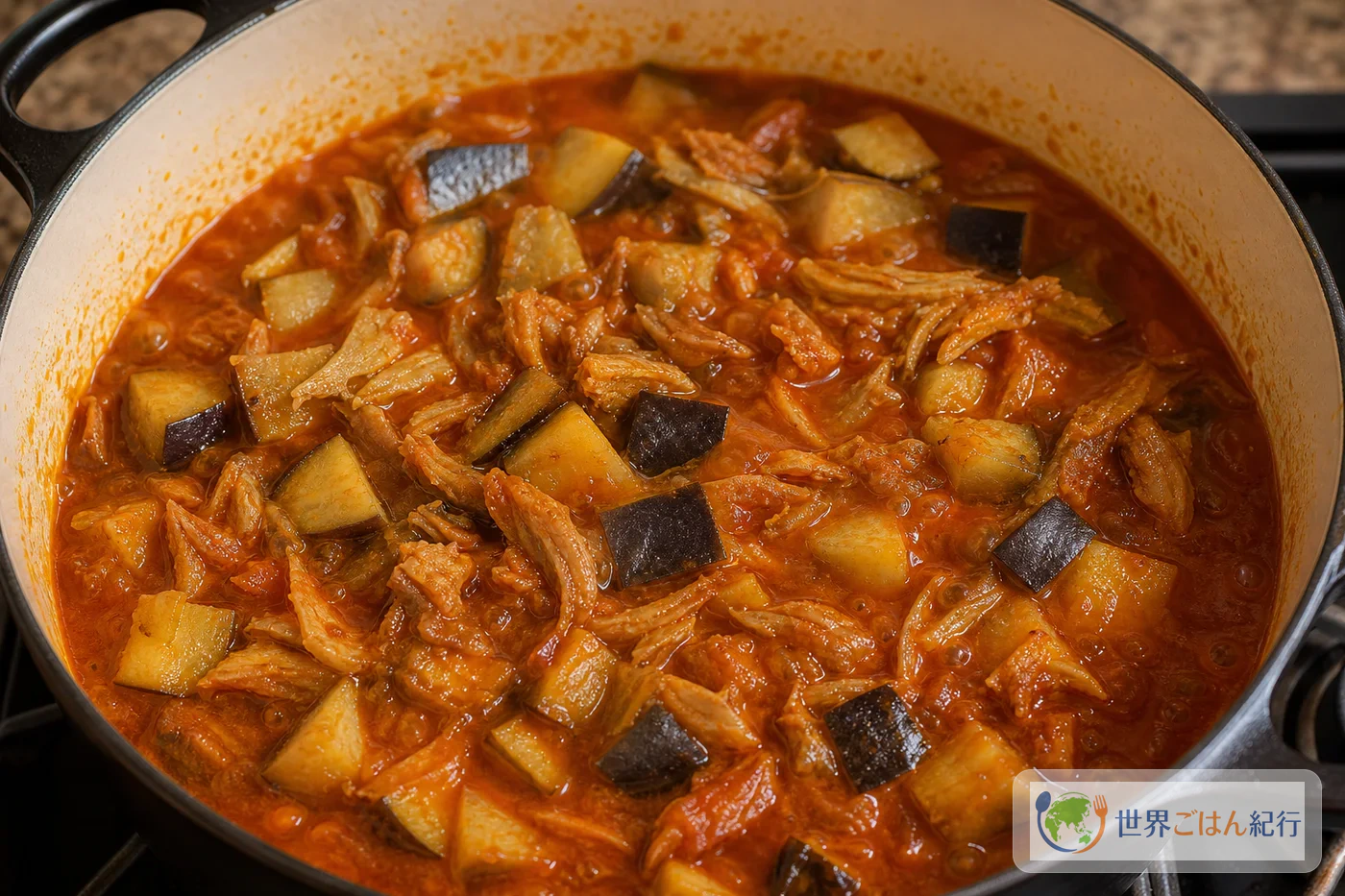
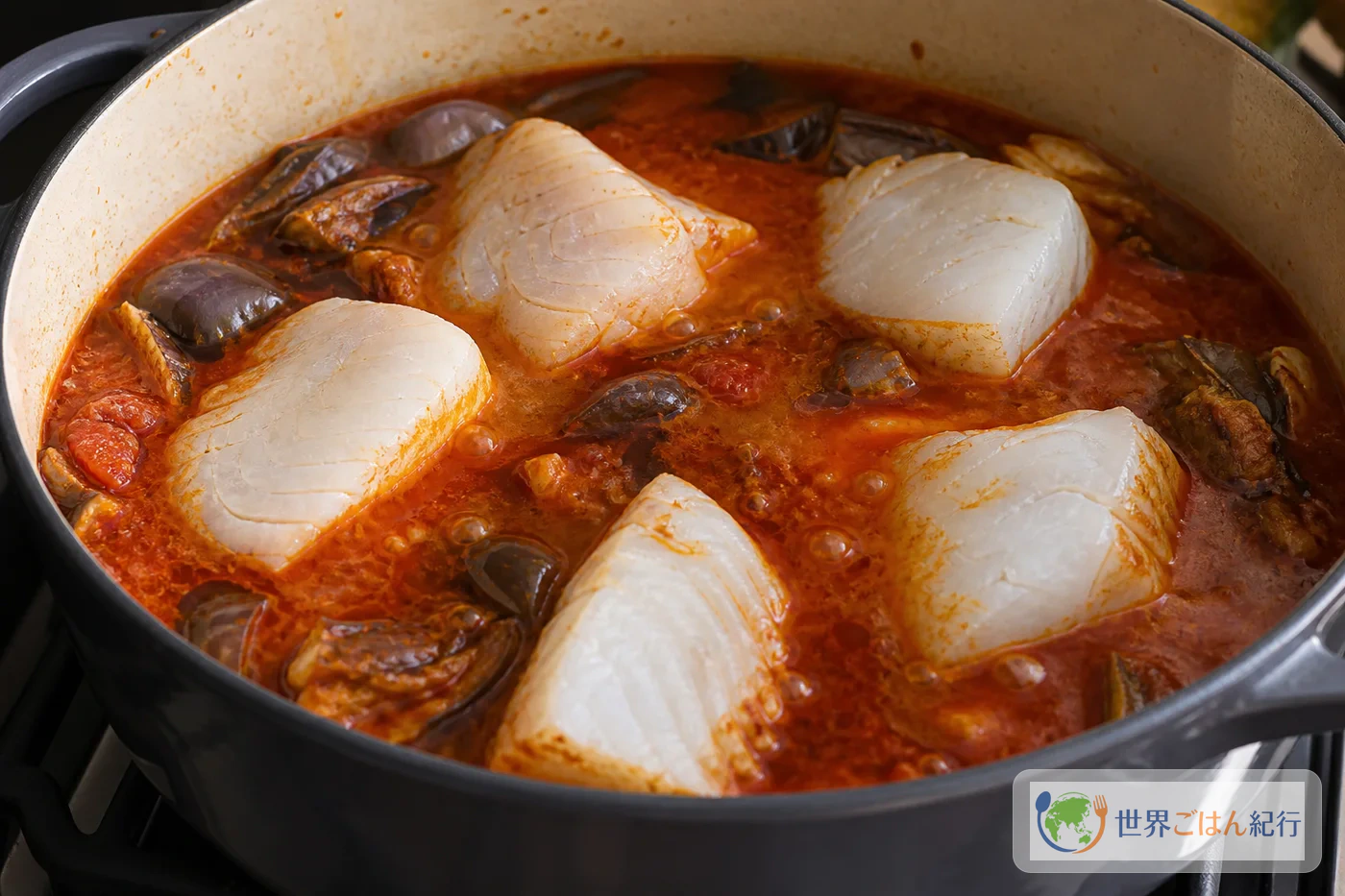
The harder calulu boils, the more the fish breaks up. Set the saltiness of the dried fish first, build the red base with aromatics, and sink the white fish gently in the second half. The idea is not to stir the fish but to shake the pot slightly to move the sauce around.
A decision table for getting close to the original in a home kitchen
What to protect in calulu is the savor of dried fish, red palm oil, okra, greens and a mild staple. Rather than gathering every ingredient exactly as in Angola, not breaking the roles of these five points makes the table more convincing.
| Local-leaning ingredient | Easy substitute | What to protect |
|---|---|---|
| Dried salted fish | Lightly salted cod, dried cod, lightly dried white fish | Include some, even a small amount. Do not use the soaking liquid |
| Red palm oil | A small bottle of red palm oil | With neutral oil alone it becomes another dish. Even 2 tbsp changes the aroma |
| Jimbua, sweet potato leaves | Komatsuna, spinach, Malabar spinach | Add the greens at the end to keep color and texture |
| Local white fish | Cod, sea bream, sea bass, swordfish | Thin-fleshed fish break easily. Cut large |
| Funge | Cassava flour, white rice, firm polenta | Serve a mild staple to receive the sauce |
Moqueca baiana also uses red palm oil, but with the roundness of coconut milk it gives a sweeter, softer impression than calulu. Calulu puts dried fish and greens forward, so it is easier to eat if you do not use too much palm oil and do not cloud the broth too much.
Where it tends to go wrong
With a fish stew, the more you do "it tastes thin so I stir" or "it is not cooked so I turn up the heat," the more it breaks. In calulu especially, dried fish, white fish, okra and greens all go in the same pot, so heat and order make the difference.
| Mistake | Cause | Fix |
|---|---|---|
| The fish breaks into small pieces | White fish cut small, boiled hard, stirred with a spatula | Cut into 4 to 5 cm cubes and add the white fish in the second half. Shake the pot instead of stirring |
| Too salty | Not enough desalting of the dried fish, soaking liquid added | Add 2 to 3 tbsp water and take the edge off with 1 tsp lemon juice. Next time change the water at 15 minutes |
| Oily | Too much palm oil, too little broth | Set 3 tbsp as the limit. At the end, skim a little oil from the surface with a spoon |
| Greens turn a dark color | Added too early | Cook only the last 6 to 8 minutes. Residual heat also wilts them |
| Okra is too slimy | Cut too small, cooked too long | Cut 1 cm wide and add only for the finish. Add frozen slices still frozen |
Storage and eating it the next day
With a fish stew, it matters not to leave it out at room temperature. Cooling it in the pot leaves the center warm for a long time, so move leftovers to a shallow storage container.
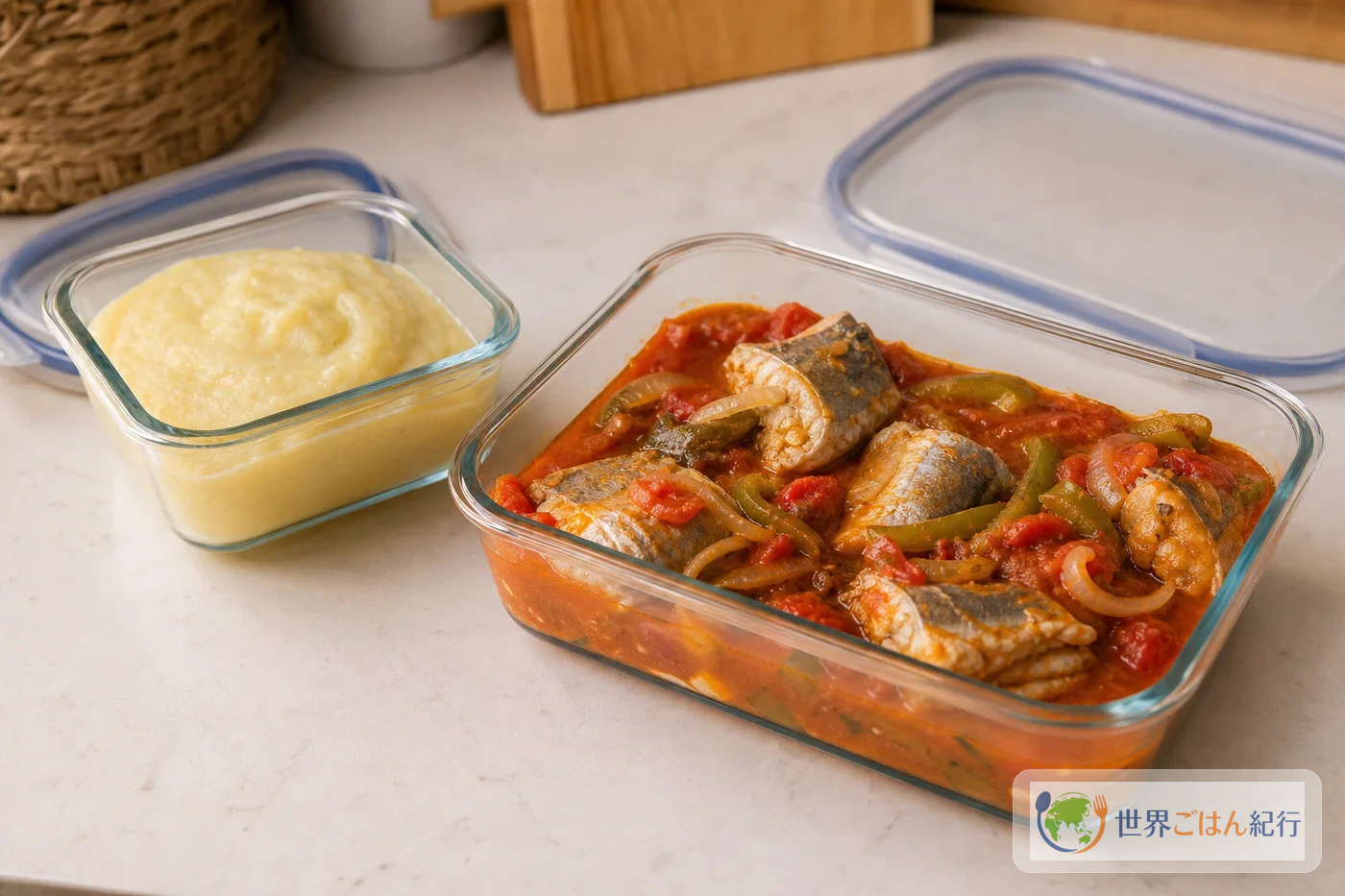
| Storage method | Guide | Reheating |
|---|---|---|
| Refrigerator | 1 to 2 days | Over low heat in a small pot. Add 1 to 2 tbsp water and do not boil hard |
| Freezer | Not recommended | The texture of the white fish and greens falls. If you must freeze, use extra broth and keep it 1 week |
| Funge | Best the same day | When it hardens, sprinkle with a little water, cover and warm over low heat or in a 600 W microwave 1 minute at a time |
The next day, loosen the broth a little and spoon it over white rice, which makes it easier to eat. If funge is left over, just cut it small and pour the warmed calulu sauce over it. The flesh of the fish breaks easily on reheating, so do not move it around much with chopsticks or a spatula.
Setting the table, and related articles
Calulu de peixe is easier to eat with the fish in the center of the plate and funge or white rice beside it. With a pot made hot with chili, simply adding lemon lightens the aftertaste. The aroma of the oil is strong, so side dishes go better as boiled vegetables or a light bean dish than a raw salad.
To compare with another Angolan red stew, start with muamba de galinha. Because it is made with chicken rather than fish, the aroma of palm oil clings more to the meat. To widen your sense of staples, Ghana's fufu and Tanzania's ugali are close reads as well.
To extend toward West Africa with the combination of fish and rice, there is Senegal's thieboudienne. There, rather than palm oil, the layering of fish, vegetables and rice is the star. To move on to a rice dish with added spice aroma, Nigeria's jollof rice is also worth cooking alongside.
To pull it together as one plate at home
For a weeknight dinner, white rice, calulu, lemon and one boiled egg are enough. The rice receives the broth and the egg rounds off the saltiness of the dried fish a little, which makes it easier to serve to someone trying it for the first time. For a holiday leaning toward the local style, line up funge, calulu, boiled greens and a cold drink. The contrast between rich broth and mild staple shows clearly.
For the next day's lunch, adding 2 tbsp water to the leftover calulu, warming it over low heat and pouring it over warm rice is easy. Even if the fish has broken up a little, it is easier to eat. Rather than adding more side dishes, serving lemon, chopped onion and thin slices of cucumber in small dishes pulls it together. When the aroma of palm oil feels heavy, acidity and moisture bring your mouth back.
FAQ
Can I make it without dried fish?
You can. But the saltiness and savor that make it calulu will be weaker. Adding one of 1 anchovy fillet, 1/2 tsp fish sauce or 10 g dried shrimp to the 600 g of white fish brings it a little closer. Too much gives a different flavor, so start with a small amount.
Can I make it without red palm oil?
Neutral oil still gives a stew of fish and okra, but the aroma is quite different from calulu. If you really have none, make up the color with 2 tbsp rice bran oil and 1/2 tsp paprika. But the aroma cannot be replaced, so it is worth getting red palm oil next time.
Which greens are closest?
Komatsuna is easy to handle. Spinach is softer and Malabar spinach gives a bit of sliminess. Rather than sweet greens, leaves with a light green bitterness added at the end go well with the saltiness of the fish.
What fish internal temperature should I check?
If you have a household thermometer, aim for 63°C at the center. If you do not, look for the center to be white rather than translucent, and for the thick part to break into large flakes when pressed with chopsticks. You do not need to boil the broth violently to cook it quickly.
What if I do not want it spicy for children?
Leave out the chili and add chili flakes or chopped chili only to the adults' plates at the end. If the saltiness of the dried fish is too strong to eat, on days you eat with children reduce the dried fish to 80 g and increase the white fish to 650 g for a gentler result.
Summary
Calulu de peixe is not simply a dish of simmering white fish but an Angolan fish stew built from dried fish, red palm oil, okra, greens and a mild staple. In a home kitchen, using a small amount of dried fish and managing the salt, adding the white fish in the second half, and finishing quietly over low heat make failure less likely.
The priorities for a first shopping trip are red palm oil and some kind of dried fish. If you also gather cassava flour the impression of the table changes a lot, but white rice is fine to begin with. When the scent of dried fish and red oil rises from the pot, your usual white fish becomes dinner from a somewhat distant place.



