Drop flour into hot water, and the kitchen has one more staple

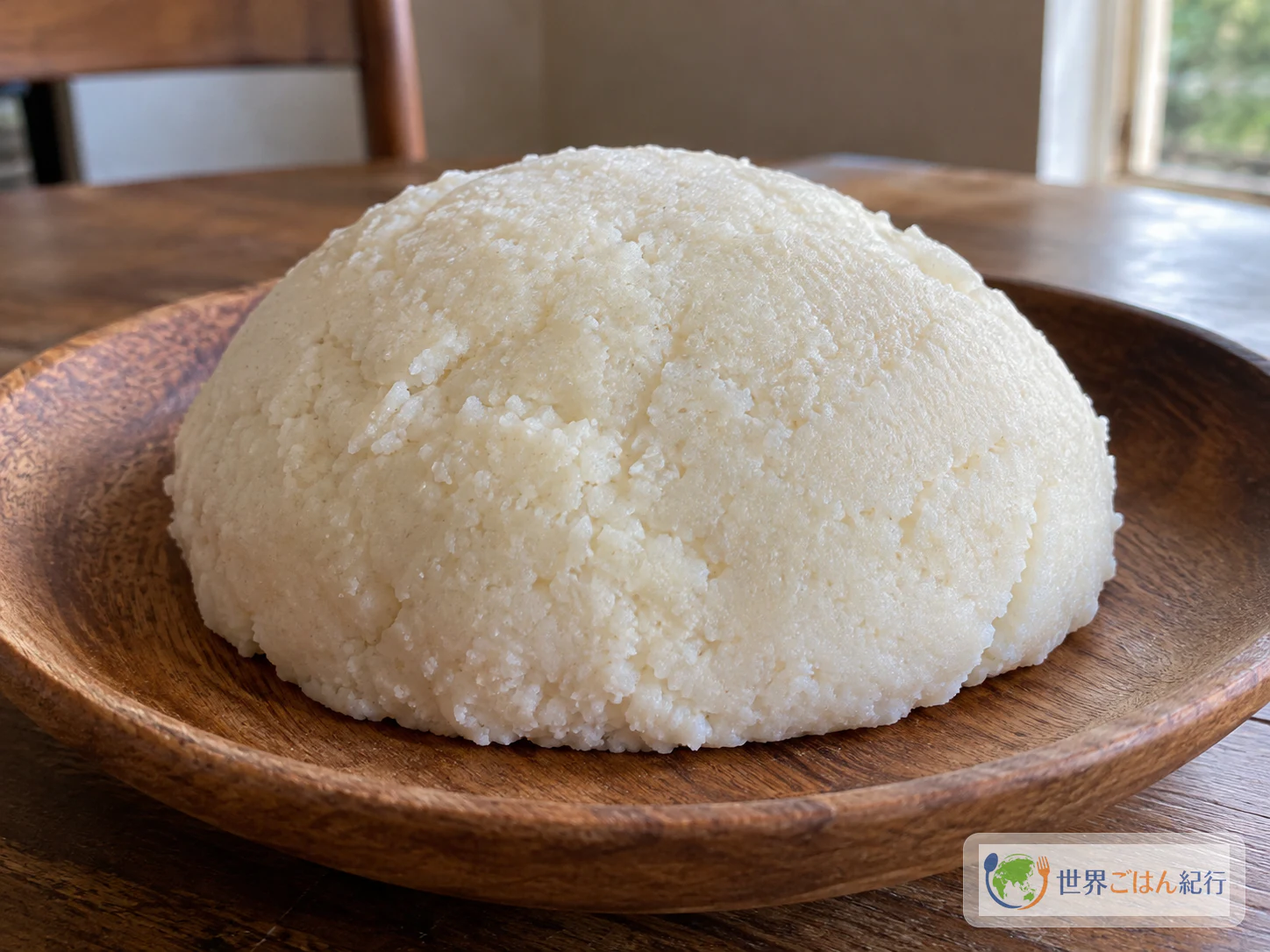
Sprinkle loose gari a little at a time into steaming water. At first it looks like a thin porridge with grains floating in it, but as you press the bottom of the pot with a wooden spoon it suddenly turns heavy, and the white dough gathers into one mass. Add water in a panic and it goes slack. Add too much gari and it becomes a hard lump. Eba is a staple decided less by ingredients than by judging water against flour.
Eba (Ẹ̀bà) is a West African staple made by stirring gari, a dried granular cassava flour, into hot water. In Benin it goes by names such as piron and pâte de gari, and it is eaten with soups and sauces in Nigeria, Togo and southern Ghana too. Saying "just stir cassava flour" makes it sound simple, but in practice the eating experience changes with white or yellow gari, where you stop adding water and how thick the accompanying sauce is.
This article uses Benin's piron blanc as the entry point and builds a table around gari, red palm oil and okra, all easy to find outside West Africa. For another Beninese staple made from corn, see amiwo; on the Ghanaian side, fufu and banku make good comparisons. Among them, eba is the quickest to make, and its failures tend to come down to the amount of water.
| Item | Guide |
|---|---|
| Servings | 4 |
| Prep | 20 min |
| Cooking | 30 min |
| Total | about 50 min |
| Main ingredients | Gari, hot water, okra, red palm oil |
| Served with | Okra sauce, fish soup, tomato stew, hot pepper sauce |
What is eba? A dish that turns gari into a staple
Gari is a West African processed ingredient: cassava is grated, fermented, pressed to remove liquid, granulated and then cooked in a dry pan. It is sometimes sprinkled dry over beans or soups, but stirred into hot water it becomes the staple known as a "swallow," torn off by hand and dipped in sauce. In Benin gari is a household pantry food, and stirring it into hot water as piron is widely known.
The flavor of eba is not strong. It centers on a faintly sour grain taste, a texture of grains that is not too chewy, and the feel of a warm dough that catches the soup. That is why strongly flavored accompaniments suit it. With the sliminess of okra, the red aroma of palm oil, the stock of fish or meat and a hot sauce, the white staple suddenly moves to the center of the meal.
When you cook it outside West Africa, do not confuse gari with cassava flour. Fine starches such as tapioca starch or potato starch will not give the same grain. On a day when you cannot get gari, a fufu mix makes a similar staple, but that is a substitute for a West African swallow rather than eba itself.
| What to look at | Eba | Fufu | Amiwo |
|---|---|---|---|
| Main ingredient | Gari | Cassava, plantain, yam, etc. | Cornmeal, tomato, oil |
| Texture | Firm dough with remaining grain | Smooth, stretchy dough | Crumbly red staple |
| Goes well with | Okra, egusi, fish sauce | Groundnut soup, palm-based soups | Tomato sauce, fish, meat |
| What to protect at home | Ratio of gari to hot water | Type of flour and the stirring | Aroma of tomato and corn |
Ingredients (serves 4)

Eba alone is quick to make. But on its own it stops at "a white staple," so here we also make a quick okra sauce with a little red palm oil. It is a light version without meat or fish, but it is enough to learn how gari is eaten.
If you use dried shrimp powder, check labels for shellfish; if you use dried bonito powder, check for fish. Scotch bonnet heat is strong even in a small amount, so on a day when the family eats together, put no more than 2 g in the pot and let only those who want more adjust at the table in a small dish.
Shopping essentials

Okra, onion and tomato are easy to get anywhere. What is worth looking for are the gari that names the dish, a fufu mix to use as a substitute staple on days you cannot make eba, and the red palm oil that creates the aroma of the sauce. African, Caribbean and Asian grocery stores and online shops are the usual sources.
| Ingredient | What to check before buying | What to avoid |
|---|---|---|
| Gari | Labels reading cassava grits, gari or garri | Products that are only tapioca starch or potato starch |
| Fufu mix | Flours based on cassava, yam or plantain | Substitutes that are only wheat flour or potato starch |
| Red palm oil | Labels such as edible, red palm or dendê | Oils not confirmed as food use |
For eba, gari comes first. White gari is clean and light, while yellow gari tends to bring the color and aroma that come from palm oil, so on a first try white gari makes it easier to see how it relates to the sauce.
If you run out of gari, or want a smoother swallow, use a fufu mix. It is a different thing from eba, but it can serve as a staple to go with West African soups.
Red palm oil creates the color and aroma of the sauce. Rather than mixing it into the eba itself, using it in the okra sauce here sets off the white eba by contrast.
Method
Eba is easier to eat if you make the sauce first and then stir the eba. Eba tightens as it cools, so serve it as soon as it is stirred.
Firmness guide and causes of failure

Eba fails because of water, not because of unusual ingredients. Gari differs from product to product in coarseness and in how much water it absorbs, so it is steadier not to fix the full amount from the start.
| State | Cause | How to fix |
|---|---|---|
| Lumps remain | Gari added all at once | Lower the heat, add 20 ml hot water and press the lumps with the wooden spoon |
| Spreads on the plate | Too much water | Sprinkle in 10 g gari and stir over low heat for 1 minute |
| So firm it cracks | Too much gari, not enough steaming | Pour 20 ml hot water around the side of the pot, cover and leave for 1 minute |
| Floury | Water temperature too low | Cover on the lowest heat and steam for 2 minutes before stirring |
| Sourness stands out | White gari has a stronger flavor | Balance with the red palm oil sauce, fish stock or heat |
You may see methods that stir with cold water or cook in a microwave, but on a first try it is easier to learn the firmness with hot water and a wooden spoon. Once you have seen the "moment it starts to turn heavy" in the pot, you can tell next time whether to add water or hold back the flour.
Background: the Beninese table and the road of gari
Eba is not a dish complete in one plate; it is a staple for eating the sauce. In the Beninese context there is a wide range of pairings: white piron, red piron, meat and fish sauces and slimy okra-type sauces. The Beninese food site Miam Miam Bénin also presents pâte de gari with a seed sauce called goussi, showing that it is a dish where a staple and a strong sauce are eaten together. For a first batch outside West Africa, the light sauce of okra and red palm oil is easiest to handle, and moving on to fish or chicken stews broadens the table.
Tracing the background of gari, eba is not simply a "white flour unchanged since long ago." Benin cassava documents explain that cassava cultivation spread through the movement of people returning to West Africa from the Brazil side and through eating habits close to Brazilian farinha. Gari also varies in quality with the length of fermentation, grain size, how it is dried and where it comes from. There is a note that gari from Savalou is highly regarded, so even for the same eba, "which flour you use" ties to household preference and market memory.
There are regional differences as well. The Chef's Pencil introduction to Beninese food sorts piron into white and red: white piron uses few added ingredients, while red piron adds tomato paste, chili, onion, ginger and the like. This article makes white eba the star, but if you lean toward red piron, making the sauce red and rich first, rather than putting tomato or oil into the water you stir the flour into, is less likely to fail in a home kitchen. Moving on to the red staple after you are used to handling the flour keeps you from losing the sense of firmness.
Compared among the same family of stirred staples, amiwo puts the aroma of corn and tomato in front. Fufu is smooth and suits rich soups like groundnut soup. Red red has a way of eating where gari is served dry, and the interesting part is that even with the same gari, "sprinkling" and "stirring" give it different roles.
To get closer to the local way of eating, it works better not to season the eba itself too much. Rather than adding salt, put the stock, oil, heat and sliminess in the sauce. Because the white staple is mild, the stock of fish and the sliminess of okra stand out clearly.
| Pairing | Axis of local character | Practical answer in a home kitchen |
|---|---|---|
| Okra sauce | Sliminess that wraps the eba | Cut okra to 1 cm and use only 30 ml red palm oil |
| Fish sauce | Umami of dried or smoked fish | Add 100 g of canned mackerel in water with its liquid and reduce salt by 1 g |
| Tomato sauce | Acidity and oil that meet the white staple | Simmer 200 g canned tomato for 10 minutes and serve the heat on a separate dish |
| Meat stew | Chicken or goat stock gives fullness | Simmer chicken drumsticks on low for 25 minutes and roll the eba smaller |
| Hot dish | Each person adjusts with piment | Keep 2 g chili sauce out of the pot and add a few drops at the table |
Using this table, you can build up from a vegetarian-leaning first batch to fish next time and chicken on the weekend. Gari tends to be left over once you buy it, so rather than try to use it up on eba alone, it lasts longer if you split the uses: sprinkle it dry on red red, scatter a little in a soup, or compare it with a fufu mix to see the difference between staples.
For a menu, make eba and okra sauce the staple and main, and add a tangy tomato salad, grilled fish and boiled eggs for a settled dinner. On a day when the oil is strong, a side of cucumber with a little lemon cuts the weight of the red palm oil. On a day you serve it instead of white rice, roll it small for each person and set the sauce on the side so they can try it, which makes it easier to accept.
Storing and reheating

Eba is easiest to eat freshly made. As it cools, it tightens and the surface dries. To store it, wrap each rounded eba in plastic wrap and eat it by the next day from the refrigerator. Keep the sauce in a separate container, up to 3 days in the refrigerator.
To reheat, use 30 ml hot water for each eba. Put the water in a small pot or skillet, set the eba in it, cover and steam over low heat for 4 minutes. When the center is warm and the surface has become slightly moist, restore the shape with a moistened spoon. In a microwave, put the eba and 30 ml hot water in a heatproof dish, cover loosely with plastic wrap and heat at 600 W for 1 minute 20 seconds, then turn it over and add 40 more seconds.
You can freeze it, but the grain is stronger after thawing. If you freeze it, cut it small and eat it in the okra sauce like dumpling-style pieces rather than as a staple, which wastes less.
Frequently asked questions
Can I make it with tapioca starch if I have no gari?
It will not be the same thing. Tapioca starch is fine and becomes very sticky when heated. If you want the grain and light sourness of eba, use gari. If you are serving a substitute, a fufu mix goes with West African soups more easily than tapioca starch.
Which is better, white gari or yellow gari?
White gari is recommended the first time. It interferes less with the flavor of the sauce, and changes in the amount of water are easier to see. Yellow gari has the color and aroma that come from palm oil, and with a red palm oil sauce the whole dish tastes richer.
Can I eat eba alone?
It is a staple, so you can, but it is basically eaten with sauce. Pair it with something with oil and stock, such as okra, egusi, fish soup or tomato stew, and it becomes a meal. White eba alone is mild and the floury taste stands out.
What do I do to make it not spicy for children?
Leave the chili sauce out of the pot and season with salt and dried shrimp powder. Adults can add 2 or 3 drops of chili oil at the table, so you do not have to split the pot. If the aroma of red palm oil is strong, adding 50 g tomato to the sauce and simmering rounds it out.
Is there anything to watch for on safety with processed gari?
Use gari sold for cooking and store it following the instructions on the bag. This is not a dish where you substitute cassava grated at home. Cassava is an ingredient whose handling changes with the processing steps, so on a first try it is steadier to use commercially sold gari.