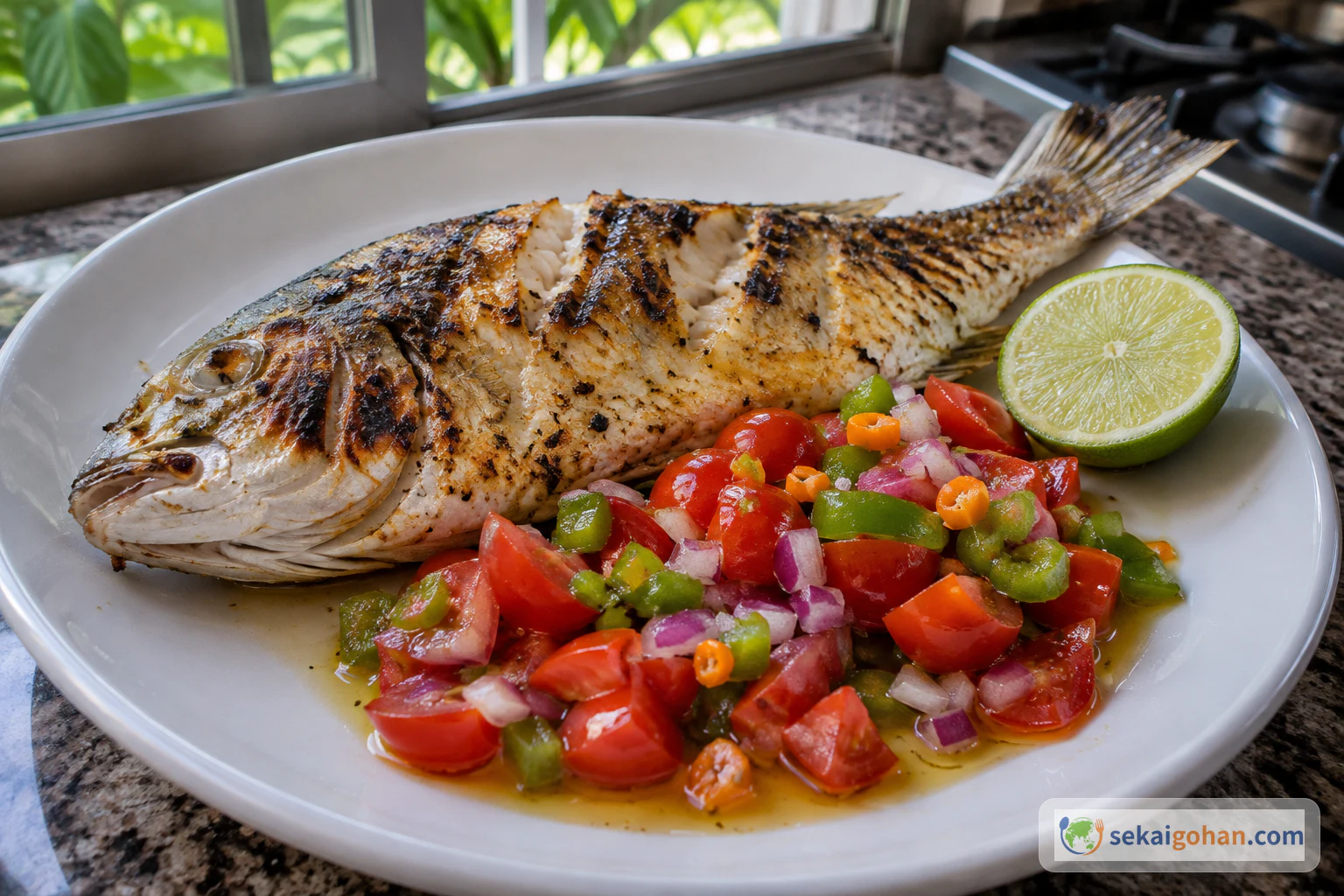
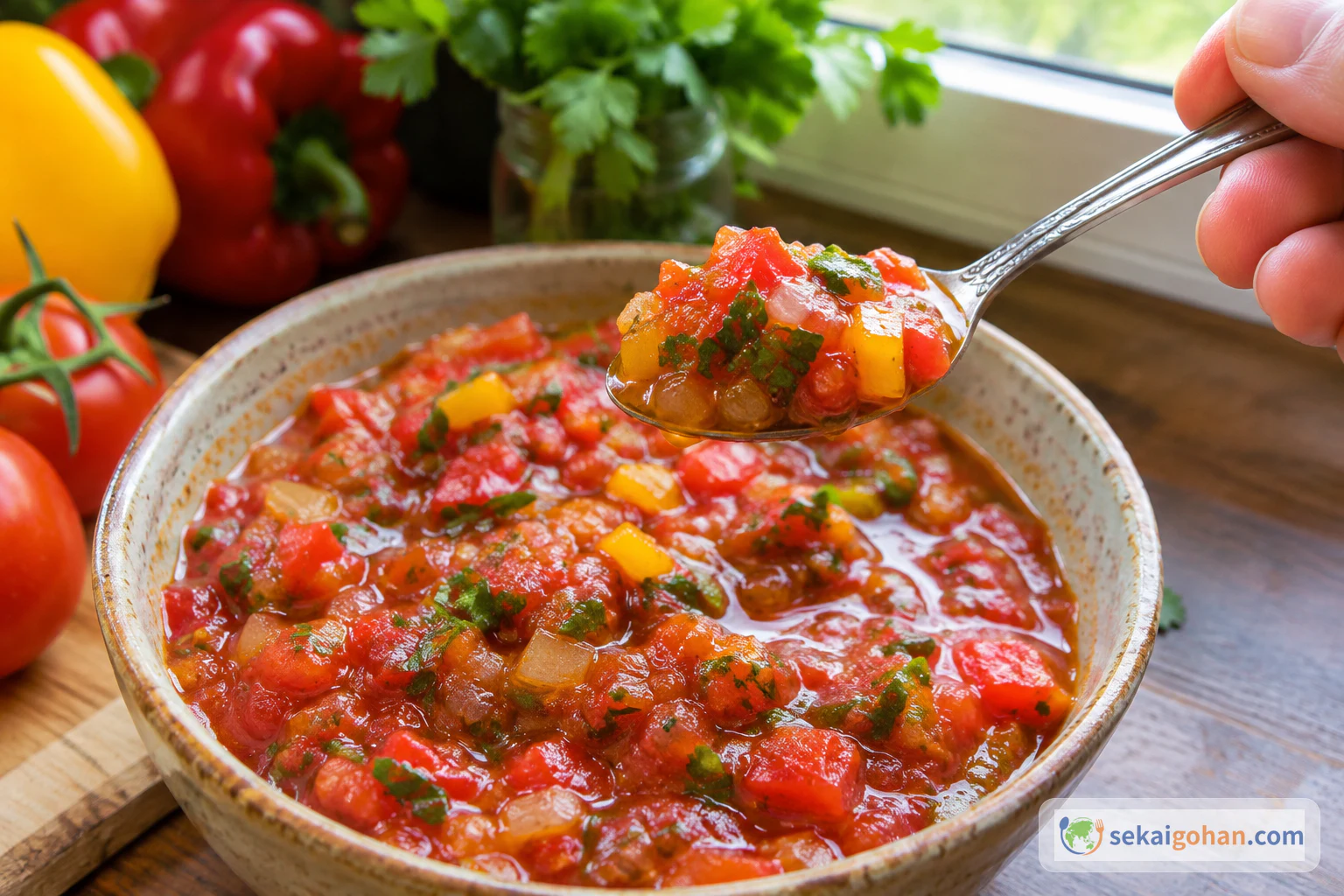
Fish comes out of the oil still crackling, and a spoonful of cold chopped tomato, onion and chili goes straight on top. The juice runs into the crust and the oil on the sauce catches the light. That spoonful is monyo, a raw sauce from Benin that never goes near the heat. Everything is cut, tossed with oil, salt and acid, and carried to the table. It tastes sharp and fresh, with sweet tomato, the crunch of red onion and green pepper, and habanero heat close behind.
Monyo at the Beninese table
Much of the cooking in Benin is slow and stewed, with sauces simmered down until they cling. Monyo is the light, uncooked exception on that table. It works three ways. Serve it as a side, set it out as a dip, or spoon it over a finished plate. Its natural partners are grilled or fried fish and grilled chicken, along with the starchy, fried things that want something cold and acidic against them: fried yam and plantain.
The same family of sauce turns up across the region. Cooks spoon it beside attiéké and next to pâte rouge, the red porridge, where its brightness cuts through the dense, smooth staple. Because each cook adds the chili at the board, every bowl comes out as hot as the person making it wants it. People adjust it to the meal and to who is eating.
You will see both spellings, monyo and moyo. Both describe the same kind of sauce, a fresh mix of tomato, onion and chili eaten with fish or chicken. Where the name comes from is not settled. Search both spellings when you look for it.
The version below uses lime, olive oil and a little Dijon mustard, which makes it a modern West African take with a glossy, emulsified finish. The core stays the same in every version here: raw tomato, raw onion, chili and salt.
Ingredients
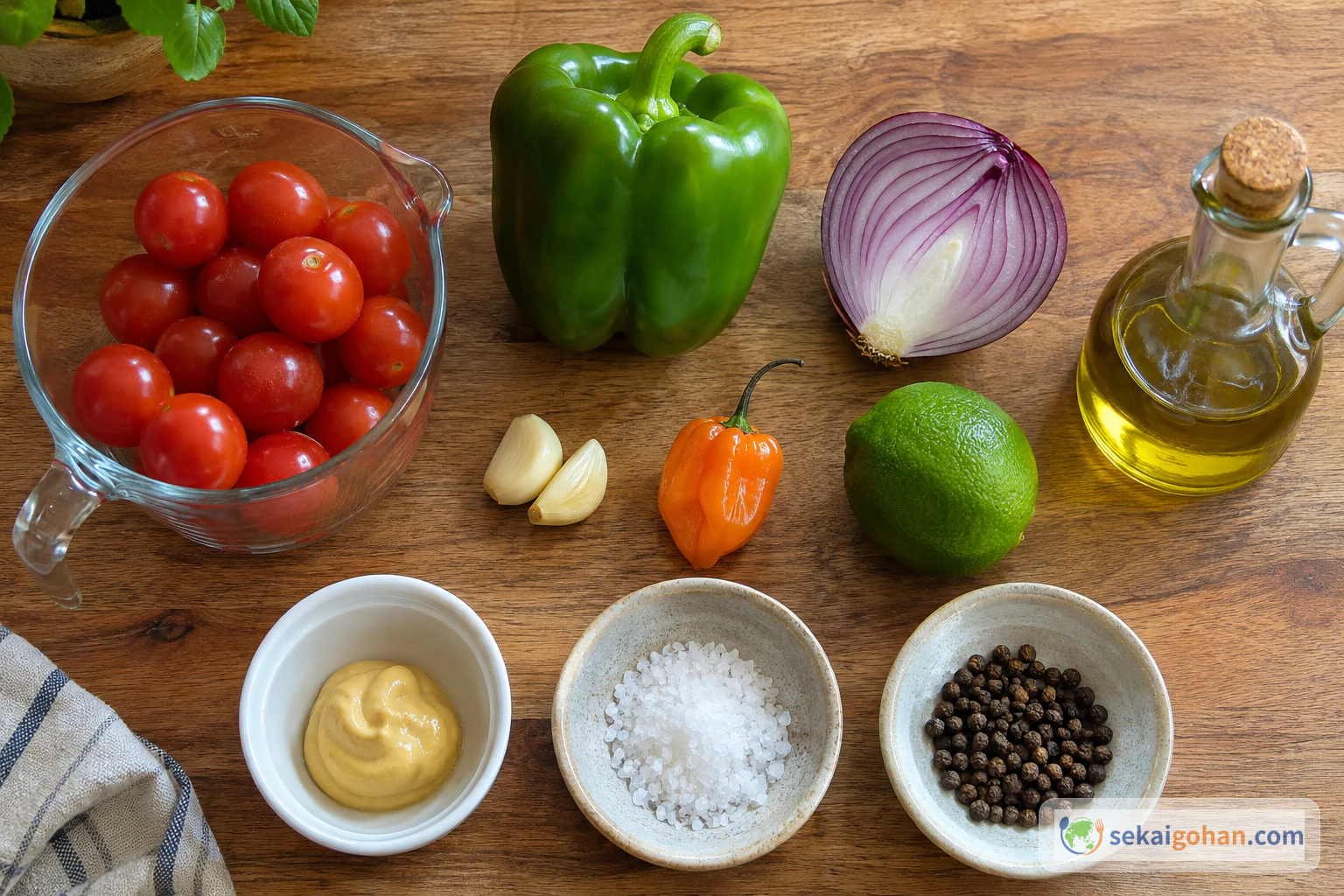
1 tsp of fine sea salt is the starting point. Salt grain size changes how salty a spoonful is, so with table salt or a coarser salt, add part of it, fold, taste, then add the rest.
The optional Dijon mustard is an allergen. Leave it out for anyone with a mustard allergy. Monyo is usually eaten with fish, so check for fish allergies when you plan the plate.
Equipment
- Cutting board and a sharp chef's knife
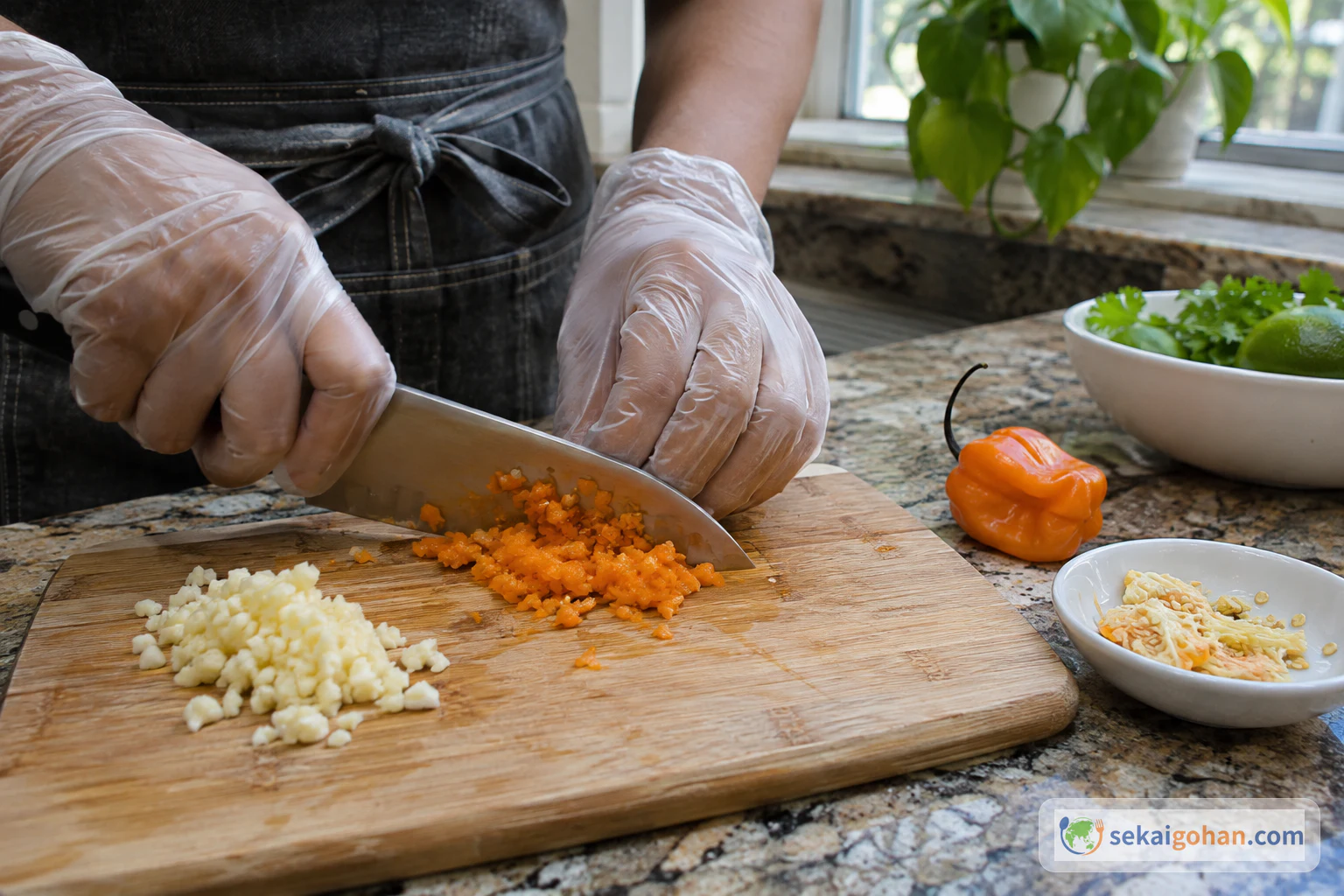
- Disposable nitrile gloves for the habanero
- Large mixing bowl
- Large spoon for folding
- Airtight glass jar or container for leftovers
Buying and swapping
The one ingredient worth seeking out is a fresh habanero or Scotch bonnet. Its fruity, fierce heat defines the sauce. A milder fresh chili such as a green chili gives a cleaner, quieter heat and less fruit. If you swap, start with a quarter of the pepper, taste, and add more a quarter at a time. The heat of different chilies is not interchangeable.
The rest swaps easily. Each change shows up in the bowl:
| Ingredient | Swap | What it changes |
|---|---|---|
| Cherry tomatoes | Regular tomatoes, diced | Juicier and softer; drain off some seeds and liquid |
| Lime juice | Lemon juice | Slightly rounder, less floral sourness |
| Extra-virgin olive oil | Plain vegetable oil | A plainer, everyday flavor without the fruity olive note |
| Dijon mustard | Leave it out | A looser sauce with oil and juice separating in the bowl |
| Red onion | Red onion soaked briefly in water | Milder bite, same crunch |
Keep raw tomato, raw onion, chili and salt and you keep the dish. Lime, olive oil and mustard are the flexible part.
Method
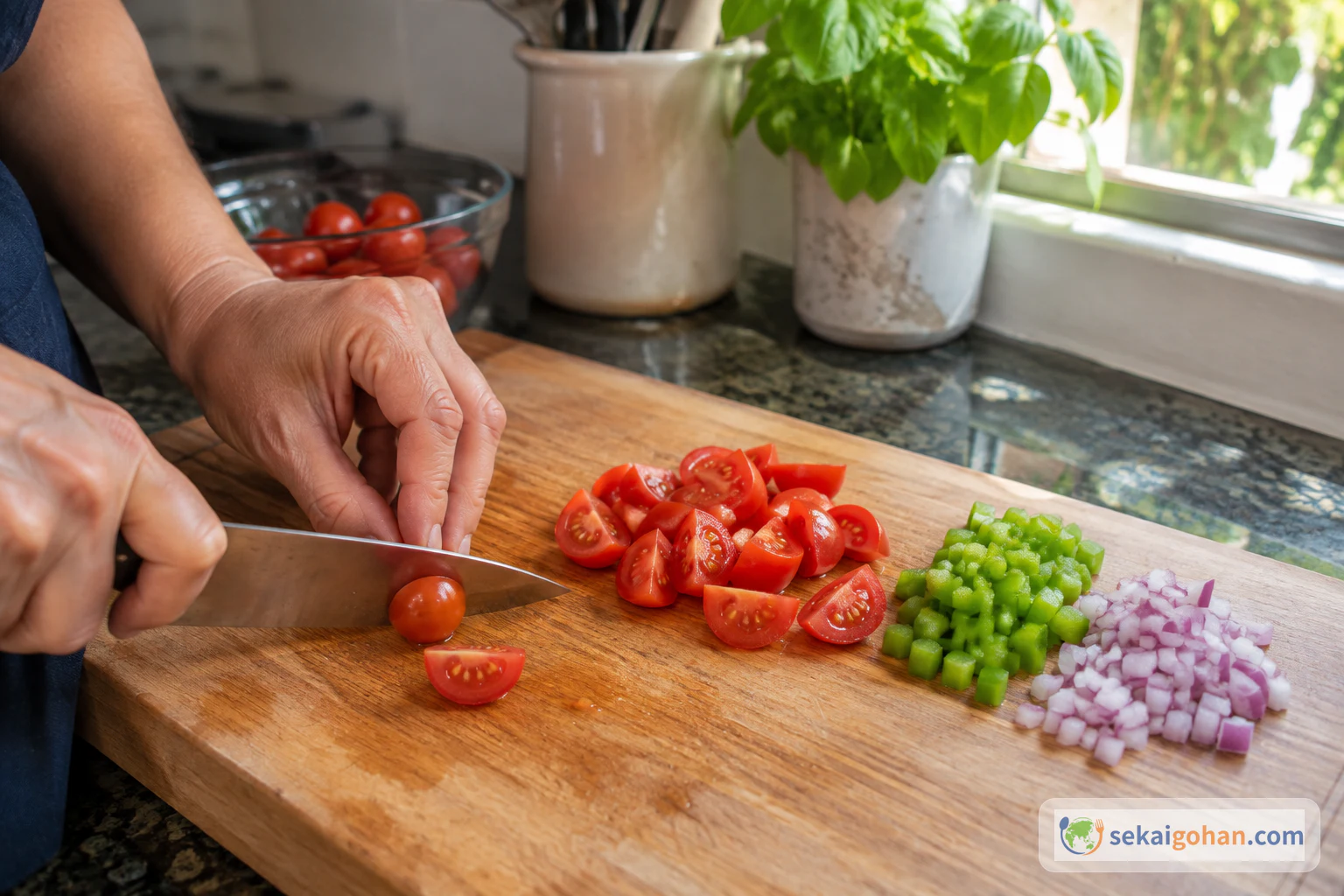
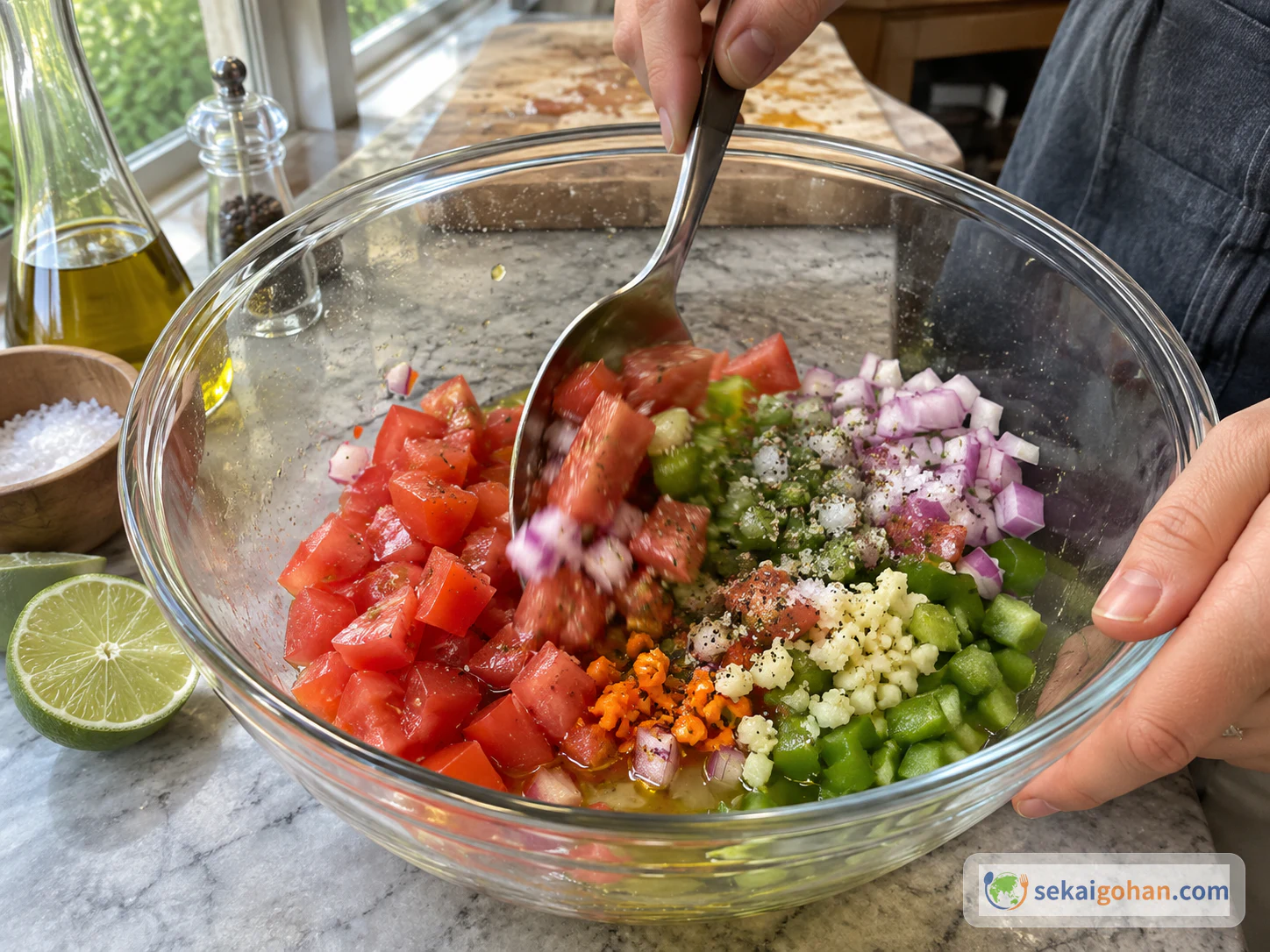
This is knife work and a bowl. Cut the tomatoes, pepper and onion first, then put on gloves for the habanero so the heat stays on the gloves and off your hands. Everything meets in the bowl at the end. Fold it close to when you will eat it, since the tomatoes keep releasing juice as the sauce stands.
Wear gloves when you cut the habanero or Scotch bonnet. Never touch your eyes or face while handling it. When you finish, take off the gloves and wash the board and knife before they touch anything else.
Scraping out the seeds and white pith decides how hot the sauce turns out. Remove them completely for steady, fruity heat. Leave a few seeds in if you want it fiercer.
When it goes wrong
| What you see | Why | What to do |
|---|---|---|
| A pool of thin pink liquid in the bowl | Very juicy tomatoes, or the sauce was mixed long before eating | Spoon off some liquid now. Next time, remove some tomato seeds and juice, and fold the sauce right before eating |
| The heat burns over everything | Seeds or pith left in, or a particularly hot pepper | Fold in more chopped tomato and bell pepper to spread the heat out |
| Raw onion tastes harsh | Red onion is strong when raw | Soak the chopped onion in water briefly, or cook it for 2–3 minutes, then cool it before mixing |
| The sauce tastes flat | Too little salt or acid | Add salt a pinch at a time and a few more drops of lime, tasting after each |
Mixing close to serving prevents most watery bowls.
Serving, variations and storage
What to eat it with
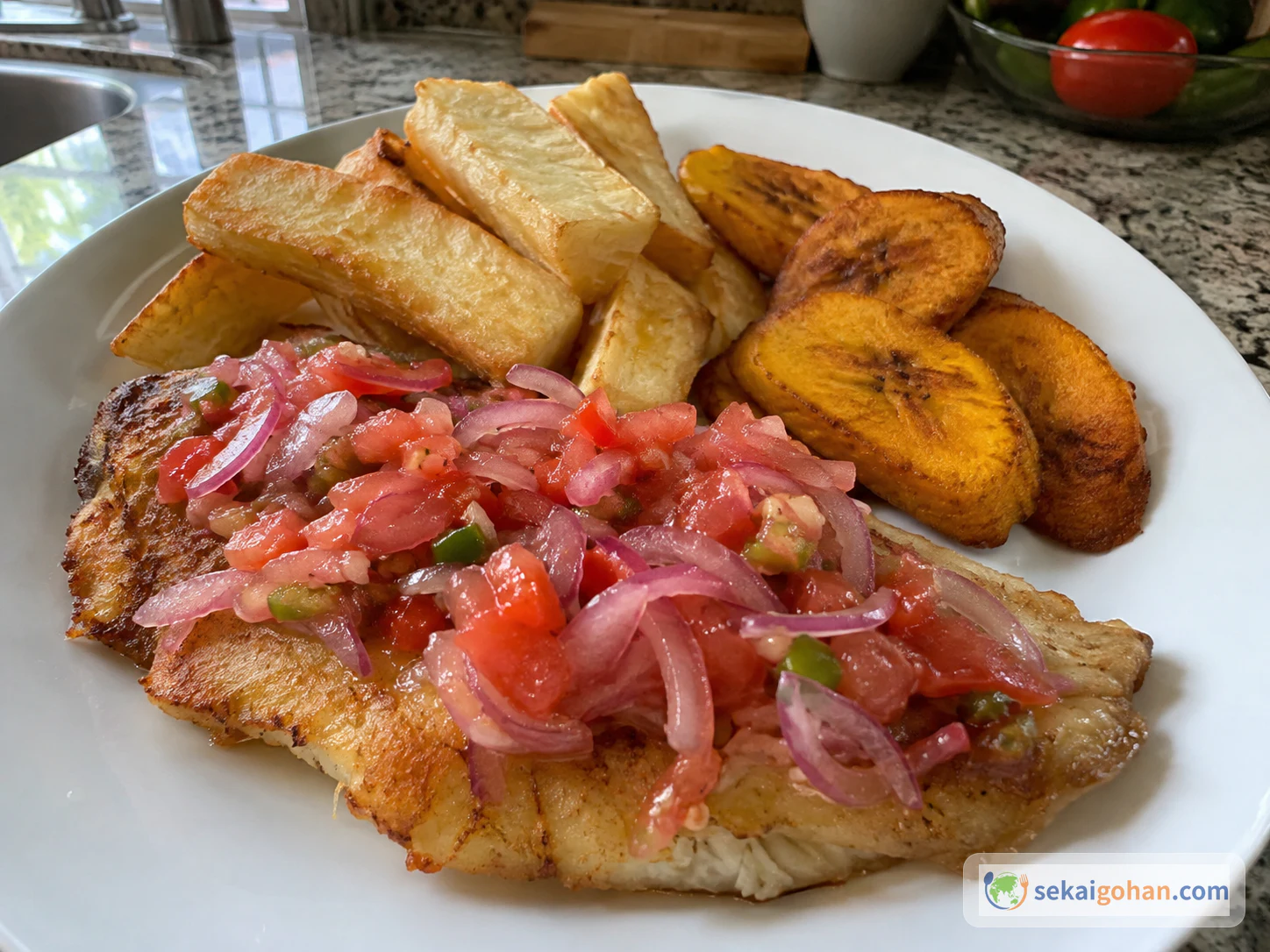
Pile monyo onto grilled or fried fish that is cooked through. The cold sauce meets the hot flesh and the crust soaks up the juice. Grilled chicken takes it just as well. Fried yam wedges and plantain slices on the side give you something to drag through the sauce. Serve it only with cooked fish, never raw.
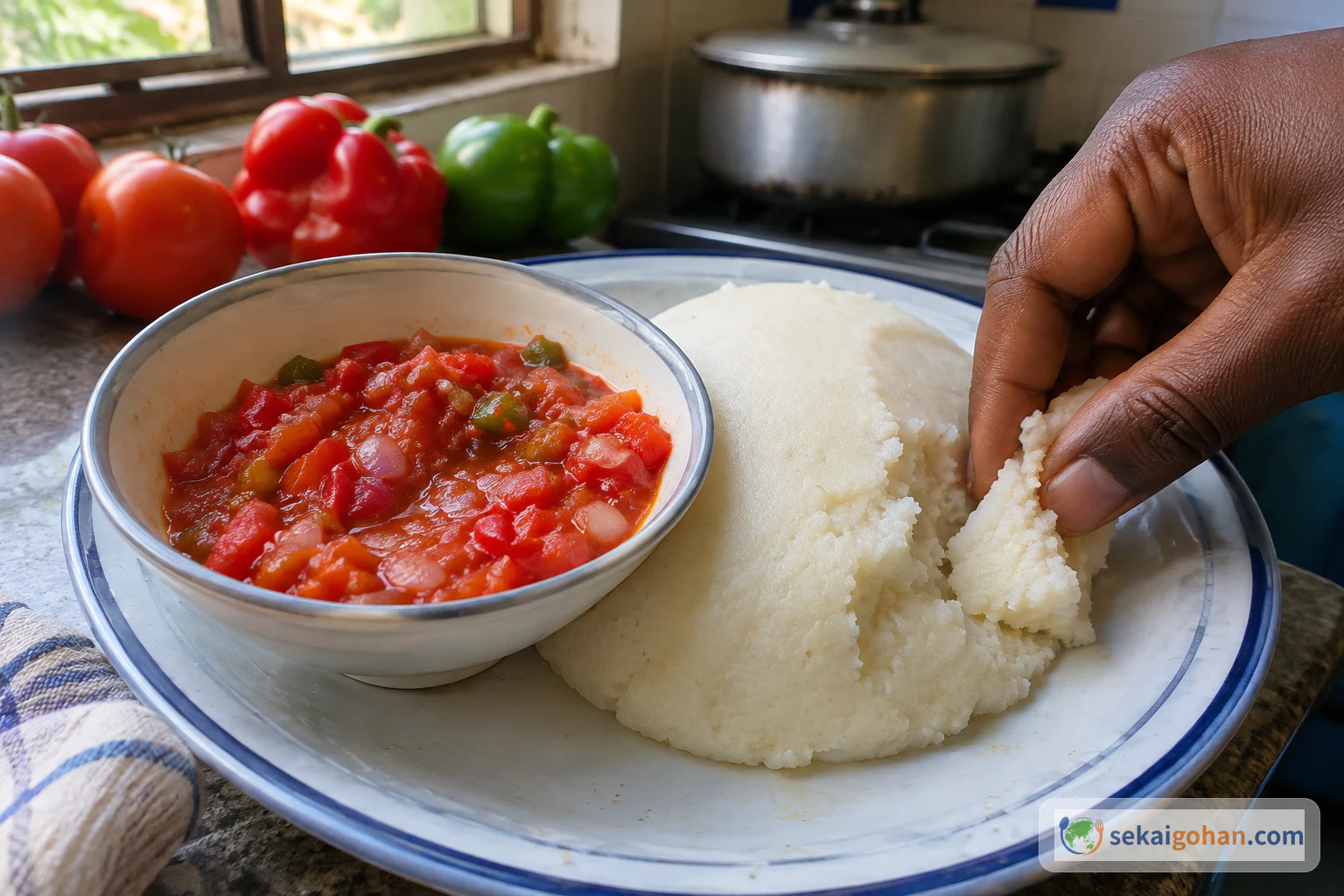
With a smooth mound of corn porridge, pâte rouge or attiéké, monyo becomes the bright part of a plain plate. Set the bowl in the middle so everyone takes as much as they like.
Variations
- Cooked monyo. Fry the onion in oil with salt, add chopped tomato and cook it briefly. The sauce turns softer and sweeter, and it is a classic match for pâte rouge.
- Gentler onion. Cook only the onion for 2–3 minutes and let it cool before folding it in. The bite softens and the rest of the sauce stays raw and crisp.
- A splash of tomato juice. Add tomato juice to taste for a looser, more pourable sauce that spreads easily over fish.
- Smoked fish and hot oil. On coastal Fon tables around Cotonou and Ouidah, a sharper monyo is made from red onion, habanero and flaked smoked fish, with hot oil poured over the top. It is eaten with fried fish and corn porridge. This version is a smoky, intense relish, a different thing from the fresh tomato sauce.
Storage
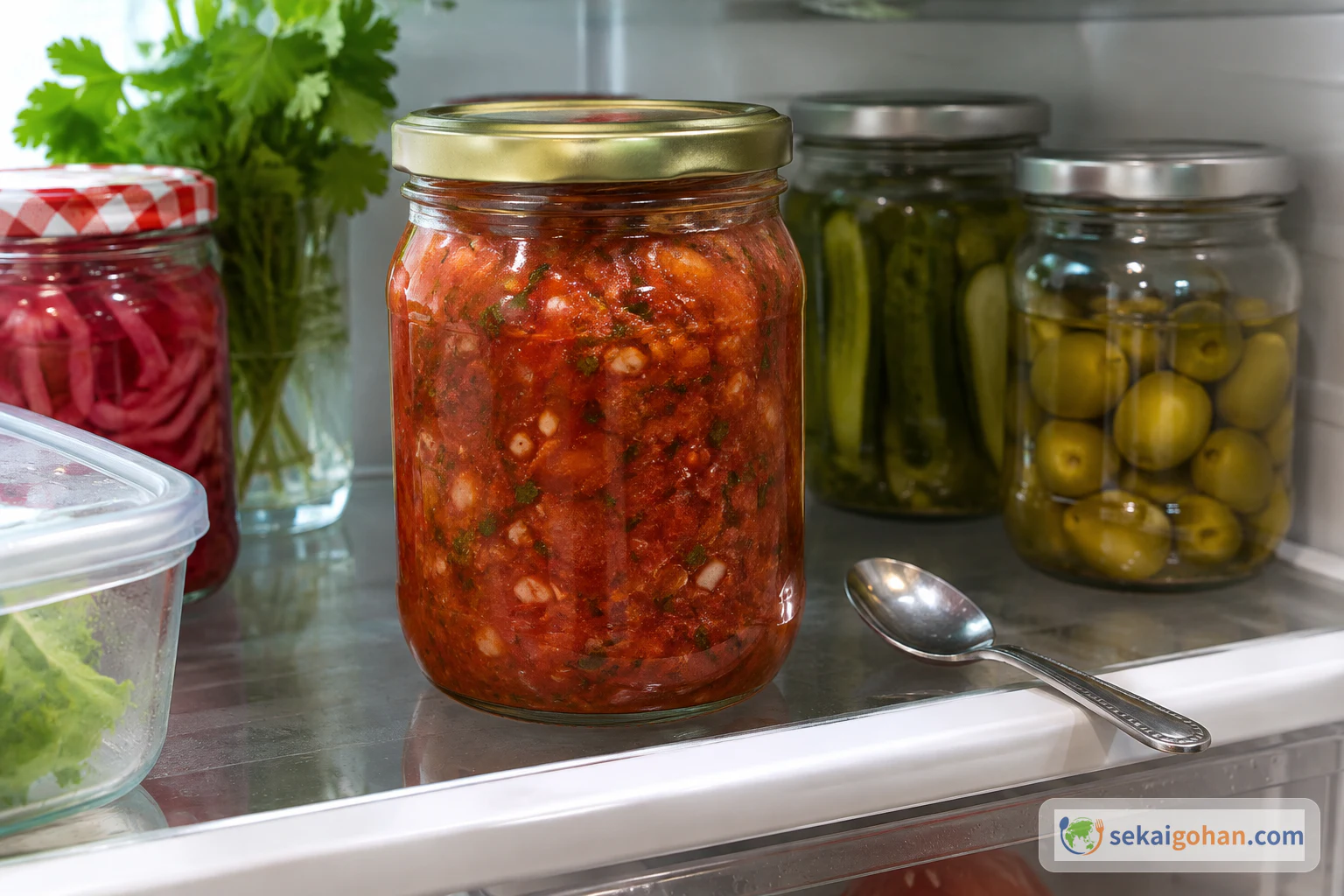
Refrigerate monyo promptly after making it rather than leaving it out at room temperature. Keep it in an airtight jar or container in the refrigerator for up to 3 days.
Frequently asked questions
Which fish works best?
Any fish you grill or fry until cooked through. White fish fillets and whole grilled fish are the classic pairing. Blackened salmon is also a good match, since the spiced crust stands up to the raw heat.
How do I make it for children or someone who avoids heat?
Leave out the habanero, or use just a small piece with every seed and all the pith removed. For people who find raw onion and garlic hard to eat, the cooked version is the gentler choice. You can also put the chili in a small dish at the table so each person adds their own.
Can I use it as a dip?
Yes. Set out a bowl beside fried plantain or yam and scoop it up. It also works spooned over a finished plate as a last-minute topping.
What does the mustard do?
It helps the oil and lime juice hold together, so the sauce coats each piece instead of separating in the bowl. It also adds a little sharpness. Without it the sauce is looser and the dressing settles at the bottom, which some people prefer.