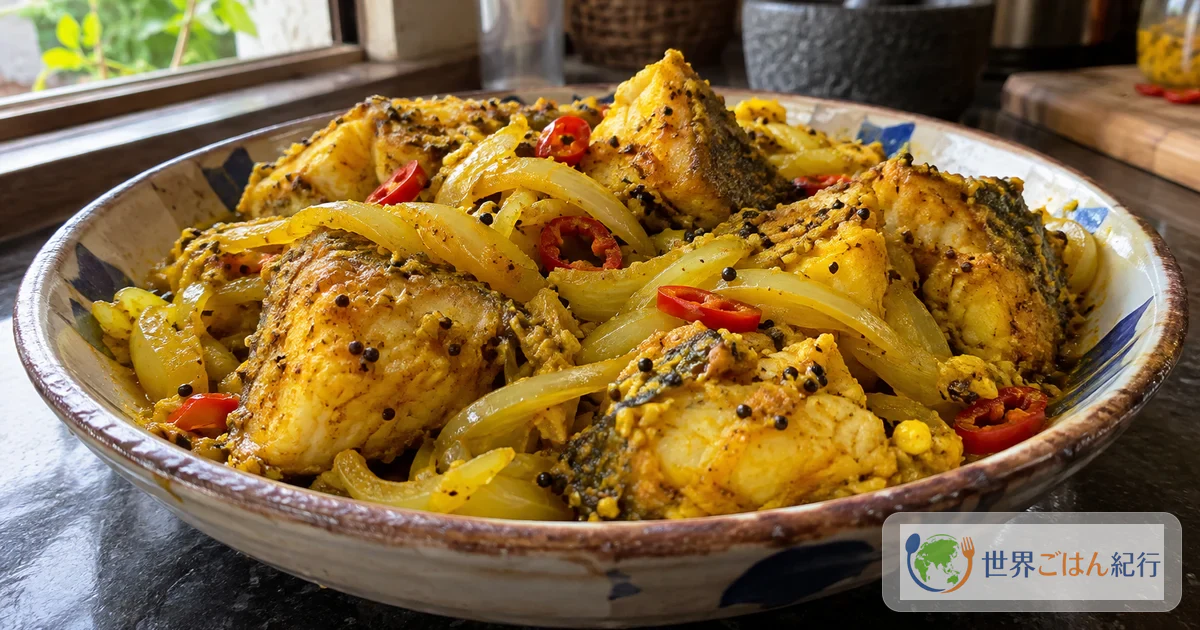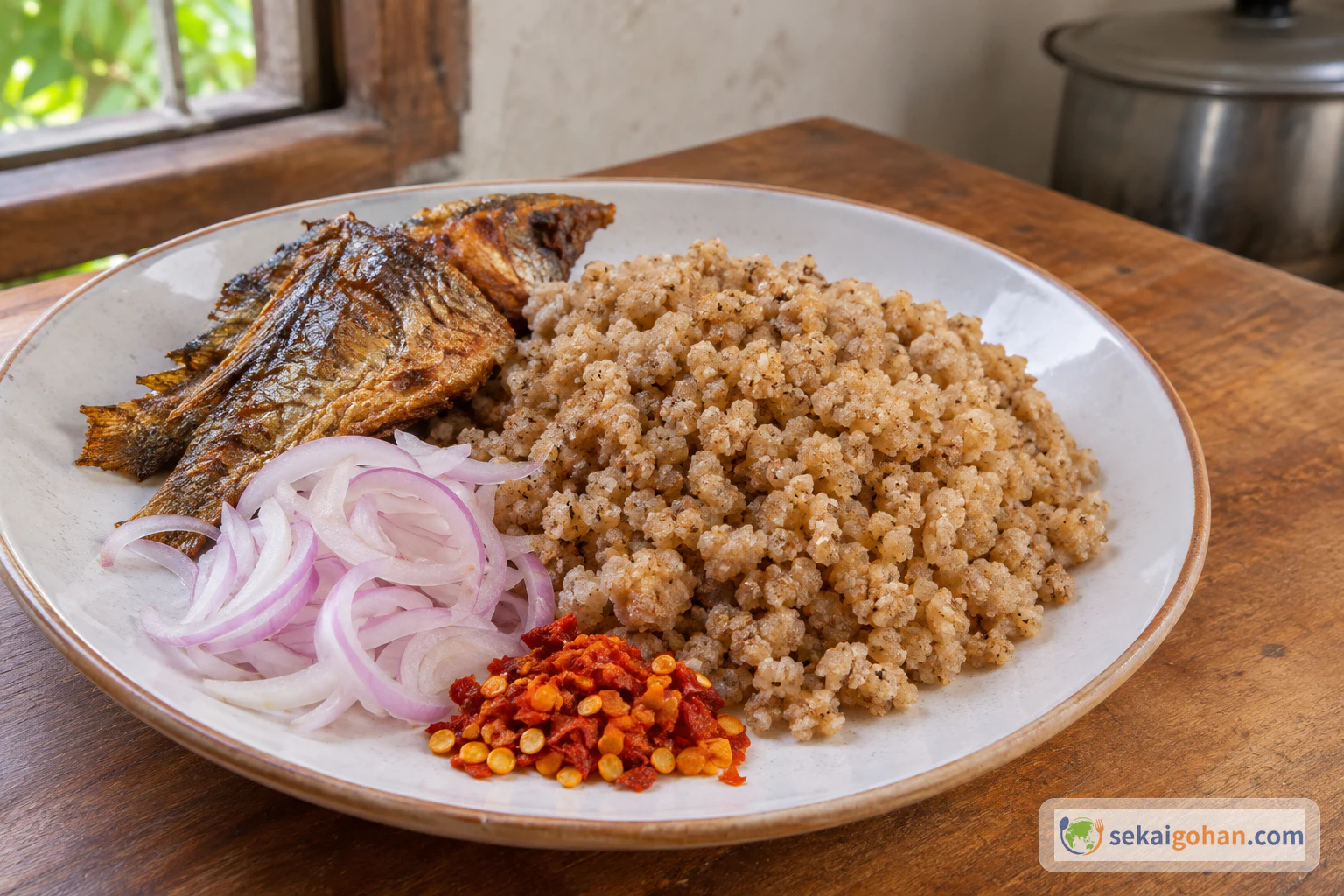
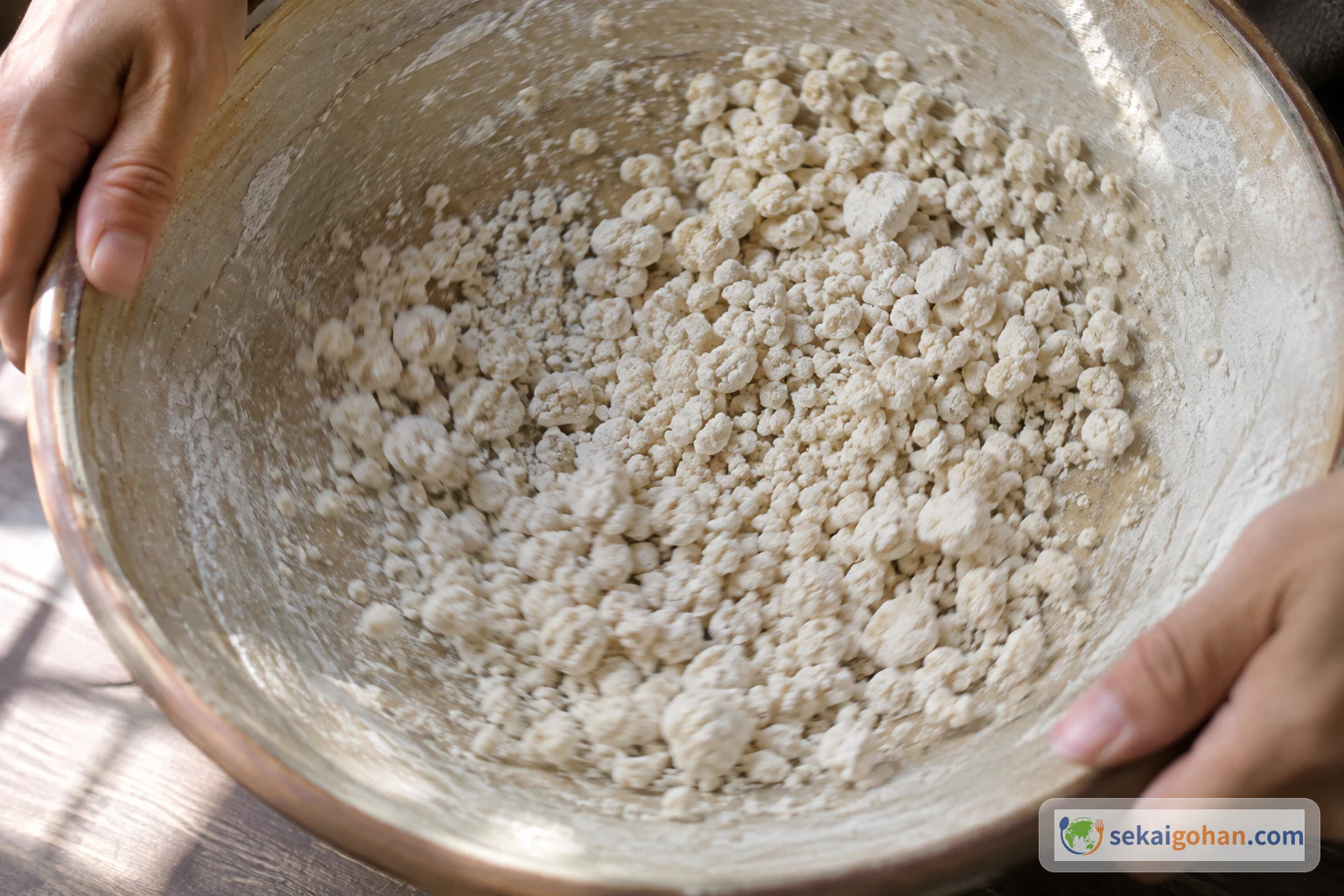
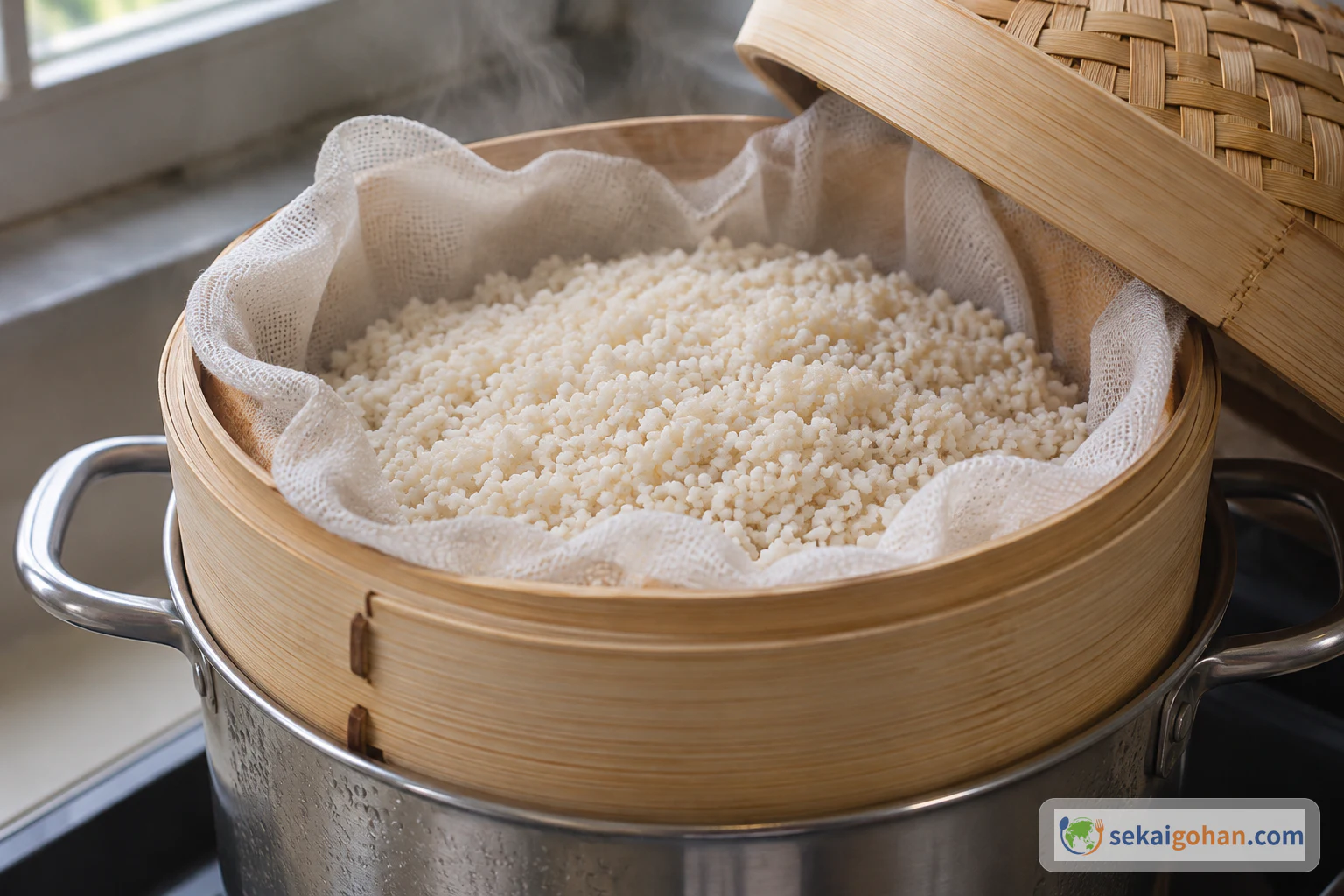
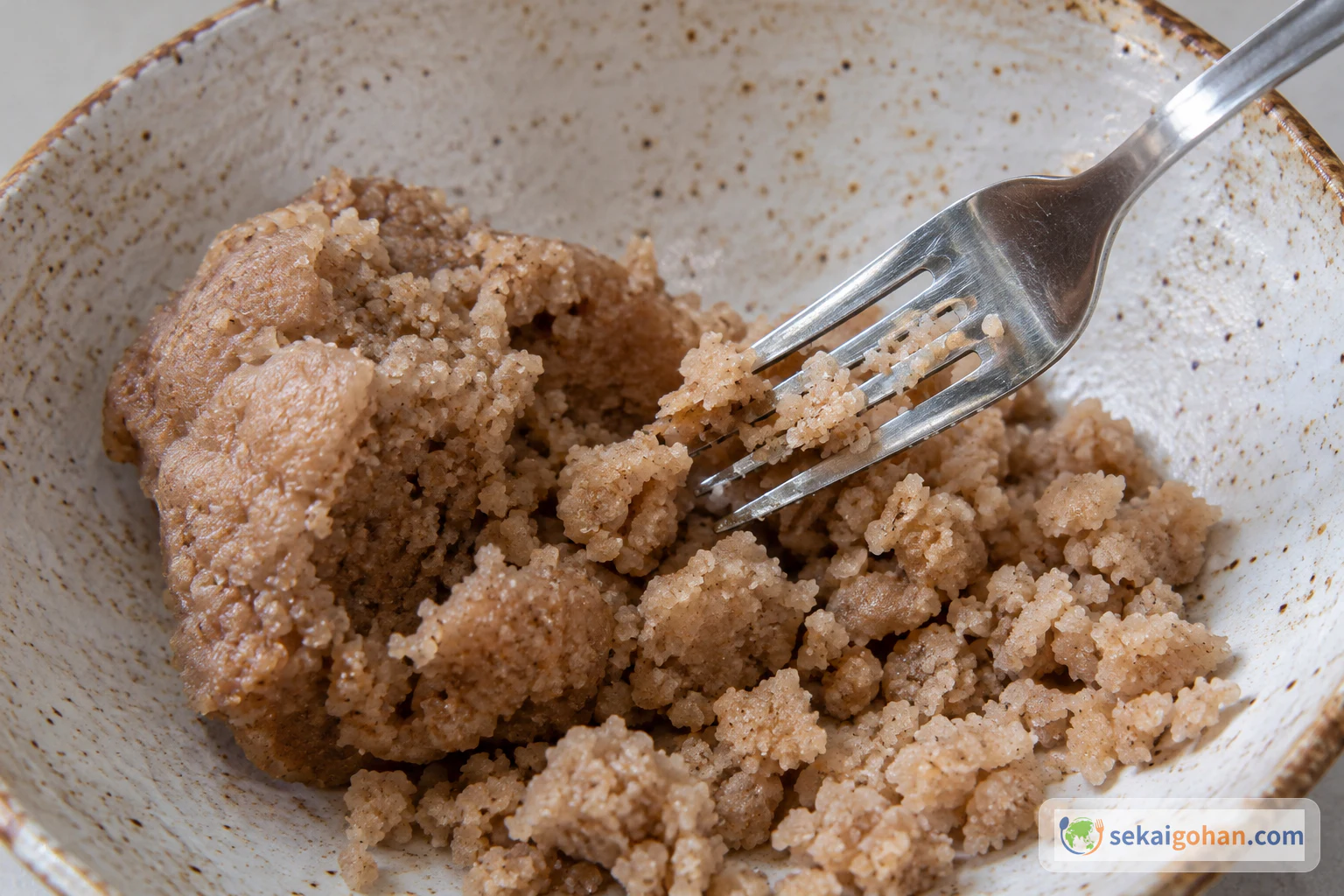
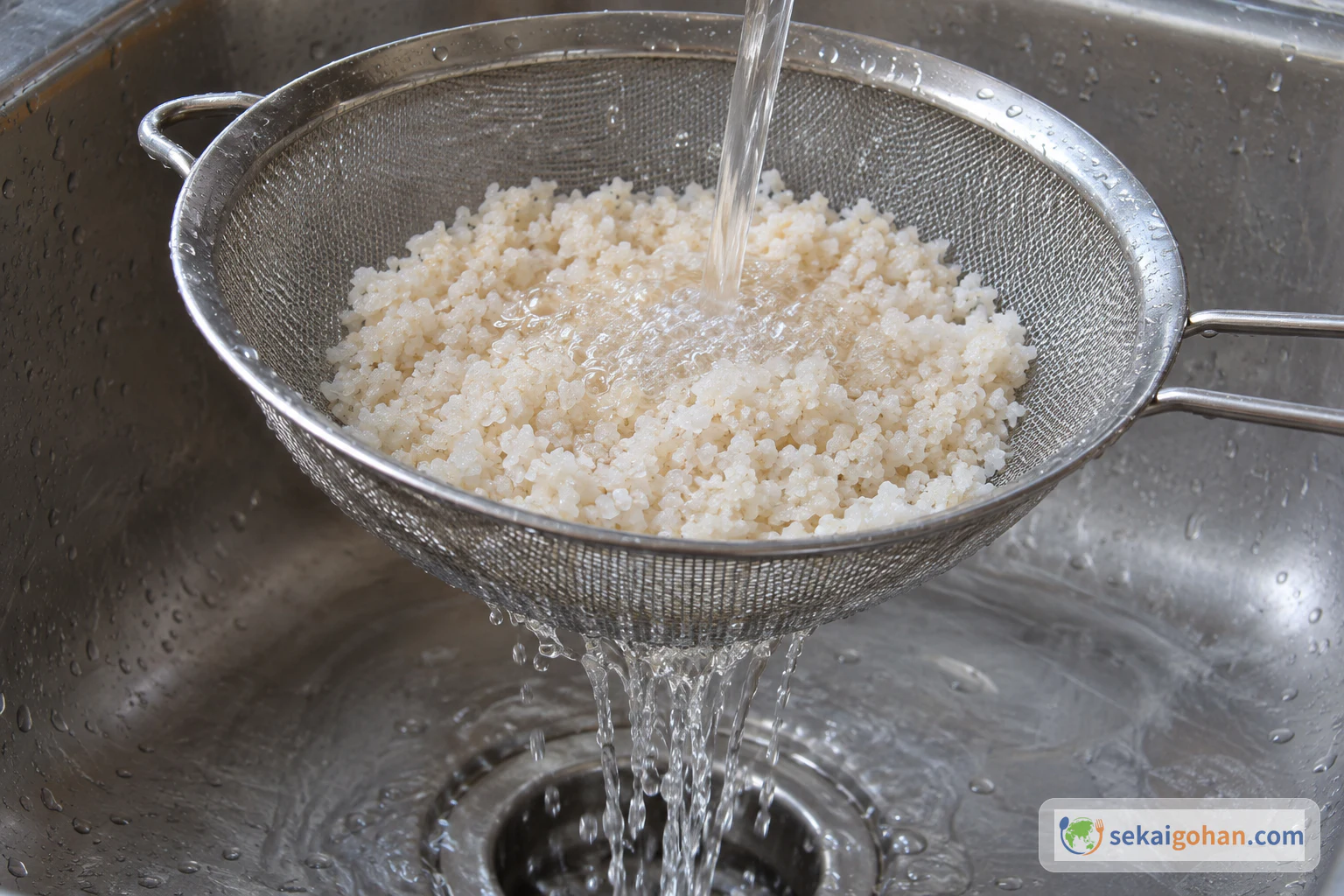
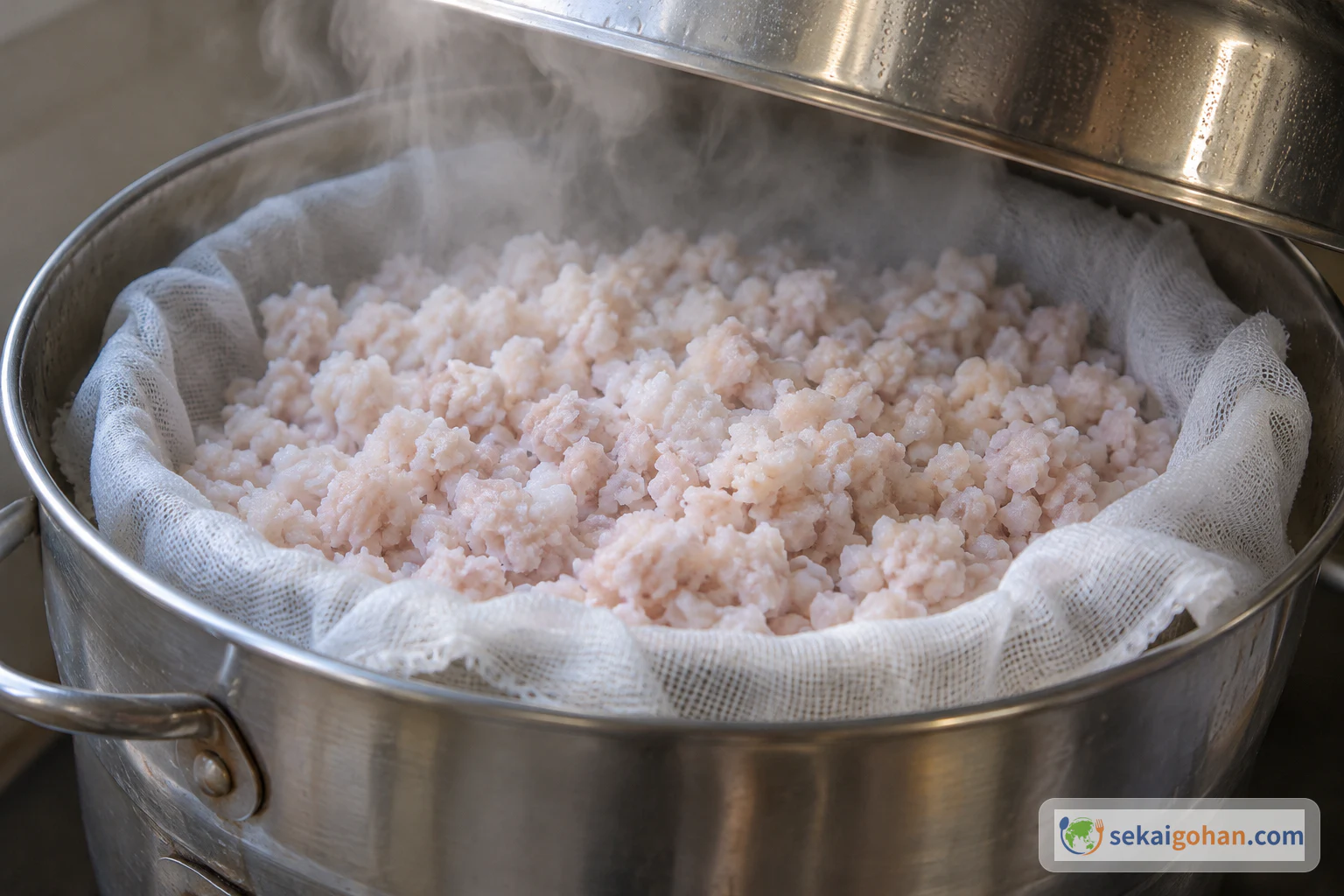
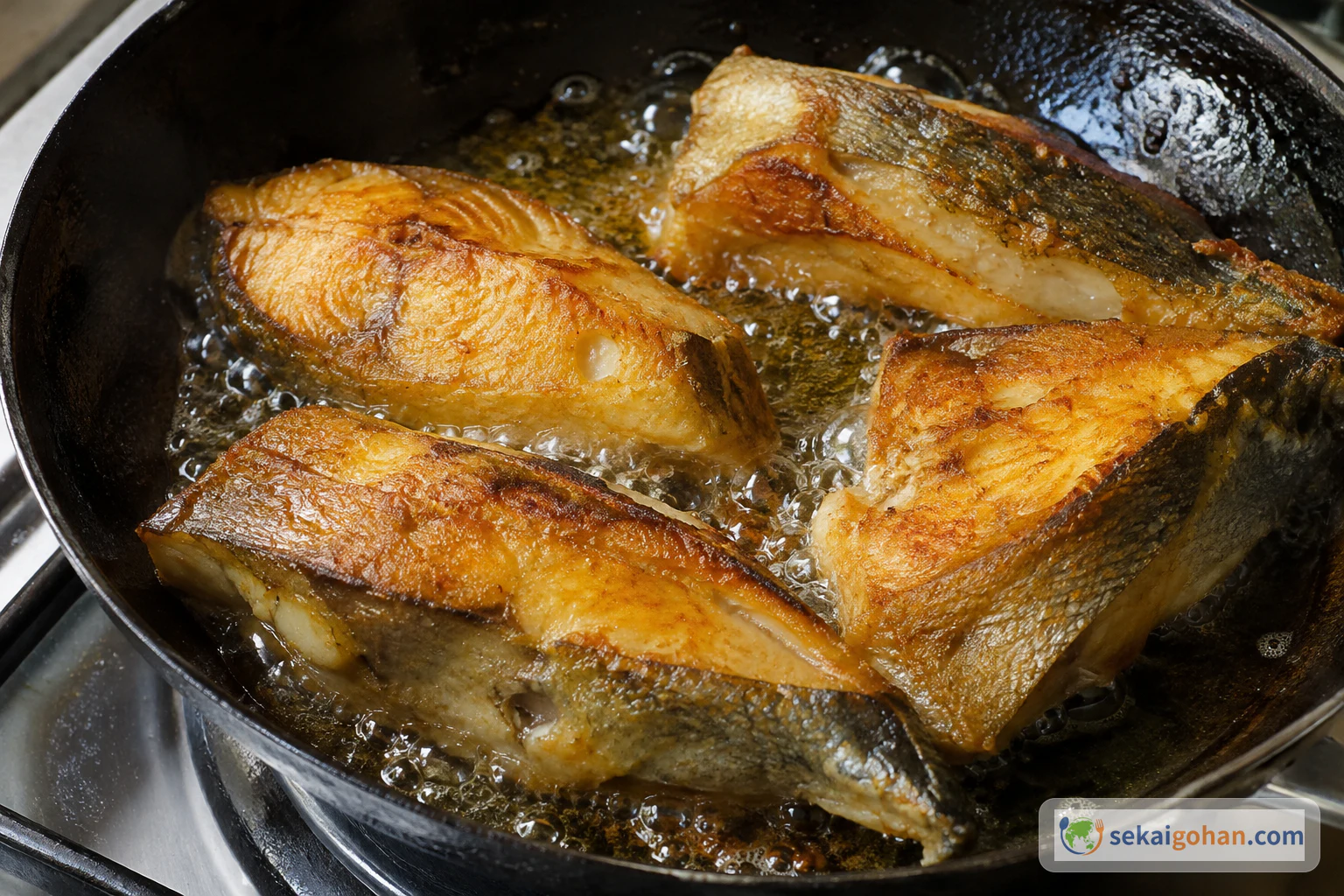
The lid comes off the steamer and a cloud lifts from a bed of small beige-brown granules, pressed together into soft clumps by the steam. A fork goes in, the clumps give way, and the grains fall loose again. This is wassa-wassa, the yam couscous of Benin. It is made from the flour of dried yam chips, rolled by hand into granules, then steamed, rinsed and steamed a second time. In the north and centre of the country it is an afternoon snack. Soft, separate grains with the deep flavour of dried yam go on the plate with hot fried fish, sharp raw onion and crushed chili.
Yam Turned into Grain: Wassa-Wassa in Northern Benin
Everything starts with the yam. It is peeled, cut and dried into chips called cossettes, and the chips are ground into a pale tan flour. Yam matters in West Africa well beyond the kitchen: it is a crop bound up with communion with the ancestors. Wassa-wassa is one of the ways Benin turns that dried yam into something to eat. It is eaten most in the north, where most of the 30 northern consumers questioned in one study said they eat it twice a week or more.
Where it was first made is not settled. Its origin is usually placed in northern Benin, often around Parakou, and it is often linked with celebrations such as weddings and baptisms. On ordinary days it belongs to the afternoon, when people stop for something filling between meals.
The work is what sets it apart. Rolling damp flour into granules is slow, patient handwork, and a full batch made from a kilo of flour takes about three hours from bowl to plate. Street stalls sell it ready to eat, and ready-cooked dried wassa-wassa is sold too, for cooks who want the grain without the rolling.
In the north the same dried yam chips also go into stiff pastes, made alongside maize, millet and sorghum pastes and eaten with okra sauce. Wassa-wassa takes the yam the other way: loose grains instead of a smooth mass. It differs just as much from eba, the cassava-flour paste, and from amiwo, Benin's red maize porridge. For more of the country's table, see our Benin page.
In Benin, couscous made from yam is called wassa-wassa, also spelled wassa wassa. The name has nothing to do with Ouassa, a place in the Péhunco area of northern Benin that sounds similar.
Ingredients
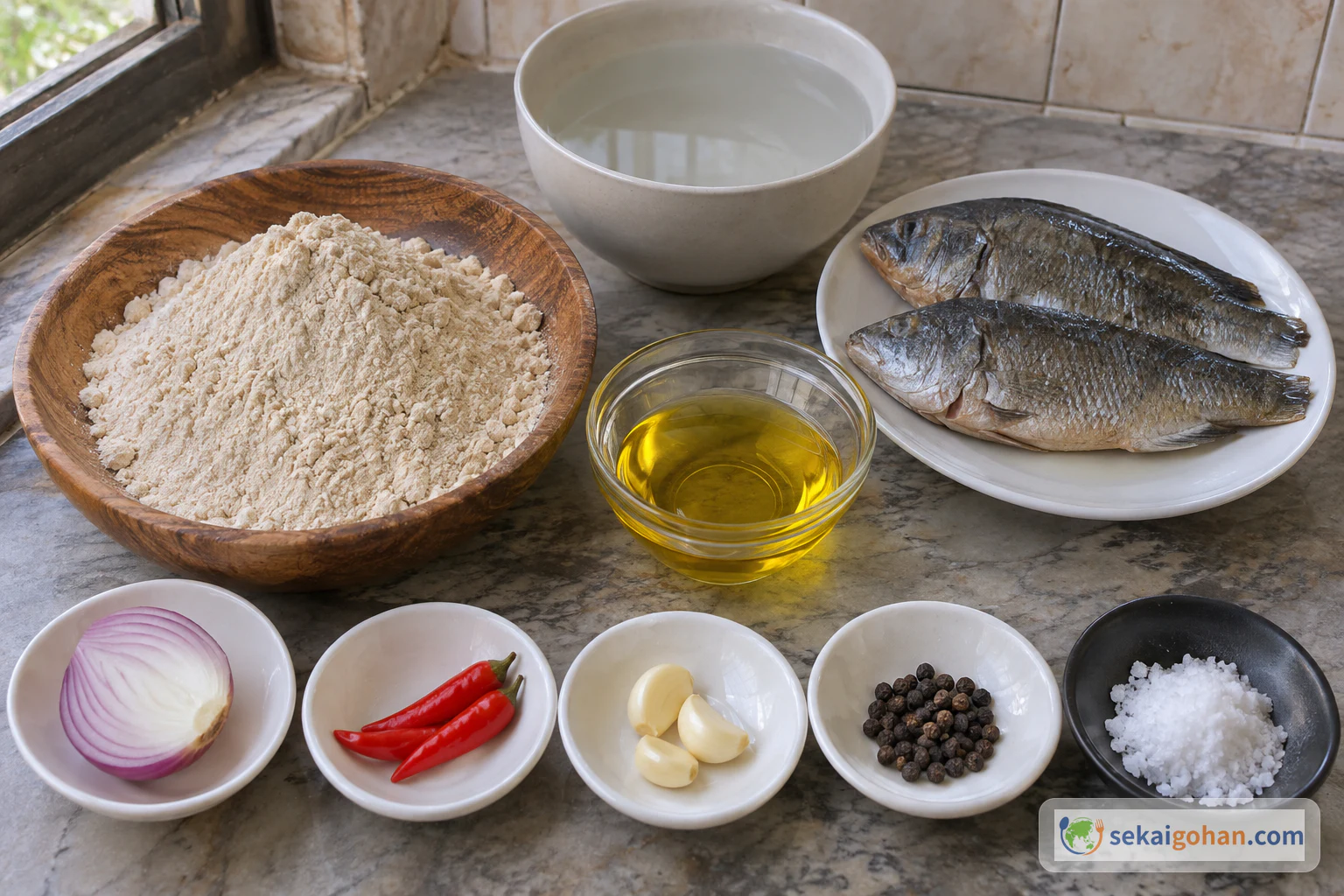
This dish contains fish and peanut oil (peanut). Tell your guests before serving.
Equipment
- A large bowl, preferably wide and shallow, for mixing and rolling
- A steamer basket that sits over a pot with a lid
- A fine cloth to line the steamer, so the granules can't fall through
- A fork
- A fine-mesh strainer
- A skillet
- A knife and cutting board
Choosing Yam Flour and What Can Change
Look for the flour in African grocery shops or online, sold as yam flour or elubo. It is pale tan and fine, ground from yam chips that were dried before milling. In Benin most chips are dried straight after cutting, some are soaked first and a smaller share are treated with additives. Kokoro is the yam variety used most often. Any good yam chip flour works for this recipe.
The flour is the one ingredient you can't swap. Wheat couscous, semolina, cassava flour and Japanese yam powders such as nagaimo flour each give a different dish, with a different grain, colour and flavour. If you can't find yam chip flour, ready-cooked dried wassa-wassa, where you can find it, keeps the dish intact. Prepare it according to its pack.
| Keep for the taste of Benin | Free to change |
|---|---|
| Dried yam chip flour | The kind of fish, and whether it is whole or in pieces |
| Two steamings with a rinse in between | Sliced onion or grated onion |
| Fried fish, onion and chili on the plate | How much chili goes on |
Method
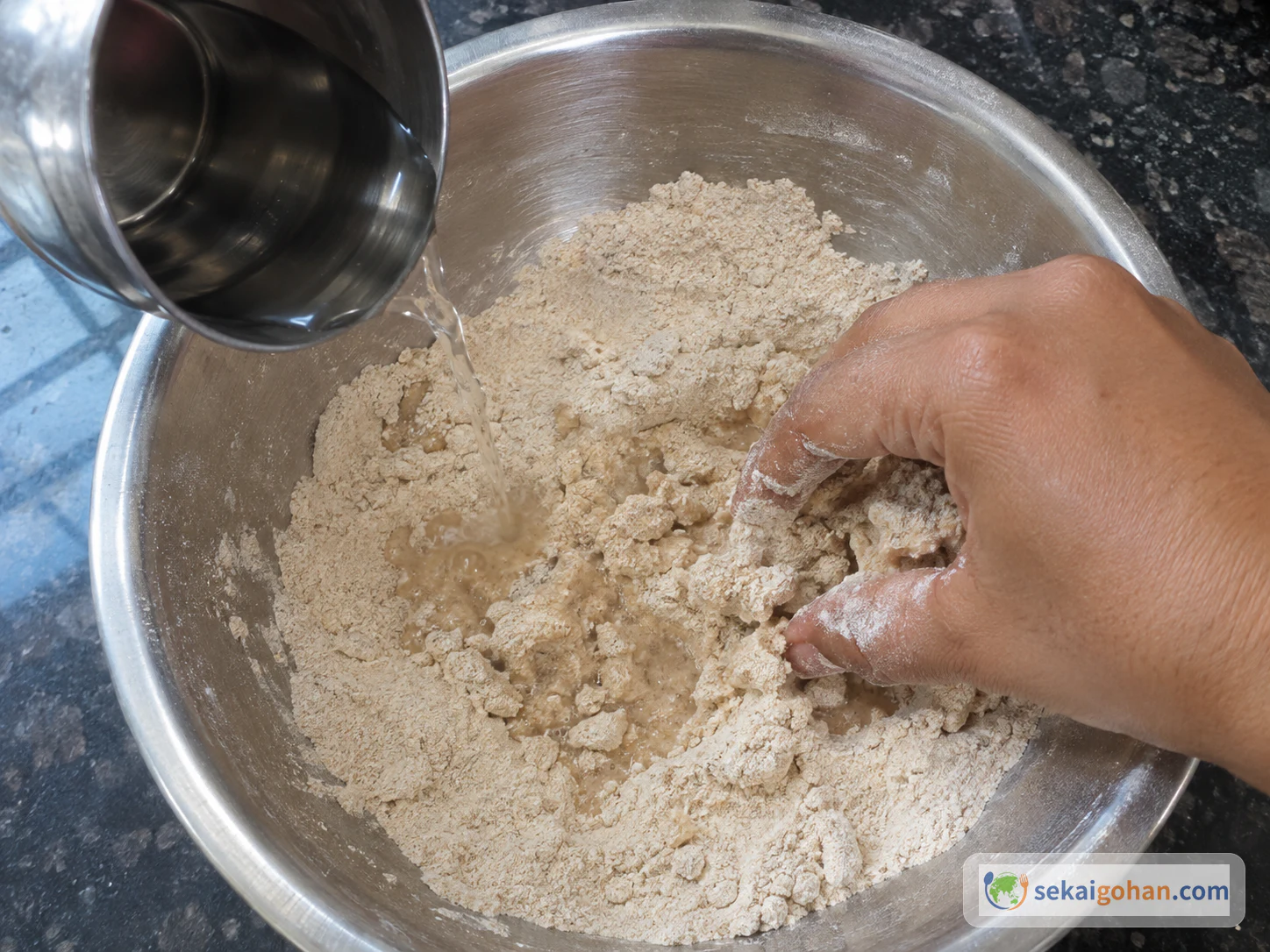
The flour and your hands do the first part of the work. Mixing and rolling come first and take the longest, so give the rolling your full attention and have the steamer ready before you start. The two steamings are hands-off. Fry the fish and slice the onion during the second steaming, so that everything reaches the plate hot together.
Lift steamer lids away from your face, because the steam rising off the granules burns. Lay the fish into the hot oil moving away from you. Never eat the flour or the granules before they have been steamed, and make sure they are steaming hot all the way through after each steaming.
When It Goes Wrong
| What you see | Why | What to do |
|---|---|---|
| The flour turns to a sticky paste | Too much water went in at once | Work in a little dry flour until it breaks back into crumbs, then add water in smaller splashes |
| The flour stays powdery and won't gather | Too little water | Sprinkle a few more drops and keep rolling |
| Granules fall into the pot | The steamer was lined with no cloth or a coarse one | Line the basket with a fine cloth |
| The grains come out of the steamer as one solid cake | They were packed down or spread too thickly | Break them up with a fork while hot, and spread them loosely next time |
| Grains wash through the strainer | The mesh is too coarse | Rinse in a fine-mesh strainer |
| The finished grains taste bitter | The rinse was too short | Rinse thoroughly between the two steamings, turning the grains so all of them get washed |
Serving and Variations
At the table
Wassa-wassa comes to the table hot, as a full plate: grains, fried fish, raw onion and crushed chili. Each mouthful mixes the soft yam with flaked fish, and the onion and chili cut through the starch. It is an afternoon snack.
Variations
- Grated onion. Grate the onion instead of slicing it, so its juice runs into the grains. The plate gets wetter and the onion's sharpness reaches every bite.
- Choice of fish. Any fish works. Small fish fried whole give crisp edges. Thick pieces give more flaky flesh to mix into the grains and take longer to cook through.
- Ready-cooked grains. Ready-cooked dried wassa-wassa skips the rolling. Prepare it according to its pack and spend your time on the fish and the onion and chili.
Frequently asked questions
Is the flour or the dough fermented?
No. The flour and water are mixed and rolled, and the granules are steamed. No fermentation step is part of this dish.
Can I make the full-size batch?
Yes. The full batch uses 2 lb 3 oz (1 kg) of yam chip flour, about 1 cup of water added a little at a time, 3 tbsp of peanut oil, 2¼–4½ lb (1–2 kg) of fish and 2 onions, with chili, garlic, black pepper and salt to taste. The full batch takes about three hours from bowl to plate.
Is wassa-wassa the same as North African couscous?
No. North African couscous is made from wheat. Wassa-wassa is made from dried yam chip flour, and it is rinsed between two steamings.