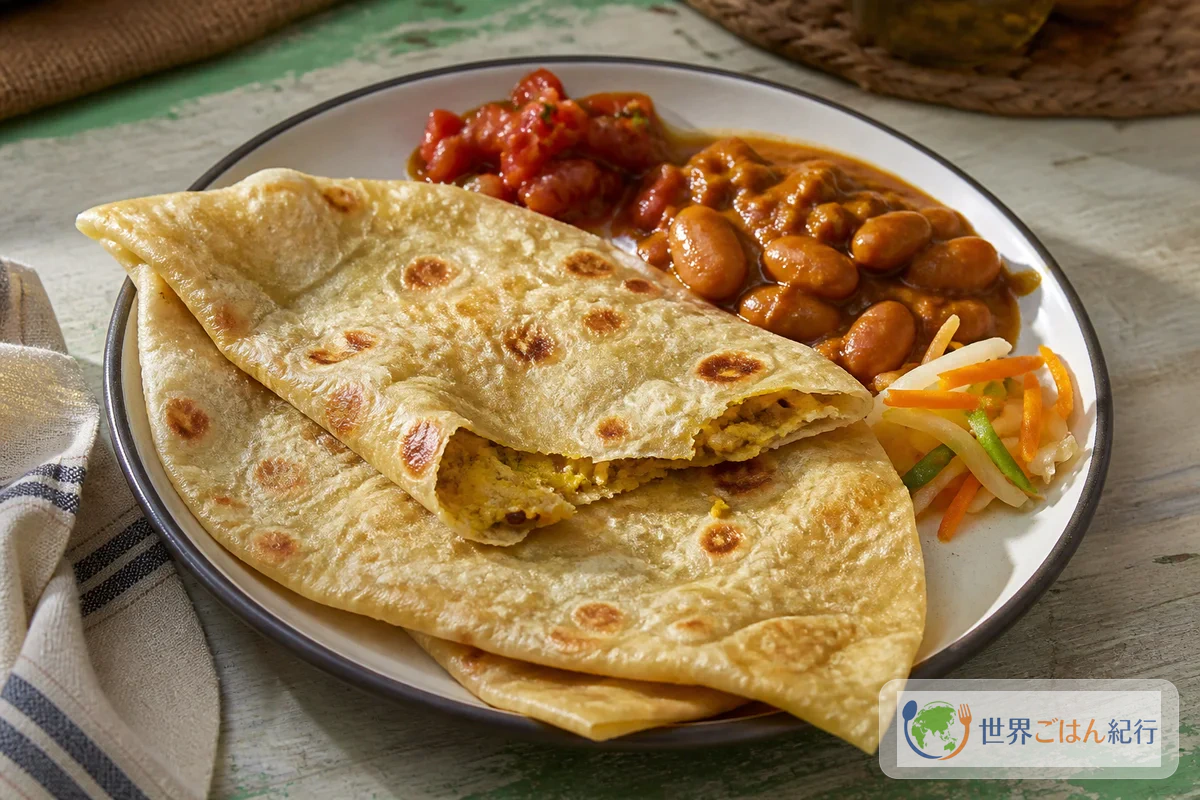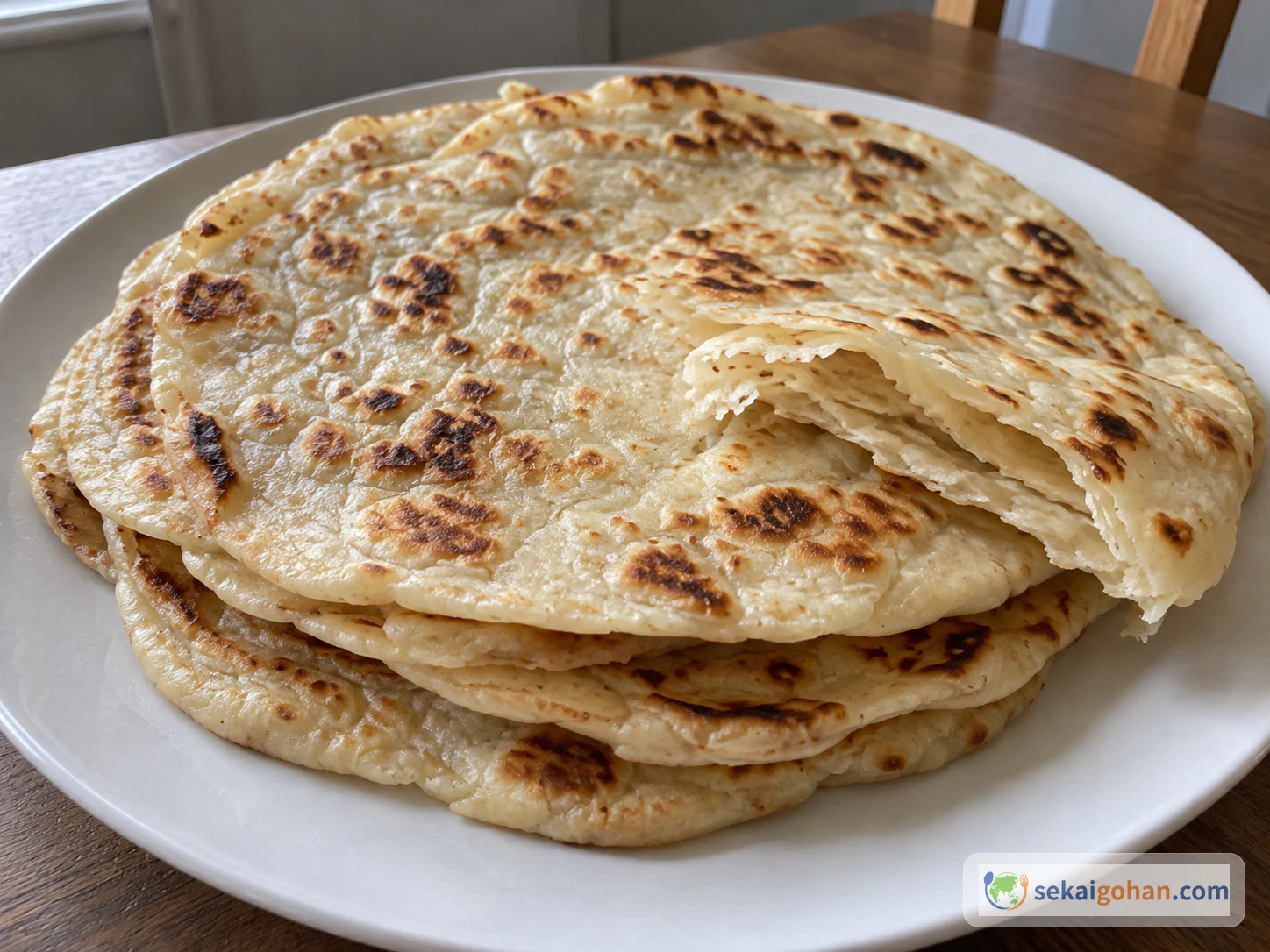
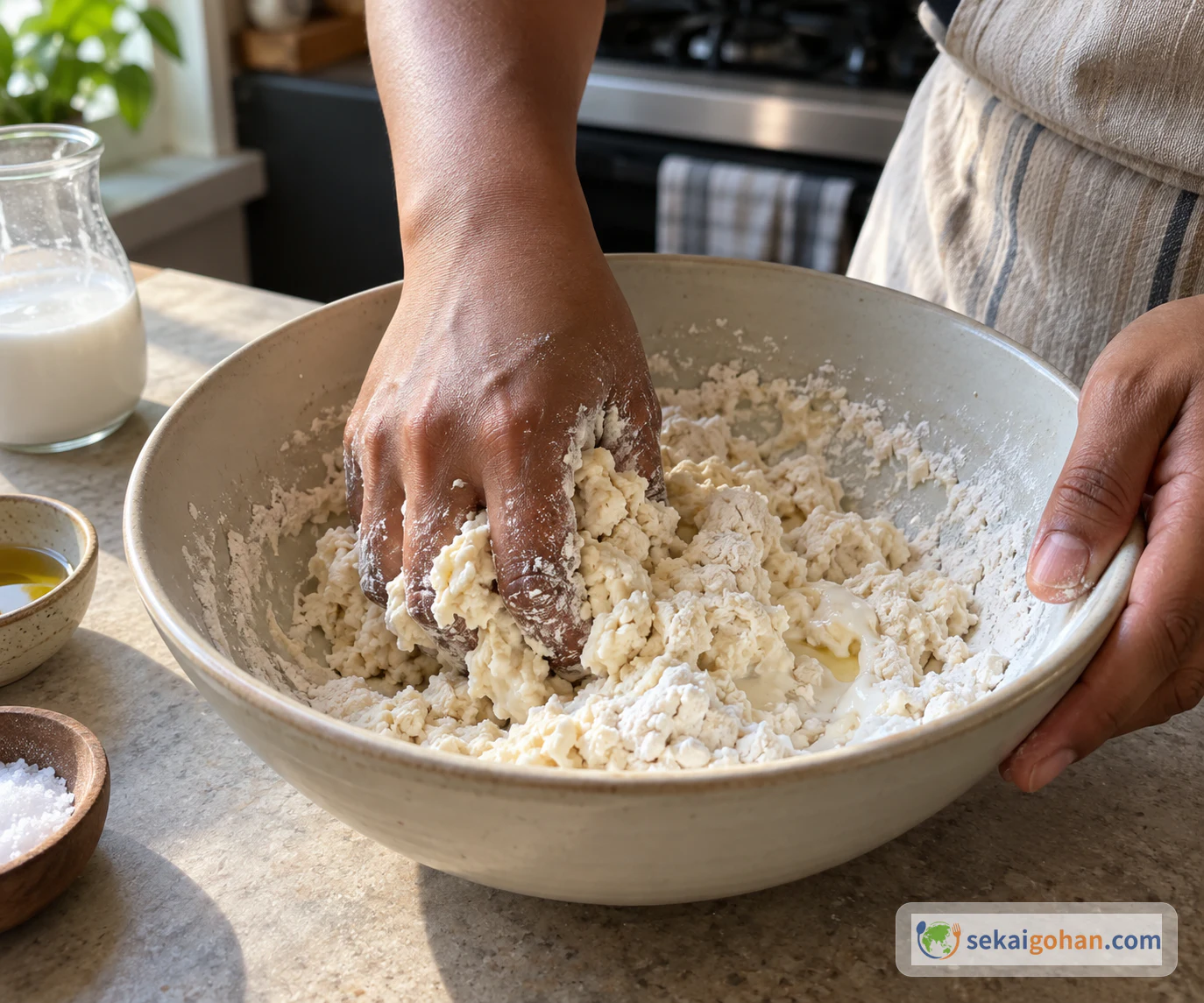
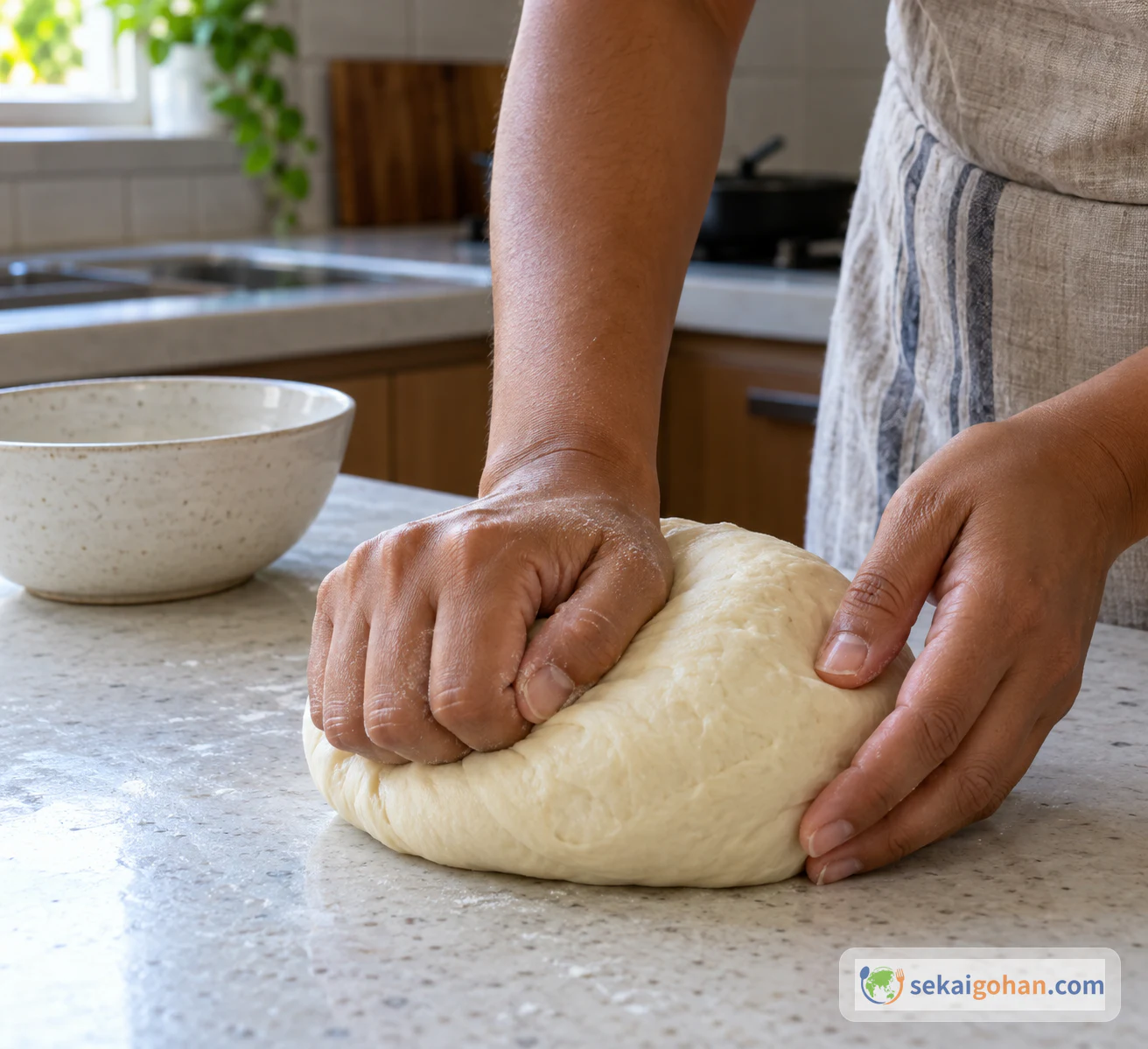
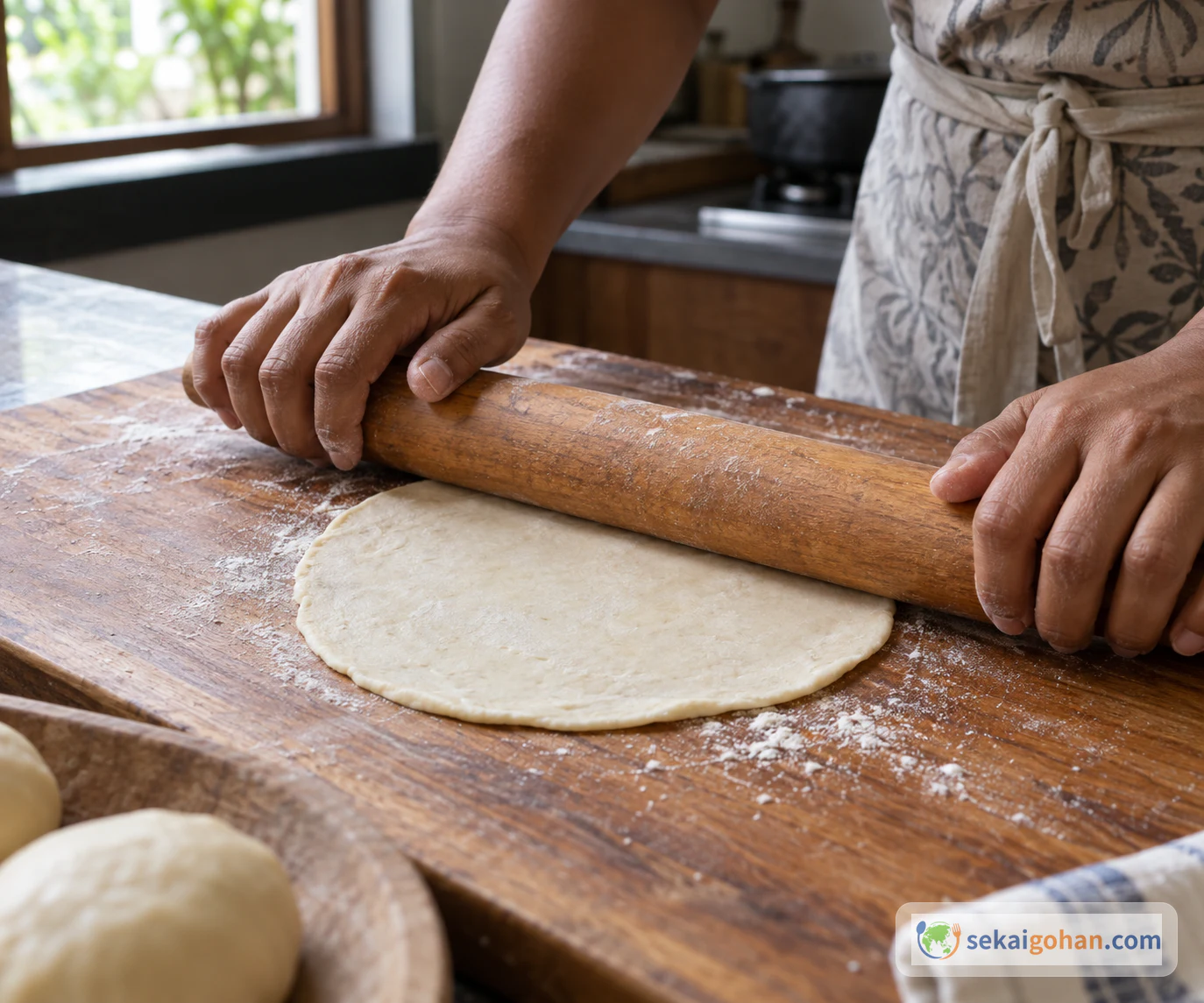
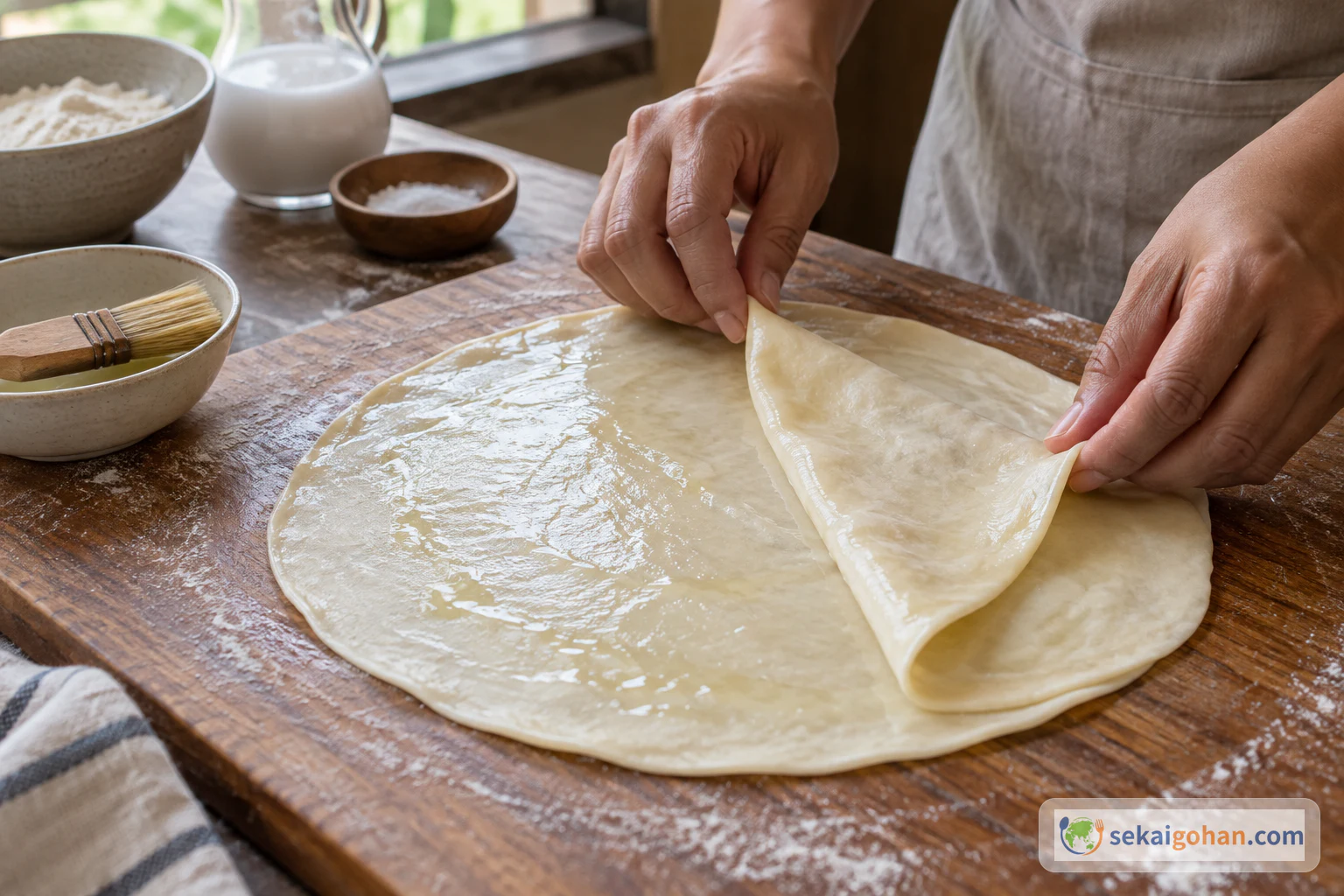
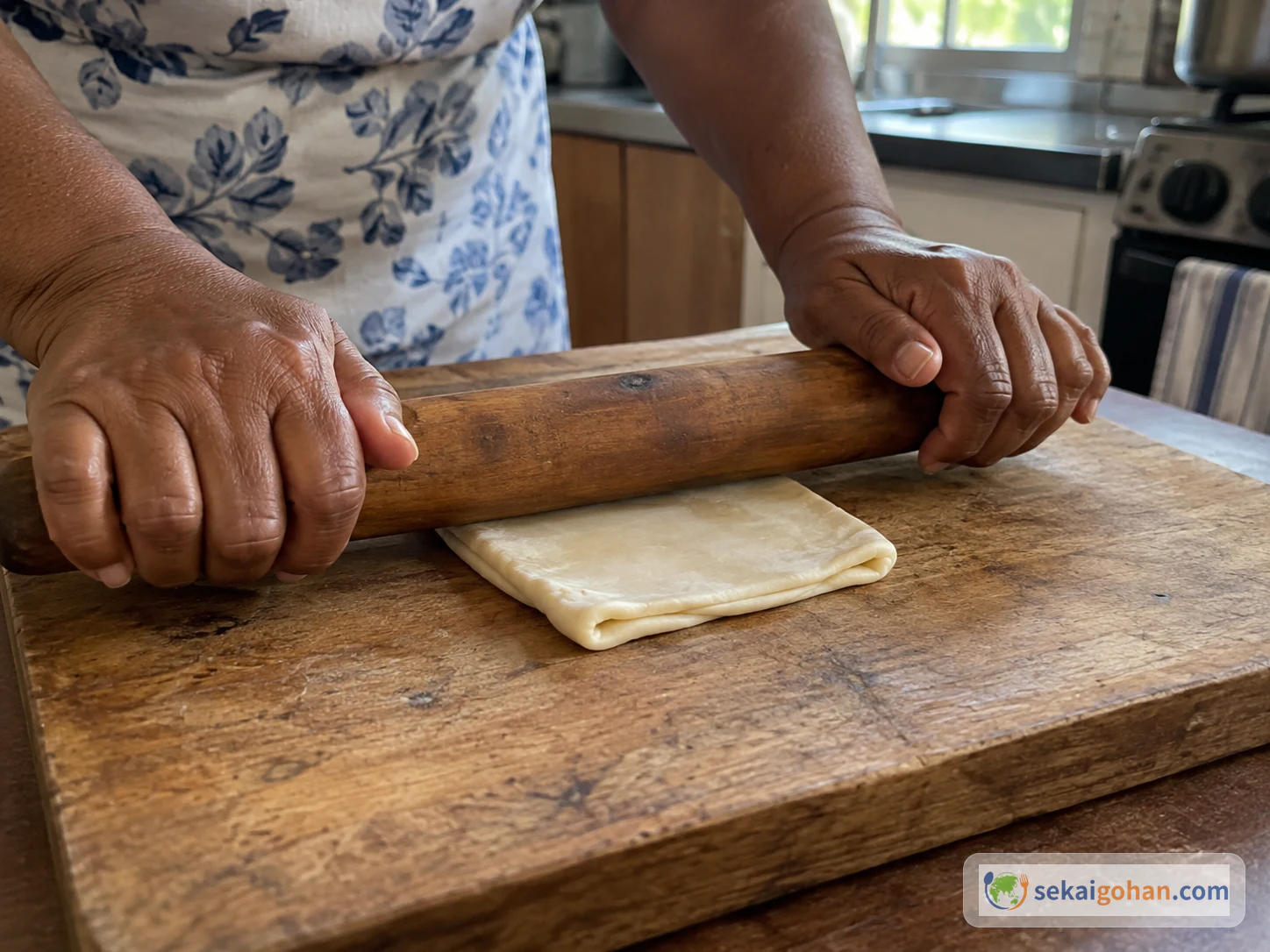
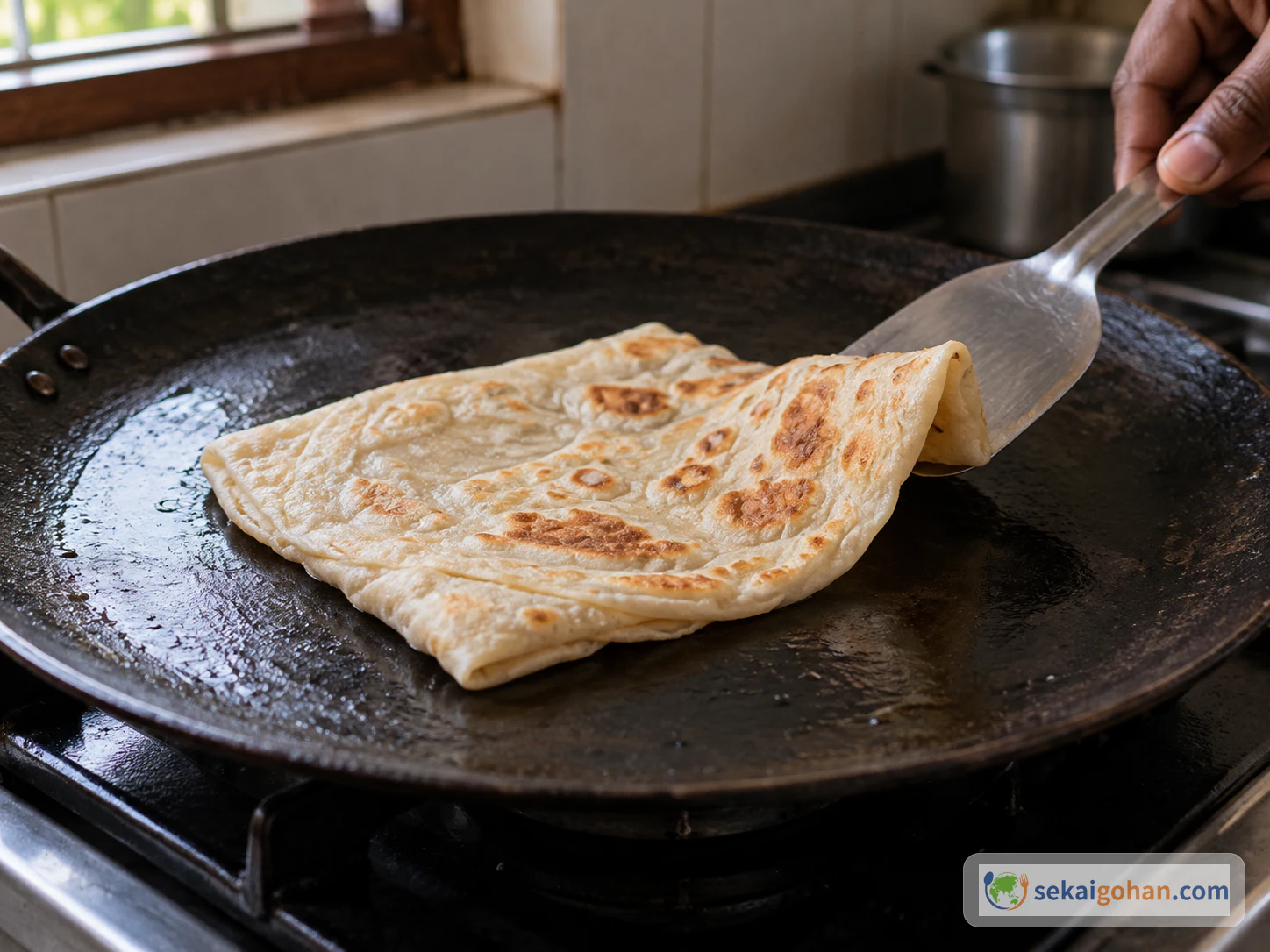
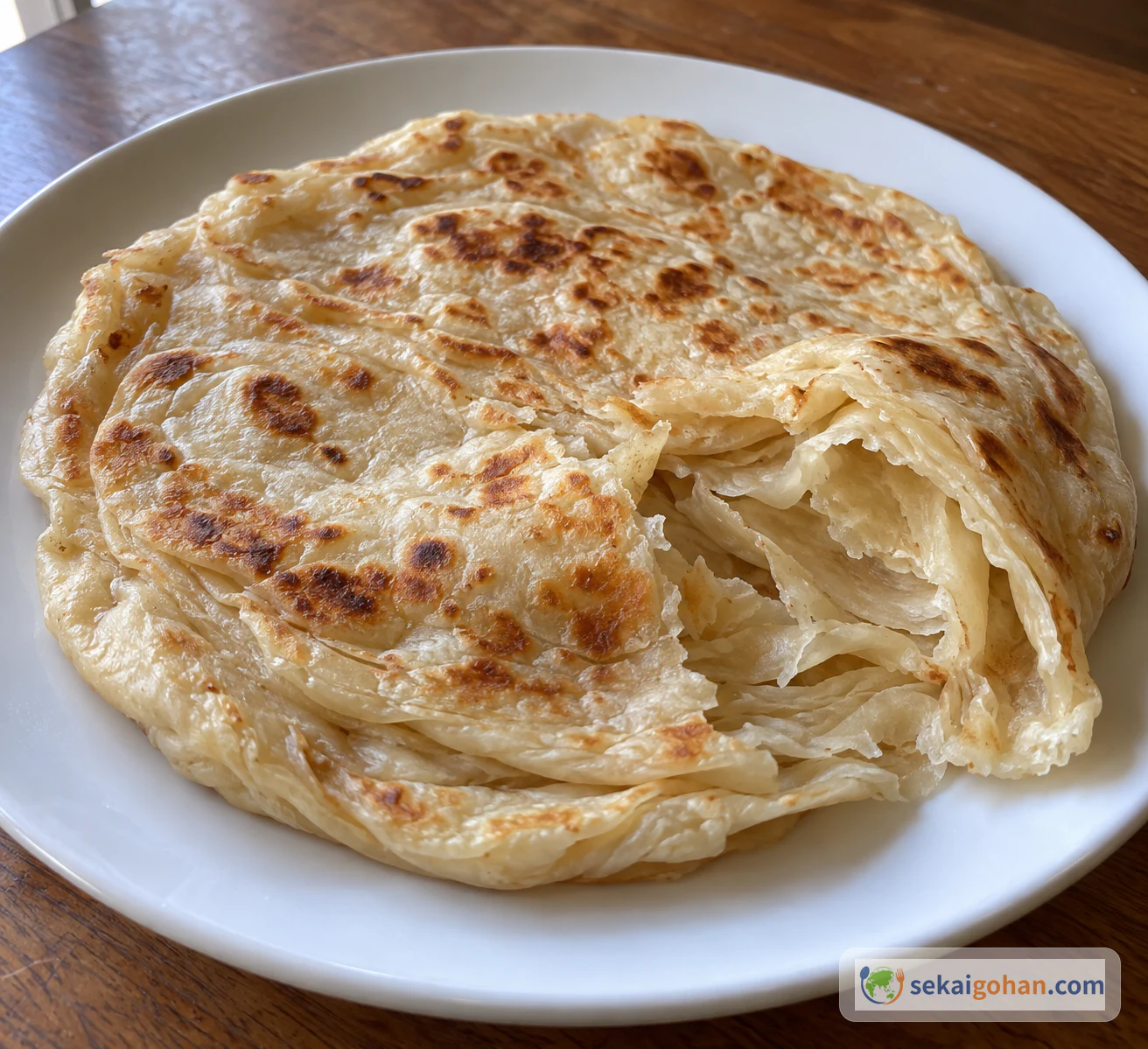
A thin round of dough gets a light brush of oil, then a fold in half and a fold in half again, until it sits on the board as a small wedge with the layers tucked inside. It goes back under the rolling pin, opens into a round again, and lands on a hot griddle, where golden-brown spots come up on each side. Roti dile koko is the coconut milk roti of the Chagossian community, made from flour, coconut milk, oil and salt and nothing else. Torn open, it shows soft folded layers, and the coconut milk that holds the dough together is the flavour you taste first.
Coconut milk in the dough, coconut across the table
The name says what the bread is. In Chagossian Kreol, dile koko is coconut milk, and here it does the job water does in most flatbreads: it is the only liquid in the dough. There is no grated coconut, no onion or chilli worked in, no filling. The coconut is inside the bread itself, carried by the milk, and the oil brushed between the folds keeps the layers apart as it cooks.
Coconut runs through Chagossian cooking. Coconut milk goes into this roti and into seraz; coconut turns up in satini koko, a coconut chutney, in cakes, in pudding and in nouga koko. Seen next to those dishes, roti dile koko is one more way of using the same tree, a plain bread that belongs to a kitchen where coconut is always within reach.
The four ingredients have Kreol names worth knowing: lafarinn (flour), dile koko (coconut milk), delwil (oil) and disel (salt). The bread itself is called roti dile koko, literally "coconut milk roti".
For displaced Chagossians, dishes like this one are part of what is handed down. In 2017, workshops in Mauritius and the UK brought elders and younger generations together so the older cooks could share their cuisine and their knowledge of preparing coconut. The roti was cooked and recorded in Mauritius during that work, and its steps were set down in both Kreol and English, so they can be followed in either language.
Ingredients (makes 6 roti)
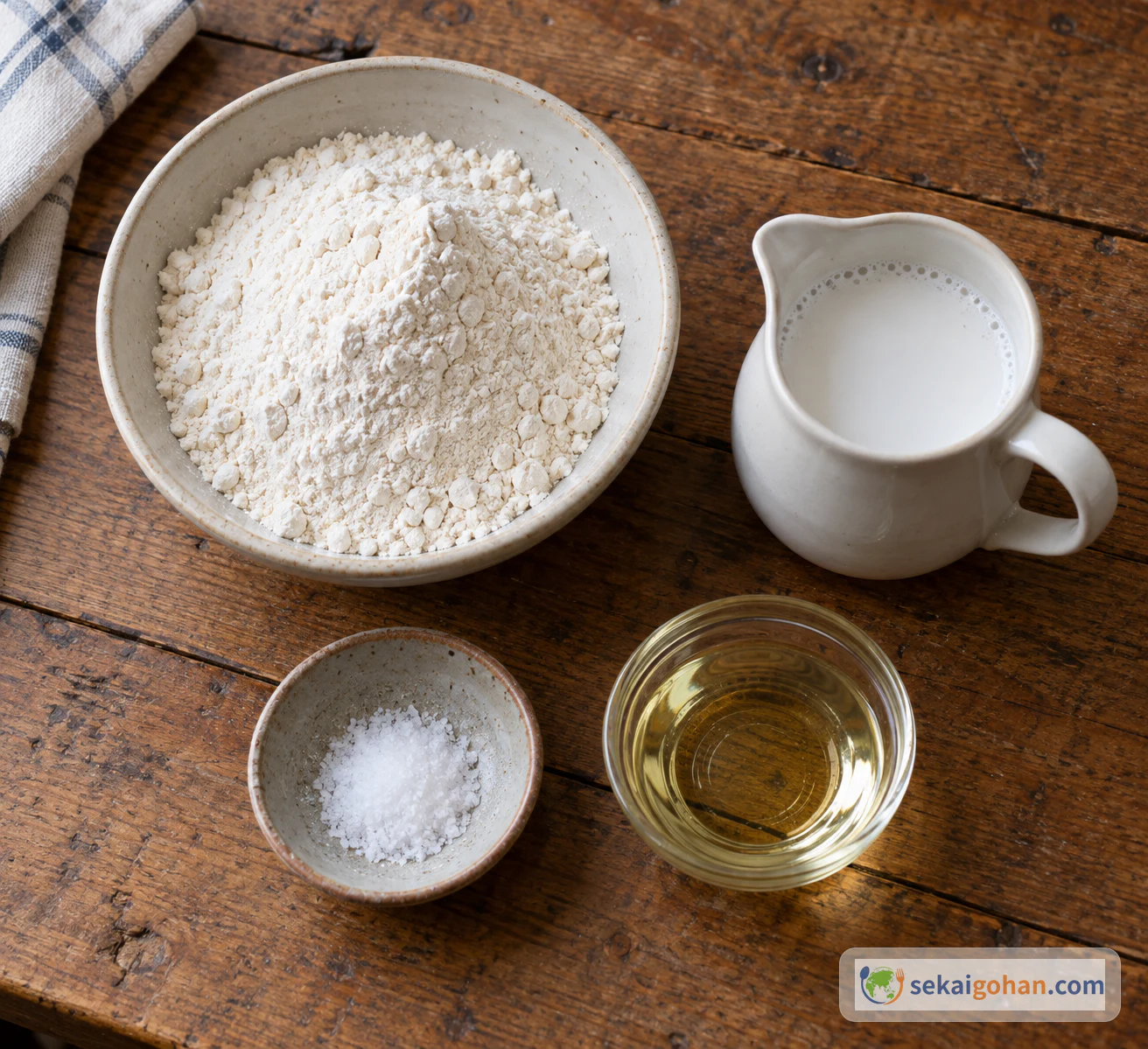
The Chagossian recipe on record lists the four ingredients and the steps but gives no amounts, yield, resting time or cooking times. Every number on this page (the quantities, the six roti, the 30-minute rest, the sizes, the heat and the minutes per side) is Sekai Gohan's own editorial guide, not a Chagossian tradition, and the 30-minute rest is borrowed from a different flatbread.
Coconut milk varies a lot from can to can and from one pressing to the next, so the same volume gives a different dough each time. Add it gradually and stop at soft and not sticky. That end point matters more than hitting an exact amount.
This bread contains wheat (gluten) and coconut. Check the label of canned coconut milk for added ingredients and allergen statements.
Equipment
- Mixing bowl
- Board for kneading and rolling
- Rolling pin
- Small bowl for oil and a pastry brush
- Griddle or heavy frying pan
- Spatula for turning
- Plate and a clean cloth
Choosing coconut milk, flour and oil
Unsweetened coconut milk is the one thing worth taking care over. Thin to medium milk works best. Supermarkets stock it in cans. Canned coconut milk often separates in the tin, so stir it well before you measure. Homemade coconut milk pressed from fresh coconut can be used too; treat it the same way and add it gradually.
For flour, ordinary plain wheat flour from the supermarket is right. The oil is a neutral cooking oil, the kind that does not taste of much. Keep the coconut milk as the only liquid. Swapping in water gives you a different bread, a plain flour roti that has lost the flavour it is named for.
Method
The work runs in one direction. Mix and knead the dough, then cover it and let it rest for half an hour. That is your hands-off time, so use it to set out the board, the rolling pin and the oil bowl. Then shape all six roti: roll, oil, fold, roll again. Cook them one at a time on the griddle and stack each finished roti under a cloth while the next one cooks.
The griddle stays hot through the whole batch. Keep the oil bowl and brush away from the heat, brush oil onto the roti rather than pouring it onto the metal, and use a spatula to turn.
The oil goes into this bread at three separate points: a little in the dough, a light brush before folding, and a little on each side on the griddle. Keep the brushing oil in its own bowl and do not stir it all into the dough. The oil between the folds is what makes the layers.
When it goes wrong
| What you see | Why | What to do |
|---|---|---|
| Dough sticks to your hands and the board | Too much coconut milk, or a thin milk | Knead in a spoonful of flour at a time until it is soft and not sticky |
| Dough is dry and cracks at the edges | Not enough milk, or a thick milk | Knead in a spoonful of the held-back coconut milk |
| Rounds spring back as you roll | The dough is tight | Let it rest covered for the full 30 minutes before dividing |
| Roti is still pale after both sides | Heat too low | Turn the heat up toward medium and cook until golden-brown spots appear |
| Roti darkens before the first side's time is up | Heat too high | Lower the heat a little before the next roti goes down |
| Finished roti turn stiff at the edges | Left uncovered while the rest cook | Stack each one under the cloth as soon as it leaves the griddle |
Frequently asked questions
Is roti dile koko the same as Sri Lankan coconut roti?
No. Sri Lankan pol roti is made with grated coconut, and usually onion and chilli go into the dough. Roti dile koko has no grated coconut and no additions. Coconut milk binds a plain dough that is then oiled, folded and rolled again.
Can I skip the 30-minute rest?
Yes. Divide and roll straight after kneading. The dough will be springier and pull back more under the rolling pin, so it takes a little more patience to get even rounds.
Why fold into four instead of rolling it out once?
Each fold traps a thin layer of oil between two sheets of dough. Rolling the wedge out again keeps those sheets separate, so the cooked roti opens into soft layers when you tear it. A roti rolled out only once cooks into a single flat sheet.