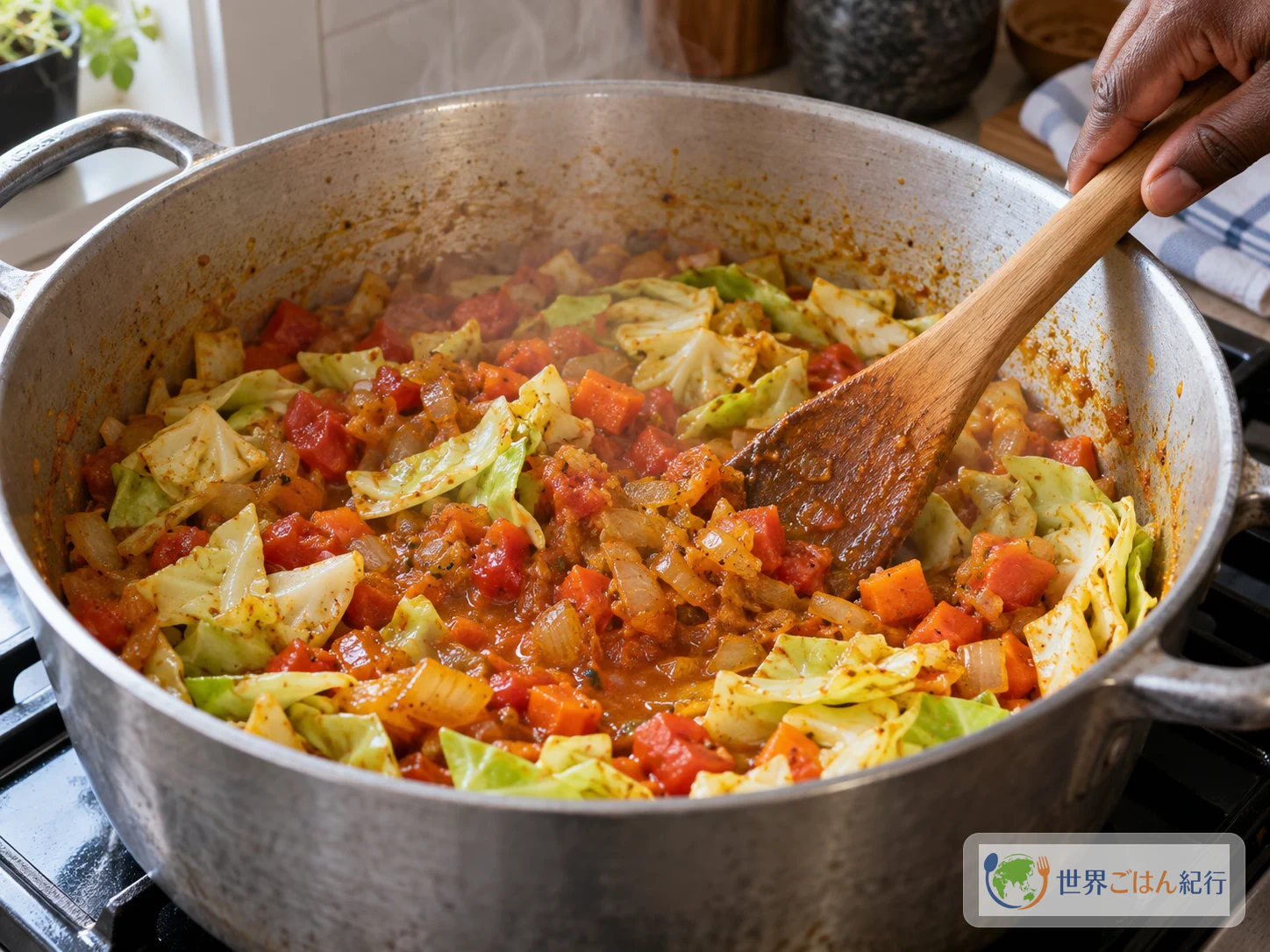
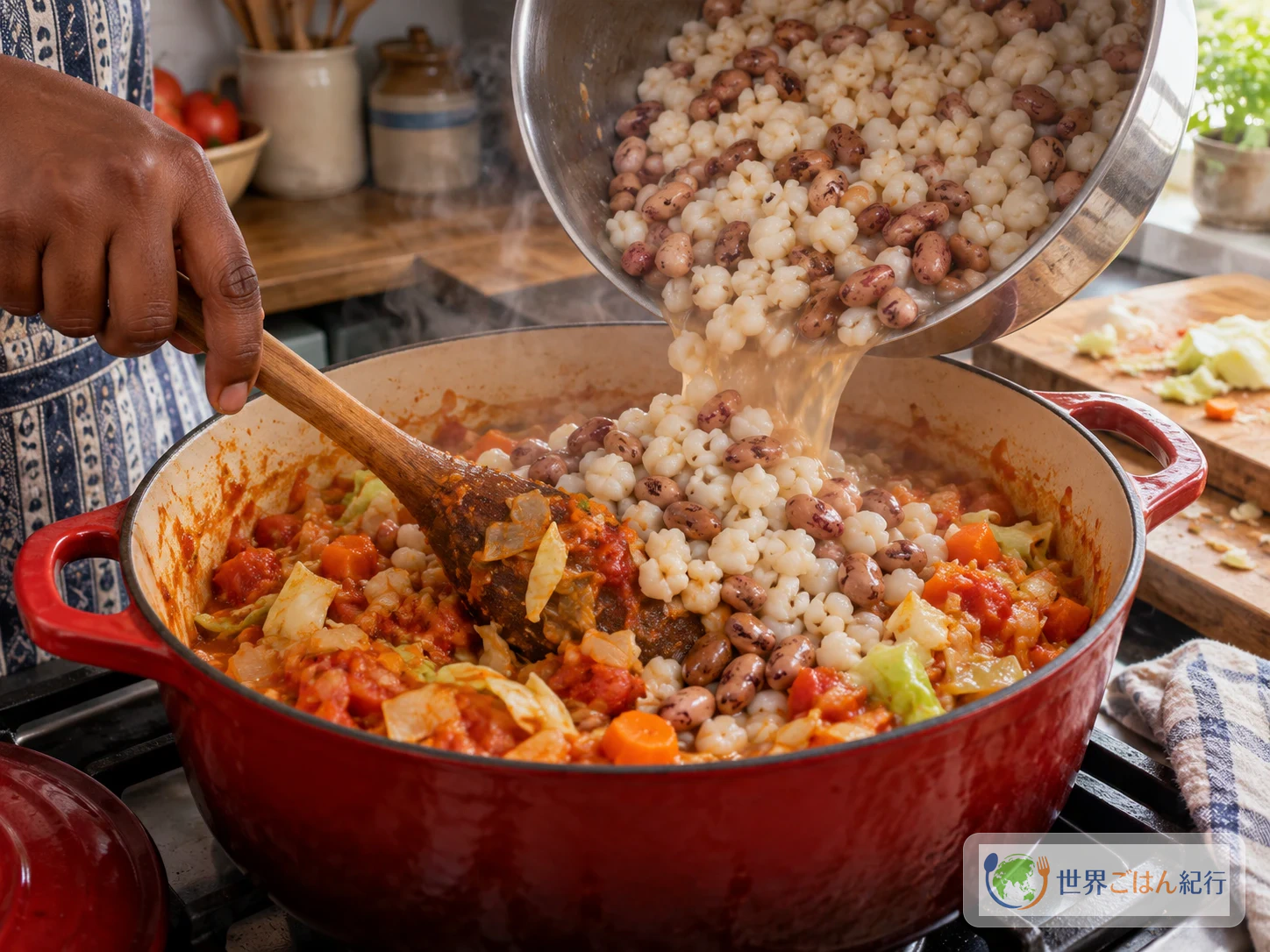
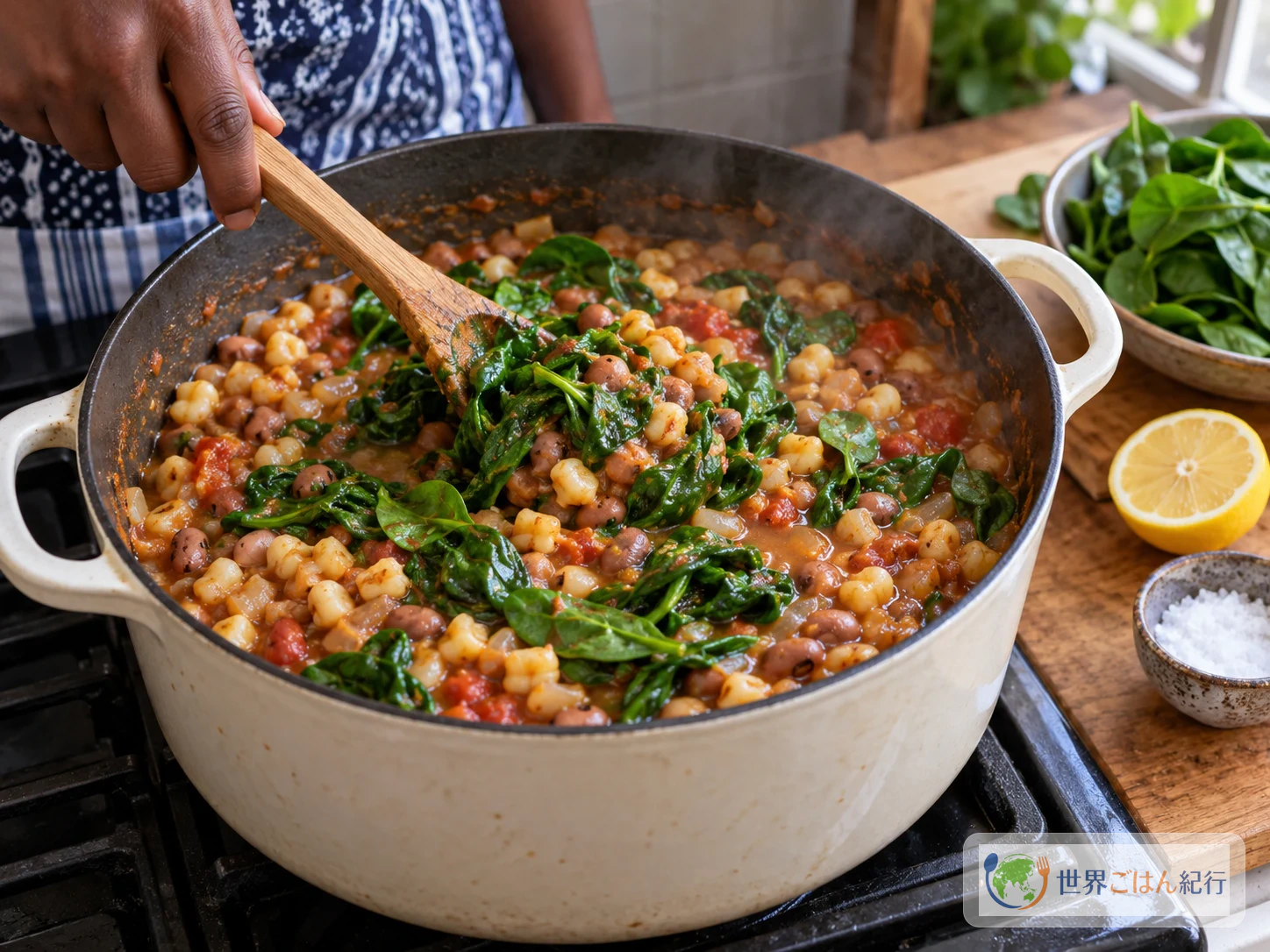
From a pot in the Eastern Cape, the smell of corn and beans rises
On the hills of the Eastern Cape, round-roofed houses are scattered across a settlement. The Umzimvubu municipality presents this area to visitors as a land of rural villages and cultural heritage [c2]. Picture the kitchen of a village like that. In a large pot on the fire, dried corn kernels and beans soften slowly, and the rising steam carries a faintly sweet grain aroma. Corn and beans cooked in a single pot. That plain combination is the starting point of the dish we are about to make. The scene described here is assembled from sources, not a memory of eating it there.
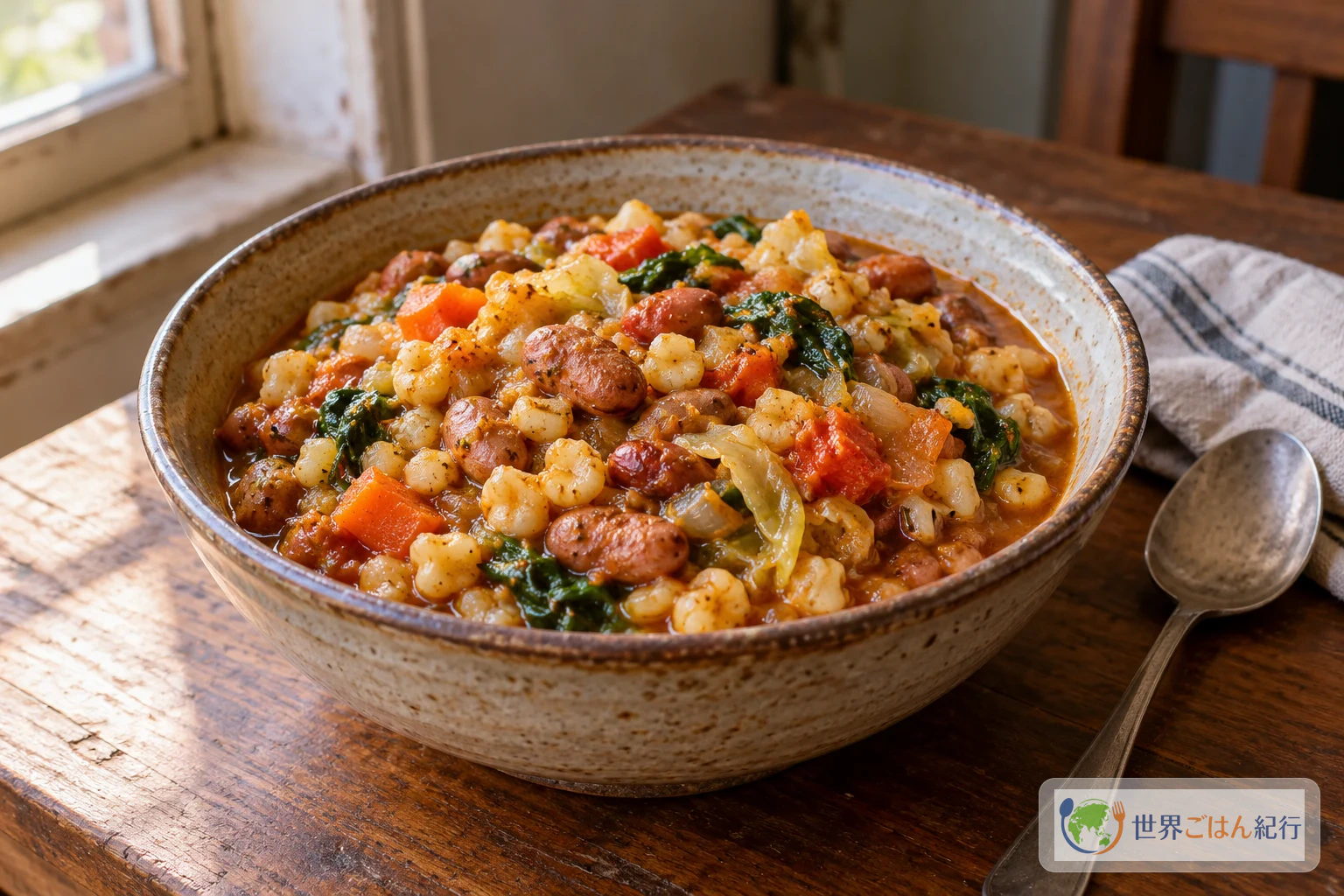
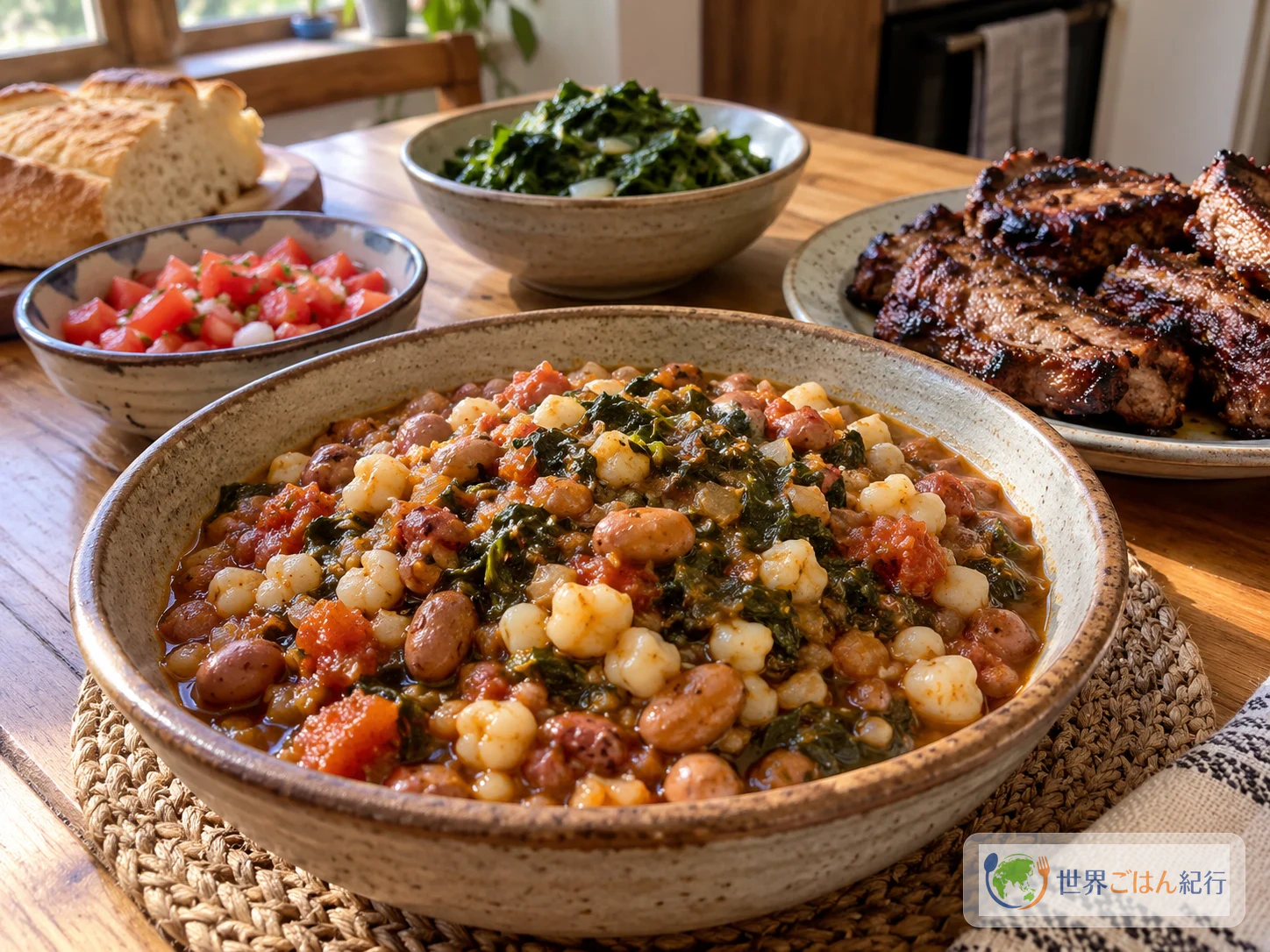
Umngqusho is known as a dish of the Xhosa people. Some sources write it with a capital letter, uMngqusho. It is a stew of samp (dried corn kernels coarsely cracked) and beans [c2][c4]. Samp is not the same as fine cornmeal or polenta; even broken up, it keeps the shape and bite of the kernel. When you eat it, two textures alternate in the mouth: kernels that hold their shape, and beans that fall apart.
umngqusho and uMngqusho are just variant spellings of the same dish name. In South Africa's official introductions, umngqusho is also named as one of the representative dishes [c1]. It is rooted in Xhosa food culture, but today it is known across South Africa [c1][c2].
Ingredients (serves 4)
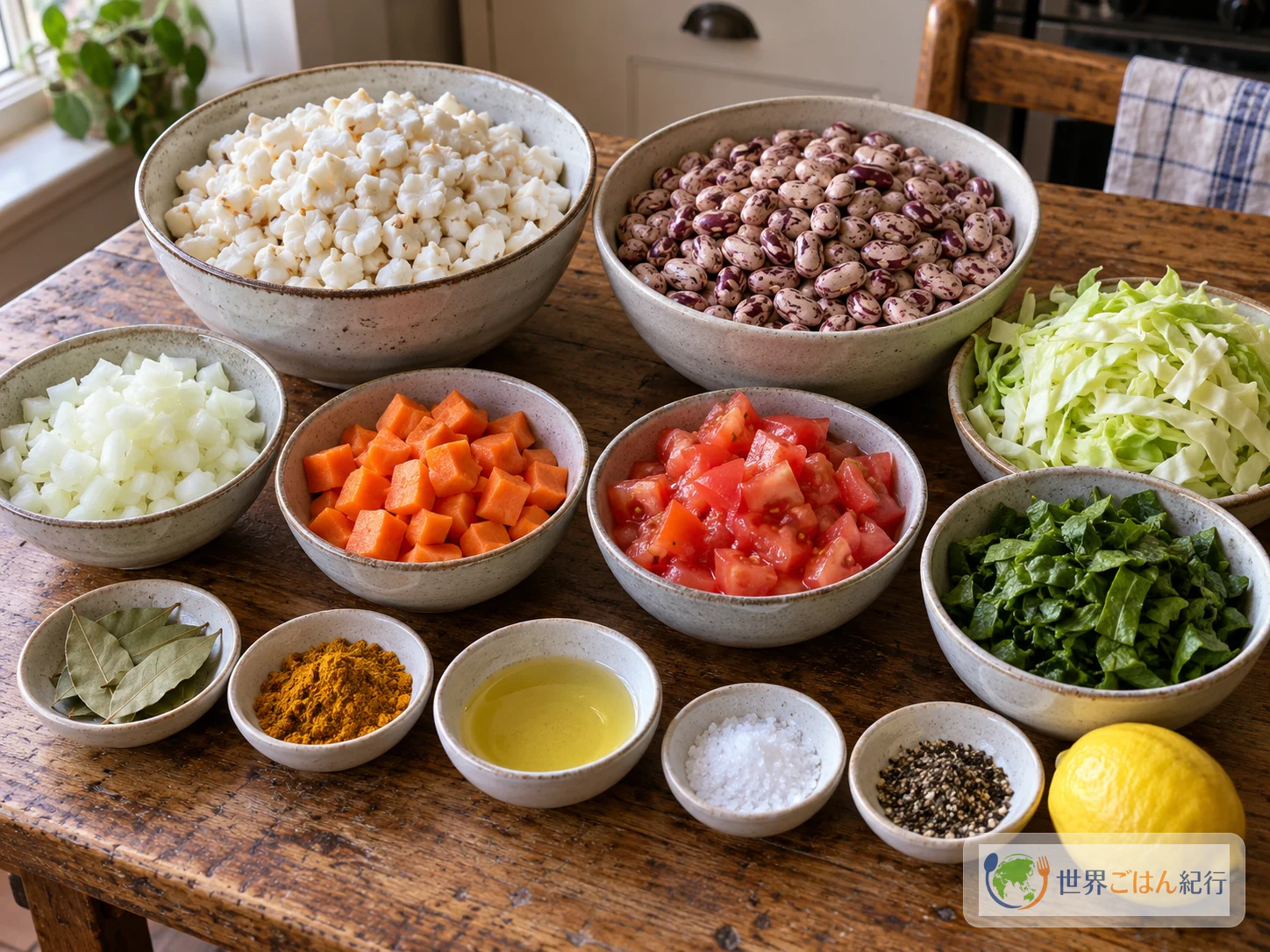
First, the core ingredients of the original. The base is 250 g samp and 180 g dried sugar beans, both of which need soaking. If you can't get samp, replace it with 250 g coarse hominy. In that case too, follow the package for soaking and cooking times. The vegetables and curry powder are only extras layered on for home cooking; they do not widen the definition of umngqusho itself.
Shopping
Onion, carrot, tomatoes, cabbage, spinach, dried beans and curry powder are all things you can get nearby. The only thing to search for specially is "hominy (coarse)," in case you can't find samp. On the product page, check the coarseness of the grain, the ingredients, the net weight, and whether soaking is needed. Coarse hominy will not give the same texture as traditional samp. Think of it as a substitute that lets you cook in a shorter time.
Only the pot for the long simmer is worth having. You simmer gently over medium-low heat for 90–120 minutes, so a heavy lidded pot makes the water reduce more gently. A heavy pot you already own is enough.
If you react to corn or beans, don't substitute; don't eat it. If you add curry powder, bouillon or canned goods, check the ingredients and allergen labeling. This recipe does not require bouillon. Cook dried beans thoroughly and never eat beans that are still hard.
Method
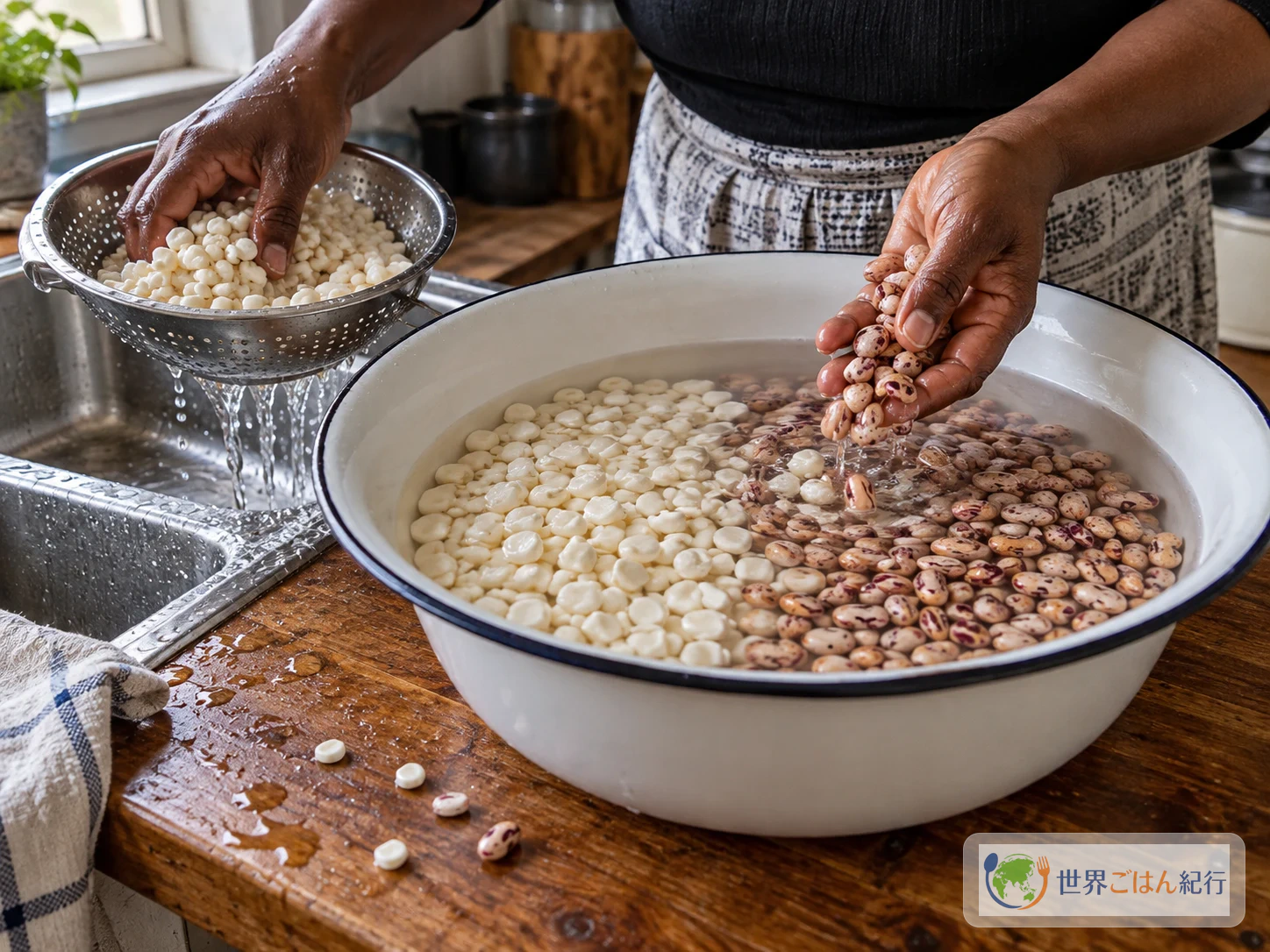
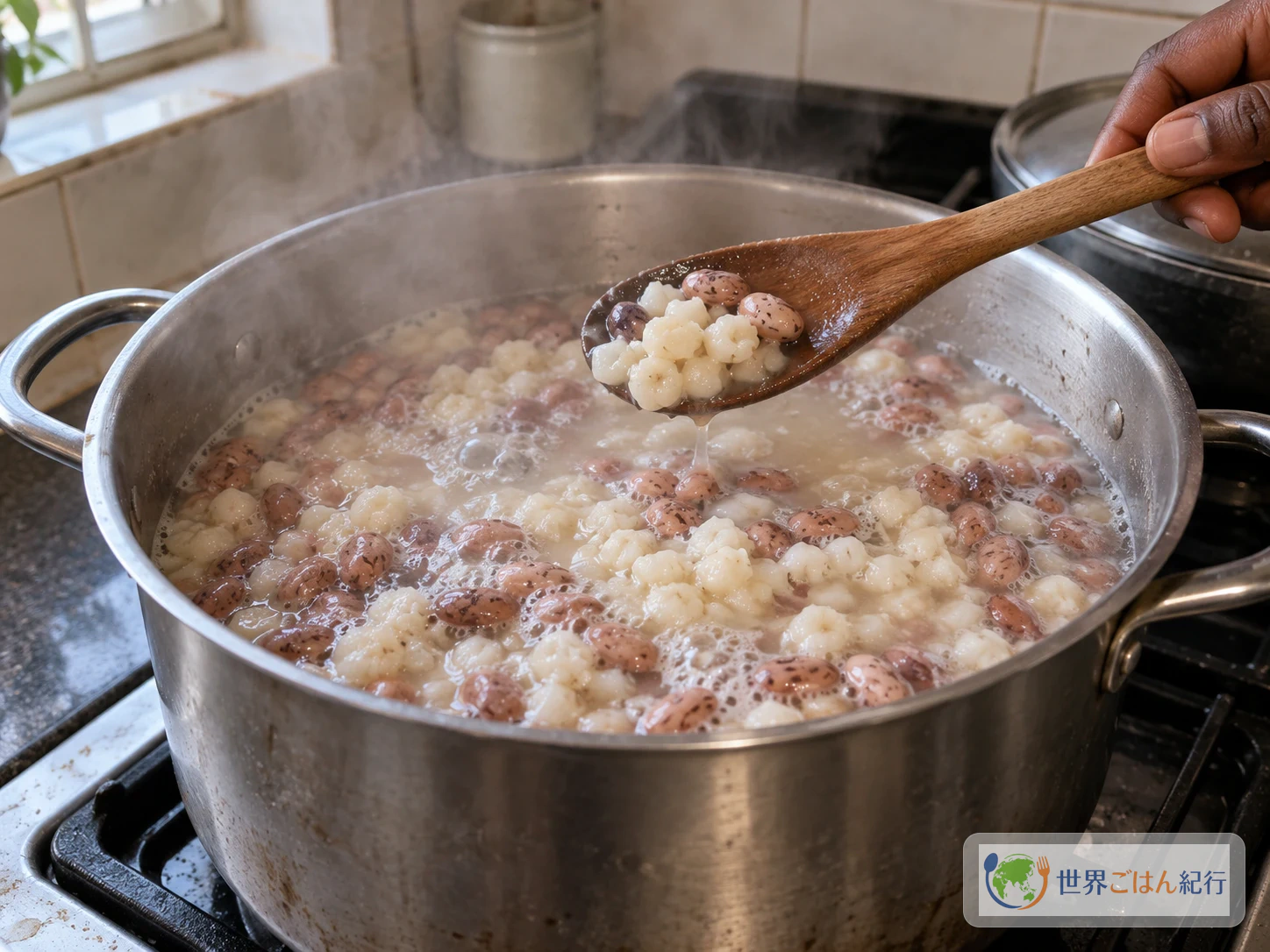
This dish starts the night before. In the official recipe, the grains are soaked overnight, brought to a boil and simmered over gentle heat for about 2 hours [c3]. Don't add salt early; add it after the kernels and beans are tender [c3][c4]. If the water reduces too much in your pot, add hot water a little at a time. The target for the finished dish: the cooking liquid is not a soup, but a thickness you can just see between the kernels.
Serving blurs the line between staple and side dish
Umngqusho can be the base of a meal with just samp and beans. The vegetable version made here is meant to be served as one plate that is both a warm staple and a side dish. Getaway suggests serving it with braai (meat grilled outdoors) [c4]. That is not, however, the only way of eating it across the region. Ladled into a shallow dish, you can see directly a thickness at which the liquid does not spread across the plate. A little chakalaka on the side lets you recreate the South African table's layering of vegetable heat in your own kitchen.
| Pairing | Role | Substitute at home |
|---|---|---|
| Grilled meat or sausage | Adds savoriness and fat | Grill chicken thigh, pork or plant-based sausage separately |
| Chakalaka | Adds heat and acidity | Serve a small portion of the homemade version, not a store-bought vegetable relish |
| A greens side dish | Lightens the heaviness of the beans and grain | Boil spinach or komatsuna in salted water and serve on a separate plate |
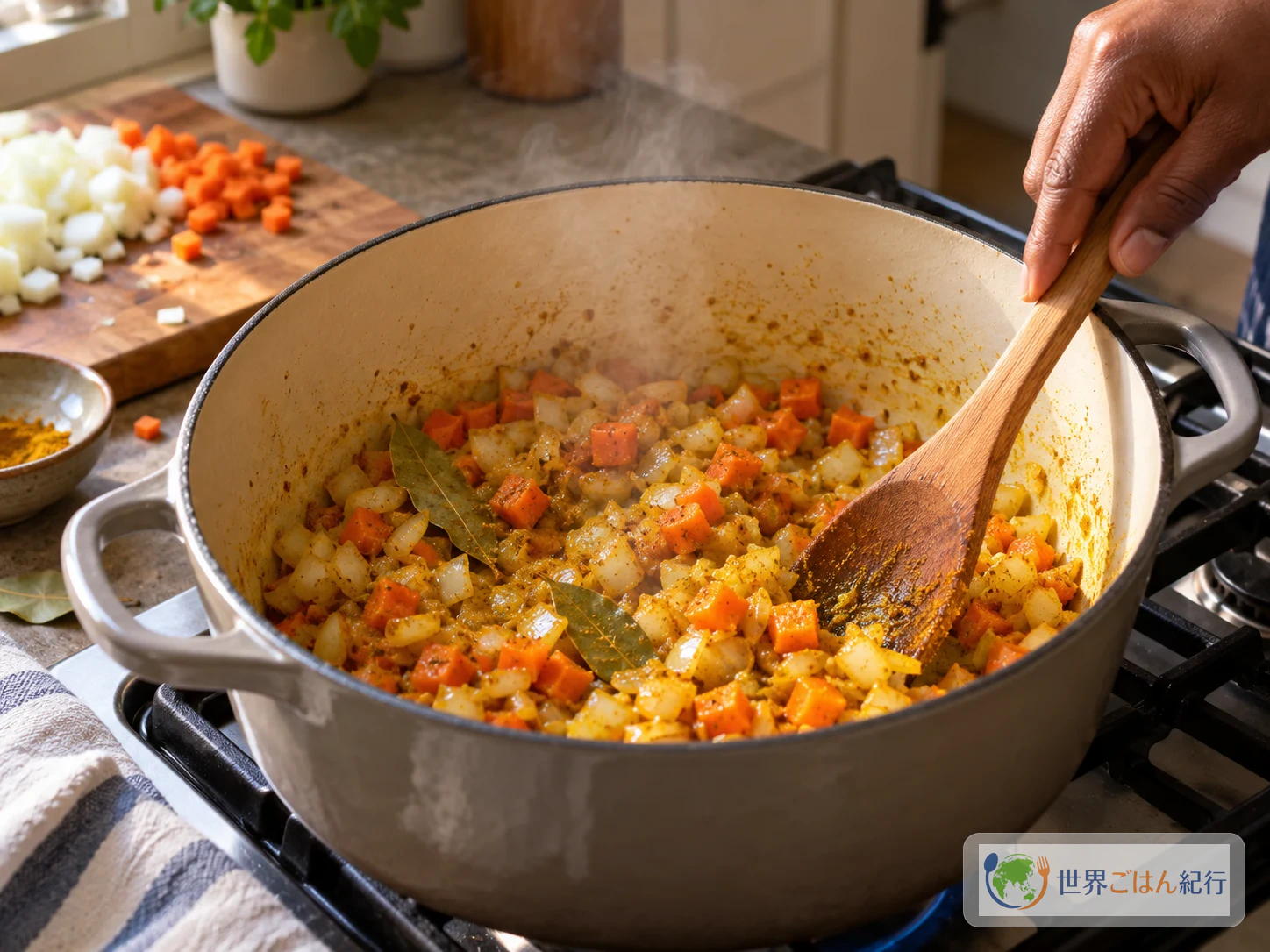
The Western Cape government's recipe adds curry powder, onion, carrot, tomato, cabbage and spinach [c3]. Getaway's recipe, on the other hand, adds potato, tomato and cheese, a different home-style composition [c4]. There is no ranking of "real or fake" in this difference. Think of it as the result of regional and family flavors layered on the core of simmering samp and beans, and either pot can be accepted without fuss.
Cooking tips: watch the changes in the pot as you go
In the first half of simmering, flavor with the bay leaf alone. First settle the firmness of the center of the samp and the beans. Add salt after you confirm that the dried beans crush between your fingers. The official recipe likewise leaves salt to the final tasting [c3].
When the water level drops below the grains, add 100 ml of hot water at a time. Pouring in a lot at once turns the result into a thin soup. The goal for the finished liquid is a thickness you can see between the kernels that doesn't run when plated. Evaporation speed changes with or without the lid, so take the lid off for the last 15 minutes to adjust.
Coarse hominy varies by product, from steamed types that need no soaking to others. Don't apply the 8–12 hour soak or 90–120 minute simmer for samp as is. The more a substitute, the more important it is to read the package. Check whether the kernels keep their form even once soft, and adjust the liquid at the end.
How to rescue a pot that goes wrong
If the kernels and beans are hard, add 200 ml of hot water, cover and extend over low heat in 20–30 minute steps. If it is watery, take off the lid and reduce over medium-low heat 5 minutes at a time. Be careful: too much stirring turns it to porridge. If it becomes salty, dilute it with unsalted cooked samp or beans, and add the lemon juice only at the end, a little. If it smells burnt, don't scrape the bottom. Move only the upper layer into another pot and rebuild the flavor with hot water and a little tomato.
Variations
| Direction | What to change | What to keep |
|---|---|---|
| More vegetables | Add 150 g pumpkin and 100 g bell pepper | Keep the grain and bean texture as the star |
| Add heat | 1 green chile or 1 g chili powder | Check the salt in the curry powder before adding |
| With meat | Serve grilled chicken thigh or sausage on the side | Don't put too much meat fat into the pot; keep the bean aroma |
| Plant-based | Use vegetable oil; add no meat or dairy | Check the labels of curry powder and seasonings |
| Richer with cheese | Off the heat, stir in 40 g cheddar or aged cheese | Treat it as one example of a South African home variation |
The core of umngqusho is a stew of grain kernels and beans. There are many directions in which to add ingredients, and no single one is the right answer. The version with cheese is a variation in Getaway's recipe, and the composition with added vegetables appears in the Western Cape government recipe [c3][c4]. The plant-based version with no meat or dairy is a suggestion from this article. Not every household there makes it in the same form.
Background: from the Xhosa table to a South African staple
The Umzimvubu Local Municipality describes maize and its processed products as the staple food in the regional culture of the Eastern Cape. The same document lists uMngqusho (Samp and Beans), and the sour milk umvubo, as well-known dishes and ties them to meals at cultural villages [c2]. This dish, in other words, is not just a curiosity for tourists. It is a dish that lives in the daily life of the region, cooking grain and beans in a pot. Its origin cannot be tied to a single inventor or event either.
Getaway introduces it as a traditional Xhosa dish and centers the combination of samp and beans [c4]. The South African Department of International Relations and Cooperation's introduction describes South African food as layered with the influence of multiple cultures and names umngqusho among its representative dishes [c1]. That it is rooted in Xhosa food culture and that it is now known nationwide need to be told at different scales.
There is also a point of contact between home cooking and public meals. The weekly menus of the Western Cape government's school nutrition programme include samp and sugar beans, and samp and soya mince [c5]. However, a school-meal menu is not a home recipe itself, so it can't be said to represent home taste. Still, it shows that dried grain and beans are treated as ingredients for daily warm meals, not just for festive days.
Let us line up regional and household differences concretely. The official recipe adds vegetables and curry powder, and Getaway adds potato and cheese. These differences are regional and household variations that hold without erasing the combination of samp and beans. There are suggestions to serve it beside braai meat and others to add greens and acidity, and its role at the table changes each time. It is not a dish for which you can say "the authentic way is always this amount."
In a kitchen outside South Africa, samp is not always readily available. So coarse hominy is used as a realistic substitute. However, coarse hominy does not completely match samp in aroma, in the way the kernels break, or in cooking time. Fine cornmeal or polenta changes the kernel texture, so they are not used as substitutes here. The more a substitute, the more you should check on the label whether soaking is needed and the cooking time, and judge the finish by the firmness and the state of the liquid. What to preserve at home is "a thick stew in which you feel the kernels and beans separately."
Storage and reheating
After cooking, divide into shallow containers within 2 hours and refrigerate; within 1 hour in a hot environment [c6]. A guide for refrigeration is 3–4 days, and for freezing quality is kept for about 3–4 months [c6]. Reheat so the center reaches 74°C (165°F), and in a pot bring the whole thing to a boil [c6]. Avoid cooling a big pot slowly at room temperature.
After refrigeration, the samp absorbs moisture and firms. To reheat, add 2–3 tbsp of hot water per serving and warm slowly over low heat. The aroma of lemon juice and greens weakens on reheating, so add a little just before serving. Heat thawed food through to the center, and treat it as not to be refrozen.
Frequently asked questions
What should I buy if I can't find samp?
Look for "hominy (coarse)" as in the ingredient table. Fine cornmeal or polenta lacks the kernel texture. Follow the package for whether soaking is needed and for cooking time.
What do you eat umngqusho with?
Samp and beans alone make a meal. You can also add grilled meat or sausage, greens or chakalaka. The pairing with braai suggested by Getaway is one example [c4].
My beans are still hard. Can I add salt and keep simmering?
Adding more salt doesn't solve the hardness. Add hot water and extend the cooking over low heat in 20–30 minute steps. Heat until the beans crush between your fingers and the samp has no hard core. Don't eat dried beans while hard.
Can I make it ahead?
Yes. Divide into shallow containers within 2 hours and refrigerate. Refrigerated 3–4 days and frozen 3–4 months are the USDA's general guidelines for leftovers [c6]. Reheat to 74°C at the center, and in a pot until it boils.
How do I make it spicy?
Add a little green chile or chili powder when you fry the aromatics. If you want heat on the plate, serve chili sauce on the side, which doesn't raise the saltiness of the whole pot. Curry powder differs in heat and salt by product, so check first.
Sources
- [c1] South African Department of International Relations and Cooperation, “About South Africa — Food & Culture” — https://dirco.gov.za/toronto/about-south-africa/ (accessed and checked 1 October 2026)
- [c2] Umzimvubu Local Municipality, “Umzimvubu Tourism Brochure 2012”, p.19 — https://www.umzimvubu.gov.za/wp-content/uploads/2025/01/Umzimvubu-Tourism-Brochure-2012.pdf (accessed and checked 1 October 2026)
- [c3] Western Cape Government / Western Cape on Wellness, “Healthy WoW! Recipe of the Month — Spicy Samp and Beans (Umngqusho)” — https://www.westerncape.gov.za/westerncape-on-wellness/sites/westerncape-on-wellness.westerncape.gov.za/files/atoms/files/WoW%21%20Newsletter%20May%202019.pdf (accessed and checked 1 October 2026)
- [c4] Getaway Magazine, “Umngqusho recipe” — https://www.getaway.co.za/food/recipes-food/umngqusho-recipe/ (accessed and checked 1 October 2026)
- [c5] South African Government / Western Cape Education, “Western Cape Education on School Nutrition Programme” — https://www.gov.za/news/media-statements/western-cape-education-school-nutrition-programme-02-aug-2018 (accessed and checked 1 October 2026)
- [c6] U.S. Department of Agriculture, Food Safety and Inspection Service, “Leftovers and Food Safety” — https://www.fsis.usda.gov/food-safety/safe-food-handling-and-preparation/food-safety-basics/leftovers-and-food-safety (accessed and checked 1 October 2026)