
The staple of northern Ghana, where flour turns heavy in the pot
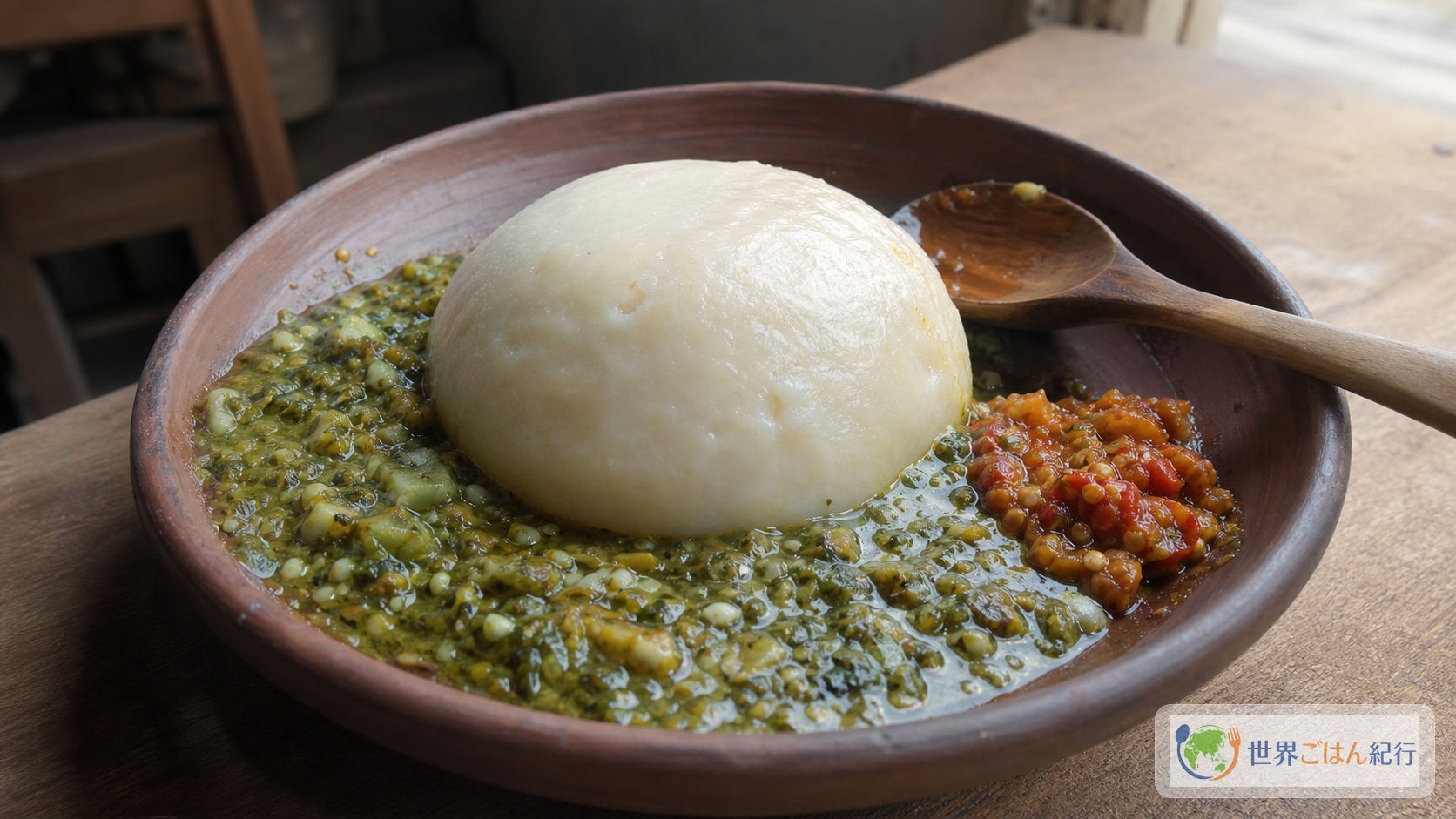
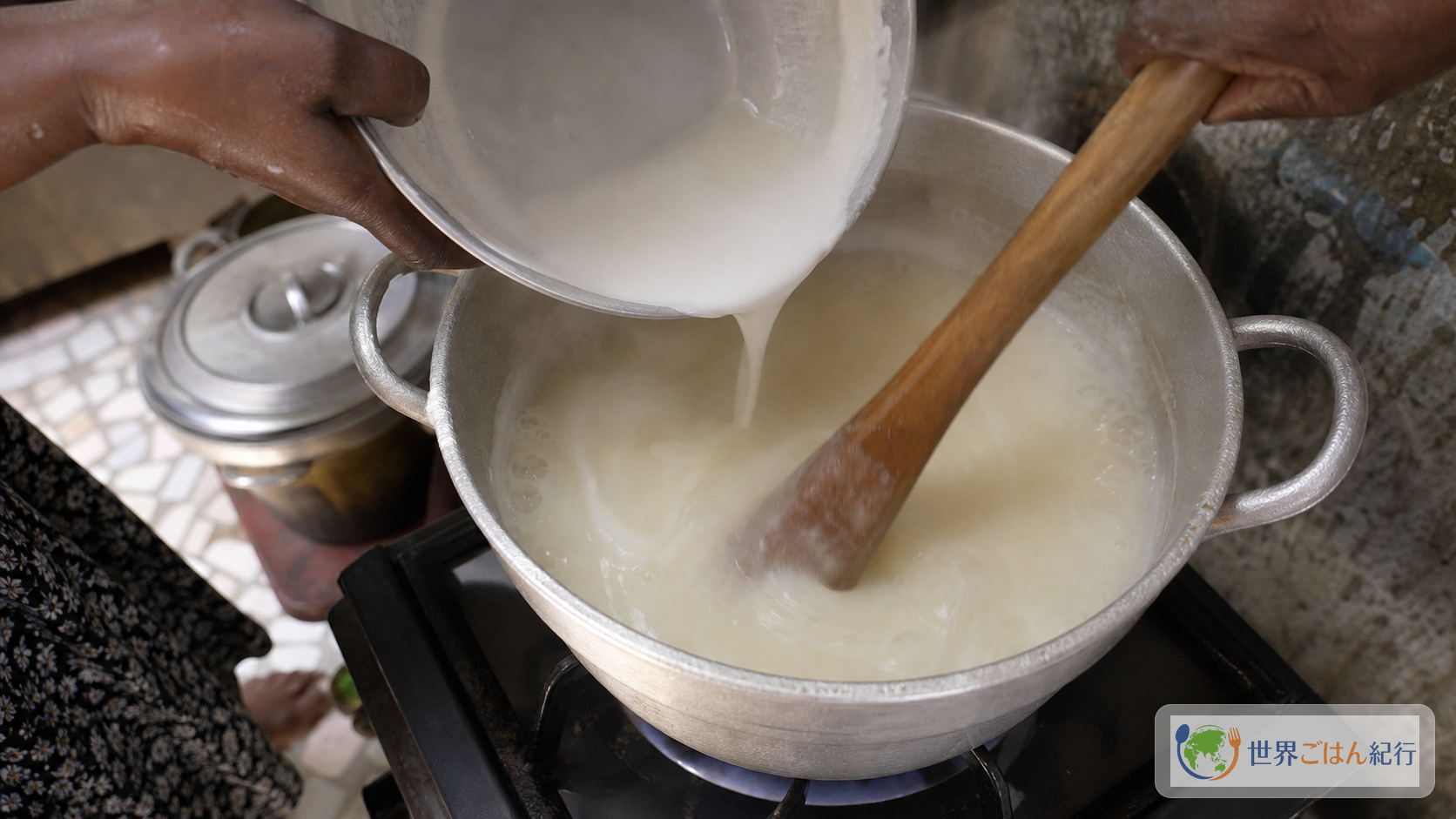
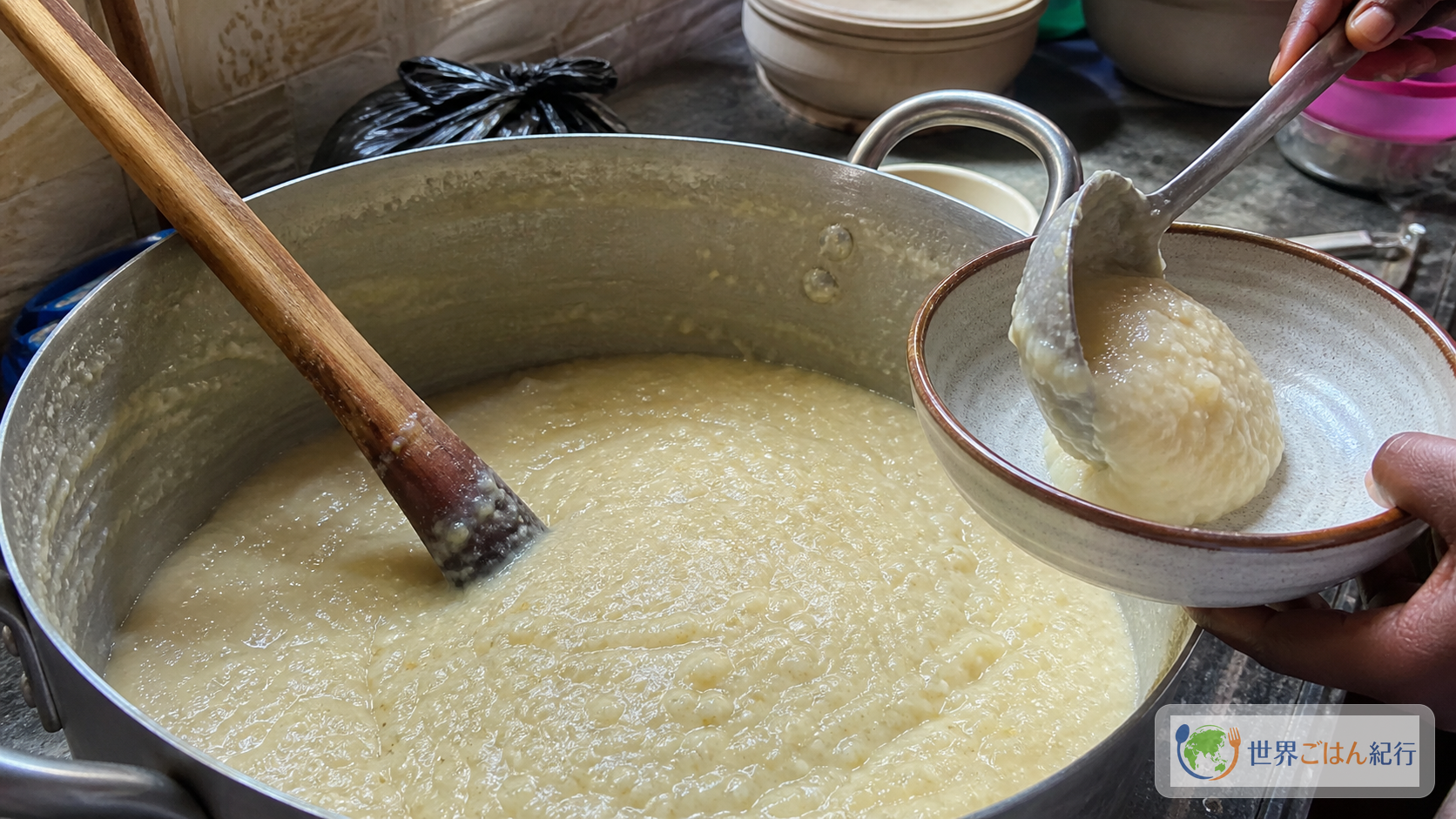
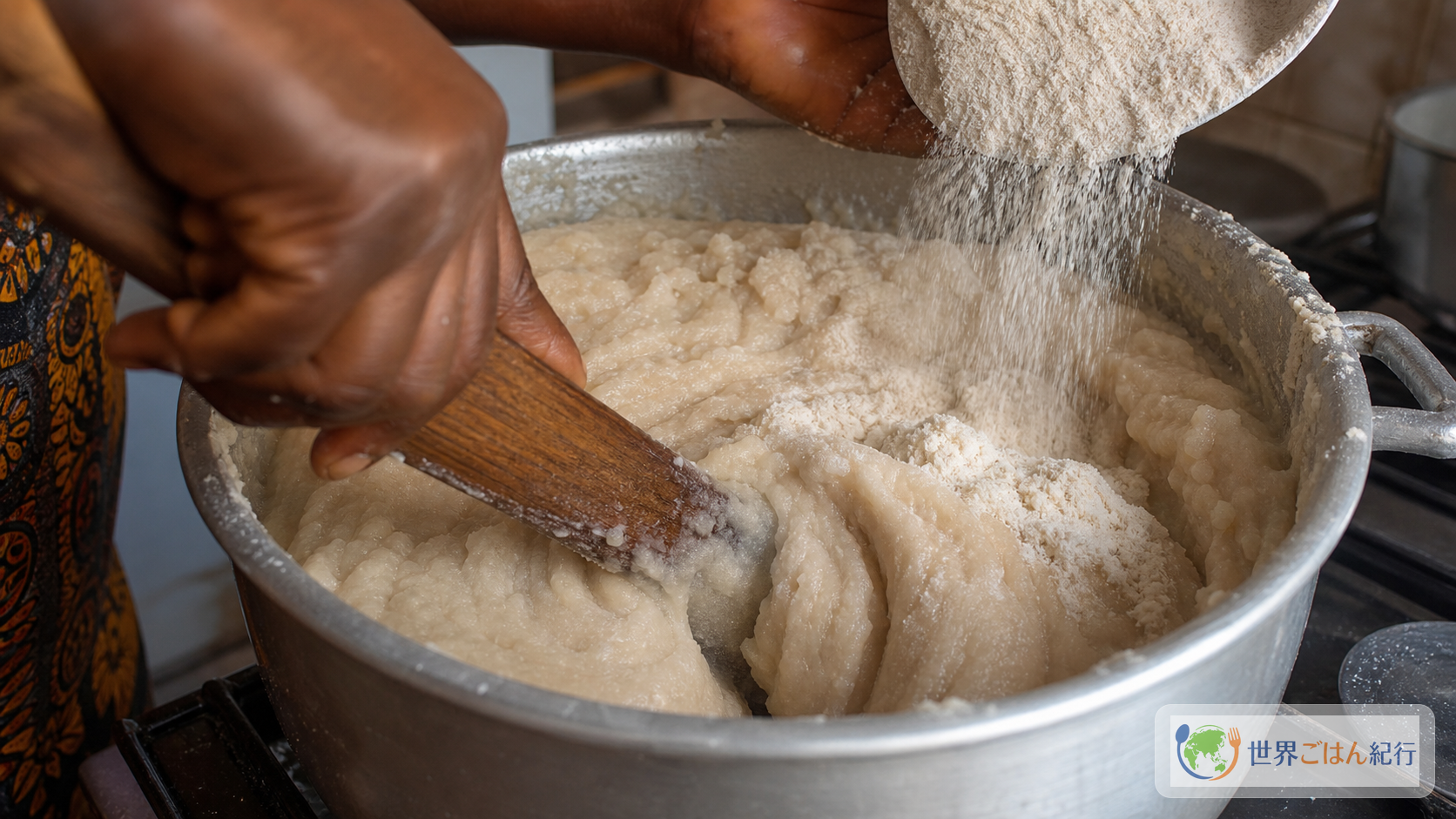
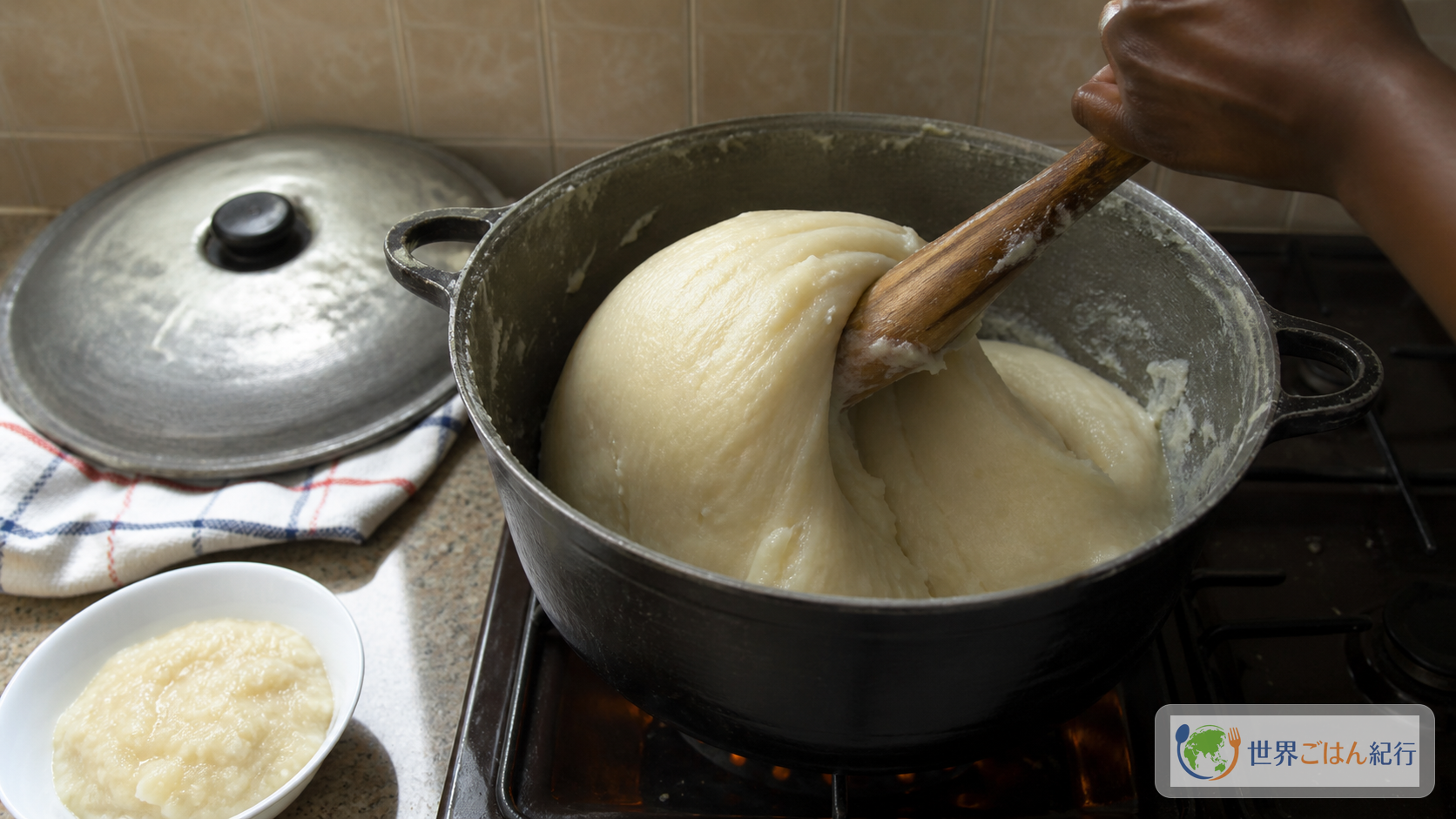
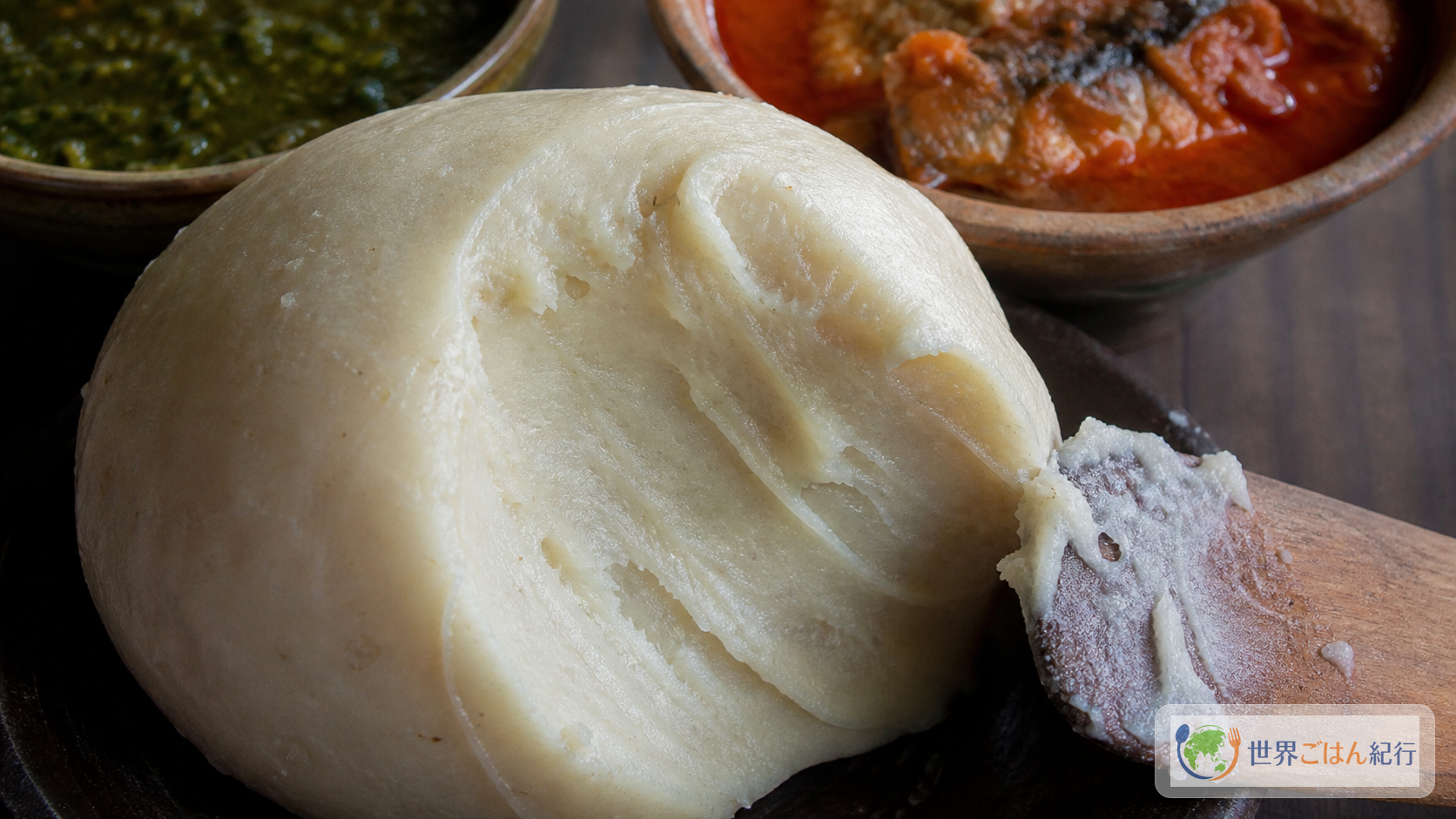
The moment you put a wooden spoon into the pot, the white batter, until then a loose porridge, suddenly turns heavy. Push back with your arm and the dough gathers along the sides of the pot and takes on a sheen. Tuo Zaafi is a dish about not missing this moment, when flour becomes a staple.
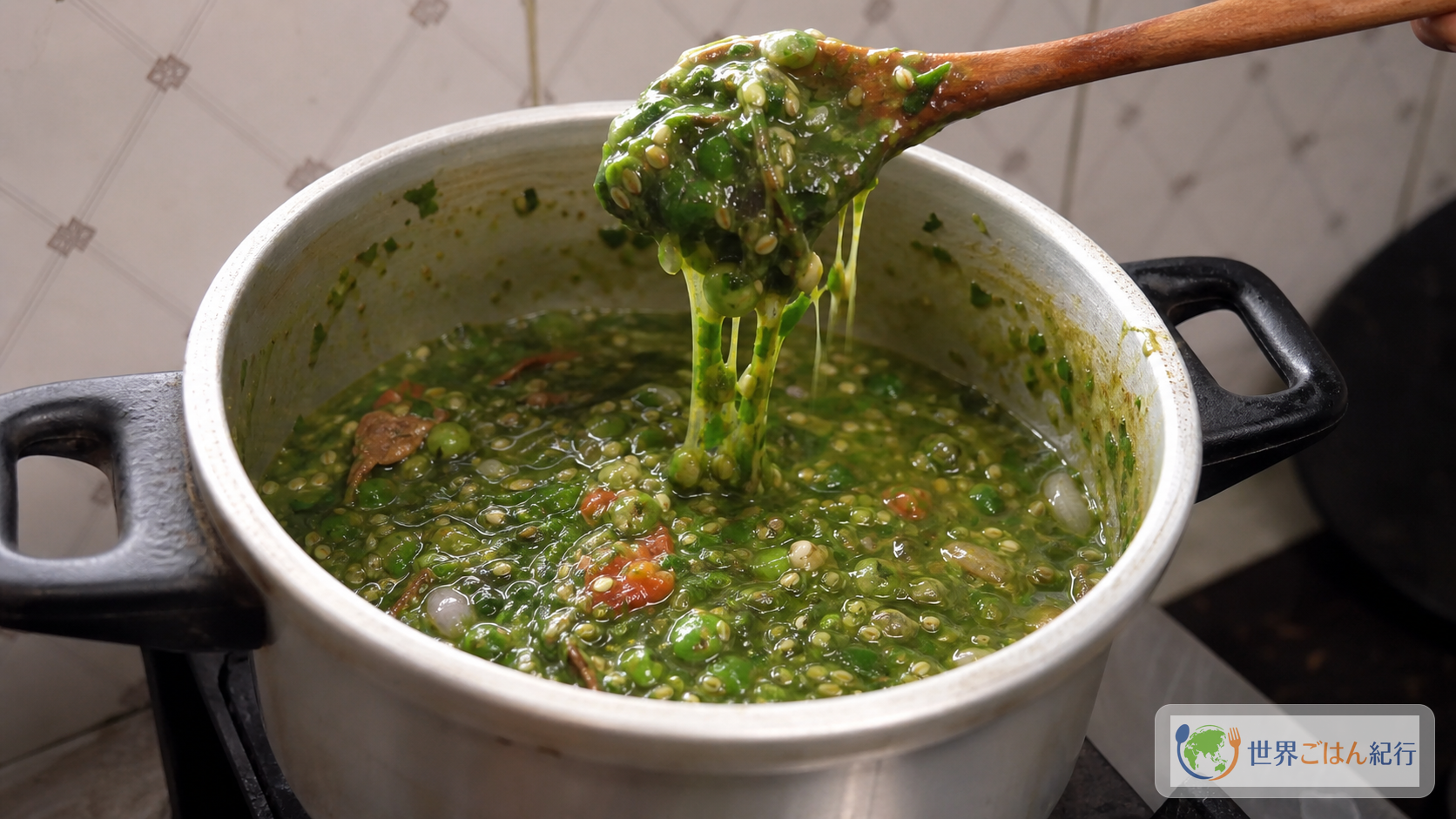
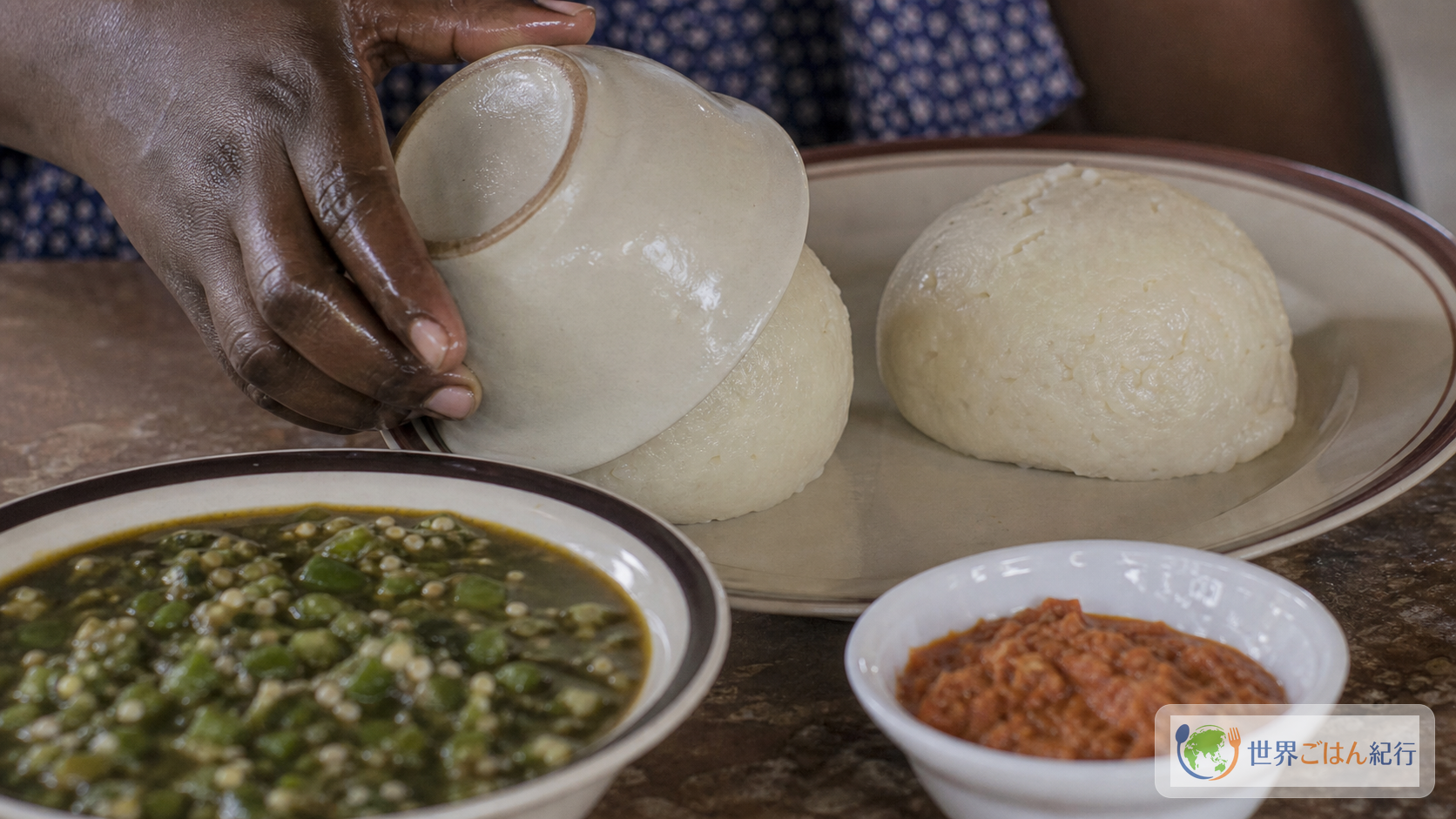
In Ghana it is written TZ, T-Zed, Tuo Zaafi and so on, and it is eaten at everyday tables, mostly in the north. Tuo is often explained as porridge or a mass of cooked grain, and Zaafi as "hot," so the name itself describes the method: working grain flour with hot water. Locally it is served with a green soup with the sliminess of ayoyo (jute mallow) or okra, a red tomato-and-oil sauce, and sometimes a meat or fish stew.
The hard part at home is less the ingredients than the firmness. It has none of the sourness of banku and does not lean as far toward elastic as fufu. The aim is to keep the aroma of cornflour, use cassava flour to bind, and finish it soft enough for the green soup to cling to it.
Tuo Zaafi is usually introduced as a dish of northern Ghana, and in cities it is sometimes shortened to TZ. West Africa has many similar grain dumplings, and it is related to to from Burkina Faso and ugali from East Africa, but TZ is strongly associated with being eaten alongside a green, slimy soup.
Ingredients (serves 4)
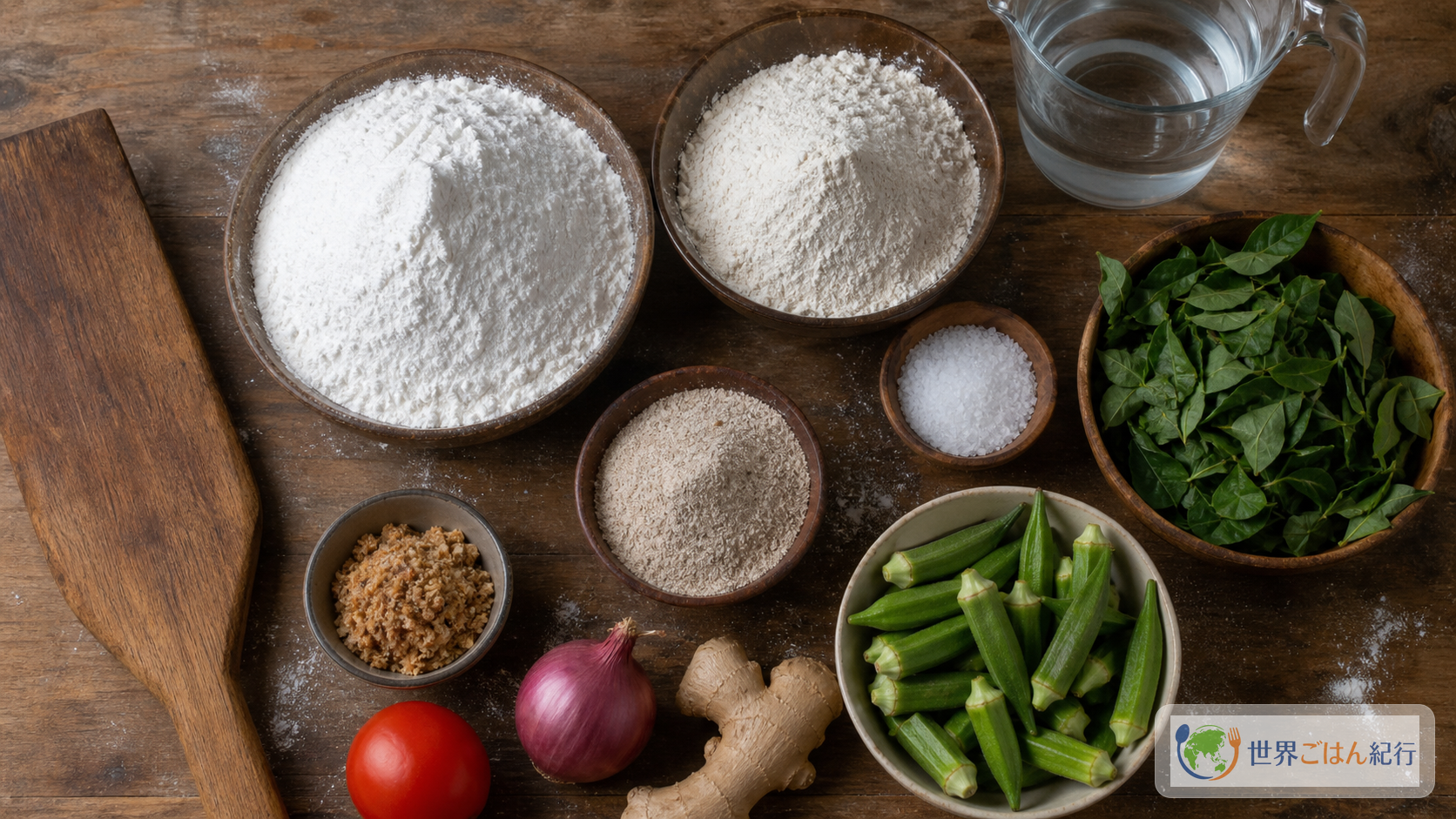
This recipe uses dried seafood. If anyone reacts to dried small fish powder, dried fish powder or dried shrimp powder, do not cook it in the same pot; make a separate seafood-free version with a little miso. Use commercially sold, processed cassava flour for food. Do not try to reproduce this by preparing raw cassava at home.
Nutrition at a glance
A serving is roughly 420 kcal, 9 g protein, 8 g fat and 82 g carbohydrate. Because it is a flour-based staple, it is very filling. For dinner, rather than stacking red red, another Ghanaian dish built on beans and oil, on the same day, pairing it with greens, grilled fish and a light soup is easier on the appetite.
Shopping essentials
Tuo Zaafi cannot be made with ordinary soft wheat flour. What to look for are the fineness of the cornflour, the stickiness of the cassava flour, and red palm oil, which brings the oil sauce closer to the local one. Molokhia, okra, tomato and onion are easy to buy nearby.
Cornflour decides the aroma of the dough. If you use only coarse polenta-style meal, grains remain, so for a first attempt choose finely ground corn flour to avoid failure.
Cassava flour is what holds the dough together. Too much makes it heavy like rice cake, and too little makes it dissolve into the soup. For the first batch, aim for just under 1 part cassava flour to 3 parts cornflour.
Red palm oil does not go into the Tuo Zaafi itself, but it brings the aroma of the oil sauce served beside it closer to the local one. Rather than a large bottle, start with a small one; it is not an oil you use in bulk like frying oil.
Method
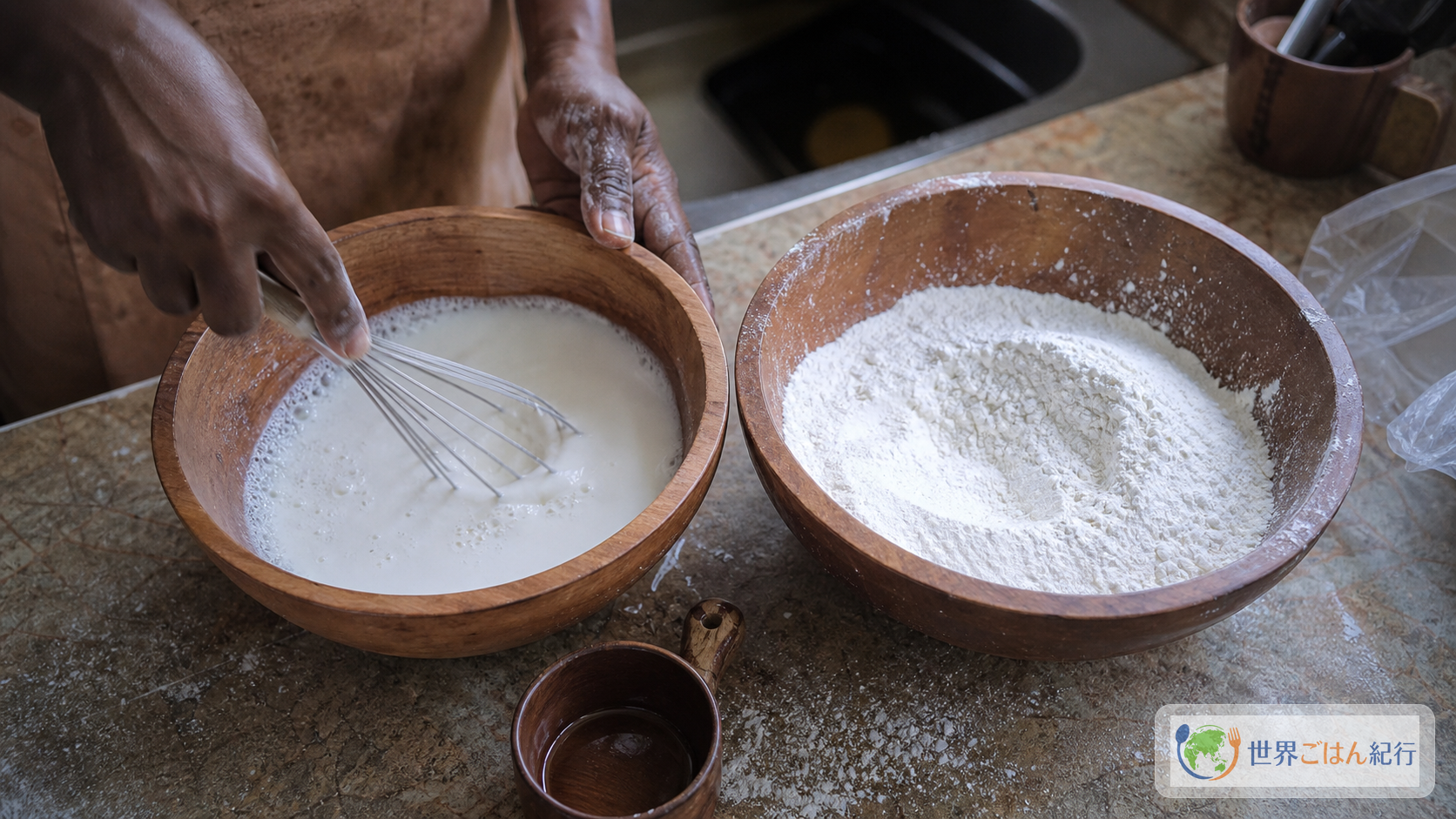
Rather than adding all the flour at once, make a loose porridge first and then work in the remaining flour, which reduces lumps. A wooden spoon with a wide, stiff head is easier for turning the dough off the side of the pot than a thin one.
Adjustments for a home kitchen
If you decide how to choose the flour first, there is little left to wonder about. Flour fineness and blends vary from home to home locally, but for a first batch it is easiest to make finely ground cornflour the star and cassava flour the support.
| Ingredient in question | Role to preserve | Practical answer elsewhere |
|---|---|---|
| Cornflour | Staple aroma, grain character | Choose fine grind. If coarse, up to 1/3 of the total |
| Cassava flour | Binding, stickiness, resistance to breaking | Start at 100 g. With tapioca starch, up to 80 g |
| Sorghum flour, millet flour | Northern-style grain aroma | Replace only 50 g of the cornflour |
| Ayoyo | Green sliminess, green aroma | Substitute molokhia and okra |
| Dawadawa (fermented locust bean) | Fermented savoriness | 1 tsp miso or 1/2 tsp fish sauce in the soup |
| Red palm oil | Aroma and color of the oil sauce | Use just 1 tbsp. Do not add too much |
If you want the aroma of the flour a bit more northern, replace 50 g of the 320 g cornflour with sorghum flour. Using a lot from the first attempt changes how it absorbs water and makes the dough crack on the sides of the pot. It is more stable to keep it at 50 g, and once you are used to it, limit it to 80 g.
Why it fails
Lumps remain
The flour was added all at once, or the porridge was too hot. Add the flour in 4 portions and work each in until the white streaks disappear. Small lumps are crushed by pressing against the side of the pot, but large ones do not disappear later. The best prevention is to mix cornflour and cassava flour evenly in a separate bowl before adding.
Too loose to round
Too much water was added. Working on low heat for 2 to 3 minutes tightens it a little, but if it is so loose that it dissolves into the soup, sift in 2 tbsp cornflour through a tea strainer and work it another 3 minutes. Right after adding flour it tastes floury, so always steam it for 5 minutes with the lid ajar.
Too stiff for the spoon
There is too little water for the amount of flour, or the heat is too high and too much water has evaporated. Add the reserved porridge back 3 tbsp at a time and work on low heat. Bringing it back with porridge rather than plain water keeps the flour aroma from thinning. If the dough is so stiff the spoon seems about to break, take the pot off the heat and wait 30 seconds, and it becomes easier to stir.
A floury smell remains
It was not steamed enough. After working the dough, leave it on low heat for 5 minutes with the lid slightly ajar. If you turn off the heat and just leave it, the floury center is slow to go away, so use the residual heat of low heat. If you smell scorching, turn the bottom over, then turn off the heat, cover and rest for just 2 minutes.
The soup is thin and does not cling
There is too little okra and molokhia, or it was simmered so long that the sliminess broke. Add okra sliced 5 mm thick and molokhia without chopping it too fine, and stop after 4 to 5 minutes over medium-low heat. Keep the baking soda to 1/8 tsp at most. Adding more makes the color prettier but blurs the flavor.
How to eat it, menus, storage
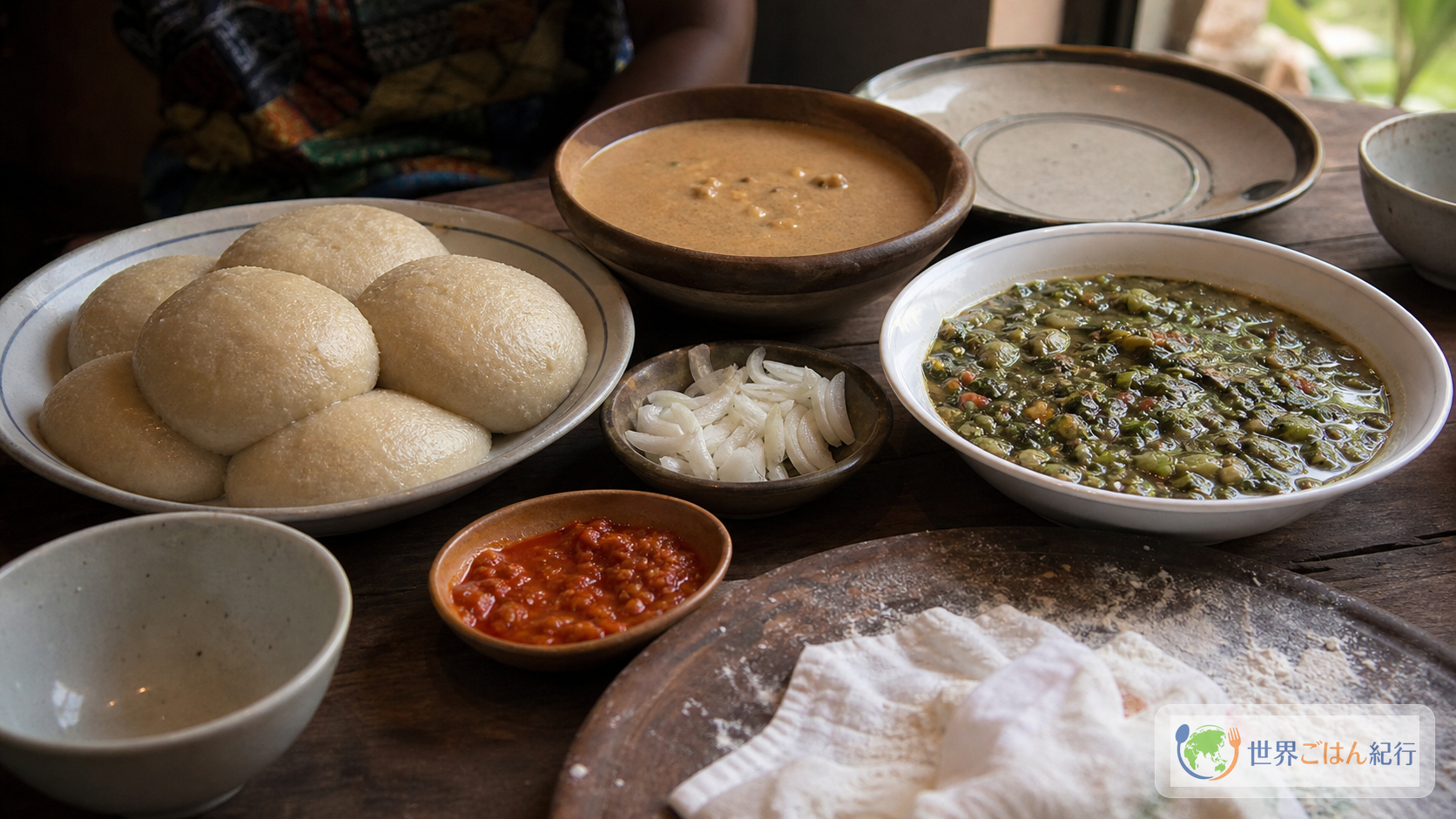
At the table in Ghana, you take a small piece of Tuo Zaafi by hand and eat it as if scooping up the soup. At home, a spoon is fine at first. Pour on plenty of green soup and put a little red oil sauce beside it, and you get in turn the gentle sweetness of the flour, the green aroma and the spicy oil.
When building a Ghanaian menu, the trick is not to pile up staples made from the same flour. Save waakye (in Japanese) and kelewele (in Japanese) for another day, and on the day you make Tuo Zaafi let the soup be the star. On a day when you want a deeper nutty aroma, put a small amount of groundnut soup on a separate plate and the table widens.
| State | Storage guide | Reheating |
|---|---|---|
| Freshly made | Within 2 hours | Eat while warm |
| Refrigerated | Until the next day | 50 seconds at 600 W after adding a little water with a spray bottle |
| Frozen | Not recommended | The flour tends to crack and turn crumbly |
| Soup only | 2 days | Warm on low heat for 3 minutes; if the sliminess has weakened, add 20 g chopped okra |
If you make it ahead, always keep the dumpling and the soup apart. Left soaking in the soup, the surface softens and falls apart. Press plastic wrap directly onto leftover dumpling to prevent drying before refrigerating.
Background of the dish
Tuo Zaafi is an easy dish through which to think about the food culture of northern Ghana. Rather than rice or wheat, the axis is how grain and root flours such as corn, millet, sorghum and cassava are made into a staple. Flour is made to hold plenty of water into a porridge, then more flour is worked in and the mass is brought to a firmness that can scoop up soup. This handling is the knowledge of a region that has treated grain flours as the daily staple.
In traditional recipe material from northern Ghana, Tuo Zaafi is treated not as a special-occasion food but as an everyday staple that also appears in home and school-feeding contexts. So when you recreate it at home, what matters is not adding rich meat but working the flour smooth, never running out of green soup, and supplementing the aroma with a small amount of oil sauce. Seen as a dish that creates fullness through the pairing of staple and soup, even if it looks plain, it becomes easier to plan a menu around it.
What is interesting is that Tuo Zaafi is not complete as a "dumpling" on its own. Only with the sliminess of ayoyo or okra, the savoriness of dawadawa or dried seafood, and the heat of the red oil sauce does it stand up as a dish. It is often described simply as a "Ghanaian dumpling," but it is actually a staple eaten together with soup.
Among West African staples, banku stands out for the sourness of fermented corn dough, fufu for the elasticity of pounded yam or flour, and to from Burkina Faso for its lightness as a grain dumpling that receives sauce. Tuo Zaafi sits between them: soft yet not collapsing, a staple made to be coated in green soup.
When you first make it, you tend to add too much flour to keep it from breaking. But Tuo Zaafi is eaten with soup, so it does not need to be firm enough to hold with chopsticks. The target is that it falls as a large mass when lifted with the spoon, yet breaks apart with a spoon. Aim there and it is easy to eat even in a home kitchen.
FAQ
Q1. Can I make it with cornmeal?
You can, but cornmeal that is only coarsely ground feels gritty. If you use it, limit it to 240 g cornflour and 80 g finer cornmeal, and bind the rest with 100 g cassava flour. Coarse grains take longer to cook, so extend the porridge stage by 2 minutes.
Q2. If I have no cassava flour, can I use tapioca starch?
Yes. It turns very sticky, though, so use 80 g tapioca starch in place of 100 g cassava flour. If the dough stretches like rice cake, add 20 g more cornflour next time. Potato starch goes too translucent and turns hard as it cools, so it is not suitable.
Q3. Without ayoyo, will it not taste authentic?
Ayoyo is ideal if you can find it, but molokhia and okra get you quite close. What matters is that the soup has sliminess and a green aroma. Spinach alone is not sticky enough, so keep either okra or molokhia.
Q4. Is red palm oil essential?
It is not essential for the dumpling itself. Using it in the oil sauce gives a local aroma and color, but if you dislike it, you can substitute 1 tbsp neutral oil plus 1/2 tsp paprika. With plain vegetable oil only, though, the outline of the aroma is weak, so make up for it with chili and tomato paste.
Q5. Is it still good the next day?
It can be eaten until the next day. Press plastic wrap directly onto the dumpling and refrigerate; warm at 600 W for 50 seconds, add a little water with a spray bottle, and heat again for 20 seconds. Keep the soup in a separate container and rewarm it on low heat for 3 minutes. Freezing is not recommended because the texture tends to crack.
Sources
- Nutrition Connect. "Traditional Recipes from the Northern Region of Ghana" (accessed 21 May 2026)
- Ghanaian Foods. "How to Prepare Tuo Zaafi" (accessed 21 May 2026)
- Cambridge Core, British Journal of Nutrition. "School feeding contributes to micronutrient adequacy of Ghanaian schoolchildren" (accessed 21 May 2026)
- Food and Humanity. "Indigenous preparation practices, energy intensities and consumer characteristics of maize-okara-cassava Tuo-Zaafi in Ghana" (accessed 21 May 2026)



