
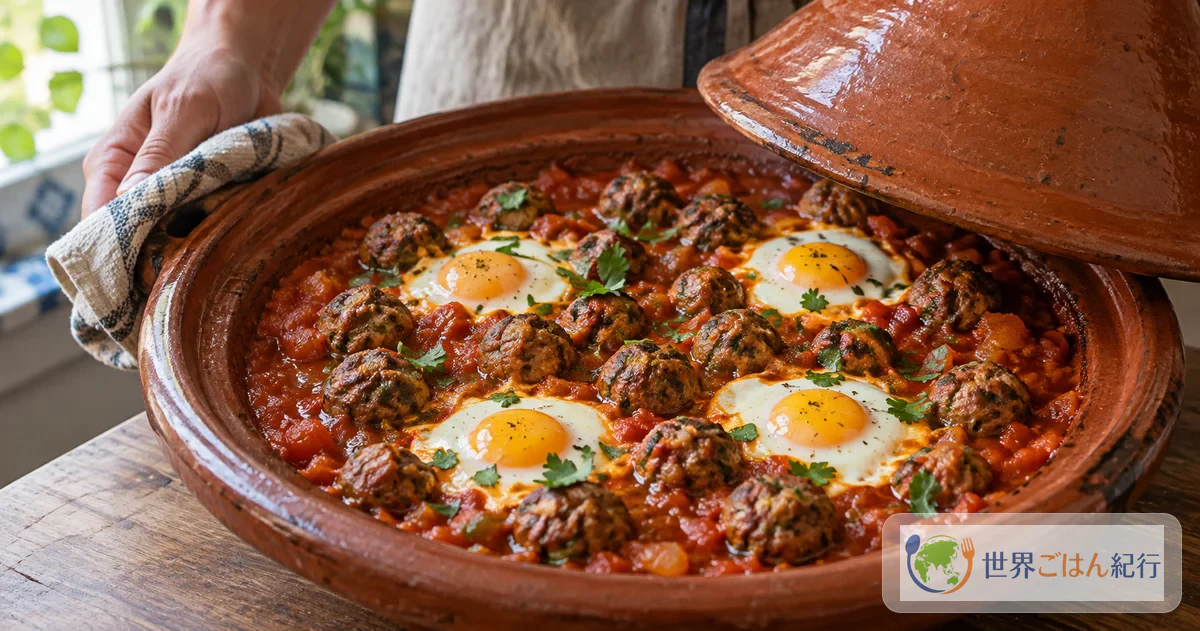
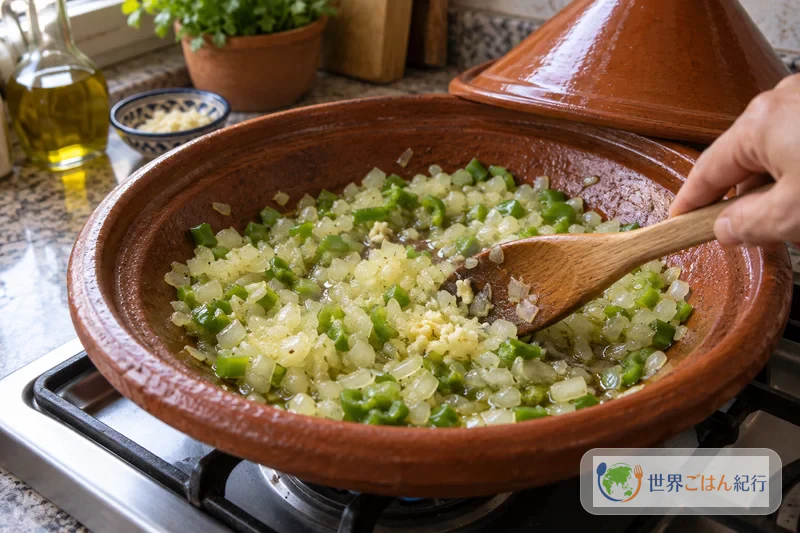
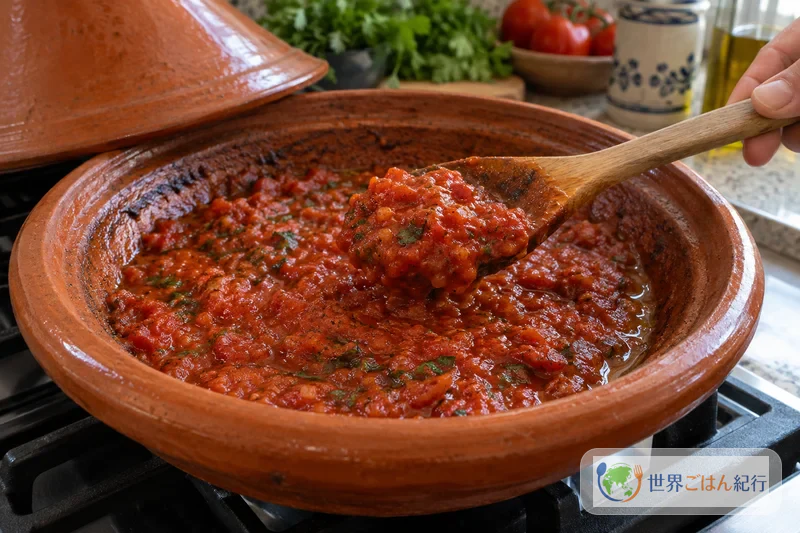
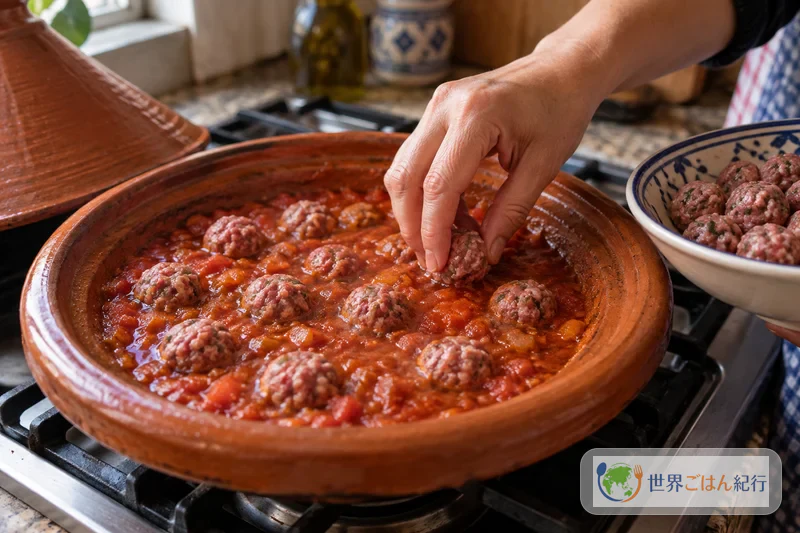
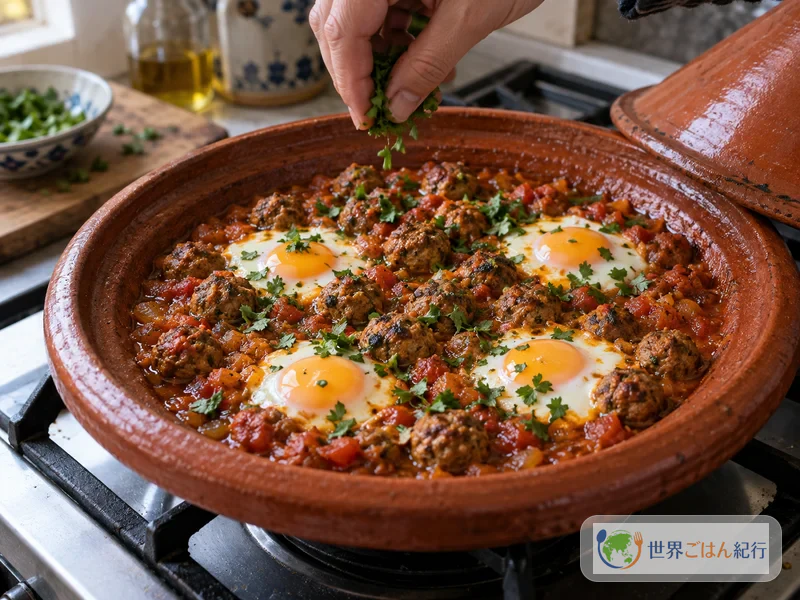
In the middle of the table sits a single steaming tagine. Lift the lid and you find small meatballs packed tightly in red tomato sauce, and in the gaps the egg whites are quivering and just starting to set. No one uses individual plates. Everyone tears bread and scoops meatballs and sauce from the edge of the pot straight into their mouths. Kefta mkaouara is a Moroccan home favorite, meatballs simmered in tomato sauce.
Small meatballs scented with cumin
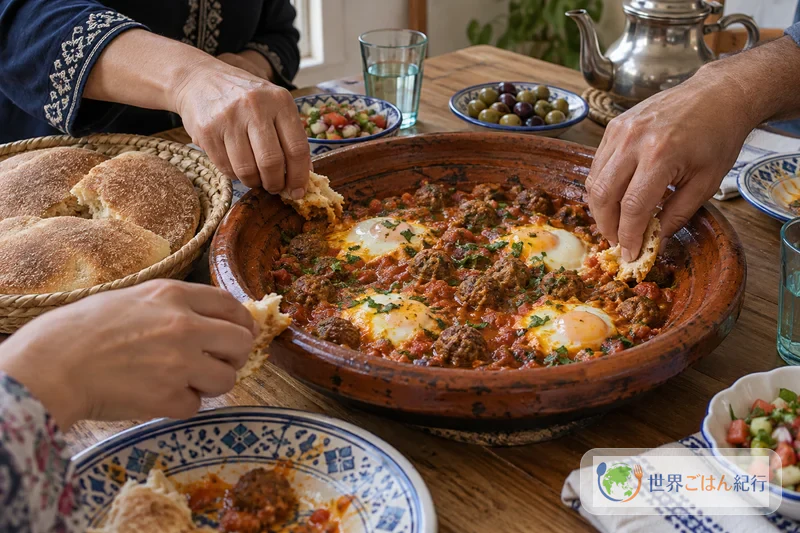
Kefta is a Moroccan meat mixture of ground beef or lamb flavored with herbs and spices. Roll it small and simmer it in tomato sauce, and you have this tagine. Christine Benlafquih, who wrote on Moroccan cooking for About.com from 2008 to 2016 and now runs the recipe site Taste of Maroc, introduces kefta mkaouara as a popular dish of meatballs simmered in a shakshuka-like tomato sauce.
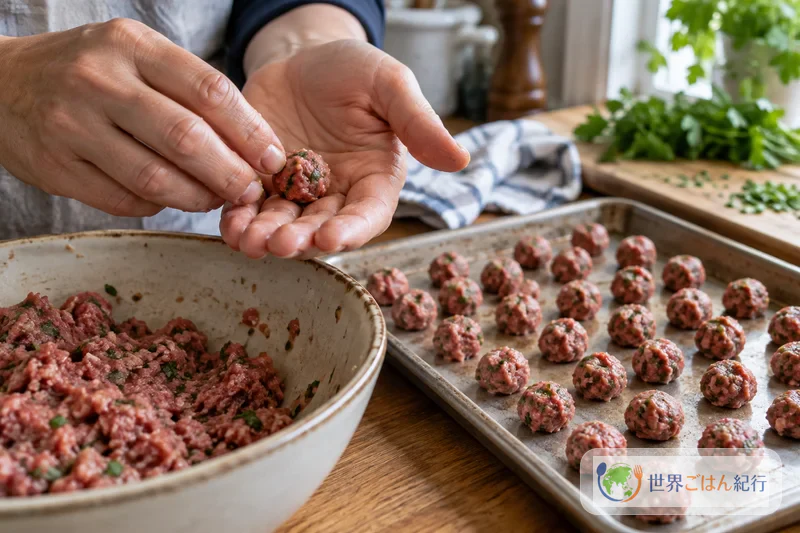
The meatballs in this dish are almost always rolled small, as if by rule. According to Benlafquih they are sometimes as small as marbles, and she herself rolls them about the size of cherries. Small ones cook quickly and take up the flavor of the sauce well. They are also easy to pick up one by one with bread, which may be one of the reasons for rolling them small.
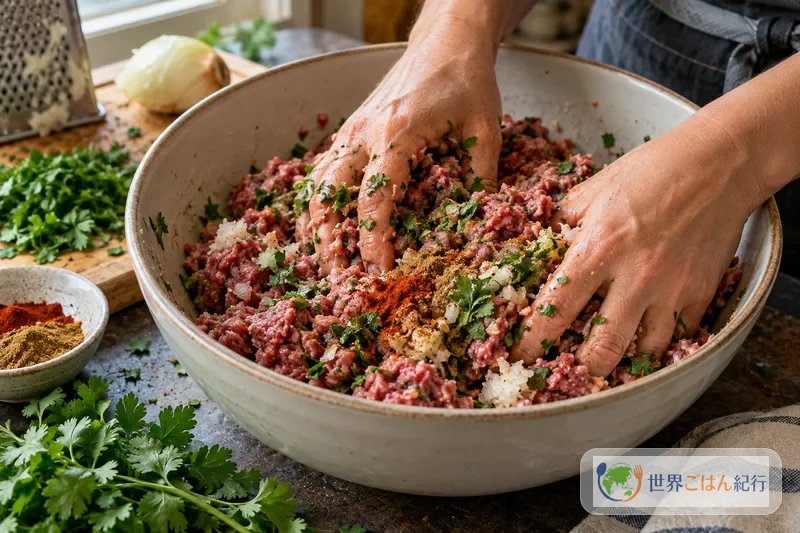
The meat is usually ground beef, ground lamb, or a mix of the two. Mixed into the meat are grated onion, parsley and cilantro leaves, paprika, cumin, salt and black pepper, with a little turmeric or cinnamon if you like. Paprika and cumin go into the tomato sauce too, so the meatballs and the sauce are linked by the same aroma, which is very much the character of this dish.
Dropping in eggs is classic but not required. Benlafquih writes that although many people add eggs, you can also finish it without eggs, or add green olives or chilies. If you add olives they bring saltiness, so go lightly with the salt in the sauce.
When serving, put the tagine on the center of the table just as it is. Benlafquih writes that it is the Moroccan custom for everyone to gather around and eat from the same pot, scooping meatballs and sauce with bread. She adds that mint tea afterward is also nice.
Ingredients (serves 4)
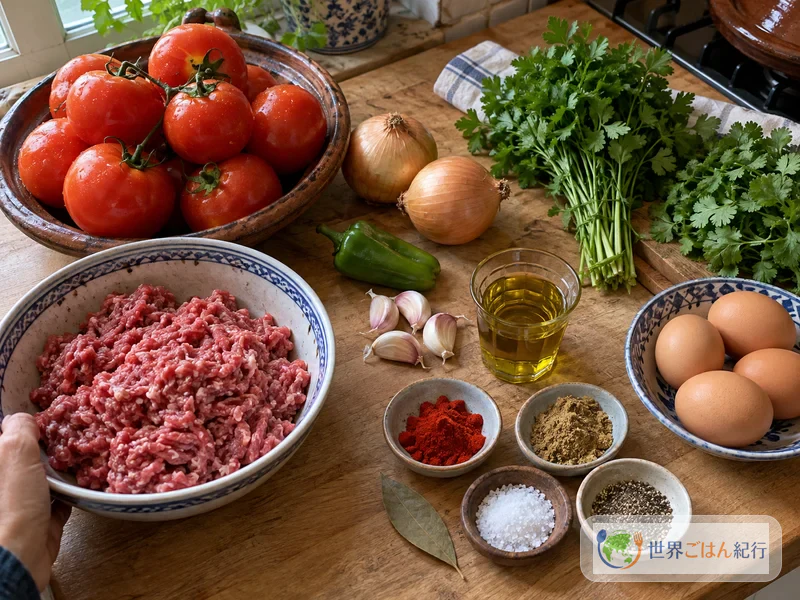
The ingredients follow the Taste of Maroc recipe (4 servings). Pounds and cups have been converted to grams and ml.
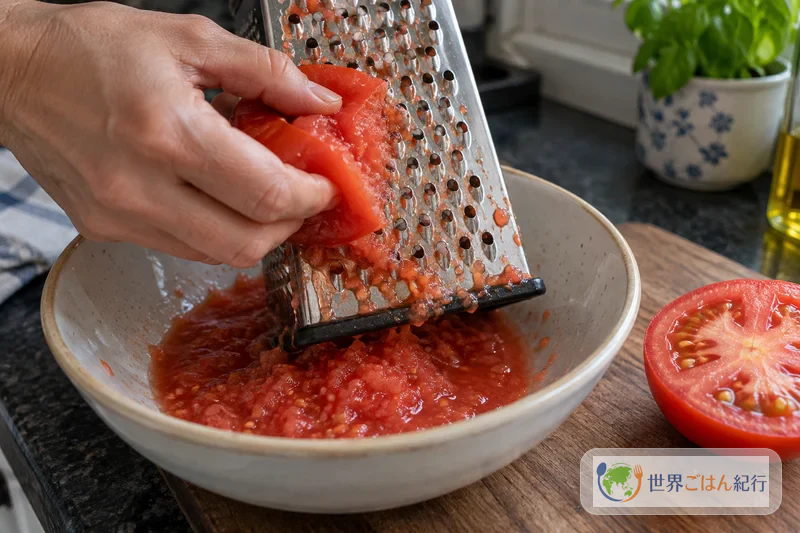
What decides the flavor of the sauce is how ripe the tomatoes are. Choose ones with taut skin that are red right up to the stem. Benlafquih also describes a method for soft, ripe tomatoes: cut them in half crosswise, remove the seeds, and grate the cut face of the flesh on a box grater. The skin stays in your hand and is discarded. Grating gets you to a sauce a little faster than chopping.
Paprika and cumin go into both the meatballs and the sauce. Measuring the spices first into two small dishes, "for the meatballs" and "for the sauce," prevents forgetting or overdoing them.
How to make kefta mkaouara
Prep takes about 25 minutes, and from cooking down the sauce through cooking the meatballs and eggs, plan on roughly 45 minutes to 1 1/2 hours. The time for the sauce to reduce varies with how ripe the tomatoes are and the type of pot.
Cook ground meat thoroughly to the center. Japan's Ministry of Health, Labour and Welfare says that heating the center to 75°C for at least 1 minute kills pathogens such as enterohemorrhagic E. coli. Especially when children or older people will eat it, break a meatball open to confirm it is cooked through, and setting the egg yolks firm is safer too.
When using a clay tagine, on a gas flame use low heat so the flame does not strike the bottom of the pot directly. On induction or electric stoves, Benlafquih recommends placing a heat diffuser. Nonstick skillets take longer to cook the tomatoes down, so start early to be safe.
To make softer meatballs, you can mix 1 beaten egg and 80 ml (1/3 cup) breadcrumbs into the ground meat. But Benlafquih notes that this departs from the traditional method.
Scooping straight from the pot with bread
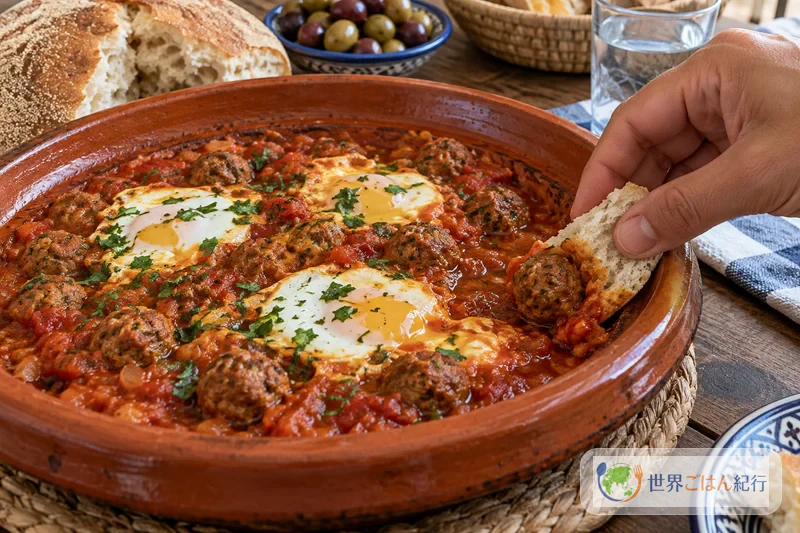
When it is done, bring it to the middle of the table in the pot. Sandwich a meatball with bread, wipe up the sauce, and eat it with the egg yolk mixed in. A sauce in which the aroma of cumin and the acidity of tomato have come together is best when soaked into bread. Wiping up the sauce to the last bit with bread is the greatest pleasure.
If you would like to bake Moroccan bread, harcha (in Japanese), a semolina bread cooked on a griddle, goes very well. If you like the combination of tomato and egg, comparing it with shakshuka, eaten in Israel and North Africa, is also recommended.
Frequently asked questions
Can I make it without a tagine?
Yes. Benlafquih also writes that although a clay or ceramic tagine is used traditionally, a deep skillet works the same way. Use one with a lid.
Can I use ground chicken?
Yes. Benlafquih writes that beef or lamb is common, but ground chicken or turkey can be used. With ground chicken, always make sure it is cooked through to the center.
What if I want more sauce?
Multiply all the tomato sauce ingredients by 1.5. Allow a longer cooking-down time for the extra sauce.
Can I make it ahead?
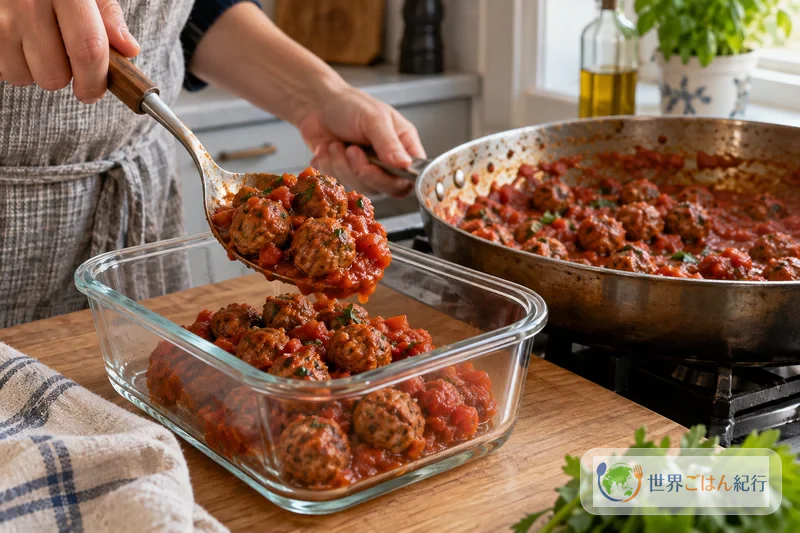
Cool the meatballs and sauce before the eggs go in, refrigerate, and eat them soon. To reheat, move to a pot and warm until bubbling, then make sure the meatballs are hot all the way through. Dropping the eggs in after reheating gives a nicer result.
Sources
- Christine Benlafquih, “Moroccan Kefta Tagine with Tomato Sauce – Kefta Mkaouara (Mkawra),” Taste of Maroc, updated 20 December 2021. Accessed and checked 22 October 2026. https://tasteofmaroc.com/moroccan-meatball-tagine-tomato-sauce/
- Taste of Maroc, “About.” Accessed and checked 22 October 2026. https://tasteofmaroc.com/about/
- Ministry of Health, Labour and Welfare (Japan), a leaflet for restaurants on cooking beef and pork liver and pork thoroughly. Accessed and checked 22 October 2026. https://www.mhlw.go.jp/file/06-Seisakujouhou-11120000-Iyakushokuhinkyoku/innsyokutenn.pdf



