
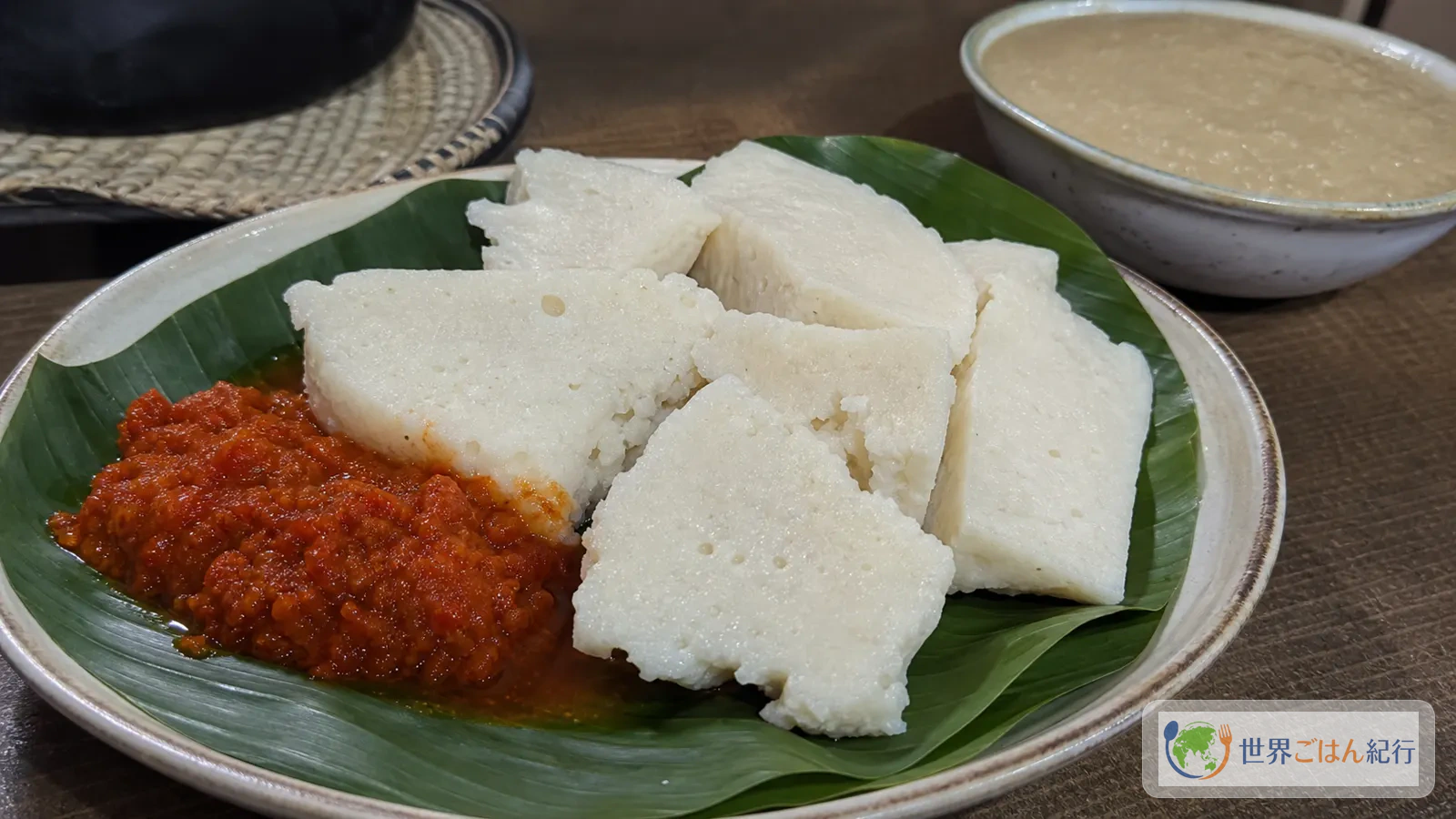
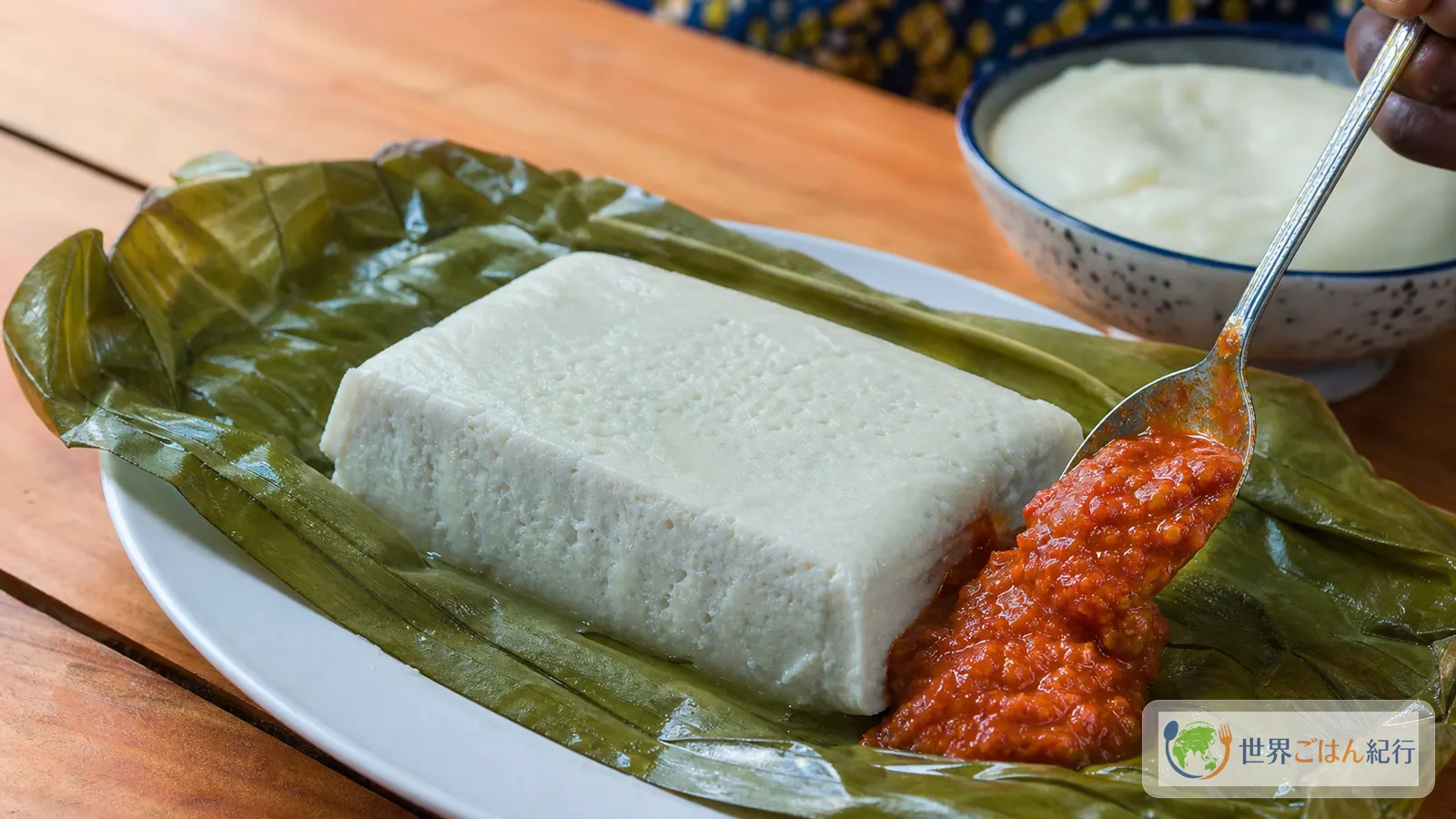
The moment a red sauce goes on a white steamed bean pudding
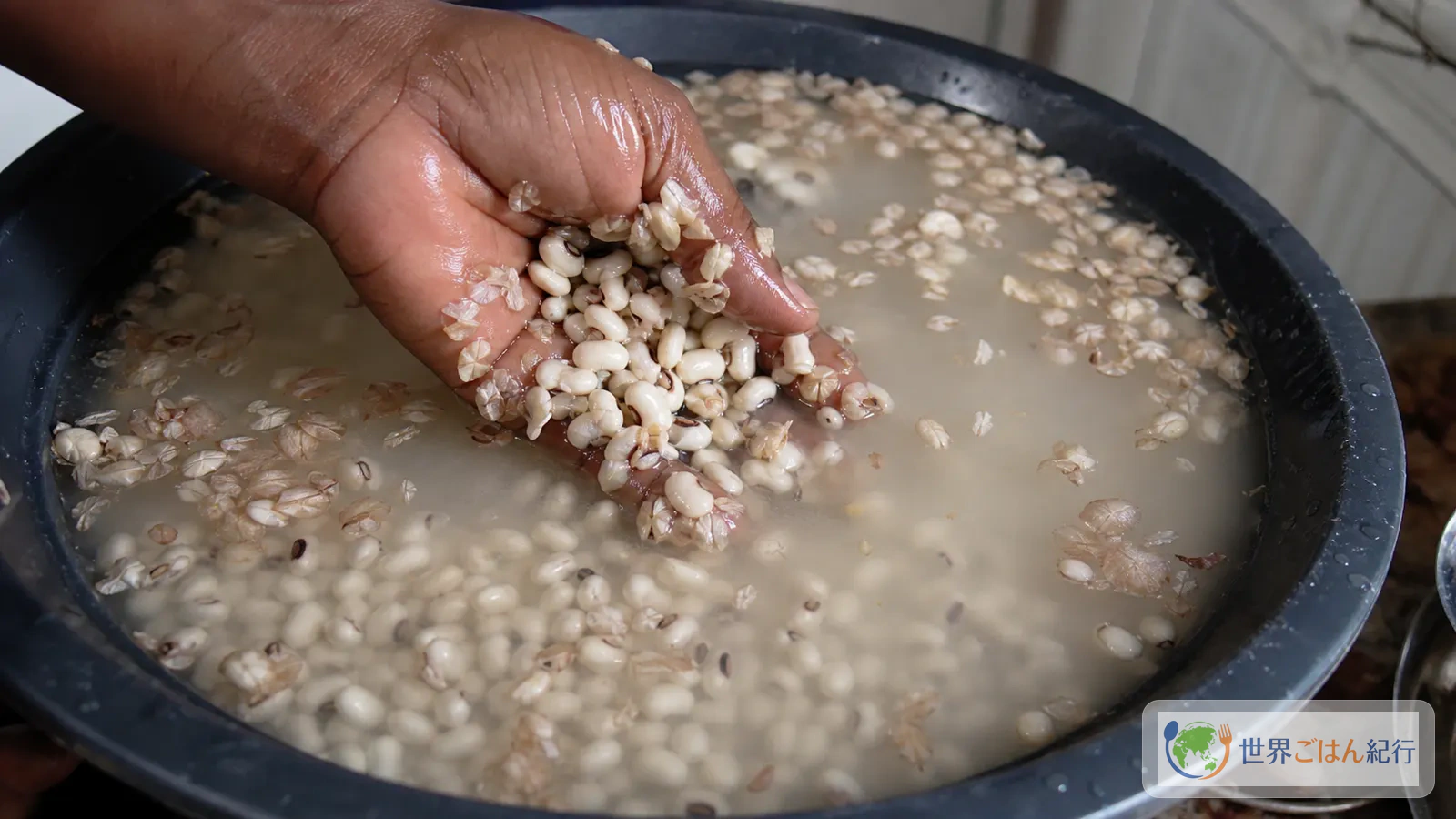
Soak black-eyed peas in water at night, and the next morning your kitchen becomes a little West African prep room. Rub the beans while changing the water and the thin skins float off, leaving only white beans at the bottom of the bowl. Fry them in oil and you have akara (in Japanese); take them to the steamer and you have ekuru.
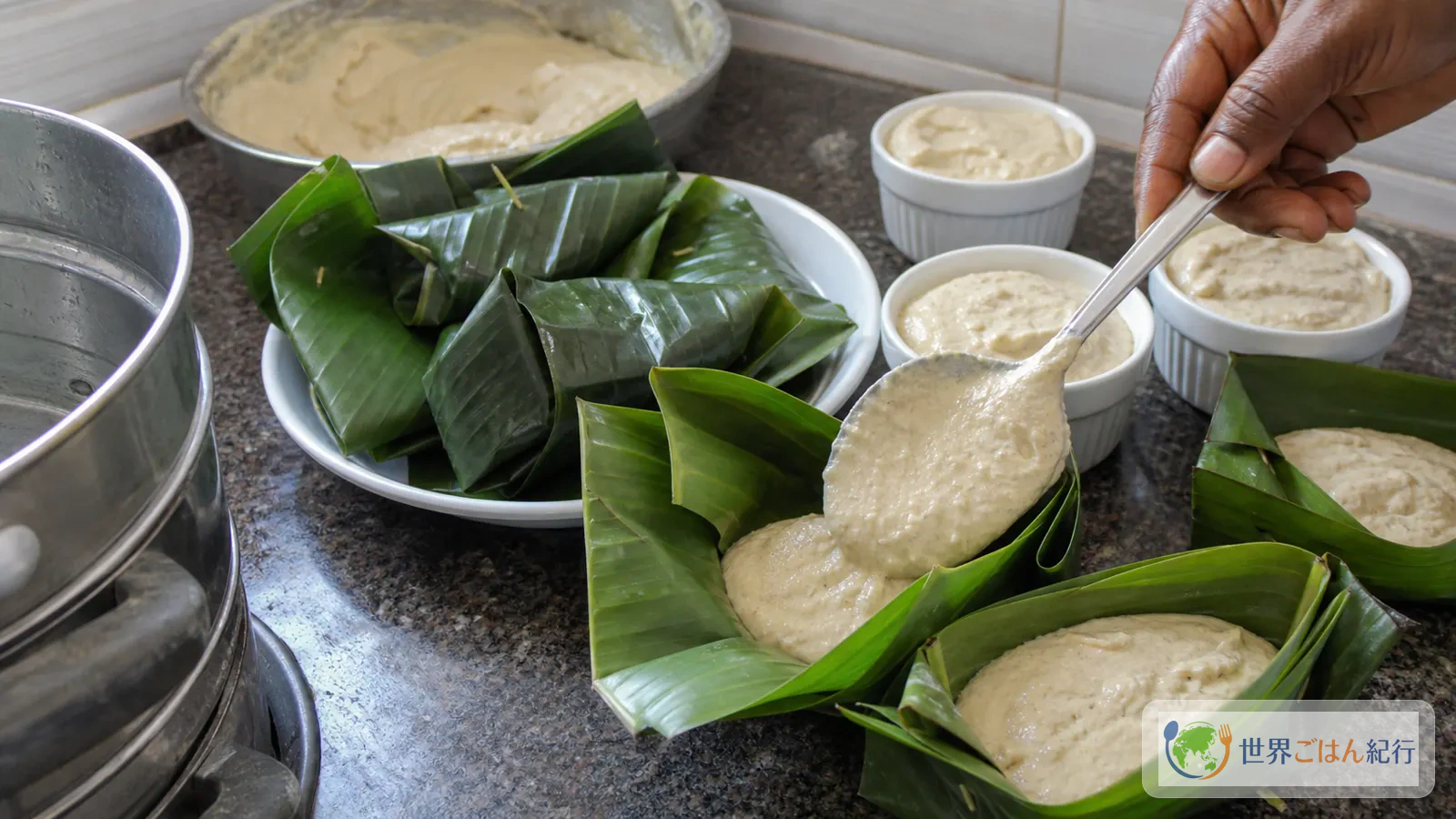
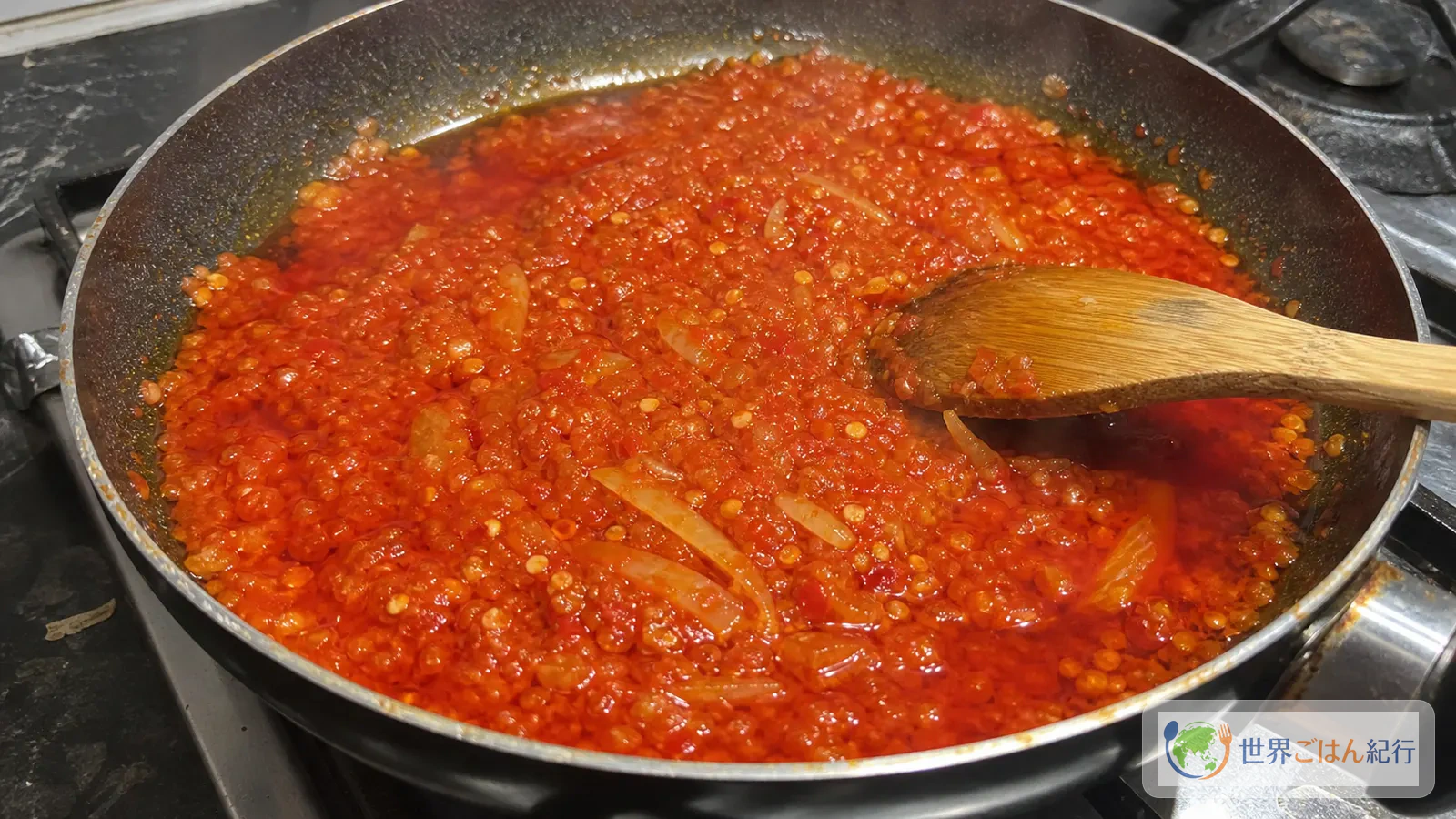
Ekuru is a white steamed bean pudding loved in Yorubaland in southwest Nigeria. Skinned black-eyed peas are made into a thick paste, and without mixing oil or chili into the batter it is steamed white. It is eaten with a red fried-pepper sauce such as ata dindin on top, so the contrast of white and red stands out clearly on the plate.
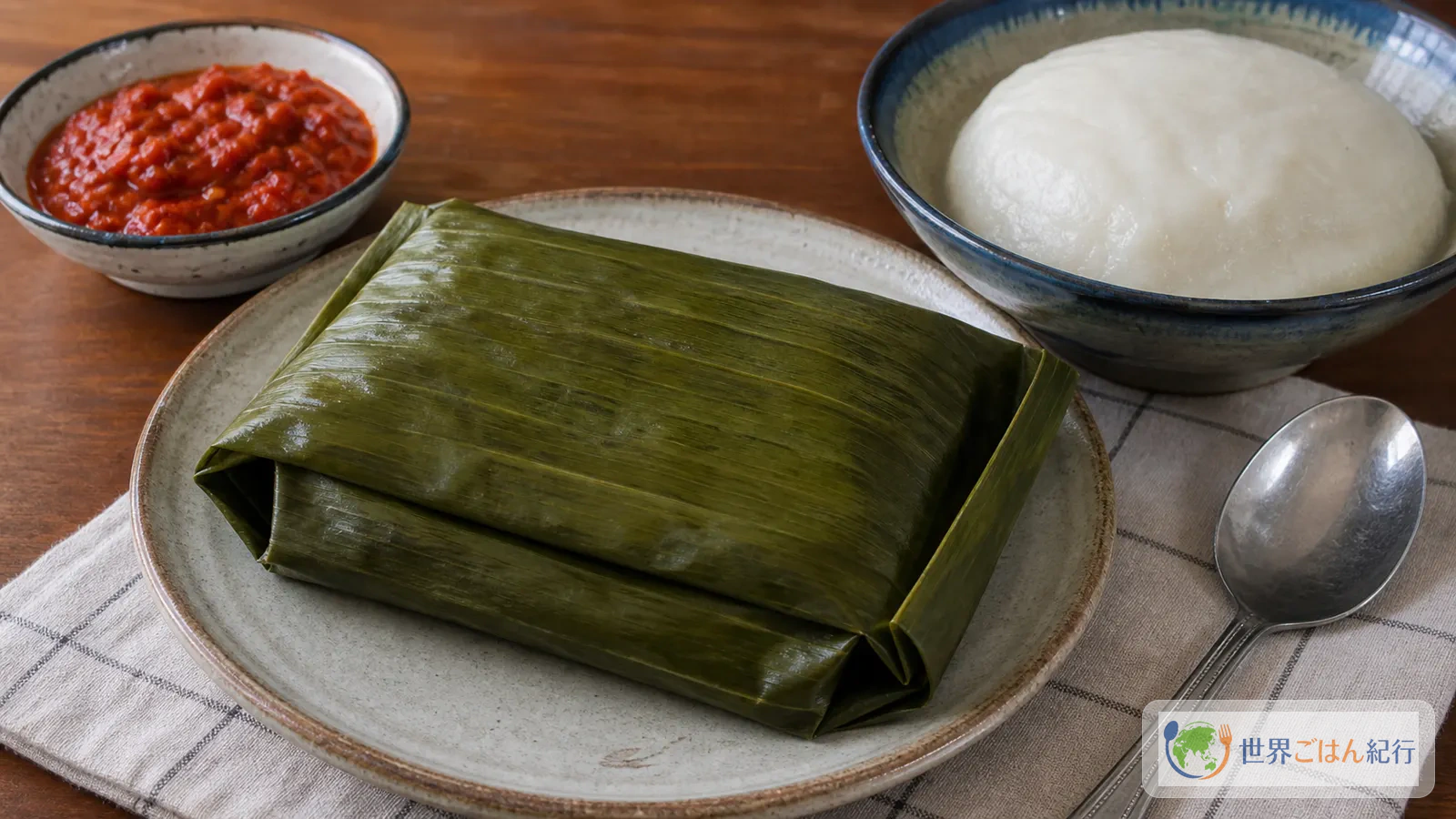
Among Nigerian dishes, compared with the red rice of jollof rice, the grilled aroma of suya and the thick seed soup of egusi soup, ekuru is a quiet dish. But being quiet, it leaves nowhere to hide. Too much water and it will not set, without air it is heavy, and rough steaming makes it crack.
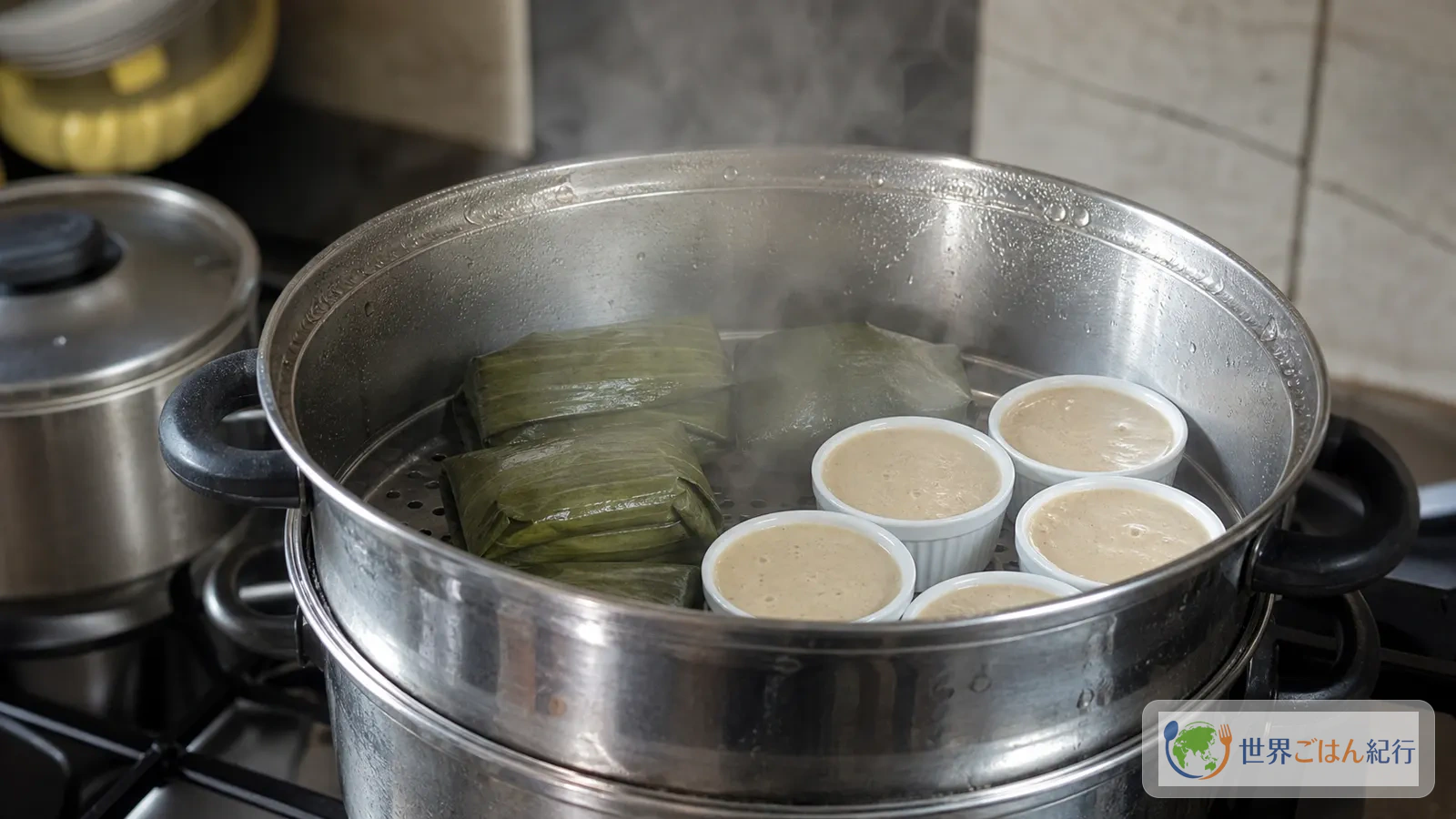
This article makes ekuru with black-eyed peas that are easy to buy, heatproof cups and a household steamer. If you have banana leaves the aroma gets closer, but on days you don't, steaming in cups is fine. The points to protect are three: peel the beans, make a thick batter, and finish the sauce separately and richly.
What is ekuru?
In English-language explanations ekuru is sometimes introduced as plain steamed bean pudding or white moin moin. Moin moin is also a steamed dish of black-eyed peas, but it is often made with oil, chili, onion, fish and egg mixed into the batter to give it color and fillings. Ekuru is the opposite: a white batter lightly steamed and combined with a spicy sauce outside.
The usual spelling of the local name is Ekuru, and it is often described as a Yoruba home dish. Wikipedia too lists it as a bean dish of the Yoruba of southwest Nigeria. Since information is still scarce in other languages, the first time it is easier to make if you remember it not as "white moin moin" but as a separate dish steamed white and eaten with a red sauce.
| Dish | Main cooking | Color and taste of the batter | How it is eaten |
|---|---|---|---|
| Ekuru | Steamed | White. Beans, salt and water at the center | With ata dindin, eko or pap |
| Moin moin | Steamed | Reddish, often with oil or fillings mixed in | Alone, with rice, garri or pap |
| Akara | Fried | Bean batter with onion and chili | Breakfast, with bread, pap, chili sauce |
Because of this separation, ekuru is also a dish that is easy to adjust on days the family eats together. People who like heat take more of the red sauce, while children and those who dislike heat break the white pudding small and take only a little sauce. Because the batter itself is not hot, the table can span a range of tastes. Even when you reproduce it elsewhere, keeping this idea of "separate the white body and the red sauce" makes the difference from moin moin visible.
Ekuru can also be used as a bean dish for days when you want to cut back on oil. But it is not a bland dish. If you cook the red sauce down properly until the oil seeps out, the whiteness of the beans and the aroma of the sauce mesh.
Ingredients (serves 4)
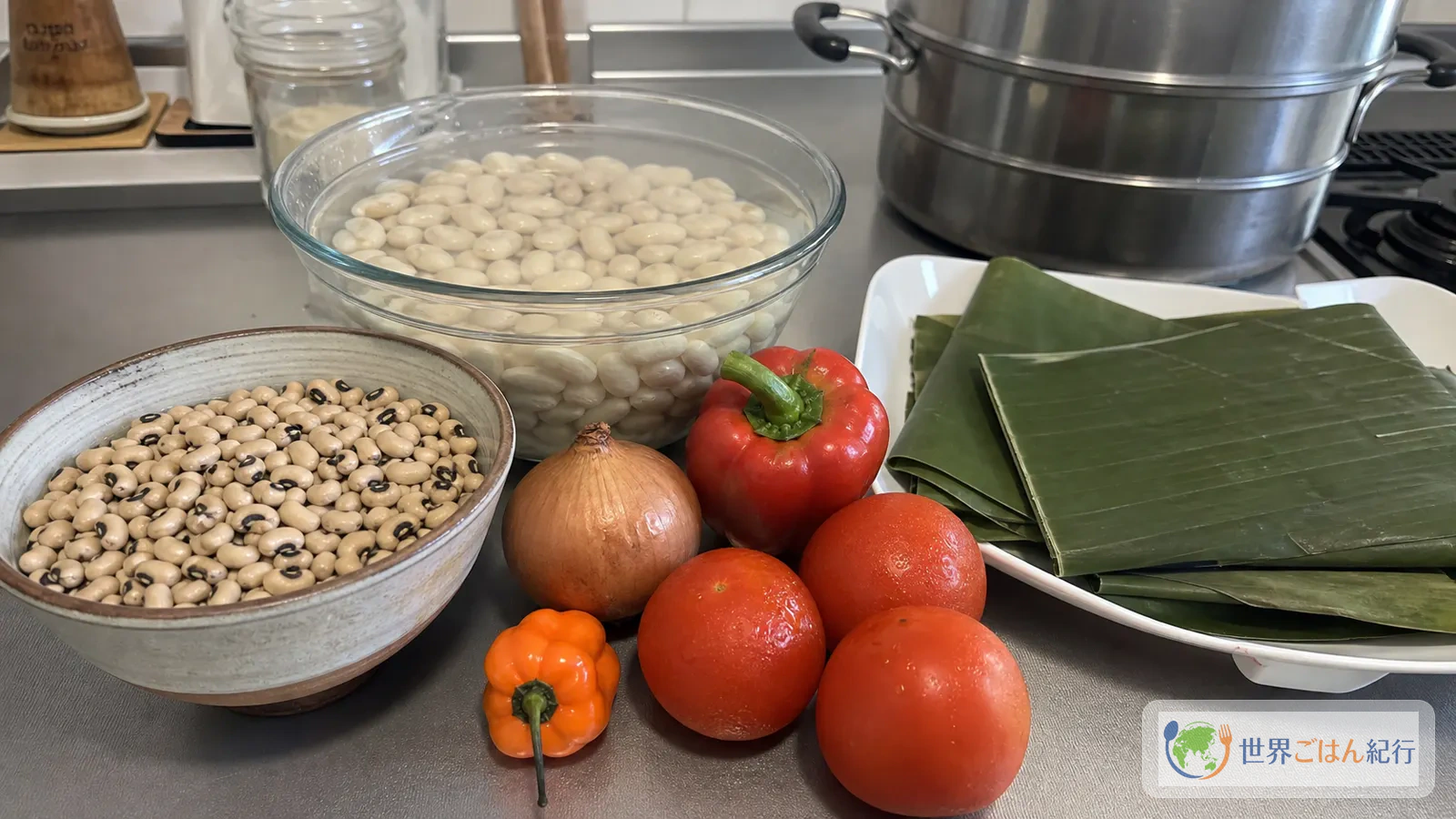
The main ingredient is beans. People who react to soy, peanuts or other legumes should avoid it or follow a doctor's instructions. If using ground dried shrimp or crayfish in the sauce, watch for crustacean allergy. Chili is strong even in a small amount, so on days you eat with children or elderly family, put the sauce in a separate dish and add heat afterward.
What is worth seeking out when shopping
Ekuru is not a dish for which you search for meat or dairy. What is worth seeking out are the black-eyed peas that are hard to find nearby, a food processor that can make a thick bean paste, and a steamer that makes steaming stable. Black-eyed peas also go to akara, Ghana's red red and waakye (in Japanese), so one bag on the shelf widens the way into West African cooking.
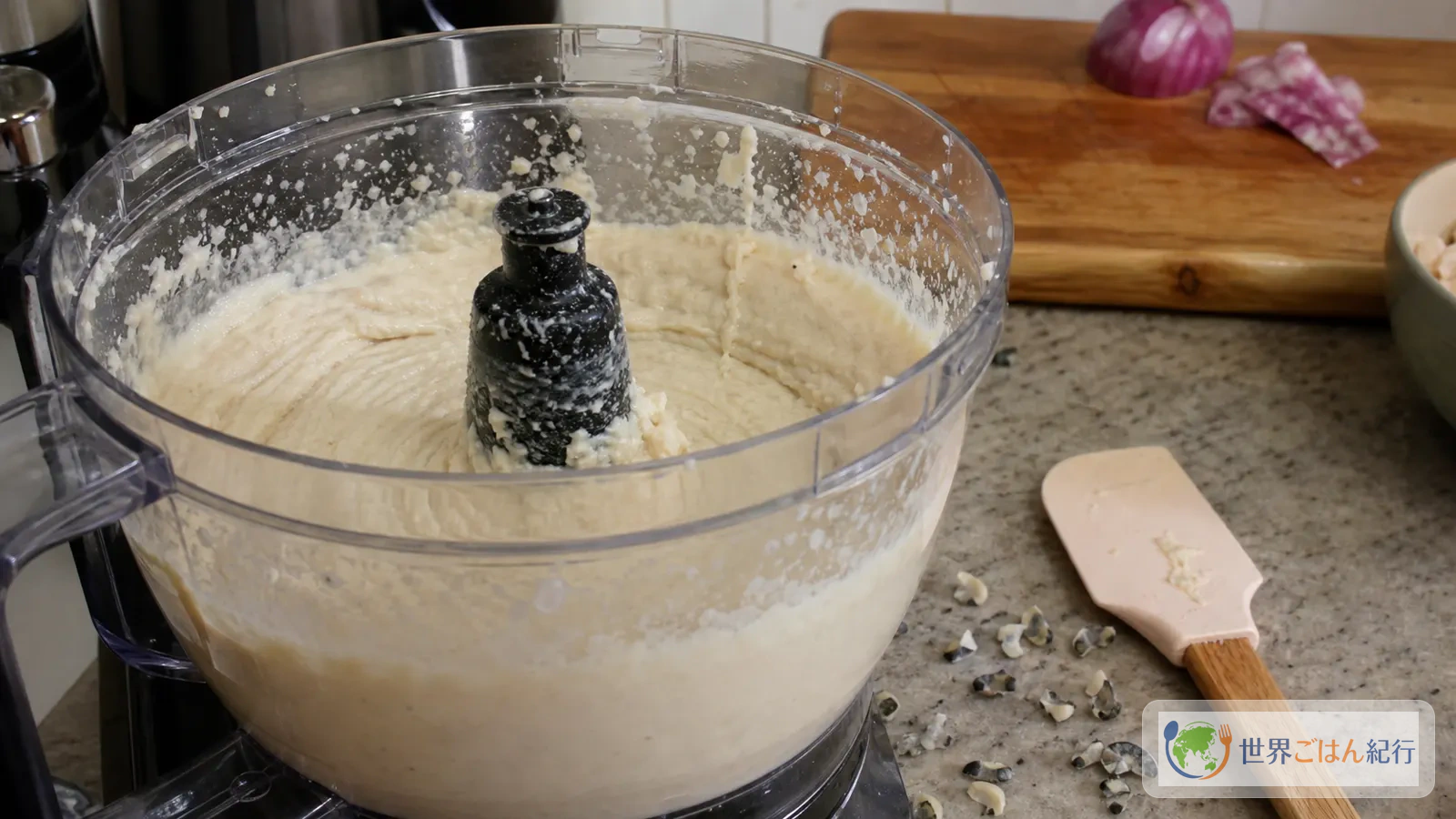
Skinned beans have to be blended with little water. An ordinary blender can do it, but adding too much water because it will not turn means it will not set when steamed. A small food processor that can make a thick paste can be reused for akara and aromatic pastes.
If ekuru is steamed weakly the center is loose, and if too strongly it cracks easily. A two-tier steamer makes it easy to line up leaf packets and heatproof cups, and is a tool that goes to other steamed dishes too.
Method
The failures of ekuru gather around three things: too much water, too little air, and rough steaming. Soak the beans the night before, and on the day peel them and steam all at once for an easy schedule. Make the sauce while it steams.
A decision table for a home kitchen
For ekuru, leaning toward lightly steaming a white bean batter, rather than adding ingredients to make it luxurious, keeps more of its local character. Where you hesitate in shopping, think separately about what to protect and what to replace.
| Where you hesitate | What to protect | Realistic choice elsewhere |
|---|---|---|
| No black-eyed peas | That skinning gives a white, light bean batter | Rather than white kidney beans, look for black-eyed peas online or at a specialty shop |
| No banana leaves | Setting plump with steam | Brush heatproof cups thinly with oil and steam |
| The chili is too strong | Adjusting heat on the sauce side | Keep it out of the batter and put the sauce in a separate dish |
| No red palm oil | Cooking the sauce down well | Use rice bran oil and make up color and aroma with the peppers and the reduction |
| No eko or pap | Serving a grain to receive the white beans | Soft rice, cornstarch porridge, thin polenta |
Red palm oil gets the aroma closer, but making it essential from the first time raises the shopping barrier. If you keep the whiteness of the ekuru itself, the thickness of the batter, and the structure of a separately reduced sauce, it stands as a dish in a home kitchen.
Causes of failure
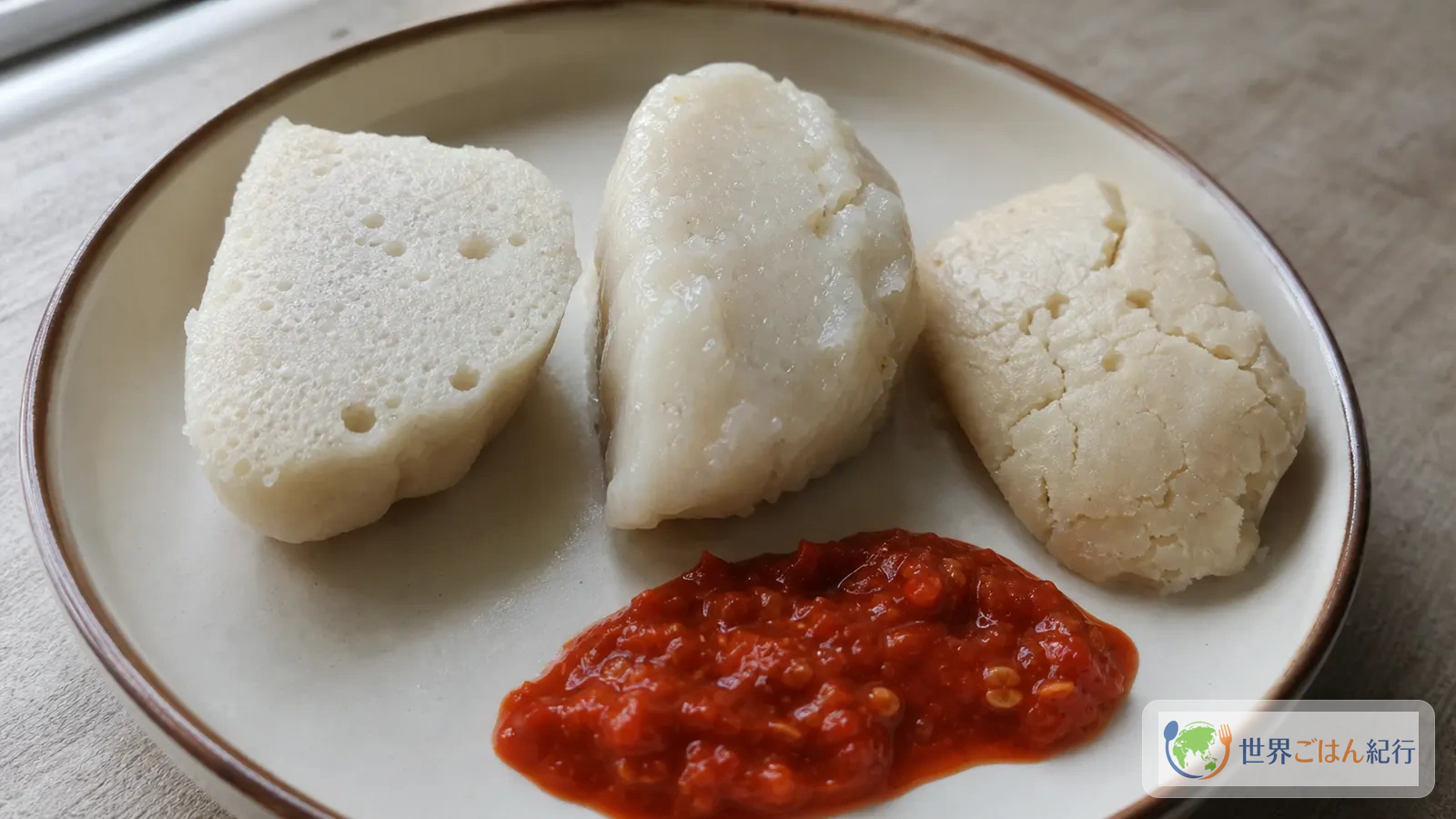
Watery after steaming
The batter has too much water or the steaming time was too short. Start with 100 ml of water when blending, and only if the blade will not turn, add 1 tablespoon at a time. If the white batter clings heavily to the skewer when done, add 5 minutes at medium heat. If the water runs low partway, the heat weakens and the center is slow to set.
The cross-section is dense and heavy
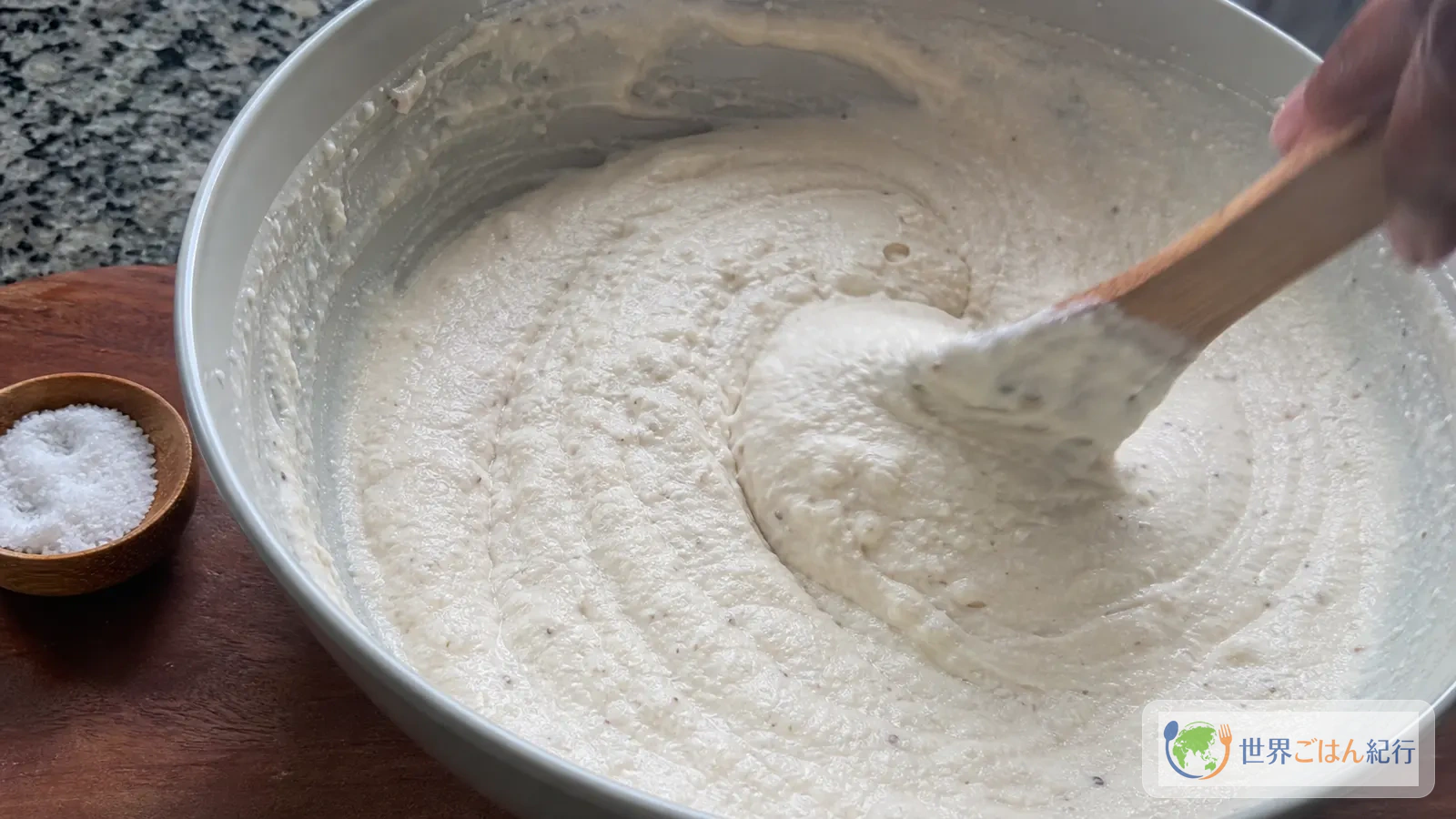
Many skins may have been left, the beating was insufficient, or the beans were not soaked enough. The skins need not be perfect, but you want to remove more than 80%. After making the paste, add the salt and beat hard for about 3 minutes, and check for whitishness and fine bubbles.
The surface cracks
The cups were overfilled or the steam too strong. Stop the batter at 80% full and leave about 1.5 cm of space at the top. Once steam rises, don't leave it on high heat; lower it to medium. It can be eaten even cracked, but it dries easily, so serve a bit more sauce.
The sauce is watery
The moisture of the tomato and peppers has not cooked off. Cook down 12 to 14 minutes over medium-low heat until a track stays for a moment when you drag a wooden spoon across the bottom. When red oil seeps at the edge, the taste can stand up to the whiteness of the beans.
Eating, storage and menu
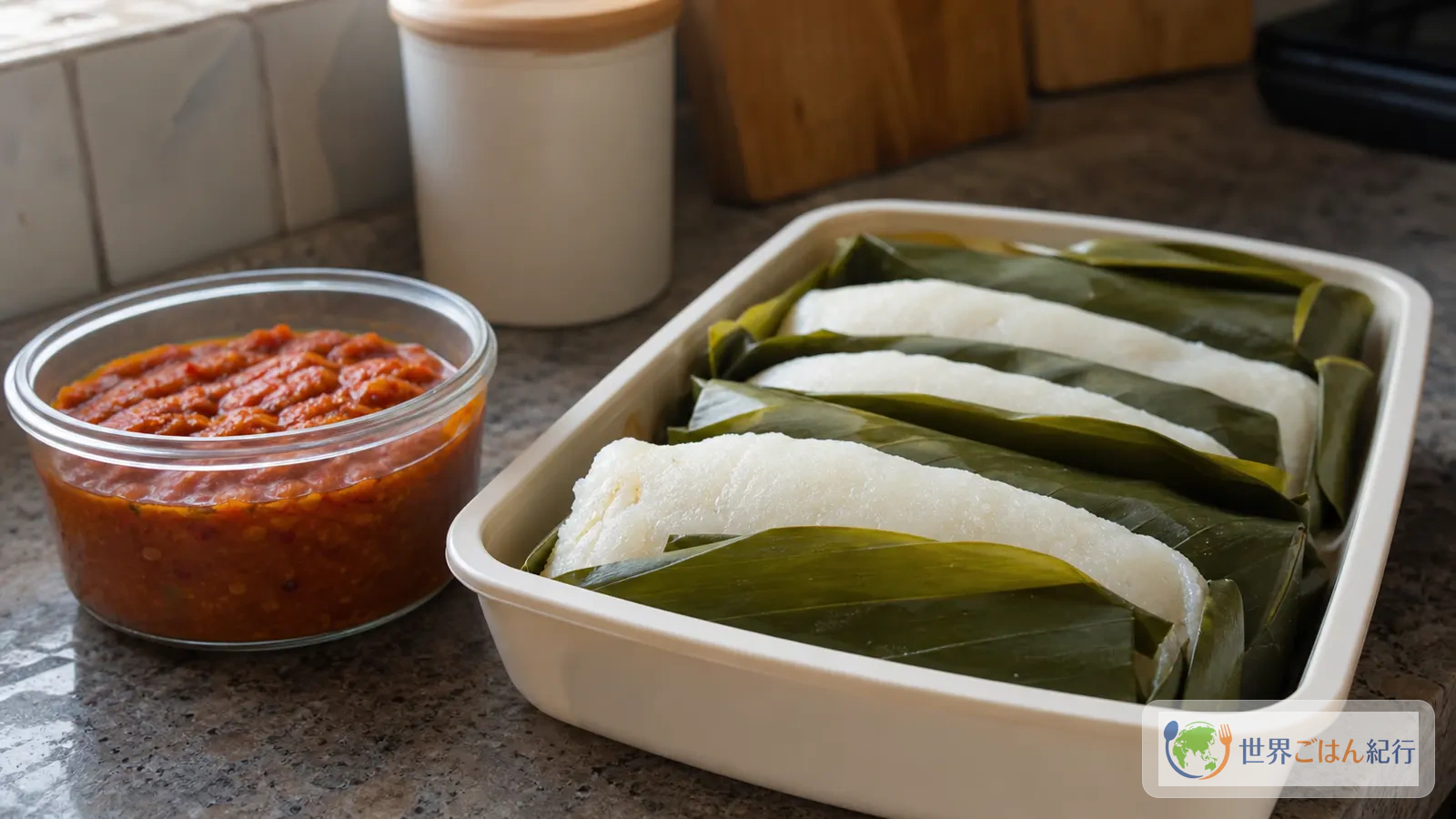
Ekuru comes together best eaten hot with the red sauce on top. The white bean batter alone feels lacking, so prepare not a small amount of sauce but enough that a little clings to each mouthful. With eko or pap it moves closer to the local table, but soft rice or thin polenta can also play the role of receiving the heat.
For a menu, serving a small portion of ekuru like a starter and putting jollof rice as the staple brings out the contrast of red rice and white beans. For a light lunch, setting a sour salad-type dish such as abacha (in Japanese) alongside cuts the heaviness of beans and oil.
| State | Storage guide | Reheating |
|---|---|---|
| Freshly steamed | Eat on the spot | Rest 3 minutes and serve with the sauce |
| Refrigerated | 2 days | In a steamer over medium heat for 5 to 7 minutes. In a microwave, 600 W for 40 to 60 seconds |
| Frozen | 2 weeks | Half-thaw in the refrigerator and re-steam over medium heat for 8 to 10 minutes |
| Sauce | 3 days refrigerated | Over low heat in a small pot for 3 minutes. Stop when it simmers |
For storage, keep the ekuru and the sauce apart. Refrigerated with the sauce on it, the surface gets damp and the aroma of the white batter blurs. If eating the next day, re-steam the ekuru, warm the sauce separately and then combine.
FAQ
Q1. Can I make it without removing all the skins of the black-eyed peas?
You can make it without removing all, but with many skins it turns grayish and heavy. At home aim for 80% or more. Rubbing them in water and rinsing off the floating skins several times speeds it up.
Q2. Can I make it with canned beans?
I don't recommend it. Canned beans are already cooked and watery, so it is hard to make a thick batter. Ekuru is less likely to fail if you think of it as a dish where you soak dried black-eyed peas, peel them and then grind them.
Q3. Is it the same dish as moin moin?
They are close steamed bean dishes, but it is easier to make if you do not treat them as the same. Moin moin sometimes has oil, chili, fish and egg in the batter. Ekuru is characterized by being steamed white and combined with a red sauce outside.
Q4. What if I have no banana leaves?
You can make it in heatproof cups. Brush the inside thinly with vegetable oil, fill the batter to 80% and steam. The aroma of the leaf will not come out, but the texture of a white bean pudding can be reproduced.
Q5. Can I eat it without the sauce?
You can, but it is quite bland. It stands as a salted steamed bean pudding, but a proper ekuru table wants the red sauce. Even if you reduce the heat, serve a sauce of peppers, onion and oil cooked down.
Q6. What can I use leftover black-eyed peas for?
In Nigeria, akara (in Japanese); in Ghana, red red and waakye (in Japanese). Once you are used to skinning the beans, the difference between frying, steaming and stewing becomes visible, and West African bean dishes become much easier to make.
Sources
- Wikipedia, "Ekuru", https://en.wikipedia.org/wiki/Ekuru
- Nigerian Food TV, "Ekuru - How to Make Ekuru", https://www.nigerianfoodtv.com/ekuru-how-to-make-ekuru-plain-steamed/
- Sisiyemmie, "Ekuru Recipe: How to Cook Ekuru aka Ofuloju", https://sisiyemmie.com/2021/04/ekuru-recipe-how-to-cook-ekuru-aka.html
- Food and Agriculture Organization of the United Nations, "Ekuru", https://www.fao.org/in-action/inpho/resources/cookbook/detail/en/c/1008/



