Meat Juices Baked into Bread: The Smell of Cairo
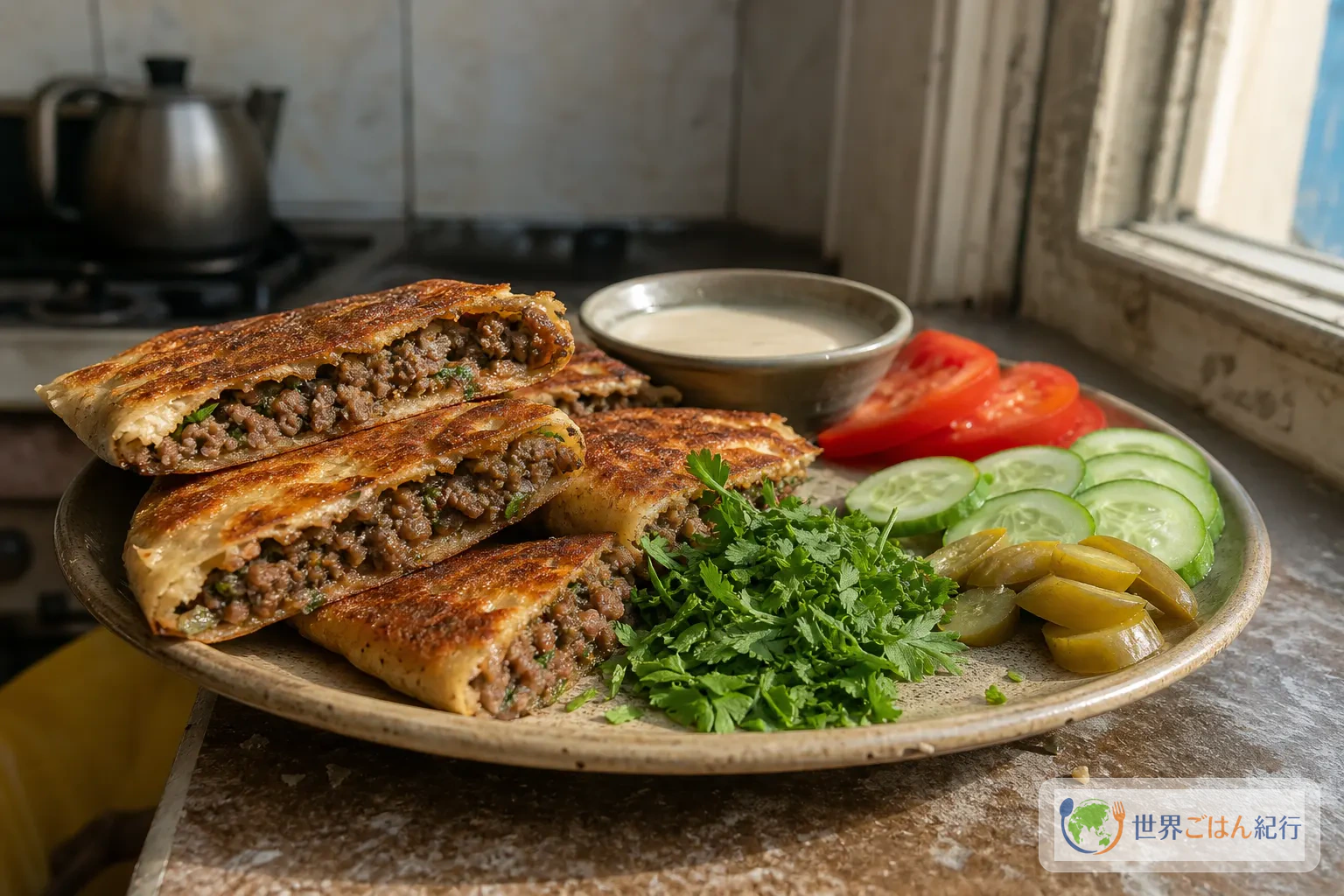
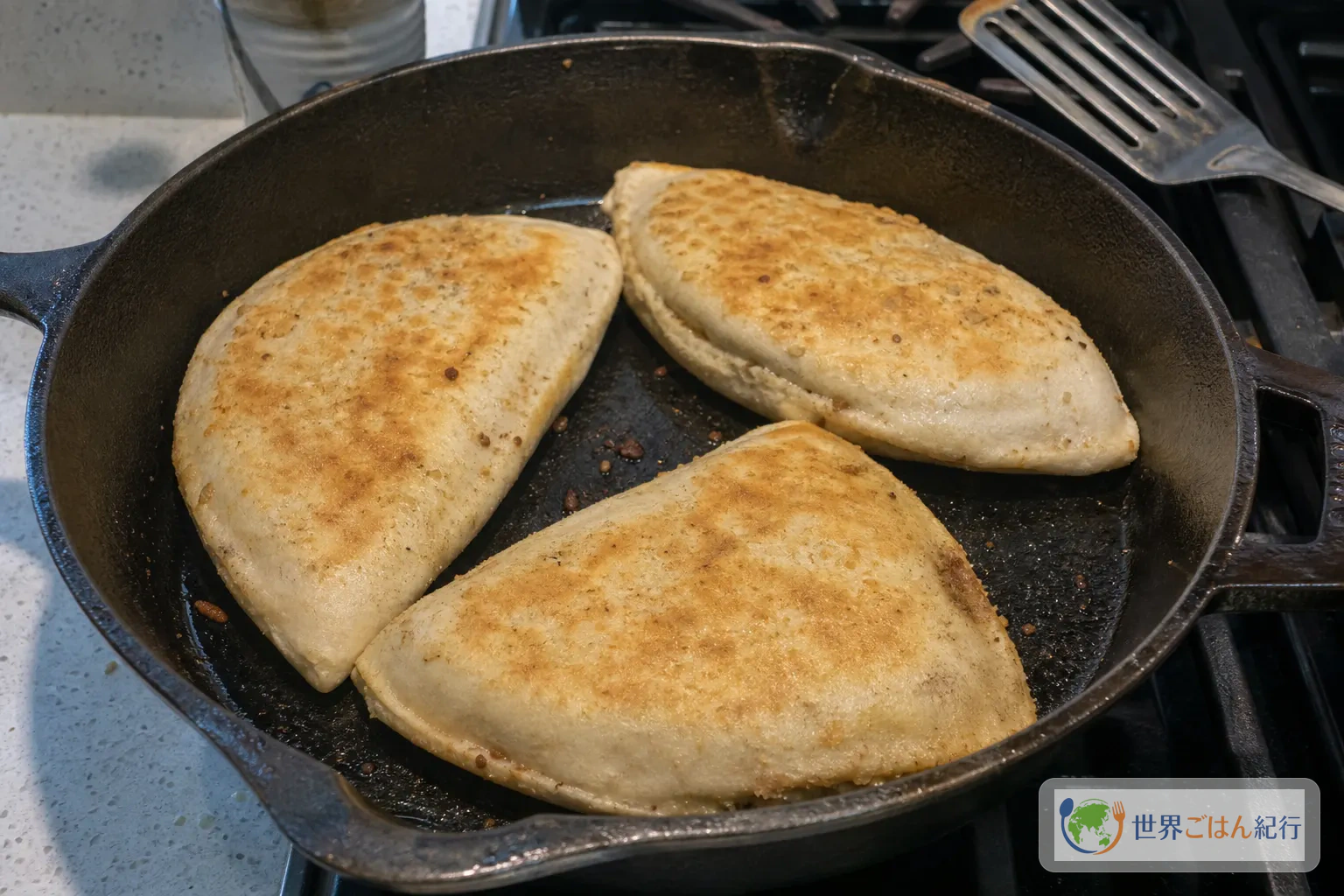
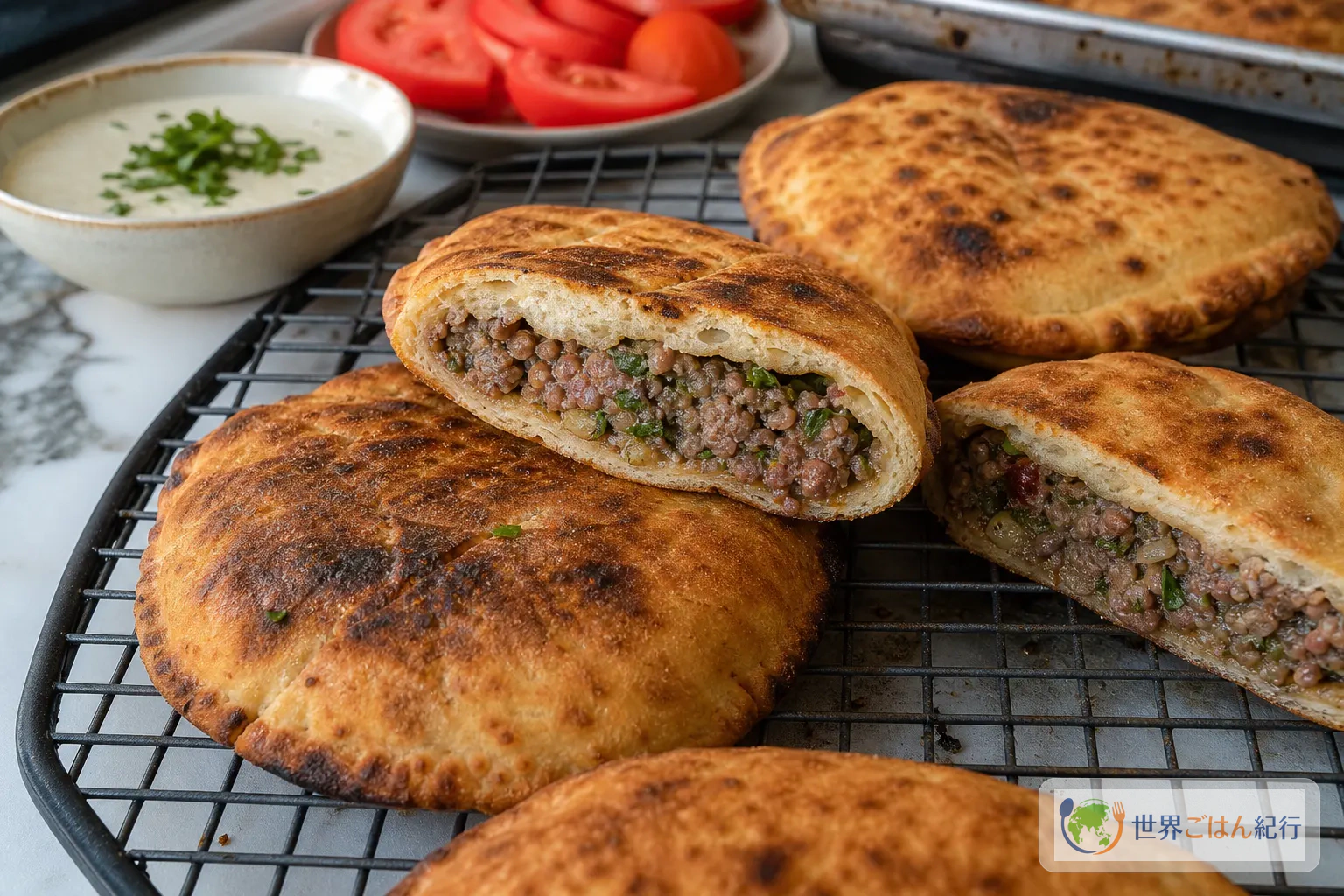
Put a thin film of oil in a skillet, lay in a meat-stuffed bread, and the first thing you hear is the dry sizzle of the bread. A moment later cumin, coriander, onion, and meat juices rise together. Hawawshi is less a dish of bread wrapped around meat than one where the bread itself becomes a small oven for cooking the meat.
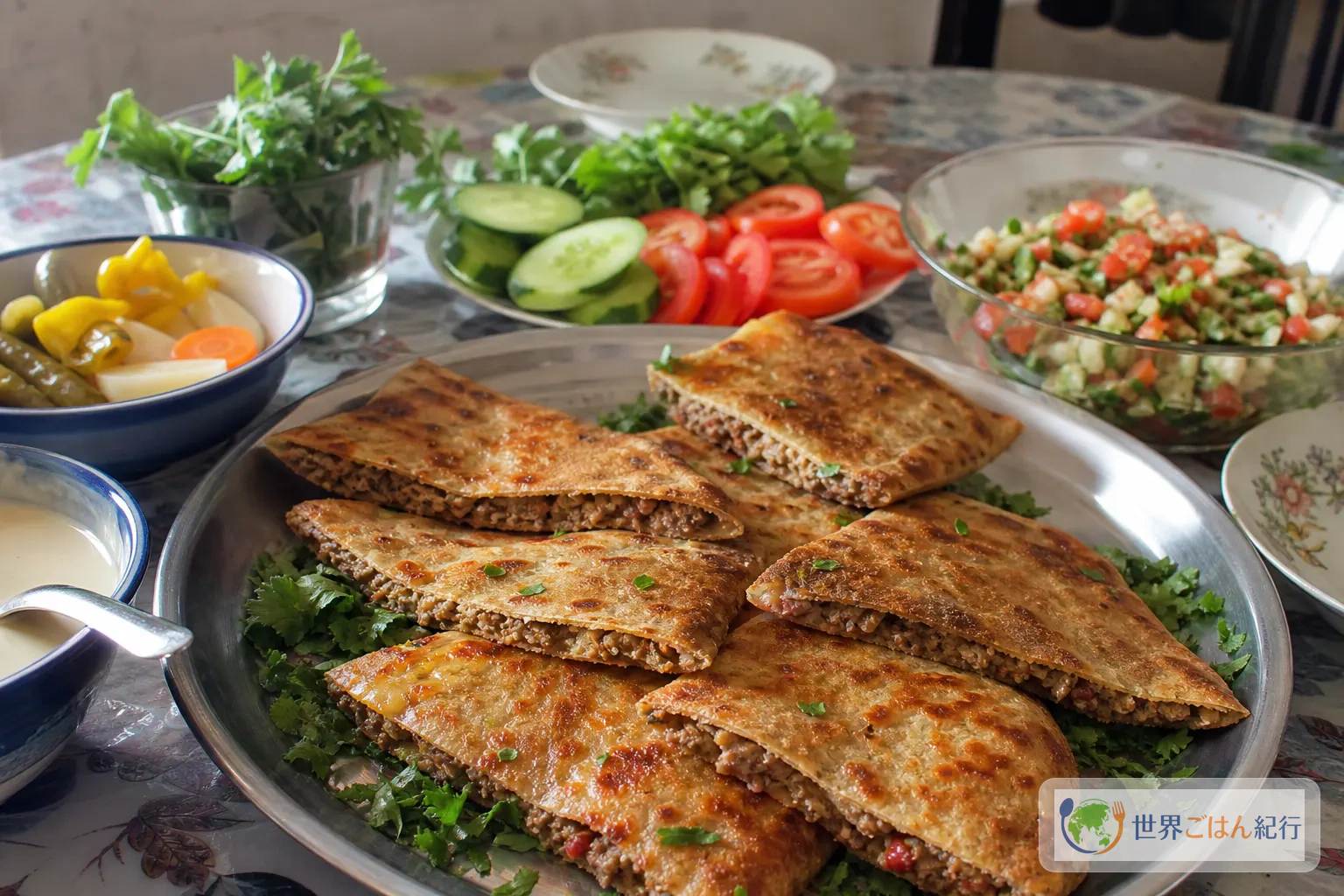
Hawawshi (حواوشي) is Egypt's beloved meat-stuffed bread. Ground beef or lamb is mixed with onion, bell pepper, herbs, and spices, then spread thinly inside a flatbread called baladi or a pita and baked. It works as a street-stall snack or as a home oven dish, and unlike koshari or ful medames, it puts the aroma of meat in front.
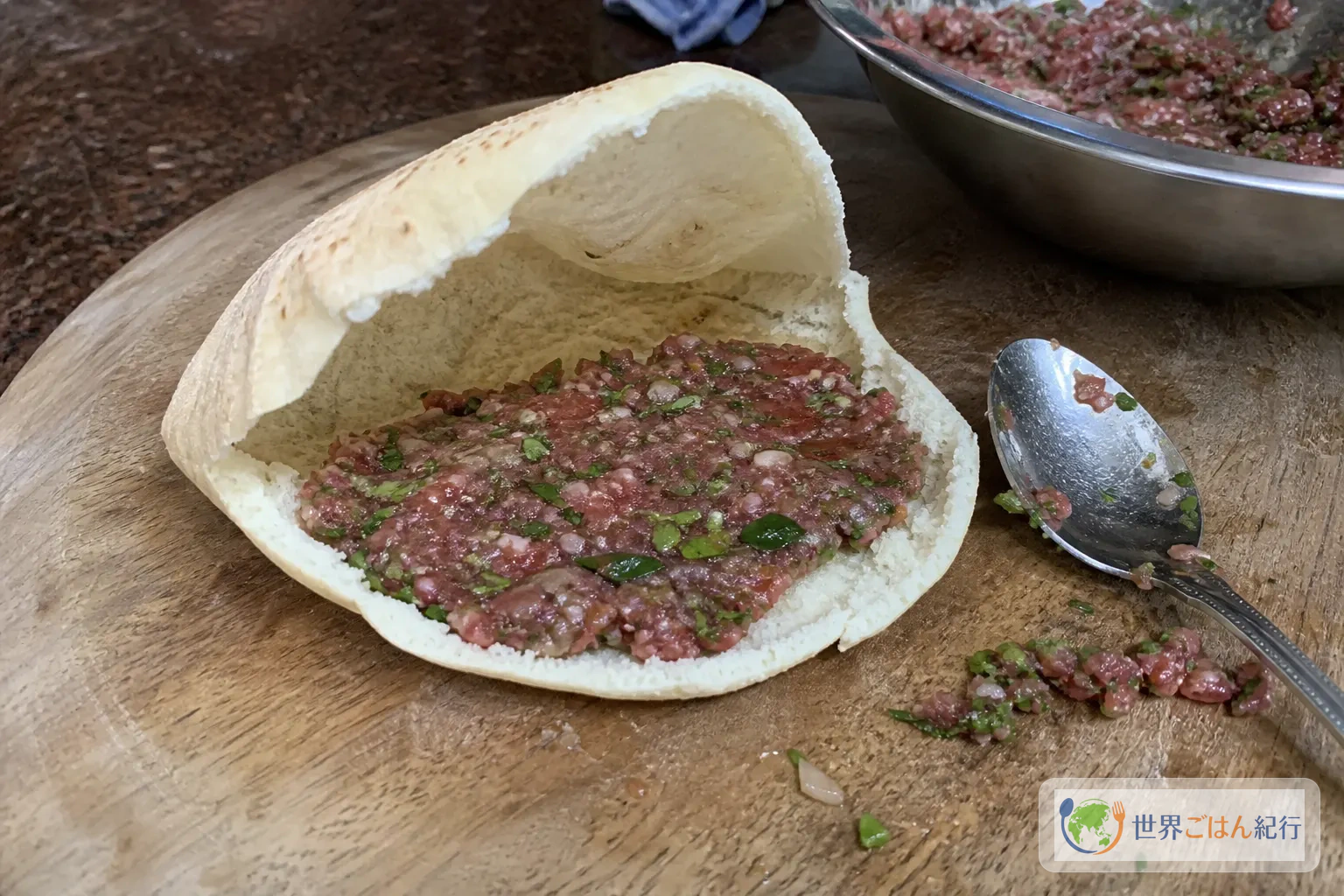
What trips people up at home is not the bread, but the thickness of the meat filling. Fill it thickly and only the bread browns while the center stays raw. Cut back too far on the meat and you just have a spiced grilled sandwich. This recipe is built on 4 pitas about 20 cm across, with 90 to 100 g of filling per pita spread 7 to 8 mm thick.
To widen the neighborhood, try the Egyptian bean dish ta'ameya, West Africa's ground-spice grill suya, and the Middle Eastern breakfast skillet shakshuka alongside it, and you can see how spices and bread are used differently.
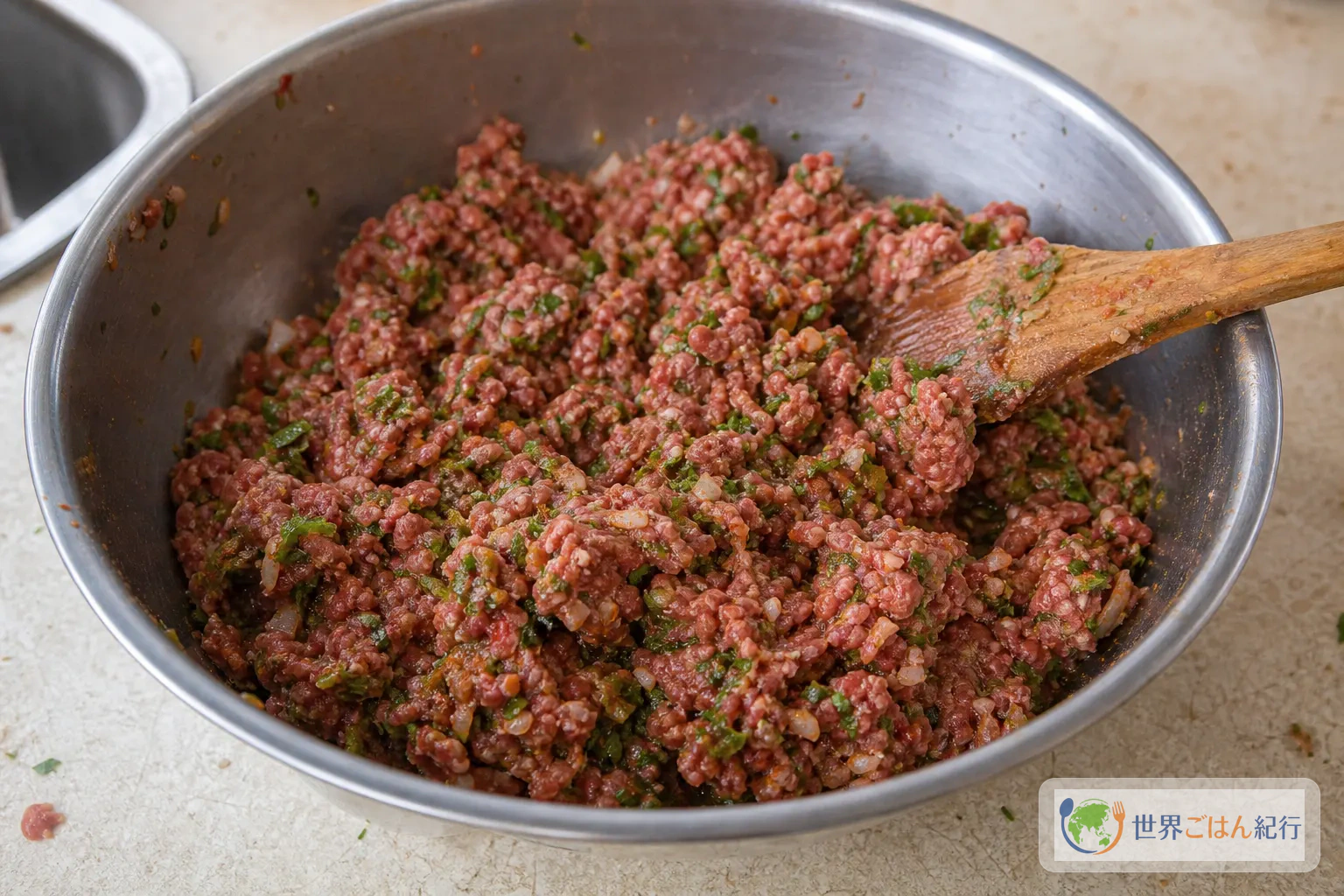
Don't overwork the filling, and spread it thin while it still holds the moisture of the vegetables. Brown the bread in a skillet, then finish in a 180°C oven until the center reaches 74°C. Resting for 3 minutes at the end lets the juices settle when you cut it.
What Is Hawawshi?
In English, hawawshi is sometimes described as "Egyptian stuffed bread" or "Egyptian meat pie." It is not wrapped in pie dough, though. What makes the dish interesting is that an everyday flatbread is filled with meat and the bread catches the juices from the inside as it bakes.
In Egypt, a flatbread called baladi, closer to whole grain, is often used. Keeping the same bread on hand elsewhere is hard, so for the first batch a pocket pita 18 to 20 cm across is the steady choice. A thin tortilla lets the juices escape, and thick naan doesn't let heat reach the inside. Pita is not a perfect substitute, but it lets you spread the meat thin and is easy to press shut at the edge.
There are regional differences too. Alexandrian-style versions are sometimes described as wrapping the meat in dough rather than stuffing a pocket. The Cairo-leaning version that is easy to make at home stuffs whatever flatbread you can get. This recipe leans toward the "stuff a pita and bake" form that is easiest to reproduce in a home kitchen.
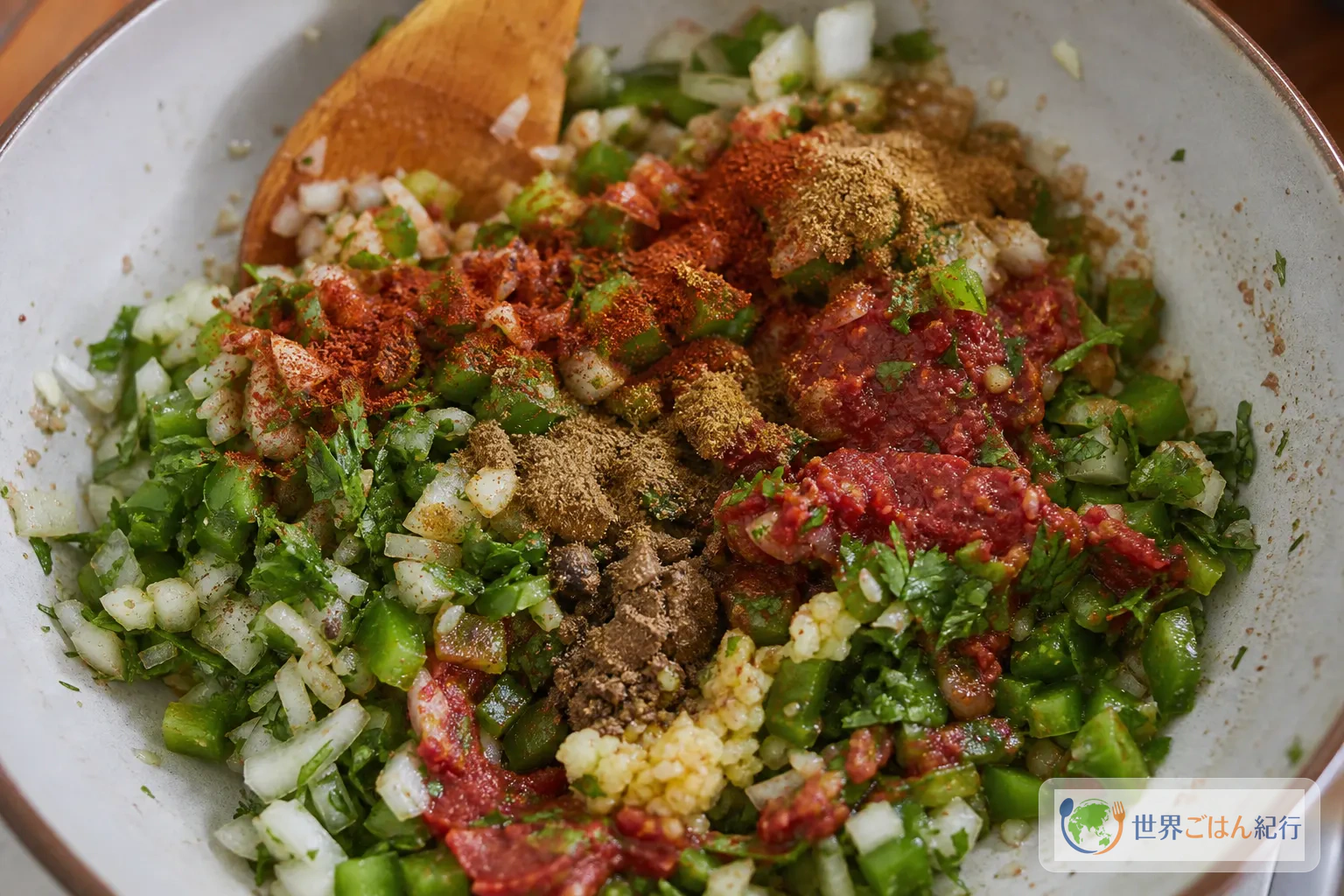
The flavor axis is cumin, coriander, allspice, and black pepper. It is less a dish that gets hot than one where spice dries out the meat's fat and the sweetness of onion. Serve it with tahini, lemon, and pickles and they cut the heaviness of meat and bread, giving a balance that makes you want another piece.
Ingredients (serves 4)
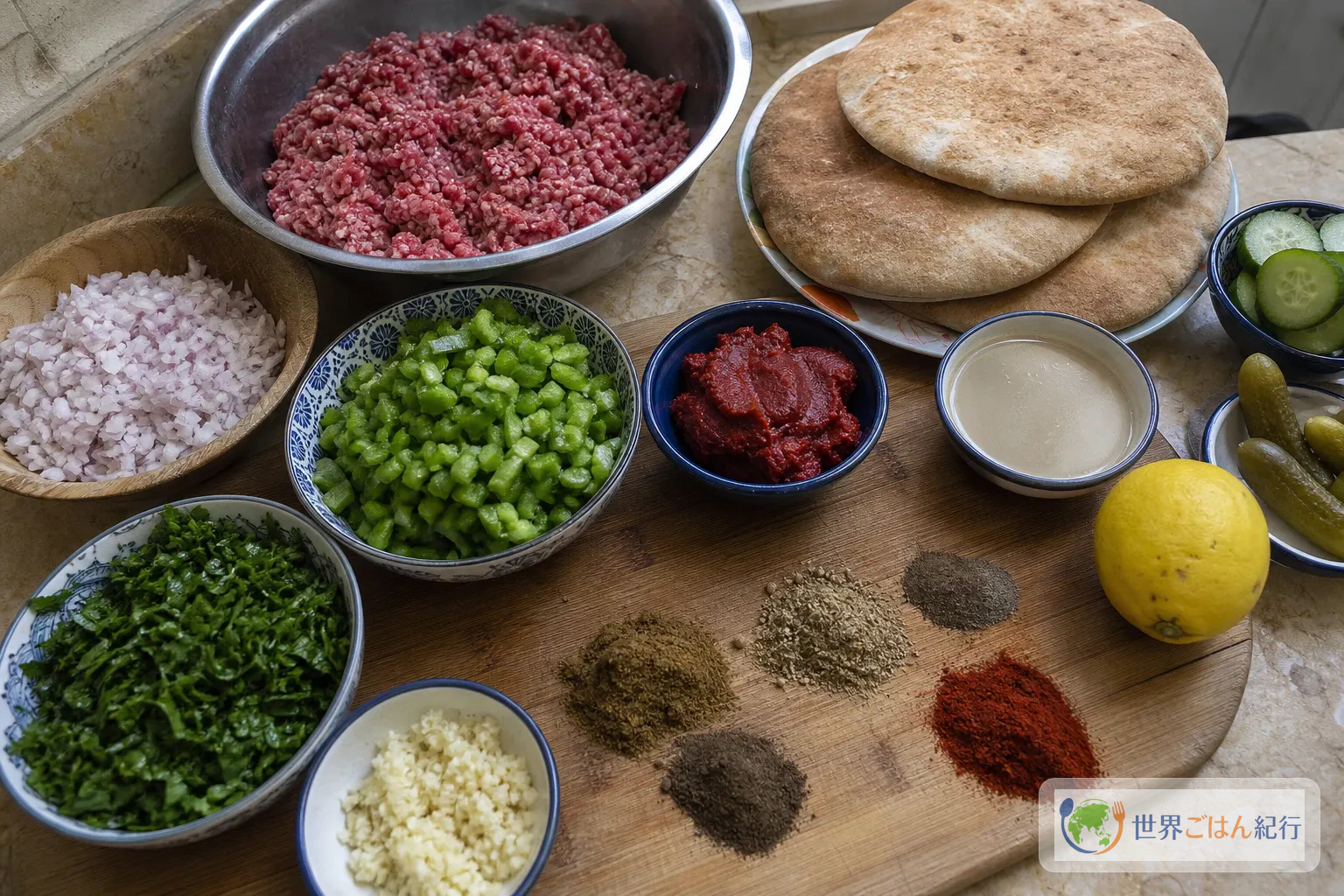
Choose pitas whose pockets open. If you use frozen pita, opening it frozen makes it crack, so leave it in its bag at room temperature for about 20 minutes first. Ground beef alone is fine, but mixing in 20 to 30 percent lamb gets closer to the local aroma.
This dish contains wheat, beef, and sesame. If you have a sesame allergy, skip the tahini and serve a sour sauce of lemon juice, olive oil, salt, and chopped parsley. Ground meat is not safe to eat undercooked, so check the center temperature as described below.
Spices change the outline of a dish even in small amounts. Buy the meat and bread locally and bring together only what sets the aroma; that is the way of shopping closest to real hawawshi.
Method
With hawawshi, the time spent stuffing thinly determines the result more than the time spent making the filling. Preheat the oven to 180°C before baking, and have the skillet, sheet pan, rack, and an instant-read thermometer at hand so you don't rush.
Baking and Common Pitfalls
Hawawshi failures show up in how heat reaches the food more than in the seasoning. The outer bread colors early and the meat inside lags, so pushing all the way through in the skillet alone makes it easy to scorch.
| What happens | Cause | Fix next time |
|---|---|---|
| Red in the center | Filling too thick, oven time too short | Spread to 7–8 mm and bake until the center reaches 74°C |
| Bread turns damp | Too much vegetable juice, left sitting before baking | Press the chopped vegetables lightly and bake right after stuffing |
| Only the outside burns | Skillet heat too high, too much oil | Medium heat, no more than 2 minutes a side, finish in the oven |
| Meat is tough | Ground meat overworked | Mix just enough to loosen it and stop before it gets sticky |
| Flavor is dull | Not enough salt, no acid served | About 1.2% salt on the meat, lemon or pickles on the table |
Without an oven, lower the skillet to a gentle medium heat, cover, and cook 4 minutes on one side, flip and cook 4 minutes more. Check the center temperature then too; bread color alone cannot tell you about the center of the meat. If it threatens to scorch partway, take it out, wrap it in aluminum foil, and warm it over low heat for 3 to 4 minutes; this is less likely to fail.
For make-ahead, it is safer to prepare the vegetables and spices and the meat separately than to mix the filling and refrigerate it the day before. Letting meat and salt sit together for long makes it sticky and the baked texture dense. If you must prepare the day before, spread the mixed filling in a flat container 2 to 3 cm thick, and loosen it lightly the next day before stuffing the pitas.
Eating It the Egyptian Way: Menus
Mix 3 tbsp tahini, 1 tbsp lemon juice, 2 tbsp water, and 1/4 tsp salt and thin it to about the consistency of loose mayonnaise. Cut the hot hawawshi, drizzle a little tahini on the cut face, and bite it together with tomato, cucumber, and pickles; the meat's fat suddenly turns light.
To build an Egyptian meal, add ful medames and vegetables for a light, breakfast-leaning table, or ta'ameya on days when you want something fried. If you want a street-food mood of stacked staples, there is also koshari, but next to hawawshi it makes for a very full meal, so it suits sharing on a day with more people.
Compared with Levantine falafel, hawawshi's lead is the aroma of meat, not beans. Both can be eaten in bread, but falafel's appeal is the lightness of fried beans, and hawawshi's is the meat juices soaked into the bread. Serve plenty of acidity at the table and you can serve both without them overlapping.
Sweet mint tea, sparkling water, or iced tea with a squeeze of lemon go well. Cutting it with acidity and herbs rather than adding a rich dairy sauce gives the eating feel of an Egyptian snack.
Storing and Reheating
Let baked hawawshi cool slightly, wrap each piece in plastic wrap, and plan on refrigerating until the next day. Meat-stuffed bread takes on moisture easily, so it is not suited to batch cooking kept for 3 days or more. To freeze, bake, cool completely, wrap, and eat within 2 weeks.
Reheating only in the microwave leaves the bread limp. If refrigerated, microwave at 600 W for 40 seconds, then bake in a toaster oven or on a skillet over medium-low heat for 1 minute a side to bring back the surface. If frozen, thaw overnight in the refrigerator and warm the same way.
Avoid storing it stuffed with raw filling. The bread soaks up the juices and tears easily, and managing the center temperature becomes harder. If you want to prepare the day before, stop at chopping vegetables, measuring spices, and thawing pita, and combine with the meat just before baking.
It is also not suited to lunch boxes or carrying at room temperature. With ground meat wrapped in bread, you cannot tell by looking how well the center has cooled or whether it has spoiled. If you take it out, chill it quickly after baking, add an ice pack, and only do so when there is a way to reheat before eating. Treat it as a dish you slice fresh at home rather than one you eat as-is outdoors.
If filling is left over, don't push it to the next day; shape small patties and cook them on the spot. Form them about 1 cm thick and 6 cm across, cook over medium heat 2 1/2 minutes a side, and confirm a center temperature of 74°C. Without bread they dry out more easily, so serve a little extra tahini and lemon, and you can finish them as a separate plate that keeps the aroma of hawawshi.
Frequently Asked Questions
My pita cracks
Pita opened cold tends to crack. Bring it back to room temperature in its bag, and if it is stiff, warm it in the microwave at 600 W for just 10 seconds. Overheating makes it damp from steam, so open it as soon as it is soft.
Can I use a beef-pork mix?
You can, but the aroma moves a little further from Egyptian. For the first batch, beef alone or beef with a little lamb is recommended. If you use pork, it releases more fat, so keep the filling to about 90 g per pita and check the center temperature.
Is there a guide for making it in a skillet only?
Cover over a gentle medium heat, 4 minutes on one side, flip and 4 minutes more. If the center of a thick part has not reached 74°C, lower the heat and add 2 minutes at a time. If it browns early, the heat is too high, so put center temperature ahead of bread color.
Can I make it not spicy?
Yes. Leave out the cayenne and reduce the black pepper to 1/4 tsp. Even without heat, keep the cumin, coriander, and allspice. Without them it is still a meat-stuffed bread, but the aroma of hawawshi weakens.
What should I watch for when eating with children?
Besides cutting back on heat, always check the center temperature. With ground meat, cooking only the surface is not safe, so aim for 74°C or higher. Hot juices come out when you eat, so cut it and let it stand 2 to 3 minutes before serving.
Sources
- Wikipedia, Hawawshi, accessed 2026-06-06
- Wikipedia, Egyptian cuisine, accessed 2026-06-06
- TasteAtlas, Hawawshi, accessed 2026-06-06
- McCormick, Egyptian Hawawshi, accessed 2026-06-06
- Curious Cuisiniere, Hawawshi, accessed 2026-06-06