
A Trio of Carbohydrates: The Taste of Cairo
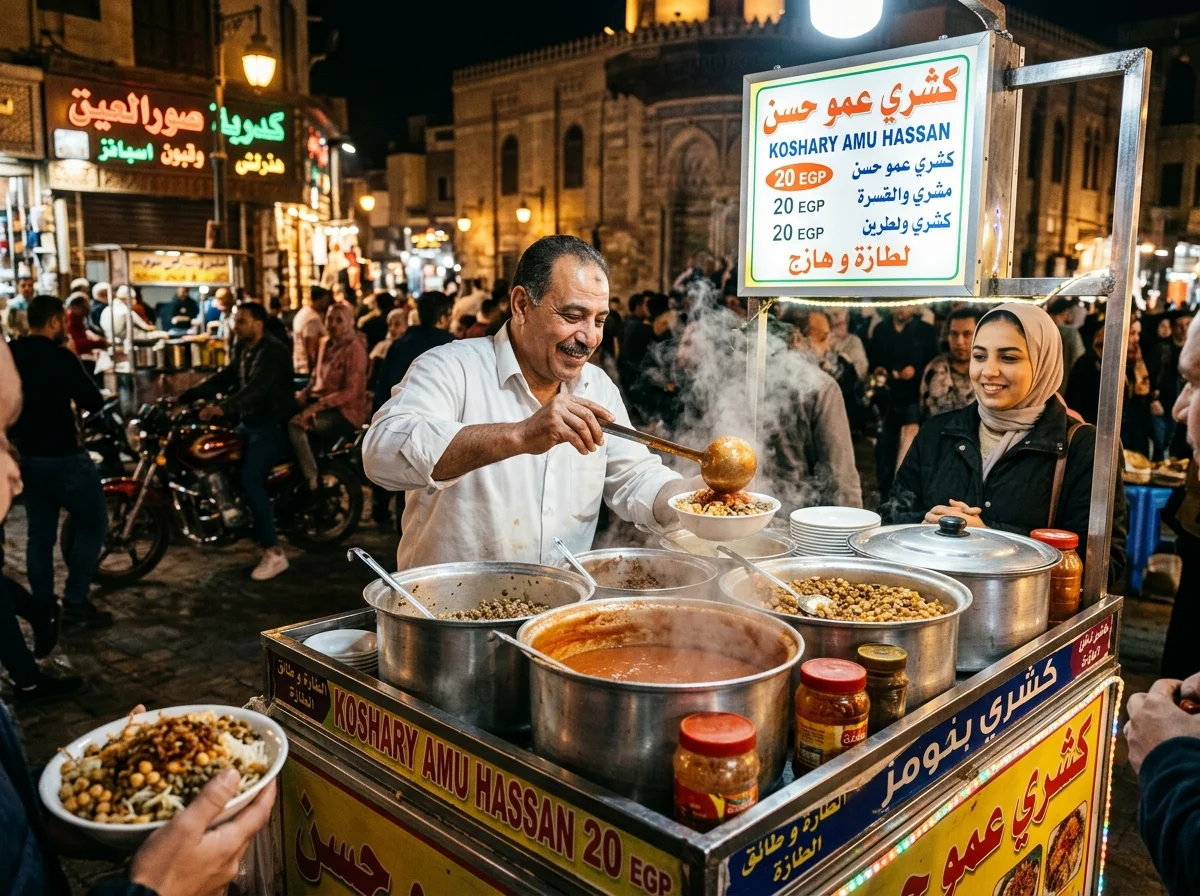
Walk the back alleys of Cairo and the scent of spices drifts out on the steam. People holding silver aluminum containers stand and work their spoons fast. At the end of that line is a stall selling koshari (Koshary / كشري).
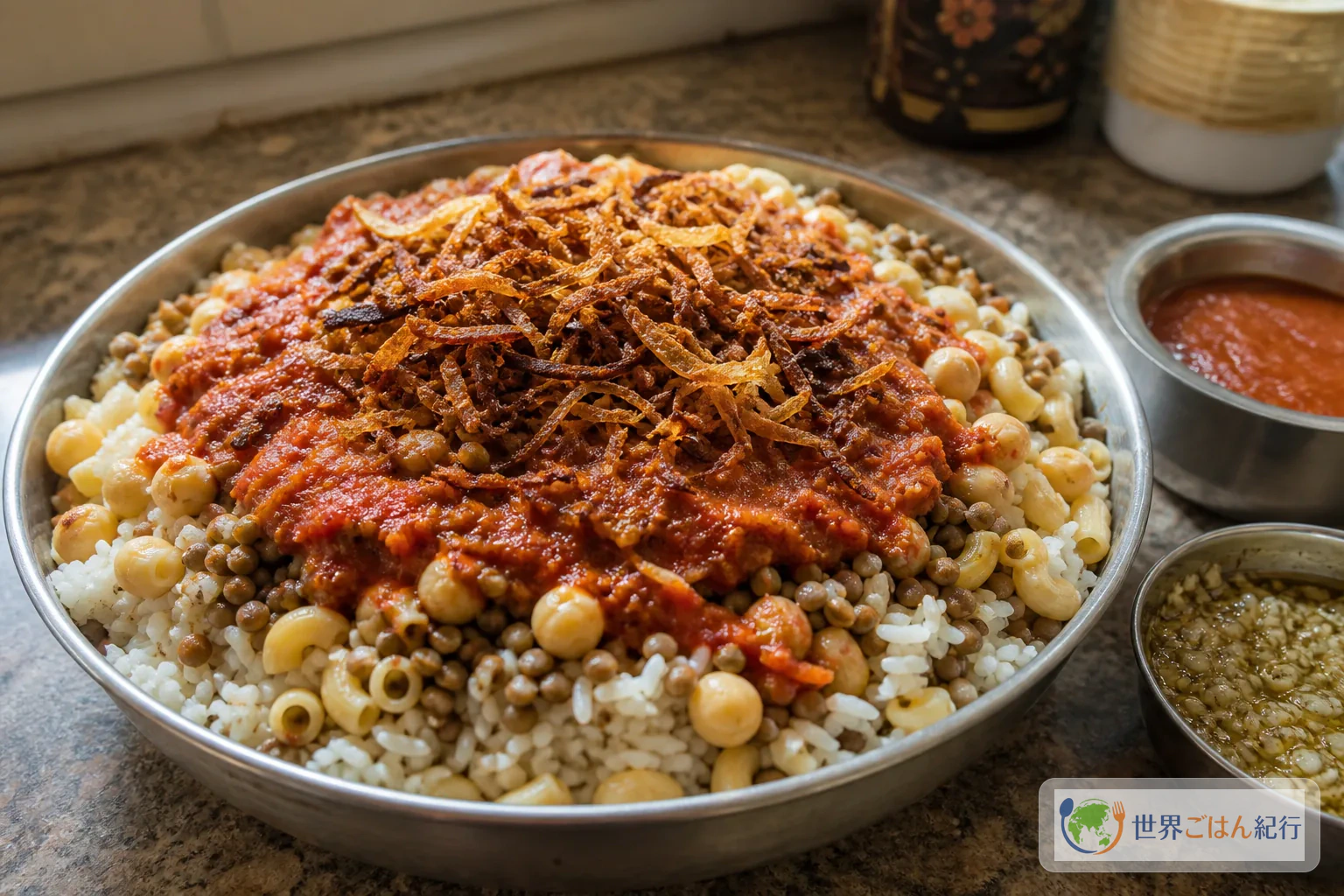
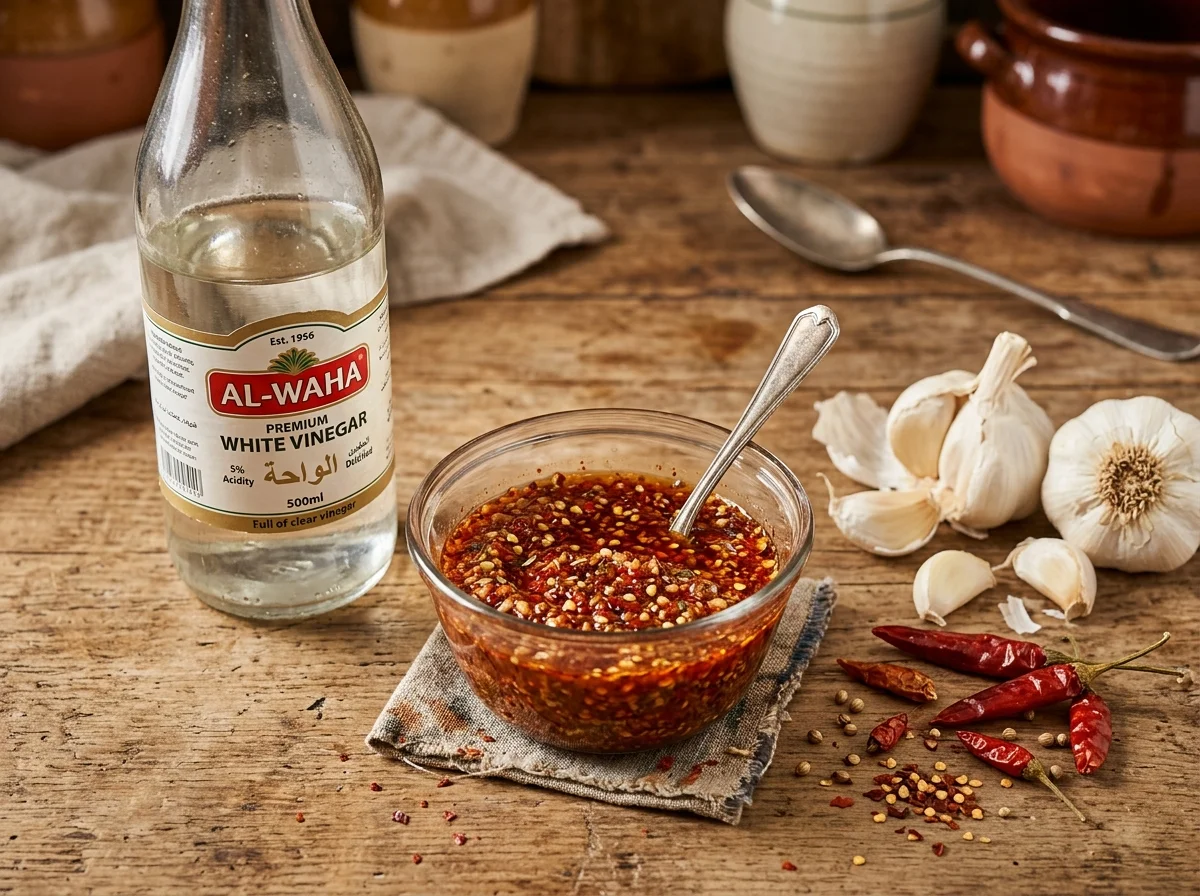
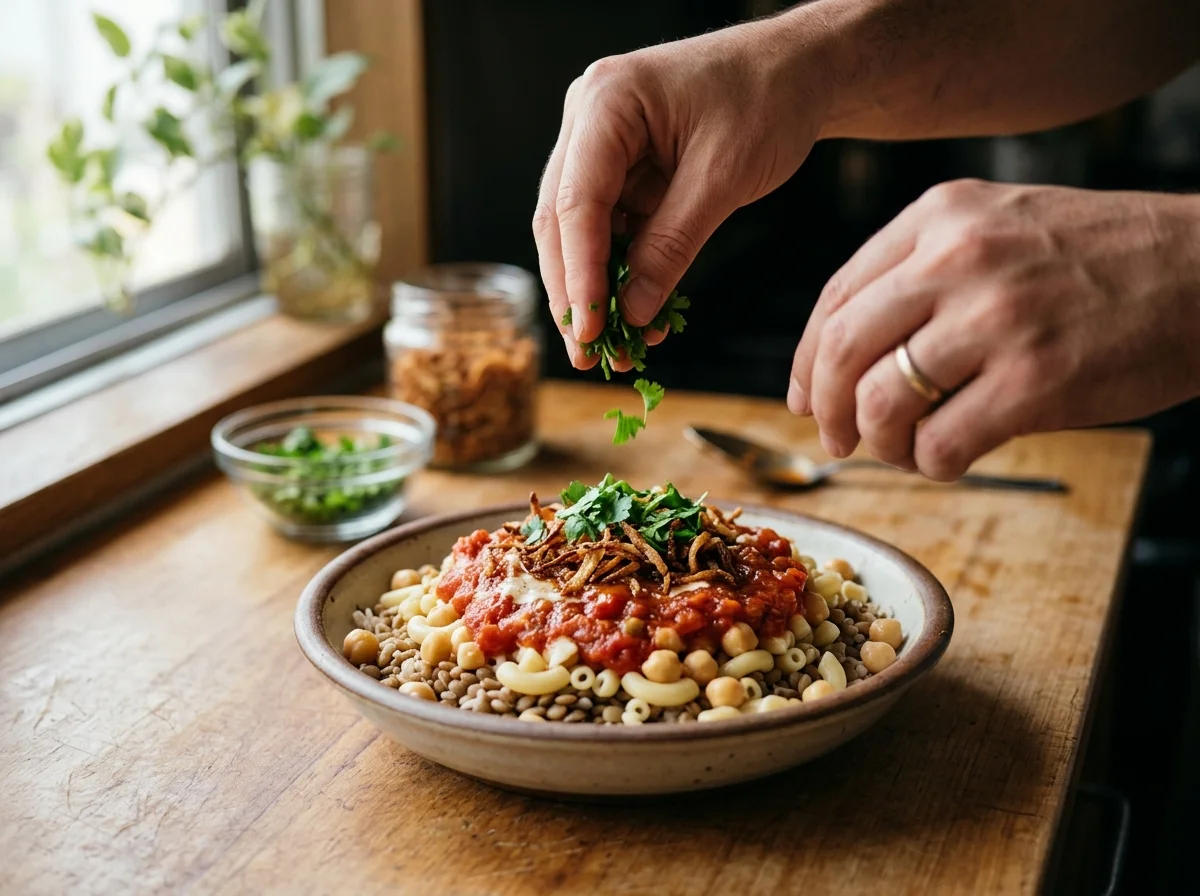
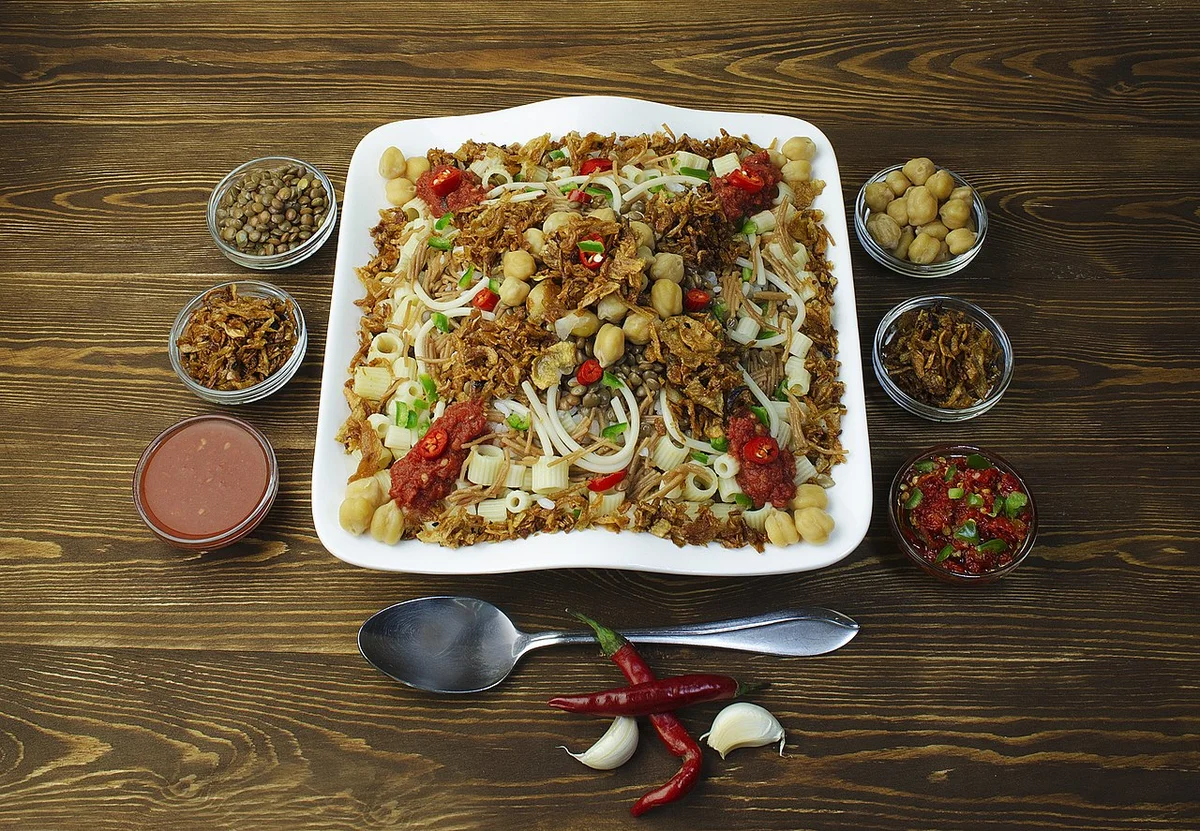
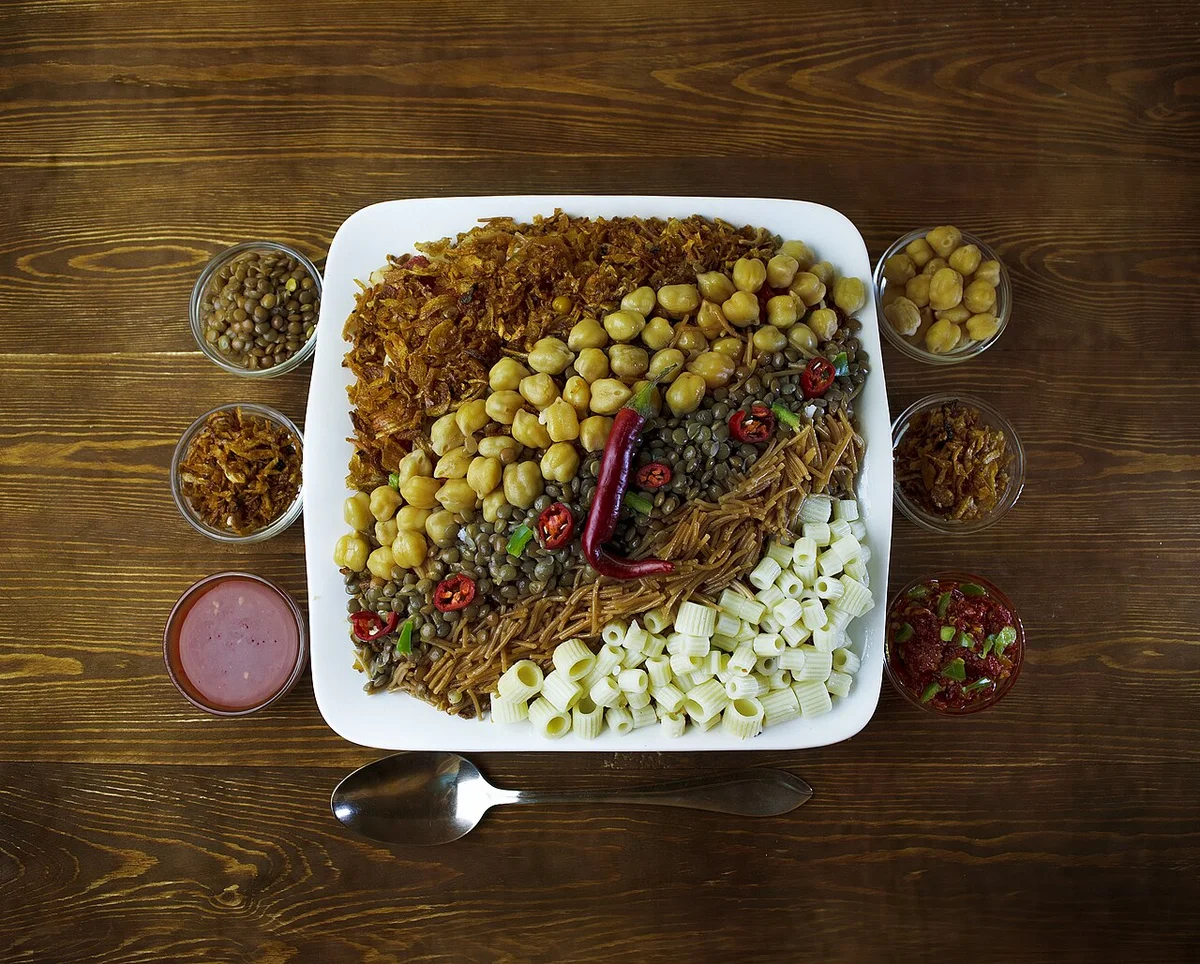
Koshari is Egypt's national dish. Rice, lentils, macaroni, and chickpeas (in Japanese) are layered and topped with a spicy tomato sauce, crisp fried onions, and "daqqa," a sauce of vinegar, garlic, and chili. It is a people's feast: carbohydrate piled on carbohydrate, a combination that would make a nutrition textbook frown, yet for Egyptians it is simply soul food. It is cheap, delicious, and filling, and it is also a fixture at celebrations.
This article explains how to build the flavor of a Cairo stall in a home kitchen. If you want another dish with the savory aroma of meat and bread from an Egyptian street stall, hawawshi, ground beef stuffed into flatbread and baked, is a good match (hawawshi, in Japanese). For other African dishes, try jollof rice (Nigeria) and doro wat (Ethiopia).
Background: A People's Feast from Cairo That Charms the World
From India to Cairo: the long voyage of a mixed rice dish
The roots of koshari go back to the 19th century. The name is thought to come from the Hindi "khichdi," an Indian home dish of rice and lentils cooked together. The idea of a mixed rice dish is believed to have reached the Nile valley along trade routes between India and Egypt in the British colonial period.
The usual account of how the dish took shape runs like this. First, the basic structure of rice cooked with lentils took hold. Next, Italian communities who settled in Egypt are said to have brought macaroni, which was added on top of the rice and lentils. Then, in the early 20th century, the tomato sauce, fried onions, and daqqa (garlic-vinegar sauce) were added, completing koshari as we know it today.
Koshari is thus a mixed-heritage dish born where Indian, Italian, and Egyptian food cultures cross. You could also say that the rice-and-spice tradition of biryani (India) crossed the Mediterranean and evolved in its own way on the African continent.
Cairo's koshari stall culture
Cairo has specialist koshari shops, called koshary restaurants. One of the best known is Koshary Abou Tarek, a koshari-only restaurant.
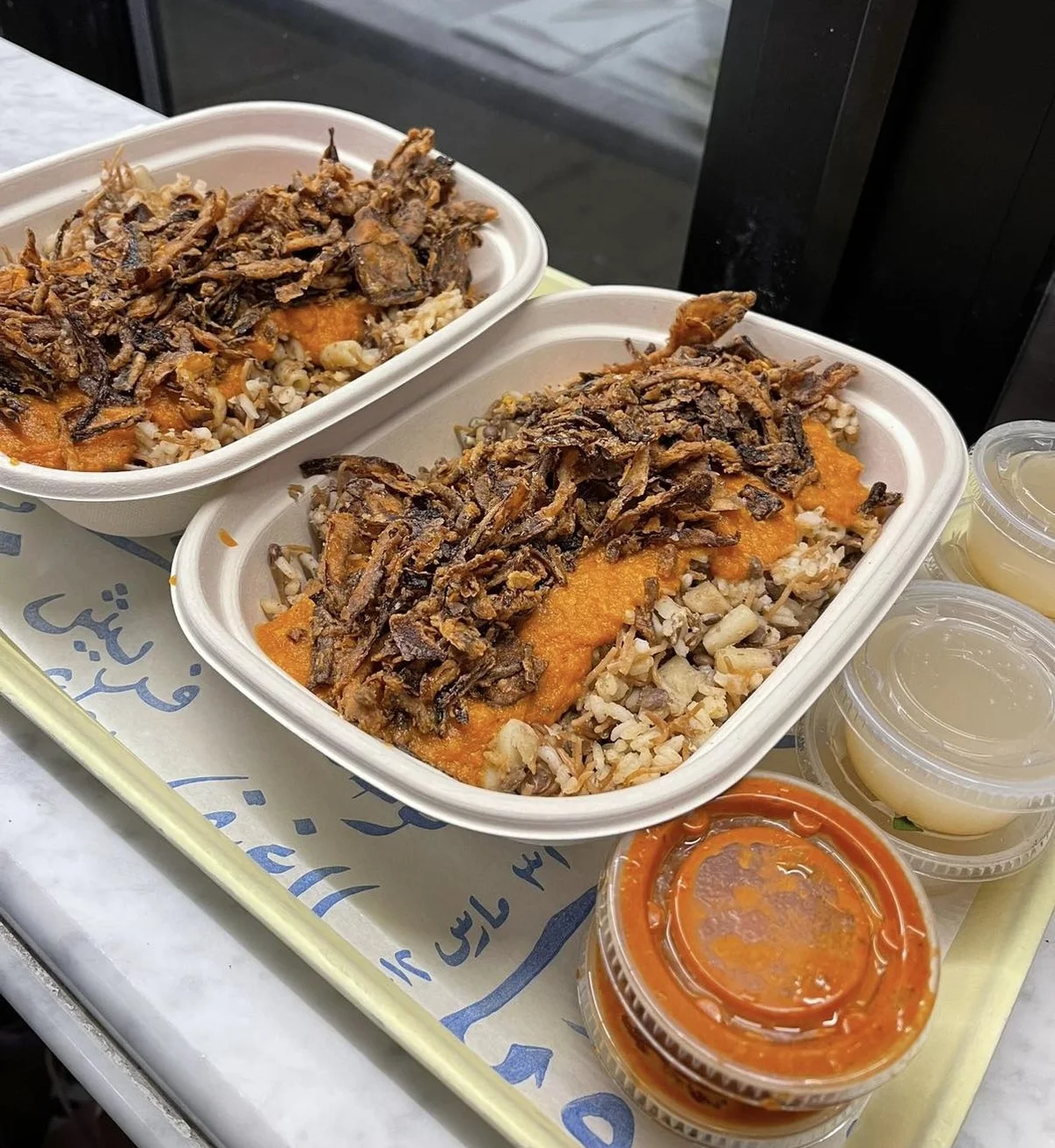
Watching a koshari shop at work is a kind of performance. Ingredients are scooped from huge pots one after another and layered into the aluminum container in a flowing motion. Customers tell the server their preferences, such as more sauce or more daqqa.
Religion and koshari
One reason koshari is so widely accepted as the national dish is that it is entirely vegan. Egypt's Coptic Christians observe long fasting periods during the year when animal products are avoided, and koshari is an ideal meal for those days.
It is also a dish where Muslims need not worry about halal certification. That inclusiveness, which lets Egyptians of every faith eat it with ease, is what makes koshari a true national dish. Shakshuka (Israel) and tabbouleh (Lebanon) are also known as vegetarian-friendly Middle Eastern dishes, but few dishes exclude animal products as completely as koshari.
One bowl, many regional versions, and the layers worth keeping at home
Koshari cannot be pinned down as a single "rice, beans, and pasta" dish. UNESCO's 2025 inscription on the intangible cultural heritage list covers not a fixed recipe but the everyday practices of homes, specialist shops, street stalls, and the producers who supply the ingredients. In Cairo the version built on brown lentils and rice is the best known, while in Alexandria there are examples with yellow lentils and boiled egg, and in Suez a version combined with seafood has been described. Regional differences are not departures from an authentic original; they are answers that each place's table has built up over time.
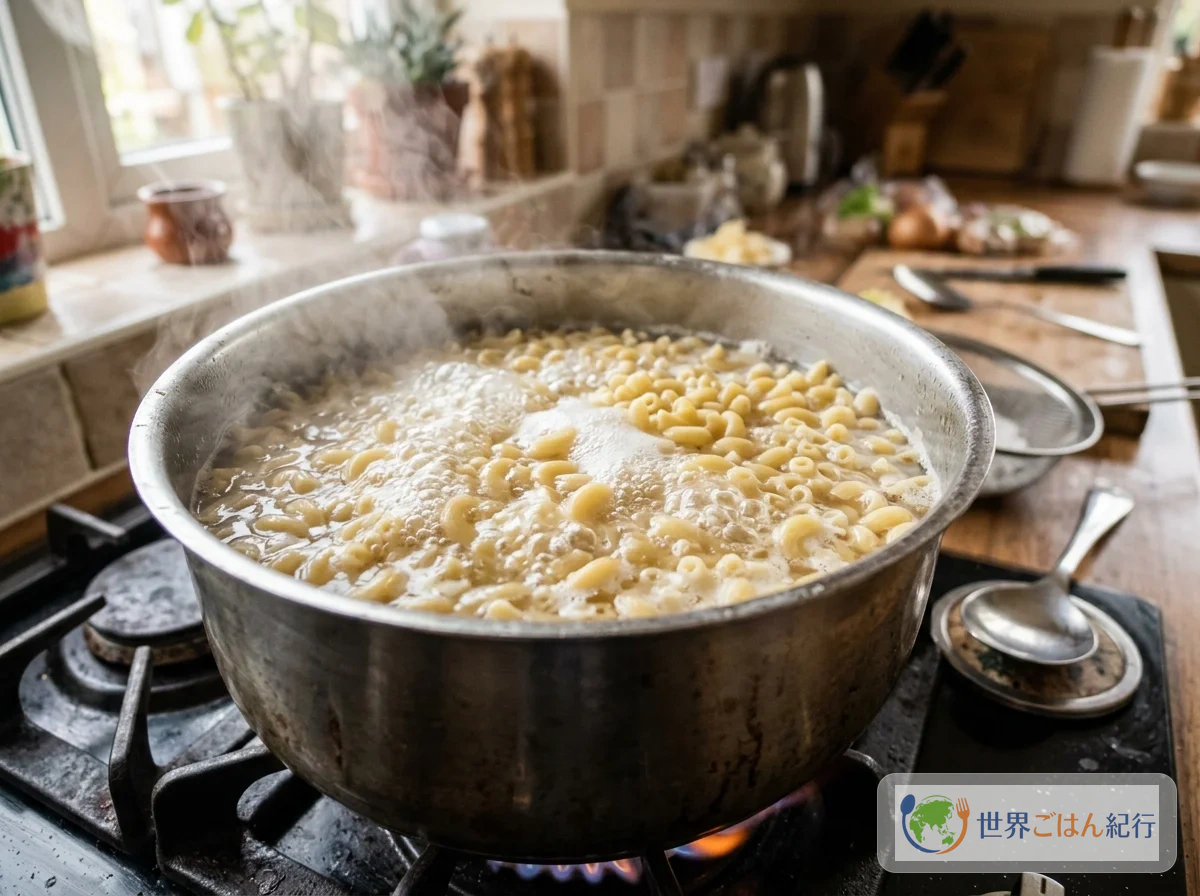
In a home kitchen, keeping the order that lets you taste the layers in one bowl matters more than adding ingredients. Keep the rice and brown lentils intact, boil the macaroni separately, and let everyone adjust the tomato sauce, the vinegar-and-garlic daqqa, and the fried onions at the table. If you want to try the Alexandria-style yellow lentils or an egg, make the basic bowl first and compare with a small amount. Even with substitute ingredients, as long as you keep layers of different textures and room to mix in the acidity yourself, it will not be just tomato rice with beans.
Ingredients (serves 4)
Preparation
Preparing the lentils
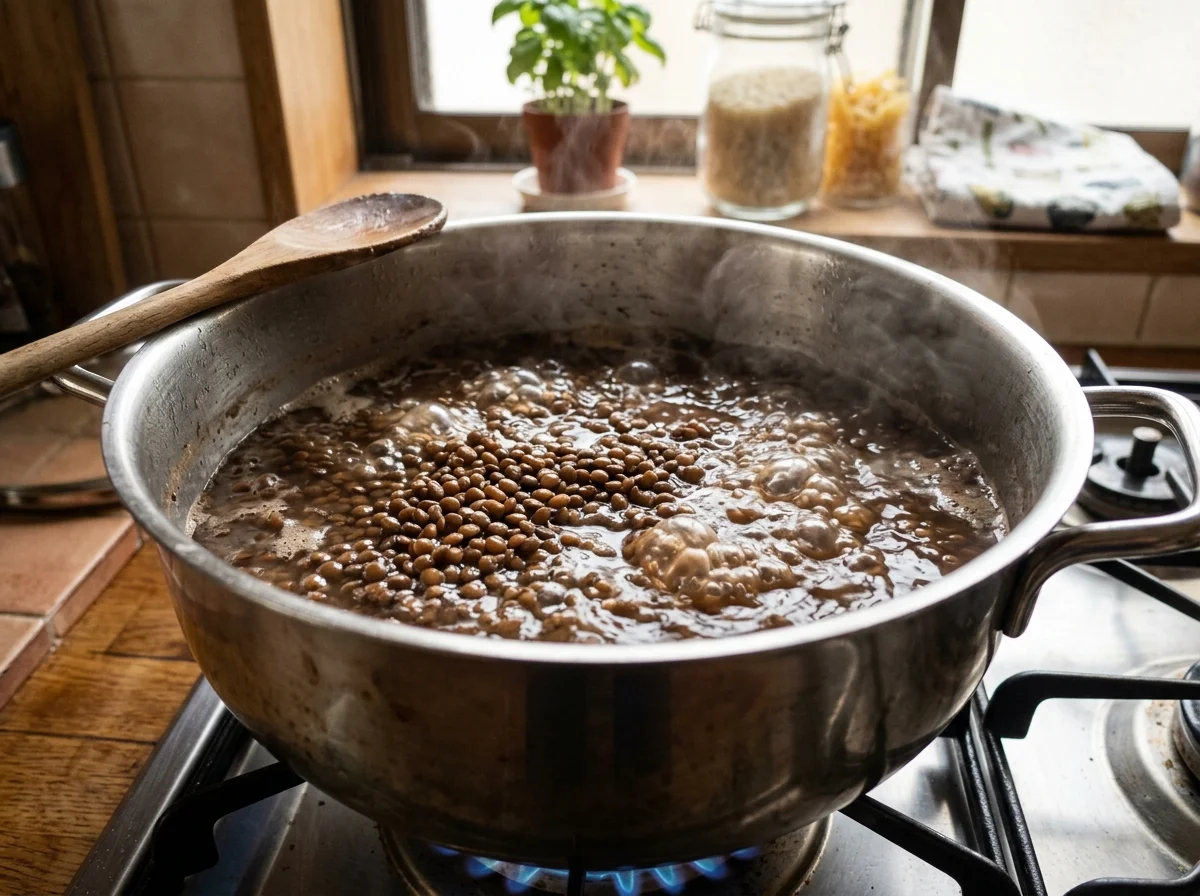
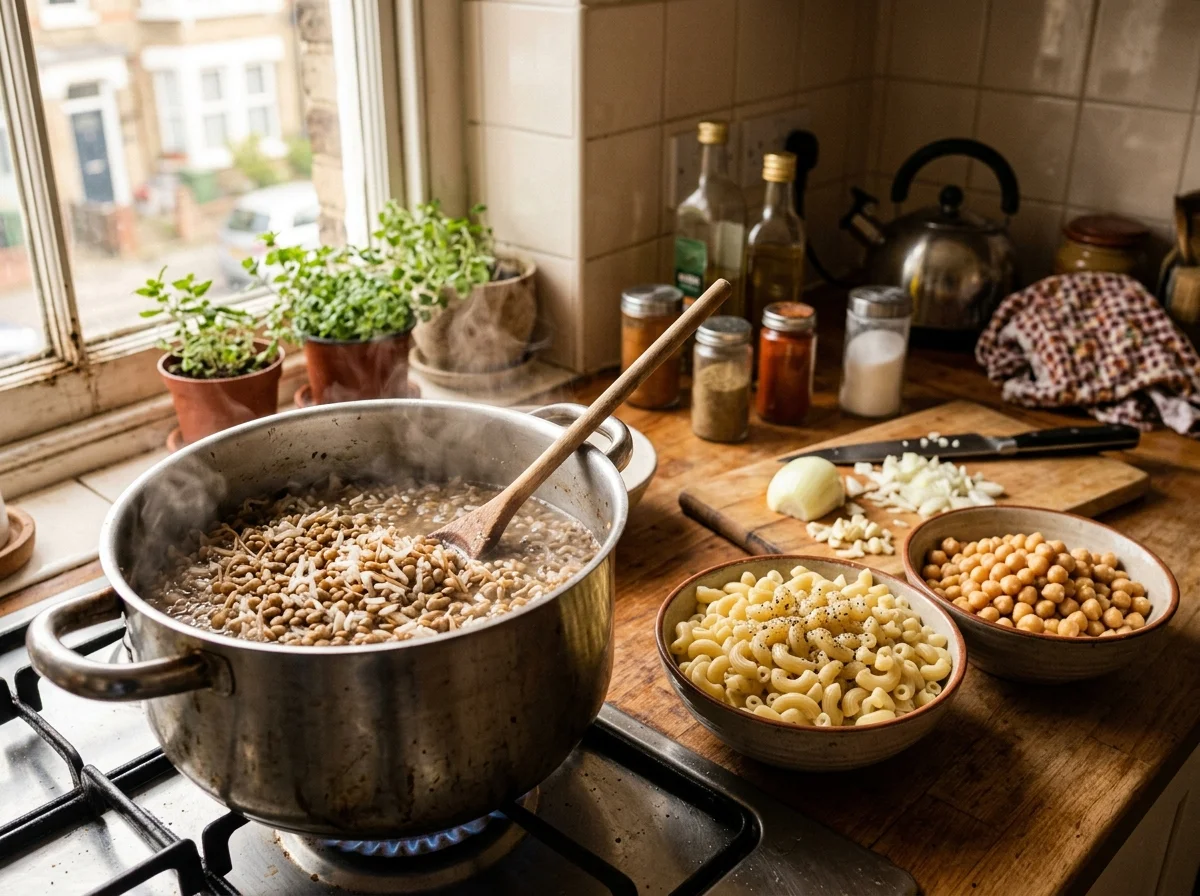
Rinse the brown lentils in a colander under running water and pick out any small stones or discolored ones. Brown lentils need no soaking, but soaking in water for about 30 minutes shortens the cooking time.
Telling lentils apart: There are three common kinds. Brown lentils are best for koshari, since they hold their shape and keep a pleasant texture. Green lentils can substitute for brown and finish a little firmer. Red lentils break down quickly, so they are unsuitable for koshari and better for soupy dishes such as dal bhat (Nepal).
Preparing the rice
Rinse the rice 2–3 times and drain. If you use basmati, soaking it for 30 minutes gives fluffy rice. If you use short-grain rice, mixing 1 tsp oil into the cooked rice brings it closer to a loose, separate-grain finish.
To eat, mix everything well with a spoon before taking a bite. As you break up the layers and mix, each texture and flavor melds in your mouth. This "joy of mixing" is part of koshari's charm.
Tips for a Better Result
Choose brown lentils
Red lentils break down into a paste, so they are unsuitable. Brown lentils keep their shape while becoming moderately tender and give a pleasant pop. You can find them at Middle Eastern or South Asian grocers and in many supermarkets.
Cook the rice so the grains stay separate
Short-grain rice cooked the usual way turns sticky and does not feel like koshari. Rinse it 5 or more times, add 1 tsp oil before cooking, and fluff it with a fork as soon as it is done. If you can find basmati or jasmine rice, use it without hesitation. It is a dish, like nasi goreng (Indonesia) (in Japanese), where loose grains of rice are everything.
Give the tomato sauce some sourness
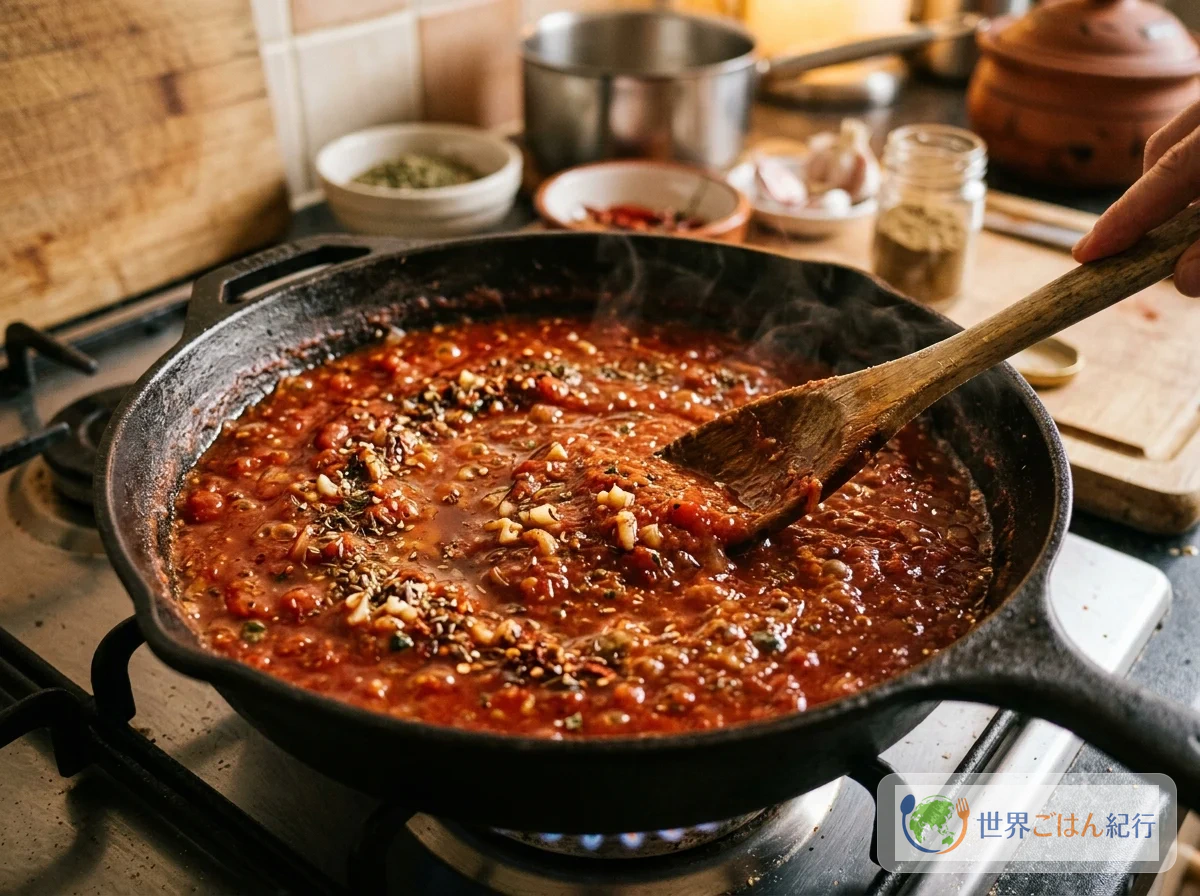
Egyptian tomato sauce is characteristically more sour than a typical pasta sauce. Adding 1 tbsp vinegar brings it closer to the authentic taste. A sauce that is merely sweet will not complete koshari.
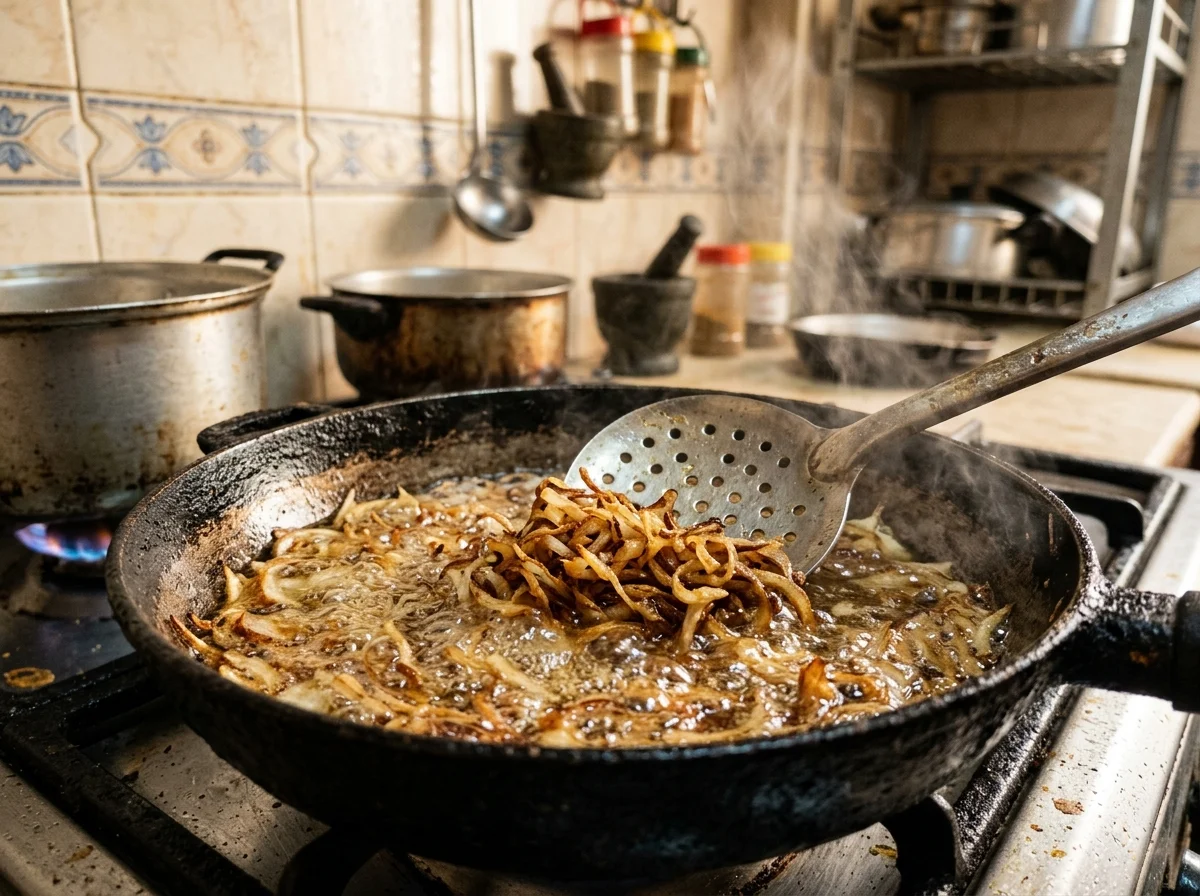
Do not skimp on the fried onions
The biggest difference between koshari shops is in fact the amount and quality of the fried onions. Double what feels like too much is right. Treat 2 onions as the minimum for 4 servings.
Always serve the daqqa separately
The tomato sauce goes on in advance, but the daqqa should always come to the table in a separate container. Tastes for heat and sourness differ widely, so the Egyptian way is for each person to add as much as they like.
Variations
Higher-protein version: egg topping
Koshari with a fried egg on top is seen at some stalls in Cairo. The soft yolk mixes with the tomato sauce for a mellower taste. It also adds protein, making it suitable for a meal after a workout. Pairing tomato sauce and egg is a staple of the Middle East and North Africa, as in shakshuka (Israel).
Gluten-free version: potato instead of macaroni
Use diced potato (1 cm cubes, parboiled) in place of the macaroni to make gluten-free koshari. The texture changes, but the fluffiness of the potato goes well with the tomato sauce.
Extra-hot version: add harissa
Adding 1 tbsp of harissa, the North African chili condiment, to the tomato sauce gives it the spiciness of North African dishes such as tagine (Morocco). Harissa is sold at specialty and Middle Eastern grocers and online.
Time-saver: use store-bought items
Using canned cooked lentils removes the boiling time. Store-bought crispy fried onions or fried shallots can stand in for homemade fried onions. A simple tomato sauce can be made from a basic jarred tomato sauce with cumin added.
Koshari Nutrition and Health
Complete plant protein
Combining lentils (rich in plant protein) and chickpeas (containing the essential amino acid lysine) with rice (rich in methionine) makes the amino acids complement one another. That is how you get good-quality protein without meat.
Lentils contain about 8 g of fiber per 100 g, and together with the chickpeas a single serving provides a good amount of fiber.
| Nutrient | Per serving (estimate) |
|---|---|
| Energy | 520 kcal |
| Protein | 18 g |
| Fat | 12 g |
| Carbohydrate | 85 g |
| Fiber | 10 g |
| Iron | 5.2 mg |
Boosting iron absorption: The vitamin C in koshari's tomato sauce helps absorb the non-heme iron in the lentils. The sour daqqa (vinegar and lemon juice) has a similar effect. In other words, the sauce setup of koshari makes sense nutritionally too.
Koshari Stories
The "koshari rivalry": Cairo's famous shops
Cairo has several well-known koshari shops, and fans argue endlessly about which is best. Koshary Abou Tarek is a koshari-only restaurant. Koshary El Tahrir is an old shop near Tahrir Square. Koshary Hind is a popular shop in the Heliopolis district.
Ramadan and koshari
Koshari is a staple of iftar, the meal after sunset during Ramadan. After a long fast, koshari supplies carbohydrate and plant protein efficiently, and is gentle on the body and filling.
Storage and Reuse
Storage
| Method | Duration | Points |
|---|---|---|
| Refrigerator | 3 days | Keep the lentil rice and the sauces in separate containers |
| Freezer | 1 month | Macaroni does not freeze well. Freeze only the lentil rice and sauce |
| Fried onions | 1 week at room temperature | A sealed container with a desiccant keeps them crisp |
Leftover ideas
For koshari doria (a baked gratin), put leftover koshari in a heatproof dish, top with cheese, and bake at 200°C for 15 minutes. Tomato sauce and cheese go together very well. For koshari soup, add 500 ml water and 1 bouillon cube to leftover koshari and simmer. The lentils and rice absorb the liquid and give the soup a pleasant body. For a koshari omelet, simply mix leftover lentil rice with 3 eggs and cook in a pan.
Similar Dishes Around the World
Combinations of "beans + grain + toppings" like koshari exist all over the world.
| Dish | Country/region | Makeup |
|---|---|---|
| Khichdi | India | Rice + mung beans. Koshari's ancestor. Finished with ghee (clarified butter) |
| Mujaddara | Lebanon | Rice + lentils + fried onions. The closest in makeup to koshari |
| Gallo pinto | Costa Rica | Rice + black beans. A national dish of Central America |
| Waakye | Ghana | Rice + cowpeas. Colored with red sorghum leaves |
| Feijoada | Brazil | A stew of black beans and pork. Eaten with rice |
The similarity between koshari and mujaddara is worth noting. They share three elements, lentils, rice, and fried onions, which shows the continuity of food culture across the Middle East and North Africa.
Frequently Asked Questions
Q1. Is koshari good cold?
It is perfectly good at room temperature. At Cairo stalls it is generally made ahead and not always served piping hot. The tomato sauce, though, has more flavor when warm, so I recommend warming only the sauce in a microwave or pan before spooning it on.
Q2. How can I serve it to children?
Leave out the daqqa and use less chili in the tomato sauce, and even young children can eat it. It is rich in carbohydrate and plant protein, so it is also a good meal for growing children.
Q3. I can't find basmati rice. Can I use short-grain rice?
Yes. What matters is to rinse the rice more times to reduce stickiness, add 1 tsp oil before cooking, and fluff it with a fork right after it is done. It will not be completely loose, but next to the bold flavor of the tomato sauce and daqqa you will hardly notice.
Q4. Where can I buy brown lentils?
Look in the dried beans section of larger supermarkets, at Middle Eastern, Indian, or other Asian grocers, or online, usually sold in 500 g to 1 kg bags.
Q5. I don't have time to make fried onions.
Store-bought crispy fried onions or fried shallots, sold at many Asian grocers and supermarkets, can substitute. They are made for Southeast Asian cooking, but their crisp texture and sweetness are close to the fried onions of koshari. The same fried shallots are used in nasi lemak (Malaysia).
Koshari Glossary
| Term | Reading | Meaning |
|---|---|---|
| كشري | Koshari | The dish name. Derived from the Hindi khichdi |
| دقة | Daqqa | The vinegar-garlic sauce |
| بصل مقلي | Basal maqli | Fried onions. Basal = onion, maqli = fried |
| شطة | Shatta | Chili paste. Sometimes used in daqqa |
Summary
Koshari is a street food Egypt can be proud of, cheap, easy, and delicious in equal measure. Familiar ingredients, lentils, rice, macaroni, and chickpeas, are layered and finished with a spicy tomato sauce and crisp fried onions.
You can make it in a home kitchen with ingredients from an ordinary supermarket. Try it as your first African dish, or as an addition to your vegan repertoire.
Among other African dishes, thieboudienne (Senegal) (in Japanese), a West African national dish combining rice and fish, is a must-read. If you are curious about the flavors of Egypt's neighbors, hummus (Lebanon) and falafel (Lebanon) (in Japanese) are also recommended. Comparing it with a fermented bread such as injera (Ethiopia) is another good way to see the depth of African cuisine.
Sources
- Roden, Claudia. The New Book of Middle Eastern Food. Alfred A. Knopf, 2000.
- Sen, Colleen Taylor. Food Culture in the Near East, Middle East, and North Africa. Greenwood, 2014.
- UNESCO. Koshary, daily life dish and practices associated with it. Inscribed 2025; accessed 2026.
- Ehab, Mariam. The Layered History of Koshary, Egypt's Most Beloved Street Food. Smithsonian Magazine, 26 February 2026.



