

Scooping beans with morning bread: an Egyptian table
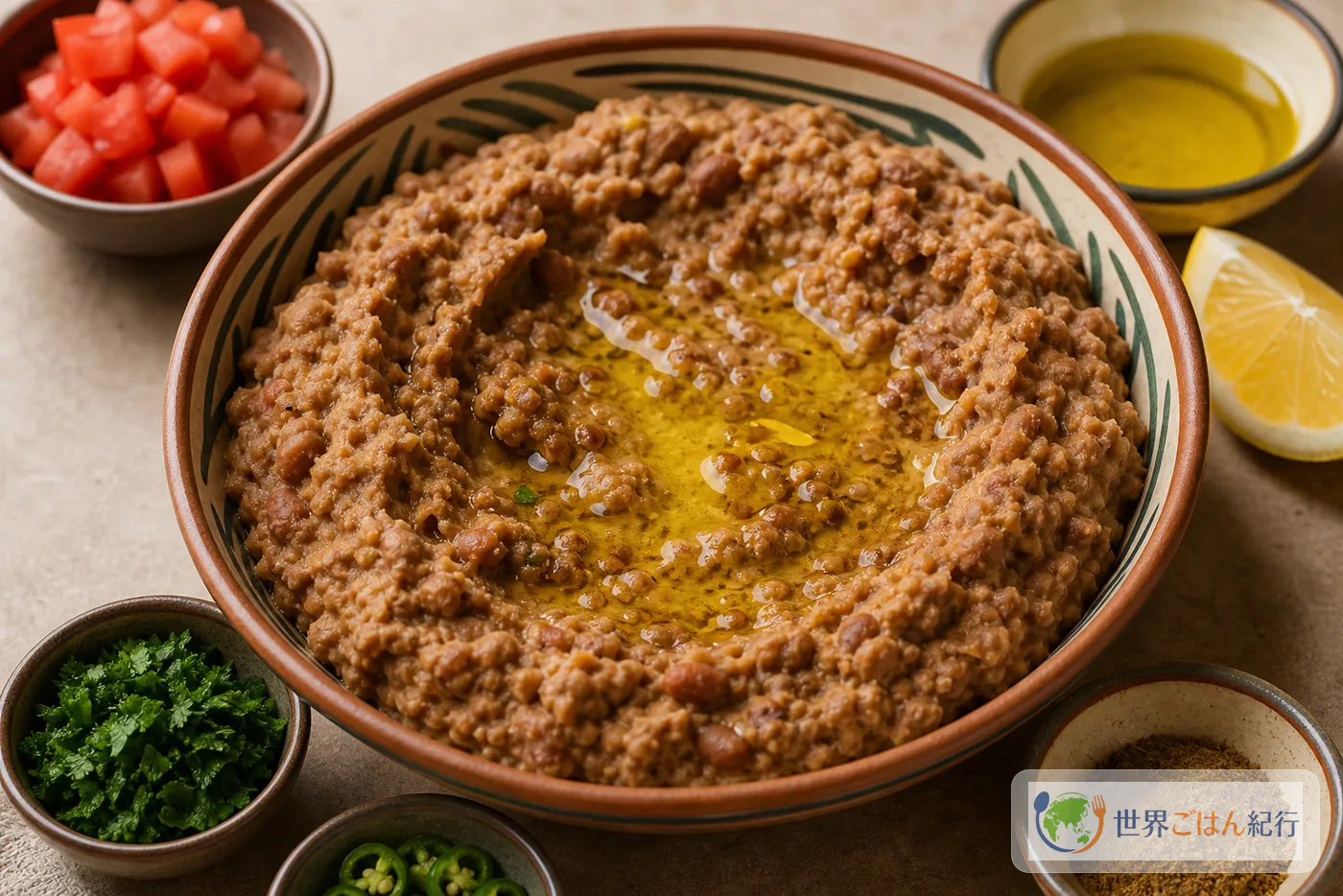
In the morning kitchen, you warm a pot of beans and cut a lemon. The scent of cumin rises, and olive oil makes a small golden pool. Alongside are flatbread, boiled eggs, cucumber, tomato and sour pickles. Ful medames is less a lavish dish than "a plate to start the day."
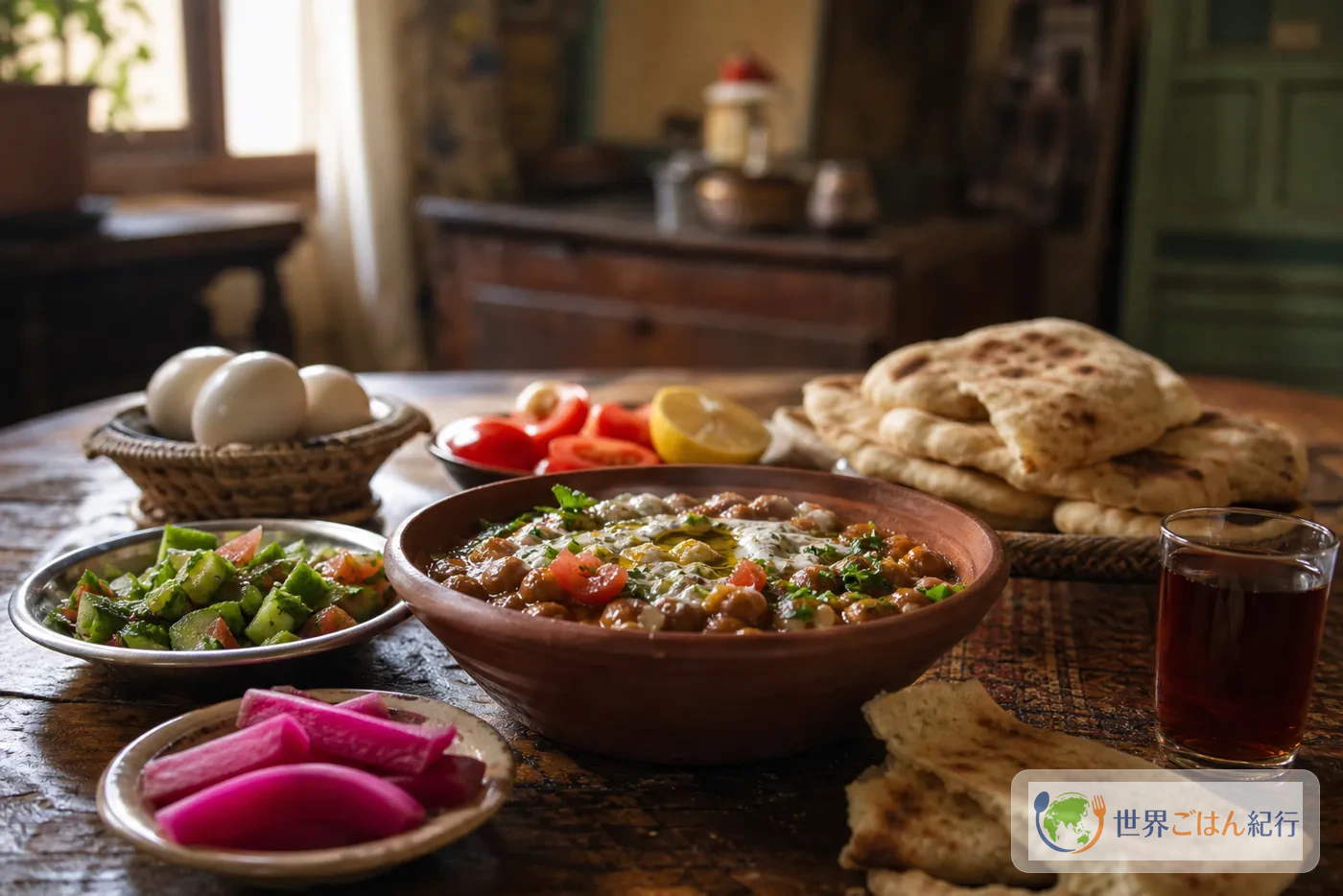
Ful medames (فول مدمس / ful medames, foul mudammas) is a staple of Egypt: slowly cooked fava beans (broad beans) eaten with cumin, garlic, lemon and olive oil. It is also written "ful mudammas" and "foul medames," but this article uses "ful medames" throughout.
When people think of Egyptian cooking they may first think of koshari (in Japanese), layered rice, lentils and macaroni. If koshari is the street-stall lunch, ful medames is the morning bean. You scoop the beans with bread, squeeze on lemon, and bite into an egg or pickle along the way. It isn't a dish that pushes with strong spices; it brings out the sweetness of the beans with acidity and oil.
The thing that trips people up outside Egypt is choosing the beans. Soaking small dried fava beans overnight and simmering them comes closest to the local texture, but it is a little far from a weekday morning. With canned fava beans you can get quite far just by warming and mashing them in a pot. On the other hand, if you make it only with the green broad beans that appear in Japanese spring markets, the color and aroma easily turn into something else. Sorting this out first keeps you from getting lost shopping.
This article centers on a home version using canned beans, and covers how to soak and cook dried beans, the limits of substituting spring broad beans or white beans, versions with and without tahini, and storage and reheating. If you like Middle Eastern bean dishes, comparing it with hummus (in Japanese) and mujaddara (in Japanese) shows the differences within the same beans: mashing them smooth, leaving them in grains, or pairing them with rice.
Keep three things: warm the fava beans until soft, mash only half and leave some grains, and finish with cumin, lemon, garlic and olive oil. Tahini, tomato, egg, chili and onion vary widely from home to home, so you don't have to gather all of them at the start.
Background: a breakfast of beans that spread from the pots of Cairo
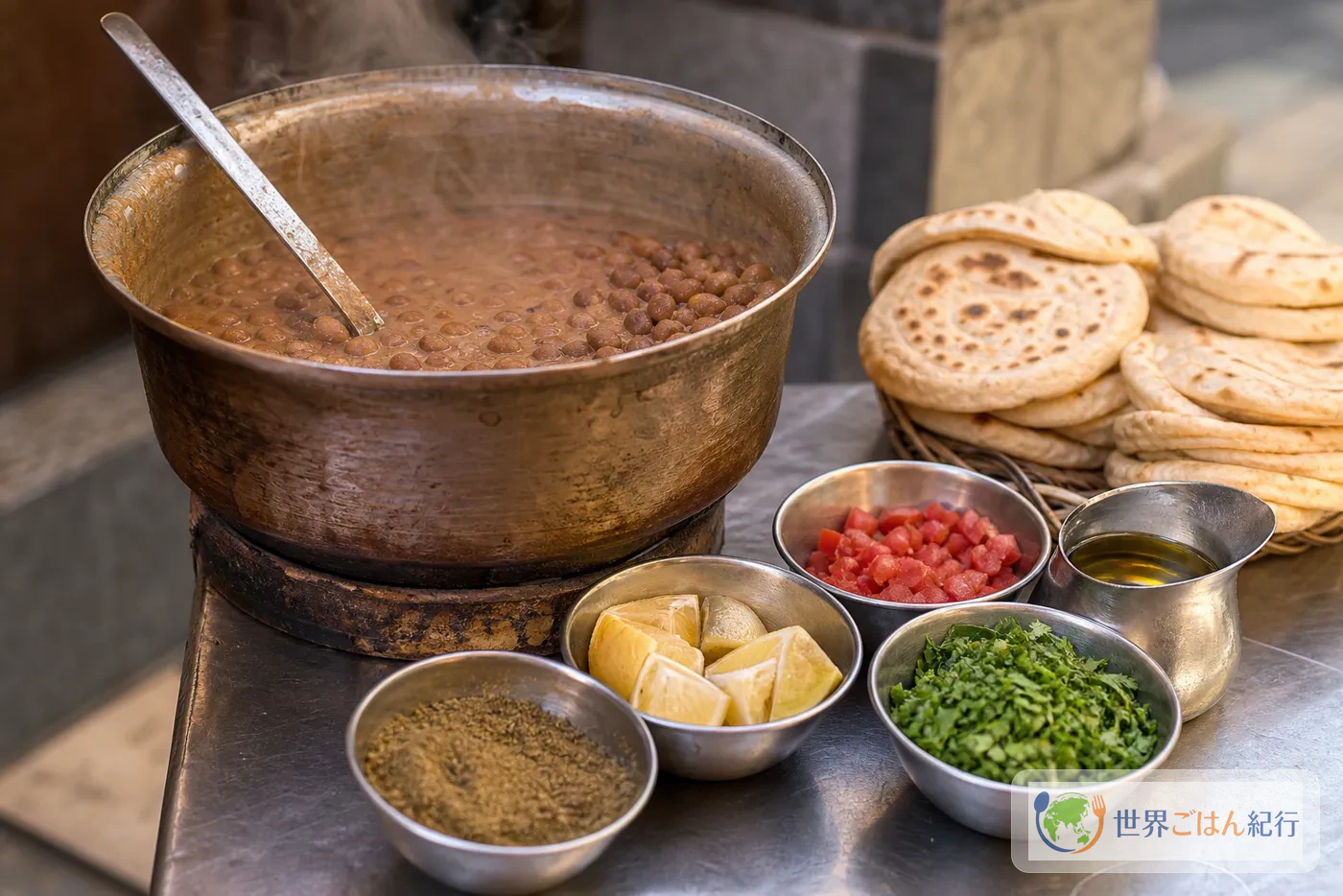
What is interesting about ful medames is that, though very simple as a dish, it has a wide range of ways to eat it. 196 Flavors presents ful as an Egyptian vegan breakfast and explains that it is built up with lemon, garlic, olive oil, parsley and tomato. The Mediterranean Dish also places it as a national everyday food of Egypt, alongside falafel and koshari.
The "ful" in the name refers to the beans, and "medames" is sometimes explained as coming from an old cooking method. The beans were cooked slowly overnight in a large metal pot and sold the next morning. Today's households use canned beans or a pressure cooker, but the core of the dish hasn't changed. You warm the beans without hurrying and wake them up with acidity and oil just before eating. That is why the star of the recipe isn't a showy spice but the temperature of the beans and how much you mash them.
In Egypt ful medames is eaten not only at breakfast but at lunch and as a light supper. Eaten with bread, it needs few dishes; add eggs and vegetables and the nutrition is balanced. It uses no expensive ingredients and satisfies without meat, so it fits in homes, at stalls and in eateries alike.
There are regional differences too. The Egyptian style centers on cumin, lemon, garlic and olive oil, often with tomato or chili. In Lebanon and Jordan, tahini may be added more strongly, moving toward the richness of hummus (in Japanese). In Sudan you see versions with onion, paprika and boiled egg alongside, and in Yemen the beans are also eaten simmered with tomato and chili. All start from the same "warm base of fava beans," and change expression with the acidity, oil and herbs placed on top.
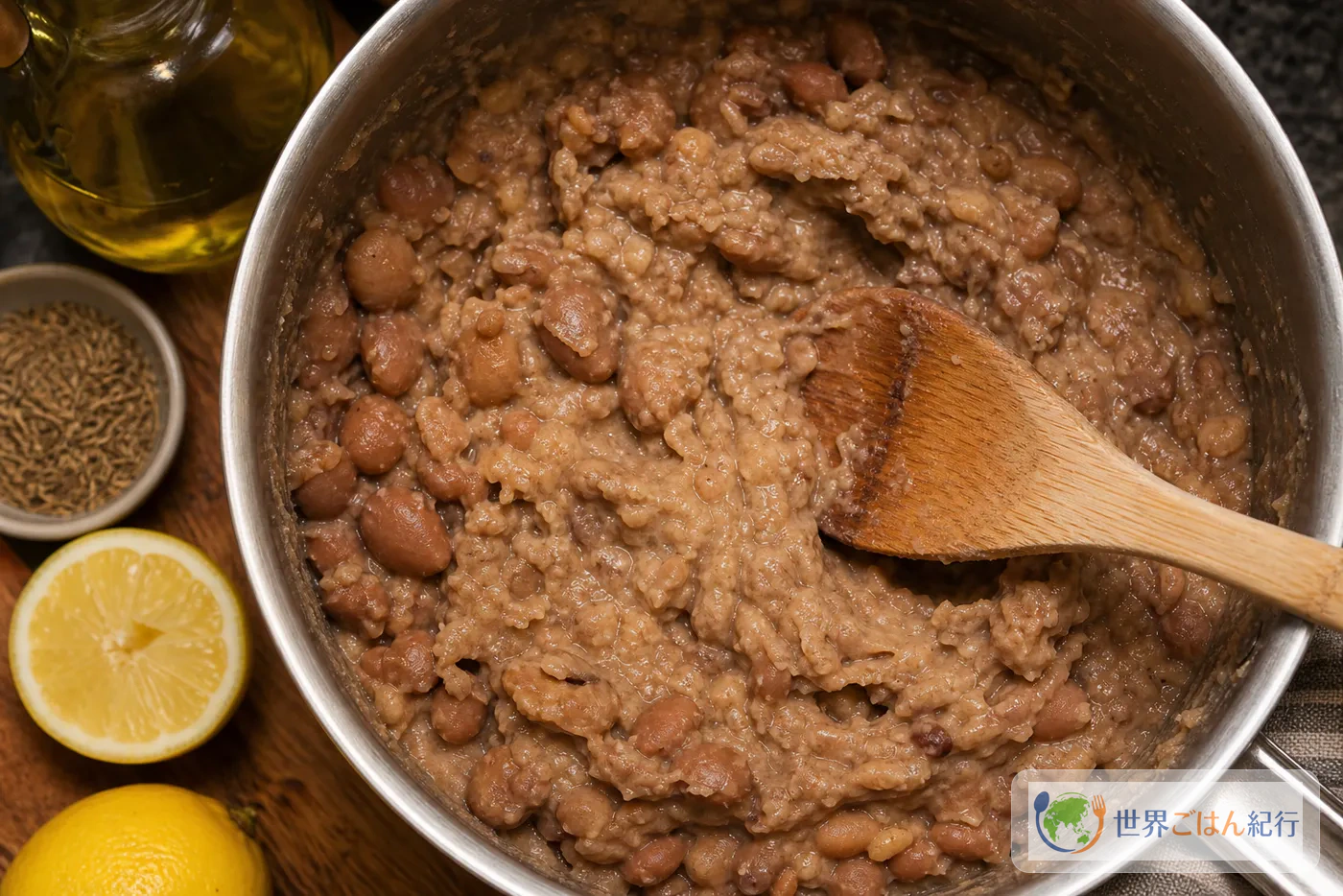
You don't need to aim for Cairo's big pots at home. A small pot actually makes it easier to see the beans' moisture and adjust the seasoning. To keep it faithful to the local spirit, don't turn the beans into a complete paste. Break half and leave half as grains. The easiest-to-eat state is when, pressed with bread, the grains crush a little and soak up lemon and olive oil.
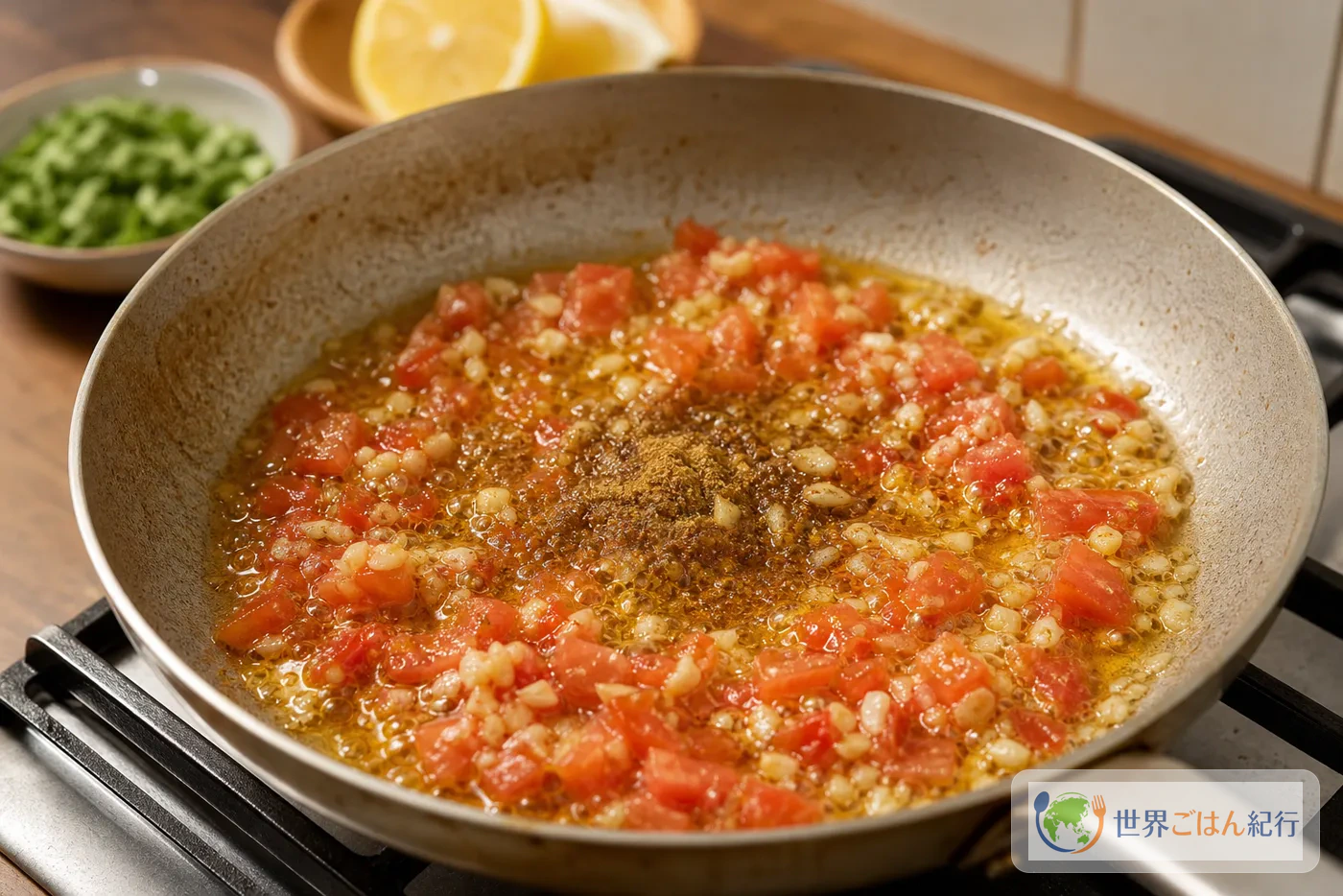
Ful medames isn't finished when the beans finish cooking. The aroma is set by the lemon, garlic, cumin and olive oil added right before you serve. Even with canned beans, a careful finish makes it a breakfast plate and not just warmed beans.
Ingredients (serves 4)
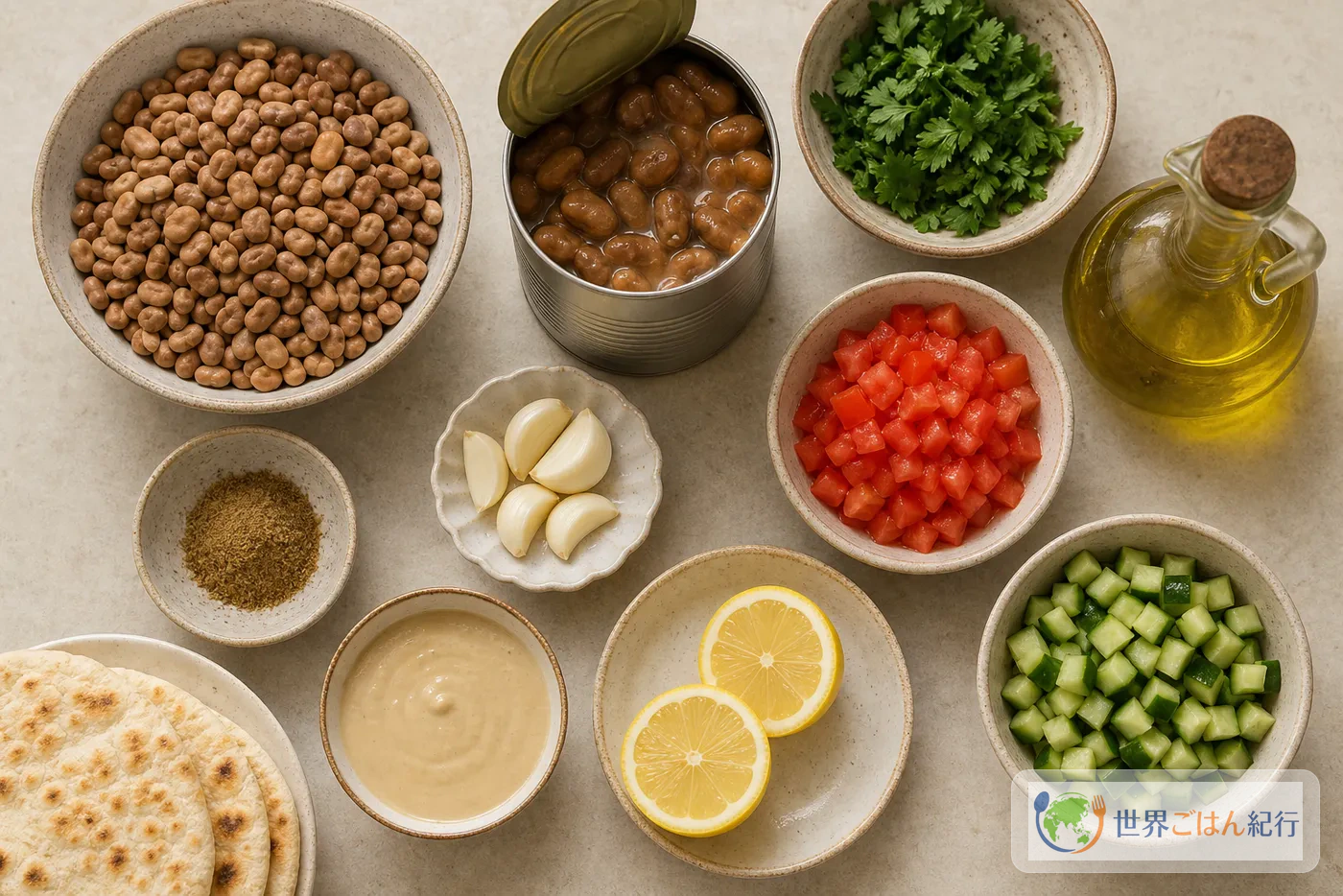
Here the base method uses canned fava beans. If you use dried beans, follow the substitutes column in the table. Boiled egg, bread and vegetables are accompaniments for a menu: prepare them on days you make it as breakfast, and skip them on days the beans are only a side dish.
The recipe itself centers on beans, garlic, cumin, lemon and olive oil. Tahini or sesame paste contains sesame. Pita and naan contain wheat. If you serve boiled eggs, they contain egg. If you have allergies, replace the bread with rice flour bread or rice, leave out the tahini, and replace the egg with vegetables or pickles.
What to use for this dish
Canned fava beans let you make this even on a weekday morning. If you start from dried beans, soak and cook a big batch ahead of a day off.
Dried beans take time, but they bring out the aroma of the beans and the softness of the skins. Choose small ones to come closer to the local texture.
Tahini isn't essential, but a small amount adds richness. It also goes into hummus (in Japanese), falafel (in Japanese) and salad dressings.
Cumin sets the aroma of this dish. Substituting curry powder moves it toward a different dish, so first get a small jar of cumin.
Method
Ful medames is a dish with very little cutting. The hard parts are not making the beans watery, not letting them dry out either, and getting acidity and oil in at the end. For the first time, make it with canned beans, learn how firm the beans should be, and then move on to dried beans.
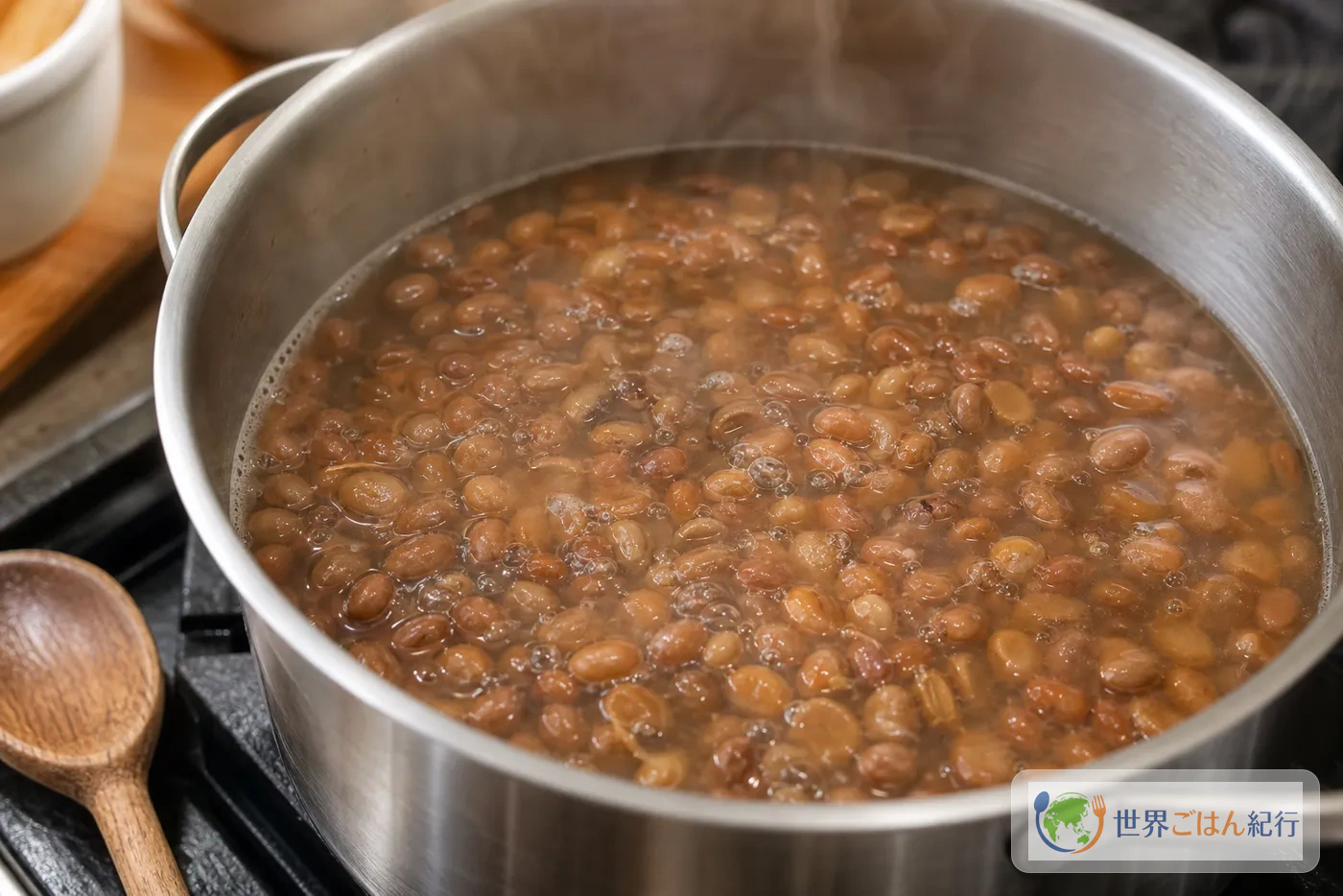
Wash 250 g of small dried fava beans and soak them overnight in plenty of water. The next day, change the water and simmer over low heat for 60–90 minutes. A pinch of baking soda softens them faster, but too much blurs the aroma of the beans. For the first time, it is easier to learn the flavor by cooking without baking soda and allowing a longer time.
Choosing beans and substitutes: what you can buy, and what to avoid
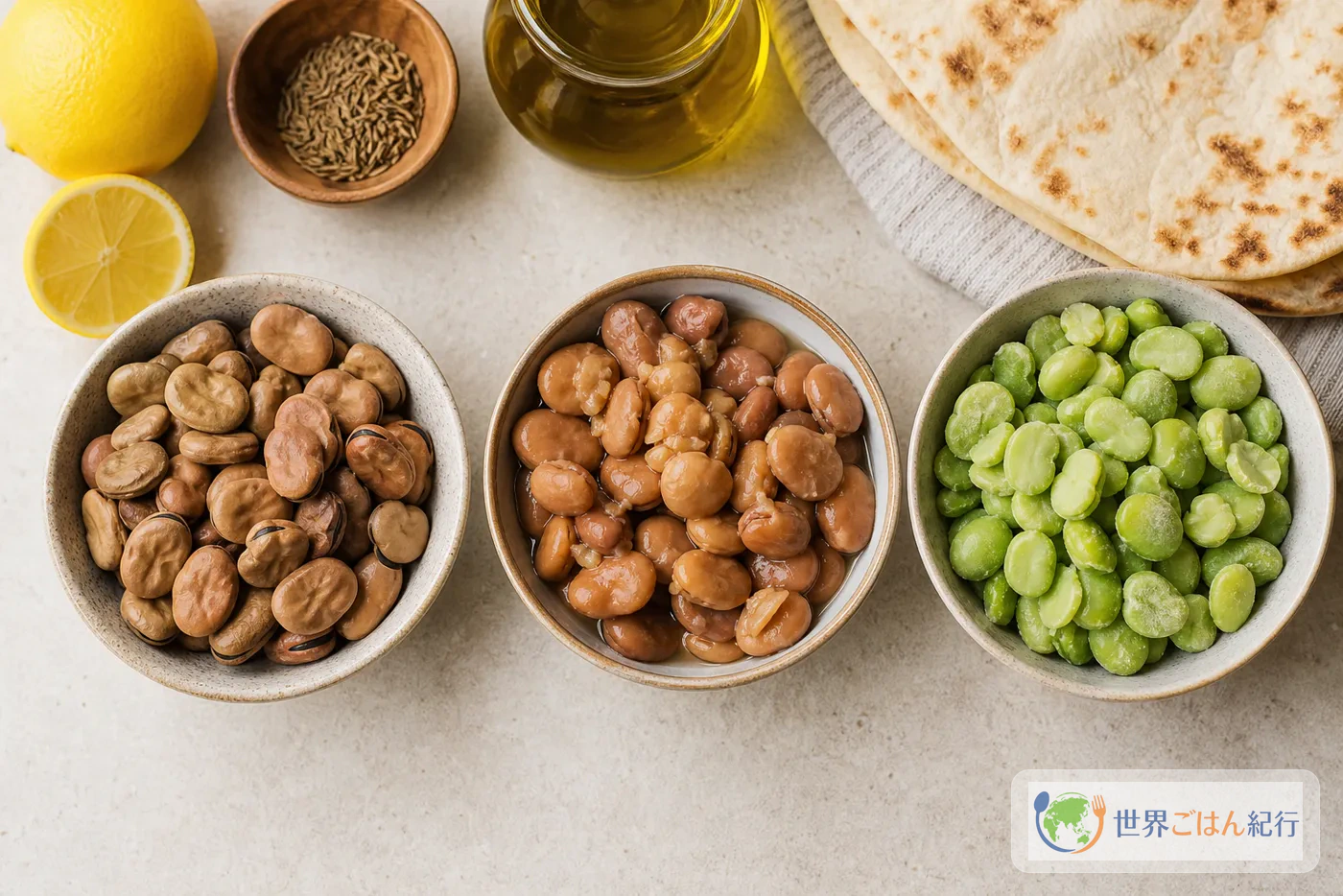
The biggest fork in a home kitchen is the beans. Ful medames is described as a "fava bean dish," but if you picture only the large green broad beans eaten salted-boiled in spring, it's a little off. What is commonly used in Egypt are small, brownish dried fava beans and their canned version. Cooked, they turn floury-tender and give a deep bean aroma when mashed with the skins on.
| Ingredient | Result | When to use |
|---|---|---|
| Canned fava beans | The easiest. Gives the aroma of brown beans | Weekdays, the first try, saving time |
| Small dried fava beans | Good aroma and closer to the local texture | Days off, making ahead, days you want the beans to be the star |
| Frozen green broad beans | Bright color and a strong green aroma | A spring variation. A different thing from the Egyptian style |
| White beans | Creamy but the bean aroma differs | An emergency substitute on days you really have no fava |
| Chickpeas | Moves toward hummus | Enjoy it as a different bean dish, not as ful medames |
| Edamame | Aroma and texture are far off | Not recommended. Better for cold salads |
Think separately about what can be substituted and what is better not. Bread can be pita, naan, thin focaccia or toasted sandwich bread. Tahini can be replaced with sesame paste. But swap cumin for curry powder and it becomes a curry flavor at once. Swap lemon for vinegar and the sharpness of the vinegar stands out more than the bean aroma. Swap olive oil for vegetable oil and the finishing aroma weakens.
In short, the axis to keep for an Egyptian feel is beans, cumin, lemon and olive oil. Tahini, egg, tomato, chili and onion can move with taste. On days you cook only with ingredients from a Japanese supermarket, if you can't find canned fava beans, practice with white beans, and then look for fava beans online or at an import grocer; that is the realistic route.
When using canned beans, whether you pour out all the canning liquid changes the flavor. The liquid from imported cans has a strong bean aroma and also has salt. A little of it pulls the flavor together, but all of it can make it heavy. The first time, use half and adjust the rest with water. If a metallic smell bothers you, drain the beans once in a sieve, rinse them lightly with hot water and return them to the pot, and it calms down.
With dried beans, whether to peel the skins is another point of hesitation. If you want it perfectly smooth you can peel them, but for home ful medames, simmering with the skins on and mashing coarsely keeps you fuller and keeps more bean flavor. If a tough skin bothers you, allow a longer soak and cook gently over low heat. In a hurry over high heat, the outside breaks while the center stays hard.
Only on days you cook with green broad beans, switch your thinking. Warm peeled green broad beans briefly, go light on cumin and lemon, and use olive oil and salt to bring out the green aroma of the beans. This is a "spring version of ful medames," not the Cairo breakfast itself. Conversely, on days you substitute white beans, because the bean aroma is weaker, make the cumin and garlic a little stronger and set the outline with tomato and lemon. Both are handy, but the main line we recommend is canned fava beans or small dried fava beans. For readers to feel "this is not just stewed beans" on the very first attempt, this choice of beans matters most.
Why it fails, and how to adjust
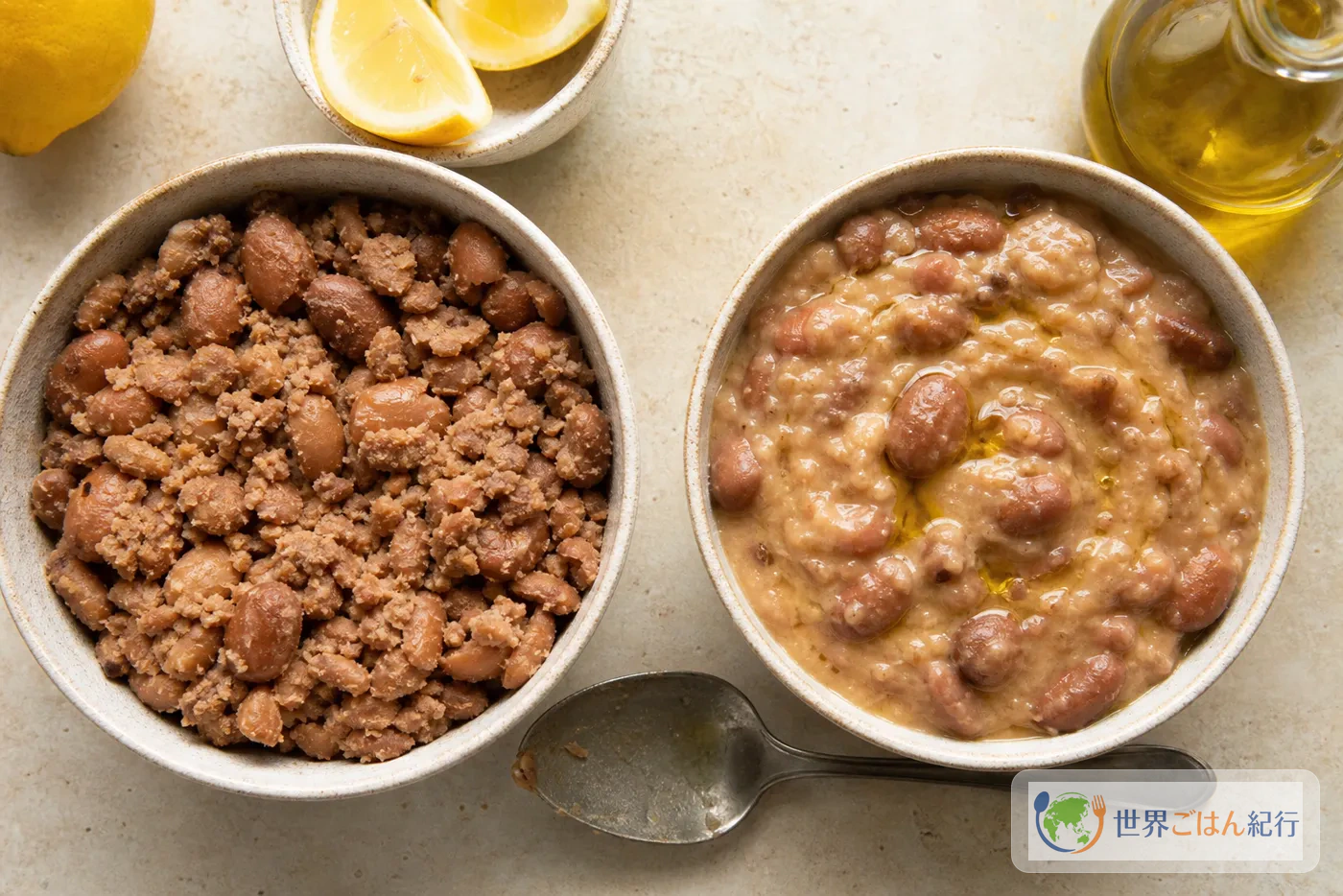
Ful medames is easy but prone to quiet failures. Salty, dry and crumbly, grassy, oily, the canned taste won't go away. All can be fixed by looking at the state of the beans before adding more spice.
| Symptom | Cause | Fix |
|---|---|---|
| Dry and crumbly | Too little liquid, beans mashed too much | Add 2 tbsp of hot water at a time and stir over low heat. Add a little more finishing oil |
| Watery | Too much canning liquid or water | Take off the lid and cook 5–8 minutes. Mash a few more beans |
| Salty | Salt in the canning liquid, too much salt | Add water and cook again, and increase lemon and tomato |
| Grassy | Used green broad beans, raw-tasting garlic | Warm the garlic with cumin in oil, and add lemon last |
| Tastes canned | Used all the canning liquid, not warmed enough | Rinse once with hot water and rewarm with olive oil and cumin |
| Oily | Mixed the finishing oil in too early | Add lemon juice and chopped vegetables, and put only a little oil on top |
| The beans are hard | Dried beans soaked too little, cooked too little | Add water and cook 30 minutes more. Add salt after they are soft |
What matters in ful medames is not to confuse creamy with pasty. Make it completely smooth like hummus and the presence of the beans vanishes. Conversely, if every grain remains, it's hard to scoop with bread and the seasoning doesn't cling. A guide: when you move the wooden spoon in the pot, the mashed beans should hold everything together like a sauce, with grains still visible in it.
With the amount of oil too, going by feel works better than by numbers. Mixing in a little olive oil while the beans are hot rounds the mouthfeel, but putting all of it in the pot can feel heavy. Half in the pot and half after serving in the bowl; divided like this, the aroma rises and it looks better.
Lemon goes last. Add a lot partway through the cooking and the acidity escapes and the bean skins can tighten a little. Add it at the end and put wedges on the side so people can add more at the table. If each person decides the acidity on their own plate, it is easier to serve to children and those who dislike sourness.
If beans cooked from dried are still firm, cook them longer before adding more seasoning. Cooking long after adding salt, lemon and tahini makes them scorch easily and the flavor heavy. Soften the beans alone first and then season. It's unglamorous, but this matters most.
Don't leave soaked beans at room temperature for long. In hot weather soak them in the refrigerator, discard the soaking water and cook in fresh water. If you store cooked beans, cool them, put them in a clean container and use them up within 2–3 days refrigerated.
How to eat it, menus, storage
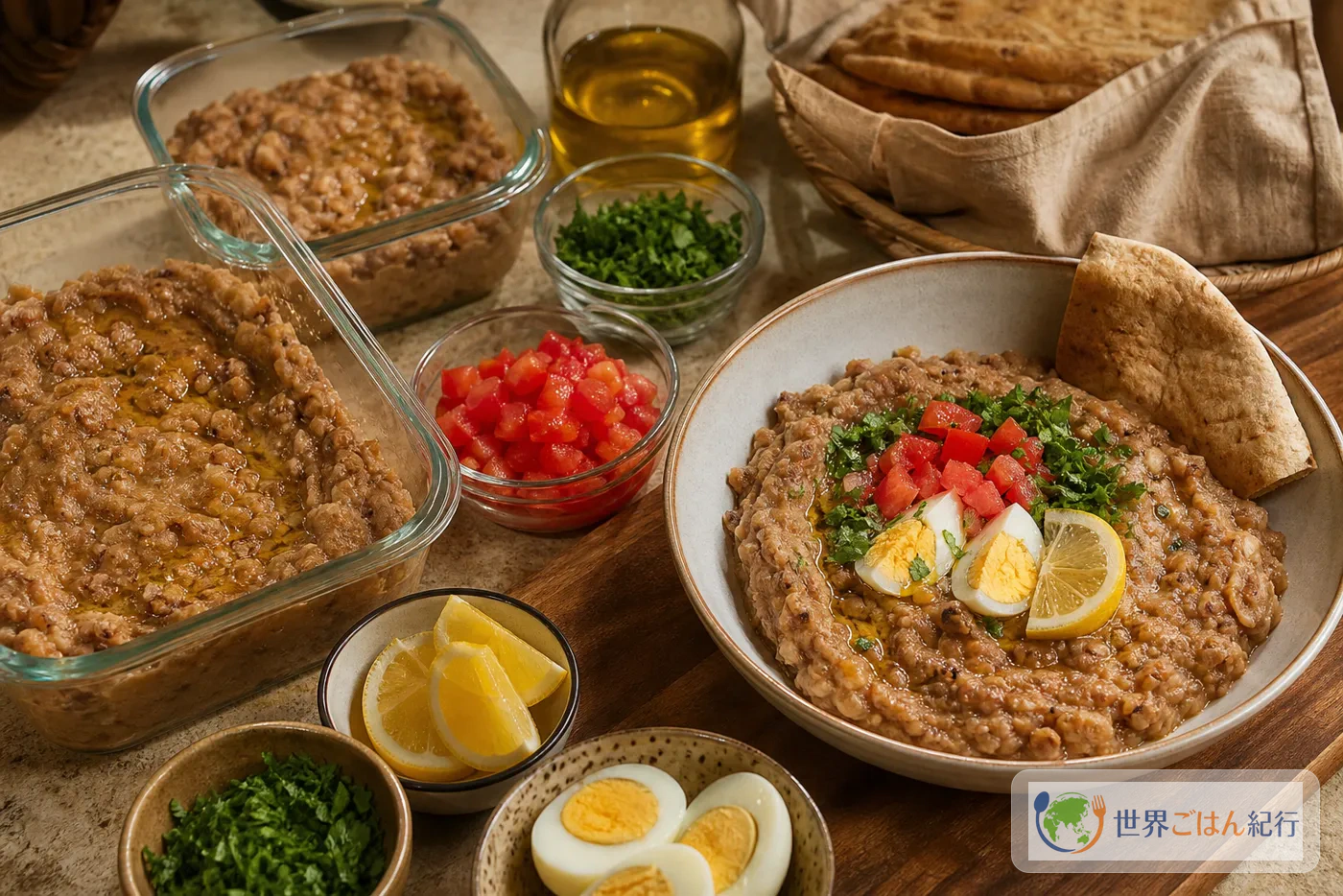
Ful medames is most itself when eaten with bread. Warm pita or naan, tear off a piece and scoop up the beans. Mash a boiled egg a little and eat it with them. Bite into pickles or cucumber along the way. Rather than just a spoon, eating by pressing with bread mixes the bean grains, oil and lemon well.
For breakfast, ful medames, a boiled egg, cucumber and tomato, pickles and tea are enough. For lunch, adding a small portion of koshari (in Japanese) shows the flow of Egyptian everyday food. But beans, rice and pasta together get quite heavy, so make one of them a small serving.
For a more Middle Eastern table, line up falafel (in Japanese), hummus (in Japanese) and a tabbouleh-style salad, and you get a bean dish tasting. To broaden an egg and tomato breakfast, shakshuka (in Japanese) goes well too. Pair it with a North African soup, and a small serving of Morocco's harira shows the differences in how beans, tomato and herbs are used.
For storage, beans alone keep about 2–3 days refrigerated. Mix in the tomato, parsley, lemon and olive oil and store them like that, and the next day it gets watery and the herbs sink. If you make ahead, put the beans in a container once lightly seasoned, and add the toppings right before eating.
Reheat over low heat. Beans firm up when chilled and stick to the bottom of the pot. Add 2–3 tbsp of water or hot water and warm while stirring from the bottom. In a microwave, cover loosely with plastic wrap and stir once partway through. The finishing olive oil and lemon go in after reheating.
For freezing, beans before adding tahini, lemon and toppings are best. Freeze in portions, thaw and warm in a pot, then finish with cumin, lemon and oil. You can freeze the finished dish and eat it, but the texture of the herbs and tomato suffers.
Building a menu
| Occasion | Combination | Point |
|---|---|---|
| Weekday morning | Ful medames, pita, boiled egg, cucumber | Make the beans the night before and reheat in the morning |
| Weekend lunch | Ful medames, falafel, hummus, salad | The bean dishes overlap, so go heavier on acidity |
| Light supper | Ful medames, roasted vegetables, bread | Satisfying even without meat |
| A day to lean Egyptian | Ful medames, a little koshari, pickles | Lots of carbohydrate, so divide into small plates |
| Make-ahead | Store the beans alone, toppings apart | Herbs and lemon just before eating |
The next day, warm the ful a little stiffer and sandwich it in bread for a breakfast sandwich. Adding tomato, cucumber, boiled egg and a little tahini makes it easier to eat. Over rice, add a few drops of lemon and soy sauce to lean toward a Japanese table, but keep the aroma of the cumin.
FAQ
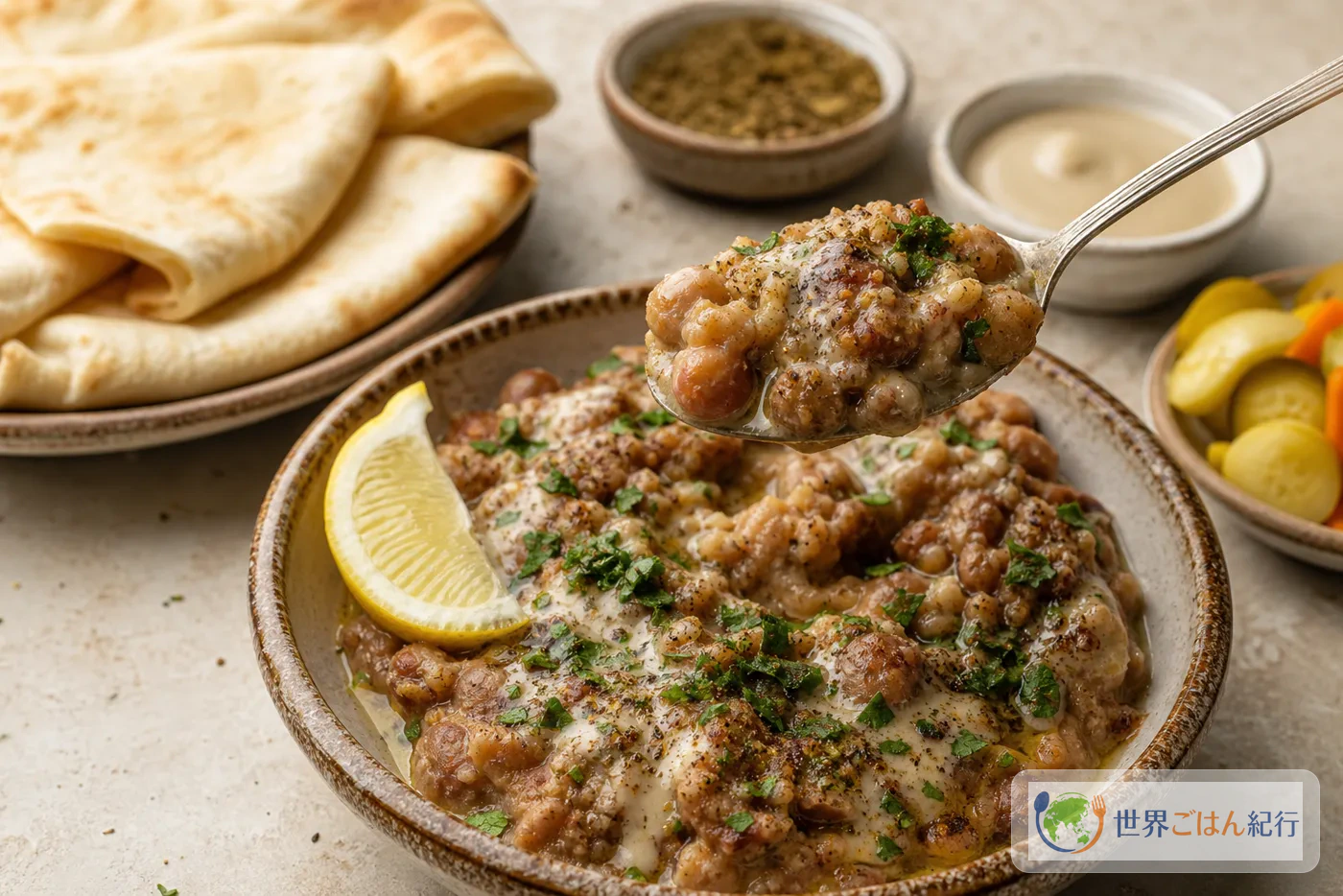
Q1. Can I make ful medames with Japanese broad beans?
You can, but it becomes a slightly different dish from the local one. Japanese spring broad beans are green with a grassy aroma and suited to a short salt-boil. To get the brown richness of ful medames, canned fava beans or small dried fava beans come closer. If you use green broad beans, enjoy it as a spring variation.
Q2. Is tahini essential?
No. In the Egyptian style, cumin, lemon, garlic and olive oil alone are enough. Adding tahini makes the mouthfeel richer and moves it toward the Levantine way of eating. The first time, add just 1 tbsp, and if it is heavy, leave it out next time.
Q3. Should I rinse canned beans?
It depends on the aroma and salt of the liquid. If the beans smell good and aren't salty, using about half the liquid pulls the flavor together. If a metallic smell or the salt bothers you, drain them in a sieve, rinse lightly with hot water and warm them with added water. Adjusting by adding liquid later is less likely to fail than using all of the canning liquid.
Q4. Can I serve it for dinner instead of breakfast?
Of course. Ful medames has a strong image as breakfast, but combining beans, bread, vegetables and egg makes a light dinner. It keeps you full without adding meat, so it suits dinner on a tired day too. For dinner, add more roasted vegetables or salad and adjust with the amount of bread.
Q5. Can I freeze it?
Beans alone can be frozen. Portion them before adding tahini, lemon, herbs and tomato. After thawing, warm in a pot, add liquid and finish with cumin, lemon and olive oil. The finished dish can be frozen and eaten, but the texture of the herbs and tomato suffers, so freezing only the beans suits make-ahead.
Q6. What bread goes with it?
Pita, naan and thin flatbread suit it. Egyptian aish baladi itself is hard to find outside Egypt, so warmed pita is the easiest substitute. If you use sandwich bread, toast it thin and crisp the crust a little, and it scoops the beans more easily.
Closing: warm the beans, wake them with acidity and oil
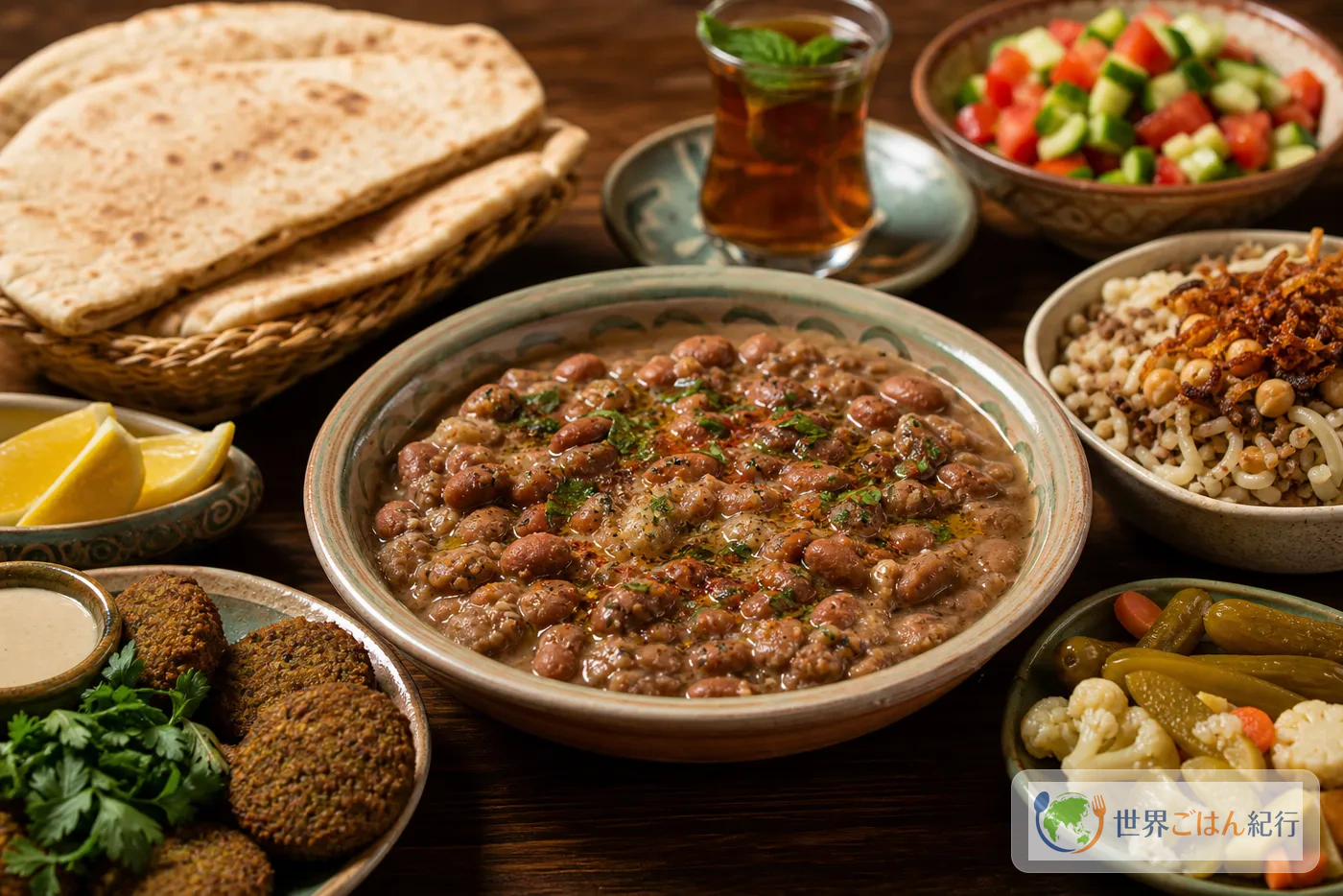
Ful medames is not a showy dish. You warm the beans, mash them a little, and finish with cumin, lemon, garlic and olive oil. That's all. But eaten with bread, the sweetness of the beans, the aroma of the oil and the brightness of the lemon change with each bite. That untiring quality is why it has been loved as breakfast for so long.
In a home kitchen, rather than gathering perfect local ingredients, what matters is not getting the beans wrong. Canned for speed, dried for deeper aroma. Treat green broad beans as a separate spring variation. Separate those, and you'll hesitate less in both shopping and cooking.
For your next dish, comparing how beans and carbohydrates are layered in Egyptian koshari (in Japanese), or moving on to hummus (in Japanese) as a mashed bean dish, would be fun. To broaden into African cooking as a whole, look through the staples and bean dishes of North, West and East Africa from the overview of African cuisine.
Sources
- 196 Flavors. "Ful Medames." https://www.196flavors.com/egypt-ful-medames/ (accessed 2026-05-09)
- The Mediterranean Dish. "Ful Mudammas (Egyptian Fava Beans) Recipe." https://www.themediterraneandish.com/foul-mudammas-recipe/ (accessed 2026-05-09)
- Good Food. "Ful medames recipe." https://www.bbcgoodfood.com/recipes/ful-medames (accessed 2026-05-09)
- The Guardian. "How to make the perfect ful medames - recipe." https://www.theguardian.com/food/2023/nov/22/how-to-make-the-perfect-ful-medames-recipe-felicity-cloake (accessed 2026-05-09)
- Saveur. "Egyptian Fava Beans (Ful Medames)." https://www.saveur.com/article/Recipes/Classic-Stewed-Fava-Beans/ (accessed 2026-05-09)



