

The Story of Suya: Beef Skewers Drawn by Night Smoke
Slice beef thin in the kitchen at dusk, dust it with a red spice, and before it ever touches heat it already smells a little like a street stall. The sharpness of chile, the warmth of ginger, the sweet aroma of roasted peanuts. Once it hits the pan, that powder meets the beef fat, chars in small flecks, and suddenly it is food from a faraway city.
Suya is Nigeria's signature street-food beef skewer. Thinly sliced beef is coated in yaji, a spicy peanut-based spice mix, and grilled over charcoal. On the streets of Nigeria it is known as an evening-to-night specialty of Hausa vendors, called mai suya, who serve it wrapped in paper with onion, tomato and cabbage.
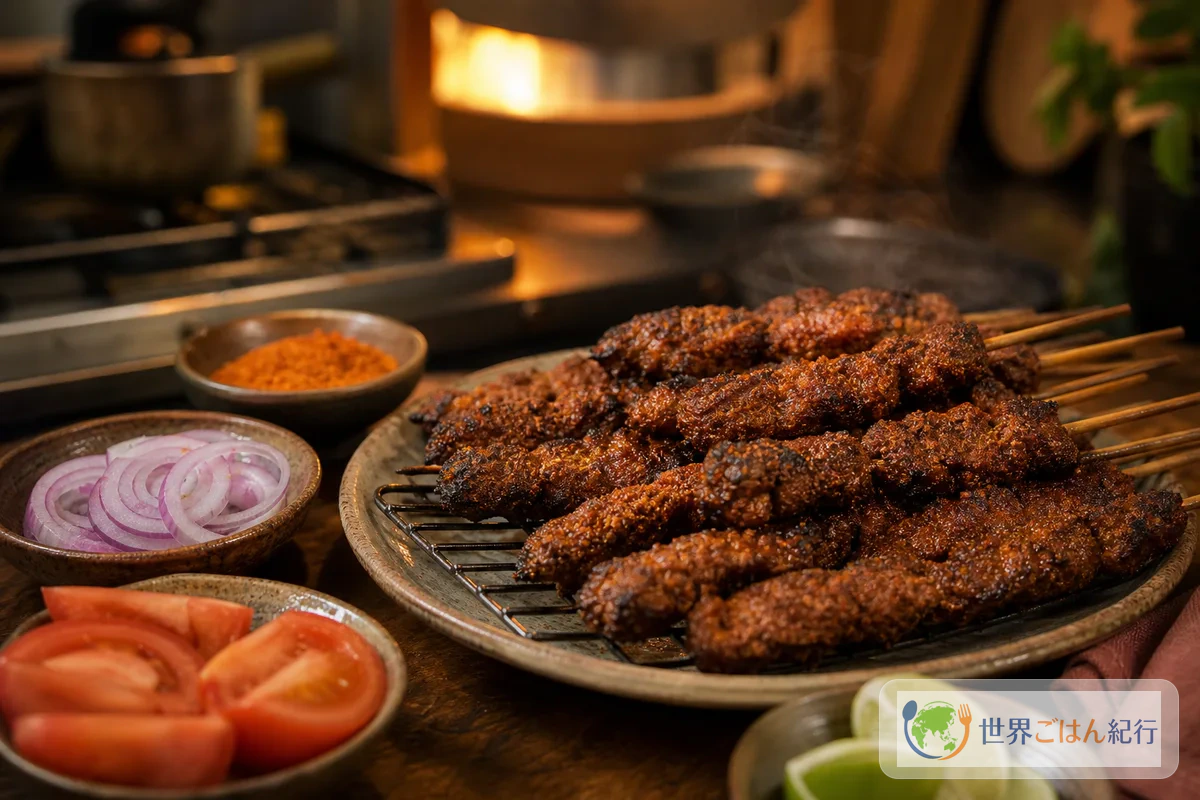
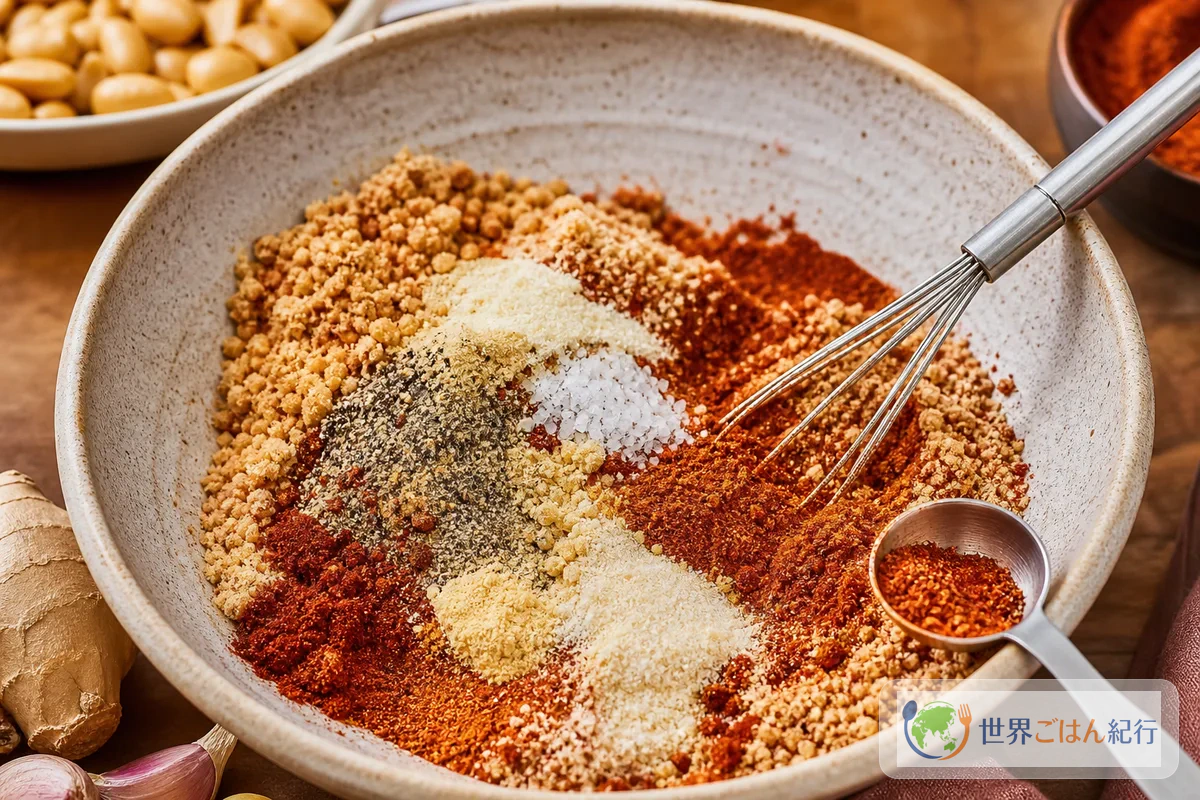
The crux of making suya at home is not the charcoal; it is the yaji. Make it merely hot and it is not suya, just chile-grilled beef. Peanut's toasty richness, chile, ginger, garlic and salt stack up and form a rough, gritty crust on the surface of the meat. Get that right and even a broiler or a cast-iron pan gets you quite close.
If jollof rice is West Africa's celebratory rice dish, suya is the late-night snack and the light supper on the way home. Unlike a thick stew such as egusi soup (in Japanese), it is food for enjoying the sizzle and smoke by the fire. Served on a big platter, it should also appeal to fans of churrasco (in Japanese) and nyama choma. To see the yaji aroma in another, drier, preserved form, move on to kilishi (in Japanese) from the same Hausa region.
Suya is the usual English spelling. The spice is called yaji, or suya spice. This article uses both: "suya" for easy searching and "yaji" to convey the local feel.
Background: Hausa Yaji and Night Street Culture
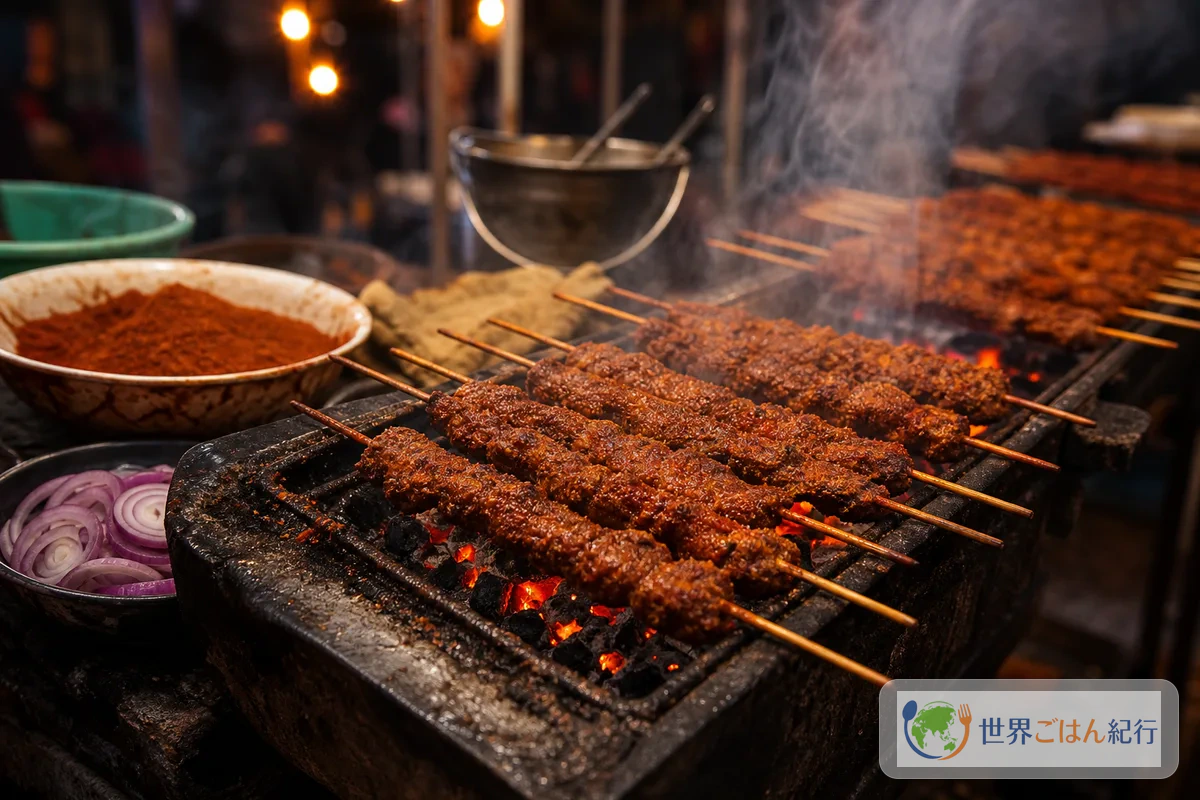
Suya is closely tied to Hausa culture in northern Nigeria. Thinly sliced beef is coated in a spicy peanut spice and grilled, and the vendors are called mai suya. In English-language writing on food culture, suya is described not only as street food but also as an evening social gathering place. The smoke of the grilling meat, the onion sliced to order, and the extra dusting of red powder are all part of the experience.
The core of yaji is roasted peanuts or peanut cake, chile, ginger, garlic and salt. Depending on the region and the vendor, cloves, nutmeg, bouillon cubes, white pepper or onion powder may go in. What is interesting is that the peanuts work as a powder, not a sauce. Applied thinly to the meat before grilling, it forms a dry crust that sets and turns fragrant over the coals.
| Element | Local approach | Judgment for home cooks |
|---|---|---|
| Meat | Mostly beef; there are also organ-meat and chicken suya | Slice beef round, rump or chuck thin |
| Yaji | Built on chile and peanuts | Use roasted peanut powder or unsweetened peanut butter |
| Fire | Strong charcoal heat | Substitute with a broiler, grill pan or oven top heat |
| Accompaniments | Raw onion, tomato, cabbage | Red onion, tomato, shredded cabbage, lime |
| How it is eaten | Extra yaji on the freshly grilled meat | Check the heat, then add a little at the table |
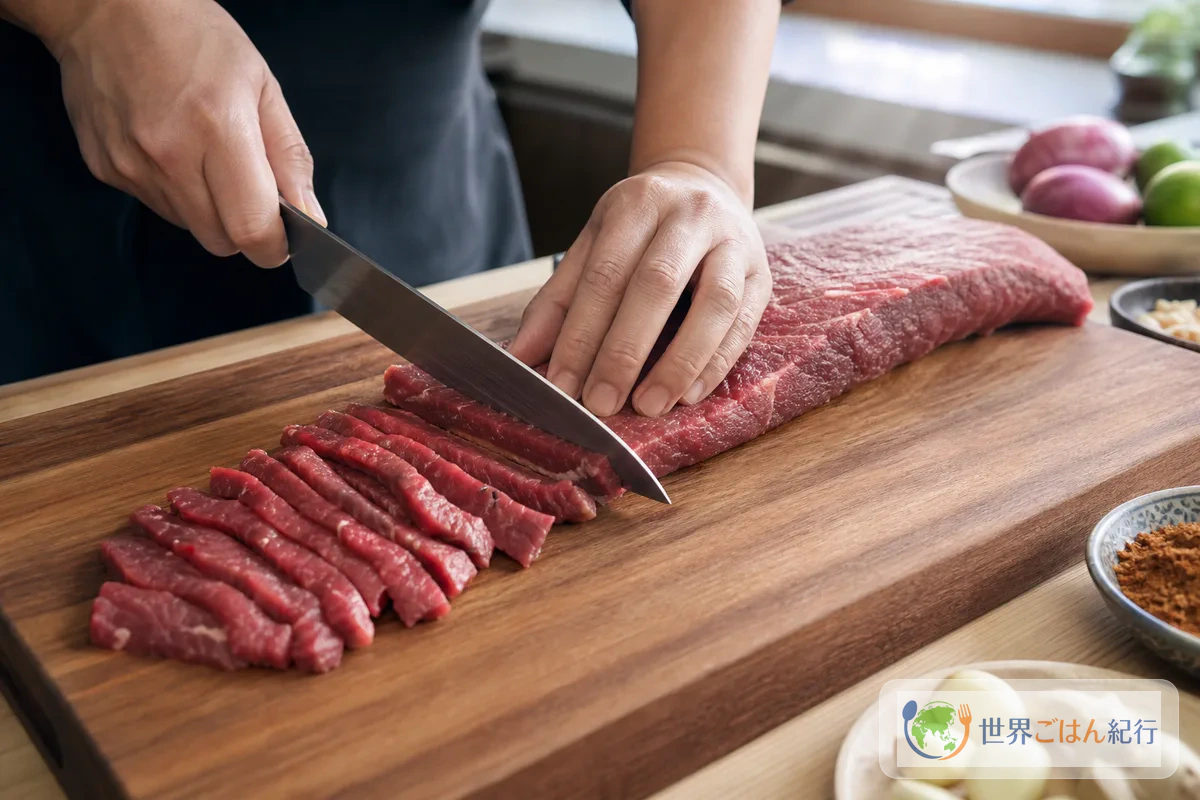
The detail that recipes most often miss is that the meat must not be cut too thick. If you slice it thick like steak skewers, the heat does not reach the center before the outer yaji burns. Suya is meant to be thin meat coated in spice so that you eat the aroma through surface area. At about 3 mm thick, the cooking time stays short and the peanut crust does not burn.
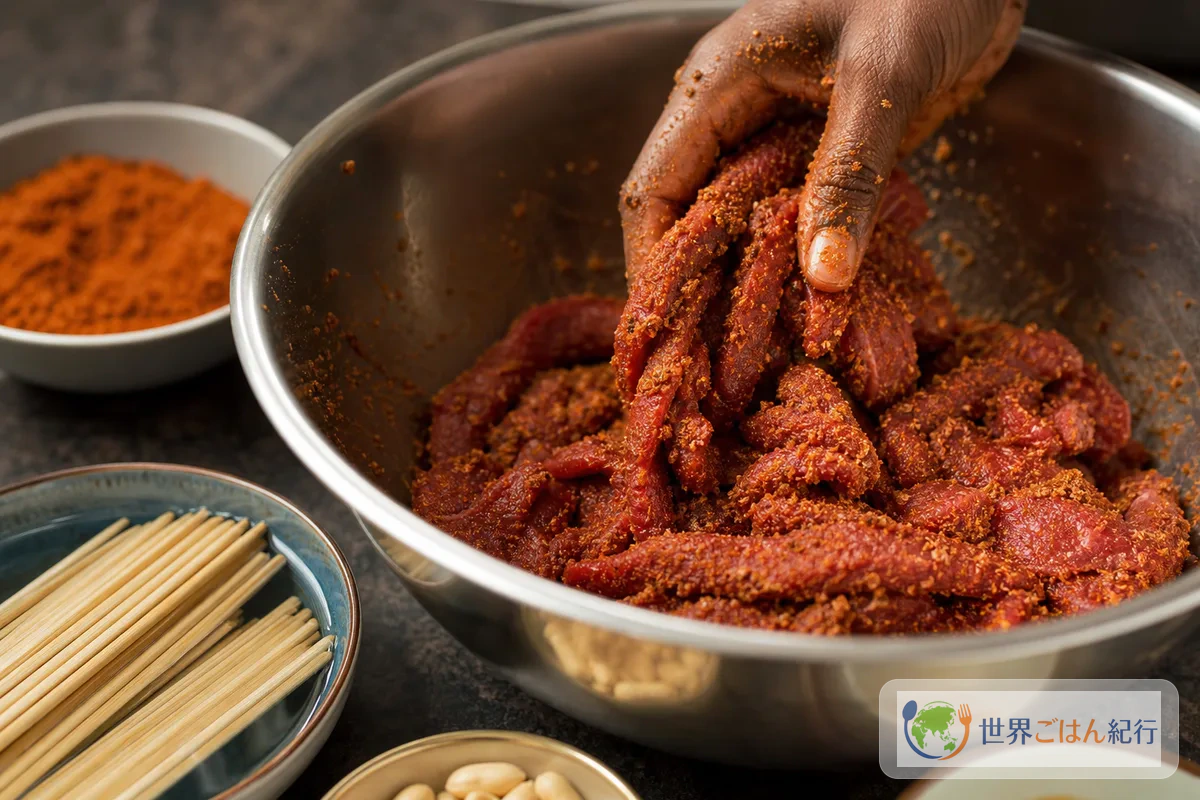
Think of suya as "a dish of yaji" rather than "beef skewers" and it becomes easier to make. Japanese yakitori and other skewers use sauce or salt to bring out the meat, but with suya a thick layer of peanut-chile powder stays on the surface. Do not shake off the powder, and sprinkle a little more over the finished skewers, as is done locally.
Ingredients (serves 4)
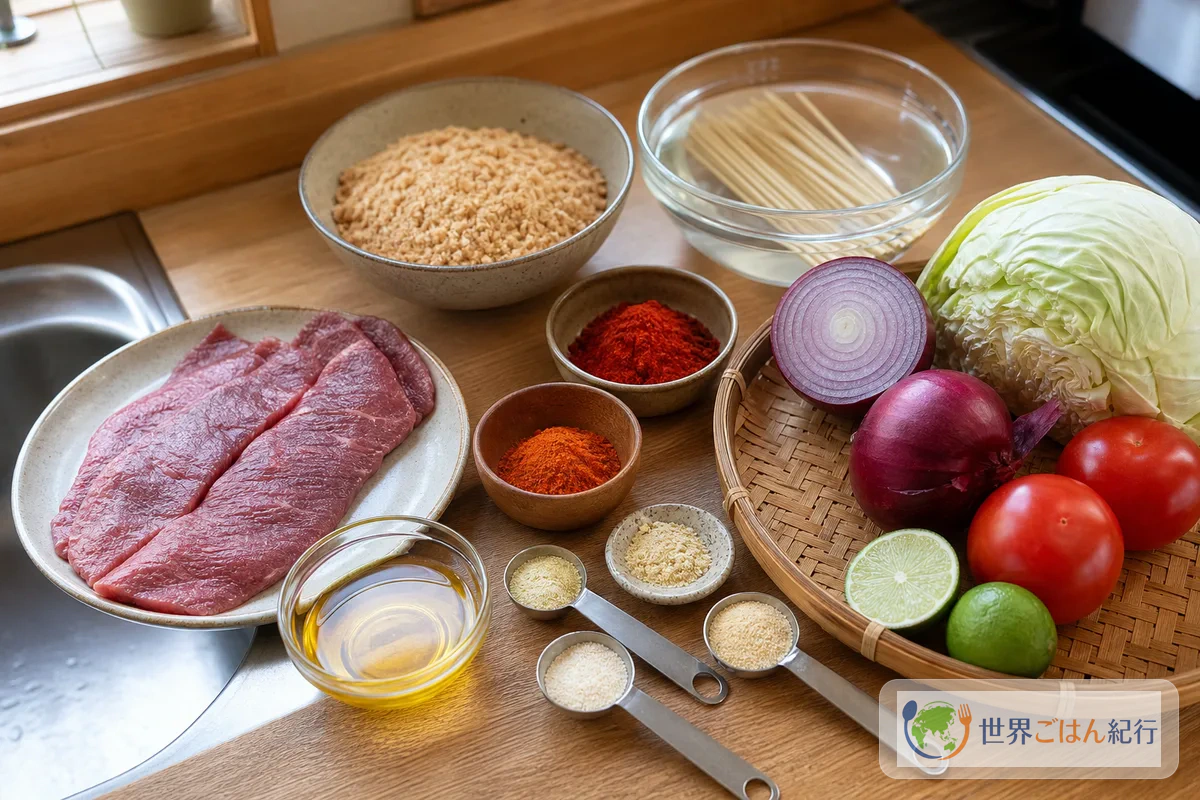
This is a quantity for four as a snack, or slightly generous for four as a main. The meat shrinks as it cooks, so 600 g lets you build a meal around it. The heat is medium. If someone at the table does not like spicy food, halve the cayenne and let those who want more add extra yaji.
This dish uses beef and peanuts. If anyone has a peanut allergy, do not make this as suya; treat it as a different spiced beef skewer without peanuts. White sesame or roasted soybean flour (kinako) will not reproduce yaji's toasty, gritty character.
Peanut powder is the heart of suya. Buying unsalted roasted peanuts and grinding them yourself gives a stronger aroma, and leftovers can go into mafe (in Japanese) or a dressed salad. If you buy ready-made powder, choose one with no added sugar or salt.
The essentials are lean beef, unsalted peanuts, paprika, chile, ginger and onion. Cloves and onion powder add depth, but you can make the dish without them on your first try. Just do not leave out the peanuts and chile.
Instructions: Slice Thin, Coat in Powder, Grill Hot
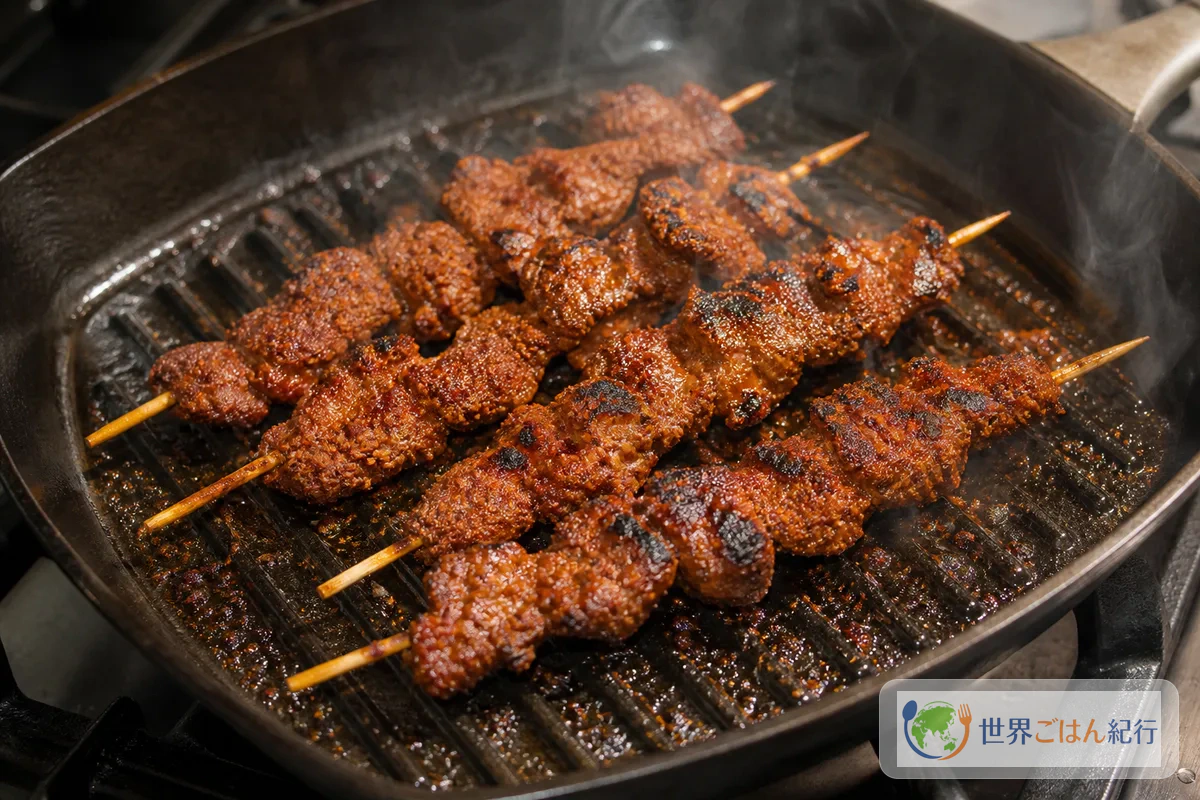
Suya is not a dish where a longer marinade is better. Slicing the meat thin, coating it thoroughly in yaji and grilling it quickly until fragrant gets you closer to the street-stall aroma. Soak the bamboo skewers first so they blacken less while grilling.
Thinly sliced beef cooks quickly, but if you are serving children, older adults, pregnant women or anyone with health concerns, cook it all the way through. The USDA gives a guideline of 63°C (145°F) internal temperature followed by a 3-minute rest for beef steaks and roasts. At home, cooking until no red remains is a safe approach.
Getting Closer to the Real Thing in a Home Kitchen
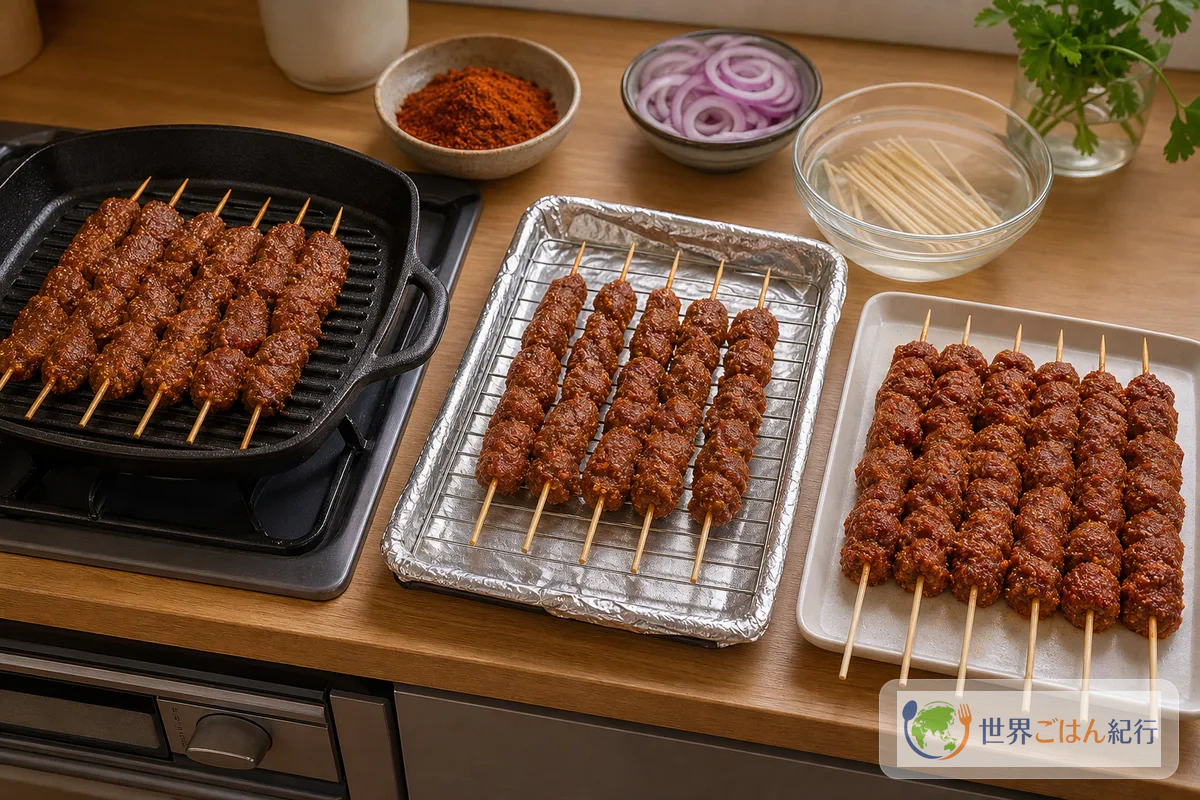
Suya in Nigeria owes a great deal to charcoal aroma. But if you insist on charcoal, you will make it less often. A grill pan and a broiler are plenty to start with. What matters is three things: thin meat, dry yaji and strong top heat.
| Choice | Closer to authentic | Home kitchen solution | Effect on flavor |
|---|---|---|---|
| Peanuts | Roasted peanut cake or powder | Grind unsalted peanuts | Closest. Keeps the aroma |
| Chile | Strong red chile, Scotch bonnet | Adjust cayenne, ichimi or Korean chile flakes | Think of heat and redness separately |
| Meat | Lean beef sliced thin | Thin slices of rump, round or chuck | Fat makes the powder burn easily |
| Fire | Direct charcoal | Grill pan plus broiler | Less smoke, but still toasty |
| Accompaniments | Raw onion, tomato, cabbage | Red onion, tomato, cabbage, lime | Same job: cut the heat and oil |
| Seasoning cubes | Maggi-style umami | Bouillon powder, chicken stock powder | Too much pushes it toward Western-style soup flavor |
The one thing you must not substitute away is the peanuts. Chile alone could be reproduced in many skewers, but the powdery toastiness left on the surface of suya comes from peanuts. If you use peanut butter, choose unsweetened and mix it with oil and powders so it spreads easily. Sweetened peanut butter burns easily and the flavor drifts toward candy.
If you can use charcoal, charcoal is of course best. But yaji burns easily, so do not hold the meat too close to the fire. Cook over coals that have gone white with ash and have no flames. Unlike nyama choma, which slowly grills big pieces of meat, suya is thin meat cooked briefly. If the fire is too near, the powder turns bitter before the meat is done.
If you finish in the grill pan alone, raise the heat slightly for the last 30 seconds to create toasty spots on the powder. If smoke starts, lower the heat immediately. Burnt peanuts turn bitter in a moment.
Troubleshooting: Burning, Powder Falling Off, Tough Meat
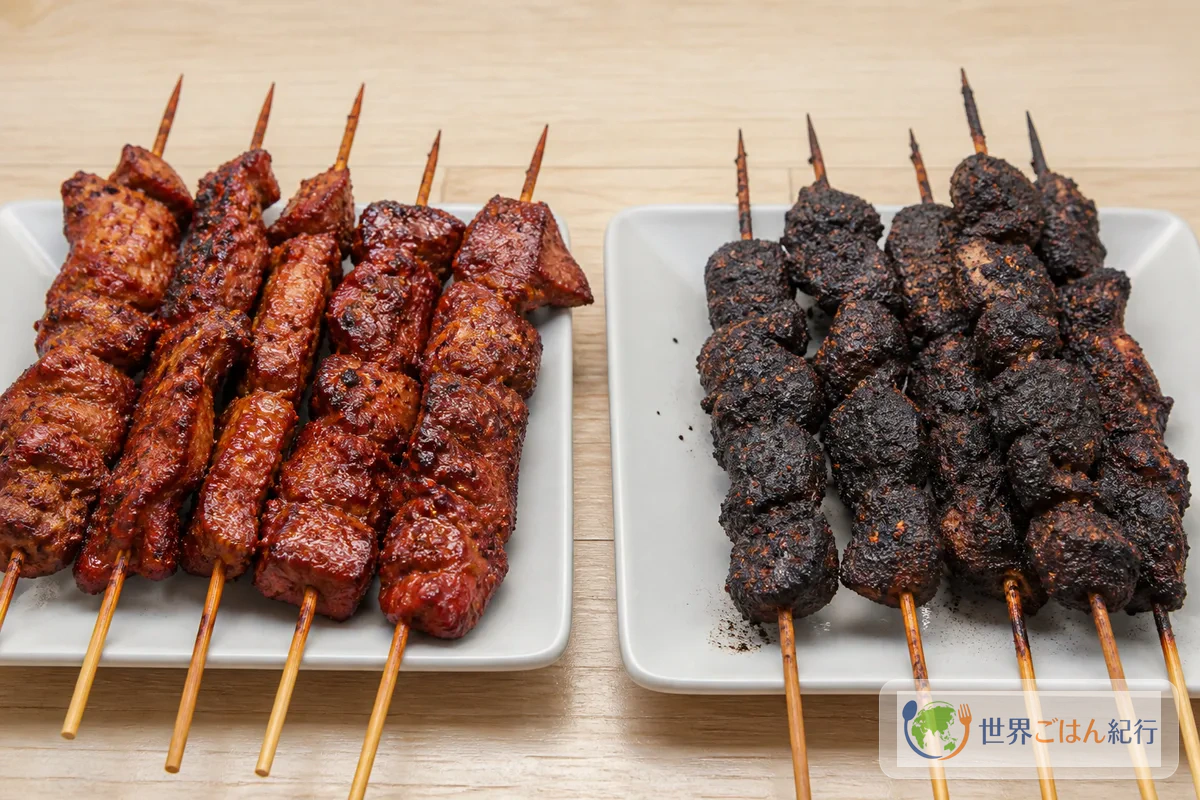
With so few ingredients, suya's failures have clear causes. The powder falls off, it burns, the meat is tough. Handle these three and your second batch will be much steadier.
| Problem | Cause | Fix |
|---|---|---|
| Powder falls off | Meat too wet, too much oil | Blot the meat dry with paper towels and cut the oil by 1 tbsp |
| Only the surface burns | Heat too high, meat too thick | Slice to 3 mm, high heat only at first, then medium |
| Tough meat | Overcooked, thick lean cut | Stop at 2–3 minutes per side and rest for 2 minutes |
| Too hot | Too much cayenne and extra yaji | Increase paprika and halve the cayenne |
| Peanut flavor too sweet | Sweetened peanut butter used | Switch to unsweetened. Next time use peanut powder |
| Weak aroma | Old peanuts, too little spice | Grind unsalted peanuts just before use and add more ginger powder |
When the powder falls off, the problem is moisture more than mixing. If there is drip on the surface of the meat, the yaji turns into a runny paste and slides off when grilled. After slicing, press the meat once with paper towels, and use only enough oil to coat. The surface of suya is a dry spice crust, not a yogurt marinade like tandoori chicken.
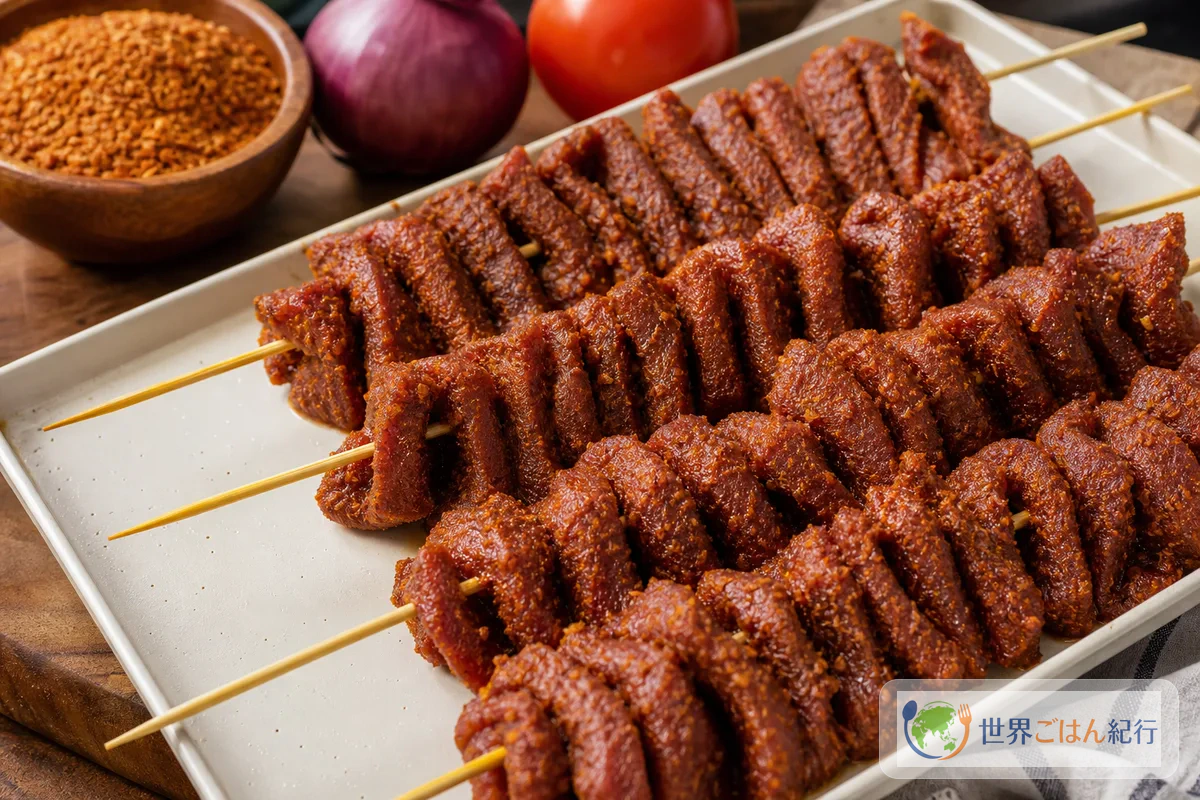
When the meat is tough, besides shortening the cooking time, check which way you are slicing. Cut long with the grain, it is hard to bite through even when thin. Cut against the grain and thread in waves, and it breaks apart easily when chewed.
If it is too hot, onion and cabbage work better than lime. The moisture of raw onion and the sweetness of cabbage absorb chile and oil. Rather than erasing the heat entirely, working through it with the sides is the suya way.
Peanut and chile powder turns very bitter when it goes black. Small charred spots on the surface are toasty, but if the whole surface is black, scrape it off or remove it. Next time, move the meat a little farther from the heat and shorten the top-heat time.
Serving and Menu Ideas: Beside Jollof, Beside Beer
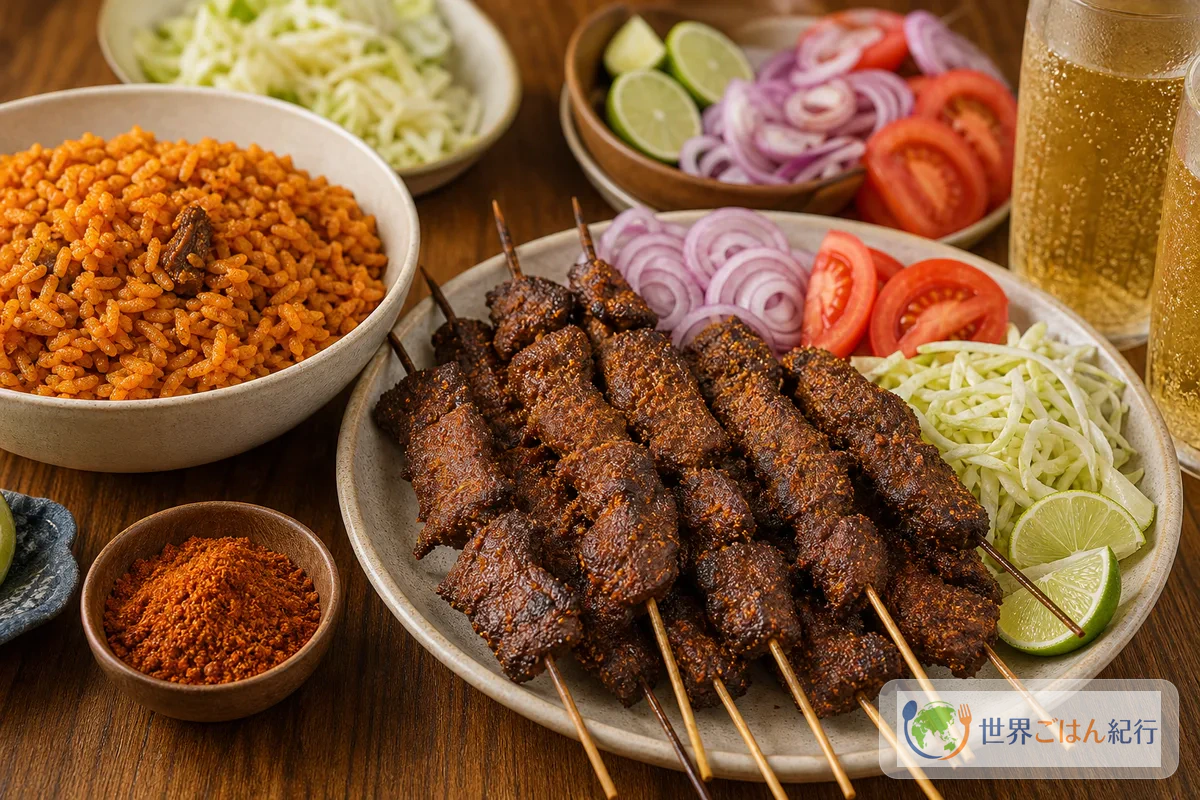
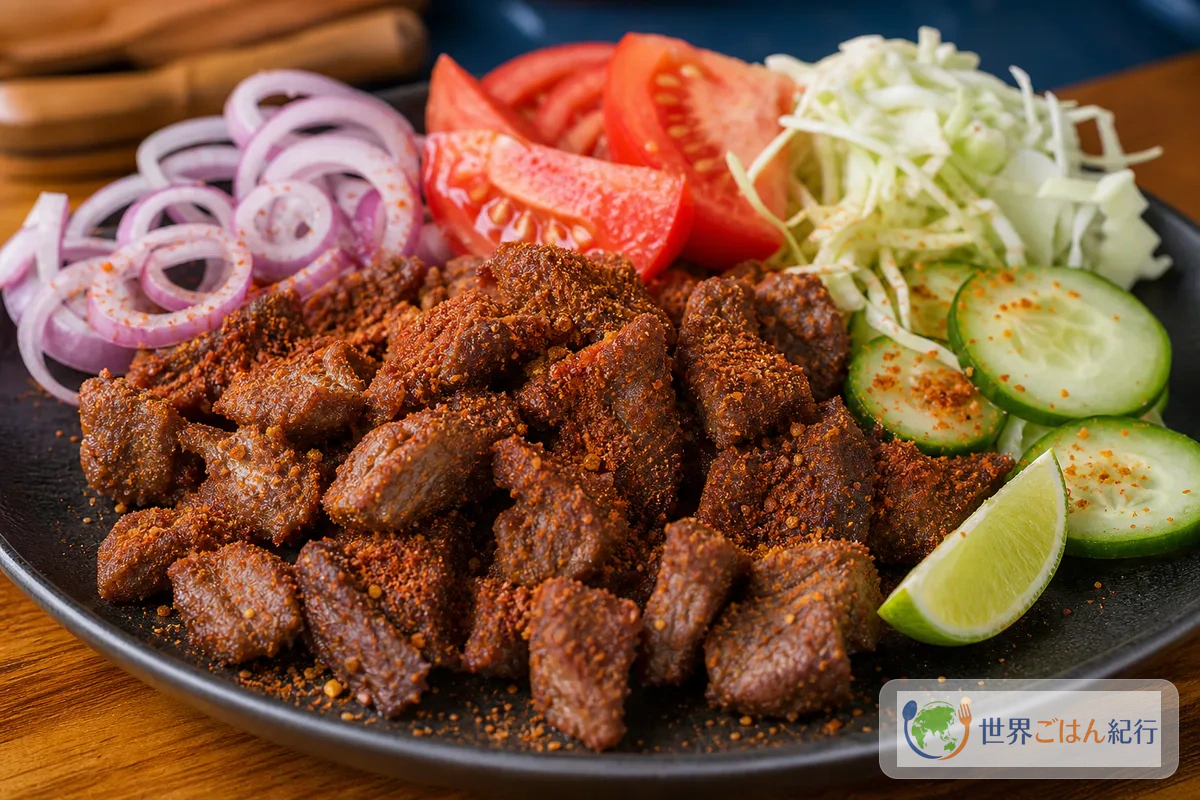
Suya is most fun eaten straight off the skewer, fresh from the grill. A little onion on top, a bite of tomato, and cabbage tucked in if it gets too hot. At home, it is easier to slide the meat off the skewers, cut it into bite-size pieces and serve on a big platter with the vegetables.
For a Nigerian menu, pair it with jollof rice for the rice and a small portion of egusi soup (in Japanese) for the soup. Making everything rich gets heavy, though, so on a day when suya is the main, serve a small portion of jollof and plenty of cabbage, cucumber and tomato for balance.
To widen the table into West Africa, Ghana's waakye (in Japanese) is a bean-and-rice dish that can take the heat of suya, and Mali's mafe (in Japanese) is a stew that makes a contrast with suya, also built on peanuts. Adding the lemon-and-onion sourness of Senegal's yassa chicken (in Japanese) lightens the heaviness of an all-meat meal.
Serving variations
For a milder version, halve the cayenne and add 1 tbsp more paprika. You keep the red color and cut the heat. When children are eating, serve extra yaji on a separate plate and let adults add it.
For chicken, cut 500 g chicken thigh into slices about 1 cm thick. Chicken takes longer to cook through than beef, so cook it thoroughly to the center. Chicken breast also works, but is lean and dries out easily, so increase the peanut oil a little.
For vegetable skewers, bell pepper, zucchini and mushrooms suit it. Vegetables hold a lot of water and the yaji tends to peel off, so thread them on separate skewers from the meat and sprinkle on only a light dusting of yaji.
For sandwiches, fill pita or baguette with suya, onion, cabbage and tomato. A little mayonnaise makes it an easy lunch, but keep it light if you want the suya aroma to come through.
Cold beer, sparkling water and ginger ale all suit it. For red wine, choose one with enough body to stand up to the spice rather than a light one. Because the heat is strong, keep a sweet soft drink on hand to calm the table.
Storage and Make-Ahead: Separate Raw from Cooked
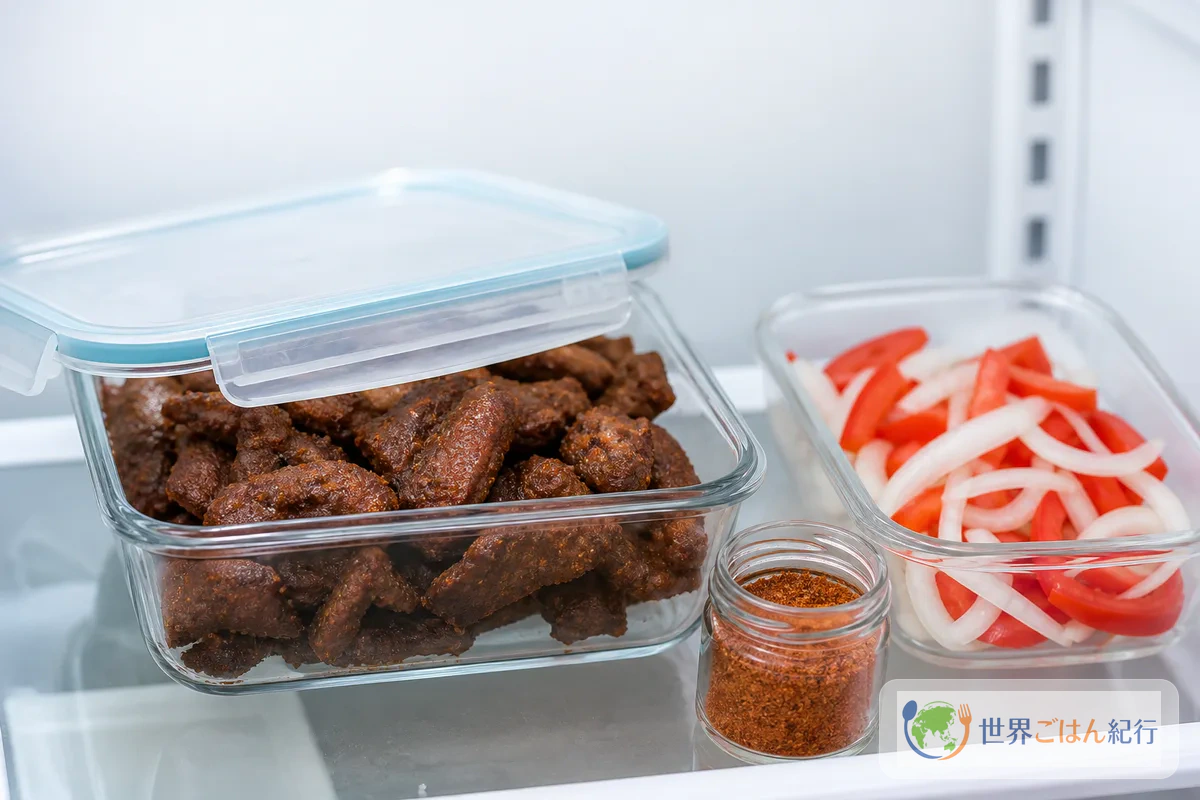
Suya is best fresh, but if you split up the prep you can make it on a weeknight. Slice the meat and coat it with yaji the day before and you only have to grill it, which makes dinner much lighter work.
| State | Storage time | Notes |
|---|---|---|
| Yaji spice only | 2 weeks refrigerated | Keep away from moisture. Store in a clean jar |
| Raw meat coated in yaji | 1 day refrigerated | Raw meat, so do not hold it long. Wipe lightly if water comes out |
| Cooked suya | 2 days refrigerated | Cool in a shallow container. Keep vegetables separate |
| Cooked suya, frozen | About 2 weeks | Flavor declines. Reheat over low heat |
Making the yaji separately and keeping it is more reliable than marinating raw meat for a long time. If meat sits overnight coated in powder, salt draws out water and the coating turns damp by the next day. For day-ahead prep, slice the beef thin and seal it, and keep the yaji dry in a jar. On the day, mix oil and seasoning in, and coat with powder 15 minutes before grilling so the gritty surface remains.
For reheating, a skillet beats the microwave. Brush a skillet lightly with oil and warm over medium-low heat, 1 minute per side. A microwave alone makes the yaji surface go soft again and loses the street-stall toastiness. If you pack it in a lunchbox, use an airtight container, because the smell is strong.
Do not store the onion, tomato and cabbage with the meat. If the vegetable moisture moves to the meat, the next day's suya gets too soft. Leftover vegetables can be tossed with lemon juice, salt and a little oil as a quick salad to set beside the reheated suya.
Leftover suya, chopped, goes well into fried rice. The peanut and chile aroma carries into the rice and a small amount is satisfying. Mixed into leftover jollof rice it gets quite rich, so a side of cabbage or cucumber helps.
Frequently Asked Questions
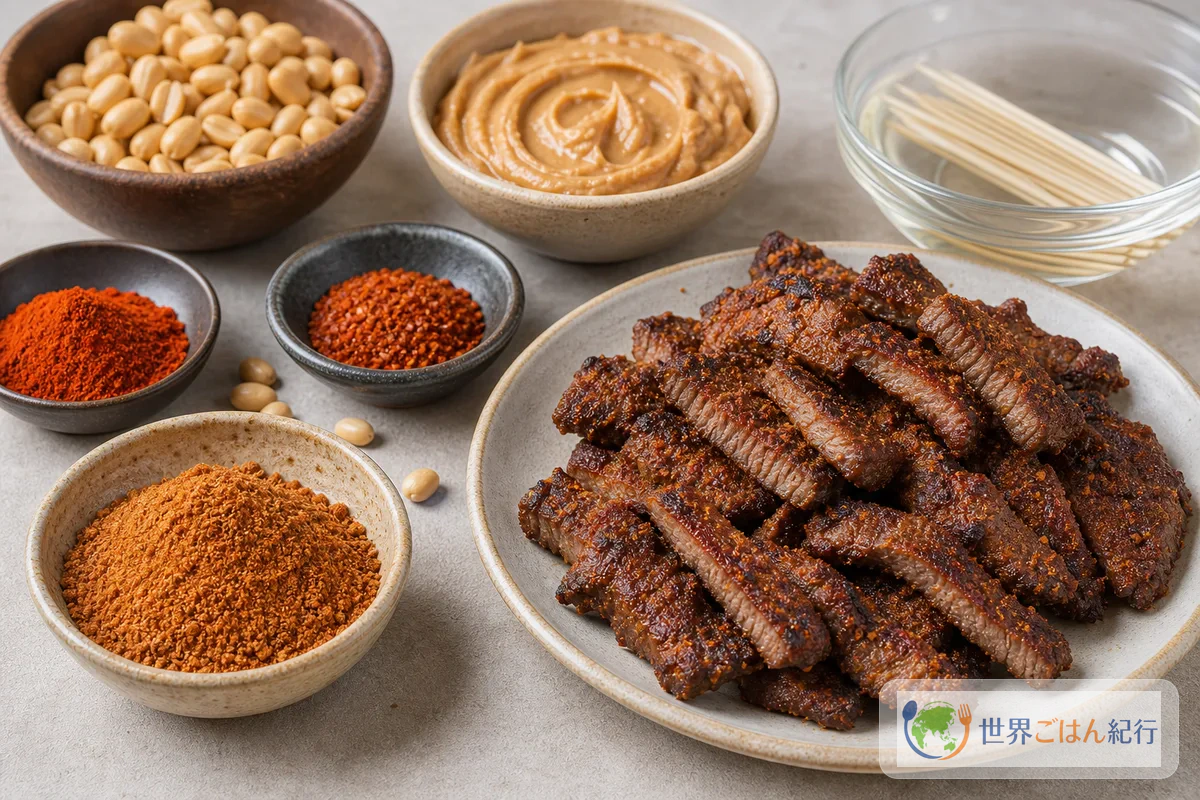
Q. I do not have peanut powder. Can I use unsweetened peanut butter?
Yes, but the grittiness will be weaker. Mix 3 tbsp unsweetened peanut butter with 1 tbsp peanut oil and stir in the paprika, cayenne, ground ginger and the rest a little at a time. Avoid sweet peanut butter: it burns easily and strays from suya's flavor.
Q. Which cut of beef is best?
Lean rump, round or chuck are easy to work with. Heavily marbled meat is delicious, but the fat drips, flames flare up and the yaji burns easily. If you use thin-sliced round sold for grilling, stretch it thinner still, or thread only the longer pieces onto skewers.
Q. Is it still suya if I cut the heat?
Yes. Even at half the heat, as long as the peanuts, ginger, garlic and paprika remain, suya's outline holds. If only the adults want it hot, serve extra yaji on a separate plate after grilling. If the whole batch is extremely hot from the start, you cannot adjust.
Q. Can I cook it with just a broiler?
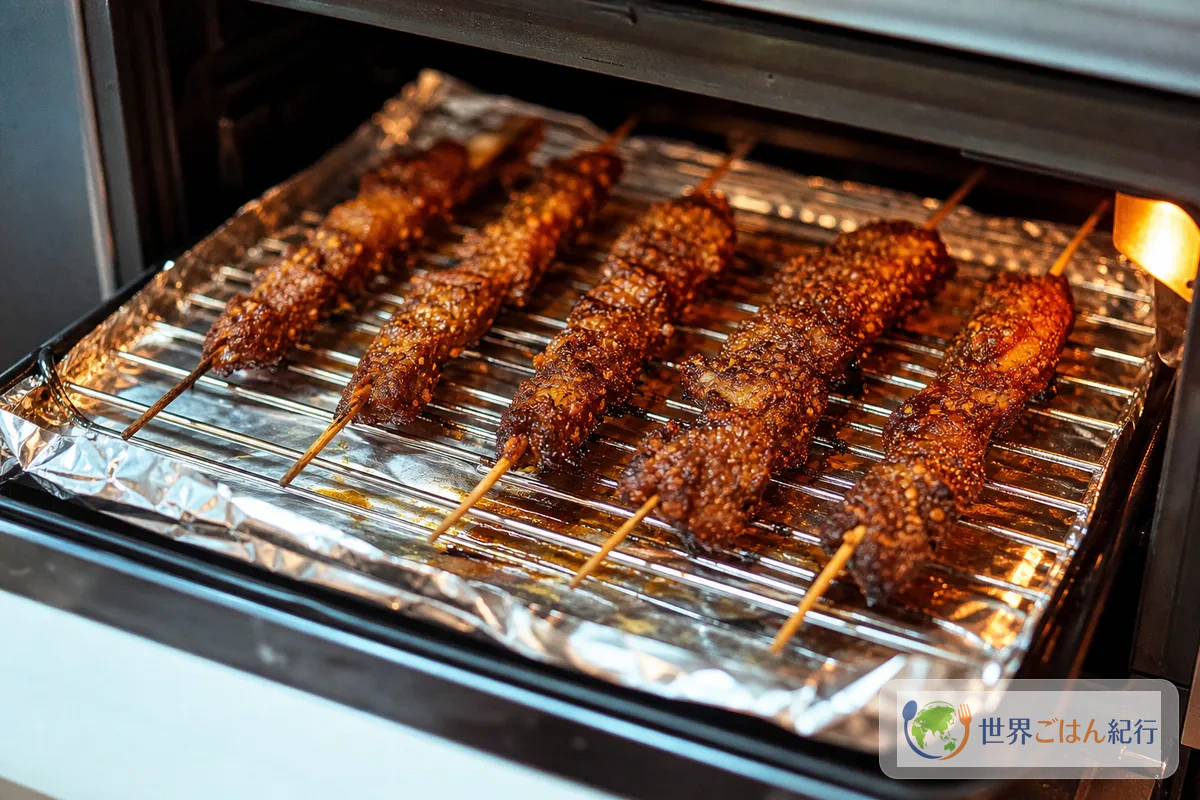
Yes. Lay the skewers on a foil-lined tray and broil on high 4–5 minutes per side. If they brown too quickly, loosely cover with foil partway. There is less smoke than with a grill pan, but you still get the toasty top-heat aroma.
Q. My bamboo skewers keep burning. What should I do?
Soak them in water for at least 30 minutes and wrap the exposed part of each skewer with foil. In a broiler the skewer tips are close to the heating element, so cut them to fit or use metal skewers.
Q. What can I do with leftover yaji?
A little sprinkled on grilled chicken, roast potatoes, sautéed mushrooms or popcorn works well. It is salty and spicy, so start with 1/2 tsp. As with sambal substitute, the trick with a hot seasoning is to use an amount that does not overwrite the main flavor.
Summary: Learn the Yaji and Suya Falls into Place
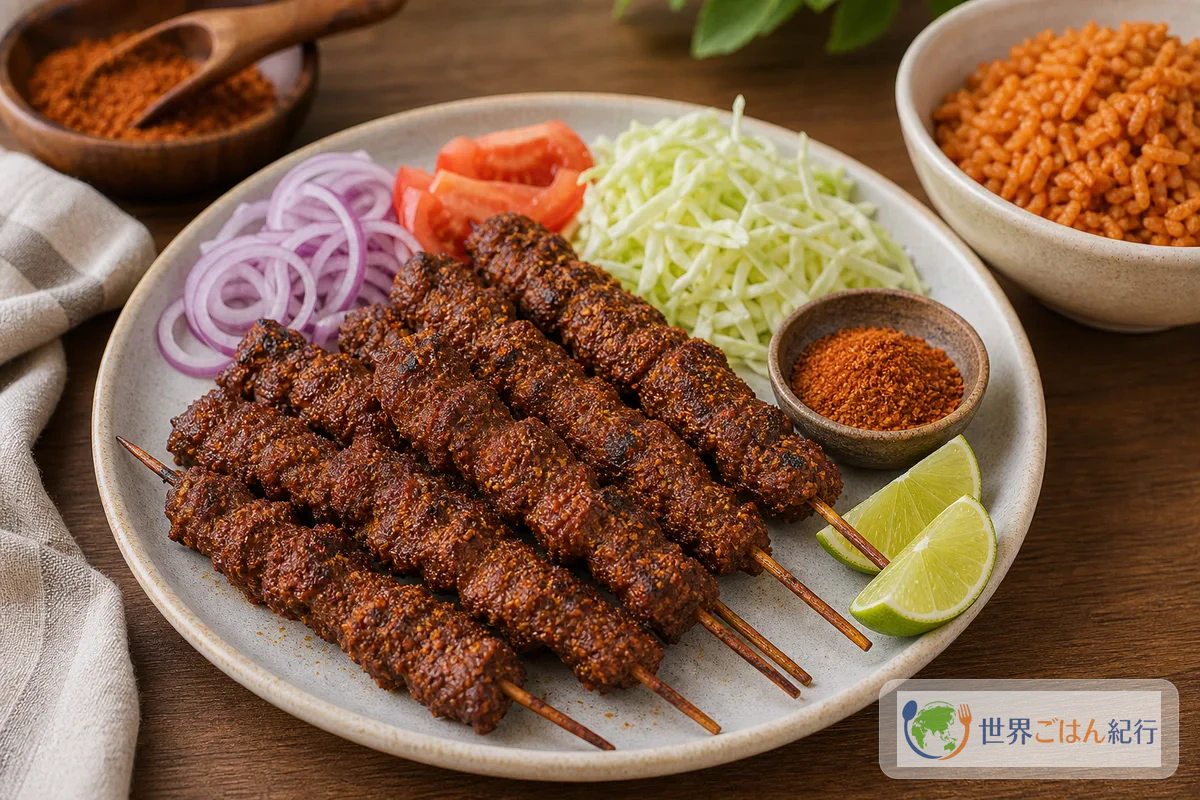
To make suya at home, learning how to make yaji is a shorter path than trying to reproduce charcoal perfectly. Grind unsalted peanuts and combine with chile, paprika, ginger, garlic and salt. Slice the beef thin, coat it in the powder and grill it briefly over strong heat. Do that, and even a home broiler gives the aroma of suya.
At the table, serve plenty of raw onion, tomato and cabbage. It is better to cut the oil and chile with vegetables than to push on with only meat and heat. To go further, move on to the rice dish jollof rice, the seed stew egusi soup (in Japanese) and the peanut stew mafe (in Japanese), and you will see the West African thread of chile, nuts, meat and rice.
Sources
- Street food culture and mai suya: Google Arts & Culture / Pan-Atlantic University, "Suya: Street Food Like No Other" https://artsandculture.google.com/story/suya-street-food-like-no-other-pan-atlantic-university/zQWB2eDBmf-GJw (accessed 9 May 2026)
- Yaji and home cooking of beef: Serious Eats, "Nigerian Beef Suya" https://www.seriouseats.com/nigerian-beef-suya (accessed 9 May 2026)
- Nigerian home recipe: All Nigerian Recipes, "Nigerian Suya" https://www.allnigerianrecipes.com/suya/nigerian-suya/ (accessed 9 May 2026)
- Beef suya quantities and grilling: Chef Lola's Kitchen, "Beef Suya" https://cheflolaskitchen.com/beef-suya/ (accessed 9 May 2026)
- Safe cooking temperature for beef: USDA Food Safety and Inspection Service, "Safe Minimum Internal Temperature Chart" https://www.fsis.usda.gov/food-safety/safe-food-handling-and-preparation/food-safety-basics/safe-temperature-chart (accessed 9 May 2026)



