
Before the Smell of Charcoal, You Wrap the Intestine
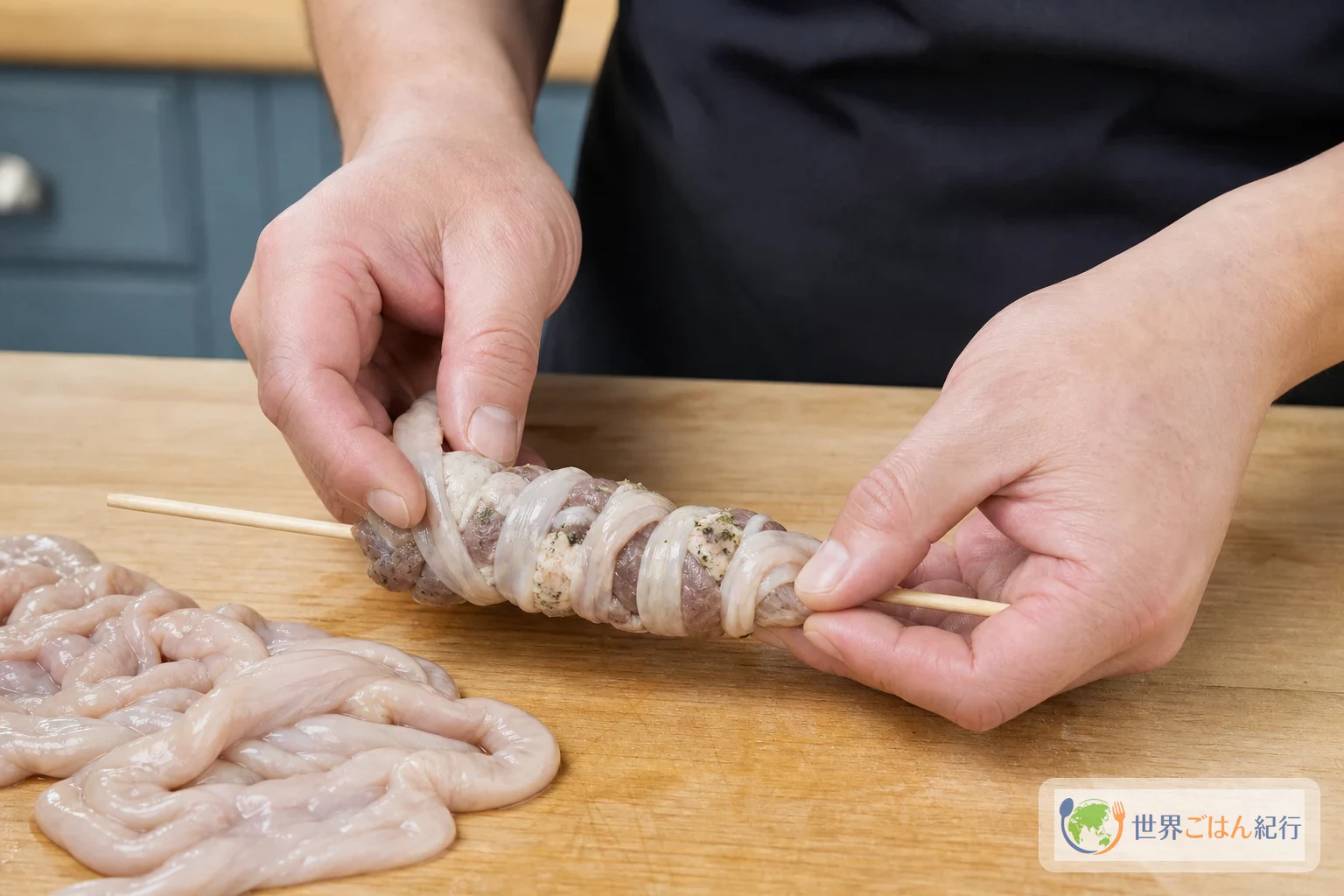
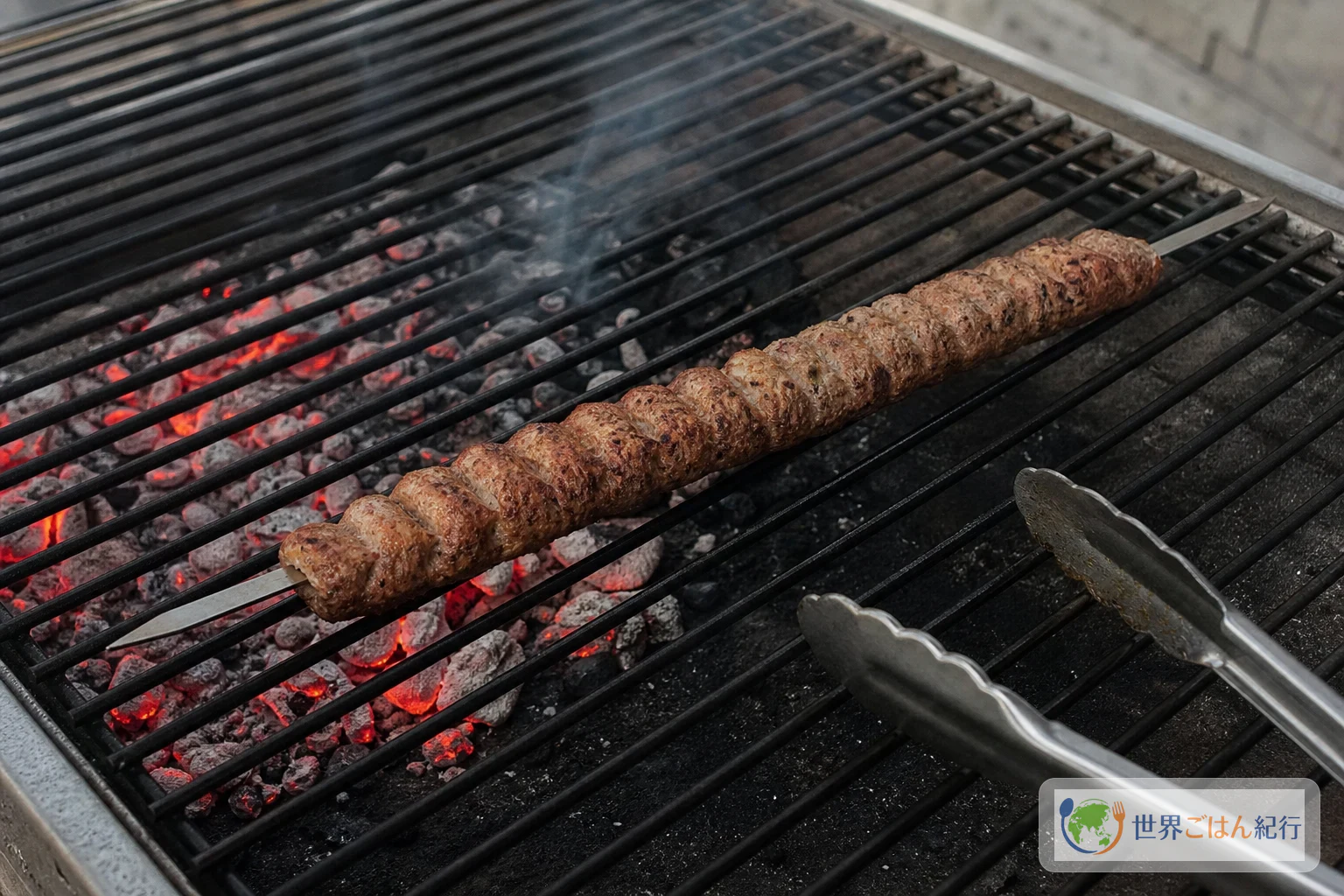
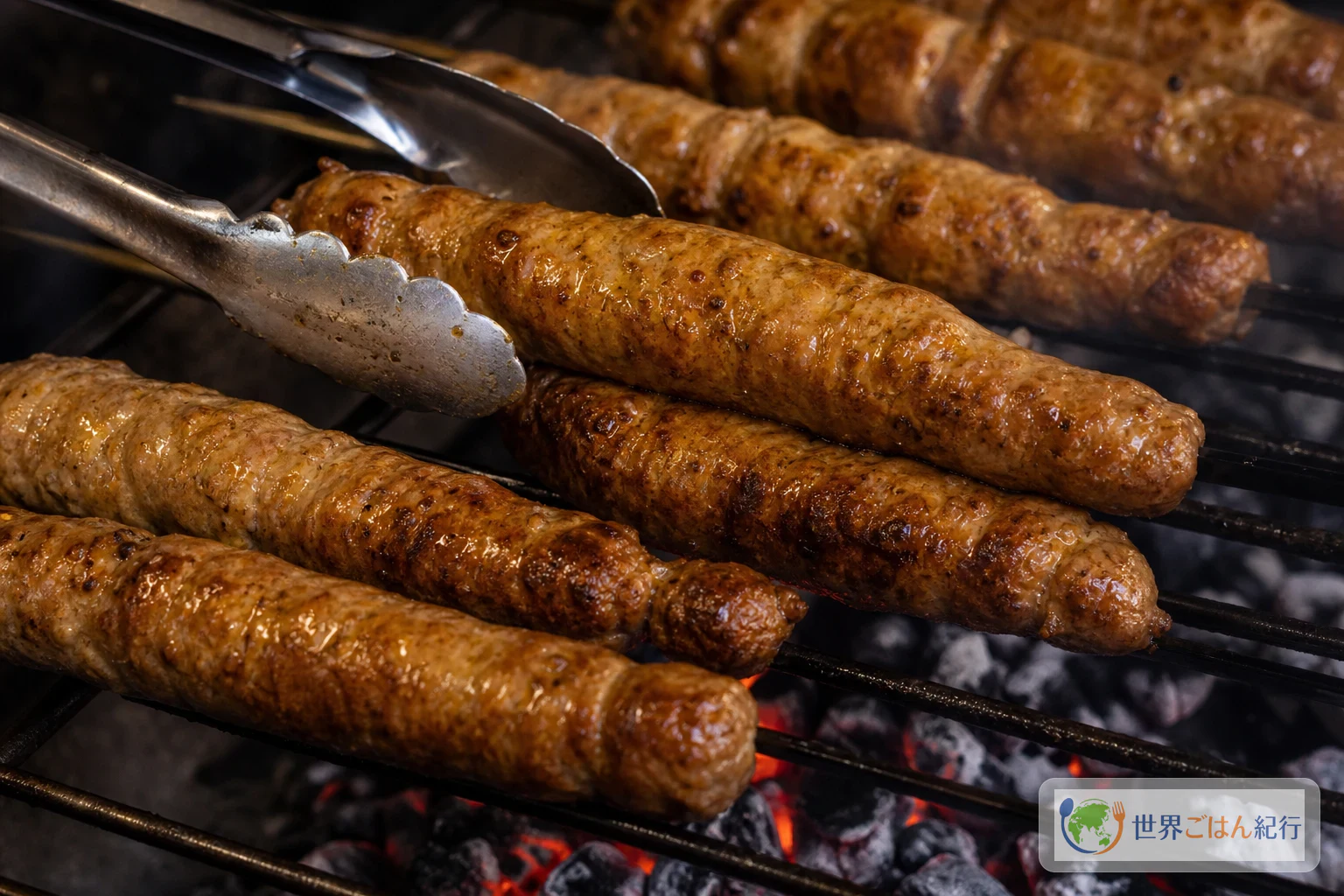
It is a charcoal-grilled dish, yet the first sound is not meat sizzling. It is the sound, on a cutting board, of drawing a white intestine out thin and laying it around a bundle of tripe and heart, one turn at a time. If the wraps do not come undone, the fat slowly drips over the fire and only the surface sets first.
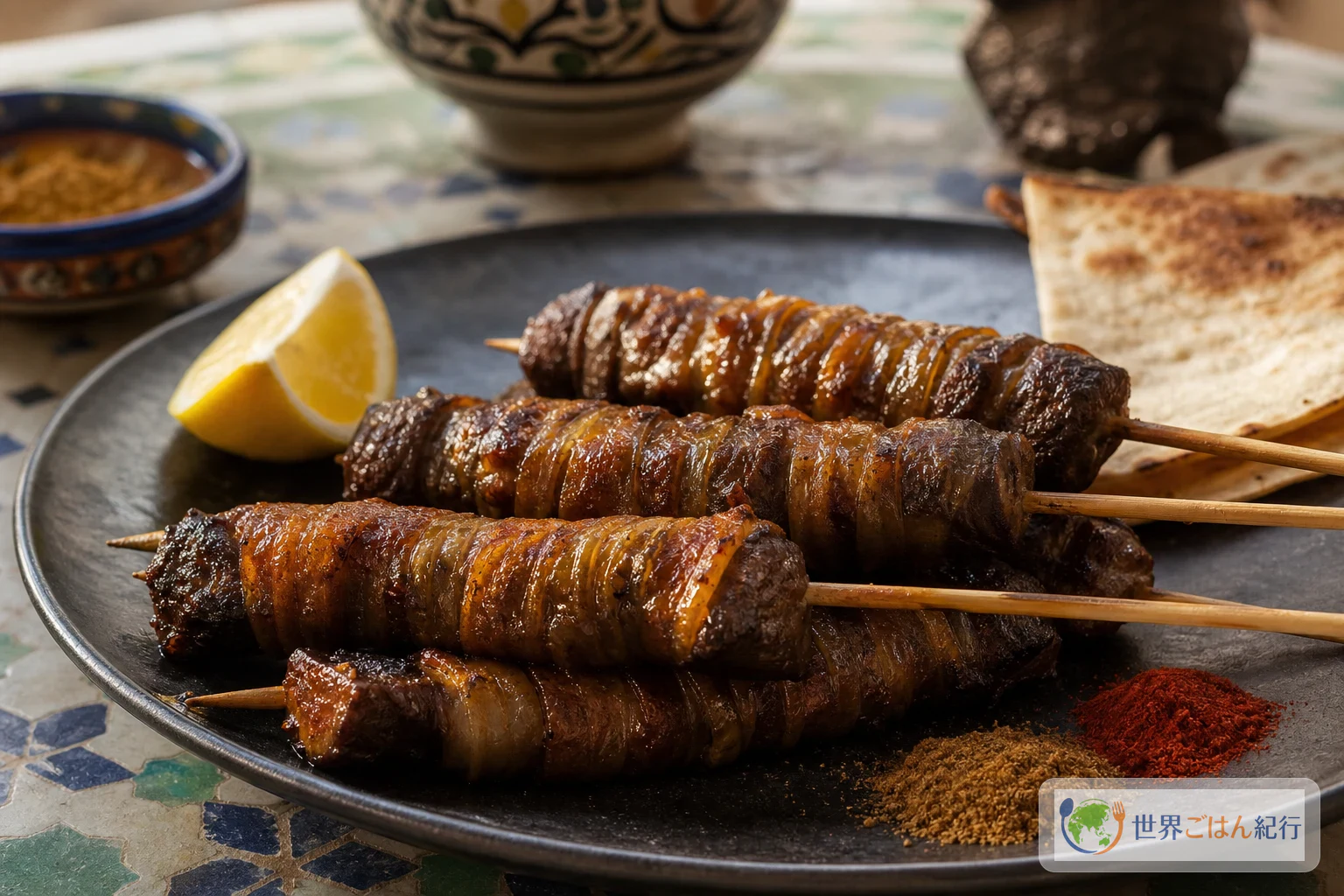
Ahriche is introduced as an offal dish of Khenifra and the Zayane in central Morocco. Public sources describe a dish in which tripe, together with caul fat, lung, and heart, is wrapped in intestine, threaded on an oak stick, and grilled over hot coals. The name is also said to come from a Berber word meaning "stick." (Sources 1, 2)
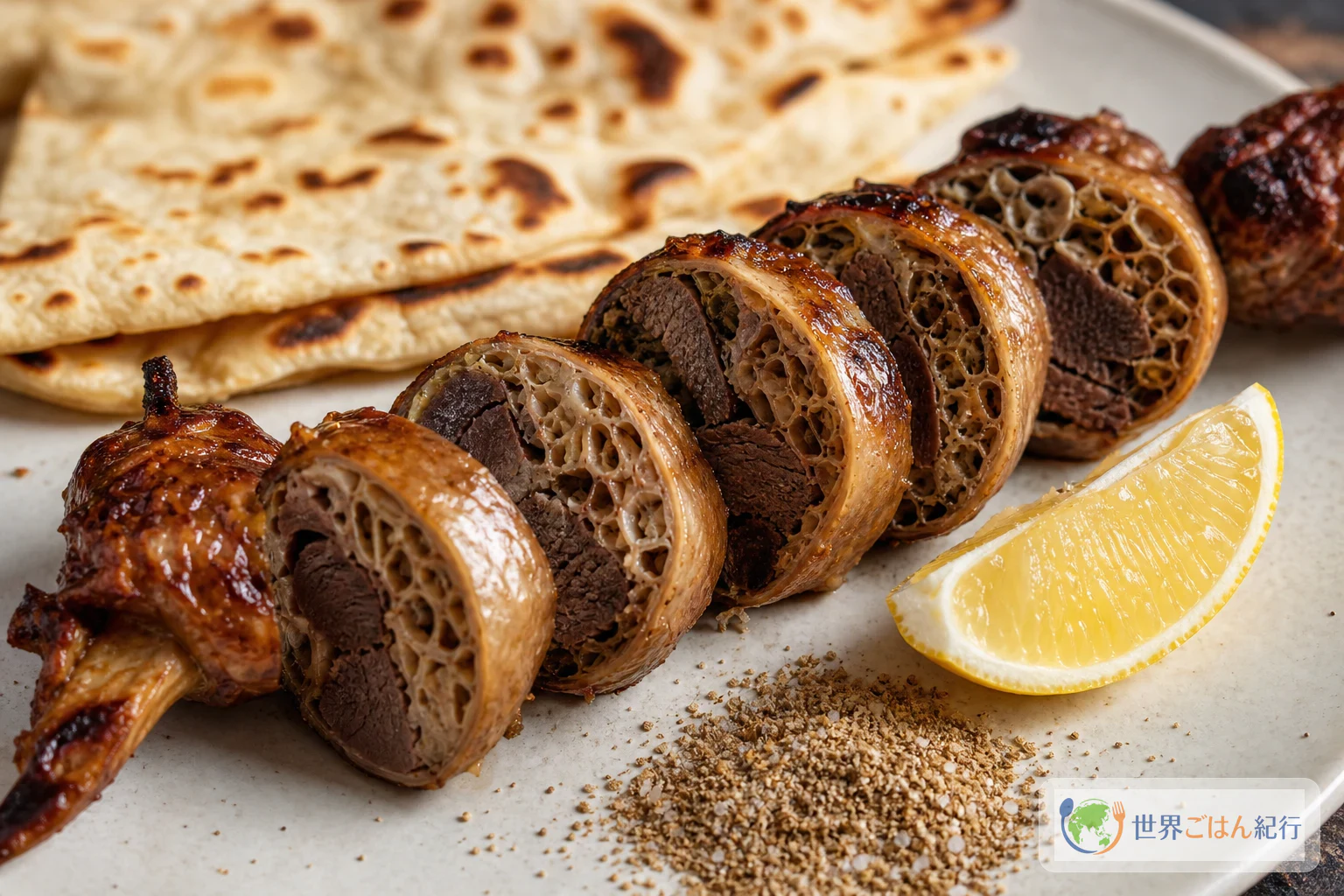
Imagine it. Each time you turn the skewer, the wraps of intestine tighten with a squeak, and fat just short of burning drips onto the coals. The outside is crisp and savory, and when you cut it, the fine honeycomb of the tripe and the spring of the heart appear. Reproducing this scene exactly in a home kitchen is hard, but the interest of the dish can be kept.
At home, the oak stick becomes a bamboo skewer, and the lung and caul fat are replaced with beef heart and beef fat that you can get. This is not a reproduction of one Moroccan household's formula; it is a recipe that recasts the public characteristic of the dish, "offal wrapped in intestine and grilled over charcoal," into amounts that can be made elsewhere. How to switch if you cannot buy intestine is also noted.
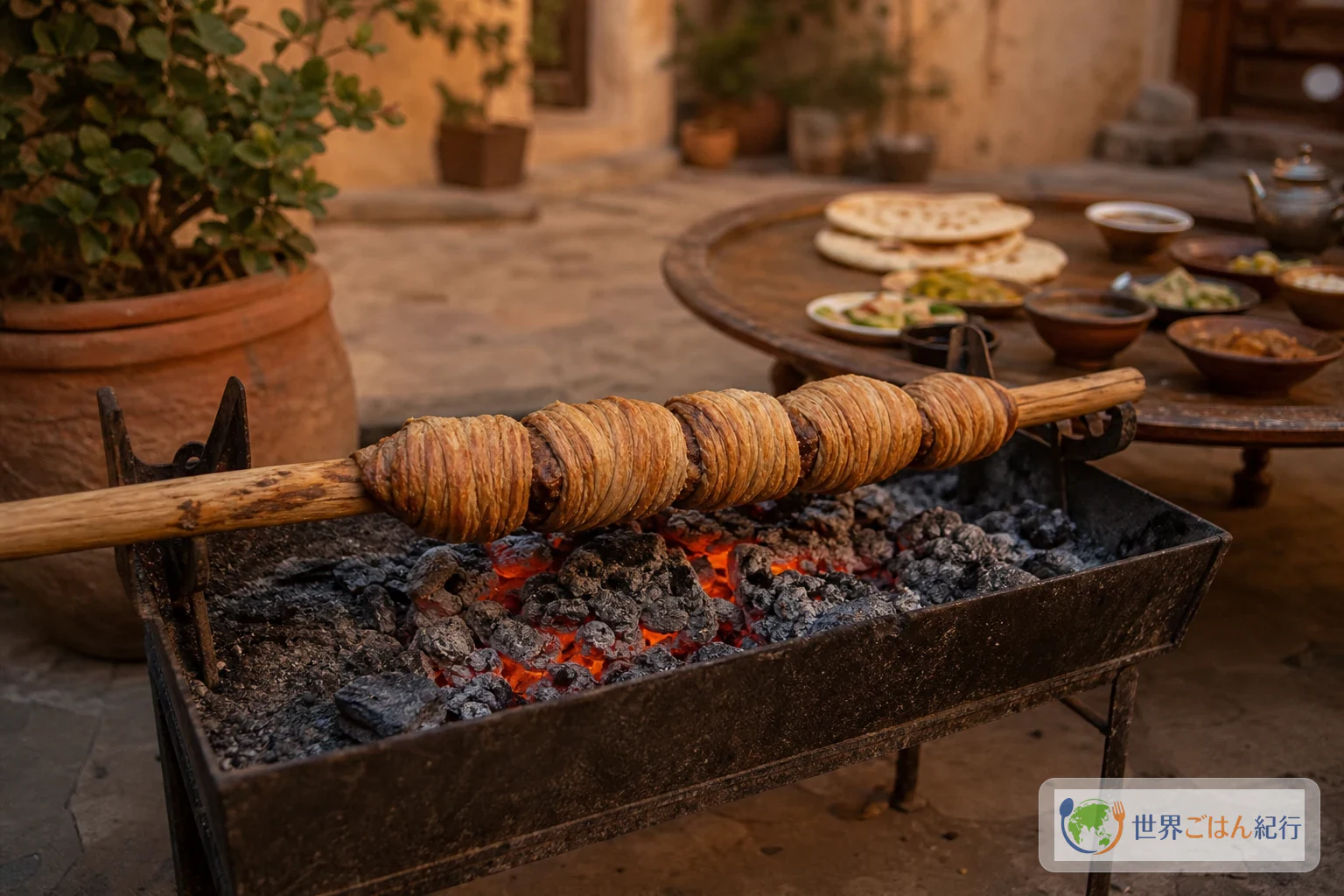
You need not gather the local ingredient names exactly. This is a home-cooking recomposition that keeps the bite of the tripe, the density of the heart, the savory film of the intestine, and the earthy aroma of cumin, while prioritizing availability of ingredients and heating through to the center.
Ingredients (serves 4) and Shopping
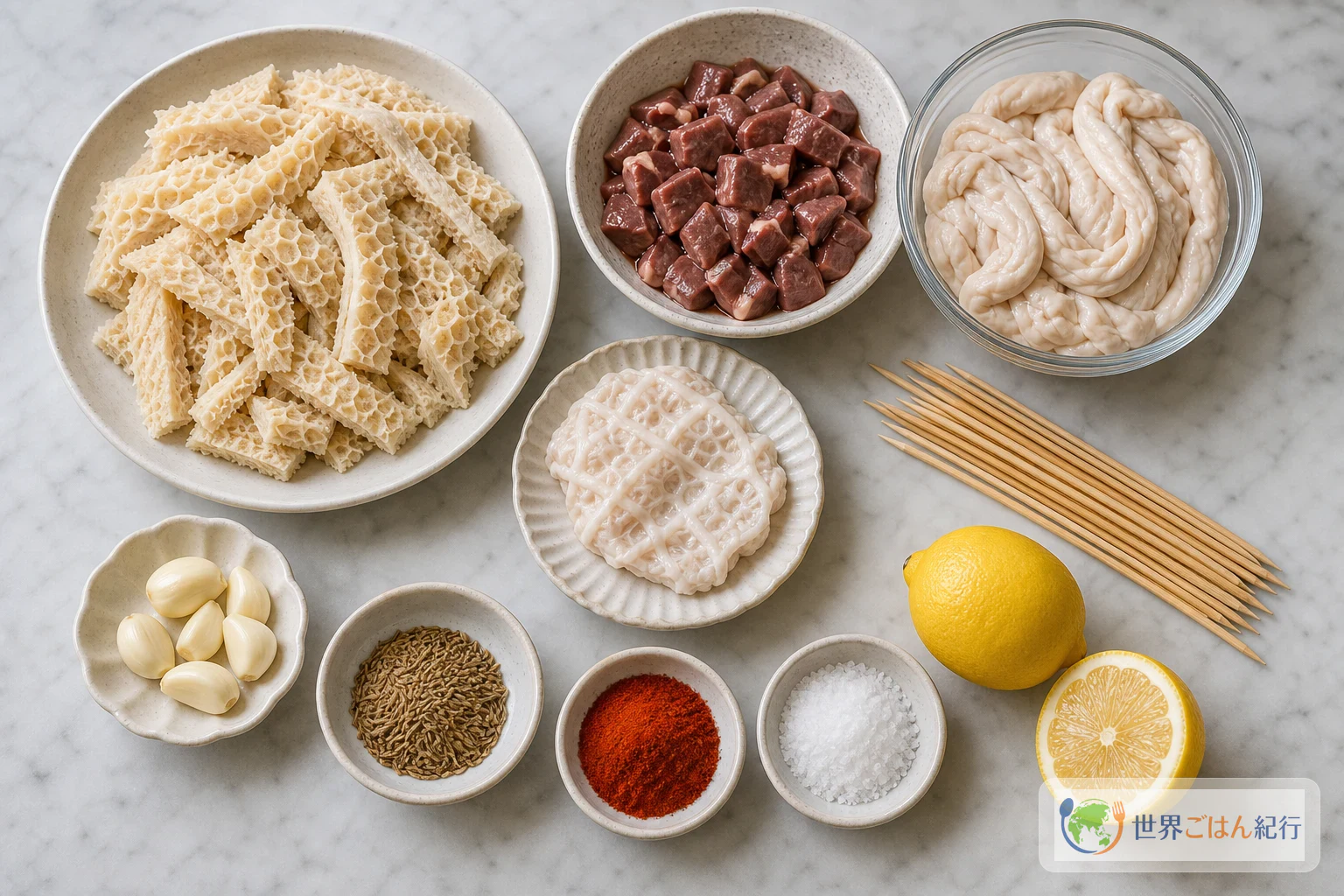
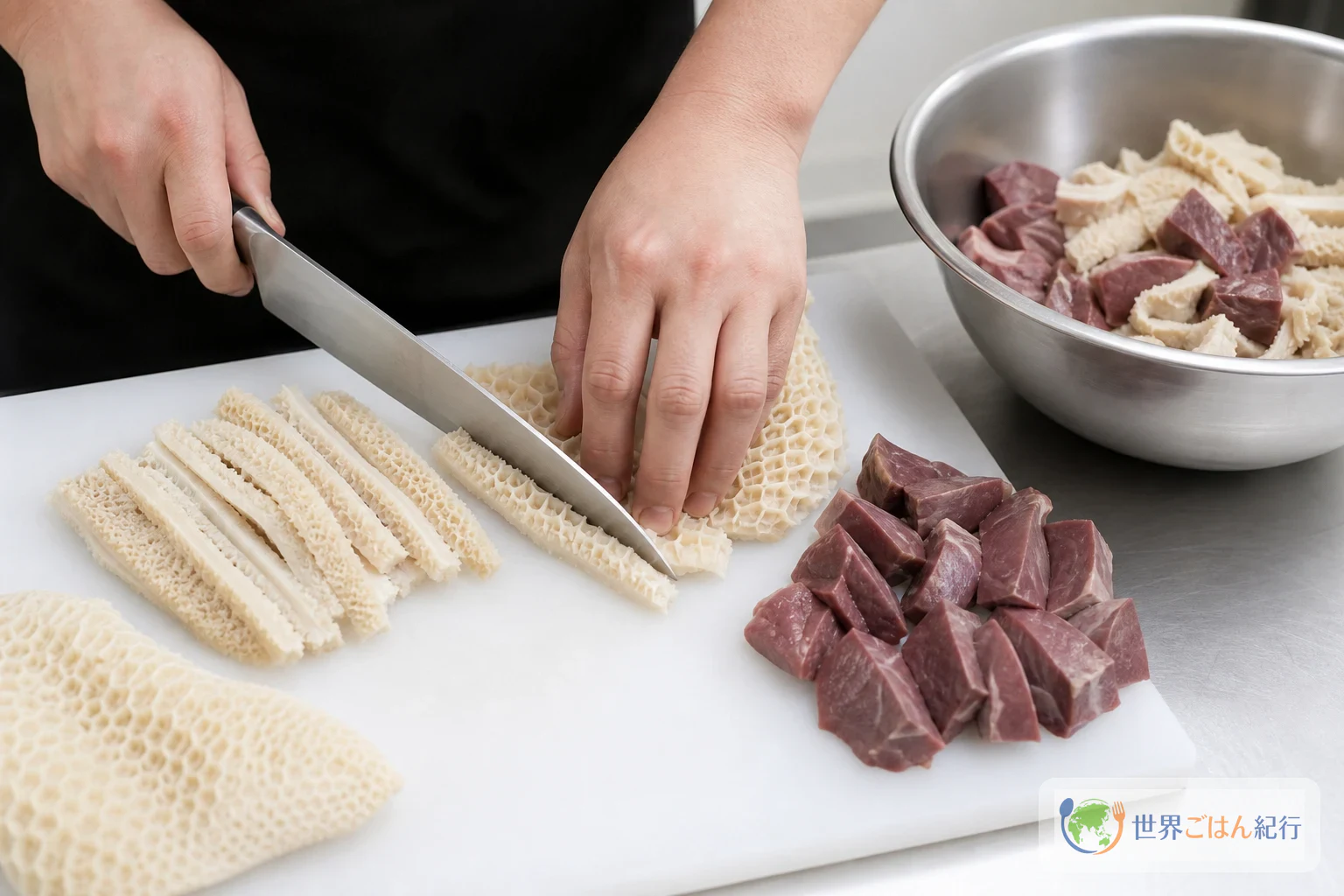
Tripe is the second stomach of beef, with a honeycomb-like mesh. Choose one that is pre-cleaned and, if possible, pre-cooked. Beef heart heats through easily when the thickness is even and keeps the meat from unraveling inside the intestine. For beef small intestine, ask a butcher for the long, thin, cleaned kind left whole, like casings for sausage, not the kind cut short for grilling.
Tripe and beef small intestine are not ingredients you can always find at a nearby supermarket. If you tell the butcher beforehand, "300 g of pre-cooked beef tripe and 250 g of cleaned beef small intestine long enough to wrap," you can more easily avoid the mistake of buying intestine cut for grilling. Prioritize being able to choose the length of the intestine. If it is short, do not splice it together; switch to a different dish in which the tripe and heart are grilled on bamboo skewers.
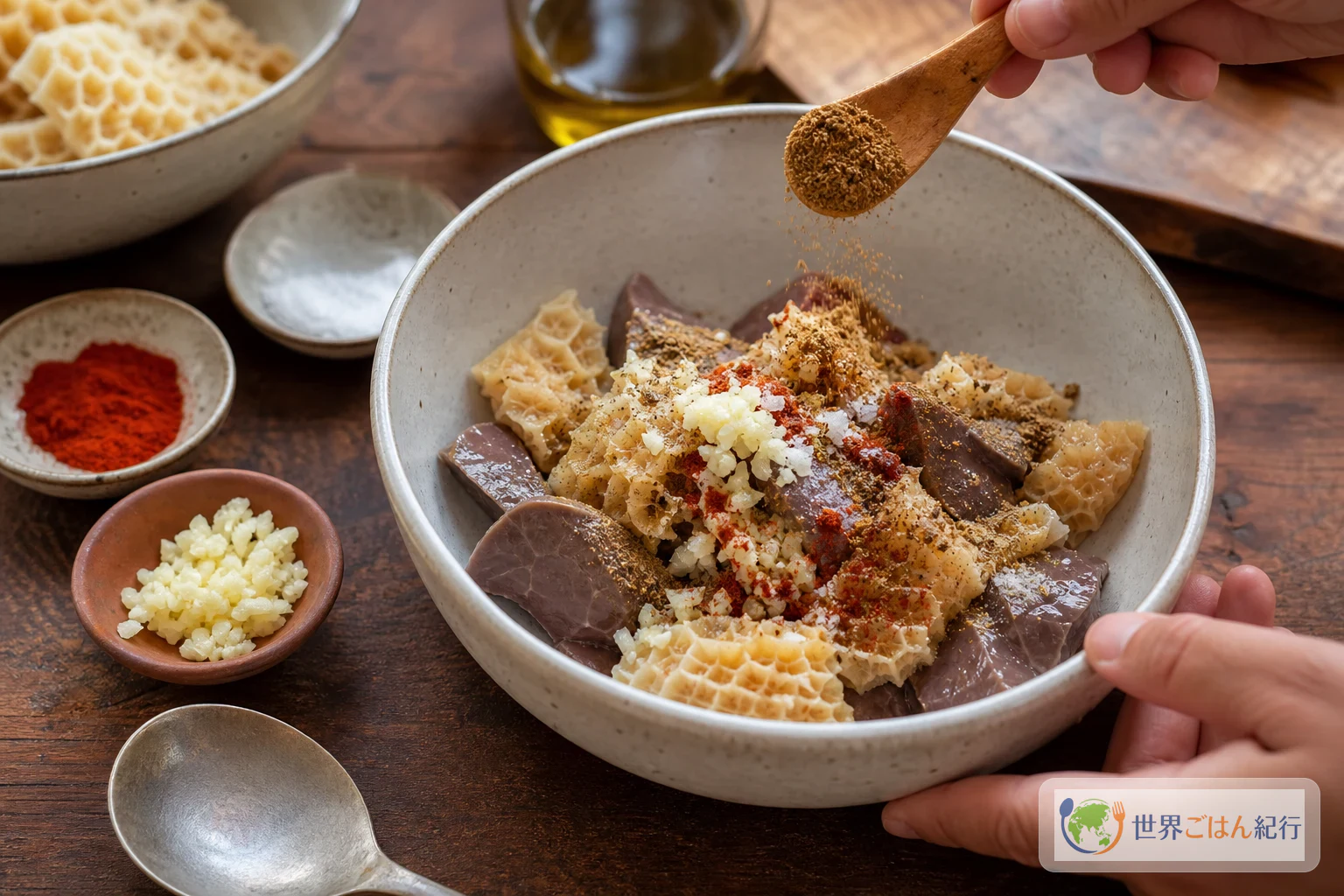
Cumin is the axis of aroma in this home formula. The condition for buying it is that you plan to reuse it for not only Moroccan-style charcoal dishes but also tagine and zaalouk (in Japanese), and can use up a jar of about 65 g in a cool, dark place. If you already have strongly scented cumin, use the same jar and do not buy more. Check the net weight and ingredient label before choosing.
Paprika is used not to assert a traditional blend but to give a mild redness to the home recomposition. For those who want a spicy dish, adding a little black pepper or chile at the table hides the aroma of the offal less than increasing the paprika. The condition for buying is wanting to add vividness of color to the dish. If you already have powdered paprika whose aroma has not faded, skip it. Check the net weight (about 80 g) and the ingredient name.
Beef offal is not for raw consumption. Wash knives, cutting boards, and hands that have touched raw intestine or heart immediately, and keep them separate from where cooked food is placed. Japan's Ministry of Health, Labour and Welfare gives, as a guide, heating the center of food that is to be cooked to 75°C for at least 1 minute. For children, older adults, and people who are unwell, serve only what you have confirmed is cooked through the center. (Sources 5, 6)
Method
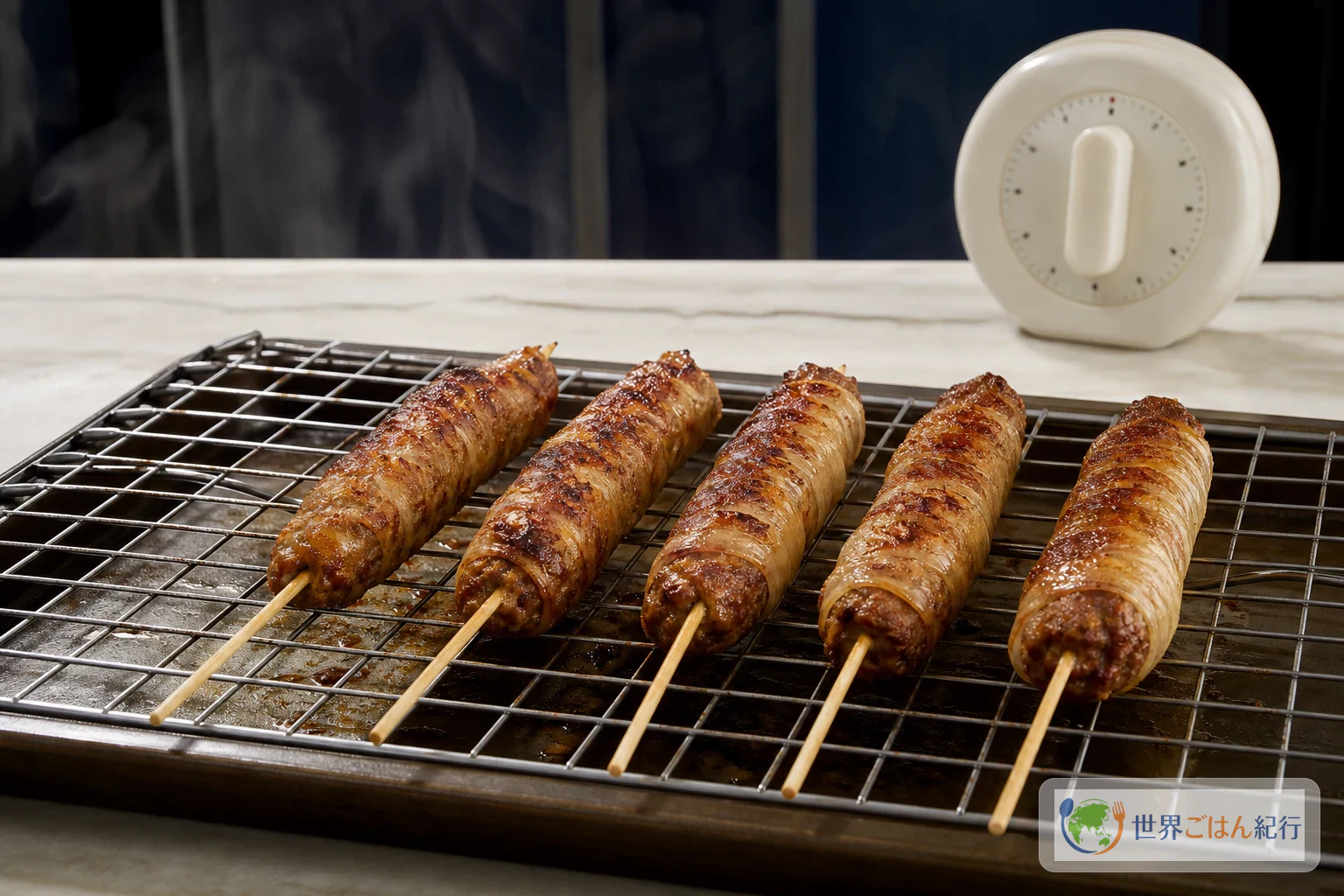
Keep the thickness of a finished skewer to about 3 cm in the middle and about 2 cm at the ends. If you bring it near the fire while still thick, only the intestine shrinks first and the heart in the center lags behind. If you have no charcoal, in a fish grill lower the heat in the second half to stop the surface from burning.
Let the Heat Escape Before It Burns: Three Ways to Tell
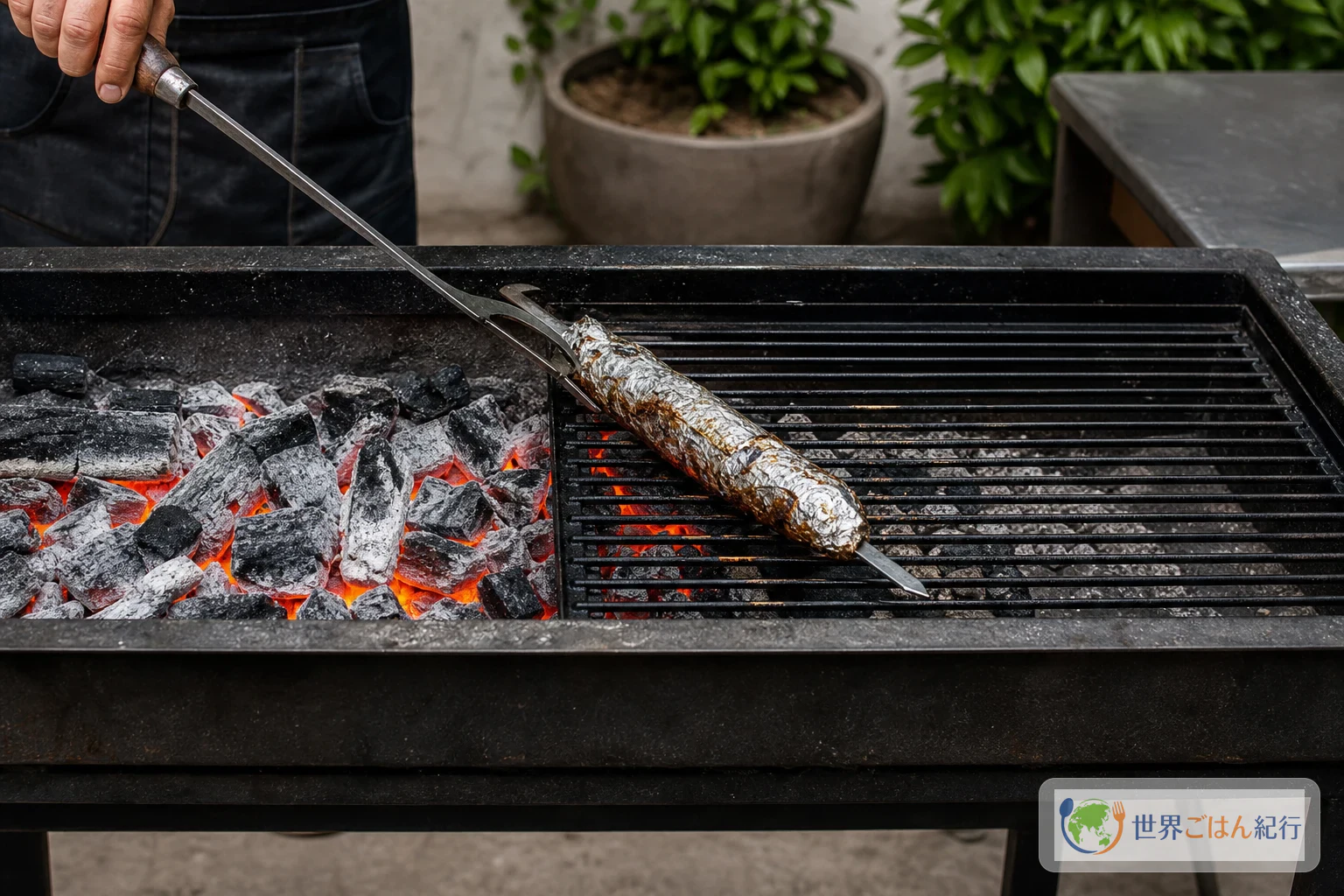
In ahriche, the name of the cooking method is the shape of the dish. Because it is wrapped on a stick, it can be turned. Because it can be turned, the film of the intestine can be dried one turn at a time. At home it is often impossible to make the charcoal heat uniform, so move the skewers while watching these three things.
Watch the speed at which the intestine shrinks
For the first 5 minutes, wait until the surface of the intestine dries white and the wraps narrow slightly. If the surface sets before a lot of fat drips out, the filling is less likely to shift when you turn the skewer afterward. If black spots suddenly increase, that is a sign of too much heat; take it away from the fire.
Use only the thick part of the skewer as the standard
The thin ends take on color first. If you decide it is done by the color of the ends, the heart in the middle lags behind. Stop by the temperature of the thick middle, not the color of the surface. Insert a thermometer at an angle and confirm 75°C for 1 minute. If you have no thermometer, extend the time on the safe side and move it to the weaker side before the surface burns.
Add the acidity just before eating
Do not put lemon in a marinade before cooking; squeeze it on the plate. If acidity is made strong first, the aroma separates from the offal and the sweetness of the intestine's fat is harder to read. Start with nothing on it, then add lemon on the next slice, and it is easier to compare what remains of the cumin and the fat.
Paprika is a supporting player here, making a difference in color. It suits those who want to put a reddish-brown shadow on the cooked surface without adding heat. The condition for buying is that you can use up the powder within a few months of opening. Those who want heat as the lead, or whose powder at hand still smells fragrant, should not buy new. Check the net weight and ingredient name.
The Origins of Ahriche and the Food Culture of the Zayane
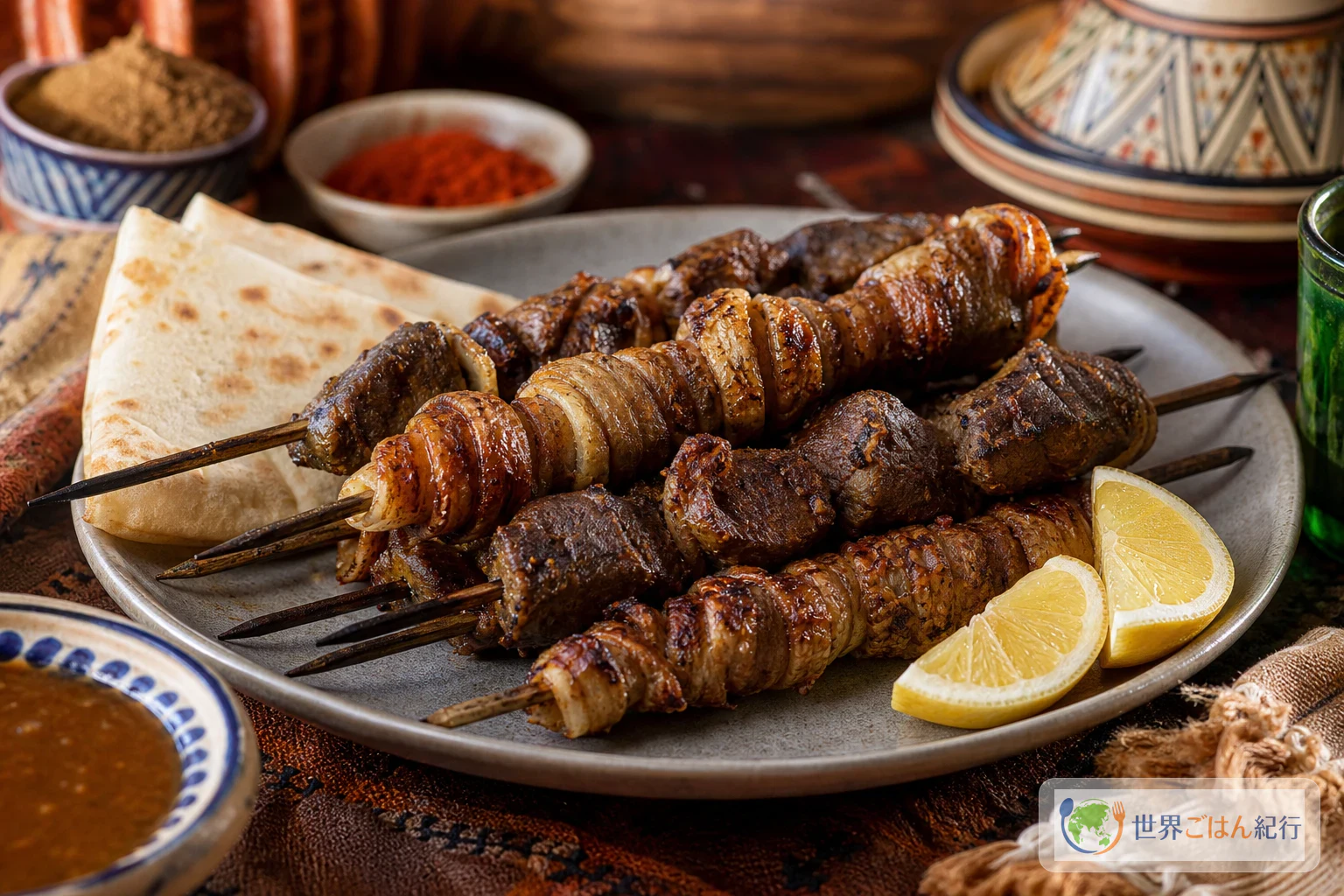
The Zayane are described as Amazigh people living around Khenifra in the Middle Atlas mountains of central Morocco, and it is also an area where Central Atlas Tamazight is spoken. If you call ahriche only "Moroccan food," the outline of that place grows faint. I want to look at it including the stick that the name points to, the offal used to leave nothing wasted, and the time spent around the coals. (Source 2)
Nor is there a need to explain all of Morocco in one flavor. The Moroccan National Tourist Office notes that the seasoning of starters and vegetable dishes changes by region, and explains that couscous too has Amazigh traditions and regional differences in ingredients. It is better not to decide the taste by the name of the country, ignoring regional differences in cooking. Articles introducing the tables of the Atlas Mountains also say that meals, family, and land are at the center of life, and that food, language, and clothing traditions differ by tribe. (Sources 3, 4)
So what I want to keep when reproducing it elsewhere is not adding a particular powder. It is not cutting the offal too small, making a film with the intestine, using the escape side of the coals, and adjusting the aftertaste of the fat with bread and lemon. If you cannot buy intestine, switch to grilled skewers of tripe and heart. The judgment not to call that dish ahriche is also an important choice for not flattening the local dish carelessly.
If you set it beside couscous or harira, ahriche is not a dish that takes up liquid like a stew, but a dish that puts the aroma of charcoal and the bite first. Cut a little at a time at the center of the table and catch the fat with bread, and even people unused to offal can follow the change in flavor more easily.
Frequently Asked Questions
What if the beef small intestine is cut short?
Used as it is, the wraps break midway and you cannot hold the bundle together. Ask the butcher for cleaned small intestine left long, and if there is none, thread the tripe and heart separately on skewers. Even with the same seasoning, a dish without the film of the intestine is not ahriche; treat it as grilled offal skewers.
Can I substitute cuts other than heart?
Public sources on ahriche also list lung and mesenteric fat in addition to heart. In a home kitchen, choose only prepared cuts that the seller handles as edible. Liver changes how it cooks and how it is handled hygienically, so it is better not to add it to this formula on your own judgment. If substituting lamb for the heart, cut it to the same 1 cm and heat it to the center.
How do I cook it without charcoal?
In a fish grill, first firm the surface over high heat, and lower to low heat after the color appears. In an oven, take 10 minutes at 230°C, then turn and 10–15 minutes at 200°C as a guide, and check the center temperature of the thickest point. Because it differs by appliance, skewer thickness, and the moisture of the intestine, do not fix the time; make 75°C for 1 minute the end point.
How long can raw offal be kept?
On the day you buy, carry it home cold and refrigerate it right away. Use raw beef small intestine and heart by the next day as a guide, and freeze what you will not use according to the seller's label. Do not keep wrapping while raw offal sits at room temperature. Move anything left after cooking to a shallow container and cool it quickly, and when reheating, bring it back to full heat through the center. (Source 5)
Can I make it if I don't like the smell of offal?
If you want to keep the mesh texture of the tripe, choosing prepared ingredients and wiping off the surface moisture is more effective than increasing the cumin. Add lemon after serving, one slice at a time. If the aroma still bothers you, you may switch to beef heart only, but that moves away from the character of ahriche as an intestine-wrapped offal dish.
Sources
- Ahriche - Wikipedia Checked for the region, ingredients, and the cooking method of wrapping intestine on a stick and grilling over charcoal. Accessed and checked: 2026-07-30.
- Zayanes - Wikipedia Checked for the Zayane homeland, Khenifra, Central Atlas Tamazight, and the relationship with ahriche. Accessed and checked: 2026-07-30.
- Moroccan National Tourist Office: Moroccan Food & Drink Checked for regional differences in Moroccan cooking, Amazigh traditions and couscous, and the place of bread at the table. Accessed and checked: 2026-07-30.
- National Geographic: Taste tagines and traditions in Morocco's Atlas Mountains Checked for the Amazigh table of the Atlas Mountains, its ties to land and family, and regional differences in food culture. Accessed and checked: 2026-07-30.
- Ministry of Health, Labour and Welfare (Japan): Six points for preventing food poisoning at home Checked for storing fresh food, washing utensils, heating to 75°C at the center for at least 1 minute, and handling leftovers. Accessed and checked: 2026-07-30.
- Ministry of Health, Labour and Welfare (Japan): Eating meat and offal raw carries a risk of food poisoning Checked for the risk of eating meat including beef offal raw, and the caution to cook thoroughly to the center. Accessed and checked: 2026-07-30.



