

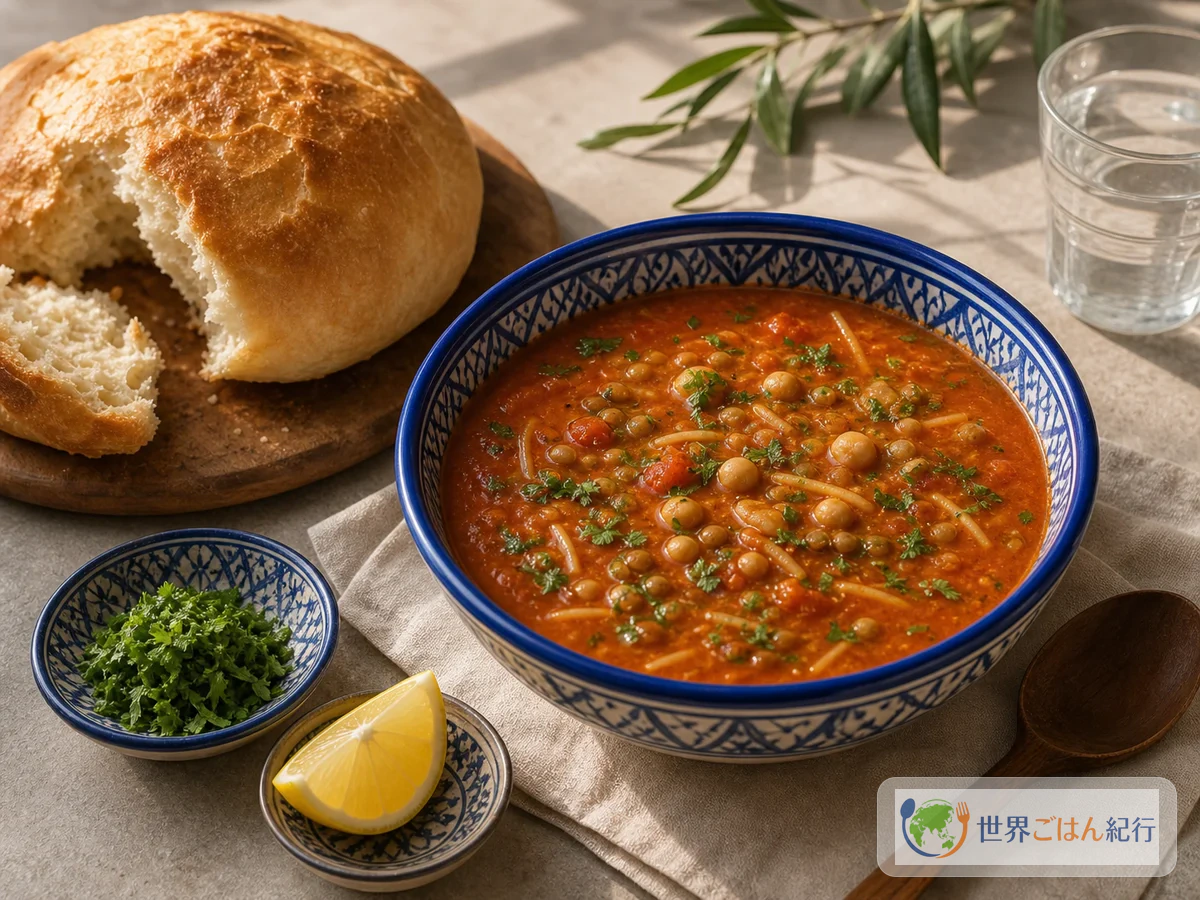
Late afternoon, tomato and herbs steaming in the kitchen
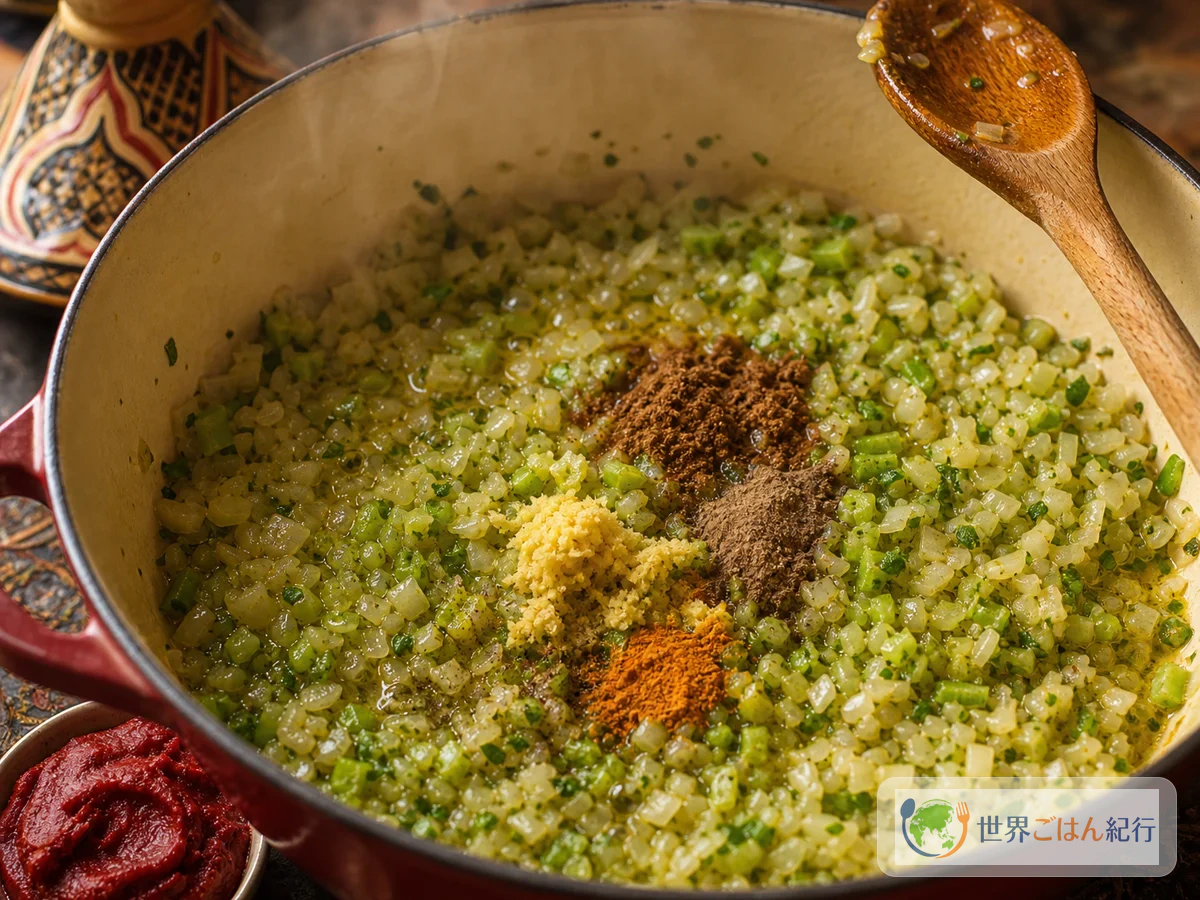
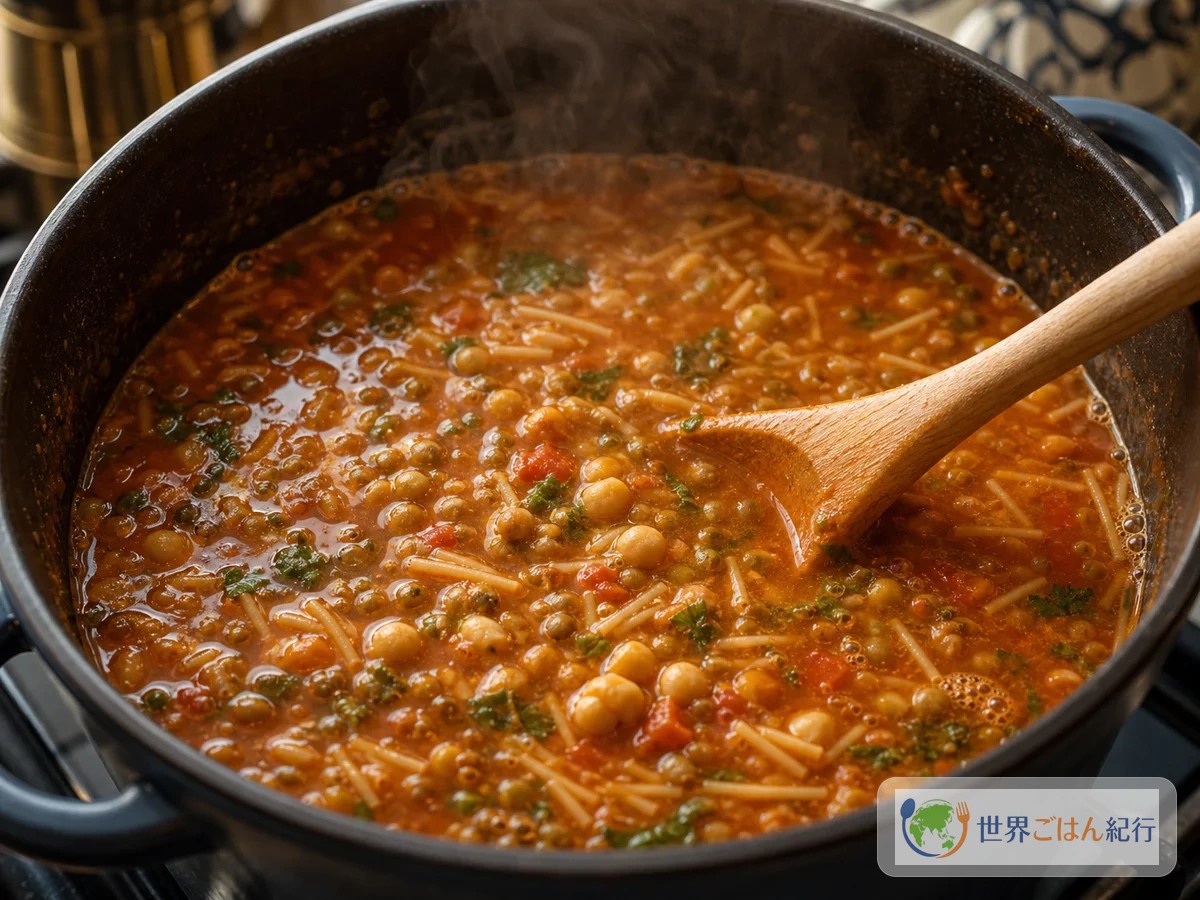
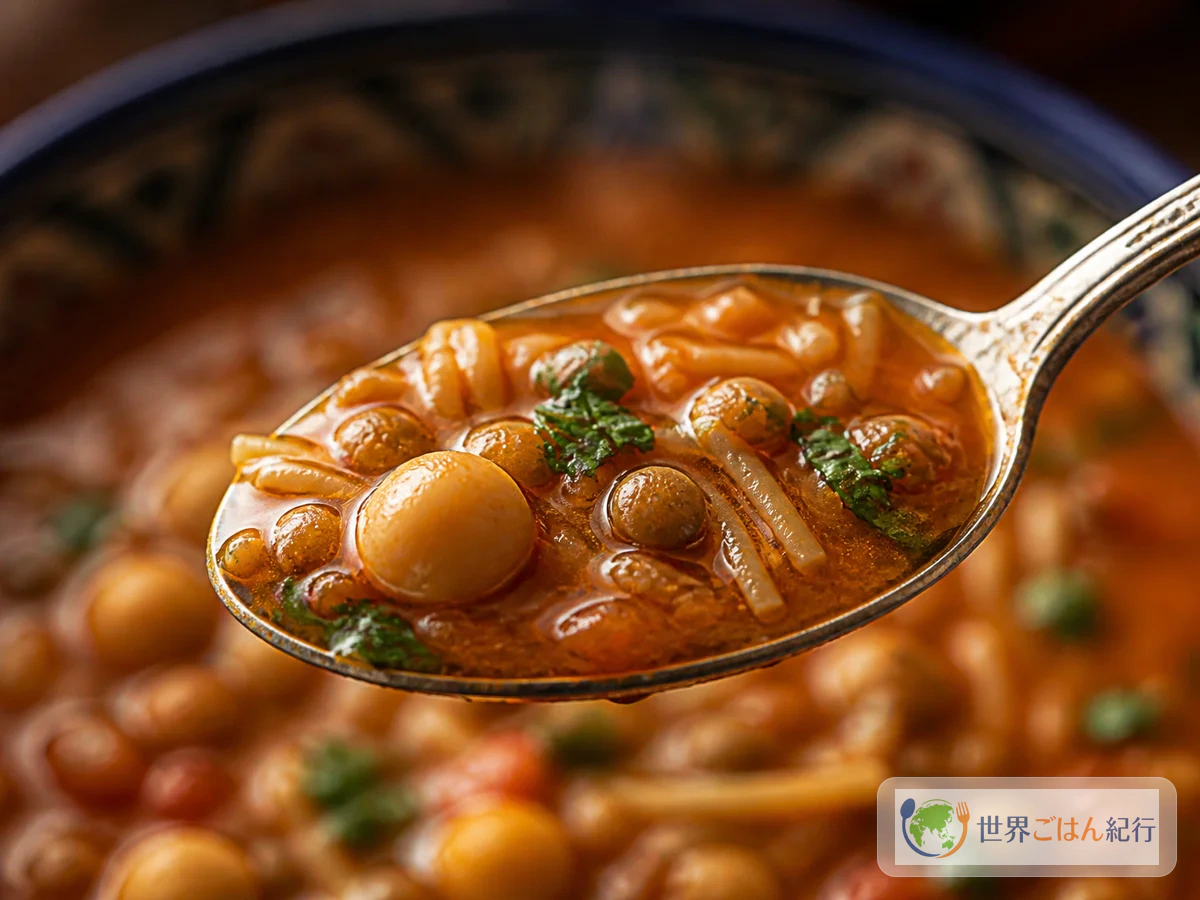
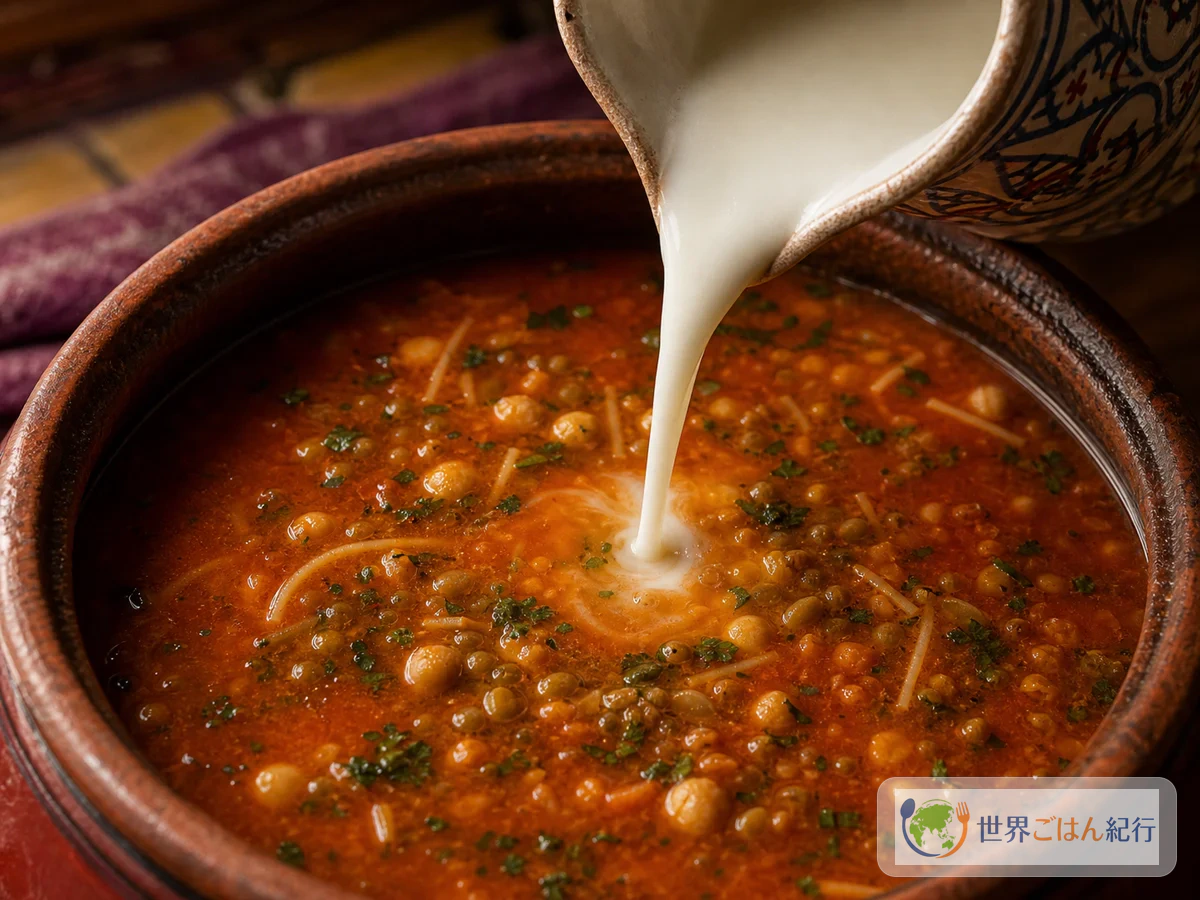
Just before sunset, red tomato bubbles pop at the edge of the pot, and the green scent of chopped cilantro and parsley rises. In go lentils, chickpeas and fine noodles snapped short. Finally, a white liquid is poured in little by little, and the thin soup suddenly turns silky on the tongue.
Harira (الحريرة) is a tomato-based bean soup loved in Morocco. It is best known as a dish served at iftar, the meal after sunset during Ramadan, but it's also eaten as an everyday light meal or a bowl from a street stall. The name is said to come from the Arabic word for "silk," and a final thickener of flour and water called tedouira turns what would be a thin bean soup into a smooth, velvety bowl.
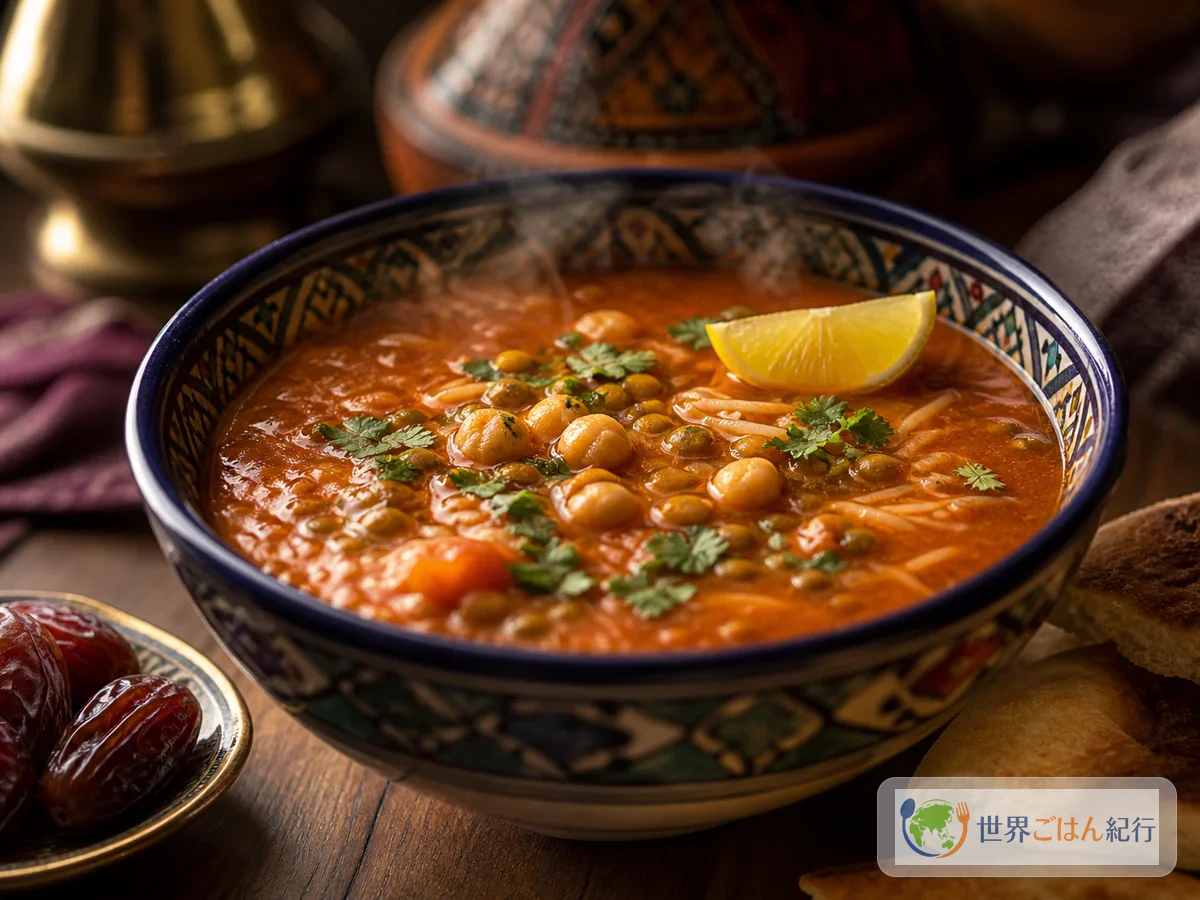
Almost nothing here is hard to find. With canned tomatoes, cooked chickpeas, lentils, onion, celery and fine noodles, you have the shape of it. The parts that need judgment are the amount of herbs and the final thickening. Get those right and it tastes like Moroccan harira, not just another minestrone.
Moroccan cuisine as a whole is covered in our introduction to Moroccan cuisine (in Japanese), which lays out how tagine, couscous and harira relate, but as a first dish to cook, harira is one of the easiest entry points. Unlike tagine (in Japanese), it needs no special pot, and it uses only small amounts of spice. To explore North African soup traditions more broadly, compare it with Algeria's chorba frik and you'll see how differently grains, beans and herbs are used.
To stay close to the original, keep the tomato, chickpeas, lentils, herbs, fine noodles and the final thickening. Meat, smen, cinnamon, and the choice of rice or noodles vary widely between households, so adjust them to what you can find and who you're cooking for.
Background: a home soup, not only for Ramadan
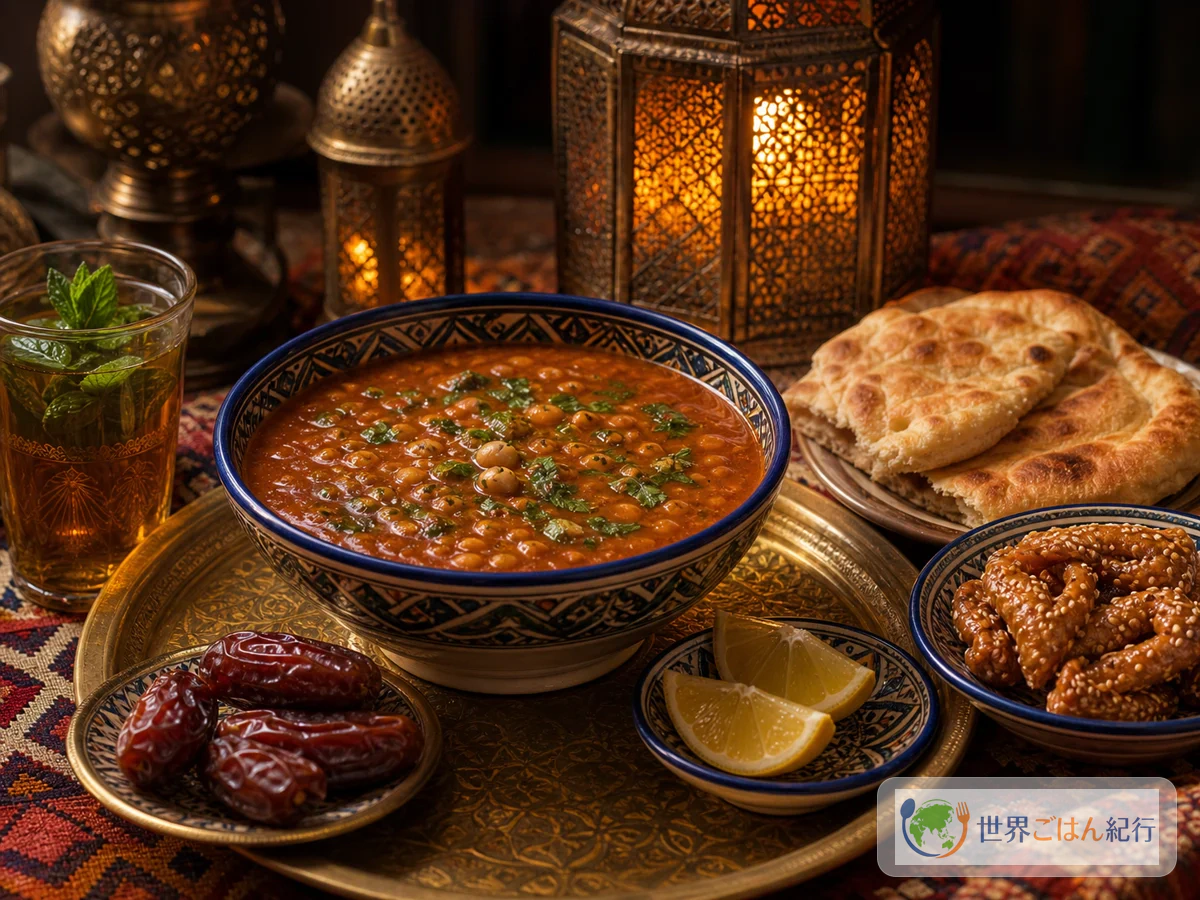
Britannica describes harira as a thick mutton soup eaten to break the Ramadan fast and lists it among Morocco's national specialties. Taste of Maroc explains that it centers on tomato, lentils and chickpeas, with some families adding beef, lamb or chicken and others making a meatless vegetarian version.
What's interesting is that harira has no single "correct" version. Some families add rice; others add vermicelli broken into small pieces. Some bind the finish with egg; others thicken it with tedouira, a flour-and-water mixture. A little smen, a preserved fermented butter, adds an aroma like aged cheese, but you don't need it every time.
The common pitfall is assuming that Moroccan food must mean lots of spice. Harira's star isn't a strong aroma like curry powder but the rounded flavor of tomato, beans, celery and herbs simmered together until they merge. Some recipes include cumin, but too much pushes it toward bean curry. This recipe keeps cumin restrained and uses small amounts of ginger, turmeric, black pepper and cinnamon, letting the herbs and beans come forward.
Harira's smoothness doesn't come from long simmering alone. Adding tedouira (flour dissolved in water) a little at a time while stirring the pot connects the tomato and beans, and the whole soup comes together like silk. Rush this and you'll get lumps.
Ingredients (serves 4)
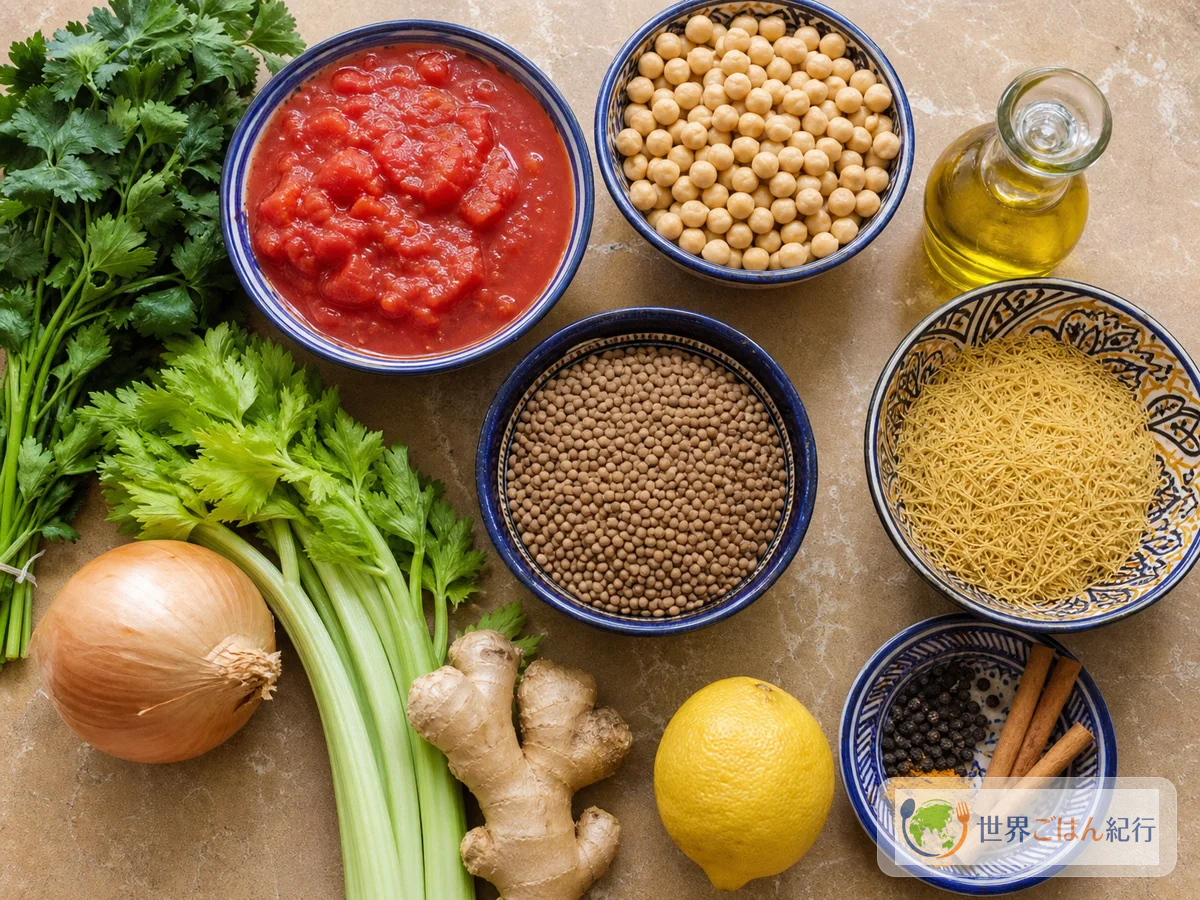
This recipe contains wheat (somen noodles and the flour in the tedouira). If you add chicken or lamb, it also contains meat. To avoid gluten, swap the somen for rice noodles and the flour for rice flour or potato starch. Store-bought bouillon may contain wheat, dairy or soy, so check the label.
Shopping notes
Once you have the beans and herbs, harira becomes very easy to make. Lentils need no soaking, so they're a pantry staple you can also use in everyday soups and curries. Canned chickpeas are perfectly fine, though dried chickpeas you soak yourself have a better aroma. You don't need to buy every spice; starting with just cumin and turmeric is fine.
Method
Harira may look like a dump-everything-in-and-simmer soup, but what matters is not rushing the aromatics, cooking the beans until truly soft, and adding the tedouira a little at a time at the end. A pressure cooker speeds things up, but for your first batch, an ordinary pot lets you watch the changes and is harder to get wrong.
With lentils and tedouira in it, harira tends to settle on the bottom of the pot. Left alone over high heat, the bottom scorches and the flavor turns bitter. Especially after adding the tedouira, stir gently over low heat, sweeping the bottom.
Consistency and troubleshooting
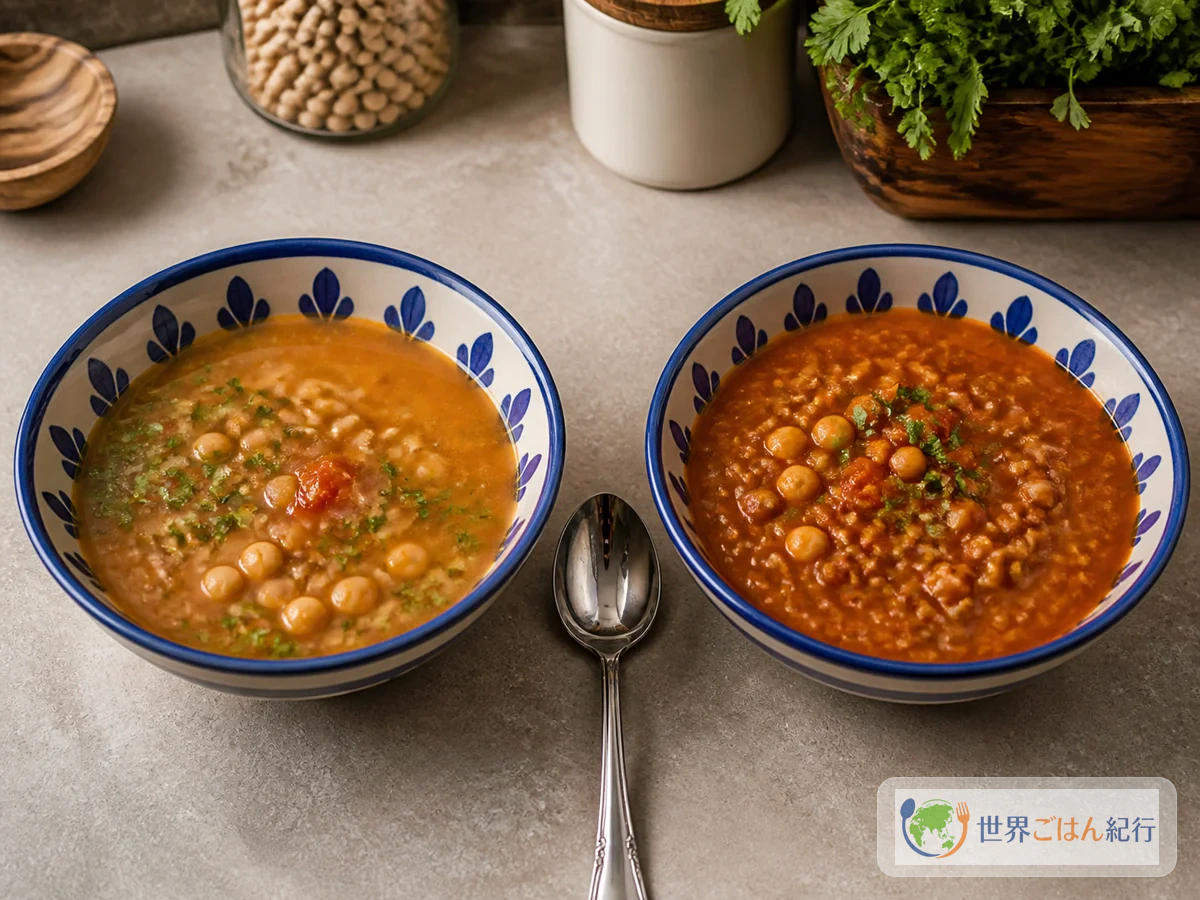
Almost every harira failure is one of four things: thin, lumpy, hard beans or weak herbs. Before adding spice because it tastes flat, check the consistency and the beans.
| Problem | Cause | Fix |
|---|---|---|
| Watery | Lentils haven't broken down, not enough tedouira | Simmer 10 minutes. If still thin, dissolve 1 tsp flour in water and add |
| Lumpy | Flour added directly to the hot pot | Add strained tedouira little by little over low heat |
| Hard beans | Old lentils, or heat too low | Add water and simmer 15 minutes more. Adjust salt toward the end |
| Tastes like curry | Too much cumin or turmeric | Add a little more canned tomato and herbs; don't add more cinnamon |
| Raw, grassy taste | Celery and onion not sautéed enough | Give the first sauté 10 minutes or more, and chop the herb stems finely |
The easiest adjustment is switching to red lentils. They break down readily and give the soup natural body. Brown or green lentils hold their shape better, though, so for a first try you can use half red and half brown.
How much tedouira you need depends on how much evaporates. Moroccan families often make a big pot, where less liquid cooks off during simmering, so the final flour only needs to "link everything a little." In a small saucepan or a shallow pot, liquid evaporates faster and the same amount can make it too thick. For your first batch, don't add all the tedouira: add half, simmer 2 minutes, and see whether it leaves a thin film on the back of a spoon. If, when you lift and pour a spoonful, the solids drop first and the red broth runs after them, it's still thin. If it's heavy and leaves a line on the bottom of the pot, it's too thick.
If it gets too thick, thin it with leftover canned tomato or light chicken stock rather than water alone, so the flavor doesn't go flat. If it's thin, simmer 10 minutes to break down the lentils a bit before adding flour. Trying to fix everything with flour at once leaves a floury feel on the tongue and takes you away from harira's "silk."
Without meat, the savory depth is lighter. To compensate, sauté the onion well, add 1 more tbsp tomato paste, and finish with just 1 tsp olive oil drizzled over. For a vegan version, don't replace the smen with grated cheese or butter; finish with herbs and lemon instead.
If using chicken thigh, make sure it's cooked through to the center. Cut small, it cooks fully in the roughly 65 minutes of total cooking, but if the pieces are large, cut one open and check. If you're unsure, take out just the meat, split it, and simmer longer until the juices run clear.
Serving, menus and storage
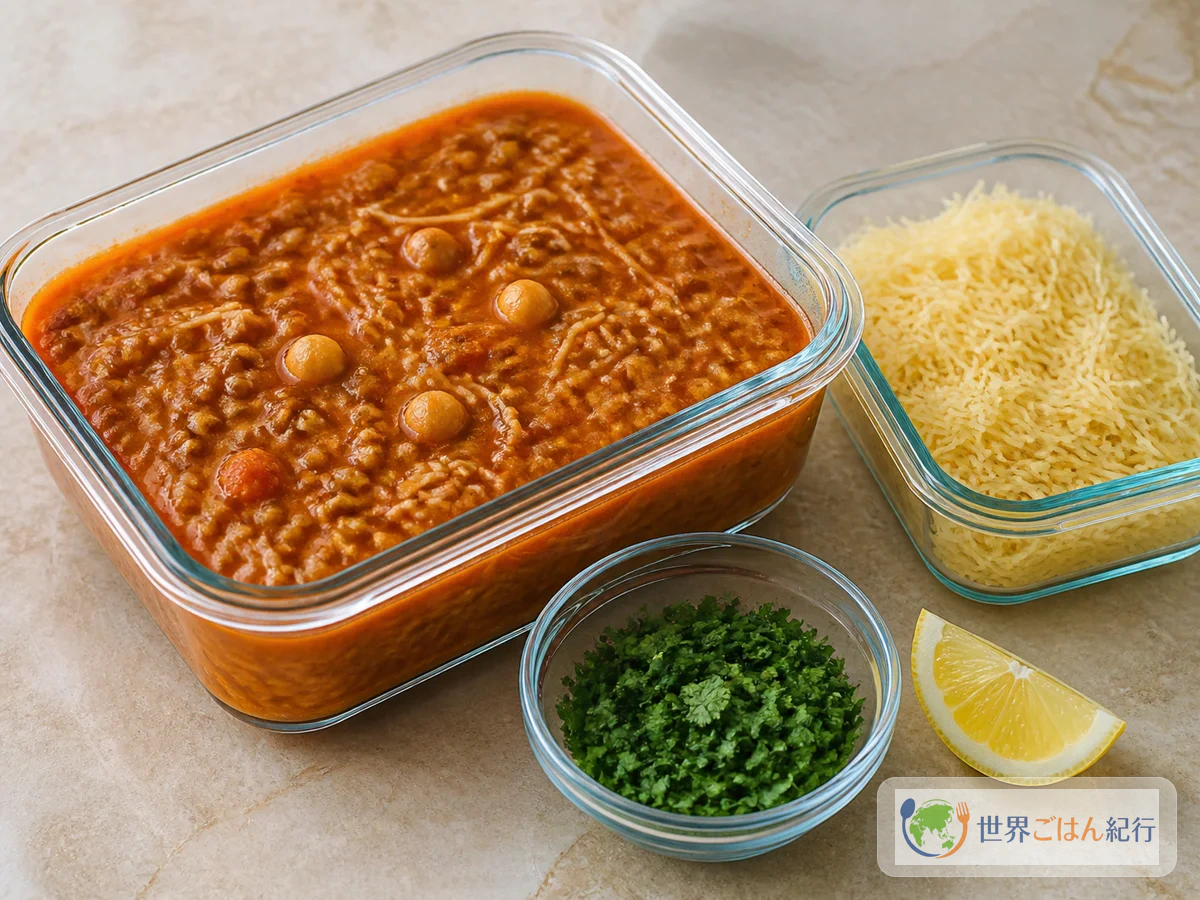
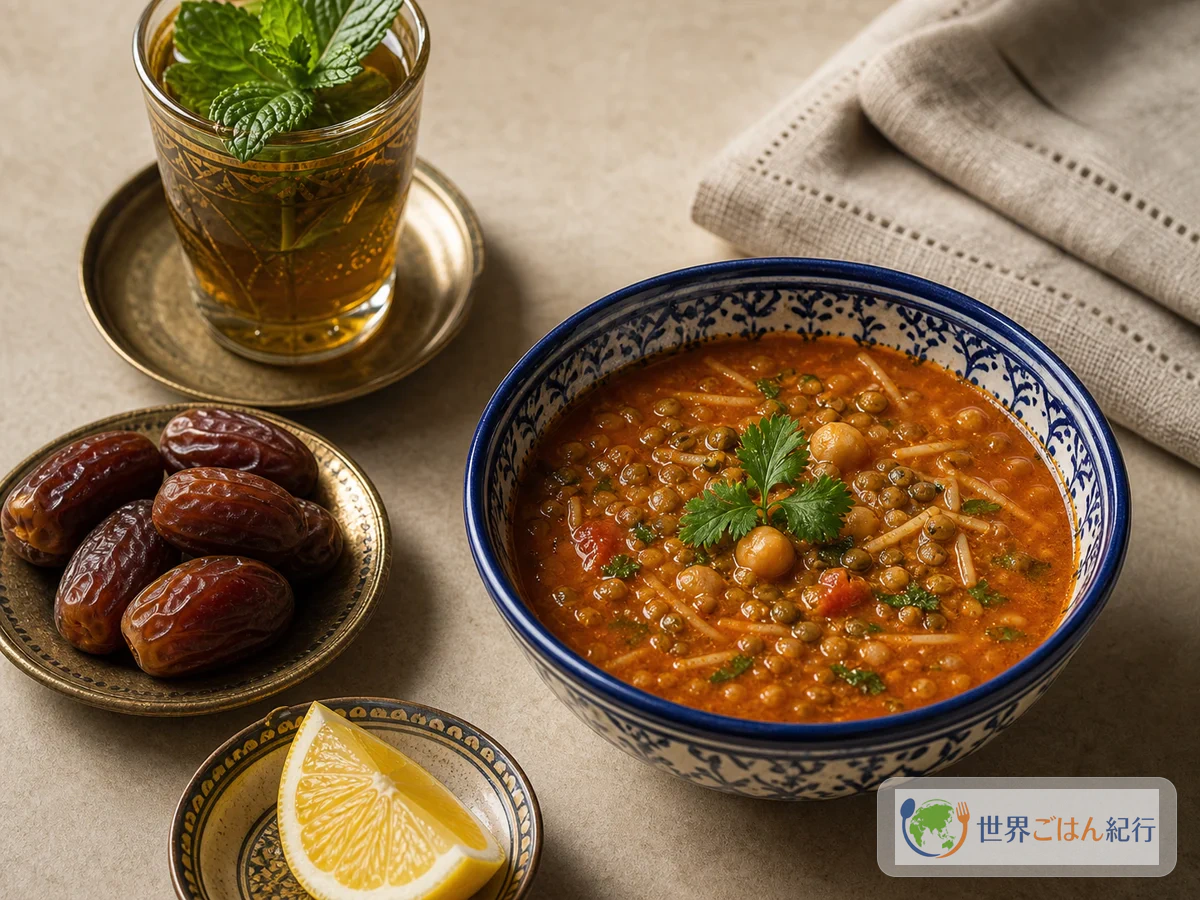
A squeeze of lemon just before eating brings out harira's aroma. At a Ramadan table it may be served with dates and sweet pastries like chebakia, but for an ordinary dinner you don't need the dates. Add bread, boiled eggs and a cucumber-and-tomato salad, and you have a very satisfying meal.
For a North African menu, serve harira as a starter with a small portion of tagine (in Japanese) and couscous or bread as the starch for a Moroccan-style table. On a light day, harira and a baguette are plenty. To lean toward the Middle East, add a small dish of hummus (in Japanese) and scoop up both with bread.
It keeps 2–3 days in the refrigerator. If stored with the somen in, the noodles absorb liquid by the next day and the soup gets heavy. If you're making it ahead, add only half the noodles and add the rest when reheating. To freeze, portion it out before adding the tedouira and noodles; that gives the best result. After thawing, heat it and add the noodles and tedouira for something close to freshly made.
Reheat the next day over low heat. The beans sink and scorch easily, so first add 2–3 tbsp water, stir from the bottom, then turn on the heat. If it's too thick, thin it with water; if it's thin, adjust with 1 tsp tomato paste and a little lemon rather than salt, to keep the sweetness of the beans.
Variations
| Variation | What changes | Best for |
|---|---|---|
| Meatless harira | Omit the meat and use vegetable broth | Light weeknight dinners, make-ahead |
| Chicken harira | Add 200 g chicken thigh | Easy to eat for children and older family members |
| Lamb harira | Add 150–200 g thinly sliced lamb | Weekends, when you want a stronger Moroccan character |
| With rice | Replace the somen with 2 tbsp rice | Make-ahead batches where you don't want soggy noodles |
| Lower gluten | Use rice noodles and rice-flour tedouira | Tables avoiding wheat |
Simmer next-day harira down a little and spoon it over rice for a risotto-like bean and tomato dish. Add more herbs and top with a soft-boiled egg and it works for breakfast. To turn it into a different dish entirely, crack eggs into it and warm through, like shakshuka (in Japanese).
FAQ
Q1. Can I make authentic-tasting harira without meat?
Yes. Many home versions include meat, but meatless and vegetable-based versions exist too. If you skip meat, sauté the onion well and use more tomato paste and herbs to bring the beans' savoriness forward. Making up for it with smen or butter adds an animal aroma, so for a vegan version, finish with olive oil and lemon.
Q2. Is it strange to use somen?
Not at all. Traditionally, families add fine vermicelli or rice, and somen is about as thin. Somen contains salt, though, so start with less salt in the soup. If you'll store the soup, add the somen later so it doesn't go soggy.
Q3. Can I use potato starch instead of tedouira?
You can, but the texture moves toward a glossy, starch-thickened sauce. For harira's rounded body, flour or rice flour is better. If you use potato starch, dissolve 2 tsp in 2 tbsp water and add a little at a time at the end. Too much gives a translucent, gloopy thickness that looks like a different dish.
Q4. What if I don't like cilantro?
You can leave out the cilantro entirely, but with weak herbs, harira loses its character. Use more parsley and add finely chopped celery leaves. Other strong herbs such as shiso shift the aroma noticeably, so if you use them, just 1–2 leaves at the end is best.
Q5. What should I serve with harira?
For a light dinner, harira, bread, boiled eggs and a salad are enough. To broaden into Moroccan food, try tagine (in Japanese) or couscous; for a North African soup comparison, chorba frik is a good next step. To tour African food more widely, move on to the rice dish jollof rice or our overview of African cuisine, which maps out bean and staple-food traditions, and the regional differences come into view.
Summary
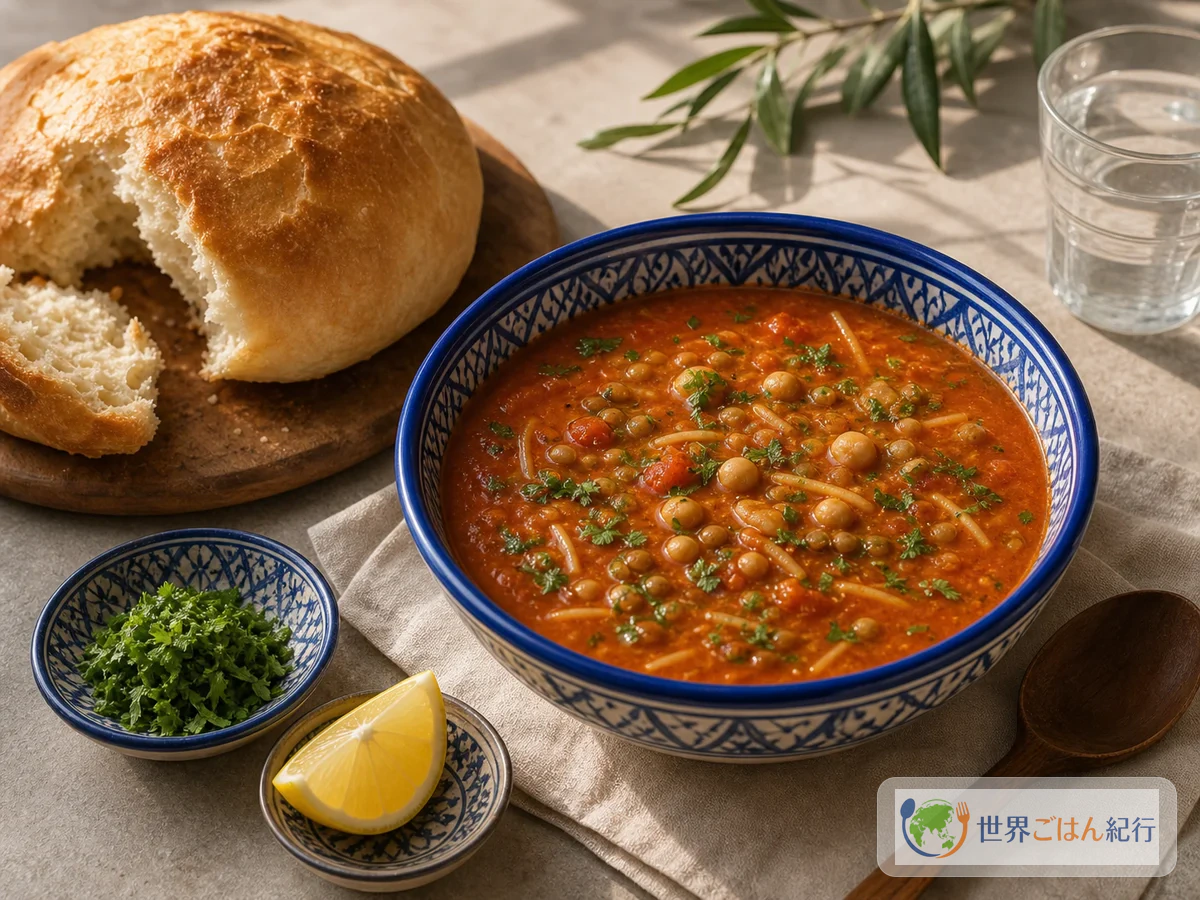
Harira is an excellent way into Moroccan cooking. You don't need a tagine pot or expensive saffron. Canned tomatoes, beans, herbs, fine noodles and a final thickening: that combination alone brings together unfamiliar aromas and the comfort of a homey everyday soup.
What matters is cooking the beans patiently until soft, not being shy with the herbs, and adding the tedouira little by little. Make it light and meatless the first time, then with chicken, and when you're comfortable, try lamb or smen. Moving closer to the original step by step is how Moroccan food stays on your table for the long run.
Next, branch out into braises with Moroccan tagine (in Japanese), or try chorba frik, a close North African soup. Once you understand how beans and herbs are used, African cooking suddenly feels close to home.
Sources
- Taste of Maroc. "Harira Recipe - Moroccan Tomato Soup with Chickpeas and Lentils." https://tasteofmaroc.com/moroccan-harira-soup-recipe/ (accessed May 9, 2026)
- Encyclopaedia Britannica. "Harira." https://www.britannica.com/topic/harira (accessed May 9, 2026)
- Lentils.org. "Moroccan Harira Soup." https://www.lentils.org/recipe/moroccan-harira-soup/ (accessed May 9, 2026)
- Epicurious. "Harira." https://www.epicurious.com/recipes/food/views/harira-51174000 (accessed May 9, 2026)



