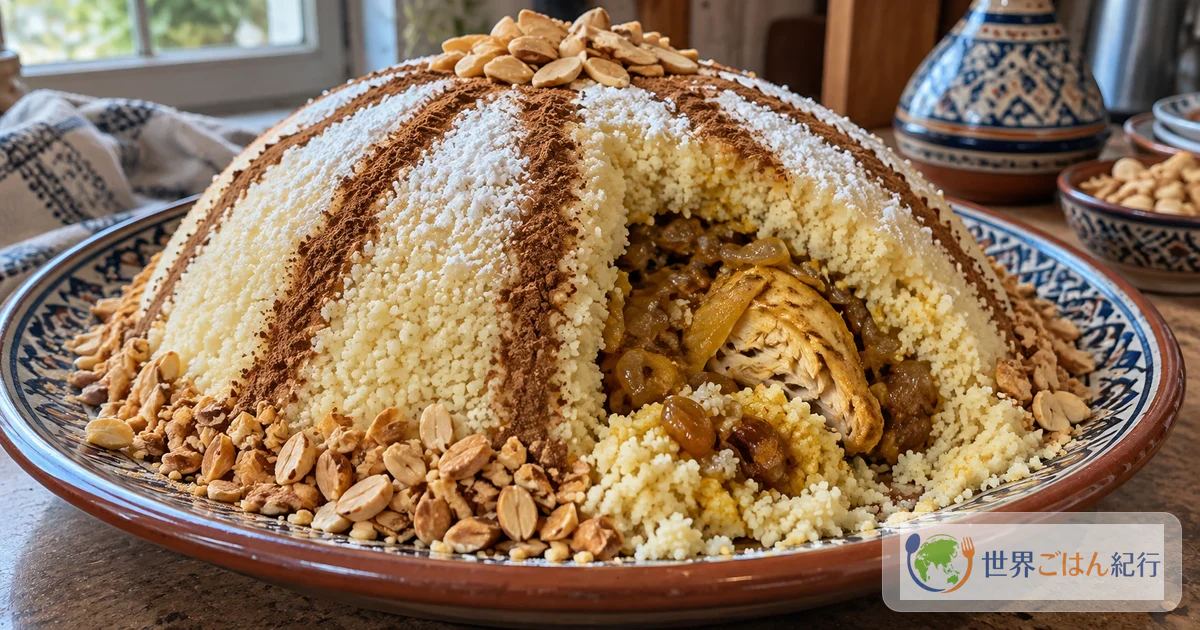
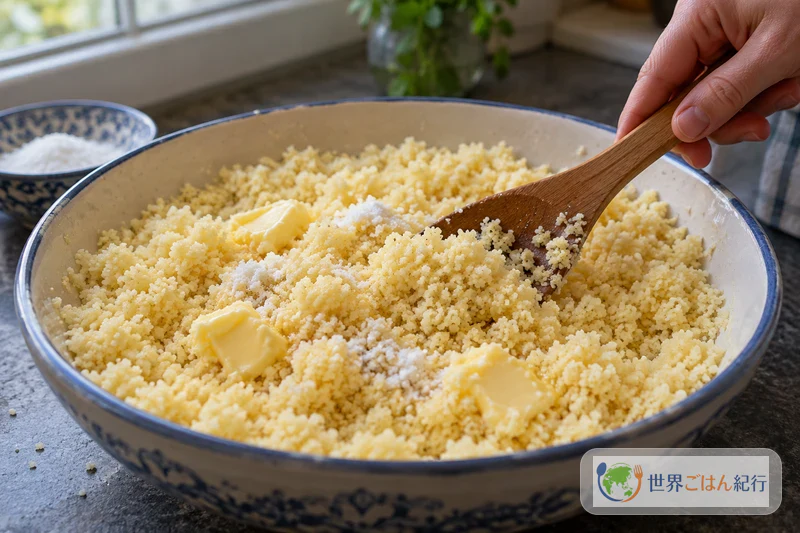
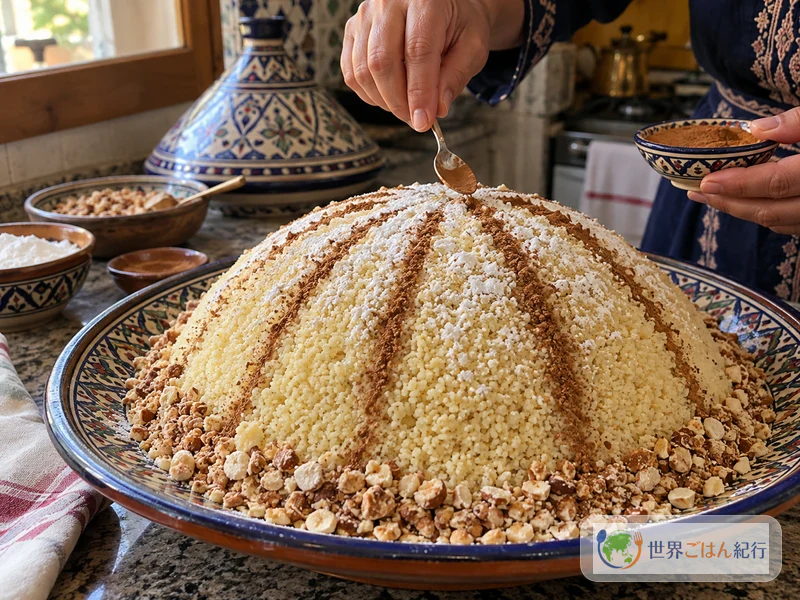
On a large platter rises a mound of white. On its surface, cinnamon brown and powdered-sugar white draw radiating stripes, and crushed almonds are scattered at the foot. It looks like a sweet, but put a spoon in and out of the mound comes chicken simmered golden with saffron, along with a silky onion sauce. Seffa medfouna is a Moroccan celebration dish in which meat is "buried" inside sweetened couscous.
A Golden Chicken Sleeps Inside the White Mound
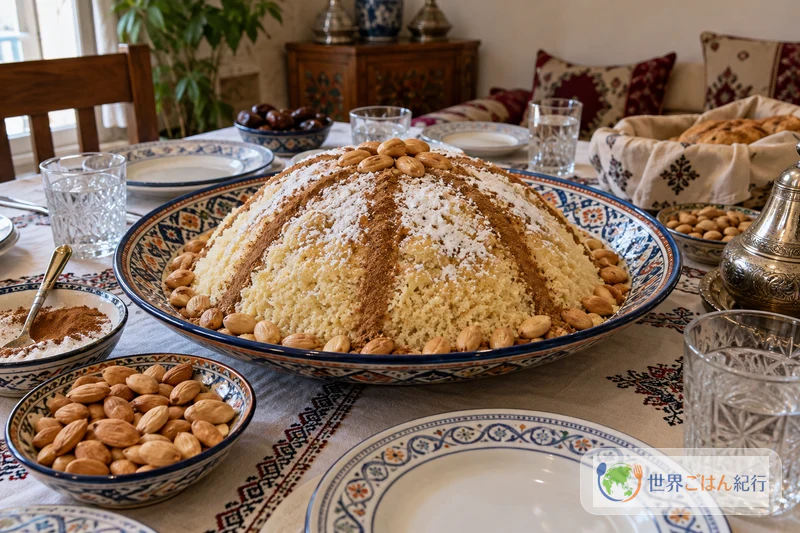
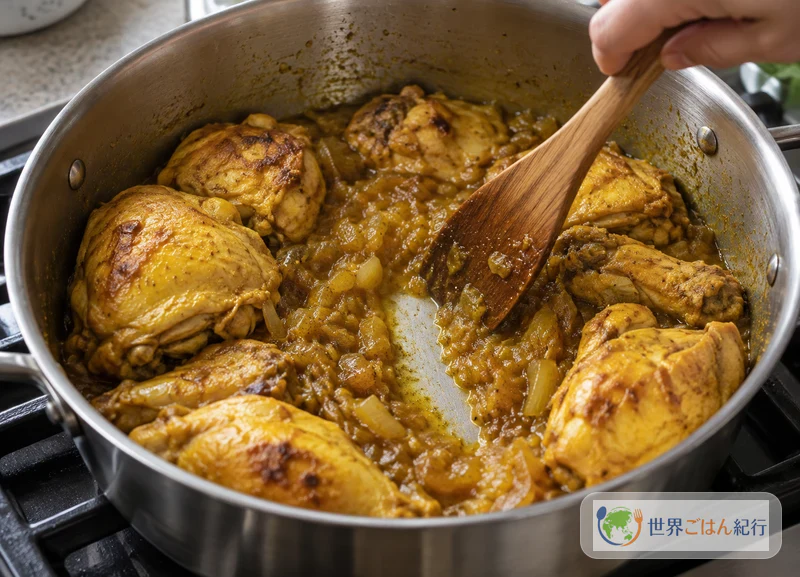
"Seffa" is the name of a dish in which steamed couscous or finely broken thin noodles (shaariya) are sweetened with butter and sugar. "Medfouna" means "buried." The name comes from the saffron-colored meat hidden inside the mound.
Sweet couscous, and chicken simmered with salt, ginger, and saffron. It may seem a strange pairing elsewhere, but in Morocco dishes that combine sweetness and saltiness on one plate are not unusual. Just as the pigeon pie pastilla is dusted with powdered sugar and cinnamon, seffa medfouna lets you taste salty meat and sweet grain on the same spoon.
According to Christine Benlafquih, a cook who has lived long in Casablanca and writes about Moroccan food in English, seffa medfouna is often served as one of several main dishes at a meal on a celebration day or festival. In the traditional way of eating, people gather around the platter and each eats from the part in front of them. Small dishes of powdered sugar, crushed almonds, and cinnamon are set to the side, and diners add sweetness to their liking.
There are also seffas without meat. In Casablanca, a meatless sweet seffa is sometimes served after the main dish. The "seffa toubiza" of Meknes and Fez is a light supper without nuts, sprinkled with orange flower water and eaten while drinking milk, or with milk poured over it like porridge.
Couscous Is Something You Steam
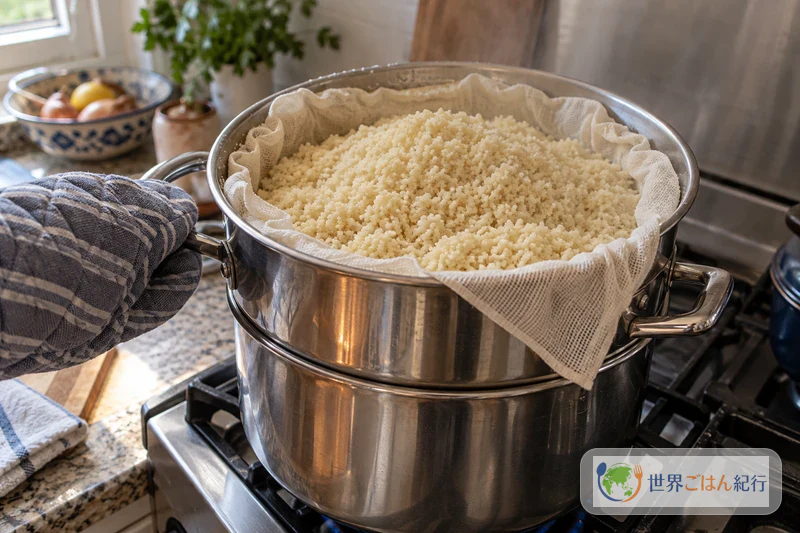
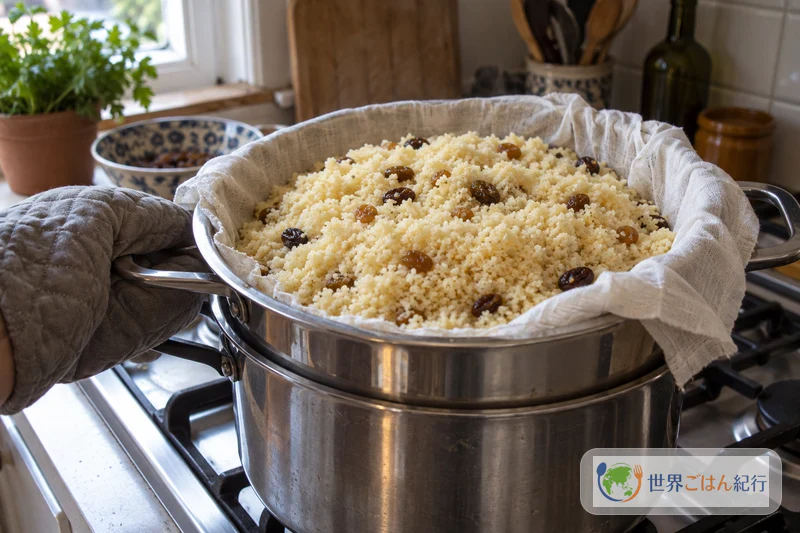
Many people may think of couscous as a convenient dry good you eat after pouring boiling water over it and waiting a few minutes. In Moroccan homes, though, couscous is something you steam to grow, many times. In a two-tier pot called a couscoussier, the steam from water boiling below passes through the couscous in the upper tier, and the work of moistening and steaming is repeated about three times.
Benlafquih explains that steaming makes the grains swell and soften without turning sticky or heavy. It takes effort, but the mouthfeel is completely different from couscous only rehydrated in hot water; each grain is light and fluffy while keeping a pleasant spring. In a dish like seffa medfouna where the couscous itself is the star, this difference shows clearly in the taste.
There is also a way of making seffa in which thin noodles (shaariya) are steamed in place of couscous. Which one is used varies by region and household; noodle seffa has a delicate texture, and couscous seffa gives a texture of plump grains. This time it is made with couscous, which is easy to find.
A Steamer Instead of a Couscoussier
Even without a couscoussier, you can substitute a steamer, a bamboo steamer, or a large metal colander set over a deep pot. There are two points. One is that the bottom of the upper tier must not touch the water below. The other is to seal the gap between the pot and the upper tier with folded plastic wrap or aluminum foil. If steam escapes through the gap, it does not pass through the couscous well.
If you use a bamboo steamer, line it with fine-weave steaming cloth so the couscous grains do not fall through. The same applies if the holes of your steamer are large. Steaming a lot at once makes it hard for steam to pass, so if your home steamer is small, steam in two batches.
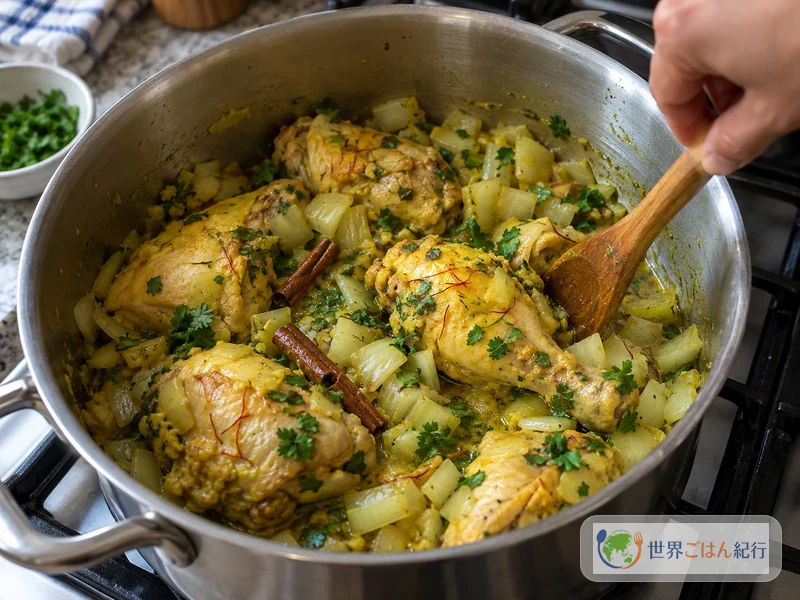
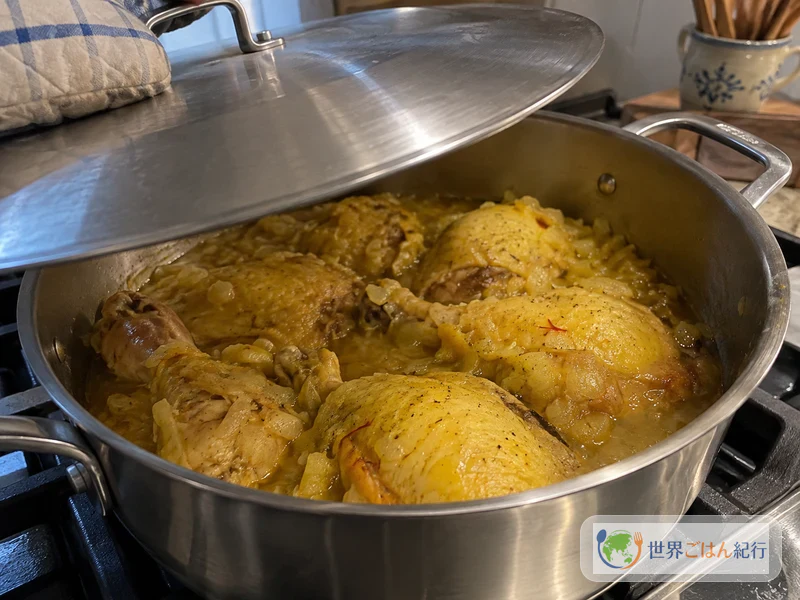
In Morocco, the chicken is a whole bird cut up and skinned. At home, using bone-in chicken thighs together with drumettes is an easy alternative. It can also be made with lamb or beef, in which case cubed meat is simmered in water. Saffron is expensive, but it is the deciding factor for the golden color and aroma of this dish, so do not leave it out.
Ingredients (serves 8)
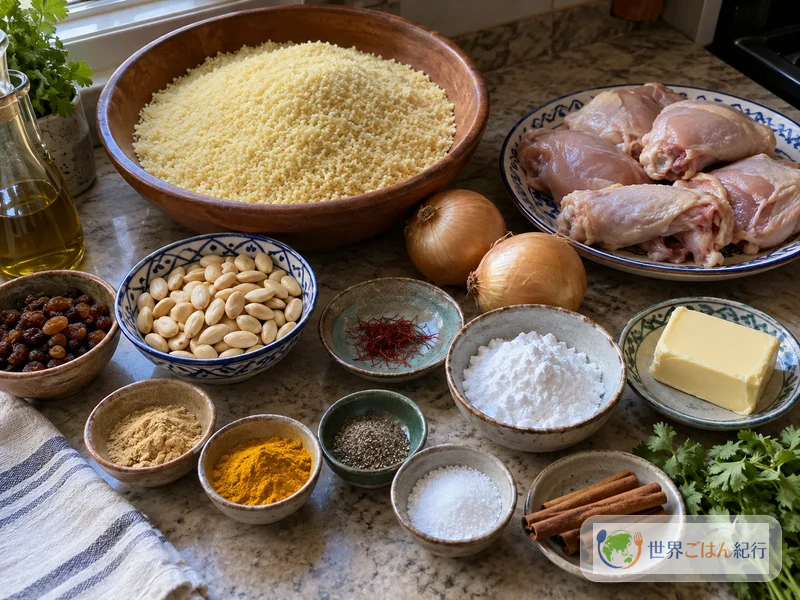
The ingredient table is generous, for 8 servings. Because this is a platter dish for a celebration, when there are fewer people you can make half the amount of both chicken and couscous. Instead of frying the almonds, spread them in one layer on a baking sheet and roast until golden brown in a 180°C oven for about 10 minutes, stirring now and then, which is easy.
Crumble the saffron between your fingertips just before using it to bring out the aroma. Soaking it in about 2 tbsp lukewarm water before it goes into the pot spreads the color evenly.
The steam coming off the steamer is extremely hot, and it is easy to get burned when returning the couscous to the bowl or removing the plastic wrap that seals the gap. Use thick oven mitts and keep your face away from the steam. If the water in the lower tier runs low, add boiling water to prevent it from boiling dry.
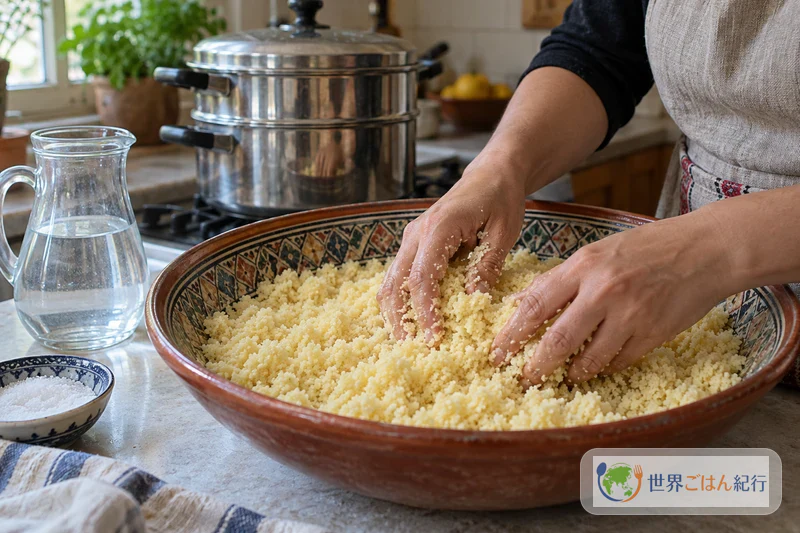
When moistening the couscous, do not add all the water at once; add it a little at a time and mix. If there is too much water, the grains turn soggy and do not swell even when steamed. Lightly rubbing them between your palms loosens the grains so they take up water evenly.
The couscous can be steamed the day before or early on the day. Before eating, reheat it in the steamer or in a microwave, then mix in the butter and powdered sugar.
Around the Platter, Sweetness Is Up to You
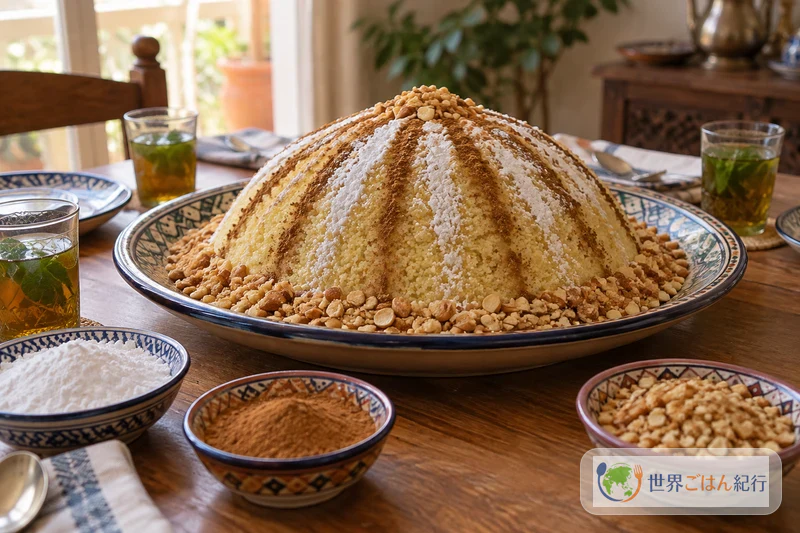
Seffa medfouna is brought to the table warm, just made. Gather around the platter and break down the dome a little at a time with a spoon, and the chicken and sauce appear from inside. With small dishes of powdered sugar, crushed almonds, and cinnamon at the side, those who want less sweetness and those who like it sweet can each adjust to their own taste.
The salty chicken sauce soaks into the sweet couscous, the aromas of saffron and cinnamon overlap, and each bite moves between sweet and salty. Serve with mint tea and you have a Moroccan pairing that carries on past the end of the meal.
If you want to enjoy more Moroccan cooking, comparing it with couscous, eaten topped with vegetables and meat, shows how the same couscous becomes a completely different dish. For another dish that combines sweet and salty, there is the pigeon or chicken pie pastilla (in Japanese). Together with harira, the soup indispensable at Ramadan tables, you come close to a Moroccan celebration table.
Frequently Asked Questions
Can I make it with the type of couscous that is rehydrated with boiling water?
You can, but the mouthfeel tends to be heavier than steamed. Steaming boiling-water-rehydrated couscous for another 10 minutes or so in a steamer makes the grains swell and lighten. Use that as a method for when you are short on time.
Can I make just the chicken?
Of course. Chicken simmered with saffron is a side dish that goes with rice or bread on its own. When you cannot spare time for steaming couscous, making only the chicken is one way to enjoy it.
What if I want it less sweet?
Reduce the powdered sugar mixed into the couscous and let people add more to taste from the small dishes at the table. With the aroma of cinnamon and almonds, it still has the character of seffa even with less sweetness.
Can I make it ahead or store it?
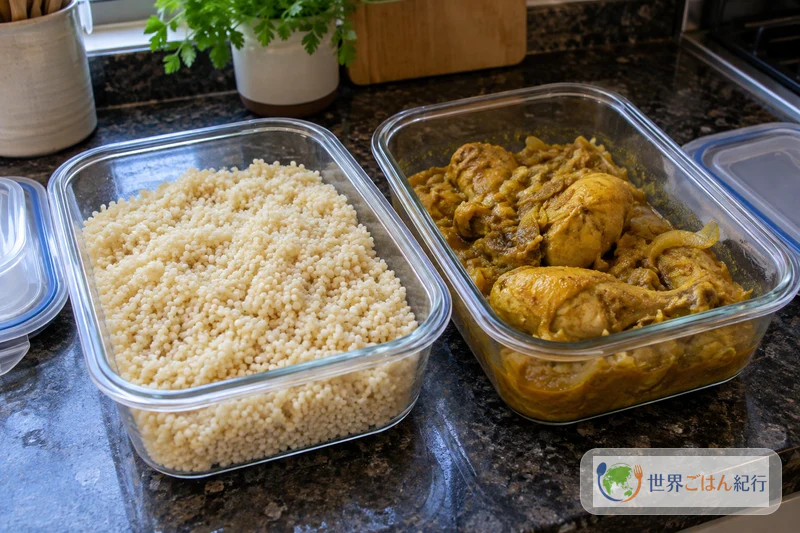
Store the chicken and couscous separately. Cool both a little, refrigerate, and finish them early. Before eating, reheat the chicken in a pot all the way through, and re-steam the couscous before assembling.
Are there ingredients to be careful about with allergies?
Couscous is made from wheat (durum wheat semolina). The almonds in the decoration can cause nut allergy, and butter is dairy. If you have allergies, leave out the almonds and replace the butter with oil.
Sources
- Taste of Maroc, “Seffa Medfouna Recipe” (Christine Benlafquih). Accessed and checked: 22 October 2026. https://tasteofmaroc.com/seffa-medfouna-recipe/
- Taste of Maroc, “How to Steam Couscous.” Accessed and checked: 22 October 2026. https://tasteofmaroc.com/how-to-steam-couscous/
- Morocco World News, “Moroccan Chicken Seffa Madfouna Recipe,” published October 2019. Accessed and checked: 22 October 2026. https://www.moroccoworldnews.com/2019/10/284911/moroccan-chicken-seffa-madfouna-recipe/
- Ministry of Health, Labour and Welfare (Japan), “Preventing Campylobacter food poisoning (Q&A).” Accessed and checked: 22 October 2026. https://www.mhlw.go.jp/stf/seisakunitsuite/bunya/kenkou_iryou/shokuhin/syokuchu/campylobacterqa.html