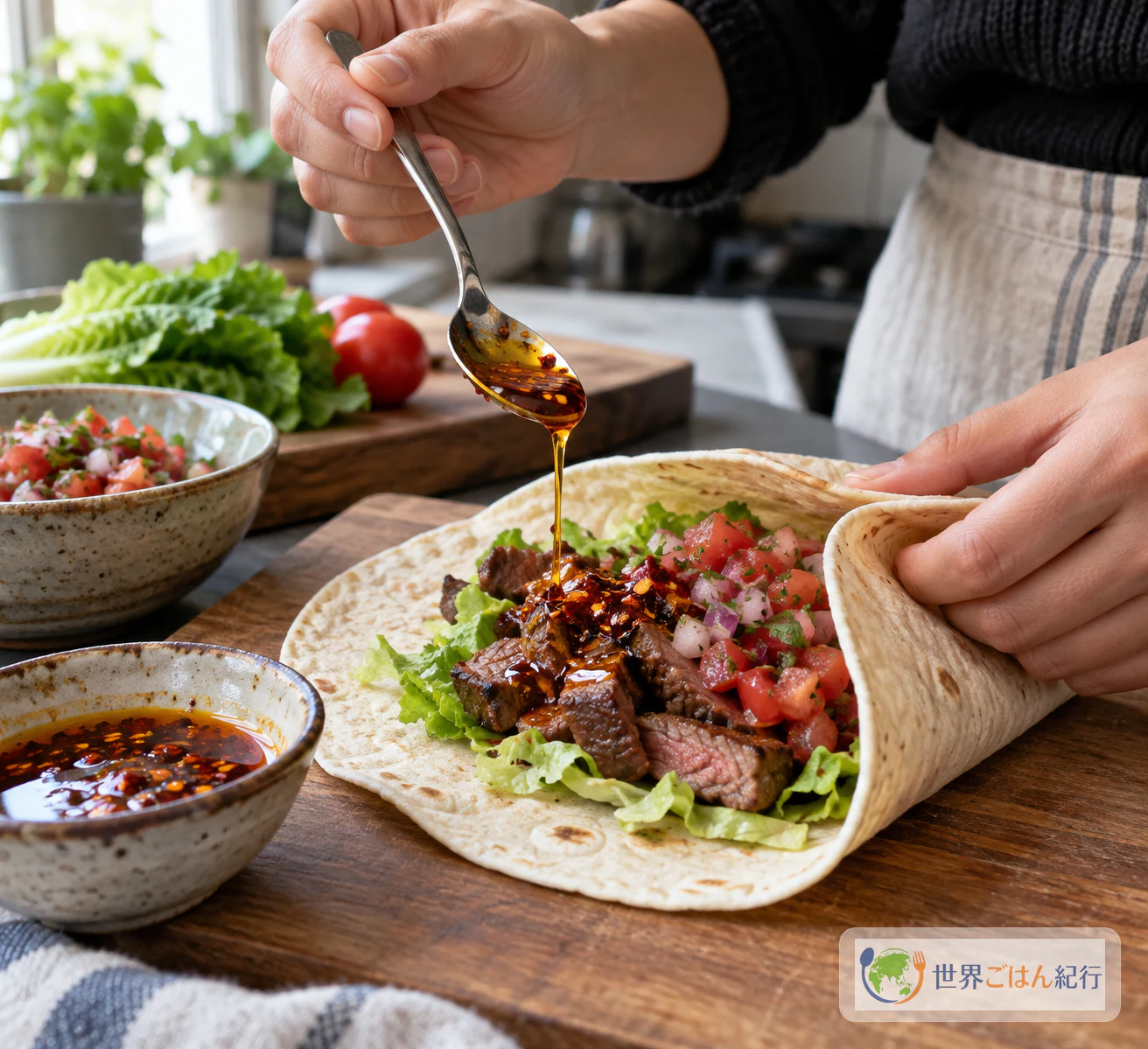
Kapana: From the Market Fire to a Home Kitchen Wrap
This is a home-style wrap made in a frying pan, not a re-creation of kapana from a market fire. It has not been kitchen-tested by Sekai Gohan, so its amounts and times are those of the published recipe.
At the Single Quarters informal market in Katutura, The Namibian describes meat cut up and cooked in front of customers, then eaten straight from the fire. In a separate 2017 report from Okongo, the same paper describes people gathering even on a rainy morning. Some buy meat and grill it themselves while others have it grilled for them. Pap is sold separately, and people eat standing up and talking.
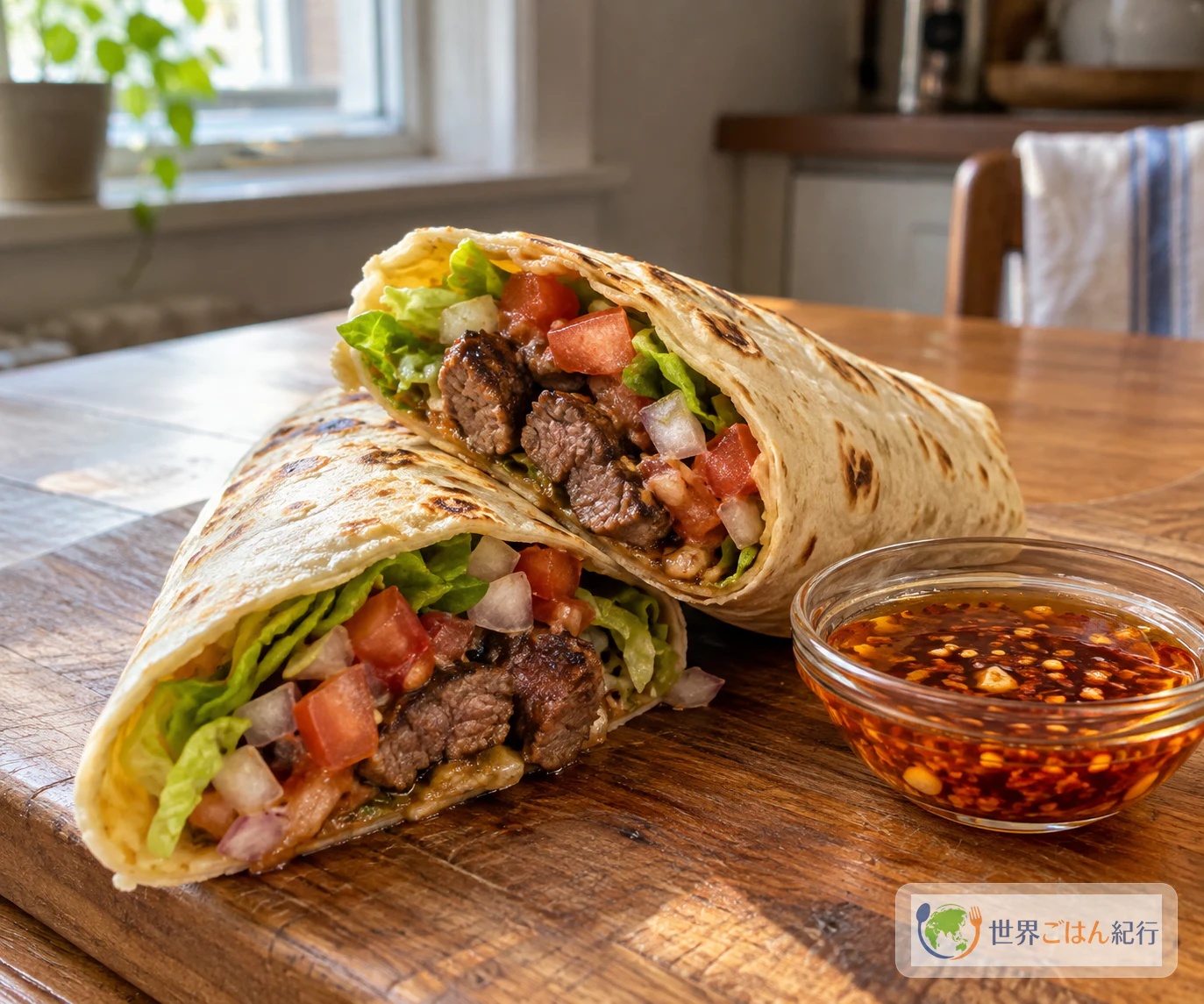
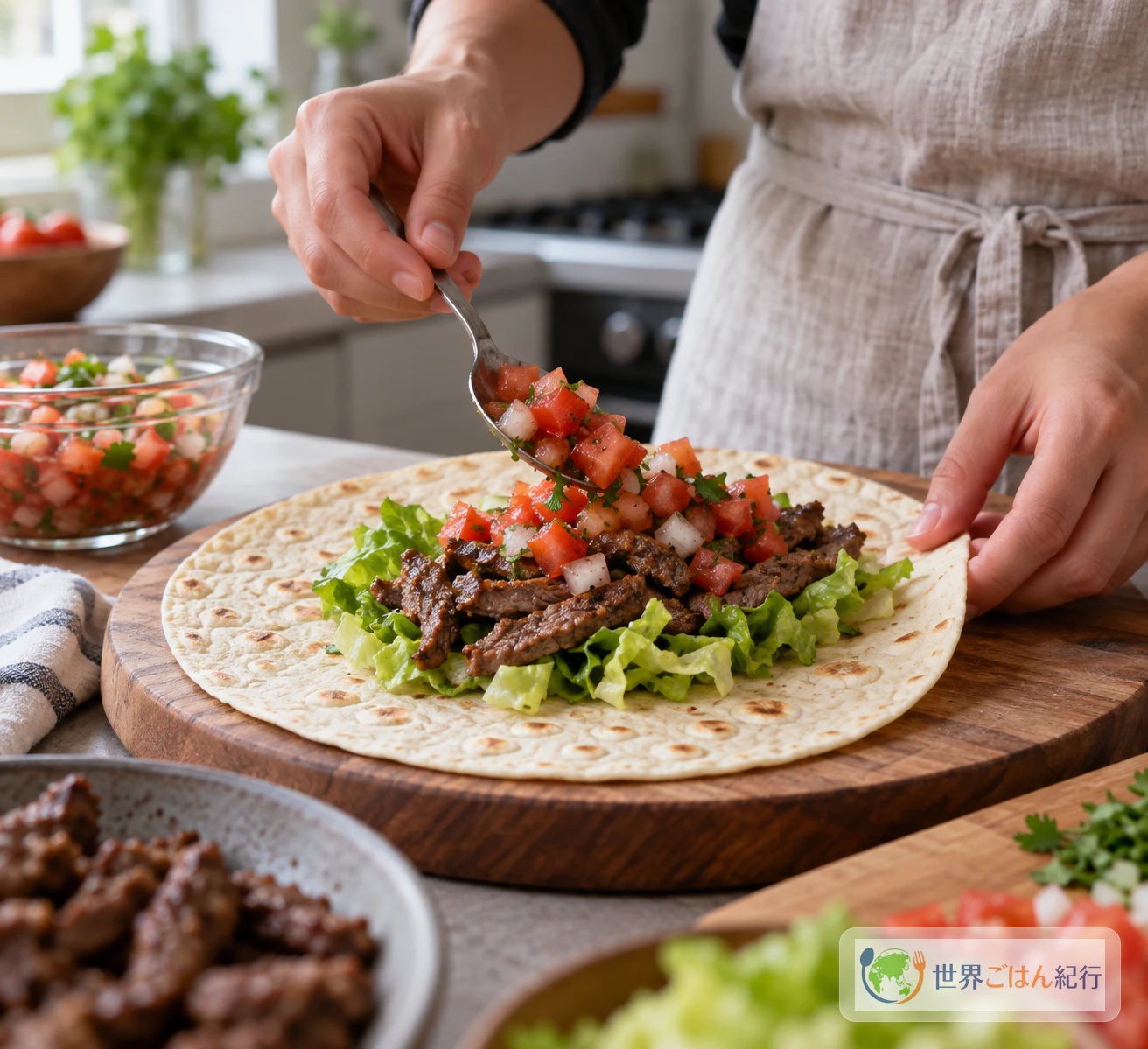
This article follows one recipe based on that food: Grace's Kapana and Salsa Wrap with Garlic Chilli Oil by Grace Nghipukuula of the Ohangwena Region, published in the Namibian Food Print by the World Food Programme. It tucks pan-fried beef strips, lettuce and a fresh tomato and onion salsa into tortillas, then adds a spoonful of garlic chilli oil. The tortilla belongs to this household recipe and should not be taken as the standard way kapana is served across Namibia.
The recipe serves 5 and lists 15 minutes of preparation and 25 minutes of cooking. Those are its published figures, not times we measured.
Three details are worth knowing before you shop:
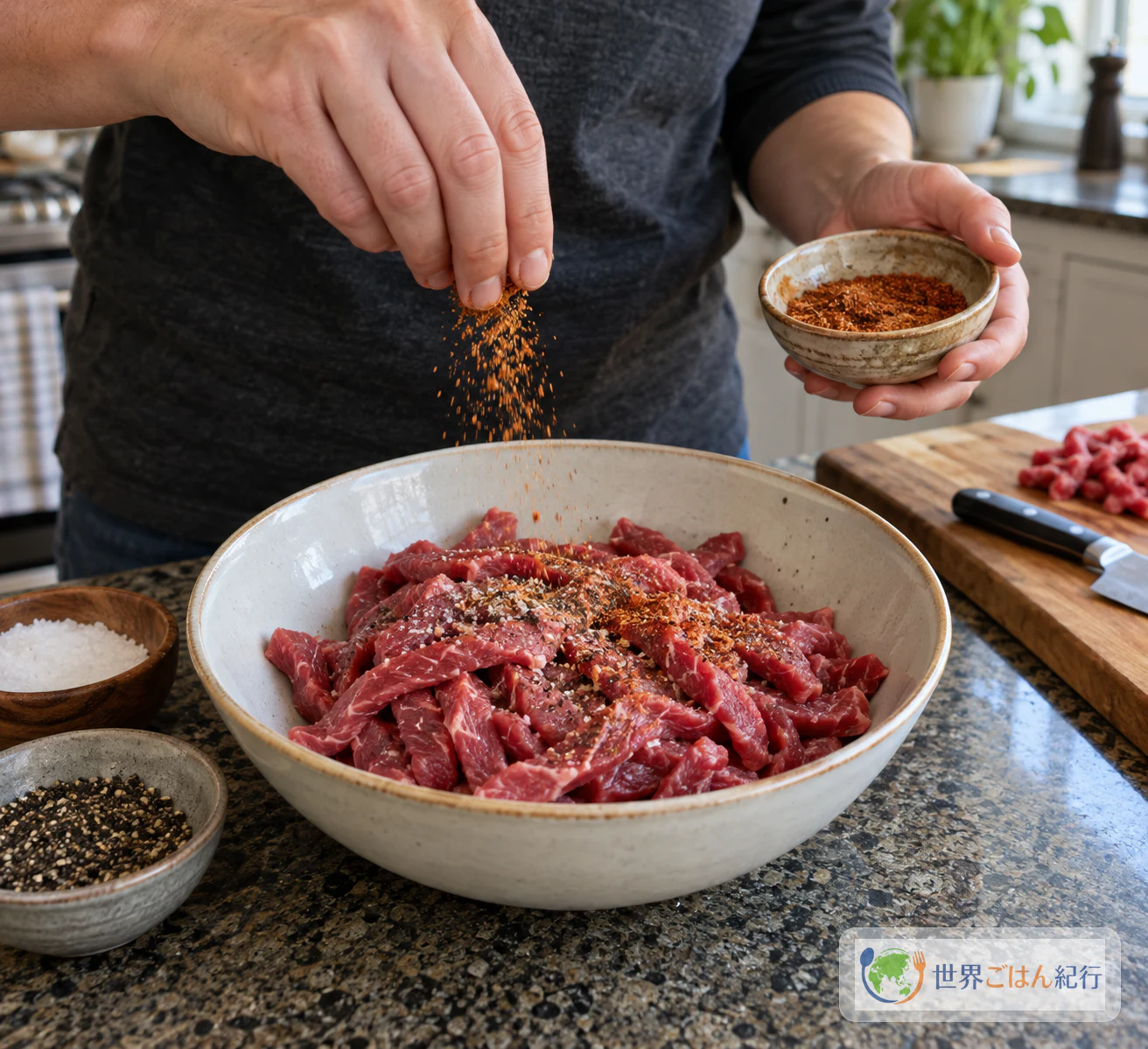
- Kapana spice: The recipe gives 2 tsp as a single total, used on both the beef and the salsa, with no split. We have not invented one, so divide it as you like within that total.
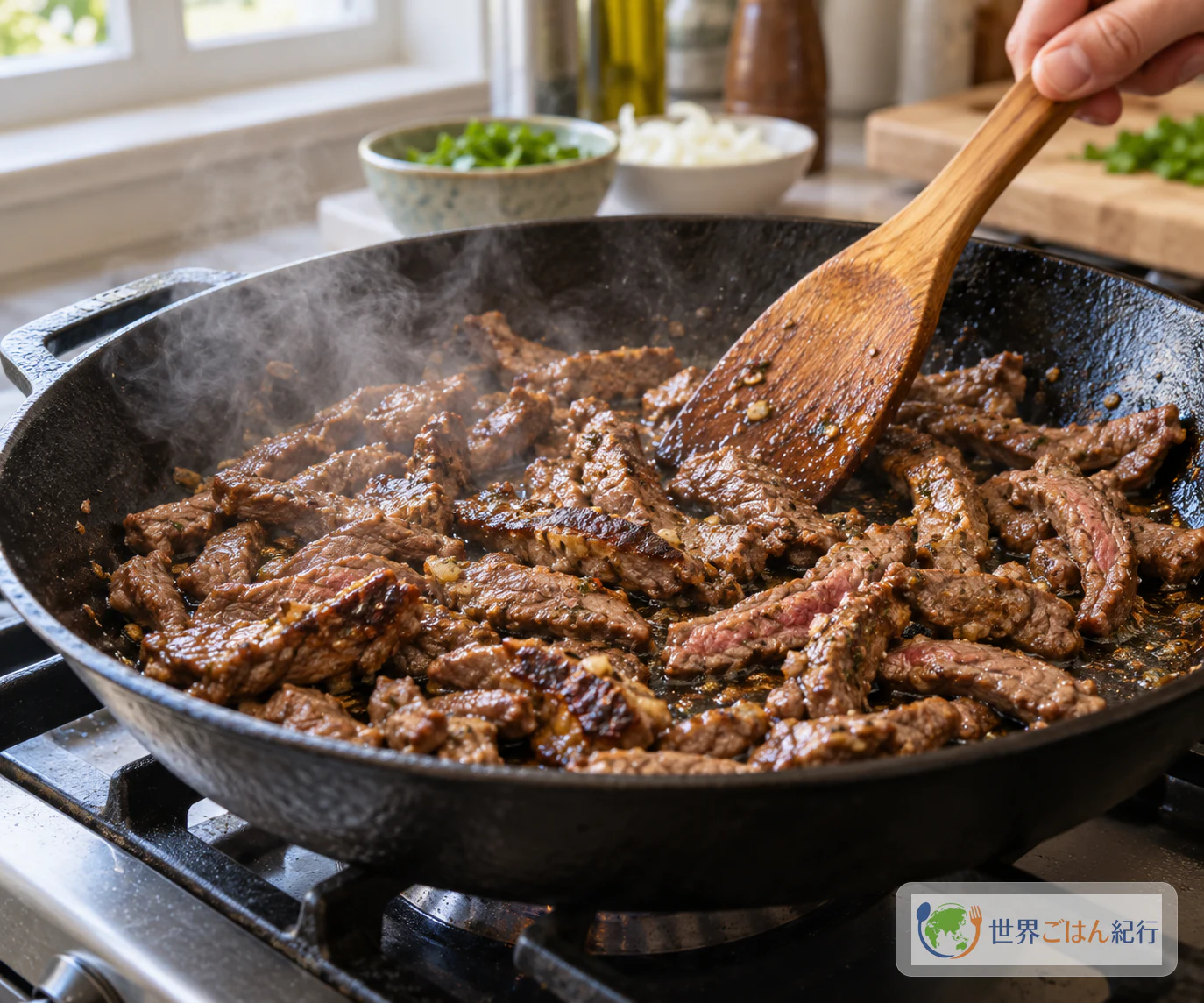
- Cooking oil: The ingredient list gives 4 tbsp "for the wrap" with no breakdown. The method uses 2 tbsp on the beef and 2 tbsp in the salsa, which matches that amount. The 1 cup of oil is separate and goes into the chilli oil.
- Beef: The recipe does not state a cut, a thickness or a finished temperature. The food-safety guidance we use is simply to cook meat well.
For more dishes from the country, see Namibian food on Sekai Gohan.
Ingredients for 5 Servings
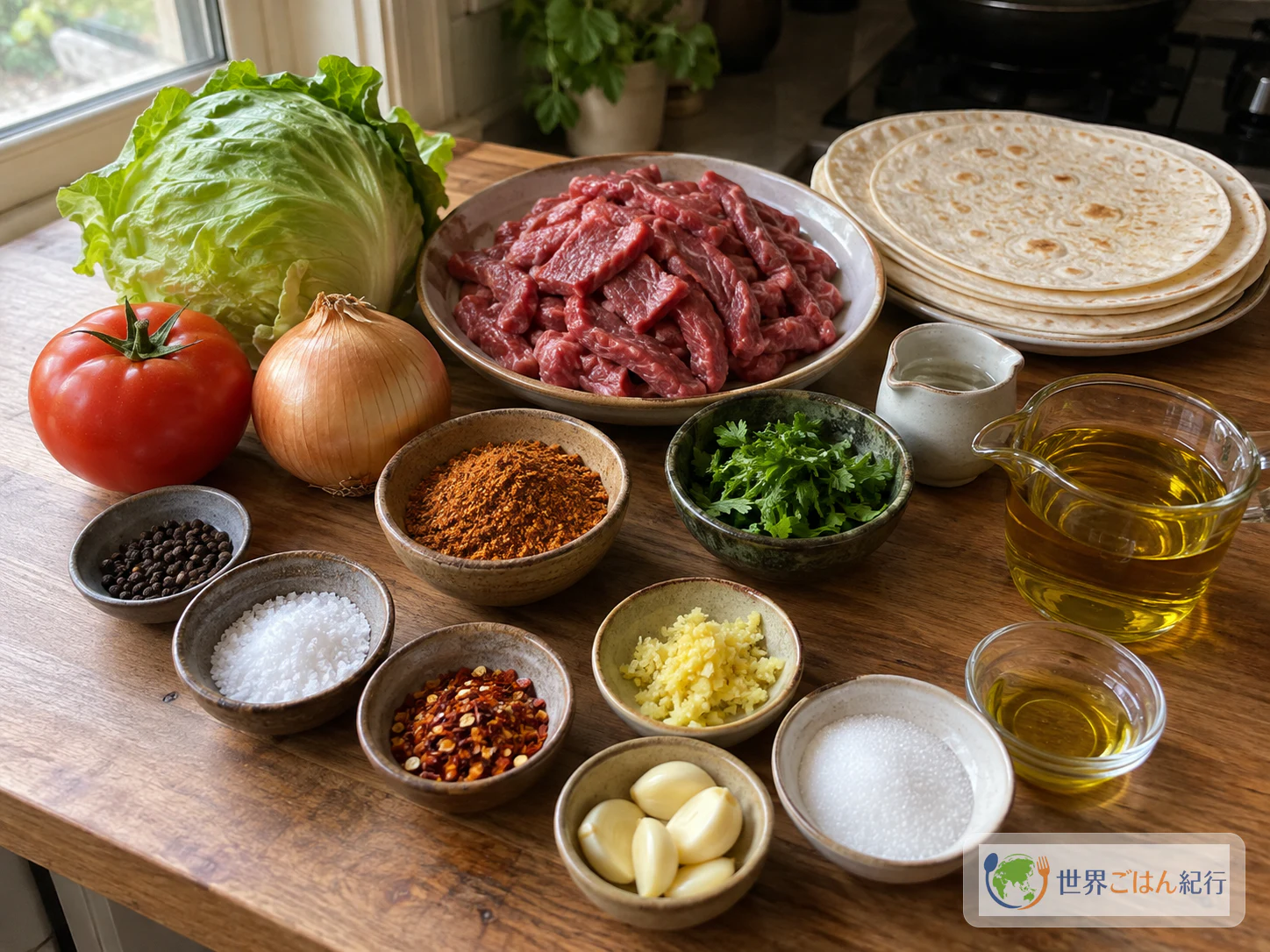
The 2 tsp of kapana spice covers both the beef and the salsa. Do not use 2 tsp on each.
Equipment
- Heatproof bowl
- Small saucepan
- Heavy frying pan
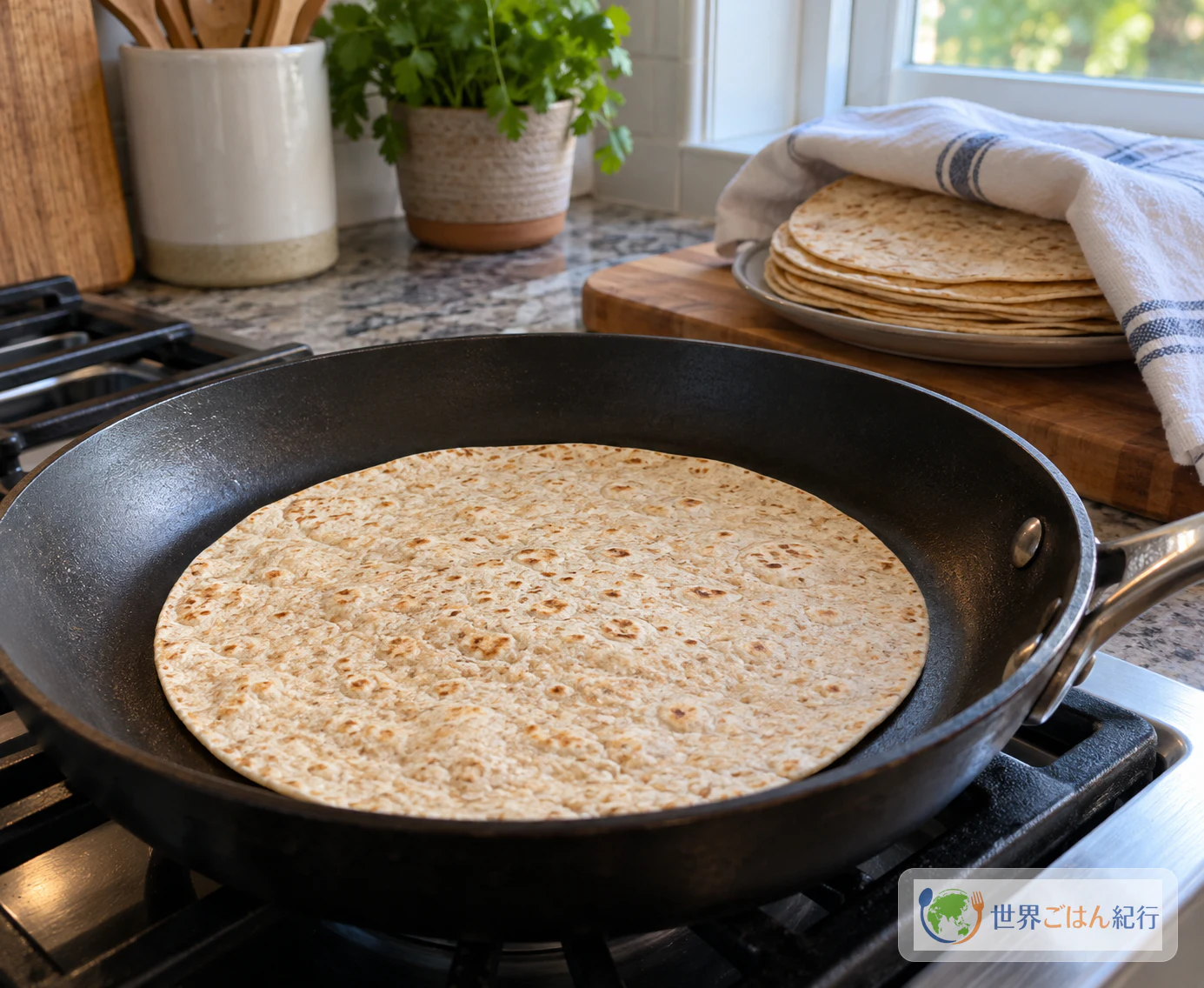
- Pan for warming the tortillas
- Separate cutting board and utensils for the raw beef
- Spoon
Choosing and Substituting
These are our suggestions and have not been tested.
- Beef: Thinly sliced beef for stir-frying or grilling is a practical choice. Fat and thickness will change how long it takes to cook.
- Kapana spice: There is no single fixed blend, and grillers have their own. If you can't find it, a general chilli spice blend can stand in, but the flavor will not be the same.
- Tortillas: Ordinary wheat tortillas are fine. Check the label if you are cooking for anyone with an allergy.
- Everything else: The lettuce, tomato, onion, white vinegar, oil, chilli flakes, ginger, garlic, parsley, sugar, salt and pepper are all regular supermarket items.
Troubleshooting
This recipe has not been kitchen-tested by us, so treat these as things to check rather than guaranteed fixes.
| What you notice | What to check | What to do |
|---|---|---|
| Beef still looks raw after 3–4 minutes | The published time does not state a thickness or heat level, and thicker strips can take longer | Keep cooking until the beef is well cooked |
| Beef looks pale rather than seared | The pan may not have been very hot | Next time, let the pan get very hot before the beef goes in |
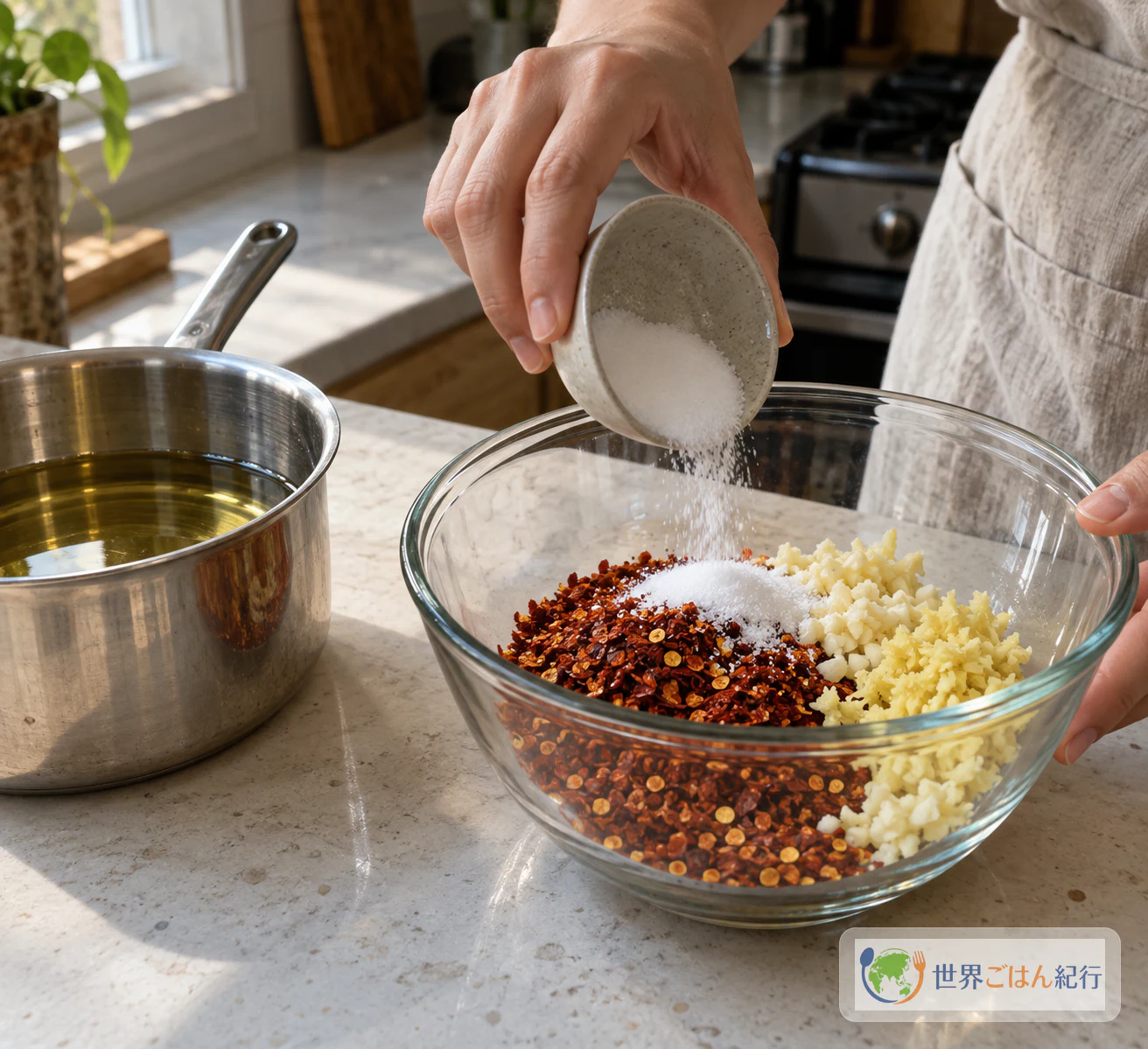
| Wrap is too hot | The chilli oil is made with 5 tbsp of chilli flakes and could be very hot | Use less on each wrap. You don't have to use all of it |
| Spice tastes too strong or too mild | Kapana spice varies from blend to blend | Start with less on the beef and salsa, adding more if needed without going over the 2 tsp total |
Variations
These are our suggestions rather than part of the published recipe, and we have not tested them.
- Skip the tortilla: UN Tourism and a Namibian embassy booklet describe kapana served with vetkoek, pap, grilled bread and relish. Serve the beef with one of these instead of wrapping it.
- Make it milder: Use fewer chilli flakes than the 5 tbsp. This changes the recipe, so treat it as your own version.
- Taste the spice first: Put a little kapana spice in a small dish and add it to taste, staying within the 2 tsp total.
- Cook over a fire: Charcoal gives a different aroma from a frying pan. We have no tested timing for this, so judge by the meat and cook it well.
- Try another cut or thickness: The texture will change, and so will the cooking time. No cut is ranked above another here.
Safety, Allergies and Leftovers
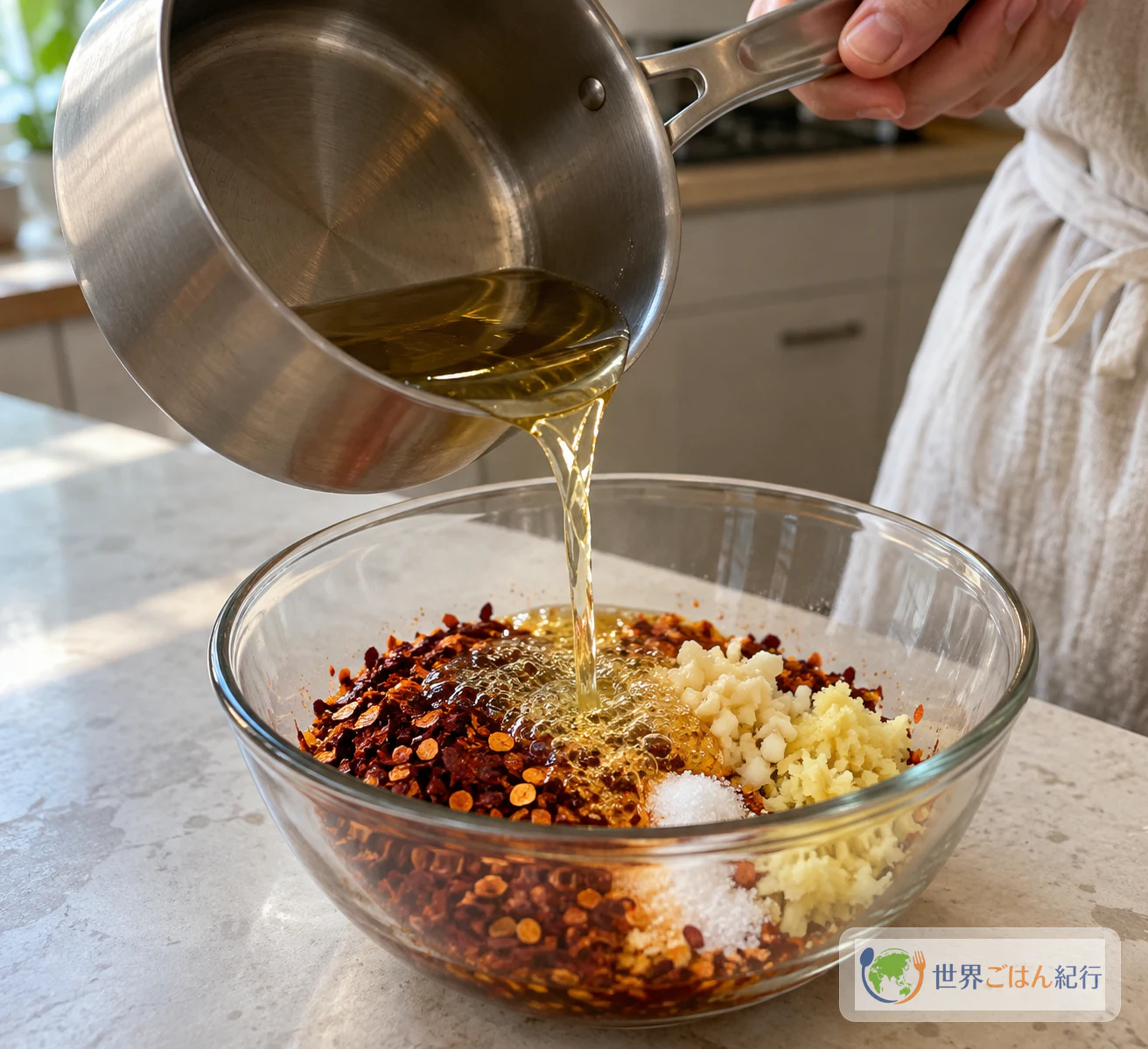
Hot oil: Use a heatproof bowl, pour away from your face and keep children away. The recipe gives no oil temperature, so we don't state one.
Raw and cooked foods: Cook the beef well, following Japan's Ministry of Health, Labour and Welfare guidance to cook meat well before eating. We also recommend keeping raw-beef tools separate from other foods and washing the lettuce, tomato, onion and parsley under running water.
Allergies: Tortillas, kapana spice and other seasonings vary by product, so check the labels.
The published recipe gives no storage or reheating guidance for the beef, salsa or chilli oil, so this article sets no keeping times. Don't take that absence as a sign that any of them will keep.
Kapana in Namibia: Market, Fire and Conversation
The Namibian connects the name to the Oshiwambo word okapana, which it explains as a broad term for fried or cooked meat. That is the newspaper's explanation rather than a settled etymology. The same article notes that some people link kapana to South Africa's shisa nyama, and we can only report that as something some people say. The sources we used do not establish where the dish began.
UN Tourism and a booklet from the Embassy of Namibia in Portugal both describe thinly sliced meat as a street food, seasoned with kapana spice and cooked over an open flame. UN Tourism calls it smoky, and its page on Namibian food also carries chef Nelson Kanangure's view that the country's cooking mixes Indigenous, German, South African and Angolan/Portuguese influences.
The Namibian's Okongo report shows that kapana can be as much a place to meet as a dish. It describes an okatomeno, which the article explains means slaughterhouse, where meat and pap are sold separately and people talk as they eat on their feet. That is one report from one town, so it doesn't speak for every market in the country.
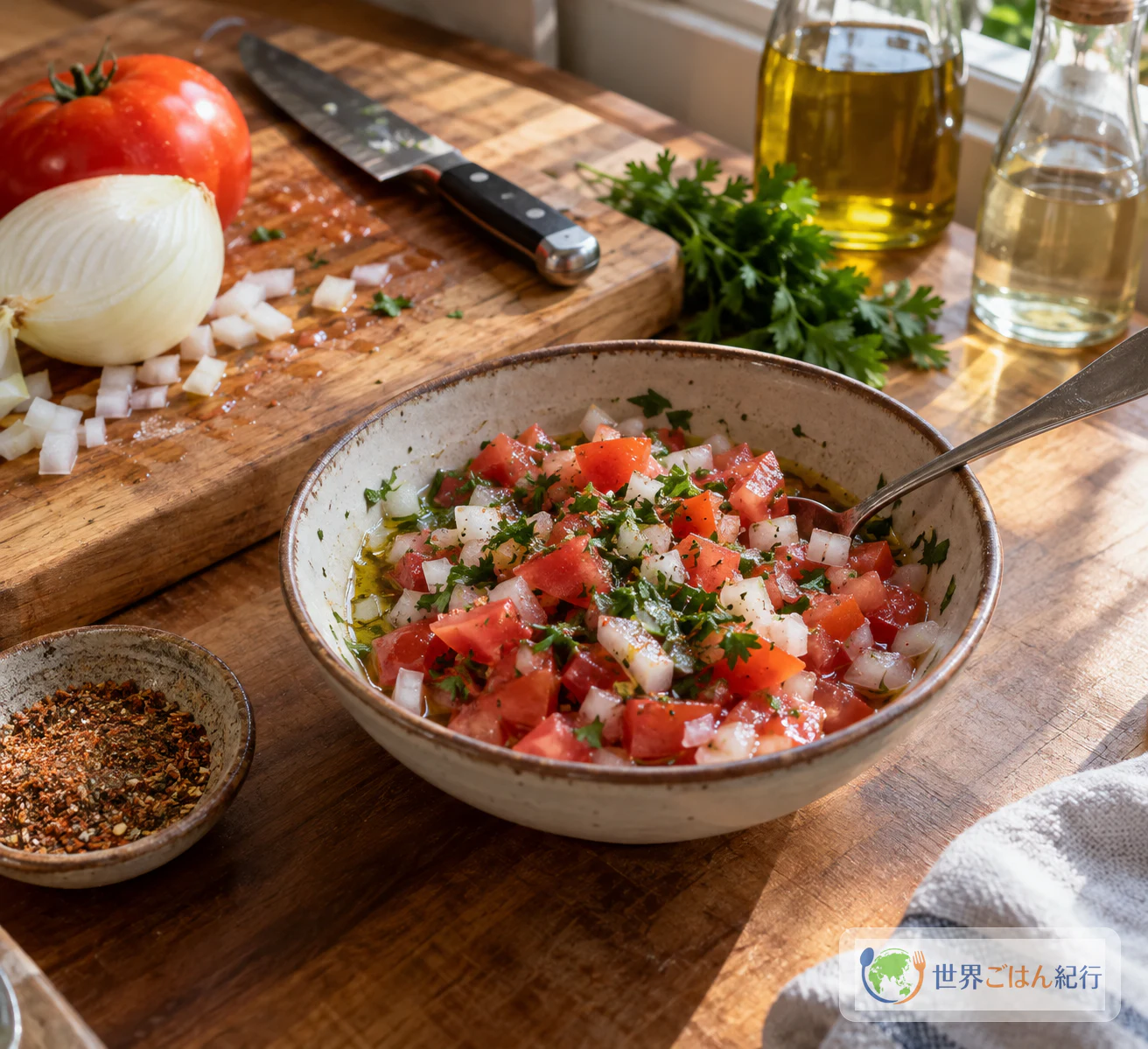
The home wrap shares some flavors with the street version. The Namibian mentions a salsa of tomato, onion, spices, vinegar and cooking oil, served with vetkoek or Owambo bread. Grace Nghipukuula's recipe keeps a similar salsa but swaps the fire for a frying pan and the bread for a tortilla.
Frequently Asked Questions
Where is kapana from?
Kapana is associated with Namibia, where The Namibian and UN Tourism describe it as market and street food. Its exact origin is not settled in the sources we used.
Is a tortilla wrap the usual way to eat kapana?
Not as far as these sources show. The tortilla is specific to this household recipe. Accounts of kapana in Namibia mention vetkoek, pap, grilled bread and relish instead.
How much kapana spice goes on the beef, and how much in the salsa?
The recipe doesn't say. It lists 2 tsp in total and uses the spice in both, so the split is your choice. We have not tested a particular split, so we don't recommend one.
Does kapana spice have a set recipe?
No single blend is given in the sources we used. The Namibian embassy booklet says grillers have their own, so products and flavors can differ.
Can I use something other than beef?
The Namibian also mentions mutton and lamb in its coverage of kapana. This recipe uses only beef strips, so its amounts and timings don't necessarily apply to other meats.
Has this recipe been tested?
Not by us. The amounts and times are as published in the Namibian Food Print, and the split of kapana spice is left for you to decide.
Sources
- Namibian Food Print / World Food Programme, "Grace's Kapana and Salsa Wrap with Garlic Chilli Oil." The recipe's author, region, ingredients, amounts, method, yield and published times. https://cdn.wfp.org/2025/namibianfoodprint/Graces_Kapana_and_Salsa_Wrap_with_Garlic_Chilli_Oil.html
- The Namibian, "From the Namibian Kitchen." The explanation of okapana, the Single Quarters market in Katutura, salsa and bread accompaniments, the reported link with shisa nyama, and other meats. https://www.namibian.com.na/from-the-namibian-kitchen/
- The Namibian, "Kapana the 'okatomeno' way." The 2017 report on buying, grilling and eating meat with pap in Okongo. https://www.namibian.com.na/kapana-the-okatomeno-way/
- UN Tourism, "Namibia, Nelson Kanangure, Namibian skewer." The description of kapana as a street food, its seasoning, open-fire cooking and accompaniments, and the chef's view of influences on Namibian food. https://www.untourism.int/africa/african-gastronomy/namibia
- Embassy of Namibia in Portugal, "Uniquely Namibian Food: Top 5 Local Bites to Taste." The description of kapana as a street food, its accompaniments, and grillers' own spice blends. https://consulnamib.pt/wp-content/uploads/2020/11/Gastronomy-booklet-final.pdf
- Ministry of Health, Labour and Welfare, Japan, "食中毒を防ぐ" (Preventing Food Poisoning). The guidance to cook meat well before eating. https://www.mhlw.go.jp/stf/seisakunitsuite/bunya/kenkou_iryou/shokuhin/syokuchu/index.html