
Bringing a red sauce to white beans and corn kernels
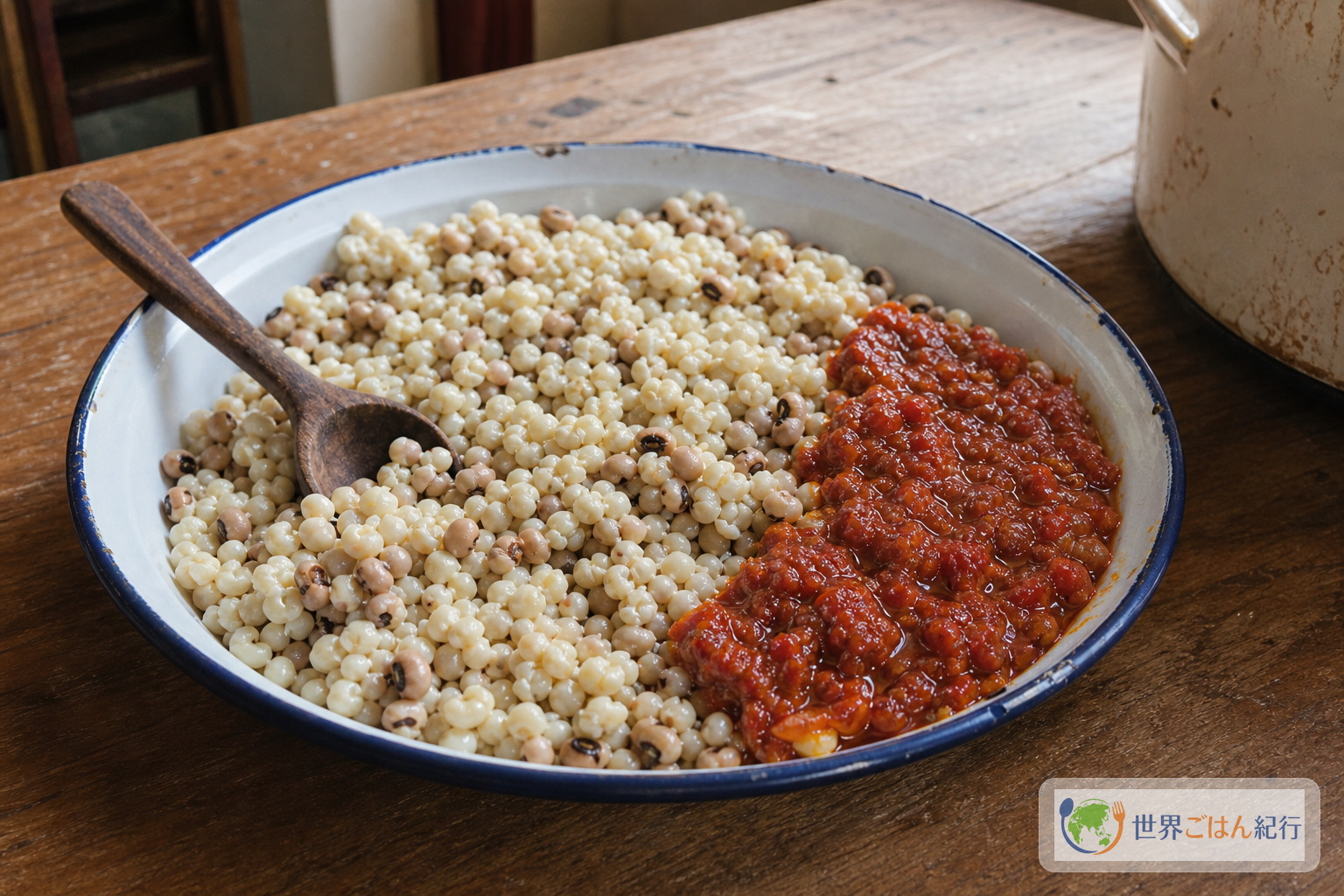
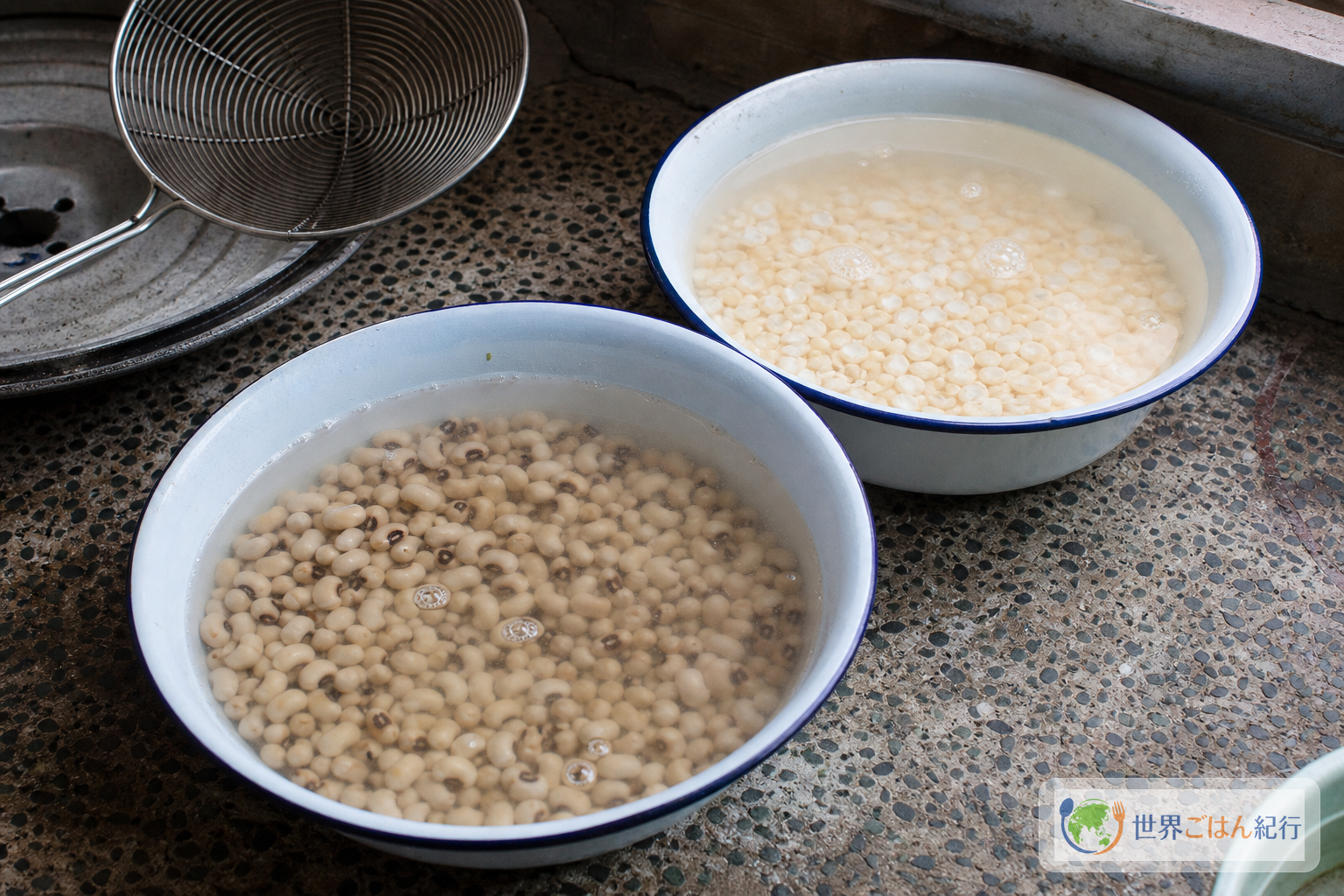
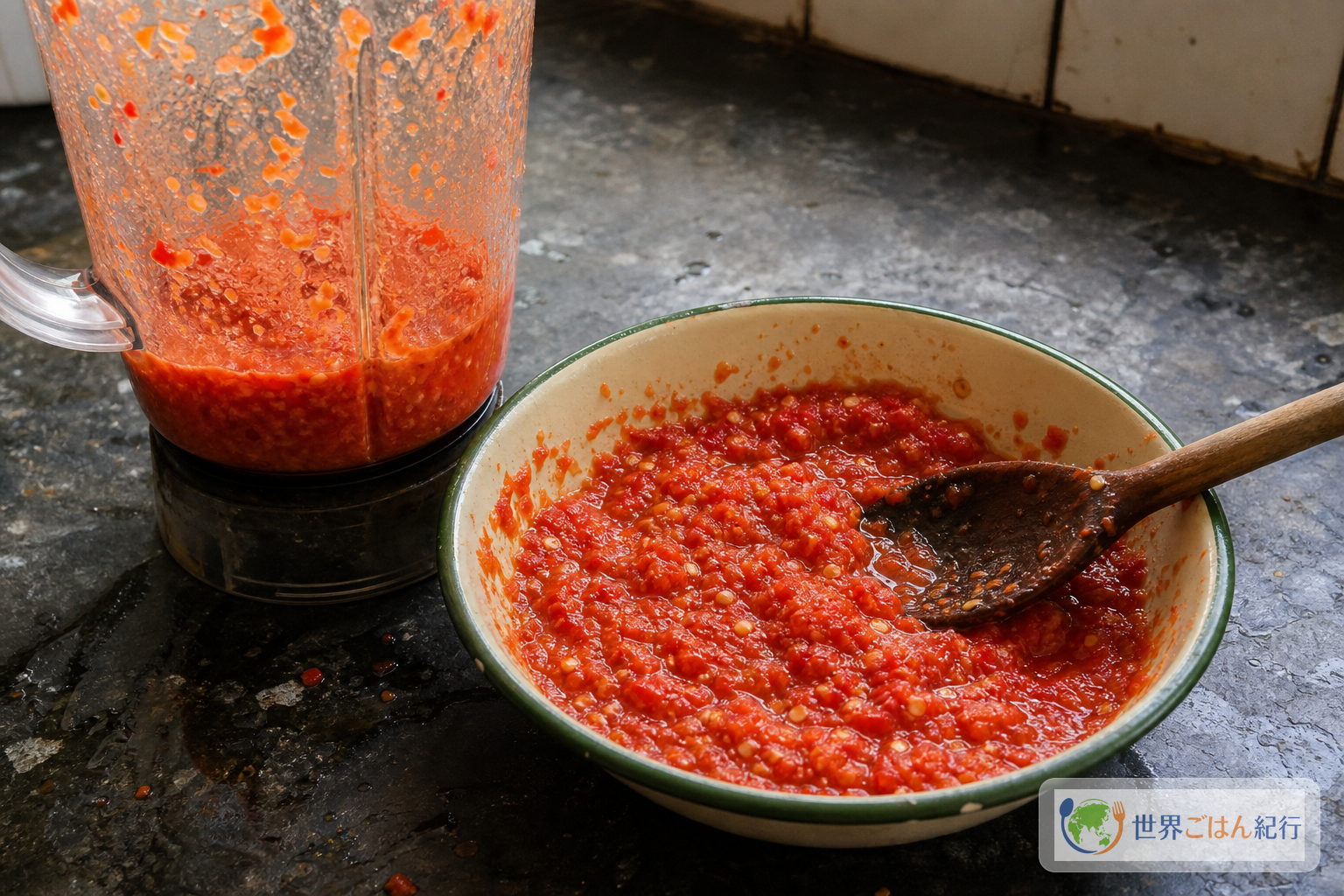
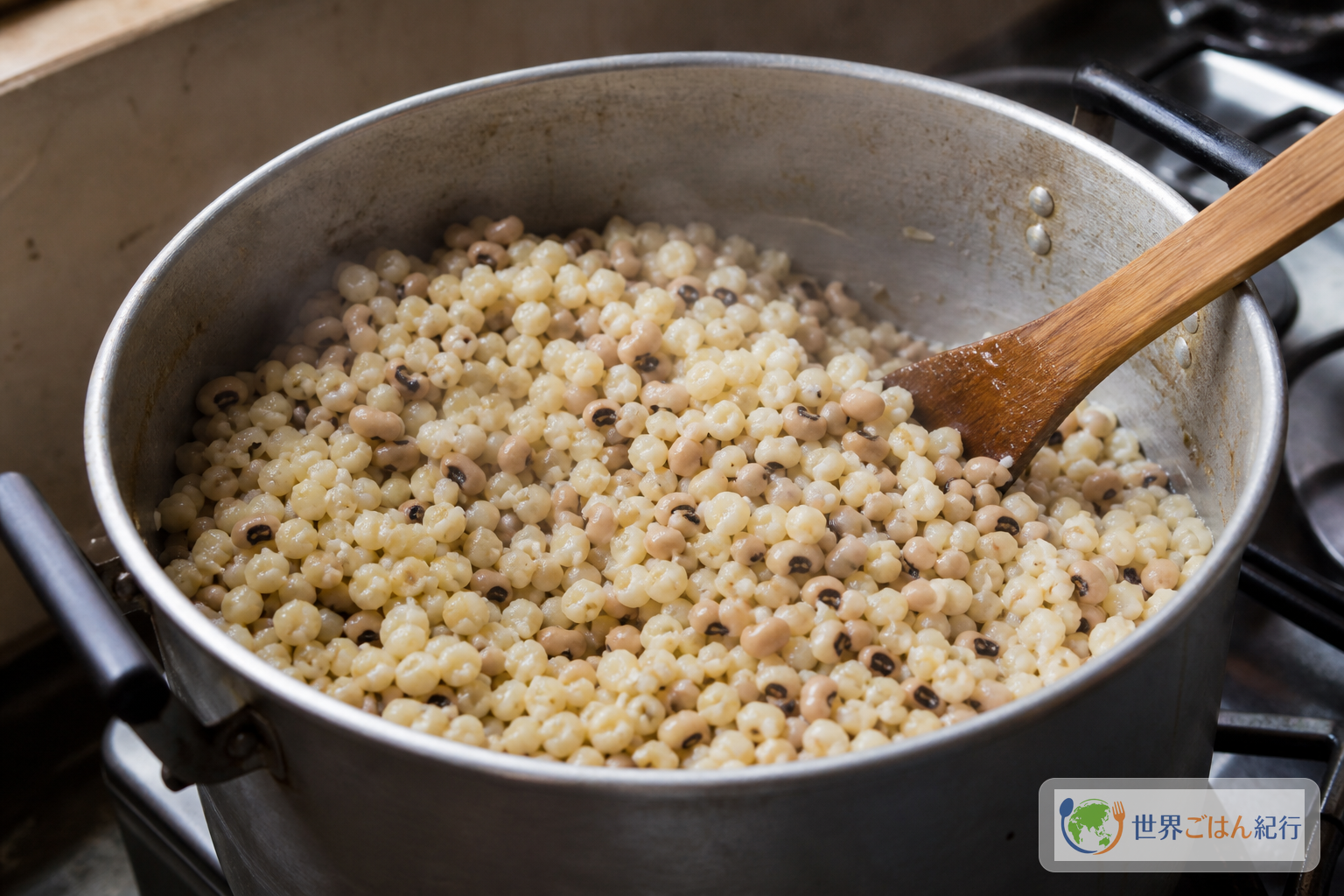
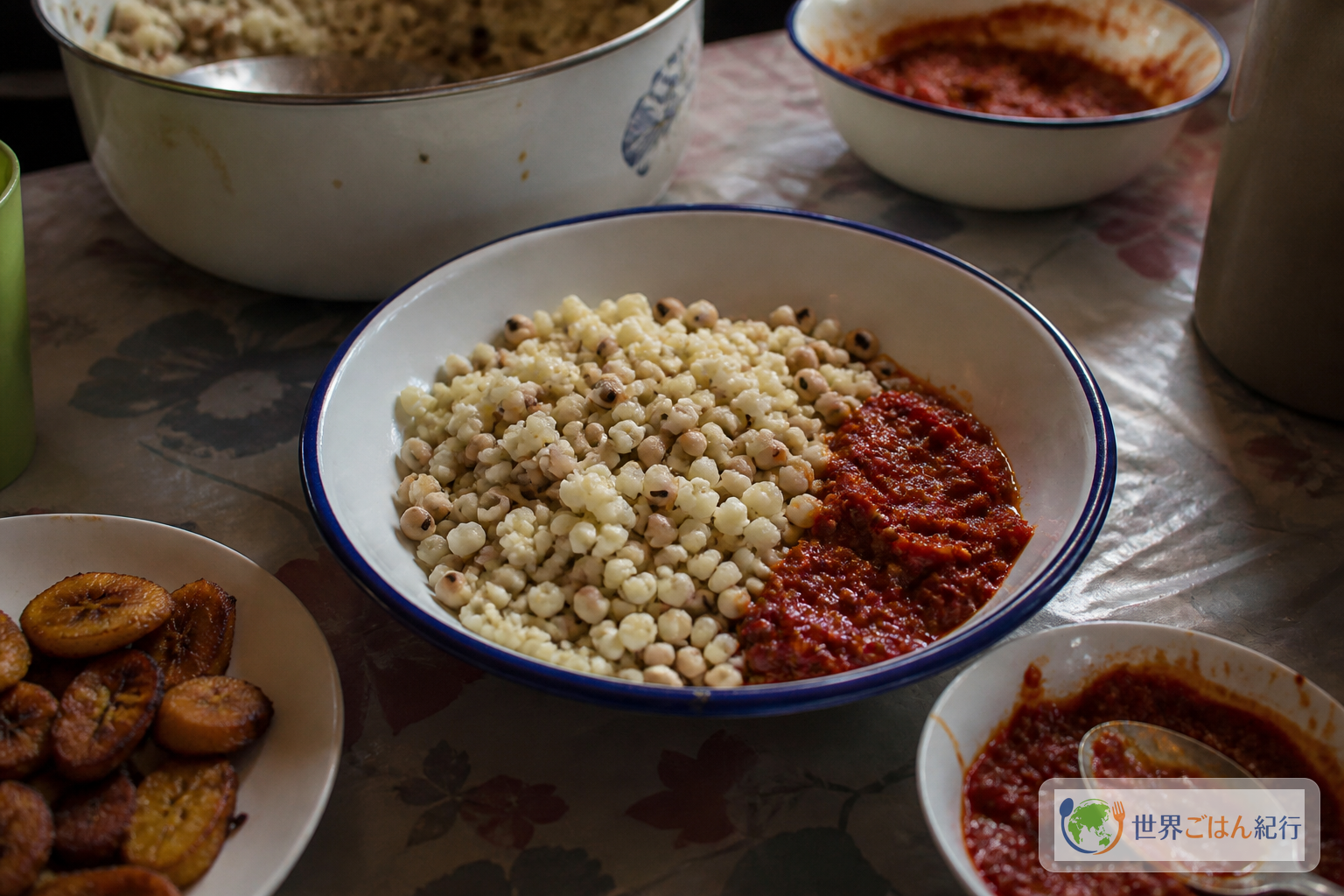
Egbo is not a dish whose aroma bursts out when you open the pot. You rehydrate dried corn, boil black-eyed peas, and heap the pale kernels on a plate. Then you set red ata dindin beside it, and it suddenly takes on the look of a southwest Nigerian table.
Egbo (Egbo) is a dish of mature corn and beans eaten mainly in Yoruba country. In English it is sometimes described as cornmeal porridge, but if you imagine corn porridge as you may know it, it is a little different. It is not a sweet corn soup; it is a simple plate that combines dried corn whose kernels loosen when you bite them with mealy black-eyed peas, and is eaten with a hot pepper sauce.
The hard part elsewhere is the corn. Sweet canned corn will not come close. Using dried white corn, hominy, corn for pozole, or unsweetened canned hominy from an international grocer keeps the chew of the kernels. The black-eyed peas, red palm oil, and Scotch bonnet-style heat can also be reused in Ghana's red red and Nigerian akara (in Japanese), so once you have them, your West African pantry widens.
This article makes the basic form with dried corn and dried black-eyed peas rehydrated overnight. It covers a shortcut with canned hominy for hurried days, how to bring the heat down for a family, how far to go in making ata dindin, and storage for leftovers, all organized around practical shopping.
Egbo is a dish introduced in the context of the Yoruba of southwest Nigeria. It refers to the white staple part combining corn and beans, and it is often served with a red pepper sauce, ata dindin or obe ata.
Ingredients (serves 4): think of the corn kernels and the black-eyed peas separately
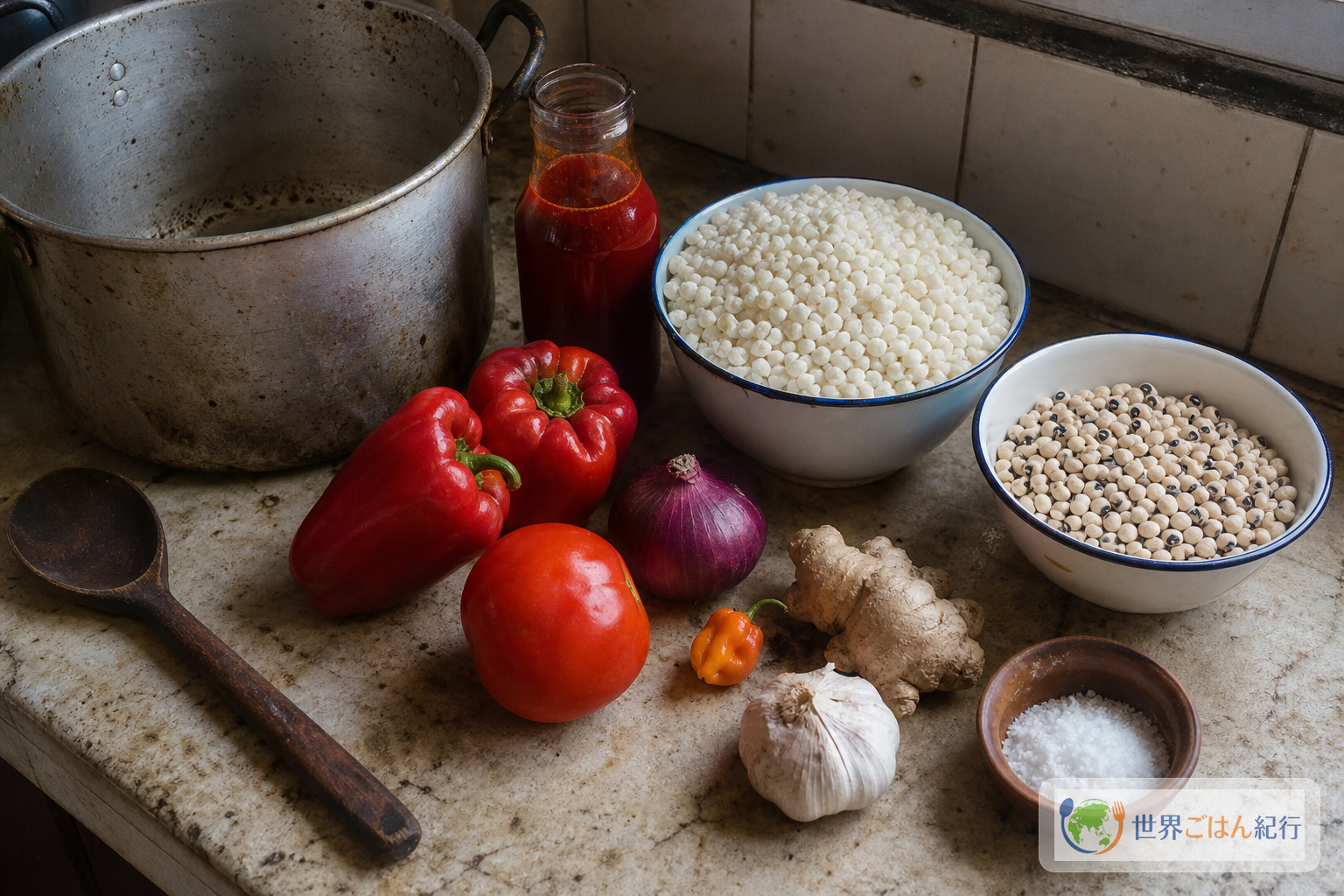
This is a light lunch for 4, or a dinner with sides. Dried corn varies in hardness, so follow the label of the product you bought if it has one. Here we assume dried white corn or hominy is soaked overnight and then boiled.
Black-eyed peas are legumes. If you use ground dried shrimp, check for shellfish, and if you add bouillon, check the labels for wheat, dairy, and soy. Scotch bonnet and habanero are strongly hot even in small amounts, so for the first time use 1/4 or less, and it is safer to add heat at the table.
Shopping: do not escape to ordinary canned corn
What is worth buying for egbo is not meat or vegetables but dried corn, black-eyed peas, red palm oil, and aromatic heat. Dried corn goes by different names in different shops. Look for labels such as white corn, hominy, pozole, or giant corn, and choose kernels meant to be boiled and eaten, not sugared or snack kernels.
| Ingredient in question | Why to protect it | Realistic choice |
|---|---|---|
| Corn | Decides the chew of egbo | Dried white corn, dried hominy, unsweetened canned hominy |
| Black-eyed peas | The lightness of the grain and the beany aroma | Black-eyed peas. Kidney beans or soybeans make it heavy |
| Red palm oil | The color of ata dindin and its West African aroma | Use only 2 tbsp, and combine with canola oil if heavy |
| Heat | The outline of the sauce | Scotch bonnet, habanero, or a small amount of a hot sauce |
Black-eyed peas can be reused not only in egbo but in akara (in Japanese), ekuru (in Japanese), and Ghana's waakye (in Japanese). If you buy 1 kg of dried beans, soaking them and freezing in small portions makes the next West African dish much easier.
Red palm oil is not an oil to use in large amounts for health purposes. In egbo you use only 2 tbsp to bring up the aroma of the red sauce. Leftovers can go to red red or egusi soup.
On days you cannot buy fresh Scotch bonnet, keeping the pot mild and adding a few drops of hot sauce at the table is less likely to fail. Keeping a bottle of sauce on hand also works for pelau (in Japanese: /recipes/south-america/trinidad/pelau) and Caribbean dishes.
Method: hard kernels first, the red sauce separately
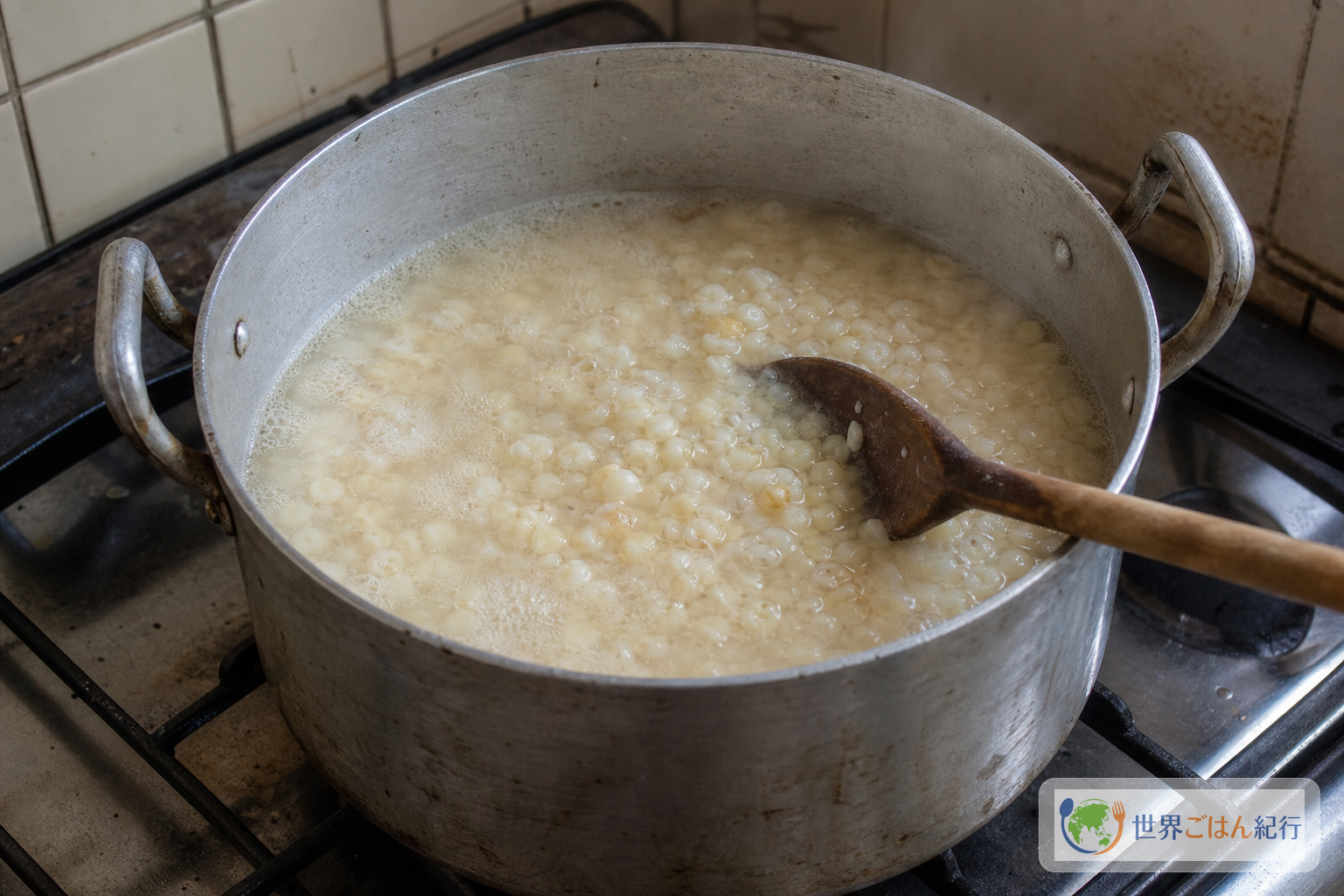
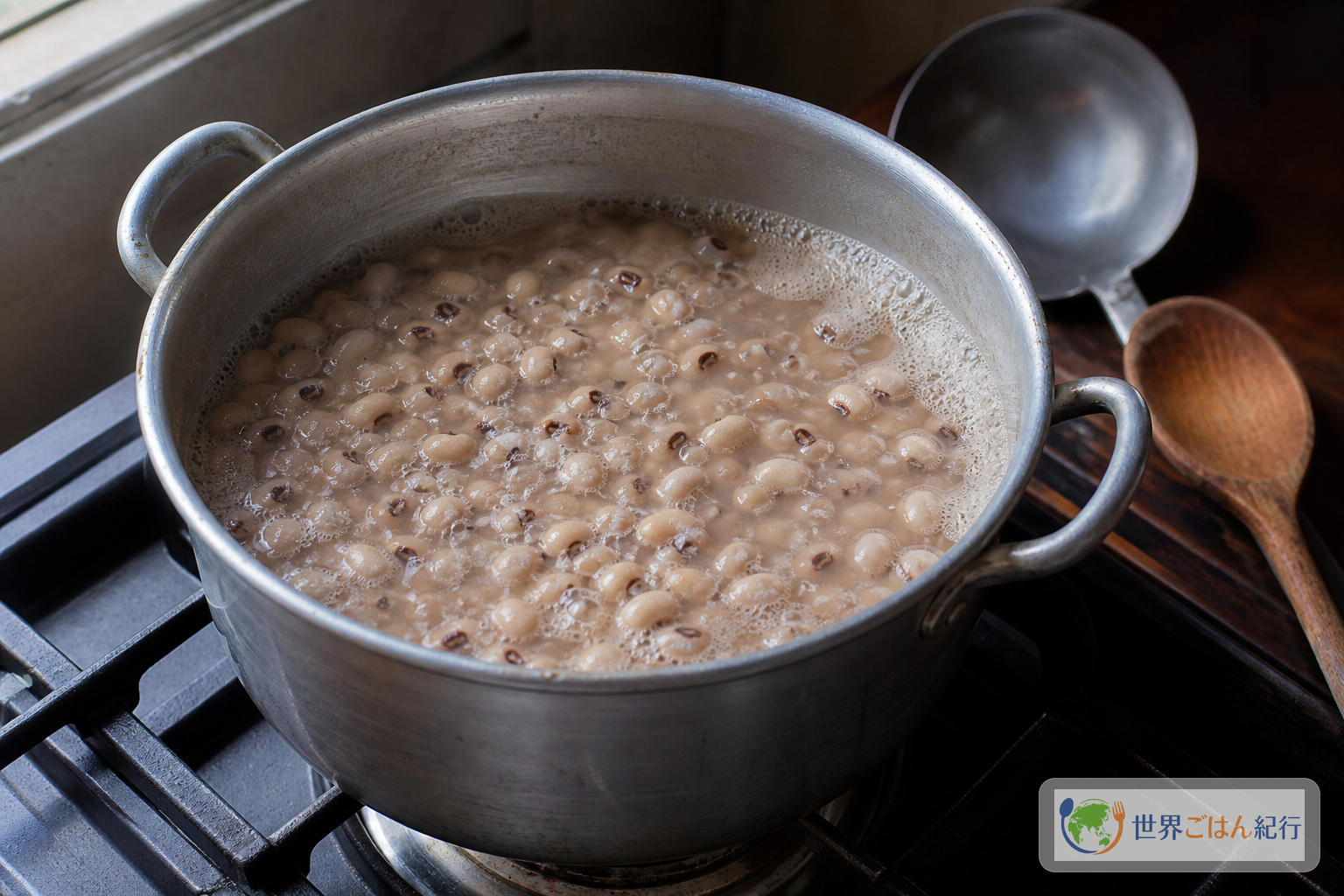
Egbo is put together after the corn, the beans, and the sauce are each prepared separately. If everything goes into one pot, the failure is that the corn stays hard while only the beans break down, or the sauce turns watery. Thinking of it as a dish where you bite white kernels and eat them with a red sauce makes it easier to decide the heat.
If you use unsweetened canned hominy, prepare 500 g after draining and skip steps 1 and 2. If you also use canned black-eyed peas, use 280 g after draining and you can skip step 3 as well. In that case add 50 ml water in step 6 and warm over low heat for only 5 minutes. Adjust the salt at the end according to the salt in the cans.
What to keep and what to change in a home kitchen
Because egbo has few ingredients, the choice of substitutes easily turns it into a different dish. The order to protect is the chew of the corn, the black-eyed peas, the red hot sauce, and the red palm oil. On the other hand, the accompaniments and the savor from seafood can be adjusted to the household.
| Point of judgment | Why to protect it | How far you can change it |
|---|---|---|
| Do not use sweet canned corn | The chew disappears and it becomes a sweet side dish | Unsweetened canned hominy is fine. Drain it and warm briefly |
| Boil the corn and beans separately | Their hardness differs, and cooking together makes one of them break down | With canned goods on both, just combine them at the end |
| Use black-eyed peas | Thin skins, and their weight matches the corn kernels | Chickpeas run firmer, kidney beans sweeter |
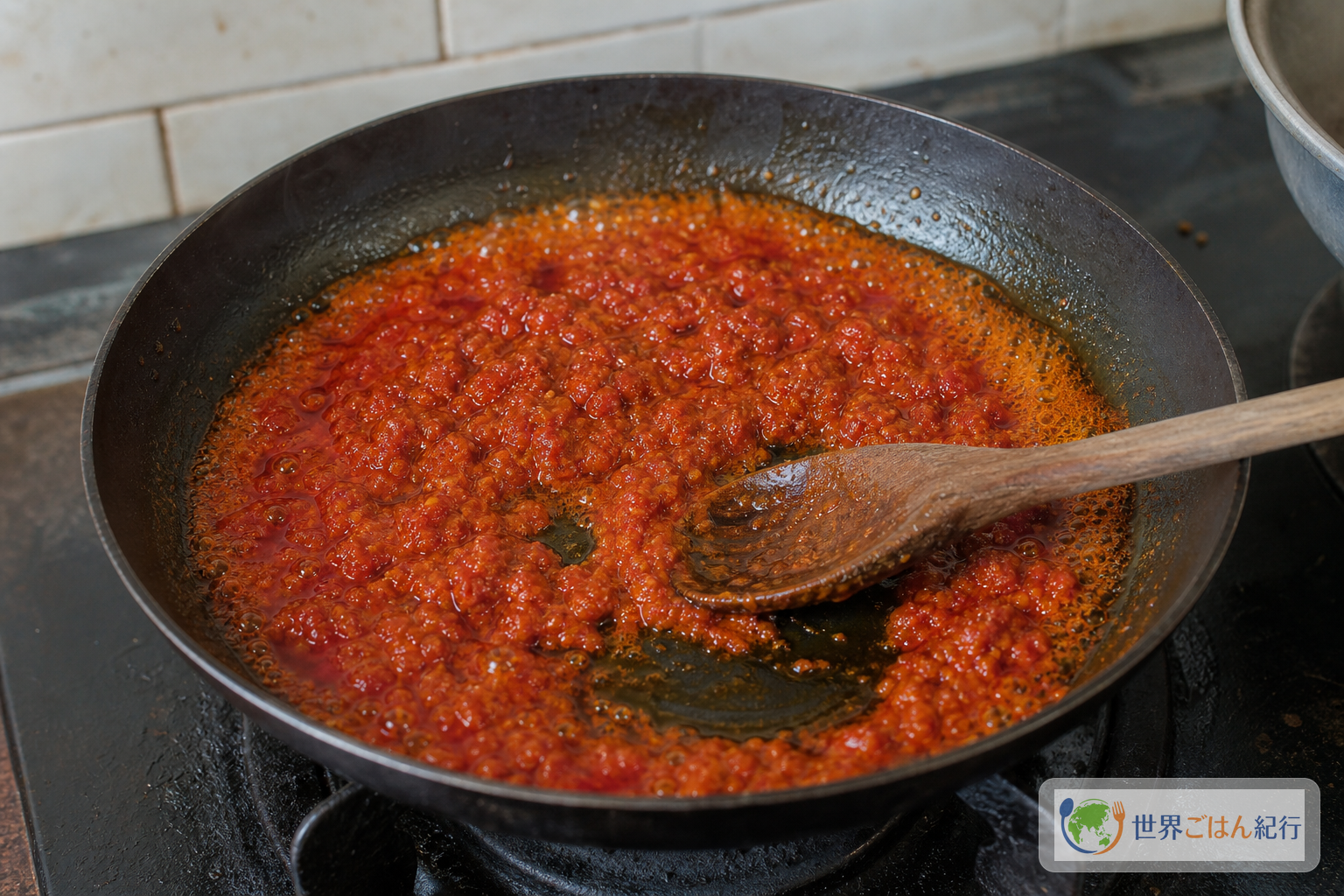
| Cook the red sauce down | If watery it does not cling to the kernels and the flavor is thin | With canned tomatoes, cook longer and check the track of the spoon |
| Heat can be added later | You cannot take back too much chile | For a family, add hot sauce at the table |
The most realistic combination elsewhere is dried black-eyed peas with unsweetened canned hominy. Just removing the soaking of the corn and the long first boil brings it from a weekend dish closer to a weekday dinner. However, avoid sweet canned corn. The kernels look similar, but the direction of flavor is too different.
Whether to add the savor of seafood is a place of hesitation at first. English-language home recipes include some that add dried shrimp, fish powder, or bouillon. The first time, make it without, and on the second time adding 1 tsp ground dried shrimp to the sauce brings savor behind the red palm oil and chile. At a table with a shellfish allergy, a very small amount of ground bonito in place of dried shrimp is safer.
How it is eaten in southwest Nigeria
Egbo is easier to understand as a filling everyday food than as a celebratory platter. Looking at only the corn and beans it is a quiet plate, but with red ata dindin alongside, heat, oil, and the aroma of sweet bell pepper are added. Because it combines a grain and a bean, it satisfies even without meat.
Among Nigerian dishes, akara (in Japanese) is closer to a breakfast food in which black-eyed peas are mashed and fried, ekuru (in Japanese) is a steamed dish of white beans, and jollof rice is a one-pot of rice and tomato. Egbo has the chew of grain forward more than any of them. It is less showy, but it is a plate in which you can see the wisdom of rehydrating dry goods in the kitchen and turning them into a meal.
As a menu, centered on egbo and ata dindin, fried plantain, boiled egg, and salted cucumber on the side make it easy to eat. On days you have made a strongly hot sauce, rather than plain yogurt, having cold water, thin lemon water, or unsweetened tea ready keeps it from feeling heavy even as oil and heat continue.
When placing it on your own table, it is easiest to build by thinking of the white kernels as the staple, the red sauce as the main flavor, and the accompaniments as palate cleansers. Piling egbo alone is monotonous, and too much sauce brings heat and oil forward. At first, keep the sauce to about a quarter of the plate and add as you eat.
| How to set the table | Suited to | Quantity guide |
|---|---|---|
| Egbo and ata dindin only | A light lunch, a day to savor dried goods | About 250 g egbo per person, 3 tbsp sauce |
| Add plantain and boiled egg | A day you want a satisfying dinner | 1/2 plantain, 1/2 egg |
| Add stir-fried greens or cucumber | A day you want to lighten the heat and oil | One small dish of side |
| A small portion beside jollof rice | A day for a Nigerian menu | Keep the egbo to about 100 g per person |
Where it is easy to go wrong
The failures of egbo concentrate on handling the kernels more than on seasoning. The corn is hard, the beans break down, the sauce is watery. Avoid these three and even a plain-looking plate is easy to eat.
| Problem | Cause | Recovery |
|---|---|---|
| Corn is hard | Under-soaked, not boiled long enough, or too little water | Add boiling water and cook 15 more minutes over medium-low heat. Canned hominy can shorten this |
| Beans break down | Kept boiling hard, or boiled too long in the same pot as the corn | Mix the broken beans into the sauce, and boil them separately next time |
| Sauce is watery | The pepper base was not cooked down | Another 5 minutes over medium heat. Cook off water until the spoon's track stays for a moment |
| Too hot | Too much chile at the start | Add more egbo to dilute it. Serve with a side that is not oily rather than yogurt |
| Greasy overall | Too much red palm oil, or too much oil floating on the sauce | Skim off about 2 tsp of oil from the surface, and next time use half canola oil |
Dried corn is an ingredient with large differences between products. Some soften in 45 minutes and others take more than an hour. Do not decide by the clock alone; eat one kernel and check whether the powdery quality in the center has gone. If you rush here, the red sauce may be delicious but the hardness remains with every bite.
Storage and reheating
Egbo and ata dindin keep better the next day if stored separately. Left mixed, the corn absorbs oil and moisture and the whole thing gets heavy. Once the heat is off, divide into shallow containers within 2 hours and refrigerate.
| What you store | Refrigerator | Freezer | Reheating |
|---|---|---|---|
| Egbo itself | 3 days | 2 weeks | Sprinkle 2 tsp water, microwave at 600 W for 2 minutes per serving |
| Ata dindin | 4 days | 3 weeks | In a small pot over low heat for 3 minutes, or microwave at 600 W for 40 seconds |
| Mixed together | 2 days | 1 week | It dries out easily, so add water and bring it back over low heat |
Frozen egbo turns a little dry after thawing. Move it to a pot, add 2 to 3 tbsp water or bean cooking liquid, and warm over low heat for about 5 minutes, and the kernels recover. Warm the sauce separately and add it just before eating. The heat mellows during storage but the oil aroma remains, so avoiding strong heat when reheating makes it easier to eat.
Frequently asked questions
Can I make it with canned sweet corn?
I do not recommend it. Sweet canned kernel corn is soft, has the sweetness of sugar, and moves away from the chew of egbo. To shorten it with canned goods, choose unsweetened canned hominy, canned pozole corn, or a white corn of the type that is boiled and eaten.
What can substitute if I have no black-eyed peas?
The closest are cowpea-type beans. Chickpeas also give a kernel texture, but the aroma leans Middle Eastern and the lightness with the corn changes a little. Soybeans have a firm skin and are heavy, and kidney beans tend to be sweet, so neither suits a first substitution well.
Can I eat it without ata dindin?
You can, but it becomes a very quiet dish. At minimum, serve a red sauce of onion, tomato, and chile cooked down in oil. On busy days a few drops of store-bought hot sauce will do, but it will not have the oil and sweetness you get from frying the sauce.
Can I make it not spicy?
Yes. Leave out the Scotch bonnet and habanero and make the sauce with only red bell pepper, tomato, and onion. Adding hot sauce only to the adults' plates makes it easy to share the same pot with children and people who dislike heat.
Can I prepare it the day before?
Yes. The day before, it is realistic to go as far as soaking the corn and beans and making the pepper base. If you make the boiled corn and beans the day before, refrigerate them and warm them the next day over low heat with water added. Keeping the sauce separate preserves the texture of the kernels.
Does it go with rice as a side?
Egbo is itself a grain and bean dish, so putting it on white rice piles carbohydrate on carbohydrate. Setting salted cucumber, grilled eggplant, boiled egg, or stir-fried greens beside it makes it easier to keep eating. If you serve a small amount as a side, it goes with rice as well.
References consulted
To check the local name, the combination of corn and beans, how ata dindin is served, and how it is made at home, I compared information from English-language and Nigerian cooking sites.
- Wikipedia, "Egbo (food)" https://en.wikipedia.org/wiki/Egbo_(food)
- Wikibooks, "Cookbook: Egbo (Nigerian Cornmeal Porridge)" https://en.wikibooks.org/wiki/Cookbook:Egbo_(Nigerian_Cornmeal_Porridge)
- The Online Cook, "How to Cook Egbo and Ata Din Din" https://theonlinecook.com/how-to-cook-egbo-and-ata-din-din/
- Federal Ministry of Agriculture and Food Security / HarvestPlus, "Vitamin A Maize Recipe Book" https://agriculture.gov.ng/wp-content/uploads/2024/06/HarvestPlus-Recipe-Book.pdf



