From the morning harbor to the pot, the scent of coconut carries on
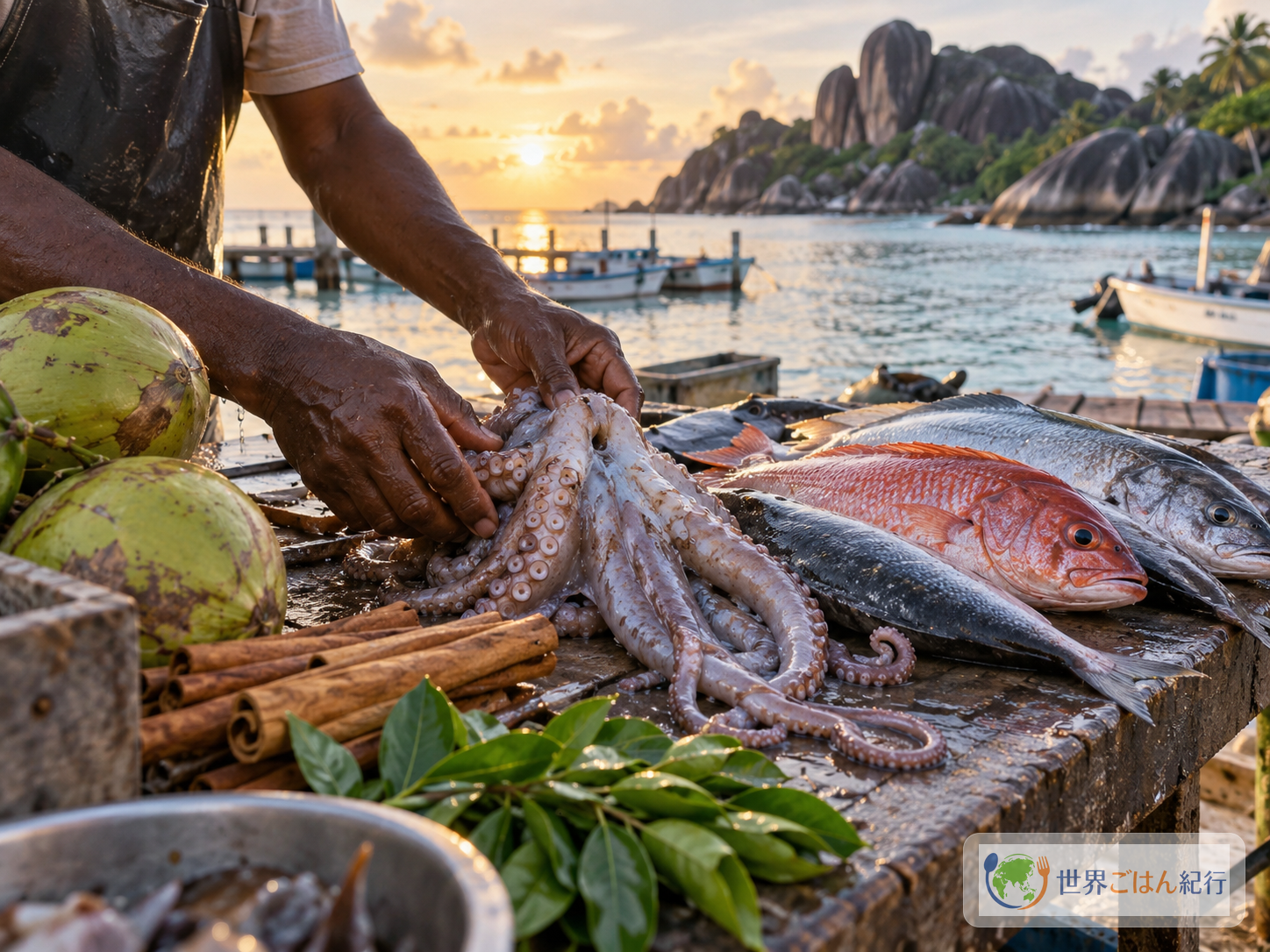
This is how the tourism board of Seychelles paints the harbor in the morning. Fishermen come back from the sea before dawn, and the market fills with the day's catch. In the garden the cinnamon trees give off their scent, and the smell of seafood runs straight from the harbor into the kitchen. What I write here is a typical scene drawn from the tourism board's introduction. It is not an account of something I ate there.
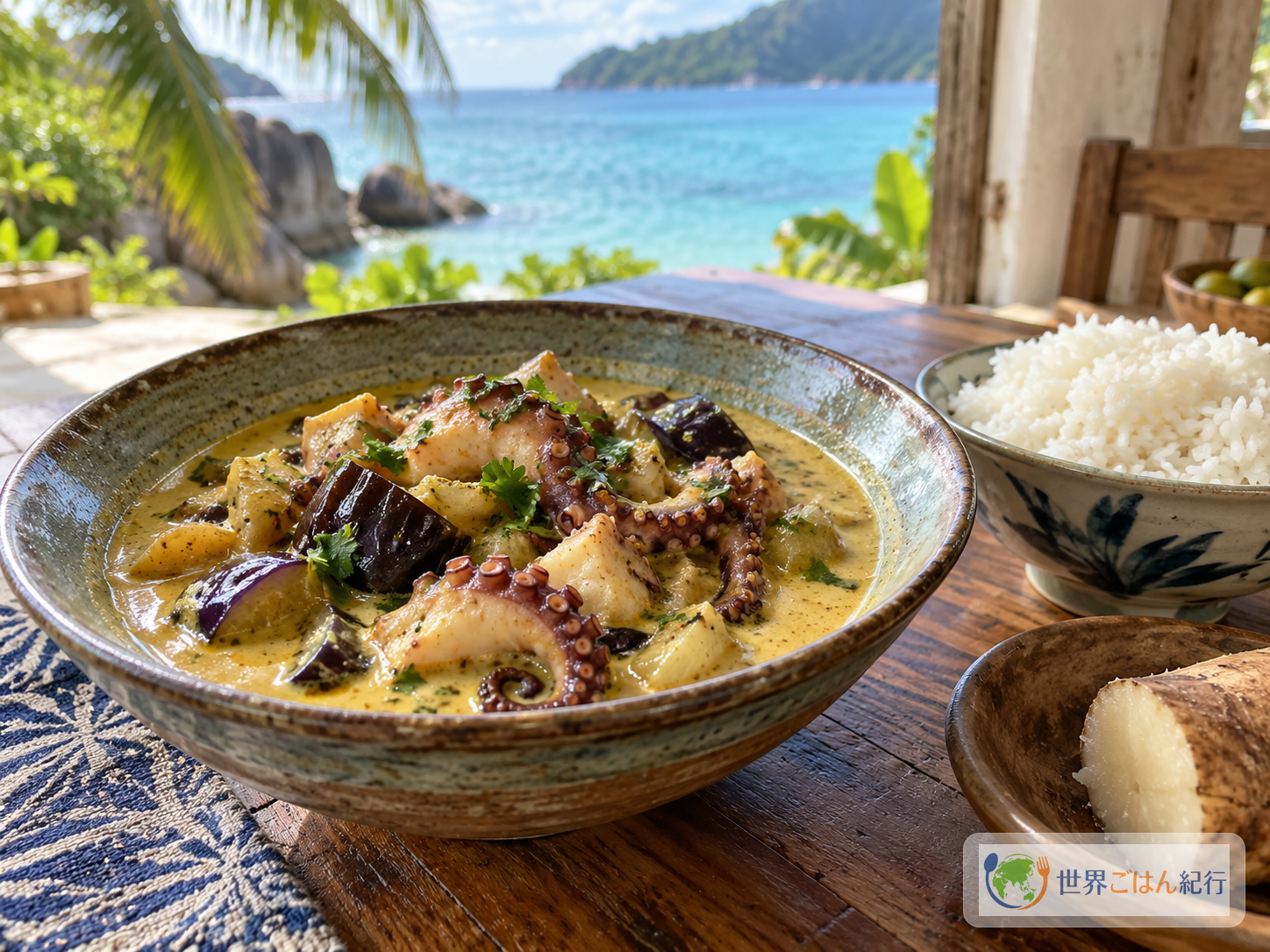
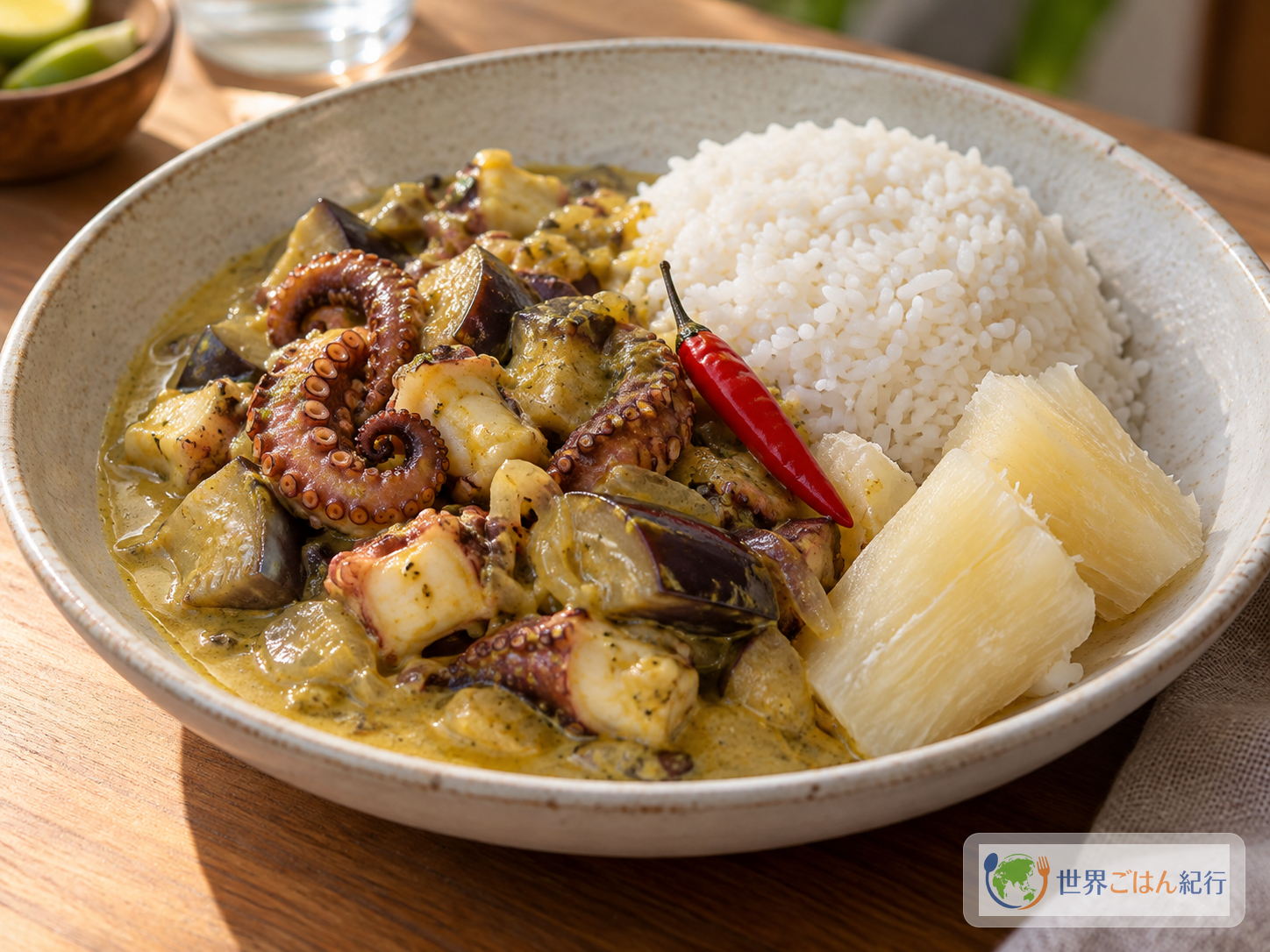
On the tables of this island nation in the Indian Ocean, official tourism information says seafood is commonly eaten with rice. Picture a table where rice receives what comes from the sea, and you can see why a curry of octopus stewed in coconut milk sits at its center. Freshly cooked rice takes up everything: the savoriness that comes out of the octopus and the white sauce.
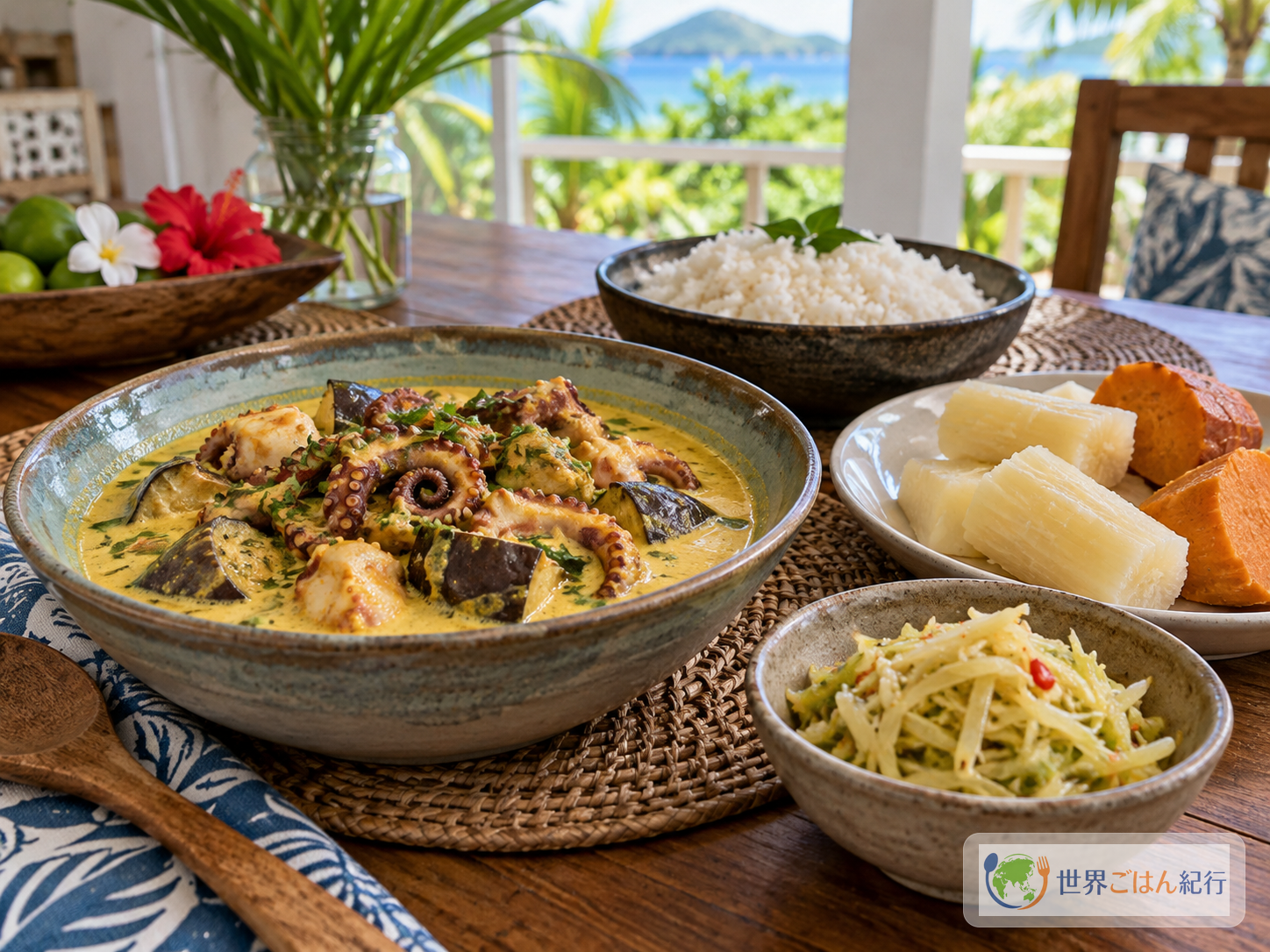
The dish has two spellings. Tourism Seychelles' list of dishes writes "Octopus Coconut Curry - Kari Zourit," while a recipe source writes "Kari Koko Zourit" and explains it as octopus and eggplant stewed in spiced coconut milk. This article took the longer name for the title. Kari Zourit is also a name for the same dish. So if you remember it as a dish of octopus and eggplant stewed in a white coconut sauce, you won't be lost whichever name you meet.
The official tourism site's list says Kari Zourit, and the source that gives the cooking steps says Kari Koko Zourit. No grounds have been found to say flatly that this difference in spelling marks different dishes. When you search, try both spellings.
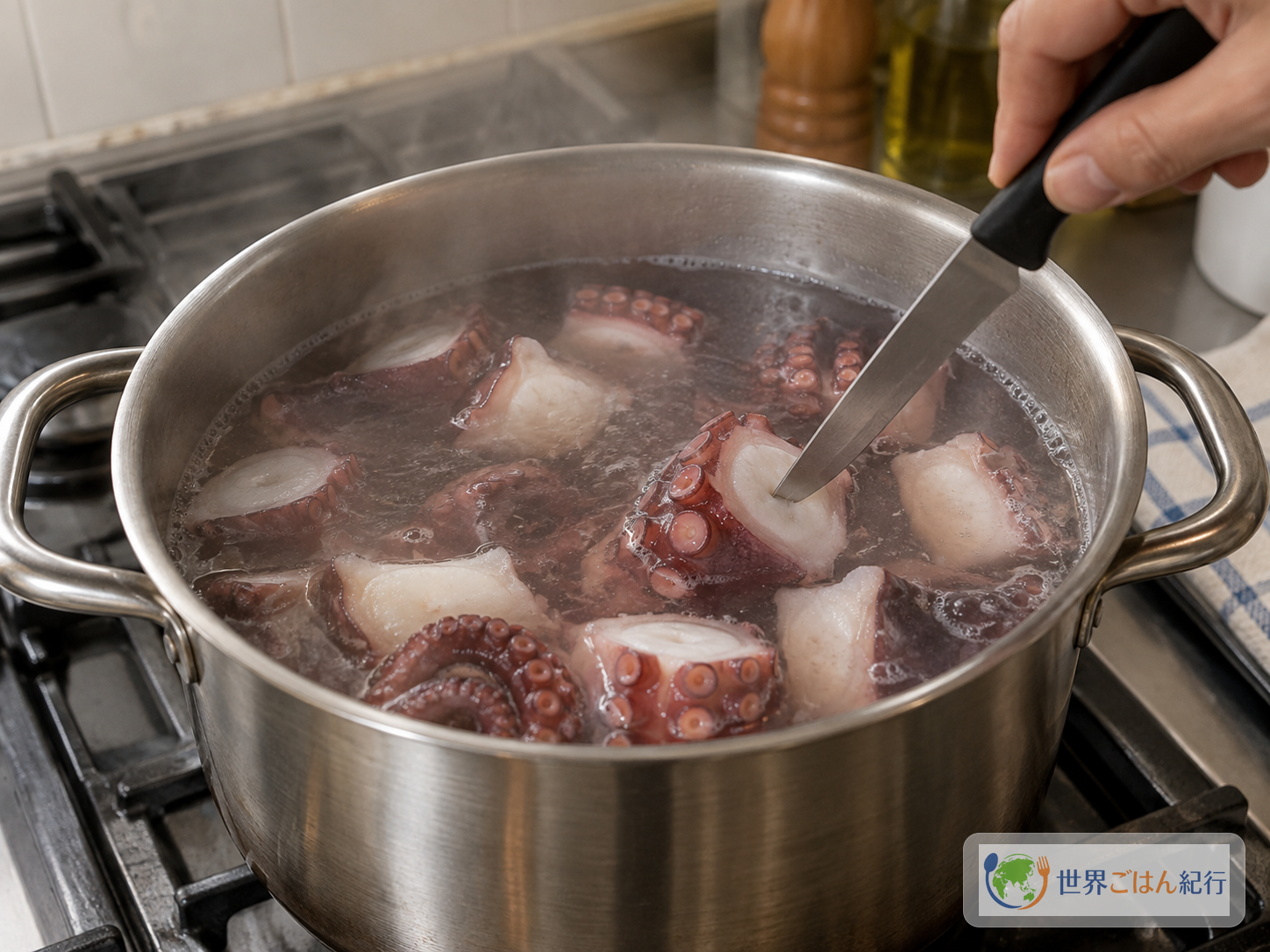
When you make this in a home kitchen, there are two hard points. One is to pre-boil the octopus until a knife passes through without resistance. The other is to bring the sauce together without boiling the coconut milk hard. The guide is about 60 to 90 minutes for the pre-boil and about 15 to 25 minutes for stewing the curry, but watch the pot rather than the clock. Stop the octopus by how the knife goes in, not by time. Look at how far the eggplant has broken down in the same way.
The axis of the flavor is thick unsweetened coconut milk, masala or curry powder, turmeric and cinnamon. It is served with rice, breadfruit, sweet potato and the like. The nutrition figures given in the article are per-serving guides calculated from the ingredient table, and they change with the products you use and how you plate.
The Seychellois table around seafood and rice
According to Tourism Seychelles, in Seychelles, an island nation in the Indian Ocean, seafood makes up a large part of the cooking and is often eaten with rice. Fish is not cooked in just one way either. The official information lists many methods: steamed, grilled, salted, baked in the oven, wrapped in banana leaf. Among these, this curry is a warm main of octopus stewed in coconut milk and spices. It places seafood differently from a cold salad or grilled fish, and appears at the center of the table as a main where the rice soaks up the sauce.
So where does that octopus come from? The Seychelles government's seafood value chain report records fresh fish markets at Mahé, Praslin and La Digue. Octopus is sold to consumers at the fish markets and also goes to hotels and restaurants, and supermarkets and processors' retail outlets handle it both fresh and frozen. The same report gives a figure of about 11 tonnes as the 2016 catch, but this is a past record. Don't read it as showing the present catch or its sustainability.
To bring it into a home kitchen, you only swap the local fish market for a seafood counter. Choose cleaned octopus, fresh or frozen, at the seafood counter; thaw frozen product slowly in the refrigerator in its bag, and wipe off the moisture before using.
The cookbook Tourism Seychelles issued in 2026 is a project in which home cooks, chefs and culture bearers brought traditional dishes and their own memories together. The diversity of coastal communities and inland harvests is treated as the background to the cooking. The quantities in this article are a reproduction designed for four servings in a home kitchen; this is not the single blend common to every household in Seychelles.
If you would like to compare it with a cold dish of fish and coconut, try Fiji's kokoda (in Japanese); for another island dish with coconut milk wrapped in leaves, Samoa's palusami (in Japanese); and to widen the background of pairing rice and stews on an Indian Ocean island, Madagascar's romazava (in Japanese).
Ingredients (serves 4)
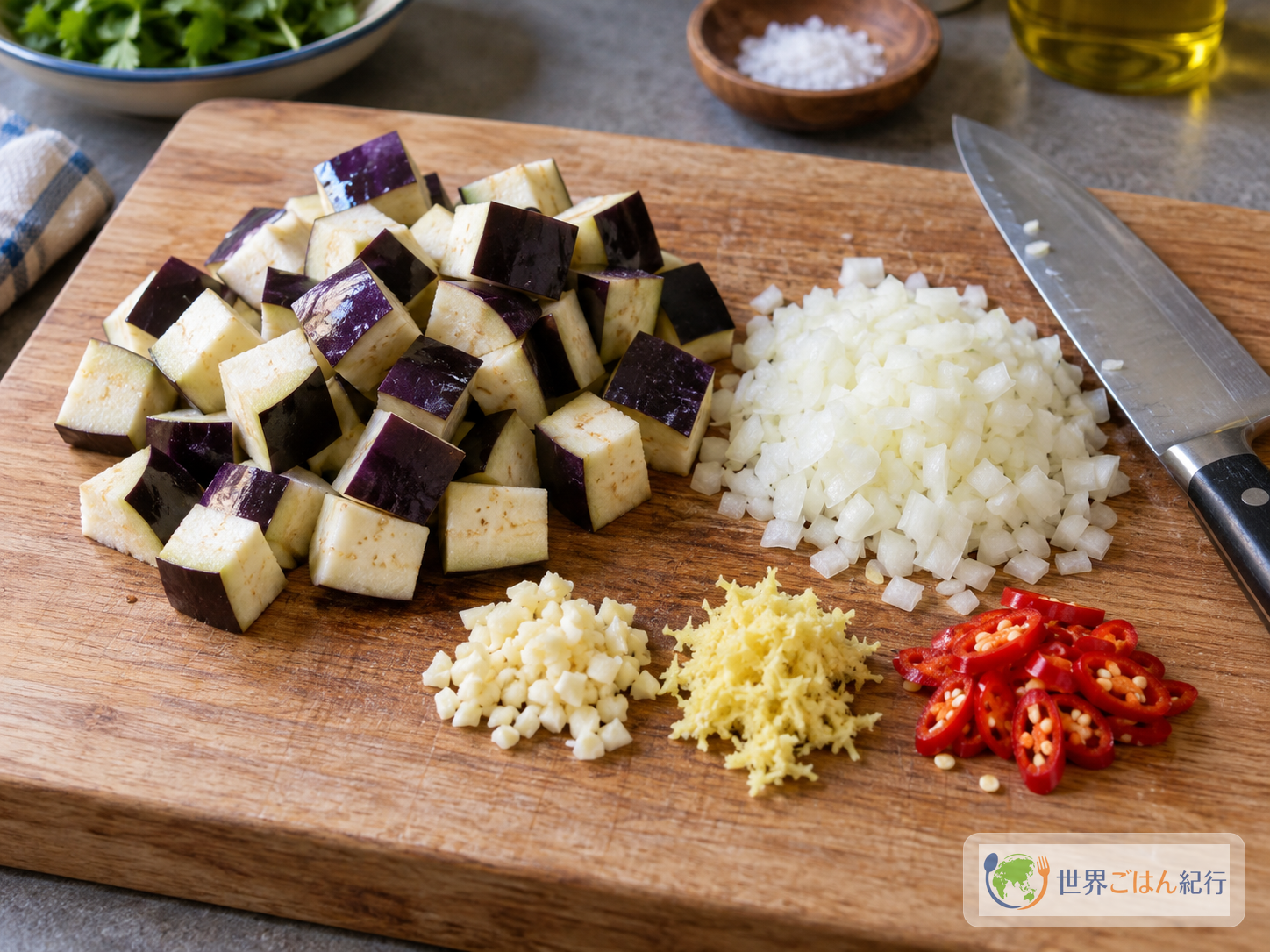
Shopping is easier if you think of specialty ingredients and ones you can get nearby separately. Octopus can be fresh or frozen as long as it is cleaned. Thaw frozen product completely and wipe off the surface moisture before weighing. The recipe source's basis is 1 kg octopus, 500 ml coconut milk, 1 eggplant, 1 onion, 4 cloves garlic, 4 teaspoons masala, 1 teaspoon turmeric, 10 cinnamon leaves or 1 teaspoon ground cinnamon, chili, salt and oil. In this article, to make it easier to handle, the onion is adjusted to about 100 g, ginger 15 g, oil 4 tbsp and salt 5 g.
For the coconut milk, choose unsweetened, thick coconut milk. Whichever cinnamon is easier to get is fine. You will be choosing cinnamon leaf or powder.
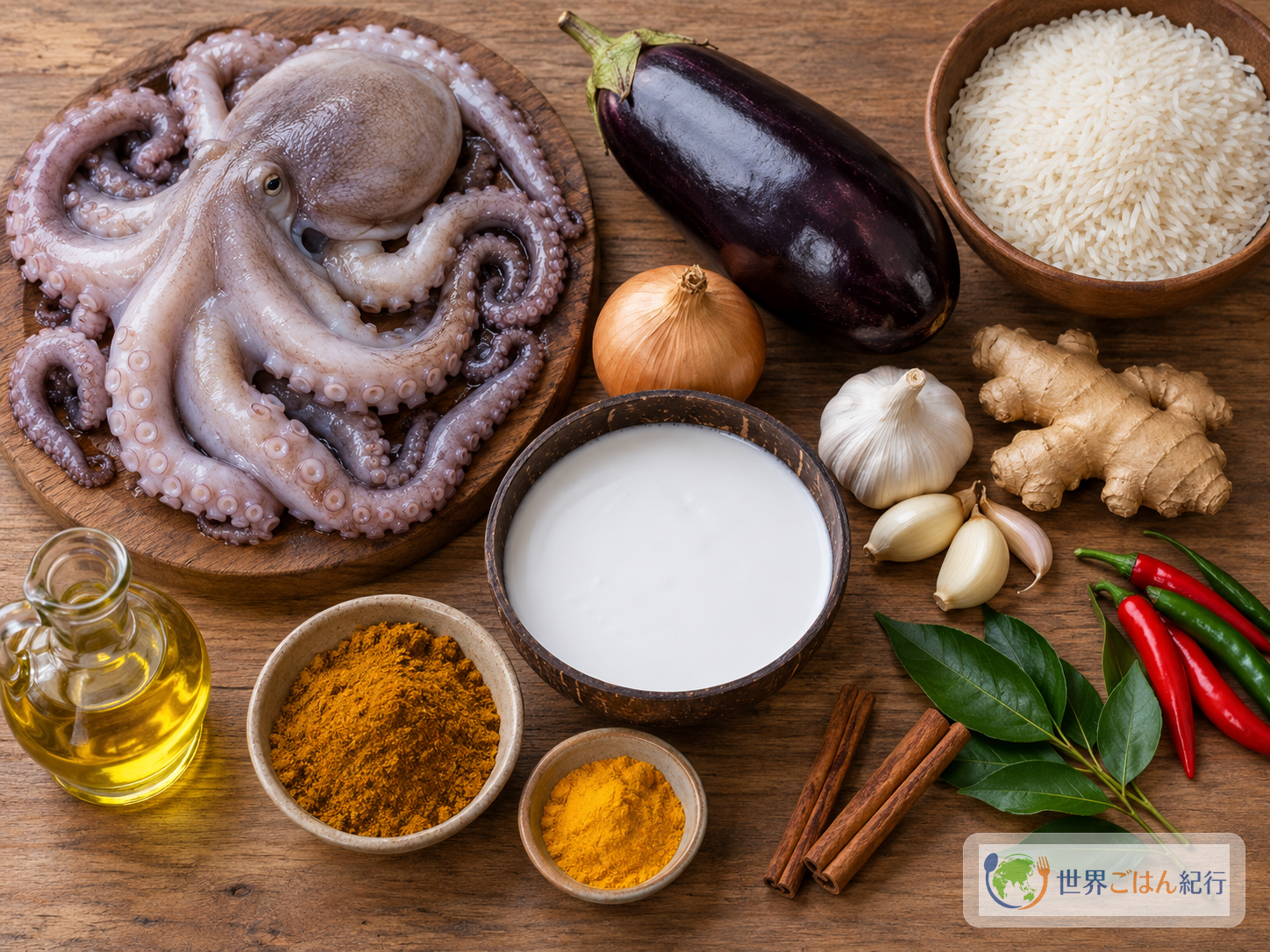
For the order of shopping, first secure 1 kg of cleaned octopus at the seafood counter, then look for unsweetened, thick coconut milk. "Coconut milk," "turmeric" and "cinnamon" in the ingredient table can all be searched by generic name. Ordinary oil, eggplant, onion, garlic, ginger and rice can all be had nearby, and you don't need to buy any particular product. If ordering online has value, it is that you can choose the unsweetened, thick type without a trip to an import grocery. If you already have a can that meets the same conditions at home, you don't need to buy more.
Japan's Ministry of Health, Labour and Welfare advises keeping seafood at low temperature, thawing frozen product in the refrigerator, and washing and using separately the utensils used for raw fish. When using raw octopus, choose by the label and storage condition at the seafood counter and don't leave it at room temperature. This curry is cooked through to the center, but citrus and spices are not a substitute for hygiene control. For pregnant women, children, older adults and people with weakened immune function, follow the hygiene conditions of the household and medical advice first.
Method
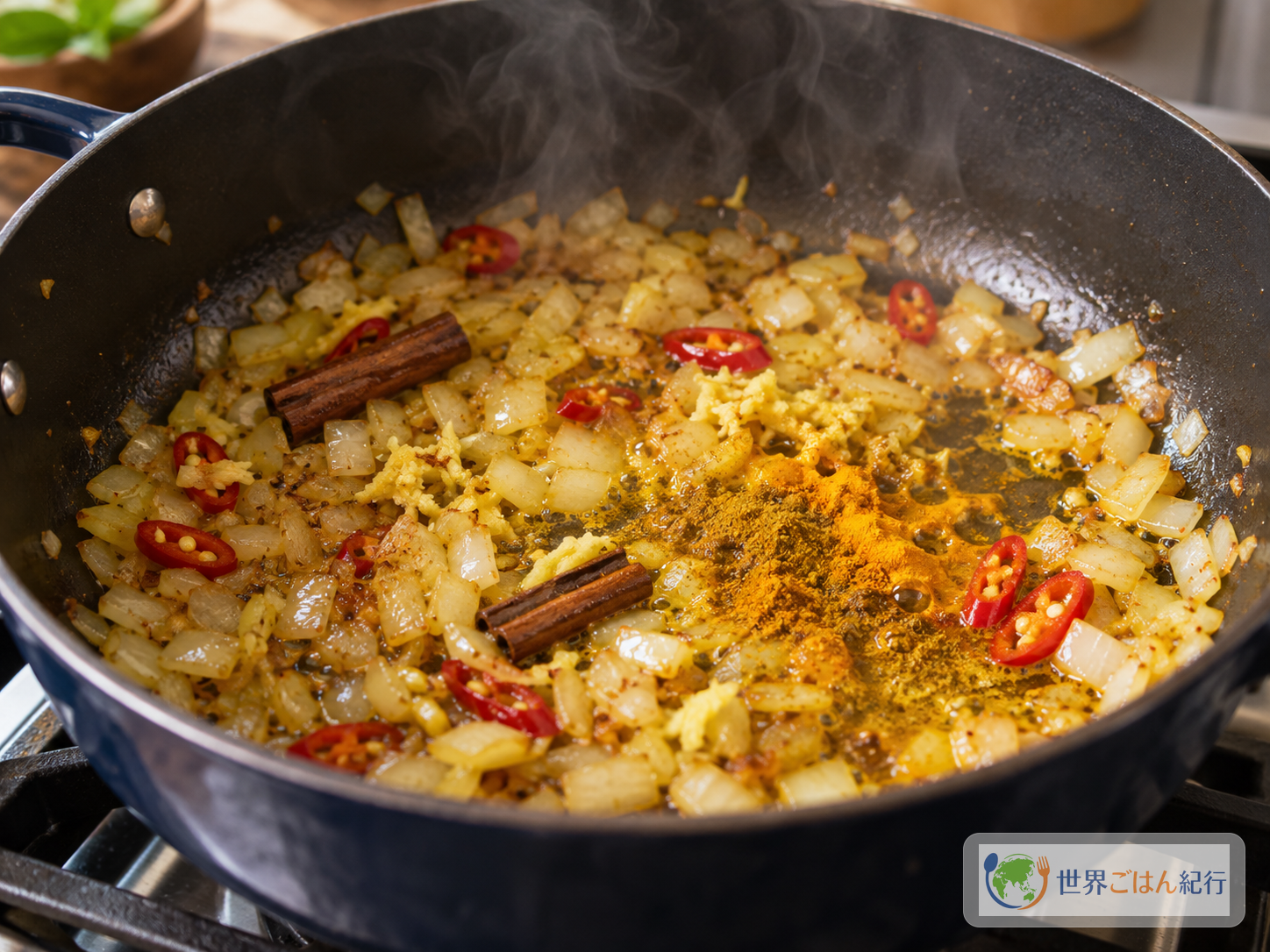
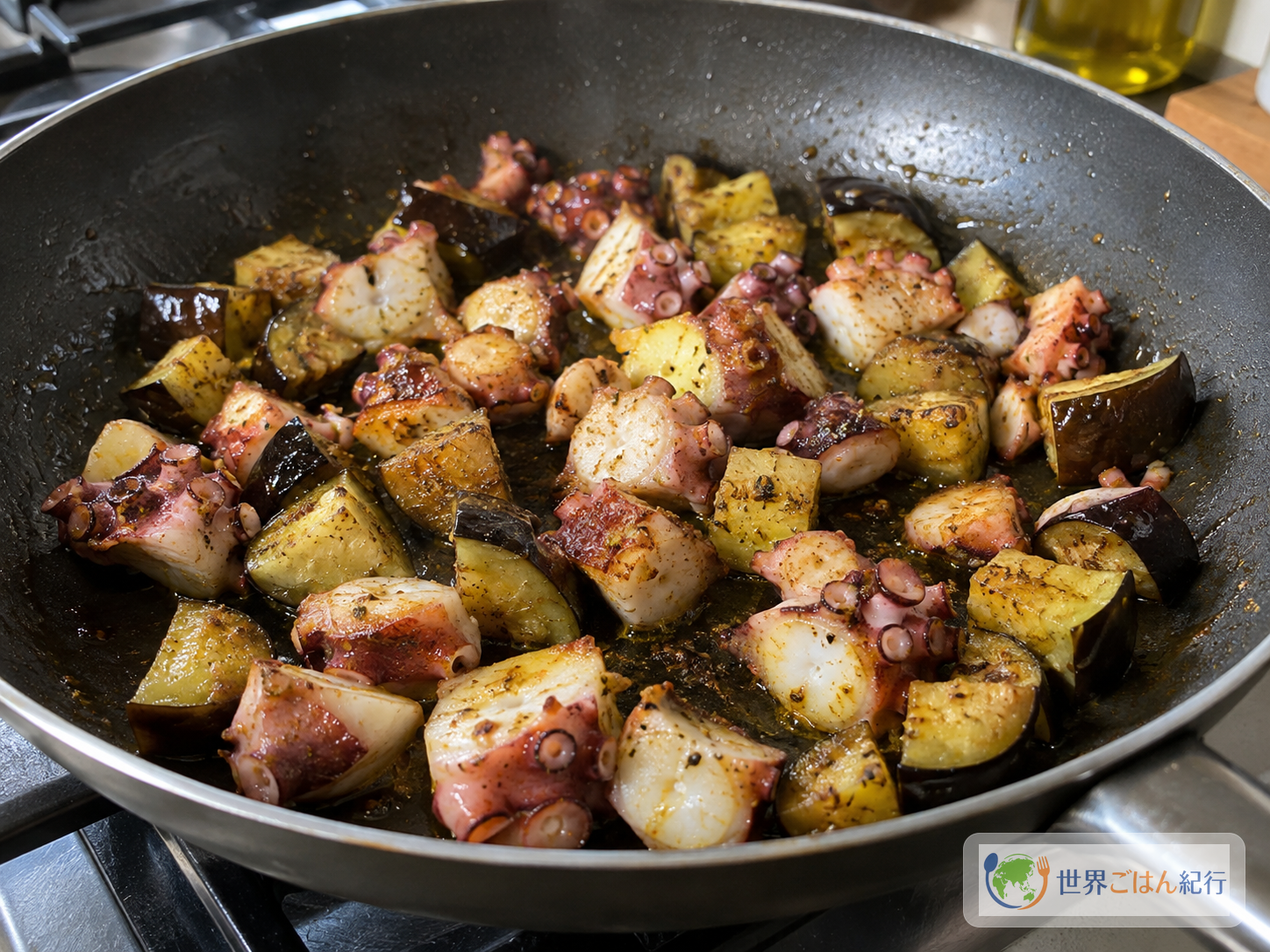
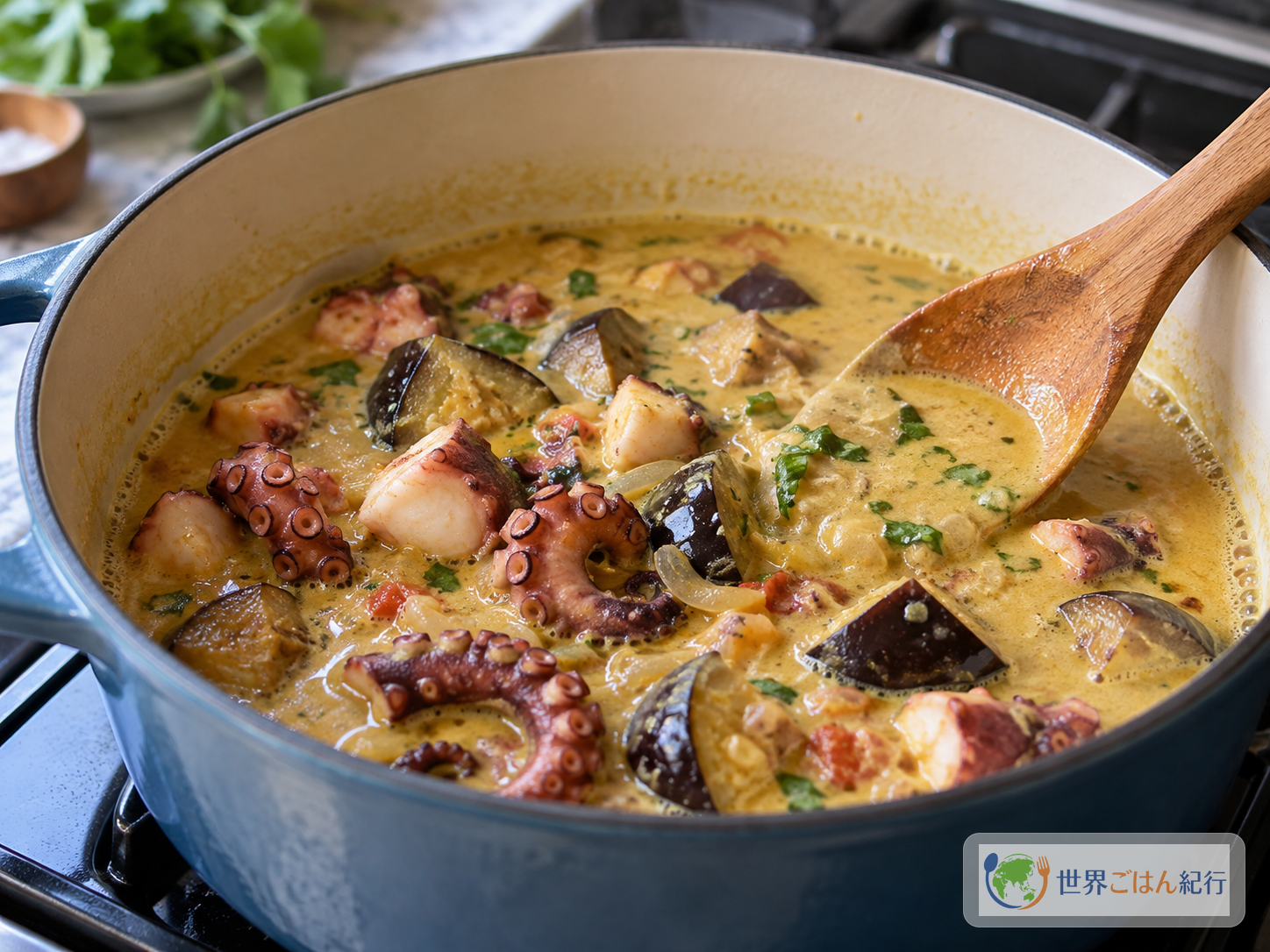
The recipe source gives 90 minutes for the pre-boil and 15 minutes for the curry. But since it varies with the size of the octopus and the pot, take the times only as a guide. After the pre-boil the octopus should let a knife through without resistance. At the curry stage the coconut milk should not boil hard and the eggplant should not have fallen apart. That is the standard for done. For the heat picture low heat that keeps a simmer, for the octopus octopus the knife goes through, and for the finished sauce sauce that leaves a thin coat on a spoon.
There are three places you can go back to partway. If the octopus is tough, don't force it by reducing the curry pot; go back to the pre-boil stage, add hot water and extend 15 to 20 minutes over low heat. If the spices scorched, don't scrape the bottom; move only the unscorched part into another pot and add coconut milk. If the sauce separated, turn off the heat, add the pre-boil liquid or water 1 tbsp at a time and stir gently, and don't bring it back to a boil. If the eggplant seems about to fall apart, stop any further heating and plate once the tenderness of the octopus and the thickness of the sauce are in order.
Protecting the tenderness of the octopus and the sauce
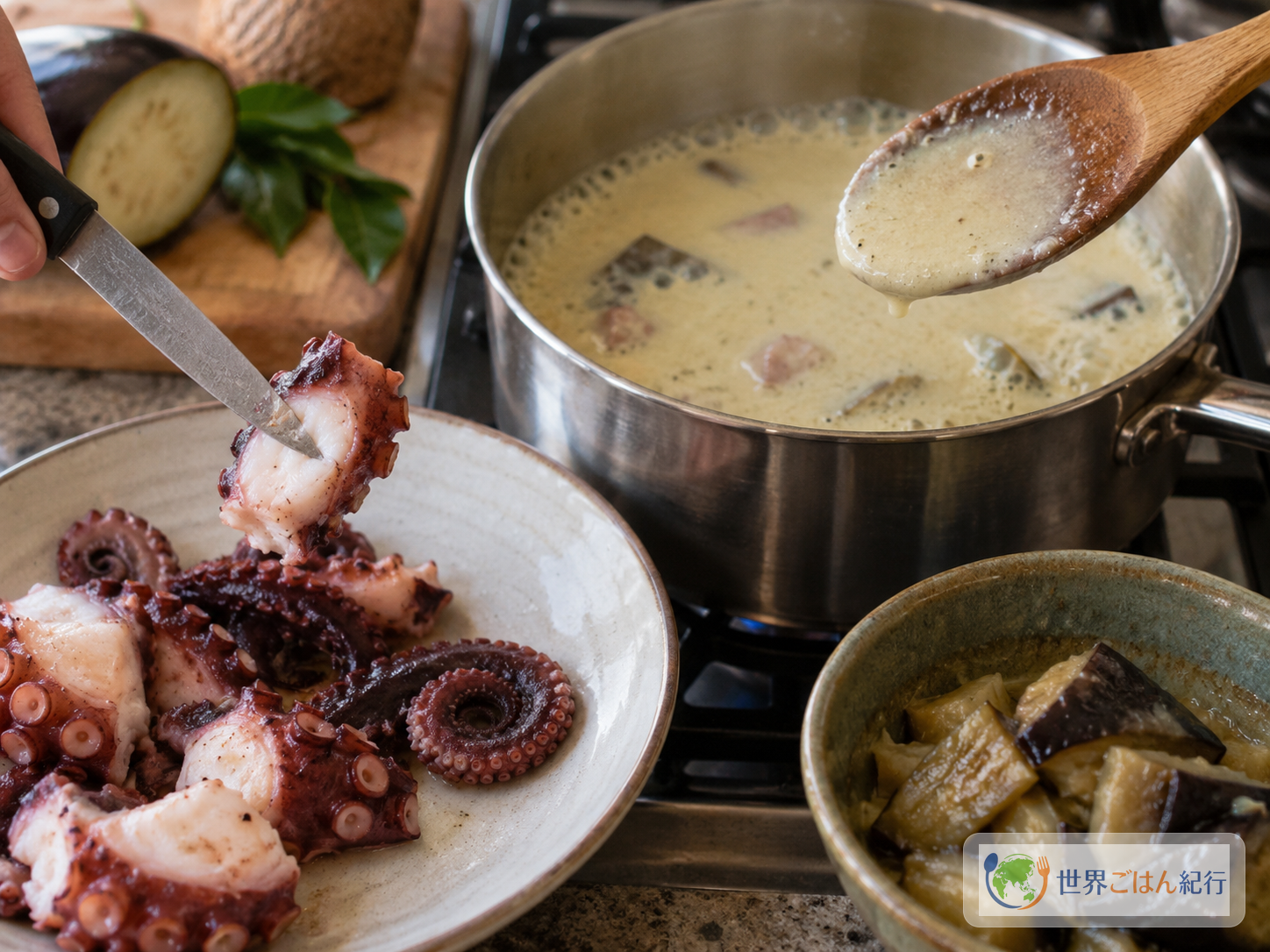
Octopus turns tough either because the pre-boil was not enough or because the moisture was driven off over high heat. Reducing the curry will not soften it again. Finish it in the pre-boil stage, up to the point where the knife goes into the thick part. If the spices are bitter, the cause is frying the powder in oil too long. Add liquid as soon as the aroma rises to bring down the temperature. Keep low heat with small bubbles during the stew. If the sauce is watery, check the eggplant's moisture and the thickness of the coconut milk separately, and take off the lid and reduce briefly over low heat. The target is thickness that leaves a coat on the back of a spoon.
It also helps to know how to judge by the senses. The octopus has cut faces that are not dry, does not spring back hard when pressed, and lets a knife through to the center without resistance. The eggplant keeps its skin color, a skewer slides through, and the corners haven't collapsed in the pot. The sauce goes from white to pale yellow, no oil floats alone, and a line drawn with a spoon stays for a moment.
Substitutions to suit what you have are possible within a range that doesn't ruin the character of the dish. Cinnamon leaf can be replaced with 1 tsp ground cinnamon, but the powder lingers strongly in aroma, so don't increase it from the start. If you have no Seychellois-style masala, use unsalted curry powder and adjust the salt at the end. For breadfruit, serve sweet potato, cassava, potato or the like on a separate plate as a stand-in, and don't stir them into the curry pot. Replacing the octopus with fish or chicken makes it a different dish, so don't carry over the octopus's pre-boil time. If you use already-cooked boiled octopus instead of raw, shorten the pre-boil and rework the order so you don't overheat it.
As Seychellois Creole cooking
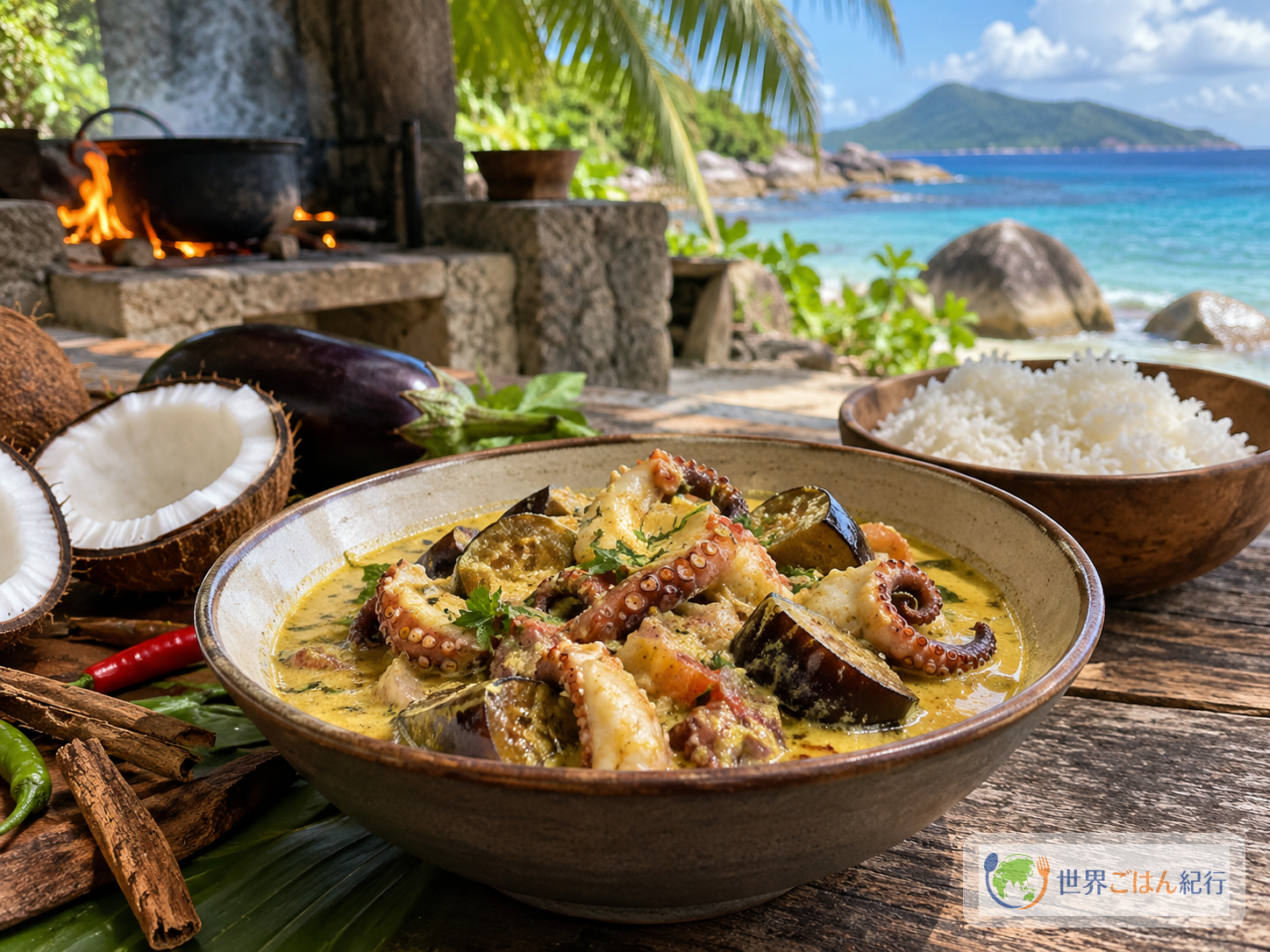
Tourism Seychelles describes Seychellois Creole cooking as a mixture of five influences: French, African, Indian, Malagasy and Chinese. This is not grounds for fixing a single origin of the dish's name. It is better taken as a background in which spices, ways of eating rice, and techniques such as frying, steaming and grilling have overlapped little by little across generations. In the pot of this curry too go cinnamon, garlic, onion, chili and coconut, and rice and root vegetables line the table. A Creole pot where five cultures overlap shows directly in the combination of ingredients.
The reason for choosing octopus lies in its connection to the island's sea. The Seychelles government report records octopus fishing as a small-scale, subsistence fishery carried out by skin divers and fishermen on foot. Octopus is also an ingredient that fetches a high price in the tourist market, and it flows to fish markets, hotels and restaurants. Octopus that flows from the seaside market to hotels and homes stands behind this one plate. But the catch volumes and stock status in the report are survey records from around 2016. They cannot be read as a guarantee of current stock status or sustainability.
The documentary fact that Mahé, Praslin and La Digue have fresh fish markets is not meant to make you imagine a different recipe on each island. Take it as one example of how ingredients from the sea reach the table through an island market. The diversity of coastal regions and inland harvests that the cookbook conveys is also reflected in the combination of octopus, coconut, cinnamon, root vegetables and rice. Whether there is eggplant or chili, the root vegetable served alongside, and whether there is chutney are differences in blend from household to household and shop to shop. They are not rules of all of Seychelles.
Lined up beside other island dishes, the outline of this plate becomes clearer. Kokoda is a cold dish that pairs sourness and coconut with fish, but kari koko zourit pre-boils the octopus long and brings it together in a warm sauce. Palusami is a dish that wraps leaves and coconut and heats them; it shares the use of coconut but differs in texture and method. Romazava is a Malagasy stew of leafy greens and meat, and shows from other ingredients the Indian Ocean table gathered around rice and stew.
Storage and frequently asked questions
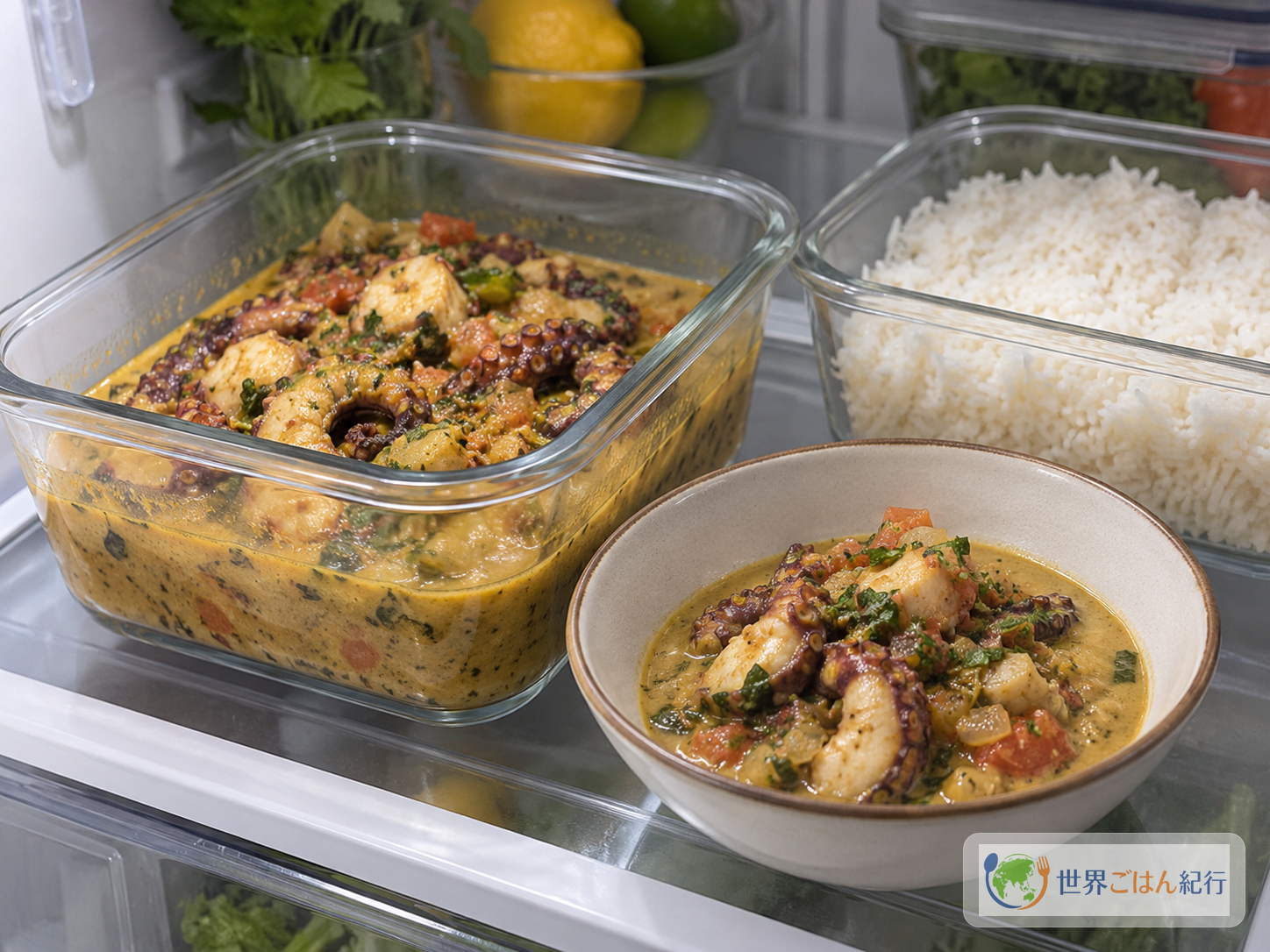
The basic approach is to finish it all at the meal where it is served. From preparing the raw octopus to plating, work while keeping it refrigerated. If cooked curry is left over, divide it into shallow clean containers, cool it quickly and put it in the refrigerator. Store in shallow containers, divided is the knack. Reheat only what you will eat, in a pot or microwave, until hot through to the center. Don't reheat repeatedly. Keep the rice separate from the curry, and don't carry over to the next day rice that sat in the rice cooker or at room temperature. As in the Ministry of Health, Labour and Welfare's hygiene information, avoid leaving it at room temperature and cross-contamination from utensils used for raw fish.
What do I do if the octopus is still tough?
If the curry has enough liquid, add 15 to 20 minutes over low heat. If the bottom of the pot looks about to dry out, add the pre-boil liquid or hot water 1 tbsp at a time. If you have already reduced the sauce, take out just the octopus, check its tenderness in a separate pot with hot water added, then return it. Do not add more salt before a knife goes through. Adjust the saltiness after fixing the tenderness.
Can I make it with boiled or frozen octopus?
Cleaned frozen octopus can be used. Thaw it in the refrigerator, wipe off the moisture and weigh it at the same weight as raw octopus. For already-boiled octopus, skip the pre-boil, fry the surface for 2 minutes in step 4, then go on to the eggplant and sauce. Cooked octopus stewed long turns tough, so I recommend returning it only for the last 5 of the 15 to 20 minutes the sauce simmers. Whether it is sashimi-grade doesn't matter. This time it's a curry cooked through to the center.
What if the coconut milk separates?
Boiling hard, high heat at the bottom of the pot and long heating of thin coconut milk are what trigger separation. If it happens, turn off the heat, add hot water or the reserved pre-boil liquid 1 tbsp at a time and stir gently with a wooden spoon. Even if the oil floating alone doesn't come back, as long as the octopus and eggplant are cooked through it can be plated and eaten as is. Keep to low heat next time.
What should I serve other than rice?
The recipe source lists breadfruit, sweet potato and rice. Take rice as the base and serve sweet potato or cassava on a separate plate. Potato is easy to find, but in the stew it soaks up the sauce, so boil it separately and plate it alongside. Green papaya chutney is an accompaniment that appears in the recipe source. If you cannot find it, avoid treating a sour pickle as the same as the local ingredient.
Can I eat it the next day?
Do not store it combined with raw octopus, left at room temperature for long, or rice left in the rice cooker. Only the cooked curry can be stored; divide it into shallow, clean containers, put it in the refrigerator and finish it by the next day. Reheating tends to toughen the octopus, so leave a little sauce aside before storing and warm only what you eat gently. If there is anything abnormal in smell, sliminess or sourness, don't eat it. If you aren't sure of the storage time, throwing it out is the safe choice.
Sources
- Tourism Seychelles Launches “Sun, Sea & Spice” to Elevate Creole Cuisine as a Global Gastronomic Experience — Tourism Seychelles, published 2026-02-27, accessed and checked 2026-10-01 (JST)
- A Guide to Seychelles' Most Common Authentic Creole Recipes — Tourism Seychelles, last updated 2026-08-20, accessed and checked 2026-10-01 (JST)
- Food & Drinks — Tourism Seychelles, publication date unknown, accessed and checked 2026-10-01 (JST)
- Imported Influences of Seychelles' Cuisine — Tourism Seychelles, last updated 2026-08-20, accessed and checked 2026-10-01 (JST)
- Sun, Sea and Spice - The Magic of Seychelles Creole Cuisine — Tourism Seychelles, last updated 2026-05-19, accessed and checked 2026-10-01 (JST)
- Development of Seychelles’ Seafood Sector Value Chains — Government of Seychelles / SWIOFISH, 2018-11, pp.12, 23, 26–27, accessed and checked 2026-10-01 (JST)
- Kari Koko Zourit (Octopus Curry) — FabulousFusionFood, publication date unknown, accessed and checked 2026-10-01 (JST)
- Reference material: the importance of low-temperature control (参考資料 低温度管理の重要性) — Ministry of Health, Labour and Welfare (Japan), publication date unknown, accessed and checked 2026-10-01 (JST)