Vetkoek: A Golden Crust, a Soft Crumb and a Choice of Fillings
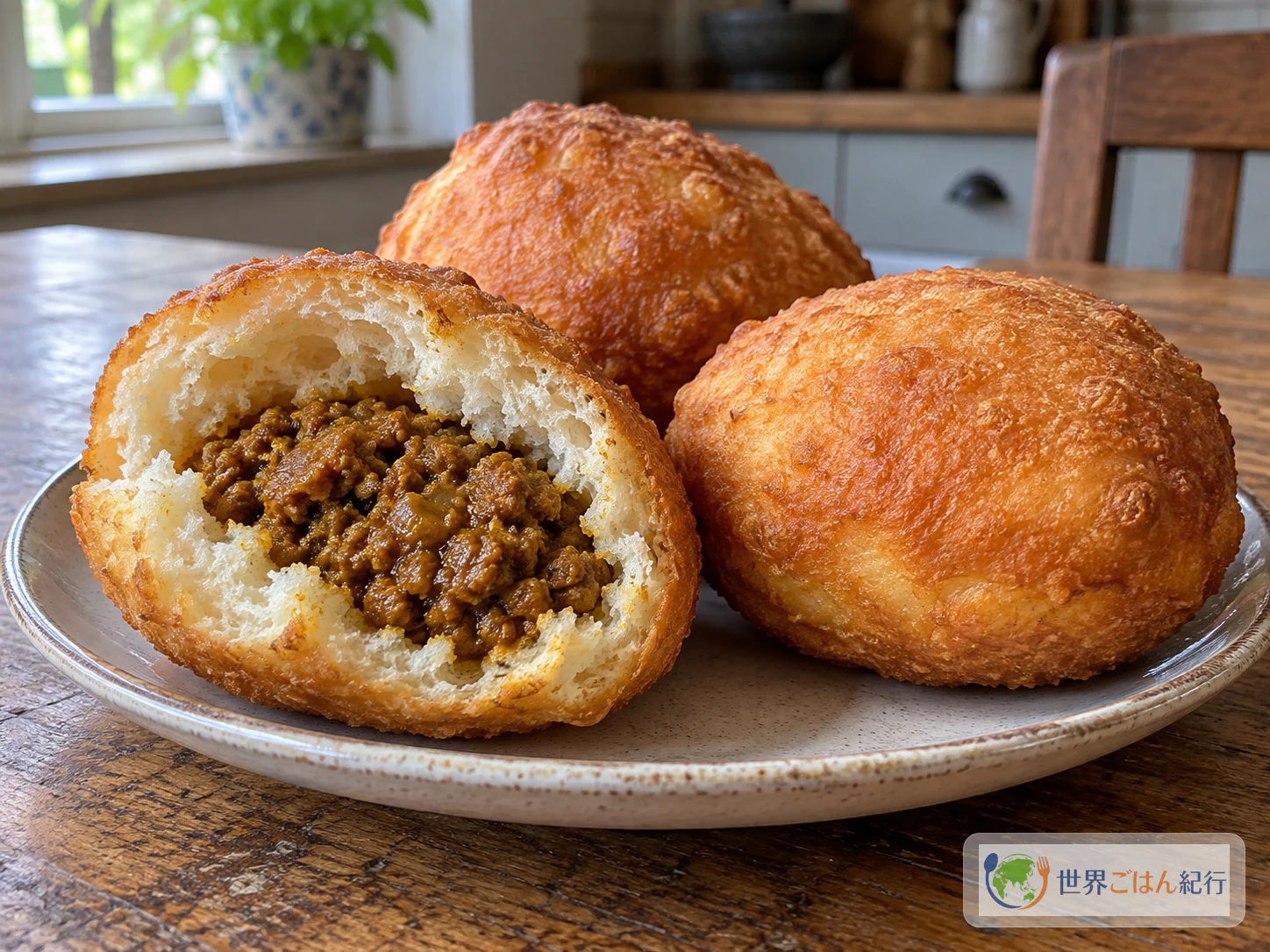
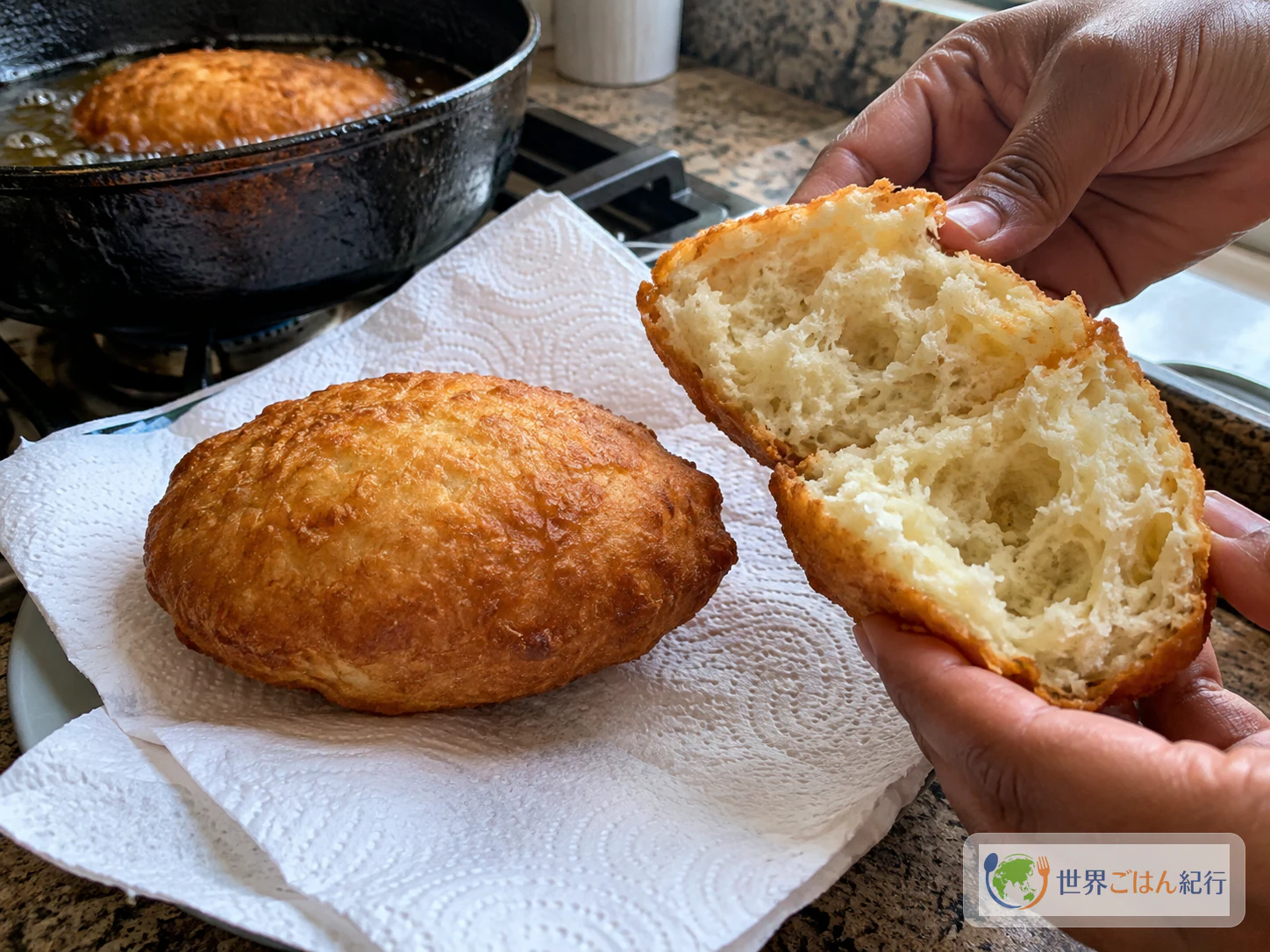
Pull a hot vetkoek apart and you want a soft crumb with small air pockets and no raw dough at the center. Judge by the puff, the golden color and that cross-section, not by the clock alone.
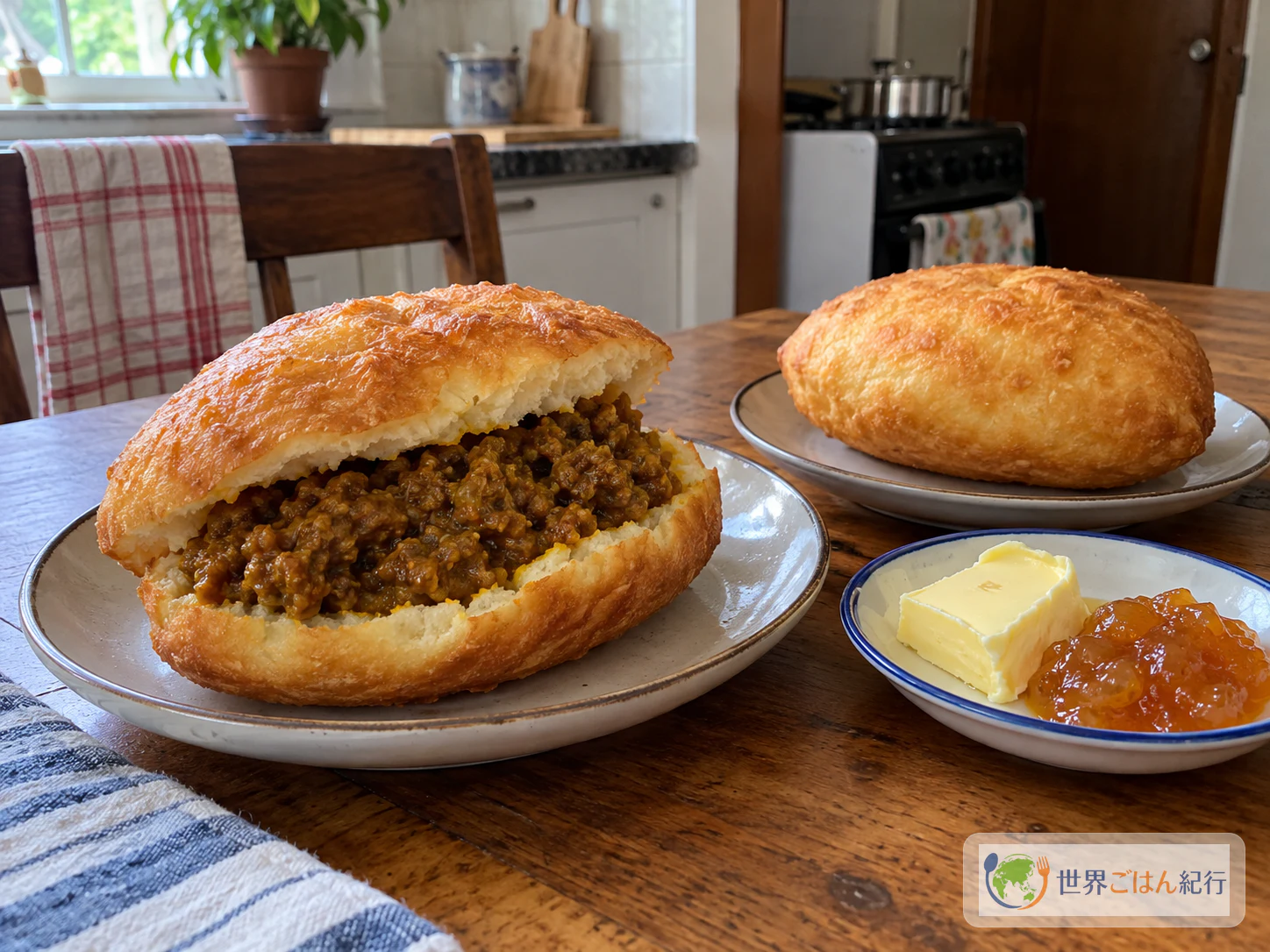
A vetkoek comes out of the oil golden and puffed, and when it is split open, small air pockets show in the soft crumb. While it is still warm, it can go in either of two directions: filled with curried mince for a meal, or spread with butter and syrup for something sweet.
Foodleclub, whose yeast dough is the recipe used here, explains vetkoek as an Afrikaans name meaning "fat cake" and describes it at school fêtes, church bazaars and family gatherings. That is one writer's picture of where it appears, not a rule for all of South Africa.
Foodleclub suggests the batch makes about 10 small-to-medium vetkoek. This recipe has not been kitchen-tested by Sekai Gohan, so treat that number and the timings below as guides rather than measured results.
Ingredients for Yeast-Raised Vetkoek
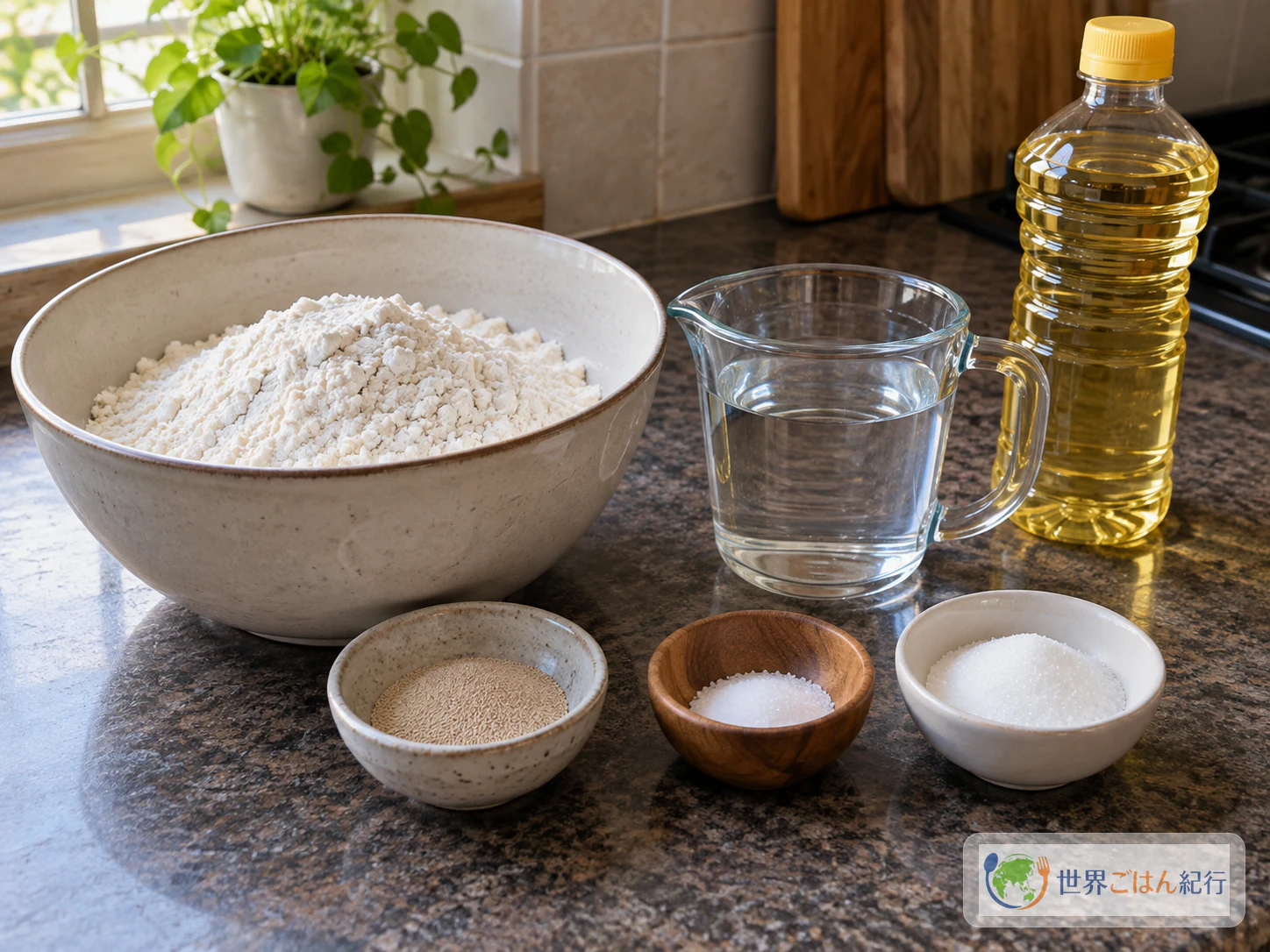
Makes about 10 small-to-medium vetkoek, as a rough guide.
Vetkoek contains wheat (gluten). Check any fillings or toppings for their own allergens.
Equipment
- A large bowl
- A deep, heavy pot
- A frying thermometer, if you have one
- Long tongs or a slotted spoon
- Paper towels for draining
- A stand mixer with a dough hook, if you prefer not to knead by hand
Choosing Flour, Yeast and Oil
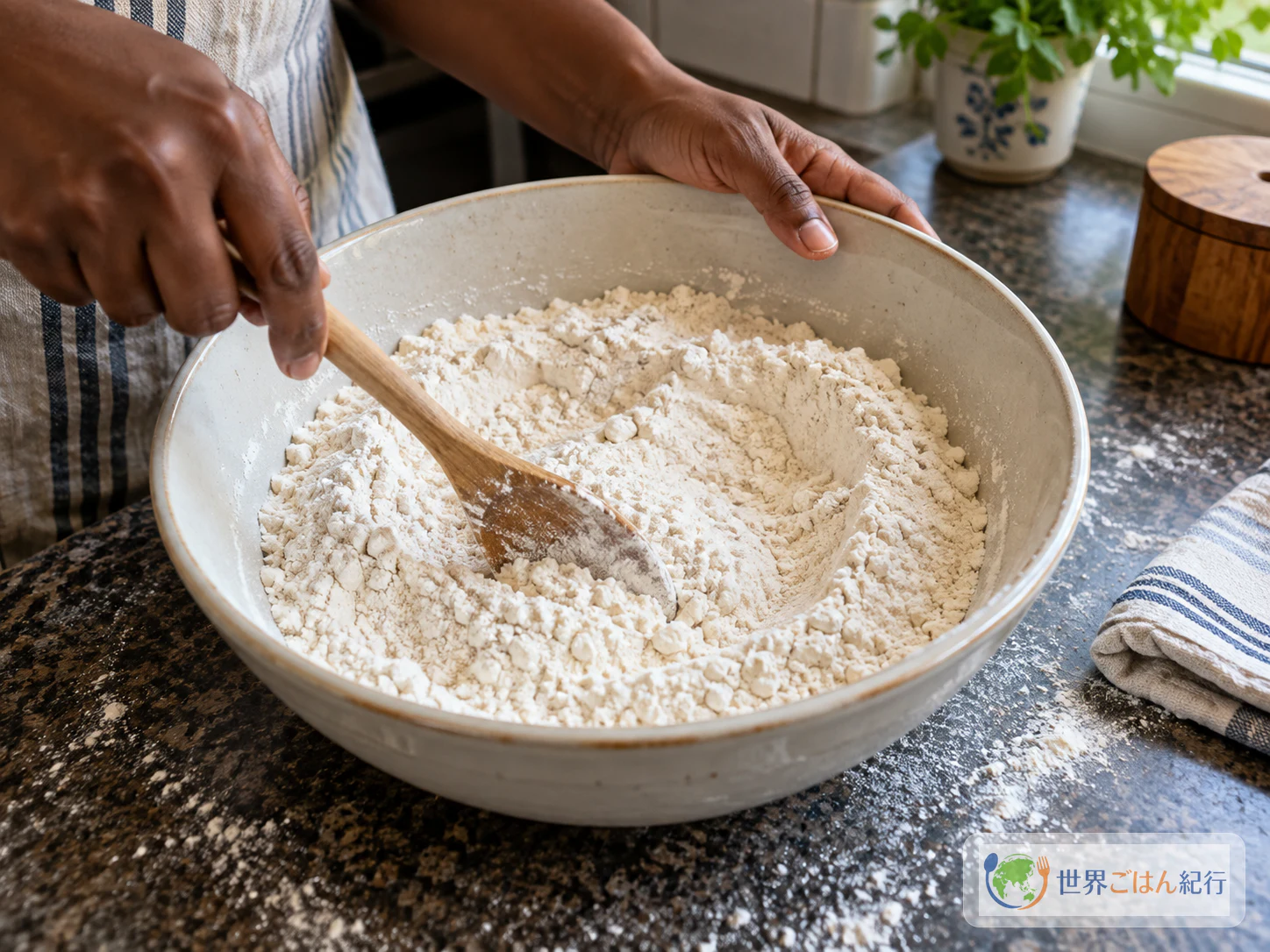
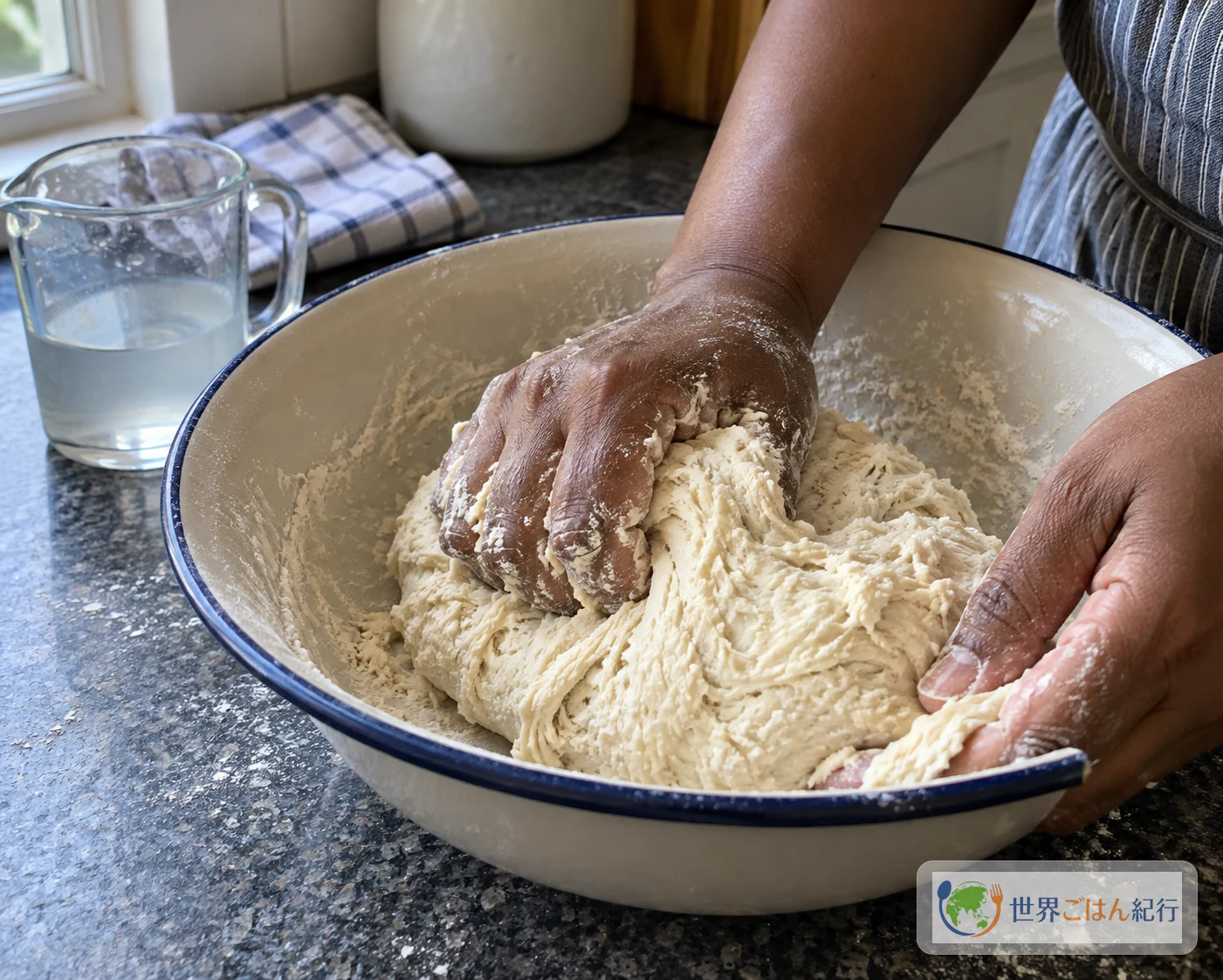
Flour. Use plain or all-purpose flour and go by the 280 g weight. Flours absorb water differently, and no exact equivalent is given for other flour types, including those sold in Japan. Whichever plain flour you use, holding back some of the water lets you adjust by feel.
Yeast. Measure 7 g of instant yeast instead of tipping in a whole 10 g South African sachet.
Oil. Use vegetable oil, measured by depth rather than volume, so choose a pot that holds that depth safely.
How to Make Vetkoek
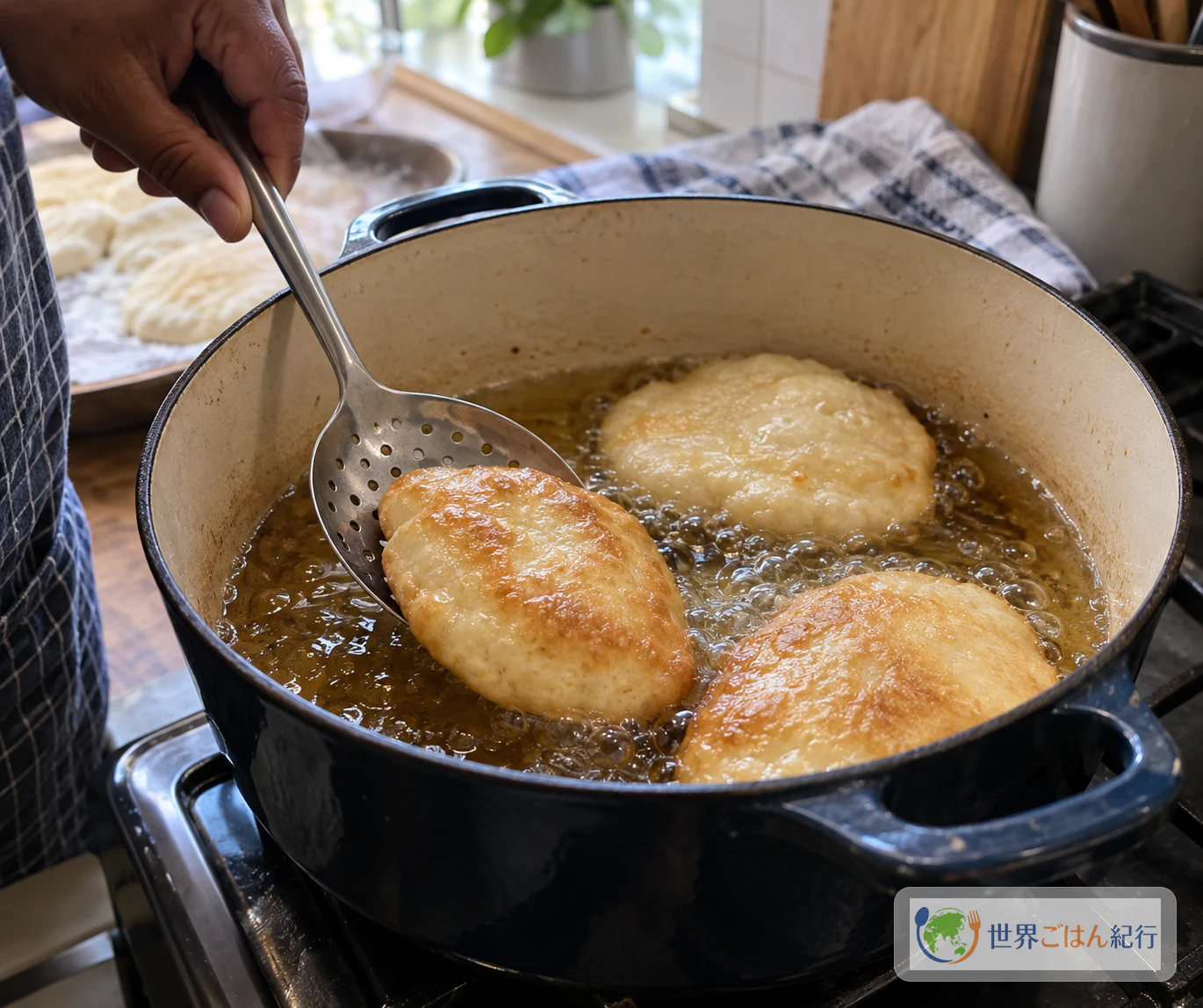
Stay with the pot while the oil is on the heat. Don't heat an empty pot, and don't heat the oil until it smokes. Keep wet hands and drops of water away from the oil.
When Vetkoek Goes Wrong
| What happened | Likely cause | What to do |
|---|---|---|
| Raw dough in the center | The ovals are too thick, or the oil is too hot and the outside colored first | Press the ovals thinner, lower the heat, and check a cross-section rather than trusting color |
| Greasy vetkoek | The oil may be too cool, or the pot too crowded | Fry fewer at once and let the temperature recover between batches |
| Dark outside too quickly | The oil is too hot | Lower the heat and don't let the oil smoke |
| Stiff or floury dough | Too little water for that flour | Add water gradually next time, watching how the dough absorbs it |
| Sticky dough | Flours absorb water differently | Add only a little flour at a time rather than a large amount |
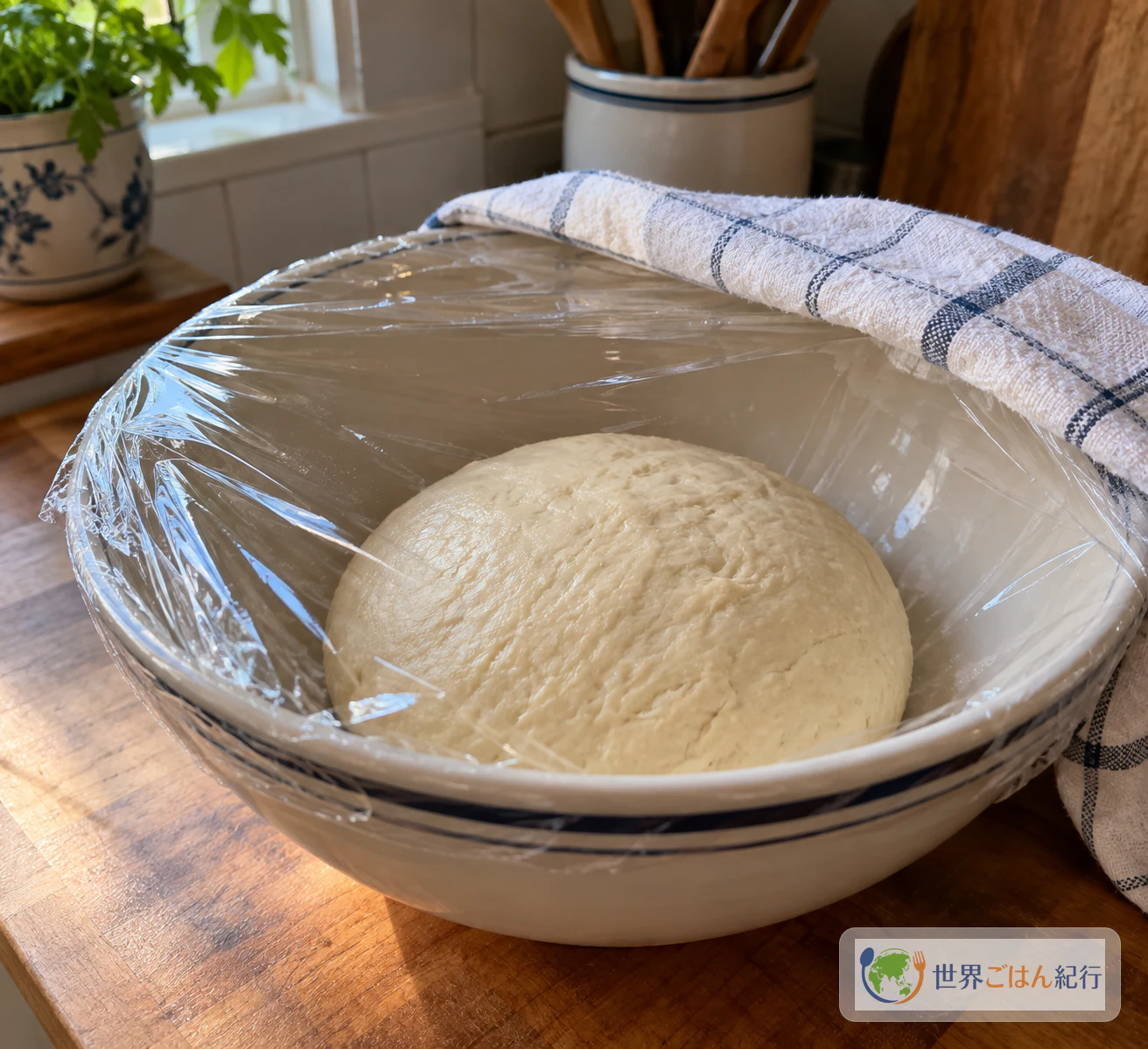
| Dough hasn't doubled after about 1 hour | The room may be cold | Keep it somewhere warm and judge by size and airiness |
Ways to Eat Vetkoek
These are serving ideas, not part of the dough, and their ingredients are not included in the table above.
- Curried mince. Foodleclub presents vetkoek filled with curried mince as a meal. Use a separate recipe for the filling.
- Butter and syrup. Foodleclub also suggests this as a sweet snack, and EatOut serves its vetkoek with golden syrup.
- Jam or honey. Foodleclub lists these as other sweet options.
- Chicken, cheese or nothing at all. Food & Home mentions warm vetkoek with mince, chicken or cheese, or on its own.
Foodleclub also describes a quick version made with self-raising flour and Greek yoghurt. It is a separate method with no yeast, so don't swap it into the recipe here.
Where Vetkoek Fits
Foodleclub connects vetkoek with school fêtes, church bazaars and family gatherings, while EatOut frames it as a comfort snack for winter afternoons. Together they show a food with more than one setting, though neither makes it a single fixed national dish.
Food & Home titles its recipe "Vetkoek (Magwinya)", so the two names can appear side by side. That doesn't show they are identical across every language and community, and we leave that question open.
Recipes differ too. Food & Home uses a kneadless stiff dough with cake flour, shaped at about 40 g each. EatOut uses cake flour with warm water and milk, adds vinegar, and makes 8 medium vetkoek from dough balls. These are different formulas, so we haven't blended them into the Foodleclub dough.
Foodleclub also offers an account of the dish's origins, but we haven't found independent support for it and leave it out.
For more of the country's food, including bunny chow, which pairs curry with a different kind of bread, and koesister, a different sweet fried treat, see our South African recipes.
Frequently Asked Questions
Are vetkoek and magwinya the same thing?
Food & Home pairs the two names in its recipe title, so they can refer to the same kind of fried bread in that context. We can't say how they are used across all languages and regions, so we don't treat them as complete synonyms.
How long does each side really need?
Foodleclub's method says 4–5 minutes per side, but the same page lists a 20-minute cook time, and the two don't clearly line up. Batch size and vetkoek size aren't explained, so we treat the per-side figure as a guide and give no total time. The puff, the golden color and a center free of raw dough are the better signs.
How thick should the dough be?
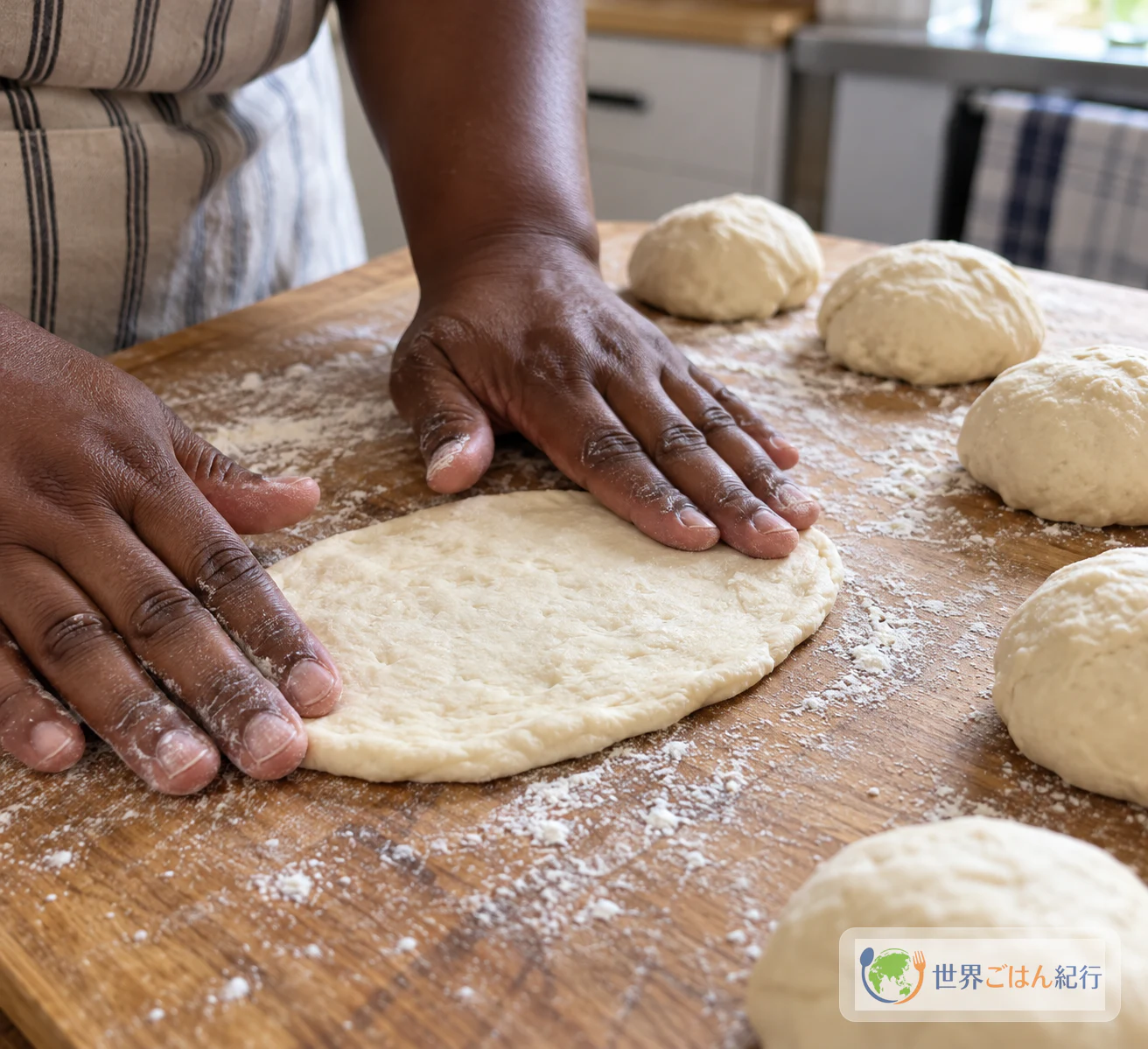
Foodleclub's method says about 1/4 inch, and its notes also accept around 1 cm. Stay within that range, since dough that is too thick can leave the center raw.
Can I fry without a thermometer?
Yes. Foodleclub's test is a small piece of dough that bubbles gently and floats. Never use smoke as a signal that the oil is ready, and stay with the pot.
Can I make vetkoek without yeast?
Foodleclub's self-raising flour and Greek yoghurt version is a separate recipe. Leaving the yeast out of this dough or replacing it isn't covered here.
Can I keep leftovers?
We recommend eating vetkoek freshly fried, the same day. Foodleclub's page includes storage ideas, but they are a home blog's suggestions and we couldn't confirm them against public food-safety guidance, so we give no storage periods, freezing directions or reheating temperatures. For anything left over, follow Japan's Ministry of Health, Labour and Welfare's general principles for preventing food poisoning at home: don't let germs get on food, don't let them multiply, and destroy them.
Why is there no nutrition information?
Foodleclub's calorie figure is its own site calculation, and the frying oil absorbed and the size behind it are unclear. We don't reproduce it as a firm value.
Sources
- Foodleclub (VJ), "How to make South African vetkoek." The recipe used here: ingredients, approximate yield, kneading, rising, shaping, oil temperature and doneness checks, plus the Afrikaans name, serving occasions, ways of eating it and the separate quick version. https://www.foodleclub.com/vetkoek-and-curried-mince/
- Food & Home Magazine / Bianca Muller, "Vetkoek (Magwinya) recipe." The paired name, a different formula, and warm vetkoek with mince, chicken, cheese or on its own. https://www.foodandhome.co.za/recipes/vetkoek-recipe
- EatOut, "Vetkoek Recipe." Vetkoek as a comfort snack for winter afternoons, and a different formula served with golden syrup. https://www.eatout.co.za/recipe/vetkoek/
- The Citizen, "Recipe for the day: Vetkoek with curried mince." A reprint of the Foodleclub recipe in the context of filled vetkoek, not counted as independent support. https://www.citizen.co.za/lifestyle/food-and-drink/recipes/recipe-for-the-day-vetkoek-curried-mince/
- Ministry of Agriculture, Forestry and Fisheries of Japan, "食中毒予防" (Food poisoning prevention). The general principle of heating food that needs cooking through to the center. https://www.maff.go.jp/j/syouan/seisaku/foodpoisoning/f_encyclopedia/index.html
- Ministry of Health, Labour and Welfare of Japan, "家庭でできる食中毒予防" (Preventing food poisoning at home). The three principles of food-poisoning prevention, and the fact that it can also occur with meals at home. https://www.mhlw.go.jp/stf/seisakunitsuite/bunya/0000049664.html