The Story of Brik
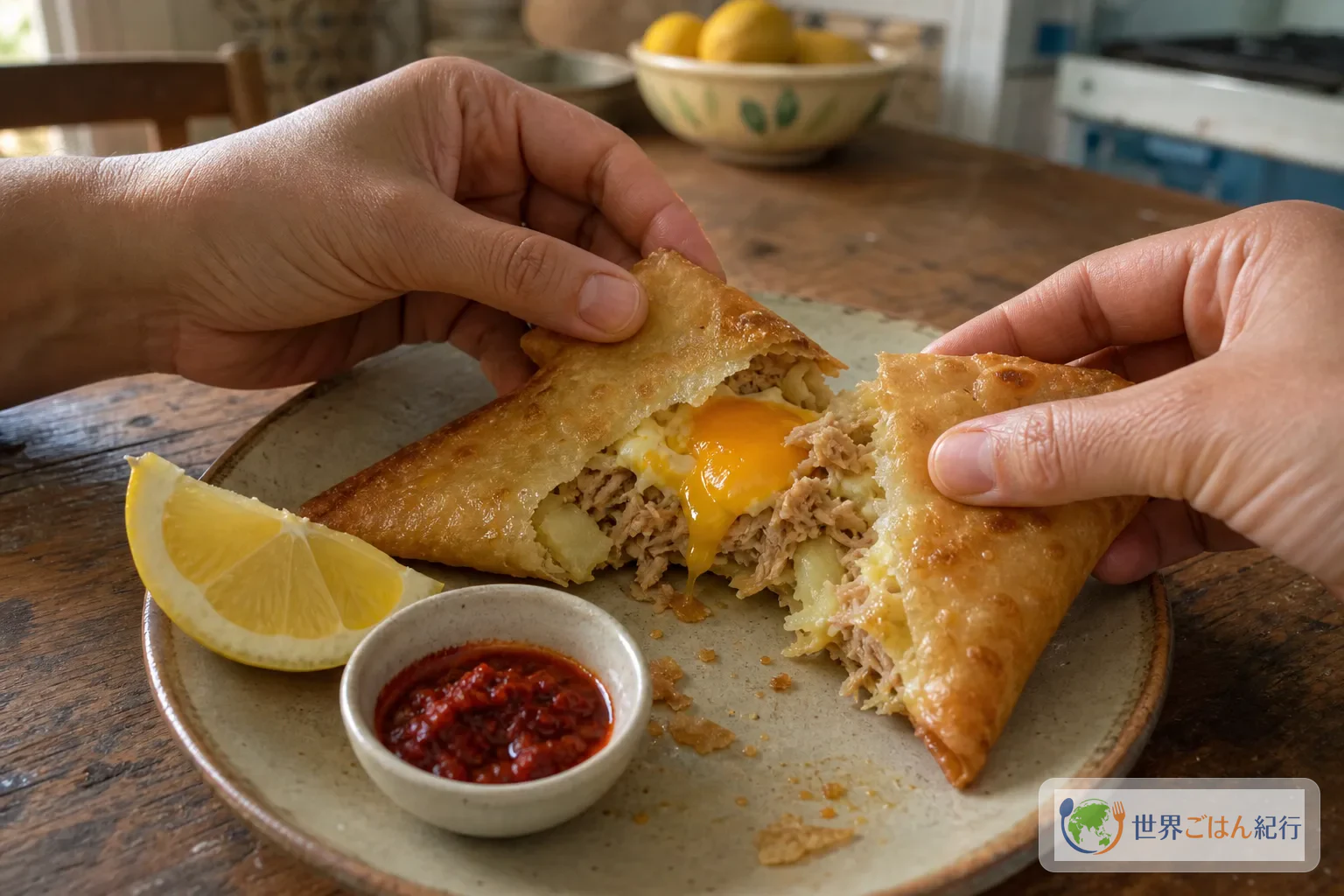
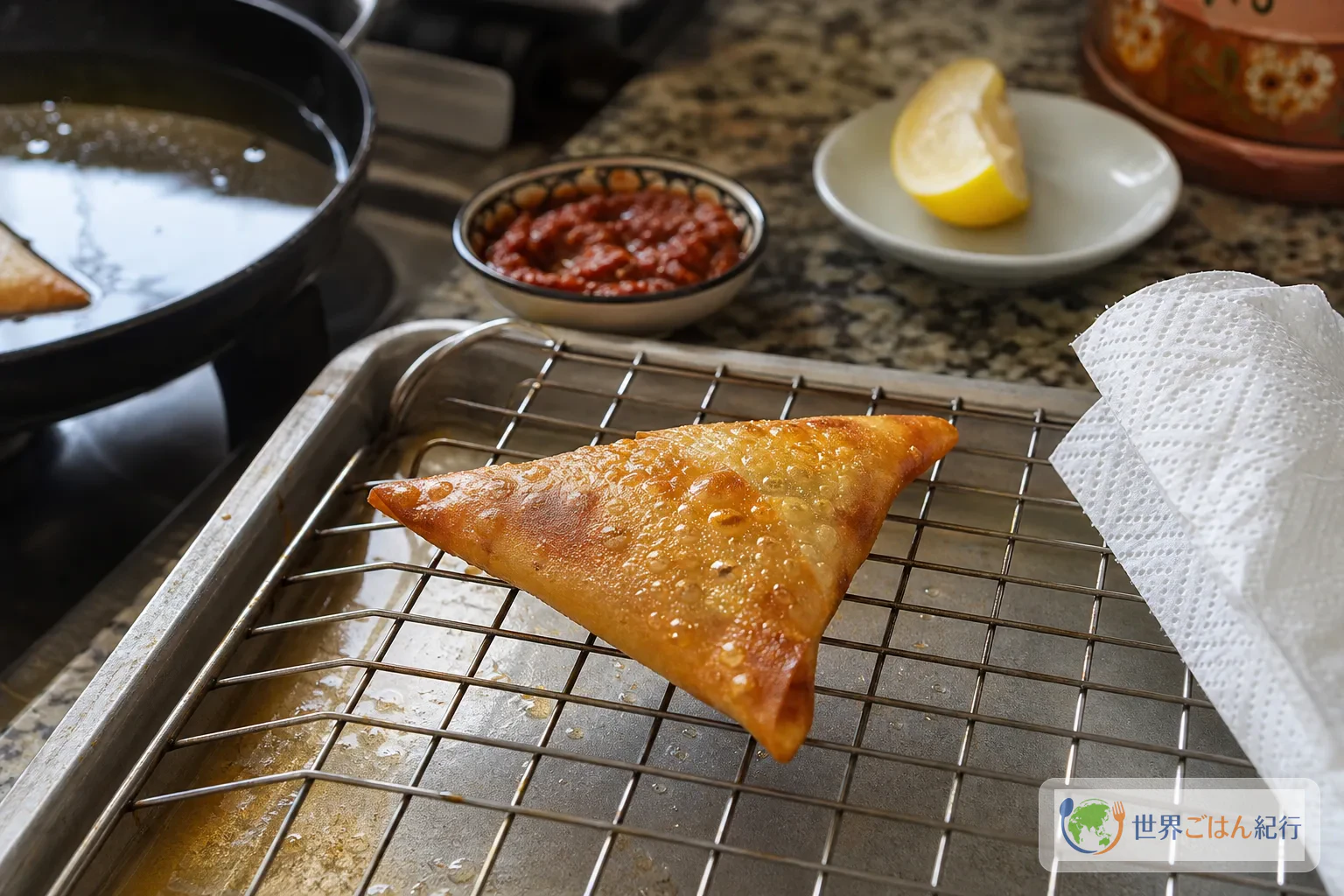
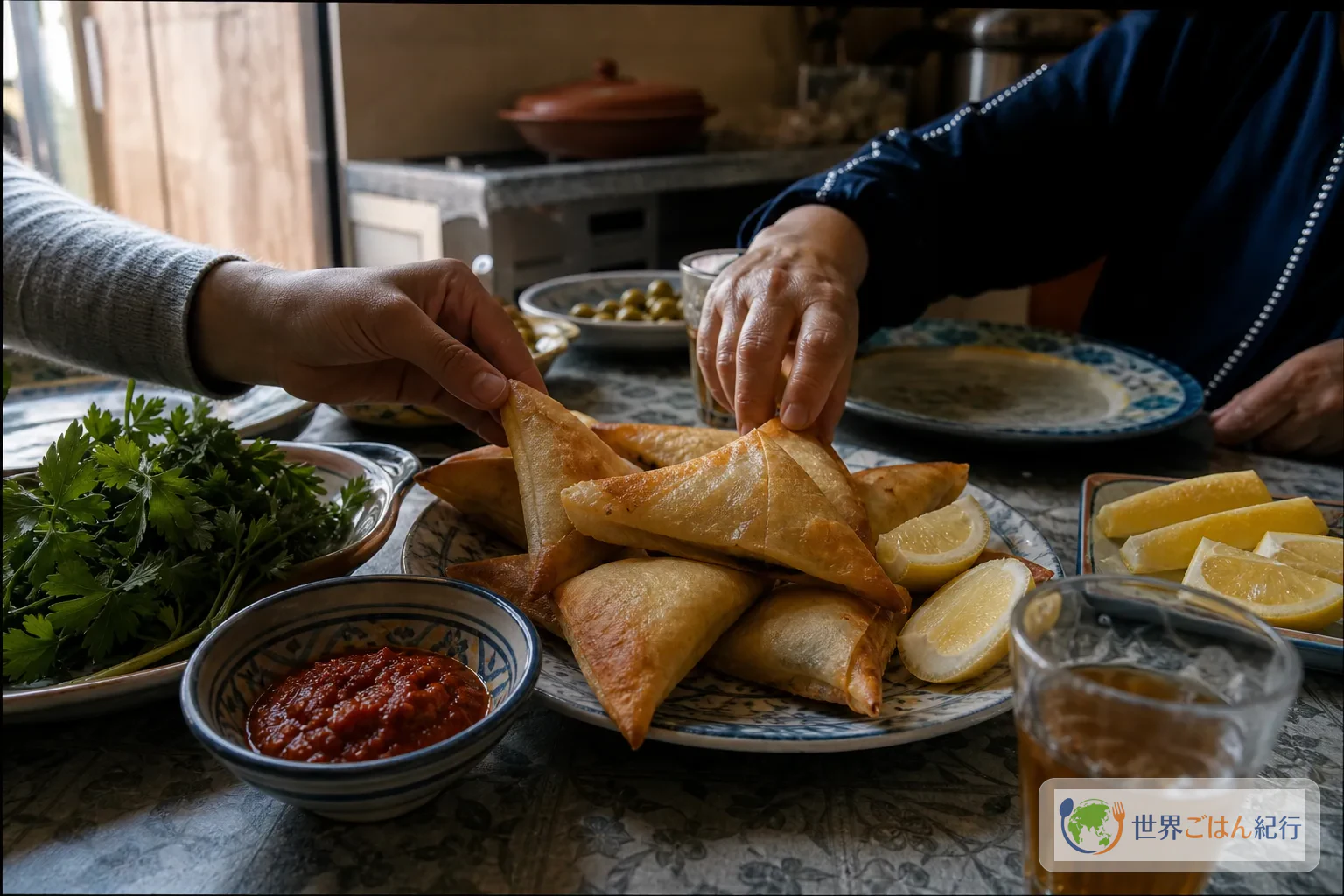
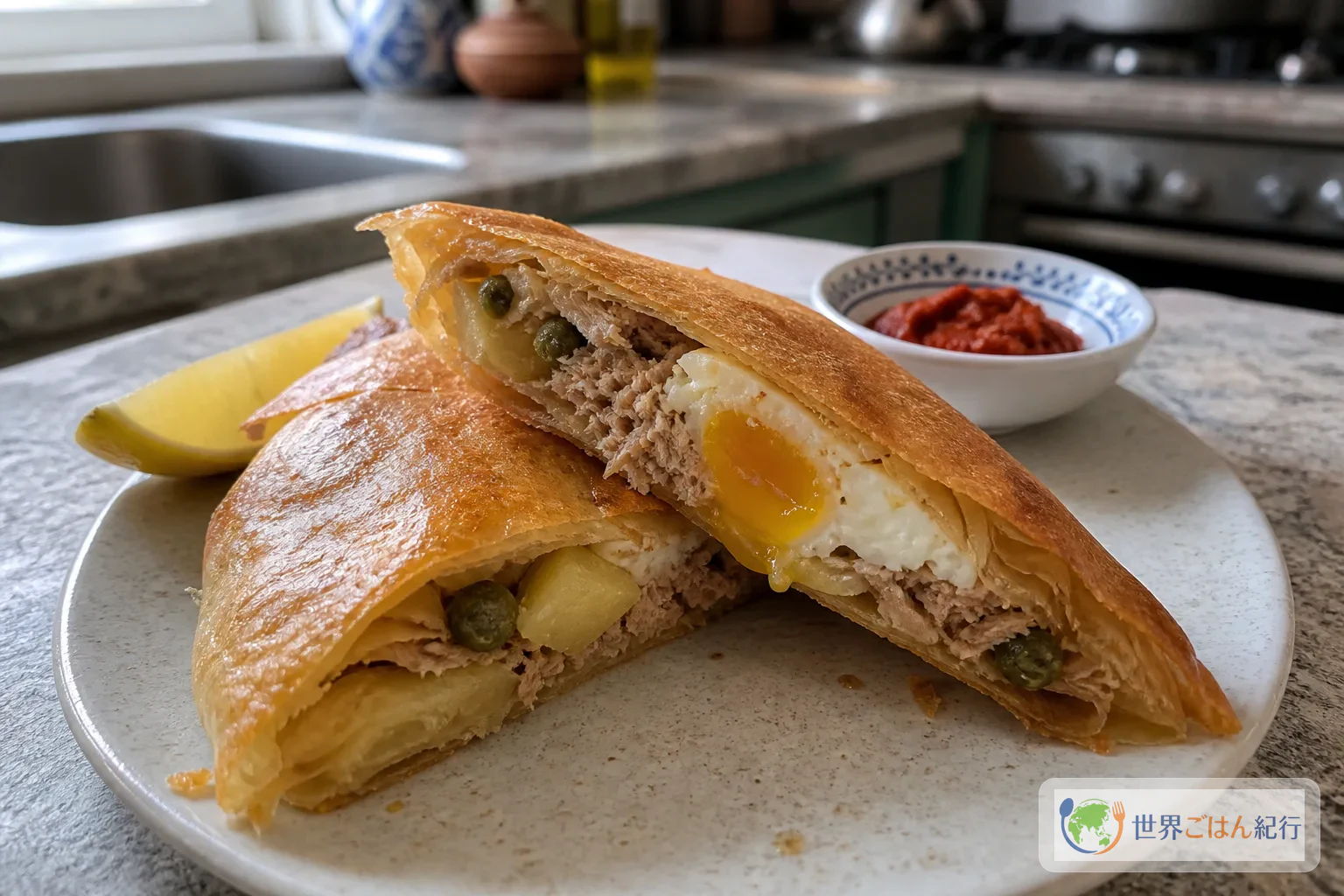
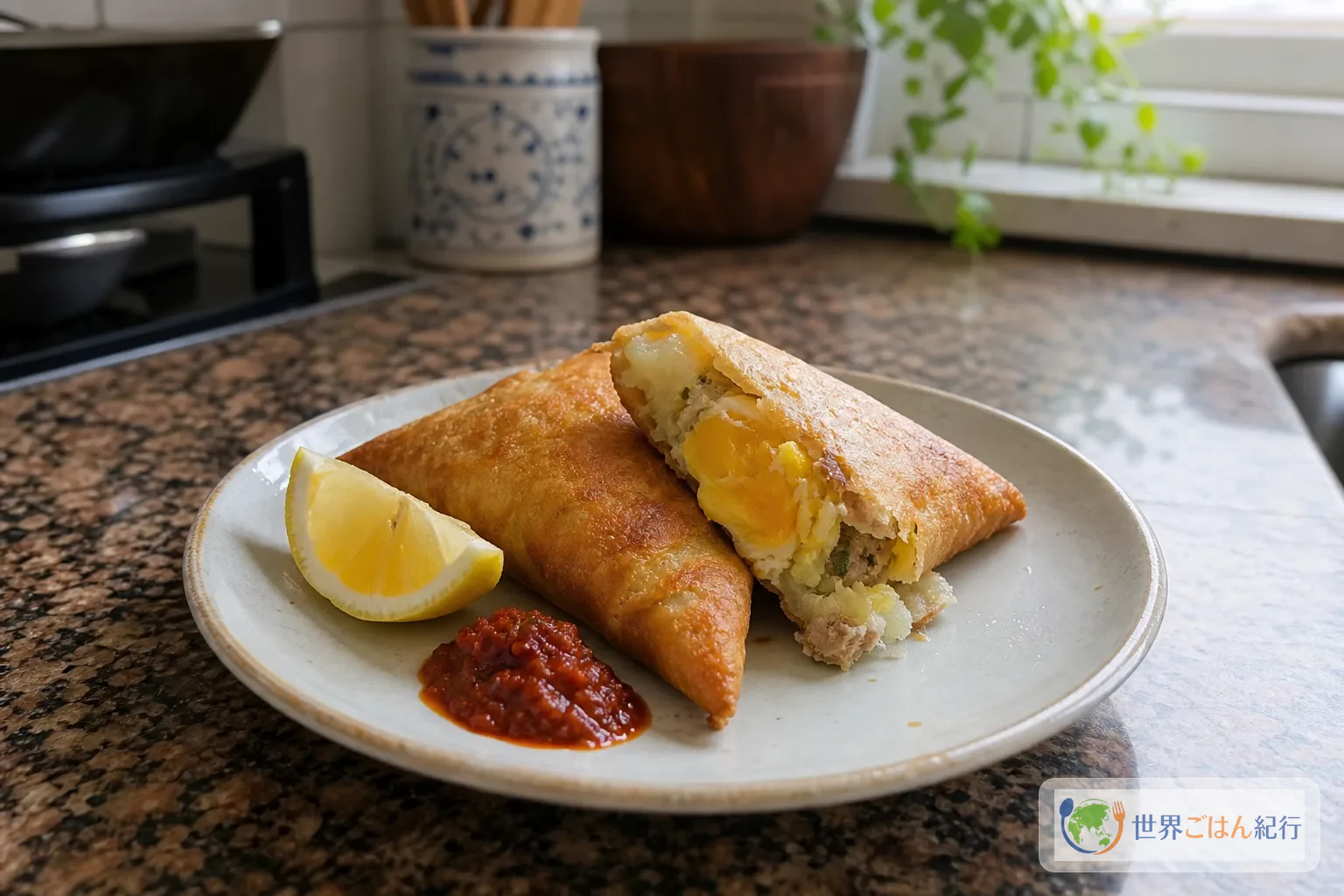
In the oil, a paper-thin triangle of pastry puffs up. When the edge turns golden, lift it onto a rack and break the corner a little, and from deep in the white the yolk slowly runs. The pastry crackles at a touch of the finger, and the potato inside is fluffy. A squeeze of lemon at the end lightens, for a moment, the edge of the heat and the oil.
Brik (Brik, بريك) is a fried pastry loved in Tunisia. The egg brik in particular is a classic combination that brings thin pastry, egg, tuna, potato, capers, and parsley into one. At the Tunisian table it appears in meals that break the Ramadan fast, and at lunch too. Brik brushed with harissa, eaten at a street stall or at home, is described as a way of eating that adds not only heat but brings out the toasty flavor of the thin pastry.
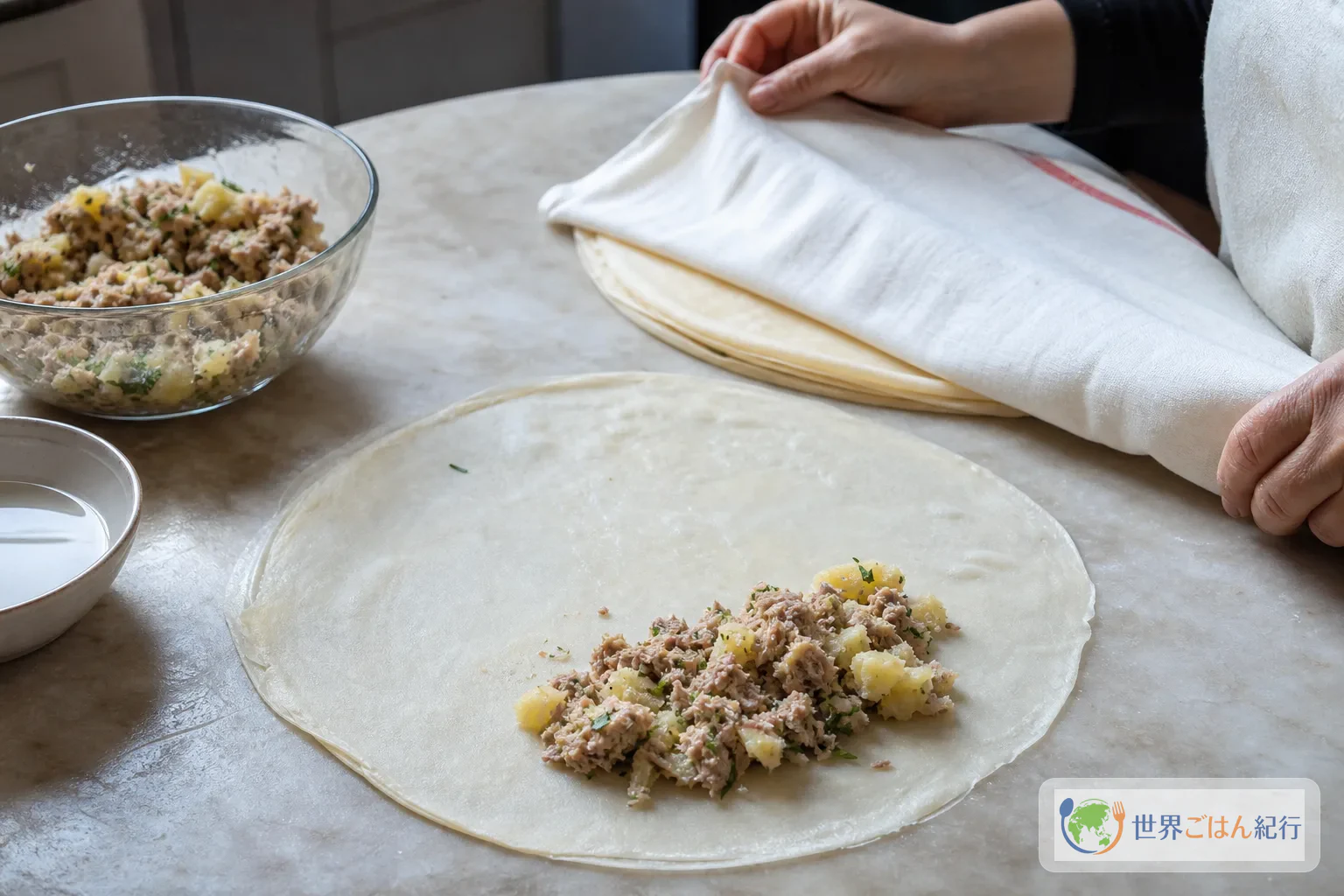
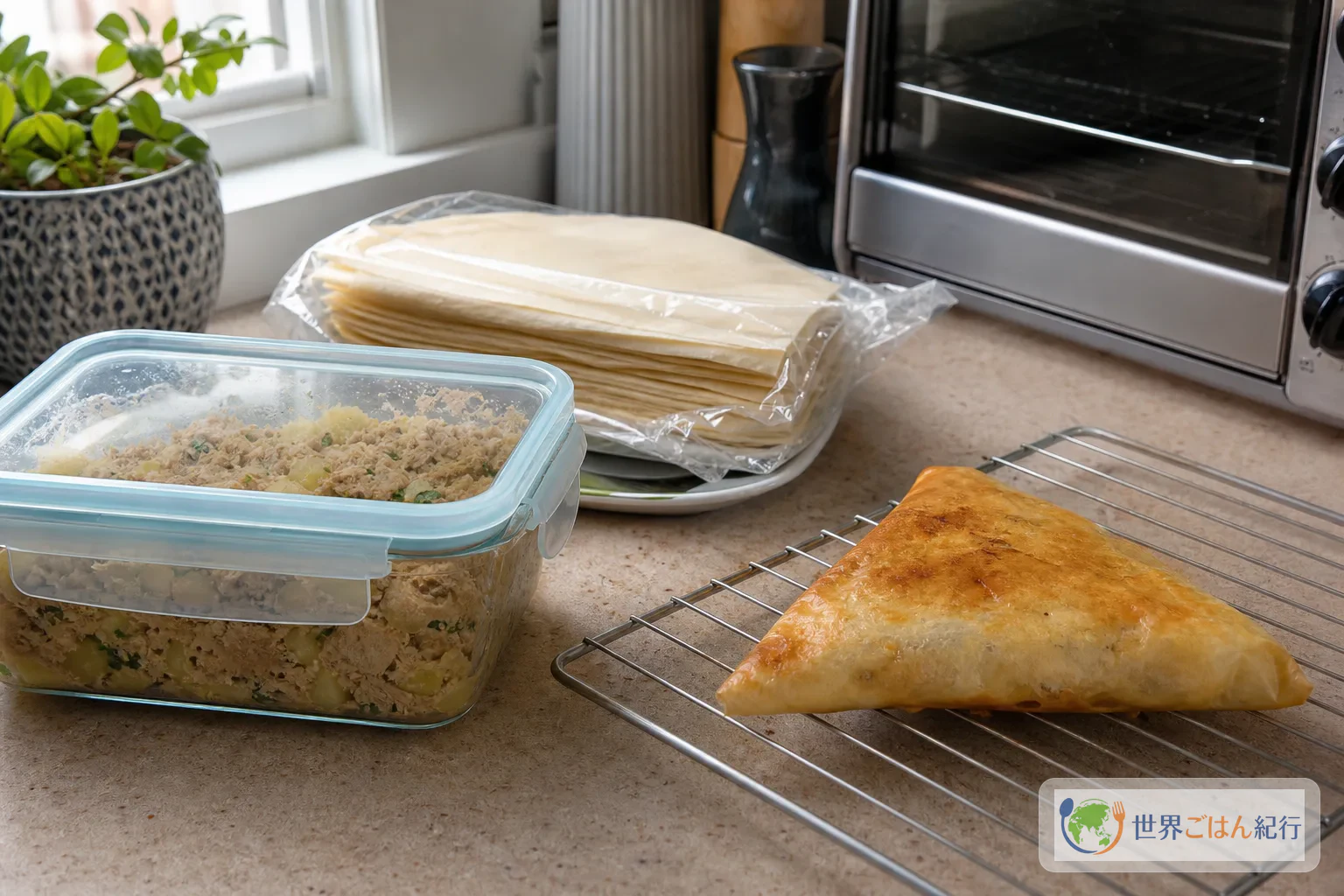
The pastry used locally is a round thin sheet called malsouka. It is a wheat dough partly baked, so it is not completely raw even before frying. The thickness is about 1 mm. If you cannot find it, frozen spring roll wrappers can substitute, and you can also make it with two sheets of phyllo. However, spring roll wrappers are easy to fold, while phyllo is lighter and shatters more easily. Change the pastry, and the sound and mouthfeel change even with the same filling.
The origin of the name cannot be fixed to one source. In North Africa and the Middle East there are dishes that combine thin pastry and fillings, such as brik, burek, borek, and warka. Tunisian brik is thought to be related to Turkish borek, but its origin is not clear. That is exactly why differences of region and household remain in the shape of the pastry and the combination of fillings.
If you are making it for the first time in Japan, rather than stopping the kitchen to hunt for authentic malsouka, it is realistic to learn the cooking with frozen spring roll wrappers. The axis of the decision is whether to leave the egg soft or set it through to the center. For the former, shorten the frying time and watch the color of the pastry. For the latter, set only the white first, then give it a little longer. Whichever you choose, the pleasure of brik includes eating it freshly fried with lemon.
Malsouka is the round thin pastry for brik. In Japan it can be replaced with 4 frozen spring roll wrappers. If using phyllo, use two sheets together and keep the package closed until just before use so they do not dry out.
Ingredients (serves 4)
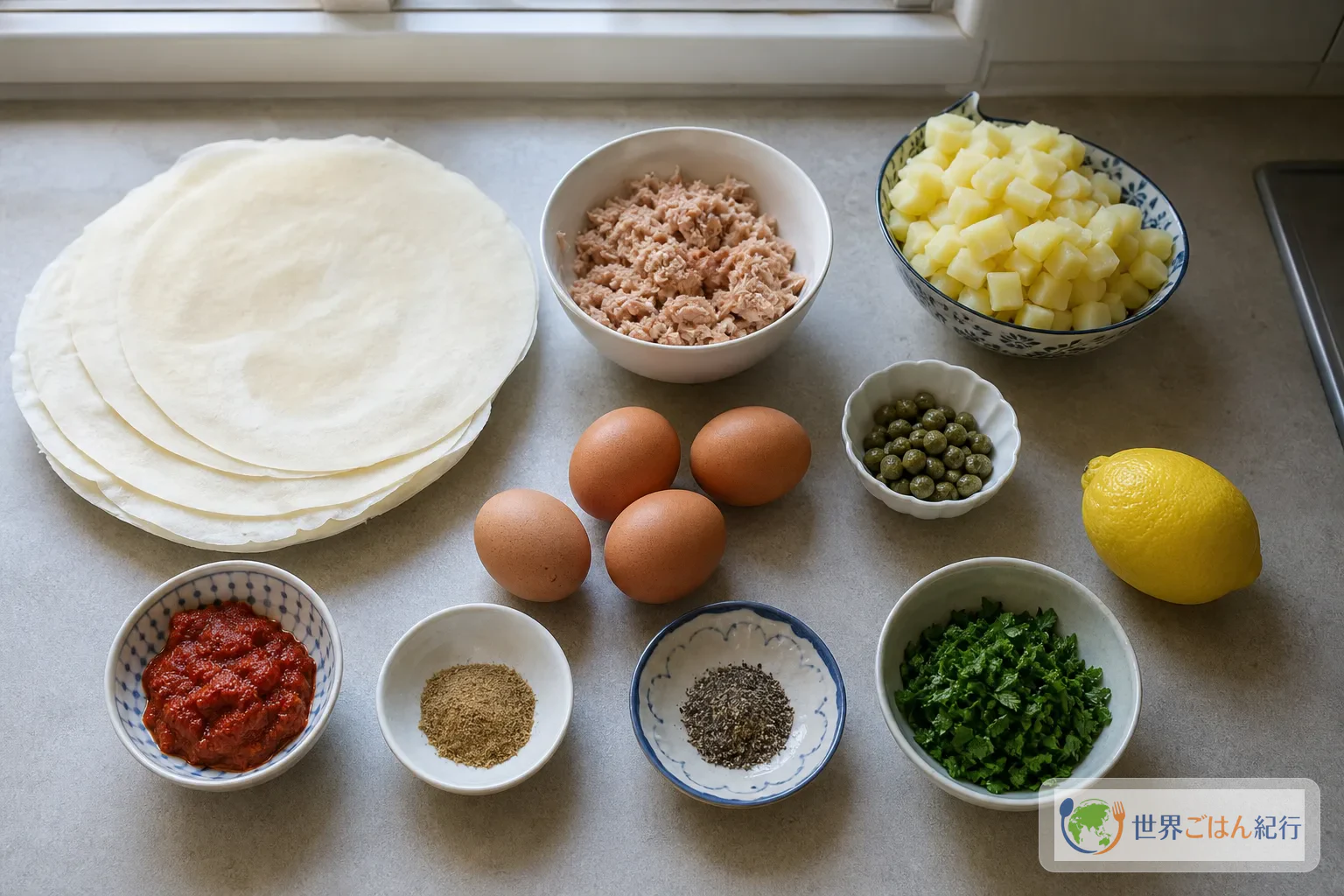
Choosing the pastry
If you can find malsouka, its thinness and round shape come closest to the local texture. Frozen spring roll wrappers tear less and are easy to find, but the folded part is a little thicker. Phyllo is light, but it cracks as soon as it dries, so handle it under a cloth that is not too damp.
Choose wrappers that you can also use in your next dish. Skip buying a large pack of wrappers if you do not want leftovers for just this once. Check the wrapper size, the number of sheets, and whether it is frozen or chilled.
Heat when you cannot find harissa
If you have Tunisian harissa, use that; it is the shortest route. If you cannot find it, mix 30 g sambal oelek with 1/2 tsp ground cumin, 1/4 tsp ground caraway, 1/4 tsp grated garlic, 1 tsp lemon juice, and 1 tsp olive oil. It is not harissa itself, but it adds aroma and acidity to the heat of the chili.
The sambal oelek introduced here is a chili base used as a substitute for harissa. It makes sense if you can use it up in other stir-fries and noodles and do not mind the extra step of adding spices. Skip it if you already have harissa or do not want an extra spicy jar. Check the product name, content weight, and ingredients.
Is a small jar of cumin enough?
Cumin is used to add aroma to the substitute harissa paste. It makes sense if you want to use a small amount of the ground spice right away and can use it in curries and bean dishes. Skip it if you can get harissa and will not make the substitute paste. Check whether it is ground or whole, and the ingredients.
The pastry contains wheat, and the filling contains egg and fish. Labels differ by product, so check the ingredient list. A soft yolk is the traditional texture of brik, but if you prioritize safety standards for raw eggs and egg dishes, fry until the yolk and white are set. When serving small children, older adults, pregnant people, or people with weakened immune systems, avoid a soft yolk.
What to Decide Before Frying
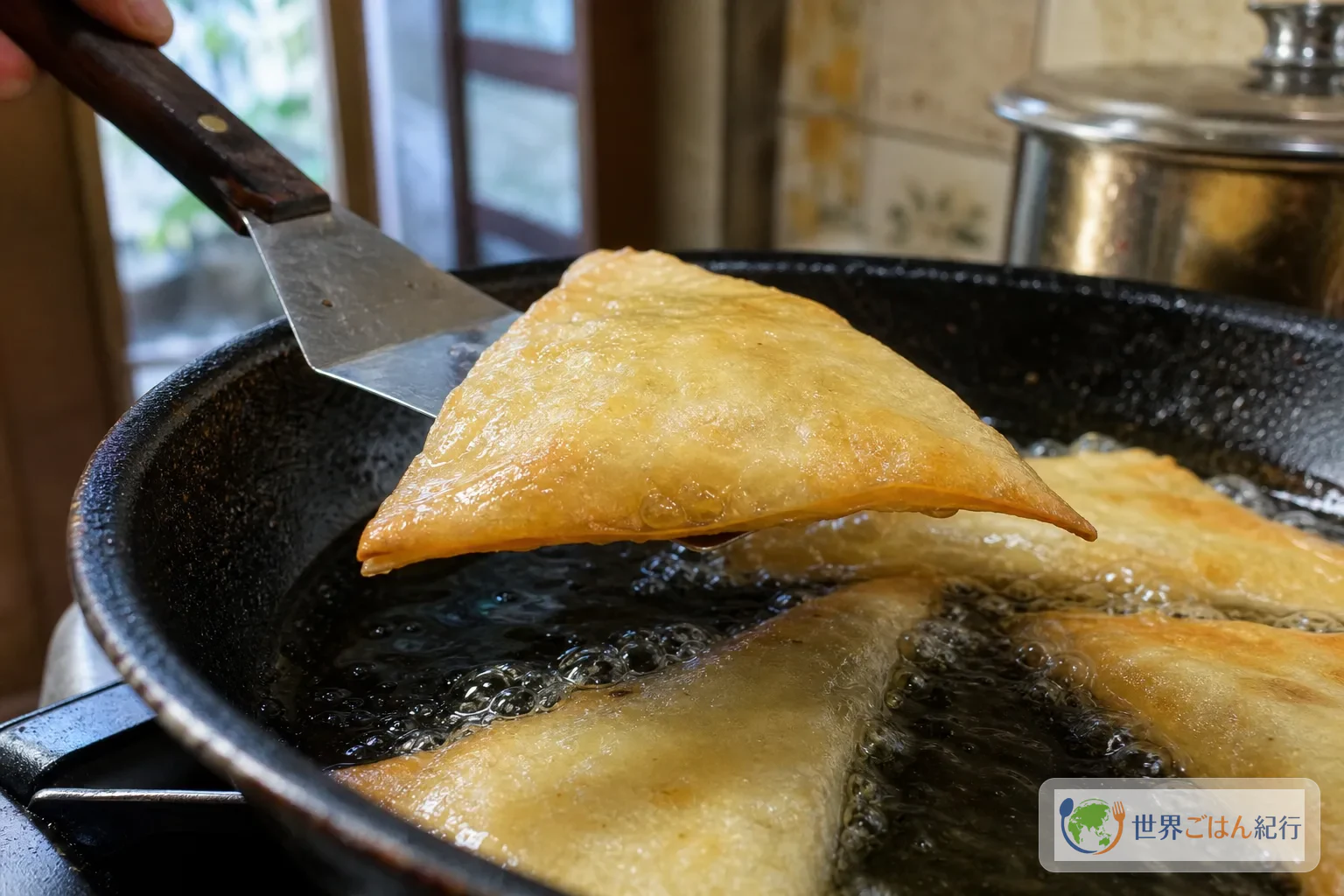
Brik changes state in the few minutes from opening the pastry to finishing the frying, more than at the stage of making the filling. If you set these 4 things in the kitchen first, you will not hesitate after cracking the egg.
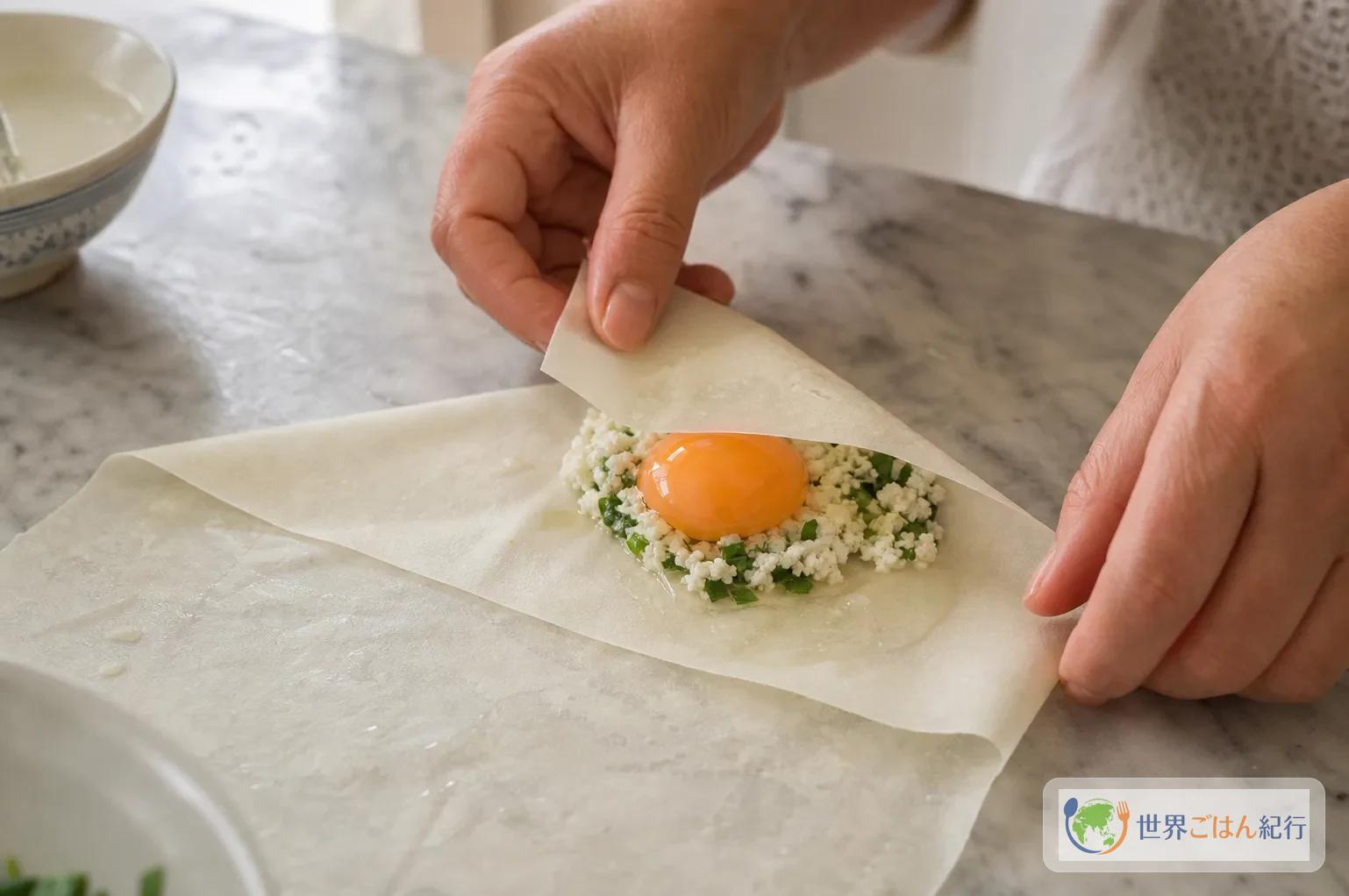
- Divide the filling into 4, and put the dish for cracking eggs and the spatula near the pot.
- Decide the order of opening the pastry and the rack where you put the fried brik.
- Decide before the first piece whether to go for a soft yolk or a set yolk.
- Put the harissa and lemon where you can reach them right after frying.
When the pastry is crisp but the filling is watery, the steam from the potato has not gone out. Not rushing the step of cooling the filling reduces both tearing and oil spatter. Conversely, if the pastry is hard, cracks, and the egg runs out, the pastry was left out of the bag too long. Dry pastry cannot be restored, so cover the rest and move on to the next sheet.
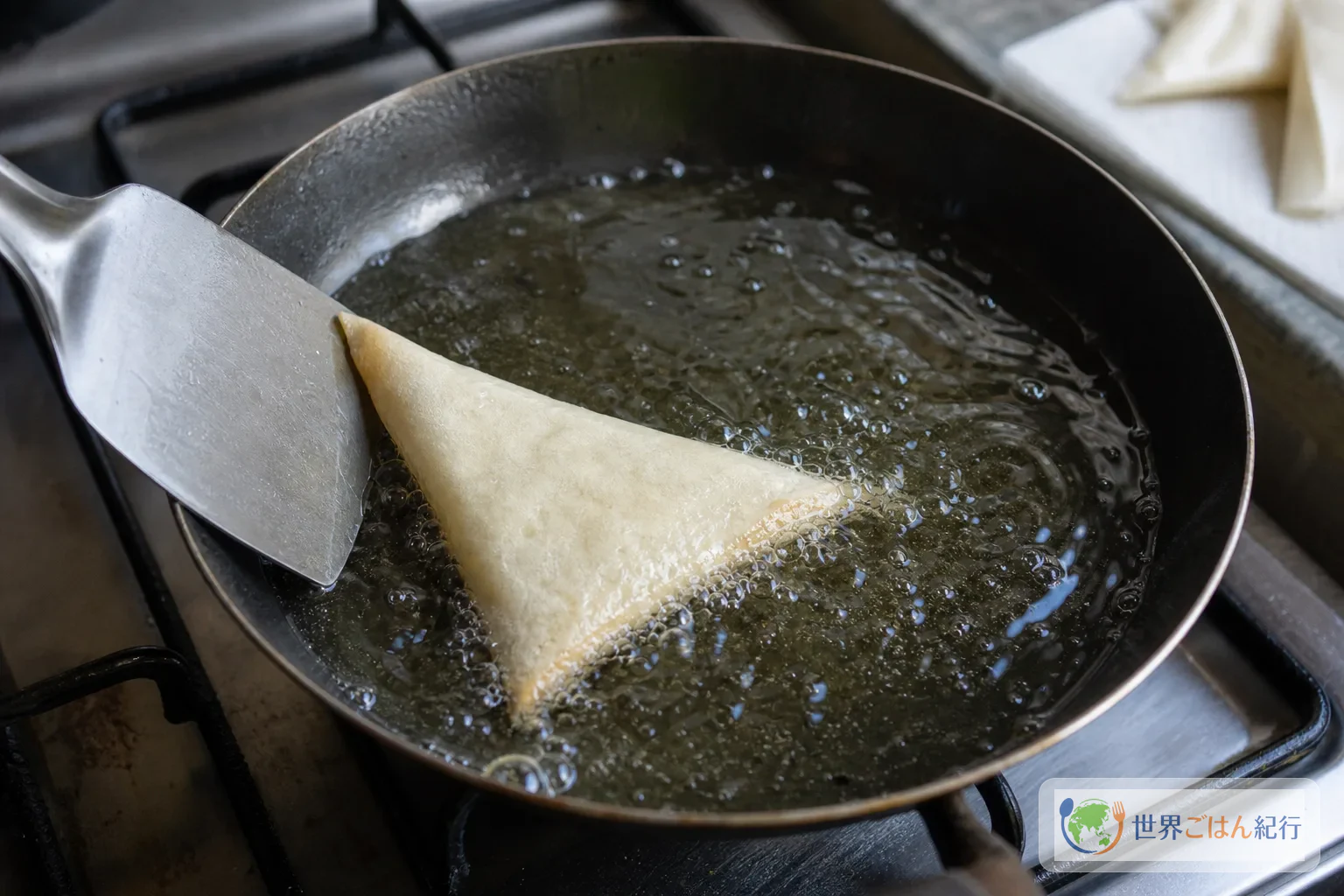
If the color deepens only after the oil bubbles have become fine, the heat is too high. Lower the temperature to allow time to bake and set the pastry. If the oil is quiet and no color forms, it is too cool. Bring it back to about 170 degrees C before putting in the next piece.
Even if you go for a soft yolk, fry the first piece a little longer and check the color of the pastry and how the white has set. From the second piece, decide whether to shorten the frying time at the same oil temperature or extend toward firm, and the finish of all 4 will match.
Where to Draw the Line When Changing the Filling
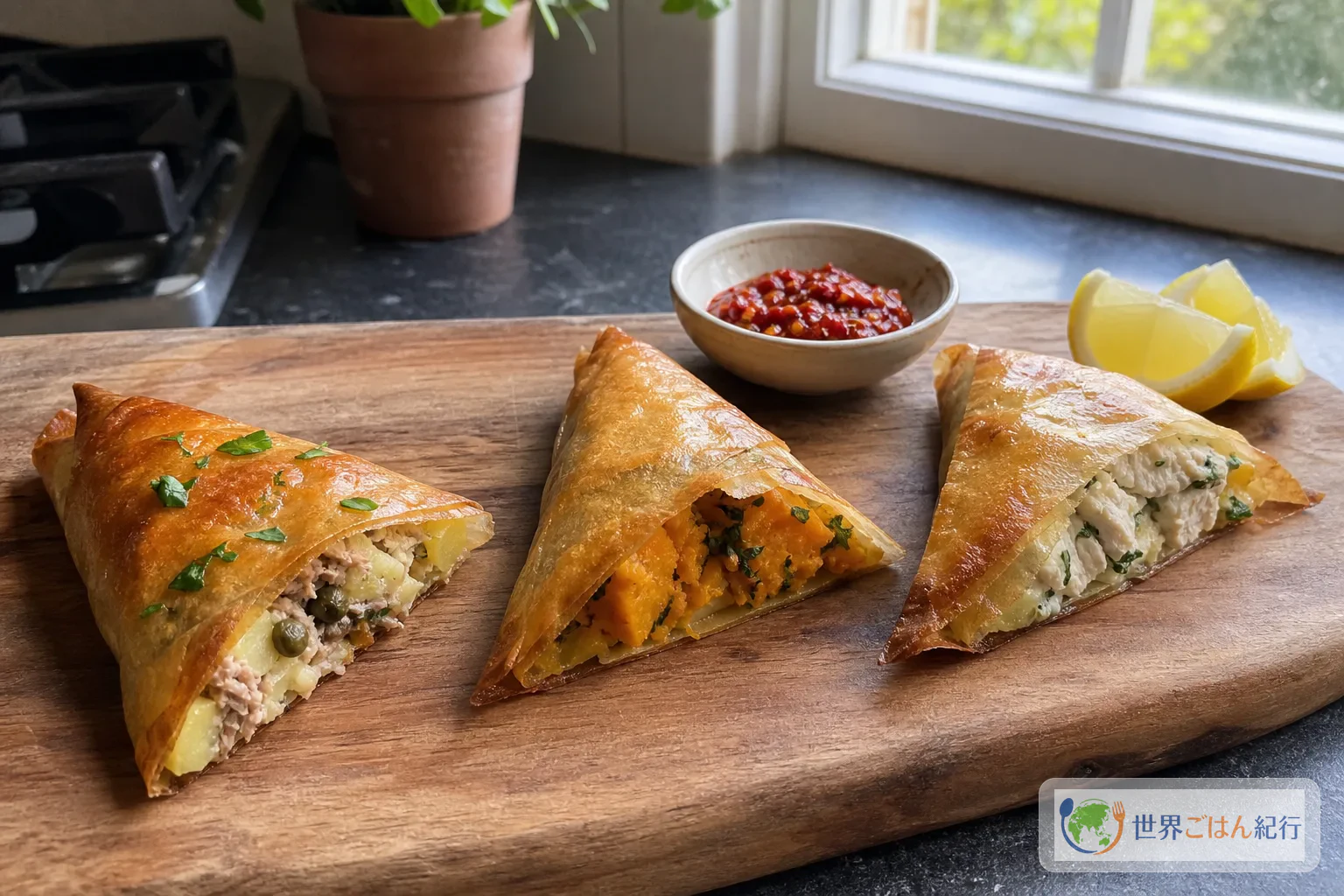
The classic is tuna, potato, egg, and capers. When you change the filling from here, what does not change is not wetting the pastry and leaving a hollow in which to place the egg.
Reduce the heat
Halve the harissa and serve it in a small dish at the table. Even without heat, the acidity of capers, the green aroma of parsley, and the outline of lemon remain, so aroma stays without increasing the moisture of the filling. If you leave out the heat entirely, increase the coriander a little to make up the aroma.
Switch to sweet potato and herbs
Replace the potato with the same weight of sweet potato, leave out the tuna, and add parsley and a little leek. Sweetness comes out, so do not reduce the capers and use more lemon. This is not one widely established form in Tunisia; think of it as a vegetable version that is easy to make at home.
Switch to chicken and cheese
Replace the tuna with finely shredded cooked chicken and add a little cheese. Always cool the filling before putting it on the pastry. Too much cheese runs in the oil and leaks from the seam of the pastry. For the first piece, it is safer to leave out the cheese and check how well the fold closes.
Its Place at the Tunisian Table
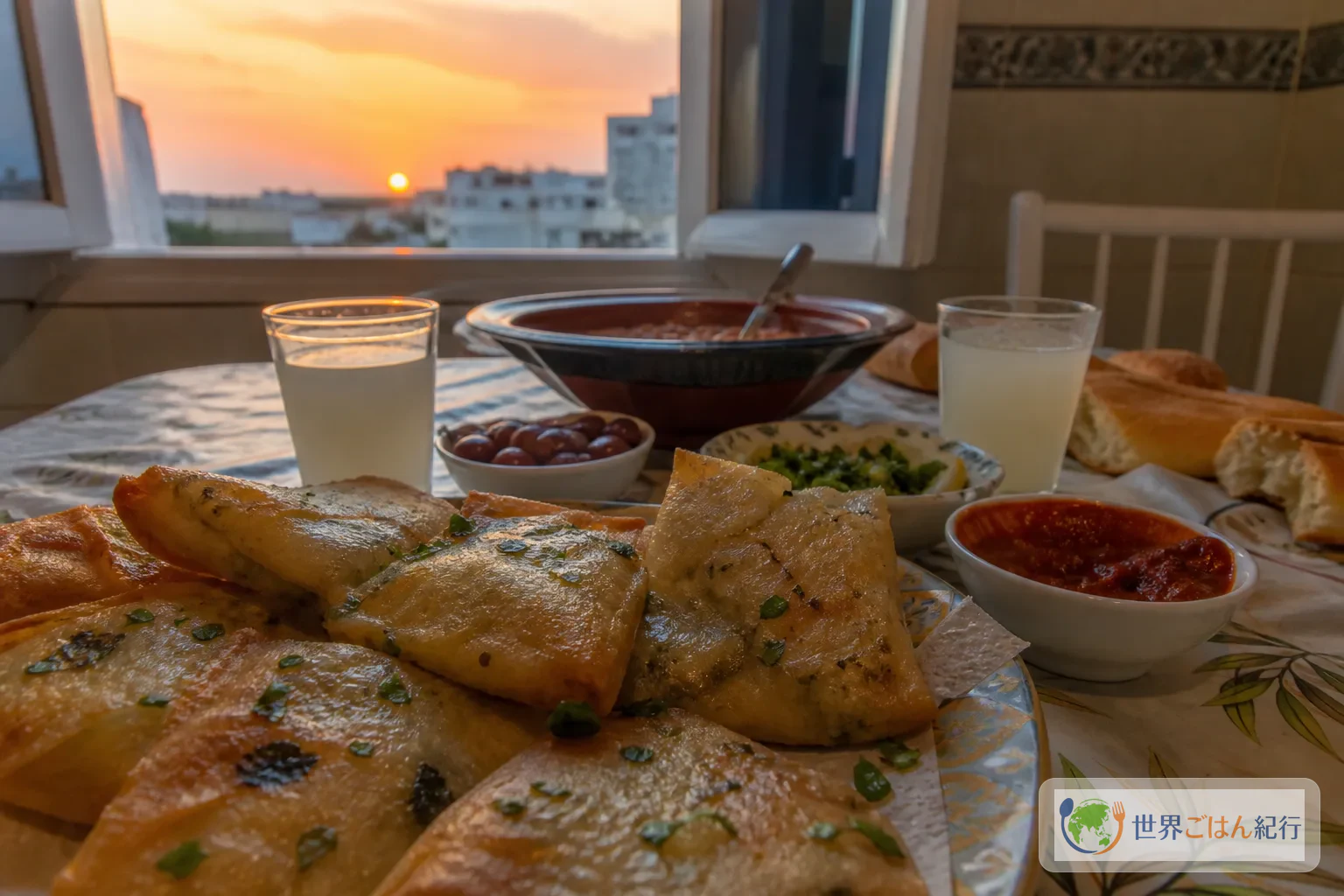
Brik is not only a dish of "filling wrapped in thin pastry" among Tunisian dishes. It is introduced as a dish eaten to break the Ramadan fast, and it also appears at lunch and as a light meal. Because the egg is wrapped and fried, some people enjoy the moment the yolk runs when broken, while others cook it through to suit the family. Not just the browning of the pastry but the state of the egg becomes a judgment at each table.
The name of the pastry also has layers of place. In Tunisia it is called malsouka and brik, while elsewhere other names such as warka and borek are used. SBS Food introduces how the names and uses of dishes made with thin pastry change by region, and that it is hard to fix the origin of brik to a single point. When you use spring roll wrappers in Japan, rather than hiding them as a mere substitute, think of it as moving the same filling into a different thin pastry, and the difference in pastry is easier to enjoy.
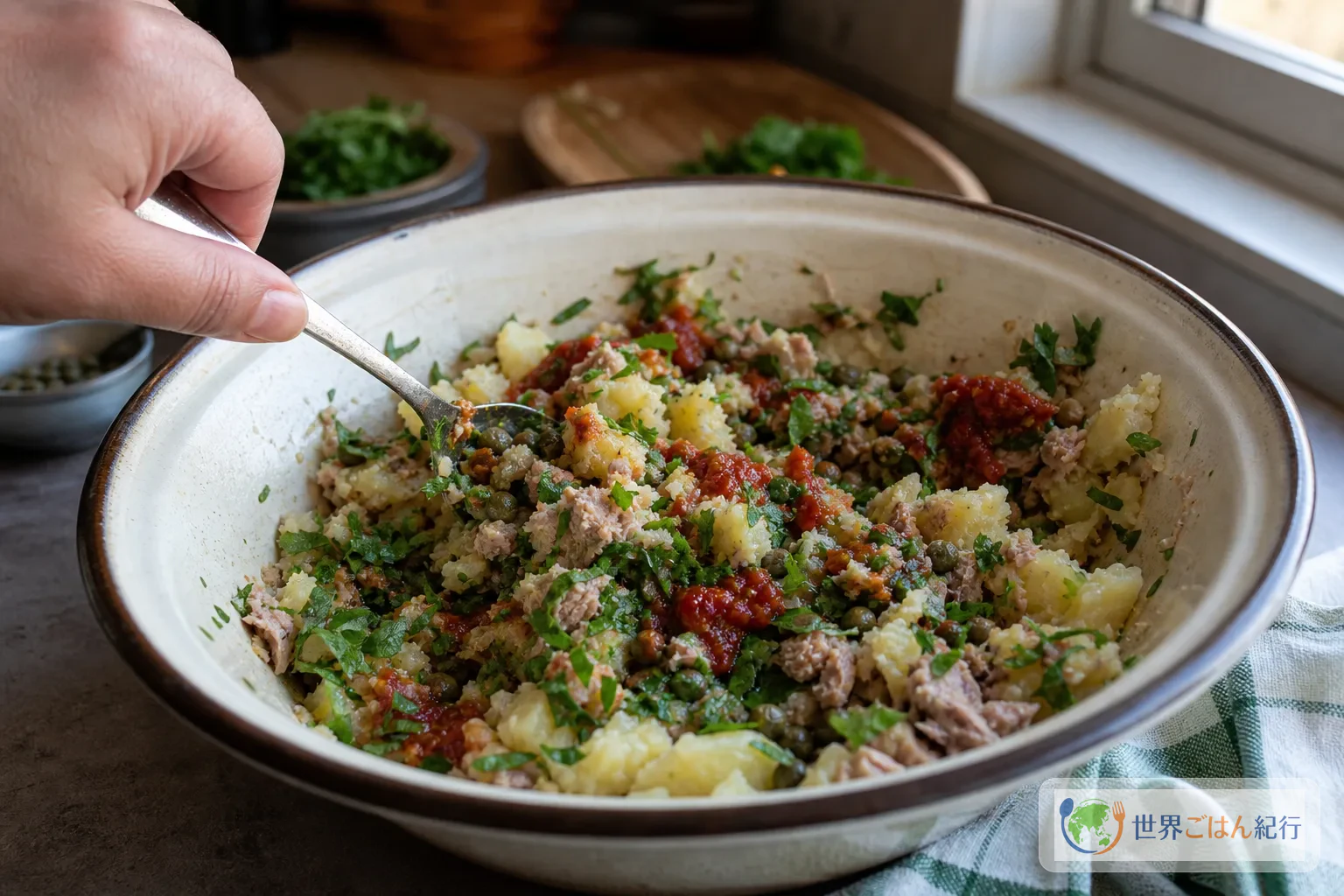
The ingredients also have roles. Tuna gives saltiness and savoriness, potato is the base that receives the yolk, capers are the acid that cuts the oil, and parsley is the escape route for aroma. Harissa does not only add heat; it brings chili, garlic, spices, and acidity at once. In the harissa food culture of Nabeul reported by the AP, harissa is used in home and restaurant cooking, and brushing it on brik is introduced as a way to eat it.
In a home kitchen, deciding first which elements to keep keeps you from getting lost in substitutions, rather than gathering every ingredient. If you have no malsouka, use spring roll wrappers. If you have no harissa, layer cumin and acidity on a chili base. If you want to avoid a soft yolk, take the color of the pastry a little darker and set the egg. If you set that much, brik becomes not a dish of rare ingredients but a dish built in the order of pastry, egg, heat, and acidity.
If you want to cook one more Tunisian egg dish, chakchouka (in Japanese), which simmers tomato and egg, shows a way of using heat different from fried food. Add msoki (in Japanese), a stew of beans and vegetables, and you have a large plate to receive the crispness of the brik. On a day with several light dishes, fricasse (in Japanese), a filled fried bread, can also go on the same table.
Storage and Reheating
The way to keep the lightest texture is to eat it right after frying. If you make ahead, keep the filling and pastry apart and do the work of wrapping the egg just before eating.
| What to store | How | Guide |
|---|---|---|
| Mixed filling | Cool, seal, and refrigerate | Until the next day |
| Unused pastry | Close the bag and refrigerate or freeze as the product label says | Follow the product label |
| Fried brik | Cool on a rack, seal, and refrigerate | Ideally the same day |
| Fried pastry before filling | Prevent drying and refrigerate | Until the next day |
Refrigerated with the filling in, moisture from the potato and egg moves into the pastry and the crispness is lost. To reheat, place the refrigerated brik on the rack of a toaster oven and heat at 180 degrees C for 5 to 7 minutes. Check that the center is thoroughly hot, and do not shorten the heating in an attempt to bring back a soft state.
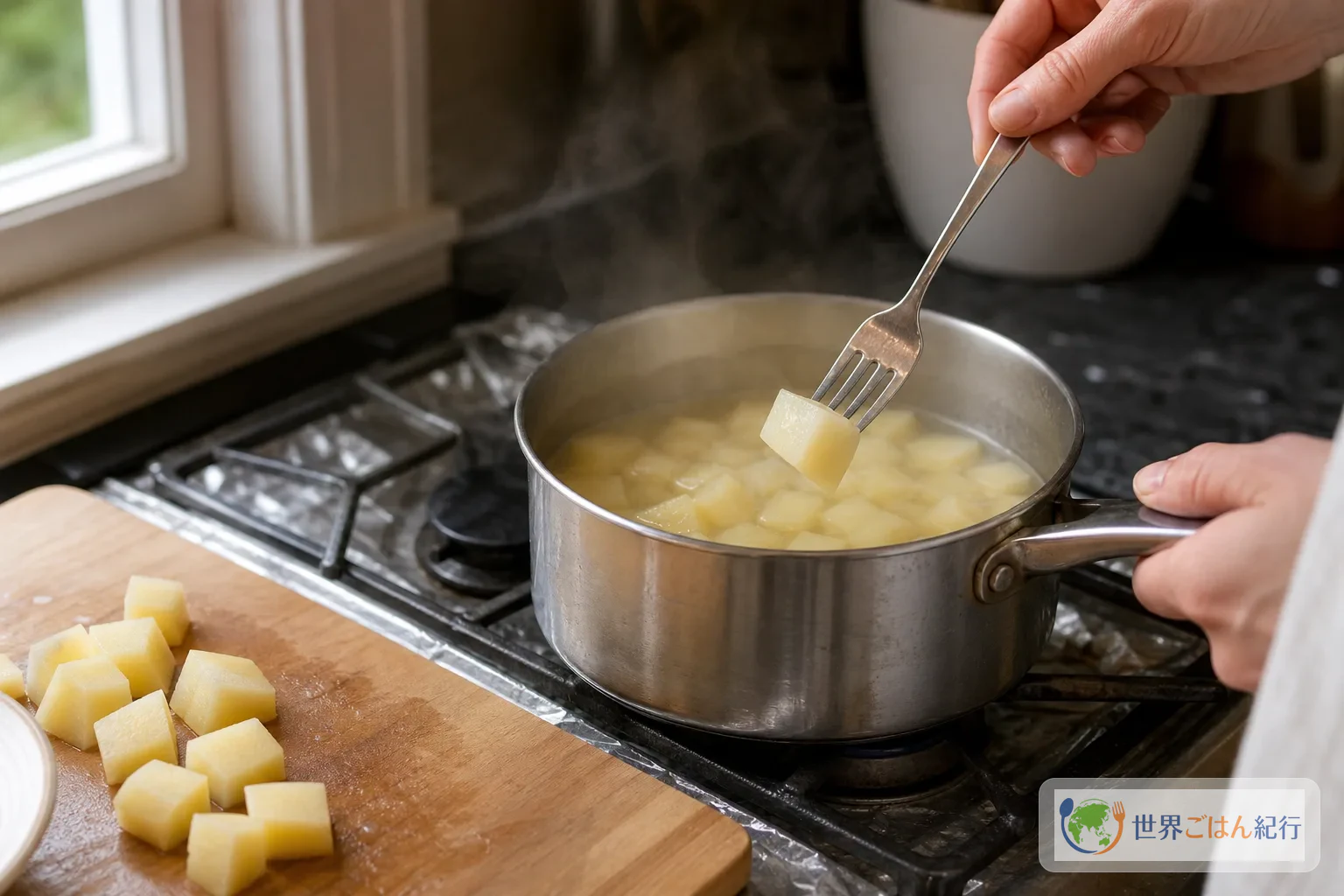
If you make the filling the day before, mix the boiled potato and tuna, cool them, add the capers, parsley, and harissa, and seal. Prepare the egg just before wrapping it in the pastry. Do not reuse filling that has stood a long time at room temperature, and avoid making ahead when you cannot keep it chilled while carrying it.
Frequently Asked Questions
Is malsouka the same as spring roll wrappers?
No. Malsouka is a round thin pastry for brik, while spring roll wrappers are square and the folded part is a little thicker. For the first time at home, spring roll wrappers are easier to handle, and when you want to prioritize the local texture, look for malsouka. Phyllo needs to be used as two sheets together, without letting it dry.
Is a soft yolk okay?
A soft yolk is one of the traditional textures, but if you prioritize safety, cook until the white and yolk are set. FoodSafety.gov gives the guideline of cooking raw eggs until the yolk and white are firm, and egg dishes to 71 degrees C. When serving small children, older adults, pregnant people, or people with weakened immune systems, it is right to avoid a soft yolk.
The egg runs out while frying
The edge of the pastry may not be closed, or you may have put on too much filling. Crack the egg into a small dish first and slide it into the hollow, leaving at least 2 cm of edge. Once folded, fry right away without stacking. If a little runs, do not press the pastry down with the spatula; gently return a corner of the pastry into the oil.
Can I make it without frying?
You can, but it is a different result from fried brik. Brush the surface of a spring roll wrapper thinly with oil and bake in a 220 degrees C oven for 10 to 12 minutes, and the pastry turns crisp. The egg sets more readily than when fried, so do not aim for a soft yolk; take it out after checking the state of the white and yolk.
What if I do not like capers?
Even if you halve the amount, you keep the acidity that tightens the oil and egg. If you leave them out entirely, squeeze a little more lemon at the table. You can also finely chop cucumber pickles instead, but wipe off the moisture well before mixing them into the filling.
How much harissa should I use?
Start with 1/2 tsp per piece and add more at the table; that is the safe way. Products with strong heat taste different even at the same 20 g, so increase it while checking the jar's label and tasting. If you have no harissa, use the substitute paste made with sambal oelek from the ingredient section.
Soft or Set for Today's Piece?
If you are making brik for the first time, frozen spring roll wrappers are enough for the pastry. Drive off the moisture of the filling, have a dish ready for cracking the egg, and fry one at a time. Keep these three and you can grasp the skeleton of the dish before hunting for a rare pastry.
If you choose a soft yolk, fry the first piece a little longer and check the pastry and the white. If you set the egg, lower the oil temperature and extend the total time. If you have no harissa, decide whether to buy sambal oelek and cumin as a substitute, or leave out the heat and increase the lemon.
If you make it again on a day you find malsouka, you will see the difference from spring roll wrappers. Your first plate is a plate for deciding which of these you want to keep: the sound of the pastry, the state of the egg, or the heat of the harissa.
Sources
- SBS Food, "Introducing brik, the Tunisian pastry you've probably eaten but never made" https://www.sbs.com.au/food/article/introducing-brik-the-tunisian-pastry-youve-probably-eaten-but-never-made/35eoef82r
- Accessed and checked: 28 July 2026
- SBS Food, "Brik pastry" https://www.sbs.com.au/food/recipe/brik-pastry/11z4ha4si
- Accessed and checked: 28 July 2026
- Penn State WPSU, "World Kitchen: Tunisian Recipes" https://wpsu.psu.edu/wp-content/uploads/2021/08/WPSU-World-Kitchen-10-Tunisian-Recipes.pdf
- Accessed and checked: 28 July 2026
- The Mediterranean Dish, "Tunisian Brik" https://www.themediterraneandish.com/tunisian-brik/
- Accessed and checked: 28 July 2026
- AP News, "Tunisia's harissa festival celebrates the country's fiery red pepper paste" https://apnews.com/article/tunisia-harissa-festival-nabeul-food-6d20f00f3f8f0281520c512e4b036f01
- Accessed and checked: 28 July 2026
- FoodSafety.gov, "Cook to a Safe Minimum Internal Temperature" https://www.foodsafety.gov/food-safety-charts/safe-minimum-internal-temperatures
- Accessed and checked: 28 July 2026
- Tourism Tunisia, "Tunisian Brik Recipe" https://www.tourismtunisia.com/tunisian-brik-recipe/
- Accessed and checked: 28 July 2026