A Tunisian Bowl That Begins with the Sound of Bread Drinking Soup
In the corner of the refrigerator, the end of a baguette has gone a little hard.
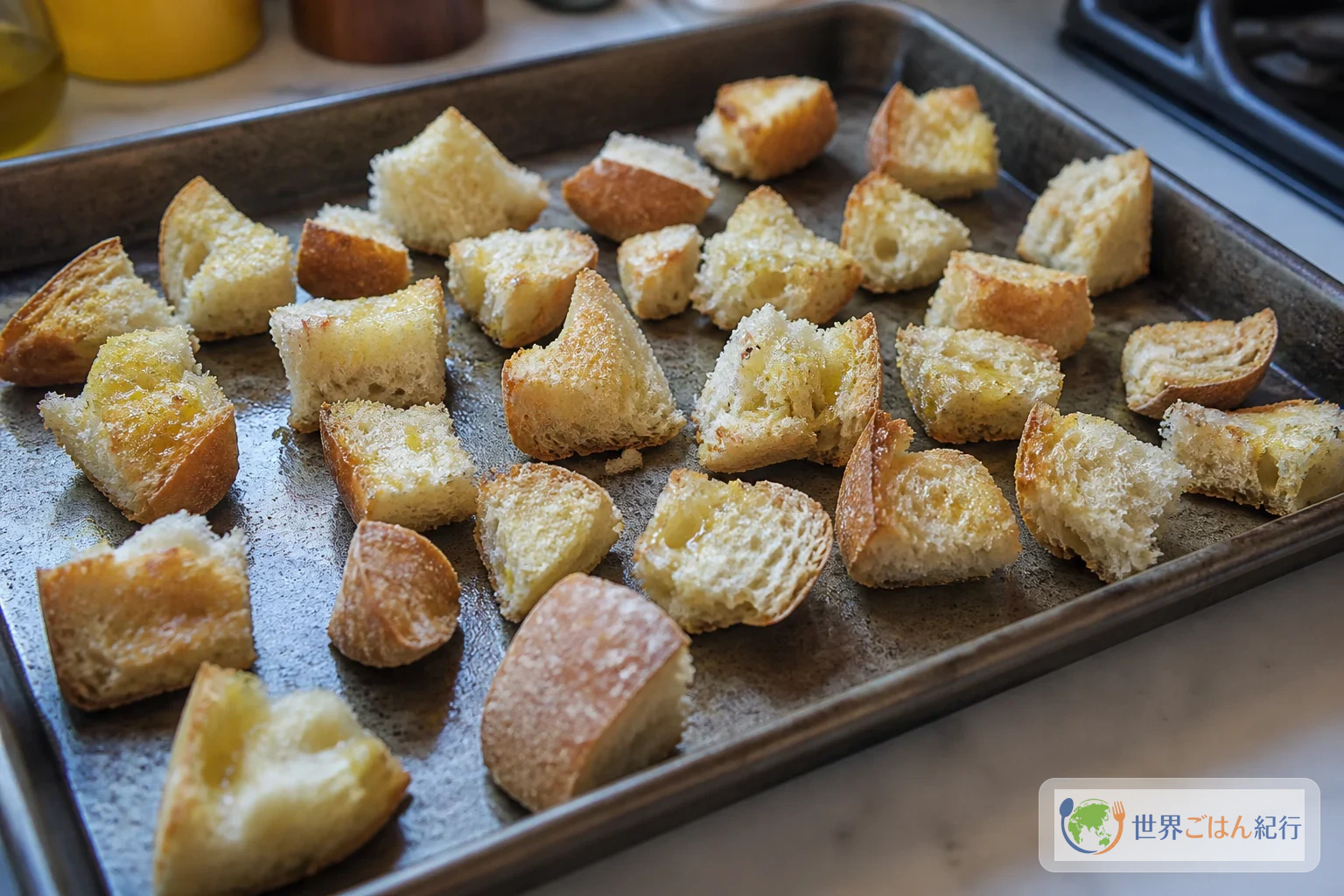
Bread you would not reach for as it is, torn into 2–3 cm pieces, goes into a deep bowl first. Pour hot chickpea broth seasoned with garlic and cumin over it, and the dry surface slowly loosens, with only the baked crust holding out until the end.
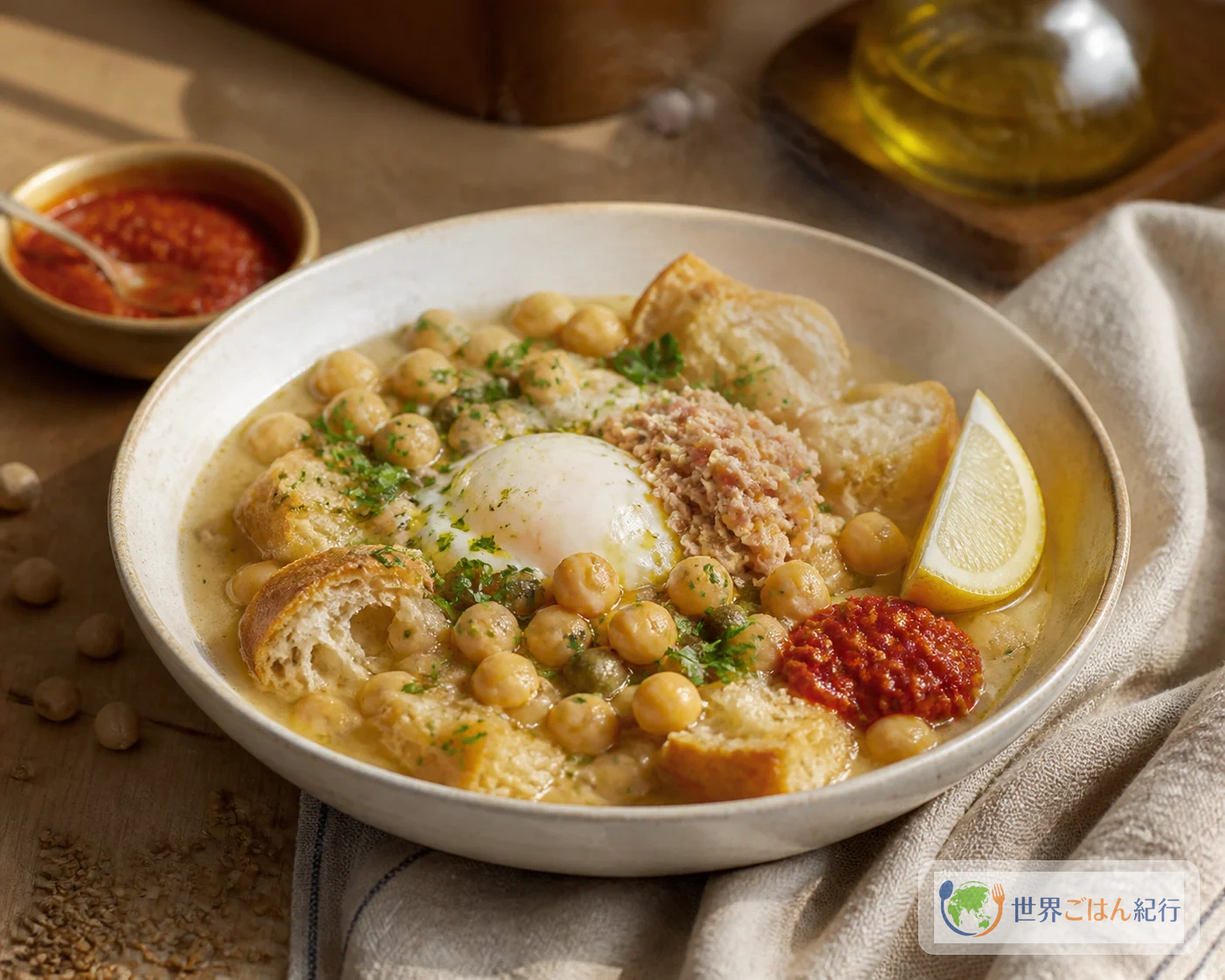
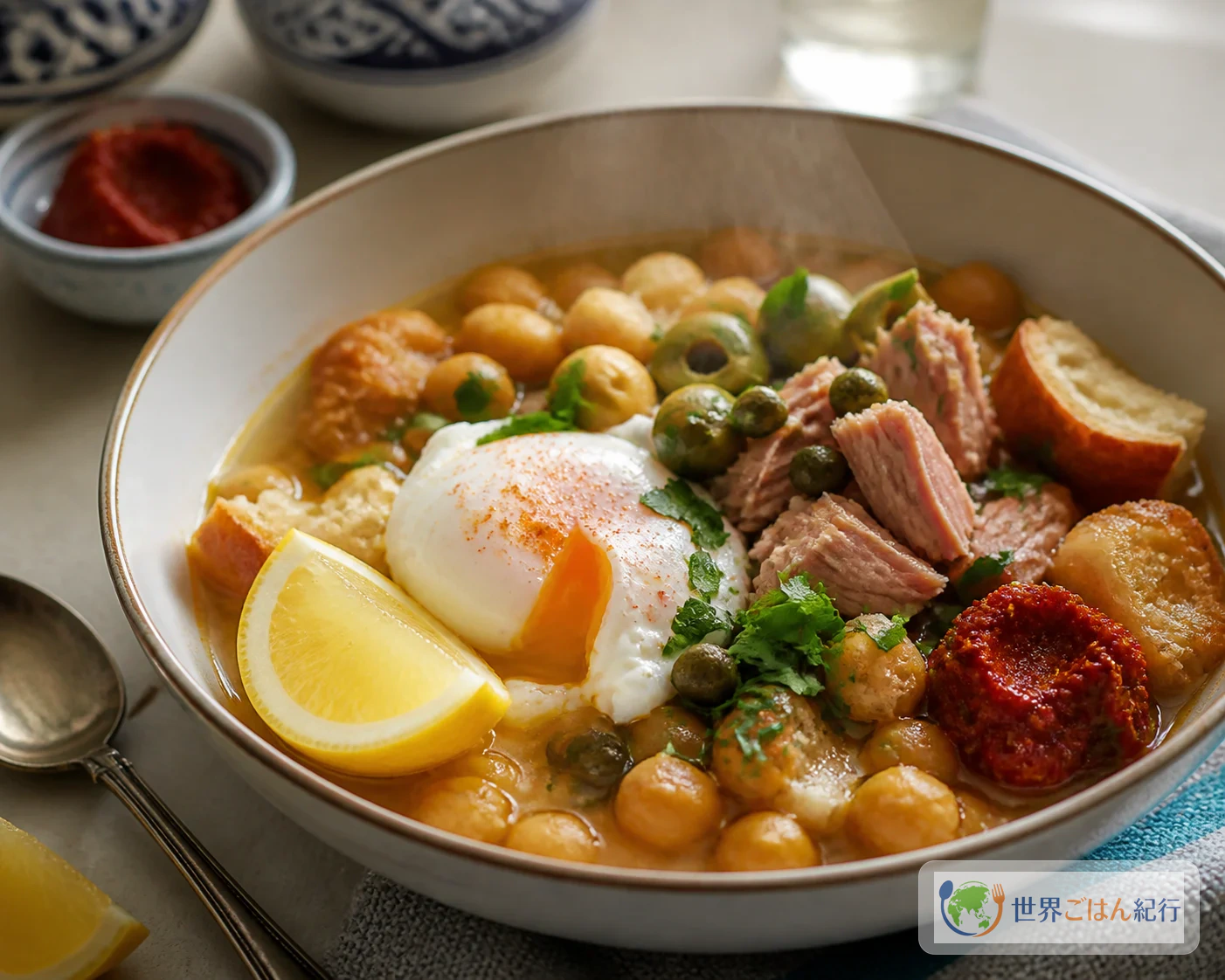
Lablabi is a chickpea soup beloved in Tunisia. It is not a rich meat stew but a dish in which the round sweetness of the chickpeas and the aroma of the broth are soaked into bread. To finish, harissa, olive oil, and lemon are added, and egg, tuna, capers, or olives go on top.
What trips people up when making it elsewhere is not any special technique. Do you finish it quickly with canned chickpeas, or soak dried chickpeas overnight to bring out their aroma? Do you put the cumin in the pot all at once, or add it in the bowl along with the heat? Decide these two things and the outline of the flavor is hard to throw off.
Built around a 40-minute method with canned chickpeas, this article also covers how to budget time on days you use dried beans, how to recover when the bread falls apart too much, and the sandwich version from northern Tunisia. Because you can vary the heat for each person, it suits breakfast and a late dinner alike.
Lablabi is a thin soup centered on chickpeas, bread, garlic, and cumin. Tunisian cooking sites link the dish name to a Turkish word meaning "roasted chickpeas," but there is no need to remember the etymology when cooking at home. What matters is the order: put the bread at the bottom of the bowl, pour in the chickpea broth, and then layer on the toppings. The Youki Foods introduction presents it as a home dish for eating hardened bread deliciously, and shows the style of eating while mixing it with two spoons.
At the Local Table, the Wisdom of Not Throwing Away Bread, for Breakfast or a Late Meal
Lablabi gets its fullness from the amount of chickpeas and uses bread to catch the broth. In Tunisia it is described as breakfast and as a light bite in town, and it also appears when you want something warm late at night. It is not finished in the pot and then served; the bread is laid in the bowl and each person adds harissa and lemon and mixes it, so bowls with different levels of heat come from the same pot.
This is where it differs a little from an ordinary bean soup. Rather than making the soup first and putting bread on the side, the bread goes in first, and the time it takes to soak up the broth is part of the dish. The first few bites have the bite of the crust, and the nearer you get to the bottom the softer it is, so the texture changes within the bowl.
There is also room in the choice of toppings. Drop in an egg and the yolk melts into the soup; add tuna and its salty fish flavor layers over the beans. Capers and olives add acidity and saltiness, so the dish holds together even if you do not have all of them. It is also common to leave the heat out of the pot and set it in each person's bowl at the end, which is part of why a family or friends can easily gather around the same pot.
Harissa has too much presence to be treated as just a hot sauce. It is a paste of red chile with garlic, salt, oil, and spices, and as something rooted in everyday Tunisian tables it was inscribed on UNESCO's Representative List of the Intangible Cultural Heritage of Humanity in 2022. Locally, the knowledge and work of drying chiles, removing the seeds, and grinding them with spices are also handed down within family and community ties.
So in lablabi, rather than dissolving a lot of harissa from the start to make a "spicy soup," it is easier to preserve the aroma of the chickpeas and cumin by breaking up the red paste a little at a time as you eat. Bowls for people who want less heat get just oil and lemon, and bowls for people who want more get extra harissa. It is a dish that lets one pot accommodate everyone's taste at the table.
Ingredients (serves 4): Decide First, Canned or Dried Chickpeas
This time we use canned chickpeas and make four servings. Because can sizes differ by brand, use the drained weight in the table as your guide.
Choosing canned chickpeas is not cutting corners. The Mediterranean Dish recipe also uses canned or precooked chickpeas, presenting it as a way to get them tender quickly. On a weekday, using canned chickpeas and warming the soup while the bread bakes makes it easier to keep the heat at the moment you pour it into the bowl.
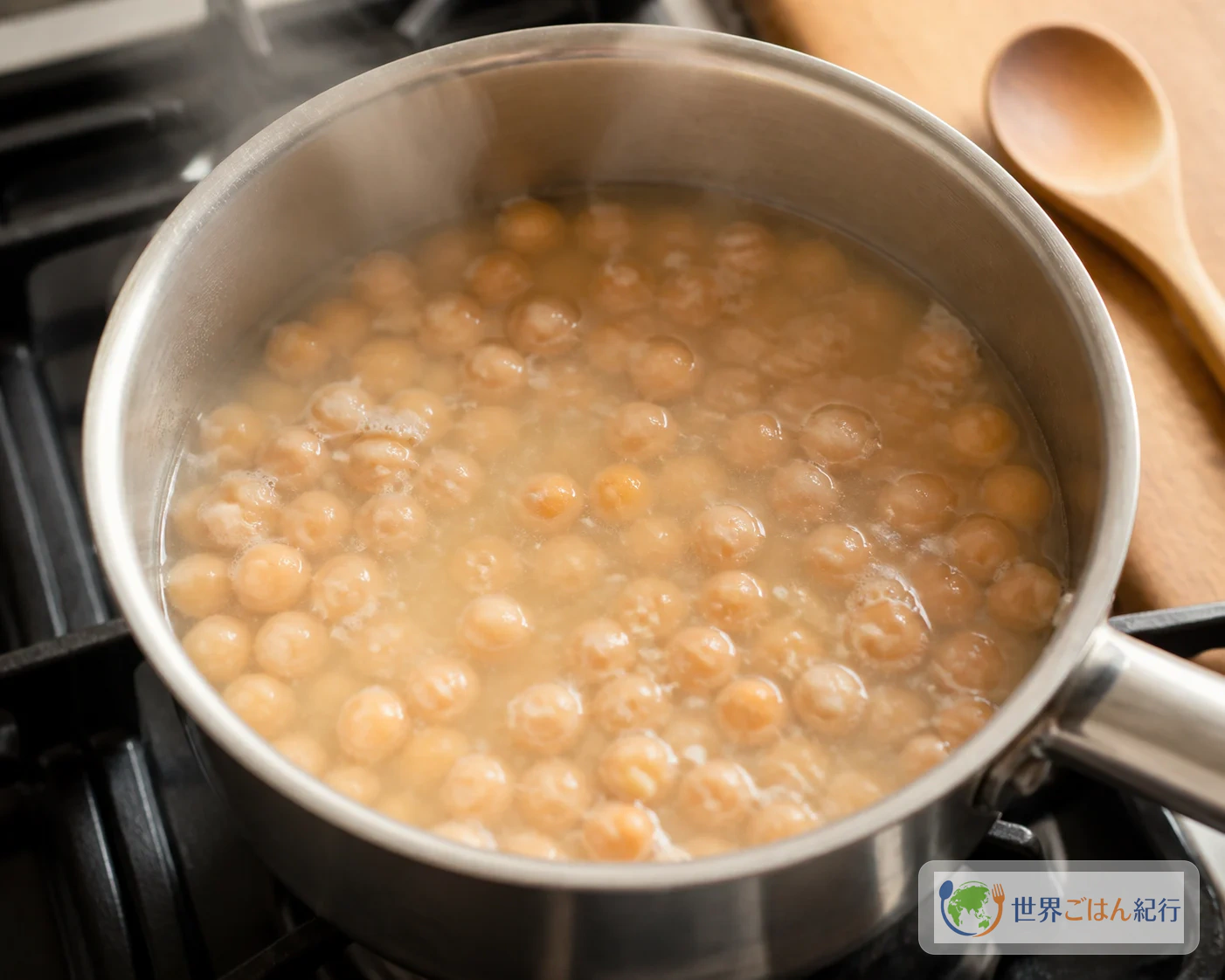
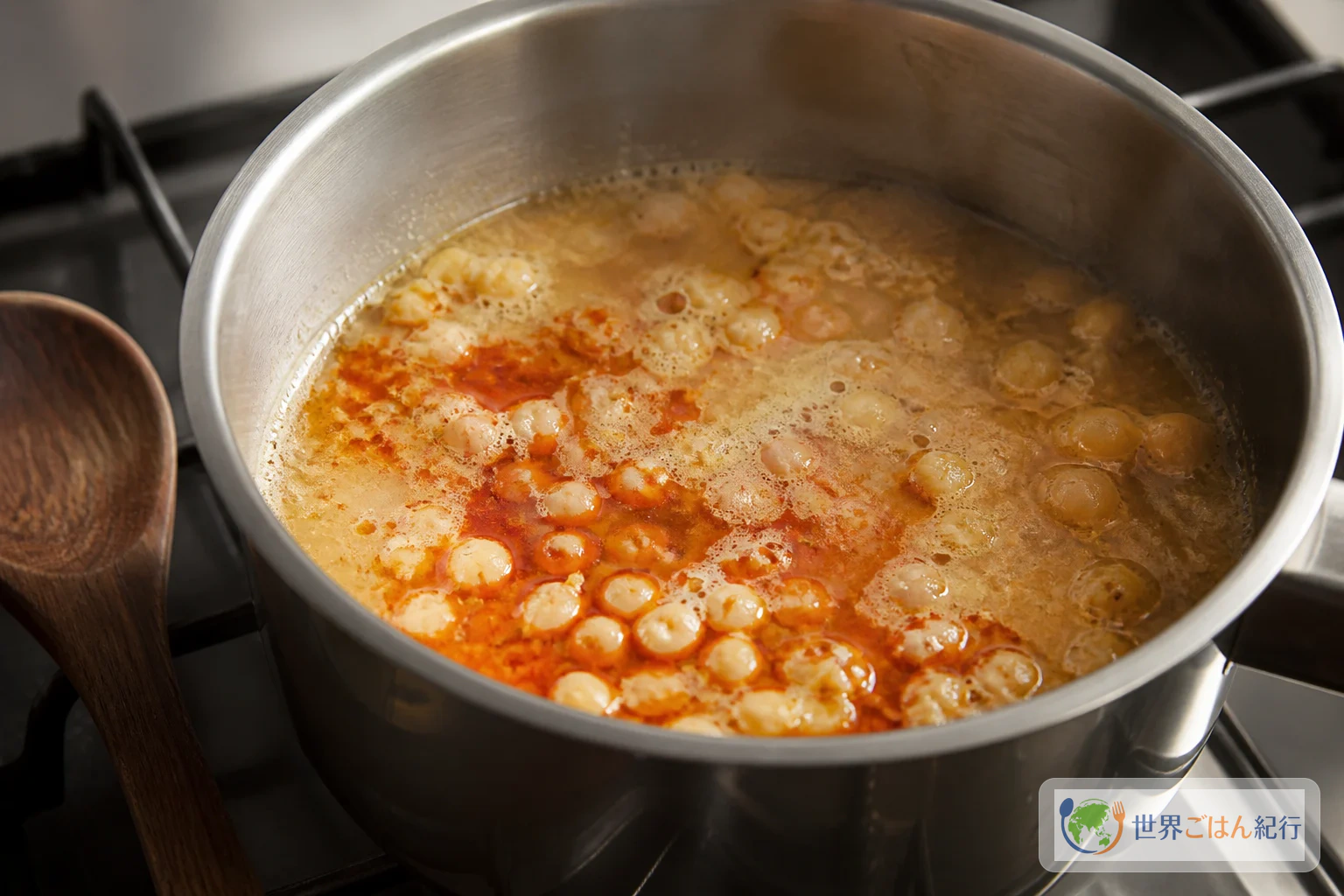
If you use dried chickpeas, soak them the day before in at least three times their volume of water. The next day, discard the soaking water and boil them in fresh water, cooking until they mash easily when pressed with a finger. If you move on to the soup while the chickpeas are still hard, the bread falls apart first and only the chickpeas remain at the end. Dried chickpeas give satisfying aroma and texture, but counting soaking and boiling, they take more than an hour longer than the canned version.
Cumin Is the Center of the Dish Even in a Small Amount
The soup in lablabi is not pushed forward by chile alone. The dry, earthy aroma of cumin ties the sweetness of the chickpeas and the toastiness of the bread into one line. Use a small amount of ground cumin as it is; if you want to use it in bean dishes, roasted vegetables, and yogurt sauces too, it is worth keeping in the pantry. If you already have fragrant cumin, use what you have. When buying, check that it is ground, not whole seed.
Regional Differences: the Bowl or the Bread Itself
The basic form of lablabi is a bowl with bread laid in the bottom and chickpeas and broth poured over it. Whether to add egg, tuna, capers, and olives varies with the household or the café. In one cooking-site example, an egg is briefly poached in the soup and set in each person's bowl, one apiece. The Youki Foods recipe pairs a soft-cooked onsen-style egg with tuna and mixes the bread, chickpeas, and heat in a single bowl.
A regional variation not to overlook is the sandwich form known in Bizerte in the north. A baguette is stuffed with chickpeas, tuna, harissa, and olives, so the same chickpea broth changes from a "morning bowl eaten with a spoon" into "a snack you can hold in your hand." Because it is a dish in which bread absorbs the broth, the idea of reducing the broth and moving the ingredients into the bread works.
For home cooking, start with the bowl form. You can check how dry the bread is, how thick the broth is, and how hot it is, all at once. With leftover chickpeas, the next day you can use less broth and stuff them into a baguette with tuna and olives to move toward the Bizerte style. For a sandwich, though, toast the bread lightly and add the broth 1–2 tbsp at a time. If you add a lot of broth from the start, the bread tears the moment you lift it.
Crushing the Aromatics Coarsely: Is a Mortar Worth It?
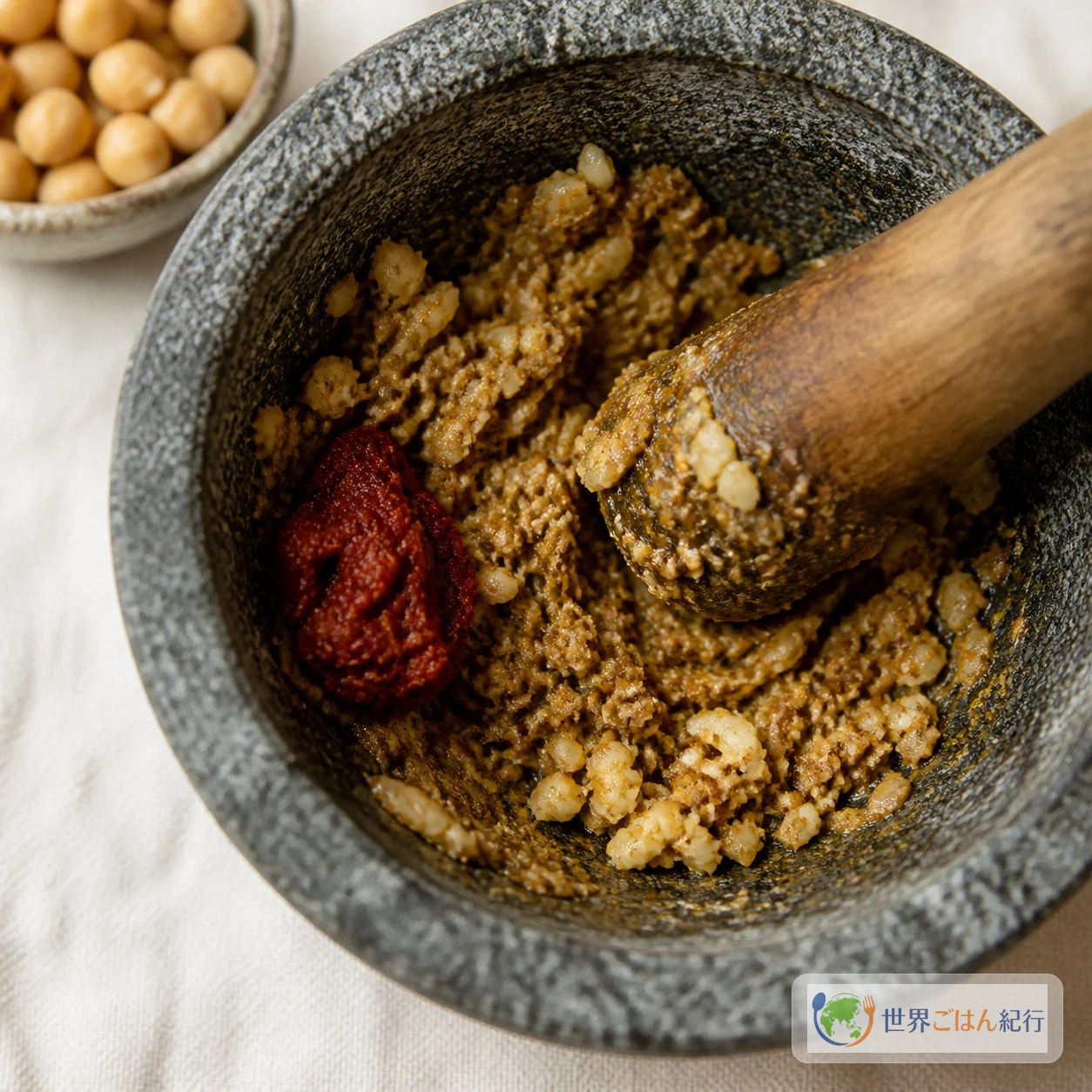
Crushing the garlic and cumin in a small mortar and mixing in a little harissa makes the grains of aroma even. Without a mortar, though, you can do the same step by finely chopping the garlic and working it with the cumin and 1 tsp water. If you will keep crushing harissa and spices coarsely for each dish and making pastes, a mortar is worth getting. If powdered spices and jarred harissa satisfy you, or you do not want to add storage space, a knife and a small bowl will do.
When the Flavor Is Not Right, Do Not Boil the Pot Down
When making lablabi, the first thing to suspect is that it tastes thin. But boiling the soup down for a long time removes the room to catch the bread and also makes the chickpea skins split more easily. Taste in this order: salt, cumin, lemon, harissa.
If it lacks salt, add a pinch at a time. If the aroma is weak, add a little cumin, and if it lacks acidity, add lemon 1 tsp at a time. If you want only more heat, place harissa in the bowl instead of making the whole pot hot.
Conversely, if it is too hot, add chickpeas and water, warm over low heat for 3 minutes, and soften the edges with lemon and olive oil. Adding water all at once blurs the flavor, so add 50 ml at a time and taste. If the broth runs short after the bread is in, pour in boiling water a little at a time, circling from the edge of the bowl so as not to crush the chickpeas.
Storage: Keep the Chickpeas and Broth Separate, and Add the Bread the Same Day
Finished lablabi keeps soaking up broth into the bread, so the texture on the day you make it is the clearest. If you carry it over to the next day, keep the bread, egg, tuna, and garnishes separate and store only the chickpeas and soup. Once the heat has cooled, divide it into shallow containers and use it up within 2 days in the refrigerator.
To cool leftovers quickly, divide them into shallow containers and, when reheating, heat them thoroughly until bubbling. Do not leave the pot at room temperature; move only the portion you will eat into another pot and warm it until it simmers. Rebake the bread right before eating, and plate the egg and tuna the same day.
To freeze, cool only the chickpeas and broth in single-meal portions. After thawing, the chickpea skins split easily and the broth becomes a little thicker, so add 50–100 ml of water when warming. We do not recommend freezing it finished with the bread in, because the change in texture is large.
If using eggs soft-cooked, check the label and storage condition of the eggs you bought, and cook the yolk firm if you want them thoroughly cooked. Tuna, harissa, and bread differ by product in ingredients and allergen labeling. If you are allergic to wheat, egg, fish and shellfish, or sesame, check the label before swapping ingredients.
Frequently Asked Questions
Is lablabi a curry-flavored soup?
It is not a dish with curry powder as the star. Its flavor is the aroma of cumin and garlic, layered with the chile of harissa, lemon, and olive oil. Some recipes use whatever curry powder is on hand, but centering on cumin lets you taste the chickpeas and bread.
Can I make it without baking the bread?
Yes. Using day-old bread as it is makes it soak up the broth faster, so the soft parts come sooner. Baking the surface for 4–6 minutes leaves some toastiness for the first few bites. Choose not to bake if you like a soft texture, and to bake lightly if you want the texture to last.
What if I cannot get harissa?
You can make it without heat and add chile paste a little at a time at the table. If making a substitute, mix a little cumin, garlic, olive oil, and lemon into a chile paste. Doubanjiang has a strong fermented savoriness and saltiness, so if you use it, start with 1/2 tsp and adjust the salt afterward.
The thin skins on the chickpeas bother me.
When rinsing canned chickpeas, just remove the skins that float up; you do not need to peel them all. Simmering over low heat until some break down in the soup lessens the presence of the skins. If you want it completely smooth, mash the chickpeas 2–3 times with the back of a ladle, but if you overdo it, the broth the bread absorbs turns heavy.
What should I cook next from Tunisia?
To extend the heat and the way of layering egg, Tunisian chakchouka (in Japanese), vegetables and eggs simmered in tomato, is the natural follow-up. Moving on to brik, which wraps egg or potato in thin pastry, lets you see harissa used as something you serve alongside, not just something you mix in. On days you want to compare bean and soup pairings across North Africa, Algeria's chorba frik is also a useful reference.
Sources
- Youki Foods "Lablabi (chickpea stew)" https://world.youki.co.jp/recipe/tunisia/tunisia03/ (accessed and checked 9 August 2026, JST)
- Cuisine Tunisienne "Recette Lablabi" https://www.cuisinetunisienne.tn/lablabi/ (accessed and checked 9 August 2026, JST)
- Cuisine Tunisienne "Recette Sandwich lablabi" https://www.cuisinetunisienne.tn/recette-sandwich-lablabi/ (accessed and checked 9 August 2026, JST)
- The Mediterranean Dish "Lablabi (Tunisian Chickpea Stew)" https://www.themediterraneandish.com/lablabi-tunisian-chickpea-stew/ (accessed and checked 9 August 2026, JST)
- Associated Press "Chili paste heats up dishes and warms hearts at northeastern Tunisia’s harissa festival" https://apnews.com/article/tunisia-harissa-festival-nabeul-food-6d20f00f3f8f0281520c512e4b036f01 (accessed and checked 9 August 2026, JST)