
A diamond-shaped sweet that glints with syrup
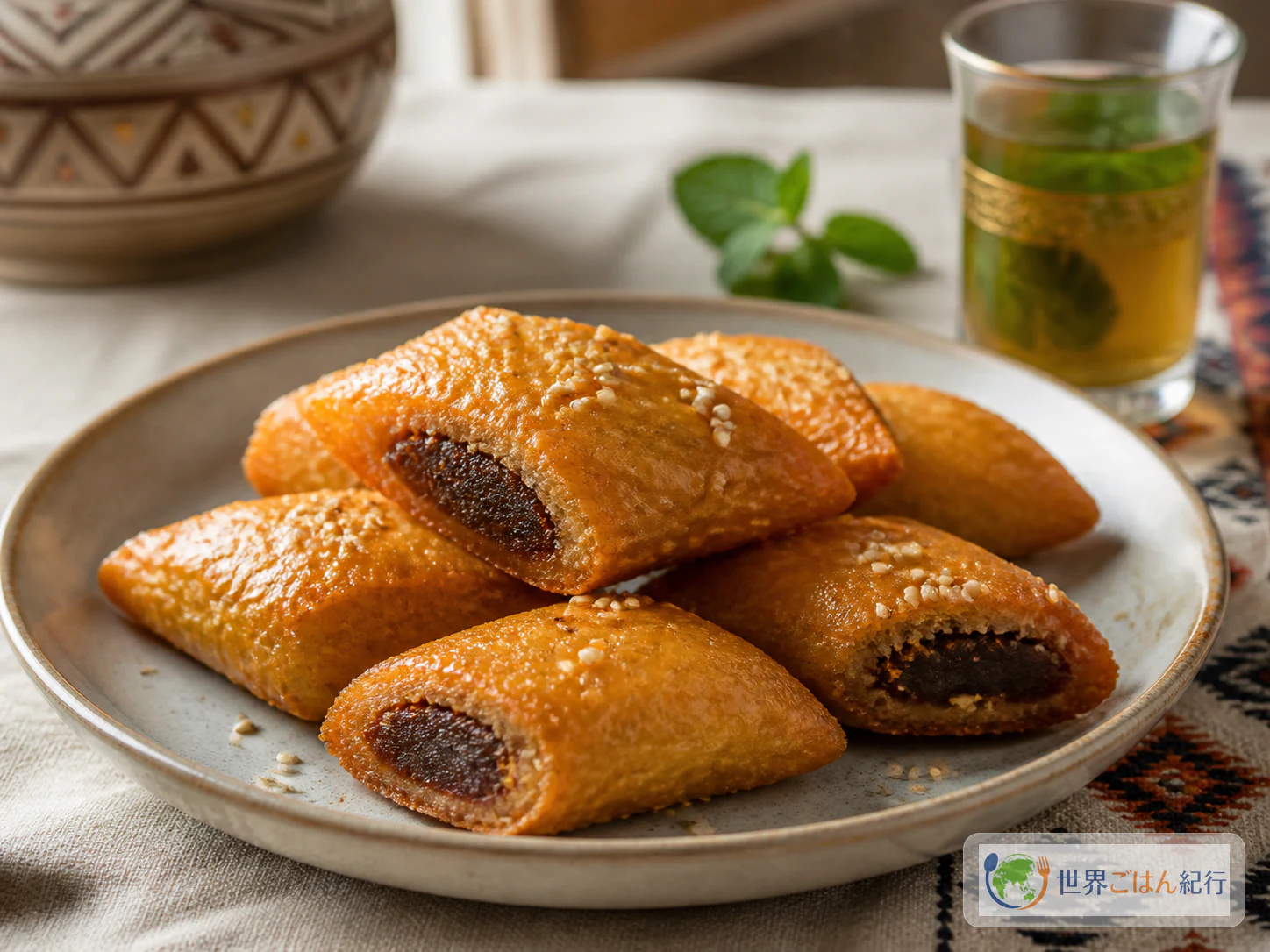
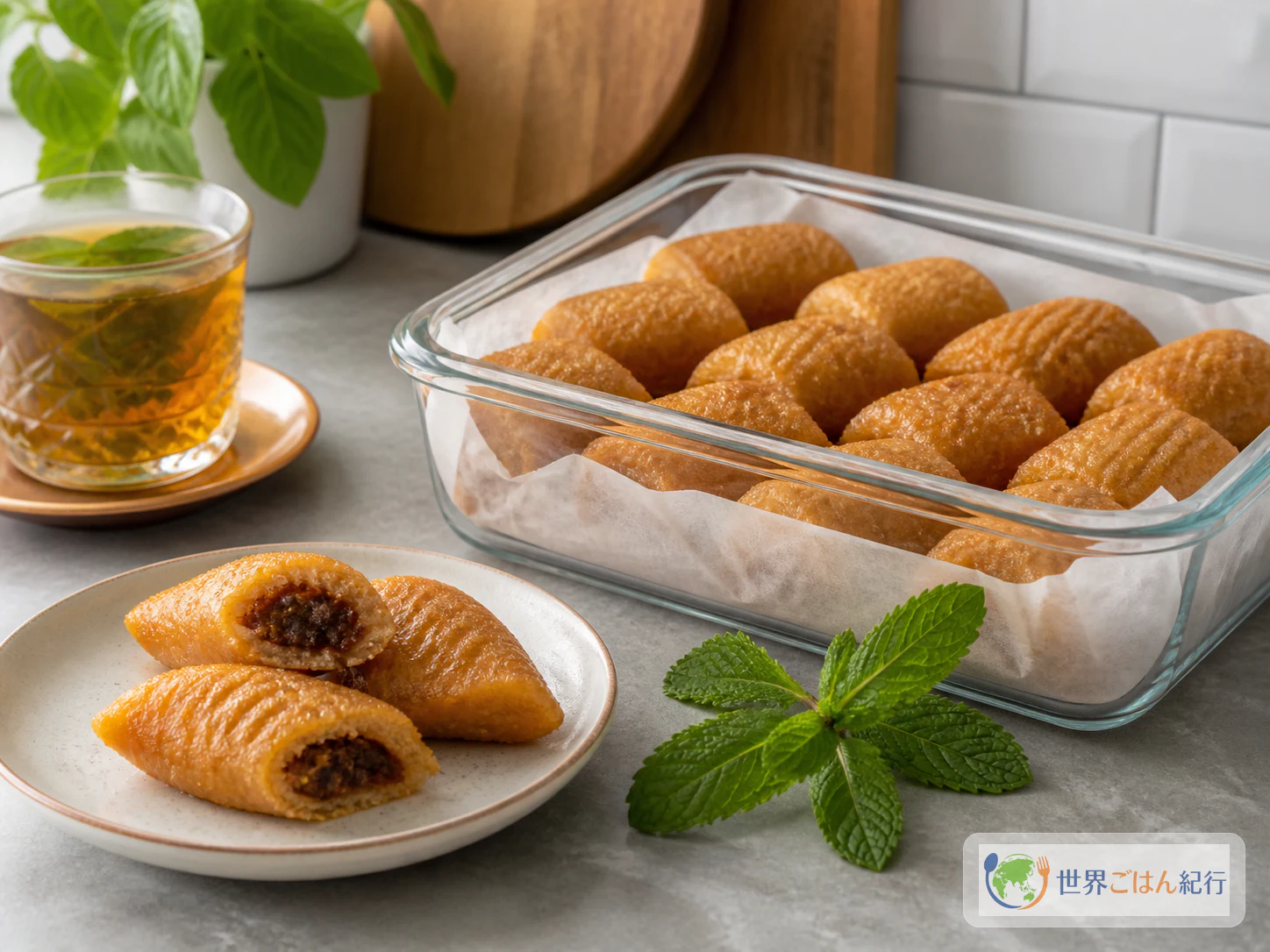
Break a deep golden diamond with your fingers: the outside crumbles softly, and only the date filling remains in a thin line at the center. A thin film of honey and orange flower water syrup glints on the fried semolina shell. It is a sweet, yet what reaches your nose first is not sugar but the scent of toasted grain and a flower that smells like citrus.
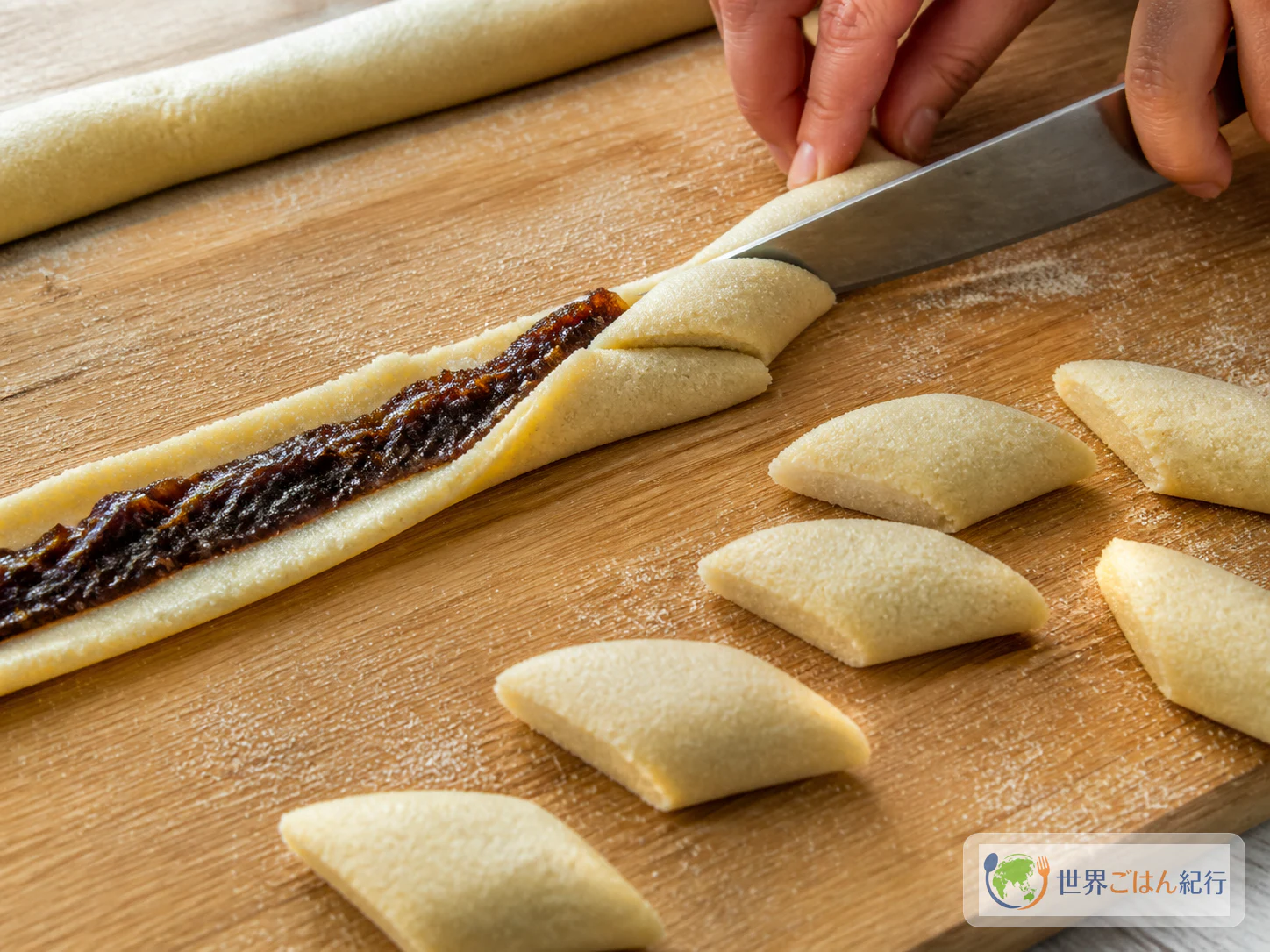
Makroud (also Makroudh; in Arabic مقروض) is a date-filled pastry loved across North Africa. The diamond shape is not decoration. It is a shape for wrapping the filling in a thin line and cutting evenly thick pieces, and it also gives the syrup more surface area to reach every corner.
What people hesitate over at home is less whether they can make the date filling than how much water to add to the semolina. Don't add the water all at once. Knead it like bread dough, and it becomes harder to crack but loses the granular, crumbling quality in the mouth. On the other hand, with too little water, cracks run through the dough while you shape it and the filling leaks out in the oil.
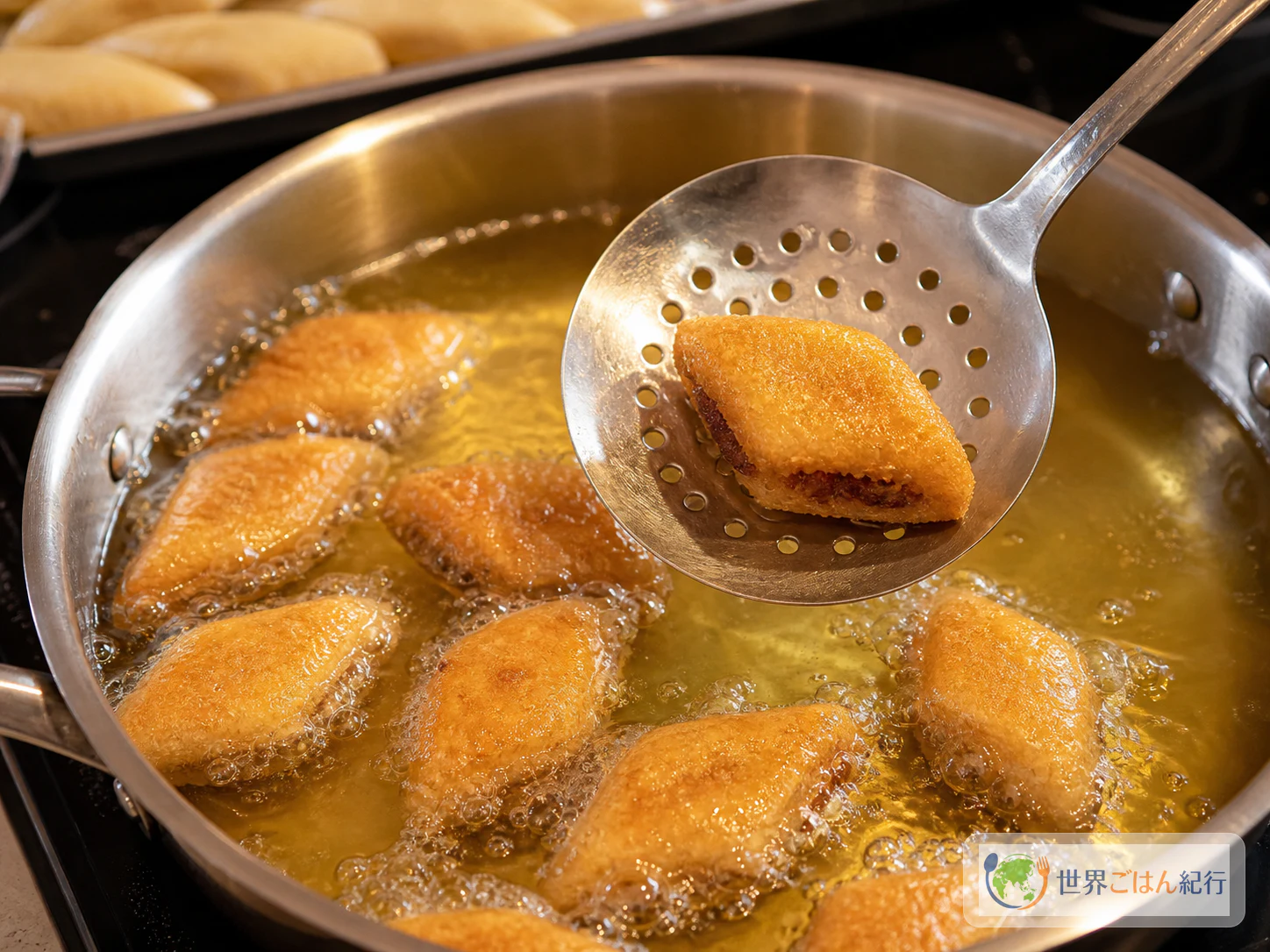
This recipe makes 20 pieces. You rest the dough for an hour, fry in 170°C oil and dip briefly in warm syrup. For a first try, fry it for the traditional form, and on days you don't want to use oil, go to the baking option later in the recipe. Using this thin Tunisian pastry as a gateway, you can go on to Algerian mhancha or Egyptian basbousa (in Japanese) and see why the texture changes even with the same semolina and syrup.
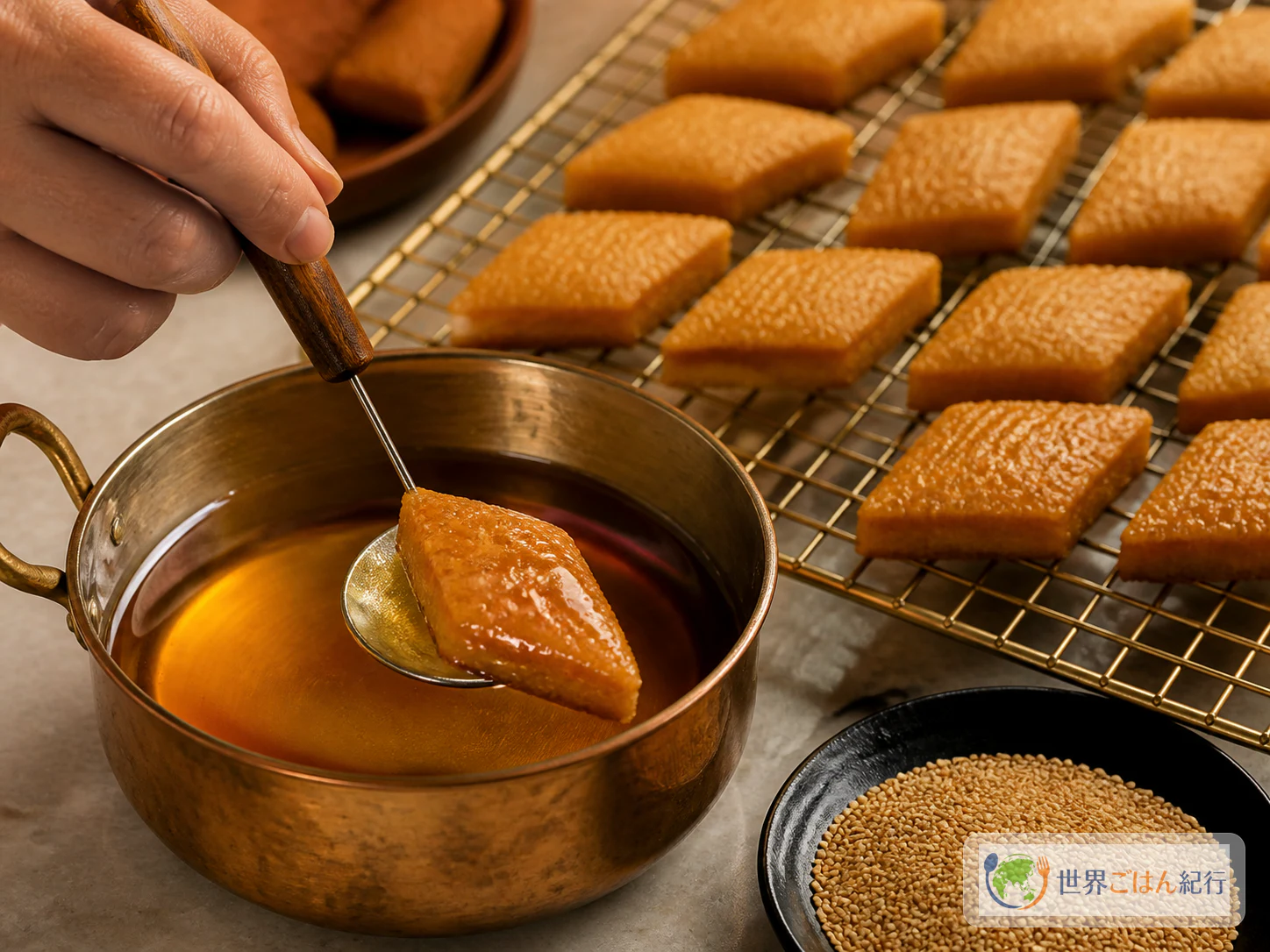
It is done when the corners of the diamond remain and the surface is a deep golden color. Right after soaking in syrup the surface may be soft, but after 30 minutes of cooling the shell firms up, and when you break it the line of date filling shows.
The story: Kairouan's diamonds, northern grain and southern dates
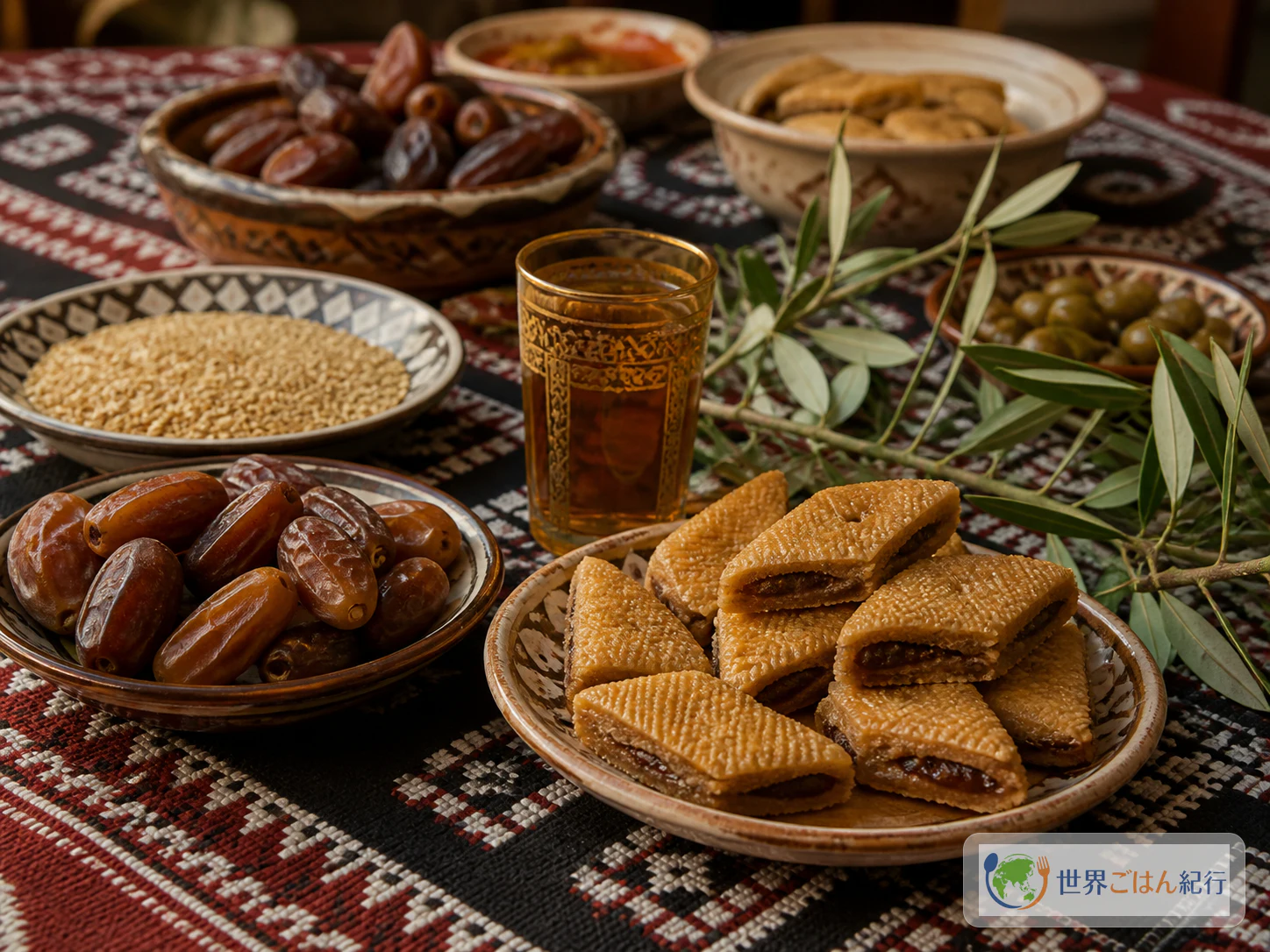
If you remember makroud as a sweet of one country only, you overlook the regional differences. The explanation from the food resource 196 flavors notes that it is eaten across the Maghreb and that there are multiple theories about its origin. In Algeria, Tunisia, Morocco, Libya and elsewhere, it differs in whether dates are used or replaced with figs or nuts, and whether it is fried or baked.
Among these places, Kairouan in Tunisia is a city strongly tied to the name makroud. UNESCO introduces Kairouan as an ancient city founded in 670 and, for five centuries, the capital of Ifriqiya. In a place with the outline of an old religious city, the pastry has been carried not only to shop shelves but to places where people gather.
A food guide to Kairouan explains makroud as a pastry in which a semolina dough is filled with dates or nuts, fried in oil and soaked in sugar or honey. It further reads as if the geography of northern grain, Sahel olive oil and southern dates is overlaid on the ingredients of a single diamond. This is not merely an introduction to where things are produced. Because the land that mills wheat, the land that presses oil and the land that stores dried fruit are different, a flavor that crosses regions remains inside the pastry.
There is also the festival scene. The Smithsonian Center for Folklife and Cultural Heritage's article on the Mouled festival describes makroud lined up on the streets of Kairouan, a pastry that locals and visitors buy by the kilo. It has the face of a pastry for which you choose a quantity in the crowds of a celebration, carry home and share, more than a home sweet quietly placed on a plate.
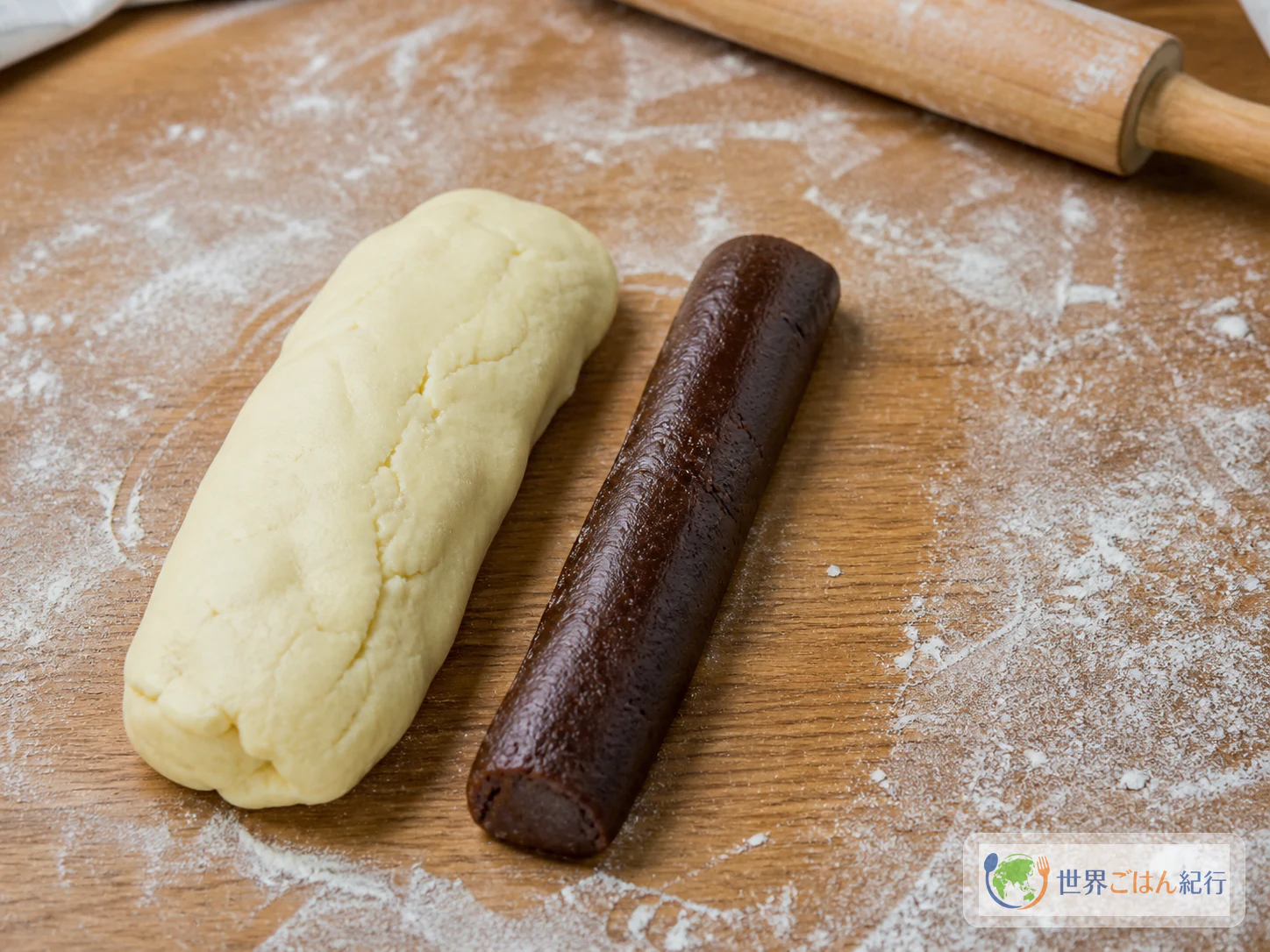
So what should you keep in a home kitchen? You need not gather every local flour brand and oil origin. Wrap medium-ground semolina in fat, rest it without overworking, and run a thin line of date filling through the center. Finally coat it once with honey and flower water. What to keep is not the names of ingredients but the order in which the flour is wrapped in fat. If you preserve this skeleton, the outline of makroud remains even when you substitute ingredients.
On the other hand, if you halve the syrup in order to reduce only the sweetness, the outer shell and the filling tend to feel separate. Cut the pieces smaller, shorten the time in the syrup, and serve unsweetened mint tea alongside. By changing only where you adjust the amount, the structure of the pastry is kept.
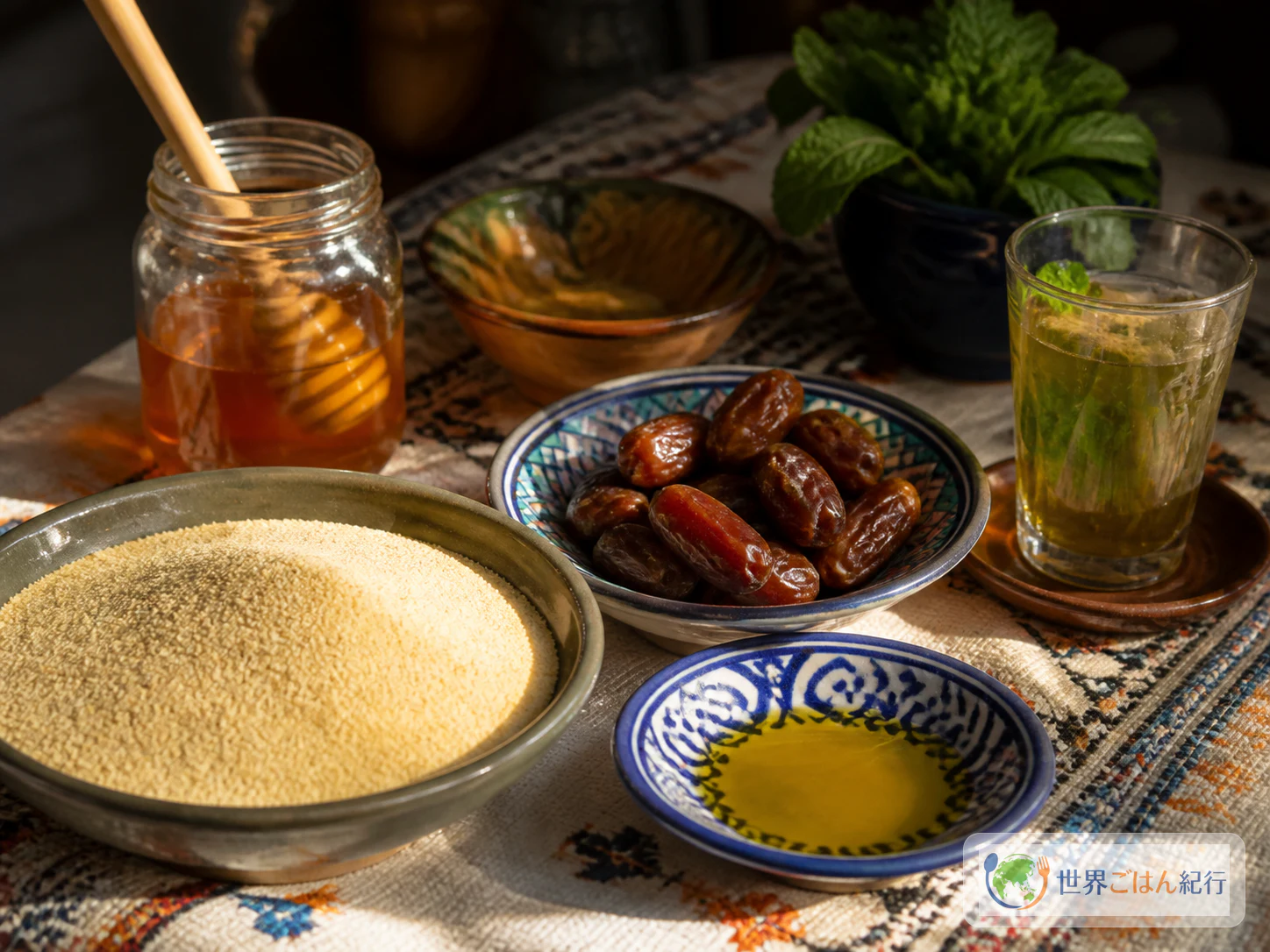
Ingredients (makes 20 pieces)
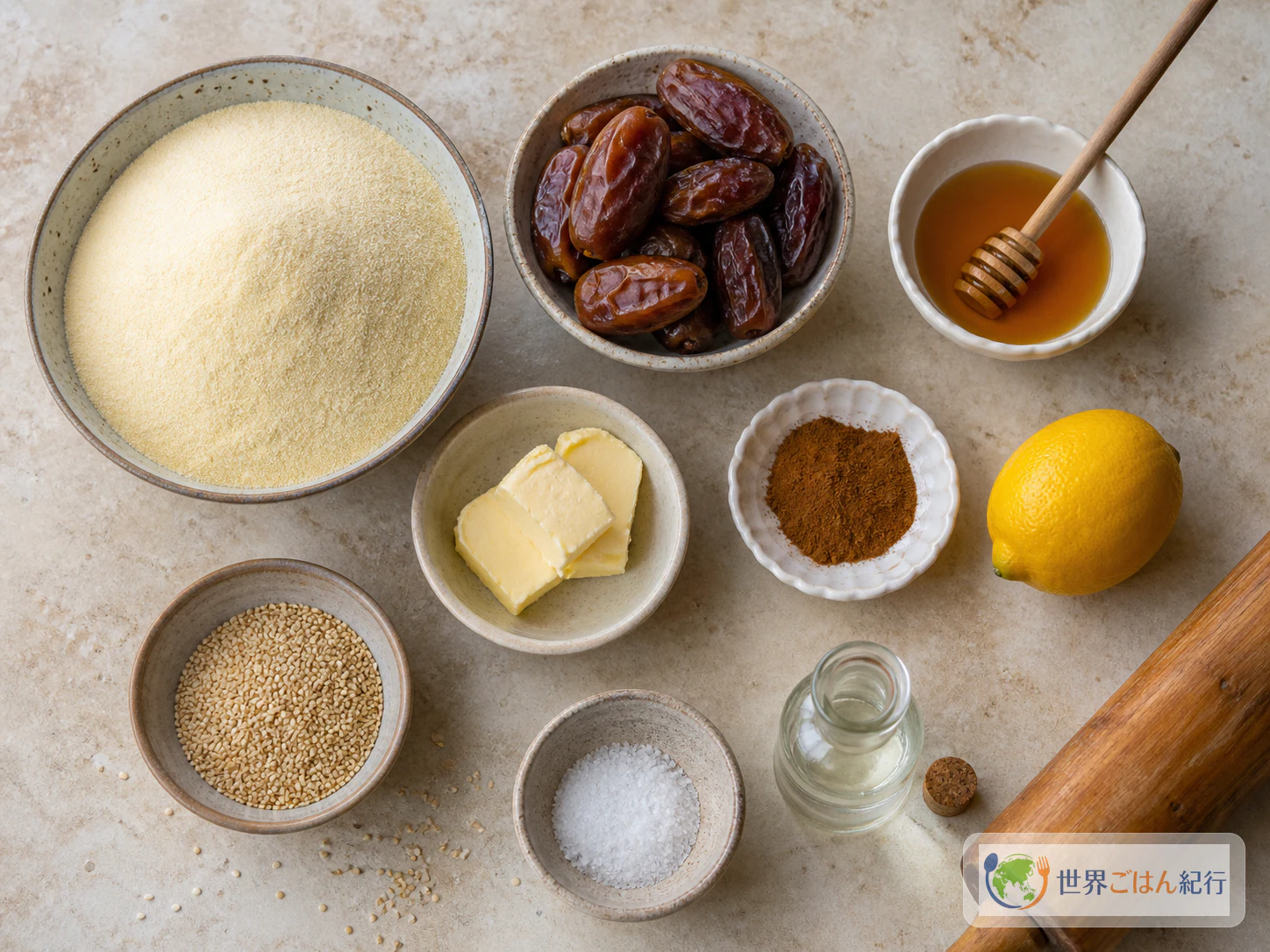
Semolina is flour from durum wheat, so it is unsuitable for people with a wheat allergy or who must avoid gluten. Using butter adds dairy, and sprinkling white sesame adds sesame. Because it uses honey, do not give it to children under 1 year old. Commercial date paste and flower waters may differ in ingredients and intended use even under the same name, so check the food-use labeling.
Shopping starts with the flower water
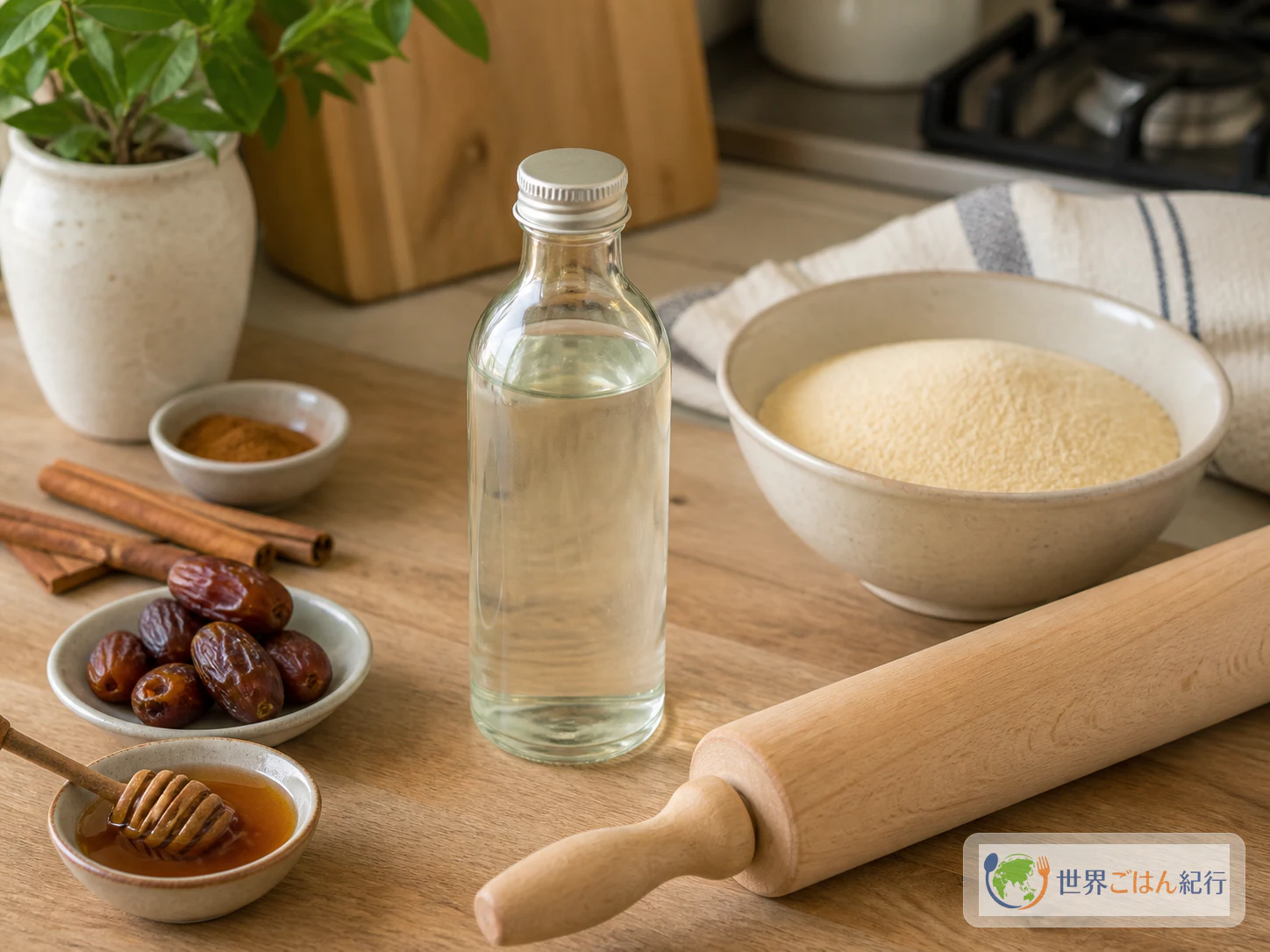
Orange flower water is not orange juice but a fragrant water distilled from citrus blossoms. The amount that goes into makroud is only 35 ml, but a thread of floral aroma runs behind the sweetness of the syrup. If you plan to make aromatic pastries several times, it is worth buying. On the other hand, if you are not fond of floral scents or are trying it only once, you can substitute 2 g orange zest and lemon juice and still confirm how the dough and filling work.
If you buy it, check one thing. It should be labeled food-grade, and the ingredient list should show a flower water usable in pastry rather than a flavored drink. A 240 ml bottle can also go into the syrup of mhancha or basbousa after the 35 ml used here.
Buy it if you can confirm the food-use labeling and plan to use it up. Judge by the food-use labeling and ingredients, not price or stock, and choose it when you expect to be able to use it up.
For cinnamon, powder works, but on days you want the aroma to stand out, use powder ground from stick cinnamon. A small jar is more than the 2 g used here and can go into chai and baked sweets. The condition for buying is that you plan to use it up after opening and can check the volume and ingredient list. If you already have a powder whose aroma is still strong, skip this.
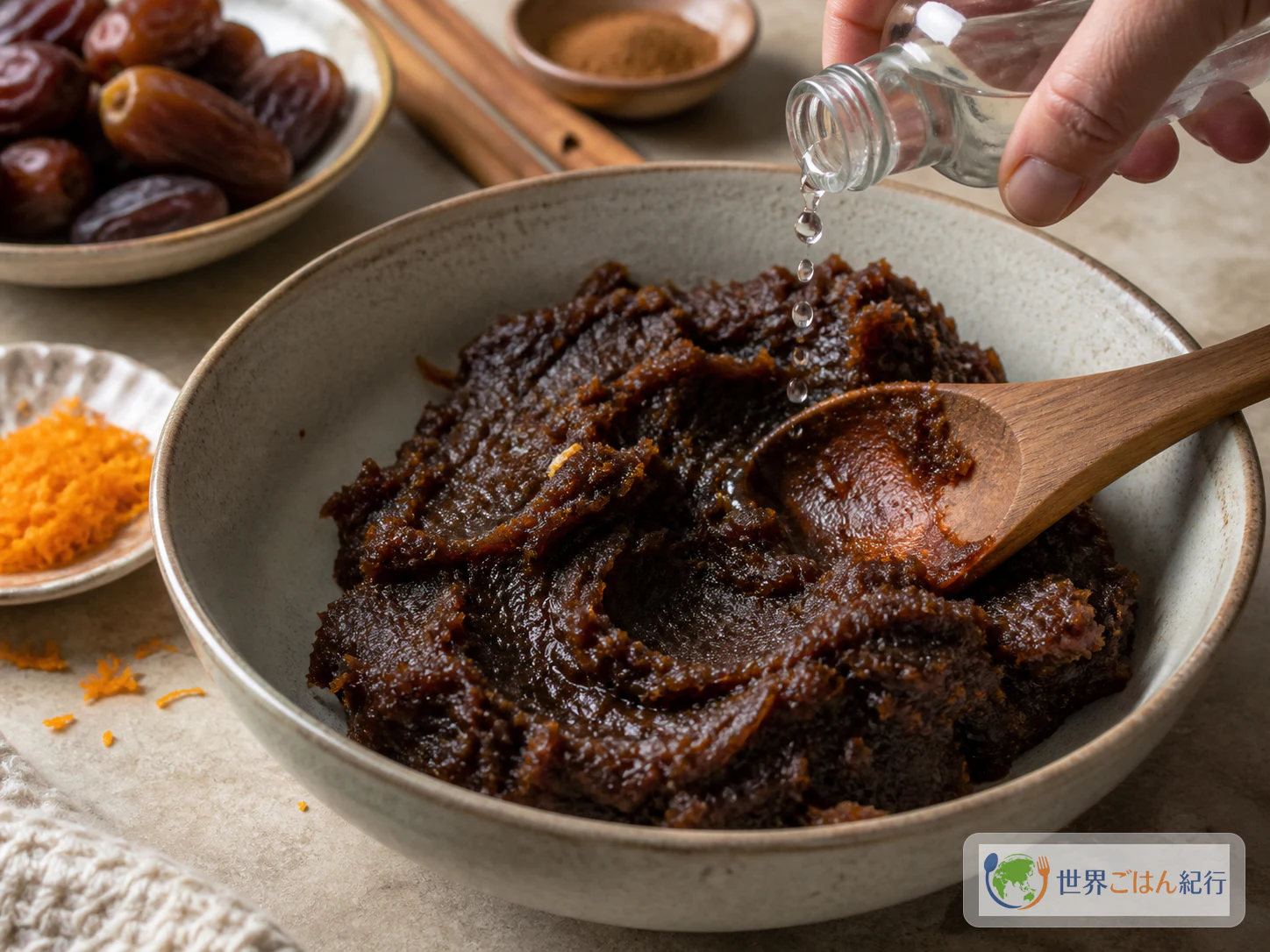
If you make the filling by hand, choose soft, pitted dates. Dates so hard that they don't spring back when pressed with a finger should be sprinkled with 15 ml hot water, warmed in a 600 W microwave for 40 seconds and mashed with a fork. Buying paste from the start shortens the work, but on days you want a filling with a few date pieces left, chopping whole dates makes it easier to adjust. Here, decide not by chasing a local brand name but by whether it gathers into a 1 cm rope when shaped.
Method: make the dough that doesn't crack first
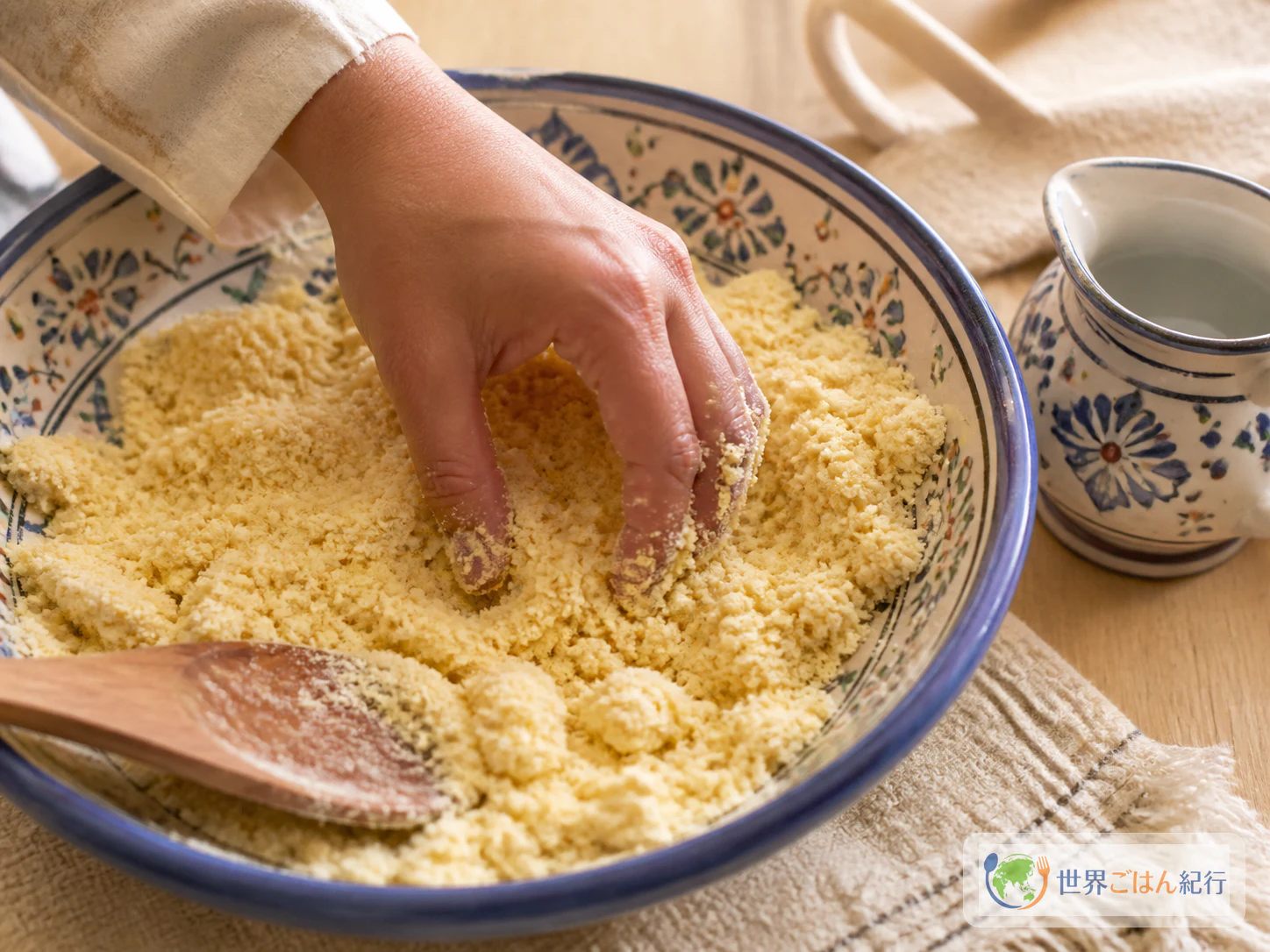
The judgment for the dough is not smoothness but whether dry sand comes together into one. Add water until it is soft enough to wrap the filling, and don't knead until it stretches like bread. Keep to this boundary, and after frying a crumbly semolina shell remains.
Fry or bake: judging so the diamonds keep their shape
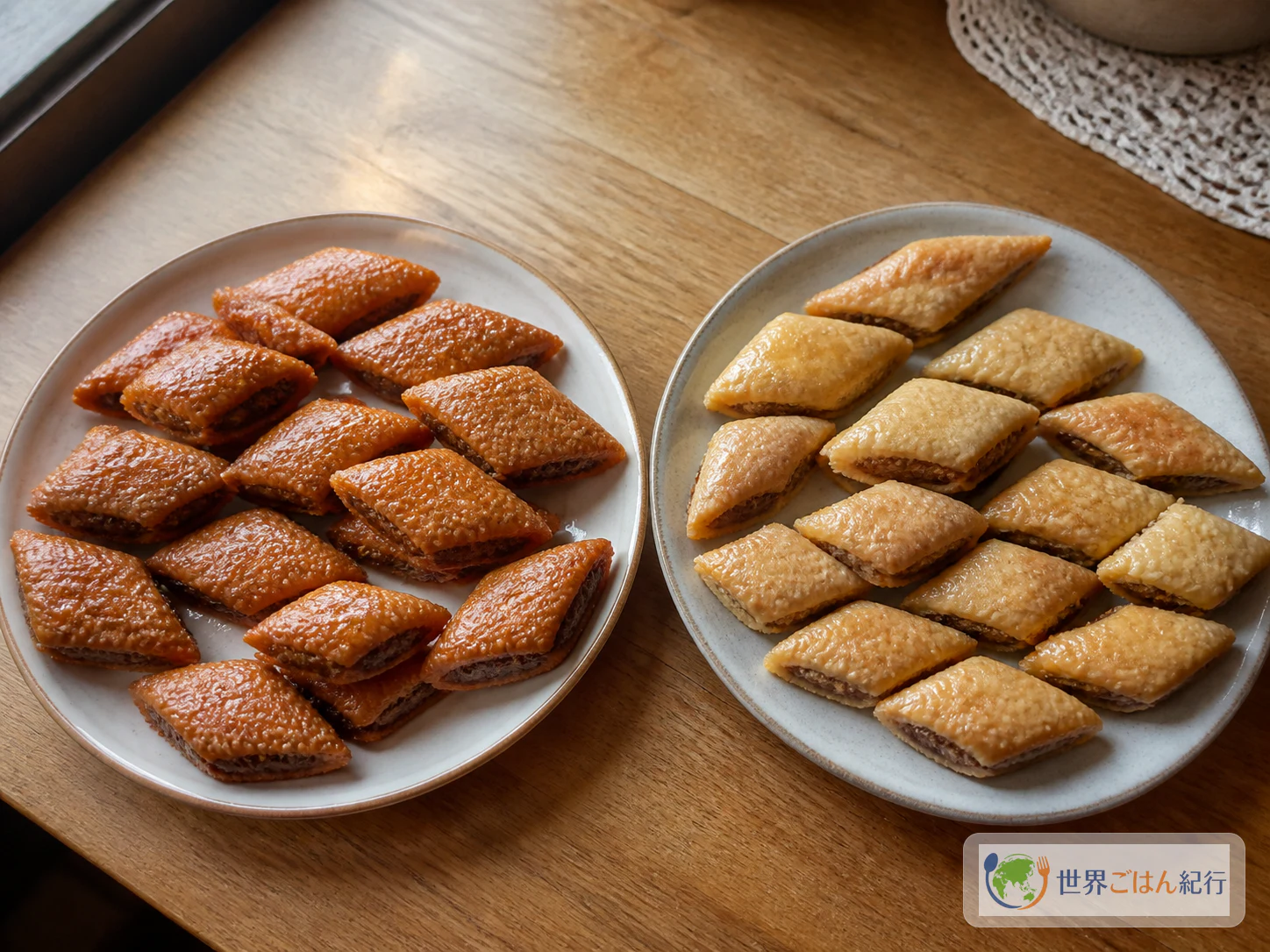
Choose frying for texture, baking for easy cleanup. Frying firms the surface in a short time and makes it easier to form a shell that takes up the syrup. Saveur's recipe follows a flow of frying makroud and soaking in honey syrup, while Epicurious and the Jewish Food Society also give baking instructions. Rather than one method being the only correct one locally, it is a pastry whose heat varies by household and region.
If baking
Arrange the shaped diamonds on parchment and bake in an oven preheated to 180°C for 40–50 minutes. Take them out when the surface and corners are golden brown and the shape does not sag when you lift the base. Dip the fresh-baked pieces in warm syrup for 10–15 seconds and cool on a rack. The shell is drier than the fried version, but it is an easy branch on days you want to avoid splattering oil.
If you change the grain and filling
While the Algerian makroud is known for a date-centered type, the sources also introduce regional variants using figs or almonds. So as not to stray too far from the Kairouan side of Tunisia, for the first batch keep the date filling, and try only small changes next, such as swapping white sesame for black, so the flavor axis does not drift. If you add nuts, coarsely chop only 30 g almonds and mix with 220 g dates. Large nut pieces push through the dough, so keep them under 3 mm.
Deciding by texture when in doubt
If you can't decide between frying and baking, decide by what will be next to it on the plate. Frying brings the toasty note and sheen of the syrup forward, suiting days you serve a little with mint tea. Baking leaves the dry, grainy shell and means less oil to dispose of afterward, suiting a day you shape in the morning and bake in the evening. Either way, first make the filling thin and even the dough to 1.5 cm.
FAQ
Is makroud a Tunisian sweet?
It is one of Tunisia's signature sweets, but it is not confined to Tunisia. Similar pastries exist across the Maghreb, and its origin is debated. Because it is especially known in Kairouan, the taste and shape here are built on the Kairouan side of Tunisia. Rather than fixing a single country, it is easier to remember the shared skeleton of semolina, dates, oil and syrup separately from each region's way of cooking it.
I only have fine-ground semolina.
It can be made with fine-ground too. Use the same 300 g, add only 80 ml lukewarm water at first, and decide on the rest after resting 5 minutes. Fine-ground absorbs water quickly, so adding the whole amount from the start makes it sticky. Stop when it holds its shape when squeezed and a few streaks of flour show on the surface.
Can I make it without orange flower water?
Yes. Replacing the 20 ml in the dough and the 15 ml in the syrup with lukewarm water and lemon zest gives a plain date pastry without the floral aroma. The layer of fragrance changes, however, so if you are satisfied with the substitute you need not buy any. If you buy it for the first time, check the food-use labeling and ingredients and decide by whether you will use the 35 ml in other Middle Eastern or North African pastries.
The diamonds cracked in the frying oil.
The main causes are a dough that was left dry, a filling that was too thick, and seams not facing down. Before frying, work a single drop of water into the crack with your fingertip, press the seam and rest 10 minutes. For ones that are still wide open, don't put them in the oil; bake them separately in a 180°C oven so you don't lose the filling. Next time, before adding 5 ml more water, check that you rested the dough for 60 minutes.
How long does it keep?
Put it in an airtight container fully cooled; plan on 2 days in a cool room, or within 4 days refrigerated in hot weather. After refrigerating, leave it at room temperature for 15 minutes before eating and the semolina shell recovers a little. If making ahead, freeze before dipping in syrup, rebake on the day you eat it and then dip in syrup, and the surface is less likely to turn heavy. Do not eat anything that develops an off smell, mold or an unusual stickiness.
Sources
- 196 flavors, "Makroud" Checked for its distribution across the Maghreb, theories of origin, regional differences in dates, figs and nuts, and the basics of frying and syrup. Accessed and checked 5 August 2026 (JST)
- Kairouan.org, "Le Makroudh" Checked for makroud in Kairouan, the diamond, semolina, oil, dates, honey, and the explanation of northern grain, Sahel oil and southern dates. Accessed and checked 5 August 2026 (JST)
- UNESCO, "Kairouan" Checked for the founding of Kairouan and its historical position as capital of Ifriqiya. Accessed and checked 5 August 2026 (JST)
- Smithsonian Center for Folklife and Cultural Heritage, "Sufi Dance at the Mouled Festival" Checked for the context of makroud sold in Kairouan during the Mouled festival and bought by visitors. Accessed and checked 5 August 2026 (JST)
- Saveur, "Date Semolina Cookies (Makroud)" Checked for Tunisian makroud, dates, orange flower water, and the process of frying and soaking in honey. Accessed and checked 5 August 2026 (JST)
- Epicurious, "Makroud" Checked for makroud loved in North Africa, especially Tunisia, the semolina dough, date filling and a baking example. Accessed and checked 5 August 2026 (JST)
- Jewish Food Society, "North African Makroud with Dates and Semolina" Checked for makroud passed down in Moroccan and Algerian households, handling of semolina, frying and the syrup process. Accessed and checked 5 August 2026 (JST)



