Eshabwe: Yellow Ghee Stirred Until It Turns White
No heat, no extra ingredients. Ghee, salted water and patient stirring turn a pale yellow fat into a thick, white, spoonable sauce served cold beside a starchy staple.
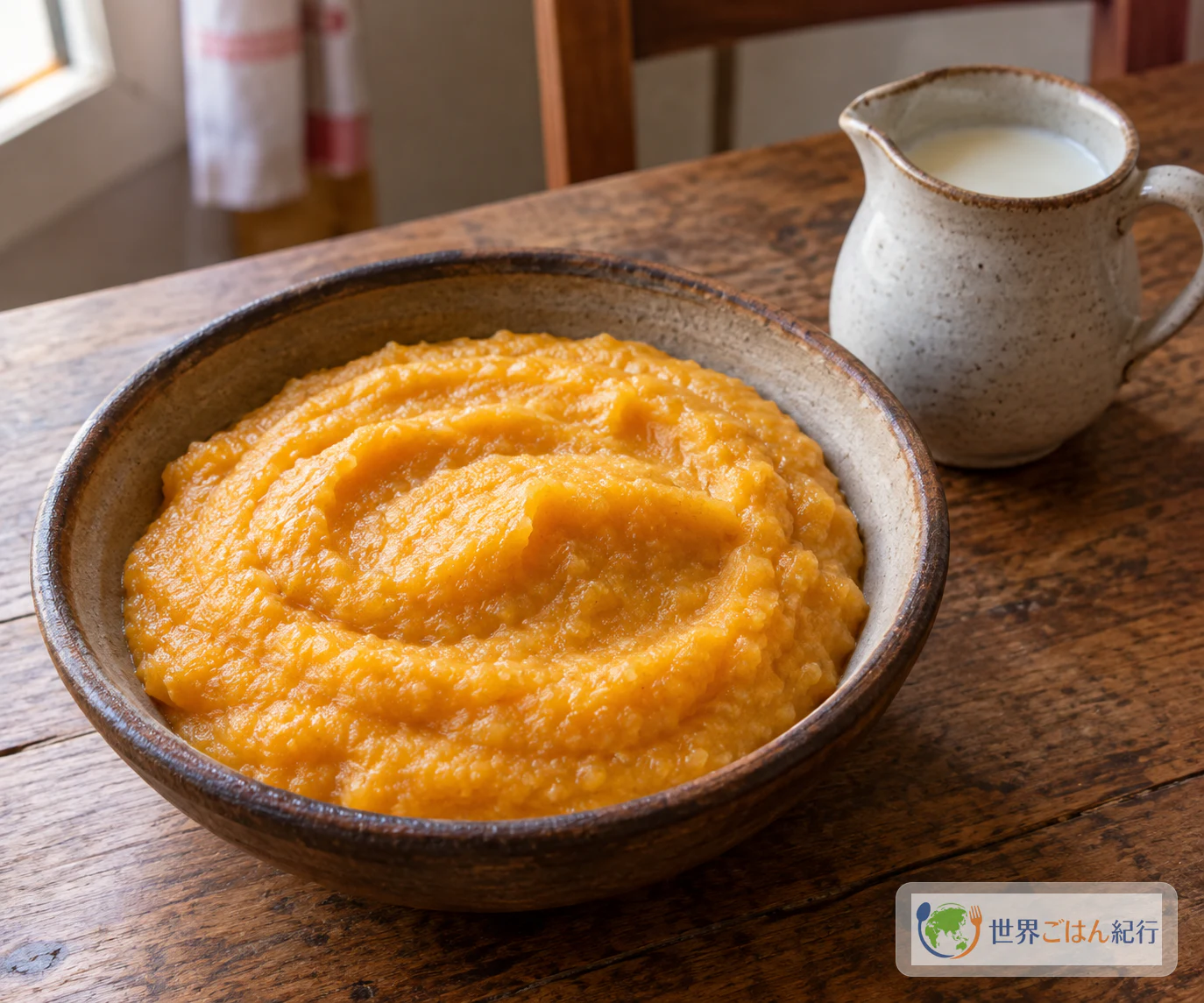
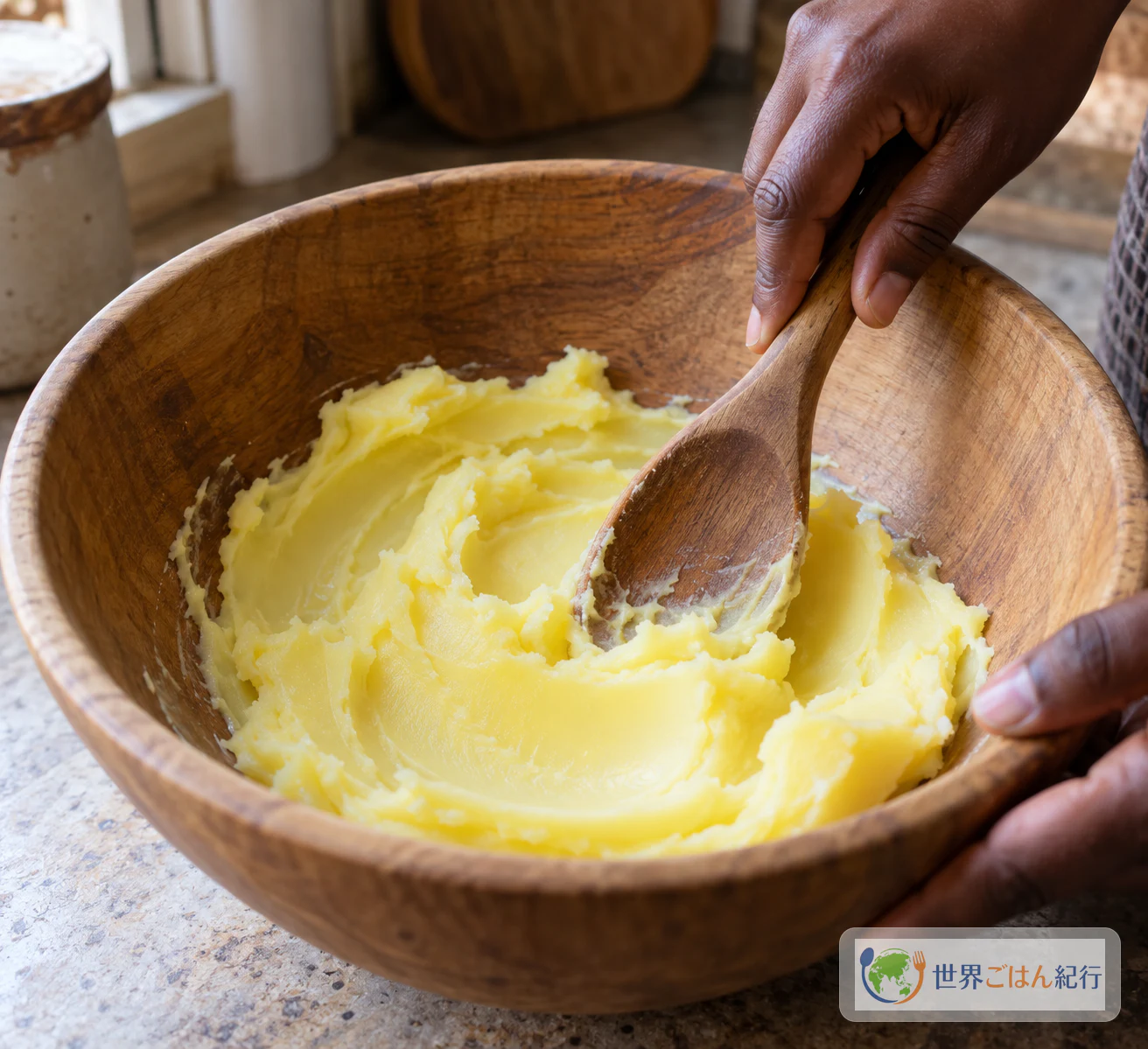
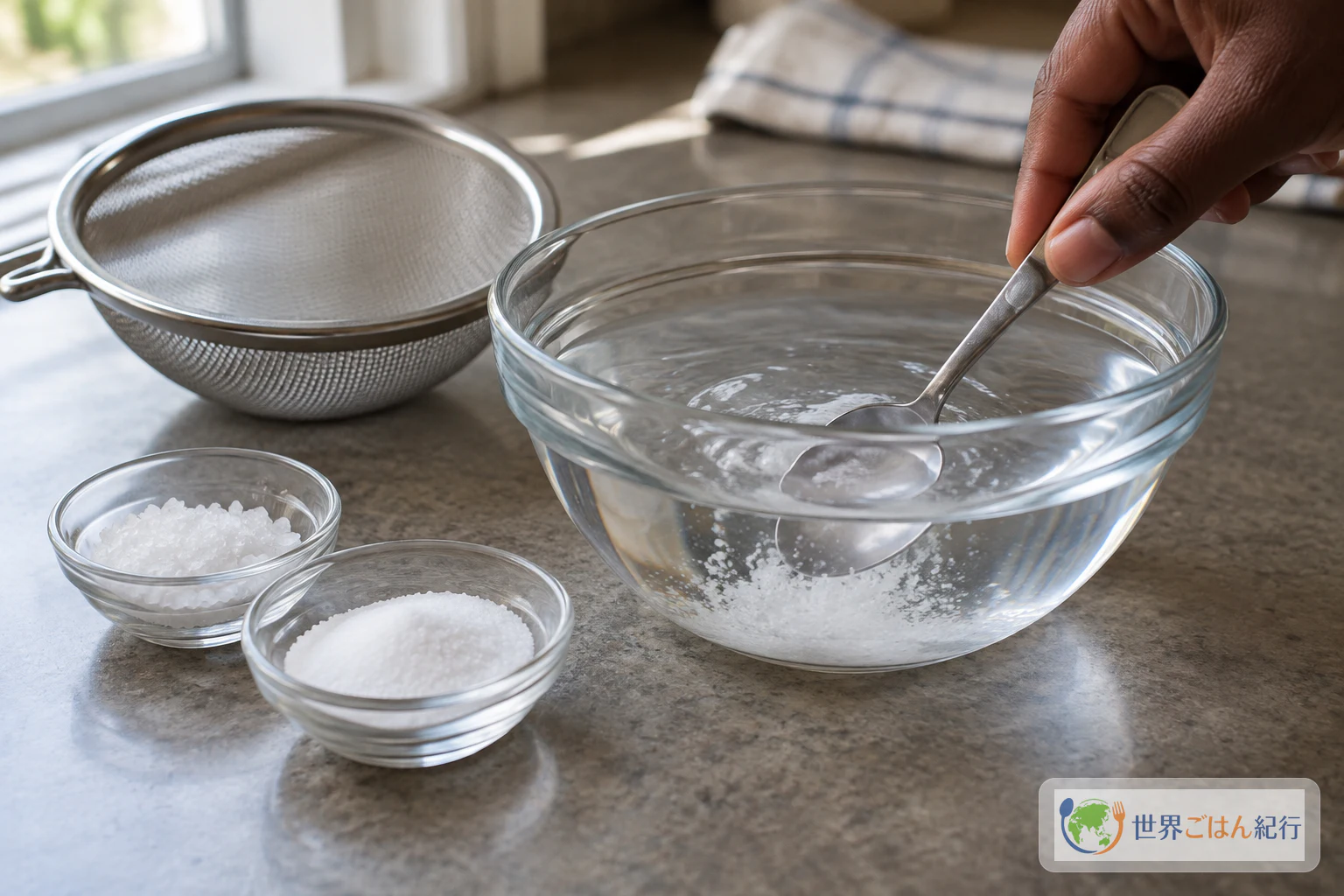
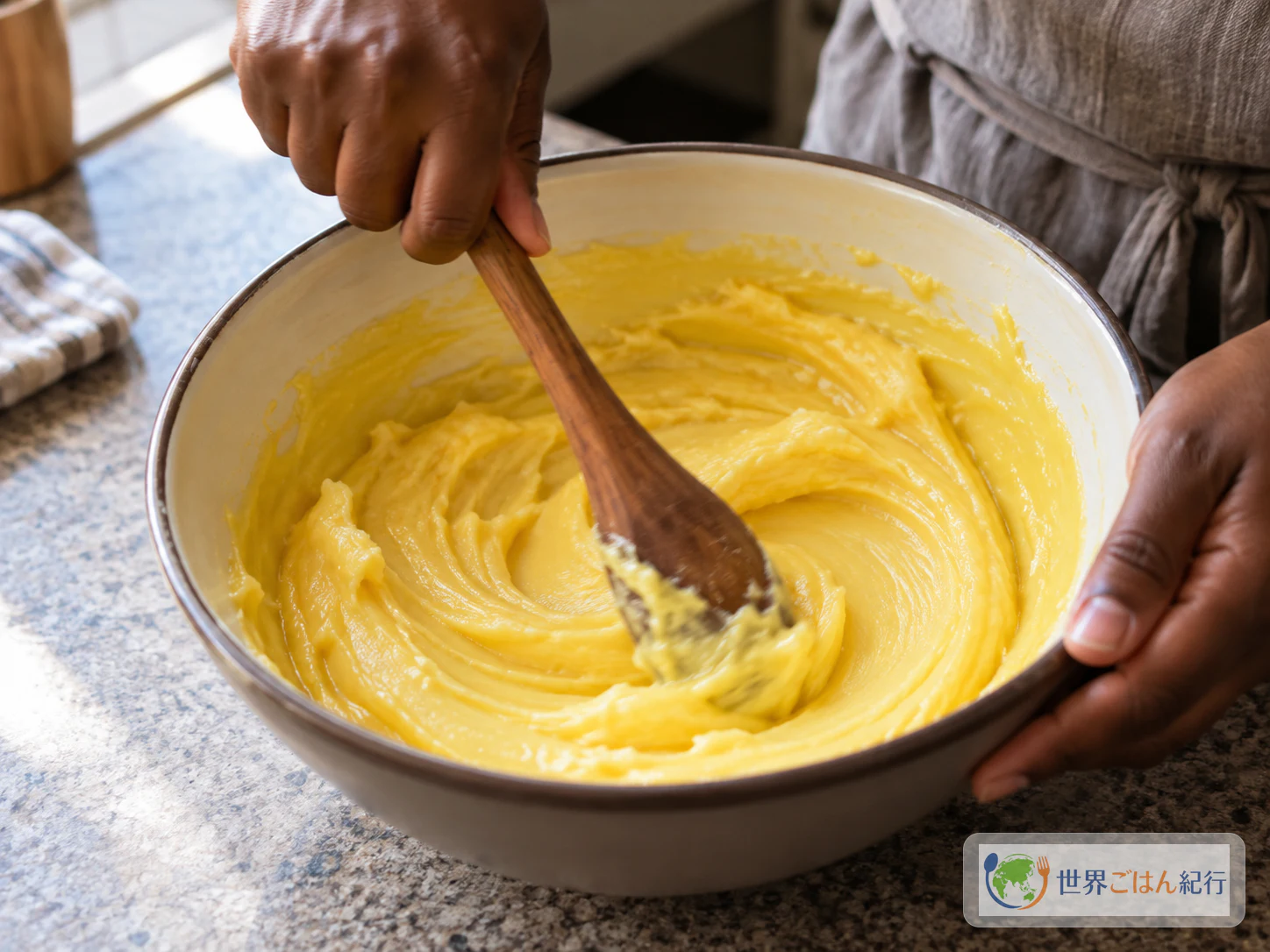
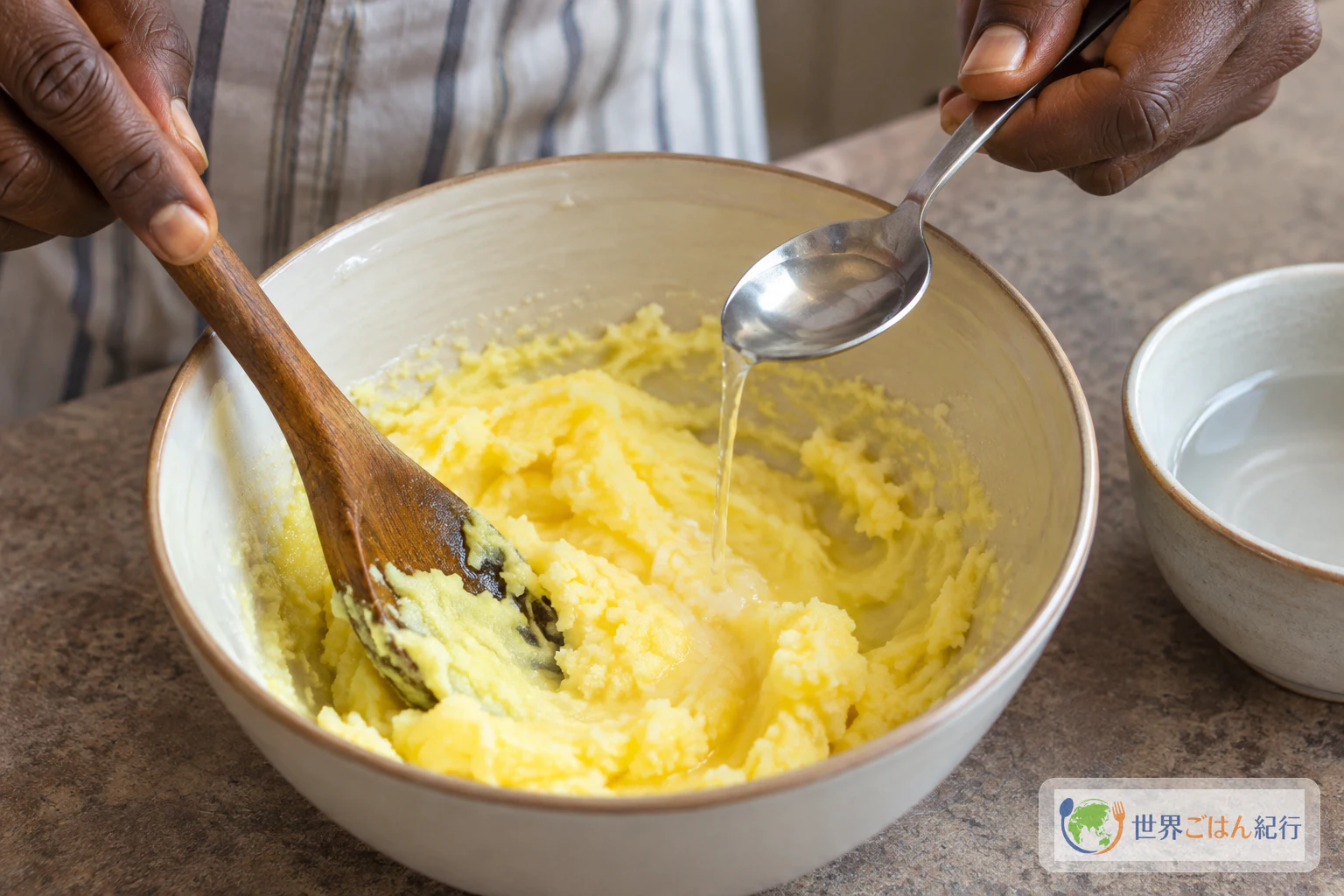
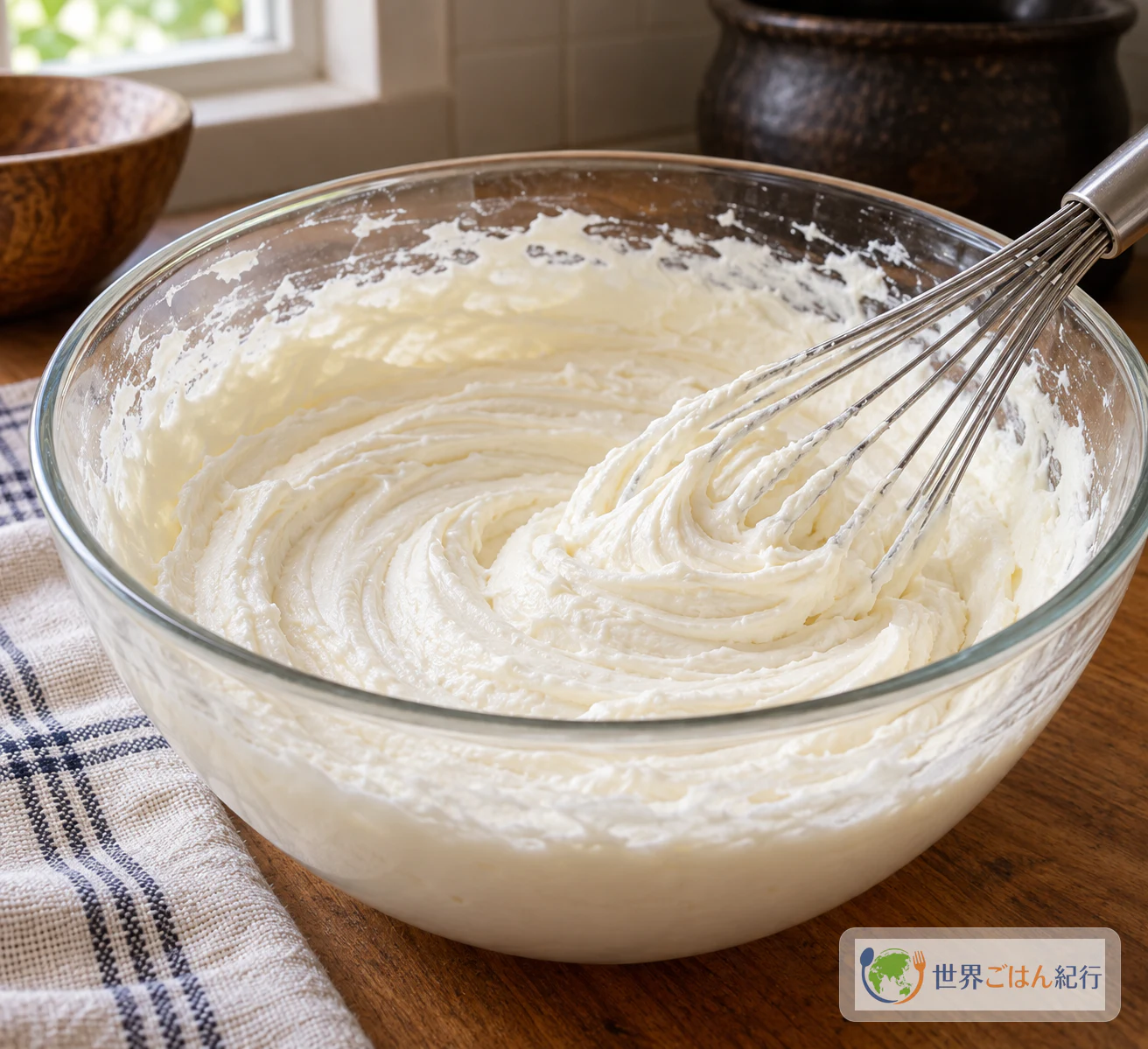
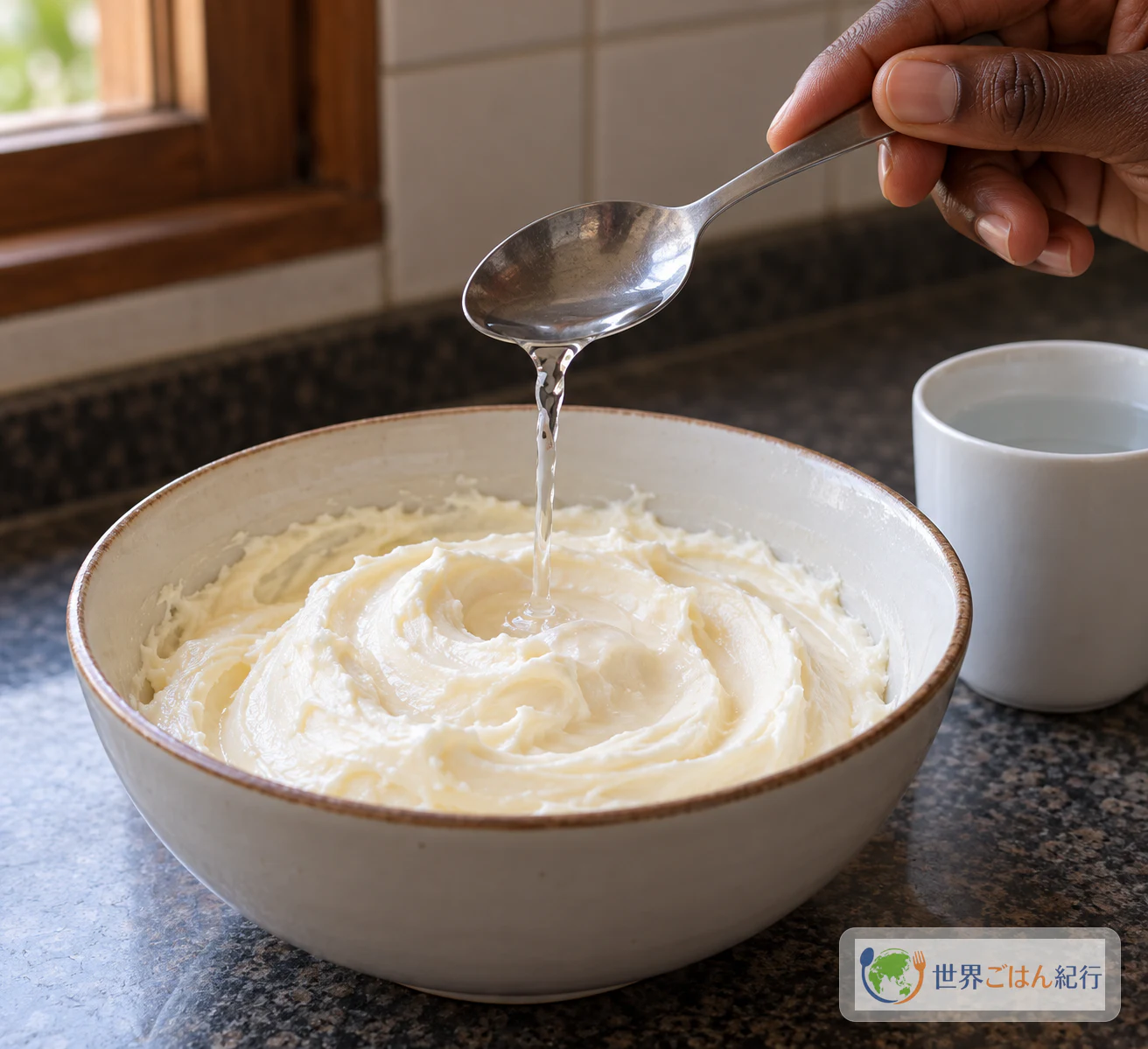
A bowl of pale yellow ghee, a wooden spoon, and a small dish of salted water waiting beside it. A tablespoon of brine goes in, the spoon keeps moving in one direction, and then another tablespoon follows. Little by little, the ghee loses its yellow, grows paler, thicker and fuller, until it sits in the bowl as an opaque white cream. That is eshabwe.
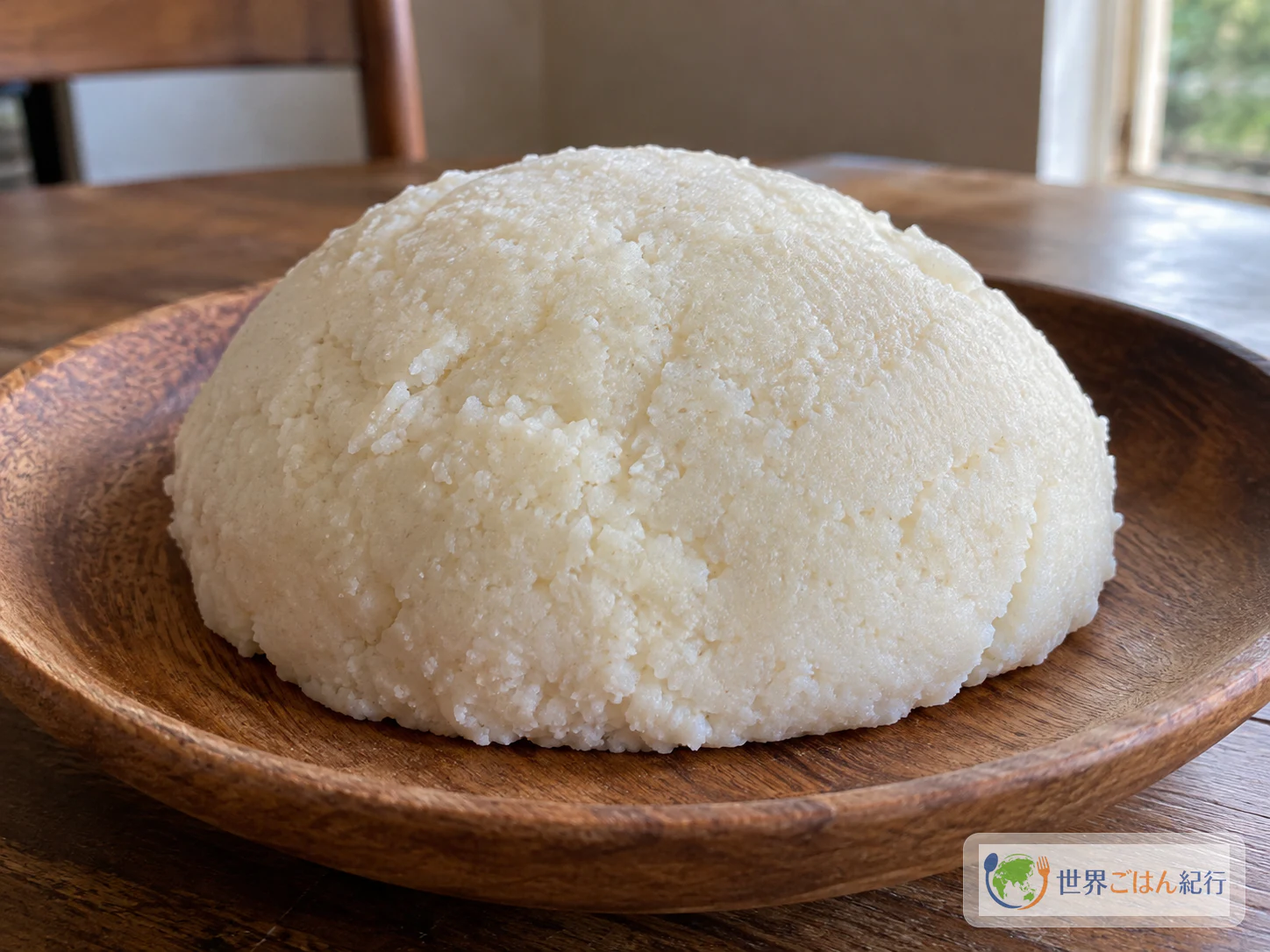
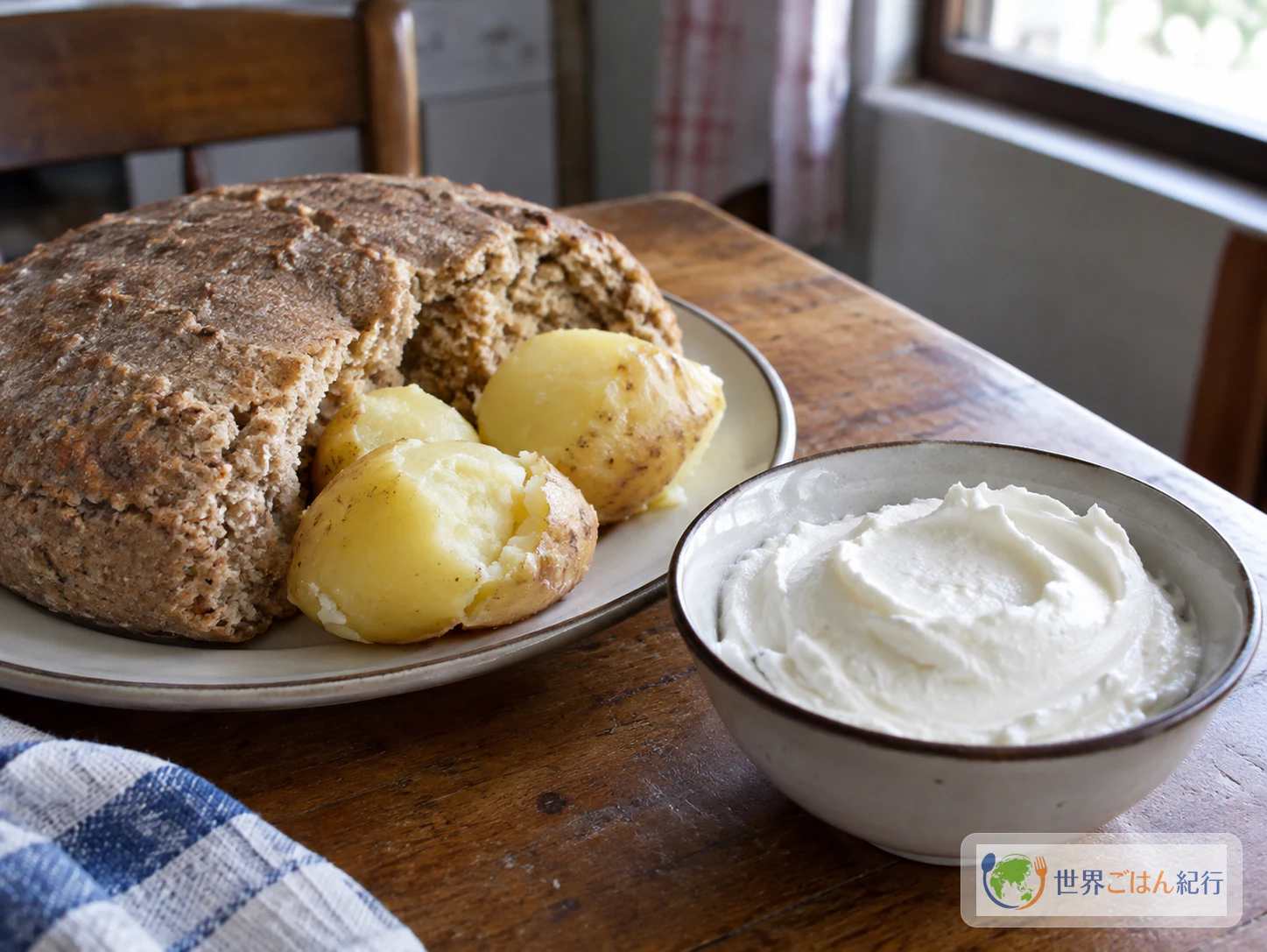
Eshabwe is a ghee sauce from Ankole in western Uganda. It is not a main course or a stew. It is a cold accompaniment, spooned alongside staples such as millet bread, matooke (steamed, mashed green bananas) and boiled potatoes or sweet potatoes. Ugandan newspapers describe it as a traditional Ankole dish served on special occasions as well as at home. For more dishes from the same country, see our Uganda page.
The recipe below follows a single published version, from the Ugandan newspaper Daily Monitor, without mixing in proportions from other sources. The amounts are retained from that source. This version has not been kitchen-tested by Sekai Gohan, and commercially available ghee is not assumed to reproduce the source ingredient or its result.
What Eshabwe Is: A Cold Side, Not a Cooked Dish
The heart of eshabwe is a change in texture, not cooking. The ghee is never heated during preparation. Instead, it is beaten while salted water is worked in a little at a time, and the mixture turns from pale yellow to white, thickens and increases in volume. The finished sauce is eaten cold.
Different sources place the dish slightly differently, and both views are worth keeping. Daily Monitor and Global Press Journal present eshabwe in connection with the traditions of the Bahima. New Vision describes it as a traditional dish of Ankole, and the Slow Food Foundation places home-made eshabwe within the dairy and ghee culture of the Ankole cattle corridor. Rather than tying the dish to a single group, it is fairer to read it as part of the milk and ghee culture of the region, as these sources each describe it.
Ingredients: Four Things, With the Water Used in Two Halves
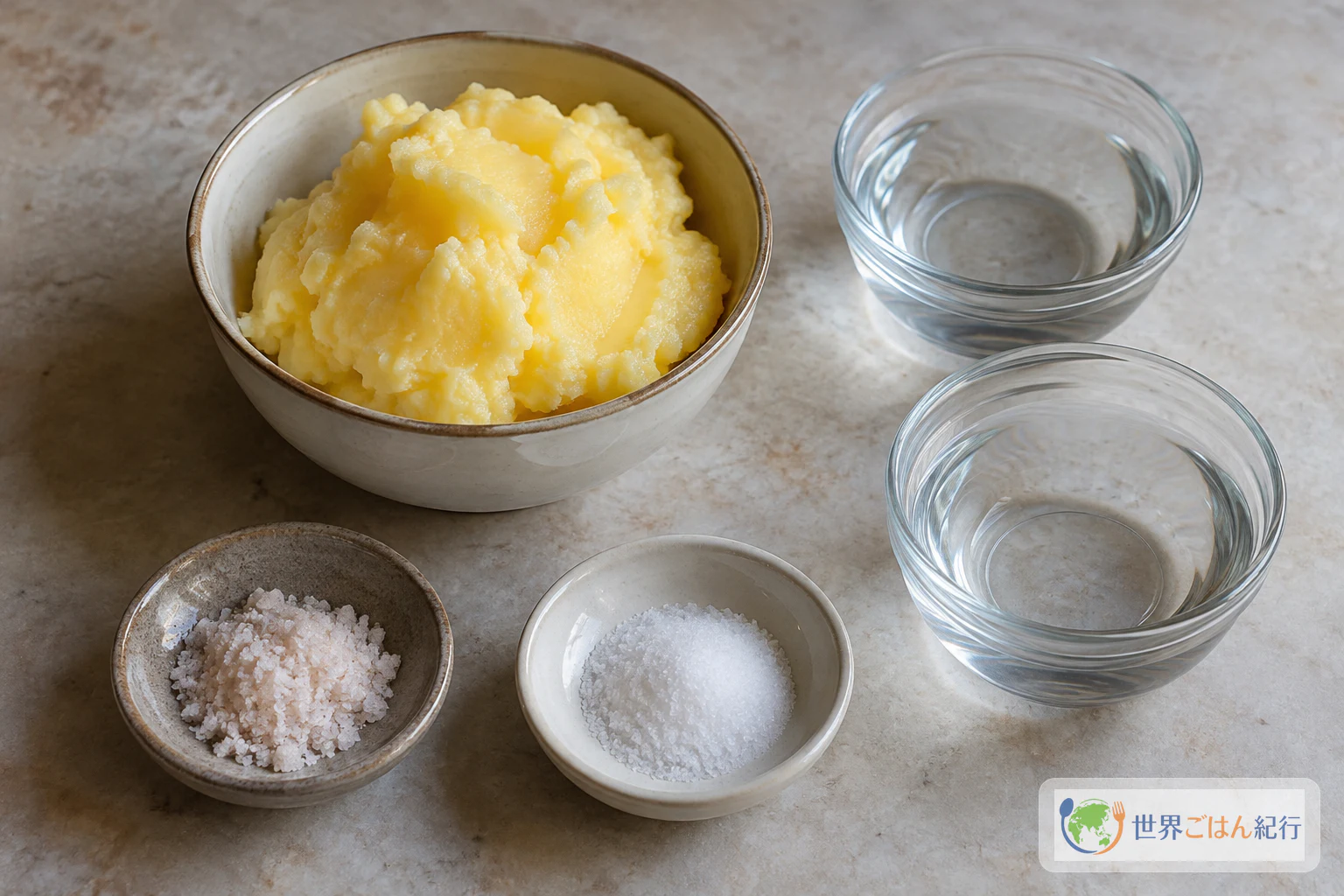
The source recipe does not state a yield. Treat this batch as roughly four servings as a side sauce, as a guide only. Boil the water in advance and let it cool until lukewarm, then divide it into two 75ml portions: one becomes the brine, and the other is held back for adjusting the consistency at the end. You may not need all of the second portion.
The local sources emphasize unheated ghee and cleanliness throughout. Use a clean, completely dry bowl and utensils, and boiled water. This recipe does not give a safe storage period or safe temperatures, because none was confirmed in the sources behind it.
Equipment
- A clean, dry mixing bowl
- A wooden masher or wooden spoon
- A fine sieve for straining the brine (the source specifies two nylon sieves layered together)
- A clean, fine-mesh strainer for the finished sauce
- Measuring spoons (tablespoon and teaspoon) and a measuring jug
- A pot or kettle for boiling the water
- A small serving bowl
Choosing and Substituting: Ghee First, Butter Is Not the Same
Ghee is the one ingredient that decides the dish. The source recipe calls for mature, clean ghee that has not been boiled. Store-bought ghee varies by product, so it cannot be assumed to match that condition. If you buy ghee, read the label and production information and choose an unsalted one.
Ordinary butter is not a like-for-like substitute. Butter still contains water and milk solids, so it is in a different state from the unheated ghee the original uses. This recipe does not recommend swapping it in under the same method.
Powdered rock salt: if you can't find it already powdered, grinding rock salt finely is a practical option, but it is a home adjustment, not the same ingredient as the original. Ordinary table salt is fine for the table salt.
Method: Spoonful by Spoonful Until It Turns White
There are no timings here. Judge each stage by what you see: smooth ghee, then a paler and thicker mixture, then a white, creamy sauce roughly twice its starting volume that holds its shape instead of running.
Troubleshooting: When the Sauce Won't Behave
| Problem | Likely cause | What to do |
|---|---|---|
| The mixture looks separated | Too much liquid at once, or stirring paused | Add small amounts of brine and the remaining lukewarm water, stirring again after each |
| It isn't turning white | Not enough brine worked in yet | Keep adding brine one tablespoon at a time and keep stirring in one direction. Judge by color and volume, not the clock |
| It has become runny | Too much of the reserved water went in | Next time, add the reserved water one tablespoon at a time and stop as soon as the sauce holds |
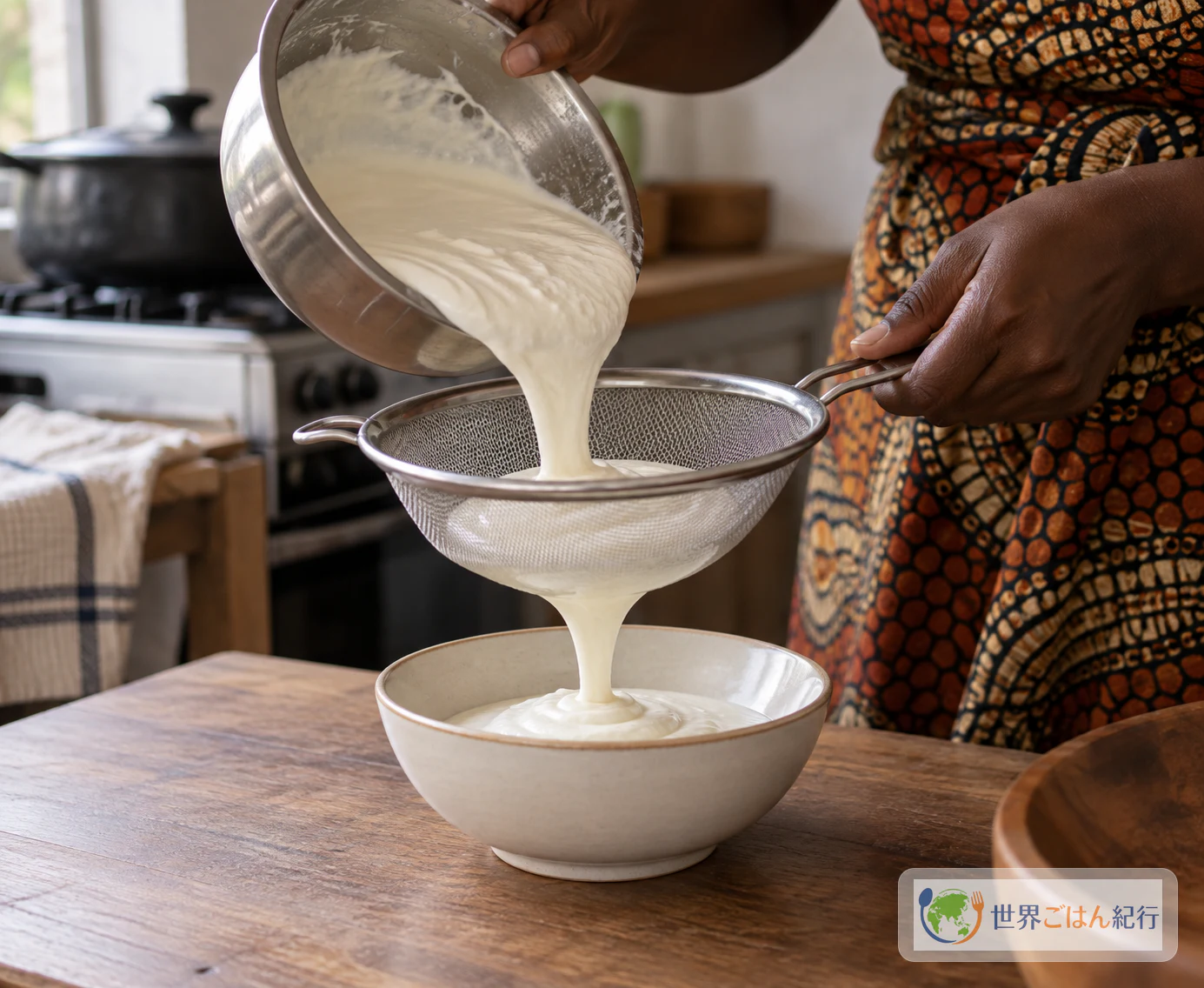
| Bits or residue in the sauce | Visible particles in the ghee or brine | Strain the brine before using it and pass the finished sauce through a clean fine strainer |
| It tastes flat | Not quite enough salt | Taste after it turns white and add a pinch of table salt |
Most problems come from rushing the liquid. The single habit that matters most is adding the brine and the water in tablespoons, never in one pour, and using bowls and spoons that are clean and dry.
Serving and Food Culture: A Cold Sauce Beside the Staples
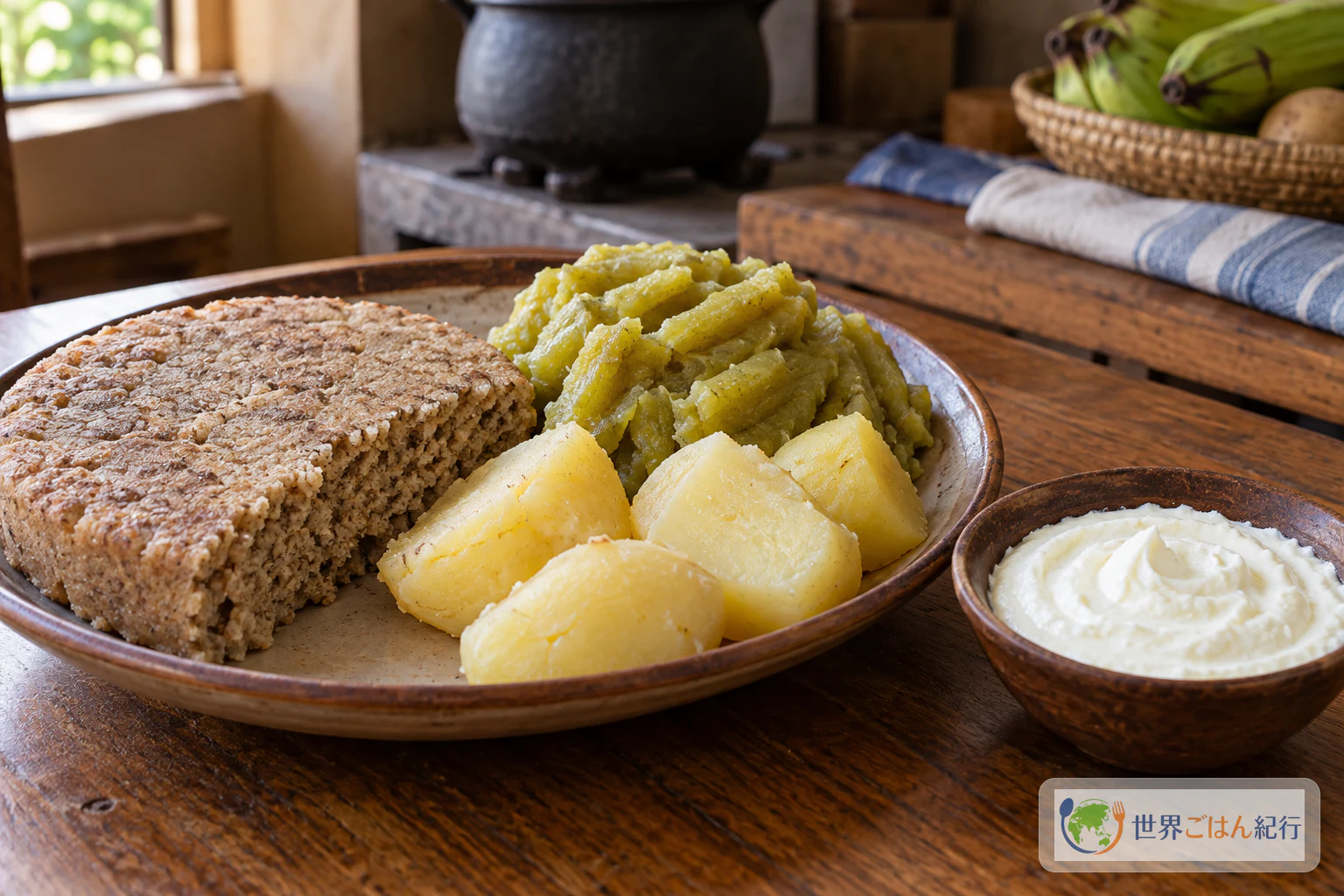
Eshabwe is served as a side to starchy staples. Global Press Journal, reporting from a Bahima cook, describes it eaten with millet bread and boiled potatoes, and with steamed, mashed matooke. New Vision lists millet bread, matooke, sweet potatoes and posho as companions, notes that eshabwe is eaten cold, and mentions it being served at celebrations. Keep the sauce in its own bowl so each person can take as much as they like with their staple.
The Slow Food Foundation's guide to Ugandan foods places eshabwe within the dairy culture of the Ankole cattle corridor, where ghee is made at home and used in household cooking. The sources consulted here do not establish when or where the dish first appeared, so this article does not claim an origin.
Variations
Daily Monitor's introduction to the dish mentions smoked meat, beef and maize as things that may be eaten with it. Those are separate variations, not ingredients in the four-ingredient recipe adopted here.
Other cooks work with larger batches and different proportions, and some measure by eye. New Vision and Global Press Journal each describe home versions that differ from the Daily Monitor recipe. Their amounts are not combined with the recipe here.
Frequently Asked Questions
Can I use butter instead of ghee?
Not as a like-for-like swap. Butter contains water and milk solids, so it is in a different state from the unheated ghee the original recipe calls for. If you use store-bought ghee, check the label and production information, since products vary.
What do I eat eshabwe with?
The sources describe millet bread, matooke, boiled potatoes, sweet potatoes and posho. Serve the sauce on the side in its own bowl.
Should I warm it?
No. The local sources describe eshabwe as eaten cold, and the ghee is not heated during preparation. This article does not give a safe serving temperature.
How long does it keep?
The sources behind this recipe do not give a safe storage period, and none is given here. Make it with clean, dry tools and boiled water, as the local recipes emphasize.
Why is the water split into two portions?
Half of the water carries the salt into the ghee as brine. The other half is held back to fine-tune the thickness once the sauce has turned white, which is why you may not need all of it.
Sources
- Daily Monitor, "Eshabwe, a local delicacy." The recipe used in this article: 250g mature, clean ghee, 150ml warm previously boiled water, 1 tsp powdered rock salt and 1/2 tsp table salt; dissolving the salts in half the water and straining; stirring in one direction while adding brine a little at a time until white, thick and doubled; adjusting with the remaining water and straining. Also the emphasis on cleanliness and unboiled ghee, and serving suggestions. https://www.monitor.co.ug/uganda/lifestyle/dining-recipes/eshabwe-a-local-delicacy-1689480
- New Vision, "How to make eshabwe." Eshabwe as a traditional Ankole dish, its place at celebrations, a different home version, eating it cold, and serving it with millet bread, matooke, sweet potatoes and posho. https://www.newvision.co.ug/news/1197443/eshabwe
- Global Press Journal, "Bahima Chef Shares Taste of Her Tribe in Uganda's Capital." Field reporting with a Bahima cook: mixing ghee with water and salt, not heating the ghee, and eating it with millet bread, potatoes and matooke. https://globalpressjournal.com/africa/uganda/bahima-chef-shares-taste-tribe-ugandas-capital/index.html
- Slow Food Foundation for Biodiversity, "Uganda: Slow Food guide, Clarified Butter (Ghee)," pp. 27–28. Dairy processing in the Ankole cattle corridor, household ghee, and eshabwe in home cooking. https://www.fondazioneslowfood.com/wp-content/uploads/2016/10/ING_libretto_uganda_BASSA.pdf