
Mandazi: A Firm, Lemon-Scented Dough Fried Until Puffed and Golden
A firm dough made with cold water, a short 10-minute rest, pieces about 1 inch thick, and small batches fried until they puff and turn golden all over.
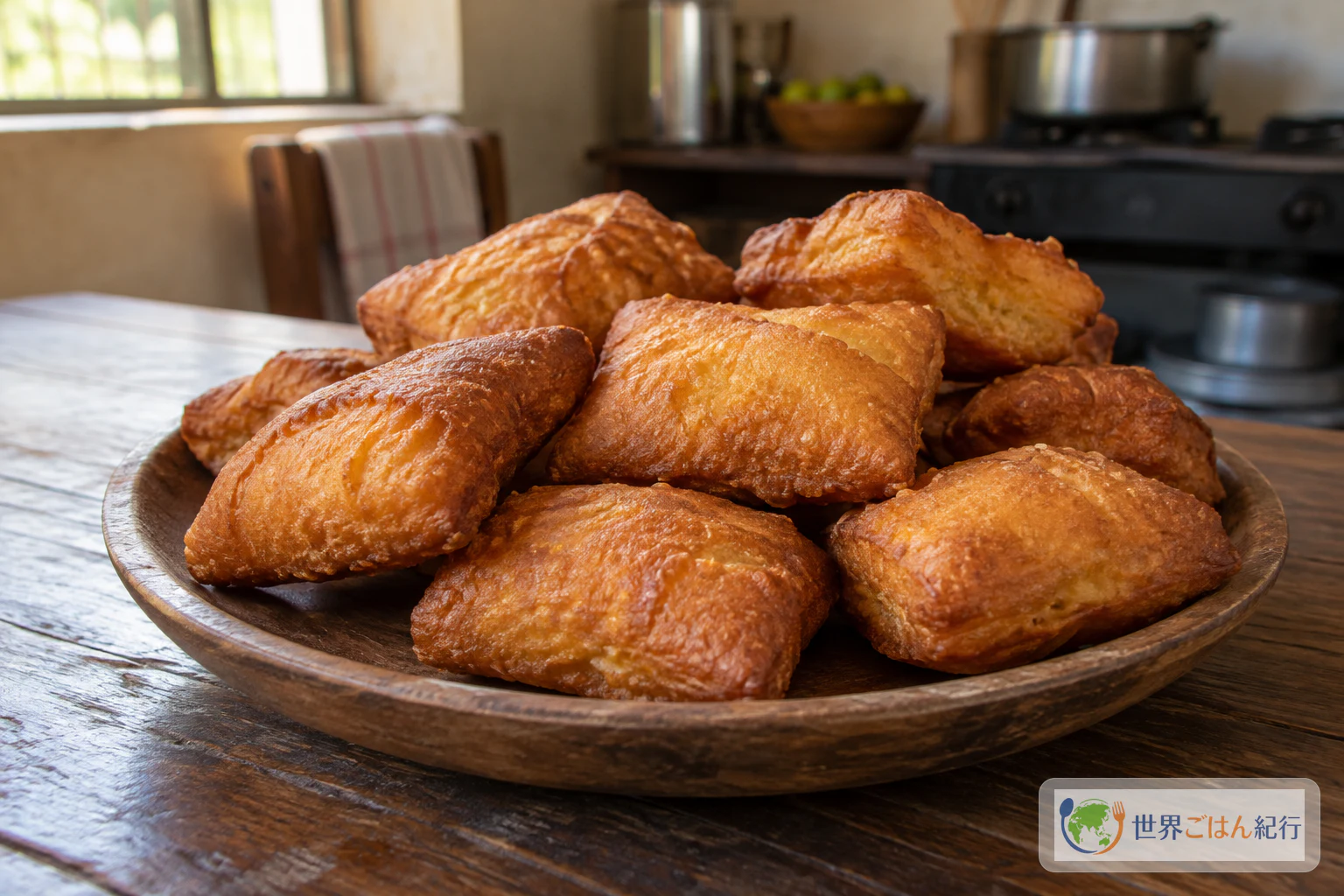
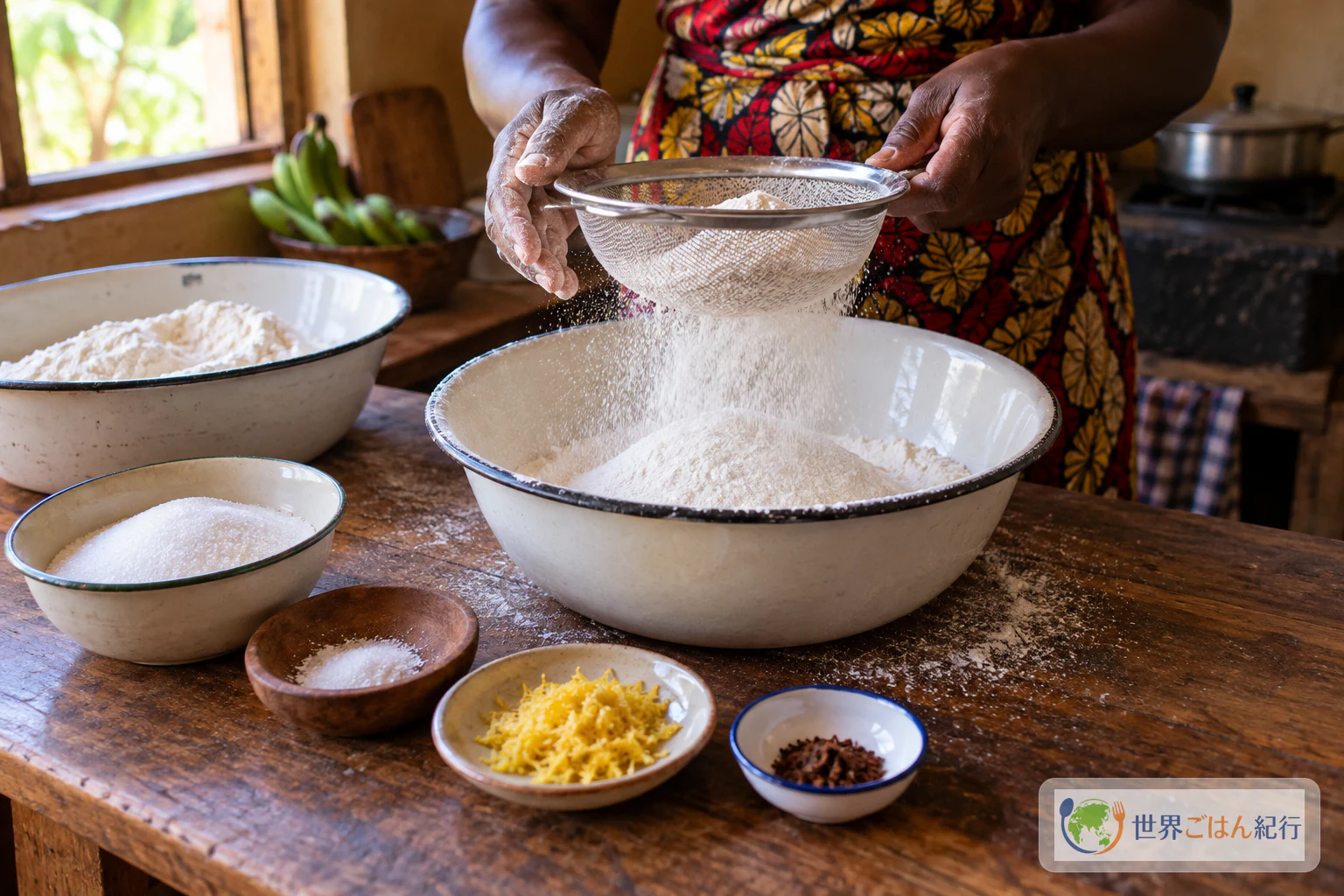
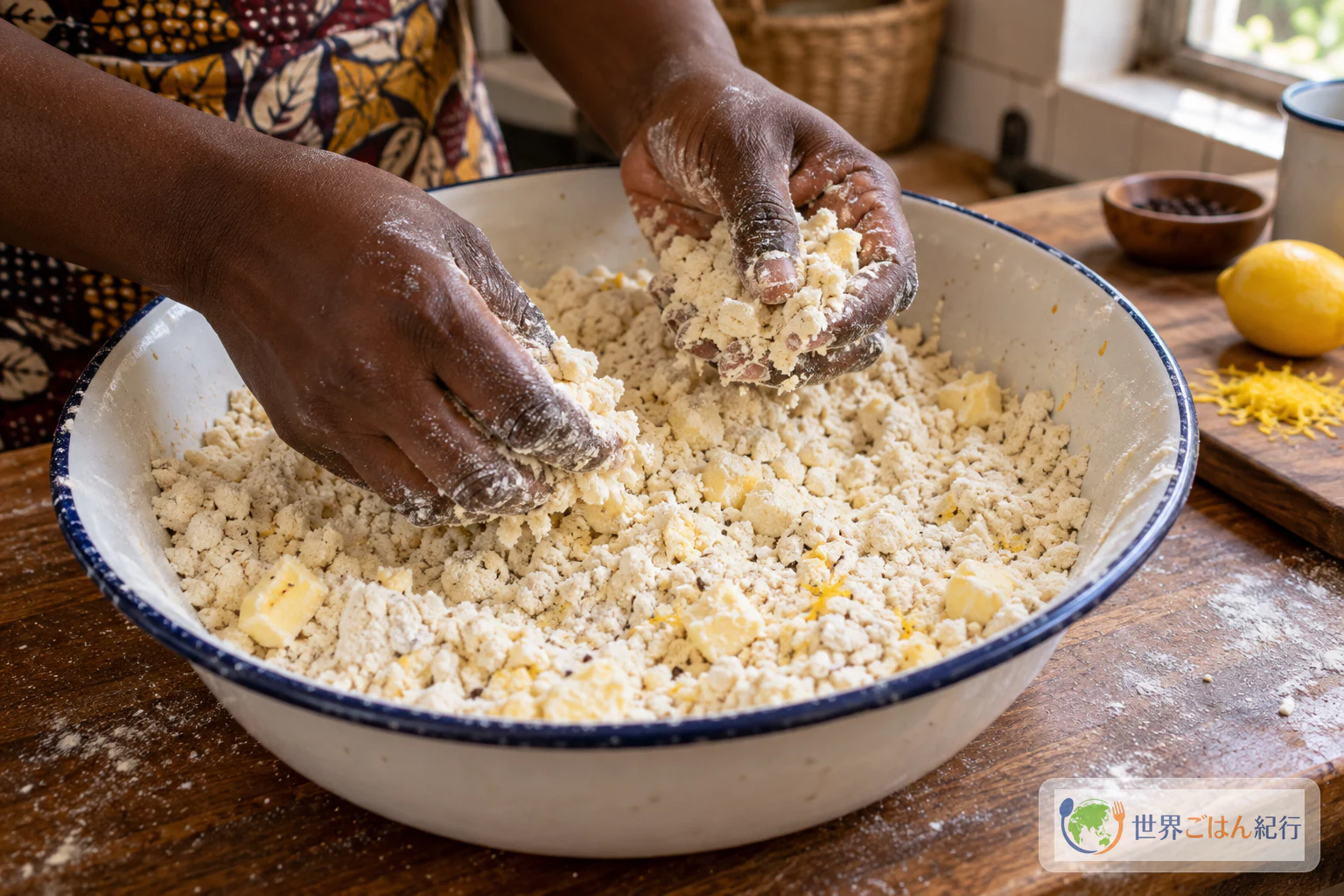
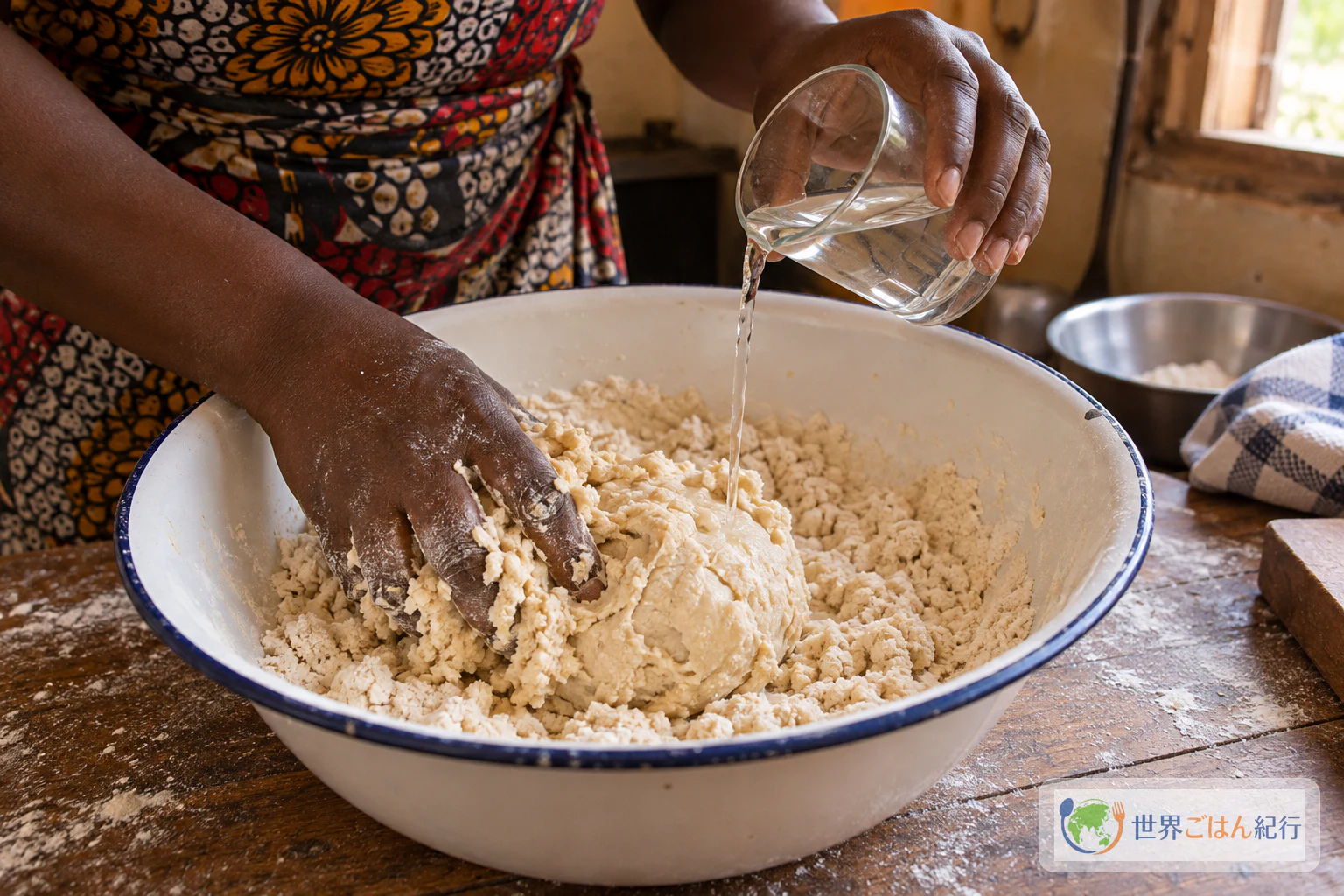
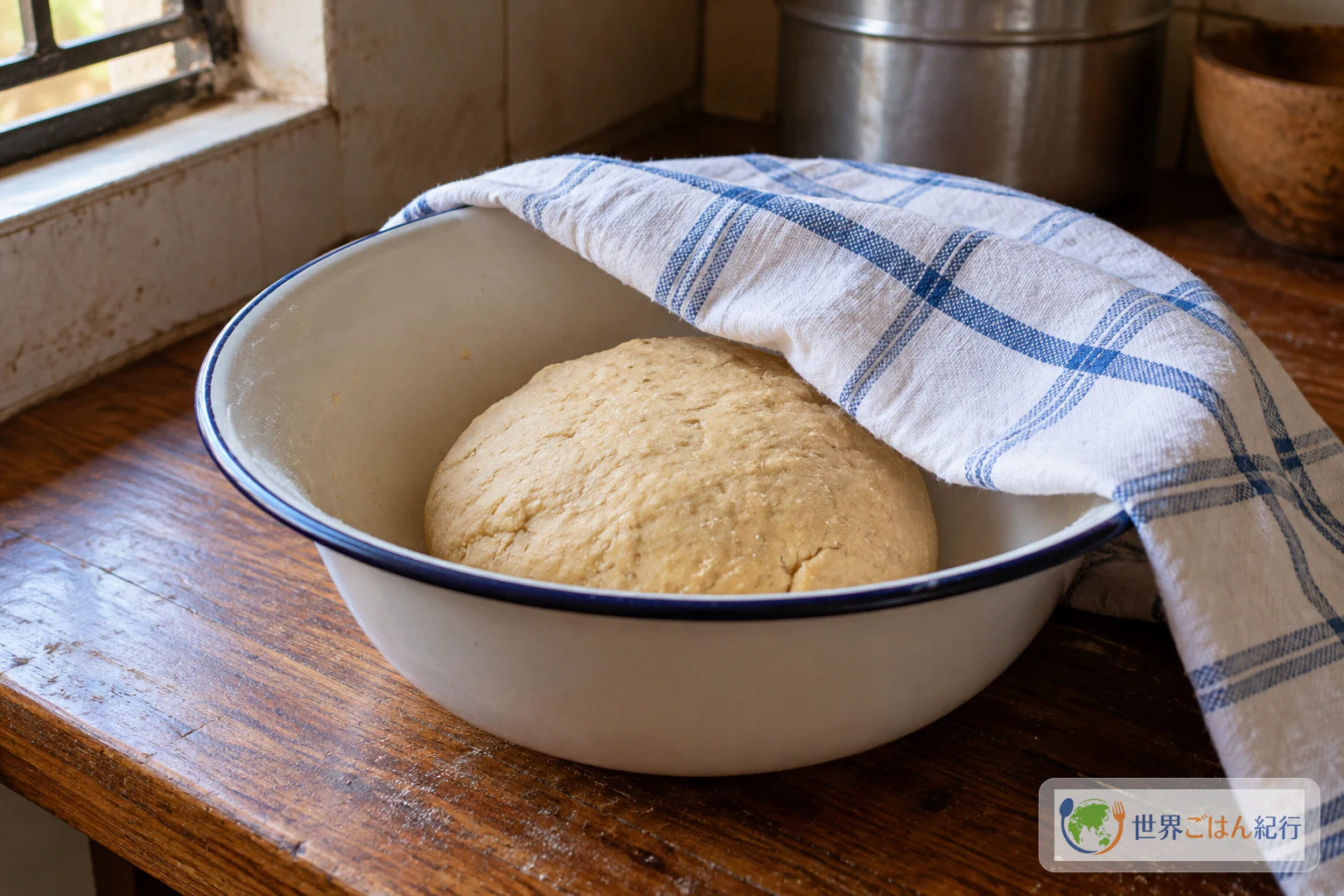
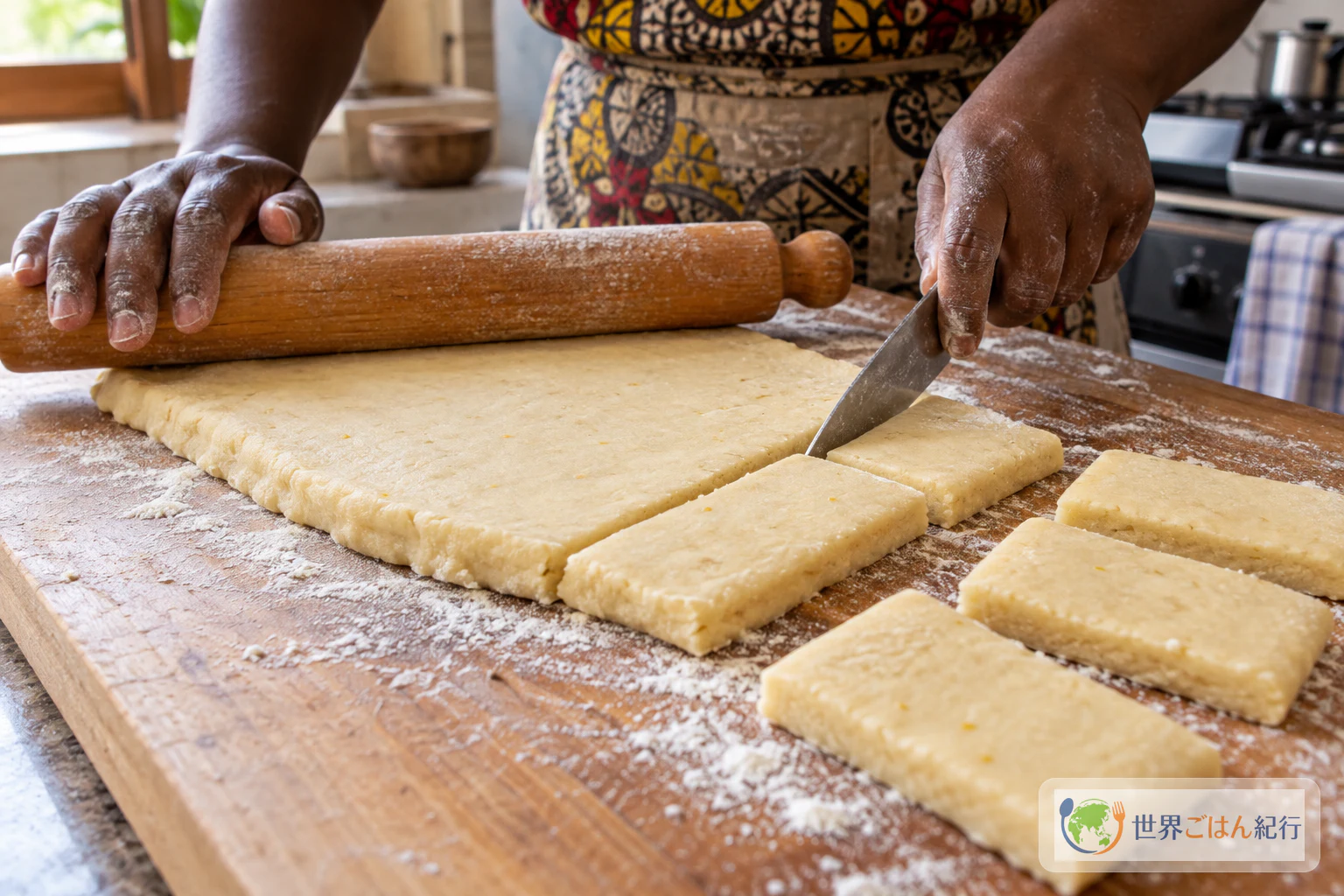
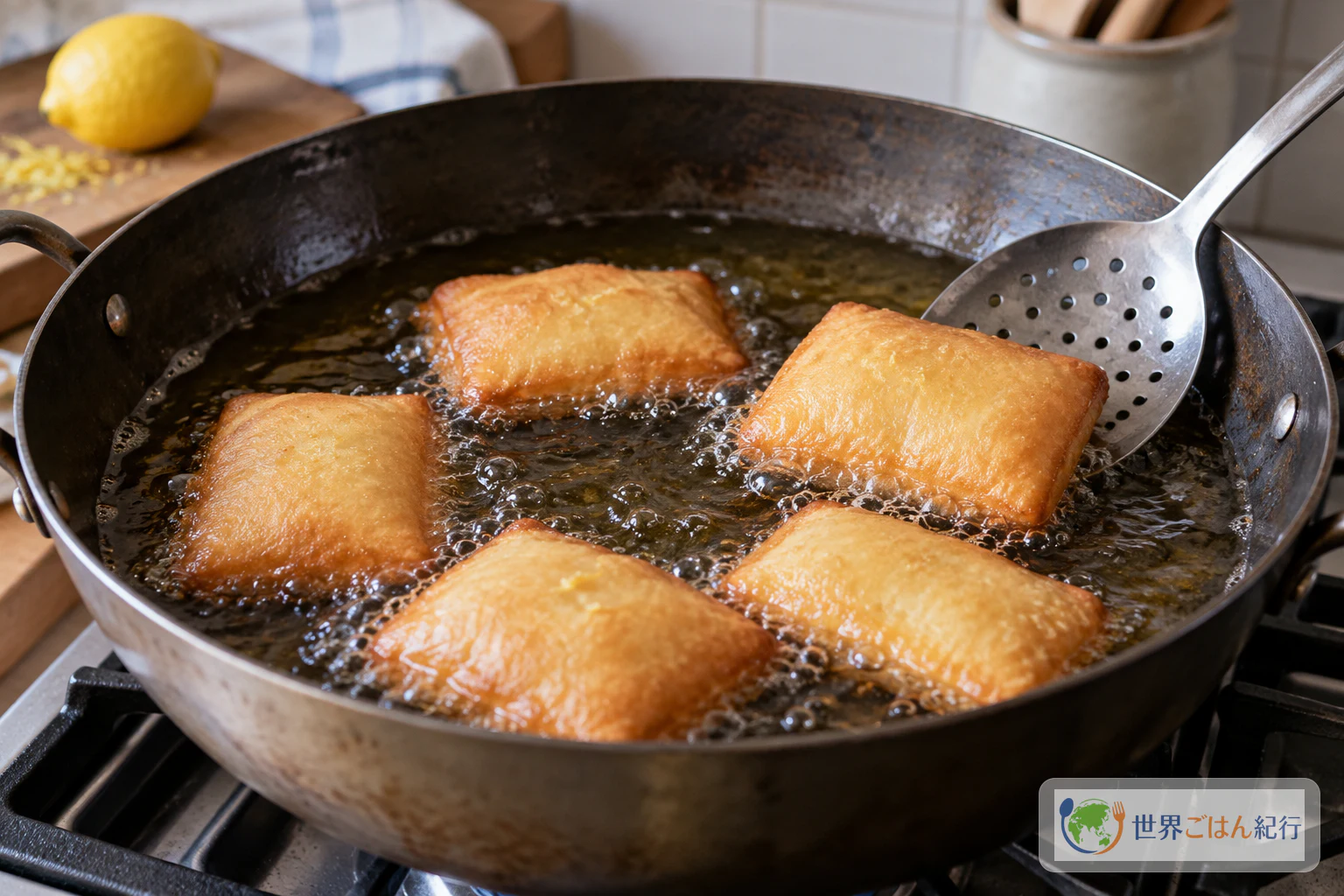
A bowl of sifted flour, a little sugar, a pinch of salt and fresh lemon zest. Butter rubbed in until the flour looks like coarse crumbs, then cold water with a splash of vanilla, and a firm dough that comes together under your hands. Cut into thick pieces and lowered into the oil a few at a time, it puffs and slowly turns golden. This is mandazi, a fried dough snack well known in Uganda.
Mandazi is not one fixed recipe. Across East Africa the name covers a range of doughs, and proportions change from region to region and household to household. This article follows a single Ugandan home recipe from A Kitchen In Uganda: a lemon-zest dough raised with baking powder (or baking soda), with ground cloves as an option. Every amount, time and shape below comes from that recipe, kept in its original cups and spoons.
This recipe is presented as the source writes it. It has not been kitchen-tested by Sekai Gohan, so the amounts and times are the source's own, not results we have confirmed.
For more dishes from the same country, see our Uganda country page.
What Mandazi Is: A Snack With Many Versions
Mandazi is a dough of flour, sugar and a raising agent that is kneaded, rested, cut and fried. Pulse Uganda introduces it as something eaten in Uganda at breakfast, as a daytime snack and at gatherings, and describes the same basic path: knead the dough, rest it, cut it and fry it.
Ugandan recipes themselves vary. A Ugandan agricultural extension article from Operation Wealth Creation gives an example of mandazi made from flour, rested, cut into shapes and fried in hot oil, and it also includes a different formula that uses sweet potato flour. That version is a separate recipe and is not mixed into the one here.
The features of this article's version, lemon zest and optional cloves, belong to the recipe it follows. They are one household's way of making mandazi, not the only or "original" form, and this article does not claim a single country or person as the origin of the dish.
Mandazi and mahamri are not the same recipe
On the Kenyan coast, mandazi sits beside a similar-looking fried snack called mahamri. In The Elephant's article on food culture at the Kenyan coast, the two are distinguished as snacks that may look alike but differ in taste and dough: mahamri is described as using yeast, cardamom and coconut milk, while mandazi is described as a type made of flour with yeast or baking powder and without spices.
| Mandazi (as described in that article) | Mahamri (as described in that article) | |
|---|---|---|
| Raising | Yeast or baking powder | Yeast |
| Flavor | No spices | Cardamom |
| Liquid | — | Coconut milk |
That article is about the Kenyan coast, so it does not describe a single custom for all of Uganda. It is a useful way to see that this recipe, with cold water, baking powder and lemon zest, is not mahamri, and that coconut milk and cardamom do not belong in this ingredient list.
Ingredients: Kept in the Source's Cups and Spoons
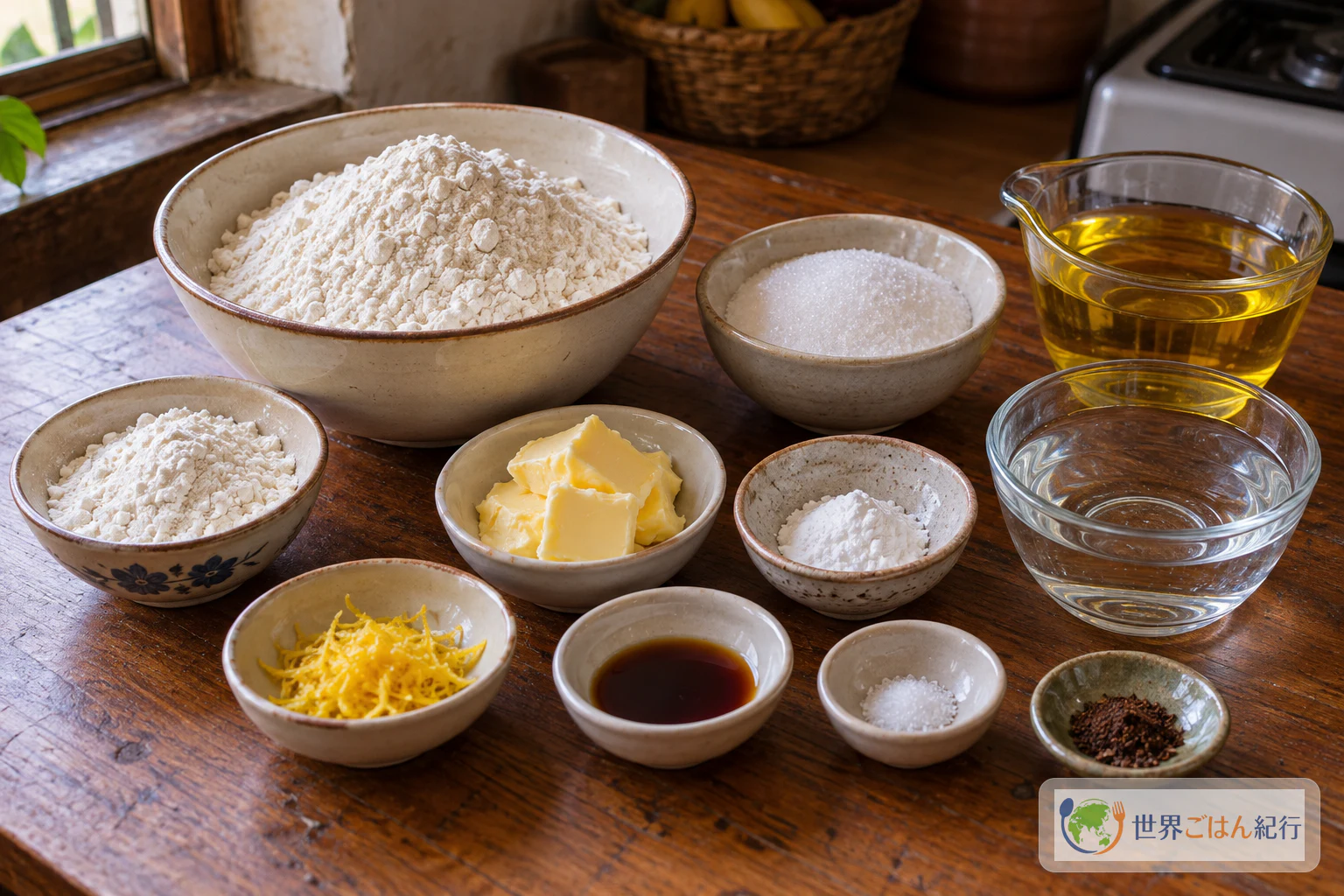
The source does not say which cup standard it uses, so the amounts are not converted to grams or milliliters here. Measure everything with the same set of cups and spoons. Two pairs in the list are either/or choices: baking powder or baking soda, and butter or margarine. Use only one from each pair.
Choosing Between the Options
- Baking powder or baking soda: The source gives either 1 tsp baking powder or 1/4 tsp baking soda. Pick one and leave the other out.
- Butter or margarine: Either works in the source, at 2 tbsp and room temperature. Choose one.
- Cloves: Optional. Leaving them out keeps the lemon zest and vanilla at the front.
- Allergens: This recipe contains wheat. Butter contains milk; if you choose margarine, check its ingredient and allergen labels rather than assuming it is milk-free.
Equipment
- Large mixing bowl
- Sieve, for sifting the flour and raising agent
- Work surface and rolling pin
- Knife
- Pan for frying
- Slotted spoon
Method: Dry Ingredients, Fat, Cold Water, Rest, Shape, Fry
The source gives a 10-minute rest and about 7 minutes per batch in the oil. Beyond those, judge by the dough no longer sticking to your hands and by the pieces puffing and turning golden all over.
Troubleshooting
| What you see | Likely cause | What to do |
|---|---|---|
| The outside browns before the pieces have puffed | Oil too hot | Lower the heat back to medium before the next batch |
| The dough still sticks to your hands | Not kneaded enough yet | Keep kneading until it no longer sticks; the source's guide is about 2 minutes |
| Pieces are still pale after a while in the oil | Not finished yet | Keep frying until they are golden all over; the source's guide is about 7 minutes per batch |
| Coconut or cardamom flavor expected | That is mahamri, a different snack | This recipe uses lemon zest, vanilla and optional cloves only |
Variations Within This Recipe
- Shape: Rectangles, or 10–12 rounds rolled from divided dough. Both are in the source.
- Raising agent: Baking powder or baking soda, in the source's amounts.
- Fat: Butter or margarine.
- Spice: Add the 1/2 tsp ground cloves, or leave them out.
Other Ugandan formulas exist, such as the sweet potato flour version in the Operation Wealth Creation article, but they are separate recipes with their own proportions and are not adapted here.
Frequently Asked Questions
What is the difference between mandazi and mahamri?
In The Elephant's article on the Kenyan coast, mahamri is described as using yeast, cardamom and coconut milk, while mandazi is described as flour with yeast or baking powder and no spices. They can look similar but differ in taste and dough. This recipe is a mandazi and does not use coconut milk or cardamom.
Can I use baking soda instead of baking powder?
Yes. The source gives 1/4 tsp baking soda as the alternative to 1 tsp baking powder. Use one, not both.
Can I convert the cups to grams?
The source does not state which cup standard it uses, so no conversion is given here. Measure all ingredients with the same set of cups and spoons.
Can I roll the dough thinner?
The source specifies about 1 inch thick, and this article keeps that value. A thinner version would be a change from the source recipe.
When is mandazi eaten in Uganda?
Pulse Uganda introduces it as eaten at breakfast, as a daytime snack and at gatherings. That is an introduction, not a single custom for everyone in the country.
Sources
- A Kitchen In Uganda / Sophie, "How to Make the Perfect Ugandan Mandazi." The recipe followed in this article: ingredients and amounts, cold water, firm dough, 10-minute rest, about 1 inch thick, rectangles or rounds, frying 4–5 at a time over medium heat for about 7 minutes until puffed and golden, and the lemon zest and cloves that characterize this version. https://akitcheninuganda.com/2020/09/27/how-to-make-the-perfect-ugandan-mandazi/
- Pulse Uganda, "How to make Mandazi: A step-by-step guide to make delicious Ugandan snacks." Mandazi eaten in Uganda at breakfast, as a snack and at gatherings, and the basic process of kneading, resting, cutting and frying a dough of flour, sugar and a raising agent. https://www.pulse.ug/story/how-to-make-mandazi-2025041009103022571
- The Elephant, "Food Culture at the Kenyan Coast." The distinction between mahamri (yeast, cardamom, coconut milk) and mandazi (flour with yeast or baking powder, no spices) on the Kenyan coast. https://www.theelephant.info/analysis/2022/09/20/food-culture-at-the-kenyan-coast/
- Operation Wealth Creation (Uganda), "How to add value to sweet potatoes." An example of Ugandan mandazi made from flour, rested, cut and fried in hot oil, and a separate formula using sweet potato flour. https://owc.go.ug/loading.php?id=15