Cong You Bing: Cover the Pan First, Then Let It Brown
Keep the dough order (boiling water first, then cool water), the two separate oils (peanut oil in the paste, vegetable oil in the pan), and the two-stage cook: one minute covered on each side, then uncovered until crisp and browned.
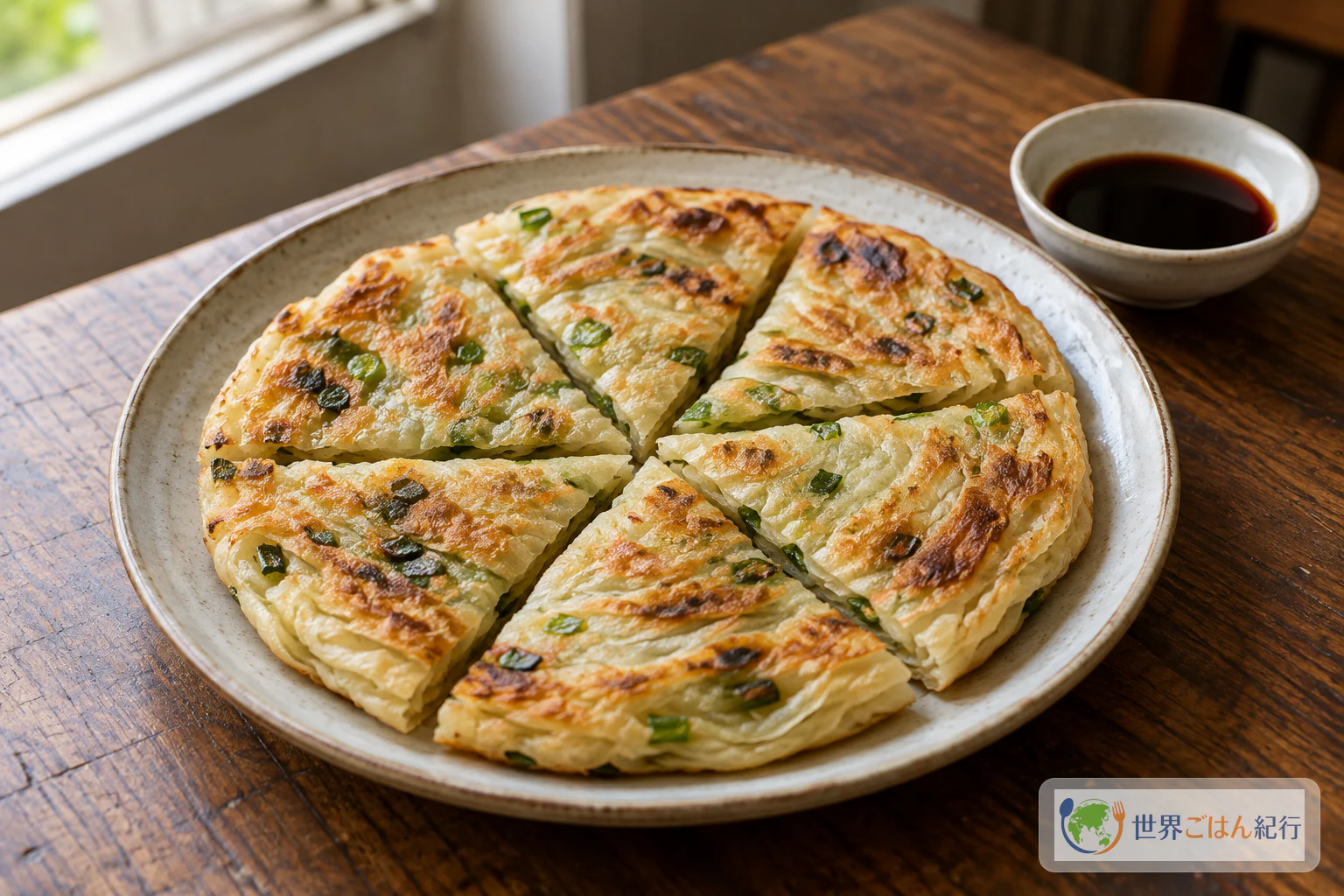
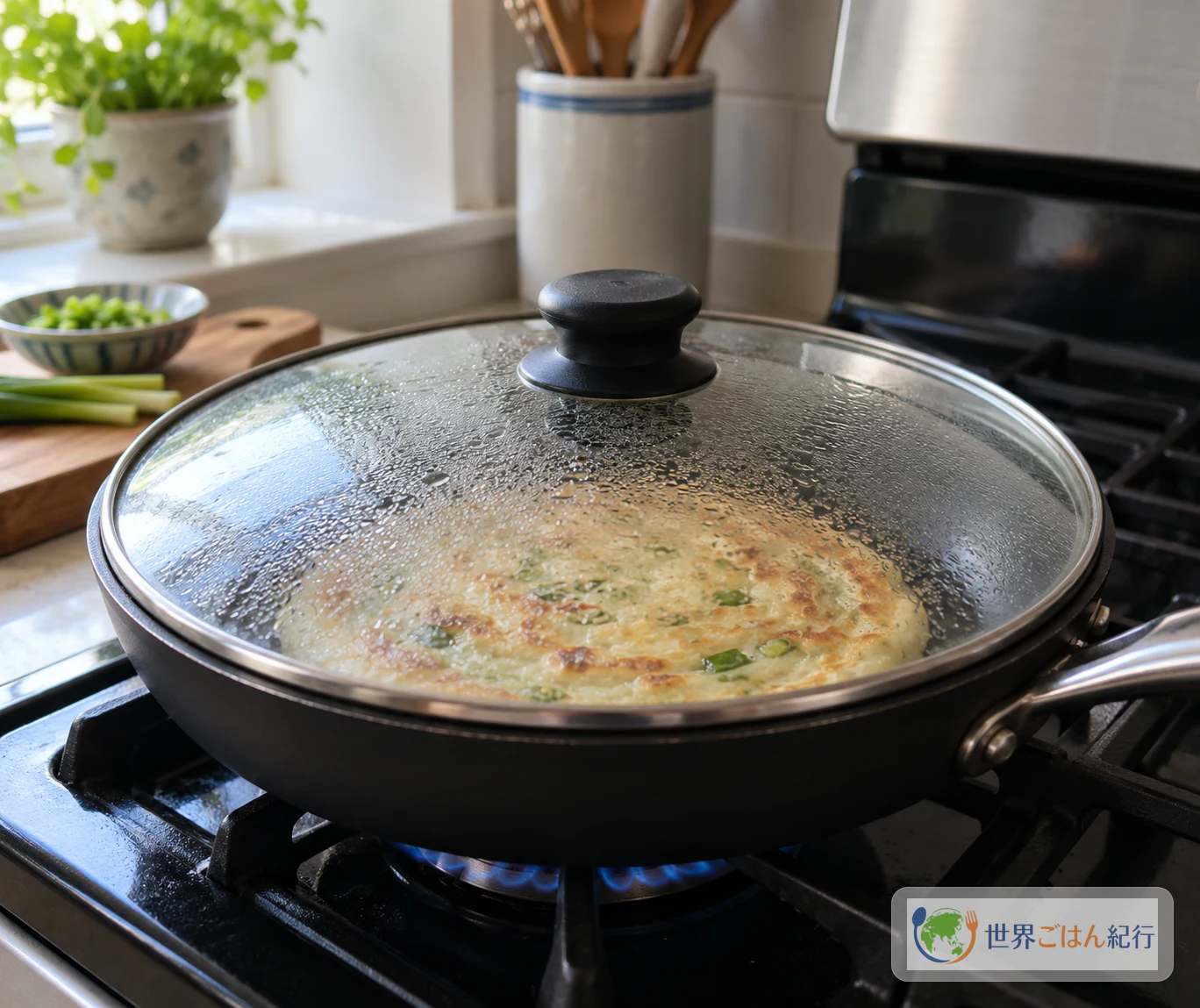
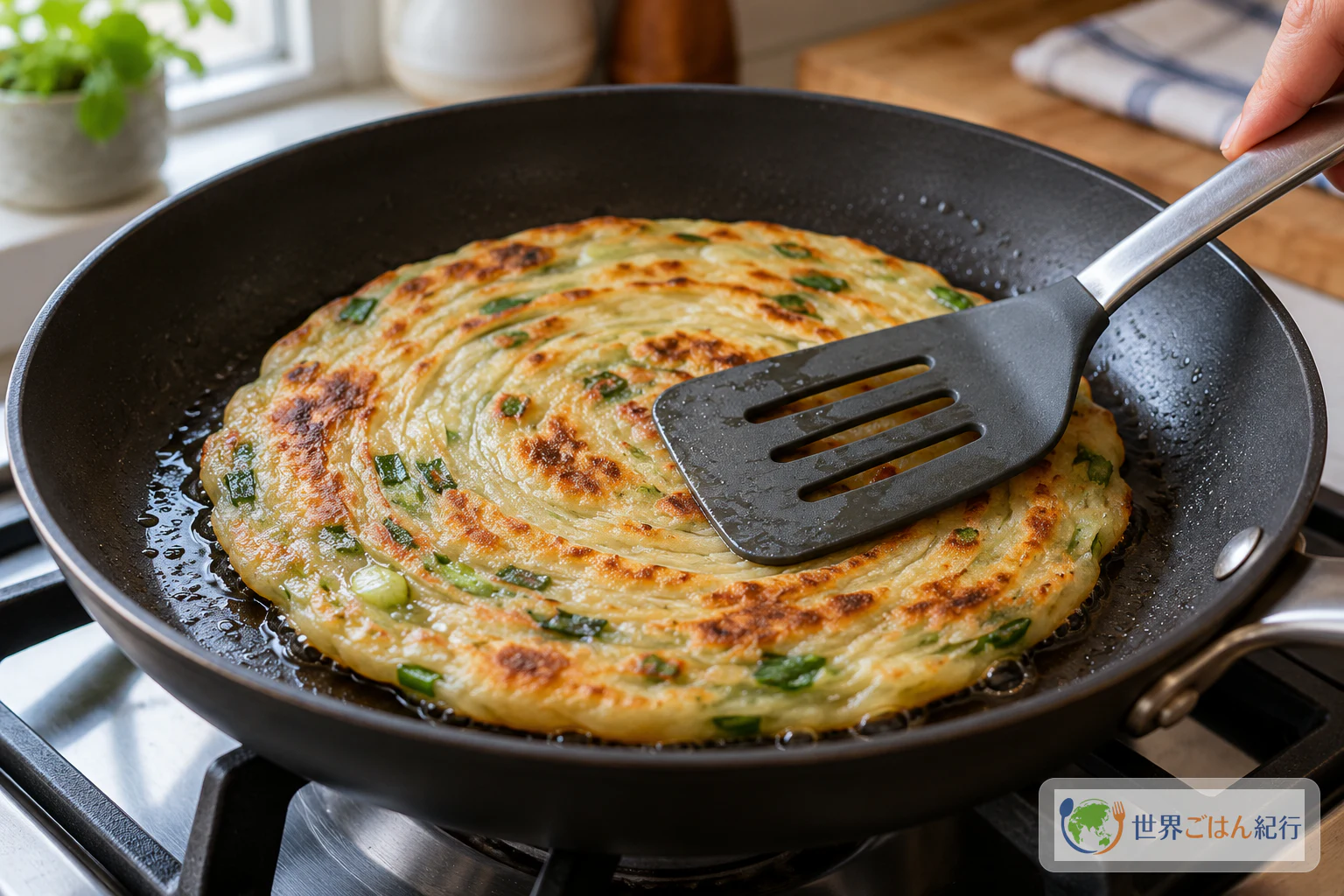
A thin, round, scallion-flecked pancake goes into a 9-inch nonstick skillet with hot oil coating the bottom. It gets a brief swirl, the lid goes on, and the heat drops to medium. One minute later it is flipped and covered again. Only then does the lid come off, and the pancake is pressed and turned until both sides turn crisp and browned. That covered-then-uncovered rhythm is the heart of this recipe.
This article follows a single version: Maggie Zhu's "Chinese Scallion Pancakes (葱油饼)" on Omnivore's Cookbook. The page credits Lilja Walter with working alongside Maggie on developing and testing the recipe. We have not kitchen-tested this version ourselves. The amounts, times and yield below are the ones published on that page.
What Cong You Bing Is in This Recipe
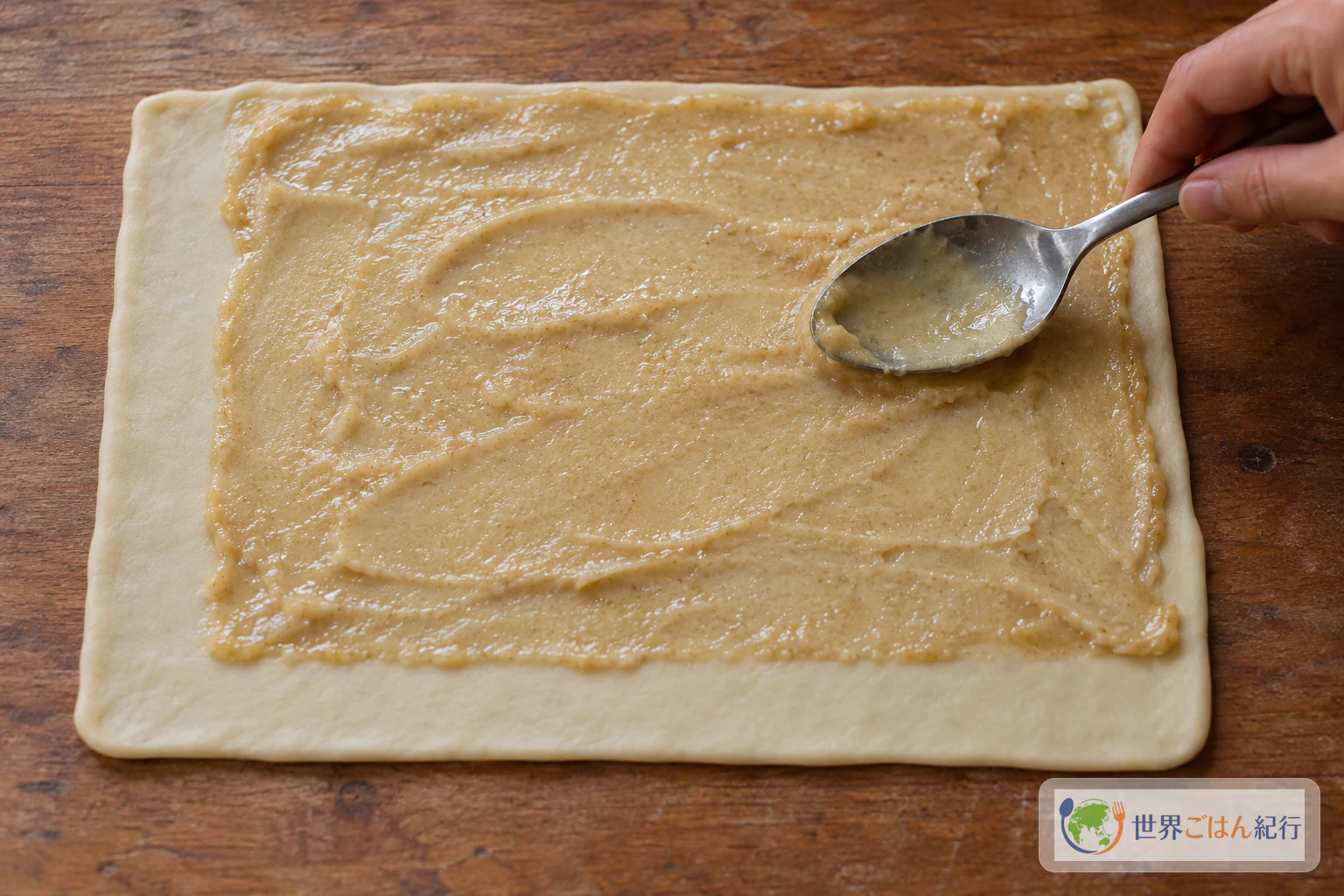
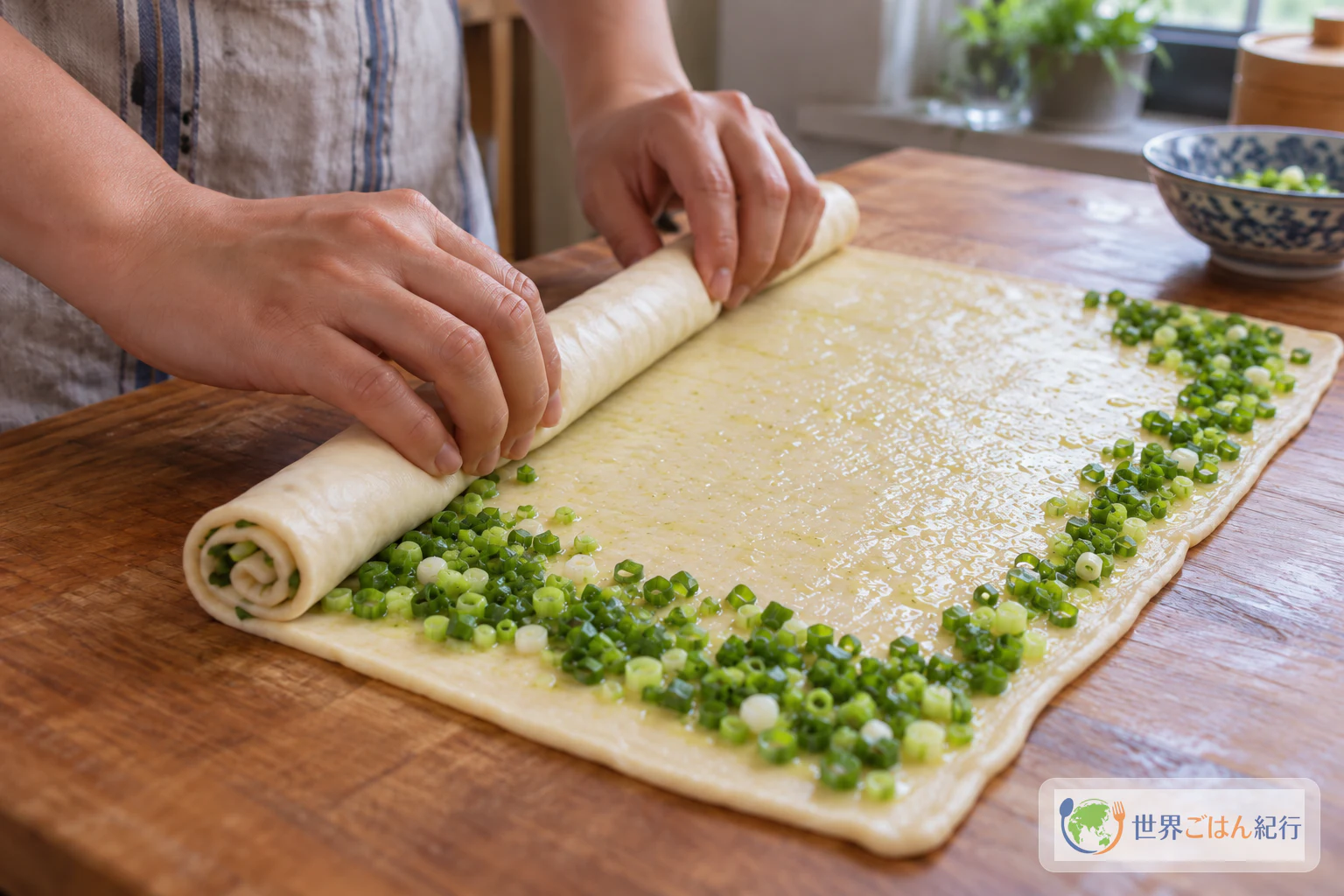
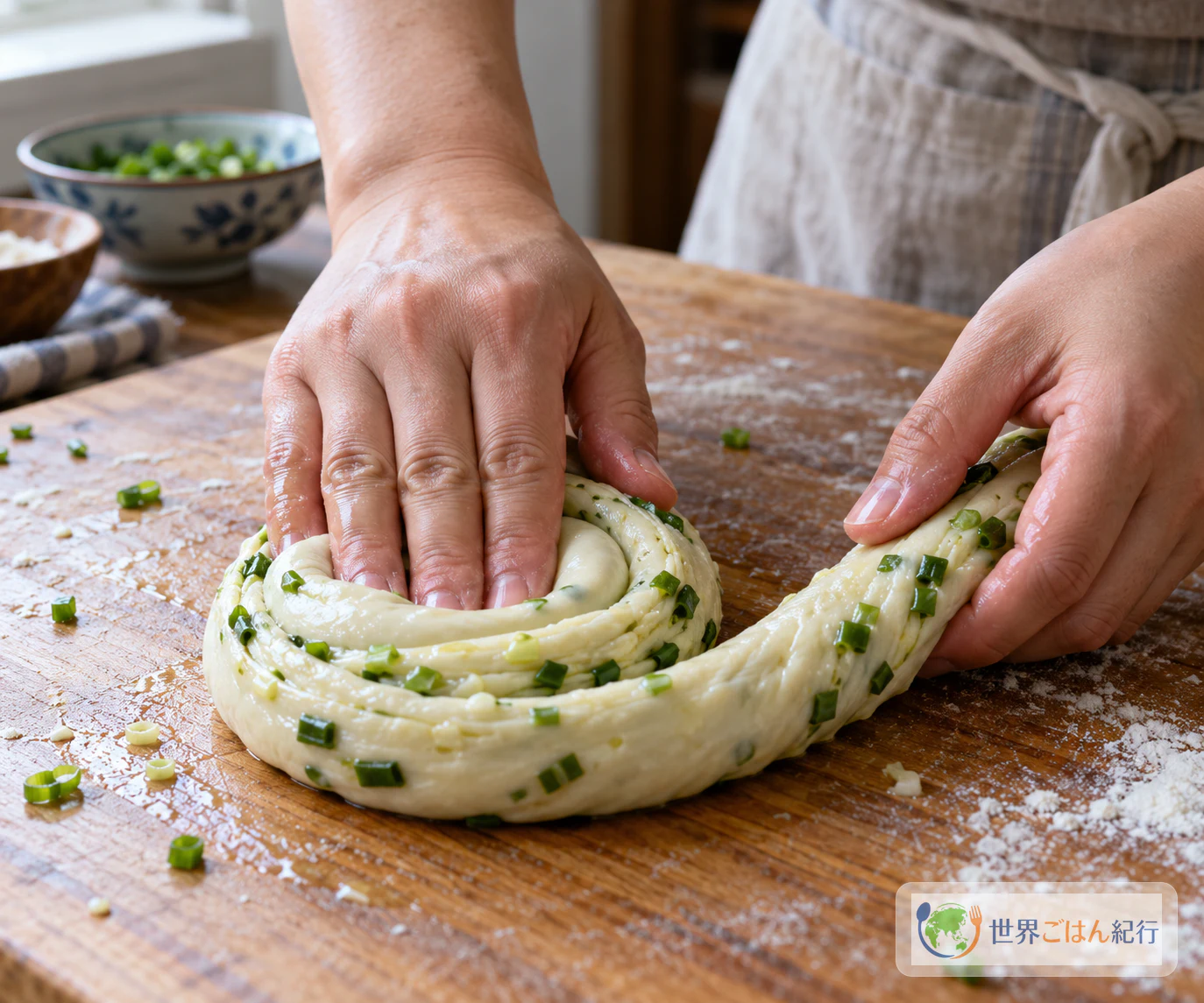
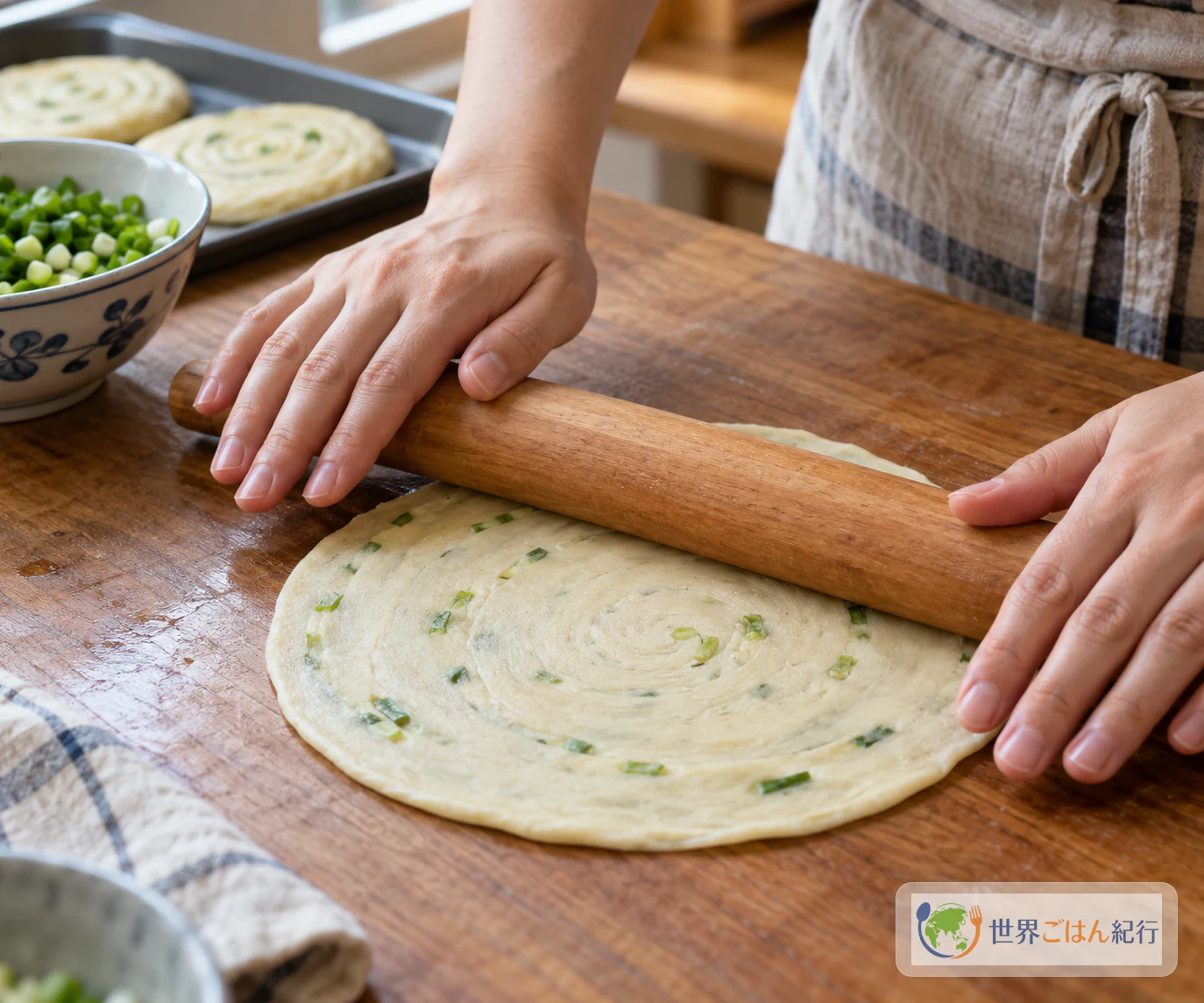
The recipe page names the dish Chinese Scallion Pancakes, written 葱油饼, and it is also known as cong you bing. In this version, a hand-kneaded flour dough is rolled thin, spread with a paste of flour, peanut oil and salt, scattered with chopped green onions, rolled into a tube, then coiled into a disk and rolled flat again. The layers come from that rolling and coiling. The page describes the result as crisp and flaky outside and slightly chewy inside.
The page lists 10 minutes of prep, 20 minutes of rest, 30 minutes of cooking and 1 hour total. These are the page's published estimates, not timings we measured. The yield is printed as 12 servings (6 pancakes): six pancakes, not twelve.
For more dishes from the same country, see our China page.
Ingredients for 6 Pancakes (12 Servings)
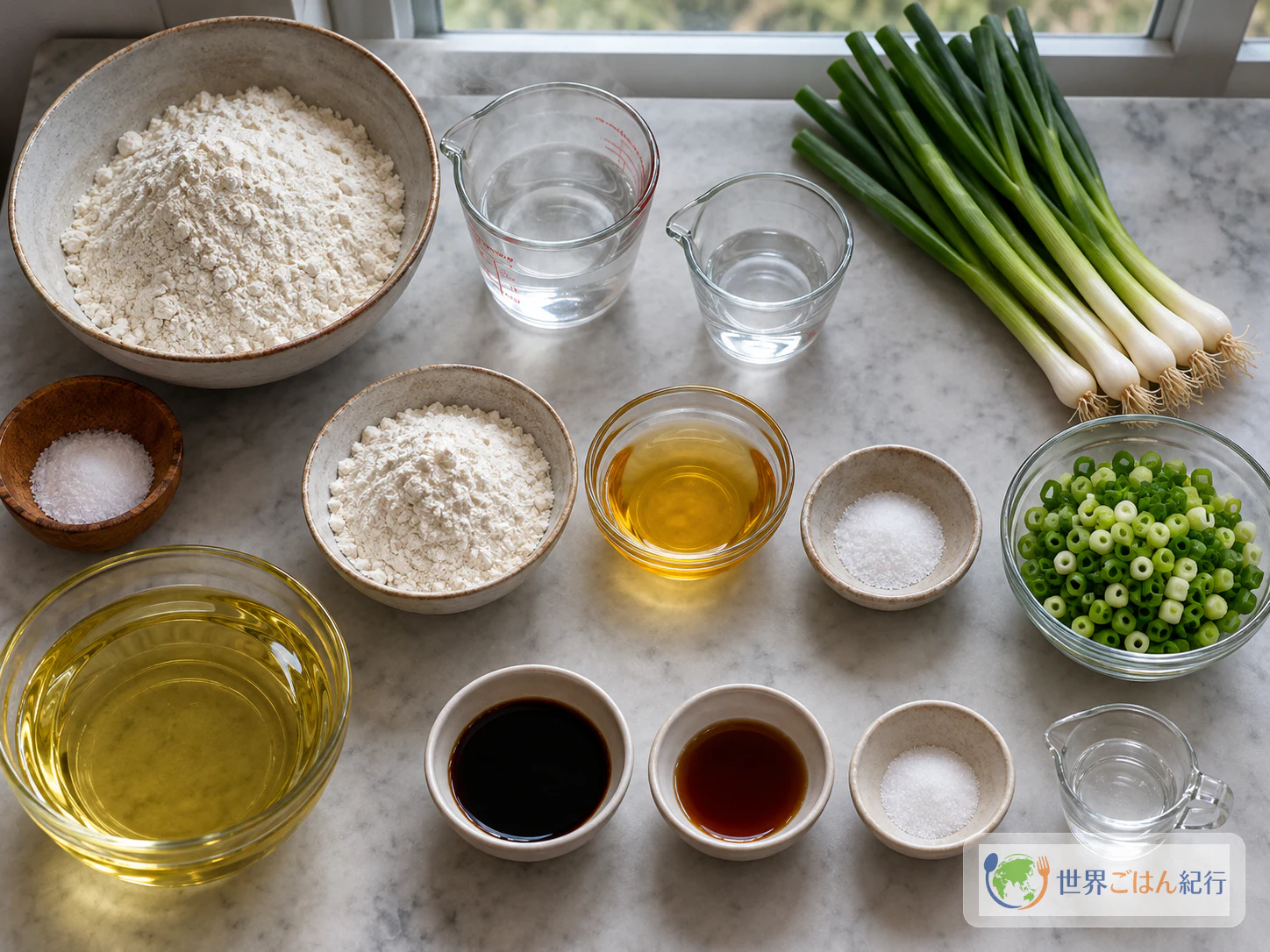
Amounts are given in the recipe page's own units. The paste's peanut oil and the frying vegetable oil are separate ingredients with separate jobs.
Equipment
- Large mixing bowl
- Small bowls for the paste and the dip
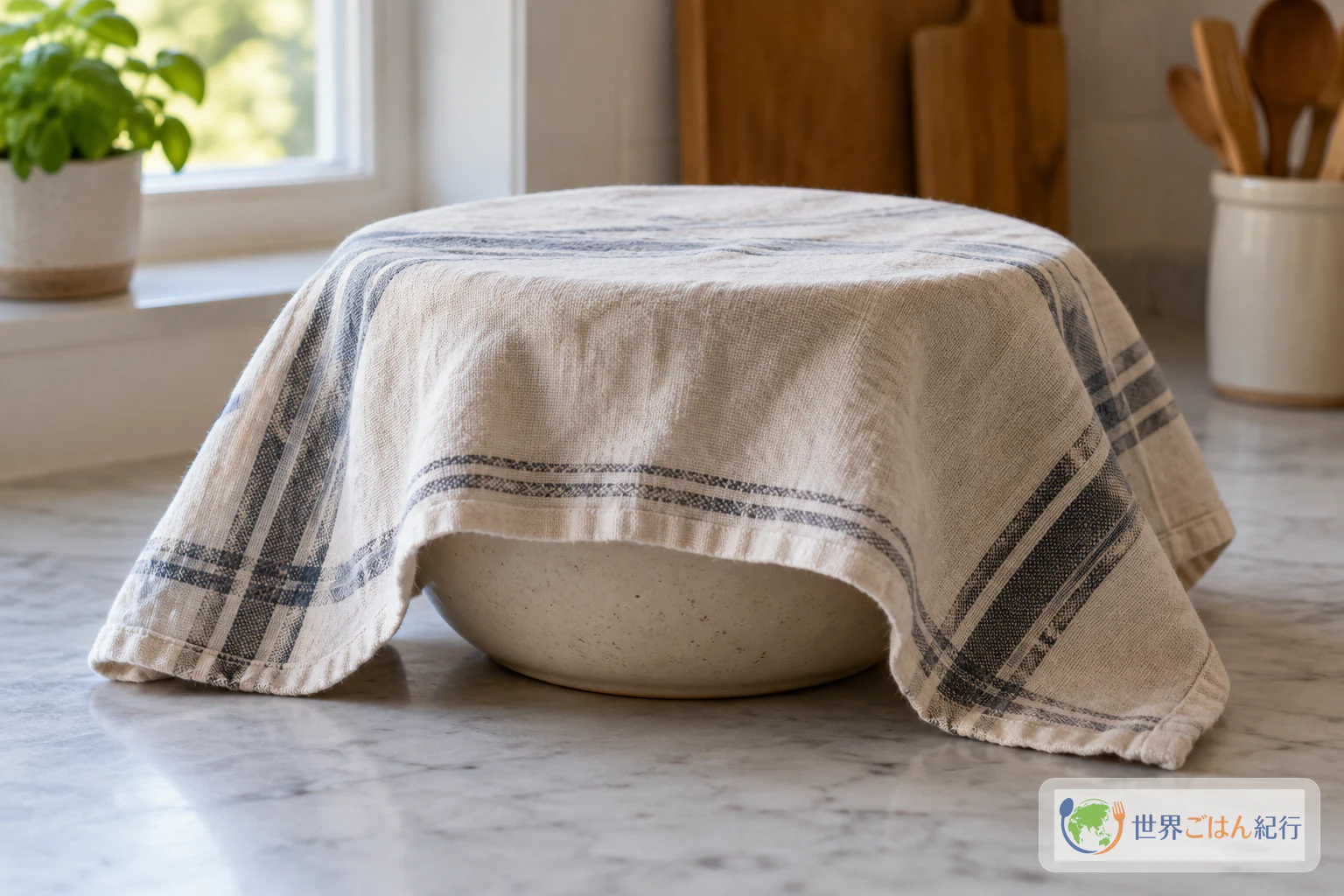
- Clean cover or towel for resting the dough
- Cutting board and knife
- Rolling pin
- 9-inch (23 cm) nonstick skillet with a lid
- Spatula
Choosing and Separating the Ingredients
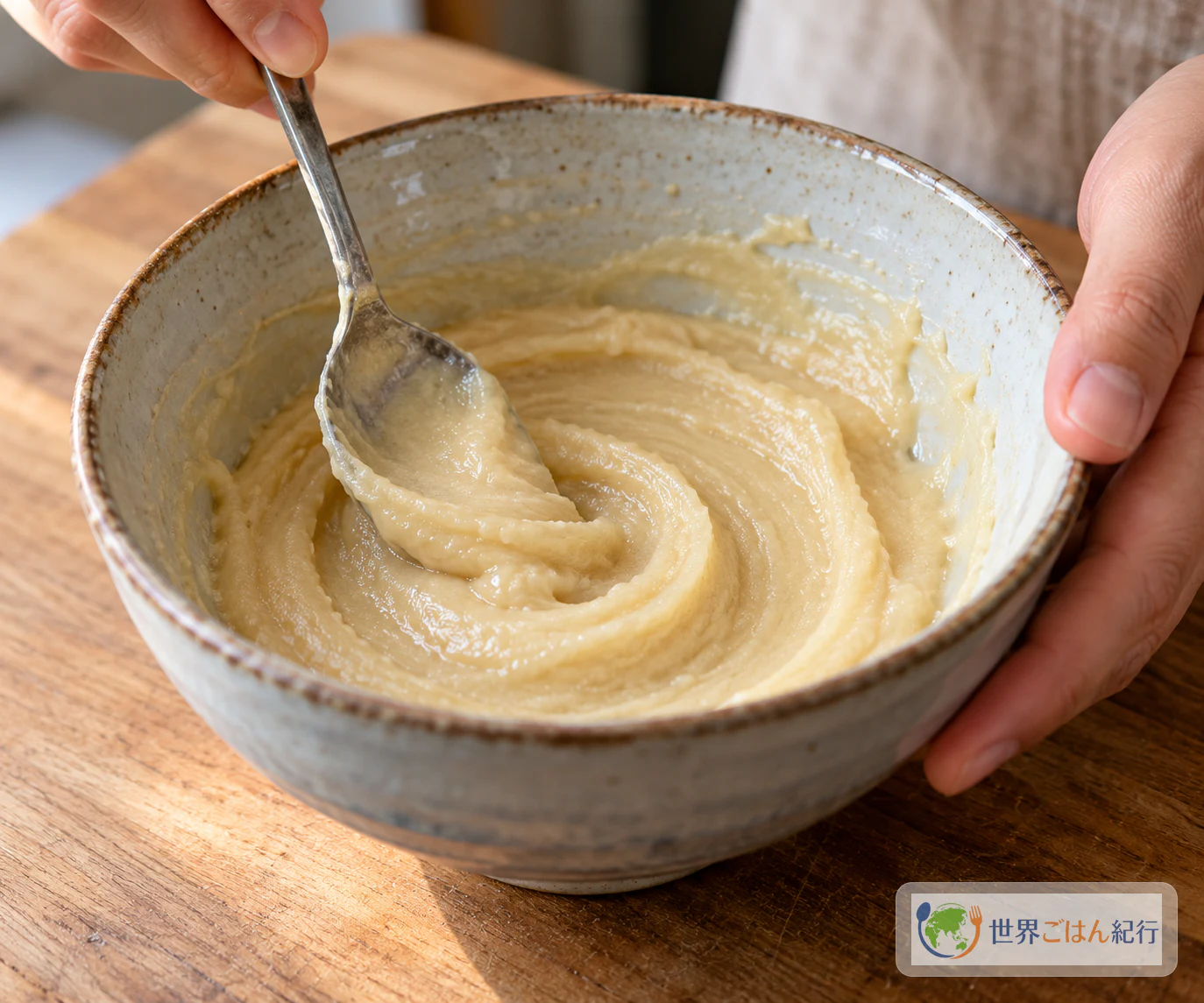
Two oils, two jobs. The peanut oil goes into the flour paste that is spread inside the layers. The vegetable oil only coats the bottom of the skillet for frying. The recipe card lists other fat options for the paste, but this version uses peanut oil.
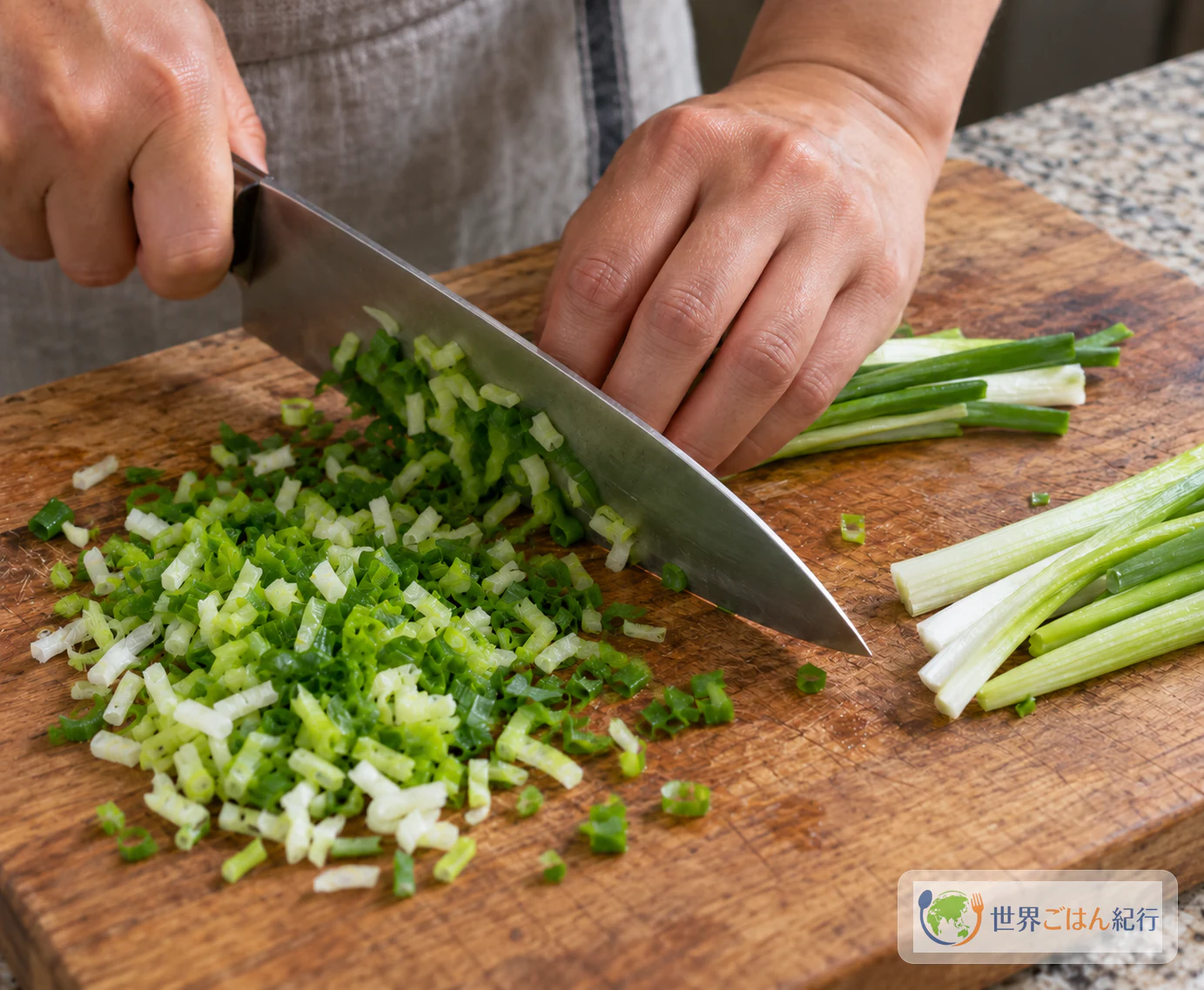
Paste and scallions may not all be used. Each pancake takes about 1 tablespoon of paste and 2 heaping tablespoons of chopped scallions. The source does not say how much of the prepared batch will be left over. Don't force every last bit onto the six pancakes.
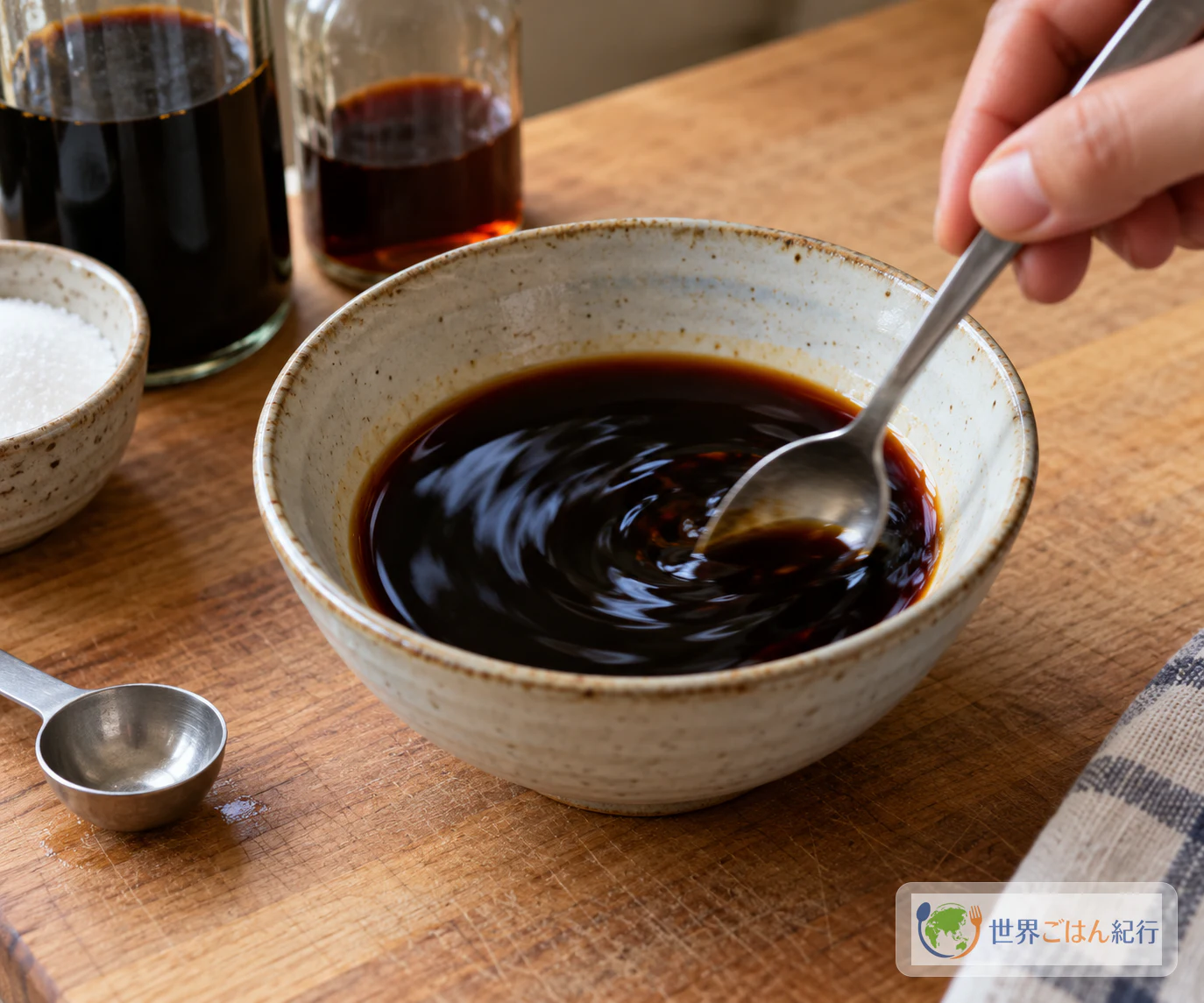
The dip uses Chinkiang vinegar. The recipe card lists only soy sauce, Chinkiang vinegar and sugar. The method adds 1 tablespoon of water to help dissolve the sugar, so this article includes that water. The page also mentions a rice vinegar option, which this version does not use.
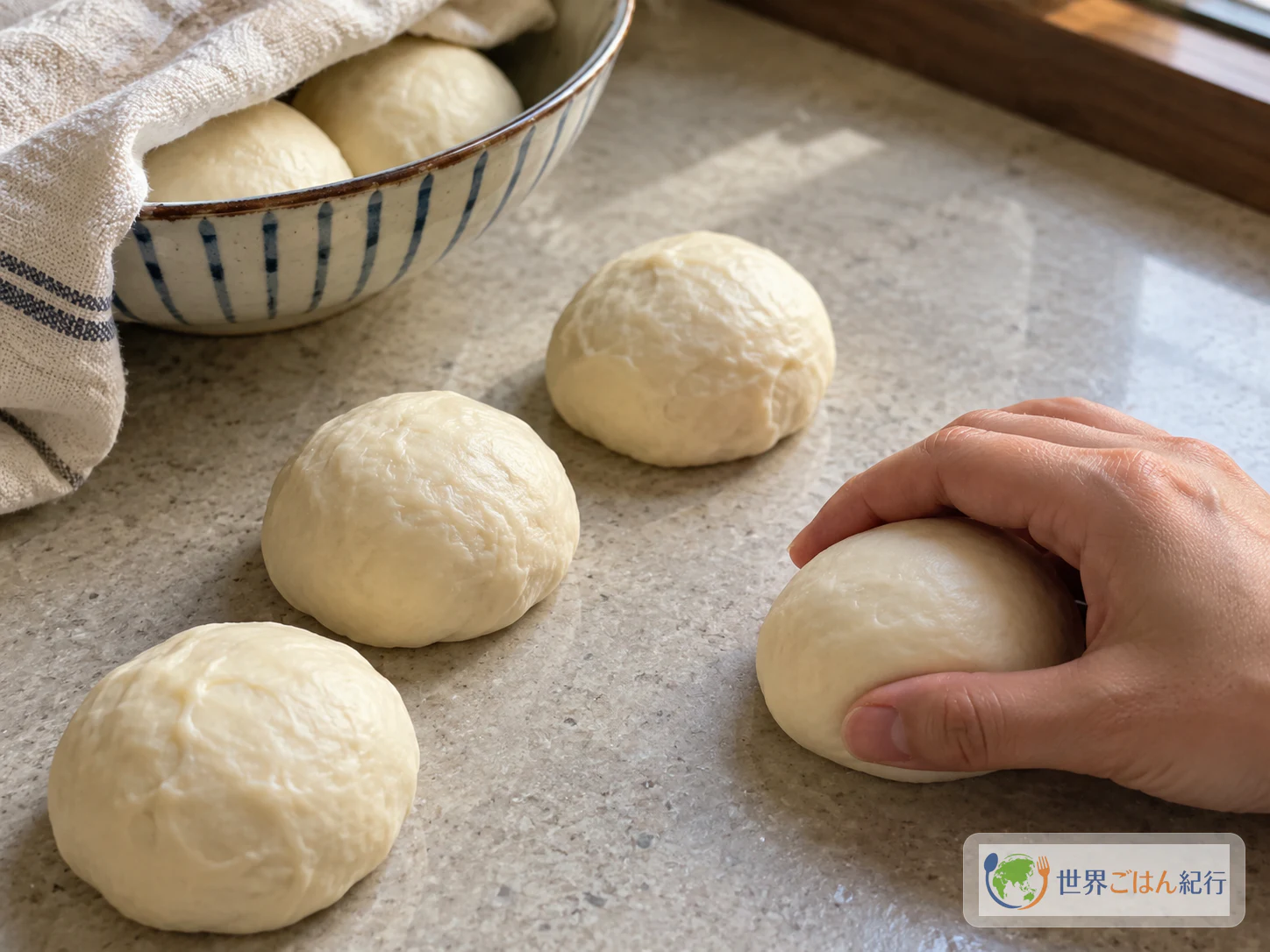
76 grams is the page's own guide. When dividing the dough into six, the page suggests about 76 grams per portion. That figure comes from the page. It is not a conversion of the cup amounts.
How to Make Cong You Bing
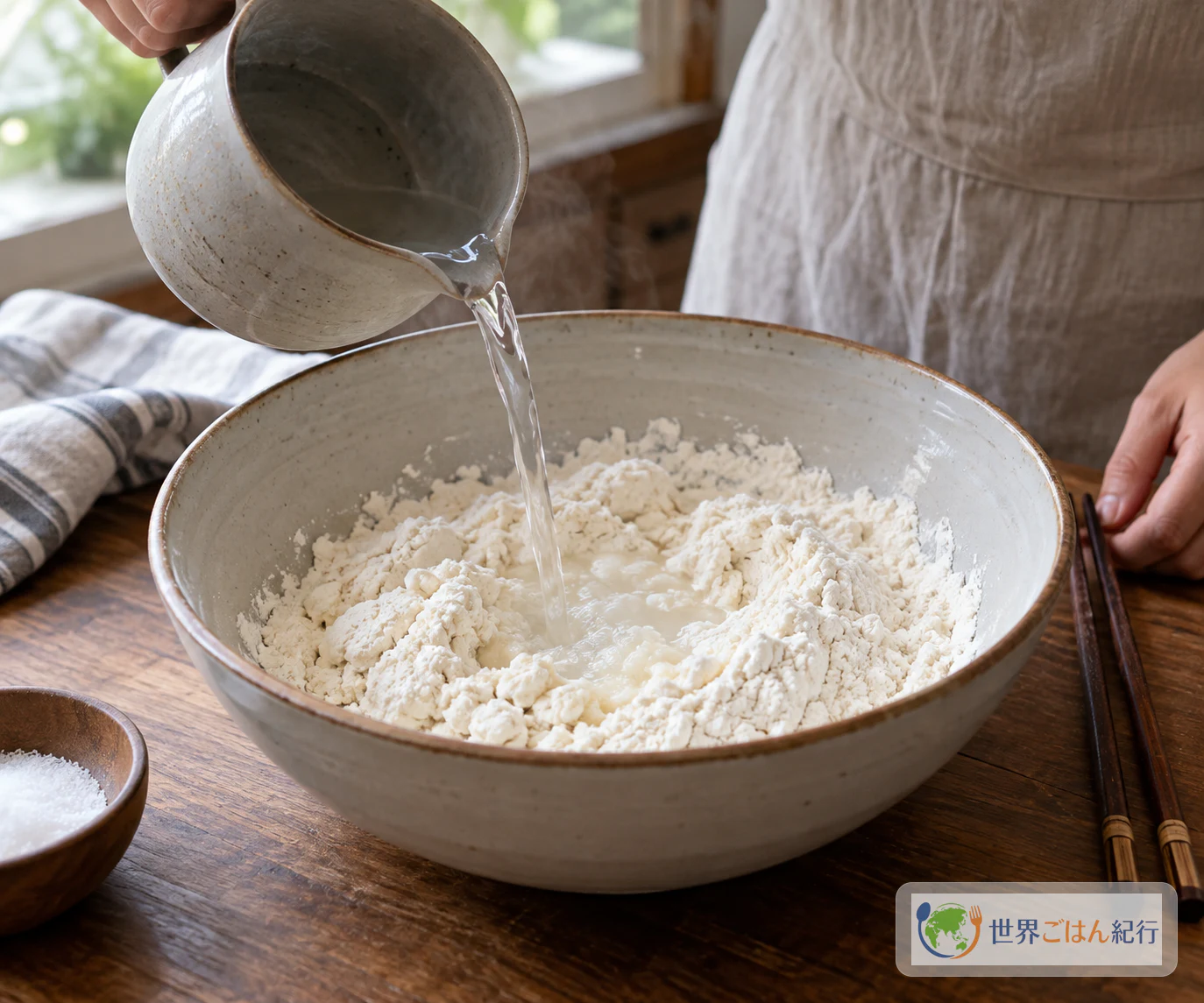
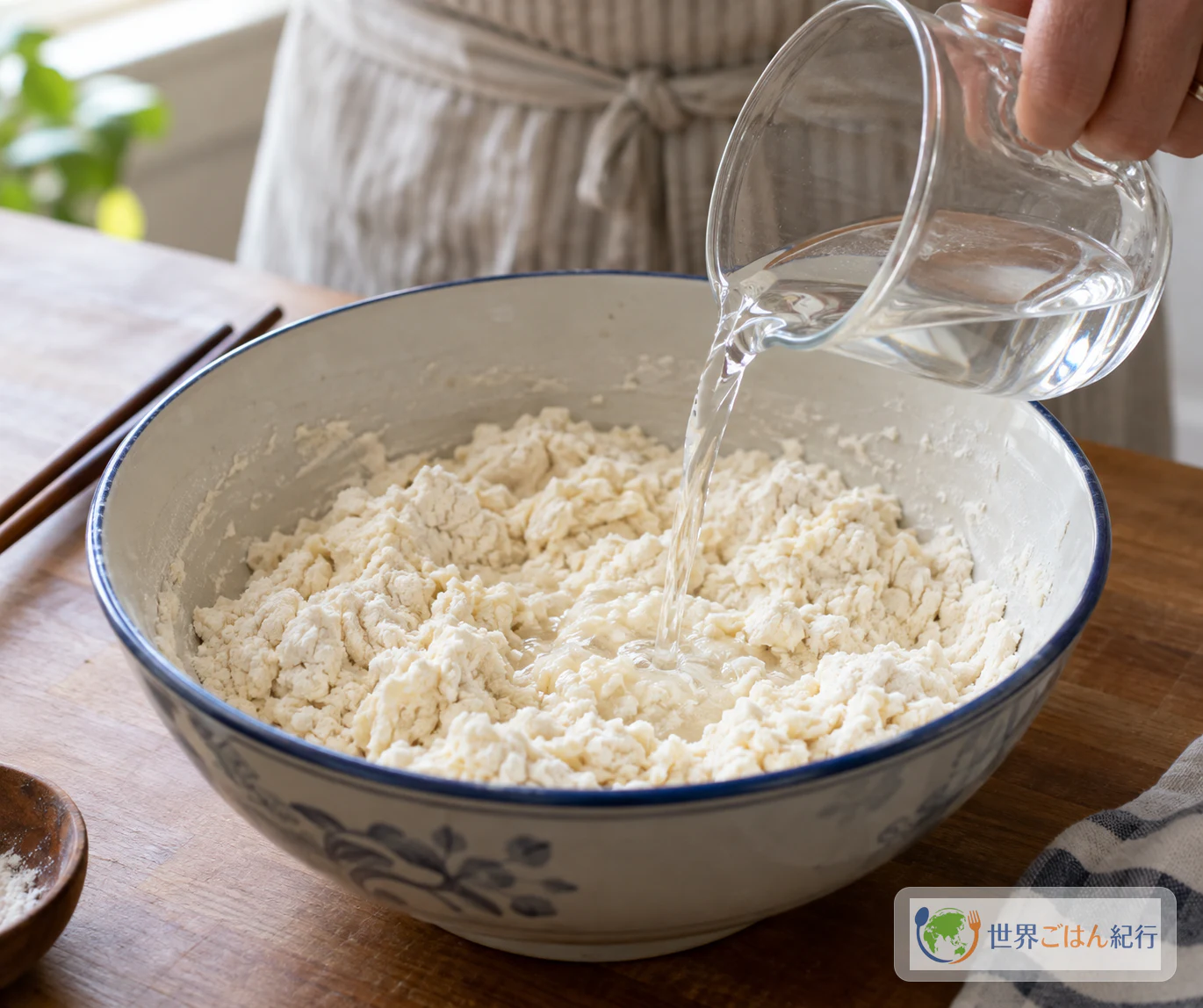
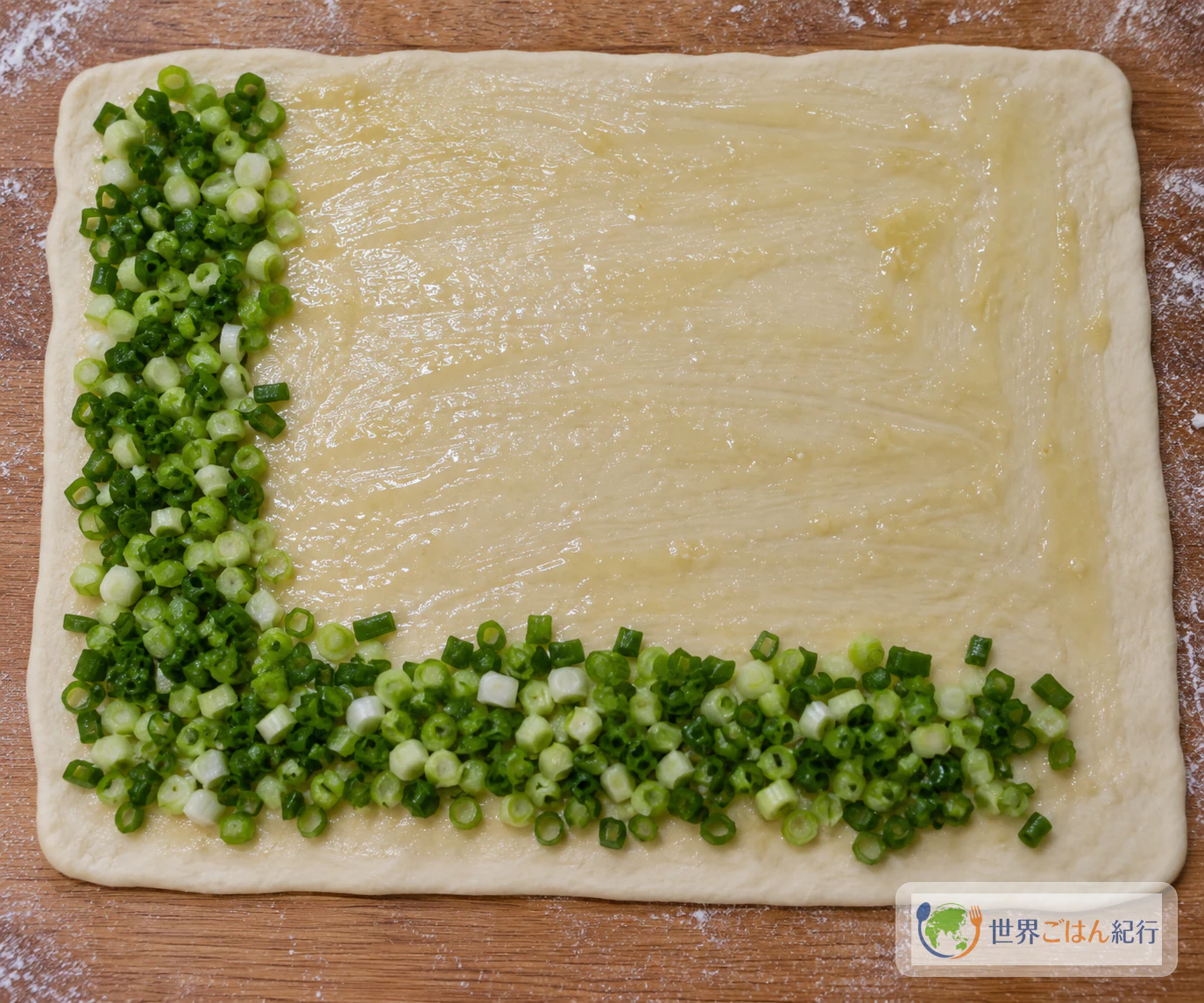
Water goes in hot first, then cool. The scallions go along two adjacent edges. The coil starts from the sealed, scallion-rich end. The pan is covered before it is uncovered.
Where the Dough and Shaping Can Trip You Up
| What you see | What the source allows | What to do |
|---|---|---|
| Dry flour won't come together | A little extra water, amount not given | Add a small splash only until the dry flour is picked up |
| The dough is very sticky | A little extra flour, amount not given | Use only a little to fix the dough. This is not routine dusting for the work surface |
| You're unsure which edges stay clear | Top and left in the written method; the photos are reversed | Keep the two clear edges adjacent and put the scallions along the other two |
| An air pocket bursts or scallions poke through when rolling | The source says this is acceptable | Keep rolling to 7–8 inches |
| The pan seems too hot during the uncovered stage | Lower to medium-low | Reduce the heat only if needed |
| Paste or scallions are left after six pancakes | The leftover amount is not specified | That's expected; don't overload the last pancakes |
The amount of frying oil, the extra water, and any leftover paste or scallions are all unmeasured in the source. This article does not fill those in with numbers.
The Two-Stage Cook and the Dip
The cooking order is fixed. Heat the pan on medium-high, coat it with vegetable oil, and swirl the pancake in. Then cook covered on medium for 1 minute, flip, and cook covered for 1 more minute. Finally, uncover and press and turn for about 3 minutes. The covered stage comes first and the browning stage last.
For the dip, the recipe card and the method on the same page disagree: the card leaves out water, while the method adds 1 tablespoon. This article follows the method and uses 1 tablespoon water with 1 1/2 tablespoons soy sauce, 1 tablespoon Chinkiang vinegar and 1/4 teaspoon sugar.
Other Pancakes With Similar Names
Recipes published under the name "scallion pancakes" or "cong you bing" can be built quite differently. They are separate recipes, not options to mix into this one.
- The Woks of Life uses a dough of hot water only, brushes oil onto the rolled dough instead of using a flour paste, and divides the dough into three. Its garlic, soy and vinegar dip belongs to that recipe.
- Jet Tila's version on Food Network uses a blend of all-purpose and cake flour, adds the water in several parts, and pours hot oil over a scallion mixture that includes five-spice powder.
- China Sichuan Food's Peking Duck Pancake is a thin, plain wrapper for Peking duck and shredded fillings. It is a different kind of pancake from this scallion-filled, coiled one.
Frequently Asked Questions
Does 12 servings mean 12 pancakes?
No. The recipe page lists 12 servings (6 pancakes). You make six pancakes and cut each into 6 wedges.
Is there only one oil?
There are two. Peanut oil (1/4 cup) goes into the flour paste. Vegetable oil, in an unmeasured amount, coats the bottom of the skillet for frying.
The dip's water isn't on the recipe card. Should I add it?
The page's method adds 1 tablespoon water, even though the card omits it. This article follows the method and includes the water.
Can I swap in the dough or sauce from another scallion pancake recipe?
Other versions use different doughs, fillings and sauces. They work as their own recipes, so this article does not combine them with this one.
Has this recipe been tested in your kitchen?
No. The recipe page credits Lilja Walter with developing and testing it alongside Maggie Zhu. The times and yield here are the page's published values, not our own trial.
Sources
- Maggie Zhu, "Chinese Scallion Pancakes (葱油饼)," Omnivore's Cookbook. The recipe followed in this article: name, byline and the credit to Lilja Walter for development and testing; ingredients, amounts and units; published times and yield; the hand-kneaded dough with boiling then cool water; the flour-and-peanut-oil paste; the L-shaped scallions and the tube-and-coil shaping; pan size, heat and covered cooking; cutting into wedges; and the difference between the dip's recipe card and its method. https://omnivorescookbook.com/chinese-scallion-pancakes/
- Sarah, "Cong You Bing Scallion Pancakes with Dipping Sauce," The Woks of Life. Comparison only: a separate recipe with a hot-water-only dough, a brushed oil layer and three dough portions. https://thewoksoflife.com/scallion-pancakes-with-garlic-soy-dipping-sauce/
- Jet Tila, "Scallion Pancakes (Cong You Bing)," Food Network. Comparison only: a separate recipe with a flour blend and a hot-oil scallion paste with five-spice. https://www.foodnetwork.com/recipes/scallion-pancakes-cong-you-bing-23375743
- Elaine, "Peking Duck Pancake," China Sichuan Food. Comparison only: thin wrappers for Peking duck, structurally different from a coiled scallion pancake. https://www.chinasichuanfood.com/peking-duck-pancake/