Hot and Sour Soup: White Pepper Heat, Vinegar Brightness, Silky Egg Ribbons
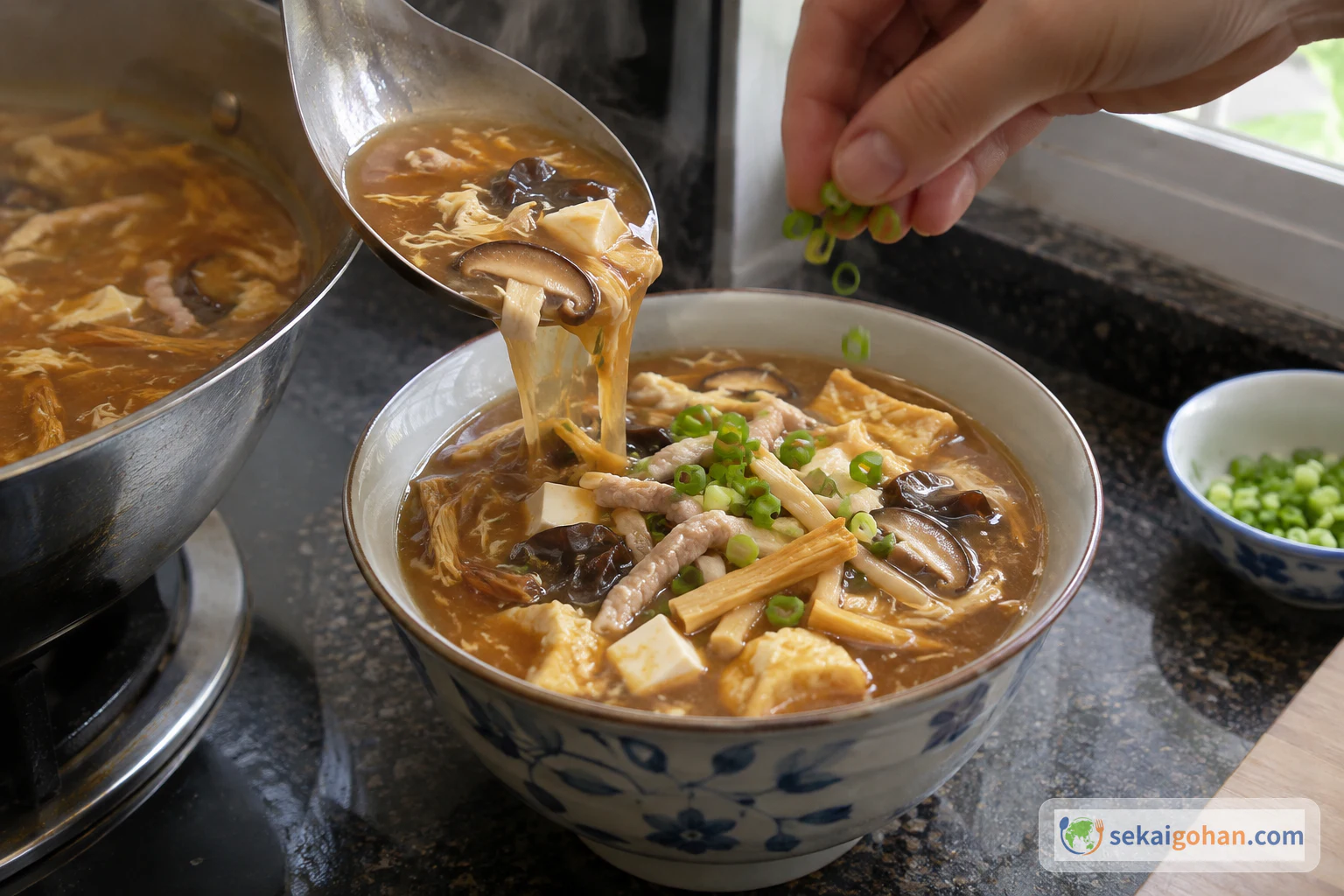
Heat from white pepper, sourness from distilled white vinegar, a broth thickened just enough to coat a spoon, and thin strips of pork, tofu, mushrooms, lily flowers and bamboo shoots suspended in it, finished with soft ribbons of egg.
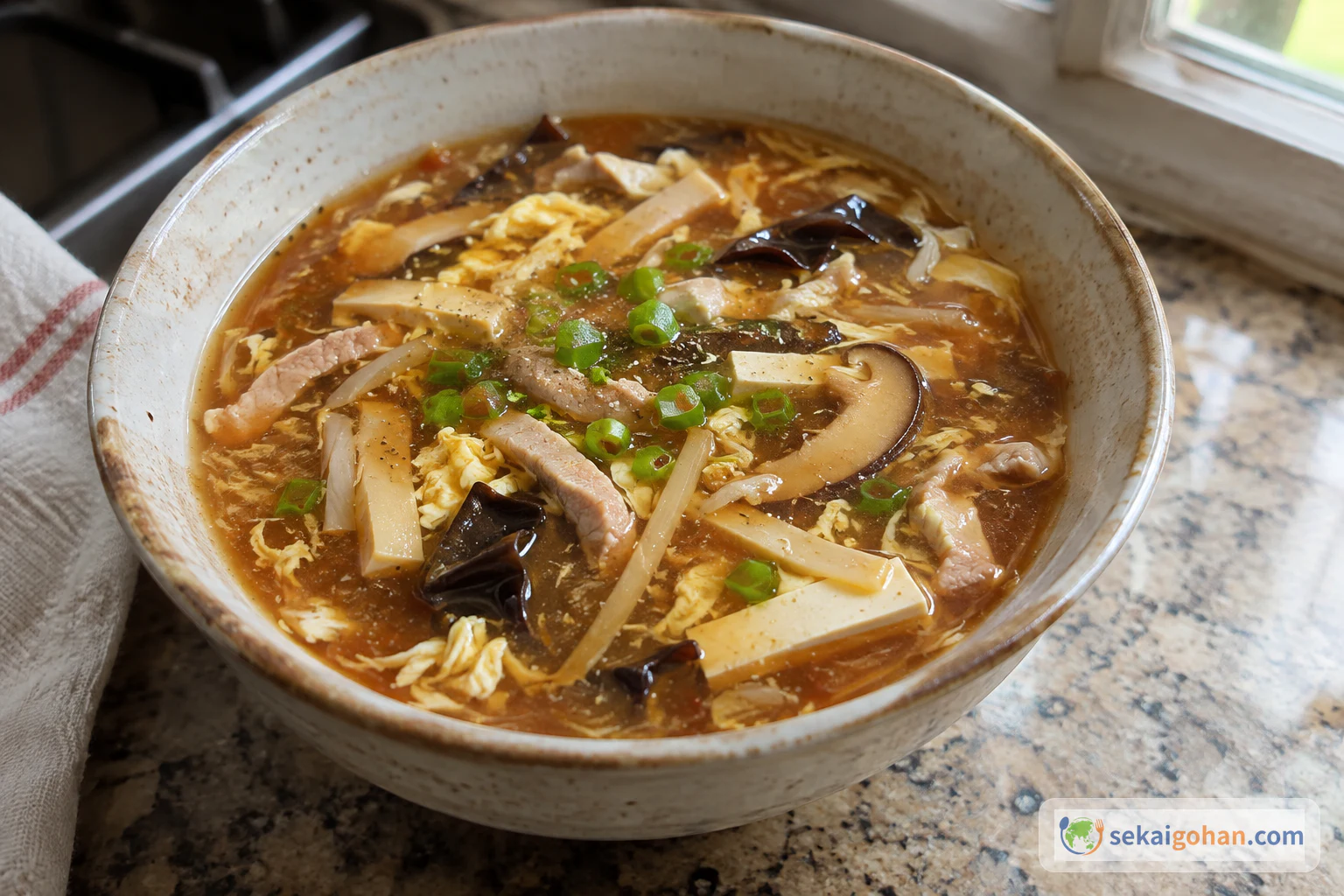
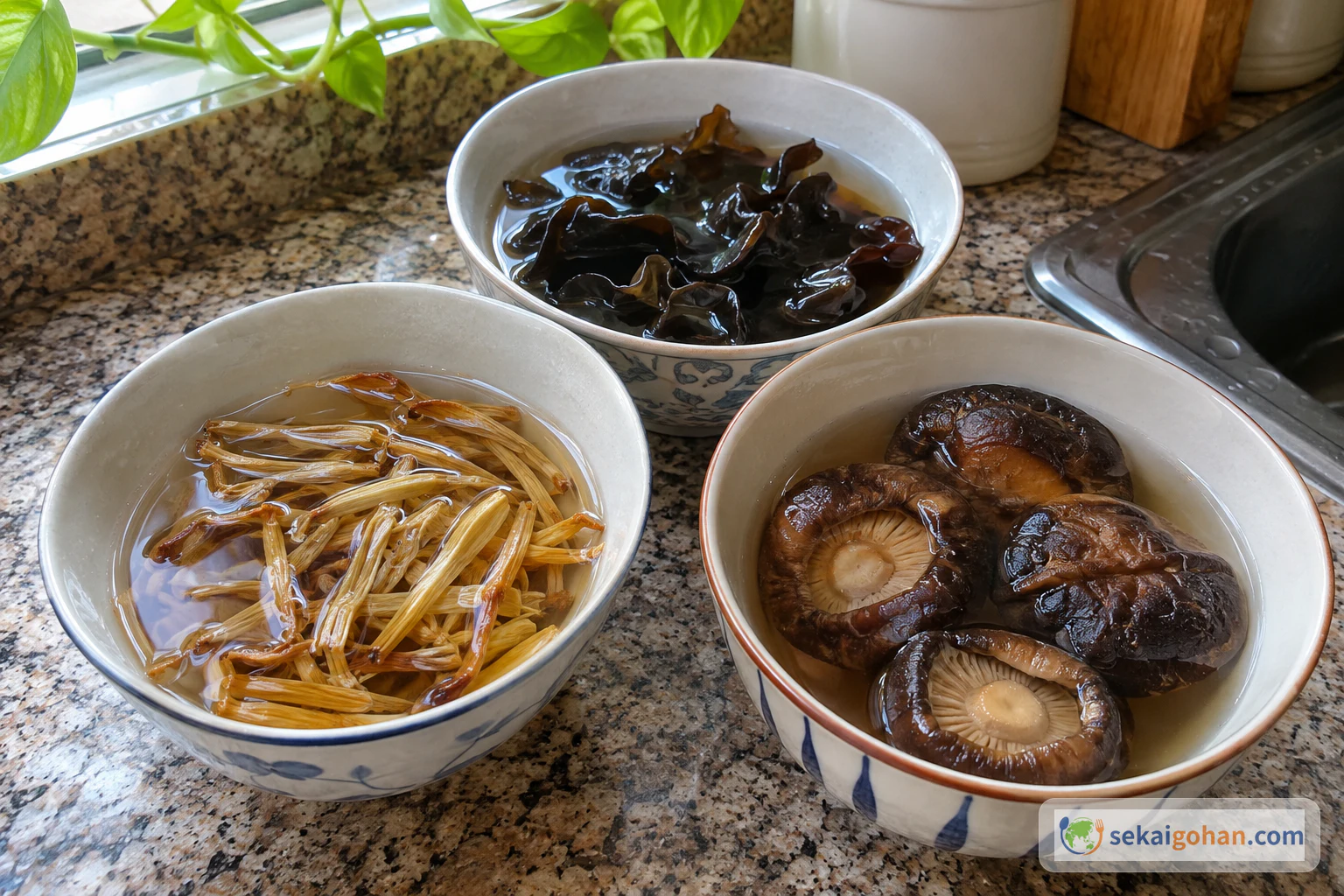
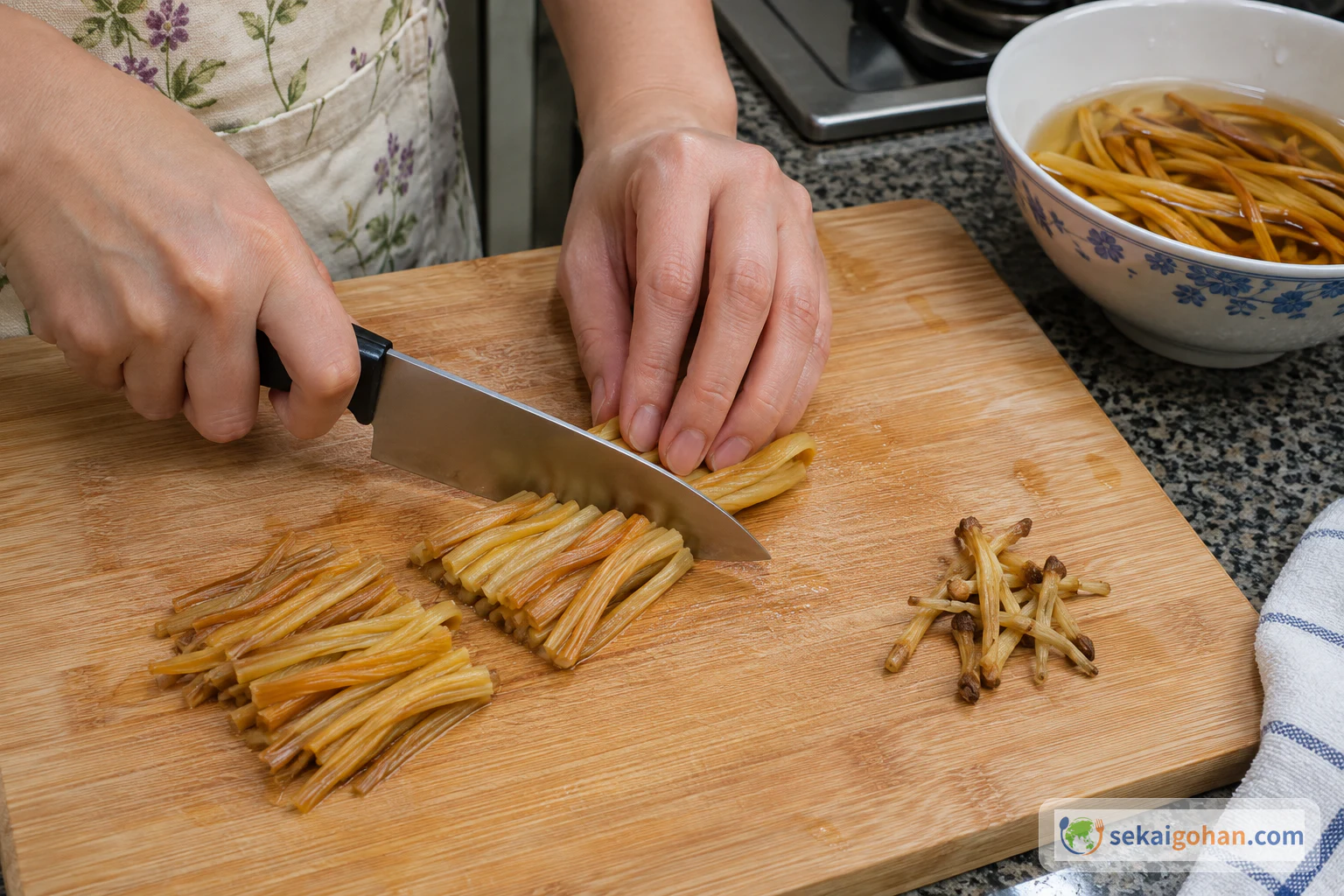
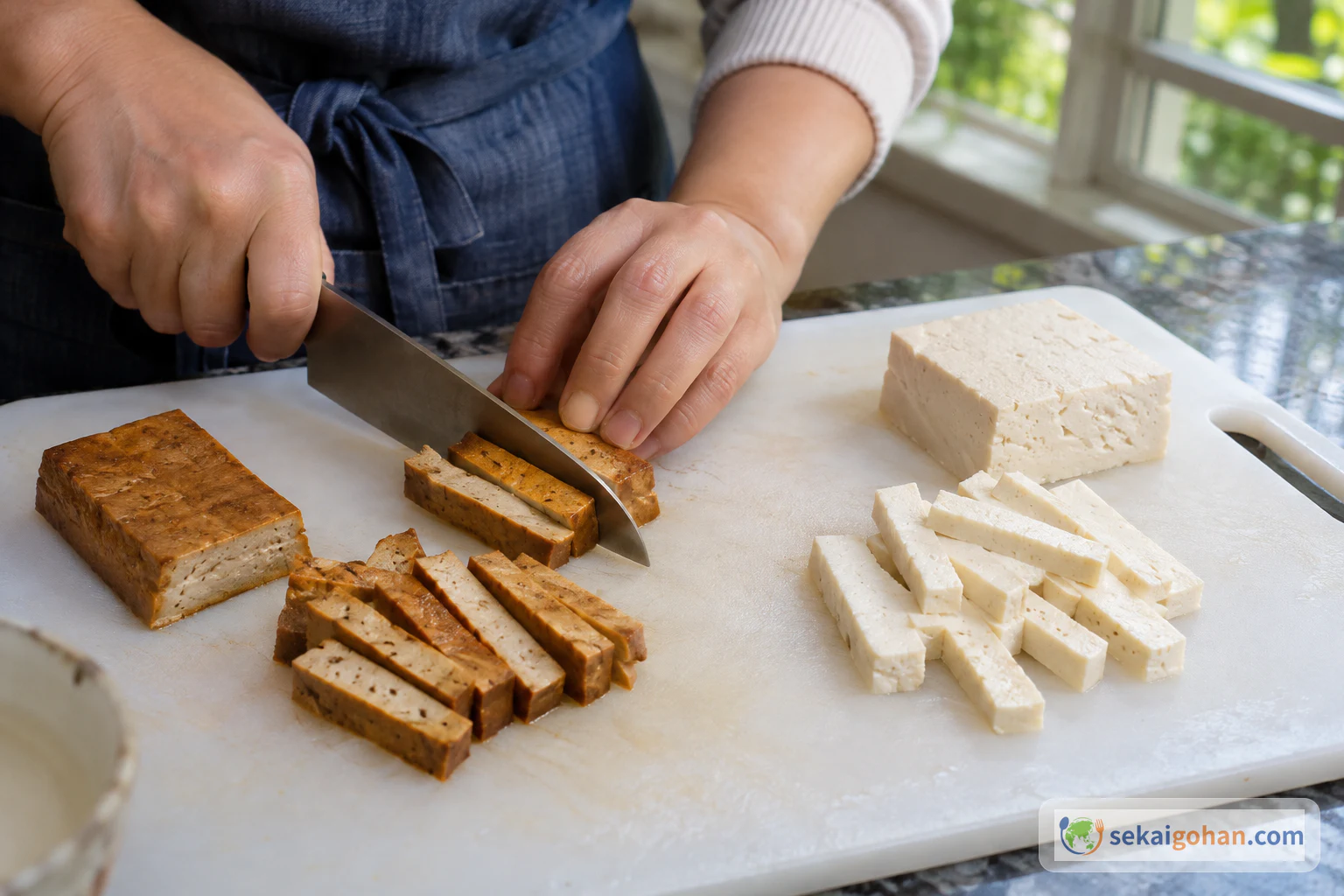
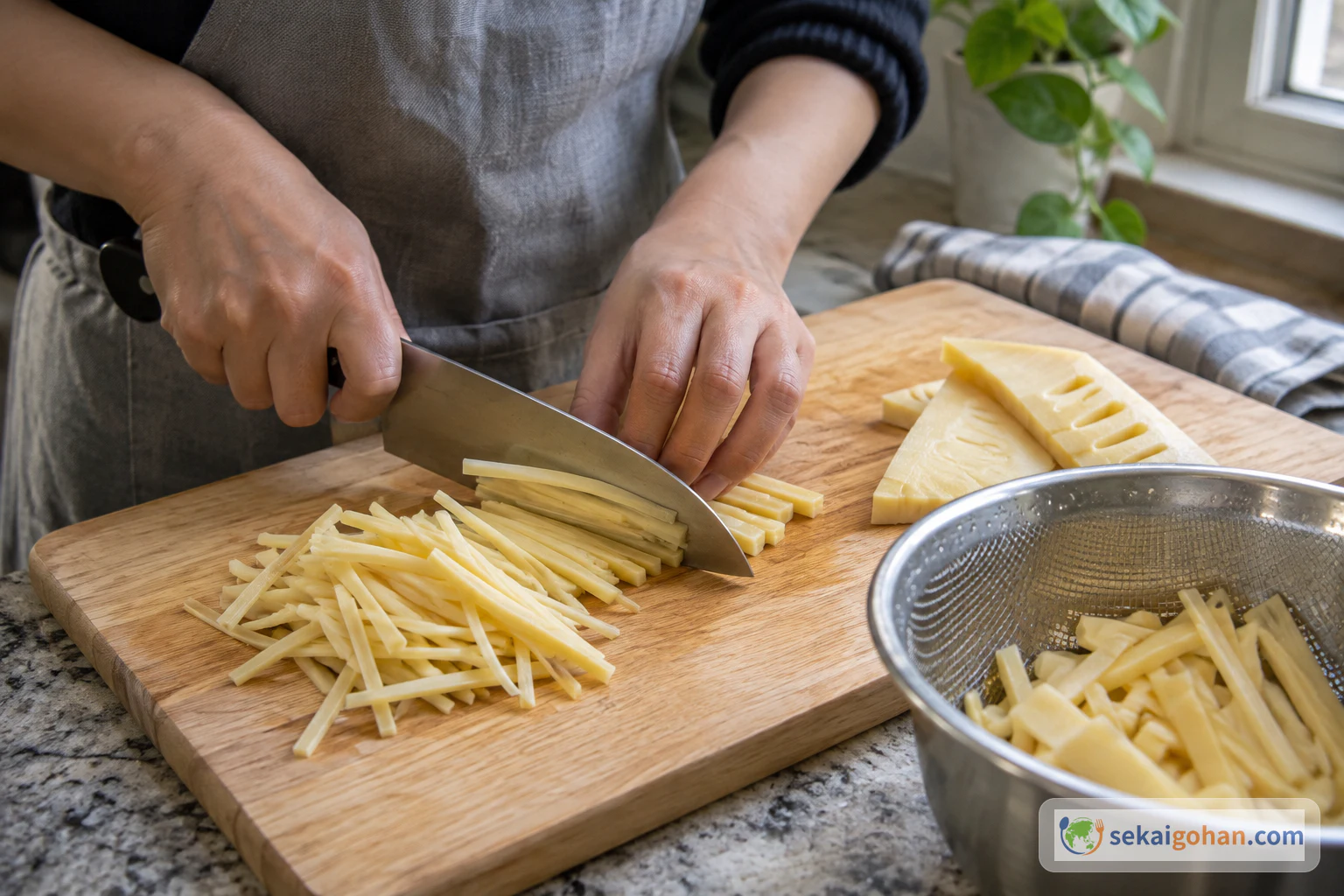
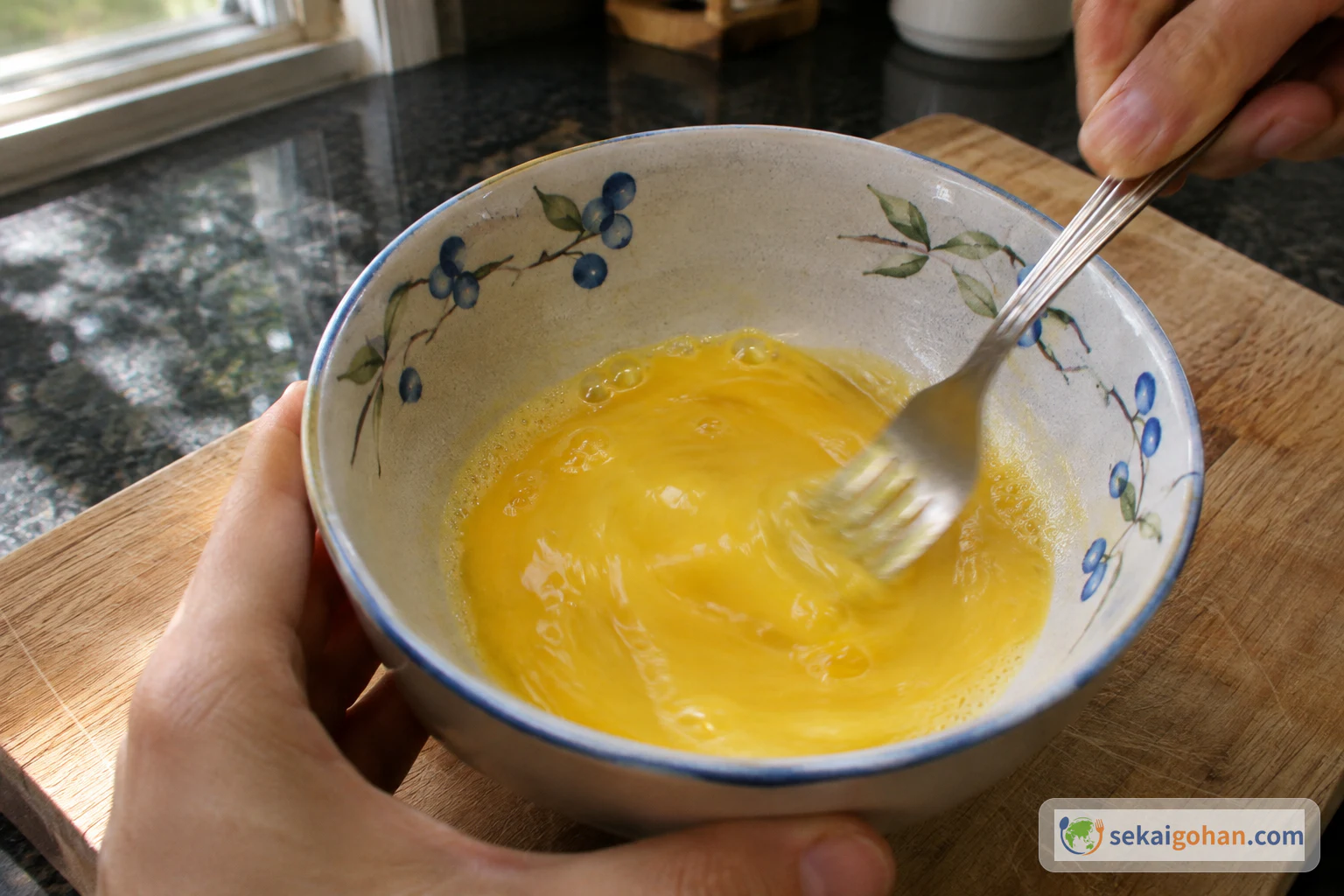
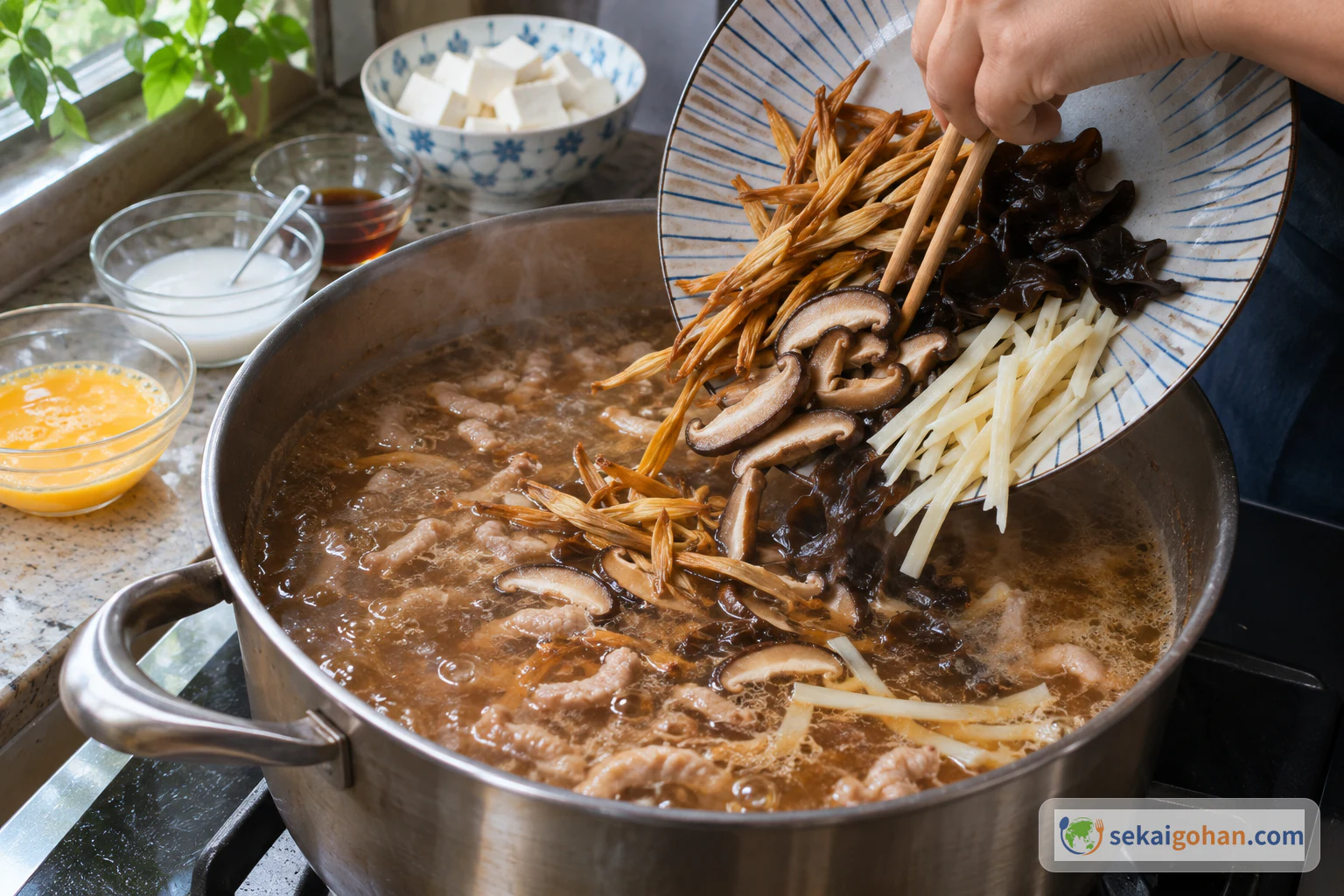
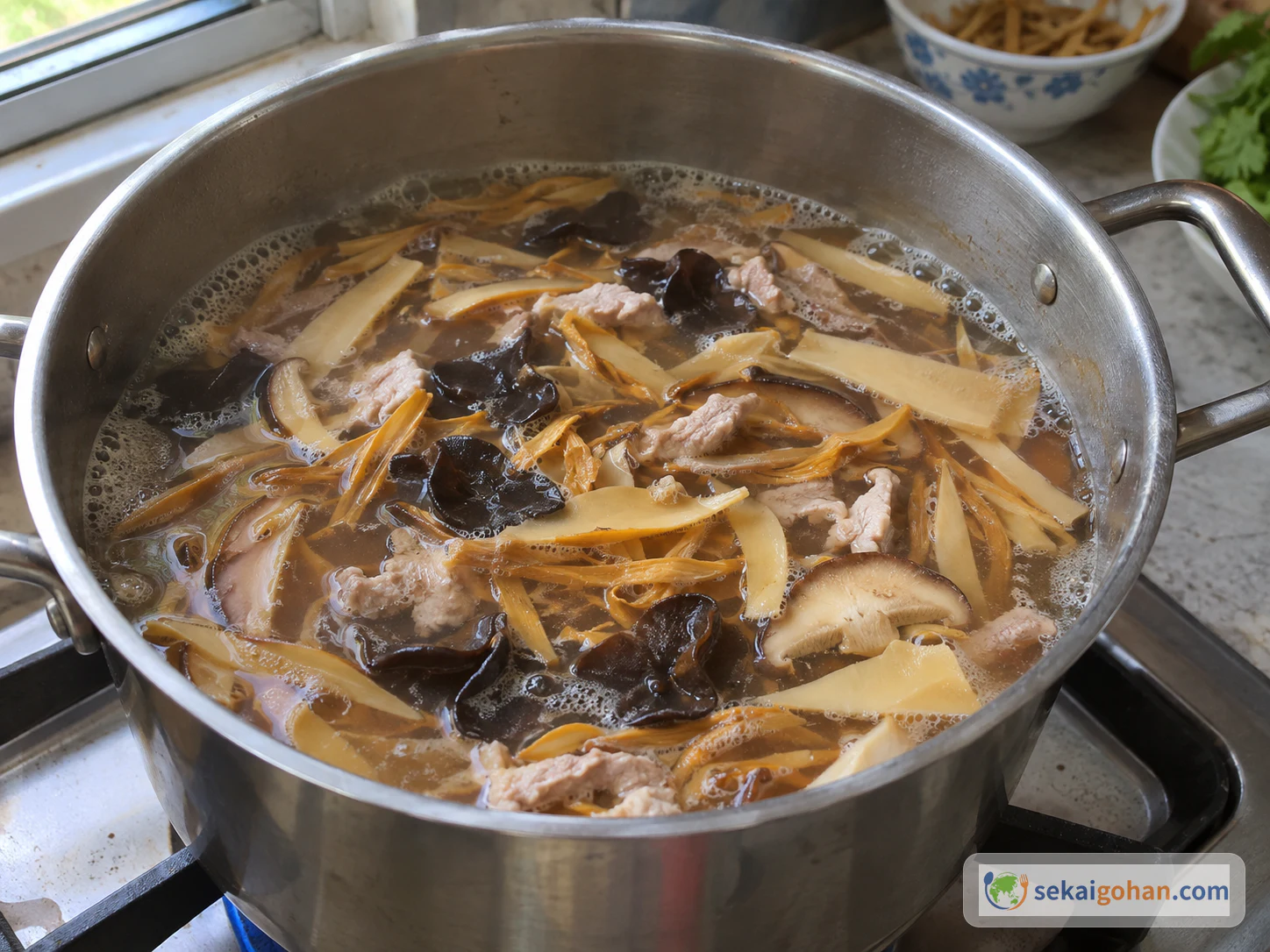
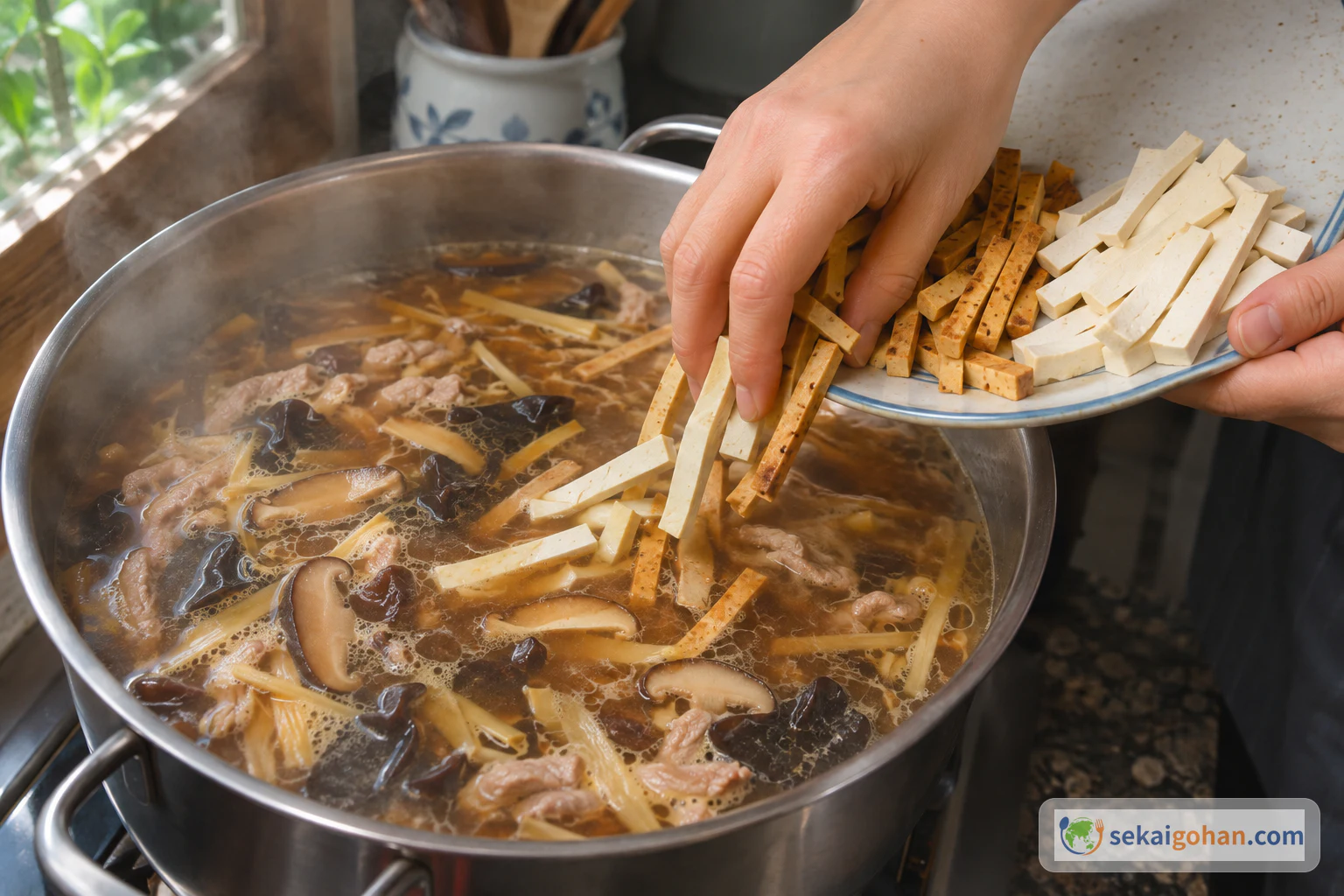
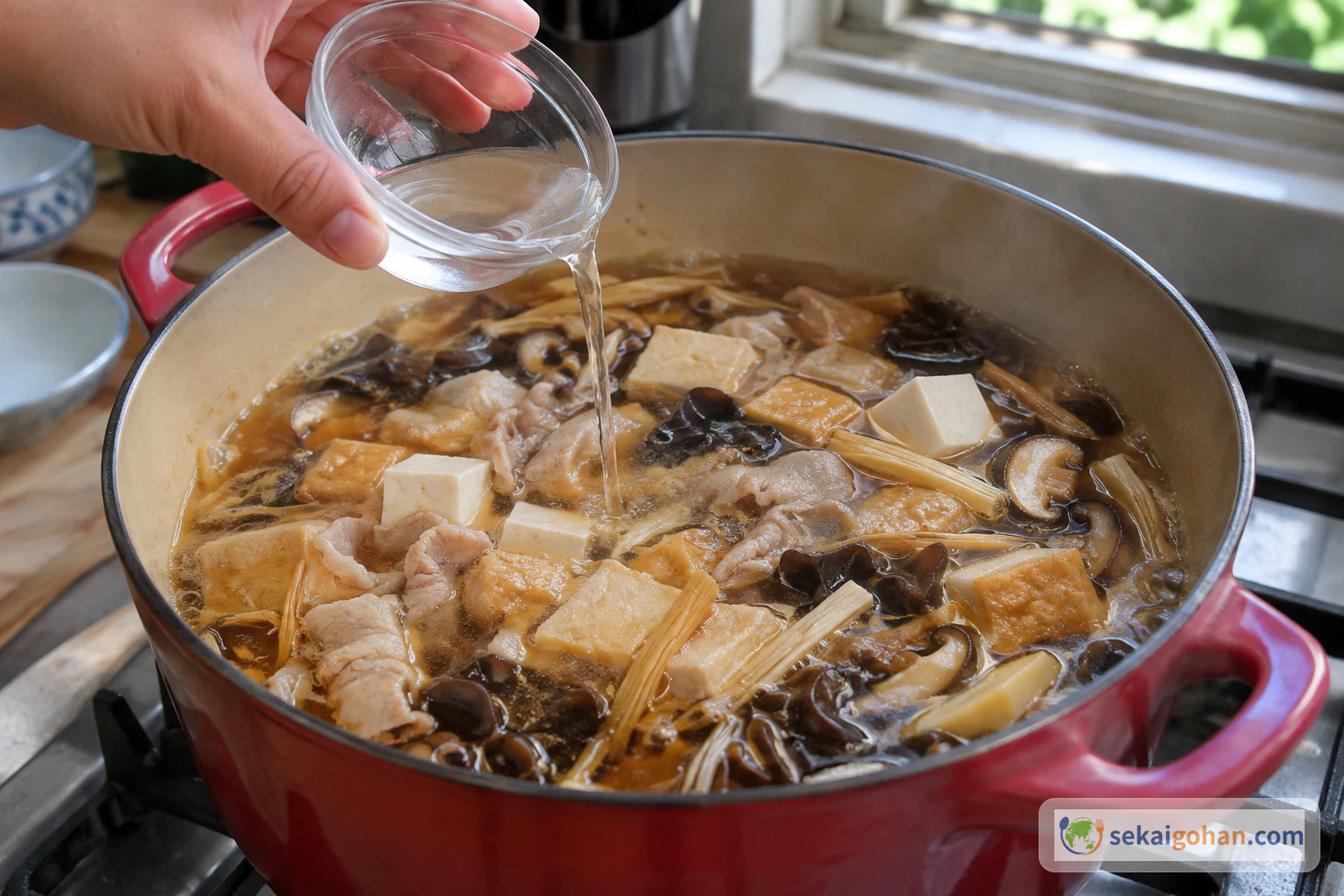
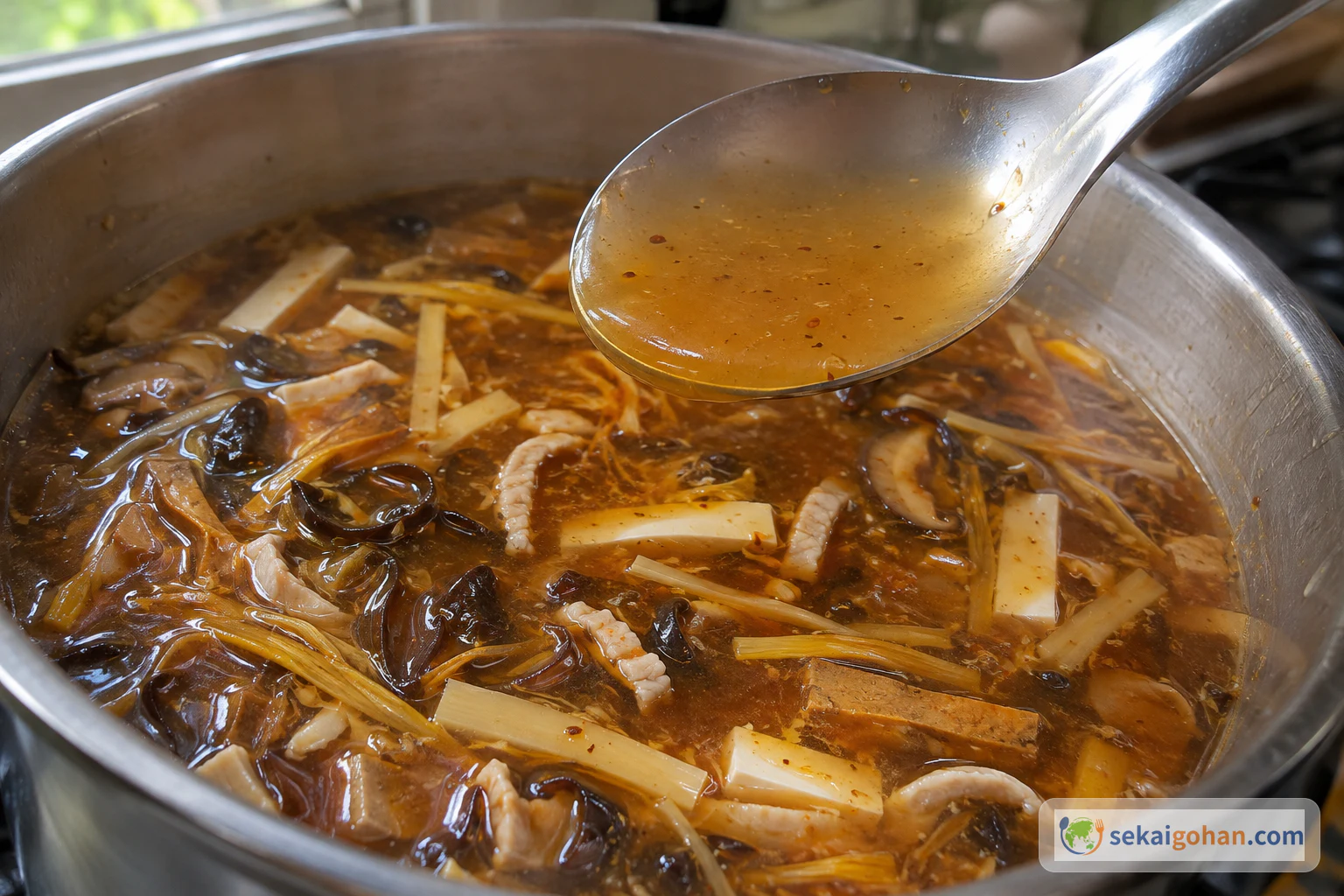
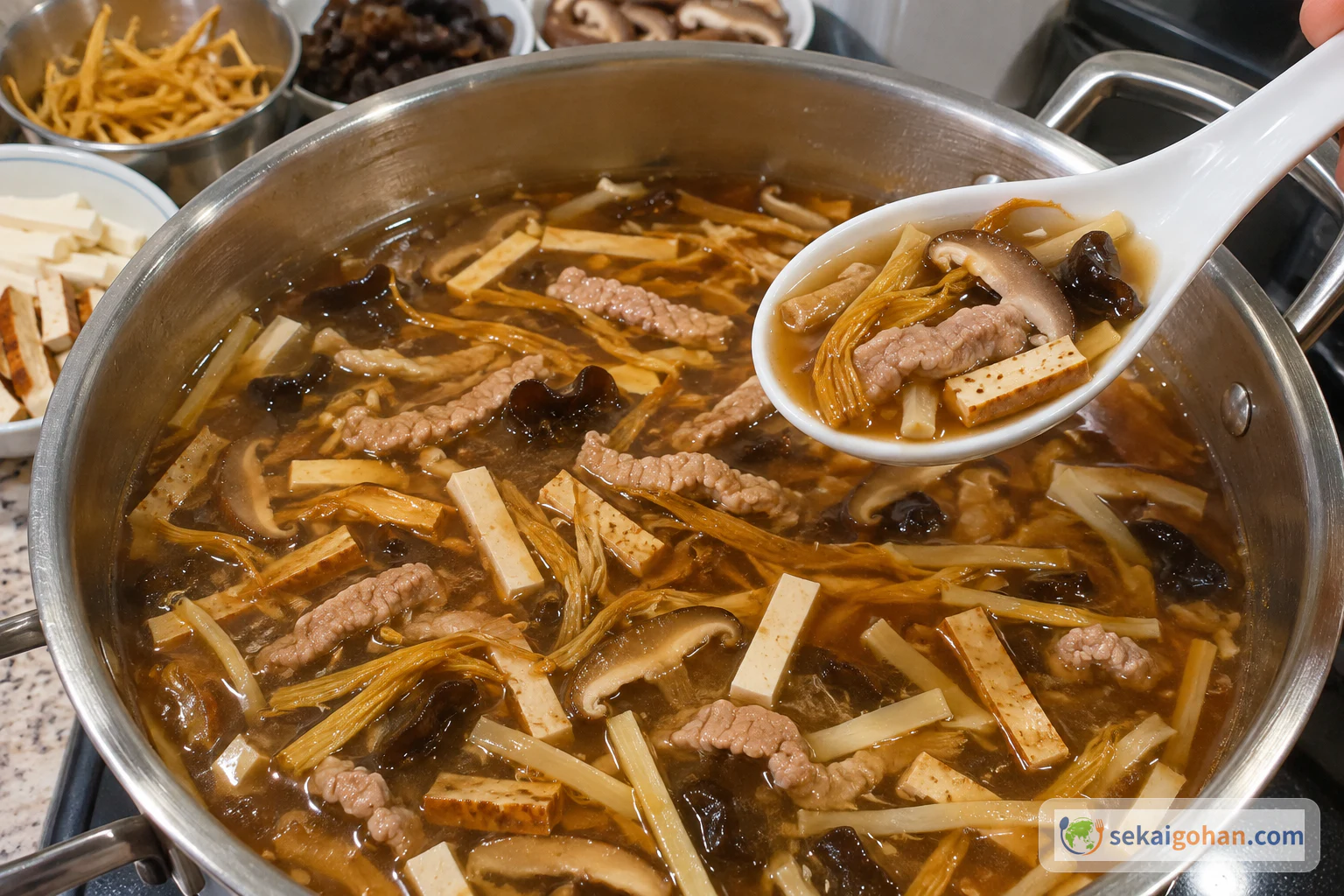
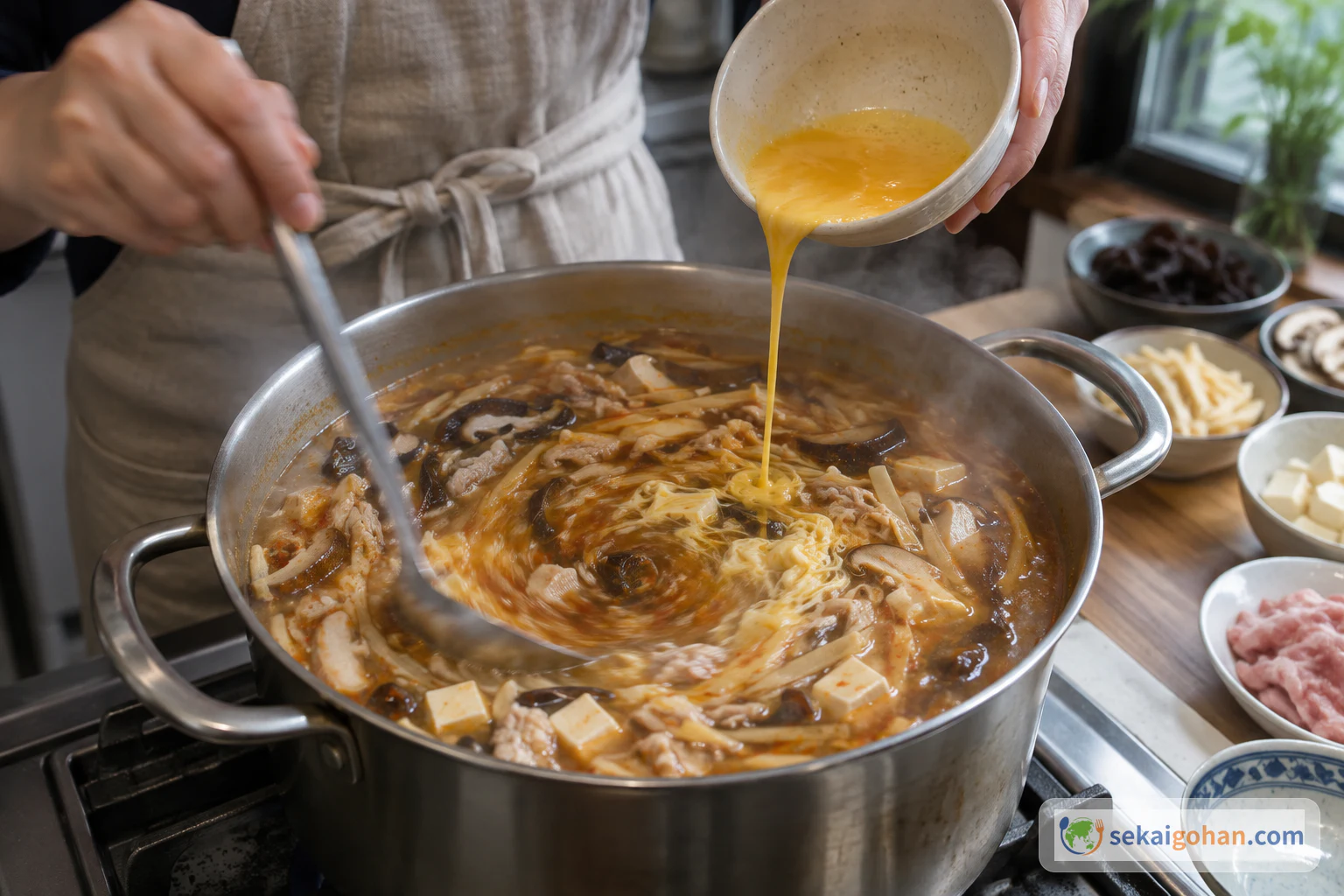
A bowl of hot and sour soup is all contrast. Freshly ground white pepper warms the back of the throat, vinegar sharpens each sip, and the glossy, lightly thickened broth carries thin strips of pork, two kinds of tofu, crinkly wood ear, sliced shiitake, golden lily flowers and bamboo shoots. Delicate egg ribbons drift through it all, and chopped scallion goes on just before serving.
The name 酸辣湯 (simplified 酸辣汤, suān là tāng) simply means a soup that is sour and hot, and there is no single fixed formula behind it. This page makes one specific version: the Chinese American restaurant-style soup that Sarah Leung and family publish on The Woks of Life as their family recipe, linked to a Chinese takeout restaurant their family ran in the United States. Amounts, ingredient order and method all follow that one recipe; other versions appear only in the background section for comparison. For more dishes from the wider cuisine, see our China page.
Sekai Gohan has not kitchen-tested this recipe; the amounts, the 6-serving yield and the steps are presented as The Woks of Life publishes them. Their recipe card lists prep 1 hr, cook 20 mins and total 1 hr 20 mins, but the method itself soaks the dried ingredients for 1–2 hours. This page follows the soaking instruction and does not promise a total time.
Ingredients (6 servings)
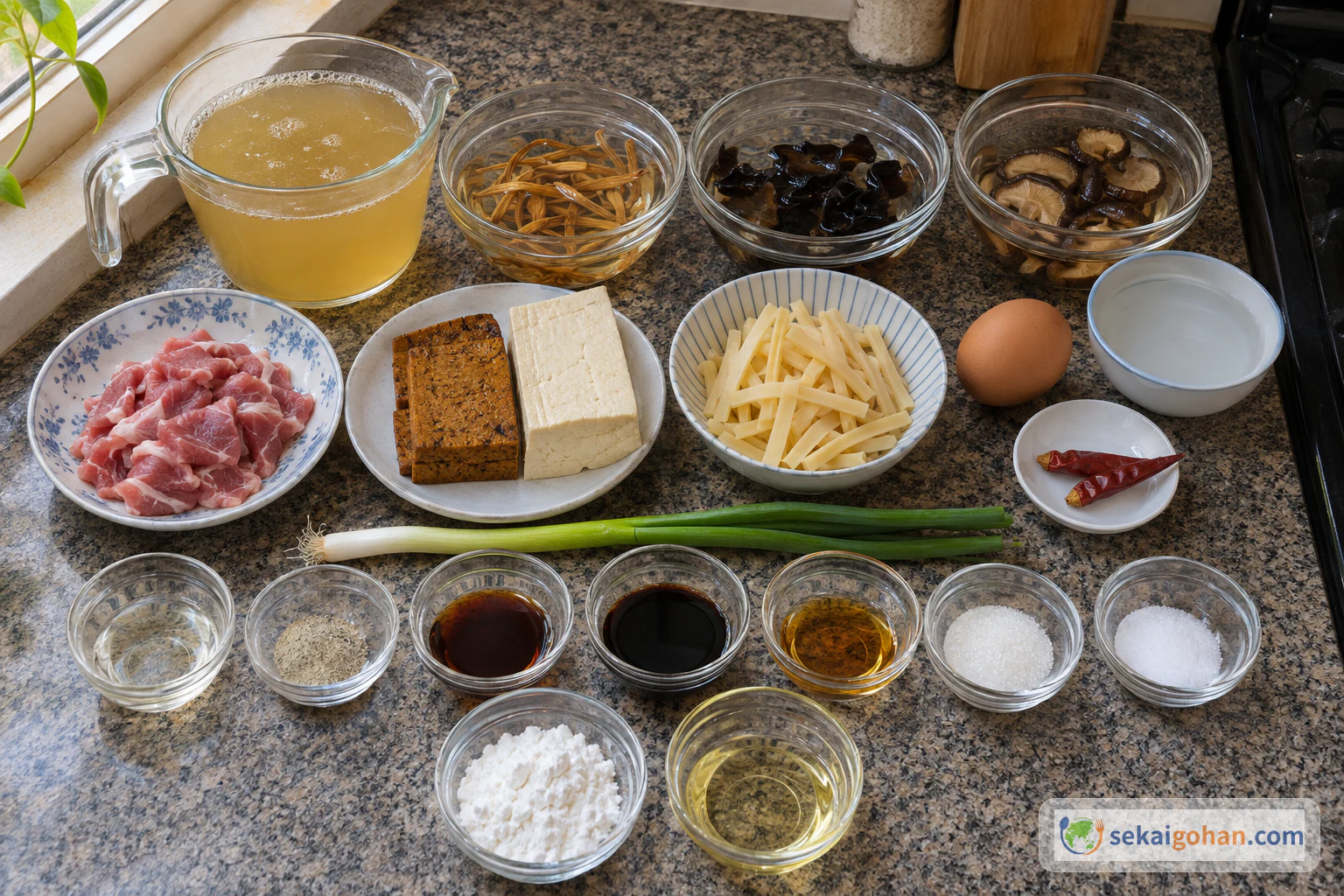
Salt appears twice, and water appears four times, each for a different job, so keep them apart.
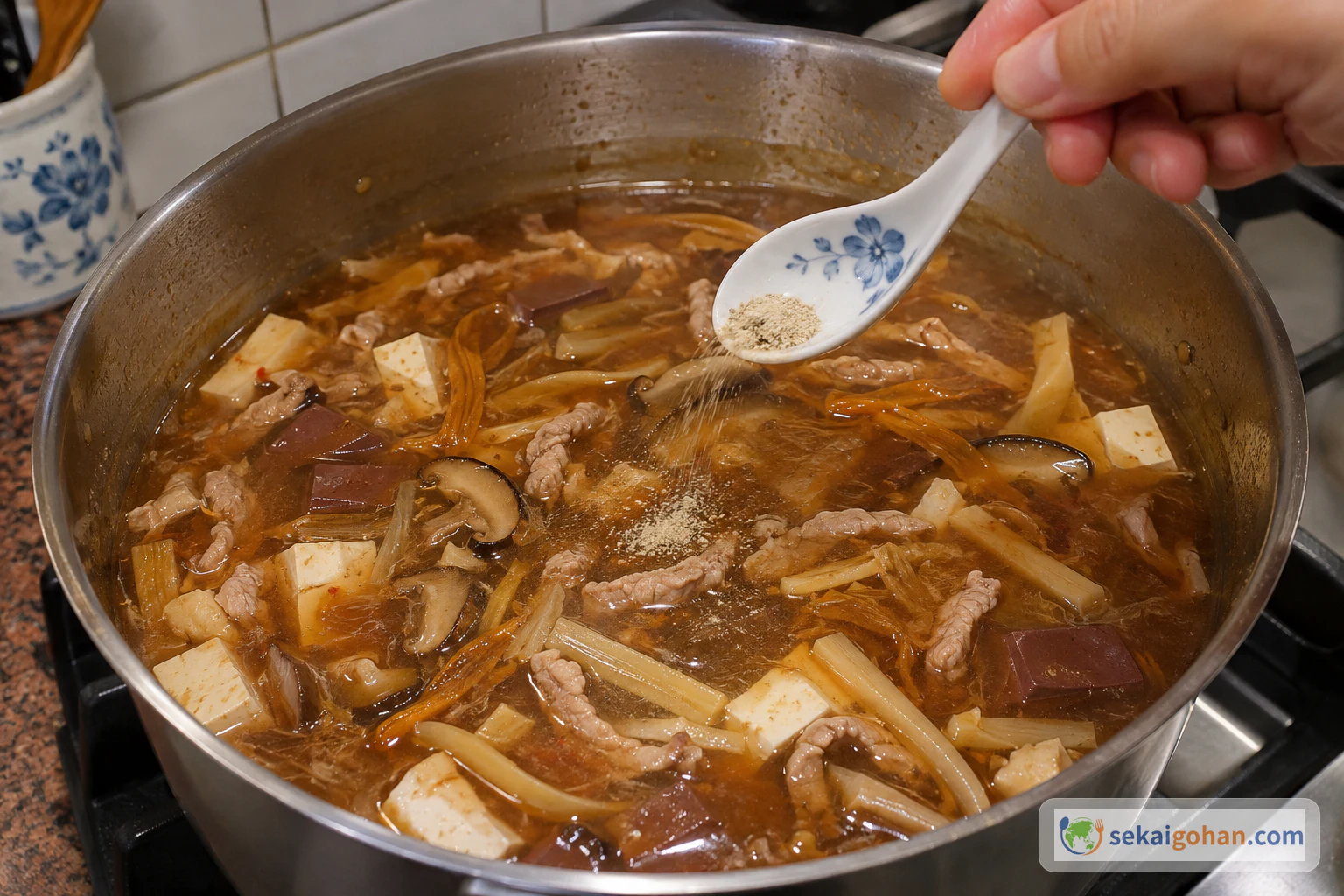
The soaking water from the dried ingredients does not go into the soup. Grind the white pepper fresh if you can; pre-ground pepper has a weaker aroma.
This soup contains pork, egg, soy (tofu and soy sauces) and sesame (sesame oil). Many soy sauces also contain wheat, so check the labels of the soy sauces you buy. Keep raw pork refrigerated, wash hands, boards and tools after handling it, and keep raw meat juices away from cooked food.
Equipment
- Wok or pot large enough for 8 US cups of stock plus the solid ingredients
- Three small bowls for soaking, plus small bowls for the marinated pork, the slurry and the beaten egg
- Cutting board and knife
- Ladle
- Chopsticks
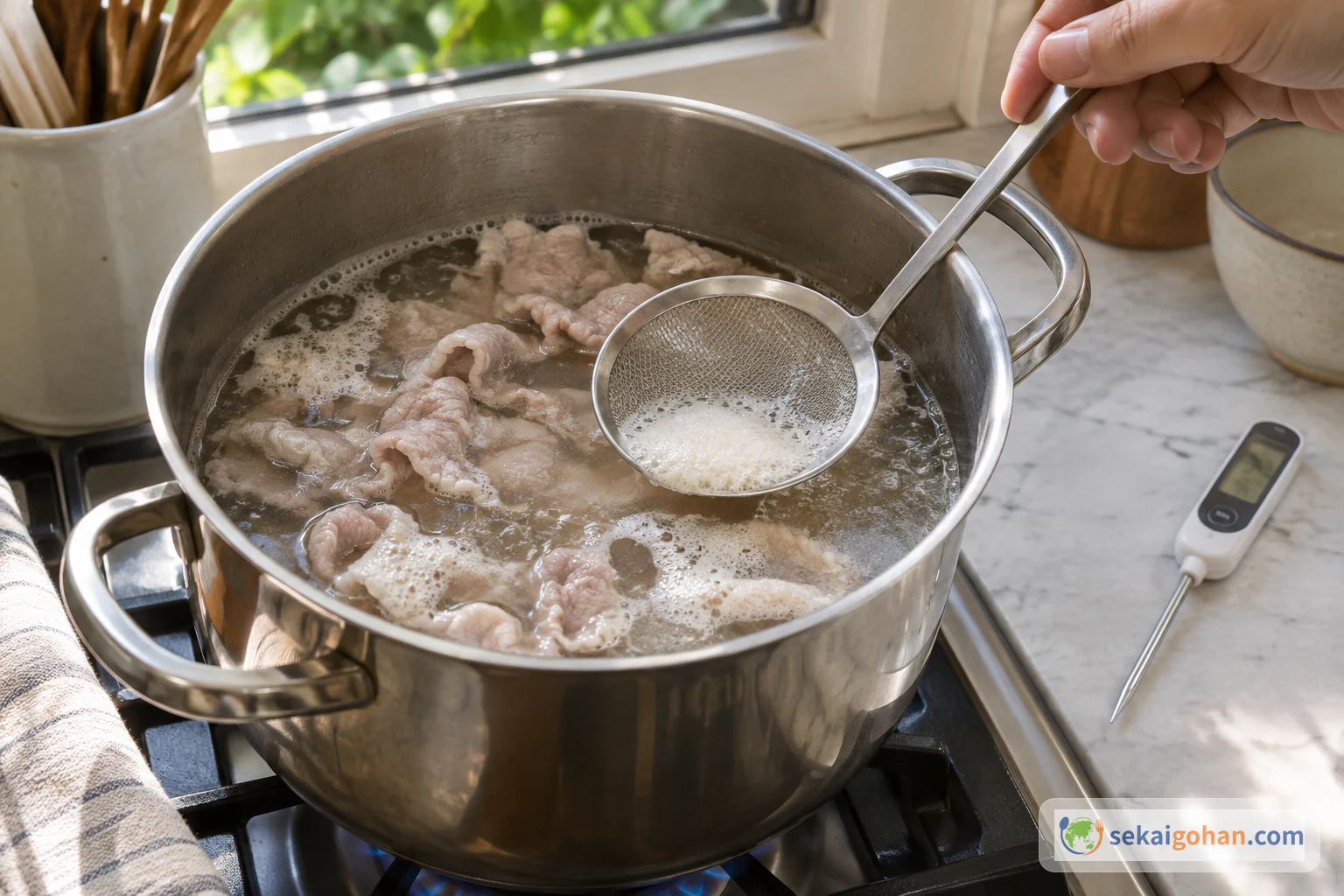
- Fine-mesh skimmer
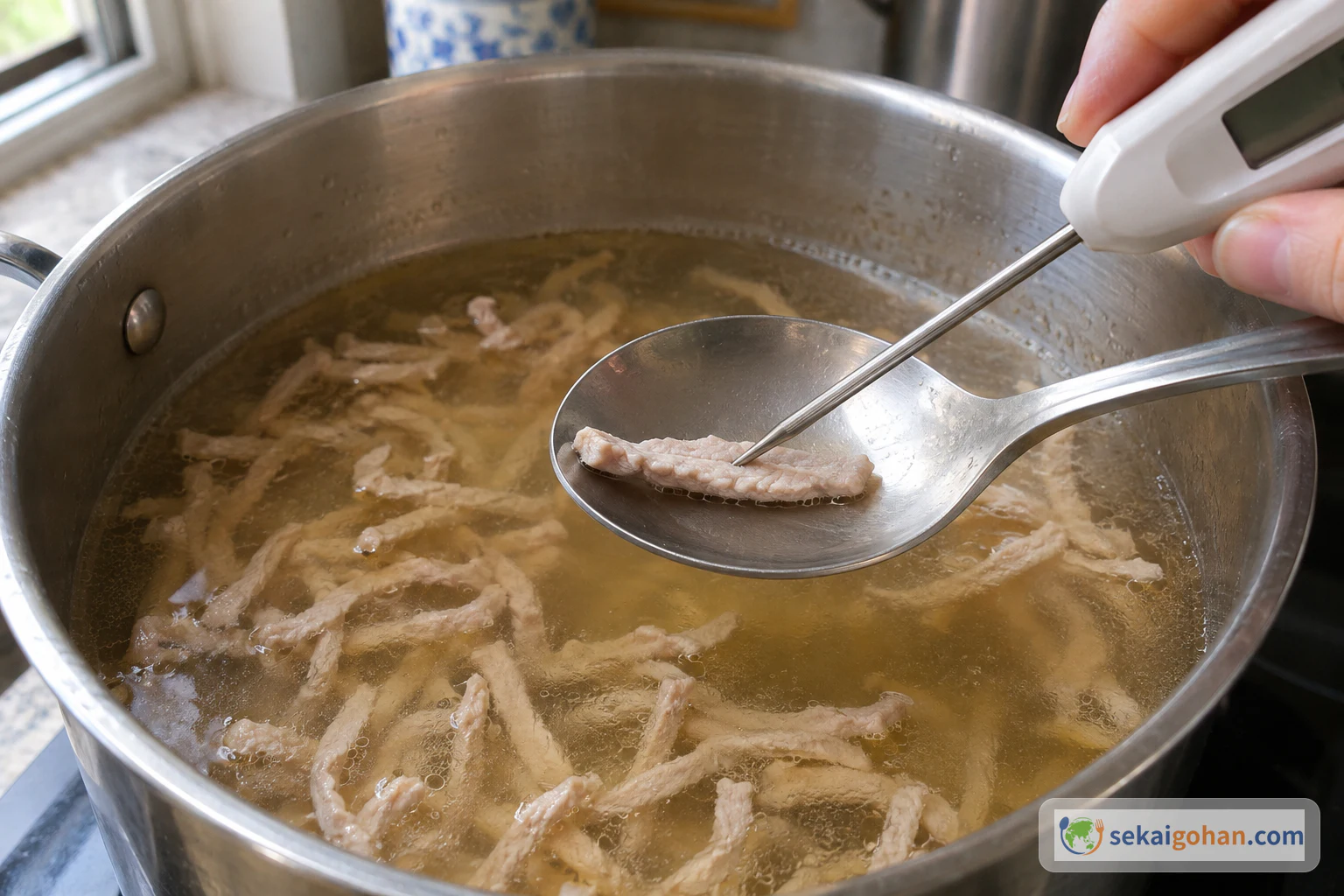
- Instant-read food thermometer
- Clean spoons for tasting and checking thickness
Shopping and Swaps: What You Can Change, and What Changes With It
Firm tofu, eggs, scallions, chicken stock, white pepper, dried shiitake, dried wood ear, canned or boiled bamboo shoots and cornstarch are usually easy to find. Dried lily flowers, spiced dry tofu, Chinese dark and light soy sauces, distilled white vinegar and dried red chilies are easier at Chinese or Asian grocers, import shops or online.
| If you can't find | You can use | What changes |
|---|---|---|
| Dried shiitake | Fresh shiitake or button mushrooms | Weaker flavor; dried shiitake is the first choice |
| Dried lily flowers | Leave them out | Less of their distinctive aroma and chew |
| Dried wood ear | Enoki (cut short) or button mushrooms | The crunchy bite changes |
| Bamboo shoots | Julienned broccoli stem or kohlrabi | Different texture and flavor |
| Spiced dry tofu | More firm tofu | The five-spice aroma and dense texture are lost |
| Chinese dark soy or mushroom soy | A little more regular soy sauce | The soup comes out paler |
| Pork shoulder | Boneless chicken thigh | It becomes a different meat soup |
Some swaps are not like-for-like, and the amounts on this page have not been worked out for them:
- Potato starch instead of cornstarch: a different starch. Don't pour it in at the same amount and expect the same thickness.
- Chinese black vinegar or rice vinegar instead of distilled white vinegar: both bring a stronger, different aroma. Grain vinegars are also not identical to distilled white vinegar; if you use one, start small and taste.
- Japanese soy sauces: Chinese light soy (生抽) and dark soy (老抽) are not the same as Japanese usukuchi and koikuchi. Swapping changes saltiness and color.
- Stock: low-sodium stock is the base. If your stock or bouillon is saltier, hold back on the soup salt and taste.
Method: Prep Everything, Then Build the Soup in Order
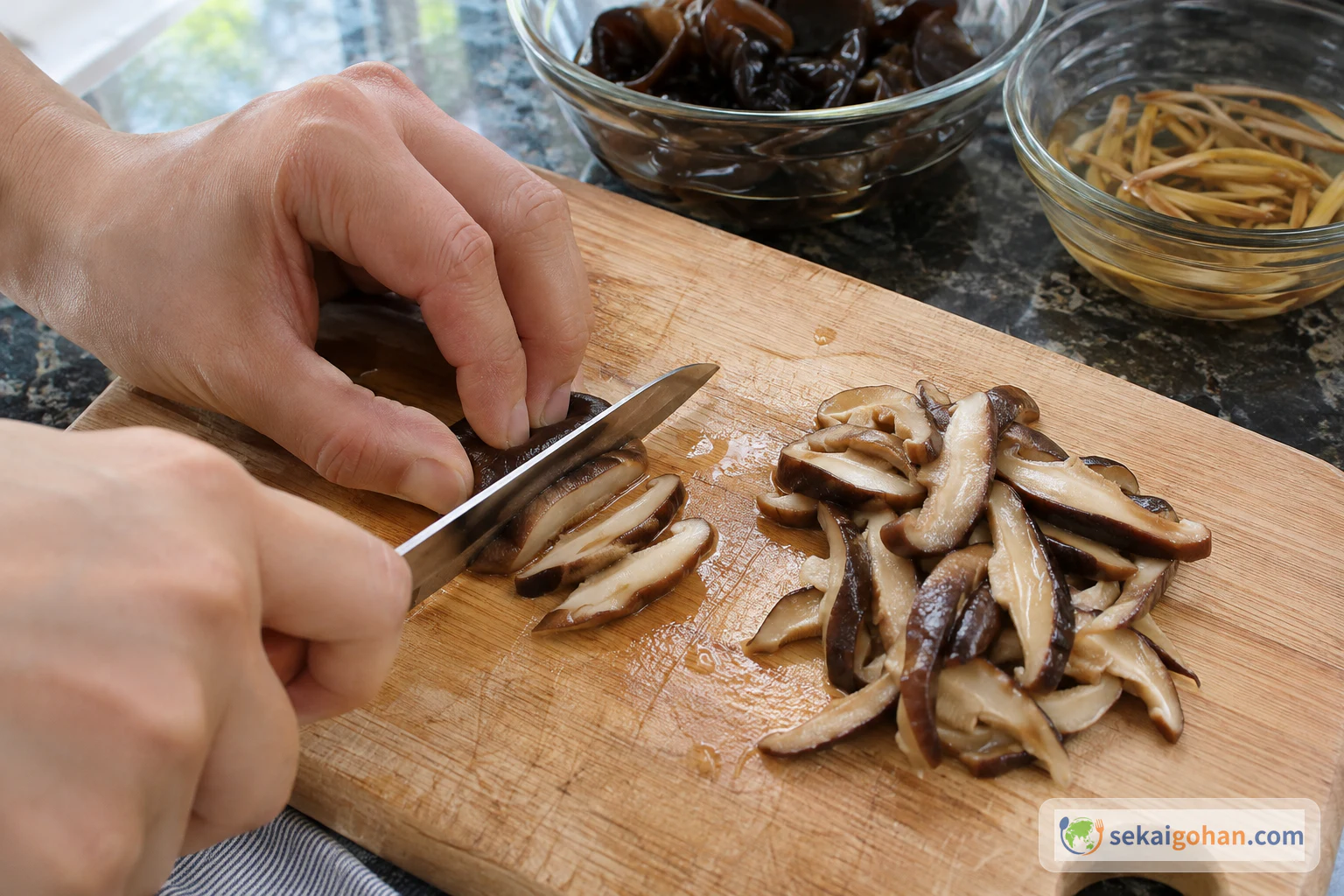
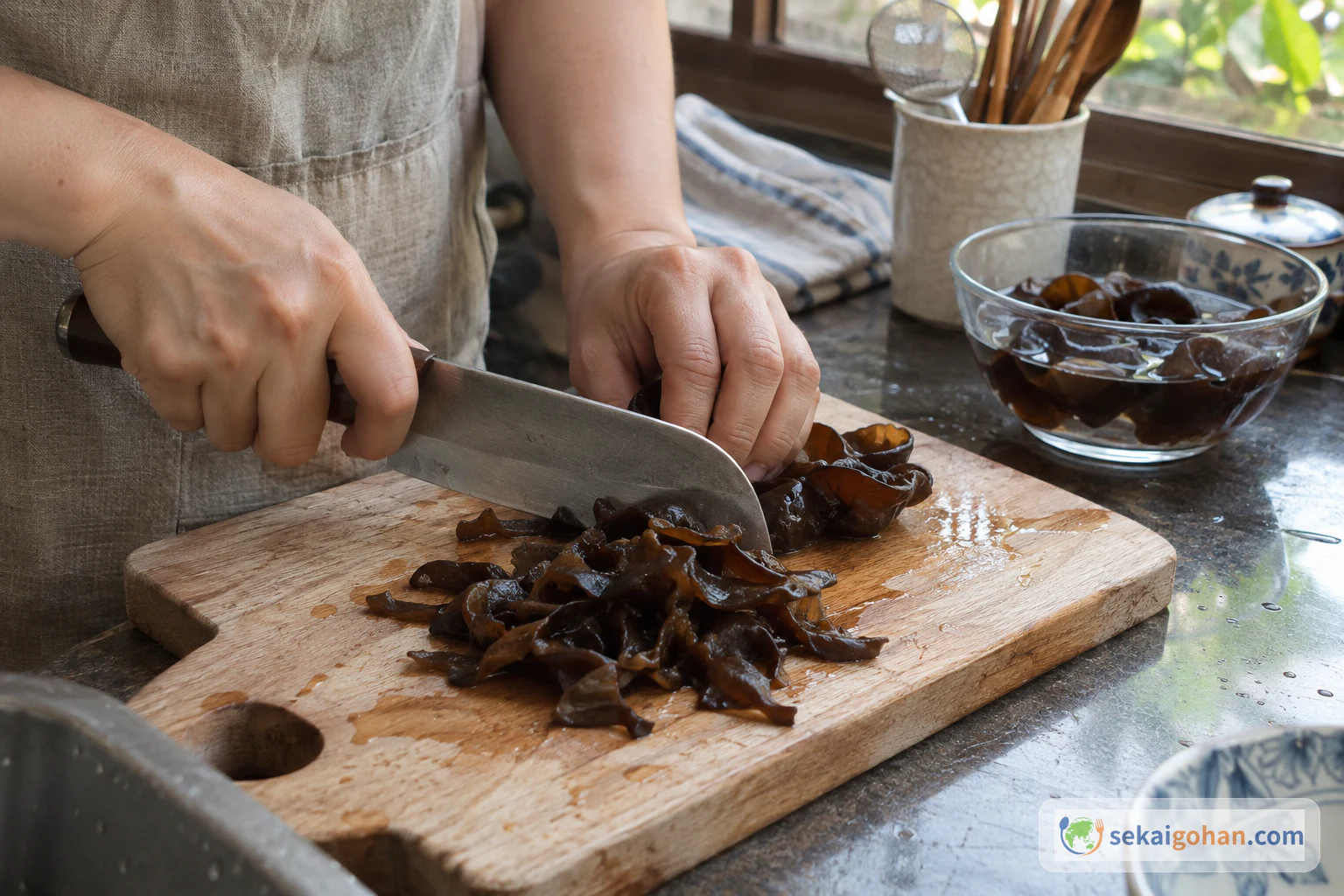
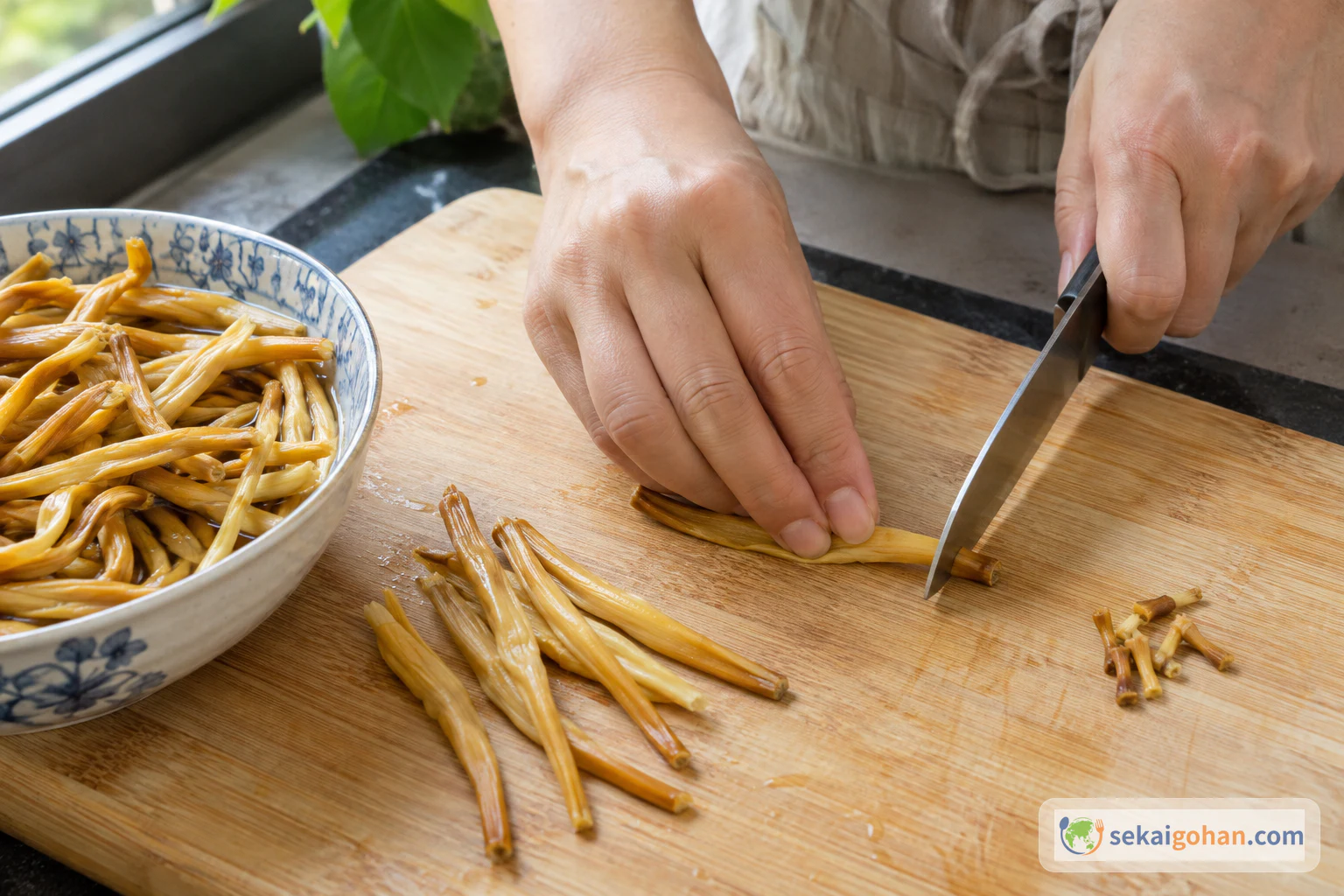
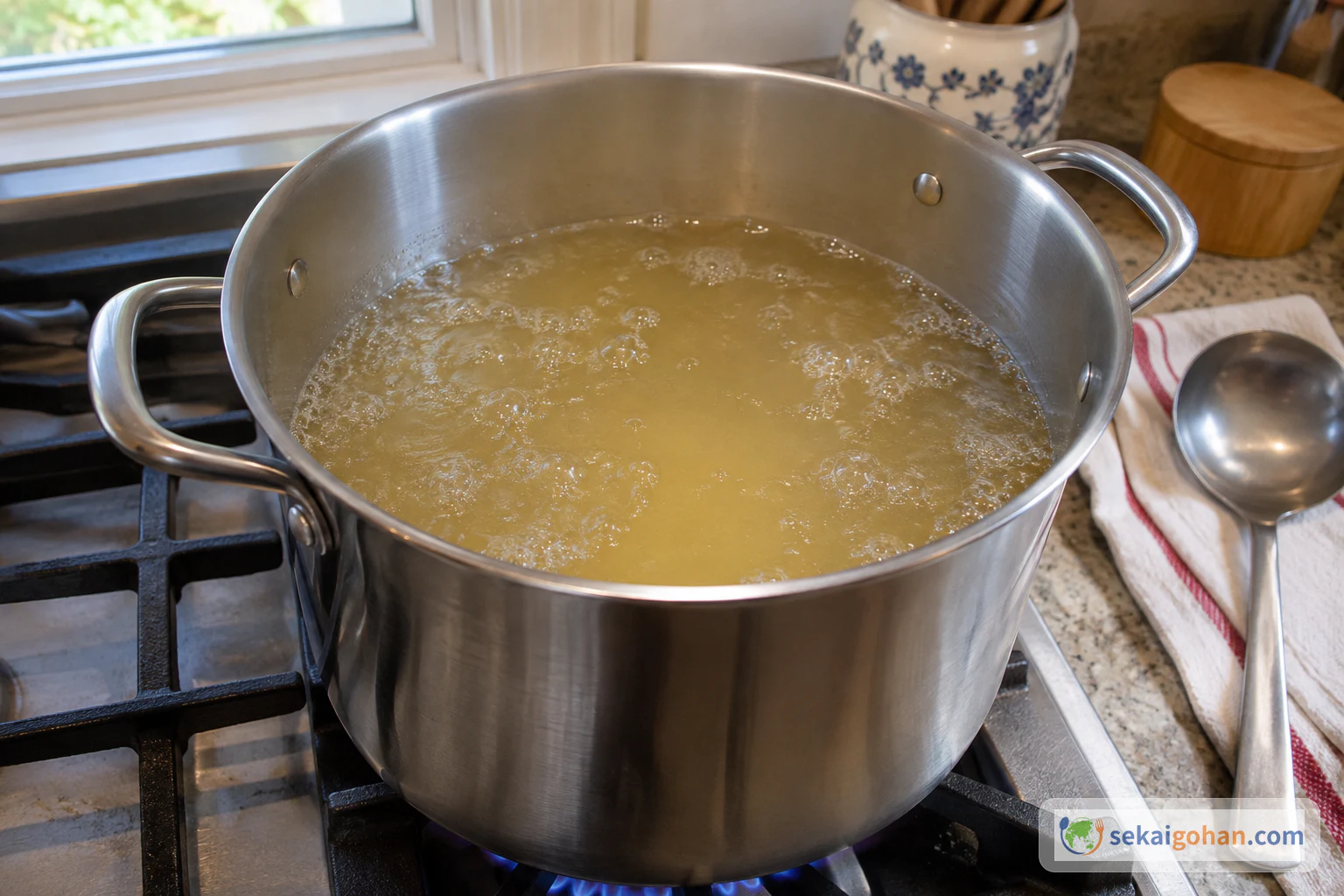
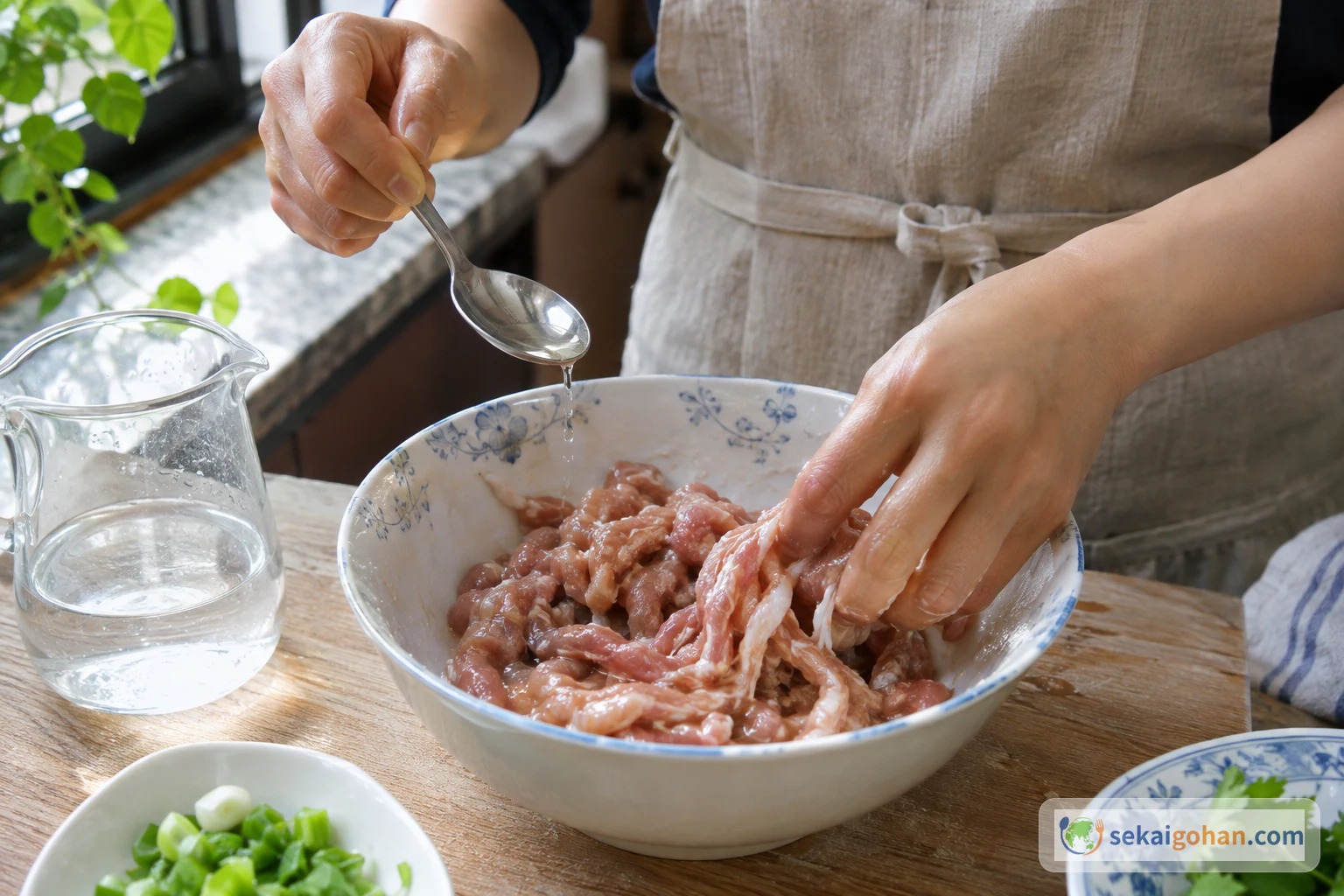
Steps 1–11 are preparation, including a 1–2 hour soak. Once the stock boils, the ingredients go in quickly and in sequence, so have every bowl ready first.
Troubleshooting
| Problem | Likely cause | What to do |
|---|---|---|
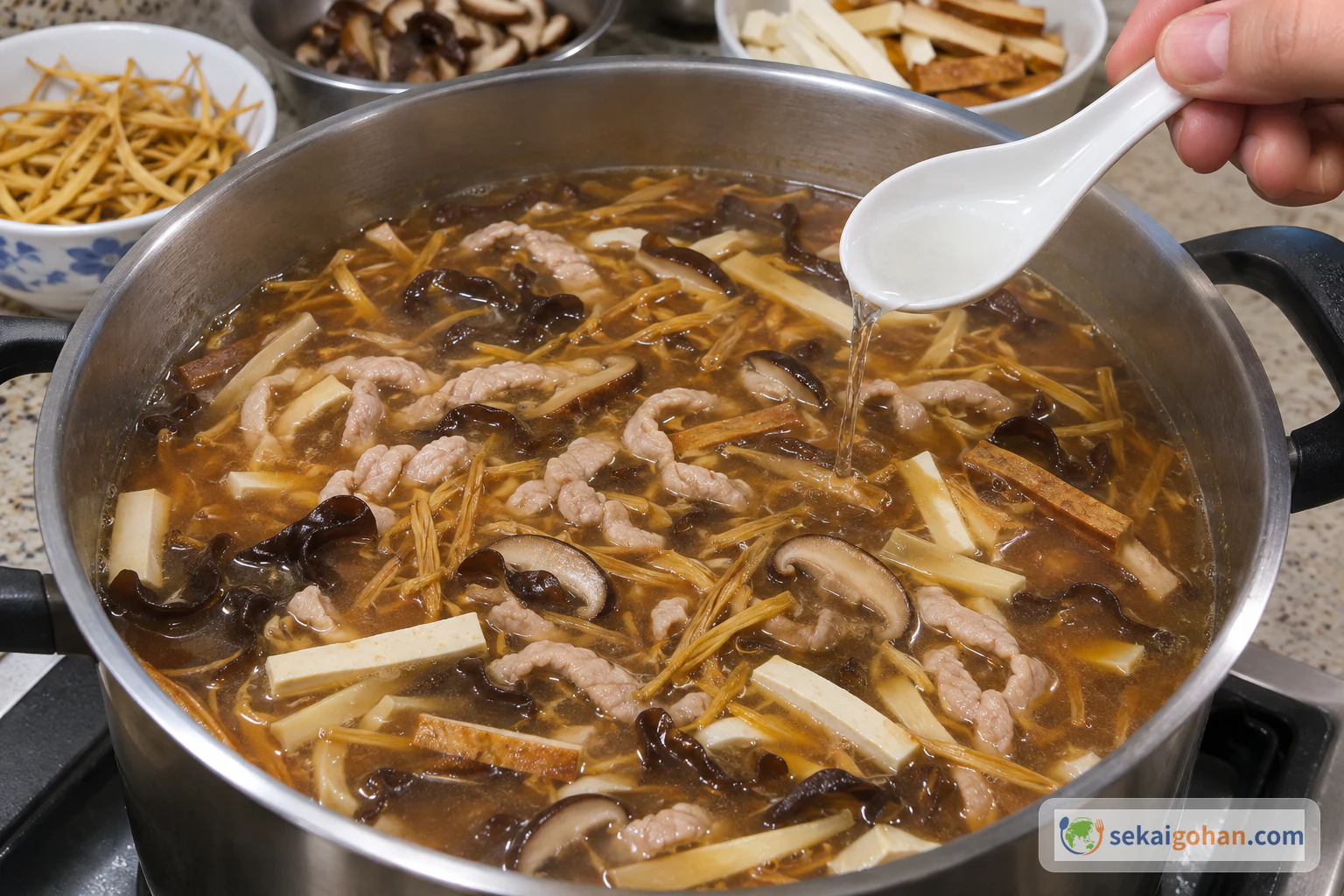
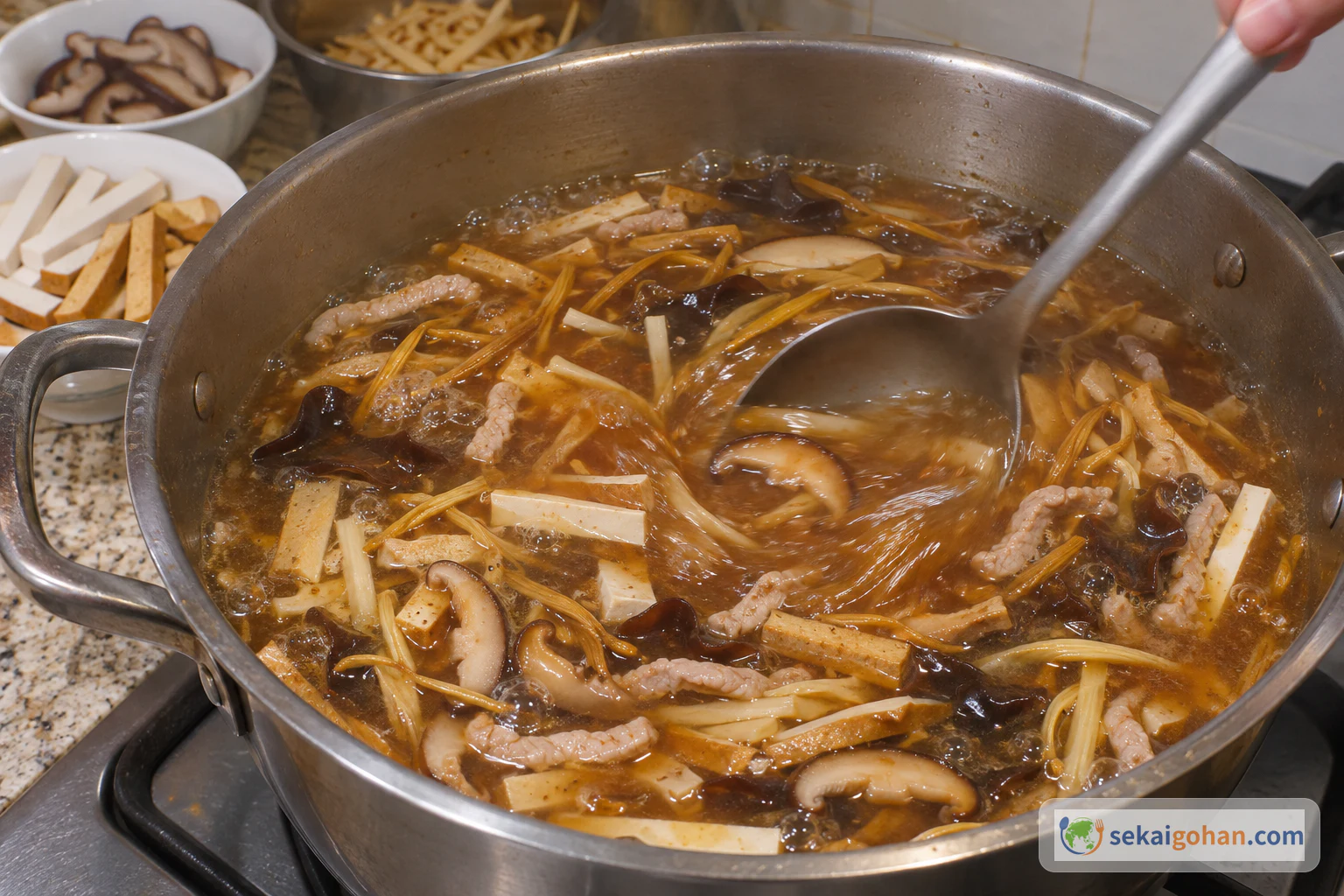
| Starch sinks or forms lumps | Slurry settled in the bowl, or poured into still soup | Stir the slurry right before pouring, keep the soup boiling, swirl with the ladle and pour slowly |
| Soup turns thicker than you want | All the slurry went in at once | Add about three-quarters first, check the spoon, and use the rest only if needed |
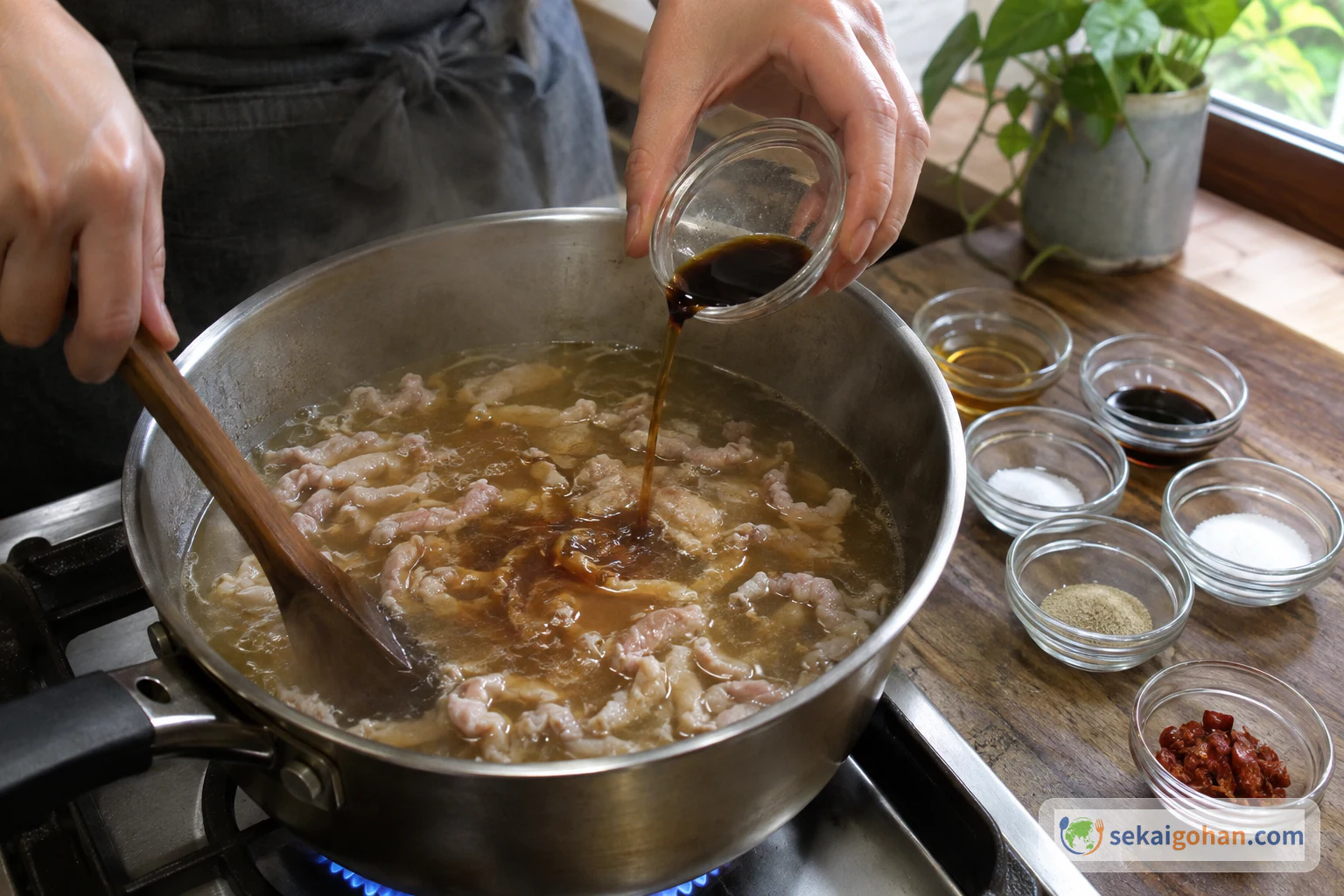
| Too sour or too peppery | Too much added at the adjusting stage | Start from the listed amounts and add more only in small steps; it's easy to add, hard to take back |
| Egg breaks into tiny grains | Stirred too hard or poured too fast | Keep a slow, steady swirl and pour the egg in a thin stream |
| Soup looks cloudy after the egg | The soup wasn't boiling when the egg went in | Bring the soup to a boil before adding the egg |
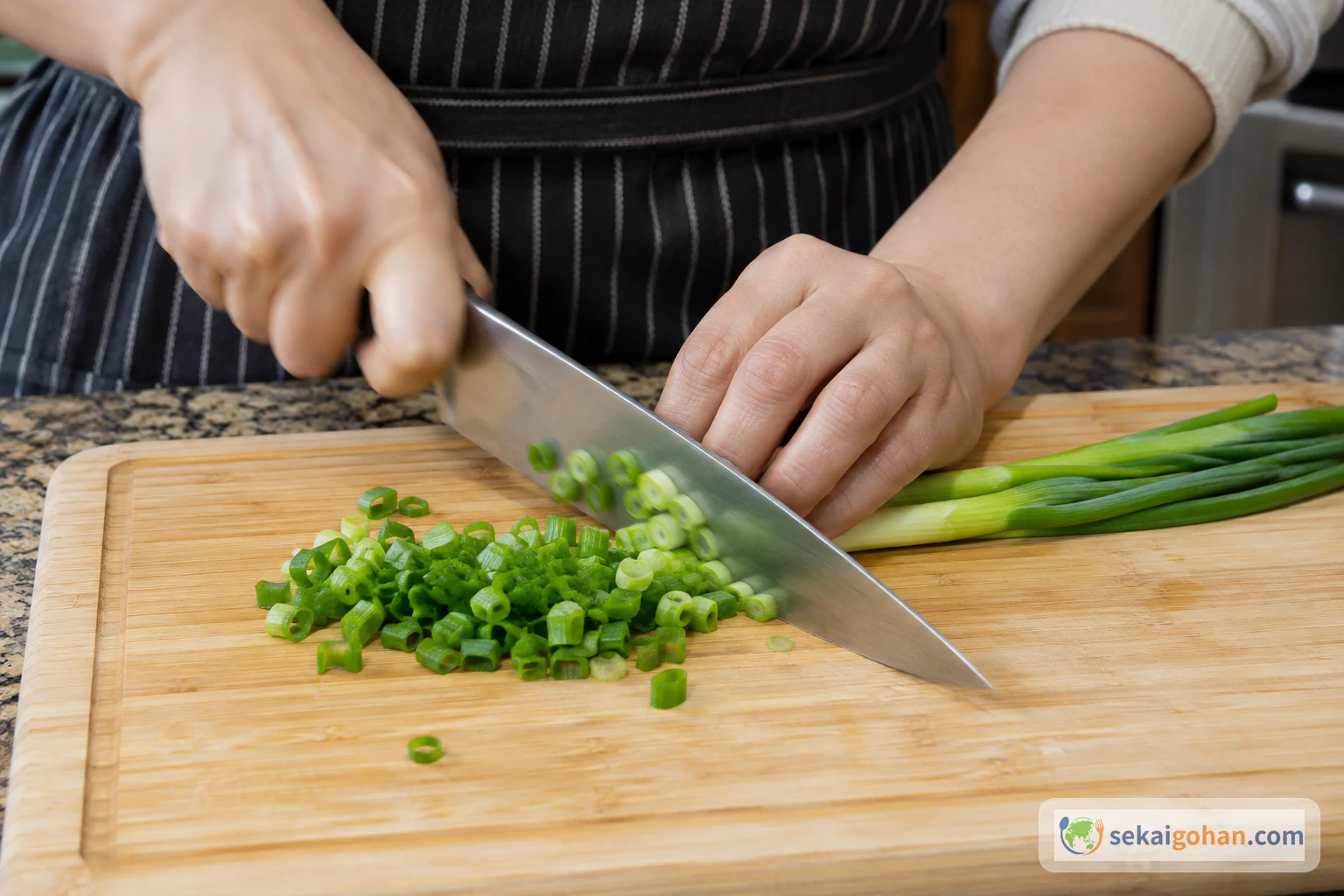
| Textures feel uneven | Pieces cut to different sizes | Cut tofu to 2 in × 1/4 in strips, julienne the pork and bamboo, slice the shiitake thinly |
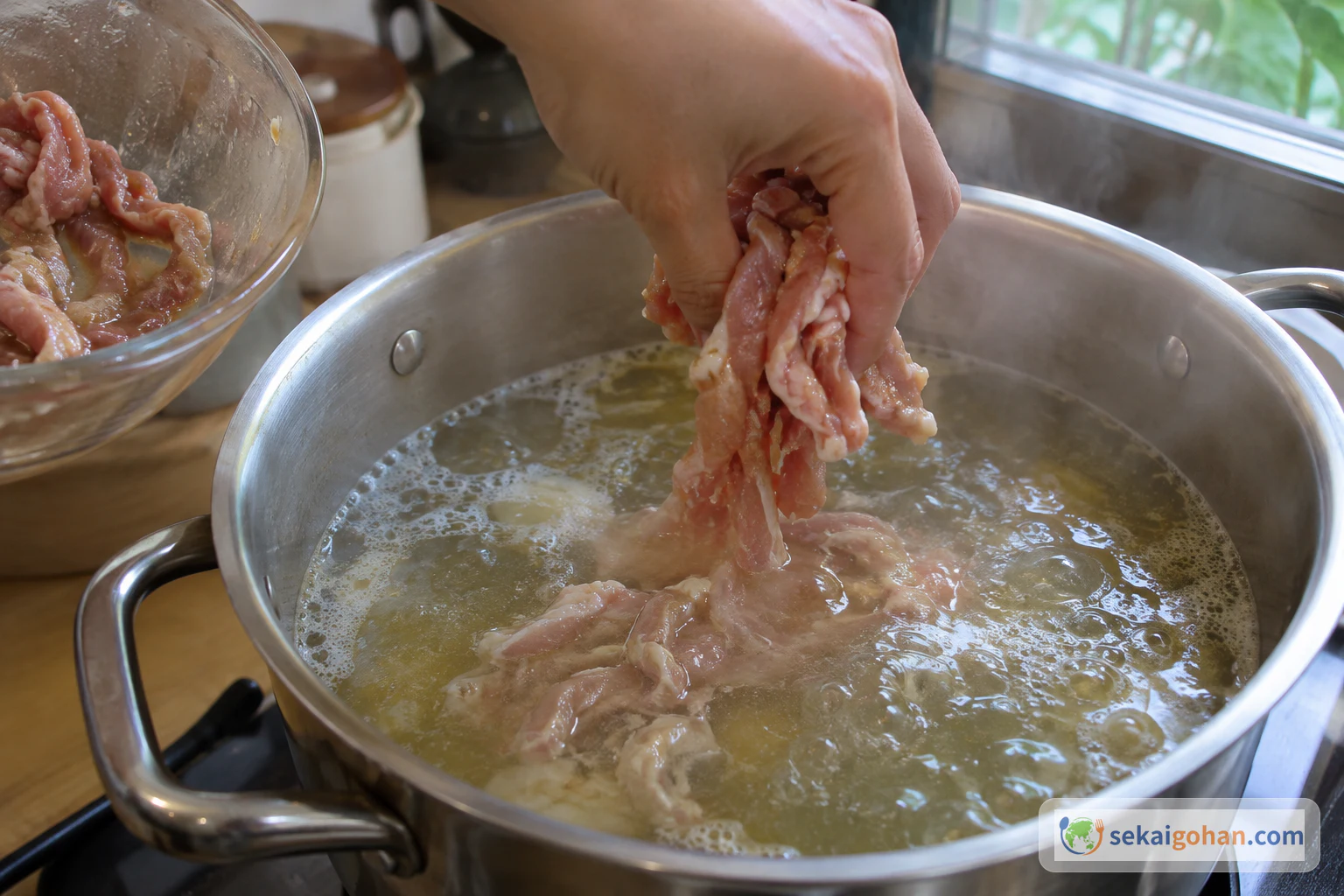
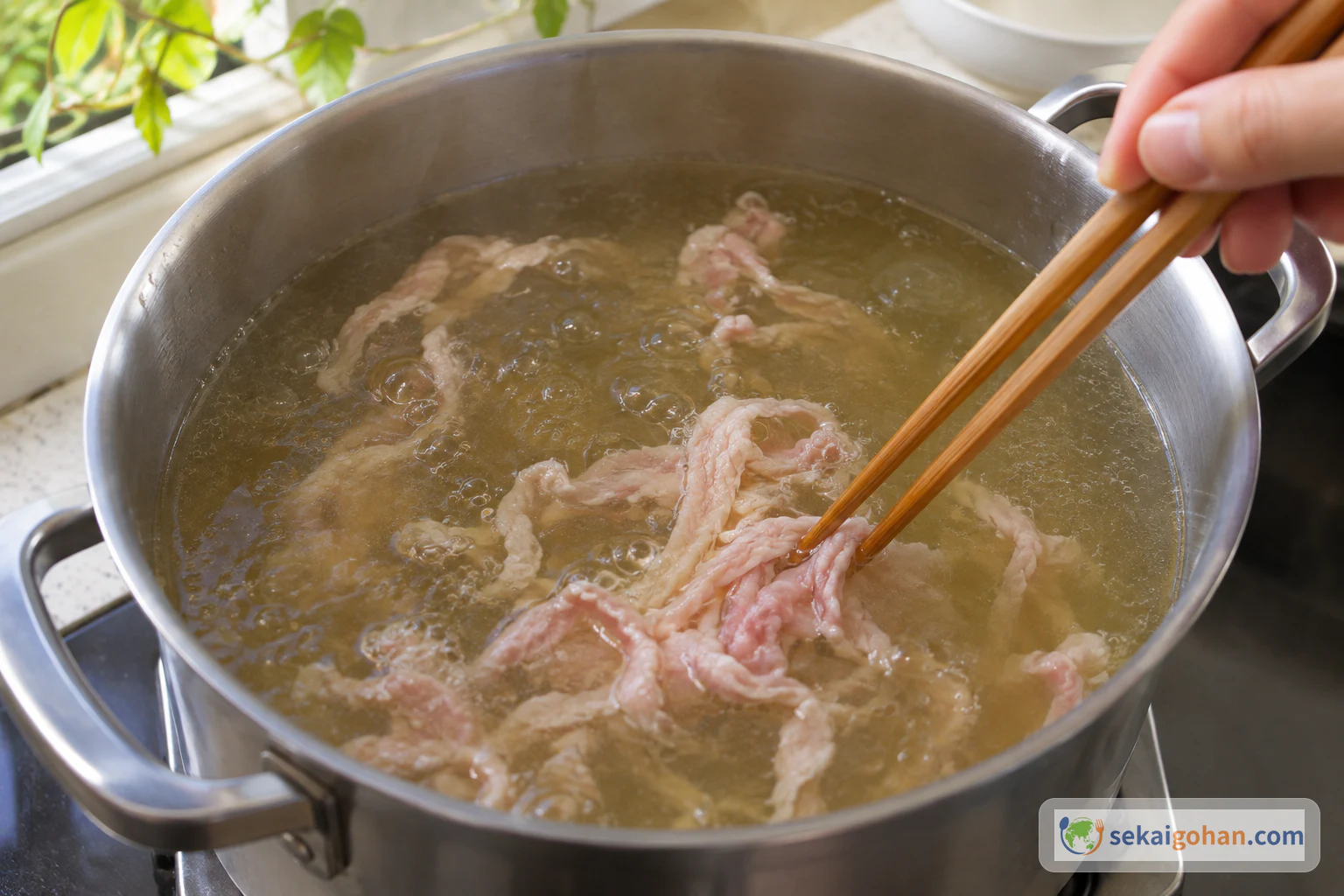
| Pork not yet at temperature | Thicker strips need longer | Keep cooking and recheck the thickest piece before adding the seasonings |
Variations Within This Recipe
- No chilies, all white pepper: the dried chilies are optional, so leave them out and let the white pepper carry the heat.
- Gentler heat at the table: use the lower end of the white pepper and let each person add more to their own bowl.
- Without lily flowers: leave them out if you can't find them; the soup loses some aroma and chew.
- All firm tofu: replace the spiced dry tofu with more firm tofu; the five-spice note disappears.
- Chicken instead of pork: boneless chicken thigh works, but it makes a different soup.
- Different crunch: broccoli stem or kohlrabi in place of bamboo shoots, with a change in texture and flavor.
One Name, Several Soups: The Family Recipe Behind This Version
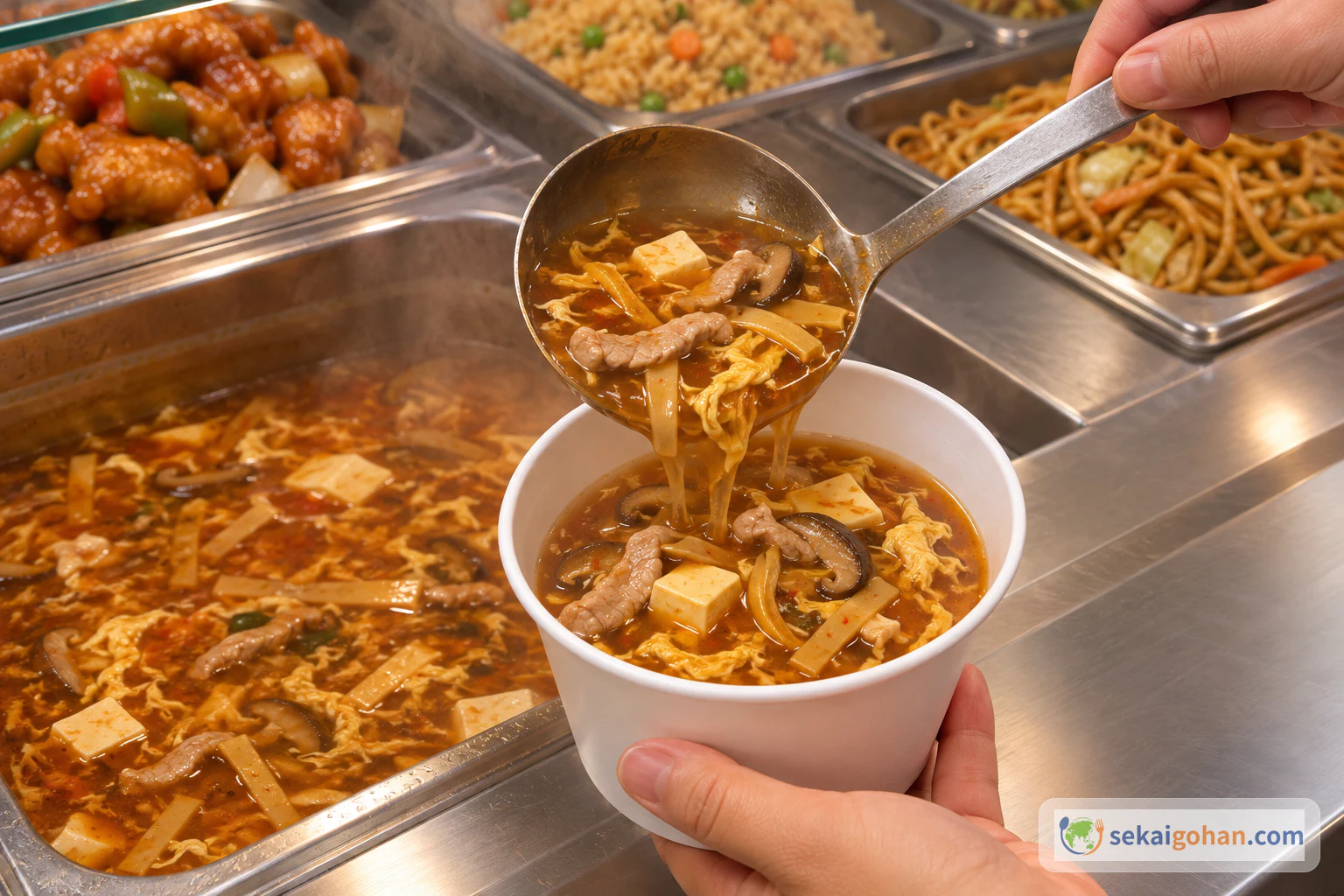
This recipe comes from one family and one kind of kitchen. Sarah Leung and family at The Woks of Life describe it as their family's hot and sour soup, tied to the Chinese takeout restaurant a grandfather in the family ran in the United States, and written down by the family as the soup "just like the restaurants make it." It is one example of how Chinese cooking carried by immigrant families became part of American takeout menus. It is not presented here as the standard for all of China, the only authentic version, or the origin of the dish, and the sources used here do not establish who invented the soup or when.
The character of this version is clear: heat mainly from freshly ground white pepper rather than chilies or the numbing málà of Sichuan cooking, sourness from distilled white vinegar, a cornstarch-thickened broth, many thin strips of different textures, and egg ribbons at the end.
Other versions share the name. In her reflections on Yan-Kit So's Classic Chinese Cookbook, Fuchsia Dunlop presents a hot and sour soup described as Szechwan and Peking style, combining pork, dried mushrooms, cloud ears, golden needles (lily flowers), tofu, starch and egg, with vinegar and black pepper going in near the end and coriander added. In The Washington Post, cookbook author Jaden Hair offers an unthickened black-vinegar version. These show that hot and sour soup is a family of soups, not one formula; their ingredients and amounts are not mixed into the recipe on this page.
Frequently Asked Questions
Are "hot and sour soup" and "suan la tang" the same dish?
Suān là tāng (酸辣湯 / 酸辣汤) is the Chinese name, and hot and sour soup is its English name. But the name covers several versions: a Chinese American takeout style like this one, a version described as Szechwan and Peking style, and an unthickened black-vinegar version, among others.
Where does the heat come from?
In this recipe, mainly from freshly ground white pepper. The dried red chilies are optional and don't replace it.
Can I use Chinese black vinegar?
You'll get a different soup. The Woks of Life recommends distilled white vinegar for this recipe and notes that black vinegar and rice vinegar bring a stronger, different flavor. Jaden Hair's black-vinegar version in The Washington Post is a separate recipe, not a substitution for this one.
Can I thicken it with potato starch?
Not by simply swapping it in at the same amount. Potato starch is a different starch from cornstarch, and the slurry amounts here haven't been worked out for it.
Can I make it without lily flowers or spiced dry tofu?
Yes. The Woks of Life says the lily flowers can be left out and that more firm tofu can replace the spiced dry tofu. Expect less aroma and a change in texture. Use only dried edible lily flowers, never fresh ornamental lilies.
Is there a vegetarian version?
The Woks of Life points readers to a separate vegetarian recipe. Simply leaving the pork out of this one does not make the same soup.
How do I cook the pork safely?
Japan's Ministry of Health, Labour and Welfare advises heating meat until the center reaches 75°C for at least 1 minute, refrigerating raw meat, and avoiding cross-contamination through hands and utensils. The family recipe gives no cooking time for the pork, so check the thickest strip with a thermometer rather than relying on the look of the soup.
How do the US cups and ounces convert to metric?
Using NIST's approximate kitchen equivalents: 1 US cup ≈ 240 mL, so 8 US cups of stock is about 1.9 L (a rounded approximation); 1/3 US cup ≈ 80 mL; 1/4 US cup ≈ 60 mL; 1 tbsp ≈ 15 mL; 1 tsp ≈ 5 mL; 1 oz (weight) ≈ 28 g; 4 oz ≈ 114 g. These are approximations; the US measures remain the reference amounts. Cup and spoon measures for dried ingredients, salt and starch are volumes and shouldn't be turned into weights.
How long does the whole recipe take?
The recipe card on The Woks of Life lists 1 hr 20 mins in total, but the dried ingredients alone soak for 1–2 hours. Plan around the soak; no total time is promised here.
How long do leftovers keep?
The sources used for this recipe don't give a storage time, so none is given here.
Sources
- The Woks of Life (Sarah Leung and family), "Hot and Sour Soup: Just Like the Restaurants Make It." The recipe on this page: 6 servings, all ingredients and US amounts, the listed prep/cook/total times, the 1–2 hour soak, the method, the in-recipe substitutions, and the family's account of the US Chinese takeout restaurant behind it. https://thewoksoflife.com/hot-sour-soup/
- Oxford Cultural Collective, "Yan-Kit's Classic Chinese Cookbook – reflections from Fuchsia Dunlop." Used only to show a separate version described as Szechwan and Peking style and its main ingredients; no amounts or steps were taken from it. https://oxfordculturalcollective.com/yan-kits-classic-chinese-cookbook-reflections-fuchsia-dunlop/
- The Washington Post, "Chinese Hot and Sour Soup" (recipe by Jaden Hair). Used only for the existence of an unthickened black-vinegar version. https://www.washingtonpost.com/recipes/chinese-hot-and-sour-soup/
- U.S. National Institute of Standards and Technology (NIST), "Metric Kitchen: Cooking Measurement Equivalencies." Approximate metric equivalents for US cups, spoons and ounces. https://www.nist.gov/pml/owm/metric-si/metric-kitchen/metric-kitchen-cooking-measurement-equivalencies
- Ministry of Health, Labour and Welfare, Japan, "食中毒予防:お肉はよく加熱して食べよう" (Preventing food poisoning: cook meat thoroughly). Heating meat to a center temperature of 75°C for at least 1 minute, refrigerating raw meat, and preventing cross-contamination. https://www.mhlw.go.jp/stf/web_magazine/closeup/08.html