Gamja-ongsimi: Potato Dumplings Held Together by Their Own Starch
The dumplings are just grated potato, a little salt, and the starch that settles out of the potato's own juice. Nothing else binds them, so the settling step is the one to protect.
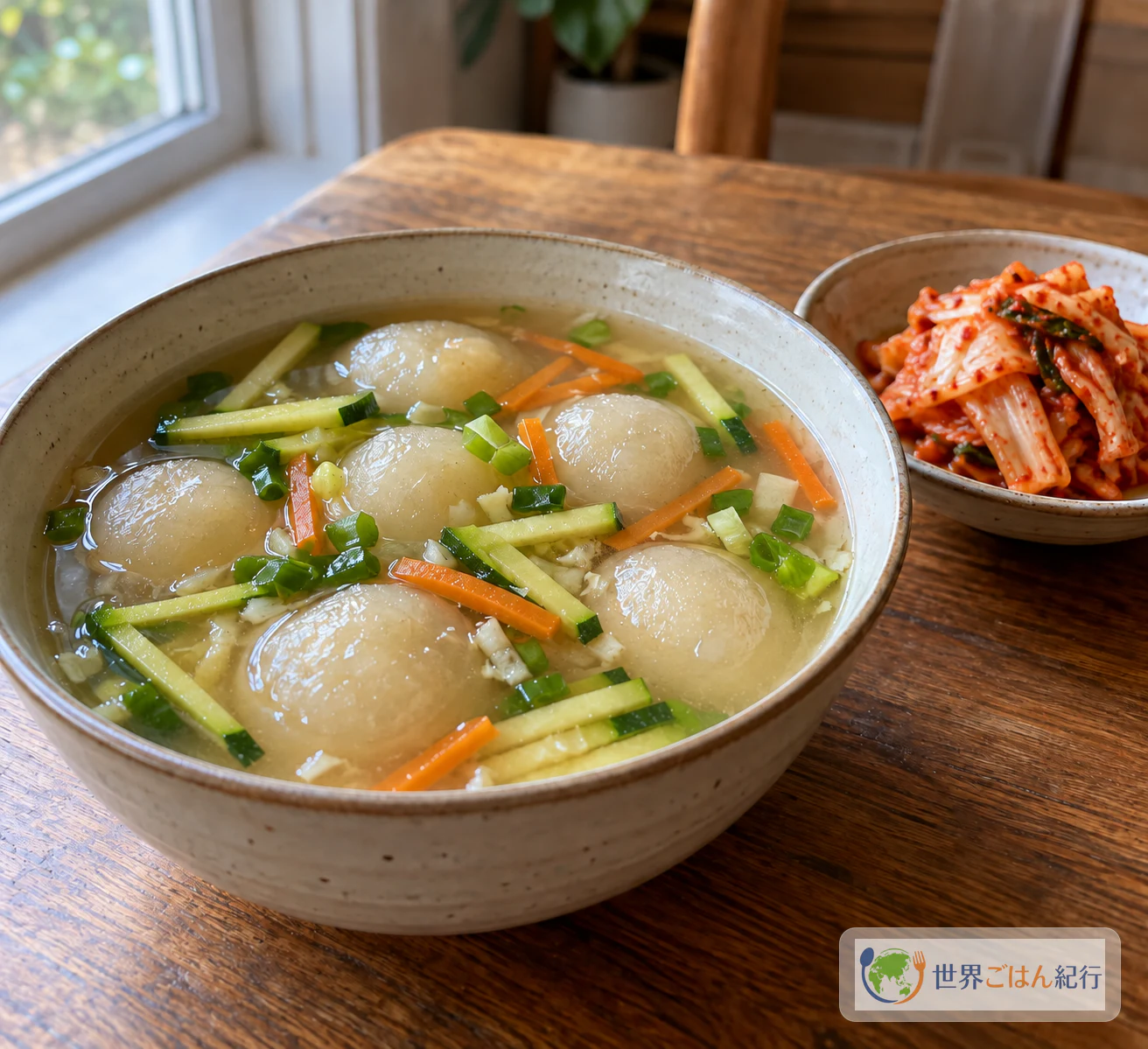
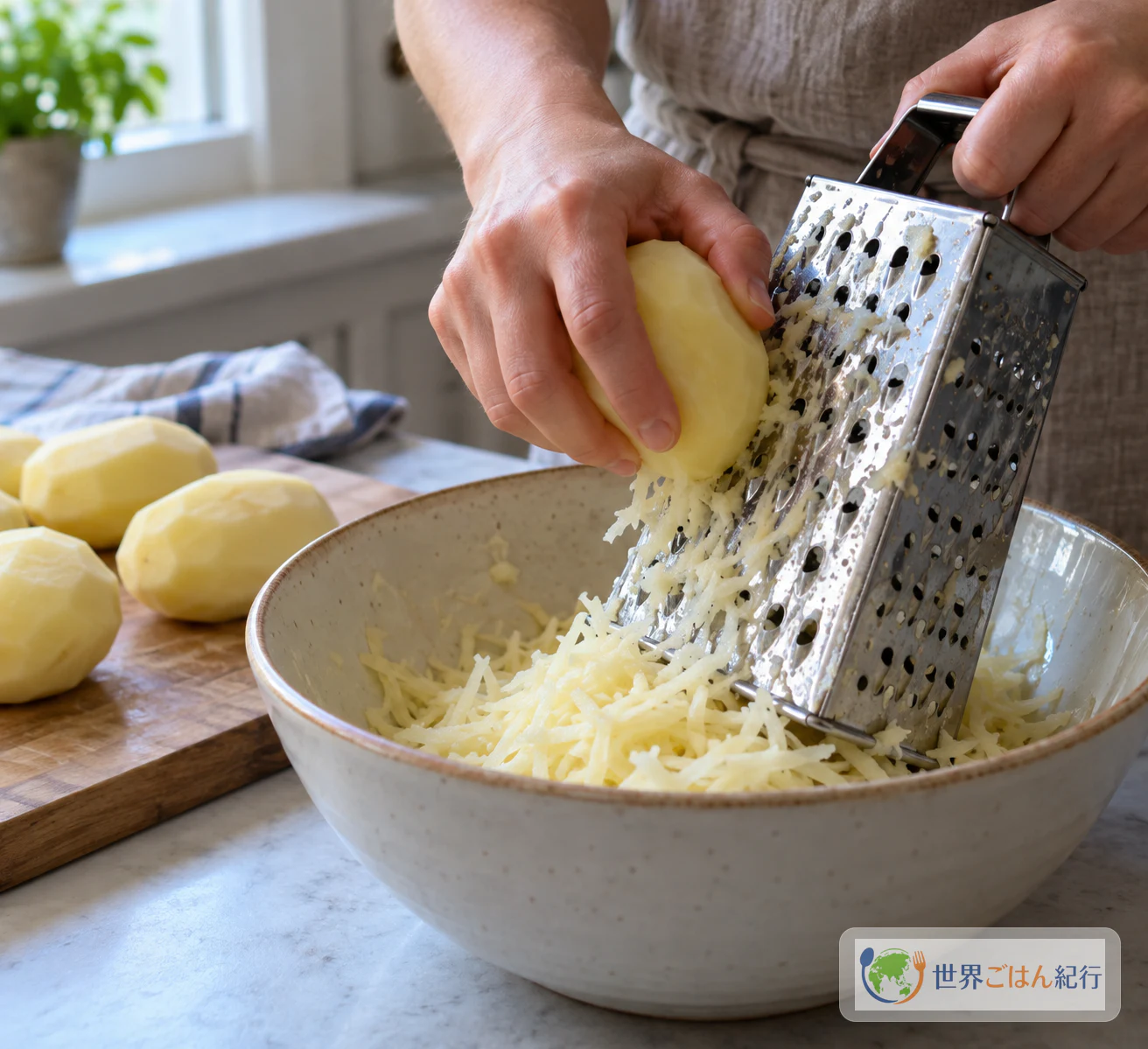
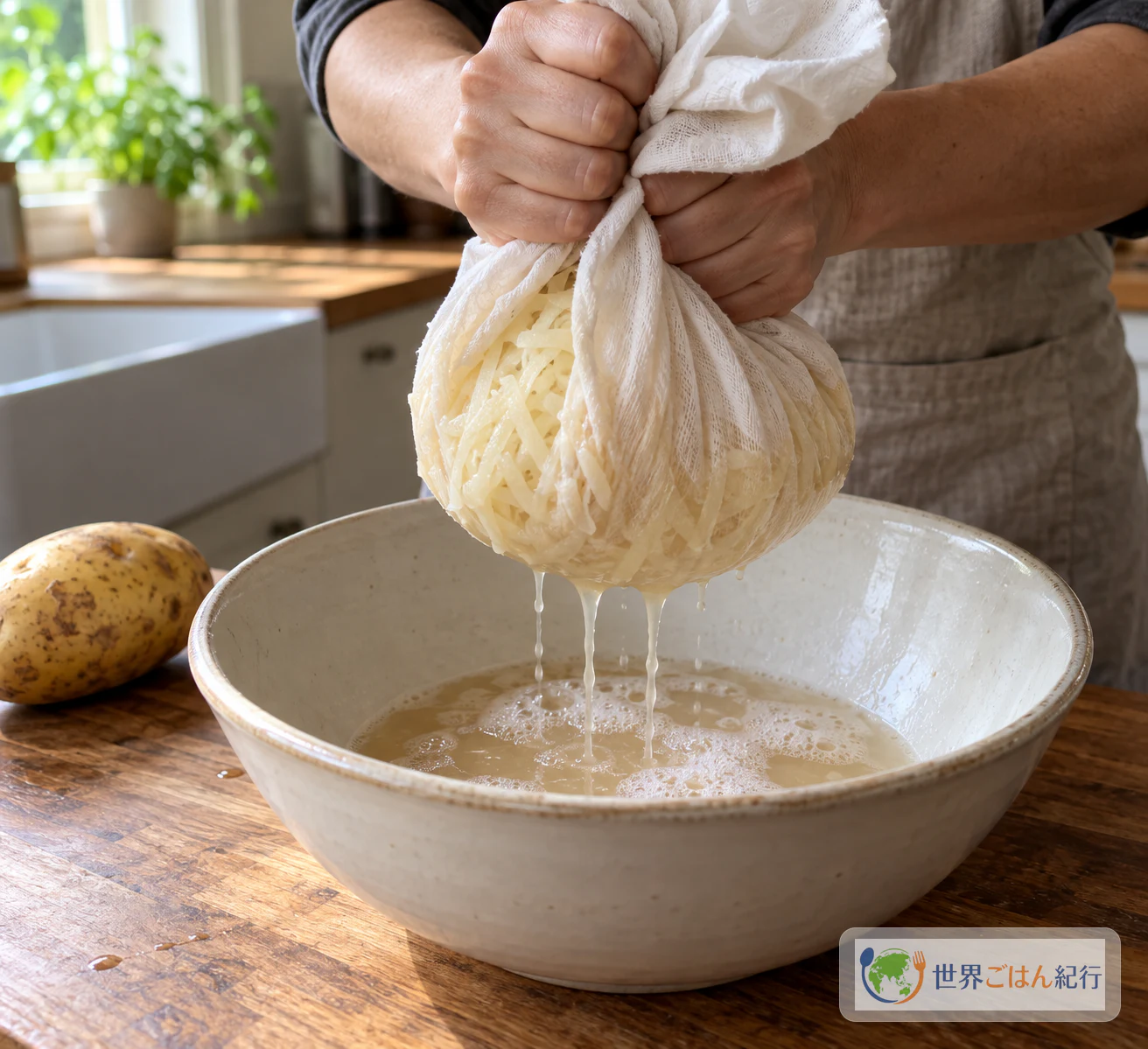
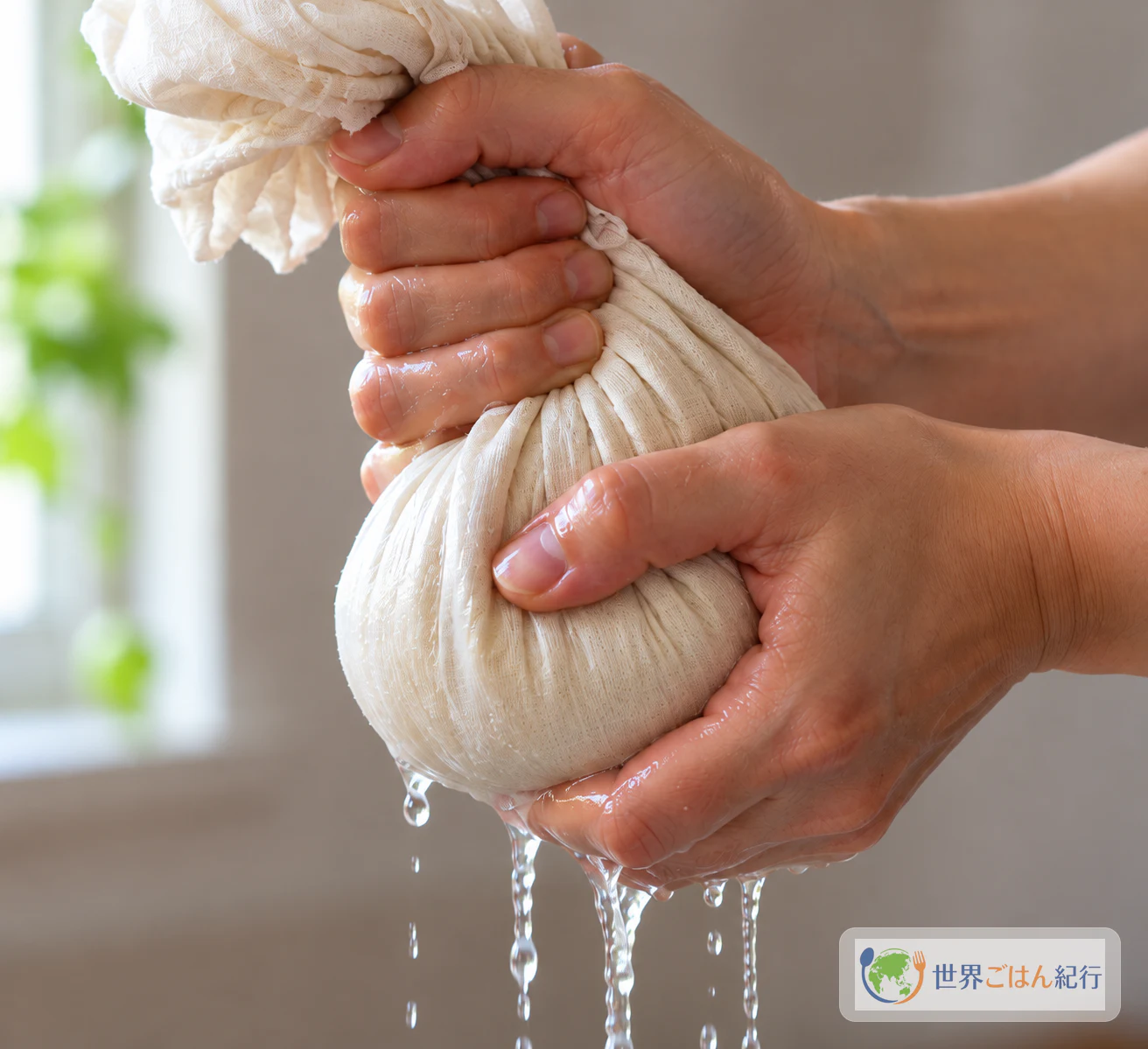
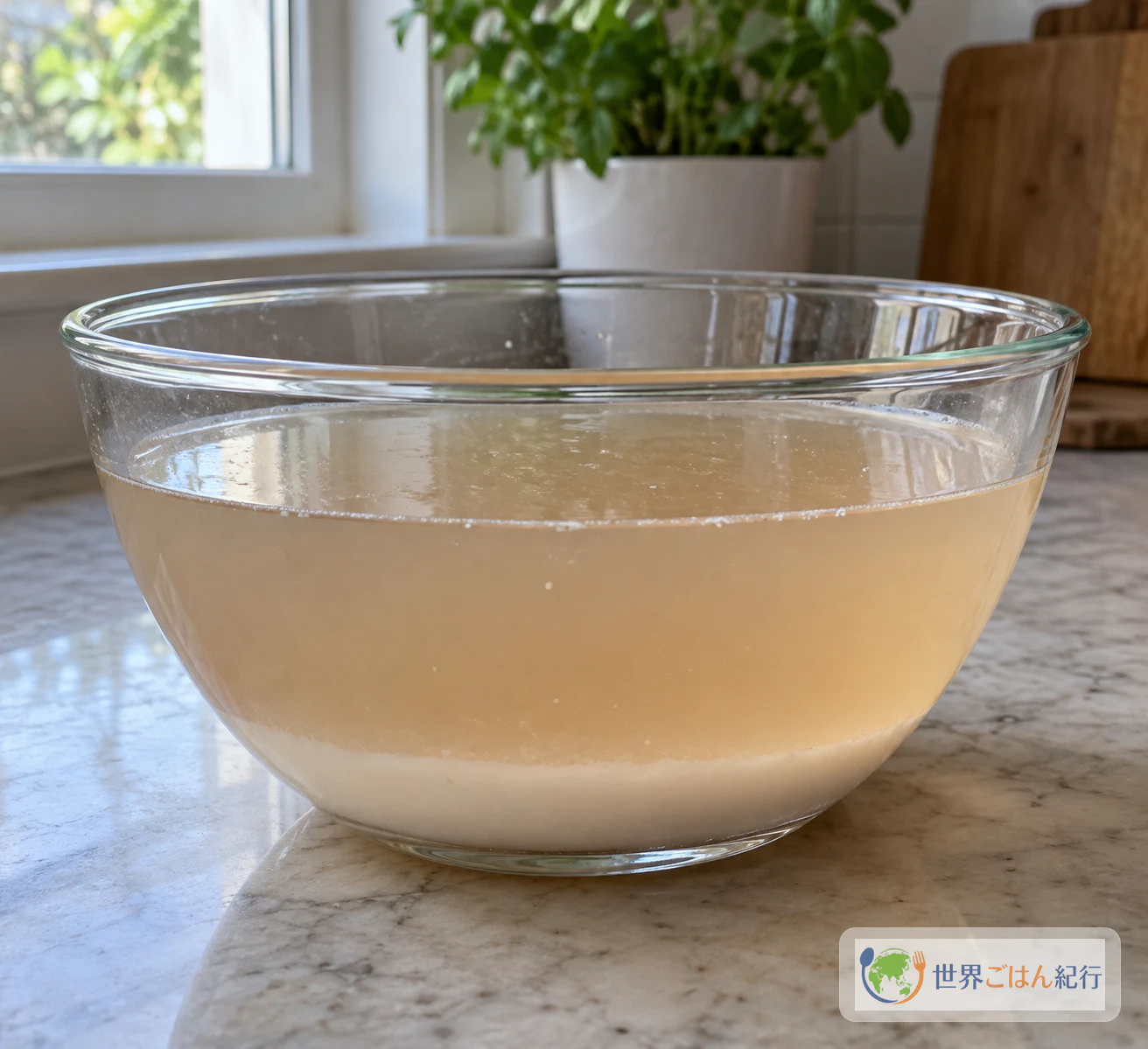
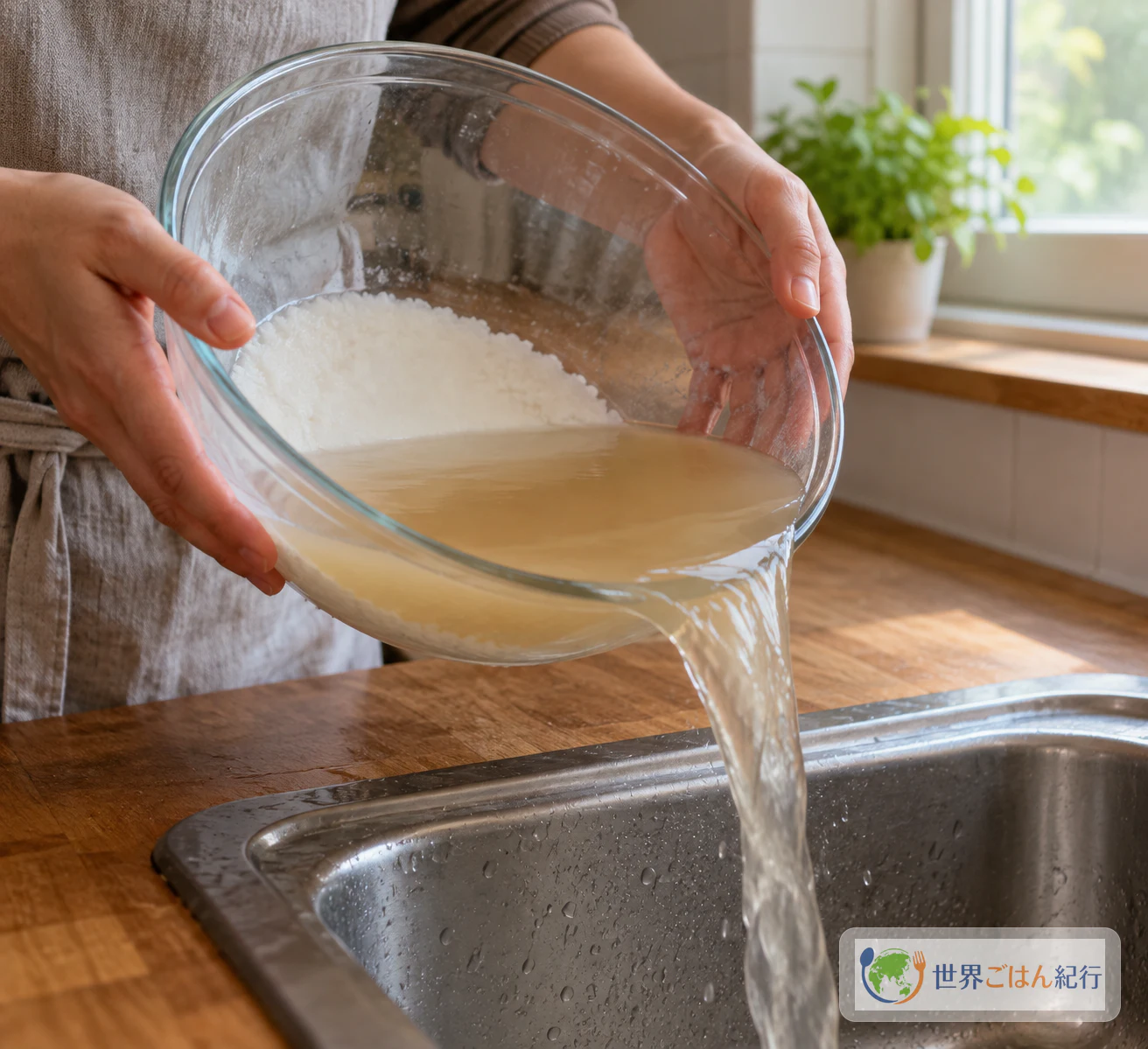
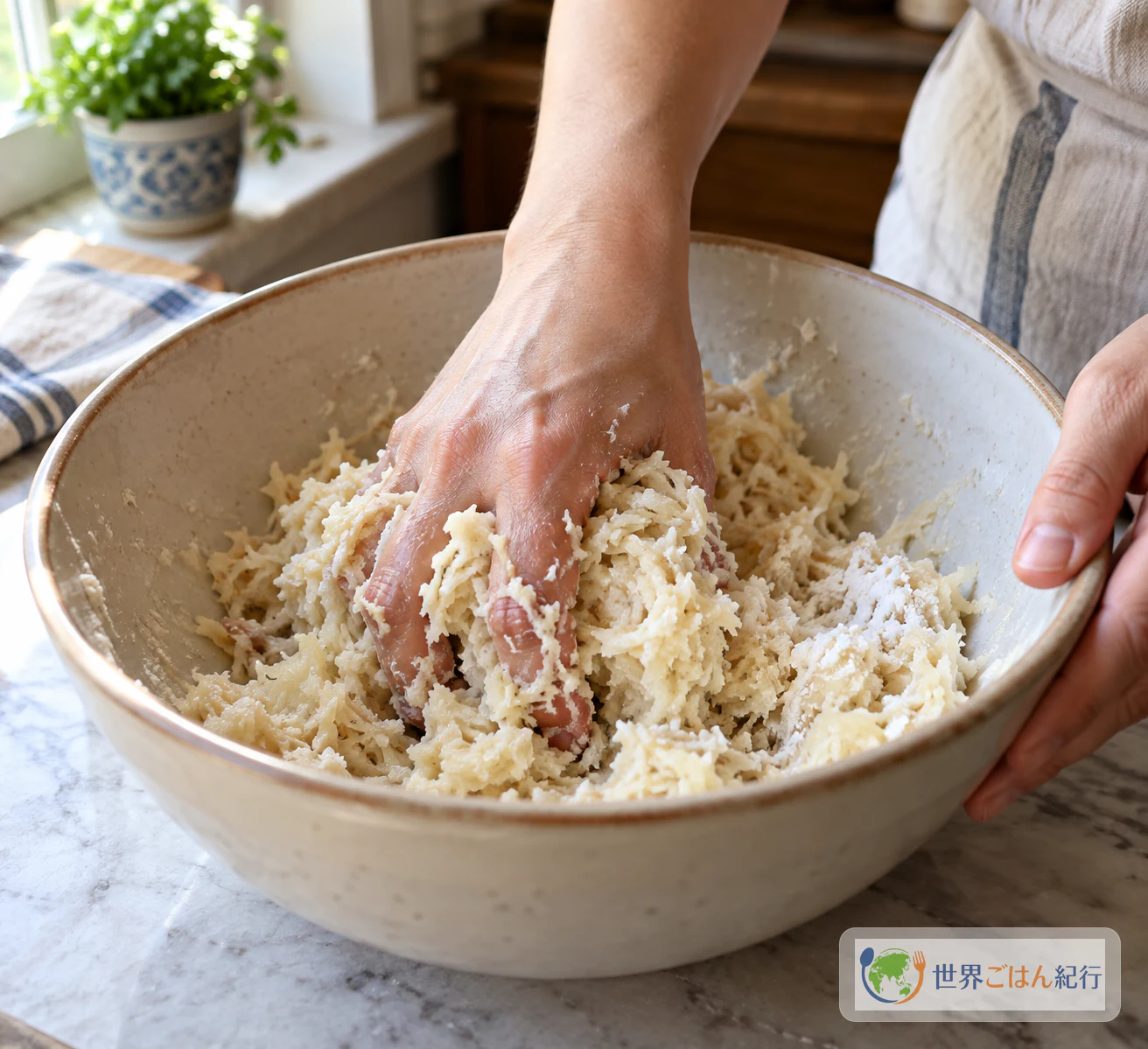
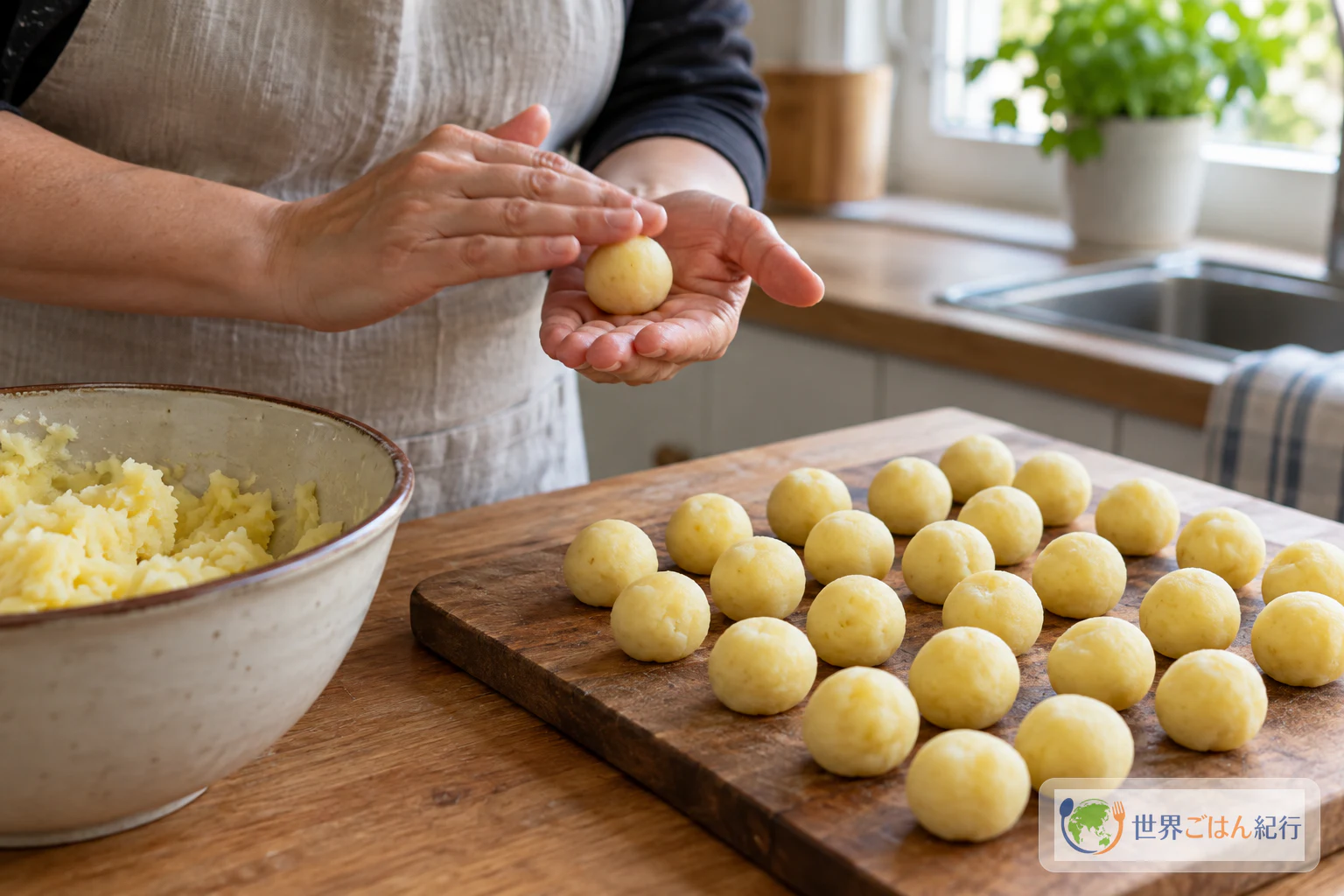
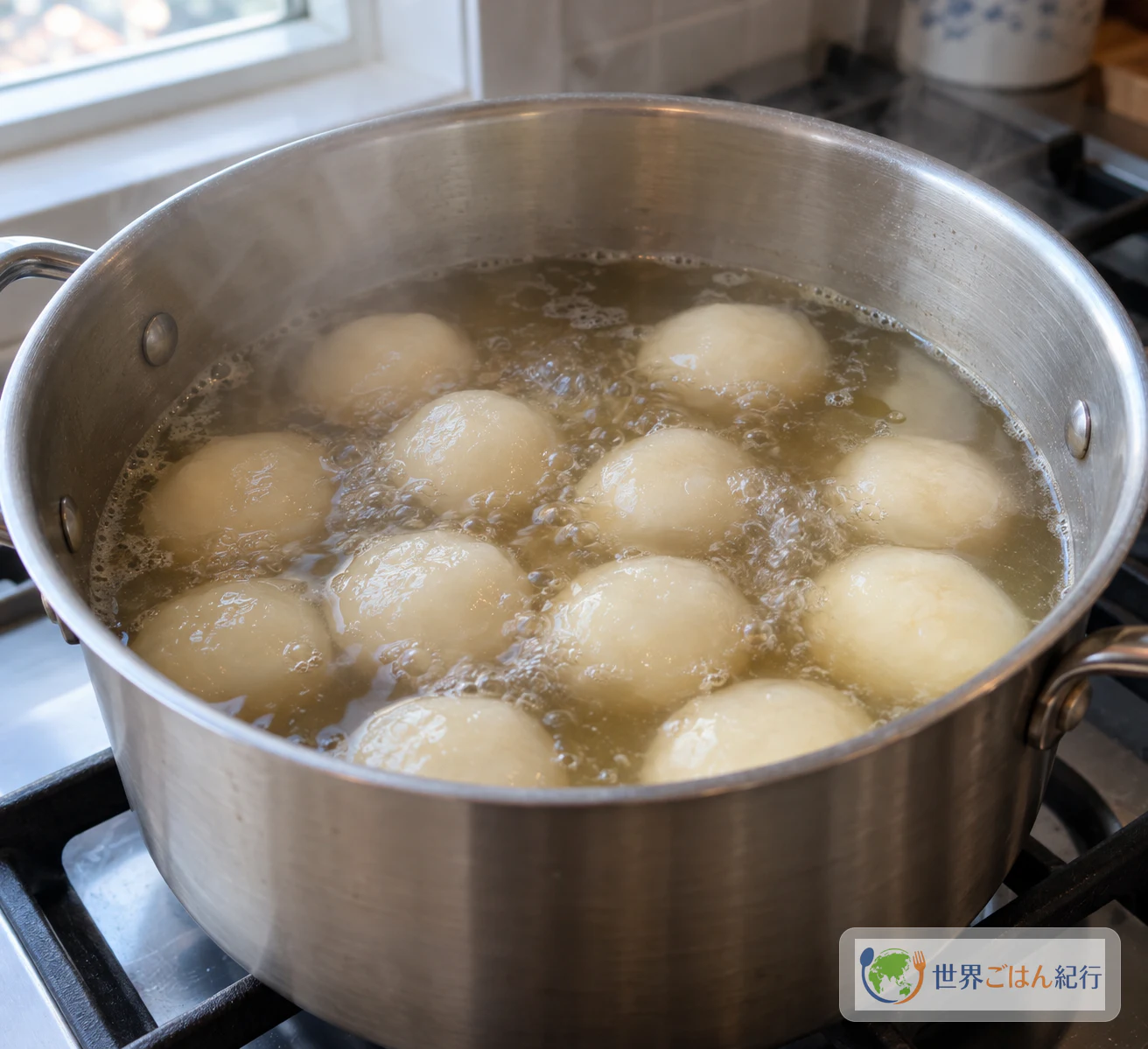
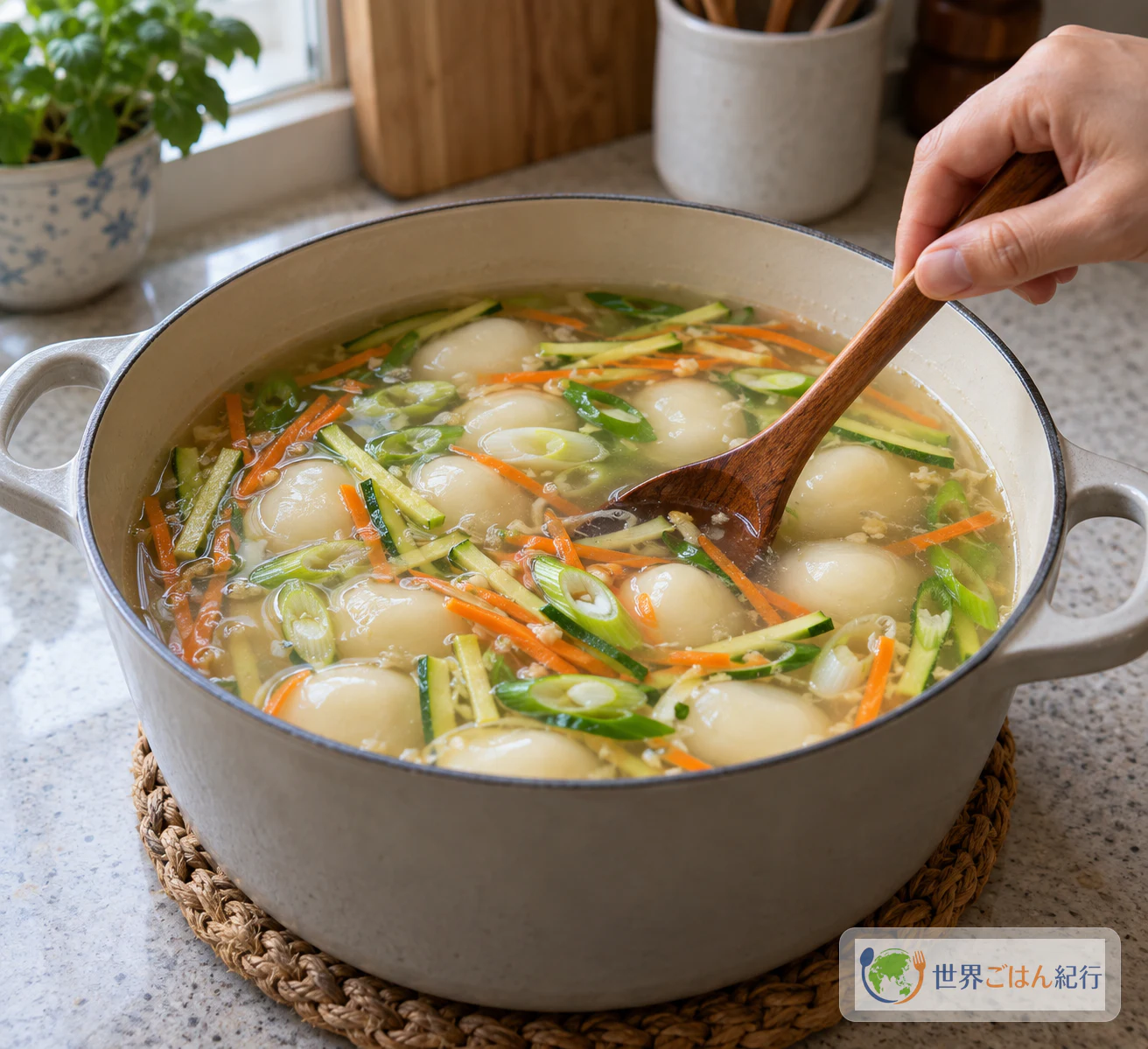
Raw potatoes are grated, wrapped in a cloth and twisted hard over a bowl. The liquid that runs out is not thrown away. After a short rest, a white layer of starch sinks to the bottom while brownish water sits above it. That water is poured off, the starch stays, and it goes back into the squeezed potato to make a dough that is rolled into small balls and simmered in stock. This is gamja-ongsimi, a potato dumpling soup from South Korea.
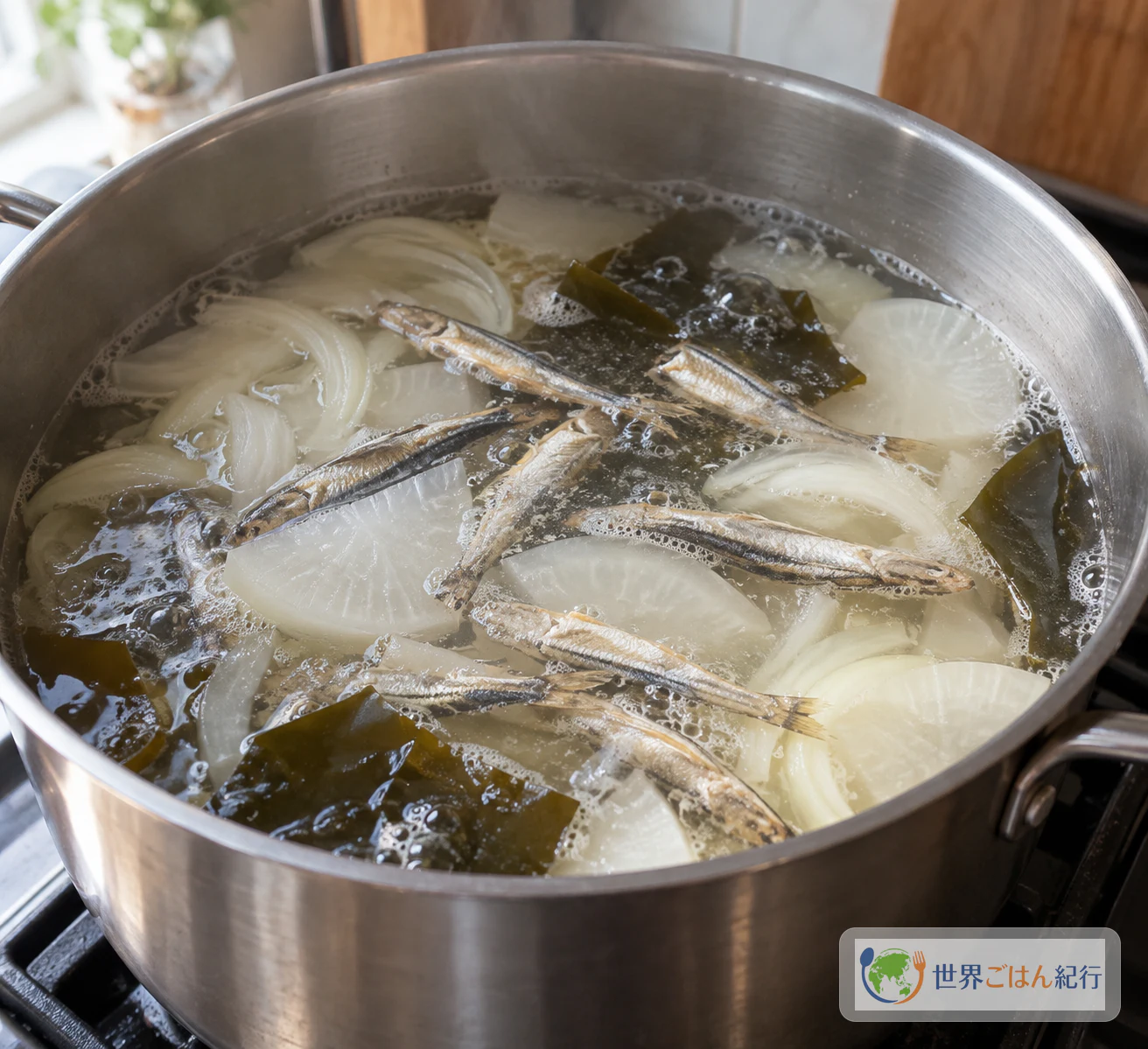
The recipe on this page follows one specific version: Maangchi's written recipe "Potato dumpling soup / Gamja-ongsimi-guk," published on Maangchi.com on July 16, 2019 and last updated on August 11, 2021. It serves 2 to 3 and uses a stock of dried anchovies, dried kelp, radish and onion. It is one cook's published version, not the single standard recipe of Gangwon Province or of Korean households in general. The amounts and units below stay as that recipe gives them (cups, ounces, pounds, teaspoons), without conversions.
We have not cooked this recipe in our own kitchen. The times, amounts and descriptions of how things should look come from the published recipe, not from our own tests.
Gamja-ongsimi in the Gangwon Records: Encyclopedia, Local Record and Tourism Page
The sources that describe this dish are of different kinds, and they don't all describe the same soup. It helps to keep them apart.
The encyclopedia entry. In the Encyclopedia of Korean Culture published by the Academy of Korean Studies, the entry for 감자옹심이 is written by Jeong Hye-gyeong (first written in 1995, last revised May 30, 2024). It describes gamja-ongsimi as a regional food of Gangwon, discusses Jeongseon and Yeongwol, and explains a background in which potatoes served as a relief food when rice was scarce. It also describes the method of grating potatoes and recovering the settled starch, and mentions regional forms that may be flatter or larger. The entry itself notes that the author's academic view may differ from the Academy's official position, and it does not fix a single place or year of origin.
A single local record. The Korean Traditional Knowledge Portal, with content provided by the Korea Rural Development Administration, holds a record titled "Gamjaongsimi (Potato dumplings in bone soup)." Its data provider is Geum-ok Lee, recorded from Seonheung-ri, Geundeok-myeon, Samcheok-gun in Gangwon-do; the collection is dated 1997, the database entry 2010, and it cites the 1993 regional publication Gangwon Local Traditional Taste. This version also grates and squeezes potatoes, settles the liquid and returns the sediment, but it boils the balls in beef-bone broth with different accompaniments. It is one household's record, not a survey of the region.
A tourism description. The Korea Tourism Organization's English page "Potato Ball Soup," published October 19, 2023, presents gamja-ongsimi as a local delicacy of Jeongseon and Yeongwol in Gangwon State. It describes a soybean-paste broth with potato balls, zucchini, red chili and sesame salt. This is an official tourism summary, not local testimony or a tested recipe.
Read together, these show a dish tied in the written record to Gangwon, especially Jeongseon and Yeongwol, made in more than one way: anchovy-kelp stock in Maangchi's version, beef-bone broth in the Samcheok record, soybean-paste broth in the tourism description. None of them settles where or when the dish began, and none should be read as the one authentic formula. The recipe below sticks to Maangchi's version alone and does not borrow amounts or ingredients from the others.
Ingredients (Serves 2 to 3)
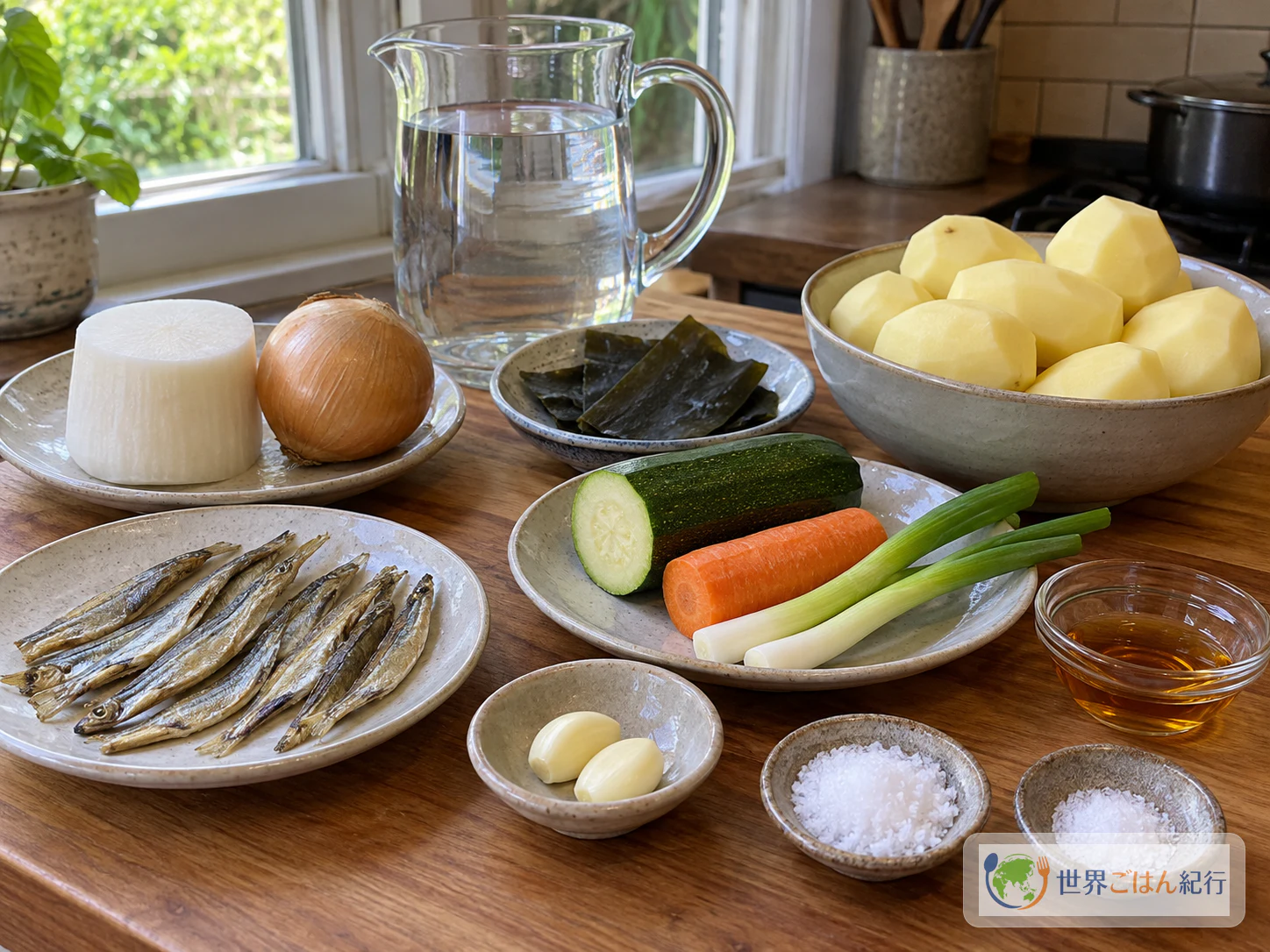
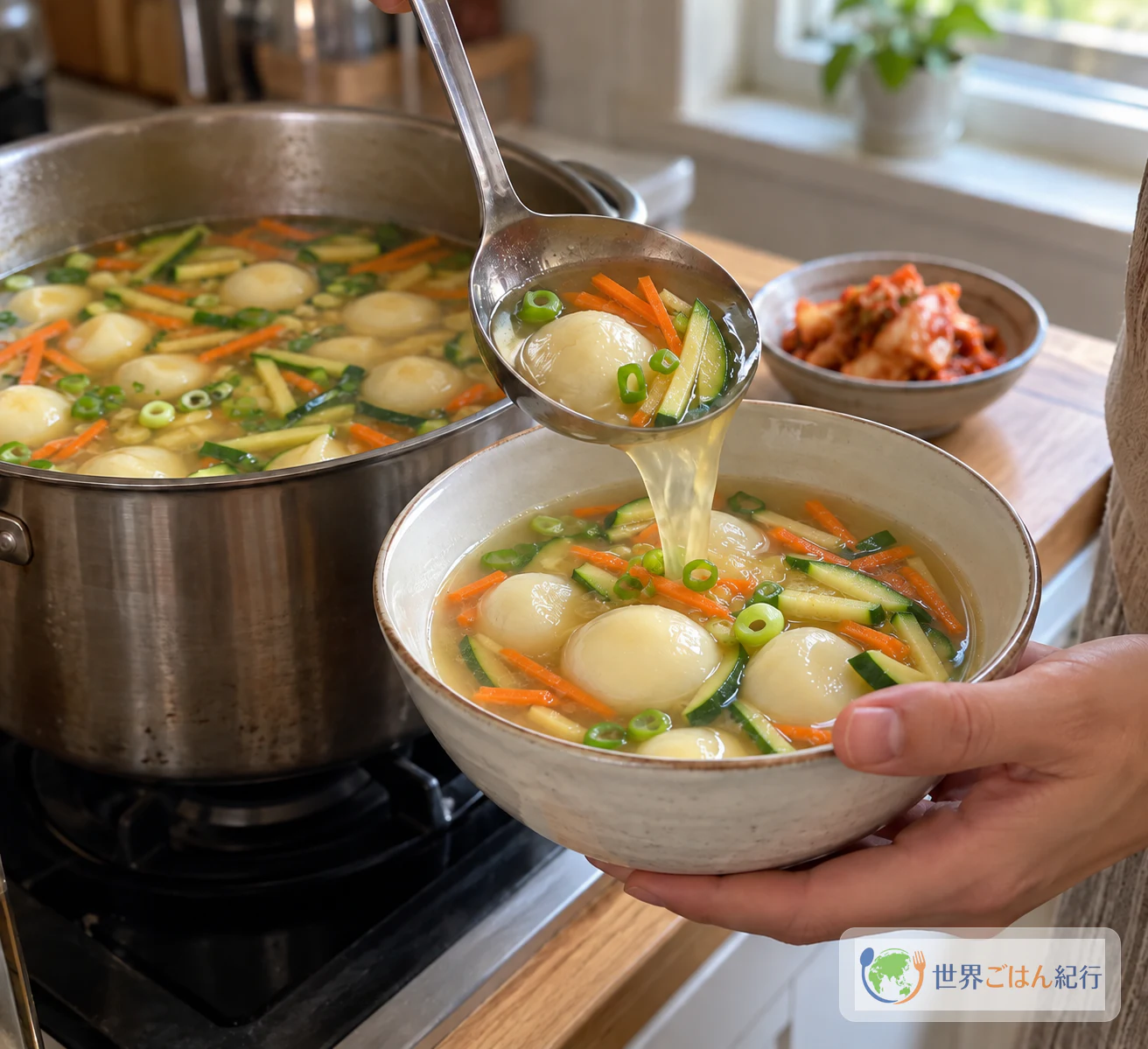
There are two separate salt amounts: one for the stock and one for the dumpling dough. Keep them apart. No starch powder or flour goes into the dumplings; the starch comes from the potatoes themselves. Kimchi can be served on the side in its own dish rather than stirred into the soup.
Equipment
- A pot with a lid
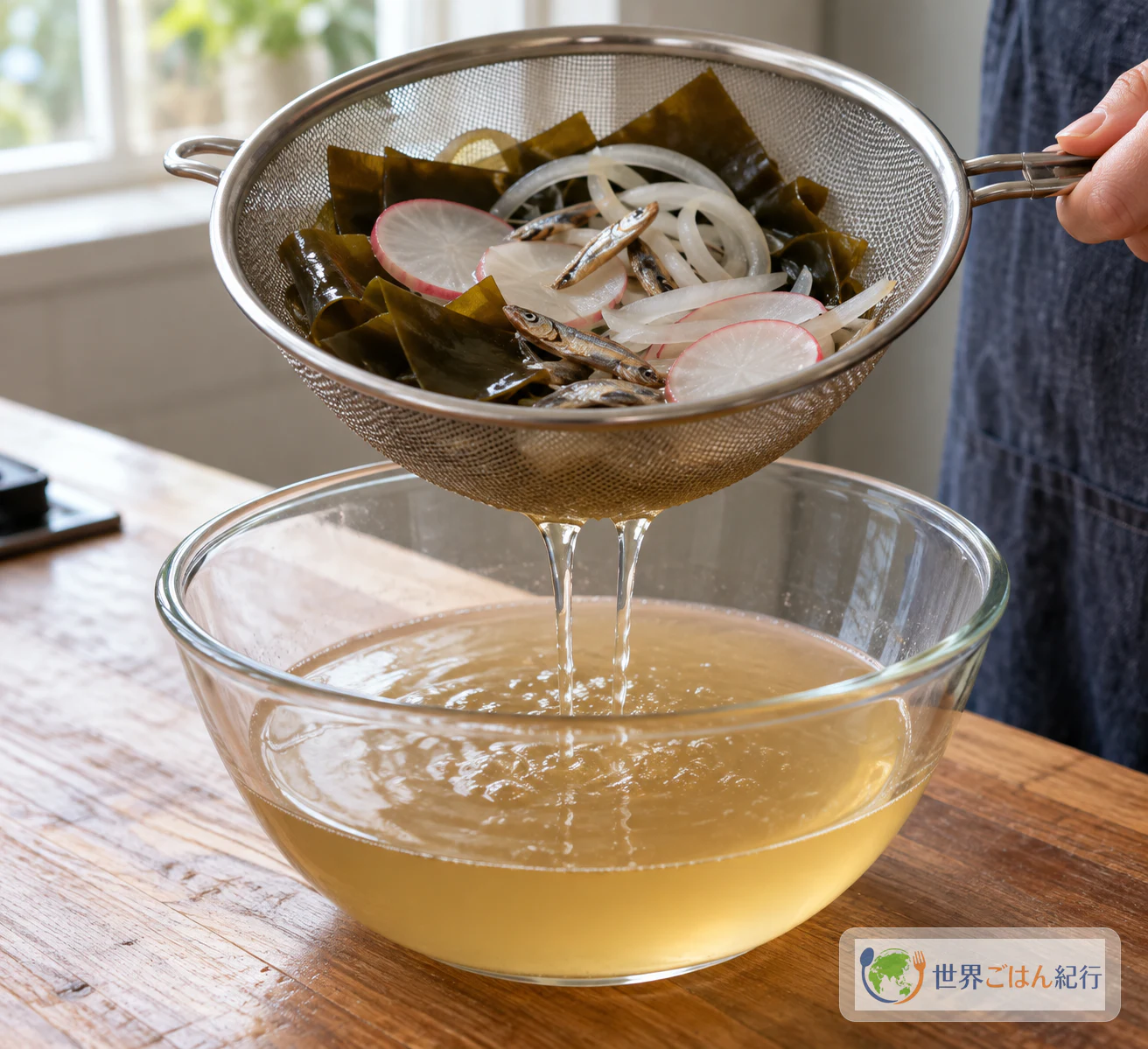
- A sieve and a bowl for straining the stock
- A hand grater
- A cotton cloth
- A large empty bowl to catch the squeezed potato liquid
- A large bowl of cold water
- A spoon, a ladle and serving bowls
Choosing the Stock Ingredients and What Not to Swap
- Dried anchovies: use large ones and remove the heads and guts before they go into the pot. Whether Japanese niboshi or other dried small fish give the same stock has not been confirmed.
- Radish: Korean radish or daikon. Not every radish variety has been compared.
- Dried kelp: whether Japanese kombu behaves the same in this stock has not been confirmed.
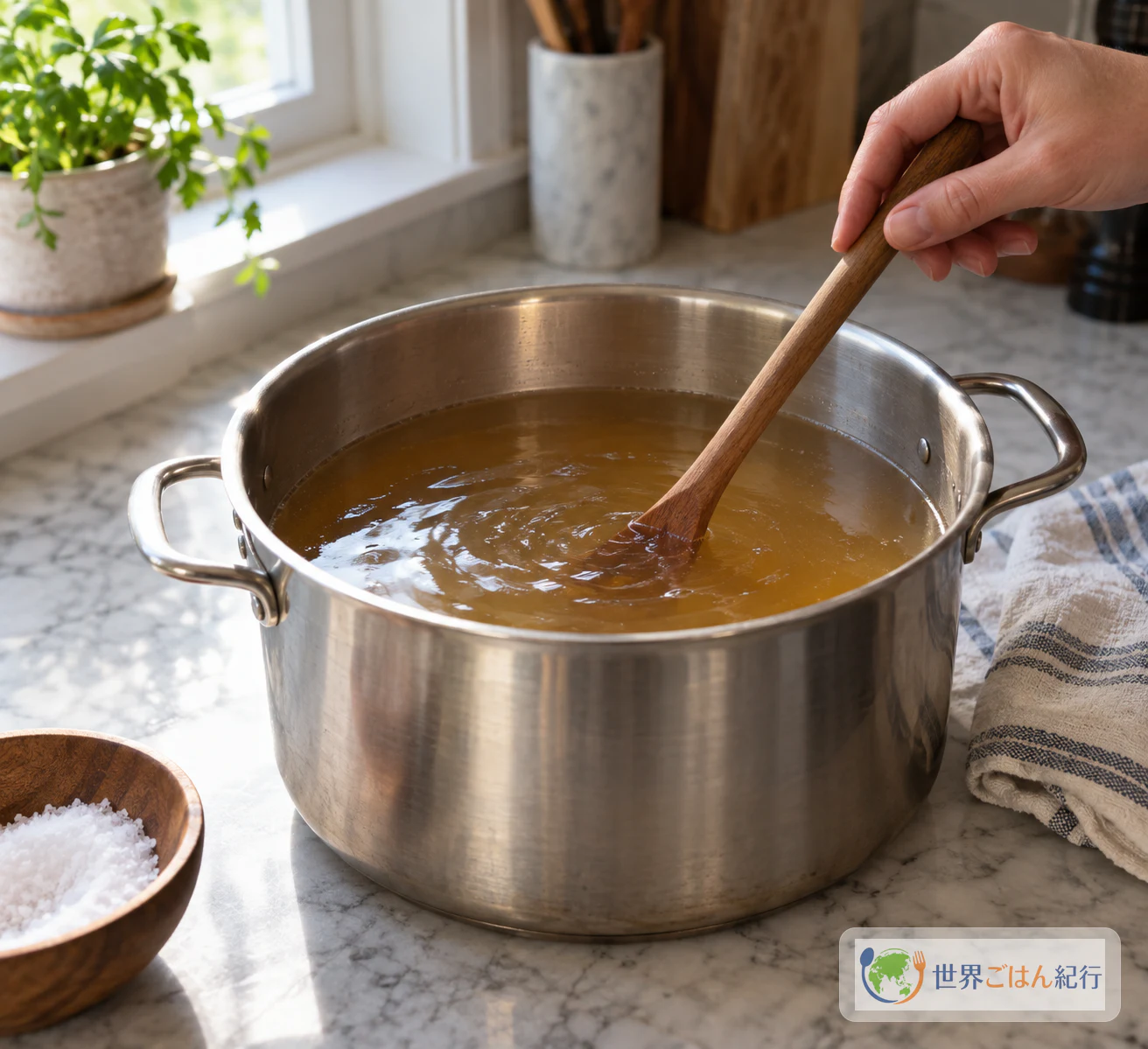
- Salt: kosher salt, in the teaspoon amounts listed. No weight equivalent for other salts is offered here.
- Starch: don't replace the settled potato starch with store-bought potato starch or flour, and don't throw the sediment away. It is what holds the dumplings together.
Method: Stock, Squeeze, Settle, Shape, Simmer
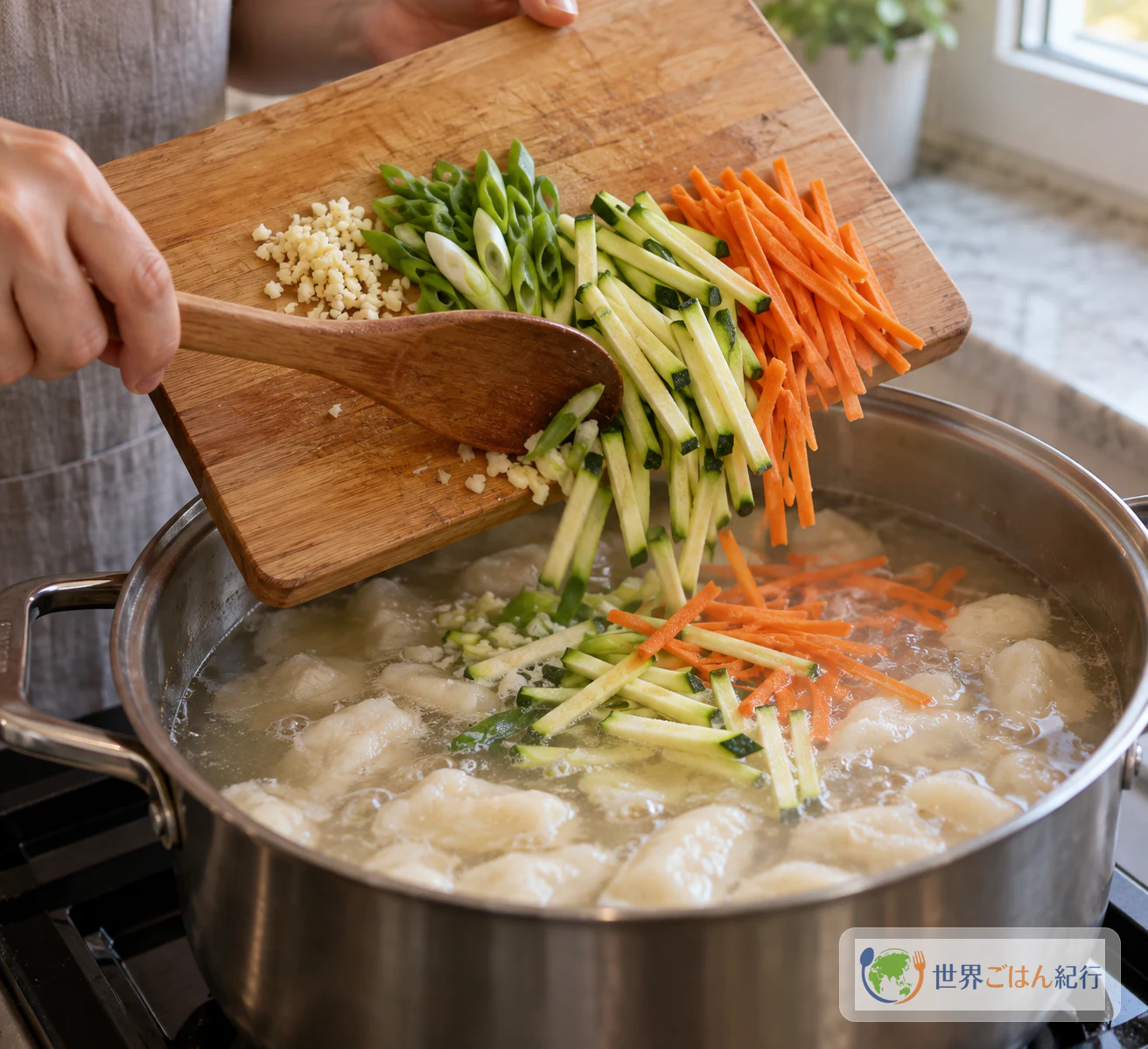
Make the stock first and set it aside salted. The dumpling dough comes next, and the soup comes together quickly once the stock is boiling again.
When Something Looks Off
| What you see | What to do |
|---|---|
| The strained stock is under 4 1/2 cups | Add water to bring it up to 4 1/2 cups |
| The starch hasn't settled into a layer yet | Let the bowl keep resting, within the 10 to 15 minutes, until the starch has sunk to the bottom |
| White starch starts to slide out as you pour | Stop pouring and set the bowl upright; the white starch is needed for the dough |
| The dumplings are still sitting on the bottom | Keep cooking; they are done with this stage when they float, after 3 to 4 minutes |
| Zucchini or carrot cut into rounds | Cut them into thin matchsticks instead, so they cook in the same covered 3 to 4 minutes |
If the settled starch is poured away with the water, or replaced with something else, you are no longer making this version of the dumplings. Pour gently and keep the white layer in the bowl.
Frequently Asked Questions
Should I add store-bought potato starch or flour?
No. Maangchi's ingredient list has no added starch or flour. The dough is held together by the starch that settles out of the squeezed potato liquid.
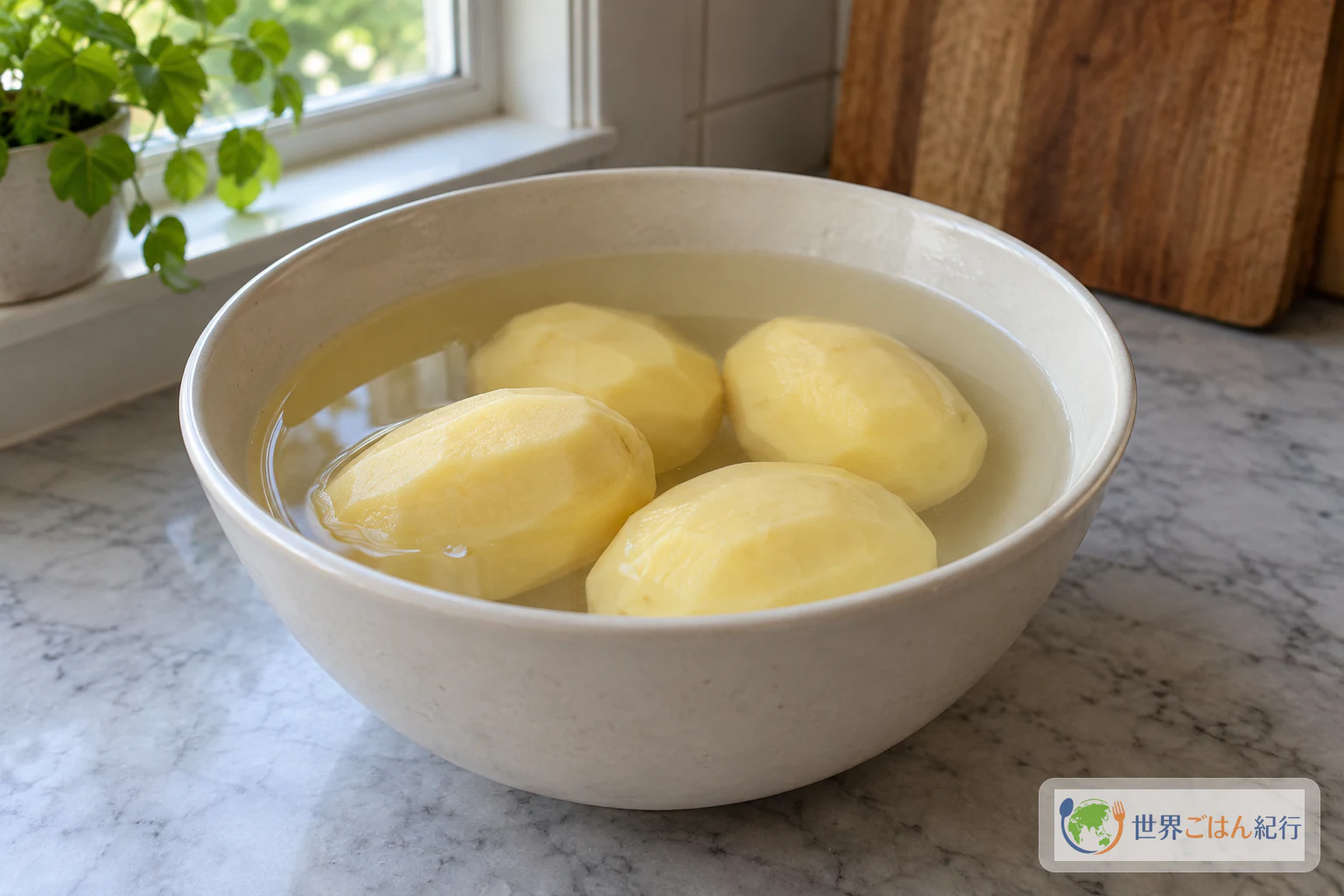
How long should the potatoes soak in cold water?
The recipe lists the potatoes as peeled and soaked in cold water, but gives no soaking time and doesn't say exactly when the soak should begin. No time is added here.
Which bowl's liquid is supposed to settle?
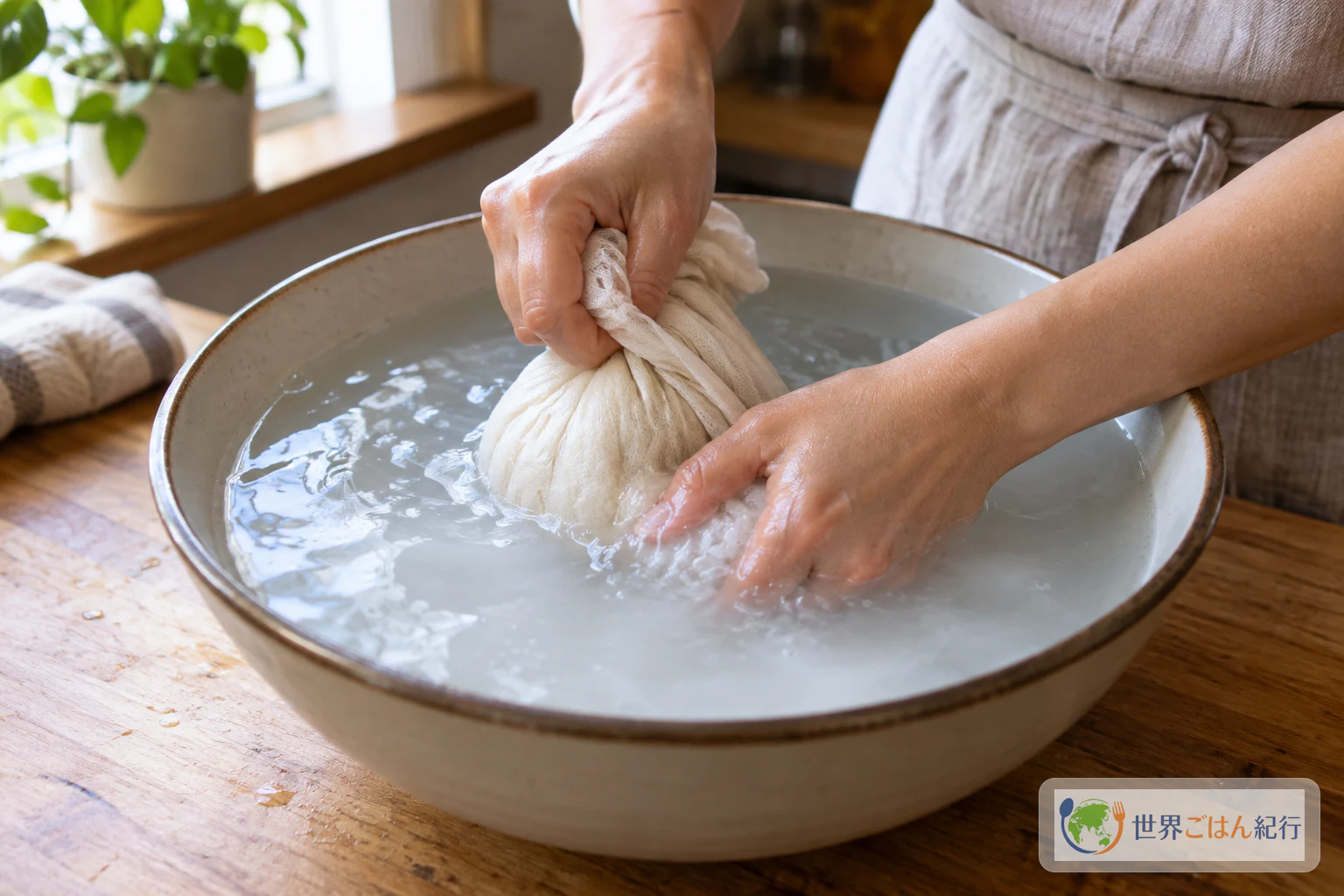
This is the one unclear point in the published method. After squeezing the pouch over a first bowl, the pouch is massaged in a separate bowl of cold water; the method then tells you to let the starch and water from "the first bowl" settle. It doesn't clearly say whether, or how, the liquid from the cold-water bowl is combined with it. Rather than invent a transfer step, the steps above keep the published wording.
What if I strain off more than 4 1/2 cups of stock?
The recipe only says to add water if you have less than 4 1/2 cups. It says nothing about what to do with extra, so no instruction is given for that case.
Will Japanese niboshi and kombu give the same stock?
The recipe calls for large dried anchovies and dried kelp, with Korean radish or daikon. Whether Japanese dried sardines, kombu, radish varieties or salt give the same result has not been confirmed.
Can I use a different broth?
Maangchi mentions other stocks as a possible change, but gives no amounts for them, so this page stays with the anchovy-kelp stock. Other written sources describe different broths entirely: beef-bone broth in the Samcheok record and soybean-paste broth in the Korea Tourism Organization's description. Those are separate versions, not adjustments to this one.
Why might the dumplings turn out firm?
The Samcheok record in the Korean Traditional Knowledge Portal notes that squeezing the potato too hard can make the dumplings hard. Maangchi's recipe doesn't include that note, and we haven't tested it.
How long does it keep?
No storage time is given for this soup. The recipe ends with serving it right away, so plan to eat it fresh.
Sources
- Maangchi, "Potato dumpling soup / Gamja-ongsimi-guk 감자옹심이국," Maangchi.com, published 2019-07-16, updated 2021-08-11. The recipe used on this page: serves 2 to 3, the ingredients and amounts, the anchovy-kelp stock, squeezing the grated potato in cloth, settling and recovering the starch, shaping 24 to 28 dumplings, the soup's cooking sequence, and the suggestion to serve with kimchi. The written recipe was used, not the video. https://www.maangchi.com/recipe/gamja-ongsimi-guk
- Jeong Hye-gyeong, "감자옹심이," Encyclopedia of Korean Culture, Academy of Korean Studies (written 1995, revised 2024-05-30). Gamja-ongsimi as a Gangwon regional food, Jeongseon and Yeongwol, potatoes as a relief food when rice was scarce, the grate-and-settle method, and regional differences in form. https://encykorea.aks.ac.kr/Article/E0076609
- Korean Traditional Knowledge Portal (content provided by the Korea Rural Development Administration), "Gamjaongsimi (Potato dumplings in bone soup)." One local record from data provider Geum-ok Lee, Samcheok-gun, Gangwon-do, with a beef-bone broth version. https://koreantk.com/ktkp2014/life/life-view.view?artNo=0010102010069
- Korea Tourism Organization, "Potato Ball Soup (감자옹심이 / Gamjaongsimi)," 2023-10-19. A tourism description presenting the dish as a local delicacy of Jeongseon and Yeongwol, with a soybean-paste broth version. https://english.visitkorea.or.kr/svc/contents/contentsView.do?vcontsId=178900