Kakigōri: White Ice, Bright Fruit, and Sweetness Hidden in the Layers
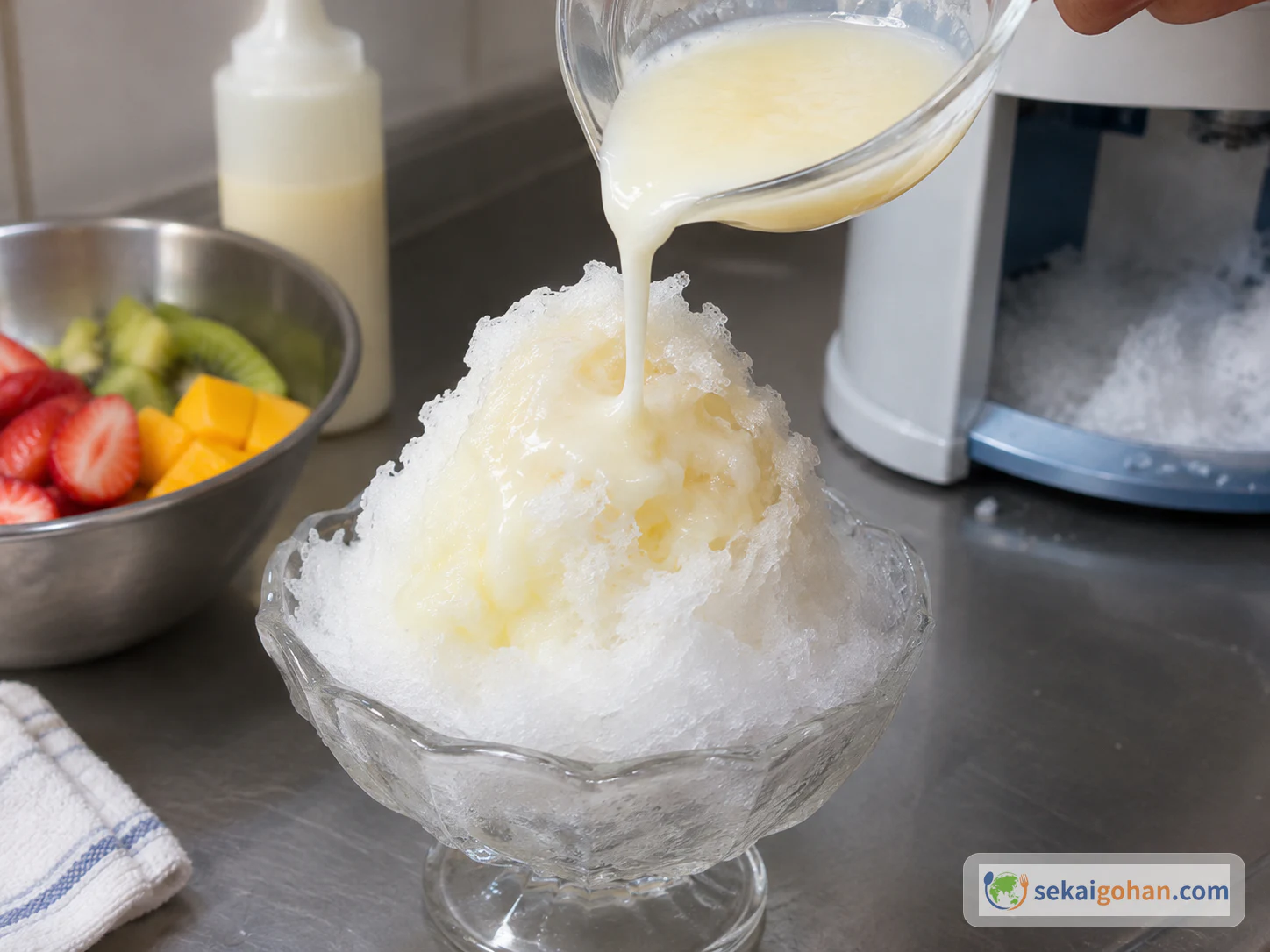
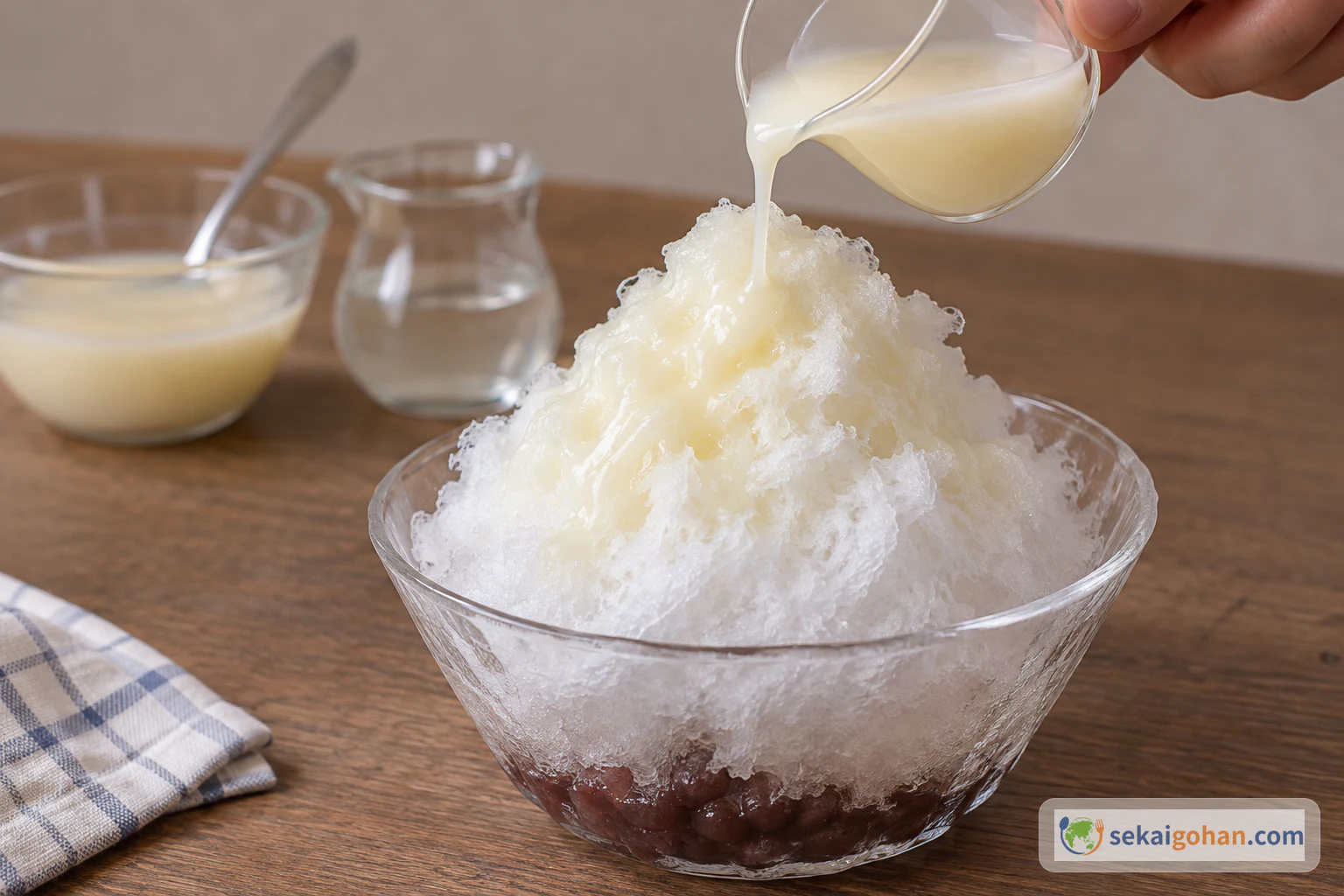
Keep the ice light and finely shaved, let the sweet mixture reach into the middle of the mound rather than sitting only on top, and let the fruit bring color, acidity and bite. Whatever you change, keep those three: ice, sweetness and a cold, soft mouthfeel.
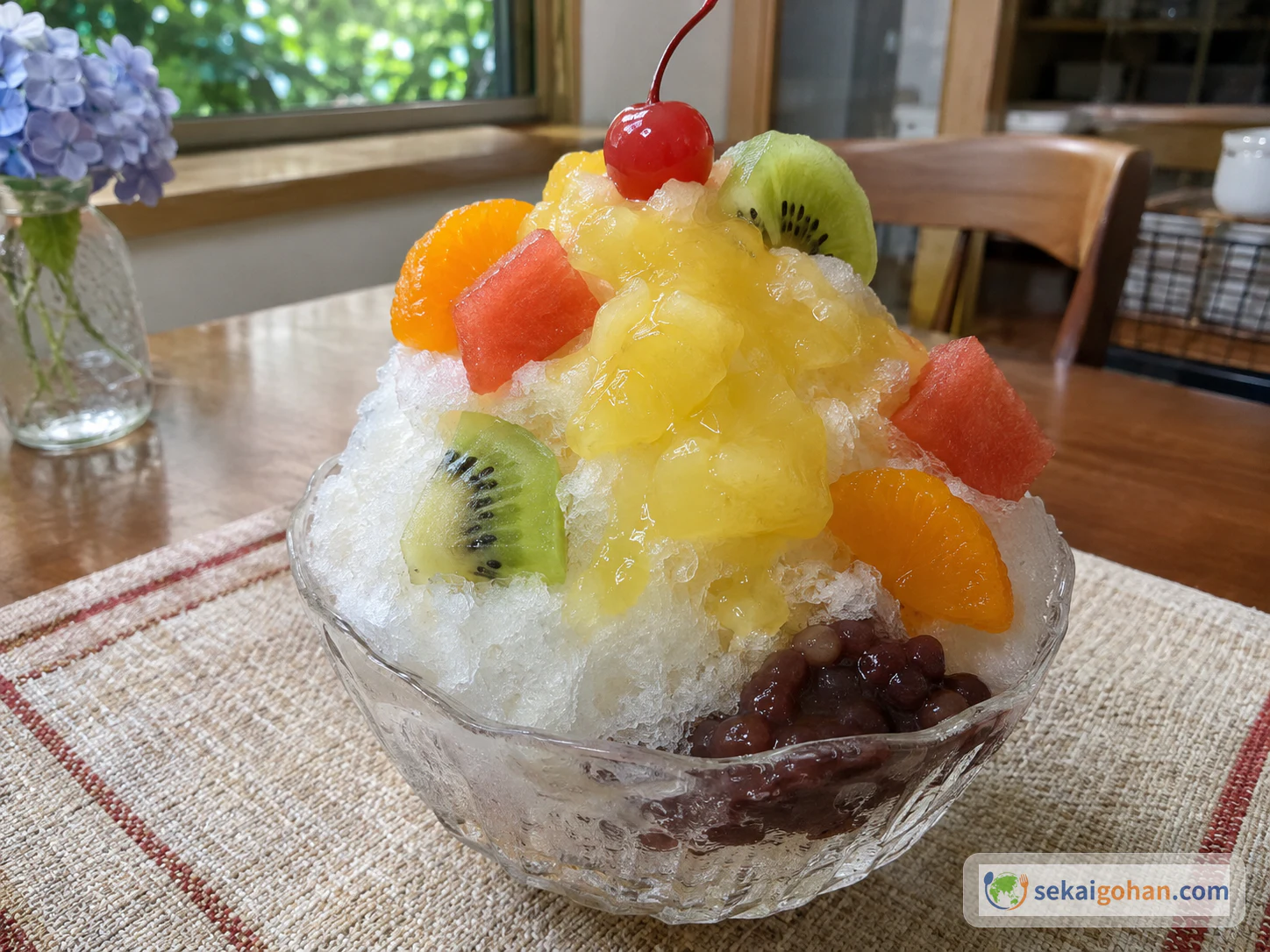
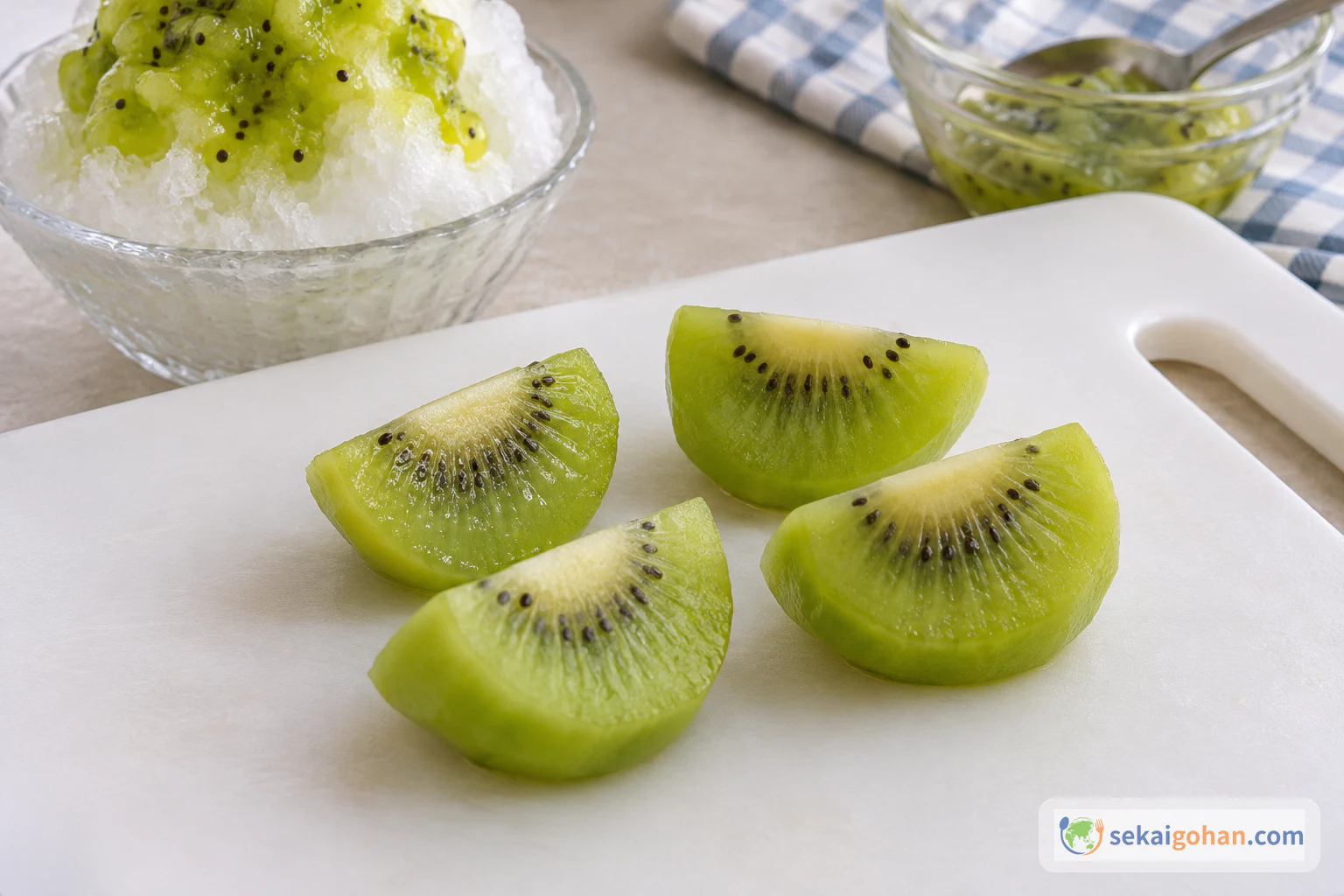
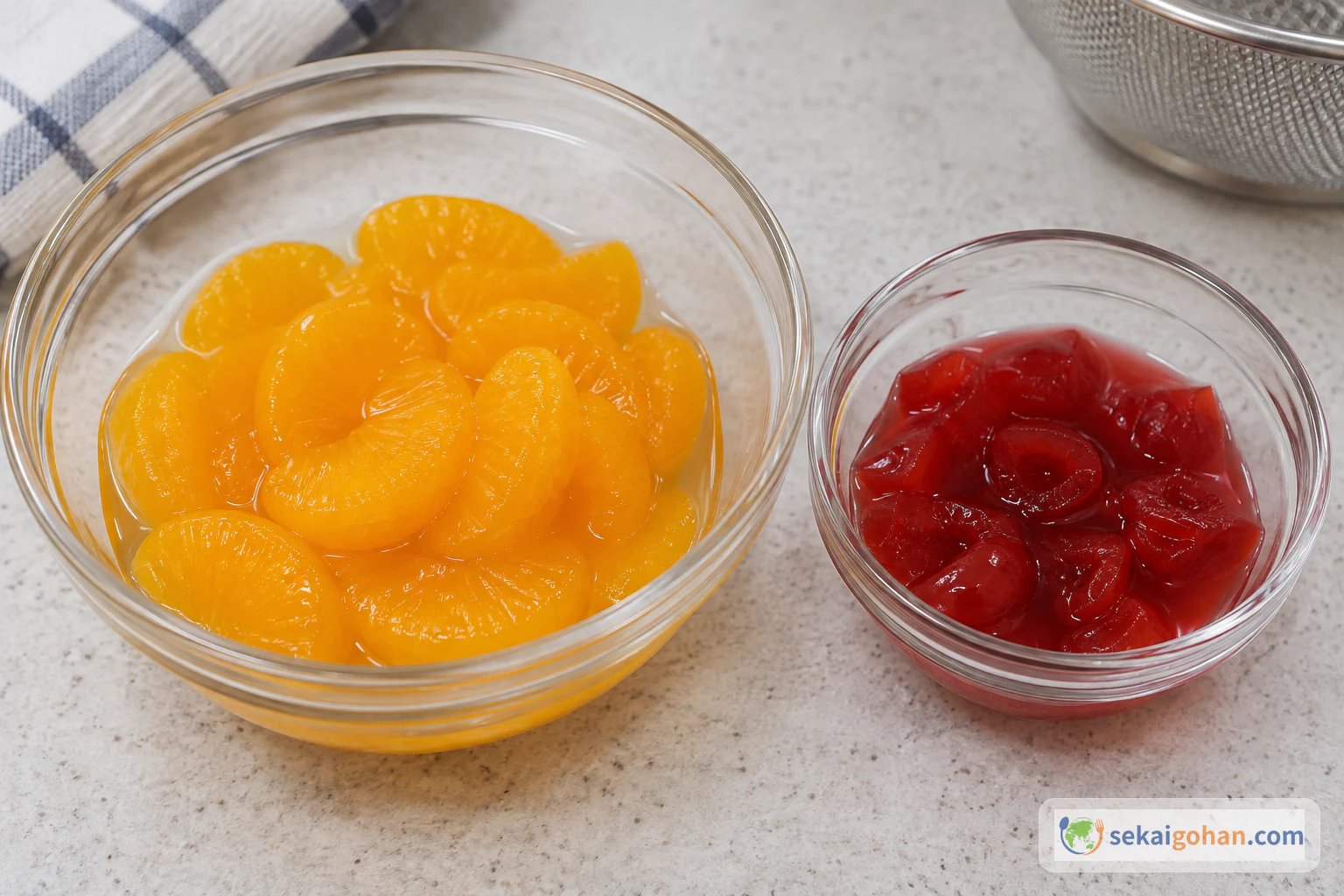
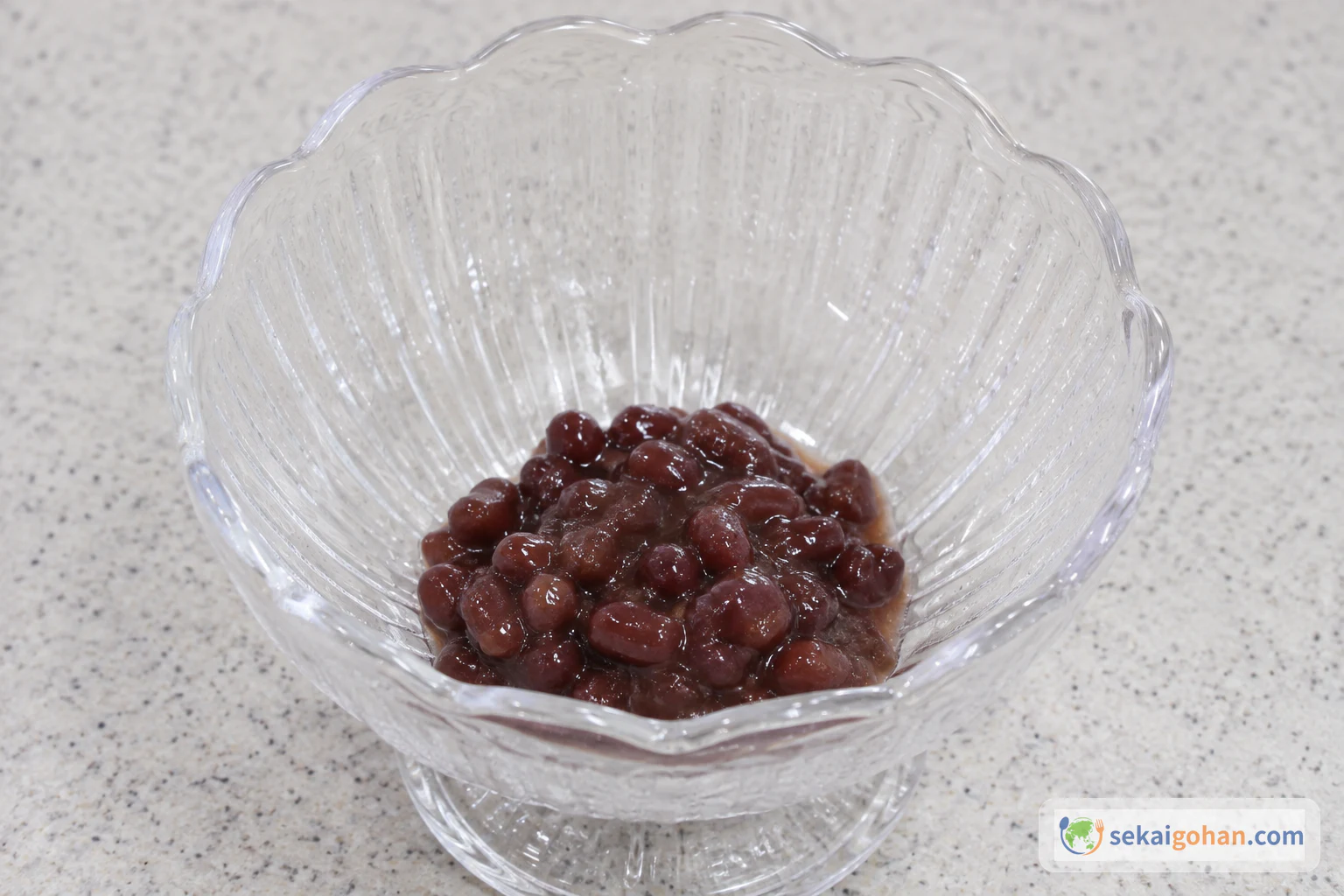
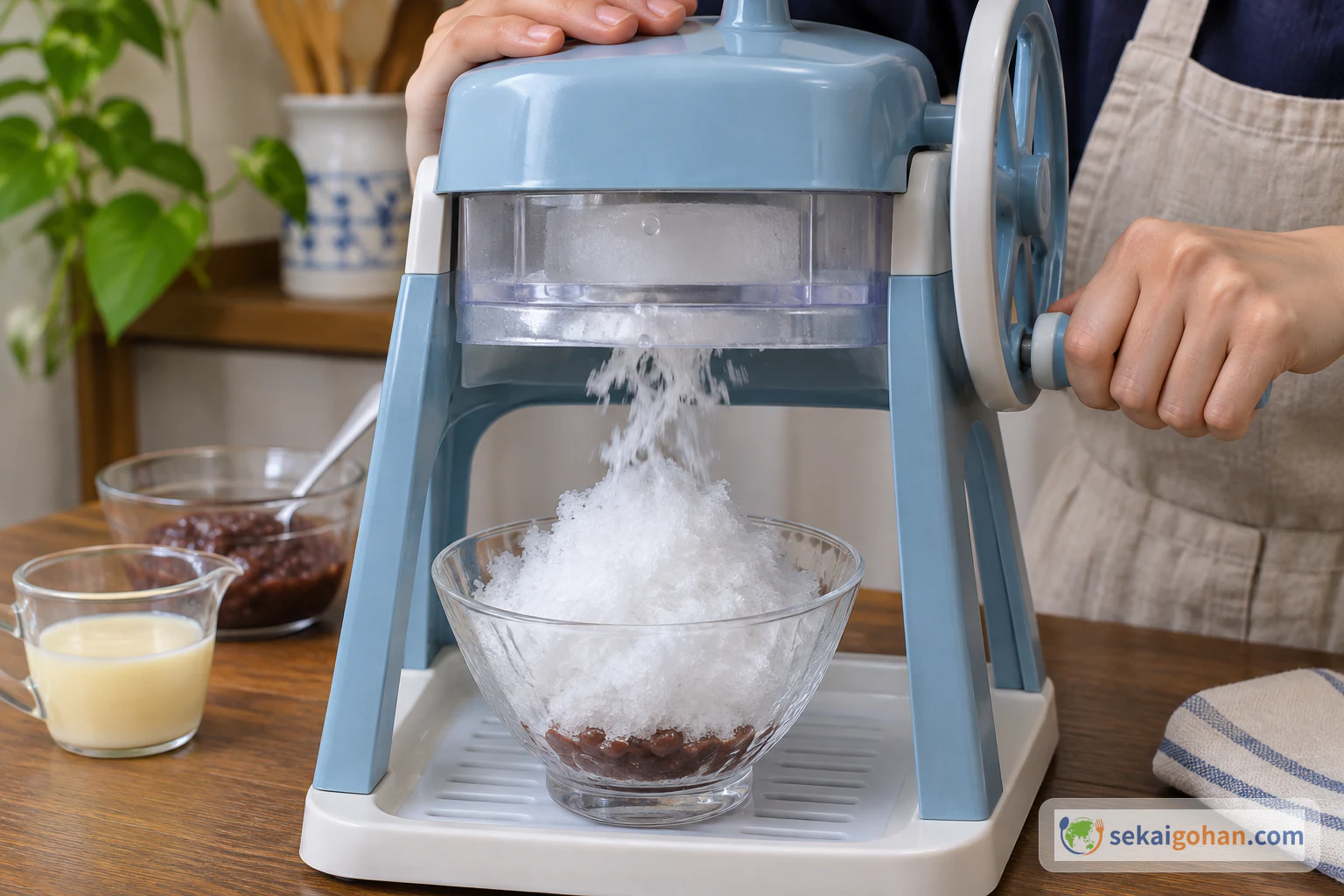
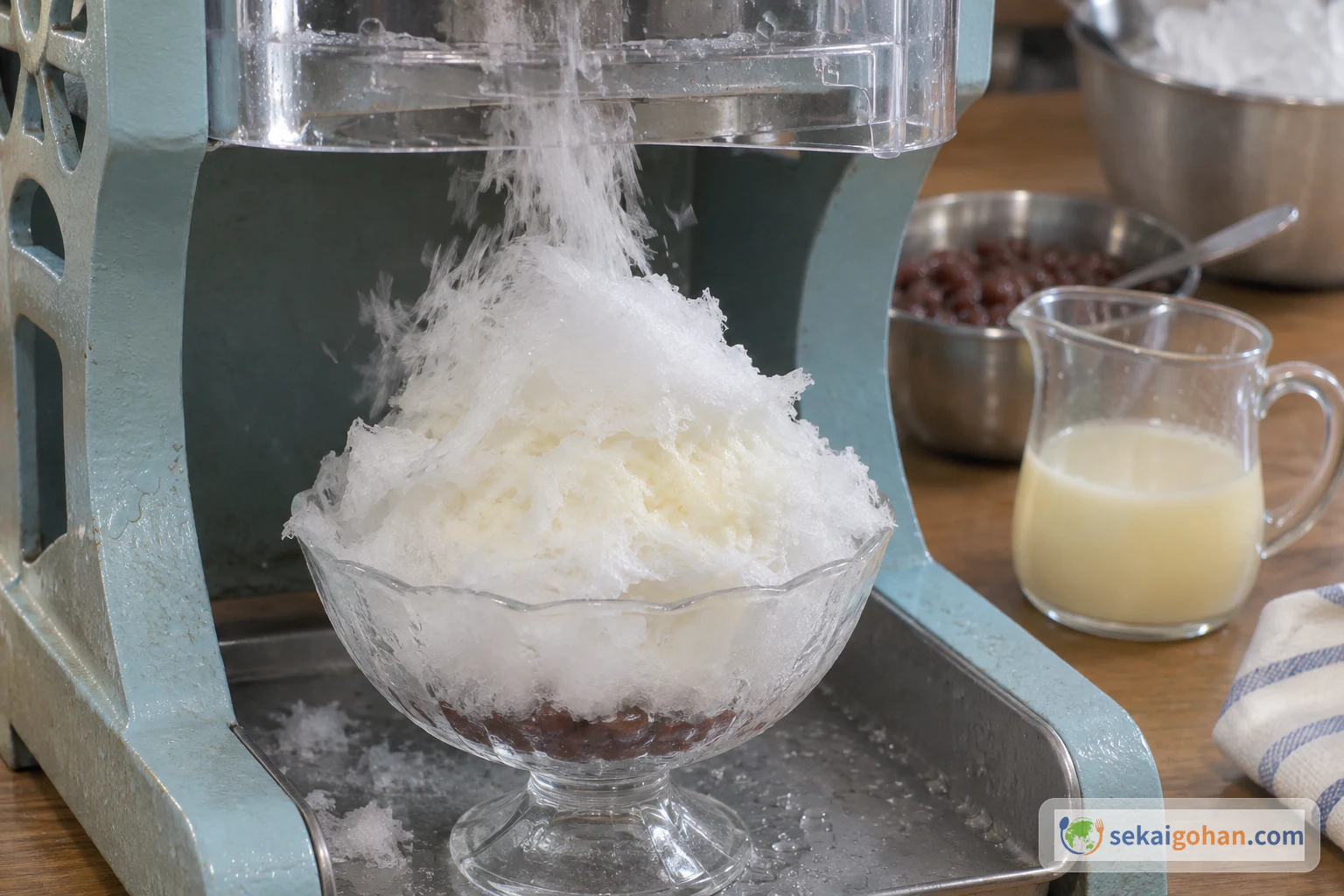
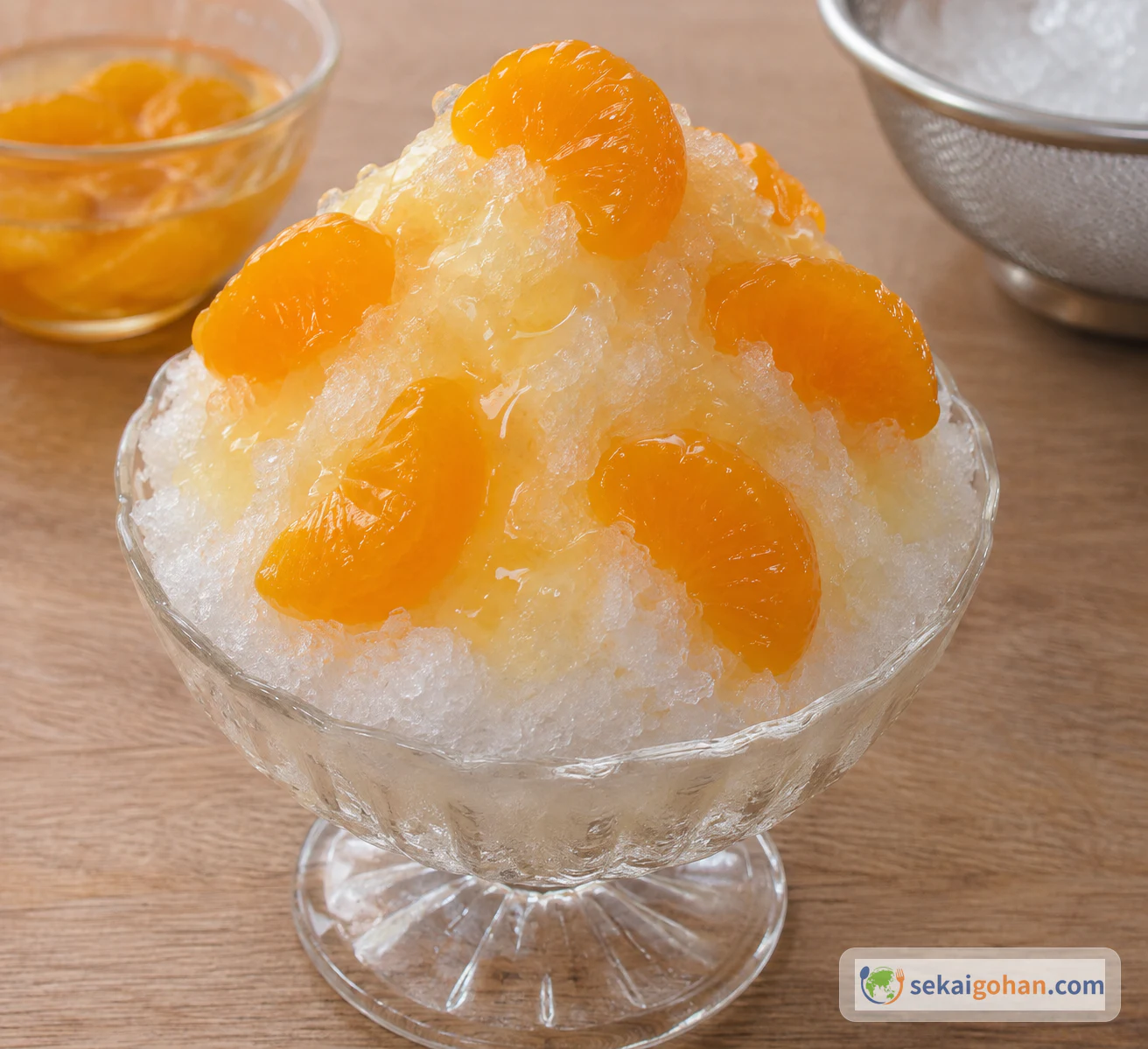
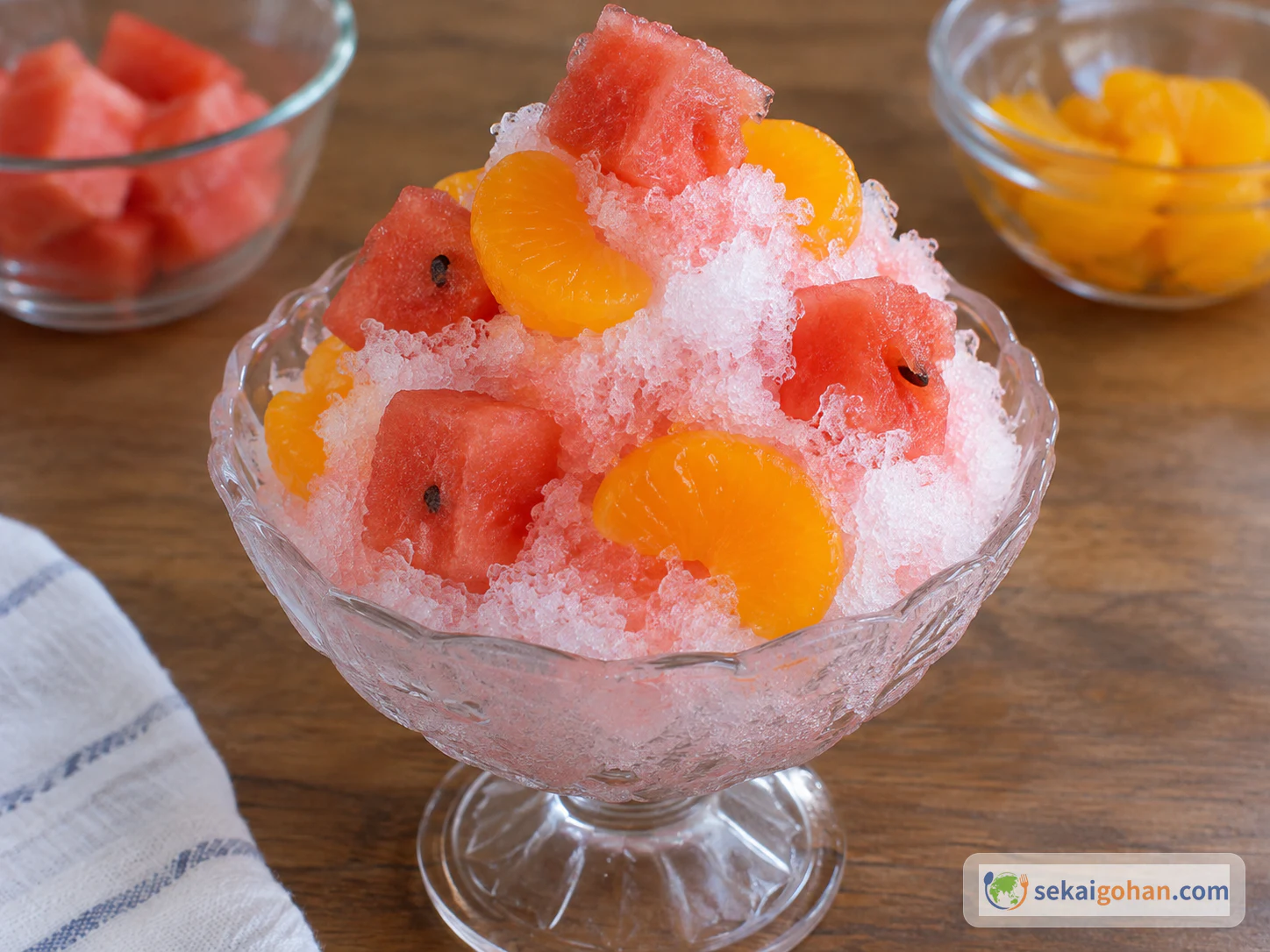
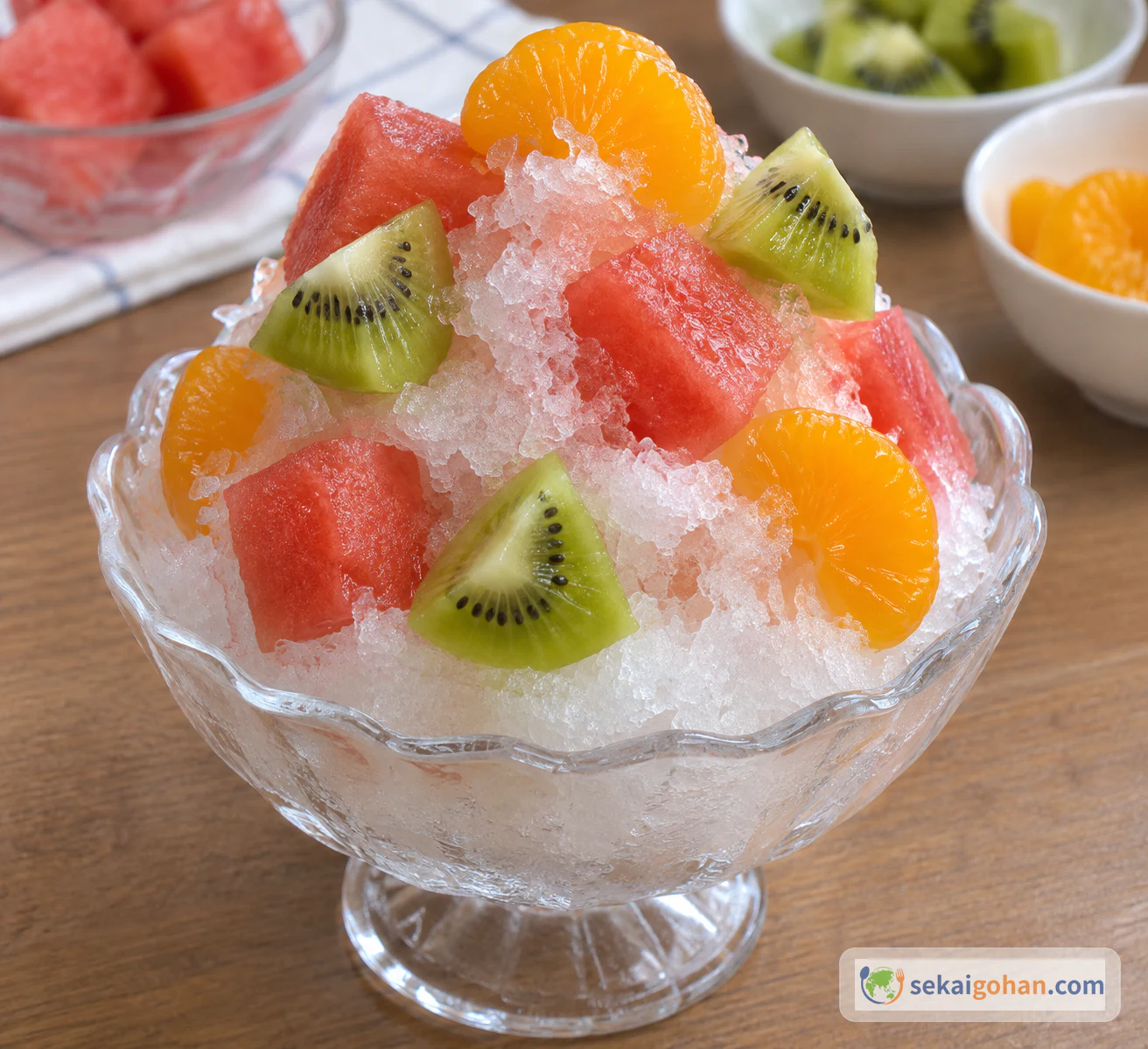
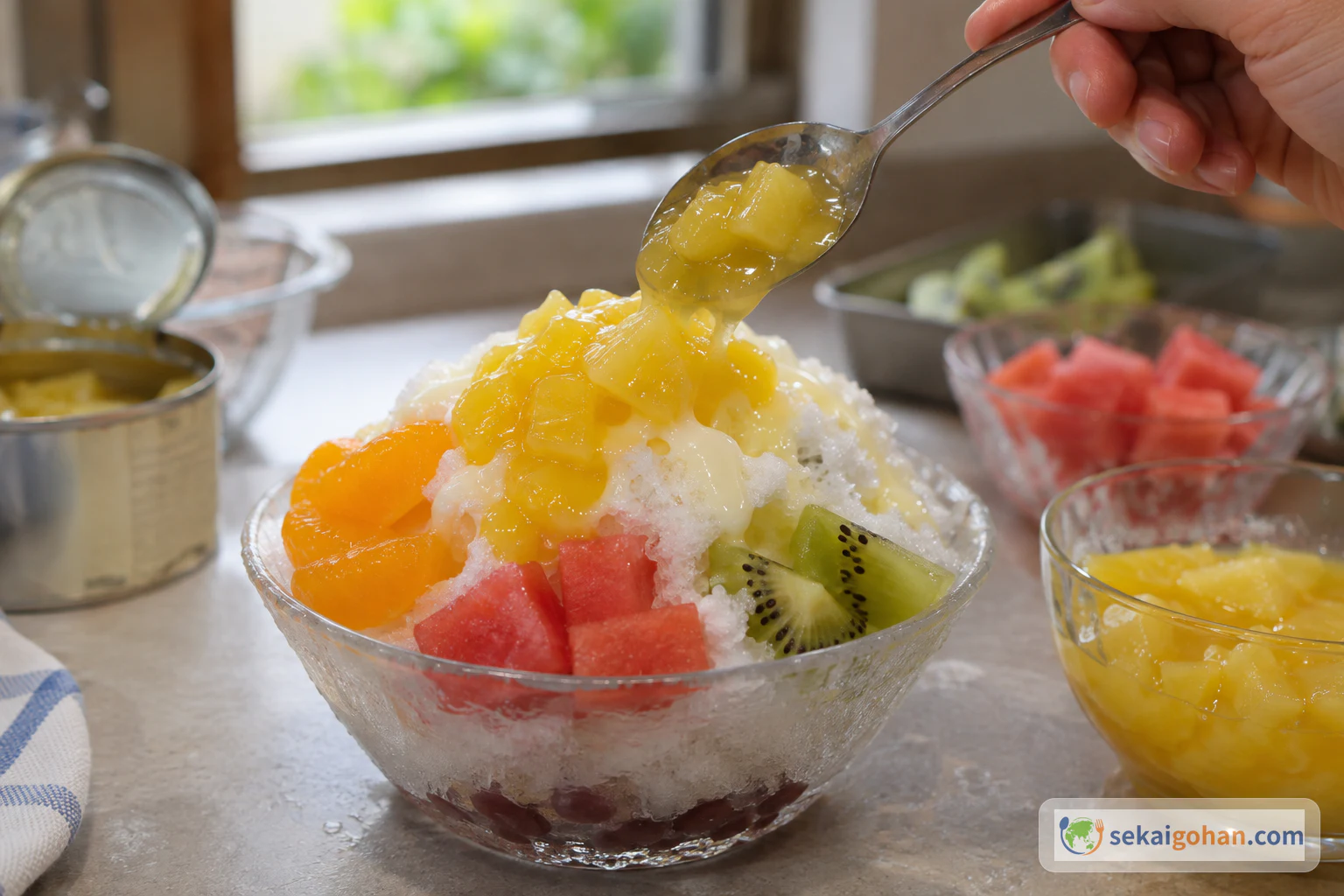
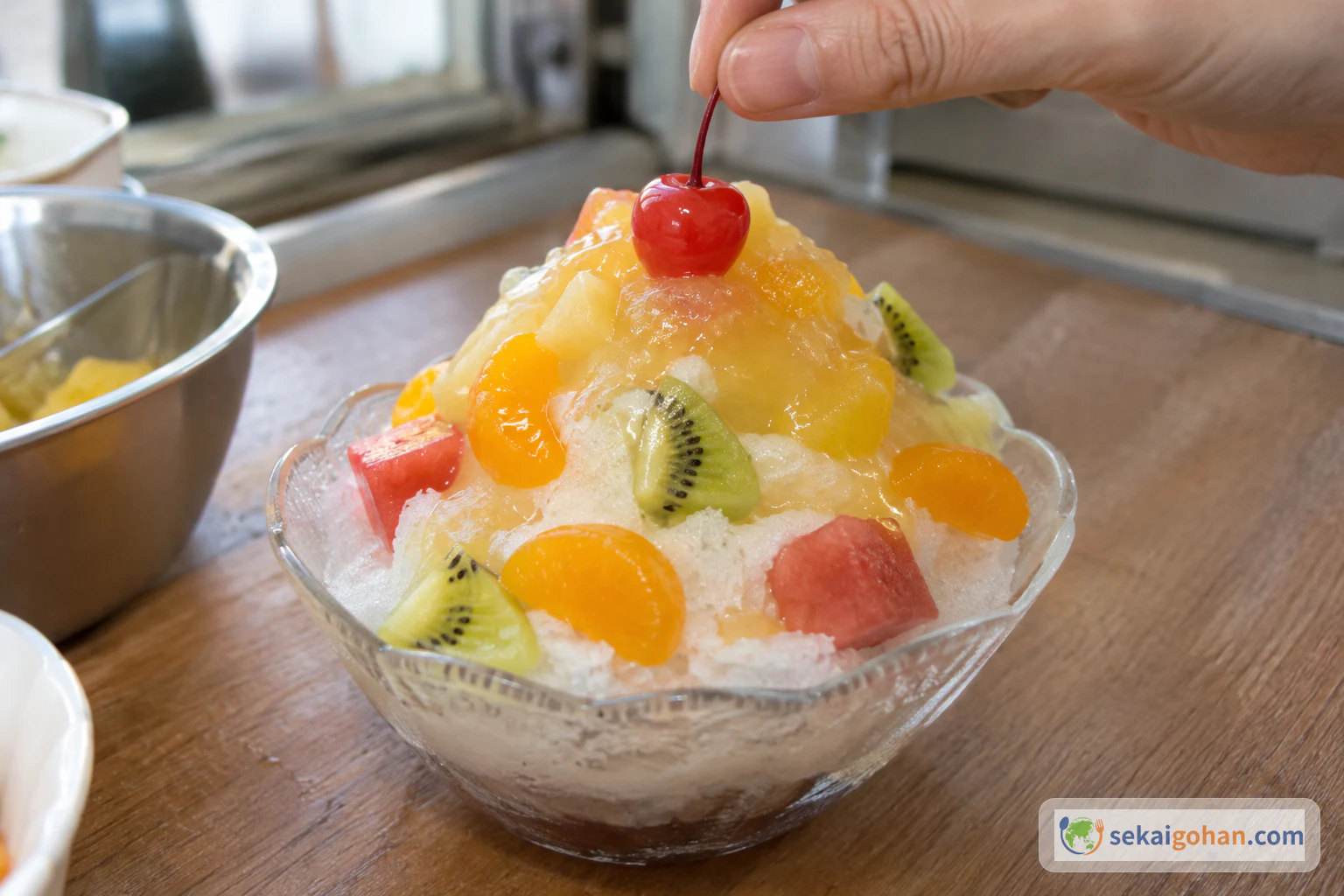
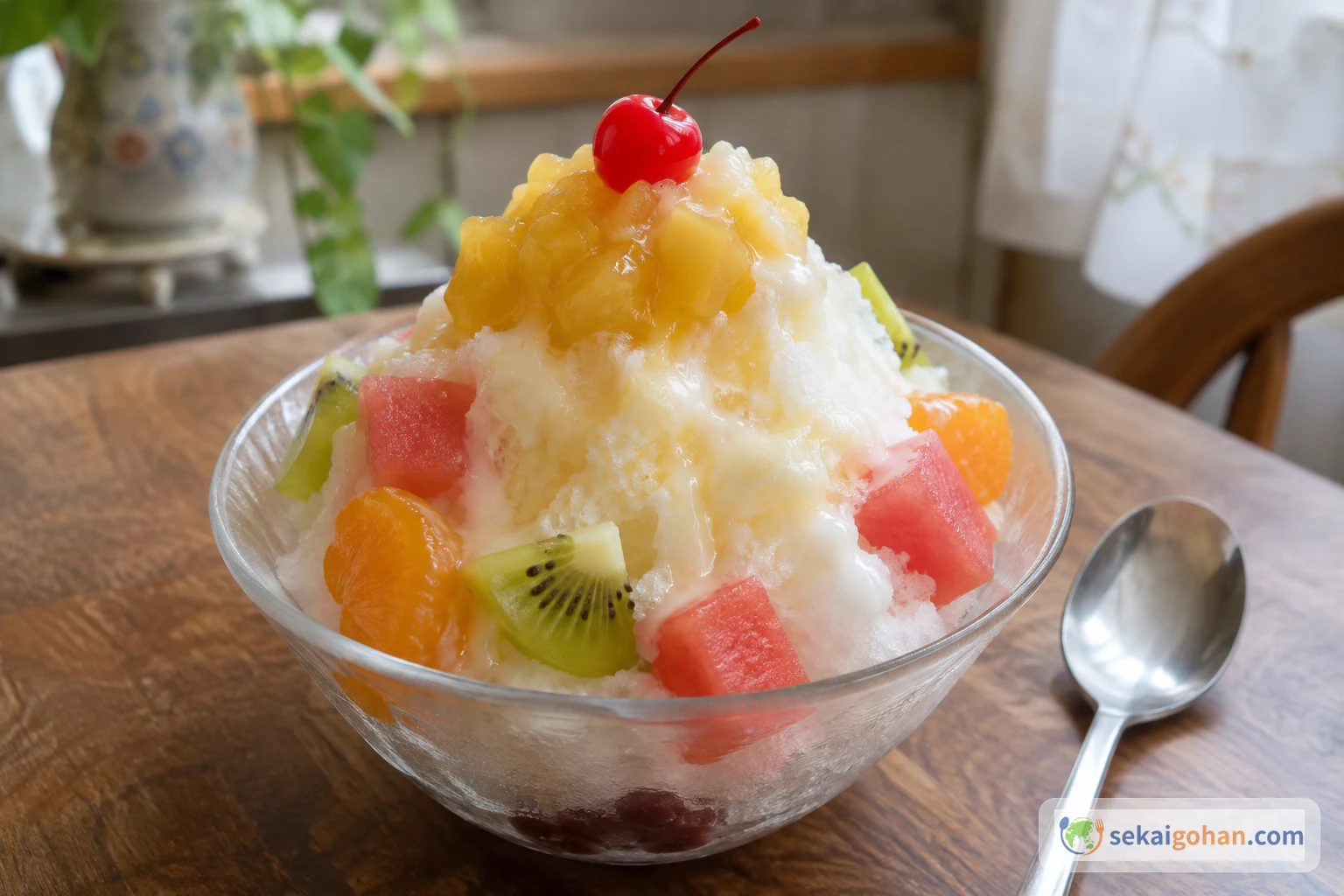
The machine whirs, and a soft drift of white ice gathers in the bowl. Then come the colors: red watermelon, orange mandarin segments, green kiwi, a spoonful of yellow pineapple sauce with real chunks of fruit, and a single red cherry on top. The first spoonful is sharply cold, and the sweetness of the syrup and condensed milk arrives just behind it. Dig down, and there is cooked azuki waiting at the bottom of the bowl.
Kakigōri (かき氷) is Japanese shaved ice: ice shaved fine and finished with syrup. Across Japan it appears in many forms, from simple syrup-topped ice at summer festival stalls to elaborate bowls at cafés and specialty shops. This article does not try to survey them all. It focuses on one modern style, a fruit kakigōri with cooked azuki, and walks through a single bowl in detail.
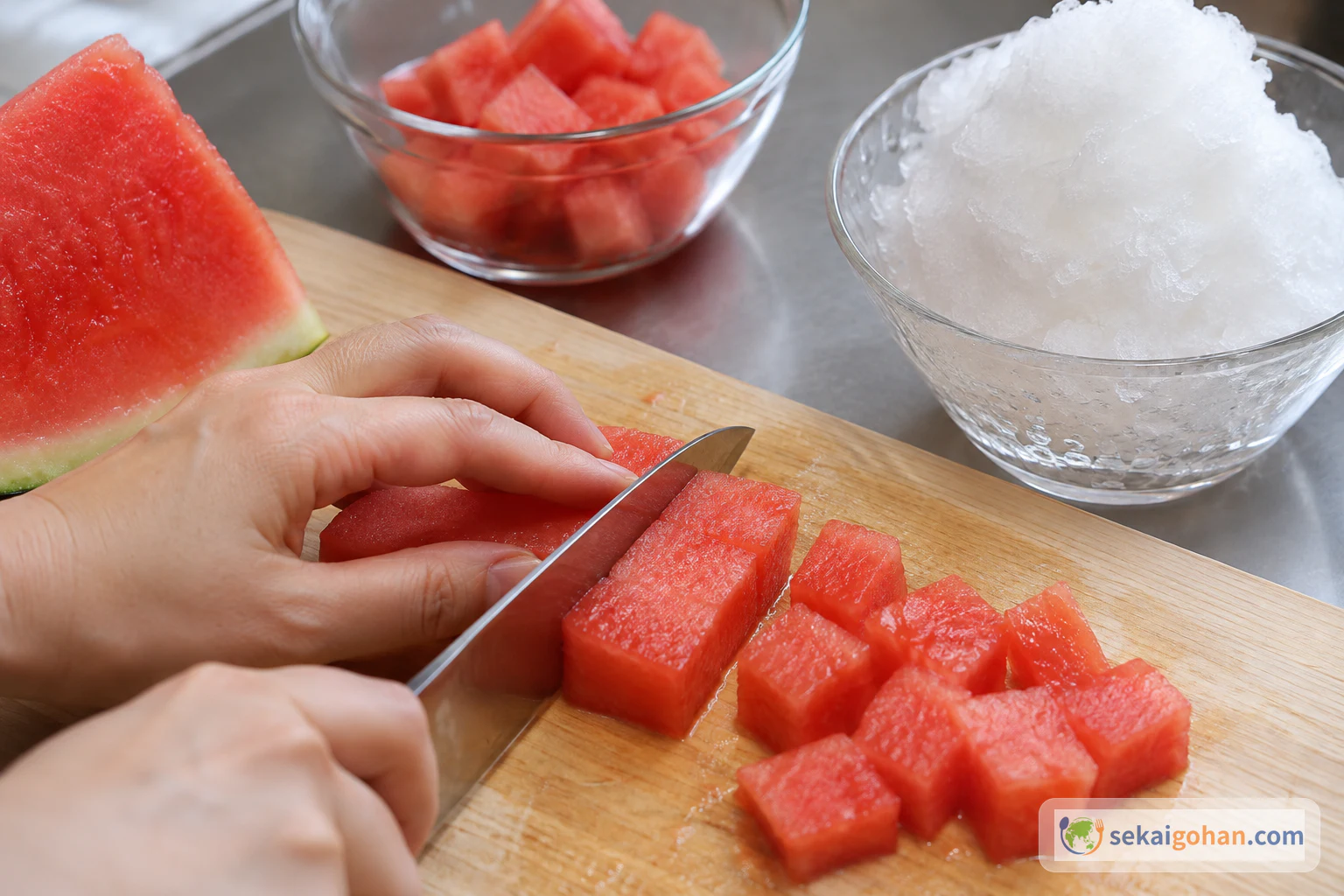
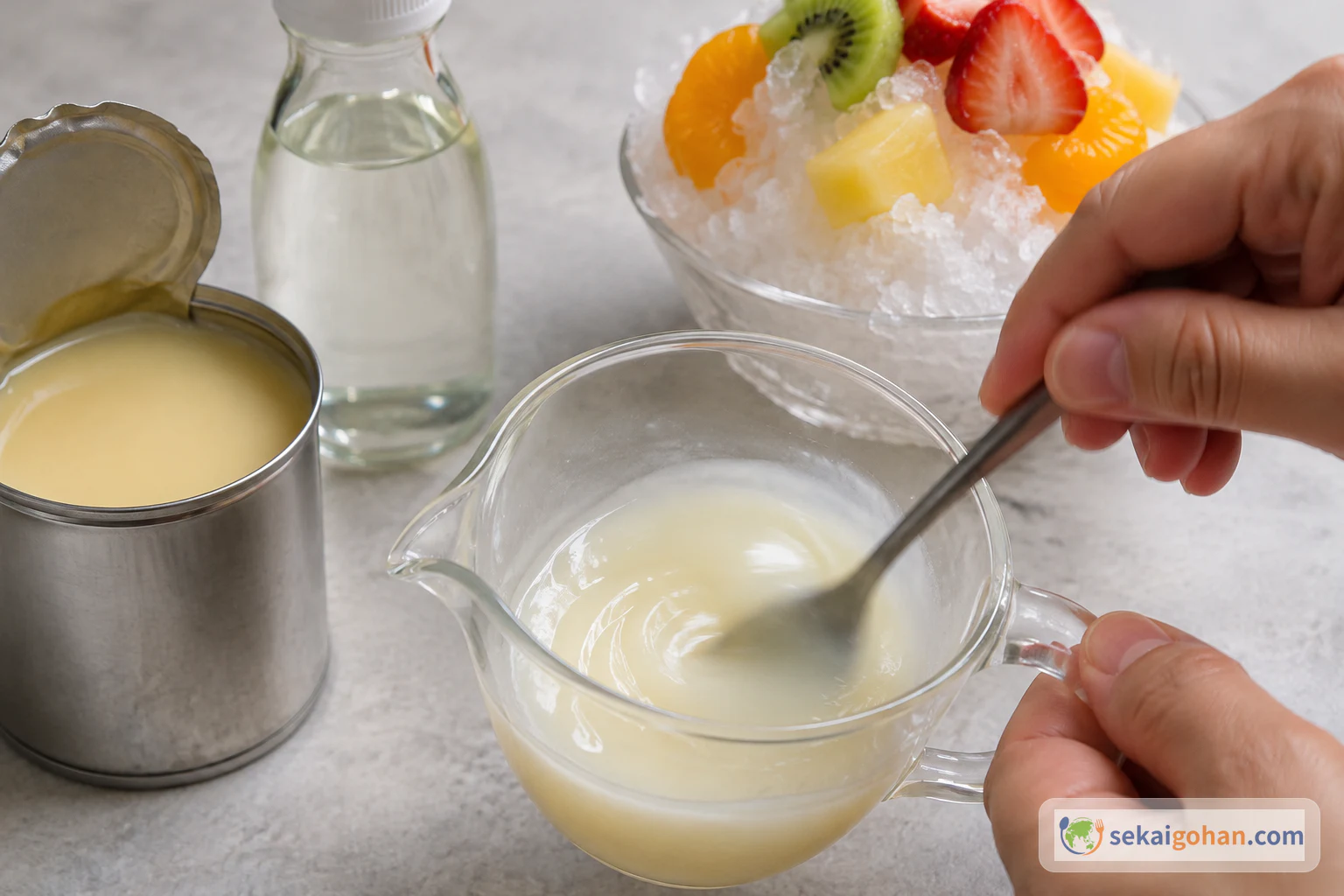
The recipe here follows the one-serving "Fruit Kakigori" (フルーツかき氷) published by Kewpie as a foodservice recipe. It uses two named commercial products, a chunky pineapple sauce from Snowman and cooked azuki from Hoshienu, and those are kept as written. It is one example of fruit kakigōri, not a national standard formula. Two small things are added for clarity: the condensed milk and mizore syrup are mixed in advance into one mixture (called A below) so you can pour it while you shave, and the fruit is prepared before assembly, with the watermelon cut into bite-sized pieces as an editorial choice. No ingredients or amounts are added. The recipe as a whole has not been kitchen-tested by Sekai Gohan.
Ingredients: One Bowl, Built in Layers
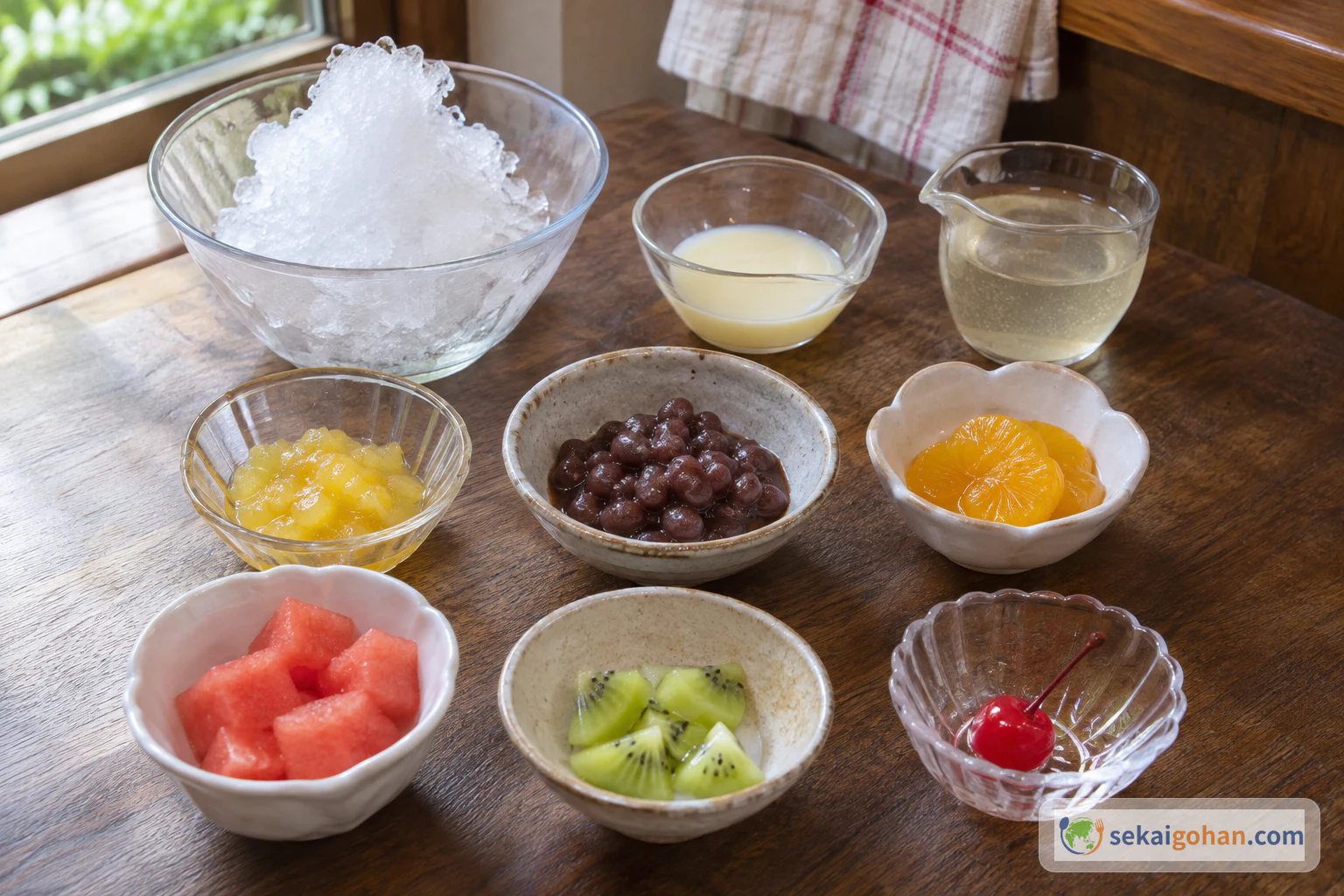
Everything here is for one serving. The two items marked (A) are mixed together before you start and used as a single mixture.
Sweetened condensed milk contains milk. Check the labels of the condensed milk, syrup, pineapple sauce, cooked azuki and canned fruit you actually buy, since the allergens and shared-facility statements differ from product to product.
Equipment
- Shaved-ice machine (kakigōri machine), used according to its instructions
- Kitchen scale
- Serving bowl (a clear one lets you see the azuki at the bottom)
- Small pouring cup for the A mixture
- Cutting board and knife
- Small dishes for the prepared fruit and canned fruit
- Spoons for mixing, spooning the sauce and eating
Choosing Products and Substitutions
This bowl is built around the two named products in the table: Snowman's chunky pineapple sauce and Hoshienu's cooked azuki. If you cannot find them, a chunky pineapple sauce with visible fruit and an ordinary ready-cooked azuki in a can or pouch are reasonable stand-ins. Treat those as substitutions that have not been tested in this recipe: sweetness, thickness and texture vary by product, and the amounts above were set for the named products.
Mizore syrup is the clear, uncolored type of kakigōri syrup sold in Japanese supermarkets. Sweetened condensed milk and canned mandarin and cherries are widely available. Weigh the canned fruit as portioned into its dish.
For the ice, use clean ice made from drinking water. Ice from a home freezer tray works only if your machine's instructions allow that size and shape; some machines need ice frozen in a dedicated mold.
Method: Prepare Everything, Then Build Without Stopping
Keep your hands away from the blade at all times. Operate the machine only by its controls and handle as the instructions describe. Never force a block of ice the machine cannot take.
Shaved ice starts melting the moment it lands, so the fruit and the A mixture are ready before the first ice goes into the bowl. Steps 1 to 4 are preparation; steps 5 to 15 are the assembly itself.
Texture and Troubleshooting
Kakigōri has no single correct texture. Kikkoman's Food Forum describes shaved ice that ranges from coarse to soft, depending on things like blade pressure. Fine, fluffy ice feels light; coarser ice keeps more crunch. Neither is a failure.
| Situation | What to do |
|---|---|
| The ice comes out coarser than you wanted | Adjust the blade setting if your machine has one, following its instructions. Coarser ice is still kakigōri, just with more bite |
| The machine won't shave the ice | Check that the ice size and shape match the machine's instructions. Don't push or force a block that doesn't fit |
| The sweetness is all on top and the inside tastes plain | Pour part of A partway through shaving (step 7) instead of all of it at the end |
| The ice is melting before the toppings are on | Have all the fruit and A ready before you start (steps 1 to 4) so the assembly runs without pauses |
| You want to keep some for later | Shaved ice is not something to store. Make it and eat it right away |
Serving and Leftovers
Kakigōri is eaten as soon as it is made; there is no storing or reheating the finished bowl. Keep any leftover cut fruit in the refrigerator, and refrigerate opened canned fruit, condensed milk and other opened products following the instructions on each product's label.
Variations: Other Bowls, Kept Separate
The variations below change the character of the dish. They are described for comparison only; their amounts are not given here, and they are not mixed into the fruit recipe above.
| Variation | What changes |
|---|---|
| Strawberry syrup with condensed milk | A classic pairing Kikkoman's Food Forum mentions. Sweet-tart strawberry aroma and milky roundness move to the front, in place of the mixed fruit's acidity |
| Matcha syrup with shiratama and azuki | Also mentioned by Kikkoman. The juiciness of fruit gives way to the chew of rice-flour dumplings and the sweetness of beans |
| Swap one fruit for a seasonal one | Replace one of the mandarin, watermelon or kiwi. This changes the recipe, and the same weight is not assumed to work for a different fruit |
| A generic chunky pineapple sauce | A substitution for the named product, with fruit pieces you can see. Untested in this recipe |
| Coarser ice | Less fluffy, more crunch. Same ingredients and amounts, different texture |
Ice Houses and Summer Sweetness: The Background of Kakigōri
Shaved ice has a long history in Japan. The Ministry of Agriculture, Forestry and Fisheries introduces kakigōri as one of Nara Prefecture's regional dishes: a dish of ice and syrup. Its page tells of himuro, ice houses in Nara, and of the tradition of offering ice to the imperial court. It also points to The Pillow Book (Makura no Sōshi), which mentions shaved ice served with amazura, a sweetener.
That old shaved ice is not the same as the bowl in this recipe. The sweetener, the ice and the way it was eaten belong to their own time, and the modern combination of mizore syrup, condensed milk and fruit should not be read back into those records. The ministry's page also notes that kakigōri is very popular in summer and that strawberry versions are known in Nara today; these details describe Nara and do not speak for every region.
Today kakigōri is eaten all over Japan. Kikkoman's Food Forum describes the familiar form of finely shaved ice under strawberry, melon or lemon syrup, alongside combinations such as strawberry with condensed milk and matcha with shiratama and azuki. It appears at summer festival stalls, cafés and specialty shops, and some cafés and specialty shops serve it year-round. The fruit bowl in this article is one modern style among many.
Frequently Asked Questions
Can I use ice from my home freezer?
It depends on your machine. Use hygienic ice made from drinking water, and check the instructions for the size and shape of ice the machine accepts. Some machines need ice from a dedicated mold.
Is coarse ice a mistake?
No. Kakigōri ranges from coarse to soft and fluffy. If your machine lets you adjust the blade, finer settings give a lighter feel and coarser settings keep more bite.
Can I leave out the condensed milk?
You can, but it becomes a different version: the bowl will be milk-free, and the mizore syrup amount would need to be rethought, since the 60g here is set to be used together with 30g condensed milk. No tested amount is given for a version without it.
Do I need the exact branded pineapple sauce and azuki?
This recipe is built on Kewpie's foodservice "Fruit Kakigori," which uses Snowman's chunky pineapple sauce and Hoshienu's cooked azuki, so those are the version described. A generic chunky pineapple sauce and ordinary ready-cooked azuki are reasonable substitutes, but they have not been tested here and may differ in sweetness and texture.
Is this the standard Japanese kakigōri?
No single standard exists. This is one modern fruit kakigōri, adapted from a manufacturer's foodservice recipe. Simple syrup-topped ice, strawberry with condensed milk, and matcha with azuki are all equally kakigōri.
Why does each kiwi wedge not weigh 15g?
The kiwi is cut into quarter wedges for shape. The 15g is the total amount of kiwi for the bowl, so use as many wedges as it takes to reach that weight.
Sources
- Kewpie Corporation (キユーピー株式会社), foodservice recipe "Fruit Kakigori" (フルーツかき氷). The one-serving ingredients and amounts (ice 150g, sweetened condensed milk 30g, mizore syrup 60g, pineapple sauce 20g, cooked azuki 15g, canned mandarin 20g, watermelon 20g, kiwi 15g, canned cherry 5g), the named products, and the four-stage assembly order. A manufacturer's foodservice suggestion, not the only standard for home cooking; it does not specify ice texture, machine or timing. https://www.kewpie.co.jp/prouse/recipe/QP30046825
- Ministry of Agriculture, Forestry and Fisheries of Japan, "Kakigori (Shaved ice) | Our Regional Cuisines." Kakigōri as a dish of ice and syrup; the himuro ice houses of Nara and the tradition of offering ice to the court; The Pillow Book's mention of shaved ice with amazura; its summer popularity and strawberry versions in Nara. A Nara Prefecture page that does not cover customs across all of Japan. https://www.maff.go.jp/e/policies/market/k_ryouri/search_menu/3672/index.html
- Kikkoman Corporation, Food Forum, "Kakigori Shaved Ice." The range of shaved-ice texture from coarse to soft; syrups such as strawberry, melon and lemon; strawberry with condensed milk and matcha with shiratama and azuki; eating kakigōri at summer festivals, cafés and specialty shops. A cultural article, not a recipe. https://www.kikkoman.com/en/culture/foodforum/close-up-japan/35-1.html